Legal Marijuana Market Research Report 2033

Legal Marijuana Market Research Report 2033

Segments - by Product Type (Flower, Concentrates, Edibles, Topicals, Others), by Application (Medical, Recreational, Industrial Hemp), by Compound (THC-dominant, CBD-dominant, Balanced THC & CBD), by Distribution Channel (Dispensaries, Online, Pharmacies, Others)

https://growthmarketreports.com/Anuradha
Author : Anuradha B. More
https://growthmarketreports.com/Vaibhav
Fact-checked by : Vaibhav Chandola
https://growthmarketreports.com/Shruti
Editor : Shruti Bhat

Upcoming | Report ID :FB-595 | 4.2 Rating | 90 Reviews | 276 Pages | Format : Docx PDF

Report Description


Legal Marijuana Market Outlook

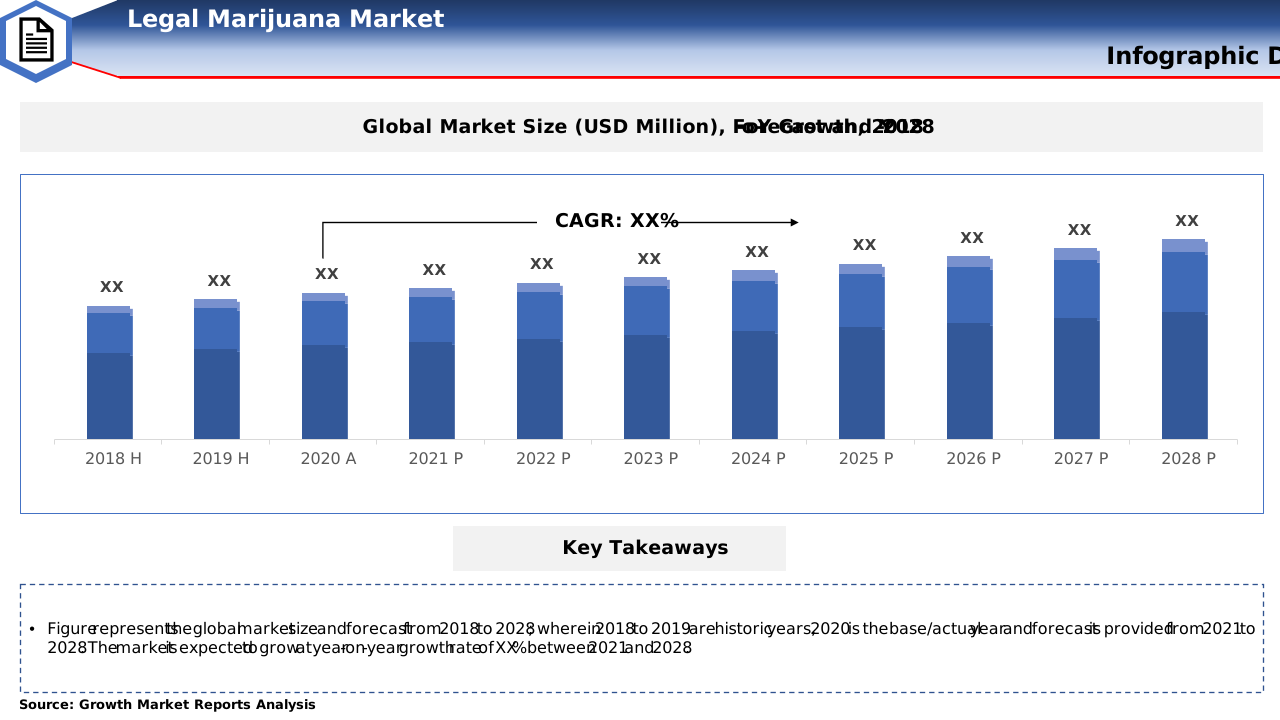
According to our latest research, the global legal marijuana market size reached USD 39.5 billion in 2024, with a robust compound annual growth rate (CAGR) of 24.2% projected from 2025 to 2033. By 2033, the market is forecasted to attain a value of USD 277.6 billion, driven by the accelerating pace of legalization, expanding medical applications, and surging consumer acceptance worldwide. The legal marijuana market is experiencing exponential growth as governments relax regulations, allowing for increased investment, innovation, and accessibility across both medical and recreational uses.

One of the primary growth factors propelling the legal marijuana market is the rapidly evolving regulatory landscape. Countries such as Canada, the United States, Germany, and several Latin American nations have made significant strides in legalizing marijuana for both medicinal and recreational purposes. This shift is largely attributed to growing recognition of marijuanaÂ’s therapeutic benefits in treating chronic pain, neurological disorders, and mental health conditions. The destigmatization of cannabis, coupled with government-backed research and clinical trials, has led to a surge in product approvals and commercial launches, further expanding the marketÂ’s reach. Additionally, the increasing prevalence of chronic illnesses and the demand for alternative pain management solutions have significantly contributed to the adoption of legal marijuana, especially in regions with advanced healthcare infrastructure.

Another key driver is the innovation and diversification of marijuana-based products. Companies are investing heavily in research and development to create a wide variety of offerings, including edibles, concentrates, topicals, and beverages, catering to a broad spectrum of consumers. The rise of cannabidiol (CBD)-dominant and balanced THC & CBD products has attracted new demographics, including wellness-focused and elderly consumers seeking non-psychoactive solutions. This trend has also fostered the development of advanced cultivation technologies, precision dosing methods, and sustainable farming practices, enhancing product quality and consistency. The proliferation of online distribution channels and the emergence of branded dispensaries have further facilitated consumer access, convenience, and education, driving higher sales volumes and market penetration.

The legal marijuana market is also benefiting from significant capital inflows and strategic partnerships. Venture capitalists, institutional investors, and multinational corporations are increasingly recognizing the lucrative potential of the cannabis industry. This has resulted in a wave of mergers and acquisitions, cross-sector collaborations, and international expansions, strengthening supply chains and accelerating market growth. The integration of cannabis into mainstream wellness, pharmaceutical, and consumer goods sectors has opened new avenues for revenue generation and product innovation. Moreover, the development of standardized testing protocols and regulatory frameworks has enhanced consumer confidence, ensuring product safety and quality assurance.

The concept of Legal Cannabis is gaining traction globally, as more countries recognize the potential benefits of regulating cannabis use. Legal Cannabis refers to the controlled and regulated production, distribution, and consumption of cannabis products, ensuring safety and quality standards are met. This shift towards legalization is not only driven by the potential for economic growth but also by the demand for safe and reliable access to cannabis for both medical and recreational purposes. As governments implement regulatory frameworks, they are able to monitor and control the market, reducing the influence of illegal trade and ensuring consumer protection. This transition is also opening up new avenues for research and innovation, as companies explore the diverse applications of cannabis in health, wellness, and beyond.

From a regional perspective, North America continues to dominate the legal marijuana market, accounting for the largest share due to widespread legalization in the United States and Canada. Europe is emerging as a significant growth engine, driven by progressive policy changes in countries like Germany, the Netherlands, and the United Kingdom. The Asia Pacific region, while still in the nascent stages of legalization, is showing promising potential with increasing investments in medical cannabis research and pilot programs. Latin America and the Middle East & Africa are gradually embracing legalization, with a focus on industrial hemp cultivation and export opportunities. Each region presents unique regulatory, cultural, and economic dynamics, shaping the trajectory of the global legal marijuana market.

Global Legal Marijuana Industry Outlook

Product Type Analysis

The legal marijuana market is segmented by product type into flower, concentrates, edibles, topicals, and others, each playing a pivotal role in shaping consumer preferences and market dynamics. Flower remains the most traditional and widely consumed form, favored for its versatility and ease of use. Despite the rise of alternative products, the demand for high-quality cannabis flower persists among both recreational and medical users, particularly in regions with established dispensary networks. The availability of diverse strains, potency levels, and cultivation methods has further enriched the flower segment, attracting a loyal consumer base. However, the flower segment faces increasing competition from more discreet and convenient consumption options, prompting producers to innovate through pre-rolls, premium packaging, and organic cultivation practices to maintain market share.

Concentrates represent a rapidly expanding segment, driven by advancements in extraction technologies and growing consumer interest in potent, fast-acting products. Concentrates encompass a range of products such as oils, waxes, shatter, and vape cartridges, offering higher cannabinoid concentrations and customizable dosing. This segment appeals to both experienced users seeking enhanced effects and medical patients requiring precise, consistent formulations. The legalization of vaping and the popularity of portable devices have significantly contributed to the growth of concentrates, especially among younger demographics. Regulatory scrutiny regarding product safety and quality control remains a challenge, but ongoing innovation in extraction and purification processes is expected to address these concerns and support sustained growth.

The edibles segment has witnessed remarkable growth, fueled by the demand for smoke-free, discreet, and flavorful consumption experiences. Edibles encompass a wide variety of products, including gummies, chocolates, baked goods, beverages, and capsules, catering to diverse tastes and dietary preferences. The segmentÂ’s appeal extends to new users, wellness enthusiasts, and individuals seeking long-lasting effects without inhalation. Regulatory clarity on dosing, packaging, and labeling has enhanced consumer trust and facilitated mainstream adoption, particularly in North America and Europe. The edibles market is characterized by rapid product innovation, with companies experimenting with novel ingredients, functional additives, and low-dose options to attract health-conscious consumers and expand market reach.

Topicals, including creams, balms, lotions, and transdermal patches, are gaining traction as non-psychoactive alternatives for localized relief from pain, inflammation, and skin conditions. The segmentÂ’s growth is underpinned by increasing consumer awareness of the therapeutic benefits of cannabinoids for dermatological and musculoskeletal health. Topicals are particularly popular among older adults, athletes, and individuals with chronic conditions, driving demand in both medical and wellness channels. The integration of cannabis extracts into beauty and personal care products has further diversified the topical segment, creating new opportunities for cross-industry collaborations and brand differentiation. Ongoing research into the efficacy and safety of topical applications is expected to bolster market confidence and drive future expansion.

Medical Marijuana is increasingly being recognized as a vital component of modern healthcare, offering therapeutic benefits for a range of conditions. As research continues to uncover the potential of cannabinoids in treating ailments such as chronic pain, epilepsy, and anxiety, Medical Marijuana is becoming a preferred alternative to traditional pharmaceuticals. This shift is supported by a growing body of clinical evidence and the endorsement of healthcare professionals who are advocating for its integration into treatment protocols. The accessibility of Medical Marijuana is further enhanced by regulatory changes that allow for its prescription and distribution through formal healthcare channels. As a result, patients are gaining access to high-quality, standardized products that meet rigorous safety and efficacy standards, fostering trust and acceptance in the medical community.

The others category includes innovative products such as sublingual sprays, tinctures, inhalers, and suppositories, reflecting the industryÂ’s commitment to meeting evolving consumer needs. These products offer alternative delivery methods for specific medical conditions, rapid onset of action, and tailored dosing, appealing to patients and healthcare providers seeking precision medicine solutions. The segment is characterized by ongoing clinical research, regulatory advancements, and the entry of pharmaceutical companies, signaling the convergence of cannabis and mainstream medicine. As the legal marijuana market matures, the diversification of product types will remain a key driver of growth, enabling companies to capture new market segments and differentiate their offerings.

Report Scope

Attributes Details
Report Title Legal Marijuana Market Research Report 2033
By Product Type Flower, Concentrates, Edibles, Topicals, Others
By Application Medical, Recreational, Industrial Hemp
By Compound THC-dominant, CBD-dominant, Balanced THC & CBD
By Distribution Channel Dispensaries, Online, Pharmacies, Others
Regions Covered North America, Europe, APAC, Latin America, MEA
Base Year 2024
Historic Data 2018-2023
Forecast Period 2025-2033
Number of Pages 276
Number of Tables & Figures 268
Customization Available Yes, the report can be customized as per your need.

Application Analysis

The legal marijuana market is segmented by application into medical, recreational, and industrial hemp, each contributing uniquely to the industryÂ’s expansion. The medical application segment commands a significant share, driven by the growing body of scientific evidence supporting cannabisÂ’s efficacy in managing a wide range of health conditions. Medical marijuana is increasingly prescribed for chronic pain, epilepsy, multiple sclerosis, cancer-related symptoms, and mental health disorders, fueling demand in both developed and emerging markets. The segment benefits from government-backed clinical trials, insurance coverage in select regions, and the integration of cannabis into formal healthcare systems. Regulatory approvals for new indications and the development of standardized, pharmaceutical-grade formulations are expected to further accelerate adoption and market growth.

The recreational application segment is experiencing explosive growth, particularly in regions with progressive legalization frameworks such as North America and parts of Europe. Recreational marijuana appeals to a broad demographic, encompassing adults seeking relaxation, socialization, and alternative wellness experiences. The segmentÂ’s expansion is supported by the proliferation of dispensaries, branded retail stores, and online platforms offering a diverse range of products. Innovative marketing strategies, celebrity endorsements, and lifestyle branding have played a crucial role in destigmatizing cannabis and driving mainstream acceptance. Regulatory clarity on consumption limits, advertising, and taxation has facilitated responsible use and generated substantial tax revenues for governments, further incentivizing legalization efforts globally.

Industrial hemp represents a distinct and rapidly growing segment within the legal marijuana market, driven by its versatility and sustainability. Hemp is cultivated primarily for its fiber, seeds, and cannabidiol (CBD) content, with applications spanning textiles, construction materials, food and beverages, personal care products, and pharmaceuticals. The segmentÂ’s growth is propelled by increasing demand for eco-friendly and biodegradable alternatives in various industries, as well as the rising popularity of CBD-infused wellness products. Regulatory reforms allowing for the cultivation and processing of industrial hemp have unlocked new economic opportunities, particularly in rural and agricultural regions. Ongoing research into the environmental benefits and industrial applications of hemp is expected to further expand this segment, positioning it as a key pillar of the global legal marijuana market.

The convergence of medical, recreational, and industrial applications is fostering cross-segment synergies, enabling companies to leverage shared infrastructure, research capabilities, and distribution networks. This integration is driving the development of hybrid products, such as wellness-focused edibles and topicals with both medical and recreational appeal. The evolving regulatory landscape, coupled with increasing consumer education and advocacy, is expected to blur the lines between application segments, creating new opportunities for innovation and market differentiation. As the legal marijuana market continues to mature, the diversification of applications will play a critical role in sustaining long-term growth and resilience.

Compound Analysis

The legal marijuana market is segmented by compound into THC-dominant, CBD-dominant, and balanced THC & CBD products, reflecting evolving consumer preferences and regulatory considerations. THC-dominant products are characterized by high concentrations of tetrahydrocannabinol (THC), the primary psychoactive compound in cannabis. These products are favored among recreational users seeking euphoric effects, as well as medical patients requiring potent symptom relief for conditions such as chronic pain, nausea, and appetite loss. The segmentÂ’s growth is supported by the increasing acceptance of adult-use cannabis in North America and select European markets, as well as ongoing research into the therapeutic potential of THC. Regulatory frameworks governing THC content and product labeling play a crucial role in shaping market dynamics and ensuring consumer safety.

CBD-dominant products have gained significant traction in recent years, driven by growing awareness of cannabidiolÂ’s (CBD) non-psychoactive properties and therapeutic benefits. CBD-dominant products are widely used for managing anxiety, inflammation, seizures, and sleep disorders, appealing to health-conscious consumers and individuals seeking alternative wellness solutions. The segmentÂ’s expansion is facilitated by the removal of regulatory barriers, the proliferation of CBD-infused products across various categories, and the endorsement of CBD by healthcare professionals. The entry of mainstream retailers, pharmaceutical companies, and wellness brands into the CBD market has further accelerated adoption, enhancing product accessibility and consumer trust. Ongoing clinical research and regulatory harmonization are expected to drive continued growth and innovation in the CBD-dominant segment.

The balanced THC & CBD segment offers products with carefully calibrated ratios of THC and CBD, providing a synergistic blend of psychoactive and therapeutic effects. These products are particularly popular among medical patients seeking symptom relief without excessive intoxication, as well as recreational users interested in a more controlled and nuanced experience. The segment benefits from advancements in genetics, cultivation techniques, and extraction technologies, enabling precise formulation and dosing. Regulatory agencies in several countries have recognized the value of balanced products, granting approvals for specific indications and facilitating their integration into healthcare systems. The balanced THC & CBD segment is expected to witness robust growth as consumer preferences shift toward personalized and targeted cannabis therapies.

The diversification of cannabis compounds is driving product innovation, enabling companies to cater to a wide range of consumer needs and preferences. The development of minor cannabinoid-based products, such as those containing cannabigerol (CBG) and cannabinol (CBN), is further expanding the compound landscape and opening new avenues for research and commercialization. The ongoing evolution of regulatory frameworks, coupled with advances in analytical testing and quality control, is expected to enhance consumer confidence and support the long-term growth of the legal marijuana market across all compound segments.

Distribution Channel Analysis

The legal marijuana market is segmented by distribution channel into dispensaries, online, pharmacies, and others, each playing a vital role in shaping consumer access and purchasing behavior. Dispensaries remain the cornerstone of the legal marijuana market, offering a wide range of products, expert guidance, and a curated retail experience. Dispensaries are particularly prevalent in North America and parts of Europe, serving as the primary point of sale for both medical and recreational cannabis. The proliferation of branded dispensary chains, innovative store layouts, and loyalty programs has enhanced customer engagement and brand differentiation. Regulatory requirements for licensing, security, and product traceability ensure compliance and consumer safety, supporting the sustained growth of the dispensary channel.

The online distribution channel has experienced exponential growth, driven by the increasing digitization of retail and the demand for convenience, privacy, and home delivery. Online platforms offer a seamless shopping experience, comprehensive product information, and personalized recommendations, attracting tech-savvy consumers and individuals with mobility constraints. The COVID-19 pandemic accelerated the adoption of online cannabis sales, prompting regulatory authorities to relax restrictions and permit e-commerce operations in several regions. The integration of secure payment gateways, age verification systems, and discreet packaging has further enhanced the appeal of online channels. Ongoing investments in digital marketing, logistics, and customer support are expected to drive continued growth and innovation in the online segment.

Pharmacies are emerging as a trusted distribution channel for medical marijuana, particularly in countries with established healthcare systems and stringent regulatory oversight. Pharmacies offer pharmaceutical-grade cannabis products, standardized dosing, and professional counseling, catering to patients with specific medical needs and prescriptions. The integration of cannabis into formal pharmacy networks enhances product accessibility, ensures quality assurance, and facilitates insurance reimbursement in select markets. The entry of multinational pharmacy chains and collaborations with pharmaceutical companies are expected to drive the expansion of this channel, particularly in Europe and Asia Pacific. Regulatory harmonization and the development of prescription-based frameworks will play a critical role in shaping the future of cannabis distribution through pharmacies.

The others segment includes alternative distribution channels such as wellness stores, supermarkets, specialty clinics, and direct-to-consumer models. These channels cater to niche markets, wellness-focused consumers, and individuals seeking personalized consultations and holistic health solutions. The integration of cannabis products into mainstream retail and wellness ecosystems is fostering cross-industry collaborations, brand partnerships, and experiential marketing initiatives. The ongoing evolution of distribution channels reflects the industryÂ’s commitment to meeting diverse consumer needs, enhancing accessibility, and driving market penetration. As regulatory frameworks continue to evolve, the diversification of distribution channels will remain a key driver of growth and resilience in the legal marijuana market.

Opportunities & Threats

The legal marijuana market presents a multitude of opportunities for stakeholders across the value chain. One of the most significant opportunities lies in the continued expansion of legalization efforts, both for medical and recreational use. As more countries and states adopt progressive cannabis policies, the addressable market is expected to grow exponentially, unlocking new revenue streams and investment opportunities. The increasing acceptance of cannabis as a mainstream wellness and pharmaceutical product is driving demand for innovative formulations, delivery methods, and therapeutic applications. Companies that invest in research and development, clinical trials, and product standardization are well-positioned to capitalize on emerging trends and capture market share. The integration of cannabis into adjacent industries such as food and beverage, cosmetics, and nutraceuticals offers additional avenues for growth and diversification.

Another key opportunity is the advancement of technology and data-driven solutions in cannabis cultivation, processing, and distribution. The adoption of precision agriculture, automation, and artificial intelligence is enhancing yield, quality, and sustainability, reducing costs and environmental impact. Blockchain and IoT technologies are improving supply chain transparency, product traceability, and regulatory compliance, fostering consumer trust and brand loyalty. The rise of personalized medicine and genomics is enabling the development of targeted cannabis therapies, tailored to individual patient profiles and genetic markers. Strategic partnerships, mergers and acquisitions, and international expansions are facilitating knowledge transfer, market entry, and competitive differentiation. Companies that embrace innovation, sustainability, and consumer-centricity are poised to thrive in the rapidly evolving legal marijuana market.

Despite the significant growth prospects, the legal marijuana market faces several restraining factors and threats. Regulatory uncertainty remains a major challenge, with varying laws, standards, and enforcement practices across jurisdictions. The lack of harmonization in product testing, labeling, and advertising regulations can create barriers to entry, increase compliance costs, and hinder cross-border trade. Stigma and misinformation surrounding cannabis use persist in certain regions, limiting consumer acceptance and market penetration. The risk of product recalls, safety incidents, and legal disputes can undermine brand reputation and erode consumer trust. Additionally, competition from the illicit market, price volatility, and supply chain disruptions pose ongoing risks to market stability and profitability. Companies must navigate these challenges by investing in compliance, education, and risk management strategies to sustain growth and resilience.

Regional Outlook

North America continues to dominate the global legal marijuana market, accounting for the largest share with a market value of USD 22.7 billion in 2024. The regionÂ’s leadership is driven by widespread legalization in the United States and Canada, robust investment in research and development, and a mature retail infrastructure. The United States, in particular, is witnessing rapid expansion as more states legalize recreational and medical cannabis, generating substantial tax revenues and job creation. Canada remains at the forefront of product innovation, quality assurance, and international exports, leveraging its first-mover advantage and comprehensive regulatory framework. The North American market is expected to maintain a strong CAGR of 21.8% through 2033, supported by ongoing policy reforms and consumer demand.

Europe is emerging as a significant growth engine for the legal marijuana market, with a market size of USD 7.6 billion in 2024. The regionÂ’s growth is fueled by progressive policy changes in countries such as Germany, the Netherlands, and the United Kingdom, which are expanding access to medical cannabis and piloting recreational programs. The European UnionÂ’s focus on harmonizing regulations, enhancing patient access, and fostering research collaborations is creating a conducive environment for market expansion. The entry of multinational pharmaceutical companies, the proliferation of pharmacy-based distribution channels, and the development of domestic cultivation facilities are further accelerating growth. Europe is projected to achieve a CAGR of 27.4% through 2033, outpacing other regions due to its strong regulatory momentum and market potential.

The Asia Pacific region, while still in the early stages of legalization, is showing promising potential with a market value of USD 3.1 billion in 2024. Countries such as Australia, Thailand, and South Korea are investing in medical cannabis research, pilot programs, and export-oriented cultivation. The regionÂ’s large population base, rising healthcare expenditures, and increasing awareness of cannabisÂ’s therapeutic benefits are driving demand. Latin America and the Middle East & Africa are gradually embracing legalization, with a focus on industrial hemp cultivation and export opportunities. Latin AmericaÂ’s market size reached USD 2.4 billion in 2024, while the Middle East & Africa accounted for USD 1.7 billion. Each region presents unique regulatory, cultural, and economic dynamics, shaping the trajectory of the global legal marijuana market and offering diverse opportunities for growth and investment.

Legal Marijuana Market Statistics

Competitor Outlook

The competitive landscape of the legal marijuana market is characterized by intense rivalry, rapid innovation, and a dynamic mix of established players and emerging startups. Companies are competing on multiple fronts, including product quality, brand reputation, distribution reach, and technological capabilities. The market is witnessing a wave of consolidation, with mergers and acquisitions enabling companies to achieve economies of scale, expand geographic presence, and diversify product portfolios. Strategic partnerships with pharmaceutical firms, agricultural technology providers, and consumer goods companies are facilitating knowledge transfer, resource sharing, and cross-sector innovation. The entry of institutional investors and multinational corporations is injecting significant capital into the industry, supporting research, infrastructure development, and international expansion.

Product differentiation and branding are critical success factors in the legal marijuana market, with companies investing heavily in marketing, packaging, and consumer education. The proliferation of branded dispensaries, celebrity endorsements, and lifestyle-oriented campaigns is driving consumer engagement and loyalty. Companies are leveraging data analytics, consumer insights, and digital platforms to personalize offerings, optimize pricing, and enhance the customer experience. The focus on quality assurance, transparency, and sustainability is becoming increasingly important, with companies adopting organic cultivation practices, third-party testing, and eco-friendly packaging to meet evolving consumer expectations and regulatory requirements.

Innovation is at the heart of the competitive landscape, with companies racing to develop novel products, delivery methods, and therapeutic applications. The integration of biotechnology, genomics, and precision agriculture is enabling the production of high-quality, consistent, and targeted cannabis strains. The development of minor cannabinoid-based products, functional edibles, and pharmaceutical-grade formulations is opening new avenues for growth and differentiation. Companies are also exploring opportunities in adjacent markets, such as wellness, beauty, and food and beverage, leveraging cross-industry collaborations and co-branding initiatives to expand their reach and diversify revenue streams.

Major companies in the legal marijuana market include Canopy Growth Corporation, Aurora Cannabis Inc., Tilray Brands, Inc., Cronos Group Inc., GW Pharmaceuticals plc, Curaleaf Holdings, Inc., Green Thumb Industries Inc., Trulieve Cannabis Corp., Aphria Inc., and HEXO Corp. Canopy Growth, headquartered in Canada, is a global leader in cannabis production, research, and brand development, with a diverse portfolio spanning medical, recreational, and wellness products. Aurora Cannabis is renowned for its advanced cultivation technologies and international expansion strategy, with operations in over 25 countries. Tilray Brands specializes in pharmaceutical-grade cannabis products, leveraging clinical research and regulatory expertise to drive growth in medical and wellness markets. GW Pharmaceuticals, now part of Jazz Pharmaceuticals, is a pioneer in cannabinoid-based medicines, with its flagship product Epidiolex approved for the treatment of epilepsy.

Curaleaf Holdings and Green Thumb Industries are leading multi-state operators in the United States, with extensive retail networks, vertically integrated operations, and a strong focus on innovation and quality assurance. Trulieve Cannabis is recognized for its dominant presence in Florida and expansion into new markets through acquisitions and organic growth. Aphria, now part of Tilray, and HEXO Corp. are key players in the Canadian market, with a focus on product innovation, sustainability, and international exports. These companies are continuously investing in research and development, regulatory compliance, and brand building to maintain their competitive edge and capitalize on emerging opportunities in the global legal marijuana market.

Key Players

  • Canopy Growth Corporation
  • Aurora Cannabis Inc.
  • Tilray Brands, Inc.
  • Cronos Group Inc.
  • Aphria Inc.
  • GW Pharmaceuticals plc
  • Curaleaf Holdings, Inc.
  • Green Thumb Industries Inc.
  • Trulieve Cannabis Corp.
  • Cresco Labs Inc.
  • HEXO Corp.
  • MedMen Enterprises Inc.
  • Acreage Holdings, Inc.
  • Harvest Health & Recreation Inc.
  • Organigram Holdings Inc.
  • TerrAscend Corp.
  • Charlotte's Web Holdings, Inc.
  • Sundial Growers Inc.
  • Planet 13 Holdings Inc.
  • The Scotts Miracle-Gro Company (Hawthorne Gardening Company)
Legal Marijuana Market Overview

Segments

The Legal Marijuana market has been segmented on the basis of

Product Type

  • Flower
  • Concentrates
  • Edibles
  • Topicals
  • Others

Application

  • Medical
  • Recreational
  • Industrial Hemp

Compound

  • THC-dominant
  • CBD-dominant
  • Balanced THC & CBD

Distribution Channel

  • Dispensaries
  • Online
  • Pharmacies
  • Others

Competitive Landscape

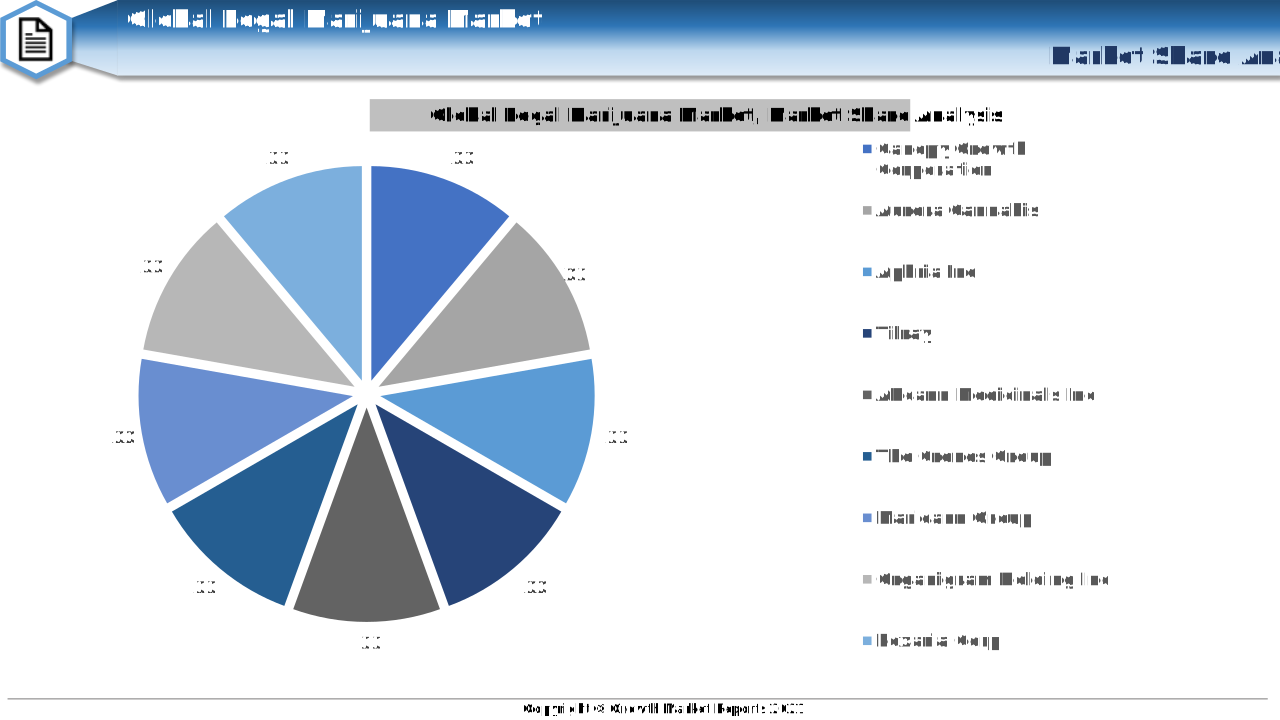
Major players competing in the global legal marijuana market are Canopy Growth Corporation, Aurora Cannabis, Aphria Inc; Tilray; ABcann Medicinals Inc; The Cronos Group; Maricann Group; Organigram Holding Inc; and Lexaria Corp. These market players are involved in several business strategies such as mergers, acquisitions partnerships, collaborations, capacity expansion, and product launches to enhance their market shares.

They are simultaneously looking to innovate the current product they have in order to get a competitive edge in the market. For instance, the Anxiety and Depression of America conducted an open study with the help of Canopy Growth Corporation for the analysis of usage in marijuana and its benefits for people. The study showed that approximately 18% of total population have been dependent on marijuana usage. This encouraged Canopy Growth Corporation to venture on oil marijuana and brought applications to the factor that medical authorities have given approval.
 

Legal Marijuana Market By key Players

Frequently Asked Questions

Advancements in cultivation, extraction, precision agriculture, AI, blockchain, and genomics are improving product quality, traceability, and enabling personalized cannabis therapies.

Opportunities include expanding legalization, product innovation, and integration into wellness and pharmaceutical sectors. Challenges involve regulatory uncertainty, stigma, competition from the illicit market, and supply chain issues.

Key players include Canopy Growth Corporation, Aurora Cannabis Inc., Tilray Brands, Cronos Group, GW Pharmaceuticals, Curaleaf Holdings, Green Thumb Industries, Trulieve Cannabis, Aphria, and HEXO Corp.

Major channels include dispensaries, online platforms, pharmacies, and others such as wellness stores and supermarkets, with online sales seeing rapid growth.

The market is divided into THC-dominant, CBD-dominant, and balanced THC & CBD products, each appealing to different consumer groups and medical needs.

Applications include medical, recreational, and industrial hemp. Medical use commands a significant share, while recreational and industrial hemp segments are rapidly growing.

The market is segmented into flower, concentrates, edibles, topicals, and others such as tinctures and sprays. Each segment caters to different consumer preferences and needs.

North America dominates the market, followed by Europe, Asia Pacific, Latin America, and the Middle East & Africa. North America leads due to widespread legalization in the US and Canada.

Key growth drivers include accelerating legalization, expanding medical applications, increased consumer acceptance, innovation in product types, and significant capital investment.

The global legal marijuana market reached USD 39.5 billion in 2024 and is expected to grow at a CAGR of 24.2% from 2025 to 2033, reaching USD 277.6 billion by 2033.

Table Of Content

Chapter 1 Executive Summary
Chapter 2 Assumptions and Acronyms Used
Chapter 3 Research Methodology
Chapter 4 Legal Marijuana Market Overview
   4.1 Introduction
      4.1.1 Market Taxonomy
      4.1.2 Market Definition
      4.1.3 Macro-Economic Factors Impacting the Market Growth
   4.2 Legal Marijuana Market Dynamics
      4.2.1 Market Drivers
      4.2.2 Market Restraints
      4.2.3 Market Opportunity
   4.3 Legal Marijuana Market - Supply Chain Analysis
      4.3.1 List of Key Suppliers
      4.3.2 List of Key Distributors
      4.3.3 List of Key Consumers
   4.4 Key Forces Shaping the Legal Marijuana Market
      4.4.1 Bargaining Power of Suppliers
      4.4.2 Bargaining Power of Buyers
      4.4.3 Threat of Substitution
      4.4.4 Threat of New Entrants
      4.4.5 Competitive Rivalry
   4.5 Global Legal Marijuana Market Size & Forecast, 2023-2032
      4.5.1 Legal Marijuana Market Size and Y-o-Y Growth
      4.5.2 Legal Marijuana Market Absolute $ Opportunity

Chapter 5 Global Legal Marijuana Market Analysis and Forecast By Product Type
   5.1 Introduction
      5.1.1 Key Market Trends & Growth Opportunities By Product Type
      5.1.2 Basis Point Share (BPS) Analysis By Product Type
      5.1.3 Absolute $ Opportunity Assessment By Product Type
   5.2 Legal Marijuana Market Size Forecast By Product Type
      5.2.1 Flower
      5.2.2 Concentrates
      5.2.3 Edibles
      5.2.4 Topicals
      5.2.5 Others
   5.3 Market Attractiveness Analysis By Product Type

Chapter 6 Global Legal Marijuana Market Analysis and Forecast By Application
   6.1 Introduction
      6.1.1 Key Market Trends & Growth Opportunities By Application
      6.1.2 Basis Point Share (BPS) Analysis By Application
      6.1.3 Absolute $ Opportunity Assessment By Application
   6.2 Legal Marijuana Market Size Forecast By Application
      6.2.1 Medical
      6.2.2 Recreational
      6.2.3 Industrial Hemp
   6.3 Market Attractiveness Analysis By Application

Chapter 7 Global Legal Marijuana Market Analysis and Forecast By Compound
   7.1 Introduction
      7.1.1 Key Market Trends & Growth Opportunities By Compound
      7.1.2 Basis Point Share (BPS) Analysis By Compound
      7.1.3 Absolute $ Opportunity Assessment By Compound
   7.2 Legal Marijuana Market Size Forecast By Compound
      7.2.1 THC-dominant
      7.2.2 CBD-dominant
      7.2.3 Balanced THC & CBD
   7.3 Market Attractiveness Analysis By Compound

Chapter 8 Global Legal Marijuana Market Analysis and Forecast By Distribution Channel
   8.1 Introduction
      8.1.1 Key Market Trends & Growth Opportunities By Distribution Channel
      8.1.2 Basis Point Share (BPS) Analysis By Distribution Channel
      8.1.3 Absolute $ Opportunity Assessment By Distribution Channel
   8.2 Legal Marijuana Market Size Forecast By Distribution Channel
      8.2.1 Dispensaries
      8.2.2 Online
      8.2.3 Pharmacies
      8.2.4 Others
   8.3 Market Attractiveness Analysis By Distribution Channel

Chapter 9 Global Legal Marijuana Market Analysis and Forecast by Region
   9.1 Introduction
      9.1.1 Key Market Trends & Growth Opportunities By Region
      9.1.2 Basis Point Share (BPS) Analysis By Region
      9.1.3 Absolute $ Opportunity Assessment By Region
   9.2 Legal Marijuana Market Size Forecast By Region
      9.2.1 North America
      9.2.2 Europe
      9.2.3 Asia Pacific
      9.2.4 Latin America
      9.2.5 Middle East & Africa (MEA)
   9.3 Market Attractiveness Analysis By Region

Chapter 10 Coronavirus Disease (COVID-19) Impact 
   10.1 Introduction 
   10.2 Current & Future Impact Analysis 
   10.3 Economic Impact Analysis 
   10.4 Government Policies 
   10.5 Investment Scenario

Chapter 11 North America Legal Marijuana Analysis and Forecast
   11.1 Introduction
   11.2 North America Legal Marijuana Market Size Forecast by Country
      11.2.1 U.S.
      11.2.2 Canada
   11.3 Basis Point Share (BPS) Analysis by Country
   11.4 Absolute $ Opportunity Assessment by Country
   11.5 Market Attractiveness Analysis by Country
   11.6 North America Legal Marijuana Market Size Forecast By Product Type
      11.6.1 Flower
      11.6.2 Concentrates
      11.6.3 Edibles
      11.6.4 Topicals
      11.6.5 Others
   11.7 Basis Point Share (BPS) Analysis By Product Type 
   11.8 Absolute $ Opportunity Assessment By Product Type 
   11.9 Market Attractiveness Analysis By Product Type
   11.10 North America Legal Marijuana Market Size Forecast By Application
      11.10.1 Medical
      11.10.2 Recreational
      11.10.3 Industrial Hemp
   11.11 Basis Point Share (BPS) Analysis By Application 
   11.12 Absolute $ Opportunity Assessment By Application 
   11.13 Market Attractiveness Analysis By Application
   11.14 North America Legal Marijuana Market Size Forecast By Compound
      11.14.1 THC-dominant
      11.14.2 CBD-dominant
      11.14.3 Balanced THC & CBD
   11.15 Basis Point Share (BPS) Analysis By Compound 
   11.16 Absolute $ Opportunity Assessment By Compound 
   11.17 Market Attractiveness Analysis By Compound
   11.18 North America Legal Marijuana Market Size Forecast By Distribution Channel
      11.18.1 Dispensaries
      11.18.2 Online
      11.18.3 Pharmacies
      11.18.4 Others
   11.19 Basis Point Share (BPS) Analysis By Distribution Channel 
   11.20 Absolute $ Opportunity Assessment By Distribution Channel 
   11.21 Market Attractiveness Analysis By Distribution Channel

Chapter 12 Europe Legal Marijuana Analysis and Forecast
   12.1 Introduction
   12.2 Europe Legal Marijuana Market Size Forecast by Country
      12.2.1 Germany
      12.2.2 France
      12.2.3 Italy
      12.2.4 U.K.
      12.2.5 Spain
      12.2.6 Russia
      12.2.7 Rest of Europe
   12.3 Basis Point Share (BPS) Analysis by Country
   12.4 Absolute $ Opportunity Assessment by Country
   12.5 Market Attractiveness Analysis by Country
   12.6 Europe Legal Marijuana Market Size Forecast By Product Type
      12.6.1 Flower
      12.6.2 Concentrates
      12.6.3 Edibles
      12.6.4 Topicals
      12.6.5 Others
   12.7 Basis Point Share (BPS) Analysis By Product Type 
   12.8 Absolute $ Opportunity Assessment By Product Type 
   12.9 Market Attractiveness Analysis By Product Type
   12.10 Europe Legal Marijuana Market Size Forecast By Application
      12.10.1 Medical
      12.10.2 Recreational
      12.10.3 Industrial Hemp
   12.11 Basis Point Share (BPS) Analysis By Application 
   12.12 Absolute $ Opportunity Assessment By Application 
   12.13 Market Attractiveness Analysis By Application
   12.14 Europe Legal Marijuana Market Size Forecast By Compound
      12.14.1 THC-dominant
      12.14.2 CBD-dominant
      12.14.3 Balanced THC & CBD
   12.15 Basis Point Share (BPS) Analysis By Compound 
   12.16 Absolute $ Opportunity Assessment By Compound 
   12.17 Market Attractiveness Analysis By Compound
   12.18 Europe Legal Marijuana Market Size Forecast By Distribution Channel
      12.18.1 Dispensaries
      12.18.2 Online
      12.18.3 Pharmacies
      12.18.4 Others
   12.19 Basis Point Share (BPS) Analysis By Distribution Channel 
   12.20 Absolute $ Opportunity Assessment By Distribution Channel 
   12.21 Market Attractiveness Analysis By Distribution Channel

Chapter 13 Asia Pacific Legal Marijuana Analysis and Forecast
   13.1 Introduction
   13.2 Asia Pacific Legal Marijuana Market Size Forecast by Country
      13.2.1 China
      13.2.2 Japan
      13.2.3 South Korea
      13.2.4 India
      13.2.5 Australia
      13.2.6 South East Asia (SEA)
      13.2.7 Rest of Asia Pacific (APAC)
   13.3 Basis Point Share (BPS) Analysis by Country
   13.4 Absolute $ Opportunity Assessment by Country
   13.5 Market Attractiveness Analysis by Country
   13.6 Asia Pacific Legal Marijuana Market Size Forecast By Product Type
      13.6.1 Flower
      13.6.2 Concentrates
      13.6.3 Edibles
      13.6.4 Topicals
      13.6.5 Others
   13.7 Basis Point Share (BPS) Analysis By Product Type 
   13.8 Absolute $ Opportunity Assessment By Product Type 
   13.9 Market Attractiveness Analysis By Product Type
   13.10 Asia Pacific Legal Marijuana Market Size Forecast By Application
      13.10.1 Medical
      13.10.2 Recreational
      13.10.3 Industrial Hemp
   13.11 Basis Point Share (BPS) Analysis By Application 
   13.12 Absolute $ Opportunity Assessment By Application 
   13.13 Market Attractiveness Analysis By Application
   13.14 Asia Pacific Legal Marijuana Market Size Forecast By Compound
      13.14.1 THC-dominant
      13.14.2 CBD-dominant
      13.14.3 Balanced THC & CBD
   13.15 Basis Point Share (BPS) Analysis By Compound 
   13.16 Absolute $ Opportunity Assessment By Compound 
   13.17 Market Attractiveness Analysis By Compound
   13.18 Asia Pacific Legal Marijuana Market Size Forecast By Distribution Channel
      13.18.1 Dispensaries
      13.18.2 Online
      13.18.3 Pharmacies
      13.18.4 Others
   13.19 Basis Point Share (BPS) Analysis By Distribution Channel 
   13.20 Absolute $ Opportunity Assessment By Distribution Channel 
   13.21 Market Attractiveness Analysis By Distribution Channel

Chapter 14 Latin America Legal Marijuana Analysis and Forecast
   14.1 Introduction
   14.2 Latin America Legal Marijuana Market Size Forecast by Country
      14.2.1 Brazil
      14.2.2 Mexico
      14.2.3 Rest of Latin America (LATAM)
   14.3 Basis Point Share (BPS) Analysis by Country
   14.4 Absolute $ Opportunity Assessment by Country
   14.5 Market Attractiveness Analysis by Country
   14.6 Latin America Legal Marijuana Market Size Forecast By Product Type
      14.6.1 Flower
      14.6.2 Concentrates
      14.6.3 Edibles
      14.6.4 Topicals
      14.6.5 Others
   14.7 Basis Point Share (BPS) Analysis By Product Type 
   14.8 Absolute $ Opportunity Assessment By Product Type 
   14.9 Market Attractiveness Analysis By Product Type
   14.10 Latin America Legal Marijuana Market Size Forecast By Application
      14.10.1 Medical
      14.10.2 Recreational
      14.10.3 Industrial Hemp
   14.11 Basis Point Share (BPS) Analysis By Application 
   14.12 Absolute $ Opportunity Assessment By Application 
   14.13 Market Attractiveness Analysis By Application
   14.14 Latin America Legal Marijuana Market Size Forecast By Compound
      14.14.1 THC-dominant
      14.14.2 CBD-dominant
      14.14.3 Balanced THC & CBD
   14.15 Basis Point Share (BPS) Analysis By Compound 
   14.16 Absolute $ Opportunity Assessment By Compound 
   14.17 Market Attractiveness Analysis By Compound
   14.18 Latin America Legal Marijuana Market Size Forecast By Distribution Channel
      14.18.1 Dispensaries
      14.18.2 Online
      14.18.3 Pharmacies
      14.18.4 Others
   14.19 Basis Point Share (BPS) Analysis By Distribution Channel 
   14.20 Absolute $ Opportunity Assessment By Distribution Channel 
   14.21 Market Attractiveness Analysis By Distribution Channel

Chapter 15 Middle East & Africa (MEA) Legal Marijuana Analysis and Forecast
   15.1 Introduction
   15.2 Middle East & Africa (MEA) Legal Marijuana Market Size Forecast by Country
      15.2.1 Saudi Arabia
      15.2.2 South Africa
      15.2.3 UAE
      15.2.4 Rest of Middle East & Africa (MEA)
   15.3 Basis Point Share (BPS) Analysis by Country
   15.4 Absolute $ Opportunity Assessment by Country
   15.5 Market Attractiveness Analysis by Country
   15.6 Middle East & Africa (MEA) Legal Marijuana Market Size Forecast By Product Type
      15.6.1 Flower
      15.6.2 Concentrates
      15.6.3 Edibles
      15.6.4 Topicals
      15.6.5 Others
   15.7 Basis Point Share (BPS) Analysis By Product Type 
   15.8 Absolute $ Opportunity Assessment By Product Type 
   15.9 Market Attractiveness Analysis By Product Type
   15.10 Middle East & Africa (MEA) Legal Marijuana Market Size Forecast By Application
      15.10.1 Medical
      15.10.2 Recreational
      15.10.3 Industrial Hemp
   15.11 Basis Point Share (BPS) Analysis By Application 
   15.12 Absolute $ Opportunity Assessment By Application 
   15.13 Market Attractiveness Analysis By Application
   15.14 Middle East & Africa (MEA) Legal Marijuana Market Size Forecast By Compound
      15.14.1 THC-dominant
      15.14.2 CBD-dominant
      15.14.3 Balanced THC & CBD
   15.15 Basis Point Share (BPS) Analysis By Compound 
   15.16 Absolute $ Opportunity Assessment By Compound 
   15.17 Market Attractiveness Analysis By Compound
   15.18 Middle East & Africa (MEA) Legal Marijuana Market Size Forecast By Distribution Channel
      15.18.1 Dispensaries
      15.18.2 Online
      15.18.3 Pharmacies
      15.18.4 Others
   15.19 Basis Point Share (BPS) Analysis By Distribution Channel 
   15.20 Absolute $ Opportunity Assessment By Distribution Channel 
   15.21 Market Attractiveness Analysis By Distribution Channel

Chapter 16 Competition Landscape 
   16.1 Legal Marijuana Market: Competitive Dashboard
   16.2 Global Legal Marijuana Market: Market Share Analysis, 2023
   16.3 Company Profiles (Details – Overview, Financials, Developments, Strategy) 
      16.3.1 Canopy Growth Corporation
Aurora Cannabis Inc.
Tilray Brands, Inc.
Cronos Group Inc.
Aphria Inc.
GW Pharmaceuticals plc
Curaleaf Holdings, Inc.
Green Thumb Industries Inc.
Trulieve Cannabis Corp.
Cresco Labs Inc.
HEXO Corp.
MedMen Enterprises Inc.
Acreage Holdings, Inc.
Harvest Health & Recreation Inc.
Organigram Holdings Inc.
TerrAscend Corp.
Charlotte's Web Holdings, Inc.
Sundial Growers Inc.
Planet 13 Holdings Inc.
The Scotts Miracle-Gro Company (Hawthorne Gardening Company)

Methodology

Our Clients

Pfizer
Microsoft
sinopec
Siemens Healthcare
General Electric
Nestle SA
FedEx Logistics
Honda Motor Co. Ltd.