Agricultural Chelates Market Research Report 2033

Agricultural Chelates Market Research Report 2033

Segments - by Type (EDTA, EDDHA, DTPA, IDHA, Others), by Crop Type (Cereals & Grains, Fruits & Vegetables, Oilseeds & Pulses, Others), by Application (Soil, Foliar, Fertigation, Others), by Form (Liquid, Powder, Granules), by End-User (Conventional Farming, Organic Farming)

https://growthmarketreports.com/Raksha
Author : Raksha Sharma
https://growthmarketreports.com/Vaibhav
Fact-checked by : V. Chandola
https://growthmarketreports.com/Shruti
Editor : Shruti Bhat

Upcoming | Report ID :MC-840 | 4.8 Rating | 54 Reviews | 269 Pages | Format : Docx PDF

Report Description


Agricultural Chelates Market Outlook

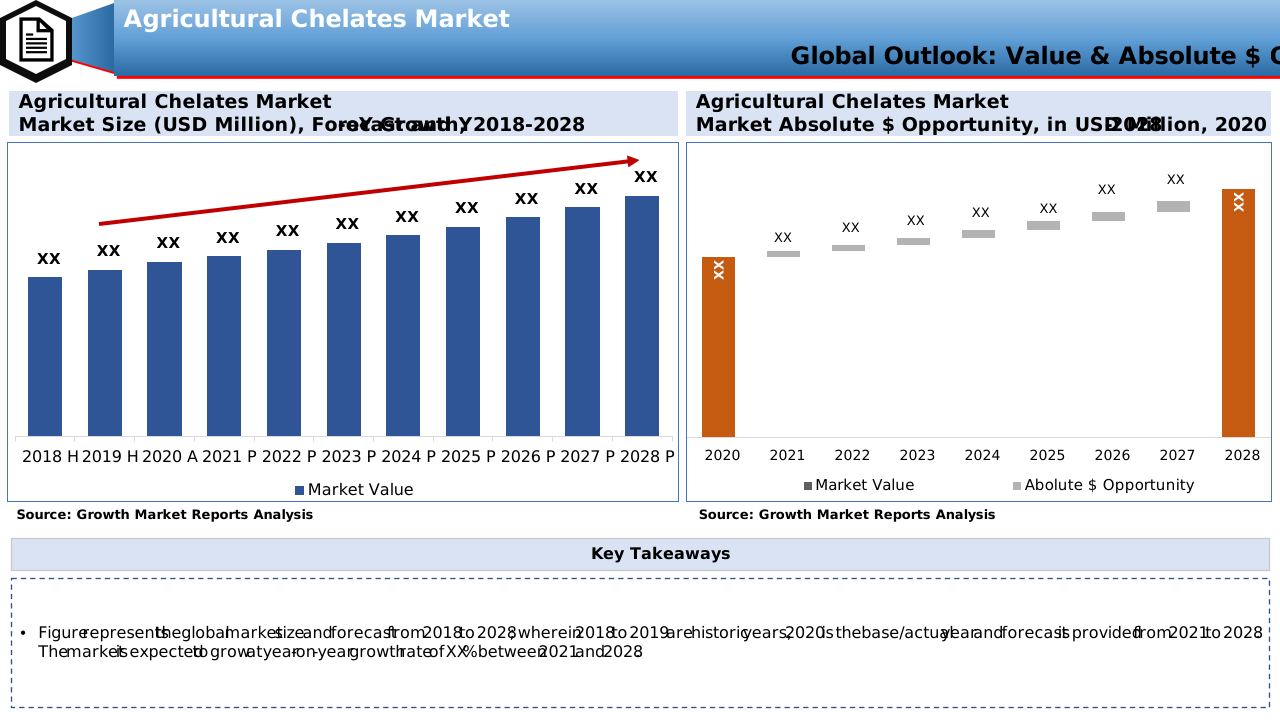
According to our latest research, the global agricultural chelates market size reached USD 1.29 billion in 2024, reflecting a robust industry driven by increasing demand for enhanced crop yields and sustainable agricultural practices. The market is expected to exhibit a CAGR of 7.1% from 2025 to 2033, with the forecasted market size projected to reach USD 2.42 billion by 2033. Key growth factors include the rising adoption of advanced farming technologies, the growing prevalence of micronutrient deficiencies in crops, and the increased focus on optimizing fertilizer efficiency. As per the latest research, the agricultural chelates market is positioned for significant expansion, underpinned by both technological advancements and evolving regulatory landscapes.

One of the primary growth drivers for the agricultural chelates market is the escalating need to address micronutrient deficiencies in soils across major agricultural economies. Modern intensive farming practices, while boosting output, often deplete essential micronutrients such as iron, zinc, and manganese from the soil, leading to reduced crop quality and yields. Agricultural chelates, especially those based on EDTA and EDDHA, are highly effective in binding and delivering these micronutrients in bioavailable forms, ensuring optimal plant uptake. This growing awareness among farmers and agronomists about the importance of balanced plant nutrition is fueling the adoption of chelated fertilizers, particularly in regions with high soil pH or calcareous soils where traditional fertilizers are less effective.

Another significant factor propelling the agricultural chelates market is the increasing emphasis on sustainable and precision agriculture. With global concerns about environmental degradation and the overuse of conventional fertilizers, there is a marked shift toward products that enhance nutrient efficiency and minimize ecological impact. Chelating agents enable precise nutrient delivery, reducing the risk of leaching and runoff, which is especially critical in water-scarce and environmentally sensitive regions. Furthermore, the growing trend of integrating chelates into fertigation and foliar application systems aligns well with modern farming techniques, supporting both conventional and organic farming sectors. This trend is expected to continue as agricultural stakeholders seek to optimize resource utilization and comply with stricter environmental regulations.

Technological advancements and product innovations are also playing a pivotal role in shaping the future of the agricultural chelates market. Leading manufacturers are investing in research and development to create more stable, biodegradable, and environmentally friendly chelating agents, such as IDHA and other next-generation compounds. These innovations not only improve the efficacy of micronutrient delivery but also address regulatory concerns regarding the persistence and toxicity of traditional chelating agents. The market is witnessing increased collaboration between agrochemical companies and research institutions to develop customized solutions tailored to specific crops, soil types, and climatic conditions, further broadening the market's scope and application potential.

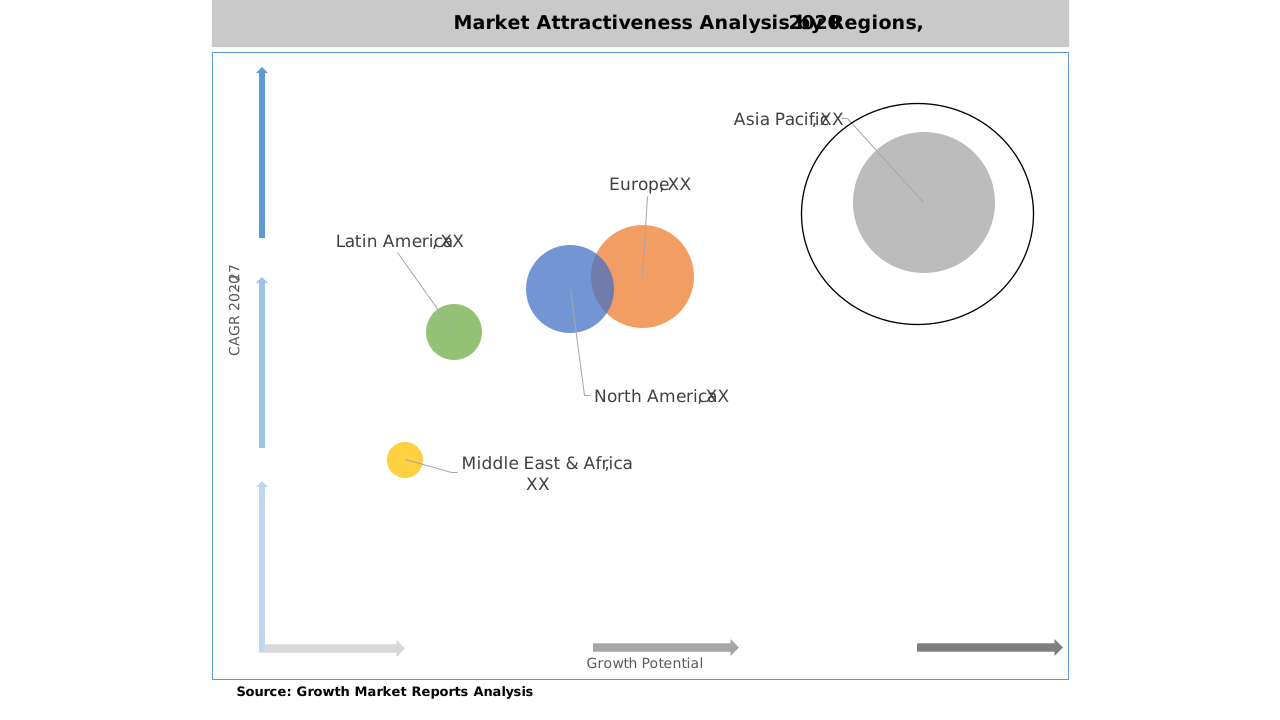
Regionally, the agricultural chelates market is witnessing dynamic growth patterns, with Asia Pacific emerging as the fastest-growing region due to its large agricultural base and increasing adoption of modern farming practices. North America and Europe remain significant markets, driven by technological innovation, regulatory support, and high awareness of sustainable agriculture. Latin America and the Middle East & Africa are also experiencing steady growth, supported by government initiatives to boost agricultural productivity and address soil nutrient deficiencies. Overall, the global market's expansion is underpinned by a combination of agronomic necessity, environmental stewardship, and technological progress, positioning agricultural chelates as essential components in the future of global food security.

Global Agricultural Chelates Industry Outlook

Type Analysis

The type segment of the agricultural chelates market is categorized into EDTA, EDDHA, DTPA, IDHA, and others, each offering unique benefits and suitability for various agricultural applications. Among these, EDTA-based chelates hold the largest market share due to their widespread use and cost-effectiveness. EDTA chelates are particularly effective in neutral to slightly acidic soils, providing stable complexes with micronutrients such as iron, zinc, copper, and manganese. Their versatility and compatibility with a broad range of fertilizers make them a preferred choice for both open-field and greenhouse cultivation. However, concerns about EDTA's persistence in the environment are prompting a gradual shift toward more sustainable alternatives, especially in regions with stringent environmental regulations.

EDDHA chelates are gaining significant traction, especially in regions with alkaline and calcareous soils where traditional chelates like EDTA are less effective. EDDHA exhibits superior stability and efficacy in high pH conditions, ensuring consistent micronutrient availability for crops such as citrus, grapes, and olives. This has made EDDHA the product of choice in Mediterranean countries and parts of the Americas. The growing adoption of EDDHA is also driven by its compatibility with fertigation and foliar application systems, which are increasingly popular in precision agriculture. As a result, the EDDHA segment is expected to witness the highest CAGR within the type segment over the forecast period.

DTPA chelates serve as a middle ground between EDTA and EDDHA, offering good stability in slightly alkaline soils and effective chelation of micronutrients, especially iron and copper. DTPA is widely used in both field crops and horticultural applications, contributing to its steady market demand. Its moderate cost and balanced performance make it suitable for a variety of crops, particularly in regions with fluctuating soil pH levels. The DTPA segment is also benefiting from ongoing research aimed at enhancing its biodegradability and environmental profile, further supporting its market growth.

Emerging chelating agents such as IDHA and other biodegradable compounds are gaining attention due to their reduced environmental impact and regulatory compliance. IDHA chelates are particularly favored in organic farming systems and regions with strict residue limits, as they decompose rapidly and do not persist in the soil or water bodies. The "others" category, which includes newer synthetic and natural chelating agents, is expected to expand as manufacturers innovate to meet evolving market demands for sustainability and performance. Overall, the type segment is characterized by a dynamic interplay between efficacy, cost, and environmental considerations, shaping the adoption patterns of various chelating agents across global markets.

Report Scope

Attributes Details
Report Title Agricultural Chelates Market Research Report 2033
By Type EDTA, EDDHA, DTPA, IDHA, Others
By Crop Type Cereals & Grains, Fruits & Vegetables, Oilseeds & Pulses, Others
By Application Soil, Foliar, Fertigation, Others
By Form Liquid, Powder, Granules
By End-User Conventional Farming, Organic Farming
Regions Covered North America, Europe, APAC, Latin America, MEA
Base Year 2024
Historic Data 2018-2023
Forecast Period 2025-2033
Number of Pages 269
Number of Tables & Figures 316
Customization Available Yes, the report can be customized as per your need.

Crop Type Analysis

The crop type segment of the agricultural chelates market encompasses cereals and grains, fruits and vegetables, oilseeds and pulses, and other specialty crops. Cereals and grains constitute the largest share of the market, driven by the extensive cultivation of crops such as wheat, rice, maize, and barley across major agricultural economies. The use of chelated micronutrients in cereal production is critical for addressing widespread deficiencies in iron, zinc, and manganese, which directly impact crop yield and quality. The increasing adoption of high-yielding and genetically modified cereal varieties further amplifies the need for precise nutrient management, thereby fueling the demand for agricultural chelates in this segment.

Fruits and vegetables represent a rapidly growing segment within the agricultural chelates market, reflecting the rising global demand for high-value horticultural crops. Chelated micronutrients play a vital role in enhancing fruit set, color, taste, and shelf life, making them indispensable for commercial fruit and vegetable production. The segment is particularly prominent in regions with intensive horticulture, such as Europe, North America, and parts of Asia Pacific. The use of chelates in greenhouse and protected cultivation systems is also on the rise, as growers seek to optimize inputs and maximize returns in controlled environments. This trend is expected to drive robust growth in the fruits and vegetables segment throughout the forecast period.

The oilseeds and pulses segment is witnessing steady expansion, underpinned by the growing importance of these crops in global food and feed markets. Crops such as soybean, sunflower, canola, and various pulses are highly sensitive to micronutrient deficiencies, particularly iron and zinc. The application of chelated fertilizers helps improve nodulation, seed set, and oil content in oilseeds and pulses, contributing to higher productivity and profitability for farmers. This segment is gaining momentum in emerging markets, where government initiatives and international development programs are promoting the adoption of advanced nutrient management practices.

The "others" category includes specialty crops such as ornamentals, spices, and medicinal plants, which, although smaller in scale, offer significant growth potential for the agricultural chelates market. These crops often require precise nutrient management to meet stringent quality standards and consumer preferences. The increasing popularity of organic and niche crops is further boosting the demand for chelated micronutrients, as growers seek to differentiate their products and comply with certification requirements. Overall, the crop type segment reflects the diverse and evolving needs of modern agriculture, with chelates playing a crucial role in supporting crop health, productivity, and sustainability across a broad spectrum of crops.

Application Analysis

The application segment of the agricultural chelates market is divided into soil, foliar, fertigation, and other specialized methods. Soil application remains the most prevalent method, accounting for the largest market share due to its ease of use and compatibility with conventional farming practices. Chelated fertilizers applied directly to the soil help overcome micronutrient immobilization, especially in challenging soil conditions such as high pH or calcareous soils. This method is widely adopted in both open-field and orchard settings, providing a reliable means of ensuring consistent nutrient availability throughout the growing season. The soil application segment continues to benefit from ongoing improvements in formulation and delivery technologies, enhancing the efficiency and effectiveness of chelated products.

Foliar application is gaining popularity as a targeted and rapid-response approach to addressing micronutrient deficiencies in crops. By applying chelated nutrients directly to the plant leaves, growers can quickly correct deficiencies and support critical growth stages such as flowering and fruiting. This method is particularly valuable in horticultural and high-value crop production, where timely nutrient intervention can significantly impact yield and quality. Advances in spray technology and formulation science are further driving the adoption of foliar chelates, enabling precise and uniform coverage with minimal wastage. The segment is expected to witness strong growth, especially in regions with intensive horticulture and protected cultivation systems.

Fertigation, the practice of delivering nutrients through irrigation systems, represents a rapidly expanding segment within the agricultural chelates market. Fertigation enables precise and efficient nutrient application, reducing input costs and environmental impact. Chelated fertilizers are ideally suited for fertigation, as they remain stable and bioavailable in solution, ensuring optimal uptake by plant roots. This method is particularly popular in large-scale and technologically advanced farming operations, including greenhouse, hydroponic, and drip irrigation systems. The fertigation segment is poised for significant growth, driven by the global trend toward precision agriculture and resource optimization.

The "others" category includes emerging application methods such as seed treatment, hydroponics, and controlled-release formulations. These specialized approaches are gaining traction as growers seek to maximize input efficiency and adapt to changing climatic and market conditions. The integration of chelated micronutrients into seed coatings and hydroponic nutrient solutions is opening new avenues for market expansion, particularly in urban and vertical farming systems. Overall, the application segment reflects the diverse and evolving strategies employed by modern agriculture to enhance crop nutrition, with chelates playing a central role in supporting sustainable and high-efficiency farming practices.

Form Analysis

The form segment of the agricultural chelates market is segmented into liquid, powder, and granules, each offering distinct advantages and application flexibility. Liquid chelates dominate the market due to their ease of handling, rapid absorption, and compatibility with various application methods, including foliar sprays and fertigation systems. Liquid formulations are particularly favored in greenhouse and high-value crop production, where precise nutrient delivery and quick correction of deficiencies are critical. The growing adoption of drip irrigation and fertigation technologies is further boosting the demand for liquid chelates, making this segment the fastest-growing within the form category.

Powdered chelates hold a significant share of the market, offering advantages in terms of storage stability, transport efficiency, and cost-effectiveness. Powder formulations are widely used in large-scale and field crop applications, where they can be easily mixed with water or other fertilizers for soil or foliar application. The ability to customize nutrient blends and concentrations makes powdered chelates a versatile option for farmers and fertilizer manufacturers alike. Ongoing innovations in formulation science are enhancing the solubility and bioavailability of powdered chelates, further supporting their market growth.

Granular chelates are gaining traction, particularly in regions with mechanized farming systems and large-scale cereal production. Granules offer the advantage of controlled release, providing a steady supply of micronutrients over an extended period. This is especially valuable in crops with long growing cycles or in soils prone to nutrient leaching. Granular chelates are also easy to handle and apply using conventional fertilizer spreaders, making them a practical choice for broad-acre farming. The segment is expected to witness steady growth as manufacturers develop new granulation technologies and expand product portfolios to meet diverse market needs.

The form segment is characterized by ongoing innovation and adaptation to changing agricultural practices and market preferences. Manufacturers are increasingly focusing on developing multi-functional and environmentally friendly formulations that combine the benefits of different forms. The trend toward customized and crop-specific solutions is also driving the development of specialty chelate products in various physical forms. Overall, the form segment reflects the dynamic nature of the agricultural chelates market, with product innovation and application flexibility serving as key drivers of growth and differentiation.

End-User Analysis

The end-user segment of the agricultural chelates market is divided into conventional farming and organic farming, each with distinct requirements and adoption patterns. Conventional farming remains the dominant end-user segment, accounting for the majority of chelate consumption globally. The widespread use of high-yielding crop varieties, intensive cultivation practices, and the need to maximize productivity drive the demand for chelated micronutrients in conventional systems. Chelates are valued for their ability to address soil nutrient imbalances, enhance fertilizer efficiency, and support crop health under diverse growing conditions. The segment continues to benefit from technological advancements and the integration of chelates into modern fertilizer programs.

Organic farming is emerging as a significant growth area within the agricultural chelates market, driven by increasing consumer demand for organic and sustainably produced food. Organic farmers face unique challenges in managing soil fertility and micronutrient availability, as the use of synthetic fertilizers and chemicals is restricted. Chelating agents derived from natural or biodegradable sources, such as IDHA and other organic-compliant compounds, are gaining popularity in this segment. The adoption of chelated micronutrients in organic farming supports crop health, yield, and quality while complying with organic certification standards. This trend is expected to accelerate as regulatory frameworks evolve and consumer preferences shift toward organic products.

The end-user segment is also witnessing increased collaboration between input suppliers, certification bodies, and research institutions to develop and promote chelate products that meet the specific needs of both conventional and organic farmers. Customized solutions, educational initiatives, and technical support are playing a crucial role in driving adoption and maximizing the benefits of chelated fertilizers across diverse farming systems. As the agricultural sector continues to evolve, the end-user segment is expected to remain a key focus area for innovation and market development, ensuring that chelates remain integral to sustainable and high-efficiency crop production.

Opportunities & Threats

The agricultural chelates market presents a host of lucrative opportunities for both existing players and new entrants. One of the most promising opportunities lies in the development of environmentally friendly and biodegradable chelating agents, which address growing regulatory and consumer concerns about the persistence and toxicity of traditional compounds. Innovations such as IDHA and other next-generation chelates are opening new avenues for market expansion, particularly in regions with strict environmental standards and a strong focus on sustainable agriculture. Additionally, the integration of chelates into precision agriculture, fertigation, and digital farming platforms is creating opportunities for value-added services and customized solutions, enabling manufacturers to differentiate their offerings and capture new market segments.

Another major opportunity is the expansion of the agricultural chelates market in emerging economies, where the adoption of advanced nutrient management practices is still in its early stages. Rapid population growth, increasing food demand, and government initiatives to boost agricultural productivity are driving the uptake of chelated fertilizers in Asia Pacific, Latin America, and Africa. Market players can capitalize on these trends by investing in local manufacturing, distribution networks, and farmer education programs to build brand loyalty and market share. The growing popularity of organic and specialty crops also presents significant opportunities for chelate manufacturers to develop tailored products and tap into high-value niche markets.

Despite the positive outlook, the agricultural chelates market faces several restraining factors that could impact its growth trajectory. One of the primary challenges is the relatively high cost of chelated fertilizers compared to conventional micronutrient sources, which can limit adoption among smallholder and resource-constrained farmers. Additionally, concerns about the environmental persistence and potential toxicity of certain synthetic chelating agents, such as EDTA, are leading to increased regulatory scrutiny and calls for safer alternatives. Market players must navigate these challenges by investing in research and development, promoting the benefits of chelates, and collaborating with stakeholders to ensure compliance with evolving regulatory standards.

Regional Outlook

The agricultural chelates market exhibits distinct regional trends, reflecting variations in agricultural practices, crop types, and regulatory environments. Asia Pacific leads the market with a value of USD 440 million in 2024, driven by the region's vast agricultural base, rapid adoption of modern farming technologies, and government initiatives to improve soil health and crop productivity. Countries such as China, India, and Australia are at the forefront of chelate adoption, leveraging advanced nutrient management practices to address soil deficiencies and enhance food security. The Asia Pacific market is expected to register the highest CAGR of 8.2% over the forecast period, supported by ongoing investments in agricultural infrastructure and research.

North America and Europe are established markets for agricultural chelates, with values of USD 320 million and USD 290 million respectively in 2024. These regions benefit from high awareness of sustainable agriculture, advanced farming systems, and supportive regulatory frameworks that promote the use of environmentally friendly inputs. The adoption of chelated fertilizers in North America is driven by the need to optimize yields in large-scale commercial farming operations, while Europe places greater emphasis on environmental stewardship and compliance with stringent chemical regulations. Both regions are witnessing steady growth, with increasing demand for innovative and organic-compliant chelate products.

Latin America and the Middle East & Africa represent emerging markets with significant growth potential, valued at USD 145 million and USD 95 million respectively in 2024. These regions are characterized by diverse agro-climatic conditions, expanding agricultural sectors, and government-led efforts to improve nutrient management and crop performance. The adoption of chelated fertilizers is gaining momentum, particularly in high-value crops such as fruits, vegetables, and export-oriented commodities. Market players are increasingly focusing on these regions to expand their footprint and capitalize on untapped opportunities, supported by targeted marketing and farmer education initiatives.

Agricultural Chelates Market Statistics

Competitor Outlook

The agricultural chelates market is characterized by intense competition, with a diverse mix of global and regional players vying for market share through product innovation, strategic partnerships, and geographic expansion. Leading companies are investing heavily in research and development to create advanced chelating agents that offer superior stability, bioavailability, and environmental compatibility. The competitive landscape is further shaped by ongoing consolidation and collaboration among key stakeholders, including agrochemical manufacturers, fertilizer companies, and research institutions, aimed at developing integrated solutions that address the evolving needs of modern agriculture.

Major players in the market are leveraging their extensive distribution networks, technical expertise, and brand recognition to maintain a competitive edge. Companies are also focusing on expanding their product portfolios to include a wider range of chelating agents, formulations, and application methods, catering to the diverse requirements of different crops, soil types, and farming systems. Strategic acquisitions and partnerships are common strategies employed to strengthen market presence, access new technologies, and enter untapped regional markets. The emphasis on sustainability and regulatory compliance is driving innovation in biodegradable and organic-compliant chelates, with companies positioning themselves as leaders in environmentally responsible agriculture.

The competitive landscape is also witnessing the entry of new players, particularly in emerging markets, where local manufacturers are developing cost-effective and customized solutions to address specific agronomic challenges. These companies are gaining traction by offering value-added services such as soil testing, crop advisory, and technical support, building strong relationships with farmers and distributors. The increasing focus on digital agriculture and precision farming is creating new opportunities for market differentiation, with companies integrating chelates into smart nutrient management platforms and data-driven decision-making tools.

Some of the major companies operating in the agricultural chelates market include Yara International ASA, BASF SE, AkzoNobel N.V., The Dow Chemical Company, Haifa Chemicals Ltd., Syngenta AG, Nufarm Limited, Aries Agro Limited, Shandong IRO Chelating Chemical Co., Ltd., and Valagro S.p.A. These companies are at the forefront of product development, sustainability initiatives, and market expansion efforts. For example, Yara International and BASF are known for their strong R&D capabilities and global reach, while AkzoNobel and Haifa Chemicals focus on high-performance chelate formulations for specialty crops. Valagro and Aries Agro are recognized for their leadership in organic and environmentally friendly chelates, catering to the growing demand for sustainable agriculture solutions. Through continuous innovation, strategic investments, and customer-centric approaches, these companies are shaping the future of the agricultural chelates market and supporting the global transition toward more productive, resilient, and sustainable farming systems.

Key Players

  • BASF SE
  • Akzo Nobel N.V.
  • Yara International ASA
  • The Dow Chemical Company
  • Nufarm Limited
  • Haifa Chemicals Ltd.
  • Syngenta AG
  • Valagro S.p.A.
  • Aries Agro Limited
  • ATP Nutrition
  • ICL Group Ltd.
  • Shandong IRO Chelating Chemical Co., Ltd.
  • Deretil Agronutritional
  • Van Iperen International
  • Agmin Chelates Pty Ltd
  • Protex International
  • Akema S.r.l.
  • Manvert (Biovert S.L.)
  • BMS Micro-Nutrients NV
  • Innospec Inc.
Agricultural Chelates Market Overview

Segments

The Agricultural Chelates market has been segmented on the basis of

Type

  • EDTA
  • EDDHA
  • DTPA
  • IDHA
  • Others

Crop Type

  • Cereals & Grains
  • Fruits & Vegetables
  • Oilseeds & Pulses
  • Others

Application

  • Soil
  • Foliar
  • Fertigation
  • Others

Form

  • Liquid
  • Powder
  • Granules

End-User

  • Conventional Farming
  • Organic Farming

Competitive Landscape

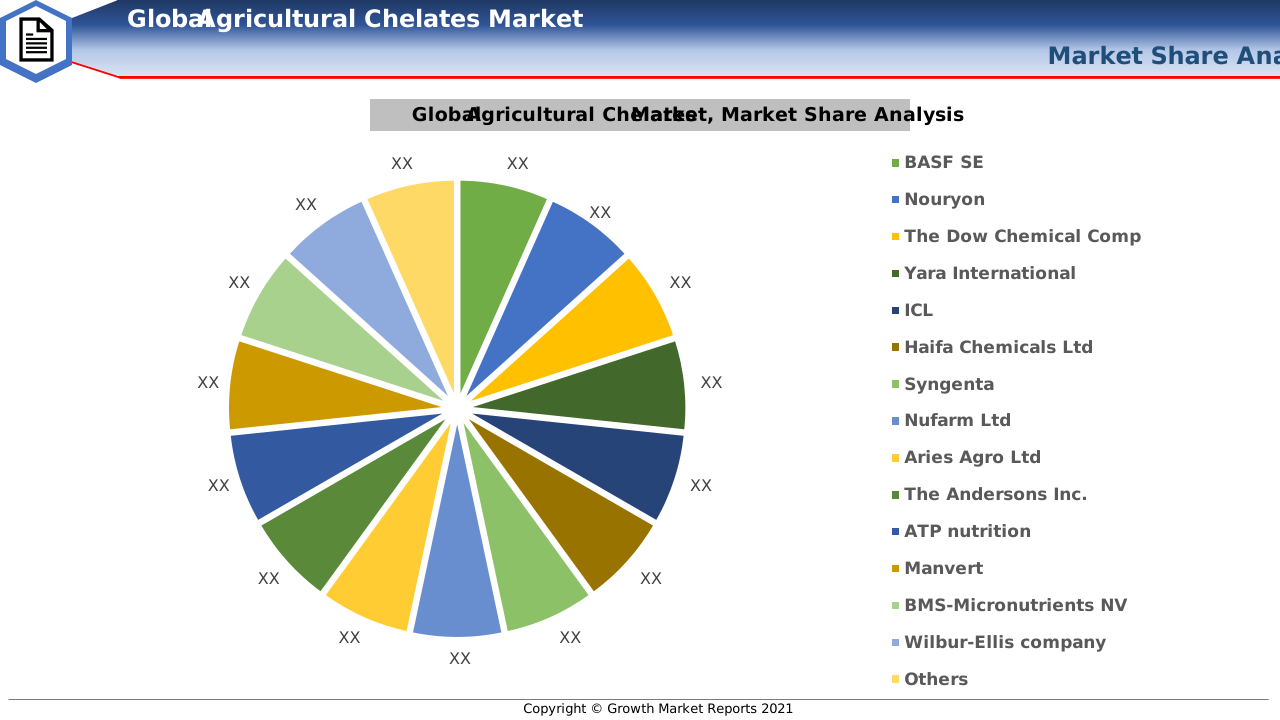
The major players of the market are BASF SE, Nouryon, The Dow Chemical Company, Yara International, ICL, Haifa Chemicals Ltd, Syngenta, Nufarm Ltd, Aries Agro Ltd, The Andersons Inc., ATP nutrition, Manvert, BMS-Micronutrients NV, Wilbur-Ellis company, Compo Expert GMBH, Greensmiths, Inc., Agmin Chelates Pty. Ltd, Van Iperen International, Valagro SpA, Shandong Iro Chelating Chemical Co., Ltd., Protex International SA, and Deretil Agronutritional.

Major companies are focusing on engaging in partnerships, acquisitions, and increasing investment on R&D activities to expand their market share.

Agricultural Chelates Market Share

Frequently Asked Questions

Major companies include BASF SE, Akzo Nobel N.V., Yara International ASA, The Dow Chemical Company, Nufarm Limited, Haifa Chemicals Ltd., Syngenta AG, Valagro S.p.A., Aries Agro Limited, ATP Nutrition, ICL Group Ltd., and others.

Challenges include the higher cost of chelated fertilizers compared to conventional options, environmental concerns over the persistence and toxicity of some synthetic chelating agents (like EDTA), and regulatory scrutiny in certain regions.

Agricultural chelates are available in liquid, powder, and granular forms. Liquid chelates are favored for rapid absorption and compatibility with fertigation, powders are valued for storage and cost-effectiveness, and granules offer controlled release for large-scale farming.

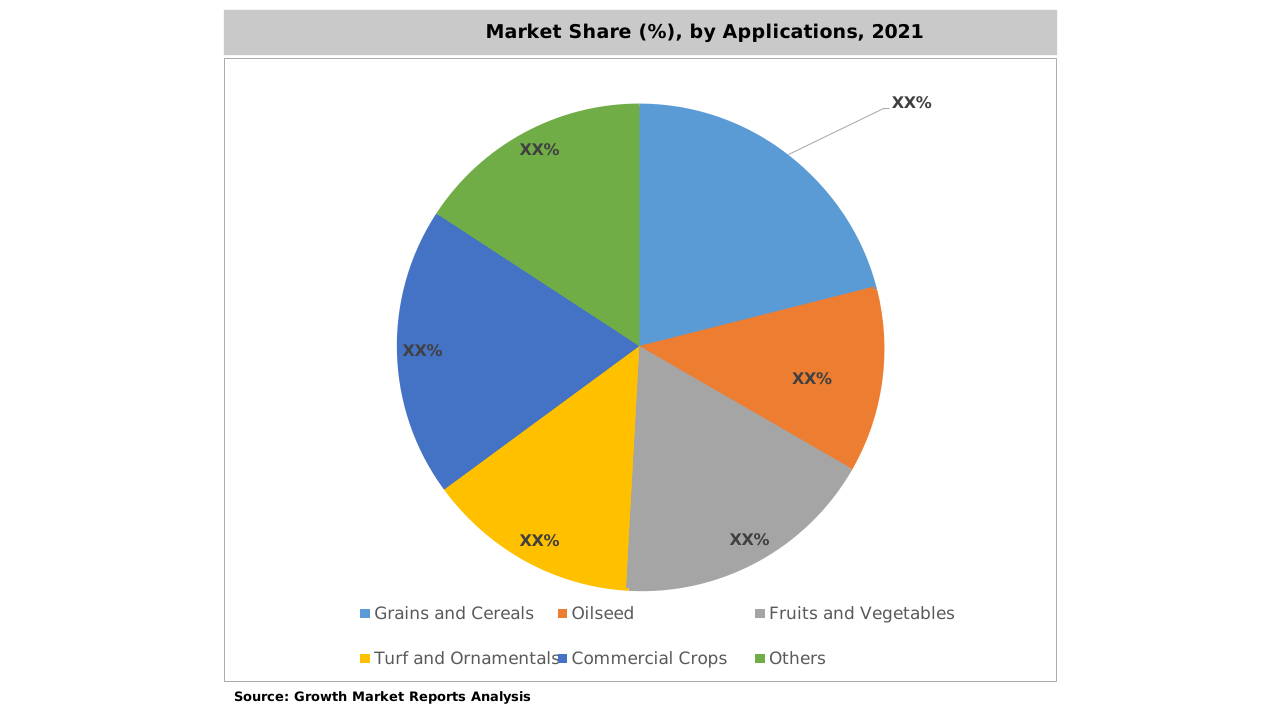
Cereals and grains are the largest segment, followed by fruits and vegetables, oilseeds and pulses, and specialty crops. Chelates are especially important for high-value crops and those sensitive to micronutrient deficiencies.

Agricultural chelates are applied through soil application, foliar sprays, fertigation (via irrigation systems), and other specialized methods like seed treatment and hydroponics. Soil application is most common, but foliar and fertigation methods are gaining popularity for their efficiency.

Asia Pacific is the fastest-growing region, driven by large agricultural bases and adoption of modern practices. North America and Europe are significant markets due to technological innovation and regulatory support, while Latin America and the Middle East & Africa are emerging markets with strong growth potential.

Key growth drivers include rising demand for higher crop yields, increasing prevalence of micronutrient deficiencies in soils, adoption of advanced and sustainable farming technologies, and regulatory support for environmentally friendly agricultural inputs.

The main types of agricultural chelates are EDTA, EDDHA, DTPA, and IDHA. EDTA is widely used for its cost-effectiveness, while EDDHA is preferred in alkaline soils. DTPA offers good stability in slightly alkaline soils, and IDHA is favored for organic farming due to its biodegradability.

Agricultural chelates are compounds that bind micronutrients like iron, zinc, and manganese, making them more bioavailable to plants. They are crucial for addressing soil micronutrient deficiencies, improving crop yields, and supporting sustainable agriculture.

The global agricultural chelates market reached USD 1.29 billion in 2024 and is projected to grow at a CAGR of 7.1% from 2025 to 2033, reaching USD 2.42 billion by 2033.

Table Of Content

Chapter 1 Executive Summary
Chapter 2 Assumptions and Acronyms Used
Chapter 3 Research Methodology
Chapter 4 Agricultural Chelates Market Overview
   4.1 Introduction
      4.1.1 Market Taxonomy
      4.1.2 Market Definition
      4.1.3 Macro-Economic Factors Impacting the Market Growth
   4.2 Agricultural Chelates Market Dynamics
      4.2.1 Market Drivers
      4.2.2 Market Restraints
      4.2.3 Market Opportunity
   4.3 Agricultural Chelates Market - Supply Chain Analysis
      4.3.1 List of Key Suppliers
      4.3.2 List of Key Distributors
      4.3.3 List of Key Consumers
   4.4 Key Forces Shaping the Agricultural Chelates Market
      4.4.1 Bargaining Power of Suppliers
      4.4.2 Bargaining Power of Buyers
      4.4.3 Threat of Substitution
      4.4.4 Threat of New Entrants
      4.4.5 Competitive Rivalry
   4.5 Global Agricultural Chelates Market Size & Forecast, 2023-2032
      4.5.1 Agricultural Chelates Market Size and Y-o-Y Growth
      4.5.2 Agricultural Chelates Market Absolute $ Opportunity

Chapter 5 Global Agricultural Chelates Market Analysis and Forecast By Type
   5.1 Introduction
      5.1.1 Key Market Trends & Growth Opportunities By Type
      5.1.2 Basis Point Share (BPS) Analysis By Type
      5.1.3 Absolute $ Opportunity Assessment By Type
   5.2 Agricultural Chelates Market Size Forecast By Type
      5.2.1 EDTA
      5.2.2 EDDHA
      5.2.3 DTPA
      5.2.4 IDHA
      5.2.5 Others
   5.3 Market Attractiveness Analysis By Type

Chapter 6 Global Agricultural Chelates Market Analysis and Forecast By Crop Type
   6.1 Introduction
      6.1.1 Key Market Trends & Growth Opportunities By Crop Type
      6.1.2 Basis Point Share (BPS) Analysis By Crop Type
      6.1.3 Absolute $ Opportunity Assessment By Crop Type
   6.2 Agricultural Chelates Market Size Forecast By Crop Type
      6.2.1 Cereals & Grains
      6.2.2 Fruits & Vegetables
      6.2.3 Oilseeds & Pulses
      6.2.4 Others
   6.3 Market Attractiveness Analysis By Crop Type

Chapter 7 Global Agricultural Chelates Market Analysis and Forecast By Application
   7.1 Introduction
      7.1.1 Key Market Trends & Growth Opportunities By Application
      7.1.2 Basis Point Share (BPS) Analysis By Application
      7.1.3 Absolute $ Opportunity Assessment By Application
   7.2 Agricultural Chelates Market Size Forecast By Application
      7.2.1 Soil
      7.2.2 Foliar
      7.2.3 Fertigation
      7.2.4 Others
   7.3 Market Attractiveness Analysis By Application

Chapter 8 Global Agricultural Chelates Market Analysis and Forecast By Form
   8.1 Introduction
      8.1.1 Key Market Trends & Growth Opportunities By Form
      8.1.2 Basis Point Share (BPS) Analysis By Form
      8.1.3 Absolute $ Opportunity Assessment By Form
   8.2 Agricultural Chelates Market Size Forecast By Form
      8.2.1 Liquid
      8.2.2 Powder
      8.2.3 Granules
   8.3 Market Attractiveness Analysis By Form

Chapter 9 Global Agricultural Chelates Market Analysis and Forecast By End-User
   9.1 Introduction
      9.1.1 Key Market Trends & Growth Opportunities By End-User
      9.1.2 Basis Point Share (BPS) Analysis By End-User
      9.1.3 Absolute $ Opportunity Assessment By End-User
   9.2 Agricultural Chelates Market Size Forecast By End-User
      9.2.1 Conventional Farming
      9.2.2 Organic Farming
   9.3 Market Attractiveness Analysis By End-User

Chapter 10 Global Agricultural Chelates Market Analysis and Forecast by Region
   10.1 Introduction
      10.1.1 Key Market Trends & Growth Opportunities By Region
      10.1.2 Basis Point Share (BPS) Analysis By Region
      10.1.3 Absolute $ Opportunity Assessment By Region
   10.2 Agricultural Chelates Market Size Forecast By Region
      10.2.1 North America
      10.2.2 Europe
      10.2.3 Asia Pacific
      10.2.4 Latin America
      10.2.5 Middle East & Africa (MEA)
   10.3 Market Attractiveness Analysis By Region

Chapter 11 Coronavirus Disease (COVID-19) Impact 
   11.1 Introduction 
   11.2 Current & Future Impact Analysis 
   11.3 Economic Impact Analysis 
   11.4 Government Policies 
   11.5 Investment Scenario

Chapter 12 North America Agricultural Chelates Analysis and Forecast
   12.1 Introduction
   12.2 North America Agricultural Chelates Market Size Forecast by Country
      12.2.1 U.S.
      12.2.2 Canada
   12.3 Basis Point Share (BPS) Analysis by Country
   12.4 Absolute $ Opportunity Assessment by Country
   12.5 Market Attractiveness Analysis by Country
   12.6 North America Agricultural Chelates Market Size Forecast By Type
      12.6.1 EDTA
      12.6.2 EDDHA
      12.6.3 DTPA
      12.6.4 IDHA
      12.6.5 Others
   12.7 Basis Point Share (BPS) Analysis By Type 
   12.8 Absolute $ Opportunity Assessment By Type 
   12.9 Market Attractiveness Analysis By Type
   12.10 North America Agricultural Chelates Market Size Forecast By Crop Type
      12.10.1 Cereals & Grains
      12.10.2 Fruits & Vegetables
      12.10.3 Oilseeds & Pulses
      12.10.4 Others
   12.11 Basis Point Share (BPS) Analysis By Crop Type 
   12.12 Absolute $ Opportunity Assessment By Crop Type 
   12.13 Market Attractiveness Analysis By Crop Type
   12.14 North America Agricultural Chelates Market Size Forecast By Application
      12.14.1 Soil
      12.14.2 Foliar
      12.14.3 Fertigation
      12.14.4 Others
   12.15 Basis Point Share (BPS) Analysis By Application 
   12.16 Absolute $ Opportunity Assessment By Application 
   12.17 Market Attractiveness Analysis By Application
   12.18 North America Agricultural Chelates Market Size Forecast By Form
      12.18.1 Liquid
      12.18.2 Powder
      12.18.3 Granules
   12.19 Basis Point Share (BPS) Analysis By Form 
   12.20 Absolute $ Opportunity Assessment By Form 
   12.21 Market Attractiveness Analysis By Form
   12.22 North America Agricultural Chelates Market Size Forecast By End-User
      12.22.1 Conventional Farming
      12.22.2 Organic Farming
   12.23 Basis Point Share (BPS) Analysis By End-User 
   12.24 Absolute $ Opportunity Assessment By End-User 
   12.25 Market Attractiveness Analysis By End-User

Chapter 13 Europe Agricultural Chelates Analysis and Forecast
   13.1 Introduction
   13.2 Europe Agricultural Chelates Market Size Forecast by Country
      13.2.1 Germany
      13.2.2 France
      13.2.3 Italy
      13.2.4 U.K.
      13.2.5 Spain
      13.2.6 Russia
      13.2.7 Rest of Europe
   13.3 Basis Point Share (BPS) Analysis by Country
   13.4 Absolute $ Opportunity Assessment by Country
   13.5 Market Attractiveness Analysis by Country
   13.6 Europe Agricultural Chelates Market Size Forecast By Type
      13.6.1 EDTA
      13.6.2 EDDHA
      13.6.3 DTPA
      13.6.4 IDHA
      13.6.5 Others
   13.7 Basis Point Share (BPS) Analysis By Type 
   13.8 Absolute $ Opportunity Assessment By Type 
   13.9 Market Attractiveness Analysis By Type
   13.10 Europe Agricultural Chelates Market Size Forecast By Crop Type
      13.10.1 Cereals & Grains
      13.10.2 Fruits & Vegetables
      13.10.3 Oilseeds & Pulses
      13.10.4 Others
   13.11 Basis Point Share (BPS) Analysis By Crop Type 
   13.12 Absolute $ Opportunity Assessment By Crop Type 
   13.13 Market Attractiveness Analysis By Crop Type
   13.14 Europe Agricultural Chelates Market Size Forecast By Application
      13.14.1 Soil
      13.14.2 Foliar
      13.14.3 Fertigation
      13.14.4 Others
   13.15 Basis Point Share (BPS) Analysis By Application 
   13.16 Absolute $ Opportunity Assessment By Application 
   13.17 Market Attractiveness Analysis By Application
   13.18 Europe Agricultural Chelates Market Size Forecast By Form
      13.18.1 Liquid
      13.18.2 Powder
      13.18.3 Granules
   13.19 Basis Point Share (BPS) Analysis By Form 
   13.20 Absolute $ Opportunity Assessment By Form 
   13.21 Market Attractiveness Analysis By Form
   13.22 Europe Agricultural Chelates Market Size Forecast By End-User
      13.22.1 Conventional Farming
      13.22.2 Organic Farming
   13.23 Basis Point Share (BPS) Analysis By End-User 
   13.24 Absolute $ Opportunity Assessment By End-User 
   13.25 Market Attractiveness Analysis By End-User

Chapter 14 Asia Pacific Agricultural Chelates Analysis and Forecast
   14.1 Introduction
   14.2 Asia Pacific Agricultural Chelates Market Size Forecast by Country
      14.2.1 China
      14.2.2 Japan
      14.2.3 South Korea
      14.2.4 India
      14.2.5 Australia
      14.2.6 South East Asia (SEA)
      14.2.7 Rest of Asia Pacific (APAC)
   14.3 Basis Point Share (BPS) Analysis by Country
   14.4 Absolute $ Opportunity Assessment by Country
   14.5 Market Attractiveness Analysis by Country
   14.6 Asia Pacific Agricultural Chelates Market Size Forecast By Type
      14.6.1 EDTA
      14.6.2 EDDHA
      14.6.3 DTPA
      14.6.4 IDHA
      14.6.5 Others
   14.7 Basis Point Share (BPS) Analysis By Type 
   14.8 Absolute $ Opportunity Assessment By Type 
   14.9 Market Attractiveness Analysis By Type
   14.10 Asia Pacific Agricultural Chelates Market Size Forecast By Crop Type
      14.10.1 Cereals & Grains
      14.10.2 Fruits & Vegetables
      14.10.3 Oilseeds & Pulses
      14.10.4 Others
   14.11 Basis Point Share (BPS) Analysis By Crop Type 
   14.12 Absolute $ Opportunity Assessment By Crop Type 
   14.13 Market Attractiveness Analysis By Crop Type
   14.14 Asia Pacific Agricultural Chelates Market Size Forecast By Application
      14.14.1 Soil
      14.14.2 Foliar
      14.14.3 Fertigation
      14.14.4 Others
   14.15 Basis Point Share (BPS) Analysis By Application 
   14.16 Absolute $ Opportunity Assessment By Application 
   14.17 Market Attractiveness Analysis By Application
   14.18 Asia Pacific Agricultural Chelates Market Size Forecast By Form
      14.18.1 Liquid
      14.18.2 Powder
      14.18.3 Granules
   14.19 Basis Point Share (BPS) Analysis By Form 
   14.20 Absolute $ Opportunity Assessment By Form 
   14.21 Market Attractiveness Analysis By Form
   14.22 Asia Pacific Agricultural Chelates Market Size Forecast By End-User
      14.22.1 Conventional Farming
      14.22.2 Organic Farming
   14.23 Basis Point Share (BPS) Analysis By End-User 
   14.24 Absolute $ Opportunity Assessment By End-User 
   14.25 Market Attractiveness Analysis By End-User

Chapter 15 Latin America Agricultural Chelates Analysis and Forecast
   15.1 Introduction
   15.2 Latin America Agricultural Chelates Market Size Forecast by Country
      15.2.1 Brazil
      15.2.2 Mexico
      15.2.3 Rest of Latin America (LATAM)
   15.3 Basis Point Share (BPS) Analysis by Country
   15.4 Absolute $ Opportunity Assessment by Country
   15.5 Market Attractiveness Analysis by Country
   15.6 Latin America Agricultural Chelates Market Size Forecast By Type
      15.6.1 EDTA
      15.6.2 EDDHA
      15.6.3 DTPA
      15.6.4 IDHA
      15.6.5 Others
   15.7 Basis Point Share (BPS) Analysis By Type 
   15.8 Absolute $ Opportunity Assessment By Type 
   15.9 Market Attractiveness Analysis By Type
   15.10 Latin America Agricultural Chelates Market Size Forecast By Crop Type
      15.10.1 Cereals & Grains
      15.10.2 Fruits & Vegetables
      15.10.3 Oilseeds & Pulses
      15.10.4 Others
   15.11 Basis Point Share (BPS) Analysis By Crop Type 
   15.12 Absolute $ Opportunity Assessment By Crop Type 
   15.13 Market Attractiveness Analysis By Crop Type
   15.14 Latin America Agricultural Chelates Market Size Forecast By Application
      15.14.1 Soil
      15.14.2 Foliar
      15.14.3 Fertigation
      15.14.4 Others
   15.15 Basis Point Share (BPS) Analysis By Application 
   15.16 Absolute $ Opportunity Assessment By Application 
   15.17 Market Attractiveness Analysis By Application
   15.18 Latin America Agricultural Chelates Market Size Forecast By Form
      15.18.1 Liquid
      15.18.2 Powder
      15.18.3 Granules
   15.19 Basis Point Share (BPS) Analysis By Form 
   15.20 Absolute $ Opportunity Assessment By Form 
   15.21 Market Attractiveness Analysis By Form
   15.22 Latin America Agricultural Chelates Market Size Forecast By End-User
      15.22.1 Conventional Farming
      15.22.2 Organic Farming
   15.23 Basis Point Share (BPS) Analysis By End-User 
   15.24 Absolute $ Opportunity Assessment By End-User 
   15.25 Market Attractiveness Analysis By End-User

Chapter 16 Middle East & Africa (MEA) Agricultural Chelates Analysis and Forecast
   16.1 Introduction
   16.2 Middle East & Africa (MEA) Agricultural Chelates Market Size Forecast by Country
      16.2.1 Saudi Arabia
      16.2.2 South Africa
      16.2.3 UAE
      16.2.4 Rest of Middle East & Africa (MEA)
   16.3 Basis Point Share (BPS) Analysis by Country
   16.4 Absolute $ Opportunity Assessment by Country
   16.5 Market Attractiveness Analysis by Country
   16.6 Middle East & Africa (MEA) Agricultural Chelates Market Size Forecast By Type
      16.6.1 EDTA
      16.6.2 EDDHA
      16.6.3 DTPA
      16.6.4 IDHA
      16.6.5 Others
   16.7 Basis Point Share (BPS) Analysis By Type 
   16.8 Absolute $ Opportunity Assessment By Type 
   16.9 Market Attractiveness Analysis By Type
   16.10 Middle East & Africa (MEA) Agricultural Chelates Market Size Forecast By Crop Type
      16.10.1 Cereals & Grains
      16.10.2 Fruits & Vegetables
      16.10.3 Oilseeds & Pulses
      16.10.4 Others
   16.11 Basis Point Share (BPS) Analysis By Crop Type 
   16.12 Absolute $ Opportunity Assessment By Crop Type 
   16.13 Market Attractiveness Analysis By Crop Type
   16.14 Middle East & Africa (MEA) Agricultural Chelates Market Size Forecast By Application
      16.14.1 Soil
      16.14.2 Foliar
      16.14.3 Fertigation
      16.14.4 Others
   16.15 Basis Point Share (BPS) Analysis By Application 
   16.16 Absolute $ Opportunity Assessment By Application 
   16.17 Market Attractiveness Analysis By Application
   16.18 Middle East & Africa (MEA) Agricultural Chelates Market Size Forecast By Form
      16.18.1 Liquid
      16.18.2 Powder
      16.18.3 Granules
   16.19 Basis Point Share (BPS) Analysis By Form 
   16.20 Absolute $ Opportunity Assessment By Form 
   16.21 Market Attractiveness Analysis By Form
   16.22 Middle East & Africa (MEA) Agricultural Chelates Market Size Forecast By End-User
      16.22.1 Conventional Farming
      16.22.2 Organic Farming
   16.23 Basis Point Share (BPS) Analysis By End-User 
   16.24 Absolute $ Opportunity Assessment By End-User 
   16.25 Market Attractiveness Analysis By End-User

Chapter 17 Competition Landscape 
   17.1 Agricultural Chelates Market: Competitive Dashboard
   17.2 Global Agricultural Chelates Market: Market Share Analysis, 2023
   17.3 Company Profiles (Details – Overview, Financials, Developments, Strategy) 
      17.3.1 BASF SE
Akzo Nobel N.V.
Yara International ASA
The Dow Chemical Company
Nufarm Limited
Haifa Chemicals Ltd.
Syngenta AG
Valagro S.p.A.
Aries Agro Limited
ATP Nutrition
ICL Group Ltd.
Shandong IRO Chelating Chemical Co., Ltd.
Deretil Agronutritional
Van Iperen International
Agmin Chelates Pty Ltd
Protex International
Akema S.r.l.
Manvert (Biovert S.L.)
BMS Micro-Nutrients NV
Innospec Inc.

Methodology

Our Clients

General Electric
Pfizer
General Mills
sinopec
FedEx Logistics
Deloitte
Honda Motor Co. Ltd.
Nestle SA