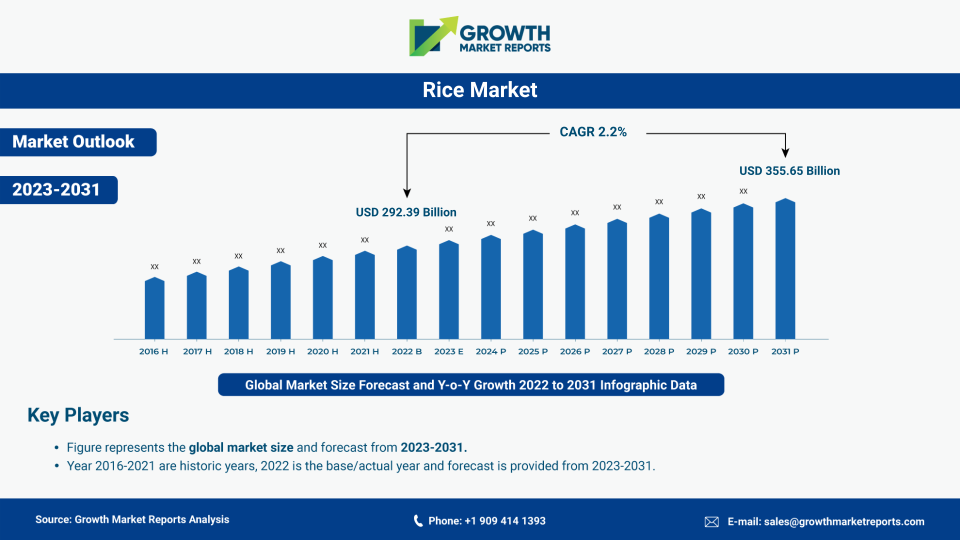
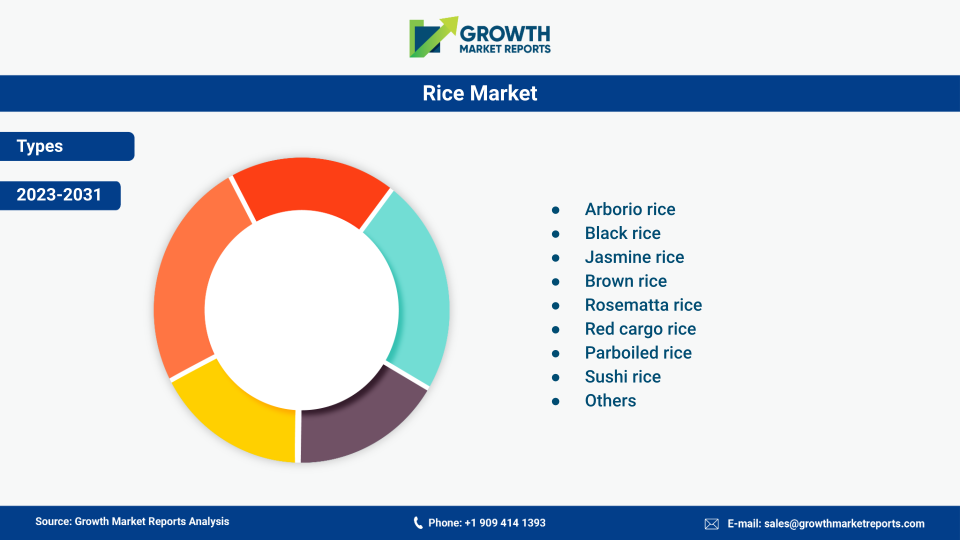
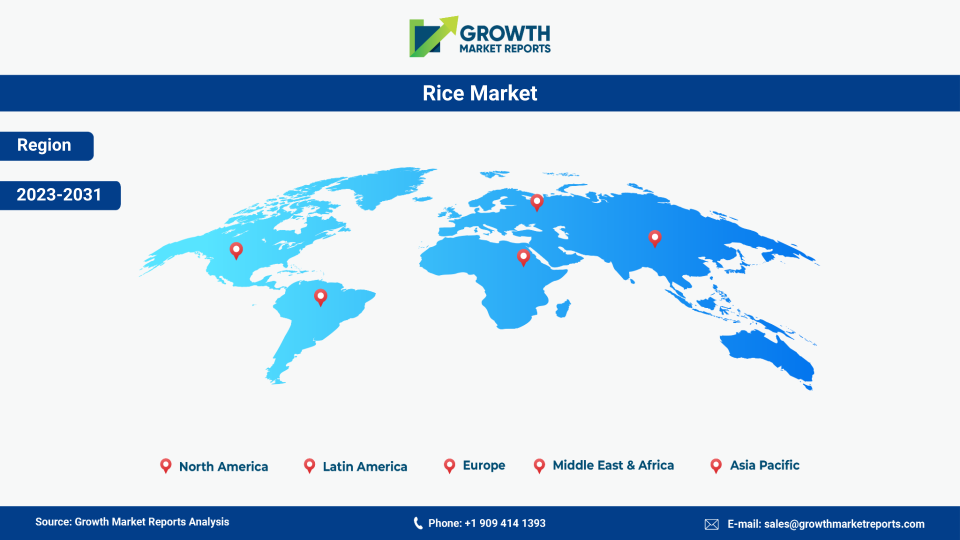
Rice Market Research Report 2033

Segments - by Product Type (Long Grain Rice, Medium Grain Rice, Short Grain Rice, Others), by Grain Type (White Rice, Brown Rice, Red Rice, Black Rice, Others), by Application (Food & Beverage, Animal Feed, Cosmetics & Personal Care, Others), by Distribution Channel (Supermarkets/Hypermarkets, Convenience Stores, Online Stores, Others)

https://growthmarketreports.com/Anuradha
Author : Anuradha B. More
https://growthmarketreports.com/Vaibhav
Fact-checked by : Vaibhav Chandola
https://growthmarketreports.com/Shruti
Editor : Shruti Bhat

Upcoming | Report ID :FB-2783 | 4.7 Rating | 58 Reviews | 296 Pages | Format : Docx PDF

Report Description


Rice Market Outlook

According to our latest research, the global rice market size reached USD 312.5 billion in 2024, with a robust growth trajectory supported by a compound annual growth rate (CAGR) of 3.4% during the forecast period. The market is expected to expand further, reaching USD 418.6 billion by 2033. The primary growth driver for the rice market is the rising global population, especially in Asia and Africa, which is intensifying the demand for staple foods such as rice. Additionally, evolving dietary preferences and the increasing consumption of specialty rice varieties are fueling market expansion.

One of the most significant growth factors in the rice market is the escalating demand for rice as a staple food, particularly in rapidly urbanizing regions. As urban populations grow, there is an increased reliance on packaged and processed rice products, which offer convenience and longer shelf life. This shift is also driven by rising disposable incomes, allowing consumers to diversify their rice consumption beyond traditional varieties to include premium and fortified rice. Furthermore, government initiatives in countries like India, China, and Indonesia to ensure food security and subsidize rice production have further bolstered the market. These policies not only stabilize prices but also encourage farmers to adopt advanced cultivation techniques, leading to higher yields and better quality grains.

Technological advancements in rice cultivation and processing are also contributing to the market’s growth. The adoption of high-yielding and pest-resistant rice varieties, along with improved irrigation and mechanization, has significantly increased productivity. This has enabled producers to meet the rising demand both domestically and internationally. Additionally, the global rice trade is expanding, with major exporters such as Thailand, Vietnam, and India playing a pivotal role in meeting the needs of rice-importing nations. The increasing popularity of organic and specialty rice, such as basmati and jasmine, has opened new avenues for market players, allowing them to tap into niche segments with higher profit margins.

Health and wellness trends are also shaping the rice market, as consumers become more aware of the nutritional benefits of different rice varieties. Brown, red, and black rice are gaining traction due to their higher fiber and antioxidant content compared to white rice. This shift is particularly evident in developed regions, where consumers are willing to pay a premium for healthier options. Moreover, the use of rice in non-food applications, such as cosmetics and personal care products, is expanding the market’s reach. Companies are leveraging rice bran oil and rice-derived ingredients for their moisturizing and antioxidant properties, further diversifying the demand base and supporting long-term market growth.

Regionally, Asia Pacific continues to dominate the global rice market, accounting for the largest share in both production and consumption. However, North America and Europe are witnessing steady growth, driven by the rising popularity of ethnic cuisines and the increasing adoption of healthier rice varieties. Africa and Latin America are emerging as high-potential markets, with investments in infrastructure and agricultural modernization paving the way for increased production and consumption. As the rice market evolves, stakeholders across the value chain are focusing on sustainability, traceability, and innovation to stay competitive and meet the changing needs of consumers worldwide.

Global Rice Industry Outlook

Product Type Analysis

The rice market is segmented by product type into long grain rice, medium grain rice, short grain rice, and others. Long grain rice, including varieties like basmati and jasmine, holds the largest market share due to its widespread consumption in Asia, the Middle East, and parts of Africa. Its fluffy texture and distinct aroma make it a preferred choice for a variety of dishes, from pilafs to biryanis. The growing popularity of international cuisines in Western countries has further propelled the demand for long grain rice, with supermarkets and specialty stores expanding their offerings to include premium imported varieties. The versatility of long grain rice in both household and food service applications ensures its continued dominance in the global market.

Medium grain rice, known for its slightly sticky texture when cooked, is particularly popular in East Asian countries such as Japan, South Korea, and China. Sushi rice, a staple in Japanese cuisine, is a prime example of medium grain rice’s importance in the food and beverage sector. The increasing global popularity of sushi and other Asian dishes has led to a steady rise in demand for medium grain rice in North America and Europe. Manufacturers are responding by investing in improved processing techniques to maintain the quality and consistency required for these specialized culinary applications. As consumer palates become more adventurous, the demand for authentic ingredients like medium grain rice is expected to grow.

Short grain rice, often used in desserts and specialty dishes, occupies a niche segment of the market. Its high starch content results in a creamy, sticky texture, making it ideal for rice puddings, risottos, and certain Asian desserts. While short grain rice represents a smaller portion of total consumption, its importance in traditional cuisines and premium food products cannot be understated. Producers are increasingly focusing on quality and branding to differentiate their offerings in this segment, targeting health-conscious and gourmet consumers who are willing to pay a premium for specialty rice varieties. This trend is particularly evident in developed markets, where culinary experimentation and interest in global flavors are on the rise.

The “others” category includes specialty and aromatic rice varieties that cater to specific regional preferences and niche markets. Wild rice, parboiled rice, and fortified rice are gaining traction among consumers seeking unique flavors, enhanced nutrition, or specific functional properties. Fortified rice, in particular, is being promoted by governments and NGOs in regions with high rates of malnutrition, as it provides essential vitamins and minerals. The growing interest in organic and non-GMO rice varieties is also expanding this segment, with consumers increasingly prioritizing sustainability and traceability in their purchasing decisions. As the rice market becomes more segmented, producers and retailers are leveraging product differentiation to capture new customer segments and drive growth.

Report Scope

Attributes Details
Report Title Rice Market Research Report 2033
By Product Type Long Grain Rice, Medium Grain Rice, Short Grain Rice, Others
By Grain Type White Rice, Brown Rice, Red Rice, Black Rice, Others
By Application Food & Beverage, Animal Feed, Cosmetics & Personal Care, Others
By Distribution Channel Supermarkets/Hypermarkets, Convenience Stores, Online Stores, Others
Regions Covered North America, Europe, APAC, Latin America, MEA
Base Year 2024
Historic Data 2018-2023
Forecast Period 2025-2033
Number of Pages 296
Number of Tables & Figures 391
Customization Available Yes, the report can be customized as per your need.

Grain Type Analysis

The rice market is further segmented by grain type, including white rice, brown rice, red rice, black rice, and others. White rice remains the most widely consumed grain type globally, accounting for the majority of rice sales due to its affordability, versatility, and long shelf life. It is a staple in many cultures and forms the basis of countless traditional dishes. Despite concerns about its lower nutritional content compared to whole grain varieties, white rice continues to dominate in regions where cost and convenience are primary considerations. The ongoing urbanization and rising demand for processed foods are expected to sustain the growth of the white rice segment in the coming years.

Brown rice, recognized for its higher fiber and nutrient content, is experiencing increasing demand among health-conscious consumers. The shift towards healthier eating habits, particularly in North America and Europe, has led to a surge in brown rice consumption. This trend is supported by growing awareness of the health benefits associated with whole grains, including improved digestion, lower risk of chronic diseases, and better weight management. Food manufacturers are capitalizing on this trend by introducing a variety of brown rice-based products, such as ready-to-eat meals, snacks, and cereals. The premium positioning of brown rice allows producers to command higher prices, contributing to the overall value growth of the market.

Red and black rice, often referred to as “superfood” grains, are gaining traction in niche markets due to their rich antioxidant content and unique flavors. These grains are particularly popular among consumers seeking novel culinary experiences and enhanced nutritional profiles. Red rice, with its nutty flavor and high anthocyanin content, is being promoted as a functional food in health and wellness circles. Black rice, also known as forbidden rice, is prized for its striking color and high levels of antioxidants, vitamins, and minerals. The inclusion of these specialty grains in gourmet and health-focused product lines is driving segment growth, especially in premium retail channels and online stores.

The “others” category encompasses specialty grains such as wild rice, glutinous rice, and fortified rice. Wild rice, although botanically distinct from true rice, is included in this segment due to its similar culinary uses and rising popularity in North America. Glutinous rice, essential for many Asian desserts and traditional dishes, continues to see strong demand in its core markets. Fortified rice is being increasingly adopted in developing regions as part of public health initiatives to combat micronutrient deficiencies. The diversification of grain types within the rice market reflects evolving consumer preferences and the growing importance of nutrition, functionality, and culinary innovation in driving market dynamics.

Application Analysis

Rice finds application across a diverse range of industries, with the primary segment being food and beverage. As a staple food for more than half of the world’s population, rice is integral to daily diets, traditional cuisines, and processed food products. The food and beverage industry utilizes rice in various forms, including whole grains, flour, and starch, to produce a wide array of products such as noodles, snacks, breakfast cereals, and beverages. The rising demand for convenience foods and ready-to-eat meals has further boosted the use of rice in processed food manufacturing. Foodservice operators and restaurants are also expanding their rice-based menu offerings to cater to multicultural and health-conscious consumers.

The animal feed segment represents a significant and growing application for rice, particularly in regions with large livestock and poultry industries. Broken rice, rice bran, and rice polish are commonly used as affordable and nutritious feed ingredients. The increasing focus on sustainable and cost-effective feed solutions is driving demand for rice-based animal feeds, especially in Asia Pacific and Latin America. Advances in feed technology and the incorporation of rice by-products into balanced feed formulations are enhancing the nutritional value and marketability of these products. As the global demand for animal protein rises, the role of rice in animal nutrition is expected to expand, providing new growth opportunities for producers and processors.

In the cosmetics and personal care industry, rice and its derivatives are valued for their skin-soothing, moisturizing, and antioxidant properties. Rice bran oil, rice water, and rice starch are increasingly incorporated into skincare, haircare, and cosmetic formulations. The trend towards natural and clean-label beauty products has accelerated the adoption of rice-based ingredients, particularly in Asia Pacific, where traditional beauty practices often feature rice extracts. Global cosmetics brands are leveraging the functional benefits of rice to develop innovative products that cater to consumer demand for safe, effective, and sustainable beauty solutions. This cross-industry application is contributing to the diversification and resilience of the rice market.

The “others” application segment includes industrial uses such as biofuel production, pharmaceuticals, and biodegradable packaging. Rice husk and straw are being explored as renewable sources of energy and raw materials for eco-friendly products. The push for sustainability and circular economy practices is encouraging the utilization of rice by-products in non-food sectors, creating additional revenue streams for rice producers. Research and development efforts are focused on enhancing the efficiency and scalability of these applications, with the potential to transform rice from a staple food to a versatile industrial commodity. As these emerging applications gain traction, they are set to contribute to the long-term growth and sustainability of the rice market.

Distribution Channel Analysis

The rice market’s distribution landscape is dominated by supermarkets and hypermarkets, which offer consumers a wide selection of rice varieties, brands, and packaging formats. These modern retail outlets provide convenience, competitive pricing, and access to both local and imported rice products. The expansion of organized retail chains in urban and semi-urban areas, particularly in Asia Pacific and the Middle East, has played a crucial role in increasing the accessibility and visibility of rice. Retailers are leveraging advanced inventory management and merchandising strategies to optimize shelf space and enhance the in-store shopping experience. Promotions, discounts, and private label offerings further drive sales through this channel.

Convenience stores represent another important distribution channel, catering to consumers seeking quick and easy access to staple foods. These stores are particularly popular in densely populated urban areas, where time-constrained shoppers prioritize proximity and efficiency. The rise of smaller pack sizes and ready-to-cook rice products has increased the relevance of convenience stores, especially among young professionals and small households. Retailers are responding by expanding their rice assortments and introducing value-added products tailored to local tastes and preferences. The convenience store segment is expected to witness steady growth as urbanization and changing lifestyles reshape consumer shopping habits.

Online stores have emerged as a rapidly growing distribution channel, driven by the proliferation of e-commerce platforms and changing consumer preferences. The convenience of home delivery, extensive product selection, and the ability to compare prices and reviews have made online shopping increasingly popular for rice and other grocery items. E-commerce giants and specialty online retailers are investing in digital marketing, personalized recommendations, and subscription services to attract and retain customers. The COVID-19 pandemic accelerated the shift towards online grocery shopping, a trend that is expected to persist in the post-pandemic era. Producers and brands are leveraging digital channels to reach new customer segments, enhance brand visibility, and gather valuable consumer insights.

The “others” category includes traditional retail outlets, wholesale markets, and direct sales channels. In many developing regions, wet markets and local grocers remain vital for rice distribution, particularly in rural and peri-urban areas. Wholesale markets facilitate bulk purchases by foodservice operators, institutional buyers, and small retailers. Direct sales, including farm-to-consumer models and community-supported agriculture, are gaining traction among consumers seeking fresh, traceable, and sustainably produced rice. The coexistence of modern and traditional distribution channels reflects the diverse and dynamic nature of the global rice market, with each channel offering unique advantages and challenges.

Opportunities & Threats

The rice market presents a multitude of opportunities for stakeholders across the value chain. One of the most promising areas is the expansion of premium and specialty rice segments, such as organic, fortified, and aromatic varieties. As consumers become more health-conscious and seek unique culinary experiences, there is a growing willingness to pay a premium for high-quality, sustainably produced rice. Companies that invest in product innovation, branding, and certification are well-positioned to capture this demand. Additionally, the integration of digital technologies in agriculture, such as precision farming, blockchain-based traceability, and smart supply chain management, offers significant potential to enhance productivity, transparency, and consumer trust. These advancements can help producers optimize resource use, reduce losses, and ensure consistent quality, thereby strengthening their competitive position in the global market.

Another key opportunity lies in the diversification of rice applications beyond traditional food uses. The increasing adoption of rice and its by-products in animal feed, cosmetics, biofuels, and biodegradable packaging is opening new revenue streams for producers and processors. Governments and industry associations are supporting research and development initiatives aimed at unlocking the full potential of rice as a versatile raw material. The emphasis on sustainability and circular economy principles is driving investments in value-added processing and the utilization of rice husk, bran, and straw for renewable energy and eco-friendly products. Market players that embrace innovation and sustainability are likely to benefit from evolving consumer preferences and regulatory trends, positioning themselves for long-term growth and resilience.

Despite the numerous opportunities, the rice market faces several restraining factors that could hinder its growth. One of the most significant challenges is the vulnerability of rice production to climate change and extreme weather events. Droughts, floods, and changing rainfall patterns can disrupt planting and harvesting cycles, leading to reduced yields and supply chain disruptions. Additionally, the reliance on chemical fertilizers and pesticides in conventional rice farming raises concerns about environmental degradation, soil health, and water scarcity. Regulatory pressures and shifting consumer preferences towards sustainable agriculture are compelling producers to adopt eco-friendly practices, which may require significant investments and changes in traditional farming methods. Addressing these challenges will be critical for ensuring the long-term sustainability and profitability of the rice market.

Regional Outlook

The Asia Pacific region continues to dominate the global rice market, accounting for approximately 65% of total market revenue in 2024, which translates to around USD 203.1 billion. This dominance is driven by the region’s large population, cultural reliance on rice as a staple food, and favorable climatic conditions for rice cultivation. Major producers such as China, India, Indonesia, Vietnam, and Thailand not only meet domestic demand but also serve as key exporters to other regions. Government support for rice production, including subsidies, research, and infrastructure development, has further strengthened the region’s position in the global market. The Asia Pacific rice market is expected to maintain a steady CAGR of 3.2% through 2033, supported by ongoing urbanization and rising incomes.

North America and Europe, while representing smaller shares of the global rice market, are experiencing steady growth driven by changing consumer preferences and the increasing popularity of ethnic cuisines. In 2024, North America accounted for approximately USD 32.8 billion of the global market, while Europe contributed around USD 28.1 billion. The demand for specialty rice varieties, such as basmati, jasmine, and wild rice, is increasing as consumers seek healthier and more diverse food options. The growth of the foodservice industry and the proliferation of Asian restaurants have further boosted rice consumption in these regions. Additionally, the focus on health and wellness is driving the adoption of brown, red, and black rice, creating new opportunities for market players.

Latin America, the Middle East, and Africa are emerging as high-potential markets for rice, with combined revenues reaching approximately USD 48.5 billion in 2024. These regions are characterized by rising populations, increasing urbanization, and growing investments in agricultural modernization. Brazil, Nigeria, and Egypt are notable contributors to rice production and consumption in their respective regions. Efforts to improve infrastructure, enhance productivity, and promote value-added processing are expected to drive market growth. The Middle East, in particular, is a significant importer of premium rice varieties, catering to diverse expatriate populations and evolving culinary preferences. As these regions continue to develop, the rice market is poised for sustained expansion, supported by favorable demographic and economic trends.

Rice Market Statistics

Competitor Outlook

The global rice market is highly competitive and fragmented, with a mix of multinational corporations, regional players, and local producers vying for market share. The competitive landscape is shaped by factors such as product quality, price, brand reputation, distribution reach, and innovation. Leading companies are investing in research and development to introduce new rice varieties, enhance processing techniques, and improve supply chain efficiency. The adoption of advanced technologies, such as precision agriculture, digital traceability, and automated milling, is enabling market leaders to optimize operations and deliver consistent quality to customers. Strategic partnerships, mergers and acquisitions, and expansion into emerging markets are common strategies employed by key players to strengthen their market position.

Branding and product differentiation are becoming increasingly important as consumers seek high-quality, sustainable, and traceable rice products. Companies are leveraging certifications such as organic, non-GMO, and fair trade to appeal to health-conscious and ethically-minded consumers. Packaging innovation, including eco-friendly materials and convenient formats, is also a key focus area as retailers and brands strive to enhance the consumer experience. The rise of e-commerce and direct-to-consumer sales channels is leveling the playing field, allowing smaller producers and niche brands to reach a global audience. However, intense price competition, particularly in commodity rice segments, remains a challenge for both established and emerging players.

Sustainability and corporate social responsibility are gaining prominence in the rice market, with stakeholders increasingly prioritizing environmental stewardship, fair labor practices, and community engagement. Leading companies are implementing sustainable sourcing programs, investing in farmer training, and supporting initiatives to reduce water usage, greenhouse gas emissions, and chemical inputs. These efforts not only mitigate risks but also enhance brand value and build long-term customer loyalty. As regulatory requirements and consumer expectations evolve, companies that proactively address sustainability issues are likely to gain a competitive edge in the marketplace.

Some of the major companies operating in the global rice market include KRBL Limited, LT Foods, Riceland Foods, Ebro Foods, SunRice, Wilmar International, Charoen Pokphand Foods, and T.K. Ricemill and Ash. KRBL Limited and LT Foods are renowned for their premium basmati rice brands, with extensive distribution networks in Asia, the Middle East, and North America. Riceland Foods, based in the United States, is a leading supplier of rice and rice products for both domestic and international markets. Ebro Foods, headquartered in Spain, operates a diversified portfolio of rice brands and is a major player in Europe and the Americas. SunRice, an Australian company, is known for its focus on innovation and sustainability, catering to both retail and foodservice customers worldwide.

Wilmar International, one of Asia’s largest agribusiness groups, has a significant presence in rice milling, trading, and distribution across the Asia Pacific region. Charoen Pokphand Foods, a diversified conglomerate based in Thailand, is involved in rice production, processing, and export, with a strong focus on quality and value-added products. T.K. Ricemill and Ash, a leading Thai rice exporter, specializes in premium jasmine rice and has established a robust global distribution network. These companies are continuously investing in technology, sustainability, and market expansion to maintain their leadership positions and capitalize on emerging opportunities in the global rice market.

In summary, the rice market is characterized by intense competition, rapid innovation, and evolving consumer preferences. Companies that prioritize quality, sustainability, and customer-centric strategies are well-positioned to thrive in this dynamic landscape. As the market continues to grow and diversify, collaboration across the value chain, from farm to fork, will be essential for driving long-term success and resilience in the global rice industry.

Key Players

  • Wilmar International Limited
  • Cargill, Incorporated
  • Olam International
  • Louis Dreyfus Company
  • Archer Daniels Midland Company (ADM)
  • KRBL Limited
  • LT Foods Limited
  • Riceland Foods, Inc.
  • Vinafood I (Vietnam Northern Food Corporation)
  • Vinafood II (Vietnam Southern Food Corporation)
  • SunRice (Ricegrowers Limited)
  • T.K. Rice Mill and Ash Co., Ltd.
  • Amira Nature Foods Ltd.
  • Ebro Foods S.A.
  • Chaudhary Group (CG Foods)
  • Doguet’s Rice Milling Company
  • Hasan Rice Mills
  • Anhui Foodstuff Import & Export Co., Ltd.
  • Suminter India Organics
  • Reem Rice Mills Pvt. Ltd.
Rice Market Overview

Segments

The Rice market has been segmented on the basis of

Product Type

  • Long Grain Rice
  • Medium Grain Rice
  • Short Grain Rice
  • Others

Grain Type

  • White Rice
  • Brown Rice
  • Red Rice
  • Black Rice
  • Others

Application

  • Food & Beverage
  • Animal Feed
  • Cosmetics & Personal Care
  • Others

Distribution Channel

  • Supermarkets/Hypermarkets
  • Convenience Stores
  • Online Stores
  • Others

Competitive Landscape

Key players in the global rice market are Thanasan Group, Gulf Rice Milling, Inc, Capital Rice Group, Lal Qilla, American Rice, Asia Golden Rice, KRBL Ltd, Kohinoor, Alobha, Daawat, ADM Rice, Ake Rice Mill Co., Ltd, Lakshmi Group, REI Agro Ltd, and Kohinoor Foods Ltd. These players engage in mergers & acquisitions, collaborations, agreements, and partnerships to strengthen their geographical presence.
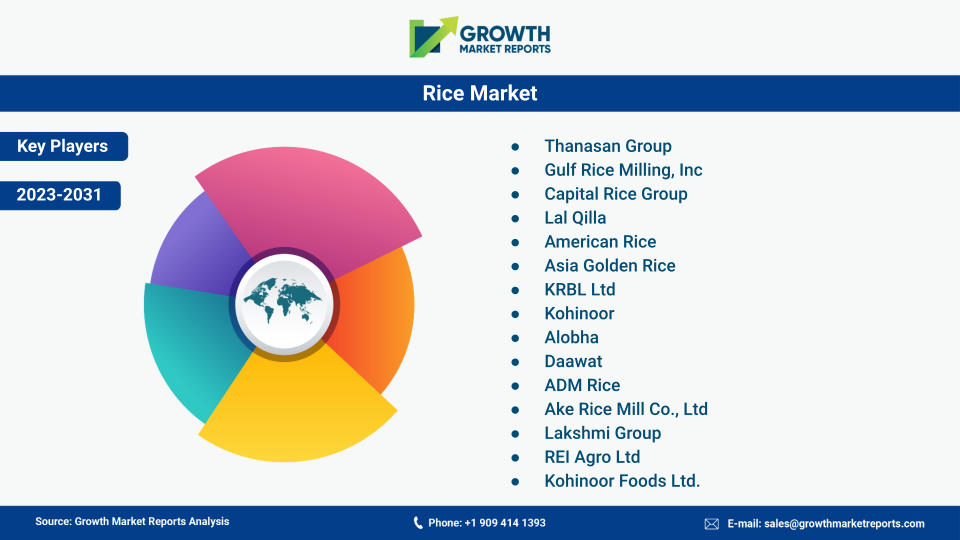

Rice Market Key Players

Frequently Asked Questions

Opportunities include expanding premium and specialty rice segments (organic, fortified, aromatic), leveraging digital technologies for traceability and supply chain management, and diversifying rice applications in non-food sectors.

Key players include Wilmar International, Cargill, Olam International, Louis Dreyfus Company, ADM, KRBL Limited, LT Foods, Riceland Foods, Ebro Foods, SunRice, and T.K. Rice Mill and Ash.

Major challenges include vulnerability to climate change, extreme weather events, environmental concerns from conventional farming, and the need for sustainable agricultural practices.

Supermarkets/hypermarkets dominate rice sales, followed by convenience stores, online stores, and traditional retail outlets such as wet markets and wholesale markets.

Rice is used in animal feed, cosmetics and personal care products (e.g., rice bran oil, rice water), biofuels, pharmaceuticals, and biodegradable packaging.

There is growing demand for brown, red, and black rice due to their higher fiber and antioxidant content, as health-conscious consumers seek more nutritious alternatives to white rice.

The rice market is segmented by product type into long grain rice (e.g., basmati, jasmine), medium grain rice, short grain rice, and specialty varieties such as wild, parboiled, and fortified rice.

Asia Pacific dominates both rice production and consumption, accounting for about 65% of global market revenue, with China, India, Indonesia, Vietnam, and Thailand as major contributors.

Key growth drivers include rising global population, especially in Asia and Africa, increasing demand for staple foods, evolving dietary preferences, and the popularity of specialty rice varieties.

The global rice market reached USD 312.5 billion in 2024 and is projected to grow at a CAGR of 3.4%, reaching USD 418.6 billion by 2033.

Table Of Content

Chapter 1 Executive Summary
Chapter 2 Assumptions and Acronyms Used
Chapter 3 Research Methodology
Chapter 4 Rice Market Overview
   4.1 Introduction
      4.1.1 Market Taxonomy
      4.1.2 Market Definition
      4.1.3 Macro-Economic Factors Impacting the Market Growth
   4.2 Rice Market Dynamics
      4.2.1 Market Drivers
      4.2.2 Market Restraints
      4.2.3 Market Opportunity
   4.3 Rice Market - Supply Chain Analysis
      4.3.1 List of Key Suppliers
      4.3.2 List of Key Distributors
      4.3.3 List of Key Consumers
   4.4 Key Forces Shaping the Rice Market
      4.4.1 Bargaining Power of Suppliers
      4.4.2 Bargaining Power of Buyers
      4.4.3 Threat of Substitution
      4.4.4 Threat of New Entrants
      4.4.5 Competitive Rivalry
   4.5 Global Rice Market Size & Forecast, 2023-2032
      4.5.1 Rice Market Size and Y-o-Y Growth
      4.5.2 Rice Market Absolute $ Opportunity

Chapter 5 Global Rice Market Analysis and Forecast By Product Type
   5.1 Introduction
      5.1.1 Key Market Trends & Growth Opportunities By Product Type
      5.1.2 Basis Point Share (BPS) Analysis By Product Type
      5.1.3 Absolute $ Opportunity Assessment By Product Type
   5.2 Rice Market Size Forecast By Product Type
      5.2.1 Long Grain Rice
      5.2.2 Medium Grain Rice
      5.2.3 Short Grain Rice
      5.2.4 Others
   5.3 Market Attractiveness Analysis By Product Type

Chapter 6 Global Rice Market Analysis and Forecast By Grain Type
   6.1 Introduction
      6.1.1 Key Market Trends & Growth Opportunities By Grain Type
      6.1.2 Basis Point Share (BPS) Analysis By Grain Type
      6.1.3 Absolute $ Opportunity Assessment By Grain Type
   6.2 Rice Market Size Forecast By Grain Type
      6.2.1 White Rice
      6.2.2 Brown Rice
      6.2.3 Red Rice
      6.2.4 Black Rice
      6.2.5 Others
   6.3 Market Attractiveness Analysis By Grain Type

Chapter 7 Global Rice Market Analysis and Forecast By Application
   7.1 Introduction
      7.1.1 Key Market Trends & Growth Opportunities By Application
      7.1.2 Basis Point Share (BPS) Analysis By Application
      7.1.3 Absolute $ Opportunity Assessment By Application
   7.2 Rice Market Size Forecast By Application
      7.2.1 Food & Beverage
      7.2.2 Animal Feed
      7.2.3 Cosmetics & Personal Care
      7.2.4 Others
   7.3 Market Attractiveness Analysis By Application

Chapter 8 Global Rice Market Analysis and Forecast By Distribution Channel
   8.1 Introduction
      8.1.1 Key Market Trends & Growth Opportunities By Distribution Channel
      8.1.2 Basis Point Share (BPS) Analysis By Distribution Channel
      8.1.3 Absolute $ Opportunity Assessment By Distribution Channel
   8.2 Rice Market Size Forecast By Distribution Channel
      8.2.1 Supermarkets/Hypermarkets
      8.2.2 Convenience Stores
      8.2.3 Online Stores
      8.2.4 Others
   8.3 Market Attractiveness Analysis By Distribution Channel

Chapter 9 Global Rice Market Analysis and Forecast by Region
   9.1 Introduction
      9.1.1 Key Market Trends & Growth Opportunities By Region
      9.1.2 Basis Point Share (BPS) Analysis By Region
      9.1.3 Absolute $ Opportunity Assessment By Region
   9.2 Rice Market Size Forecast By Region
      9.2.1 North America
      9.2.2 Europe
      9.2.3 Asia Pacific
      9.2.4 Latin America
      9.2.5 Middle East & Africa (MEA)
   9.3 Market Attractiveness Analysis By Region

Chapter 10 Coronavirus Disease (COVID-19) Impact 
   10.1 Introduction 
   10.2 Current & Future Impact Analysis 
   10.3 Economic Impact Analysis 
   10.4 Government Policies 
   10.5 Investment Scenario

Chapter 11 North America Rice Analysis and Forecast
   11.1 Introduction
   11.2 North America Rice Market Size Forecast by Country
      11.2.1 U.S.
      11.2.2 Canada
   11.3 Basis Point Share (BPS) Analysis by Country
   11.4 Absolute $ Opportunity Assessment by Country
   11.5 Market Attractiveness Analysis by Country
   11.6 North America Rice Market Size Forecast By Product Type
      11.6.1 Long Grain Rice
      11.6.2 Medium Grain Rice
      11.6.3 Short Grain Rice
      11.6.4 Others
   11.7 Basis Point Share (BPS) Analysis By Product Type 
   11.8 Absolute $ Opportunity Assessment By Product Type 
   11.9 Market Attractiveness Analysis By Product Type
   11.10 North America Rice Market Size Forecast By Grain Type
      11.10.1 White Rice
      11.10.2 Brown Rice
      11.10.3 Red Rice
      11.10.4 Black Rice
      11.10.5 Others
   11.11 Basis Point Share (BPS) Analysis By Grain Type 
   11.12 Absolute $ Opportunity Assessment By Grain Type 
   11.13 Market Attractiveness Analysis By Grain Type
   11.14 North America Rice Market Size Forecast By Application
      11.14.1 Food & Beverage
      11.14.2 Animal Feed
      11.14.3 Cosmetics & Personal Care
      11.14.4 Others
   11.15 Basis Point Share (BPS) Analysis By Application 
   11.16 Absolute $ Opportunity Assessment By Application 
   11.17 Market Attractiveness Analysis By Application
   11.18 North America Rice Market Size Forecast By Distribution Channel
      11.18.1 Supermarkets/Hypermarkets
      11.18.2 Convenience Stores
      11.18.3 Online Stores
      11.18.4 Others
   11.19 Basis Point Share (BPS) Analysis By Distribution Channel 
   11.20 Absolute $ Opportunity Assessment By Distribution Channel 
   11.21 Market Attractiveness Analysis By Distribution Channel

Chapter 12 Europe Rice Analysis and Forecast
   12.1 Introduction
   12.2 Europe Rice Market Size Forecast by Country
      12.2.1 Germany
      12.2.2 France
      12.2.3 Italy
      12.2.4 U.K.
      12.2.5 Spain
      12.2.6 Russia
      12.2.7 Rest of Europe
   12.3 Basis Point Share (BPS) Analysis by Country
   12.4 Absolute $ Opportunity Assessment by Country
   12.5 Market Attractiveness Analysis by Country
   12.6 Europe Rice Market Size Forecast By Product Type
      12.6.1 Long Grain Rice
      12.6.2 Medium Grain Rice
      12.6.3 Short Grain Rice
      12.6.4 Others
   12.7 Basis Point Share (BPS) Analysis By Product Type 
   12.8 Absolute $ Opportunity Assessment By Product Type 
   12.9 Market Attractiveness Analysis By Product Type
   12.10 Europe Rice Market Size Forecast By Grain Type
      12.10.1 White Rice
      12.10.2 Brown Rice
      12.10.3 Red Rice
      12.10.4 Black Rice
      12.10.5 Others
   12.11 Basis Point Share (BPS) Analysis By Grain Type 
   12.12 Absolute $ Opportunity Assessment By Grain Type 
   12.13 Market Attractiveness Analysis By Grain Type
   12.14 Europe Rice Market Size Forecast By Application
      12.14.1 Food & Beverage
      12.14.2 Animal Feed
      12.14.3 Cosmetics & Personal Care
      12.14.4 Others
   12.15 Basis Point Share (BPS) Analysis By Application 
   12.16 Absolute $ Opportunity Assessment By Application 
   12.17 Market Attractiveness Analysis By Application
   12.18 Europe Rice Market Size Forecast By Distribution Channel
      12.18.1 Supermarkets/Hypermarkets
      12.18.2 Convenience Stores
      12.18.3 Online Stores
      12.18.4 Others
   12.19 Basis Point Share (BPS) Analysis By Distribution Channel 
   12.20 Absolute $ Opportunity Assessment By Distribution Channel 
   12.21 Market Attractiveness Analysis By Distribution Channel

Chapter 13 Asia Pacific Rice Analysis and Forecast
   13.1 Introduction
   13.2 Asia Pacific Rice Market Size Forecast by Country
      13.2.1 China
      13.2.2 Japan
      13.2.3 South Korea
      13.2.4 India
      13.2.5 Australia
      13.2.6 South East Asia (SEA)
      13.2.7 Rest of Asia Pacific (APAC)
   13.3 Basis Point Share (BPS) Analysis by Country
   13.4 Absolute $ Opportunity Assessment by Country
   13.5 Market Attractiveness Analysis by Country
   13.6 Asia Pacific Rice Market Size Forecast By Product Type
      13.6.1 Long Grain Rice
      13.6.2 Medium Grain Rice
      13.6.3 Short Grain Rice
      13.6.4 Others
   13.7 Basis Point Share (BPS) Analysis By Product Type 
   13.8 Absolute $ Opportunity Assessment By Product Type 
   13.9 Market Attractiveness Analysis By Product Type
   13.10 Asia Pacific Rice Market Size Forecast By Grain Type
      13.10.1 White Rice
      13.10.2 Brown Rice
      13.10.3 Red Rice
      13.10.4 Black Rice
      13.10.5 Others
   13.11 Basis Point Share (BPS) Analysis By Grain Type 
   13.12 Absolute $ Opportunity Assessment By Grain Type 
   13.13 Market Attractiveness Analysis By Grain Type
   13.14 Asia Pacific Rice Market Size Forecast By Application
      13.14.1 Food & Beverage
      13.14.2 Animal Feed
      13.14.3 Cosmetics & Personal Care
      13.14.4 Others
   13.15 Basis Point Share (BPS) Analysis By Application 
   13.16 Absolute $ Opportunity Assessment By Application 
   13.17 Market Attractiveness Analysis By Application
   13.18 Asia Pacific Rice Market Size Forecast By Distribution Channel
      13.18.1 Supermarkets/Hypermarkets
      13.18.2 Convenience Stores
      13.18.3 Online Stores
      13.18.4 Others
   13.19 Basis Point Share (BPS) Analysis By Distribution Channel 
   13.20 Absolute $ Opportunity Assessment By Distribution Channel 
   13.21 Market Attractiveness Analysis By Distribution Channel

Chapter 14 Latin America Rice Analysis and Forecast
   14.1 Introduction
   14.2 Latin America Rice Market Size Forecast by Country
      14.2.1 Brazil
      14.2.2 Mexico
      14.2.3 Rest of Latin America (LATAM)
   14.3 Basis Point Share (BPS) Analysis by Country
   14.4 Absolute $ Opportunity Assessment by Country
   14.5 Market Attractiveness Analysis by Country
   14.6 Latin America Rice Market Size Forecast By Product Type
      14.6.1 Long Grain Rice
      14.6.2 Medium Grain Rice
      14.6.3 Short Grain Rice
      14.6.4 Others
   14.7 Basis Point Share (BPS) Analysis By Product Type 
   14.8 Absolute $ Opportunity Assessment By Product Type 
   14.9 Market Attractiveness Analysis By Product Type
   14.10 Latin America Rice Market Size Forecast By Grain Type
      14.10.1 White Rice
      14.10.2 Brown Rice
      14.10.3 Red Rice
      14.10.4 Black Rice
      14.10.5 Others
   14.11 Basis Point Share (BPS) Analysis By Grain Type 
   14.12 Absolute $ Opportunity Assessment By Grain Type 
   14.13 Market Attractiveness Analysis By Grain Type
   14.14 Latin America Rice Market Size Forecast By Application
      14.14.1 Food & Beverage
      14.14.2 Animal Feed
      14.14.3 Cosmetics & Personal Care
      14.14.4 Others
   14.15 Basis Point Share (BPS) Analysis By Application 
   14.16 Absolute $ Opportunity Assessment By Application 
   14.17 Market Attractiveness Analysis By Application
   14.18 Latin America Rice Market Size Forecast By Distribution Channel
      14.18.1 Supermarkets/Hypermarkets
      14.18.2 Convenience Stores
      14.18.3 Online Stores
      14.18.4 Others
   14.19 Basis Point Share (BPS) Analysis By Distribution Channel 
   14.20 Absolute $ Opportunity Assessment By Distribution Channel 
   14.21 Market Attractiveness Analysis By Distribution Channel

Chapter 15 Middle East & Africa (MEA) Rice Analysis and Forecast
   15.1 Introduction
   15.2 Middle East & Africa (MEA) Rice Market Size Forecast by Country
      15.2.1 Saudi Arabia
      15.2.2 South Africa
      15.2.3 UAE
      15.2.4 Rest of Middle East & Africa (MEA)
   15.3 Basis Point Share (BPS) Analysis by Country
   15.4 Absolute $ Opportunity Assessment by Country
   15.5 Market Attractiveness Analysis by Country
   15.6 Middle East & Africa (MEA) Rice Market Size Forecast By Product Type
      15.6.1 Long Grain Rice
      15.6.2 Medium Grain Rice
      15.6.3 Short Grain Rice
      15.6.4 Others
   15.7 Basis Point Share (BPS) Analysis By Product Type 
   15.8 Absolute $ Opportunity Assessment By Product Type 
   15.9 Market Attractiveness Analysis By Product Type
   15.10 Middle East & Africa (MEA) Rice Market Size Forecast By Grain Type
      15.10.1 White Rice
      15.10.2 Brown Rice
      15.10.3 Red Rice
      15.10.4 Black Rice
      15.10.5 Others
   15.11 Basis Point Share (BPS) Analysis By Grain Type 
   15.12 Absolute $ Opportunity Assessment By Grain Type 
   15.13 Market Attractiveness Analysis By Grain Type
   15.14 Middle East & Africa (MEA) Rice Market Size Forecast By Application
      15.14.1 Food & Beverage
      15.14.2 Animal Feed
      15.14.3 Cosmetics & Personal Care
      15.14.4 Others
   15.15 Basis Point Share (BPS) Analysis By Application 
   15.16 Absolute $ Opportunity Assessment By Application 
   15.17 Market Attractiveness Analysis By Application
   15.18 Middle East & Africa (MEA) Rice Market Size Forecast By Distribution Channel
      15.18.1 Supermarkets/Hypermarkets
      15.18.2 Convenience Stores
      15.18.3 Online Stores
      15.18.4 Others
   15.19 Basis Point Share (BPS) Analysis By Distribution Channel 
   15.20 Absolute $ Opportunity Assessment By Distribution Channel 
   15.21 Market Attractiveness Analysis By Distribution Channel

Chapter 16 Competition Landscape 
   16.1 Rice Market: Competitive Dashboard
   16.2 Global Rice Market: Market Share Analysis, 2023
   16.3 Company Profiles (Details – Overview, Financials, Developments, Strategy) 
      16.3.1 Wilmar International Limited
Cargill, Incorporated
Olam International
Louis Dreyfus Company
Archer Daniels Midland Company (ADM)
KRBL Limited
LT Foods Limited
Riceland Foods, Inc.
Vinafood I (Vietnam Northern Food Corporation)
Vinafood II (Vietnam Southern Food Corporation)
SunRice (Ricegrowers Limited)
T.K. Rice Mill and Ash Co., Ltd.
Amira Nature Foods Ltd.
Ebro Foods S.A.
Chaudhary Group (CG Foods)
Doguet’s Rice Milling Company
Hasan Rice Mills
Anhui Foodstuff Import & Export Co., Ltd.
Suminter India Organics
Reem Rice Mills Pvt. Ltd.

Methodology

Our Clients

General Mills
Deloitte
FedEx Logistics
General Electric
Dassault Aviation
Nestle SA
Siemens Healthcare
Pfizer