Segments - by Product Type (Herbicides, Insecticides, Fungicides, Rodenticides, Others), by Crop Type (Cereals & Grains, Fruits & Vegetables, Oilseeds & Pulses, Others), by Formulation (Liquid, Dry), by Mode Of Application (Foliar Spray, Seed Treatment, Soil Treatment, Others)
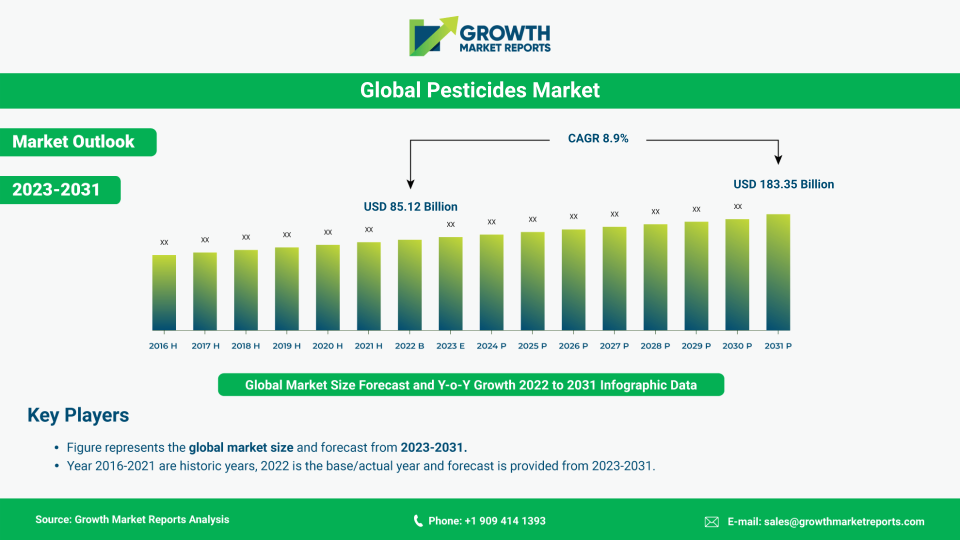
According to our latest research for 2024, the global pesticides market size stands at USD 109.5 billion, reflecting robust industry momentum. The market is set to expand at a Compound Annual Growth Rate (CAGR) of 5.1% from 2025 to 2033, reaching a forecasted value of USD 171.7 billion by 2033. This growth is primarily driven by rising food demand, increasing adoption of advanced agricultural practices, and the urgent need to mitigate crop losses due to pests and diseases. As per the latest research findings, technological advancements and regulatory shifts are also shaping the trajectory of the pesticides market globally.
One of the most significant growth factors for the pesticides market is the escalating global population, which is intensifying the demand for food production. With arable land per capita shrinking and urbanization on the rise, farmers are under pressure to maximize yield per hectare. Pesticides play a crucial role in protecting crops against invasive weeds, insects, and pathogens, thereby ensuring higher productivity and food security. Additionally, the proliferation of high-value crops such as fruits and vegetables, which are more susceptible to pest attacks, has further fueled the need for effective crop protection solutions. Governments across several regions are also providing subsidies and support for pesticide adoption, particularly in emerging economies, to bolster agricultural output and self-sufficiency.
Technological innovation has been another key driver propelling the growth of the pesticides market. The development of bio-based and precision-targeted pesticides is transforming the industry landscape. These advances are not only enhancing the efficacy of pest control but also addressing growing environmental and health concerns associated with conventional chemical pesticides. Integration of digital tools such as drones, remote sensing, and data analytics is enabling farmers to optimize pesticide usage, minimize wastage, and reduce the ecological footprint of crop protection measures. Furthermore, the introduction of genetically engineered crops with built-in pest resistance is complementing the use of pesticides, creating a synergistic effect that supports sustainable agricultural practices.
Market expansion is also being facilitated by the increasing globalization of trade in agricultural commodities. As countries strive to meet international quality standards and minimize post-harvest losses, the demand for pesticides that comply with stringent residue regulations has surged. This has led to significant investments in research and development by leading agrochemical companies, aiming to introduce products with lower toxicity, improved selectivity, and greater environmental compatibility. However, the industry is also facing challenges from evolving regulatory frameworks, growing resistance among pest populations, and rising consumer preference for organic produce, which are compelling stakeholders to innovate continually.
From a regional perspective, the Asia Pacific region dominates the global pesticides market, accounting for the largest share, driven by the vast agricultural base in countries such as China and India. North America and Europe follow closely, with well-established regulatory structures and high adoption of advanced crop protection technologies. Latin America, particularly Brazil and Argentina, is witnessing rapid market growth due to the expansion of commercial farming and increasing export-oriented agriculture. The Middle East & Africa region, although smaller in market size, is experiencing steady growth, fueled by government initiatives to enhance food security and agricultural productivity. Overall, regional dynamics are shaped by a complex interplay of climatic conditions, crop patterns, regulatory policies, and farmer awareness levels.
In Southeast Asia, Malaysia Agrochemicals are playing a pivotal role in shaping the agricultural landscape. The country's agrochemical industry is witnessing significant growth due to the increasing demand for sustainable farming practices and the need to boost agricultural productivity. Malaysia's strategic location and favorable climatic conditions make it an ideal hub for agrochemical production and distribution. The government's initiatives to promote modern agricultural techniques and the adoption of advanced crop protection solutions are further driving the growth of the agrochemical sector. As Malaysia continues to focus on enhancing food security and reducing dependency on imports, the agrochemical industry is poised to play a crucial role in achieving these national goals.
The pesticides market is segmented by product type into herbicides, insecticides, fungicides, rodenticides, and others, each playing a distinct role in crop protection. Herbicides represent the largest segment due to their widespread use in controlling unwanted vegetation and weeds that compete with crops for nutrients, sunlight, and water. The increasing adoption of herbicide-tolerant genetically modified crops, particularly in North and South America, has further fueled demand for these products. The shift towards conservation tillage and no-till farming practices, which require effective weed management, also contributes to the robust growth of the herbicides segment. However, concerns over herbicide resistance and environmental impact are prompting the development of new formulations and integrated weed management strategies.
Insecticides hold a significant share in the pesticides market, driven by the prevalence of insect-borne diseases and the need to protect high-value crops from pest infestations. The segment has witnessed substantial innovation, with the introduction of systemic insecticides, neonicotinoids, and biopesticides that offer targeted action and reduced non-target toxicity. Insecticide usage is particularly high in regions with tropical and subtropical climates, where pest pressure is more intense. However, rising awareness about pollinator health, especially bees, and regulatory restrictions on certain classes of insecticides in Europe and North America are shaping market dynamics. The industry is responding with safer alternatives and integrated pest management solutions.
Fungicides are essential for managing fungal diseases that can cause devastating crop losses, especially in cereals, fruits, and vegetables. The demand for fungicides is rising in response to changing climatic conditions, which are increasing the incidence of fungal outbreaks. Advances in formulation technology have led to the development of broad-spectrum and combination fungicides that provide longer-lasting protection and reduce the risk of resistance development. The segment is also benefiting from the growing emphasis on food quality and safety, as fungal contamination can lead to mycotoxin accumulation in food products. However, regulatory scrutiny over residue levels and environmental impact remains a challenge for fungicide manufacturers.
Rodenticides, though a smaller segment, play a critical role in protecting stored grains and preventing rodent-borne diseases in agricultural settings. The market for rodenticides is expanding in regions where post-harvest losses due to rodents are significant. However, the segment faces stringent regulatory controls due to concerns over non-target species poisoning and environmental persistence. The development of safer, more targeted rodenticides and integrated rodent management programs is gaining traction. The "others" category includes nematicides, molluscicides, and acaricides, which cater to specific pest control needs and are witnessing steady demand in niche crop segments.
The importance of Crop Protection Pesticides cannot be overstated in today's agricultural practices. These pesticides are essential for safeguarding crops against a wide array of pests and diseases, ensuring stable food supply chains and economic stability for farmers. With the advent of climate change and unpredictable weather patterns, the role of crop protection pesticides has become even more critical. They help in maintaining the health and yield of crops, thereby supporting the livelihood of farmers and contributing to global food security. Innovative solutions in crop protection are continuously being developed to address the challenges posed by resistant pest populations and to minimize environmental impact.
| Attributes | Details |
| Report Title | Pesticides Market Research Report 2033 |
| By Product Type | Herbicides, Insecticides, Fungicides, Rodenticides, Others |
| By Crop Type | Cereals & Grains, Fruits & Vegetables, Oilseeds & Pulses, Others |
| By Formulation | Liquid, Dry |
| By Mode Of Application | Foliar Spray, Seed Treatment, Soil Treatment, Others |
| Regions Covered | North America, Europe, APAC, Latin America, MEA |
| Base Year | 2024 |
| Historic Data | 2018-2023 |
| Forecast Period | 2025-2033 |
| Number of Pages | 288 |
| Number of Tables & Figures | 394 |
| Customization Available | Yes, the report can be customized as per your need. |
The pesticides market by crop type is categorized into cereals & grains, fruits & vegetables, oilseeds & pulses, and others. Cereals & grains constitute the largest crop segment, accounting for a substantial share of pesticide consumption worldwide. Major staple crops such as rice, wheat, and maize are highly susceptible to a variety of pests and diseases, necessitating regular application of herbicides, insecticides, and fungicides. The intensification of cereal production, particularly in Asia and Africa, is driving demand for crop protection solutions. Governments and international agencies are also promoting best practices in pesticide use to ensure food security and minimize post-harvest losses.
Fruits & vegetables represent a rapidly growing segment in the pesticides market, fueled by rising consumer demand for fresh and processed produce. These crops are more vulnerable to pest attacks due to their high moisture content and delicate nature, making them reliant on effective pest management practices. The segment is witnessing increased adoption of biopesticides and residue-free formulations to meet stringent quality standards in export markets. The expansion of greenhouse farming and protected cultivation is also contributing to the growth of pesticide usage in this segment, as controlled environments can create favorable conditions for pest outbreaks if not managed properly.
Oilseeds & pulses are another important category, with crops such as soybean, sunflower, and lentils forming the backbone of the edible oil and protein industries. The segment is experiencing steady growth, particularly in regions like North and South America, where large-scale commercial farming is prevalent. Pesticides are critical in managing weeds, insects, and fungal diseases that can significantly impact yield and quality. The adoption of genetically modified oilseed crops with built-in pest resistance is also influencing pesticide usage patterns, with a shift towards more targeted and environmentally friendly products.
The "others" category includes specialty crops such as spices, plantation crops, and ornamental plants, which have unique pest management requirements. While the overall share of pesticide consumption in this segment is smaller, it is characterized by a high degree of customization and innovation. Growers of specialty crops are increasingly seeking solutions that comply with strict residue limits and sustainability certifications, driving demand for advanced formulations and integrated pest management approaches. The diversification of cropping patterns and the rise of niche markets are expected to create new growth opportunities for pesticide manufacturers in this segment.
The pesticides market is segmented by formulation into liquid and dry forms, each offering distinct advantages and applications. Liquid formulations dominate the market, accounting for the majority of sales due to their ease of application, uniform coverage, and compatibility with modern spraying equipment. Liquid pesticides are available in various forms, including emulsifiable concentrates, solutions, and suspension concentrates, catering to a wide range of crop protection needs. The segment is benefiting from ongoing innovations in formulation technology, such as microencapsulation and nanoemulsions, which enhance efficacy, reduce drift, and improve safety for applicators and the environment.
Dry formulations, including powders, granules, and dusts, hold a significant share in the pesticides market, particularly in regions where manual application methods are still prevalent. Dry pesticides are valued for their stability, ease of storage, and longer shelf life compared to liquid counterparts. They are commonly used for seed treatment, soil application, and in situations where water availability is limited. The segment is witnessing increased demand for water-dispersible granules and wettable powders, which offer improved handling and reduced dust generation. However, the adoption of dry formulations is facing competition from advanced liquid products that offer greater convenience and effectiveness.
The choice of formulation is influenced by several factors, including the type of crop, pest spectrum, climatic conditions, and farmer preferences. Regulatory requirements related to safety, residue limits, and environmental impact also play a crucial role in shaping formulation trends. Manufacturers are investing in research and development to create formulations that are not only effective but also compliant with evolving regulatory standards. The trend towards ready-to-use and pre-mixed formulations is gaining traction, as farmers seek solutions that minimize preparation time and reduce the risk of application errors.
Sustainability considerations are increasingly influencing formulation choices in the pesticides market. There is growing demand for formulations that reduce the risk of off-target movement, minimize environmental contamination, and enhance user safety. The development of biodegradable carriers, adjuvants, and additives is supporting the transition towards greener crop protection solutions. The integration of digital tools and precision agriculture technologies is also enabling more targeted and efficient use of pesticides, optimizing formulation selection and application rates based on real-time field data.
The pesticides market is further segmented by mode of application into foliar spray, seed treatment, soil treatment, and others. Foliar spray is the most widely used method, accounting for the largest share of pesticide applications globally. This method involves applying pesticides directly to the leaves and stems of crops, ensuring rapid absorption and immediate pest control. Foliar sprays are preferred for their flexibility, ease of use, and ability to target specific pest outbreaks during the growing season. The adoption of advanced spraying technologies, such as drones and electrostatic sprayers, is enhancing the precision and efficiency of foliar applications, reducing chemical wastage and environmental impact.
Seed treatment is gaining traction as an effective and environmentally friendly mode of pesticide application. This method involves coating seeds with protective chemicals before planting, providing early-stage protection against soil-borne pests and diseases. Seed treatment offers several advantages, including reduced pesticide usage, lower environmental exposure, and improved crop establishment. The segment is witnessing increased adoption in regions with intensive cereal and oilseed cultivation, where early pest pressure can significantly impact yield. Innovations in seed coating technology and the development of combination products that offer both insecticidal and fungicidal protection are driving growth in this segment.
Soil treatment involves the application of pesticides to the soil before or after planting to control soil-dwelling pests, nematodes, and pathogens. This method is particularly important in high-value crops such as fruits, vegetables, and ornamentals, where soil-borne diseases can cause substantial losses. Soil treatment products are available in both liquid and granular formulations, with the choice depending on soil type, crop, and pest spectrum. The segment is benefiting from the development of targeted soil-applied products that minimize leaching and environmental contamination. However, concerns over soil health and the impact of repeated chemical applications are prompting the adoption of integrated soil management practices.
The "others" category includes specialized application methods such as trunk injection, chemigation, and aerial spraying, which are used in specific crops and regions. These methods offer unique advantages in terms of efficiency, coverage, and labor savings, but require specialized equipment and expertise. The choice of application method is influenced by factors such as crop type, pest pressure, farm size, and regulatory requirements. The trend towards precision agriculture and site-specific management is driving the adoption of advanced application technologies that optimize pesticide use and minimize environmental impact.
The pesticides market presents several significant opportunities for growth and innovation. One of the key opportunities lies in the development and commercialization of bio-based and environmentally friendly pesticides. As regulatory pressures and consumer demand for sustainable agriculture intensify, there is a growing market for biopesticides and natural crop protection solutions. Companies that can develop products with high efficacy, low toxicity, and minimal environmental impact are well-positioned to capture market share. Additionally, the integration of digital agriculture technologies, such as precision application, remote sensing, and data analytics, offers opportunities to optimize pesticide usage, improve efficacy, and reduce costs for farmers. The expansion of contract farming, agricultural cooperatives, and public-private partnerships is also creating new avenues for market penetration and growth.
Another significant opportunity for the pesticides market is the rising demand for crop protection solutions in emerging economies. Rapid population growth, urbanization, and changing dietary patterns are driving the need for increased agricultural productivity in regions such as Asia, Africa, and Latin America. Governments in these regions are investing in agricultural modernization, infrastructure development, and capacity building to enhance food security and rural livelihoods. This is creating a favorable environment for the adoption of advanced pesticides and integrated pest management practices. Furthermore, the growing export market for high-value crops, such as fruits, vegetables, and specialty products, is driving demand for residue-free and compliant pesticides that meet international quality standards.
Despite these opportunities, the pesticides market faces several restraining factors that could impact growth prospects. One of the primary challenges is the increasing regulatory scrutiny over the safety, efficacy, and environmental impact of chemical pesticides. Stringent regulations on registration, usage, and residue limits are raising compliance costs for manufacturers and limiting the availability of certain active ingredients in key markets. The emergence of pest resistance to commonly used pesticides is another critical threat, necessitating continuous innovation and the development of new modes of action. Additionally, rising consumer awareness and preference for organic and residue-free produce are challenging the growth of conventional pesticides, prompting a shift towards integrated and sustainable pest management approaches.
The Asia Pacific region is the largest and fastest-growing market for pesticides, with a market size of approximately USD 41.2 billion in 2024. The region accounts for over one-third of global pesticide consumption, driven by the vast agricultural base in countries such as China, India, and Southeast Asian nations. Rapid population growth, increasing food demand, and government initiatives to modernize agriculture are fueling the adoption of pesticides in the region. The market is expected to grow at a CAGR of 6.2% through 2033, outpacing other regions due to ongoing investments in agricultural infrastructure, research and development, and farmer education programs. However, the region also faces challenges related to regulatory harmonization, counterfeit products, and environmental sustainability.
North America is a mature market for pesticides, with a market size of USD 22.8 billion in 2024. The region is characterized by high adoption of advanced crop protection technologies, strict regulatory frameworks, and a strong focus on sustainable agriculture. The United States is the largest market within the region, driven by large-scale commercial farming and the cultivation of genetically modified crops. The market is expected to grow at a moderate pace, supported by ongoing innovation in formulation technology, precision agriculture, and biopesticides. Canada and Mexico are also important markets, with growth driven by export-oriented agriculture and government support for sustainable farming practices.
Europe accounts for a market size of USD 17.6 billion in 2024, with growth driven by the need to comply with stringent environmental regulations and residue limits. The region is a leader in sustainable agriculture, with a strong emphasis on integrated pest management, organic farming, and the use of biopesticides. Countries such as Germany, France, and Spain are major contributors to the regional market, supported by robust research and development capabilities and a highly educated farming community. The market is expected to grow at a steady pace, with opportunities arising from the transition towards greener crop protection solutions and the expansion of high-value crop segments.
The global pesticides market is highly competitive and characterized by the presence of several multinational corporations, regional players, and an increasing number of startups focusing on innovative and sustainable crop protection solutions. The competitive landscape is shaped by continuous investments in research and development, mergers and acquisitions, strategic collaborations, and expansion into emerging markets. Leading companies are focusing on diversifying their product portfolios, enhancing distribution networks, and strengthening relationships with key stakeholders, including farmers, distributors, and regulatory authorities. The shift towards sustainable agriculture and integrated pest management is compelling market players to invest in the development of bio-based and precision-targeted pesticides, as well as digital agriculture solutions that optimize pesticide usage and improve farm productivity.
Innovation is a key differentiator in the pesticides market, with companies investing heavily in the discovery of new active ingredients, formulation technologies, and application methods. The increasing regulatory scrutiny over chemical pesticides is driving the development of products with lower toxicity, reduced environmental impact, and improved safety profiles. Major players are also exploring opportunities in the biopesticides segment, leveraging advances in microbiology, biotechnology, and nanotechnology to create effective and sustainable crop protection solutions. The integration of digital tools, such as remote sensing, data analytics, and precision application technologies, is enabling companies to offer value-added services and strengthen customer loyalty.
The market is witnessing a wave of consolidation, with leading agrochemical companies acquiring smaller players and startups to expand their product offerings and geographic reach. Strategic partnerships and joint ventures are also common, as companies seek to leverage complementary strengths and accelerate the commercialization of innovative products. The focus on emerging markets, particularly in Asia Pacific, Latin America, and Africa, is driving investments in distribution infrastructure, farmer training programs, and localized product development. Companies are also engaging with governments, industry associations, and non-governmental organizations to promote responsible pesticide use, enhance regulatory compliance, and address public concerns related to food safety and environmental sustainability.
Some of the major companies operating in the global pesticides market include Bayer AG, Syngenta AG, BASF SE, Corteva Agriscience, FMC Corporation, UPL Limited, Sumitomo Chemical, ADAMA Agricultural Solutions, Nufarm Limited, and Albaugh LLC. Bayer AG is a global leader with a comprehensive portfolio of crop protection products, including herbicides, insecticides, and fungicides, and a strong focus on digital farming solutions. Syngenta AG is known for its innovative research and development capabilities, with a significant presence in both chemical and biological crop protection segments. BASF SE offers a broad range of pesticides and is actively investing in sustainable agriculture initiatives. Corteva Agriscience, formed through the merger of Dow AgroSciences and DuPont, is a major player with a strong emphasis on integrated pest management and farmer-centric solutions.
FMC Corporation is recognized for its focus on high-value crops and innovative active ingredients, while UPL Limited has a strong presence in emerging markets and a diverse product portfolio. Sumitomo Chemical and ADAMA Agricultural Solutions are key players in both chemical and biological crop protection, with a focus on product innovation and market expansion. Nufarm Limited and Albaugh LLC are prominent regional players, known for their cost-effective solutions and strong distribution networks. These companies are continually investing in research, sustainability initiatives, and digital transformation to maintain their competitive edge and meet the evolving needs of the global agricultural sector.
The Pesticides market has been segmented on the basis of
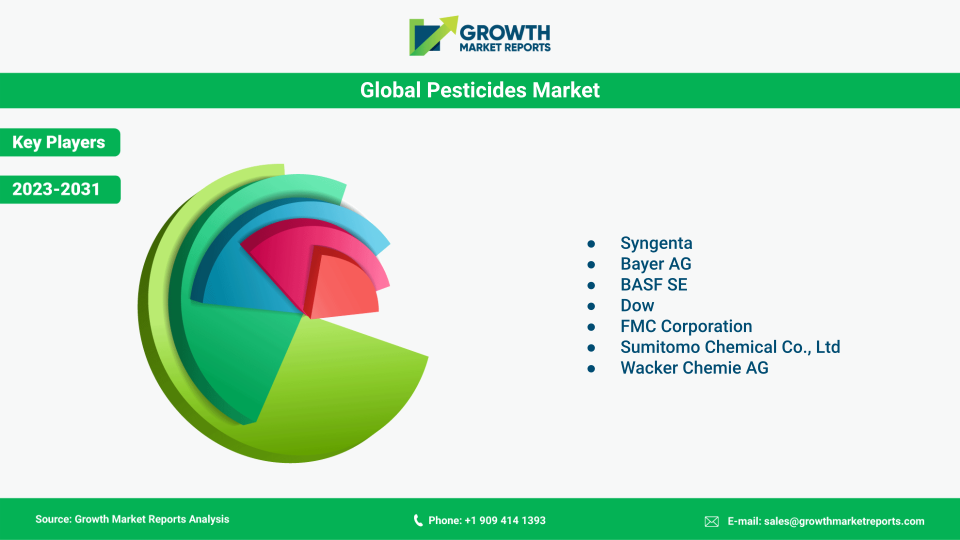
Key players in the global pesticides market are Syngenta, Bayer AG, BASF SE, Dow , FMC Corporation, Sumitomo Chemical Co., Ltd, Wacker Chemie AG, UPL, Jubaili Agrotec , and Aimco Pesticides LTD. These players engage in mergers & acquisitions, collaborations, agreements, and partnerships to strengthen their geographical presence.
Challenges include stringent regulatory requirements, pest resistance, environmental and health concerns, and rising consumer demand for organic and residue-free produce.
Major players include Bayer AG, Syngenta AG, BASF SE, Corteva Agriscience, FMC Corporation, UPL Limited, Sumitomo Chemical, ADAMA Agricultural Solutions, Nufarm Limited, and Albaugh LLC.
The main modes of application are foliar spray, seed treatment, soil treatment, and specialized methods like trunk injection and aerial spraying.
Pesticides are commonly available in liquid and dry formulations. Liquid forms dominate due to ease of application, while dry forms like powders and granules are valued for stability and shelf life.
Key trends include the adoption of bio-based and precision-targeted pesticides, integration of digital agriculture technologies, regulatory shifts, and rising demand for sustainable crop protection solutions.
Cereals & grains are the largest crop segment for pesticide consumption, followed by fruits & vegetables, oilseeds & pulses, and specialty crops.
The main types of pesticides are herbicides, insecticides, fungicides, rodenticides, and others such as nematicides and molluscicides.
The Asia Pacific region dominates the global pesticides market, accounting for the largest share due to its vast agricultural base and rapid growth in countries like China and India.
The pesticides market is expected to grow at a CAGR of 5.1% from 2025 to 2033, reaching USD 171.7 billion by 2033.
As of 2024, the global pesticides market size is valued at USD 109.5 billion.