Segments - by Product Type (Activator Adjuvants, Utility Adjuvants, Others), by Application (Herbicides, Insecticides, Fungicides, Others), by Crop Type (Cereals & Grains, Oilseeds & Pulses, Fruits & Vegetables, Others), by Formulation (Suspension Concentrates, Emulsifiable Concentrates, Others), by Adoption Stage (Tank-mix, In-formulation)
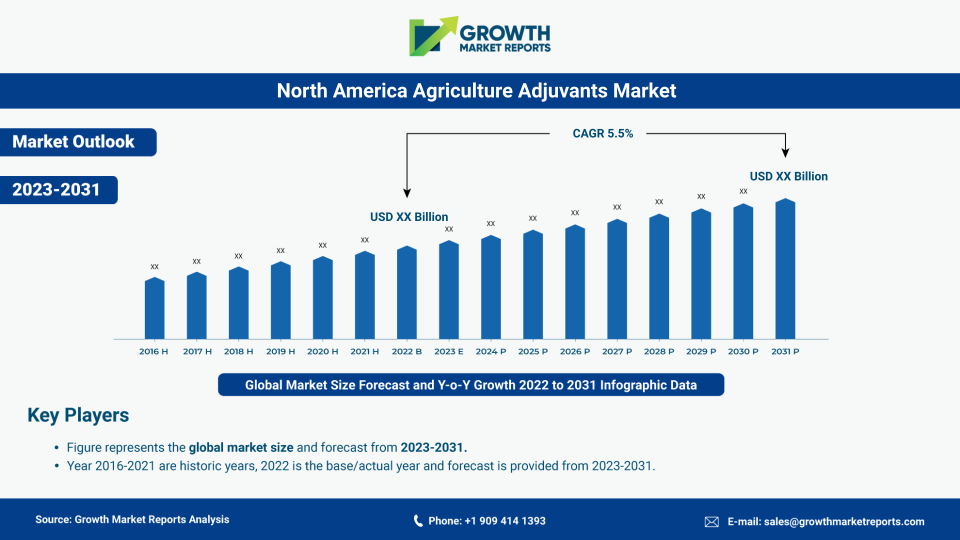
According to our latest research, the global agriculture adjuvants market size reached USD 3.95 billion in 2024, reflecting a robust expansion driven by the increasing adoption of advanced crop protection solutions. The market is poised to grow at a CAGR of 5.8% during the forecast period from 2025 to 2033, reaching an estimated value of USD 6.98 billion by 2033. This steady growth can be attributed to the rising need for enhanced agricultural productivity, growing awareness about sustainable farming practices, and the ongoing development of innovative adjuvant formulations. As per our latest research, the market is witnessing significant traction due to the synergy between modern agrochemicals and adjuvants, which enables farmers to optimize pesticide efficacy and minimize environmental impact.
One of the primary growth factors propelling the agriculture adjuvants market is the escalating demand for food production to cater to the needs of a burgeoning global population. With arable land becoming increasingly scarce and the pressure to maximize yield intensifying, farmers are turning to adjuvants to improve the performance of agrochemicals such as herbicides, insecticides, and fungicides. These additives enhance the absorption, spreading, and retention of active ingredients on plant surfaces, ensuring better pest and disease control. Furthermore, the increasing prevalence of herbicide-resistant weeds and pests is compelling growers to adopt more effective and efficient crop protection strategies, where adjuvants play a pivotal role in overcoming resistance and improving overall efficacy.
Another significant driver for the agriculture adjuvants market is the shift towards sustainable and precision agriculture practices. With environmental regulations tightening and consumer preferences shifting towards safer food products, there is a growing emphasis on reducing chemical residues in the ecosystem. Agriculture adjuvants enable precise application of crop protection products, thereby minimizing off-target losses and reducing the total volume of chemicals required. This not only helps farmers comply with regulatory standards but also aligns with global sustainability goals. Additionally, advancements in formulation technologies and the introduction of bio-based adjuvants are further stimulating market growth by offering eco-friendly alternatives that maintain or even enhance the efficacy of traditional agrochemicals.
Technological innovation and strategic collaborations among key market players are also contributing to the robust expansion of the agriculture adjuvants market. Companies are investing heavily in research and development to create novel adjuvant blends tailored for specific crops, climatic conditions, and application methods. The integration of digital agriculture tools, such as precision spraying systems and data-driven crop management platforms, is enhancing the adoption of adjuvants by providing real-time insights and optimizing input usage. Furthermore, partnerships between agrochemical manufacturers and adjuvant producers are fostering the development of synergistic products, which not only improve crop protection outcomes but also offer economic benefits to end-users through reduced input costs and increased yields.
From a regional perspective, North America continues to dominate the global agriculture adjuvants market, accounting for the largest share due to its advanced agricultural infrastructure, high adoption rate of modern farming technologies, and supportive regulatory environment. However, the Asia Pacific region is emerging as a lucrative market, driven by rapid agricultural modernization, increasing investments in crop protection, and a large base of smallholder farmers seeking to improve productivity. Europe and Latin America are also witnessing steady growth, supported by government initiatives promoting sustainable agriculture and the rising demand for high-value crops. Meanwhile, the Middle East & Africa region is gradually gaining momentum as countries invest in boosting food security and modernizing their agricultural sectors.
Utility Adjuvants play a crucial role in the agriculture adjuvants market by enhancing the overall performance and stability of agrochemical formulations. These adjuvants are particularly important in ensuring the effective mixing and handling of various crop protection products, which can often be complex and challenging. By improving the compatibility and stability of these formulations, utility adjuvants help prevent issues such as foaming, clogging, and chemical incompatibility, which can significantly impact the efficiency of crop protection measures. Their adoption is especially prevalent in regions with advanced agricultural practices, where large-scale operations demand reliable and efficient application of agrochemicals. As the trend towards tank-mix applications continues to grow, utility adjuvants are becoming indispensable in ensuring seamless integration and optimal performance of diverse crop protection programs.
The agriculture adjuvants market, when segmented by product type, reveals a diverse landscape dominated by activator adjuvants and utility adjuvants, with a smaller but significant share held by other specialized adjuvants. Activator adjuvants, which include surfactants and oil-based adjuvants, are widely used to enhance the efficacy of agrochemicals by improving their penetration, spreading, and wetting properties. These adjuvants are especially crucial in regions where water quality and climatic conditions can impede the performance of crop protection products. The demand for activator adjuvants is further bolstered by the need to combat herbicide-resistant weeds and pests, as they facilitate better absorption of active ingredients and increase the overall effectiveness of crop protection solutions.
Utility adjuvants, on the other hand, serve a different but equally important role by improving the handling, mixing, and stability of agrochemical formulations. These include buffering agents, anti-foaming agents, compatibility agents, and drift control agents. The adoption of utility adjuvants is particularly high in developed agricultural markets such as North America and Europe, where large-scale farming operations require efficient and reliable application of multiple crop protection products in a single tank mix. The growing trend towards tank-mix applications and the increasing complexity of crop protection programs are driving the demand for utility adjuvants that ensure uniform distribution and prevent issues such as clogging, foaming, and chemical incompatibility.
The "Others" category within the product type segment encompasses a variety of specialized adjuvants, including wetting agents, spreaders, stickers, and penetrants, each designed to address specific agronomic challenges. The development of these niche adjuvants is often driven by the unique requirements of certain crops or geographic regions. For example, sticker adjuvants are particularly valuable in areas prone to heavy rainfall, as they help agrochemicals adhere to plant surfaces and resist wash-off. The market for these specialized adjuvants is expected to grow steadily, supported by ongoing research and the increasing customization of crop protection programs.
Innovation within the product type segment is also being shaped by the rising demand for bio-based and environmentally friendly adjuvants. Regulatory pressures and consumer concerns about chemical residues are prompting manufacturers to develop adjuvants derived from natural sources, such as plant oils and biodegradable surfactants. These products offer comparable or superior performance to conventional adjuvants while minimizing environmental impact and supporting sustainable agriculture initiatives. As a result, bio-based adjuvants are gaining traction in both developed and emerging markets, further diversifying the product landscape and creating new growth opportunities for market players.
Overall, the product type segment of the agriculture adjuvants market is characterized by a dynamic interplay between traditional and innovative solutions, each catering to the evolving needs of modern agriculture. The continued expansion of this segment will depend on the ability of manufacturers to address emerging challenges, such as resistance management, environmental sustainability, and the integration of adjuvants with advanced application technologies. As the market matures, we expect to see greater differentiation and specialization within the product portfolio, driven by both regulatory requirements and end-user preferences.
| Attributes | Details |
| Report Title | Agriculture Adjuvants Market Research Report 2033 |
| By Product Type | Activator Adjuvants, Utility Adjuvants, Others |
| By Application | Herbicides, Insecticides, Fungicides, Others |
| By Crop Type | Cereals & Grains, Oilseeds & Pulses, Fruits & Vegetables, Others |
| By Formulation | Suspension Concentrates, Emulsifiable Concentrates, Others |
| By Adoption Stage | Tank-mix, In-formulation |
| Regions Covered | North America, Europe, APAC, Latin America, MEA |
| Base Year | 2024 |
| Historic Data | 2018-2023 |
| Forecast Period | 2025-2033 |
| Number of Pages | 261 |
| Number of Tables & Figures | 395 |
| Customization Available | Yes, the report can be customized as per your need. |
The application segment of the agriculture adjuvants market is primarily divided into herbicides, insecticides, fungicides, and other crop protection products. Among these, herbicides represent the largest application area, accounting for a significant share of the global market. The widespread use of herbicides in commercial agriculture, particularly for weed management in cereal and grain crops, is a major driver for the adoption of adjuvants. Adjuvants enhance the efficacy of herbicides by improving their coverage, penetration, and retention on plant surfaces, thereby ensuring more effective control of both broadleaf and grassy weeds. The increasing prevalence of herbicide-resistant weed species further underscores the importance of adjuvants in modern weed management strategies.
Agricultural Activator Adjuvants are essential components in enhancing the efficacy of agrochemicals, particularly in challenging environmental conditions. These adjuvants, which include surfactants and oil-based formulations, are designed to improve the penetration and spreading of active ingredients on plant surfaces, thereby maximizing their effectiveness. In regions where water quality and climatic conditions can hinder the performance of crop protection products, activator adjuvants play a pivotal role in ensuring that herbicides, insecticides, and fungicides achieve their intended results. The growing issue of herbicide-resistant weeds and pests further underscores the importance of activator adjuvants, as they facilitate better absorption and utilization of active ingredients. By optimizing the performance of agrochemicals, these adjuvants contribute significantly to sustainable and efficient crop management practices.
Insecticides constitute another key application segment for agriculture adjuvants, especially in regions where pest pressure is high and crop losses due to insect infestations are significant. Adjuvants play a crucial role in improving the adhesion and spreading of insecticides on plant foliage, enhancing their contact and systemic activity against target pests. The trend towards integrated pest management (IPM) and the use of biological insecticides is also driving the demand for adjuvants that can optimize the performance of these newer, often more sensitive, formulations. Additionally, the adoption of precision spraying technologies is creating opportunities for adjuvants that are compatible with low-volume and targeted application methods.
Fungicides represent a growing application area for agriculture adjuvants, driven by the increasing incidence of fungal diseases in high-value crops such as fruits, vegetables, and ornamentals. Adjuvants help improve the deposition and persistence of fungicides on plant surfaces, particularly in challenging environmental conditions such as high humidity or rainfall. The need to protect crops from emerging fungal pathogens and reduce crop losses is prompting growers to invest in advanced adjuvant technologies that ensure consistent and long-lasting disease control. Furthermore, the development of multi-functional adjuvants that can be used across different types of crop protection products is enhancing their appeal to farmers seeking to streamline their crop protection programs.
The "Others" category within the application segment includes a range of crop protection products, such as plant growth regulators, biostimulants, and micronutrient sprays, which are increasingly being used in conjunction with adjuvants to improve their efficacy and uptake. The growing focus on holistic crop health management and the need to optimize input efficiency are driving the adoption of adjuvants in these emerging application areas. As the market continues to evolve, we anticipate greater integration of adjuvants with a broader spectrum of agricultural inputs, further expanding their role in modern crop production systems.
In summary, the application segment of the agriculture adjuvants market is characterized by a strong focus on enhancing the performance of traditional crop protection products, while also supporting the adoption of new and innovative solutions. The continued expansion of this segment will depend on the ability of market players to develop adjuvants that are compatible with a wide range of agrochemicals, application methods, and crop types, while also addressing the evolving needs of farmers and regulatory authorities.
The crop type segment of the agriculture adjuvants market is segmented into cereals & grains, oilseeds & pulses, fruits & vegetables, and other crops. Cereals & grains, including wheat, rice, maize, and barley, represent the largest market share, owing to their global importance as staple foods and the extensive use of crop protection products in their cultivation. The adoption of adjuvants in cereal and grain production is driven by the need to maximize yields, combat weed and pest resistance, and ensure consistent crop quality. Large-scale commercial farming operations, particularly in North America, Europe, and parts of Asia, are major consumers of adjuvants for cereals and grains, leveraging these products to enhance the efficacy of herbicides, fungicides, and insecticides.
Oilseeds & pulses, such as soybeans, canola, sunflower, and lentils, constitute another significant segment for agriculture adjuvants. These crops are highly susceptible to a variety of pests and diseases, necessitating the use of multiple crop protection products throughout the growing season. Adjuvants are used to improve the coverage and uptake of these products, ensuring effective control and minimizing crop losses. The increasing demand for plant-based proteins and edible oils is driving the expansion of oilseed and pulse cultivation, particularly in emerging markets such as Asia Pacific and Latin America. This, in turn, is creating new opportunities for adjuvant manufacturers to develop tailored solutions for these high-value crops.
Fruits & vegetables represent a rapidly growing segment within the agriculture adjuvants market, driven by the rising demand for fresh and processed produce worldwide. These crops are often grown under intensive management systems that require frequent application of crop protection products to maintain quality and prevent losses due to pests, diseases, and environmental stress. Adjuvants play a critical role in ensuring the uniform distribution and persistence of agrochemicals on delicate fruit and vegetable surfaces, thereby improving efficacy and reducing the risk of residues. The trend towards organic and sustainable production practices is also fueling the demand for bio-based and low-toxicity adjuvants in this segment.
The "Others" category includes a diverse array of crops, such as ornamentals, turf, and specialty crops, each with unique agronomic requirements and challenges. The adoption of adjuvants in these crops is often driven by the need to address specific issues, such as disease resistance, drought tolerance, or enhanced nutrient uptake. As the market for specialty crops continues to expand, particularly in regions with diverse agricultural landscapes, the demand for customized adjuvant solutions is expected to rise. Manufacturers are responding by developing crop-specific formulations and offering technical support to help growers optimize their crop protection programs.
Overall, the crop type segment of the agriculture adjuvants market is characterized by a high degree of diversity and specialization, reflecting the wide range of crops grown globally and the varying challenges faced by farmers. The ability of adjuvant manufacturers to develop targeted solutions that address the unique needs of different crop types will be a key factor driving future market growth and differentiation.
The formulation segment of the agriculture adjuvants market is primarily categorized into suspension concentrates, emulsifiable concentrates, and other formulations. Suspension concentrates are widely used due to their stability, ease of handling, and compatibility with a broad range of agrochemicals. These formulations allow for the uniform dispersion of active ingredients in water, reducing the risk of clogging and ensuring consistent application across large areas. The demand for suspension concentrates is particularly high in mechanized farming systems, where efficient and reliable application is critical to maintaining crop health and maximizing yields.
Emulsifiable concentrates represent another important formulation type, offering advantages such as enhanced solubility, improved spreading, and better penetration of active ingredients. These formulations are commonly used in combination with oil-based adjuvants, which help to improve the uptake of systemic herbicides and insecticides. The flexibility of emulsifiable concentrates makes them suitable for a wide range of crops and application methods, from foliar sprays to soil treatments. As farmers increasingly adopt integrated crop management practices, the demand for versatile and adaptable adjuvant formulations is expected to grow.
The "Others" category within the formulation segment includes a variety of specialized products, such as wettable powders, granules, and microencapsulated formulations. These products are designed to address specific application challenges, such as drift reduction, controlled release, or improved rainfastness. The development of novel formulation technologies, including nanoemulsions and microencapsulation, is enabling manufacturers to create adjuvants with enhanced performance characteristics and greater compatibility with a wider range of agrochemicals. This trend is particularly evident in high-value crop segments, where precision and efficiency are paramount.
Innovation in adjuvant formulations is also being driven by the need to comply with increasingly stringent regulatory requirements and address environmental concerns. Manufacturers are investing in the development of low-toxicity, biodegradable, and non-volatile formulations that minimize the risk of environmental contamination and support sustainable agriculture goals. The growing demand for organic and bio-based crop protection products is further stimulating the development of compatible adjuvant formulations that can be used in certified organic production systems.
In summary, the formulation segment of the agriculture adjuvants market is characterized by a strong focus on innovation and customization, with manufacturers striving to develop products that meet the evolving needs of modern agriculture. The ability to offer a diverse portfolio of formulation types, each tailored to specific crops, application methods, and environmental conditions, will be a key driver of future market growth and competitiveness.
The adoption stage segment of the agriculture adjuvants market is divided into tank-mix and in-formulation adjuvants, each offering distinct advantages and catering to different farmer preferences and operational requirements. Tank-mix adjuvants are added by farmers directly to the spray tank, allowing for on-the-spot customization of crop protection solutions. This approach provides flexibility, enabling growers to adjust adjuvant blends based on specific field conditions, pest pressures, and crop stages. Tank-mix adjuvants are particularly popular in regions with diverse cropping systems and variable climatic conditions, where the ability to tailor applications can significantly improve efficacy and reduce input costs.
In-formulation adjuvants, on the other hand, are pre-mixed with agrochemical products during the manufacturing process, ensuring consistent performance and simplifying the application process for end-users. This approach is gaining traction among large-scale commercial farmers and in markets with strict regulatory oversight, as it reduces the risk of improper mixing and ensures compliance with product label requirements. In-formulation adjuvants are also favored by agrochemical manufacturers, as they enable the development of proprietary blends that offer enhanced performance and differentiation in a competitive market.
The choice between tank-mix and in-formulation adjuvants is often influenced by factors such as farm size, crop type, application equipment, and regulatory environment. Smallholder farmers and those operating in regions with limited access to advanced application technologies may prefer tank-mix adjuvants for their flexibility and cost-effectiveness. Conversely, large-scale operations and those in highly regulated markets may opt for in-formulation products to ensure consistency, safety, and compliance.
The growing adoption of precision agriculture technologies is also impacting the adoption stage segment, as digital tools enable more precise and efficient mixing and application of adjuvants. The integration of smart sprayers, GPS-guided equipment, and data analytics is allowing farmers to optimize adjuvant usage, reduce waste, and improve overall crop protection outcomes. As these technologies become more widely available, we expect to see increased adoption of both tank-mix and in-formulation adjuvants, depending on the specific needs and capabilities of individual farms.
Overall, the adoption stage segment of the agriculture adjuvants market is characterized by a balance between flexibility and convenience, with manufacturers and end-users seeking solutions that offer both performance and ease of use. The continued evolution of this segment will be driven by advances in application technology, changing regulatory requirements, and the ongoing quest for greater efficiency and sustainability in crop production.
The agriculture adjuvants market presents a wealth of opportunities for growth and innovation, particularly in the areas of sustainable agriculture, precision farming, and emerging markets. The increasing emphasis on environmental stewardship and the need to reduce chemical inputs are driving demand for bio-based and eco-friendly adjuvants. Manufacturers that invest in the development of novel, biodegradable adjuvant formulations stand to benefit from this trend, as regulatory agencies and consumers alike prioritize sustainable solutions. Additionally, the rapid adoption of precision agriculture technologies is creating new opportunities for adjuvant manufacturers to develop products that are compatible with advanced application systems, such as drone-based spraying and variable rate technology. These innovations not only improve the efficiency and efficacy of crop protection products but also offer significant cost savings and environmental benefits to farmers.
Emerging markets, particularly in Asia Pacific and Latin America, represent another significant opportunity for the agriculture adjuvants market. Rapid population growth, increasing demand for high-quality food products, and the modernization of agricultural practices are driving the adoption of advanced crop protection solutions in these regions. As smallholder farmers seek to improve productivity and profitability, there is a growing need for affordable and effective adjuvant products that can enhance the performance of existing agrochemicals. Market players that can offer tailored solutions and provide technical support to farmers in these regions are well-positioned to capture a share of this expanding market.
Despite these opportunities, the agriculture adjuvants market faces several challenges that could restrain growth. Stringent regulatory requirements and the increasing scrutiny of chemical inputs in agriculture are placing pressure on manufacturers to reformulate products and invest in costly testing and certification processes. The complexity of regulatory landscapes, particularly in regions such as Europe and North America, can create barriers to entry for new market entrants and slow the introduction of innovative products. Additionally, concerns about the environmental and health impacts of certain adjuvant ingredients, such as non-ionic surfactants and petroleum-based oils, are prompting calls for greater transparency and the development of safer alternatives. Market players must navigate these challenges by investing in research and development, ensuring compliance with evolving regulations, and engaging with stakeholders to build trust and demonstrate the value of their products.
North America remains the largest regional market for agriculture adjuvants, accounting for approximately 38% of the global market value in 2024, or around USD 1.5 billion. The region's dominance is attributed to its advanced agricultural infrastructure, widespread adoption of modern farming technologies, and the presence of leading agrochemical and adjuvant manufacturers. The United States, in particular, is a major consumer of adjuvants, driven by large-scale commercial farming operations and a strong focus on maximizing crop yields and efficiency. Regulatory support for sustainable agriculture and the increasing adoption of precision farming practices are further fueling market growth in North America.
The Asia Pacific region is emerging as the fastest-growing market for agriculture adjuvants, with a projected CAGR of 7.1% between 2025 and 2033. In 2024, the region accounted for approximately 28% of the global market, or about USD 1.1 billion. Rapid population growth, rising food demand, and the modernization of agricultural practices are driving the adoption of advanced crop protection solutions in countries such as China, India, and Australia. The region's large base of smallholder farmers presents both challenges and opportunities for adjuvant manufacturers, as they seek to develop affordable and effective products that can improve productivity and sustainability in diverse agricultural systems.
Europe and Latin America also represent important markets for agriculture adjuvants, accounting for 18% and 12% of the global market, respectively, in 2024. Europe is characterized by a strong regulatory focus on environmental sustainability and the adoption of integrated crop management practices, which are driving demand for bio-based and low-toxicity adjuvants. Latin America, led by countries such as Brazil and Argentina, is experiencing rapid growth in commercial agriculture and the adoption of advanced crop protection technologies. The Middle East & Africa region, while smaller in terms of market size, is gradually gaining momentum as governments invest in food security and the modernization of agricultural sectors.
The competitive landscape of the agriculture adjuvants market is characterized by a mix of global agrochemical giants, specialized adjuvant manufacturers, and a growing number of innovative startups. Leading players are focusing on expanding their product portfolios, investing in research and development, and forming strategic partnerships to strengthen their market position. The market is highly competitive, with companies vying to differentiate themselves through the development of novel formulations, bio-based solutions, and value-added services such as technical support and training for farmers. The ability to offer integrated crop protection solutions, combining adjuvants with other agrochemicals and digital tools, is becoming increasingly important as farmers seek to optimize input efficiency and comply with evolving regulatory requirements.
Innovation is a key driver of competitiveness in the agriculture adjuvants market, with companies investing heavily in the development of new technologies and products. This includes the creation of multi-functional adjuvants that offer enhanced performance across a range of crop protection products, as well as the development of specialized formulations tailored to specific crops, application methods, and environmental conditions. The trend towards sustainable agriculture is also shaping the competitive landscape, as manufacturers race to develop bio-based and environmentally friendly adjuvants that meet the needs of both regulators and consumers.
Mergers, acquisitions, and strategic alliances are common strategies employed by leading market players to expand their geographic reach and access new customer segments. Companies are also investing in capacity expansion and the establishment of local manufacturing facilities to better serve regional markets and reduce supply chain risks. The growing importance of digital agriculture is prompting partnerships between adjuvant manufacturers and technology providers, enabling the integration of adjuvants with precision application systems and data-driven crop management platforms.
Major companies operating in the agriculture adjuvants market include Corteva Agriscience, BASF SE, Evonik Industries AG, Solvay S.A., Clariant AG, Huntsman Corporation, WinField United, Helena Agri-Enterprises LLC, Nufarm Limited, and Wilbur-Ellis Company LLC. Corteva Agriscience is recognized for its extensive portfolio of crop protection products and innovative adjuvant solutions, while BASF SE is a leader in the development of bio-based and environmentally friendly adjuvants. Evonik Industries AG and Solvay S.A. are known for their expertise in specialty chemicals and the development of high-performance surfactants and emulsifiers for agricultural applications. Clariant AG and Huntsman Corporation are also prominent players, offering a wide range of adjuvants and formulation technologies to meet the diverse needs of global agriculture.
WinField United and Helena Agri-Enterprises LLC are leading distributors and manufacturers of adjuvants in the North American market, known for their strong technical support and commitment to farmer education. Nufarm Limited and Wilbur-Ellis Company LLC have a strong presence in the Asia Pacific and Latin American markets, leveraging their extensive distribution networks and local expertise to drive growth. These companies are continuously investing in research and development, capacity expansion, and strategic partnerships to maintain their competitive edge and address the evolving needs of the agriculture sector.
In conclusion, the agriculture adjuvants market is characterized by intense competition, rapid innovation, and a growing emphasis on sustainability and digital integration. Companies that can successfully navigate regulatory challenges, develop differentiated products, and build strong relationships with farmers and other stakeholders will be well-positioned to capitalize on the significant growth opportunities in this dynamic market.
The Agriculture Adjuvants market has been segmented on the basis of
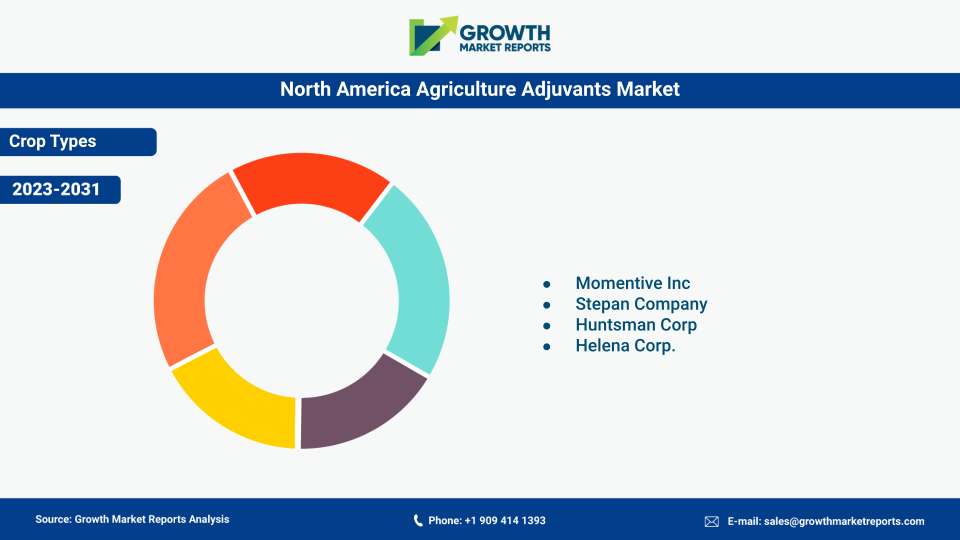
Key players operating in the North America agriculture adjuvants Market includes Momentive Inc, Stepan Company, Huntsman Corp, and Helena Corp.
Challenges include stringent regulatory requirements, the need for costly testing and certification, environmental and health concerns about certain ingredients, and the complexity of regulatory landscapes in different regions.
Major companies include BASF SE, Corteva Agriscience, Evonik Industries AG, Solvay S.A., Clariant AG, Huntsman Corporation, Nufarm Limited, Croda International Plc, Helena Agri-Enterprises LLC, and Wilbur-Ellis Company LLC.
Key trends include the shift towards sustainable and precision agriculture, the development of bio-based adjuvants, integration with digital agriculture tools, and increased regulatory focus on environmental safety.
Major applications include herbicides (largest segment), insecticides, fungicides, and other crop protection products like plant growth regulators and biostimulants.
Adjuvants are added to agrochemicals like herbicides, insecticides, and fungicides to enhance their absorption, spreading, and retention on plant surfaces, improving pest and disease control.
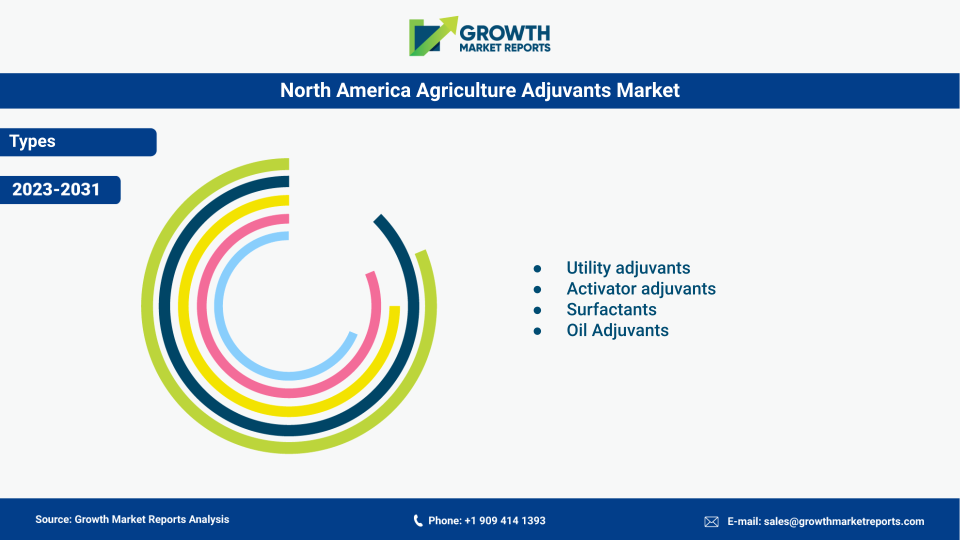
The main types include activator adjuvants (such as surfactants and oil-based adjuvants), utility adjuvants (like buffering agents and anti-foaming agents), and other specialized adjuvants such as wetting agents, spreaders, stickers, and penetrants.
North America leads the global market, accounting for about 38% of the market share, followed by Asia Pacific, Europe, and Latin America.
Key growth drivers include the increasing demand for food production, adoption of advanced crop protection solutions, rising awareness of sustainable farming, and the development of innovative adjuvant formulations.
The agriculture adjuvants market is projected to grow at a CAGR of 5.8% from 2025 to 2033.
As of 2024, the global agriculture adjuvants market size reached USD 3.95 billion, with robust growth expected in the coming years.