Humic Acid Water Soluble Fertilizers Market Research Report 2033

Humic Acid Water Soluble Fertilizers Market Research Report 2033

Segments - by Product Type (Powder, Granules, Liquid), by Application (Agriculture, Horticulture, Greenhouse, Turf and Ornamentals, Others), by Crop Type (Cereals & Grains, Fruits & Vegetables, Oilseeds & Pulses, Others), by Distribution Channel (Online, Offline)

https://growthmarketreports.com/Anuradha
Author : Anuradha B. More
https://growthmarketreports.com/Vaibhav
Fact-checked by : Vaibhav Chandola
https://growthmarketreports.com/Shruti
Editor : Shruti Bhat

Upcoming | Report ID :FB-61 | 4.8 Rating | 69 Reviews | 271 Pages | Format : Docx PDF

Report Description


Humic Acid Water Soluble Fertilizers Market Outlook

According to our latest research, the global Humic Acid Water Soluble Fertilizers market size reached USD 1.72 billion in 2024, demonstrating robust expansion driven by rising demand for sustainable agricultural inputs. The market is projected to grow at a CAGR of 8.6% from 2025 to 2033, reaching an estimated USD 3.56 billion by 2033. The primary growth factor fueling this market is the increasing adoption of organic and environmentally friendly fertilizers, as growers worldwide seek to boost crop yields while minimizing ecological impact.

One of the key growth drivers for the Humic Acid Water Soluble Fertilizers market is the intensifying focus on sustainable agriculture. As regulatory bodies and consumers push for reduced chemical inputs and more eco-friendly farming practices, humic acid-based fertilizers have emerged as a favored solution. These fertilizers enhance soil fertility, improve nutrient uptake, and foster plant resilience, aligning closely with global trends toward sustainable food production. The rising awareness of soil health and its direct impact on crop productivity is encouraging farmers to transition from conventional chemical fertilizers to humic acid water soluble variants, further propelling market growth.

Technological advancements in fertilizer formulation and application techniques are also propelling the market forward. Innovations such as precision agriculture, fertigation, and controlled-release technologies are enabling more efficient and targeted use of humic acid water soluble fertilizers. These advancements not only maximize the efficacy of the product but also minimize wastage and environmental runoff. As agribusinesses and smallholder farmers alike invest in modernizing their operations, the demand for high-performance, water-soluble humic acid fertilizers is expected to surge. Additionally, the development of value-added products tailored to specific crop requirements is further broadening the market’s appeal and application scope.

Another significant growth factor is the supportive regulatory environment and government initiatives promoting organic and sustainable farming. Several countries have introduced subsidies, tax incentives, and certification programs to encourage the adoption of bio-based fertilizers, including humic acid water soluble types. These policies are particularly impactful in regions where agriculture forms a substantial part of the economy, such as Asia Pacific and Latin America. The increasing penetration of organized retail and e-commerce platforms has also made it easier for farmers to access these fertilizers, thereby boosting market penetration and adoption rates globally.

From a regional perspective, Asia Pacific continues to dominate the Humic Acid Water Soluble Fertilizers market, accounting for over 38% of the global share in 2024. This dominance is attributed to the region’s vast agricultural landscape, high population density, and growing emphasis on yield improvement. North America and Europe are also significant contributors, driven by stringent environmental regulations and advanced farming practices. Meanwhile, Latin America and the Middle East & Africa are emerging as high-potential markets, supported by increasing agricultural modernization and rising awareness of soil health management.

Global Humic Acid Water Soluble Fertilizers Industry Outlook

Product Type Analysis

The Humic Acid Water Soluble Fertilizers market is segmented by product type into powder, granules, and liquid formulations, each offering distinct advantages and catering to different end-user preferences. Powdered humic acid fertilizers are widely favored for their ease of transportation, storage stability, and compatibility with various blending processes. They are particularly popular among large-scale agricultural operations and distributors, as the powdered form enables flexible application through both direct soil incorporation and fertigation systems. The high solubility rate ensures rapid nutrient availability to crops, making powders a preferred choice for time-sensitive cultivation cycles.

Granular humic acid water soluble fertilizers are gaining traction, especially in regions where mechanized farming and large-scale field applications are prevalent. Granules offer the advantage of controlled release, allowing for sustained nutrient availability over extended periods. This attribute is particularly beneficial for crops requiring long-term soil enrichment and for minimizing the frequency of fertilizer application. Additionally, granules are less prone to drift and dust loss during application, which enhances their appeal in windy or open-field environments. Their compatibility with conventional fertilization equipment further drives adoption among commercial growers.

The liquid segment is witnessing the fastest growth in the Humic Acid Water Soluble Fertilizers market, driven by its superior ease of use and versatility. Liquid humic acid formulations are ideal for precision agriculture applications, including foliar sprays and drip irrigation systems. The immediate bioavailability of nutrients and the ability to tailor concentrations to specific crop needs make liquid fertilizers an attractive option for high-value horticultural and greenhouse crops. Furthermore, liquid formulations facilitate uniform distribution, reduce labor costs associated with manual application, and are increasingly preferred by small and medium-sized farms seeking efficient and scalable solutions.

The choice of product type is often influenced by regional agricultural practices, crop types, and the scale of farming operations. For instance, markets in North America and Europe exhibit a higher preference for advanced liquid and granular formulations, reflecting the widespread adoption of modern farming equipment and precision agriculture techniques. Conversely, in Asia Pacific and Latin America, powdered forms remain dominant due to cost-effectiveness and compatibility with traditional farming methods. The ongoing innovation in product formulation, including the development of multi-nutrient blends and enhanced solubility profiles, is expected to further diversify the product landscape and cater to evolving market needs.

Report Scope

Attributes Details
Report Title Humic Acid Water Soluble Fertilizers Market Research Report 2033
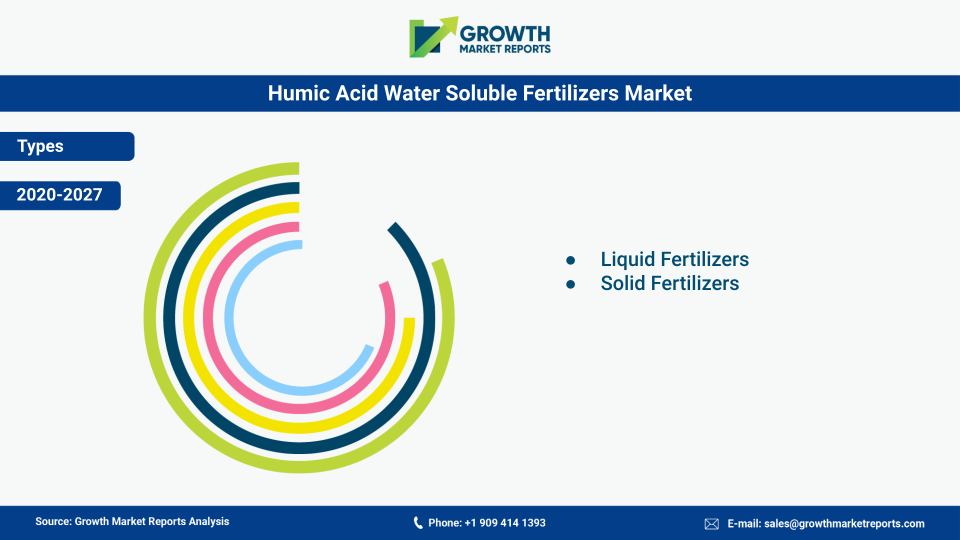
By Product Type Powder, Granules, Liquid
By Application Agriculture, Horticulture, Greenhouse, Turf and Ornamentals, Others
By Crop Type Cereals & Grains, Fruits & Vegetables, Oilseeds & Pulses, Others
By Distribution Channel Online, Offline
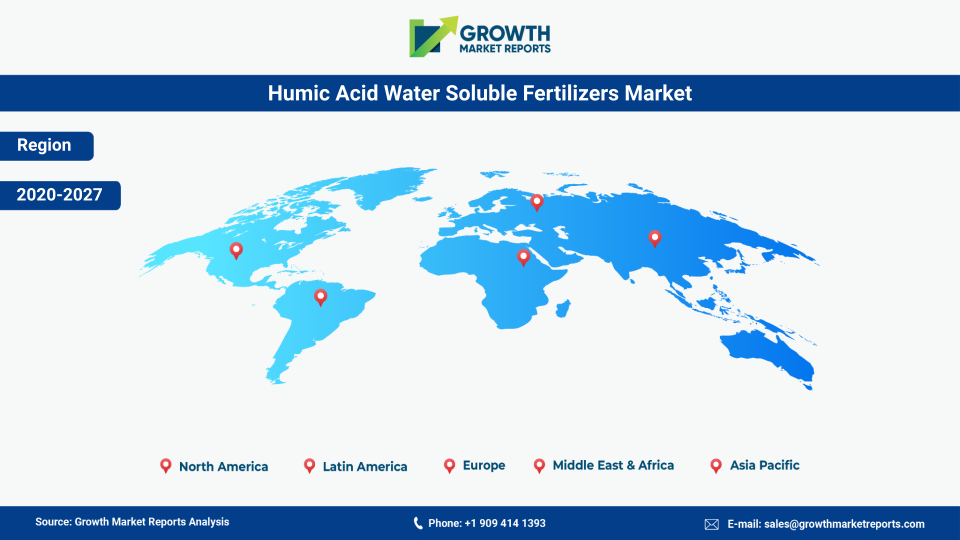
Regions Covered North America, Europe, APAC, Latin America, MEA
Base Year 2024
Historic Data 2018-2023
Forecast Period 2025-2033
Number of Pages 271
Number of Tables & Figures 345
Customization Available Yes, the report can be customized as per your need.

Application Analysis

The application segment of the Humic Acid Water Soluble Fertilizers market encompasses agriculture, horticulture, greenhouse, turf and ornamentals, and others, reflecting the diverse utility of these products across various cultivation environments. Agriculture remains the largest application segment, accounting for over 60% of total market demand in 2024. The widespread use of humic acid fertilizers in staple crop production is driven by their proven ability to enhance soil structure, increase nutrient uptake, and stimulate root development. This results in improved crop yields and resilience against abiotic stresses, making them indispensable in both conventional and organic farming systems.

Horticulture is another key application area, particularly in regions with high-value fruit, vegetable, and ornamental plant production. Humic acid water soluble fertilizers are increasingly used in horticultural practices to promote vigorous growth, enhance fruit quality, and extend shelf life. Their compatibility with micro-irrigation and fertigation systems enables precise nutrient management, which is critical for maximizing returns in intensively managed horticultural enterprises. The growing consumer demand for premium quality produce, coupled with the shift towards residue-free farming, is expected to drive further adoption of humic acid fertilizers in this segment.

Greenhouse cultivation represents a high-potential application segment, driven by the need for controlled environment agriculture and year-round production. In greenhouses, humic acid water soluble fertilizers are utilized to maintain optimal soil health, support continuous cropping cycles, and mitigate the effects of soil fatigue. The ability to tailor fertilizer regimens to specific crop requirements and growth stages is a significant advantage in greenhouse settings, where precision and efficiency are paramount. As urban agriculture and vertical farming continue to gain momentum, the demand for water soluble humic acid fertilizers in greenhouse applications is projected to rise steadily.

The turf and ornamentals segment is also witnessing notable growth, particularly in developed markets where landscaping, sports turf, and public green spaces are prioritized. Humic acid water soluble fertilizers are valued for their ability to improve soil aeration, enhance root vigor, and promote lush, disease-resistant turf. Their rapid solubility and ease of application make them ideal for maintaining large turf areas with minimal labor input. Additionally, public and private sector investments in urban beautification and recreational infrastructure are expected to sustain demand in this segment. The “others” category, comprising specialty crops and non-traditional uses, is gradually expanding as new application areas are explored.

Crop Type Analysis

The Humic Acid Water Soluble Fertilizers market is further segmented by crop type, including cereals & grains, fruits & vegetables, oilseeds & pulses, and others. Cereals & grains represent the dominant crop type, accounting for approximately 45% of global market consumption in 2024. The high adoption rate in this segment is attributed to the extensive cultivation of staple crops such as wheat, rice, and maize, which are critical for global food security. Humic acid fertilizers play a vital role in enhancing nutrient use efficiency, improving soil fertility, and increasing yields in cereal and grain production, particularly in regions with degraded or nutrient-deficient soils.

Fruits & vegetables constitute the second-largest crop type segment, driven by the increasing demand for high-quality, nutrient-rich produce. The intensive nature of horticultural crop production, coupled with the need for consistent quality and appearance, makes humic acid water soluble fertilizers an attractive choice for fruit and vegetable growers. These fertilizers support robust plant growth, enhance flavor and nutritional content, and reduce the incidence of physiological disorders. The trend towards organic and residue-free produce is further accelerating adoption in this segment, especially in developed markets where consumer preferences are shifting towards healthier food options.

Oilseeds & pulses are emerging as a significant growth segment within the Humic Acid Water Soluble Fertilizers market. The rising global demand for edible oils, protein-rich pulses, and biofuel crops is driving increased cultivation of oilseeds such as soybeans, sunflower, and canola. Humic acid fertilizers are increasingly utilized in oilseed and pulse production to improve soil structure, enhance nutrient availability, and support sustainable yield increases. The ability to address specific micronutrient deficiencies and promote root development is particularly valuable in these crops, which often face challenges related to soil fertility and water availability.

The “others” category encompasses a diverse range of specialty and non-traditional crops, including medicinal plants, herbs, and floriculture. While this segment currently represents a smaller share of the overall market, it is expected to witness above-average growth rates as new applications for humic acid water soluble fertilizers are identified. The expansion of high-value niche markets, coupled with increasing experimentation by progressive growers, is likely to drive innovation and product development tailored to these unique crop types. As the benefits of humic acid fertilizers become more widely recognized, their adoption across a broader spectrum of crops is anticipated to accelerate.

Distribution Channel Analysis

The distribution channel landscape for Humic Acid Water Soluble Fertilizers is bifurcated into online and offline channels, each playing a pivotal role in market accessibility and penetration. Offline distribution channels, including agricultural cooperatives, retail stores, and specialized agro-input dealers, continue to dominate the market, accounting for over 70% of total sales in 2024. These channels benefit from established networks, direct farmer engagement, and the ability to provide personalized product recommendations. In many regions, especially in developing countries, offline channels remain the primary mode of fertilizer procurement due to limited digital infrastructure and the preference for face-to-face interactions.

However, the online distribution channel is experiencing rapid growth, driven by the digitalization of agriculture and increasing internet penetration among rural populations. E-commerce platforms and dedicated agritech portals are making it easier for farmers to access a wide range of humic acid water soluble fertilizers, compare prices, and benefit from doorstep delivery. The convenience, transparency, and broader product selection offered by online channels are attracting a new generation of tech-savvy farmers and agribusinesses. Additionally, online platforms often provide educational resources, usage guides, and customer reviews, further empowering buyers to make informed decisions.

The growing adoption of smartphones and mobile applications is further transforming the distribution landscape. Mobile-based ordering systems, digital payment solutions, and real-time inventory management are streamlining the purchasing process and reducing transaction costs. This digital transformation is particularly impactful in regions with vast and dispersed agricultural communities, where traditional supply chains may be less efficient. As governments and private sector players invest in rural connectivity and digital literacy, the share of online sales in the Humic Acid Water Soluble Fertilizers market is expected to increase significantly over the forecast period.

Despite the rapid growth of online channels, challenges such as logistical constraints, product authenticity concerns, and limited awareness remain barriers to widespread adoption. To address these issues, leading manufacturers are adopting omni-channel strategies, integrating online and offline touchpoints to provide a seamless customer experience. Partnerships with local distributors, investment in last-mile delivery infrastructure, and the use of digital marketing campaigns are key strategies being employed to enhance market reach and customer engagement. The evolving distribution landscape is poised to play a critical role in shaping the future growth trajectory of the Humic Acid Water Soluble Fertilizers market.

Opportunities & Threats

The Humic Acid Water Soluble Fertilizers market presents significant opportunities for both established players and new entrants, driven primarily by the global shift towards sustainable agriculture. The rising demand for organic food products, coupled with stringent regulations on chemical fertilizer use, is creating a fertile ground for the adoption of bio-based fertilizers. Manufacturers have the opportunity to innovate by developing customized formulations tailored to specific crop requirements, soil types, and climatic conditions. The integration of humic acid fertilizers with precision agriculture technologies, such as remote sensing, soil mapping, and variable rate application, offers the potential to maximize resource efficiency and crop productivity. Furthermore, expanding into emerging markets with large agricultural bases and unmet demand presents a lucrative avenue for growth.

Another promising opportunity lies in the development of fortified and multi-functional humic acid water soluble fertilizers. By incorporating micronutrients, beneficial microbes, and biostimulants, manufacturers can create value-added products that address multiple agronomic challenges simultaneously. The increasing investment in research and development, supported by public and private sector funding, is expected to accelerate the discovery of novel formulations and application methods. Additionally, strategic partnerships with agritech companies, research institutions, and government agencies can facilitate market entry, enhance product credibility, and drive large-scale adoption. The growing emphasis on climate-resilient agriculture and soil carbon sequestration further underscores the long-term potential of humic acid-based fertilizers.

Despite these opportunities, the market faces certain restraints that could hinder growth. One of the primary challenges is the lack of standardized product quality and efficacy benchmarks, which can lead to inconsistent performance and reduced farmer confidence. The presence of counterfeit and substandard products in the market exacerbates this issue, particularly in regions with weak regulatory oversight. Additionally, the relatively higher cost of humic acid water soluble fertilizers compared to conventional chemical fertilizers may deter price-sensitive farmers, especially in developing economies. Addressing these challenges will require concerted efforts by industry stakeholders to enhance quality assurance, invest in farmer education, and advocate for supportive regulatory frameworks.

Regional Outlook

The Asia Pacific region leads the global Humic Acid Water Soluble Fertilizers market, with a market size of USD 655 million in 2024, representing approximately 38% of the global market. This dominance is fueled by the region’s vast agricultural sector, rising population, and increasing awareness of sustainable farming practices. Countries such as China, India, and Australia are at the forefront of adoption, supported by government initiatives promoting organic and bio-based fertilizers. The Asia Pacific market is projected to grow at a CAGR of 9.3% through 2033, outpacing other regions due to rapid technological advancements and expanding distribution networks.

North America is the second-largest market, accounting for USD 428 million in 2024. The region benefits from advanced agricultural infrastructure, high levels of mechanization, and stringent environmental regulations that incentivize the use of eco-friendly fertilizers. The United States and Canada are leading markets within the region, driven by large-scale commercial farming operations and a strong focus on soil health management. The adoption of precision agriculture technologies and the growing popularity of organic food products are expected to sustain robust demand for humic acid water soluble fertilizers in North America over the forecast period.

Europe holds a significant share of the global market, with a market size of USD 344 million in 2024. The region’s growth is underpinned by progressive agricultural policies, widespread adoption of sustainable farming practices, and a well-established organic food market. Countries such as Germany, France, and Italy are key contributors, with a strong emphasis on environmental stewardship and soil conservation. Latin America and the Middle East & Africa, with market sizes of USD 172 million and USD 121 million respectively, are emerging as high-growth regions, driven by agricultural modernization efforts and increasing awareness of soil health benefits. These regions are expected to witness accelerated growth as investment in infrastructure and farmer education initiatives intensify.

Humic Acid Water Soluble Fertilizers Market Statistics

Competitor Outlook

The global Humic Acid Water Soluble Fertilizers market is characterized by intense competition, with a mix of multinational corporations, regional players, and niche manufacturers vying for market share. The competitive landscape is shaped by continuous innovation, strategic partnerships, and a focus on expanding product portfolios to cater to diverse customer needs. Leading companies are investing heavily in research and development to create advanced formulations with enhanced efficacy, solubility, and crop-specific benefits. The ability to offer customized solutions and value-added services, such as agronomic support and application training, is emerging as a key differentiator in the market.

Strategic collaborations and mergers & acquisitions are common strategies employed by major players to strengthen their market position and expand their geographic footprint. Companies are increasingly forming alliances with agritech startups, research institutions, and government agencies to accelerate product development and market entry. The emphasis on sustainability and environmental stewardship is prompting manufacturers to obtain organic certifications and comply with international quality standards, thereby enhancing their credibility and appeal among discerning customers. Digital transformation is also playing a pivotal role, with companies leveraging e-commerce platforms, digital marketing, and data analytics to reach a broader customer base and optimize supply chain operations.

Despite the presence of established players, the market offers ample opportunities for new entrants and regional manufacturers, particularly in emerging markets with high growth potential. The relatively low barriers to entry, coupled with increasing demand for locally produced and customized fertilizers, are encouraging the emergence of innovative startups and small-scale producers. However, maintaining consistent product quality, building brand reputation, and establishing robust distribution networks remain critical challenges for new entrants. The ability to adapt to evolving customer preferences, regulatory requirements, and technological advancements will determine long-term success in this dynamic market.

Some of the major companies operating in the global Humic Acid Water Soluble Fertilizers market include Humic Growth Solutions, Inc., BioAg, AgroLiquid, Humintech GmbH, Black Earth Humic LP, Grow More, Inc., Omnia Specialities Australia Pty Ltd, Jiloca Industrial, S.A., and NTS – Nutri-Tech Solutions. These companies are recognized for their extensive product portfolios, strong research capabilities, and global distribution networks. For instance, Humic Growth Solutions, Inc. is known for its innovative water soluble humic acid products tailored to a wide range of crops and soil types, while Humintech GmbH specializes in high-purity humic substances for both agricultural and industrial applications. BioAg and AgroLiquid focus on delivering sustainable and scientifically validated solutions for modern agriculture, with a strong emphasis on customer education and technical support.

In summary, the Humic Acid Water Soluble Fertilizers market is poised for significant growth over the next decade, driven by the global push towards sustainable agriculture, technological innovation, and supportive regulatory frameworks. The competitive landscape will continue to evolve as companies invest in product development, digital transformation, and strategic partnerships to capture emerging opportunities and address market challenges. As awareness of soil health and environmental sustainability continues to rise, humic acid water soluble fertilizers are set to play an increasingly vital role in shaping the future of global agriculture.

Key Players

  • AgroLiquid
  • Haifa Group
  • Nutrien Ltd.
  • Syngenta AG
  • The Andersons, Inc.
  • Humintech GmbH
  • Yara International ASA
  • Omnia Specialities Australia Pty Ltd
  • Black Earth Humic LP
  • Grow More, Inc.
  • Koppert Biological Systems
  • BioAg Pty Ltd
  • Jiloca Industrial S.A.
  • U.S. Humic Products, Inc.
  • Ximeng Humic Acid Technology Co., Ltd.
  • Shandong Chuangxin Humic Acid Technology Co., Ltd.
  • Nutri-Tech Solutions Pty Ltd
  • Canadian Humalite International Inc.
  • Humic Growth Solutions, Inc.
  • L.Gobbi Srl
Humic Acid Water Soluble Fertilizers Market Overview

Segments

The Humic Acid Water Soluble Fertilizers market has been segmented on the basis of

Product Type

  • Powder
  • Granules
  • Liquid

Application

  • Agriculture
  • Horticulture
  • Greenhouse
  • Turf and Ornamentals
  • Others

Crop Type

  • Cereals & Grains
  • Fruits & Vegetables
  • Oilseeds & Pulses
  • Others

Distribution Channel

  • Online
  • Offline

Competitive Landscape

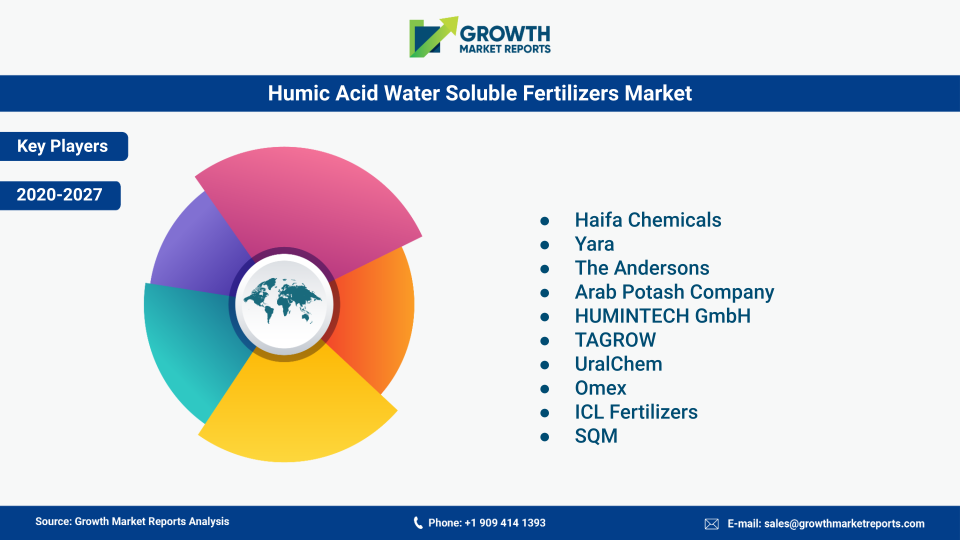
  • Key players in the market include Haifa Chemicals, Yara, Omex, The Andersons, Arab Potash Company, HUMINTECH GmbH, TAGROW, UralChem.
  • In Jan 2019, Haifa Group (Haifa) launches NutriNet, an online expert system which aims to support and optimize the process of creating customized fertilization programs. The service is free of charge for users. The new NutriNet platform was developed at the Haifa Group Innovation Center. It incorporates plant nutrition related knowledge that was accumulated by Haifa during decades of field and R&D activities worldwide. The NutriNet is designed to assist growers in setting fertilization programs. Step by step, the software directs the farmer's workflow, supports decision-making and simplifies calculations. The majority of the process is carried out before the season, leaving the grower with a detailed work plan for the season. The fertilization programs may be retrieved at any time, for adjustments and to create task reminders.
  • In May 2018, Yara International ASA has closed its acquisition of the Vale Cubatão Fertilizantes complex, strengthening Yara's integrated position in Brazil. This acquisition marks the start of an exciting new phase in Brazil for Yara as the acquisition brings nitrogen production assets into our growing portfolio in Brazil, strengthening and growing Yara’s integrated position within both industrial and fertilizer. The transaction is valued at USD 255 million, with the operating capital value subject to post-closing adjustment.

Humic Acid Water Soluble Fertilizers Market Key Players

Frequently Asked Questions

Additional company profiles can be provided on request.

Yes, the report provides supply chain analysis along with a list of raw material suppliers, manufacturers, distributors, and customers.

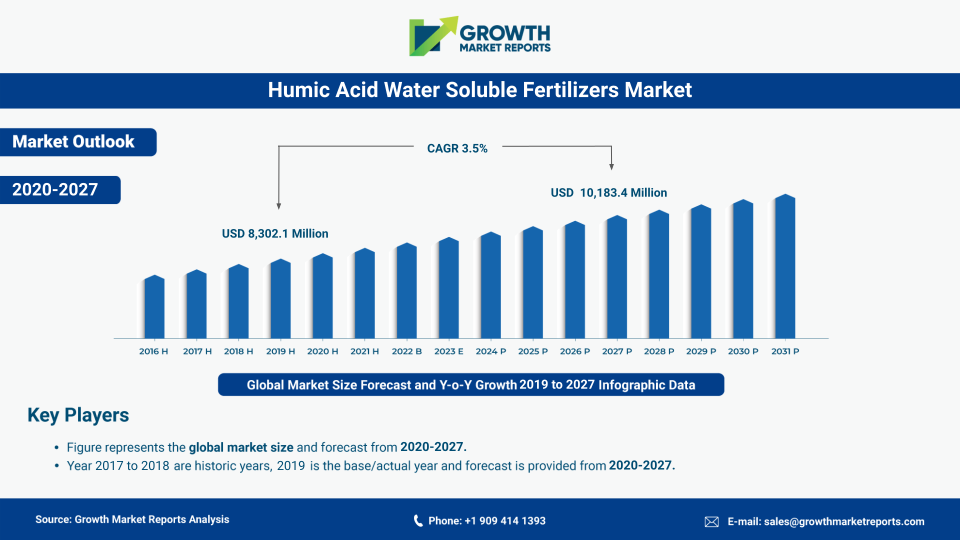
According to this Growth Market Reports report, the market from Humic Acid Water Soluble Fertilizers is likely to register a CAGR of 3.5% during forecast period 2020-2027, with an anticipated valuation of USD 10,183.4 million by the end of the 2027.

In addition to market size (in USD Million) & Volume (Tons) Company Market Share (in % for base year 2019), other data such Macro-economic factors, COVID-19 Impact on the value chain is available in final report.

Factors such as competitive strength and market positioning are key areas considered while selecting top companies to be profiled.

An improving the structure of soil, prevent high water and nutrient losses in light, sandy soils are considered as the primary reason for market growth.

The market is expected to witness a decrease of over 2-3% between 2019 and 2020 owing to the adverse impact of COVID-19 pandemic on the Humic Acid Water Soluble Fertilizers market.

The base year considered for the global Humic Acid Water Soluble Fertilizers market report is 2019. The complete analysis period is 2017 to 2027, wherein, 2017 & 2018 are the historic years and the forecast is provided from 2020 to 2027.

Agro-chemcial industries, agriculture farmers, Farm owners, Fruit & Vegetable Producers are the key end-user that are driving the Humic Acid Water Soluble Fertilizers market.

Major Manufactures include, Haifa Chemicals, Yara, Omex, The Andersons, Arab Potash Company, HUMINTECH GmbH etc.

Table Of Content

Chapter 1 Executive Summary
Chapter 2 Assumptions and Acronyms Used
Chapter 3 Research Methodology
Chapter 4 Humic Acid Water Soluble Fertilizers Market Overview
   4.1 Introduction
      4.1.1 Market Taxonomy
      4.1.2 Market Definition
      4.1.3 Macro-Economic Factors Impacting the Market Growth
   4.2 Humic Acid Water Soluble Fertilizers Market Dynamics
      4.2.1 Market Drivers
      4.2.2 Market Restraints
      4.2.3 Market Opportunity
   4.3 Humic Acid Water Soluble Fertilizers Market - Supply Chain Analysis
      4.3.1 List of Key Suppliers
      4.3.2 List of Key Distributors
      4.3.3 List of Key Consumers
   4.4 Key Forces Shaping the Humic Acid Water Soluble Fertilizers Market
      4.4.1 Bargaining Power of Suppliers
      4.4.2 Bargaining Power of Buyers
      4.4.3 Threat of Substitution
      4.4.4 Threat of New Entrants
      4.4.5 Competitive Rivalry
   4.5 Global Humic Acid Water Soluble Fertilizers Market Size & Forecast, 2023-2032
      4.5.1 Humic Acid Water Soluble Fertilizers Market Size and Y-o-Y Growth
      4.5.2 Humic Acid Water Soluble Fertilizers Market Absolute $ Opportunity

Chapter 5 Global Humic Acid Water Soluble Fertilizers Market Analysis and Forecast By Product Type
   5.1 Introduction
      5.1.1 Key Market Trends & Growth Opportunities By Product Type
      5.1.2 Basis Point Share (BPS) Analysis By Product Type
      5.1.3 Absolute $ Opportunity Assessment By Product Type
   5.2 Humic Acid Water Soluble Fertilizers Market Size Forecast By Product Type
      5.2.1 Powder
      5.2.2 Granules
      5.2.3 Liquid
   5.3 Market Attractiveness Analysis By Product Type

Chapter 6 Global Humic Acid Water Soluble Fertilizers Market Analysis and Forecast By Application
   6.1 Introduction
      6.1.1 Key Market Trends & Growth Opportunities By Application
      6.1.2 Basis Point Share (BPS) Analysis By Application
      6.1.3 Absolute $ Opportunity Assessment By Application
   6.2 Humic Acid Water Soluble Fertilizers Market Size Forecast By Application
      6.2.1 Agriculture
      6.2.2 Horticulture
      6.2.3 Greenhouse
      6.2.4 Turf and Ornamentals
      6.2.5 Others
   6.3 Market Attractiveness Analysis By Application

Chapter 7 Global Humic Acid Water Soluble Fertilizers Market Analysis and Forecast By Crop Type
   7.1 Introduction
      7.1.1 Key Market Trends & Growth Opportunities By Crop Type
      7.1.2 Basis Point Share (BPS) Analysis By Crop Type
      7.1.3 Absolute $ Opportunity Assessment By Crop Type
   7.2 Humic Acid Water Soluble Fertilizers Market Size Forecast By Crop Type
      7.2.1 Cereals & Grains
      7.2.2 Fruits & Vegetables
      7.2.3 Oilseeds & Pulses
      7.2.4 Others
   7.3 Market Attractiveness Analysis By Crop Type

Chapter 8 Global Humic Acid Water Soluble Fertilizers Market Analysis and Forecast By Distribution Channel
   8.1 Introduction
      8.1.1 Key Market Trends & Growth Opportunities By Distribution Channel
      8.1.2 Basis Point Share (BPS) Analysis By Distribution Channel
      8.1.3 Absolute $ Opportunity Assessment By Distribution Channel
   8.2 Humic Acid Water Soluble Fertilizers Market Size Forecast By Distribution Channel
      8.2.1 Online
      8.2.2 Offline
   8.3 Market Attractiveness Analysis By Distribution Channel

Chapter 9 Global Humic Acid Water Soluble Fertilizers Market Analysis and Forecast by Region
   9.1 Introduction
      9.1.1 Key Market Trends & Growth Opportunities By Region
      9.1.2 Basis Point Share (BPS) Analysis By Region
      9.1.3 Absolute $ Opportunity Assessment By Region
   9.2 Humic Acid Water Soluble Fertilizers Market Size Forecast By Region
      9.2.1 North America
      9.2.2 Europe
      9.2.3 Asia Pacific
      9.2.4 Latin America
      9.2.5 Middle East & Africa (MEA)
   9.3 Market Attractiveness Analysis By Region

Chapter 10 Coronavirus Disease (COVID-19) Impact 
   10.1 Introduction 
   10.2 Current & Future Impact Analysis 
   10.3 Economic Impact Analysis 
   10.4 Government Policies 
   10.5 Investment Scenario

Chapter 11 North America Humic Acid Water Soluble Fertilizers Analysis and Forecast
   11.1 Introduction
   11.2 North America Humic Acid Water Soluble Fertilizers Market Size Forecast by Country
      11.2.1 U.S.
      11.2.2 Canada
   11.3 Basis Point Share (BPS) Analysis by Country
   11.4 Absolute $ Opportunity Assessment by Country
   11.5 Market Attractiveness Analysis by Country
   11.6 North America Humic Acid Water Soluble Fertilizers Market Size Forecast By Product Type
      11.6.1 Powder
      11.6.2 Granules
      11.6.3 Liquid
   11.7 Basis Point Share (BPS) Analysis By Product Type 
   11.8 Absolute $ Opportunity Assessment By Product Type 
   11.9 Market Attractiveness Analysis By Product Type
   11.10 North America Humic Acid Water Soluble Fertilizers Market Size Forecast By Application
      11.10.1 Agriculture
      11.10.2 Horticulture
      11.10.3 Greenhouse
      11.10.4 Turf and Ornamentals
      11.10.5 Others
   11.11 Basis Point Share (BPS) Analysis By Application 
   11.12 Absolute $ Opportunity Assessment By Application 
   11.13 Market Attractiveness Analysis By Application
   11.14 North America Humic Acid Water Soluble Fertilizers Market Size Forecast By Crop Type
      11.14.1 Cereals & Grains
      11.14.2 Fruits & Vegetables
      11.14.3 Oilseeds & Pulses
      11.14.4 Others
   11.15 Basis Point Share (BPS) Analysis By Crop Type 
   11.16 Absolute $ Opportunity Assessment By Crop Type 
   11.17 Market Attractiveness Analysis By Crop Type
   11.18 North America Humic Acid Water Soluble Fertilizers Market Size Forecast By Distribution Channel
      11.18.1 Online
      11.18.2 Offline
   11.19 Basis Point Share (BPS) Analysis By Distribution Channel 
   11.20 Absolute $ Opportunity Assessment By Distribution Channel 
   11.21 Market Attractiveness Analysis By Distribution Channel

Chapter 12 Europe Humic Acid Water Soluble Fertilizers Analysis and Forecast
   12.1 Introduction
   12.2 Europe Humic Acid Water Soluble Fertilizers Market Size Forecast by Country
      12.2.1 Germany
      12.2.2 France
      12.2.3 Italy
      12.2.4 U.K.
      12.2.5 Spain
      12.2.6 Russia
      12.2.7 Rest of Europe
   12.3 Basis Point Share (BPS) Analysis by Country
   12.4 Absolute $ Opportunity Assessment by Country
   12.5 Market Attractiveness Analysis by Country
   12.6 Europe Humic Acid Water Soluble Fertilizers Market Size Forecast By Product Type
      12.6.1 Powder
      12.6.2 Granules
      12.6.3 Liquid
   12.7 Basis Point Share (BPS) Analysis By Product Type 
   12.8 Absolute $ Opportunity Assessment By Product Type 
   12.9 Market Attractiveness Analysis By Product Type
   12.10 Europe Humic Acid Water Soluble Fertilizers Market Size Forecast By Application
      12.10.1 Agriculture
      12.10.2 Horticulture
      12.10.3 Greenhouse
      12.10.4 Turf and Ornamentals
      12.10.5 Others
   12.11 Basis Point Share (BPS) Analysis By Application 
   12.12 Absolute $ Opportunity Assessment By Application 
   12.13 Market Attractiveness Analysis By Application
   12.14 Europe Humic Acid Water Soluble Fertilizers Market Size Forecast By Crop Type
      12.14.1 Cereals & Grains
      12.14.2 Fruits & Vegetables
      12.14.3 Oilseeds & Pulses
      12.14.4 Others
   12.15 Basis Point Share (BPS) Analysis By Crop Type 
   12.16 Absolute $ Opportunity Assessment By Crop Type 
   12.17 Market Attractiveness Analysis By Crop Type
   12.18 Europe Humic Acid Water Soluble Fertilizers Market Size Forecast By Distribution Channel
      12.18.1 Online
      12.18.2 Offline
   12.19 Basis Point Share (BPS) Analysis By Distribution Channel 
   12.20 Absolute $ Opportunity Assessment By Distribution Channel 
   12.21 Market Attractiveness Analysis By Distribution Channel

Chapter 13 Asia Pacific Humic Acid Water Soluble Fertilizers Analysis and Forecast
   13.1 Introduction
   13.2 Asia Pacific Humic Acid Water Soluble Fertilizers Market Size Forecast by Country
      13.2.1 China
      13.2.2 Japan
      13.2.3 South Korea
      13.2.4 India
      13.2.5 Australia
      13.2.6 South East Asia (SEA)
      13.2.7 Rest of Asia Pacific (APAC)
   13.3 Basis Point Share (BPS) Analysis by Country
   13.4 Absolute $ Opportunity Assessment by Country
   13.5 Market Attractiveness Analysis by Country
   13.6 Asia Pacific Humic Acid Water Soluble Fertilizers Market Size Forecast By Product Type
      13.6.1 Powder
      13.6.2 Granules
      13.6.3 Liquid
   13.7 Basis Point Share (BPS) Analysis By Product Type 
   13.8 Absolute $ Opportunity Assessment By Product Type 
   13.9 Market Attractiveness Analysis By Product Type
   13.10 Asia Pacific Humic Acid Water Soluble Fertilizers Market Size Forecast By Application
      13.10.1 Agriculture
      13.10.2 Horticulture
      13.10.3 Greenhouse
      13.10.4 Turf and Ornamentals
      13.10.5 Others
   13.11 Basis Point Share (BPS) Analysis By Application 
   13.12 Absolute $ Opportunity Assessment By Application 
   13.13 Market Attractiveness Analysis By Application
   13.14 Asia Pacific Humic Acid Water Soluble Fertilizers Market Size Forecast By Crop Type
      13.14.1 Cereals & Grains
      13.14.2 Fruits & Vegetables
      13.14.3 Oilseeds & Pulses
      13.14.4 Others
   13.15 Basis Point Share (BPS) Analysis By Crop Type 
   13.16 Absolute $ Opportunity Assessment By Crop Type 
   13.17 Market Attractiveness Analysis By Crop Type
   13.18 Asia Pacific Humic Acid Water Soluble Fertilizers Market Size Forecast By Distribution Channel
      13.18.1 Online
      13.18.2 Offline
   13.19 Basis Point Share (BPS) Analysis By Distribution Channel 
   13.20 Absolute $ Opportunity Assessment By Distribution Channel 
   13.21 Market Attractiveness Analysis By Distribution Channel

Chapter 14 Latin America Humic Acid Water Soluble Fertilizers Analysis and Forecast
   14.1 Introduction
   14.2 Latin America Humic Acid Water Soluble Fertilizers Market Size Forecast by Country
      14.2.1 Brazil
      14.2.2 Mexico
      14.2.3 Rest of Latin America (LATAM)
   14.3 Basis Point Share (BPS) Analysis by Country
   14.4 Absolute $ Opportunity Assessment by Country
   14.5 Market Attractiveness Analysis by Country
   14.6 Latin America Humic Acid Water Soluble Fertilizers Market Size Forecast By Product Type
      14.6.1 Powder
      14.6.2 Granules
      14.6.3 Liquid
   14.7 Basis Point Share (BPS) Analysis By Product Type 
   14.8 Absolute $ Opportunity Assessment By Product Type 
   14.9 Market Attractiveness Analysis By Product Type
   14.10 Latin America Humic Acid Water Soluble Fertilizers Market Size Forecast By Application
      14.10.1 Agriculture
      14.10.2 Horticulture
      14.10.3 Greenhouse
      14.10.4 Turf and Ornamentals
      14.10.5 Others
   14.11 Basis Point Share (BPS) Analysis By Application 
   14.12 Absolute $ Opportunity Assessment By Application 
   14.13 Market Attractiveness Analysis By Application
   14.14 Latin America Humic Acid Water Soluble Fertilizers Market Size Forecast By Crop Type
      14.14.1 Cereals & Grains
      14.14.2 Fruits & Vegetables
      14.14.3 Oilseeds & Pulses
      14.14.4 Others
   14.15 Basis Point Share (BPS) Analysis By Crop Type 
   14.16 Absolute $ Opportunity Assessment By Crop Type 
   14.17 Market Attractiveness Analysis By Crop Type
   14.18 Latin America Humic Acid Water Soluble Fertilizers Market Size Forecast By Distribution Channel
      14.18.1 Online
      14.18.2 Offline
   14.19 Basis Point Share (BPS) Analysis By Distribution Channel 
   14.20 Absolute $ Opportunity Assessment By Distribution Channel 
   14.21 Market Attractiveness Analysis By Distribution Channel

Chapter 15 Middle East & Africa (MEA) Humic Acid Water Soluble Fertilizers Analysis and Forecast
   15.1 Introduction
   15.2 Middle East & Africa (MEA) Humic Acid Water Soluble Fertilizers Market Size Forecast by Country
      15.2.1 Saudi Arabia
      15.2.2 South Africa
      15.2.3 UAE
      15.2.4 Rest of Middle East & Africa (MEA)
   15.3 Basis Point Share (BPS) Analysis by Country
   15.4 Absolute $ Opportunity Assessment by Country
   15.5 Market Attractiveness Analysis by Country
   15.6 Middle East & Africa (MEA) Humic Acid Water Soluble Fertilizers Market Size Forecast By Product Type
      15.6.1 Powder
      15.6.2 Granules
      15.6.3 Liquid
   15.7 Basis Point Share (BPS) Analysis By Product Type 
   15.8 Absolute $ Opportunity Assessment By Product Type 
   15.9 Market Attractiveness Analysis By Product Type
   15.10 Middle East & Africa (MEA) Humic Acid Water Soluble Fertilizers Market Size Forecast By Application
      15.10.1 Agriculture
      15.10.2 Horticulture
      15.10.3 Greenhouse
      15.10.4 Turf and Ornamentals
      15.10.5 Others
   15.11 Basis Point Share (BPS) Analysis By Application 
   15.12 Absolute $ Opportunity Assessment By Application 
   15.13 Market Attractiveness Analysis By Application
   15.14 Middle East & Africa (MEA) Humic Acid Water Soluble Fertilizers Market Size Forecast By Crop Type
      15.14.1 Cereals & Grains
      15.14.2 Fruits & Vegetables
      15.14.3 Oilseeds & Pulses
      15.14.4 Others
   15.15 Basis Point Share (BPS) Analysis By Crop Type 
   15.16 Absolute $ Opportunity Assessment By Crop Type 
   15.17 Market Attractiveness Analysis By Crop Type
   15.18 Middle East & Africa (MEA) Humic Acid Water Soluble Fertilizers Market Size Forecast By Distribution Channel
      15.18.1 Online
      15.18.2 Offline
   15.19 Basis Point Share (BPS) Analysis By Distribution Channel 
   15.20 Absolute $ Opportunity Assessment By Distribution Channel 
   15.21 Market Attractiveness Analysis By Distribution Channel

Chapter 16 Competition Landscape 
   16.1 Humic Acid Water Soluble Fertilizers Market: Competitive Dashboard
   16.2 Global Humic Acid Water Soluble Fertilizers Market: Market Share Analysis, 2023
   16.3 Company Profiles (Details – Overview, Financials, Developments, Strategy) 
      16.3.1 AgroLiquid
Haifa Group
Nutrien Ltd.
Syngenta AG
The Andersons, Inc.
Humintech GmbH
Yara International ASA
Omnia Specialities Australia Pty Ltd
Black Earth Humic LP
Grow More, Inc.
Koppert Biological Systems
BioAg Pty Ltd
Jiloca Industrial S.A.
U.S. Humic Products, Inc.
Ximeng Humic Acid Technology Co., Ltd.
Shandong Chuangxin Humic Acid Technology Co., Ltd.
Nutri-Tech Solutions Pty Ltd
Canadian Humalite International Inc.
Humic Growth Solutions, Inc.
L.Gobbi Srl

Methodology

Our Clients

Pfizer
Dassault Aviation
Microsoft
The John Holland Group
Nestle SA
Siemens Healthcare
Honda Motor Co. Ltd.
General Electric