Oral Care Products Market Research Report 2033

Oral Care Products Market Research Report 2033

Segments - by Product Type (Toothpaste, Toothbrushes & Accessories, Mouthwash/Rinses, Dental Floss, Denture Products, Others), by Distribution Channel (Supermarkets/Hypermarkets, Pharmacies & Drug Stores, Online Stores, Specialty Stores, Others), by End User (Adults, Children, Geriatric)

https://growthmarketreports.com/Debadatta
Author : Debadatta Patel
https://growthmarketreports.com/Vaibhav
Fact-checked by : V. Chandola
https://growthmarketreports.com/Shruti
Editor : Shruti Bhat

Upcoming | Report ID :CG-1361 | 4.1 Rating | 98 Reviews | 268 Pages | Format : Docx PDF

Report Description


Oral Care Products Market Outlook

According to our latest research, the global oral care products market size reached USD 51.2 billion in 2024, reflecting a robust consumer focus on dental hygiene and preventive oral healthcare. The market is projected to grow at a CAGR of 5.9% during the forecast period, with the total value expected to reach USD 87.3 billion by 2033. This sustained expansion is primarily driven by increasing awareness of oral health, product innovations, and the rising prevalence of dental diseases worldwide. As per our analysis, the oral care products market is experiencing strong momentum due to evolving consumer lifestyles and the proactive role of dental professionals in promoting regular oral hygiene practices.

One of the key growth factors fueling the oral care products market is the increasing global awareness regarding the importance of oral hygiene. Public health campaigns, educational initiatives by dental associations, and endorsements from healthcare professionals have significantly influenced consumer attitudes toward daily oral care routines. The rising incidence of dental caries, periodontal diseases, and other oral health issues has compelled both individuals and families to invest in high-quality oral care products. Furthermore, the growing middle-class population in emerging economies, coupled with higher disposable incomes, has led to increased spending on premium oral care products, including electric toothbrushes, advanced toothpaste formulations, and specialized mouthwashes. This shift is further amplified by the widespread penetration of digital media, which plays a crucial role in educating consumers about the long-term benefits of maintaining optimal oral health.

Another significant driver of the oral care products market is the continuous innovation and product development undertaken by leading manufacturers. Companies are investing heavily in research and development to introduce advanced formulations with targeted benefits such as whitening, sensitivity relief, gum protection, and anti-cavity properties. The integration of natural and herbal ingredients in toothpaste and mouthwashes has gained traction among health-conscious consumers, reflecting a broader trend toward clean-label and sustainable personal care products. Moreover, the advent of smart oral care devices, such as Bluetooth-enabled toothbrushes and AI-powered oral health monitoring systems, is transforming the consumer experience, offering personalized recommendations and enhancing compliance with oral hygiene regimens. These technological advancements are not only attracting tech-savvy consumers but also encouraging brand loyalty and repeat purchases.

The oral care products market is also benefiting from the expanding network of distribution channels, which has made these products more accessible to a diverse consumer base. The proliferation of supermarkets, hypermarkets, pharmacies, and online stores has significantly improved product availability and convenience. E-commerce platforms, in particular, have witnessed exponential growth, enabling consumers to compare products, access detailed reviews, and benefit from subscription-based purchasing models. This omnichannel approach allows manufacturers to reach urban and rural populations alike, bridging the gap in oral healthcare accessibility. Additionally, the rise of private-label brands and exclusive retail partnerships is intensifying competition, driving further innovation and value-added services in the market.

From a regional perspective, Asia Pacific stands out as the fastest-growing market for oral care products, driven by a large population base, rapid urbanization, and increasing health consciousness among consumers. North America and Europe continue to dominate the market in terms of revenue, owing to high product penetration, advanced dental care infrastructure, and a strong focus on preventive healthcare. Latin America and the Middle East & Africa are emerging as promising regions, supported by rising disposable incomes and government-led oral health initiatives. The interplay of these regional dynamics is shaping the competitive landscape and influencing strategic decisions by key market players.

Global Oral Care Products Industry Outlook

Product Type Analysis

The oral care products market is segmented by product type into toothpaste, toothbrushes & accessories, mouthwash/rinses, dental floss, denture products, and others. Among these, toothpaste remains the most widely used product, accounting for the largest share of the market in 2024. The demand for toothpaste is driven by its essential role in daily oral hygiene routines and its broad appeal across all age groups. Innovations in toothpaste formulations, such as those targeting sensitivity, whitening, and gum health, have further propelled category growth. Additionally, the rising popularity of natural and herbal toothpaste options reflects a growing consumer preference for products with minimal chemical additives and eco-friendly packaging.

Toothbrushes and accessories represent another significant segment within the oral care products market. The shift from manual to electric toothbrushes has been particularly noteworthy, with consumers seeking enhanced cleaning efficiency and advanced features such as pressure sensors, timers, and Bluetooth connectivity. The market for toothbrush accessories, including replacement brush heads, travel cases, and sanitizing devices, is also experiencing steady growth. This trend is supported by increased consumer awareness regarding the importance of replacing toothbrushes regularly and maintaining proper brush hygiene, as recommended by dental professionals.

Mouthwash and rinses are gaining traction, especially among adults seeking comprehensive oral care solutions. These products offer additional benefits such as fresh breath, plaque reduction, and targeted treatment for specific oral health issues like gum disease and dry mouth. The introduction of alcohol-free and natural ingredient-based mouthwashes has broadened the appeal of this segment, catering to consumers with sensitive oral tissues and those seeking gentler formulations. The convenience of single-use mouthwash sachets and portable packaging formats has also contributed to the segment’s growth, making it easier for consumers to maintain oral hygiene on the go.

Dental floss and interdental cleaning aids are increasingly recognized as essential components of a complete oral care regimen. The growing emphasis on preventive dental care and the rising prevalence of interdental problems have spurred demand for innovative flossing products, including flavored floss, floss picks, and water flossers. Denture care products, while representing a smaller share of the market, remain vital for the geriatric population and individuals with partial or complete dentures. This segment includes denture adhesives, cleansers, and comfort pads, all designed to enhance the comfort and hygiene of denture wearers. The "others" category encompasses emerging oral care products such as tongue cleaners and oral sprays, which are gradually gaining acceptance as consumers seek holistic solutions for oral hygiene.

Report Scope

Attributes Details
Report Title Oral Care Products Market Research Report 2033
By Product Type Toothpaste, Toothbrushes & Accessories, Mouthwash/Rinses, Dental Floss, Denture Products, Others
By Distribution Channel Supermarkets/Hypermarkets, Pharmacies & Drug Stores, Online Stores, Specialty Stores, Others
By End User Adults, Children, Geriatric
Regions Covered North America, Europe, APAC, Latin America, MEA
Base Year 2024
Historic Data 2018-2023
Forecast Period 2025-2033
Number of Pages 268
Number of Tables & Figures 350
Customization Available Yes, the report can be customized as per your need.

Distribution Channel Analysis

The distribution channel landscape for the oral care products market is diverse and evolving rapidly. Supermarkets and hypermarkets continue to dominate the distribution network, accounting for a significant share of global sales in 2024. These retail formats offer consumers the advantage of one-stop shopping, a wide product assortment, and competitive pricing, making them the preferred choice for many households. The strategic placement of oral care products in high-traffic areas within stores, coupled with promotional campaigns and in-store demonstrations, further drives impulse purchases and brand visibility.

Pharmacies and drug stores hold a prominent position in the distribution of oral care products, particularly for therapeutic and specialty items such as medicated toothpaste, prescription mouthwashes, and dental appliances. These outlets benefit from the trust consumers place in pharmacists and healthcare professionals, who often provide personalized recommendations and expert advice on oral care routines. The close association with dental clinics and the availability of professional-grade products have reinforced the role of pharmacies as a reliable source for oral health solutions.

Online stores have emerged as a dynamic and fast-growing distribution channel, transforming the way consumers access oral care products. The convenience of home delivery, access to a broader product range, and the ability to compare prices and read customer reviews have contributed to the exponential growth of e-commerce platforms. Subscription-based models and auto-replenishment services are gaining popularity, ensuring that consumers never run out of essential oral care supplies. Leading brands are investing in digital marketing, influencer collaborations, and direct-to-consumer channels to enhance their online presence and engage tech-savvy consumers.

Specialty stores, including health and beauty retailers, dental clinics, and exclusive brand outlets, offer curated selections of premium and niche oral care products. These channels cater to discerning consumers seeking personalized solutions and expert guidance. Specialty stores often focus on high-margin products, such as electric toothbrushes, whitening kits, and advanced oral care devices. The "others" category encompasses emerging distribution channels, such as vending machines and direct sales through dental professionals, which are gradually gaining traction in select markets. The diversification of distribution channels is enabling manufacturers to reach a wider audience and adapt to changing consumer shopping behaviors.

End User Analysis

The oral care products market serves a diverse range of end users, segmented into adults, children, and the geriatric population. Adults constitute the largest end-user segment, driven by heightened awareness of oral health, lifestyle-related dental issues, and a strong inclination toward preventive care. This demographic is characterized by a willingness to invest in advanced oral care products, including electric toothbrushes, whitening treatments, and therapeutic mouthwashes. The increasing prevalence of conditions such as dental sensitivity, gum disease, and halitosis among adults has further fueled demand for targeted solutions, prompting manufacturers to develop specialized product lines catering to this segment.

Children represent a critical end-user group in the oral care products market, with parents and caregivers placing a strong emphasis on instilling good oral hygiene habits from an early age. The market for children’s oral care products is characterized by the proliferation of age-appropriate toothbrushes, flavored toothpaste, and fun packaging designs featuring popular cartoon characters. These products are formulated to be gentle on developing teeth and gums while appealing to children’s preferences. Educational campaigns in schools and pediatric dental clinics play a pivotal role in promoting regular brushing and flossing among children, driving sustained demand for child-focused oral care solutions.

The geriatric population is an increasingly important segment within the oral care products market, reflecting global demographic trends toward an aging population. Older adults often face unique oral health challenges, including tooth loss, gum recession, dry mouth, and the need for dentures or dental implants. As a result, there is a growing market for denture care products, moisturizing mouthwashes, and toothpaste formulations designed to address age-related oral health issues. Manufacturers are responding by developing products with enhanced comfort, ease of use, and therapeutic benefits tailored to the needs of elderly consumers. The integration of oral health into broader geriatric care programs is also contributing to increased product adoption in this segment.

Across all end-user segments, there is a growing emphasis on personalized oral care solutions that address specific needs and preferences. The trend toward customization is evident in the availability of products for sensitive teeth, whitening, enamel strengthening, and natural ingredient-based formulations. The convergence of oral care with digital health technologies is further enhancing the consumer experience, offering tailored recommendations and real-time feedback through smart devices and mobile applications. This focus on personalization and innovation is expected to drive long-term growth and differentiation in the oral care products market.

Opportunities & Threats

The oral care products market presents significant opportunities for growth, driven by the rising awareness of preventive healthcare and the increasing prevalence of oral diseases globally. One of the most promising opportunities lies in the development and commercialization of innovative products that cater to evolving consumer preferences. The demand for natural, organic, and sustainable oral care products is surging, as consumers become more conscious of ingredient safety and environmental impact. Manufacturers who invest in clean-label formulations, eco-friendly packaging, and cruelty-free testing methods are well-positioned to capture this growing market segment. Additionally, the integration of digital health technologies, such as smart toothbrushes and AI-powered oral health monitoring systems, offers opportunities for differentiation and value-added services. These innovations not only enhance the consumer experience but also foster brand loyalty and long-term engagement.

Another key opportunity in the oral care products market is the expansion into emerging markets, where rising disposable incomes, urbanization, and improved access to healthcare are driving demand for oral hygiene products. Companies that establish localized manufacturing facilities, adapt product offerings to regional preferences, and invest in targeted marketing campaigns can gain a competitive edge in these high-growth regions. Strategic collaborations with dental professionals, government agencies, and non-governmental organizations can further enhance market penetration and consumer education. The growing trend of direct-to-consumer sales, supported by robust e-commerce infrastructure, presents additional opportunities for brands to reach untapped customer segments and build direct relationships with consumers.

Despite these opportunities, the oral care products market faces several restraining factors that could impact growth. One of the primary challenges is the intense competition among established brands and new entrants, leading to price wars and margin pressures. The proliferation of counterfeit and substandard products, particularly in developing markets, poses risks to consumer safety and brand reputation. Regulatory compliance and the need to adhere to stringent quality standards in different regions can also increase operational complexities and costs for manufacturers. Furthermore, economic downturns and fluctuations in consumer spending may temporarily dampen demand for premium oral care products, especially in price-sensitive markets. Companies must navigate these challenges by investing in quality assurance, regulatory expertise, and robust distribution networks to sustain long-term growth.

Regional Outlook

The Asia Pacific region is emerging as the fastest-growing market for oral care products, with a market value of approximately USD 19.8 billion in 2024. This rapid growth is attributed to a large and increasingly urbanized population, rising disposable incomes, and heightened awareness of oral health. Countries such as China, India, Japan, and South Korea are witnessing significant investments in oral health infrastructure, public health campaigns, and product innovation. The region’s CAGR is projected to be around 7.1% through 2033, outpacing the global average and offering lucrative opportunities for both multinational and local players. The increasing penetration of e-commerce and the popularity of herbal and natural oral care products further contribute to the region’s robust market expansion.

In North America, the oral care products market remains highly developed, with a market size of USD 13.7 billion in 2024. The region’s growth is driven by high consumer awareness, advanced dental care infrastructure, and a strong focus on preventive healthcare. The United States accounts for the largest share, supported by a well-established retail network, widespread adoption of premium oral care products, and active participation of dental professionals in promoting oral hygiene. Canada and Mexico also contribute to regional growth, with increasing investments in oral health education and access to innovative products. North America is expected to maintain steady growth, supported by ongoing product innovation and the rising demand for personalized oral care solutions.

Europe represents a mature market for oral care products, valued at USD 11.6 billion in 2024. The region benefits from a high standard of living, comprehensive dental care systems, and a strong emphasis on preventive health practices. Western European countries, including Germany, the United Kingdom, France, and Italy, lead the market, while Eastern Europe is witnessing gradual growth driven by improving economic conditions and increased health consciousness. The European market is characterized by a preference for natural and organic oral care products, as well as a growing interest in sustainable packaging and ethical sourcing. Latin America and the Middle East & Africa regions, with market values of USD 3.2 billion and USD 2.9 billion respectively in 2024, are poised for steady growth, supported by expanding healthcare infrastructure, government-led oral health initiatives, and rising consumer awareness.

Oral Care Products Market Statistics

Competitor Outlook

The oral care products market is highly competitive, with a mix of global giants, regional players, and emerging brands vying for market share. The competitive landscape is characterized by continuous innovation, aggressive marketing strategies, and a strong emphasis on brand loyalty. Leading companies invest heavily in research and development to introduce new formulations, advanced oral care devices, and eco-friendly packaging solutions. The focus on premiumization, personalization, and digital engagement is reshaping the industry, with brands leveraging social media, influencer partnerships, and direct-to-consumer channels to build lasting relationships with consumers. Strategic mergers, acquisitions, and partnerships are common, enabling companies to expand their product portfolios, enter new markets, and enhance operational efficiencies.

Brand differentiation is a key success factor in the oral care products market, with companies striving to create unique value propositions through product quality, functional benefits, and sustainability initiatives. The rise of natural and organic oral care products has intensified competition, prompting established brands to expand their offerings and invest in clean-label certifications. Private-label brands and exclusive retail partnerships are gaining traction, challenging the dominance of traditional market leaders. The proliferation of counterfeit products and regulatory challenges necessitates robust quality assurance and supply chain management practices to protect brand reputation and ensure consumer safety.

Digital transformation is playing a pivotal role in shaping the competitive dynamics of the oral care products market. Companies are leveraging data analytics, artificial intelligence, and smart device integration to offer personalized oral care solutions and enhance the consumer experience. The adoption of e-commerce platforms, subscription models, and mobile applications is enabling brands to reach a broader audience and foster long-term engagement. The emphasis on sustainability, ethical sourcing, and social responsibility is also influencing consumer preferences, with brands that demonstrate a commitment to environmental and social causes gaining a competitive edge.

Major companies in the oral care products market include Colgate-Palmolive Company, Procter & Gamble (P&G), Unilever, GlaxoSmithKline plc (GSK), Johnson & Johnson, Lion Corporation, Sunstar Group, Church & Dwight Co., Inc., and Henkel AG & Co. KGaA. Colgate-Palmolive leads the market with a comprehensive portfolio of toothpaste, toothbrushes, and mouthwashes, supported by strong brand recognition and global distribution networks. Procter & Gamble, through its Crest and Oral-B brands, is renowned for its innovative electric toothbrushes and advanced oral care solutions. Unilever’s Signal and Pepsodent brands are prominent in both developed and emerging markets, focusing on accessibility and affordability.

GlaxoSmithKline (GSK) is a key player in the therapeutic oral care segment, offering specialized products for sensitivity and gum health under the Sensodyne and Parodontax brands. Johnson & Johnson, with its Listerine mouthwash range, dominates the global mouthwash market, emphasizing the importance of comprehensive oral hygiene. Lion Corporation and Sunstar Group are leading players in the Asia Pacific region, known for their focus on research-driven innovation and local market adaptation. Church & Dwight Co., Inc., with its Arm & Hammer brand, leverages the power of baking soda for natural and effective oral care solutions. Henkel AG & Co. KGaA, through its various brands, is expanding its presence in the oral care segment, focusing on sustainability and product differentiation.

These companies are continuously investing in product innovation, digital transformation, and sustainability initiatives to maintain their competitive positions. Strategic collaborations with dental professionals, healthcare organizations, and retail partners are enhancing their market reach and credibility. The competitive landscape is expected to remain dynamic, with ongoing consolidation, new product launches, and the entry of disruptive startups shaping the future of the oral care products market.

Key Players

  • Procter & Gamble (P&G)
  • Colgate-Palmolive Company
  • Unilever
  • Johnson & Johnson
  • GlaxoSmithKline plc (GSK)
  • Church & Dwight Co., Inc.
  • Henkel AG & Co. KGaA
  • Lion Corporation
  • Sunstar Suisse S.A.
  • 3M Company
  • Kao Corporation
  • Dabur India Ltd.
  • Dr. Fresh LLC
  • GC Corporation
  • Oral-B (a P&G brand)
  • Philips Oral Healthcare
  • Himalaya Drug Company
  • Amway Corporation
  • Tom’s of Maine (a Colgate-Palmolive brand)
  • Patanjali Ayurved Ltd.
Oral Care Products Market Overview

Segments

The Oral Care Products market has been segmented on the basis of

Product Type

  • Toothpaste
  • Toothbrushes & Accessories
  • Mouthwash/Rinses
  • Dental Floss
  • Denture Products
  • Others

Distribution Channel

  • Supermarkets/Hypermarkets
  • Pharmacies & Drug Stores
  • Online Stores
  • Specialty Stores
  • Others

End User

  • Adults
  • Children
  • Geriatric

Competitive Landscape

Key players competing in the oral care products market include Colgate-Palmolive Company, Straumann, Johnson & Johnson, Dentsply Sirona, Carestream Health, GlaxoSmithKline, Danaher, Proctor & Gamble Corporation, and Unilever plc.

Some of these players are using several market strategies such as acquisitions, merger, collaborations, partnerships, capacity expansion, and product launches to enhance their market shares and to generate revenue and rise their production line of the business in the coming years.
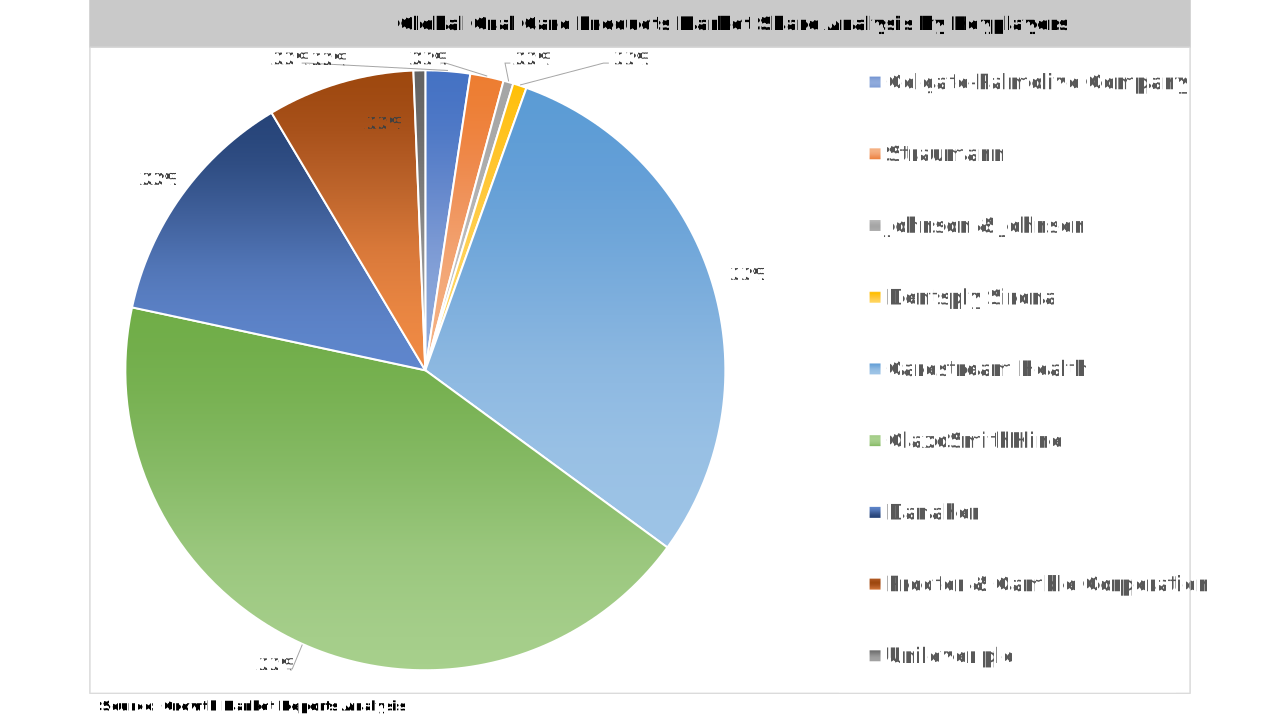

Global Oral Care Products Market Key Players

Frequently Asked Questions

The market is segmented into adults, children, and the geriatric population, each with unique needs. Adults drive demand for advanced and therapeutic products, while children’s products focus on gentleness and appeal, and the elderly require specialized denture and dry mouth solutions.

Challenges include intense competition, price wars, counterfeit products, regulatory compliance, and economic fluctuations affecting demand for premium products.

Consumers are increasingly seeking natural, organic, and sustainable products, as well as personalized solutions for sensitivity, whitening, and gum health. Clean-label and eco-friendly packaging are also gaining traction.

Major companies include Colgate-Palmolive, Procter & Gamble (P&G), Unilever, Johnson & Johnson, GlaxoSmithKline (GSK), Lion Corporation, Sunstar Group, Church & Dwight, Henkel, and others.

North America and Europe lead in revenue due to high product penetration and advanced infrastructure. Asia Pacific is the fastest-growing region, while Latin America and the Middle East & Africa are emerging markets with rising demand.

Supermarkets/hypermarkets, pharmacies/drug stores, online stores, and specialty stores are key channels. E-commerce is growing rapidly, offering convenience, product variety, and subscription-based models.

Technological advancements such as electric toothbrushes, Bluetooth-enabled devices, AI-powered oral health monitoring, and smart oral care solutions are transforming the consumer experience and driving market growth.

Toothpaste is the most widely used product, followed by toothbrushes & accessories, mouthwash/rinses, dental floss, denture products, and emerging products like tongue cleaners and oral sprays.

Key growth drivers include rising awareness of oral hygiene, increasing prevalence of dental diseases, product innovation, higher disposable incomes, and the influence of digital media and dental professionals.

The global oral care products market reached USD 51.2 billion in 2024 and is projected to grow at a CAGR of 5.9%, reaching USD 87.3 billion by 2033.

Table Of Content

Chapter 1 Executive Summary
Chapter 2 Assumptions and Acronyms Used
Chapter 3 Research Methodology
Chapter 4 Oral Care Products Market Overview
   4.1 Introduction
      4.1.1 Market Taxonomy
      4.1.2 Market Definition
      4.1.3 Macro-Economic Factors Impacting the Market Growth
   4.2 Oral Care Products Market Dynamics
      4.2.1 Market Drivers
      4.2.2 Market Restraints
      4.2.3 Market Opportunity
   4.3 Oral Care Products Market - Supply Chain Analysis
      4.3.1 List of Key Suppliers
      4.3.2 List of Key Distributors
      4.3.3 List of Key Consumers
   4.4 Key Forces Shaping the Oral Care Products Market
      4.4.1 Bargaining Power of Suppliers
      4.4.2 Bargaining Power of Buyers
      4.4.3 Threat of Substitution
      4.4.4 Threat of New Entrants
      4.4.5 Competitive Rivalry
   4.5 Global Oral Care Products Market Size & Forecast, 2023-2032
      4.5.1 Oral Care Products Market Size and Y-o-Y Growth
      4.5.2 Oral Care Products Market Absolute $ Opportunity

Chapter 5 Global Oral Care Products Market Analysis and Forecast By Product Type
   5.1 Introduction
      5.1.1 Key Market Trends & Growth Opportunities By Product Type
      5.1.2 Basis Point Share (BPS) Analysis By Product Type
      5.1.3 Absolute $ Opportunity Assessment By Product Type
   5.2 Oral Care Products Market Size Forecast By Product Type
      5.2.1 Toothpaste
      5.2.2 Toothbrushes & Accessories
      5.2.3 Mouthwash/Rinses
      5.2.4 Dental Floss
      5.2.5 Denture Products
      5.2.6 Others
   5.3 Market Attractiveness Analysis By Product Type

Chapter 6 Global Oral Care Products Market Analysis and Forecast By Distribution Channel
   6.1 Introduction
      6.1.1 Key Market Trends & Growth Opportunities By Distribution Channel
      6.1.2 Basis Point Share (BPS) Analysis By Distribution Channel
      6.1.3 Absolute $ Opportunity Assessment By Distribution Channel
   6.2 Oral Care Products Market Size Forecast By Distribution Channel
      6.2.1 Supermarkets/Hypermarkets
      6.2.2 Pharmacies & Drug Stores
      6.2.3 Online Stores
      6.2.4 Specialty Stores
      6.2.5 Others
   6.3 Market Attractiveness Analysis By Distribution Channel

Chapter 7 Global Oral Care Products Market Analysis and Forecast By End User
   7.1 Introduction
      7.1.1 Key Market Trends & Growth Opportunities By End User
      7.1.2 Basis Point Share (BPS) Analysis By End User
      7.1.3 Absolute $ Opportunity Assessment By End User
   7.2 Oral Care Products Market Size Forecast By End User
      7.2.1 Adults
      7.2.2 Children
      7.2.3 Geriatric
   7.3 Market Attractiveness Analysis By End User

Chapter 8 Global Oral Care Products Market Analysis and Forecast by Region
   8.1 Introduction
      8.1.1 Key Market Trends & Growth Opportunities By Region
      8.1.2 Basis Point Share (BPS) Analysis By Region
      8.1.3 Absolute $ Opportunity Assessment By Region
   8.2 Oral Care Products Market Size Forecast By Region
      8.2.1 North America
      8.2.2 Europe
      8.2.3 Asia Pacific
      8.2.4 Latin America
      8.2.5 Middle East & Africa (MEA)
   8.3 Market Attractiveness Analysis By Region

Chapter 9 Coronavirus Disease (COVID-19) Impact 
   9.1 Introduction 
   9.2 Current & Future Impact Analysis 
   9.3 Economic Impact Analysis 
   9.4 Government Policies 
   9.5 Investment Scenario

Chapter 10 North America Oral Care Products Analysis and Forecast
   10.1 Introduction
   10.2 North America Oral Care Products Market Size Forecast by Country
      10.2.1 U.S.
      10.2.2 Canada
   10.3 Basis Point Share (BPS) Analysis by Country
   10.4 Absolute $ Opportunity Assessment by Country
   10.5 Market Attractiveness Analysis by Country
   10.6 North America Oral Care Products Market Size Forecast By Product Type
      10.6.1 Toothpaste
      10.6.2 Toothbrushes & Accessories
      10.6.3 Mouthwash/Rinses
      10.6.4 Dental Floss
      10.6.5 Denture Products
      10.6.6 Others
   10.7 Basis Point Share (BPS) Analysis By Product Type 
   10.8 Absolute $ Opportunity Assessment By Product Type 
   10.9 Market Attractiveness Analysis By Product Type
   10.10 North America Oral Care Products Market Size Forecast By Distribution Channel
      10.10.1 Supermarkets/Hypermarkets
      10.10.2 Pharmacies & Drug Stores
      10.10.3 Online Stores
      10.10.4 Specialty Stores
      10.10.5 Others
   10.11 Basis Point Share (BPS) Analysis By Distribution Channel 
   10.12 Absolute $ Opportunity Assessment By Distribution Channel 
   10.13 Market Attractiveness Analysis By Distribution Channel
   10.14 North America Oral Care Products Market Size Forecast By End User
      10.14.1 Adults
      10.14.2 Children
      10.14.3 Geriatric
   10.15 Basis Point Share (BPS) Analysis By End User 
   10.16 Absolute $ Opportunity Assessment By End User 
   10.17 Market Attractiveness Analysis By End User

Chapter 11 Europe Oral Care Products Analysis and Forecast
   11.1 Introduction
   11.2 Europe Oral Care Products Market Size Forecast by Country
      11.2.1 Germany
      11.2.2 France
      11.2.3 Italy
      11.2.4 U.K.
      11.2.5 Spain
      11.2.6 Russia
      11.2.7 Rest of Europe
   11.3 Basis Point Share (BPS) Analysis by Country
   11.4 Absolute $ Opportunity Assessment by Country
   11.5 Market Attractiveness Analysis by Country
   11.6 Europe Oral Care Products Market Size Forecast By Product Type
      11.6.1 Toothpaste
      11.6.2 Toothbrushes & Accessories
      11.6.3 Mouthwash/Rinses
      11.6.4 Dental Floss
      11.6.5 Denture Products
      11.6.6 Others
   11.7 Basis Point Share (BPS) Analysis By Product Type 
   11.8 Absolute $ Opportunity Assessment By Product Type 
   11.9 Market Attractiveness Analysis By Product Type
   11.10 Europe Oral Care Products Market Size Forecast By Distribution Channel
      11.10.1 Supermarkets/Hypermarkets
      11.10.2 Pharmacies & Drug Stores
      11.10.3 Online Stores
      11.10.4 Specialty Stores
      11.10.5 Others
   11.11 Basis Point Share (BPS) Analysis By Distribution Channel 
   11.12 Absolute $ Opportunity Assessment By Distribution Channel 
   11.13 Market Attractiveness Analysis By Distribution Channel
   11.14 Europe Oral Care Products Market Size Forecast By End User
      11.14.1 Adults
      11.14.2 Children
      11.14.3 Geriatric
   11.15 Basis Point Share (BPS) Analysis By End User 
   11.16 Absolute $ Opportunity Assessment By End User 
   11.17 Market Attractiveness Analysis By End User

Chapter 12 Asia Pacific Oral Care Products Analysis and Forecast
   12.1 Introduction
   12.2 Asia Pacific Oral Care Products Market Size Forecast by Country
      12.2.1 China
      12.2.2 Japan
      12.2.3 South Korea
      12.2.4 India
      12.2.5 Australia
      12.2.6 South East Asia (SEA)
      12.2.7 Rest of Asia Pacific (APAC)
   12.3 Basis Point Share (BPS) Analysis by Country
   12.4 Absolute $ Opportunity Assessment by Country
   12.5 Market Attractiveness Analysis by Country
   12.6 Asia Pacific Oral Care Products Market Size Forecast By Product Type
      12.6.1 Toothpaste
      12.6.2 Toothbrushes & Accessories
      12.6.3 Mouthwash/Rinses
      12.6.4 Dental Floss
      12.6.5 Denture Products
      12.6.6 Others
   12.7 Basis Point Share (BPS) Analysis By Product Type 
   12.8 Absolute $ Opportunity Assessment By Product Type 
   12.9 Market Attractiveness Analysis By Product Type
   12.10 Asia Pacific Oral Care Products Market Size Forecast By Distribution Channel
      12.10.1 Supermarkets/Hypermarkets
      12.10.2 Pharmacies & Drug Stores
      12.10.3 Online Stores
      12.10.4 Specialty Stores
      12.10.5 Others
   12.11 Basis Point Share (BPS) Analysis By Distribution Channel 
   12.12 Absolute $ Opportunity Assessment By Distribution Channel 
   12.13 Market Attractiveness Analysis By Distribution Channel
   12.14 Asia Pacific Oral Care Products Market Size Forecast By End User
      12.14.1 Adults
      12.14.2 Children
      12.14.3 Geriatric
   12.15 Basis Point Share (BPS) Analysis By End User 
   12.16 Absolute $ Opportunity Assessment By End User 
   12.17 Market Attractiveness Analysis By End User

Chapter 13 Latin America Oral Care Products Analysis and Forecast
   13.1 Introduction
   13.2 Latin America Oral Care Products Market Size Forecast by Country
      13.2.1 Brazil
      13.2.2 Mexico
      13.2.3 Rest of Latin America (LATAM)
   13.3 Basis Point Share (BPS) Analysis by Country
   13.4 Absolute $ Opportunity Assessment by Country
   13.5 Market Attractiveness Analysis by Country
   13.6 Latin America Oral Care Products Market Size Forecast By Product Type
      13.6.1 Toothpaste
      13.6.2 Toothbrushes & Accessories
      13.6.3 Mouthwash/Rinses
      13.6.4 Dental Floss
      13.6.5 Denture Products
      13.6.6 Others
   13.7 Basis Point Share (BPS) Analysis By Product Type 
   13.8 Absolute $ Opportunity Assessment By Product Type 
   13.9 Market Attractiveness Analysis By Product Type
   13.10 Latin America Oral Care Products Market Size Forecast By Distribution Channel
      13.10.1 Supermarkets/Hypermarkets
      13.10.2 Pharmacies & Drug Stores
      13.10.3 Online Stores
      13.10.4 Specialty Stores
      13.10.5 Others
   13.11 Basis Point Share (BPS) Analysis By Distribution Channel 
   13.12 Absolute $ Opportunity Assessment By Distribution Channel 
   13.13 Market Attractiveness Analysis By Distribution Channel
   13.14 Latin America Oral Care Products Market Size Forecast By End User
      13.14.1 Adults
      13.14.2 Children
      13.14.3 Geriatric
   13.15 Basis Point Share (BPS) Analysis By End User 
   13.16 Absolute $ Opportunity Assessment By End User 
   13.17 Market Attractiveness Analysis By End User

Chapter 14 Middle East & Africa (MEA) Oral Care Products Analysis and Forecast
   14.1 Introduction
   14.2 Middle East & Africa (MEA) Oral Care Products Market Size Forecast by Country
      14.2.1 Saudi Arabia
      14.2.2 South Africa
      14.2.3 UAE
      14.2.4 Rest of Middle East & Africa (MEA)
   14.3 Basis Point Share (BPS) Analysis by Country
   14.4 Absolute $ Opportunity Assessment by Country
   14.5 Market Attractiveness Analysis by Country
   14.6 Middle East & Africa (MEA) Oral Care Products Market Size Forecast By Product Type
      14.6.1 Toothpaste
      14.6.2 Toothbrushes & Accessories
      14.6.3 Mouthwash/Rinses
      14.6.4 Dental Floss
      14.6.5 Denture Products
      14.6.6 Others
   14.7 Basis Point Share (BPS) Analysis By Product Type 
   14.8 Absolute $ Opportunity Assessment By Product Type 
   14.9 Market Attractiveness Analysis By Product Type
   14.10 Middle East & Africa (MEA) Oral Care Products Market Size Forecast By Distribution Channel
      14.10.1 Supermarkets/Hypermarkets
      14.10.2 Pharmacies & Drug Stores
      14.10.3 Online Stores
      14.10.4 Specialty Stores
      14.10.5 Others
   14.11 Basis Point Share (BPS) Analysis By Distribution Channel 
   14.12 Absolute $ Opportunity Assessment By Distribution Channel 
   14.13 Market Attractiveness Analysis By Distribution Channel
   14.14 Middle East & Africa (MEA) Oral Care Products Market Size Forecast By End User
      14.14.1 Adults
      14.14.2 Children
      14.14.3 Geriatric
   14.15 Basis Point Share (BPS) Analysis By End User 
   14.16 Absolute $ Opportunity Assessment By End User 
   14.17 Market Attractiveness Analysis By End User

Chapter 15 Competition Landscape 
   15.1 Oral Care Products Market: Competitive Dashboard
   15.2 Global Oral Care Products Market: Market Share Analysis, 2023
   15.3 Company Profiles (Details – Overview, Financials, Developments, Strategy) 
      15.3.1 Procter & Gamble (P&G)
Colgate-Palmolive Company
Unilever
Johnson & Johnson
GlaxoSmithKline plc (GSK)
Church & Dwight Co., Inc.
Henkel AG & Co. KGaA
Lion Corporation
Sunstar Suisse S.A.
3M Company
Kao Corporation
Dabur India Ltd.
Dr. Fresh LLC
GC Corporation
Oral-B (a P&G brand)
Philips Oral Healthcare
Himalaya Drug Company
Amway Corporation
Tom’s of Maine (a Colgate-Palmolive brand)
Patanjali Ayurved Ltd.

Methodology

Our Clients

FedEx Logistics
Siemens Healthcare
The John Holland Group
Nestle SA
Honda Motor Co. Ltd.
Pfizer
General Mills
Deloitte