Mouthwash Market Research Report 2033

Mouthwash Market Research Report 2033

Segments - by Product Type (Cosmetic Mouthwash, Therapeutic Mouthwash, Natural/Herbal Mouthwash), by Flavor (Mint, Herbal, Fruit, Others), by Distribution Channel (Supermarkets/Hypermarkets, Pharmacies, Online Stores, Specialty Stores, Others), by End User (Adults, Children)

https://growthmarketreports.com/Debadatta
Author : Debadatta Patel
https://growthmarketreports.com/Vaibhav
Fact-checked by : V. Chandola
https://growthmarketreports.com/Shruti
Editor : Shruti Bhat

Upcoming | Report ID :CG-4219 | 4.6 Rating | 57 Reviews | 278 Pages | Format : Docx PDF

Report Description


Mouthwash Market Outlook

According to our latest research, the global mouthwash market size in 2024 is valued at USD 7.21 billion, driven by increasing oral hygiene awareness and evolving consumer preferences. The market is projected to expand at a robust CAGR of 5.8% from 2025 to 2033, reaching an estimated USD 12.16 billion by the end of the forecast period. This growth is primarily attributed to rising dental health concerns, the introduction of innovative mouthwash formulations, and aggressive marketing by leading brands.

One of the primary growth drivers for the mouthwash market is the escalating global awareness regarding oral hygiene and preventive dental care. As consumers become increasingly conscious of the importance of maintaining oral health to prevent dental issues such as cavities, gum disease, and bad breath, the demand for mouthwash products has surged. Governments and dental associations worldwide are rolling out campaigns to educate the public about the benefits of regular mouthwash use as part of a comprehensive oral care routine. This heightened awareness, coupled with the growing prevalence of dental caries and periodontal diseases, is fueling consistent demand for both therapeutic and cosmetic mouthwashes across diverse demographics.

Another significant factor propelling the market is the continuous innovation and diversification in mouthwash formulations. Manufacturers are investing heavily in research and development to introduce advanced products that cater to specific consumer needs, such as alcohol-free variants, herbal and natural mouthwashes, and formulations targeting sensitive teeth or gum protection. The expansion of product lines to include flavors appealing to various age groups, such as fruit-flavored options for children and herbal blends for health-conscious adults, has broadened the marketÂ’s consumer base. Moreover, the integration of multifunctional benefits, such as whitening, anti-cavity, and anti-bacterial properties, has further enhanced product appeal and market penetration.

The proliferation of modern retail formats and e-commerce platforms has also played a pivotal role in shaping the mouthwash marketÂ’s growth trajectory. The increasing availability of mouthwash products through supermarkets, hypermarkets, pharmacies, and online stores has made it easier for consumers to access a wide range of options. E-commerce, in particular, has witnessed exponential growth, especially post-pandemic, as consumers prefer the convenience of online shopping and doorstep delivery. This shift in purchasing behavior, combined with attractive promotional strategies and product bundling by retailers, has significantly boosted sales volumes and contributed to the overall market expansion.

In addition to the growing demand for mouthwash products, there is an increasing interest in Mouth Ulcers Treatment as part of comprehensive oral care. Mouth ulcers, which can cause discomfort and pain, are a common issue that many consumers face. As awareness about oral health expands, more individuals are seeking effective treatments to alleviate the symptoms of mouth ulcers. This has led to the development of specialized mouthwash formulations that not only freshen breath but also provide relief from mouth ulcers. These treatments often include soothing ingredients like aloe vera and chamomile, which are known for their healing properties. The integration of mouth ulcer treatment into regular oral hygiene routines is becoming more prevalent, as consumers look for holistic solutions to maintain their oral health.

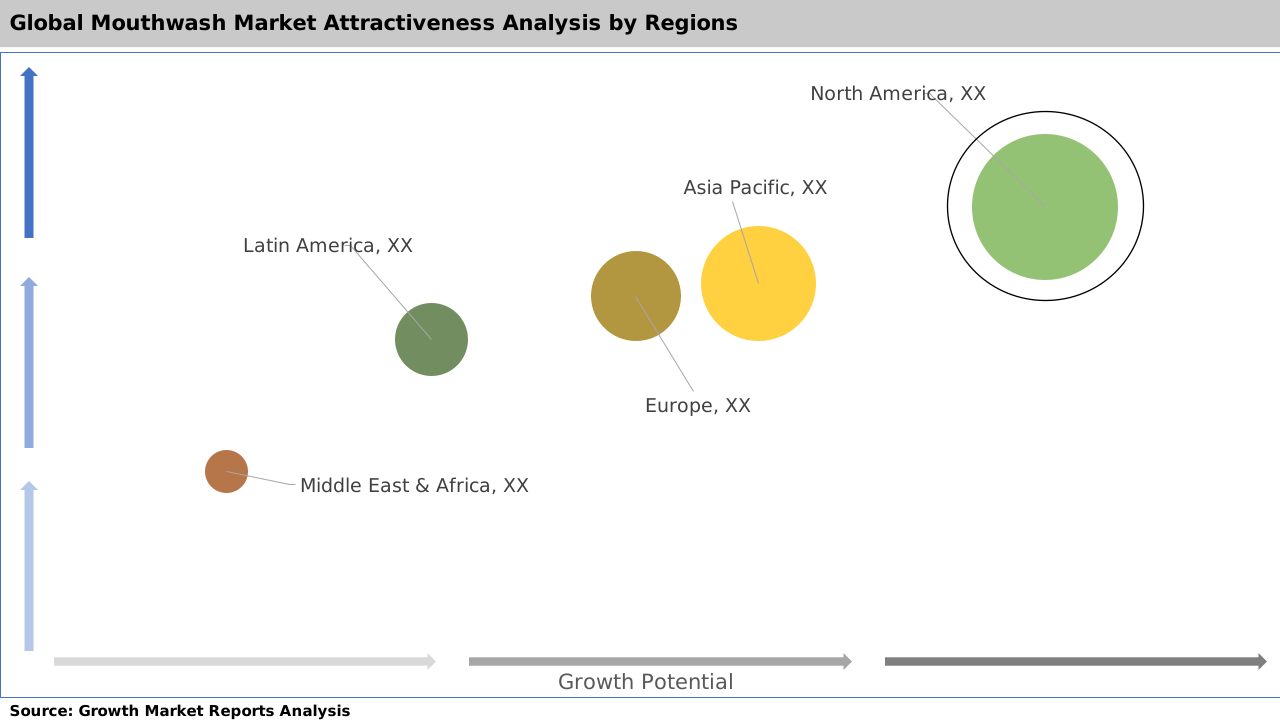
From a regional perspective, North America continues to dominate the global mouthwash market, accounting for the largest revenue share in 2024, followed closely by Europe and the Asia Pacific. The regionÂ’s dominance is attributed to high consumer awareness, advanced healthcare infrastructure, and the presence of leading market players. Meanwhile, the Asia Pacific region is emerging as the fastest-growing market, fueled by rising disposable incomes, urbanization, and increasing adoption of Western oral care practices. Latin America and the Middle East & Africa are also witnessing steady growth, supported by improving access to oral healthcare products and expanding retail networks.

Global Mouthwash Industry Outlook

Product Type Analysis

The mouthwash market by product type is segmented into Cosmetic Mouthwash, Therapeutic Mouthwash, and Natural/Herbal Mouthwash. Cosmetic mouthwashes primarily focus on providing temporary breath freshening and do not offer significant therapeutic benefits. These products are widely popular among consumers seeking quick solutions for halitosis and are often characterized by appealing flavors and attractive packaging. The demand for cosmetic mouthwashes remains strong due to their affordability, ease of use, and widespread availability across retail channels. However, their limited efficacy in addressing underlying oral health issues has prompted consumers to seek more functional alternatives.

Therapeutic mouthwashes have gained substantial traction in recent years, driven by increasing consumer preference for products that offer additional health benefits beyond breath freshening. These formulations are designed to target specific oral health concerns, such as plaque, gingivitis, tooth decay, and sensitivity. The segmentÂ’s growth is supported by endorsements from dental professionals and regulatory approvals for medicinal claims. Therapeutic mouthwashes containing active ingredients like chlorhexidine, cetylpyridinium chloride, and fluoride are widely recommended for patients with persistent oral health issues. The rising prevalence of dental diseases, coupled with growing awareness of preventive care, is expected to further boost the adoption of therapeutic mouthwashes during the forecast period.

Natural and herbal mouthwashes represent a rapidly expanding segment within the market, reflecting the broader consumer shift towards clean-label and plant-based products. These mouthwashes are formulated with herbal extracts, essential oils, and natural flavors, and are often free from alcohol, artificial colors, and harsh chemicals. The increasing demand for natural oral care solutions is driven by concerns over potential side effects of conventional mouthwashes and a desire for holistic health products. Leading brands are capitalizing on this trend by launching innovative herbal blends that cater to environmentally conscious and health-oriented consumers. The segment is expected to witness robust growth, particularly in developed markets where natural and organic products command premium pricing.

The competitive landscape within each product type is characterized by intense innovation and aggressive marketing strategies. Companies are investing in product differentiation, leveraging unique ingredients, and offering value-added features such as whitening, anti-cavity, and sensitivity protection. This has led to a highly dynamic market environment, with frequent product launches and collaborations with dental professionals to build consumer trust. As the market continues to evolve, the boundaries between product types are becoming increasingly blurred, with hybrid formulations that combine cosmetic and therapeutic benefits gaining popularity among discerning consumers.

Report Scope

Attributes Details
Report Title Mouthwash Market Research Report 2033
By Product Type Cosmetic Mouthwash, Therapeutic Mouthwash, Natural/Herbal Mouthwash
By Flavor Mint, Herbal, Fruit, Others
By Distribution Channel Supermarkets/Hypermarkets, Pharmacies, Online Stores, Specialty Stores, Others
By End User Adults, Children
Regions Covered North America, Europe, APAC, Latin America, MEA
Base Year 2024
Historic Data 2018-2023
Forecast Period 2025-2033
Number of Pages 278
Number of Tables & Figures 345
Customization Available Yes, the report can be customized as per your need.

Flavor Analysis

Flavor plays a pivotal role in consumer preference and purchasing decisions within the mouthwash market. The segment is primarily divided into Mint, Herbal, Fruit, and Others. Mint remains the most dominant flavor, accounting for a significant share of the market in 2024. The popularity of mint-flavored mouthwashes is attributed to their strong association with freshness and cleanliness, as well as their ability to effectively mask bad breath. Leading manufacturers continue to innovate within the mint segment, offering a variety of mint intensities and combinations to cater to diverse consumer palates.

Herbal flavors have seen a notable surge in demand, particularly among consumers seeking natural and holistic oral care solutions. Herbal mouthwashes are typically infused with extracts such as tea tree, neem, eucalyptus, and clove, which are known for their antimicrobial and soothing properties. The segmentÂ’s growth is underpinned by increasing awareness of the potential side effects of synthetic flavors and chemicals, as well as a broader trend towards plant-based personal care products. Herbal-flavored mouthwashes appeal to health-conscious individuals and are often marketed as safer, gentler alternatives to traditional formulations.

Fruit flavors are gaining traction, especially among younger consumers and children, who may find traditional mint or herbal flavors too strong or unappealing. Brands are introducing a wide array of fruit-flavored mouthwashes, including options like berry, citrus, and tropical blends, to make oral care routines more enjoyable for children and families. The expansion of fruit flavors has been supported by creative marketing campaigns and collaborations with pediatric dental professionals to encourage early adoption of good oral hygiene habits.

Other flavors, such as cinnamon, licorice, and spice blends, constitute a niche but growing segment within the market. These options cater to consumers seeking unique and differentiated sensory experiences. The diversification of flavor profiles has become a key strategy for brands looking to stand out in a crowded marketplace and cater to evolving consumer tastes. As the market matures, the emphasis on flavor innovation is expected to intensify, with manufacturers experimenting with novel combinations and limited-edition releases to drive consumer engagement and brand loyalty.

Distribution Channel Analysis

The distribution landscape of the mouthwash market is highly dynamic, with products available through Supermarkets/Hypermarkets, Pharmacies, Online Stores, Specialty Stores, and Others. Supermarkets and hypermarkets remain the leading distribution channels, accounting for the largest share of sales in 2024. These retail formats offer consumers the convenience of one-stop shopping, extensive product assortments, and frequent promotional offers. The visibility and accessibility of mouthwash products in high-traffic retail environments have contributed significantly to overall market growth, particularly in urban areas.

Pharmacies represent a critical distribution channel, especially for therapeutic and prescription-strength mouthwashes. Consumers often rely on the expertise of pharmacists and dental professionals when selecting products for specific oral health concerns. Pharmacies are also preferred for their perceived credibility and the availability of professional guidance. The segmentÂ’s growth is further supported by the increasing prevalence of dental prescriptions and recommendations for therapeutic mouthwashes, particularly in developed markets with advanced healthcare infrastructure.

The rapid expansion of e-commerce and online stores has dramatically transformed the mouthwash marketÂ’s distribution dynamics. Online channels offer unparalleled convenience, a wide selection of brands and flavors, and the ability to compare prices and read product reviews. The surge in online sales, particularly in the wake of the COVID-19 pandemic, has prompted manufacturers to strengthen their digital presence and invest in direct-to-consumer strategies. Online distribution is especially popular among tech-savvy and younger consumers who prioritize convenience and value-added services such as subscription deliveries and personalized recommendations.

Specialty stores, including health and wellness boutiques and dental care outlets, cater to niche consumer segments seeking premium, natural, or specialized mouthwash products. These channels offer curated selections and personalized service, appealing to discerning consumers willing to pay a premium for quality and exclusivity. Other distribution channels, such as convenience stores and direct sales, play a supplementary role in market penetration, particularly in emerging markets where modern retail infrastructure is still developing. The ongoing evolution of distribution strategies is expected to shape future market growth, with omni-channel approaches becoming increasingly prevalent.

End User Analysis

The mouthwash market is segmented by end user into Adults and Children, each exhibiting distinct consumption patterns and preferences. Adults constitute the largest end-user segment, accounting for the majority of market revenue in 2024. The high adoption rate among adults is driven by greater awareness of oral hygiene, higher disposable incomes, and a proactive approach to preventive dental care. Adults are more likely to seek out therapeutic and multifunctional mouthwashes that address specific concerns such as gum disease, sensitivity, and teeth whitening. The segmentÂ’s growth is further supported by targeted marketing campaigns and endorsements by dental professionals.

Children represent a growing and strategically important segment within the mouthwash market. The increasing emphasis on early oral hygiene education and the rising prevalence of dental caries among children have prompted parents to incorporate mouthwash into their childrenÂ’s daily routines. Manufacturers are responding to this trend by developing child-friendly formulations with milder flavors, attractive packaging, and lower levels of active ingredients to ensure safety and compliance. Fruit-flavored and alcohol-free mouthwashes are particularly popular among this demographic, making oral care more appealing and accessible for younger users.

The segmentation by end user has significant implications for product development, marketing, and distribution strategies. Brands are increasingly adopting a family-oriented approach, offering bundled products and value packs that cater to the needs of both adults and children. Educational initiatives and collaborations with schools and pediatric dental associations are also being leveraged to promote mouthwash use among children and foster lifelong oral hygiene habits. The growing diversity of end-user preferences is driving innovation in formulation, packaging, and branding, ensuring that the market remains responsive to evolving consumer needs.

The interplay between adult and childrenÂ’s segments is expected to intensify as the market matures, with cross-generational marketing and product customization becoming key differentiators. Companies that are able to effectively address the unique needs of each end-user group while maintaining brand consistency and trust will be well-positioned to capture a larger share of the expanding mouthwash market.

Opportunities & Threats

The mouthwash market presents numerous opportunities for growth, particularly in the areas of product innovation and geographic expansion. The rising consumer demand for natural and herbal mouthwashes offers significant potential for brands to differentiate themselves and capture new market segments. The ongoing shift towards clean-label and sustainable products is driving investment in research and development, with companies exploring novel ingredients, eco-friendly packaging, and cruelty-free formulations. Additionally, the expansion of e-commerce and digital marketing channels provides opportunities for direct-to-consumer engagement, personalized recommendations, and subscription-based models that enhance customer loyalty and lifetime value.

Emerging markets in Asia Pacific, Latin America, and the Middle East & Africa represent untapped growth avenues for the mouthwash industry. Rapid urbanization, increasing disposable incomes, and improving access to oral healthcare products are fueling demand in these regions. Strategic partnerships with local distributors, targeted marketing campaigns, and the adaptation of product offerings to suit regional preferences and regulatory requirements can unlock significant market potential. Furthermore, collaborations with dental professionals and public health organizations can enhance brand credibility and drive adoption, particularly in markets where oral hygiene awareness is still developing.

Despite these opportunities, the mouthwash market faces several restraining factors that could impede growth. Regulatory challenges, particularly related to the approval of therapeutic claims and the use of certain active ingredients, can limit product innovation and market entry. Additionally, concerns over the potential side effects of alcohol-based and chemical-laden mouthwashes have prompted some consumers to seek alternatives or reduce usage. Intense competition and price sensitivity, especially in mature markets, can also exert downward pressure on margins and necessitate continuous investment in marketing and product differentiation. Companies must navigate these challenges by prioritizing transparency, safety, and consumer education to maintain trust and sustain long-term growth.

Regional Outlook

North America remains the leading regional market for mouthwash, accounting for approximately USD 2.68 billion in revenue in 2024. The regionÂ’s dominance is underpinned by high consumer awareness, advanced dental care infrastructure, and the presence of leading multinational brands. The United States is the largest contributor within North America, driven by a strong culture of preventive healthcare and widespread adoption of oral hygiene products. The region also benefits from robust distribution networks, frequent product innovations, and aggressive marketing campaigns that reinforce the importance of mouthwash as an essential component of daily oral care routines.

Europe holds the second-largest share of the global mouthwash market, with a market size of USD 2.04 billion in 2024. The regionÂ’s growth is supported by increasing oral health awareness, rising disposable incomes, and favorable regulatory environments that encourage product innovation. Key markets such as Germany, the United Kingdom, and France are witnessing steady demand for both cosmetic and therapeutic mouthwashes. The growing popularity of natural and herbal products, coupled with the influence of dental professionals and public health campaigns, is driving market expansion across Western and Eastern Europe. The region is projected to grow at a steady CAGR of 5.2% through 2033.

The Asia Pacific region is emerging as the fastest-growing market, with a current valuation of USD 1.82 billion in 2024 and a projected CAGR of 7.1% over the forecast period. Rapid urbanization, increasing health consciousness, and the adoption of Western oral care practices are fueling demand in countries such as China, India, and Japan. The expansion of modern retail formats, rising internet penetration, and targeted marketing efforts by global and local brands are further accelerating market growth. Latin America and the Middle East & Africa collectively account for the remaining market share, with improving access to oral care products and expanding retail networks supporting steady growth. These regions are expected to witness increased investment and strategic partnerships as companies seek to capitalize on untapped opportunities and diversify their global footprint.

Mouthwash Market Statistics

Competitor Outlook

The mouthwash market is characterized by intense competition, with a mix of multinational conglomerates and regional players vying for market share. The competitive landscape is defined by continuous product innovation, aggressive marketing strategies, and a focus on expanding distribution networks. Leading companies invest heavily in research and development to introduce advanced formulations that address specific consumer needs, such as alcohol-free, whitening, and herbal mouthwashes. Brand loyalty and consumer trust play a crucial role in sustaining market leadership, with companies leveraging endorsements from dental professionals and public health organizations to reinforce their value propositions.

Strategic collaborations, mergers and acquisitions, and partnerships with retailers and e-commerce platforms are common strategies employed by market leaders to enhance market penetration and broaden their product offerings. The rise of digital marketing and social media has enabled brands to engage directly with consumers, gather real-time feedback, and tailor their messaging to diverse demographic segments. Companies are also prioritizing sustainability and corporate social responsibility, adopting eco-friendly packaging, and supporting community oral health initiatives to strengthen their brand image and appeal to socially conscious consumers.

The influx of new entrants and niche players, particularly in the natural and herbal mouthwash segment, has intensified competition and spurred innovation. These companies often differentiate themselves through unique ingredients, clean-label formulations, and targeted marketing campaigns. As consumer preferences continue to evolve, the ability to anticipate trends and respond with relevant product innovations will be critical for sustained success. The competitive environment is expected to remain dynamic, with ongoing investment in branding, distribution, and technology shaping the future of the market.

Major companies operating in the global mouthwash market include Colgate-Palmolive Company, Procter & Gamble (P&G), Johnson & Johnson (Listerine), Unilever, GlaxoSmithKline plc (GSK), Lion Corporation, Sunstar Group, and Church & Dwight Co., Inc. Colgate-Palmolive and P&G are recognized for their extensive product portfolios, global reach, and strong brand equity. Johnson & JohnsonÂ’s Listerine remains one of the most trusted and widely used mouthwash brands worldwide, known for its therapeutic efficacy and innovation. Unilever and GSK have established significant market presence through continuous product development and strategic partnerships. Lion Corporation and Sunstar Group are prominent players in the Asia Pacific region, leveraging local insights and tailored product offerings to capture market share. Church & Dwight Co., Inc. is known for its focus on natural and value-oriented mouthwash products, appealing to budget-conscious and health-aware consumers. Collectively, these companies set the benchmark for quality, innovation, and consumer engagement in the global mouthwash market.

Key Players

  • Johnson & Johnson
  • Procter & Gamble
  • Colgate-Palmolive Company
  • Unilever
  • GlaxoSmithKline plc
  • Lion Corporation
  • Sunstar Suisse S.A.
  • Church & Dwight Co., Inc.
  • Crest (P&G)
  • Amway Corporation
  • Dr. Harold Katz, LLC (TheraBreath)
  • Dabur India Ltd.
  • Himalaya Wellness Company
  • Cipla Health Limited
  • Biofresh Group
  • Sanofi S.A.
  • Weleda AG
  • Kao Corporation
  • Tom's of Maine
  • Chattem, Inc. (Sanofi)
Mouthwash Market Overview

Segments

The Mouthwash market has been segmented on the basis of

Product Type

  • Cosmetic Mouthwash
  • Therapeutic Mouthwash
  • Natural/Herbal Mouthwash

Flavor

  • Mint
  • Herbal
  • Fruit
  • Others

Distribution Channel

  • Supermarkets/Hypermarkets
  • Pharmacies
  • Online Stores
  • Specialty Stores
  • Others

End User

  • Adults
  • Children

Competitive Landscape

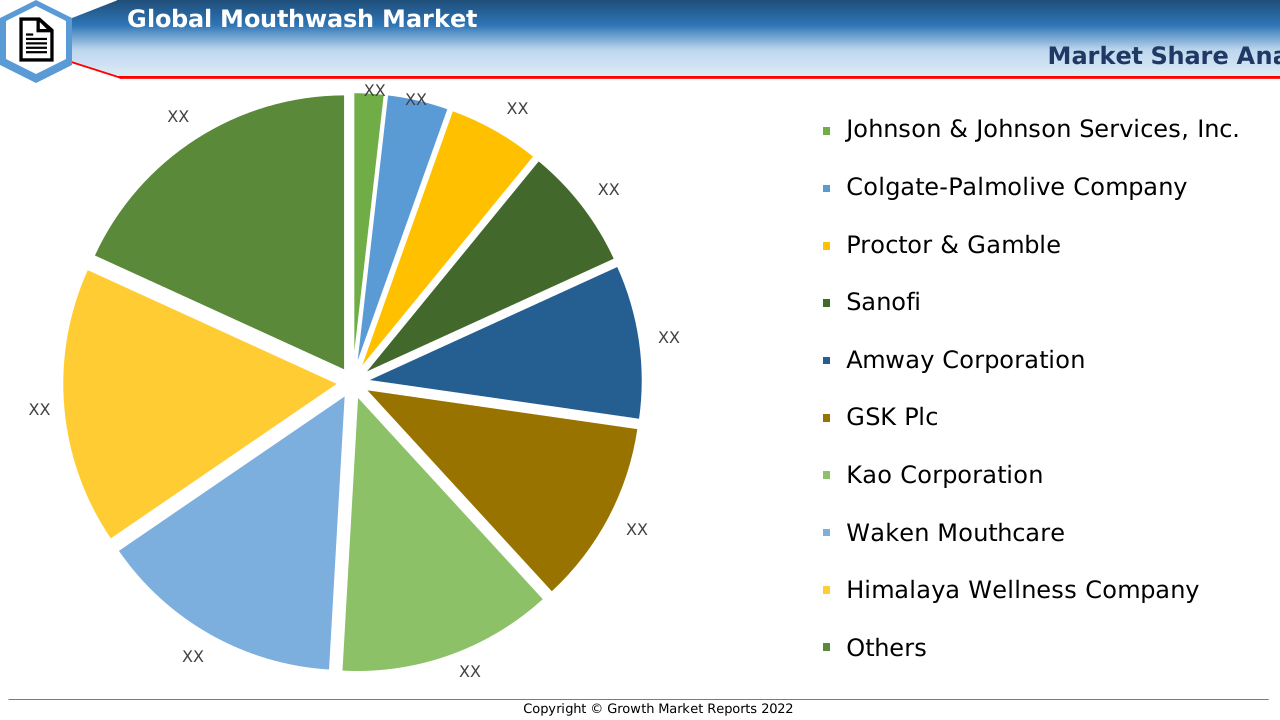
The global mouthwash market is highly competitive with the presence of key players such as Johnson & Johnson Services, Inc.; Colgate-Palmolive Company; Proctor & Gamble; Sanofi; Amway Corporation; GSK Plc; Kao Corporation; Waken Mouthcare; Himalaya Wellness Company; Caldwell Consumer Health, LLC; Lion Corporation; Triumph Pharmaceuticals, Inc.; and others, who use business strategies such as collaborations, partnerships, acquisitions, mergers, and product launches to dominate the market. For example, in February 2020, Colgate-Palmolive Company launched a line of CBD (Cannabidiol) oral care products such as toothpaste, mouthwash, and others. In October 2019, Waken Mouthcare launched its eco-friendly and vegan mouthwash range.

Global Mouthwash Market by Key Players

Frequently Asked Questions

Johnson & Johnson Services, Inc.; Colgate-Palmolive Company; Proctor & Gamble; Sanofi; Amway Corporation; GSK Plc; Kao Corporation; Waken Mouthcare; and Himalaya Wellness Company are some of the key players in the market.

North America dominates the global mouthwash market.

Mouthwash refers to a liquid product, which is used to rinse and clean teeth, gums, and mouth.

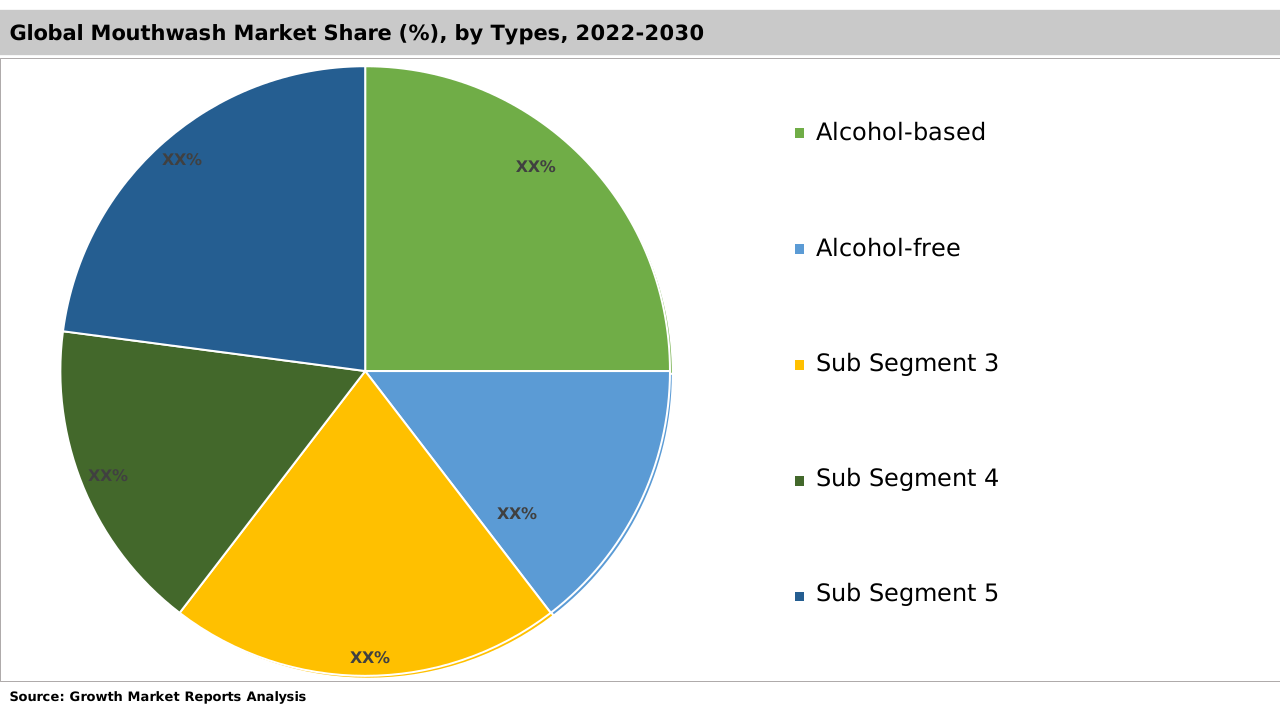
Alcohol-based and alcohol-free are the two types of mouthwash.

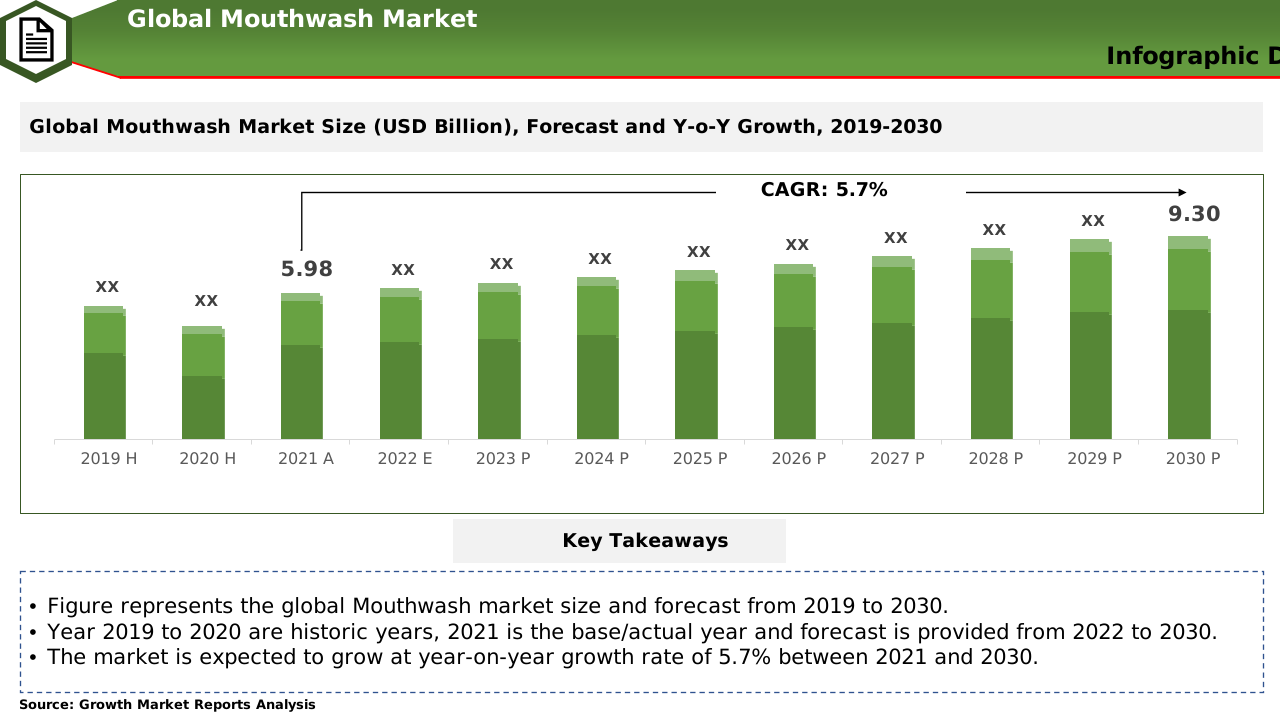
The global mouthwash market size was valued at around USD 5.98 billion in 2021 and is anticipated to reach around USD 9.30 billion by 2030.

The market is estimated to register CAGR of around 5.7% during the forecast period.

Table Of Content

Chapter 1 Executive Summary
Chapter 2 Assumptions and Acronyms Used
Chapter 3 Research Methodology
Chapter 4 Mouthwash Market Overview
   4.1 Introduction
      4.1.1 Market Taxonomy
      4.1.2 Market Definition
      4.1.3 Macro-Economic Factors Impacting the Market Growth
   4.2 Mouthwash Market Dynamics
      4.2.1 Market Drivers
      4.2.2 Market Restraints
      4.2.3 Market Opportunity
   4.3 Mouthwash Market - Supply Chain Analysis
      4.3.1 List of Key Suppliers
      4.3.2 List of Key Distributors
      4.3.3 List of Key Consumers
   4.4 Key Forces Shaping the Mouthwash Market
      4.4.1 Bargaining Power of Suppliers
      4.4.2 Bargaining Power of Buyers
      4.4.3 Threat of Substitution
      4.4.4 Threat of New Entrants
      4.4.5 Competitive Rivalry
   4.5 Global Mouthwash Market Size & Forecast, 2023-2032
      4.5.1 Mouthwash Market Size and Y-o-Y Growth
      4.5.2 Mouthwash Market Absolute $ Opportunity

Chapter 5 Global Mouthwash Market Analysis and Forecast By Product Type
   5.1 Introduction
      5.1.1 Key Market Trends & Growth Opportunities By Product Type
      5.1.2 Basis Point Share (BPS) Analysis By Product Type
      5.1.3 Absolute $ Opportunity Assessment By Product Type
   5.2 Mouthwash Market Size Forecast By Product Type
      5.2.1 Cosmetic Mouthwash
      5.2.2 Therapeutic Mouthwash
      5.2.3 Natural/Herbal Mouthwash
   5.3 Market Attractiveness Analysis By Product Type

Chapter 6 Global Mouthwash Market Analysis and Forecast By Flavor
   6.1 Introduction
      6.1.1 Key Market Trends & Growth Opportunities By Flavor
      6.1.2 Basis Point Share (BPS) Analysis By Flavor
      6.1.3 Absolute $ Opportunity Assessment By Flavor
   6.2 Mouthwash Market Size Forecast By Flavor
      6.2.1 Mint
      6.2.2 Herbal
      6.2.3 Fruit
      6.2.4 Others
   6.3 Market Attractiveness Analysis By Flavor

Chapter 7 Global Mouthwash Market Analysis and Forecast By Distribution Channel
   7.1 Introduction
      7.1.1 Key Market Trends & Growth Opportunities By Distribution Channel
      7.1.2 Basis Point Share (BPS) Analysis By Distribution Channel
      7.1.3 Absolute $ Opportunity Assessment By Distribution Channel
   7.2 Mouthwash Market Size Forecast By Distribution Channel
      7.2.1 Supermarkets/Hypermarkets
      7.2.2 Pharmacies
      7.2.3 Online Stores
      7.2.4 Specialty Stores
      7.2.5 Others
   7.3 Market Attractiveness Analysis By Distribution Channel

Chapter 8 Global Mouthwash Market Analysis and Forecast By End User
   8.1 Introduction
      8.1.1 Key Market Trends & Growth Opportunities By End User
      8.1.2 Basis Point Share (BPS) Analysis By End User
      8.1.3 Absolute $ Opportunity Assessment By End User
   8.2 Mouthwash Market Size Forecast By End User
      8.2.1 Adults
      8.2.2 Children
   8.3 Market Attractiveness Analysis By End User

Chapter 9 Global Mouthwash Market Analysis and Forecast by Region
   9.1 Introduction
      9.1.1 Key Market Trends & Growth Opportunities By Region
      9.1.2 Basis Point Share (BPS) Analysis By Region
      9.1.3 Absolute $ Opportunity Assessment By Region
   9.2 Mouthwash Market Size Forecast By Region
      9.2.1 North America
      9.2.2 Europe
      9.2.3 Asia Pacific
      9.2.4 Latin America
      9.2.5 Middle East & Africa (MEA)
   9.3 Market Attractiveness Analysis By Region

Chapter 10 Coronavirus Disease (COVID-19) Impact 
   10.1 Introduction 
   10.2 Current & Future Impact Analysis 
   10.3 Economic Impact Analysis 
   10.4 Government Policies 
   10.5 Investment Scenario

Chapter 11 North America Mouthwash Analysis and Forecast
   11.1 Introduction
   11.2 North America Mouthwash Market Size Forecast by Country
      11.2.1 U.S.
      11.2.2 Canada
   11.3 Basis Point Share (BPS) Analysis by Country
   11.4 Absolute $ Opportunity Assessment by Country
   11.5 Market Attractiveness Analysis by Country
   11.6 North America Mouthwash Market Size Forecast By Product Type
      11.6.1 Cosmetic Mouthwash
      11.6.2 Therapeutic Mouthwash
      11.6.3 Natural/Herbal Mouthwash
   11.7 Basis Point Share (BPS) Analysis By Product Type 
   11.8 Absolute $ Opportunity Assessment By Product Type 
   11.9 Market Attractiveness Analysis By Product Type
   11.10 North America Mouthwash Market Size Forecast By Flavor
      11.10.1 Mint
      11.10.2 Herbal
      11.10.3 Fruit
      11.10.4 Others
   11.11 Basis Point Share (BPS) Analysis By Flavor 
   11.12 Absolute $ Opportunity Assessment By Flavor 
   11.13 Market Attractiveness Analysis By Flavor
   11.14 North America Mouthwash Market Size Forecast By Distribution Channel
      11.14.1 Supermarkets/Hypermarkets
      11.14.2 Pharmacies
      11.14.3 Online Stores
      11.14.4 Specialty Stores
      11.14.5 Others
   11.15 Basis Point Share (BPS) Analysis By Distribution Channel 
   11.16 Absolute $ Opportunity Assessment By Distribution Channel 
   11.17 Market Attractiveness Analysis By Distribution Channel
   11.18 North America Mouthwash Market Size Forecast By End User
      11.18.1 Adults
      11.18.2 Children
   11.19 Basis Point Share (BPS) Analysis By End User 
   11.20 Absolute $ Opportunity Assessment By End User 
   11.21 Market Attractiveness Analysis By End User

Chapter 12 Europe Mouthwash Analysis and Forecast
   12.1 Introduction
   12.2 Europe Mouthwash Market Size Forecast by Country
      12.2.1 Germany
      12.2.2 France
      12.2.3 Italy
      12.2.4 U.K.
      12.2.5 Spain
      12.2.6 Russia
      12.2.7 Rest of Europe
   12.3 Basis Point Share (BPS) Analysis by Country
   12.4 Absolute $ Opportunity Assessment by Country
   12.5 Market Attractiveness Analysis by Country
   12.6 Europe Mouthwash Market Size Forecast By Product Type
      12.6.1 Cosmetic Mouthwash
      12.6.2 Therapeutic Mouthwash
      12.6.3 Natural/Herbal Mouthwash
   12.7 Basis Point Share (BPS) Analysis By Product Type 
   12.8 Absolute $ Opportunity Assessment By Product Type 
   12.9 Market Attractiveness Analysis By Product Type
   12.10 Europe Mouthwash Market Size Forecast By Flavor
      12.10.1 Mint
      12.10.2 Herbal
      12.10.3 Fruit
      12.10.4 Others
   12.11 Basis Point Share (BPS) Analysis By Flavor 
   12.12 Absolute $ Opportunity Assessment By Flavor 
   12.13 Market Attractiveness Analysis By Flavor
   12.14 Europe Mouthwash Market Size Forecast By Distribution Channel
      12.14.1 Supermarkets/Hypermarkets
      12.14.2 Pharmacies
      12.14.3 Online Stores
      12.14.4 Specialty Stores
      12.14.5 Others
   12.15 Basis Point Share (BPS) Analysis By Distribution Channel 
   12.16 Absolute $ Opportunity Assessment By Distribution Channel 
   12.17 Market Attractiveness Analysis By Distribution Channel
   12.18 Europe Mouthwash Market Size Forecast By End User
      12.18.1 Adults
      12.18.2 Children
   12.19 Basis Point Share (BPS) Analysis By End User 
   12.20 Absolute $ Opportunity Assessment By End User 
   12.21 Market Attractiveness Analysis By End User

Chapter 13 Asia Pacific Mouthwash Analysis and Forecast
   13.1 Introduction
   13.2 Asia Pacific Mouthwash Market Size Forecast by Country
      13.2.1 China
      13.2.2 Japan
      13.2.3 South Korea
      13.2.4 India
      13.2.5 Australia
      13.2.6 South East Asia (SEA)
      13.2.7 Rest of Asia Pacific (APAC)
   13.3 Basis Point Share (BPS) Analysis by Country
   13.4 Absolute $ Opportunity Assessment by Country
   13.5 Market Attractiveness Analysis by Country
   13.6 Asia Pacific Mouthwash Market Size Forecast By Product Type
      13.6.1 Cosmetic Mouthwash
      13.6.2 Therapeutic Mouthwash
      13.6.3 Natural/Herbal Mouthwash
   13.7 Basis Point Share (BPS) Analysis By Product Type 
   13.8 Absolute $ Opportunity Assessment By Product Type 
   13.9 Market Attractiveness Analysis By Product Type
   13.10 Asia Pacific Mouthwash Market Size Forecast By Flavor
      13.10.1 Mint
      13.10.2 Herbal
      13.10.3 Fruit
      13.10.4 Others
   13.11 Basis Point Share (BPS) Analysis By Flavor 
   13.12 Absolute $ Opportunity Assessment By Flavor 
   13.13 Market Attractiveness Analysis By Flavor
   13.14 Asia Pacific Mouthwash Market Size Forecast By Distribution Channel
      13.14.1 Supermarkets/Hypermarkets
      13.14.2 Pharmacies
      13.14.3 Online Stores
      13.14.4 Specialty Stores
      13.14.5 Others
   13.15 Basis Point Share (BPS) Analysis By Distribution Channel 
   13.16 Absolute $ Opportunity Assessment By Distribution Channel 
   13.17 Market Attractiveness Analysis By Distribution Channel
   13.18 Asia Pacific Mouthwash Market Size Forecast By End User
      13.18.1 Adults
      13.18.2 Children
   13.19 Basis Point Share (BPS) Analysis By End User 
   13.20 Absolute $ Opportunity Assessment By End User 
   13.21 Market Attractiveness Analysis By End User

Chapter 14 Latin America Mouthwash Analysis and Forecast
   14.1 Introduction
   14.2 Latin America Mouthwash Market Size Forecast by Country
      14.2.1 Brazil
      14.2.2 Mexico
      14.2.3 Rest of Latin America (LATAM)
   14.3 Basis Point Share (BPS) Analysis by Country
   14.4 Absolute $ Opportunity Assessment by Country
   14.5 Market Attractiveness Analysis by Country
   14.6 Latin America Mouthwash Market Size Forecast By Product Type
      14.6.1 Cosmetic Mouthwash
      14.6.2 Therapeutic Mouthwash
      14.6.3 Natural/Herbal Mouthwash
   14.7 Basis Point Share (BPS) Analysis By Product Type 
   14.8 Absolute $ Opportunity Assessment By Product Type 
   14.9 Market Attractiveness Analysis By Product Type
   14.10 Latin America Mouthwash Market Size Forecast By Flavor
      14.10.1 Mint
      14.10.2 Herbal
      14.10.3 Fruit
      14.10.4 Others
   14.11 Basis Point Share (BPS) Analysis By Flavor 
   14.12 Absolute $ Opportunity Assessment By Flavor 
   14.13 Market Attractiveness Analysis By Flavor
   14.14 Latin America Mouthwash Market Size Forecast By Distribution Channel
      14.14.1 Supermarkets/Hypermarkets
      14.14.2 Pharmacies
      14.14.3 Online Stores
      14.14.4 Specialty Stores
      14.14.5 Others
   14.15 Basis Point Share (BPS) Analysis By Distribution Channel 
   14.16 Absolute $ Opportunity Assessment By Distribution Channel 
   14.17 Market Attractiveness Analysis By Distribution Channel
   14.18 Latin America Mouthwash Market Size Forecast By End User
      14.18.1 Adults
      14.18.2 Children
   14.19 Basis Point Share (BPS) Analysis By End User 
   14.20 Absolute $ Opportunity Assessment By End User 
   14.21 Market Attractiveness Analysis By End User

Chapter 15 Middle East & Africa (MEA) Mouthwash Analysis and Forecast
   15.1 Introduction
   15.2 Middle East & Africa (MEA) Mouthwash Market Size Forecast by Country
      15.2.1 Saudi Arabia
      15.2.2 South Africa
      15.2.3 UAE
      15.2.4 Rest of Middle East & Africa (MEA)
   15.3 Basis Point Share (BPS) Analysis by Country
   15.4 Absolute $ Opportunity Assessment by Country
   15.5 Market Attractiveness Analysis by Country
   15.6 Middle East & Africa (MEA) Mouthwash Market Size Forecast By Product Type
      15.6.1 Cosmetic Mouthwash
      15.6.2 Therapeutic Mouthwash
      15.6.3 Natural/Herbal Mouthwash
   15.7 Basis Point Share (BPS) Analysis By Product Type 
   15.8 Absolute $ Opportunity Assessment By Product Type 
   15.9 Market Attractiveness Analysis By Product Type
   15.10 Middle East & Africa (MEA) Mouthwash Market Size Forecast By Flavor
      15.10.1 Mint
      15.10.2 Herbal
      15.10.3 Fruit
      15.10.4 Others
   15.11 Basis Point Share (BPS) Analysis By Flavor 
   15.12 Absolute $ Opportunity Assessment By Flavor 
   15.13 Market Attractiveness Analysis By Flavor
   15.14 Middle East & Africa (MEA) Mouthwash Market Size Forecast By Distribution Channel
      15.14.1 Supermarkets/Hypermarkets
      15.14.2 Pharmacies
      15.14.3 Online Stores
      15.14.4 Specialty Stores
      15.14.5 Others
   15.15 Basis Point Share (BPS) Analysis By Distribution Channel 
   15.16 Absolute $ Opportunity Assessment By Distribution Channel 
   15.17 Market Attractiveness Analysis By Distribution Channel
   15.18 Middle East & Africa (MEA) Mouthwash Market Size Forecast By End User
      15.18.1 Adults
      15.18.2 Children
   15.19 Basis Point Share (BPS) Analysis By End User 
   15.20 Absolute $ Opportunity Assessment By End User 
   15.21 Market Attractiveness Analysis By End User

Chapter 16 Competition Landscape 
   16.1 Mouthwash Market: Competitive Dashboard
   16.2 Global Mouthwash Market: Market Share Analysis, 2023
   16.3 Company Profiles (Details – Overview, Financials, Developments, Strategy) 
      16.3.1 Johnson & Johnson
Procter & Gamble
Colgate-Palmolive Company
Unilever
GlaxoSmithKline plc
Lion Corporation
Sunstar Suisse S.A.
Church & Dwight Co., Inc.
Crest (P&G)
Amway Corporation
Dr. Harold Katz, LLC (TheraBreath)
Dabur India Ltd.
Himalaya Wellness Company
Cipla Health Limited
Biofresh Group
Sanofi S.A.
Weleda AG
Kao Corporation
Tom's of Maine
Chattem, Inc. (Sanofi)

Methodology

Our Clients

Microsoft
Nestle SA
The John Holland Group
General Electric
Dassault Aviation
Siemens Healthcare
Honda Motor Co. Ltd.
sinopec