Betaine Market Research Report 2033

Betaine Market Research Report 2033

Segments - by Product Type (Natural Betaine, Synthetic Betaine), by Form (Powder, Liquid, Crystal), by Application (Food & Beverages, Animal Feed, Pharmaceuticals, Cosmetics & Personal Care, Detergents, Others), by End-User (Food Industry, Animal Husbandry, Pharmaceutical Industry, Personal Care & Cosmetics Industry, Others)

https://growthmarketreports.com/Anuradha
Author : Anuradha B. More
https://growthmarketreports.com/Vaibhav
Fact-checked by : Vaibhav Chandola
https://growthmarketreports.com/Shruti
Editor : Shruti Bhat

Upcoming | Report ID :FB-2268 | 4.5 Rating | 34 Reviews | 271 Pages | Format : Docx PDF

Report Description


Betaine Market Outlook

According to our latest research, the global Betaine market size in 2024 stands at USD 4.12 billion, and it is expected to grow at a robust CAGR of 5.6% from 2025 to 2033. By the end of the forecast period in 2033, the market is projected to reach a value of USD 6.74 billion. The primary growth factor for the betaine market is the surging demand for functional ingredients in food, feed, and personal care products, coupled with increasing awareness about the health benefits associated with betaine consumption.

The growth of the betaine market is strongly driven by the rising adoption of betaine in the food and beverages industry, where it is valued for its multifunctional properties as a nutritional supplement and as an osmolyte that helps maintain cellular hydration. The increasing consumer inclination toward health and wellness products has led manufacturers to incorporate betaine into a variety of food and beverage formulations, including energy drinks, dietary supplements, and functional foods. Additionally, the shift toward natural and clean-label ingredients has further boosted the demand for naturally sourced betaine, as consumers prefer products free from synthetic additives. The growing trend of fortifying foods with bioactive compounds to address lifestyle-related health issues, such as cardiovascular diseases and obesity, has also contributed to the robust expansion of the betaine market.

Another significant growth factor is the expanding use of betaine in animal feed, especially within the livestock and poultry industries. Betaine serves as an effective methyl group donor and plays a crucial role in improving animal performance, enhancing feed efficiency, and supporting gut health. With the global population rising and the demand for animal protein increasing, livestock producers are seeking innovative feed additives that can optimize production while maintaining animal health. BetaineÂ’s ability to reduce feed costs, improve carcass quality, and mitigate the effects of heat stress in animals has made it a key ingredient in modern animal husbandry practices. Regulatory approvals for betaine use in animal feed across several regions have further facilitated its market penetration.

The cosmetics and personal care segment is also contributing significantly to the growth of the betaine market. As consumers become more conscious about the ingredients in their personal care products, there is a marked preference for formulations that offer both efficacy and mildness. Betaine, known for its moisturizing and anti-irritant properties, is widely used in shampoos, conditioners, skin creams, and other personal care products. Its natural origin and gentle action make it suitable for sensitive skin applications, aligning with the ongoing trend toward natural and organic cosmetics. The increasing demand for premium and multifunctional personal care products, particularly in emerging economies, is expected to further drive the adoption of betaine in this segment.

In the realm of animal nutrition, Betaine for Animal Nutrition has emerged as a pivotal component due to its multifaceted benefits. As livestock producers aim to enhance productivity and ensure the well-being of their animals, betaine's role as a methyl donor becomes crucial. It aids in reducing the energy requirements of animals, thereby optimizing feed efficiency and promoting better growth rates. Additionally, betaine's ability to mitigate the adverse effects of heat stress is particularly beneficial in regions with extreme temperatures, ensuring that animals maintain optimal health throughout varying climatic conditions. This aspect of betaine use is gaining traction, as the global demand for sustainable and efficient animal production continues to rise.

Regionally, Asia Pacific holds a dominant share in the global betaine market, fueled by rapid industrialization, a growing middle-class population, and rising health consciousness. North America and Europe also represent significant markets, driven by advanced food processing industries and high consumer awareness regarding functional ingredients. The Middle East & Africa and Latin America are witnessing steady growth, supported by expanding food and feed industries and increasing investments in the pharmaceutical and personal care sectors. Each region presents unique growth opportunities and challenges, shaped by regulatory frameworks, consumer preferences, and economic conditions.

Global Betaine Industry Outlook

Product Type Analysis

The betaine market is segmented by product type into Natural Betaine and Synthetic Betaine. Natural betaine, derived primarily from sugar beets and other plant sources, is experiencing heightened demand due to the global shift towards clean-label and natural ingredients. Consumers and manufacturers alike are increasingly wary of synthetic additives, driving a preference for naturally sourced betaine in food, beverages, and personal care products. This trend is further reinforced by stringent regulatory requirements in developed markets, which favor natural ingredients in consumables and cosmetics. Natural betaineÂ’s compatibility with organic product formulations and its perceived safety profile have made it the product of choice in premium segments, such as fortified foods, nutraceuticals, and natural cosmetics.

On the other hand, synthetic betaine, produced through chemical synthesis, continues to hold a significant share in the market, particularly in cost-sensitive applications such as animal feed and industrial uses. Synthetic betaine offers consistent quality, higher purity, and cost advantages, making it suitable for large-scale manufacturing processes. In the animal feed industry, synthetic betaine is widely utilized for its efficacy in enhancing animal growth and productivity, especially in regions where cost considerations are paramount. The availability of synthetic betaine in various concentrations and formulations also supports its widespread adoption in diverse industrial applications, including detergents and pharmaceuticals.

Despite the growing preference for natural ingredients, the synthetic betaine segment is expected to maintain steady growth due to its scalability and lower production costs. However, ongoing research and development efforts are focused on improving extraction techniques for natural betaine, which could further tilt the balance in favor of natural variants in the coming years. Manufacturers are investing in sustainable sourcing and innovative extraction processes to enhance the yield and purity of natural betaine, thereby meeting the evolving demands of health-conscious consumers and environmentally responsible companies.

The competitive dynamics between natural and synthetic betaine are also influenced by regional preferences and regulatory landscapes. In developed markets such as North America and Europe, natural betaine is rapidly gaining ground, supported by consumer awareness and favorable regulations. Conversely, in emerging markets where price sensitivity is higher, synthetic betaine continues to dominate, especially in high-volume applications like animal feed and detergents. The interplay between cost, functionality, and consumer preference will shape the future trajectory of both natural and synthetic betaine segments, with innovation and sustainability emerging as key differentiators.

Report Scope

Attributes Details
Report Title Betaine Market Research Report 2033
By Product Type Natural Betaine, Synthetic Betaine
By Form Powder, Liquid, Crystal
By Application Food & Beverages, Animal Feed, Pharmaceuticals, Cosmetics & Personal Care, Detergents, Others
By End-User Food Industry, Animal Husbandry, Pharmaceutical Industry, Personal Care & Cosmetics Industry, Others
Regions Covered North America, Europe, APAC, Latin America, MEA
Base Year 2024
Historic Data 2018-2023
Forecast Period 2025-2033
Number of Pages 271
Number of Tables & Figures 256
Customization Available Yes, the report can be customized as per your need.

Form Analysis

The betaine market is further segmented by form into Powder, Liquid, and Crystal. Powdered betaine is the most widely used form, favored for its ease of handling, storage stability, and versatility across multiple applications. In the food and beverage industry, powdered betaine is commonly incorporated into dietary supplements, functional foods, and sports nutrition products due to its excellent solubility and compatibility with other ingredients. The animal feed sector also prefers powdered betaine for its uniform distribution in feed mixtures, which ensures consistent delivery of nutritional benefits to livestock and poultry.

The market for Betaine Anhydrous Supplements is witnessing significant growth, driven by the increasing consumer focus on health and wellness. These supplements are valued for their potential to support cardiovascular health, enhance muscle performance, and aid in liver function. As part of a balanced diet, betaine anhydrous supplements provide an additional source of methyl groups, which are essential for various metabolic processes in the body. The rising popularity of fitness and sports nutrition has further propelled the demand for these supplements, as athletes and health enthusiasts seek to optimize their physical performance and recovery. The trend towards personalized nutrition and the growing awareness of the benefits of betaine supplementation are expected to continue driving this segment forward.

Liquid betaine, on the other hand, is gaining traction in applications where rapid solubilization and precise dosing are required. The liquid form is particularly popular in the pharmaceutical and personal care industries, where it is used in the formulation of syrups, oral solutions, and cosmetic products. Liquid betaineÂ’s ability to blend seamlessly with other liquid ingredients and its superior bioavailability make it ideal for use in high-performance formulations. Additionally, liquid betaine is increasingly being adopted in industrial applications, such as detergents and cleaning agents, where it serves as a surfactant and conditioning agent.

Crystal betaine, though a smaller segment compared to powder and liquid forms, finds niche applications in specialized industries. Its high purity and crystalline structure make it suitable for use in pharmaceutical formulations, laboratory research, and high-end cosmetic products. Crystal betaine is valued for its stability and controlled release properties, which are critical in certain medical and scientific applications. The development of advanced crystallization techniques and the growing demand for high-purity ingredients are expected to support the expansion of the crystal betaine segment in the coming years.

The choice of betaine form is largely dictated by the end-use application, processing requirements, and desired functional properties. Manufacturers are continuously innovating to develop new forms and delivery systems that enhance the performance and usability of betaine across diverse industries. The ongoing trend toward customized and application-specific formulations is expected to drive further diversification in the forms of betaine available in the market, catering to the evolving needs of end-users and consumers.

Application Analysis

The Betaine market is characterized by a wide array of applications, including Food & Beverages, Animal Feed, Pharmaceuticals, Cosmetics & Personal Care, Detergents, and others. In the food and beverages sector, betaine is primarily utilized for its functional benefits as a nutritional enhancer and osmoprotectant. It is commonly found in energy drinks, fortified foods, and dietary supplements, where it supports cardiovascular health, aids in muscle recovery, and enhances overall well-being. The growing consumer focus on preventive healthcare and functional nutrition is driving the incorporation of betaine into a variety of food and beverage products, especially in developed markets.

The animal feed application represents a significant share of the betaine market, driven by the need to improve livestock productivity, feed efficiency, and animal health. Betaine acts as a methyl donor, supporting metabolic processes and reducing the effects of heat stress in animals. Its use in poultry, swine, and aquaculture feed formulations has been shown to enhance growth rates, improve carcass quality, and reduce feed costs. The increasing demand for high-quality animal protein and the adoption of modern animal husbandry practices are expected to sustain the growth of betaine usage in this segment, particularly in emerging economies with expanding livestock industries.

In the pharmaceutical industry, betaine is valued for its therapeutic properties, particularly in the treatment of homocystinuria and other metabolic disorders. Its role as an osmolyte and methyl group donor makes it a valuable ingredient in various pharmaceutical formulations, including oral solutions and injectables. The rising prevalence of lifestyle-related diseases and the growing emphasis on preventive healthcare are expected to drive the demand for betaine in pharmaceutical applications. Additionally, ongoing research into the potential health benefits of betaine is likely to open new avenues for its use in the pharmaceutical sector.

Betaine in Animal Feed is increasingly recognized for its ability to enhance feed efficiency and animal performance. In the competitive landscape of animal husbandry, betaine's role in improving nutrient absorption and promoting gut health is invaluable. It acts as an osmolyte, stabilizing cell membranes and protecting cells from osmotic stress, which is particularly beneficial in intensive farming systems. The inclusion of betaine in feed formulations not only supports better growth rates and feed conversion ratios but also contributes to the overall health and welfare of livestock. As the industry moves towards more sustainable and cost-effective production methods, the use of betaine in animal feed is set to expand, offering significant benefits to producers and consumers alike.

Cosmetics and personal care is another rapidly growing application area for betaine, driven by consumer demand for mild, effective, and natural ingredients. Betaine is widely used in shampoos, conditioners, skin creams, and other personal care products for its moisturizing, anti-irritant, and conditioning properties. The shift toward natural and organic cosmetics, coupled with increasing awareness about ingredient safety, is fueling the adoption of betaine in this segment. The detergent industry also utilizes betaine as a surfactant and foam booster, enhancing the performance and mildness of cleaning products. The versatility of betaine across multiple applications underscores its importance as a multifunctional ingredient in the global market.

End-User Analysis

The betaine market is segmented by end-user into Food Industry, Animal Husbandry, Pharmaceutical Industry, Personal Care & Cosmetics Industry, and others. The food industry is a major end-user of betaine, leveraging its functional and nutritional benefits to develop innovative products that cater to health-conscious consumers. Food manufacturers are increasingly incorporating betaine into functional foods, beverages, and dietary supplements to enhance product appeal and address specific health concerns, such as cardiovascular health and metabolic wellness. The growing trend toward clean-label and fortified foods is expected to drive further adoption of betaine in the food industry.

Animal husbandry represents another significant end-user segment, with betaine being widely used in livestock and poultry feed formulations. The increasing demand for animal protein, coupled with the need to optimize feed efficiency and animal performance, has made betaine an essential additive in modern animal husbandry practices. BetaineÂ’s ability to improve growth rates, reduce feed costs, and support animal health has led to its widespread adoption in both developed and developing regions. The expansion of the global livestock industry and the adoption of advanced feed technologies are expected to sustain the growth of betaine usage in animal husbandry.

The pharmaceutical industry is emerging as a key end-user of betaine, driven by its therapeutic applications in the treatment of metabolic disorders and its role as a functional ingredient in various pharmaceutical formulations. The rising prevalence of chronic diseases, coupled with increasing investments in research and development, is expected to drive the demand for betaine in the pharmaceutical sector. BetaineÂ’s safety profile and multifunctional properties make it an attractive ingredient for a wide range of pharmaceutical products, including oral solutions, injectables, and nutraceuticals.

The personal care and cosmetics industry is also a major end-user of betaine, utilizing its moisturizing, anti-irritant, and conditioning properties to develop high-performance skincare and haircare products. The shift toward natural and organic cosmetics, along with increasing consumer awareness about ingredient safety, is fueling the adoption of betaine in this segment. The versatility of betaine in addressing multiple consumer needs, from hydration to skin barrier protection, underscores its growing importance in the personal care and cosmetics industry. Other end-users, such as the detergent and cleaning products industry, also contribute to the overall demand for betaine, highlighting its multifunctional nature and broad market appeal.

Opportunities & Threats

The betaine market presents a multitude of opportunities, particularly in the development of innovative and value-added products across various industries. The increasing consumer demand for functional foods, dietary supplements, and personal care products that offer health and wellness benefits is creating significant growth prospects for betaine manufacturers. Advances in extraction and purification technologies are enabling the production of high-purity, natural betaine, which aligns with the clean-label and organic trends sweeping the global market. The expansion of betaine applications in pharmaceuticals, nutraceuticals, and cosmeceuticals offers additional avenues for market growth, as ongoing research continues to uncover new health benefits and therapeutic uses for betaine. Strategic partnerships, mergers, and acquisitions among key market players are also expected to drive innovation and expand market reach, particularly in emerging economies with rapidly growing consumer bases.

Another major opportunity lies in the growing use of betaine in animal nutrition, particularly in regions with expanding livestock and aquaculture industries. The rising demand for high-quality animal protein, coupled with the need to improve feed efficiency and animal health, is driving the adoption of betaine as a feed additive. Regulatory approvals for betaine use in animal feed, along with increasing investments in research and development, are expected to further boost market growth. The development of novel betaine formulations, tailored to specific animal species and production systems, presents additional opportunities for manufacturers to differentiate their offerings and capture new market segments. Furthermore, the increasing focus on sustainable sourcing and environmentally friendly production processes is expected to enhance the market appeal of natural betaine products.

Despite the numerous growth opportunities, the betaine market faces certain restraining factors that could impact its expansion. One of the primary challenges is the volatility in raw material prices, particularly for natural betaine derived from sugar beets and other plant sources. Fluctuations in agricultural output, driven by weather conditions, disease outbreaks, and changing land use patterns, can impact the availability and cost of raw materials, thereby affecting the overall market dynamics. Additionally, stringent regulatory requirements and quality standards in certain regions can pose challenges for manufacturers, particularly those operating in the food, pharmaceutical, and personal care industries. The presence of alternative functional ingredients and the risk of substitution in certain applications also represent potential threats to market growth. Addressing these challenges will require continuous innovation, investment in supply chain resilience, and a proactive approach to regulatory compliance.

Regional Outlook

The Asia Pacific region dominates the global betaine market, accounting for approximately 38% of the total market share in 2024, with a market value of around USD 1.57 billion. The regionÂ’s leadership is attributed to rapid industrialization, a burgeoning middle class, and increasing health consciousness among consumers. Key markets such as China, India, and Japan are witnessing robust growth in food and beverages, animal feed, and personal care industries, driving the demand for betaine. The expansion of the livestock and aquaculture sectors, coupled with growing investments in research and development, is further fueling market growth in Asia Pacific. The region is expected to maintain a strong CAGR of 6.2% during the forecast period, supported by favorable government policies and increasing adoption of advanced feed and food technologies.

North America is another significant market for betaine, with a market size of USD 1.03 billion in 2024, representing approximately 25% of the global market. The regionÂ’s growth is driven by a well-established food processing industry, high consumer awareness regarding functional ingredients, and a strong presence of leading personal care and pharmaceutical companies. The United States remains the largest market within North America, supported by ongoing innovation in food, feed, and personal care product formulations. The adoption of clean-label and natural ingredients, along with increasing demand for dietary supplements and fortified foods, is expected to sustain market growth in the region. Canada and Mexico are also witnessing steady growth, driven by expanding animal husbandry and food industries.

Europe holds a substantial share of the global betaine market, with a market size of USD 950 million in 2024, accounting for approximately 23% of the total market. The regionÂ’s growth is supported by a mature food and beverage industry, high regulatory standards, and strong consumer demand for natural and functional ingredients. Countries such as Germany, France, and the United Kingdom are leading markets for betaine, driven by innovative product development and increasing investments in research and development. The Middle East & Africa and Latin America are emerging markets, with a combined market size of USD 570 million in 2024. These regions are experiencing steady growth, supported by expanding food, feed, and pharmaceutical industries, as well as increasing investments in infrastructure and technology.

Betaine Market Statistics

Competitor Outlook

The betaine market is characterized by intense competition, with a mix of global and regional players vying for market share. Leading companies are focusing on product innovation, strategic partnerships, and mergers and acquisitions to strengthen their market positions and expand their product portfolios. The competitive landscape is shaped by the need to address evolving consumer preferences, regulatory requirements, and technological advancements. Companies are investing heavily in research and development to develop high-purity, natural betaine products and innovative formulations that cater to the growing demand for functional and clean-label ingredients. Sustainability and traceability are emerging as key differentiators, with manufacturers increasingly adopting environmentally friendly sourcing and production practices to appeal to eco-conscious consumers.

Market leaders are also leveraging their extensive distribution networks and strong brand recognition to penetrate new markets and reach a broader customer base. The ability to offer customized solutions and value-added services, such as technical support and formulation expertise, is becoming increasingly important in maintaining a competitive edge. Companies are collaborating with research institutions, universities, and industry associations to stay at the forefront of technological advancements and regulatory developments. The growing trend toward vertical integration, where companies control the entire value chain from raw material sourcing to final product delivery, is also shaping the competitive dynamics of the betaine market.

The presence of alternative functional ingredients and the risk of substitution in certain applications pose challenges for market players, requiring continuous innovation and differentiation. Companies are responding by expanding their product offerings to include a wider range of betaine forms, concentrations, and delivery systems, tailored to specific end-use applications. The ability to adapt to changing market trends, consumer preferences, and regulatory landscapes will be critical for long-term success in the highly competitive betaine market. The increasing focus on digital marketing, e-commerce, and direct-to-consumer sales channels is also transforming the way companies engage with customers and drive brand loyalty.

Major companies operating in the global betaine market include DuPont de Nemours, Inc., BASF SE, Solvay S.A., Associated British Foods plc, Amino GmbH, Nutreco N.V., Kao Corporation, and Stepan Company. DuPont is recognized for its strong focus on innovation and sustainable product development, offering a wide range of natural and synthetic betaine products for food, feed, and personal care applications. BASF SE is a global leader in specialty chemicals, with a comprehensive portfolio of betaine products tailored to diverse industries. Solvay S.A. is known for its high-purity betaine offerings and commitment to sustainability, while Associated British Foods plc leverages its expertise in agricultural processing to produce high-quality natural betaine. Amino GmbH and Nutreco N.V. are prominent players in the animal nutrition segment, offering specialized betaine formulations for livestock and aquaculture feed. Kao Corporation and Stepan Company are key contributors to the personal care and detergent segments, with innovative betaine-based solutions for mild and effective product formulations.

These companies are continuously investing in research and development, capacity expansion, and strategic collaborations to strengthen their market positions and capitalize on emerging growth opportunities. The focus on sustainability, traceability, and product innovation is expected to shape the future trajectory of the betaine market, as companies strive to meet the evolving needs of consumers and end-users across the globe.

Key Players

  • BASF SE
  • Solvay S.A.
  • Evonik Industries AG
  • DuPont de Nemours, Inc.
  • Amino GmbH
  • Stepan Company
  • Nutreco N.V.
  • Associated British Foods plc
  • Kao Corporation
  • American Crystal Sugar Company
  • Sunwin Biotech Shandong Co., Ltd.
  • Shanghai Taixue Bio-Tech Co., Ltd.
  • Vantage Specialty Chemicals, Inc.
  • Merck KGaA
  • Redox Pty Ltd
  • Hubei Xingfa Chemicals Group Co., Ltd.
  • Global Bio-chem Technology Group Company Limited
  • Zhejiang Medicine Co., Ltd.
  • Guangzhou Tinci Materials Technology Co., Ltd.
  • DuPont Nutrition & Health
Betaine Market Overview

Segments

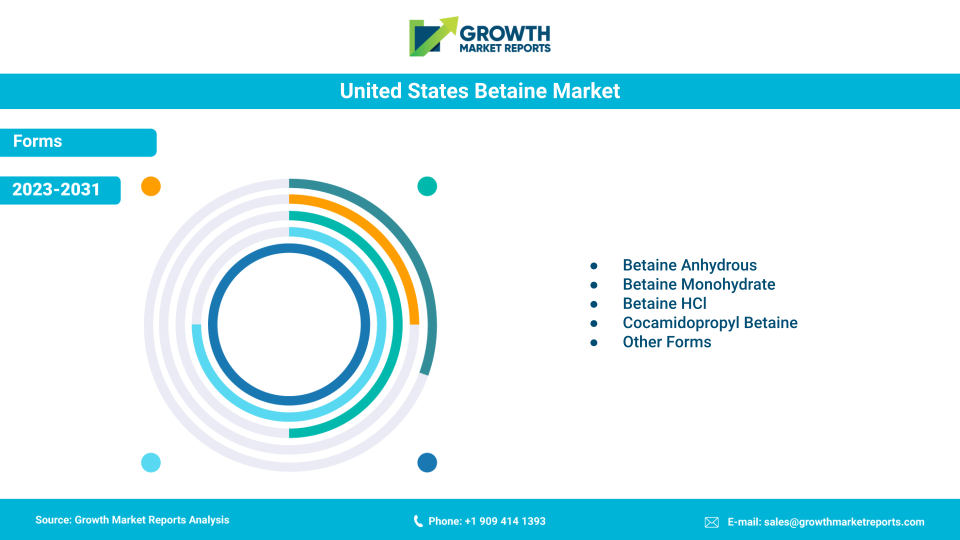
The Betaine market has been segmented on the basis of

Product Type

  • Natural Betaine
  • Synthetic Betaine

Form

  • Powder
  • Liquid
  • Crystal

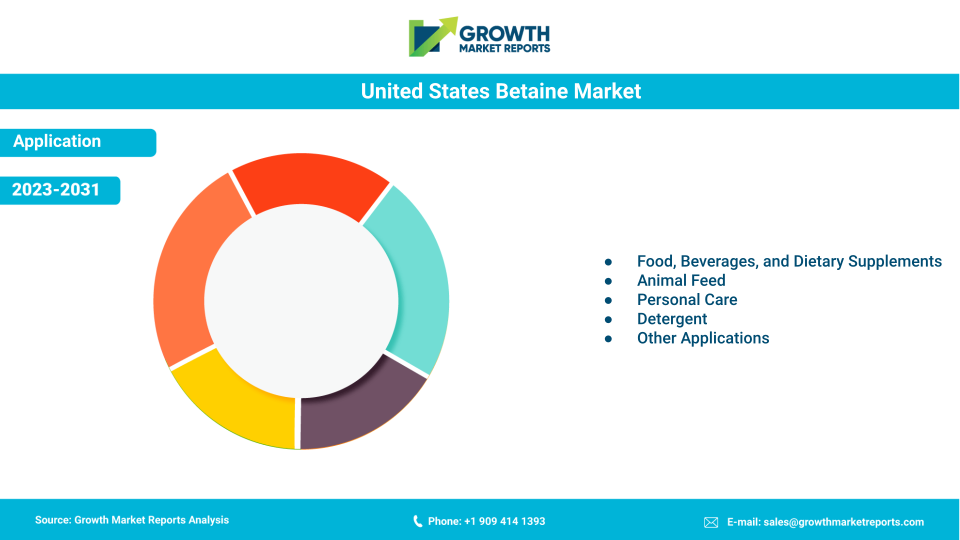
Application

  • Food & Beverages
  • Animal Feed
  • Pharmaceuticals
  • Cosmetics & Personal Care
  • Detergents
  • Others

End-User

  • Food Industry
  • Animal Husbandry
  • Pharmaceutical Industry
  • Personal Care & Cosmetics Industry
  • Others

Competitive Landscape

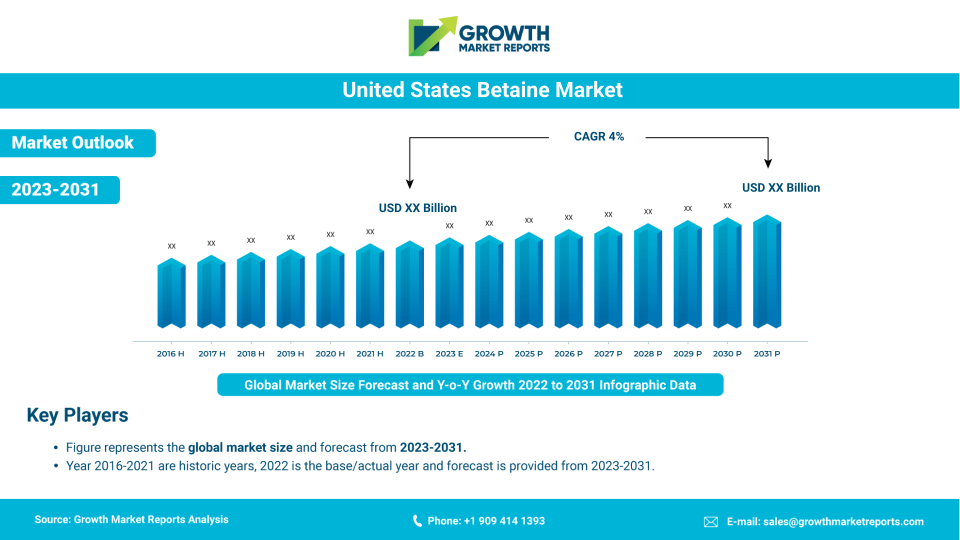
Key players competing in the US betaine market are Kao Corporation; DuPont; Stepan Company; Evonik Industries AG; and Solvay.

  • In August 2021, Kao Corporation, a Japan-based personal care conglomerate, announced a hair care range under the Essential banner.

  • In July 2021, Solvay completed the acquisition of Bayer’s global coatings business. Under the agreement, the former company will have facilities in Méréville, France, and tolling operations in the US and Brazil.
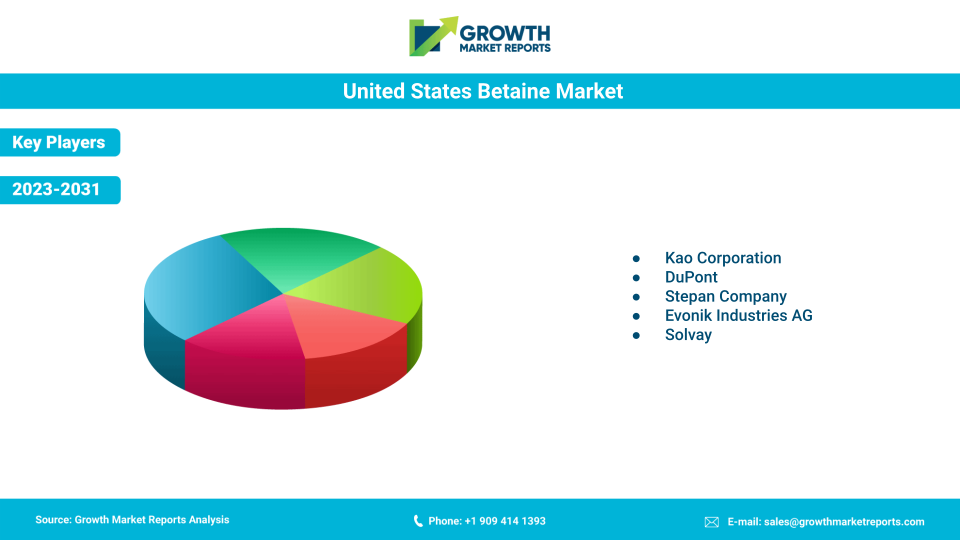

United States Betaine Market Key Players

Frequently Asked Questions

Opportunities include the development of innovative products, expansion in animal nutrition, and growth in pharmaceuticals and personal care. Challenges include raw material price volatility, regulatory hurdles, and competition from alternative ingredients.

Key companies include BASF SE, Solvay S.A., Evonik Industries AG, DuPont de Nemours, Inc., Amino GmbH, Stepan Company, Nutreco N.V., Associated British Foods plc, Kao Corporation, and others.

Betaine is used in food & beverages (as a nutritional enhancer), animal feed (to improve livestock performance), pharmaceuticals (for metabolic disorders), cosmetics & personal care (for moisturizing and anti-irritant properties), and detergents.

Betaine is available in powder, liquid, and crystal forms. Powdered betaine is most widely used, while liquid and crystal forms serve niche and specialized applications.

Asia Pacific dominates the global betaine market, accounting for about 38% of the total market share in 2024, driven by rapid industrialization and rising health consciousness.

Natural betaine is derived from plant sources like sugar beets and is favored for clean-label products, while synthetic betaine is chemically produced, offering cost advantages and consistent quality, especially for animal feed and industrial uses.

The largest end-users of betaine are the food and beverage industry, animal husbandry (animal feed), pharmaceuticals, personal care and cosmetics, and detergents.

Key growth drivers include rising demand for functional ingredients in food, feed, and personal care products, increasing health awareness, and the trend towards natural and clean-label ingredients.

The betaine market is expected to grow at a CAGR of 5.6% from 2025 to 2033, reaching USD 6.74 billion by 2033.

As of 2024, the global betaine market size is valued at USD 4.12 billion.

Table Of Content

Chapter 1 Executive Summary
Chapter 2 Assumptions and Acronyms Used
Chapter 3 Research Methodology
Chapter 4 Betaine Market Overview
   4.1 Introduction
      4.1.1 Market Taxonomy
      4.1.2 Market Definition
      4.1.3 Macro-Economic Factors Impacting the Market Growth
   4.2 Betaine Market Dynamics
      4.2.1 Market Drivers
      4.2.2 Market Restraints
      4.2.3 Market Opportunity
   4.3 Betaine Market - Supply Chain Analysis
      4.3.1 List of Key Suppliers
      4.3.2 List of Key Distributors
      4.3.3 List of Key Consumers
   4.4 Key Forces Shaping the Betaine Market
      4.4.1 Bargaining Power of Suppliers
      4.4.2 Bargaining Power of Buyers
      4.4.3 Threat of Substitution
      4.4.4 Threat of New Entrants
      4.4.5 Competitive Rivalry
   4.5 Global Betaine Market Size & Forecast, 2023-2032
      4.5.1 Betaine Market Size and Y-o-Y Growth
      4.5.2 Betaine Market Absolute $ Opportunity

Chapter 5 Global Betaine Market Analysis and Forecast By Product Type
   5.1 Introduction
      5.1.1 Key Market Trends & Growth Opportunities By Product Type
      5.1.2 Basis Point Share (BPS) Analysis By Product Type
      5.1.3 Absolute $ Opportunity Assessment By Product Type
   5.2 Betaine Market Size Forecast By Product Type
      5.2.1 Natural Betaine
      5.2.2 Synthetic Betaine
   5.3 Market Attractiveness Analysis By Product Type

Chapter 6 Global Betaine Market Analysis and Forecast By Form
   6.1 Introduction
      6.1.1 Key Market Trends & Growth Opportunities By Form
      6.1.2 Basis Point Share (BPS) Analysis By Form
      6.1.3 Absolute $ Opportunity Assessment By Form
   6.2 Betaine Market Size Forecast By Form
      6.2.1 Powder
      6.2.2 Liquid
      6.2.3 Crystal
   6.3 Market Attractiveness Analysis By Form

Chapter 7 Global Betaine Market Analysis and Forecast By Application
   7.1 Introduction
      7.1.1 Key Market Trends & Growth Opportunities By Application
      7.1.2 Basis Point Share (BPS) Analysis By Application
      7.1.3 Absolute $ Opportunity Assessment By Application
   7.2 Betaine Market Size Forecast By Application
      7.2.1 Food & Beverages
      7.2.2 Animal Feed
      7.2.3 Pharmaceuticals
      7.2.4 Cosmetics & Personal Care
      7.2.5 Detergents
      7.2.6 Others
   7.3 Market Attractiveness Analysis By Application

Chapter 8 Global Betaine Market Analysis and Forecast By End-User
   8.1 Introduction
      8.1.1 Key Market Trends & Growth Opportunities By End-User
      8.1.2 Basis Point Share (BPS) Analysis By End-User
      8.1.3 Absolute $ Opportunity Assessment By End-User
   8.2 Betaine Market Size Forecast By End-User
      8.2.1 Food Industry
      8.2.2 Animal Husbandry
      8.2.3 Pharmaceutical Industry
      8.2.4 Personal Care & Cosmetics Industry
      8.2.5 Others
   8.3 Market Attractiveness Analysis By End-User

Chapter 9 Global Betaine Market Analysis and Forecast by Region
   9.1 Introduction
      9.1.1 Key Market Trends & Growth Opportunities By Region
      9.1.2 Basis Point Share (BPS) Analysis By Region
      9.1.3 Absolute $ Opportunity Assessment By Region
   9.2 Betaine Market Size Forecast By Region
      9.2.1 North America
      9.2.2 Europe
      9.2.3 Asia Pacific
      9.2.4 Latin America
      9.2.5 Middle East & Africa (MEA)
   9.3 Market Attractiveness Analysis By Region

Chapter 10 Coronavirus Disease (COVID-19) Impact 
   10.1 Introduction 
   10.2 Current & Future Impact Analysis 
   10.3 Economic Impact Analysis 
   10.4 Government Policies 
   10.5 Investment Scenario

Chapter 11 North America Betaine Analysis and Forecast
   11.1 Introduction
   11.2 North America Betaine Market Size Forecast by Country
      11.2.1 U.S.
      11.2.2 Canada
   11.3 Basis Point Share (BPS) Analysis by Country
   11.4 Absolute $ Opportunity Assessment by Country
   11.5 Market Attractiveness Analysis by Country
   11.6 North America Betaine Market Size Forecast By Product Type
      11.6.1 Natural Betaine
      11.6.2 Synthetic Betaine
   11.7 Basis Point Share (BPS) Analysis By Product Type 
   11.8 Absolute $ Opportunity Assessment By Product Type 
   11.9 Market Attractiveness Analysis By Product Type
   11.10 North America Betaine Market Size Forecast By Form
      11.10.1 Powder
      11.10.2 Liquid
      11.10.3 Crystal
   11.11 Basis Point Share (BPS) Analysis By Form 
   11.12 Absolute $ Opportunity Assessment By Form 
   11.13 Market Attractiveness Analysis By Form
   11.14 North America Betaine Market Size Forecast By Application
      11.14.1 Food & Beverages
      11.14.2 Animal Feed
      11.14.3 Pharmaceuticals
      11.14.4 Cosmetics & Personal Care
      11.14.5 Detergents
      11.14.6 Others
   11.15 Basis Point Share (BPS) Analysis By Application 
   11.16 Absolute $ Opportunity Assessment By Application 
   11.17 Market Attractiveness Analysis By Application
   11.18 North America Betaine Market Size Forecast By End-User
      11.18.1 Food Industry
      11.18.2 Animal Husbandry
      11.18.3 Pharmaceutical Industry
      11.18.4 Personal Care & Cosmetics Industry
      11.18.5 Others
   11.19 Basis Point Share (BPS) Analysis By End-User 
   11.20 Absolute $ Opportunity Assessment By End-User 
   11.21 Market Attractiveness Analysis By End-User

Chapter 12 Europe Betaine Analysis and Forecast
   12.1 Introduction
   12.2 Europe Betaine Market Size Forecast by Country
      12.2.1 Germany
      12.2.2 France
      12.2.3 Italy
      12.2.4 U.K.
      12.2.5 Spain
      12.2.6 Russia
      12.2.7 Rest of Europe
   12.3 Basis Point Share (BPS) Analysis by Country
   12.4 Absolute $ Opportunity Assessment by Country
   12.5 Market Attractiveness Analysis by Country
   12.6 Europe Betaine Market Size Forecast By Product Type
      12.6.1 Natural Betaine
      12.6.2 Synthetic Betaine
   12.7 Basis Point Share (BPS) Analysis By Product Type 
   12.8 Absolute $ Opportunity Assessment By Product Type 
   12.9 Market Attractiveness Analysis By Product Type
   12.10 Europe Betaine Market Size Forecast By Form
      12.10.1 Powder
      12.10.2 Liquid
      12.10.3 Crystal
   12.11 Basis Point Share (BPS) Analysis By Form 
   12.12 Absolute $ Opportunity Assessment By Form 
   12.13 Market Attractiveness Analysis By Form
   12.14 Europe Betaine Market Size Forecast By Application
      12.14.1 Food & Beverages
      12.14.2 Animal Feed
      12.14.3 Pharmaceuticals
      12.14.4 Cosmetics & Personal Care
      12.14.5 Detergents
      12.14.6 Others
   12.15 Basis Point Share (BPS) Analysis By Application 
   12.16 Absolute $ Opportunity Assessment By Application 
   12.17 Market Attractiveness Analysis By Application
   12.18 Europe Betaine Market Size Forecast By End-User
      12.18.1 Food Industry
      12.18.2 Animal Husbandry
      12.18.3 Pharmaceutical Industry
      12.18.4 Personal Care & Cosmetics Industry
      12.18.5 Others
   12.19 Basis Point Share (BPS) Analysis By End-User 
   12.20 Absolute $ Opportunity Assessment By End-User 
   12.21 Market Attractiveness Analysis By End-User

Chapter 13 Asia Pacific Betaine Analysis and Forecast
   13.1 Introduction
   13.2 Asia Pacific Betaine Market Size Forecast by Country
      13.2.1 China
      13.2.2 Japan
      13.2.3 South Korea
      13.2.4 India
      13.2.5 Australia
      13.2.6 South East Asia (SEA)
      13.2.7 Rest of Asia Pacific (APAC)
   13.3 Basis Point Share (BPS) Analysis by Country
   13.4 Absolute $ Opportunity Assessment by Country
   13.5 Market Attractiveness Analysis by Country
   13.6 Asia Pacific Betaine Market Size Forecast By Product Type
      13.6.1 Natural Betaine
      13.6.2 Synthetic Betaine
   13.7 Basis Point Share (BPS) Analysis By Product Type 
   13.8 Absolute $ Opportunity Assessment By Product Type 
   13.9 Market Attractiveness Analysis By Product Type
   13.10 Asia Pacific Betaine Market Size Forecast By Form
      13.10.1 Powder
      13.10.2 Liquid
      13.10.3 Crystal
   13.11 Basis Point Share (BPS) Analysis By Form 
   13.12 Absolute $ Opportunity Assessment By Form 
   13.13 Market Attractiveness Analysis By Form
   13.14 Asia Pacific Betaine Market Size Forecast By Application
      13.14.1 Food & Beverages
      13.14.2 Animal Feed
      13.14.3 Pharmaceuticals
      13.14.4 Cosmetics & Personal Care
      13.14.5 Detergents
      13.14.6 Others
   13.15 Basis Point Share (BPS) Analysis By Application 
   13.16 Absolute $ Opportunity Assessment By Application 
   13.17 Market Attractiveness Analysis By Application
   13.18 Asia Pacific Betaine Market Size Forecast By End-User
      13.18.1 Food Industry
      13.18.2 Animal Husbandry
      13.18.3 Pharmaceutical Industry
      13.18.4 Personal Care & Cosmetics Industry
      13.18.5 Others
   13.19 Basis Point Share (BPS) Analysis By End-User 
   13.20 Absolute $ Opportunity Assessment By End-User 
   13.21 Market Attractiveness Analysis By End-User

Chapter 14 Latin America Betaine Analysis and Forecast
   14.1 Introduction
   14.2 Latin America Betaine Market Size Forecast by Country
      14.2.1 Brazil
      14.2.2 Mexico
      14.2.3 Rest of Latin America (LATAM)
   14.3 Basis Point Share (BPS) Analysis by Country
   14.4 Absolute $ Opportunity Assessment by Country
   14.5 Market Attractiveness Analysis by Country
   14.6 Latin America Betaine Market Size Forecast By Product Type
      14.6.1 Natural Betaine
      14.6.2 Synthetic Betaine
   14.7 Basis Point Share (BPS) Analysis By Product Type 
   14.8 Absolute $ Opportunity Assessment By Product Type 
   14.9 Market Attractiveness Analysis By Product Type
   14.10 Latin America Betaine Market Size Forecast By Form
      14.10.1 Powder
      14.10.2 Liquid
      14.10.3 Crystal
   14.11 Basis Point Share (BPS) Analysis By Form 
   14.12 Absolute $ Opportunity Assessment By Form 
   14.13 Market Attractiveness Analysis By Form
   14.14 Latin America Betaine Market Size Forecast By Application
      14.14.1 Food & Beverages
      14.14.2 Animal Feed
      14.14.3 Pharmaceuticals
      14.14.4 Cosmetics & Personal Care
      14.14.5 Detergents
      14.14.6 Others
   14.15 Basis Point Share (BPS) Analysis By Application 
   14.16 Absolute $ Opportunity Assessment By Application 
   14.17 Market Attractiveness Analysis By Application
   14.18 Latin America Betaine Market Size Forecast By End-User
      14.18.1 Food Industry
      14.18.2 Animal Husbandry
      14.18.3 Pharmaceutical Industry
      14.18.4 Personal Care & Cosmetics Industry
      14.18.5 Others
   14.19 Basis Point Share (BPS) Analysis By End-User 
   14.20 Absolute $ Opportunity Assessment By End-User 
   14.21 Market Attractiveness Analysis By End-User

Chapter 15 Middle East & Africa (MEA) Betaine Analysis and Forecast
   15.1 Introduction
   15.2 Middle East & Africa (MEA) Betaine Market Size Forecast by Country
      15.2.1 Saudi Arabia
      15.2.2 South Africa
      15.2.3 UAE
      15.2.4 Rest of Middle East & Africa (MEA)
   15.3 Basis Point Share (BPS) Analysis by Country
   15.4 Absolute $ Opportunity Assessment by Country
   15.5 Market Attractiveness Analysis by Country
   15.6 Middle East & Africa (MEA) Betaine Market Size Forecast By Product Type
      15.6.1 Natural Betaine
      15.6.2 Synthetic Betaine
   15.7 Basis Point Share (BPS) Analysis By Product Type 
   15.8 Absolute $ Opportunity Assessment By Product Type 
   15.9 Market Attractiveness Analysis By Product Type
   15.10 Middle East & Africa (MEA) Betaine Market Size Forecast By Form
      15.10.1 Powder
      15.10.2 Liquid
      15.10.3 Crystal
   15.11 Basis Point Share (BPS) Analysis By Form 
   15.12 Absolute $ Opportunity Assessment By Form 
   15.13 Market Attractiveness Analysis By Form
   15.14 Middle East & Africa (MEA) Betaine Market Size Forecast By Application
      15.14.1 Food & Beverages
      15.14.2 Animal Feed
      15.14.3 Pharmaceuticals
      15.14.4 Cosmetics & Personal Care
      15.14.5 Detergents
      15.14.6 Others
   15.15 Basis Point Share (BPS) Analysis By Application 
   15.16 Absolute $ Opportunity Assessment By Application 
   15.17 Market Attractiveness Analysis By Application
   15.18 Middle East & Africa (MEA) Betaine Market Size Forecast By End-User
      15.18.1 Food Industry
      15.18.2 Animal Husbandry
      15.18.3 Pharmaceutical Industry
      15.18.4 Personal Care & Cosmetics Industry
      15.18.5 Others
   15.19 Basis Point Share (BPS) Analysis By End-User 
   15.20 Absolute $ Opportunity Assessment By End-User 
   15.21 Market Attractiveness Analysis By End-User

Chapter 16 Competition Landscape 
   16.1 Betaine Market: Competitive Dashboard
   16.2 Global Betaine Market: Market Share Analysis, 2023
   16.3 Company Profiles (Details – Overview, Financials, Developments, Strategy) 
      16.3.1 BASF SE
Solvay S.A.
Evonik Industries AG
DuPont de Nemours, Inc.
Amino GmbH
Stepan Company
Nutreco N.V.
Associated British Foods plc
Kao Corporation
American Crystal Sugar Company
Sunwin Biotech Shandong Co., Ltd.
Shanghai Taixue Bio-Tech Co., Ltd.
Vantage Specialty Chemicals, Inc.
Merck KGaA
Redox Pty Ltd
Hubei Xingfa Chemicals Group Co., Ltd.
Global Bio-chem Technology Group Company Limited
Zhejiang Medicine Co., Ltd.
Guangzhou Tinci Materials Technology Co., Ltd.
DuPont Nutrition & Health

Methodology

Our Clients

The John Holland Group
General Mills
Deloitte
Siemens Healthcare
FedEx Logistics
General Electric
Pfizer
Nestle SA