Segments - By Type (Forward Extrusion, Backward Extrusion, Composite Extrusion, and Others), By Application (Automotive, Construction, Manufacturing, and Others) and Region (North America, Latin America, Europe, Asia Pacific and Middle East & Africa) - Global Industry Analysis, Growth, Share, Size, Trends, and Forecast 2023 – 2031
Segments - By Type (Forward Extrusion, Backward Extrusion, Composite Extrusion, and Others), By Application (Automotive, Construction, Manufacturing, and Others) and Region (North America, Latin America, Europe, Asia Pacific and Middle East & Africa) - Global Industry Analysis, Growth, Share, Size, Trends, and Forecast 2023 – 2031
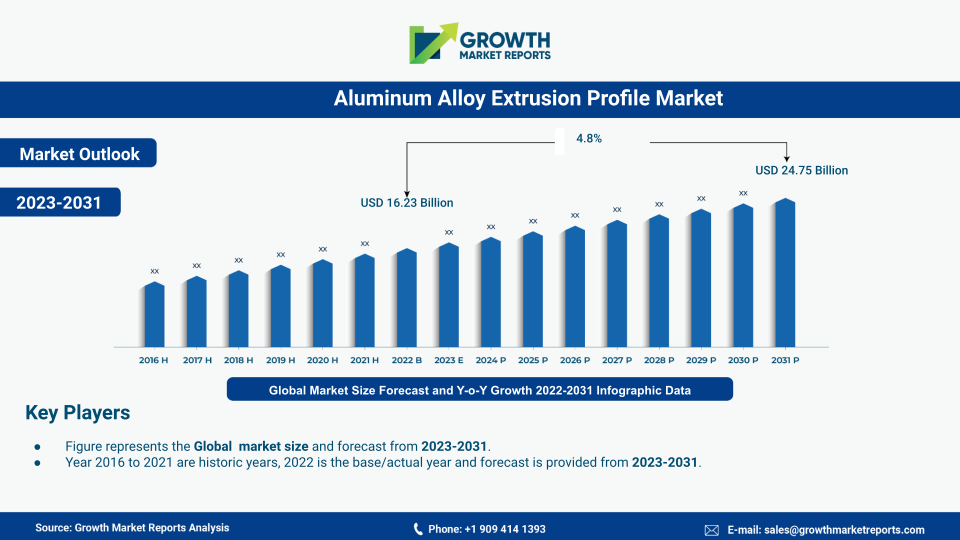
The global aluminum alloy extrusion profile market was valued at USD 16.23 Billion in 2022 and is projected to reach USD 24.75 Billion by 2031, expanding at a CAGR of 4.8% during the forecast period (2023-2031). Aluminum alloy is a chemical composition in which elements such as zinc, manganese, magnesium, copper, silicon, and iron are added to pure aluminum in order to enhance its strength and other properties. Aluminum extrusion is an aluminum alloy transformation process which is used in a variety of applications for having defined the cross-sectional profile. The method of aluminum extrusion releases large amounts of heat; therefore, temperatures monitoring of aluminum alloy extrusion is essential to ensure properties such as tensile strength are met to make an effective component.
Market Dynamics
The market is driven by factors such as increasing construction of green buildings, rising use of aluminum as the replacement for steel, rapid urbanization and industrialization boosts market growth, and growing use of sustainable and recyclable metal. However, high costs of aluminum alloy extrusion, low production efficiency of conventional extrusion method, and rising energy cost and environmental pollution are key restraints of this market. Growing usage of aluminum alloy extruded profile in the automotive industry and rising use of aluminum alloy extrusion profile in solar panels are expected to boost the market in the future.
Segmental Outlook
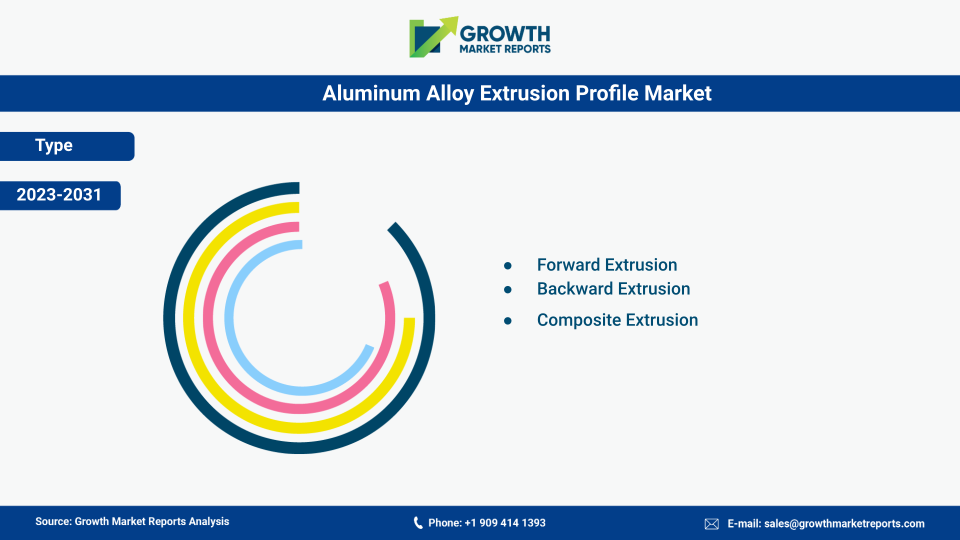
In terms of types, the aluminum extrusion profile market is segmented into forward extrusion, backward extrusion, and composite extrusion. Forward extrusion is projected to account for a 46.1% of the market share in 2019, as it has a simplistic design and it allows more flexibility in the manufacturing of profiles. The use of forwarding extrusion is increasing in the industries because the total length of the extrudate is generally limited by the size of metal billet due to which the process of forward extrusion has high productivity.
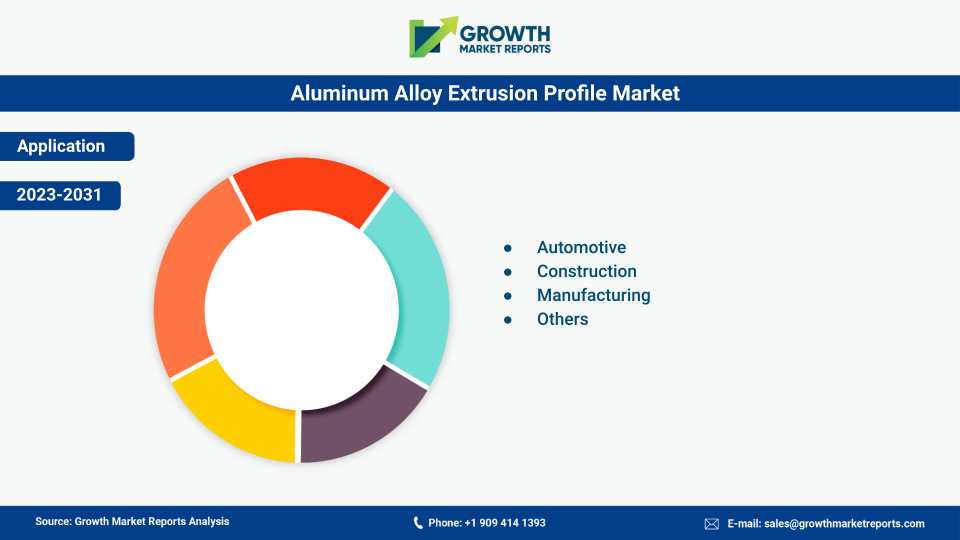
Based on applications, the aluminum alloy extrusion profile market is segmented into construction, automotive, manufacturing, other. The construction segment holds a major share of the market and automotive segment is estimated to expand at a significant CAGR of 5.3% during the forecast period. Automobile manufacturers are using aluminum alloy extrusion in an effective way to slim down electric vehicles and to lightened their combustion-engine lineup. Automotive company are using high-strength aluminum alloy to deliver light-weighting vehicle as they are intended to continue to use the distinct capabilities of extruded profile to make the electric vehicles more energy-efficient without sacrificing its performance.
Market Trend
Rising urbanization and growing demand for pre-engineered buildings are fueling the aluminum alloy extruded profiles market. These profiles are used in the roofing of pre-engineered buildings. Pre-engineered buildings are prefabricated factory-built steel structure engineered that are transported to the construction site for assembly. Rising construction of warehouses due to the growing online retail industry has increased the demand for pre-engineered buildings. The growth of industries such as pharma, retail, automotive, logistics, and fast-moving consumer goods is boosting the demand for pre-engineered buildings. This, in turn, is projected to drive the demand for aluminum alloy extruded profiles.
By Type Definition
Forward Extrusion: Forward extrusion is also called direct extrusion or in-line compounding, it is mostly used in the production of semi-finished products such as profiles, plates, films, and tubes. This type of extrusion occurs when the direction of the flow of metal is the same as the movement of the ram. Direct extrusion is one of the most common processes that is used in aluminum alloy extrusion profiles among all the extrusion processes. In this process, a metal billet (work-piece) is pressed in the same direction as the die orifice and the pressure is applied on the billet. The main benefit of this process is its high efficiency and total time duration of extruders, as they are usually limited by the thickness of the metal billet. One of the major drawbacks of the forward extrusion is that it requires a high amount of force to extrude billet. The force which is used in forward extraction is very high compared to the indirect extrusion due to which high frictional forces are developed by the movement of billet across the entire length of containers.
By Application
Automotive Segment: The automotive segment is anticipated to grow at a rapid pace during the forecast period due to the increasing demand for automobiles and the need for electronic vehicles. Using aluminum extrusions allows automobile manufacturers to use different profile geometries and aluminum alloys to maximize light-weighting and to manage specific applications in the vital aspect of energy absorption and crash-management requirements. Moreover, aluminum alloy extrusions have a distinct ability of cost-effectiveness which is helping automobile makers to meet the stringent 2025 fuel economy and emissions targets as compared to other materials. Aluminum alloy extrusions also offer solutions that increase vehicle safety as verified by numerous vehicles in production. Hence, manufacturers are using aluminum alloy extrusions as they provide high-yield strength, excellent crash performance, and reduced weight. These factors are fueling the growth of the segment.
Regional Outlook
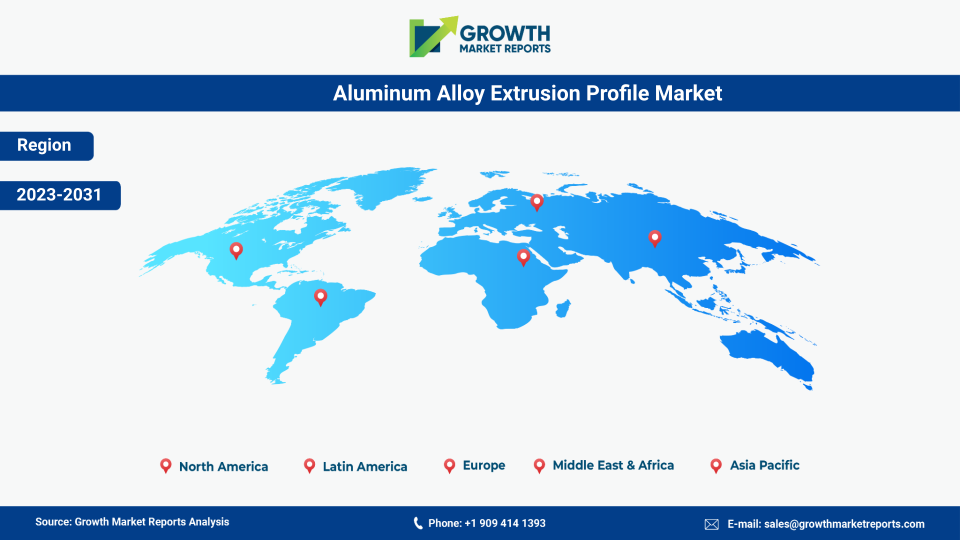
On the basis of regions, the global aluminum alloy extrusion profile market has been segmented into North America, Europe, Asia Pacific, Middle East & Africa, and Latin America. Asia Pacific is expected to hold 41.8% of market share due to an increase in the construction sector in this region. Construction of green buildings is increasing across the globe, as these buildings are environment-friendly and energy-efficient. This, in turn, is boosting the market growth, as aluminum alloy extruded profile is used in the construction of green buildings. The market in Europe is anticipated to grow during the forecast period owing to the rising industrial consumption of extruded aluminum and the growth in the automobile industry. Additionally, increasing demand for products in the battery casing and structural component of electrical vehicles is expected to fuel the market.
Key Benefits for Industry Participants & Stakeholders
In-depth Analysis of the Global Aluminum Alloy Extrusion Profile Market
Historical, Current and Projected Market Size in terms of Value
Potential & Niche Segments and Regions Exhibiting Promising Growth Covered
Industry Drivers, Restraints and Opportunities Covered in the Study
Recent Industry Trends and Developments
Competitive Landscape & Strategies of Key Players
Neutral Perspective on Global Aluminum Alloy Extrusion Profile Market Performance
Segments
By Type
Forward Extrusion
Backward Extrusion
Composite Extrusion
By Application
Automotive
Construction
Manufacturing
Others
By Region
North America
U.S.
Canada
Latin America
Brazil
Mexico
Rest of Latin America
Europe
Germany
France
Italy
U.K.
Spain
Russia
Rest of Europe
Asia Pacific
China
Japan
South Korea
India
Australia
Southeast Asia
Rest of Asia Pacific (APAC)
Middle East & Africa (MEA)
Saudi Arabia
South Africa
UAE
Rest of Middle East & Africa (MEA)
Key Market Players Profiled in the Report
Arconic
Bonnell Aluminum
China Zhongwang Holdings Limited
Constellium
Hulamin
Hydro Extrusions
Jindal Aluminium
Kaiser Aluminum
Norinco International
Sankyo Tateyama, Inc.
Competitive Landscape
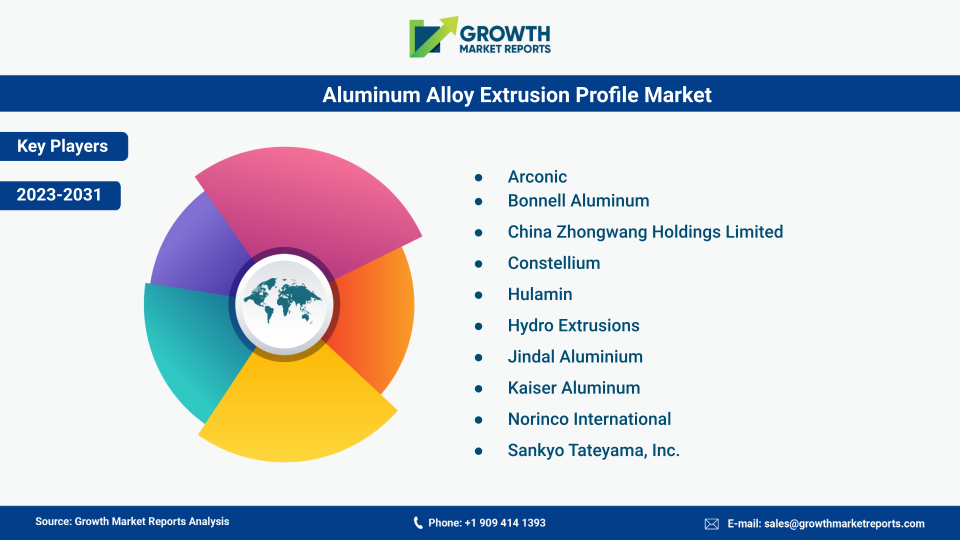
Key players in the global aluminum alloy extrusion profile market includes Arconic, China Zhongwang Holdings Limited, Hindalco Industries, Hydro Extrusions, Jindal Aluminium, Kaiser Aluminum, Sankyo Tateyama, Inc., and Constellium. These companies are considered as key manufacturers of aluminum alloy extrusion profile, based on their revenue, research & development activities, regional presence, and supply chain management system.
The players are adopting key strategies such as acquisition, and geographical expansion where potential opportunity for the aluminum alloy extrusion profile extraction is added in the company’s capacity.
In April 2020, the Arconic Inc. split into two standalone companies, Arconic and Howmet Aerospace Inc. – Howmet Aerospace Inc. is expected to manufacture parts of the engine, fastening mechanisms, engineered structures, and aluminum forged wheels; whereas, Arconic produces rolled aluminum products, extrusions for aluminum, and systems for building and manufacturing.
For instance, in February 2019, Arconic announced that it invested about USD 100 million in its Tennessee operations facility near Knoxville, Tennessee, the US, to expand its hot-mill capacity and add downstream equipment capabilities to manufacture industrial and automotive aluminum products.
In April 2017, Jindal Aluminum has increased its capacity for generation to 80 MW and has further investments in this sector. It makes captive use of 30% of the energy of its wind and solar power units and sells the rest to the state.
Video Summary for Aluminum Alloy Extrusion Profile Market
Chapter 1 Executive Summary Chapter 2 Assumptions and Acronyms Used Chapter 3 Research Methodology Chapter 4 Aluminum Alloy Extrusion Profile Market Overview 4.1 Introduction 4.1.1 Market Taxonomy 4.1.2 Market Definition 4.1.3 Macro-Economic Factors Impacting the Market Growth 4.2 Aluminum Alloy Extrusion Profile Market Dynamics 4.2.1 Market Drivers 4.2.2 Market Restraints 4.2.3 Market Opportunity 4.2.4 Market Trends 4.3 Aluminum Alloy Extrusion Profile Market - Supply Chain Analysis 4.3.1 List of Key Suppliers 4.3.2 List of Key Distributors 4.3.3 List of Key Consumers 4.4 Global Aluminum Alloy Extrusion Profile Market Size & Forecast, 2017-2027 4.4.1 Aluminum Alloy Extrusion Profile Market Size and Y-o-Y Growth 4.4.2 Aluminum Alloy Extrusion Profile Market Absolute $ Opportunity Chapter 5 Global Aluminum Alloy Extrusion Profile Market Analysis and Forecast By Type 5.1 Introduction 5.1.1 Key Market Trends & Growth Opportunities By Type 5.1.2 Basis Point Share (BPS) Analysis By Type 5.1.3 Absolute $ Opportunity Assessment By Type 5.2 Aluminum Alloy Extrusion Profile Market Size & Volume Forecast By Type 5.2.1 Forward Extrusion 5.2.2 Backward Extrusion 5.2.3 Composite Extrusion 5.3 Market Attractiveness Analysis By Type Chapter 6 Global Aluminum Alloy Extrusion Profile Market Analysis and Forecast By Application 6.1 Introduction 6.1.1 Key Market Trends & Growth Opportunities By Application 6.1.2 Basis Point Share (BPS) Analysis By Application 6.1.3 Absolute $ Opportunity Assessment By Application 6.2 Aluminum Alloy Extrusion Profile Market Size & Volume Forecast By Application 6.2.1 Construction 6.2.2 Automotive 6.2.3 Manufacturing 6.2.4 Others 6.3 Market Attractiveness Analysis By Application Chapter 7 Global Aluminum Alloy Extrusion Profile Market Analysis and Forecast by Region 7.1 Introduction 7.1.1 Key Market Trends & Growth Opportunities by Region 7.1.2 Basis Point Share (BPS) Analysis by Region 7.1.3 Absolute $ Opportunity Assessment by Region 7.2 Aluminum Alloy Extrusion Profile Market Size Forecast by Region 7.2.1 North America 7.2.2 Europe 7.2.3 Asia Pacific 7.2.4 Latin America 7.2.5 Middle East & Africa (MEA) 7.3 Market Attractiveness Analysis by Region Chapter 8 Coronavirus Disease (COVID-19) Impact 8.1 Introduction 8.2 Impact Analysis Chapter 9 North America Aluminum Alloy Extrusion Profile Analysis and Forecast 9.1 Introduction 9.2 North America Aluminum Alloy Extrusion Profile Market Size Forecast by Country 9.2.1 U.S. 9.2.2 Canada 9.3 Basis Point Share (BPS) Analysis by Country 9.4 Absolute $ Opportunity Assessment by Country 9.5 Market Attractiveness Analysis by Country 9.6 North America Aluminum Alloy Extrusion Profile Market Size & Volume Forecast By Type 9.6.1 Forward Extrusion 9.6.2 Backward Extrusion 9.6.3 Composite Extrusion 9.7 Basis Point Share (BPS) Analysis By Type 9.8 Absolute $ Opportunity Assessment By Type 9.9 Market Attractiveness Analysis By Type 9.10 North America Aluminum Alloy Extrusion Profile Market Size & Volume Forecast By Application 9.10.1 Construction 9.10.2 Automotive 9.10.3 Manufacturing 9.10.4 Others 9.11 Basis Point Share (BPS) Analysis By Application 9.12 Absolute $ Opportunity Assessment By Application 9.13 Market Attractiveness Analysis By Application Chapter 10 Europe Aluminum Alloy Extrusion Profile Analysis and Forecast 10.1 Introduction 10.2 Europe Aluminum Alloy Extrusion Profile Market Size Forecast by Country 10.2.1 Germany 10.2.2 France 10.2.3 Italy 10.2.4 U.K. 10.2.5 Spain 10.2.6 Russia 10.2.7 Rest of Europe 10.3 Basis Point Share (BPS) Analysis by Country 10.4 Absolute $ Opportunity Assessment by Country 10.5 Market Attractiveness Analysis by Country 10.6 Europe Aluminum Alloy Extrusion Profile Market Size & Volume Forecast By Type 10.6.1 Forward Extrusion 10.6.2 Backward Extrusion 10.6.3 Composite Extrusion 10.7 Basis Point Share (BPS) Analysis By Type 10.8 Absolute $ Opportunity Assessment By Type 10.9 Market Attractiveness Analysis By Type 10.10 Europe Aluminum Alloy Extrusion Profile Market Size & Volume Forecast By Application 10.10.1 Construction 10.10.2 Automotive 10.10.3 Manufacturing 10.10.4 Others 10.11 Basis Point Share (BPS) Analysis By Application 10.12 Absolute $ Opportunity Assessment By Application 10.13 Market Attractiveness Analysis By Application Chapter 11 Asia Pacific Aluminum Alloy Extrusion Profile Analysis and Forecast 11.1 Introduction 11.2 Asia Pacific Aluminum Alloy Extrusion Profile Market Size Forecast by Country 11.2.1 China 11.2.2 Japan 11.2.3 South Korea 11.2.4 India 11.2.5 Australia 11.2.6 Rest of Asia Pacific (APAC) 11.3 Basis Point Share (BPS) Analysis by Country 11.4 Absolute $ Opportunity Assessment by Country 11.5 Market Attractiveness Analysis by Country 11.6 Asia Pacific Aluminum Alloy Extrusion Profile Market Size & Volume Forecast By Type 11.6.1 Forward Extrusion 11.6.2 Backward Extrusion 11.6.3 Composite Extrusion 11.7 Basis Point Share (BPS) Analysis By Type 11.8 Absolute $ Opportunity Assessment By Type 11.9 Market Attractiveness Analysis By Type 11.10 Asia Pacific Aluminum Alloy Extrusion Profile Market Size & Volume Forecast By Application 11.10.1 Construction 11.10.2 Automotive 11.10.3 Manufacturing 11.10.4 Others 11.11 Basis Point Share (BPS) Analysis By Application 11.12 Absolute $ Opportunity Assessment By Application 11.13 Market Attractiveness Analysis By Application Chapter 12 Latin America Aluminum Alloy Extrusion Profile Analysis and Forecast 12.1 Introduction 12.2 Latin America Aluminum Alloy Extrusion Profile Market Size Forecast by Country 12.2.1 Brazil 12.2.2 Mexico 12.2.3 Rest of Latin America (LATAM) 12.3 Basis Point Share (BPS) Analysis by Country 12.4 Absolute $ Opportunity Assessment by Country 12.5 Market Attractiveness Analysis by Country 12.6 Latin America Aluminum Alloy Extrusion Profile Market Size & Volume Forecast By Type 12.6.1 Forward Extrusion 12.6.2 Backward Extrusion 12.6.3 Composite Extrusion 12.7 Basis Point Share (BPS) Analysis By Type 12.8 Absolute $ Opportunity Assessment By Type 12.9 Market Attractiveness Analysis By Type 12.10 Latin America Aluminum Alloy Extrusion Profile Market Size & Volume Forecast By Application 12.10.1 Construction 12.10.2 Automotive 12.10.3 Manufacturing 12.10.4 Others 12.11 Basis Point Share (BPS) Analysis By Application 12.12 Absolute $ Opportunity Assessment By Application 12.13 Market Attractiveness Analysis By Application Chapter 13 Middle East & Africa (MEA) Aluminum Alloy Extrusion Profile Analysis and Forecast 13.1 Introduction 13.2 Middle East & Africa (MEA) Aluminum Alloy Extrusion Profile Market Size Forecast by Country 13.2.1 Saudi Arabia 13.2.2 South Africa 13.2.3 UAE 13.2.4 Rest of Middle East & Africa (MEA) 13.3 Basis Point Share (BPS) Analysis by Country 13.4 Absolute $ Opportunity Assessment by Country 13.5 Market Attractiveness Analysis by Country 13.6 Middle East & Africa (MEA) Aluminum Alloy Extrusion Profile Market Size & Volume Forecast By Type 13.6.1 Forward Extrusion 13.6.2 Backward Extrusion 13.6.3 Composite Extrusion 13.7 Basis Point Share (BPS) Analysis By Type 13.8 Absolute $ Opportunity Assessment By Type 13.9 Market Attractiveness Analysis By Type 13.10 Middle East & Africa (MEA) Aluminum Alloy Extrusion Profile Market Size & Volume Forecast By Application 13.10.1 Construction 13.10.2 Automotive 13.10.3 Manufacturing 13.10.4 Others 13.11 Basis Point Share (BPS) Analysis By Application 13.12 Absolute $ Opportunity Assessment By Application 13.13 Market Attractiveness Analysis By Application Chapter 14 Competition Landscape 14.1 Aluminum Alloy Extrusion Profile Market: Competitive Dashboard 14.2 Global Aluminum Alloy Extrusion Profile Market: Market Share Analysis, 2019 14.3 Company Profiles (Details – Overview, Financials, Developments, Strategy) 14.3.1 Arconic 14.3.2 Bonnell Aluminum 14.3.3 China Zhongwang Holdings Limited 14.3.4 Constellium 14.3.5 Hulamin 14.3.6 Hydro Extrusions 14.3.7 Jindal Aluminium 14.3.8 Kaiser Aluminum 14.3.9 Norinco International 14.3.10 Sankyo Tateyama, Inc.
Ask for Research To Be Focused On Specific Regions or Segments
Receive Data As Per Your Format and Definition
Companies Profiled based on Your Requirements
Breaking Down Competitive Landscape as per Your Requirements
Any Level of Customization
Our Clients
Client Testinomials
We needed a highly accurate and precise report, which Growth Market Reports delivered promptly. The company compiled information from a wide array of reliable agencies and sourcess.It is extremely satisfactory to be working with you. Strategy Head of Major Tech Company
We were very pleased to contact Growth Market Reports as they tailored reports precisely as per our requirements. As we are dealing with the aerospace and defense industry, we need reports of high accuracy and substantial quality. Major Player in Defense Industry
Extremely delighted to have a well-crafted report on “Global Packaging Solutions Market Research Report” from your team. Thank you for providing me with all our requirements and for incorporating our suggestions. CMO of Leading Packaging Company from USA
I had a good experience working with Growth Market Reports as they were very open to all constructive changes in the report. I found that the report had its charm embedded with ample of data. Founder and Managing Partner of Major Korean Company
Our company has been working with Growth Market Reports for some years now and we are very happy with the quality of the reports provided by the company.I, on behalf of my organization, would like to thank you for offering professional reports. Global Consulting Firm
According to this Growth Market Reports report, the market from Aluminum Alloy Extrusion Profile is likely to register a CAGR of 4.8% during forecast period 2020-2027, with an anticipated to reach USD 19,187.2 million by the end of the 2027.
Increasing construction of green buildings, rising use of aluminum as the replacement for steel, rapid urbanization and industrialization boosts market growth, and growing use of sustainable and recyclable metal.
Construction Industry, Automotive Industry, Manufacturing Industry, and Others are the key application that are driving the aluminum alloy extrusion profile market.
The market is expected to decline in-between 2019 and 2020 owing to the adverse effect of COVID-19 pandemic. Disruptive supply chain and country lockdown conditions have forced the manufacturers for temporarily suspension of production which is resulting to declining sales.
The base year considered for the global Aluminum Alloy Extrusion Profile market report is 2019. The complete analysis period is 2017 to 2027, wherein, 2017 & 2018 are the historic years and the forecast is provided from 2020 to 2027.











 Request For Customization
 Enquiry Before Buying
 Speak With Analyst