Segments - By Type (Metal ALD, Aluminum Oxide ALD, Plasma Enhanced ALD, Catalytic ALD, Others), By Application (Research & Development Facilities, Semiconductor & Electronics, Solar Devices, Medical Equipment, Others), and Region (North America, Latin America, Europe, Asia Pacific and Middle East & Africa) - Global Industry Analysis, Growth, Share, Size, Trends, and Forecast 2023 – 2031
Segments - By Type (Metal ALD, Aluminum Oxide ALD, Plasma Enhanced ALD, Catalytic ALD, Others), By Application (Research & Development Facilities, Semiconductor & Electronics, Solar Devices, Medical Equipment, Others), and Region (North America, Latin America, Europe, Asia Pacific and Middle East & Africa) - Global Industry Analysis, Growth, Share, Size, Trends, and Forecast 2023 – 2031
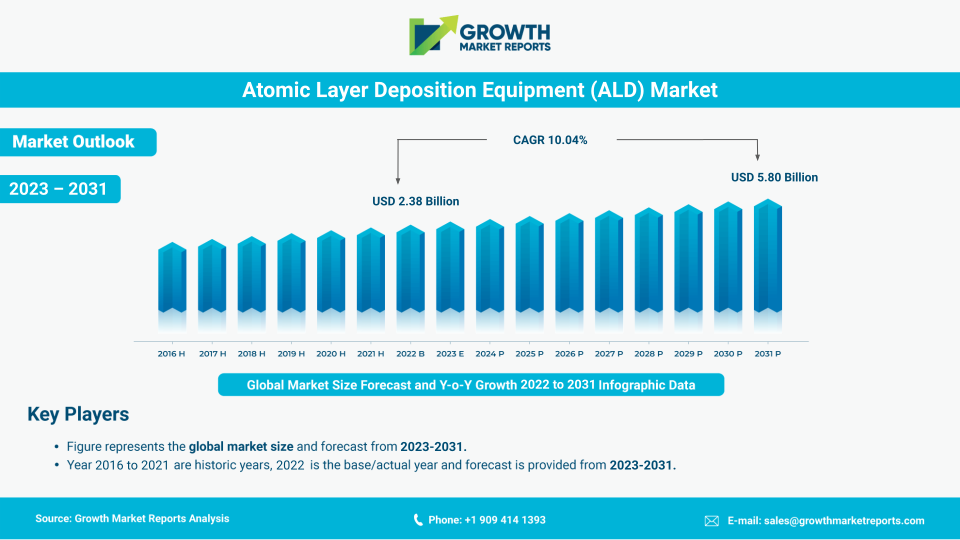
The global atomic layer deposition equipment market was valued atUSD 2.38 Billion in 2022 and is projected to reach USD 5.80 Billion by 2031, expanding at a CAGR of 10.4% during the forecast period 2023-2031. The atomic layer deposition (ALD) is a method that enables the deposition of thin films of a variety of materials onto any substrate. The ALD process involves a substrate surface that is exposed to alternating precursors which are not overlapping but are sequentially introduced.
The ability to create thin films makes ALD essential in products such as displays, data storage devices, and small electronic components. The atomic deposition layer is used to create a protected thin film layer on any material or product, depending on the material or product which requires layer.
ALD is a key production process in the manufacture of semiconductor devices and components of a range of tools available for nanomaterial synthesis. It is identified as a key deposition method for developing thin conformal films. The demand for miniaturized and complex components combined with the advent of nano-technology drives the demand for ALD equipment.
ALD equipment is generally used in the fabrication of LEDs (chroma adjustment and film-preventing Ag sulfide), electronic devices (isolation film and barrier metal), a film of gas barriers, and vapor barrier film and film-forming on complex substrates.
Atomic Layer Deposition Equipment Market Dynamics
The market is driven by Atomic Layer Deposition Equipmentactors such as growth in industries such as electronics and semiconductor solutions, rise in the demand for electronic components in the automotive industry, increase in concerns for global warming climate change, and increasing use of component miniaturization in the electronic devices. However, high processing costs, high material waste, and high energy waste rates are key restraint of this market.
Emerging applications of ALD and recent developments in molecular precursors for ALD are increasing the adoption of ALD equipment, thus boosting the growth of the market. Recent market trends include spatial ALD for flexible electronics, 3D printed reactor for ALD, enables complex 3D nanostructures, and uniformity & conformality.
Growing Electronics Industry and Semiconductor Solutions
Rising demand for IC products, which are made from semiconductor technology such as GPUs, CPUs, NAND flash memory, DRAM, image sensors, and power management devices, drives the demand for ALD equipment. Growth of the industries such as electronics and semiconductor solutions is expected to drive the market, particularly in Asia Pacific and North America.
The growing demand in industrial applications for advanced semiconductor chips would be a positive part of the semiconductor industry growth during the forecast period. The introduction of Industry 4.0, IoT, artificial intelligence, and big data technology can enhance the manufacturing process and thus create sustainable market opportunities. The rise in the usage of smartphones and the launch of 5G technology is expected to have a positive impact on semiconductor trends during the forecast period.
Uniformity and Conformality
The independent nature of subsequent surface reactions and chemisorption of ALD enables it to grow in structures with a large depth to wide ratio to provide uniform and conformal films. The uniformed films at every corner positions along a flat surface have composed and equal thickness, for example a 300-mm wafer. ALD equipment is preferred for its uniformity and conformality features.
Atomic Layer Deposition Equipment Market Segmental Outlook
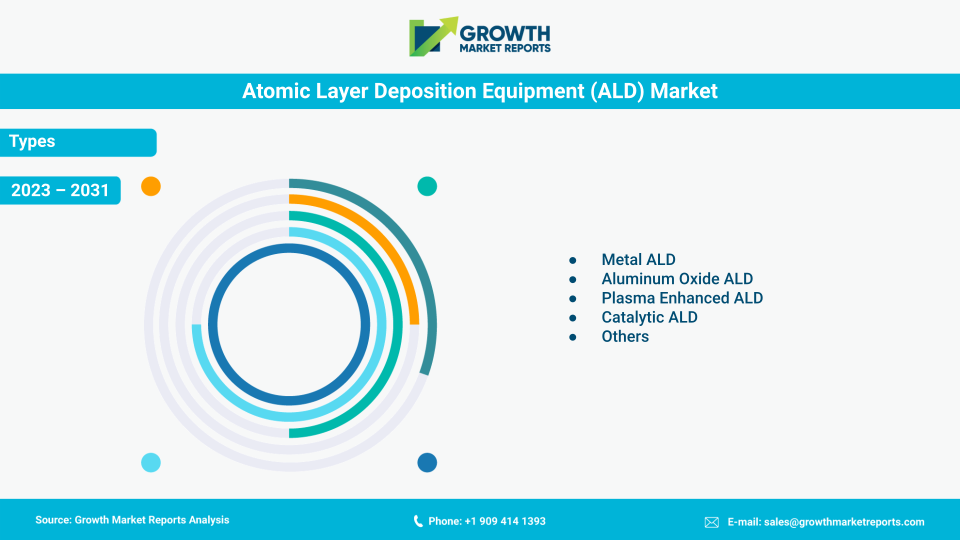
On the basis of types, the atomic layer deposition equipment market is segmented into metal ALD, aluminum oxide ALD, plasma enhanced ALD, catalytic ALD, and others. The aluminum oxide ALD segment is estimated to hold a large share of the market during the forecast period due to the easy availability of aluminum and high demand for aluminum oxide films that use ALD deposition technique.
The plasma-enhanced ALD segment is considered material for nanoscale memory and logic devices manufacturing due to it provides features such as thickness controllability and superior conformity; therefore the segment is anticipated to expand at high CAGR of around 10.7% during the forecast period.
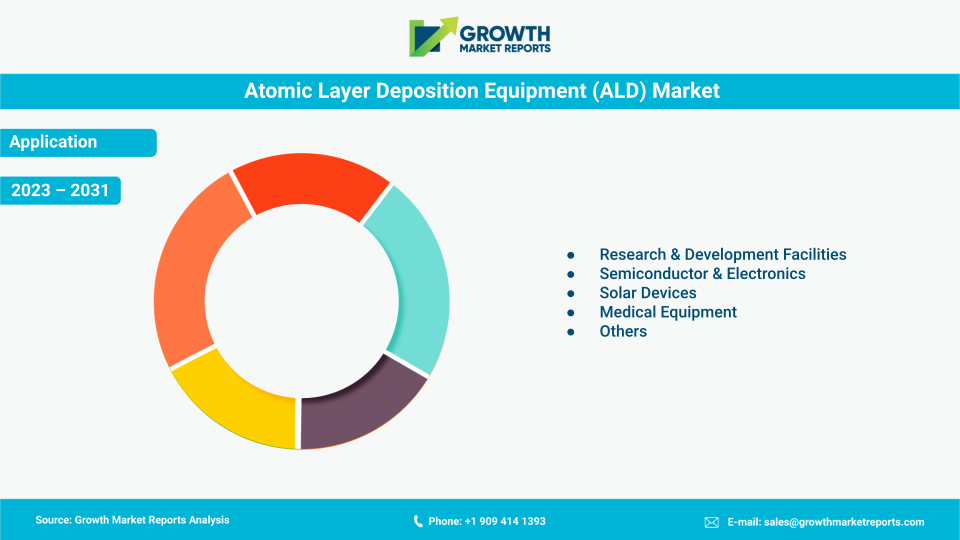
Based on applications, the atomic layer deposition equipment market is categorized as research & development facilities, semiconductor & electronics, solar devices, medical equipment, and others. The semiconductor & electronics segment is projected to constitute around 62.1% share of the market by 2027 due to an increase in the sale of semiconductor-based devices and the rise in demand for miniaturized components. The solar devices segment is anticipated to expand at a CAGR of over 10.9% due to the increase in the usage of solar equipment during the forecast period.
Atomic Layer Deposition Equipment Market Regional Outlook
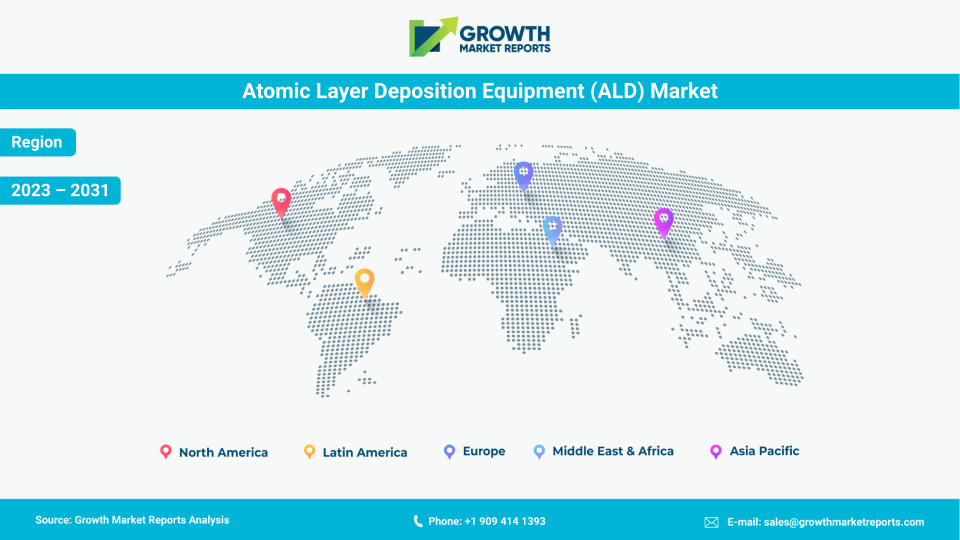
In terms of regions, the market has been segmented into North America, Europe, Asia Pacific, Latin America, and Middle East & Africa (MEA). Asia Pacific is a promising region for the market. It constituted over 67.8% share of the market in 2020. The market in the region is projected to expand at a CAGR of around 10.5% during the forecast period. The demand for ALD equipment from end-use industries such as semiconductors, electronics, medical devices, and solar is expected to rise during the forecast period. The market in North America is projected to expand at a CAGR of around 10.3% due to the growth in the semiconductor industry and the consumer electronics industry in the region.
Key Benefits for Industry Participants & Stakeholders
In-depth Analysis of the Global Atomic Layer Deposition Equipment Market
Historical, Current and Projected Market Size in terms of Value
Potential & Niche Segments and Regions Exhibiting Promising Growth Covered
Industry Drivers, Restraints and Opportunities Covered in the Study
Recent Industry Trends and Developments
Competitive Landscape & Strategies of Key Players
Neutral Perspective on Global Atomic Layer Deposition Equipment Market Performance
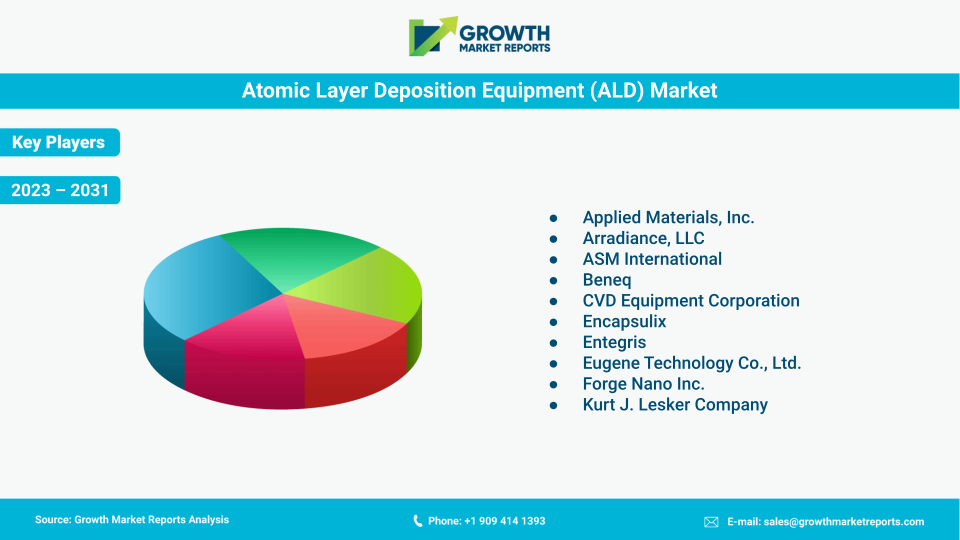
Key players in the market include Tokyo Electron Limited, Applied Materials, Inc. and LAM RESEARCH CORPORATION. They considered as key manufacturers of the market based on their different varieties of product availability, regional presence, better supply chain management system, and the increasing demand for the products.
The players are adopting key strategies such as acquisition, and geographical expansion where potential opportunity for the atomic layer deposition equipment extraction is added in the company’s capacity.
For instance, On July 01, 2019, Applied Materials, Inc. entered into a definitive agreement to acquire all outstanding shares of Kokusai Electric Corporation, one of the leading companies providing high-productivity batch processing systems and services for memory, foundry, and logic customers.
In November, 2017, Arradiance, LLC announced the collaboration with InRedox, a leading manufacturer of nanoporous anodic aluminum oxide (AAO) and nanotubular anodic titanium oxide (ATO). The collaboration was made for offering advanced functionalized nanostructured materials.
On November 11, 2019, ASM International launched A400 duo vertical furnace system. It addressed 200mm applications with high productivity and low cost of ownership. The system’s DUAL Boat reactors produce high throughput, increasing reactor utilization to a very high percentage, while ensuring low capex.
Video Summary for Atomic Layer Deposition Equipment Market
Chapter 1 Executive Summary Chapter 2 Assumptions and Acronyms Used Chapter 3 Research Methodology Chapter 4 Atomic Layer Deposition Equipment Market Overview 4.1 Introduction 4.1.1 Market Taxonomy 4.1.2 Market Definition 4.1.3 Macro-Economic Factors Impacting the Market Growth 4.2 Atomic Layer Deposition Equipment Market Dynamics 4.2.1 Market Drivers 4.2.2 Market Restraints 4.2.3 Market Opportunity 4.2.4 Market Trends 4.3 Atomic Layer Deposition Equipment Market - Supply Chain Analysis 4.4 Global Atomic Layer Deposition Equipment Market Size & Forecast, 2017-2027 4.4.1 Atomic Layer Deposition Equipment Market Size and Y-o-Y Growth 4.4.2 Atomic Layer Deposition Equipment Market Absolute $ Opportunity Chapter 5 Global Atomic Layer Deposition Equipment Market Analysis and Forecast By Type 5.1 Introduction 5.1.1 Key Market Trends & Growth Opportunities By Type 5.1.2 Basis Point Share (BPS) Analysis By Type 5.1.3 Absolute $ Opportunity Assessment By Type 5.2 Atomic Layer Deposition Equipment Market Size Forecast By Type 5.2.1 Metal ALD 5.2.2 Aluminum Oxide ALD 5.2.3 ALD on Polymers 5.2.4 Catalytic ALD 5.2.5 Others 5.3 Market Attractiveness Analysis By Type Chapter 6 Global Atomic Layer Deposition Equipment Market Analysis and Forecast By Application 6.1 Introduction 6.1.1 Key Market Trends & Growth Opportunities By Application 6.1.2 Basis Point Share (BPS) Analysis By Application 6.1.3 Absolute $ Opportunity Assessment By Application 6.2 Atomic Layer Deposition Equipment Market Size Forecast By Application 6.2.1 Research & Development Facilities 6.2.2 Semiconductor & Electronics 6.2.3 Solar Devices 6.2.4 Medical Equipment 6.2.5 Others 6.3 Market Attractiveness Analysis By Application Chapter 7 Global Atomic Layer Deposition Equipment Market Analysis and Forecast by Region 7.1 Introduction 7.1.1 Key Market Trends & Growth Opportunities by Region 7.1.2 Basis Point Share (BPS) Analysis by Region 7.1.3 Absolute $ Opportunity Assessment by Region 7.2 Atomic Layer Deposition Equipment Market Size Forecast by Region 7.2.1 North America 7.2.2 Europe 7.2.3 Asia Pacific 7.2.4 Latin America 7.2.5 Middle East & Africa (MEA) 7.3 Market Attractiveness Analysis by Region Chapter 8 Coronavirus Disease (COVID-19) Impact 8.1 Introduction 8.2 Current & Future Impact Analysis 8.3 Economic Impact Analysis 8.4 Government Policies 8.5 Investment Scenario Chapter 9 North America Atomic Layer Deposition Equipment Analysis and Forecast 9.1 Introduction 9.2 North America Atomic Layer Deposition Equipment Market Size Forecast by Country 9.2.1 U.S. 9.2.2 Canada 9.3 Basis Point Share (BPS) Analysis by Country 9.4 Absolute $ Opportunity Assessment by Country 9.5 Market Attractiveness Analysis by Country 9.6 North America Atomic Layer Deposition Equipment Market Size Forecast By Type 9.6.1 Metal ALD 9.6.2 Aluminum Oxide ALD 9.6.3 ALD on Polymers 9.6.4 Catalytic ALD 9.6.5 Others 9.7 Basis Point Share (BPS) Analysis By Type 9.8 Absolute $ Opportunity Assessment By Type 9.9 Market Attractiveness Analysis By Type 9.10 North America Atomic Layer Deposition Equipment Market Size Forecast By Application 9.10.1 Research & Development Facilities 9.10.2 Semiconductor & Electronics 9.10.3 Solar Devices 9.10.4 Medical Equipment 9.10.5 Others 9.11 Basis Point Share (BPS) Analysis By Application 9.12 Absolute $ Opportunity Assessment By Application 9.13 Market Attractiveness Analysis By Application Chapter 10 Europe Atomic Layer Deposition Equipment Analysis and Forecast 10.1 Introduction 10.2 Europe Atomic Layer Deposition Equipment Market Size Forecast by Country 10.2.1 Germany 10.2.2 France 10.2.3 Italy 10.2.4 U.K. 10.2.5 Spain 10.2.6 Russia 10.2.7 Rest of Europe 10.3 Basis Point Share (BPS) Analysis by Country 10.4 Absolute $ Opportunity Assessment by Country 10.5 Market Attractiveness Analysis by Country 10.6 Europe Atomic Layer Deposition Equipment Market Size Forecast By Type 10.6.1 Metal ALD 10.6.2 Aluminum Oxide ALD 10.6.3 ALD on Polymers 10.6.4 Catalytic ALD 10.6.5 Others 10.7 Basis Point Share (BPS) Analysis By Type 10.8 Absolute $ Opportunity Assessment By Type 10.9 Market Attractiveness Analysis By Type 10.10 Europe Atomic Layer Deposition Equipment Market Size Forecast By Application 10.10.1 Research & Development Facilities 10.10.2 Semiconductor & Electronics 10.10.3 Solar Devices 10.10.4 Medical Equipment 10.10.5 Others 10.11 Basis Point Share (BPS) Analysis By Application 10.12 Absolute $ Opportunity Assessment By Application 10.13 Market Attractiveness Analysis By Application Chapter 11 Asia Pacific Atomic Layer Deposition Equipment Analysis and Forecast 11.1 Introduction 11.2 Asia Pacific Atomic Layer Deposition Equipment Market Size Forecast by Country 11.2.1 China 11.2.2 Japan 11.2.3 South Korea 11.2.4 India 11.2.5 Australia 11.2.6 South East Asia (SEA) 11.2.7 Rest of Asia Pacific (APAC) 11.3 Basis Point Share (BPS) Analysis by Country 11.4 Absolute $ Opportunity Assessment by Country 11.5 Market Attractiveness Analysis by Country 11.6 Asia Pacific Atomic Layer Deposition Equipment Market Size Forecast By Type 11.6.1 Metal ALD 11.6.2 Aluminum Oxide ALD 11.6.3 ALD on Polymers 11.6.4 Catalytic ALD 11.6.5 Others 11.7 Basis Point Share (BPS) Analysis By Type 11.8 Absolute $ Opportunity Assessment By Type 11.9 Market Attractiveness Analysis By Type 11.10 Asia Pacific Atomic Layer Deposition Equipment Market Size Forecast By Application 11.10.1 Research & Development Facilities 11.10.2 Semiconductor & Electronics 11.10.3 Solar Devices 11.10.4 Medical Equipment 11.10.5 Others 11.11 Basis Point Share (BPS) Analysis By Application 11.12 Absolute $ Opportunity Assessment By Application 11.13 Market Attractiveness Analysis By Application Chapter 12 Latin America Atomic Layer Deposition Equipment Analysis and Forecast 12.1 Introduction 12.2 Latin America Atomic Layer Deposition Equipment Market Size Forecast by Country 12.2.1 Brazil 12.2.2 Mexico 12.2.3 Rest of Latin America (LATAM) 12.3 Basis Point Share (BPS) Analysis by Country 12.4 Absolute $ Opportunity Assessment by Country 12.5 Market Attractiveness Analysis by Country 12.6 Latin America Atomic Layer Deposition Equipment Market Size Forecast By Type 12.6.1 Metal ALD 12.6.2 Aluminum Oxide ALD 12.6.3 ALD on Polymers 12.6.4 Catalytic ALD 12.6.5 Others 12.7 Basis Point Share (BPS) Analysis By Type 12.8 Absolute $ Opportunity Assessment By Type 12.9 Market Attractiveness Analysis By Type 12.10 Latin America Atomic Layer Deposition Equipment Market Size Forecast By Application 12.10.1 Research & Development Facilities 12.10.2 Semiconductor & Electronics 12.10.3 Solar Devices 12.10.4 Medical Equipment 12.10.5 Others 12.11 Basis Point Share (BPS) Analysis By Application 12.12 Absolute $ Opportunity Assessment By Application 12.13 Market Attractiveness Analysis By Application Chapter 13 Middle East & Africa (MEA) Atomic Layer Deposition Equipment Analysis and Forecast 13.1 Introduction 13.2 Middle East & Africa (MEA) Atomic Layer Deposition Equipment Market Size Forecast by Country 13.2.1 Saudi Arabia 13.2.2 South Africa 13.2.3 UAE 13.2.4 Rest of Middle East & Africa (MEA) 13.3 Basis Point Share (BPS) Analysis by Country 13.4 Absolute $ Opportunity Assessment by Country 13.5 Market Attractiveness Analysis by Country 13.6 Middle East & Africa (MEA) Atomic Layer Deposition Equipment Market Size Forecast By Type 13.6.1 Metal ALD 13.6.2 Aluminum Oxide ALD 13.6.3 ALD on Polymers 13.6.4 Catalytic ALD 13.6.5 Others 13.7 Basis Point Share (BPS) Analysis By Type 13.8 Absolute $ Opportunity Assessment By Type 13.9 Market Attractiveness Analysis By Type 13.10 Middle East & Africa (MEA) Atomic Layer Deposition Equipment Market Size Forecast By Application 13.10.1 Research & Development Facilities 13.10.2 Semiconductor & Electronics 13.10.3 Solar Devices 13.10.4 Medical Equipment 13.10.5 Others 13.11 Basis Point Share (BPS) Analysis By Application 13.12 Absolute $ Opportunity Assessment By Application 13.13 Market Attractiveness Analysis By Application Chapter 14 Competition Landscape 14.1 Atomic Layer Deposition Equipment Market: Competitive Dashboard 14.2 Global Atomic Layer Deposition Equipment Market: Market Share Analysis, 2019 14.3 Company Profiles (Details – Overview, Financials, Developments, Strategy) 14.3.1 Applied Materials, Inc. 14.3.2 Arradiance, LLC 14.3.3 ASM International 14.3.4 Beneq 14.3.5 CVD Equipment Corporation 14.3.6 Encapsulix 14.3.7 Entegris 14.3.8 Eugene Technology Co., Ltd. 14.3.9 Forge Nano Inc. 14.3.10 Kurt J. Lesker Company 14.3.11 LAM RESEARCH CORPORATION 14.3.12 NANO-MASTER, INC. 14.3.13 Oxford Instruments 14.3.14 Picosun Oy 14.3.15 SENTECH Instruments GmbH 14.3.16 Tempress 14.3.17 Tokyo Electron Limited 14.3.18 Veeco Instruments Inc.
Ask for Research To Be Focused On Specific Regions or Segments
Receive Data As Per Your Format and Definition
Companies Profiled based on Your Requirements
Breaking Down Competitive Landscape as per Your Requirements
Any Level of Customization
Our Clients
Client Testinomials
We needed a highly accurate and precise report, which Growth Market Reports delivered promptly. The company compiled information from a wide array of reliable agencies and sourcess.It is extremely satisfactory to be working with you. Strategy Head of Major Tech Company
We were very pleased to contact Growth Market Reports as they tailored reports precisely as per our requirements. As we are dealing with the aerospace and defense industry, we need reports of high accuracy and substantial quality. Major Player in Defense Industry
Extremely delighted to have a well-crafted report on “Global Packaging Solutions Market Research Report” from your team. Thank you for providing me with all our requirements and for incorporating our suggestions. CMO of Leading Packaging Company from USA
I had a good experience working with Growth Market Reports as they were very open to all constructive changes in the report. I found that the report had its charm embedded with ample of data. Founder and Managing Partner of Major Korean Company
Our company has been working with Growth Market Reports for some years now and we are very happy with the quality of the reports provided by the company.I, on behalf of my organization, would like to thank you for offering professional reports. Global Consulting Firm
Research & development facilities, semiconductor & electronics, solar devices, medical equipment, and others are the key applications that are driving the atomic layer deposition equipment market.
The base year considered for the global atomic layer deposition equipment market report is 2022. The complete analysis period is 2022 to 2031, wherein, 2016 & 2031 are the historic years and the forecast is provided from 2023 to 2031.
The market is expected to witness increment of over 2.8% between 2019 and 2020 owing to the positive impact of COVID-19 pandemic on the atomic layer deposition equipment market.
The market is driven by factors such as growth in industries such as electronics and semiconductor solutions, increased demand in the automotive industry for electronic components, increased concerns about global warming climate change, and increased use of component miniaturization in electronic devices.
In addition to market size (in USD Million) and Company Market Share (in % for base year 2022), other data such Macro-economic factors, COVID-19 Impact on the atomic layer deposition equipment is available in final report.
According to this Growth Market Reports report, the market from atomic layer deposition equipment is likely to register a CAGR of 10.4% during forecast period 2023-2031, with an anticipated valuation of USD 5.80 Billion by the end of the 2031.











 Request For Customization
 Enquiry Before Buying
 Speak With Analyst