Terephthaloyl Chloride (TPC) Market Research Report 2033

Terephthaloyl Chloride (TPC) Market Research Report 2033

Segments - by Purity (Above 99%, Below 99%), by Application (Polymer Production, Pharmaceuticals, Dyes and Pigments, Agrochemicals, Others), by End-Use Industry (Textiles, Chemicals, Pharmaceuticals, Electronics, Others)

https://growthmarketreports.com/Raksha
Author : Raksha Sharma
https://growthmarketreports.com/Vaibhav
Fact-checked by : V. Chandola
https://growthmarketreports.com/Shruti
Editor : Shruti Bhat

Upcoming | Report ID :MC-75 | 4.1 Rating | 12 Reviews | 285 Pages | Format : Docx PDF

Report Description


Terephthaloyl Chloride (TPC) Market Outlook

According to our latest research, the global Terephthaloyl Chloride (TPC) market size reached USD 1.43 billion in 2024, reflecting robust demand across the polymer and specialty chemicals industries. The market is expected to register a CAGR of 5.7% from 2025 to 2033, driven by expanding applications in high-performance polymers, pharmaceuticals, and specialty chemicals. By 2033, the global TPC market size is forecasted to reach USD 2.37 billion. This growth is primarily fueled by increased consumption of aramid fibers in defense and automotive industries, as well as rising investments in advanced material research.

The growth trajectory of the Terephthaloyl Chloride market is significantly influenced by the burgeoning demand for high-strength, lightweight materials. TPC is a critical precursor in the synthesis of aramid fibers such as poly(p-phenylene terephthalamide) (PPTA), which are widely used in bulletproof vests, aerospace components, and automotive parts due to their exceptional mechanical properties and thermal stability. As global defense budgets rise and automotive manufacturers seek innovative solutions to reduce vehicle weight and improve fuel efficiency, the demand for aramid fibers—and consequently TPC—continues to surge. Additionally, the shift toward electric vehicles and renewable energy infrastructure has stimulated the need for advanced composites, further propelling market growth.

Another key growth factor is the increasing utilization of Terephthaloyl Chloride in the pharmaceutical and agrochemical sectors. TPC serves as a vital intermediate in the synthesis of various pharmaceutical compounds and crop protection agents, benefiting from the ongoing expansion of healthcare and agricultural industries worldwide. The rising prevalence of chronic diseases and growing food security concerns are prompting pharmaceutical and agrochemical companies to invest in novel compounds, many of which rely on TPC as a building block. This diversification of application areas not only enhances the market’s resilience but also creates new revenue streams for manufacturers and suppliers.

Technological advancements and process innovations are further catalyzing the TPC market. Manufacturers are increasingly adopting environmentally friendly production methods and investing in research to improve yield and purity levels. The development of energy-efficient processes, recycling of by-products, and integration of digital monitoring systems are helping companies reduce operational costs and environmental footprints. These advancements not only comply with stringent regulatory standards but also appeal to environmentally conscious customers, positioning TPC as a sustainable solution for the future.

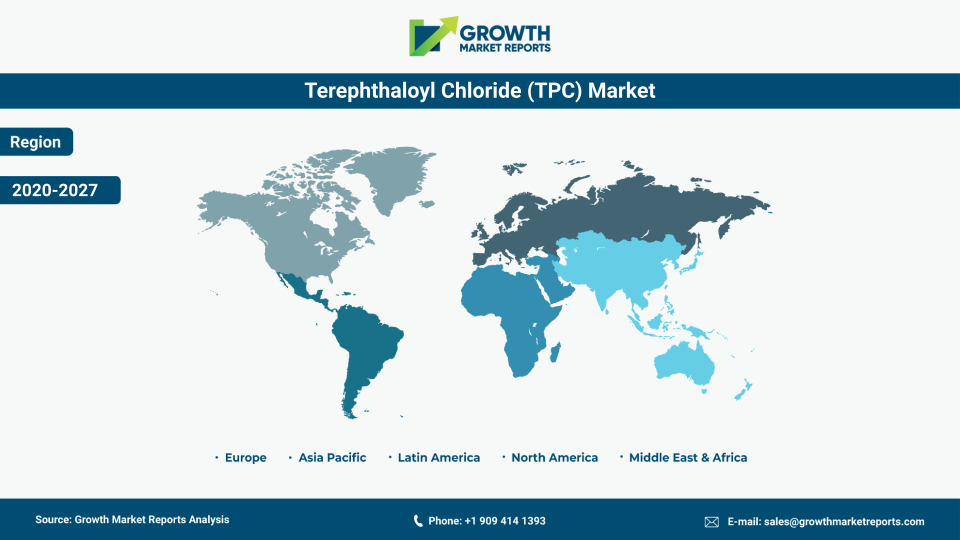
From a regional perspective, Asia Pacific remains the dominant force in the Terephthaloyl Chloride market, accounting for over 45% of global consumption in 2024. The region’s stronghold is attributed to its large-scale chemical manufacturing infrastructure, burgeoning textile industry, and the presence of leading electronics and automotive manufacturers. North America and Europe also exhibit significant market shares, driven by robust demand from the defense, aerospace, and pharmaceutical sectors. Meanwhile, emerging markets in Latin America and the Middle East & Africa are witnessing steady growth, buoyed by increasing investments in industrialization and infrastructure development.

Global Terephthaloyl Chloride (TPC) Industry Outlook

Purity Analysis

The Terephthaloyl Chloride market is segmented by purity into two major categories: above 99% and below 99%. The above 99% purity segment dominates the market, accounting for the majority of TPC consumption globally. This high-purity TPC is essential for the production of advanced polymers and specialty chemicals, where even minor impurities can significantly affect product performance and safety. Industries such as electronics, pharmaceuticals, and high-performance textiles demand stringent quality standards, driving manufacturers to invest in advanced purification technologies and quality control systems. This trend is expected to intensify as end-users continue to prioritize performance and safety in their applications.

The below 99% purity segment, while smaller in market share, caters to applications where ultra-high purity is not a critical requirement. This includes certain agrochemicals, dyes, and industrial intermediates, where cost-effectiveness often outweighs the need for maximum purity. However, the growth of this segment is comparatively slower due to the increasing emphasis on product quality and regulatory compliance across industries. As environmental and safety regulations become more stringent, many manufacturers are shifting toward higher purity grades to minimize risks associated with impurities and by-products.

Technological advancements in purification processes are playing a pivotal role in shaping the purity landscape of the TPC market. Innovations such as continuous distillation, membrane separation, and advanced filtration systems are enabling manufacturers to achieve higher purity levels with greater efficiency and lower environmental impact. These advancements not only enhance product quality but also improve operational efficiency, reducing costs and waste generation. As a result, the gap between high-purity and lower-purity TPC is expected to widen, with the former gaining an even larger share of the market in the coming years.

Market dynamics in the purity segment are also influenced by customer-specific requirements and supply chain considerations. Leading manufacturers are increasingly offering customized purity grades to cater to the unique needs of their clients, particularly in the pharmaceutical and electronics sectors. This trend toward customization is fostering closer collaboration between TPC producers and end-users, leading to the development of tailored solutions that enhance product performance and value. As the market continues to evolve, the ability to deliver consistent, high-purity TPC will remain a key differentiator for suppliers.

Report Scope

Attributes Details
Report Title Terephthaloyl Chloride (TPC) Market Research Report 2033
By Purity Above 99%, Below 99%
By Application Polymer Production, Pharmaceuticals, Dyes and Pigments, Agrochemicals, Others
By End-Use Industry Textiles, Chemicals, Pharmaceuticals, Electronics, Others
Regions Covered North America, Europe, APAC, Latin America, MEA
Base Year 2024
Historic Data 2018-2023
Forecast Period 2025-2033
Number of Pages 285
Number of Tables & Figures 392
Customization Available Yes, the report can be customized as per your need.

Application Analysis

The application landscape of the Terephthaloyl Chloride market is diverse, with polymer production emerging as the largest and most influential segment. TPC is a fundamental raw material in the synthesis of aramid fibers, which are renowned for their exceptional strength-to-weight ratio, heat resistance, and chemical stability. These fibers are extensively used in protective apparel, aerospace components, automotive parts, and industrial filtration systems. The growing adoption of aramid fibers in defense and transportation industries is driving sustained demand for TPC, with polymer production accounting for over 55% of total TPC consumption in 2024.

Pharmaceutical applications represent another significant growth area for TPC. The compound serves as a key intermediate in the synthesis of various active pharmaceutical ingredients (APIs) and specialty chemicals. The increasing prevalence of chronic illnesses, coupled with rising investments in drug development and healthcare infrastructure, is fueling demand for TPC in this sector. Pharmaceutical manufacturers require high-purity TPC to ensure the safety and efficacy of their products, prompting suppliers to focus on stringent quality control and regulatory compliance.

The dyes and pigments segment utilizes TPC as a precursor in the production of high-performance colorants and specialty pigments. These products are widely used in textiles, plastics, coatings, and inks, where they impart vibrant colors, UV resistance, and chemical stability. The expansion of the global textile industry, particularly in Asia Pacific, is a major driver for this segment. Additionally, the growing demand for eco-friendly and non-toxic dyes is encouraging manufacturers to explore innovative formulations based on TPC derivatives.

Agrochemicals constitute another important application area for TPC. The compound is used in the synthesis of herbicides, insecticides, and fungicides, which are critical for modern agricultural practices. As global food demand rises and farmers seek to enhance crop yields and resilience, the need for advanced agrochemicals is increasing. TPC-based products offer advantages such as improved efficacy, longer shelf life, and lower environmental impact, making them attractive options for agrochemical manufacturers.

End-Use Industry Analysis

The textile industry is the largest end-use sector for Terephthaloyl Chloride, primarily due to the widespread adoption of aramid fibers in protective clothing, industrial fabrics, and high-performance textiles. The demand for lightweight, durable, and flame-resistant materials in military, firefighting, and industrial applications is driving continuous innovation in textile manufacturing. TPC plays a crucial role in enabling the production of these advanced fibers, supporting the textile industry’s efforts to meet evolving safety and performance standards.

The chemicals industry is another major consumer of TPC, leveraging its reactivity and versatility to produce a wide range of specialty chemicals, resins, and intermediates. The ongoing shift toward sustainable and high-value chemical products is prompting manufacturers to explore new applications and derivatives of TPC. This trend is particularly evident in the development of eco-friendly coatings, adhesives, and composite materials, where TPC-based compounds offer superior performance and environmental benefits.

Pharmaceuticals represent a fast-growing end-use segment, driven by the increasing demand for innovative drugs and medical devices. TPC’s role as a key intermediate in API synthesis makes it indispensable for pharmaceutical manufacturers seeking to develop new therapies and formulations. The sector’s stringent regulatory requirements and focus on product safety necessitate the use of high-purity TPC, further reinforcing the importance of quality control and supply chain reliability.

The electronics industry is also emerging as a significant end-user of TPC, particularly in the production of high-performance polymers and insulating materials. As electronic devices become more compact, powerful, and thermally demanding, the need for advanced materials with superior electrical and thermal properties is growing. TPC-based polymers are increasingly being used in circuit boards, connectors, and insulating films, supporting the electronics industry’s drive for innovation and miniaturization.

Opportunities & Threats

The Terephthaloyl Chloride market presents several compelling opportunities for growth and innovation. One of the most promising avenues is the development of sustainable and eco-friendly production processes. As environmental regulations become more stringent and customers demand greener products, manufacturers are investing in research and development to minimize waste, reduce emissions, and improve energy efficiency. The adoption of circular economy principles, such as recycling of by-products and valorization of waste streams, offers significant potential for cost savings and environmental benefits. Companies that successfully integrate sustainability into their operations are likely to gain a competitive edge and access new markets.

Another key opportunity lies in the expansion of TPC applications into emerging industries such as renewable energy, advanced composites, and nanotechnology. The unique properties of TPC-based polymers make them ideal for use in wind turbine blades, solar panel components, and lightweight structural materials. As global investments in clean energy and infrastructure accelerate, the demand for high-performance materials is expected to rise, creating new growth avenues for TPC manufacturers. Strategic partnerships with research institutions and end-users can facilitate the development of innovative products tailored to these emerging applications.

Despite these opportunities, the Terephthaloyl Chloride market faces several restraining factors, with raw material price volatility being a primary concern. The production of TPC relies heavily on the availability and cost of key feedstocks such as paraxylene and chlorine. Fluctuations in crude oil prices, supply chain disruptions, and geopolitical tensions can lead to significant price swings, impacting profit margins and market stability. Additionally, the handling and transportation of TPC involve stringent safety protocols due to its corrosive and hazardous nature, adding to operational complexities and costs. Addressing these challenges requires robust risk management strategies and investment in supply chain resilience.

Regional Outlook

Asia Pacific dominates the global Terephthaloyl Chloride market, accounting for approximately USD 650 million in 2024, which represents over 45% of the total market share. The region’s leadership is underpinned by its expansive chemical manufacturing base, rapid industrialization, and robust demand from the textile, electronics, and automotive sectors. China, India, and Japan are the primary contributors, with China alone responsible for a significant portion of global TPC production and consumption. The region is also witnessing substantial investments in research and development, infrastructure, and capacity expansion, further consolidating its position in the global market.

North America is the second-largest market for TPC, with a market value of around USD 340 million in 2024. The region’s growth is driven by strong demand from the defense, aerospace, and pharmaceutical industries, which require high-performance materials for critical applications. The United States is the leading consumer within the region, benefiting from advanced manufacturing capabilities, established supply chains, and a focus on innovation. The North American TPC market is projected to grow at a CAGR of 5.2% through 2033, supported by ongoing investments in advanced materials and sustainable manufacturing practices.

Europe holds a market share of approximately USD 250 million in 2024, with Germany, France, and the United Kingdom being the key markets. The region’s emphasis on sustainability, regulatory compliance, and high-value manufacturing is fostering demand for high-purity TPC in pharmaceuticals, electronics, and specialty chemicals. Latin America and the Middle East & Africa, though smaller in size, are experiencing steady growth, driven by industrialization, infrastructure development, and increasing adoption of advanced materials. Collectively, these regions accounted for less than USD 190 million in 2024, but are expected to register above-average growth rates as local industries expand and modernize.

Terephthaloyl Chloride (TPC) Market Statistics

Competitor Outlook

The global Terephthaloyl Chloride market is characterized by a highly competitive and consolidated landscape, with a handful of leading players dominating the market. These companies possess extensive manufacturing capabilities, robust distribution networks, and significant investments in research and development. Intense competition is driving continuous innovation in production processes, product quality, and sustainability practices. Market leaders are focusing on strategic collaborations, capacity expansions, and vertical integration to strengthen their market position and cater to the evolving needs of end-users.

Innovation and differentiation are key strategies employed by major TPC manufacturers to maintain their competitive edge. Companies are investing in advanced purification technologies, digital process optimization, and green chemistry initiatives to enhance product quality, reduce environmental impact, and lower operational costs. The ability to offer customized solutions tailored to specific customer requirements is becoming increasingly important, particularly in high-growth sectors such as pharmaceuticals, electronics, and advanced composites. Furthermore, partnerships with research institutions and technology providers are enabling companies to accelerate product development and commercialization.

The competitive landscape is also shaped by regulatory compliance and sustainability considerations. Leading players are proactively addressing environmental, health, and safety regulations by adopting best practices in waste management, emissions control, and product stewardship. Compliance with international standards and certifications is essential for accessing global markets and building long-term relationships with customers. As sustainability becomes a key differentiator, companies that demonstrate a strong commitment to environmental responsibility are likely to gain a competitive advantage.

Major players in the global Terephthaloyl Chloride market include Mitsubishi Gas Chemical Company, Ltd., DuPont de Nemours, Inc., Huntsman Corporation, Teijin Limited, and Toray Industries, Inc.. Mitsubishi Gas Chemical is renowned for its advanced manufacturing processes and strong presence in the Asia Pacific region. DuPont leverages its extensive expertise in specialty chemicals and advanced materials to serve diverse end-markets. Huntsman Corporation is a key player in the North American market, focusing on innovation and sustainability. Teijin Limited and Toray Industries are global leaders in high-performance fibers and polymers, with a strong focus on research and development.

These companies are continuously investing in capacity expansions, strategic acquisitions, and technological advancements to enhance their product portfolios and global reach. Their commitment to quality, innovation, and sustainability positions them as preferred partners for customers seeking reliable and high-performance TPC solutions. As the market evolves, collaboration and agility will be critical for maintaining leadership and capitalizing on emerging opportunities in the Terephthaloyl Chloride market.

Key Players

  • DuPont
  • Mitsubishi Gas Chemical Company
  • Huntsman Corporation
  • Cangzhou Dahua Group Co., Ltd.
  • Yantai Yuxiang Fine Chemicals Co., Ltd.
  • Shandong Kaisheng New Materials Co., Ltd.
  • Haihang Industry Co., Ltd.
  • Tokyo Chemical Industry Co., Ltd. (TCI)
  • Santa Cruz Biotechnology, Inc.
  • Merck KGaA
  • Sigma-Aldrich (now part of Merck Group)
  • Alfa Aesar (a Johnson Matthey Company)
  • Jiangsu Huanxin High-tech Materials Co., Ltd.
  • Jiangsu Hengxiang Chemical Co., Ltd.
  • Jiangsu Yabang Dyestuff Co., Ltd.
  • Changzhou Kefeng Chemical Co., Ltd.
  • Wuxi Honghui New Materials Technology Co., Ltd.
  • Jiangsu Jiujiujiu Technology Co., Ltd.
  • Thermo Fisher Scientific
  • BASF SE
Terephthaloyl Chloride (TPC) Market Overview

Segments

The Terephthaloyl Chloride (TPC) market has been segmented on the basis of

Purity

  • Above 99%
  • Below 99%

Application

  • Polymer Production
  • Pharmaceuticals
  • Dyes and Pigments
  • Agrochemicals
  • Others

End-Use Industry

  • Textiles
  • Chemicals
  • Pharmaceuticals
  • Electronics
  • Others

Competitive Landscape

  • The prominent manufacturers operating in the Terephthaloyl Chloride (TPC) Market include DuPont, Teijin, Transpex, Changzhou Kefeng, Qingdao Benzo(QDBC), Shandong Kaisheng New Materials, Yantai Yuxiang. The report describes Capacity (K Kgs), production, Revenue (USD Million), price, products offered, recent developments, gross margin, and gross profit.

  • In Jan 2019, Teijin Limited announced that it has agreed to wholly acquire Benet Automotive s.r.o. (Benet), a leading automotive composite and component supplier in the Czech Republic, from Jet Investment. Terms of the acquisition are not being disclosed

  • DowDuPont (NYSE:DWDP) announced the successful completion of the merger of equals between The Dow Chemical Company (“Dow”) and E.I. du Pont de Nemours & Company (“DuPont”) in September 2017. The combined entity is operating as a holding company under the name “DowDuPont” with three divisions – Agriculture, Materials Science, and Specialty Products.
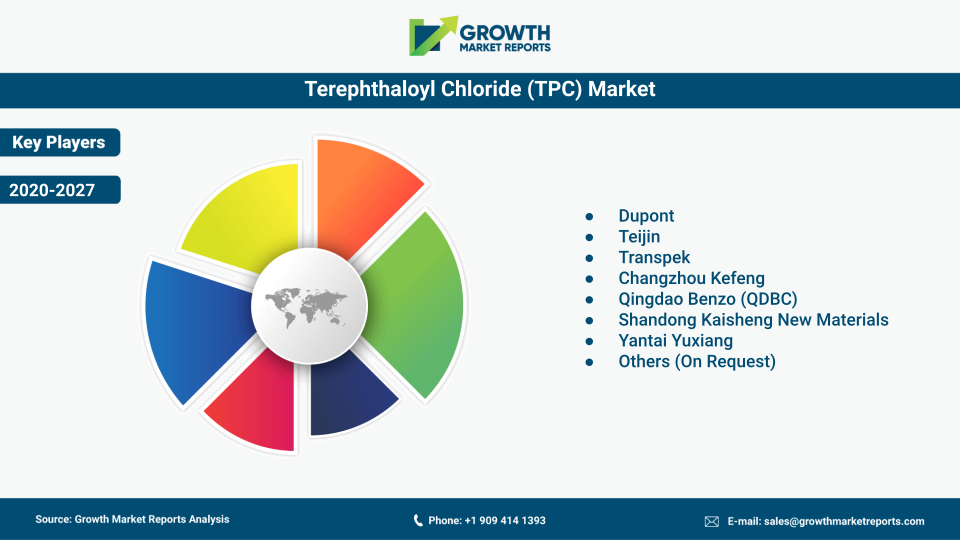

Terephthaloyl Chloride (TPC) Market Key Players

Frequently Asked Questions

Major Manufactures include, Dupont, Teijin, Transpek, Changzhou Kefeng etc.

Food processing companies, water scavenge companies, performance polymers end use companies are the key end-user that are driving the Terephthaloyl Chloride (TPC) market.

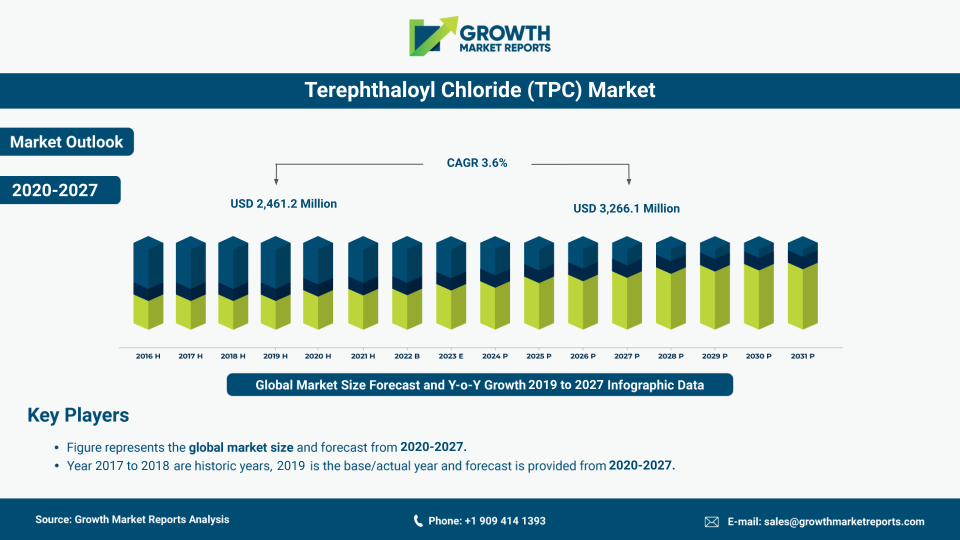
The base year considered for the global Terephthaloyl Chloride (TPC) market report is 2019. The complete analysis period is 2017 to 2027, wherein, 2017 & 2018 are the historic years and the forecast is provided from 2020 to 2027.

The market is expected to witness a decrease of over 2-3% between 2019 and 2020 owing to the adverse impact of COVID-19 pandemic on the Terephthaloyl Chloride (TPC) market.

The market is primarily driven by the increase in demand for Kevlar, a material formed by combining terephthaloyl chloride and para-phenylenediamine. Growing automobile industry & its usage in the sector is generating further demand for Terephthaloyl Chloride (TPC) in the market.

Factors such as competitive strength and market positioning are key areas considered while selecting top companies to be profiled.

In addition to market size (in USD Million) & Volume (Tons) Company Market Share (in % for base year 2019), other data such Macro-economic factors, COVID-19 Impact on the value chain is available in final report.

According to this Growth Market Reports report, the market from Terephthaloyl Chloride (TPC) is likely to register a CAGR of 3.8% during forecast period 2020-2027, with an anticipated valuation of USD 3,266.1 million by the end of the 2027.

Yes, the report provides supply chain analysis along with a list of raw material suppliers, manufacturers, distributors, and customers.

Additional company profiles can be provided on request.

Table Of Content

Chapter 1 Executive Summary
Chapter 2 Assumptions and Acronyms Used
Chapter 3 Research Methodology
Chapter 4 Terephthaloyl Chloride (TPC) Market Overview
   4.1 Introduction
      4.1.1 Market Taxonomy
      4.1.2 Market Definition
      4.1.3 Macro-Economic Factors Impacting the Market Growth
   4.2 Terephthaloyl Chloride (TPC) Market Dynamics
      4.2.1 Market Drivers
      4.2.2 Market Restraints
      4.2.3 Market Opportunity
   4.3 Terephthaloyl Chloride (TPC) Market - Supply Chain Analysis
      4.3.1 List of Key Suppliers
      4.3.2 List of Key Distributors
      4.3.3 List of Key Consumers
   4.4 Key Forces Shaping the Terephthaloyl Chloride (TPC) Market
      4.4.1 Bargaining Power of Suppliers
      4.4.2 Bargaining Power of Buyers
      4.4.3 Threat of Substitution
      4.4.4 Threat of New Entrants
      4.4.5 Competitive Rivalry
   4.5 Global Terephthaloyl Chloride (TPC) Market Size & Forecast, 2023-2032
      4.5.1 Terephthaloyl Chloride (TPC) Market Size and Y-o-Y Growth
      4.5.2 Terephthaloyl Chloride (TPC) Market Absolute $ Opportunity

Chapter 5 Global Terephthaloyl Chloride (TPC) Market Analysis and Forecast By Purity
   5.1 Introduction
      5.1.1 Key Market Trends & Growth Opportunities By Purity
      5.1.2 Basis Point Share (BPS) Analysis By Purity
      5.1.3 Absolute $ Opportunity Assessment By Purity
   5.2 Terephthaloyl Chloride (TPC) Market Size Forecast By Purity
      5.2.1 Above 99%
      5.2.2 Below 99%
   5.3 Market Attractiveness Analysis By Purity

Chapter 6 Global Terephthaloyl Chloride (TPC) Market Analysis and Forecast By Application
   6.1 Introduction
      6.1.1 Key Market Trends & Growth Opportunities By Application
      6.1.2 Basis Point Share (BPS) Analysis By Application
      6.1.3 Absolute $ Opportunity Assessment By Application
   6.2 Terephthaloyl Chloride (TPC) Market Size Forecast By Application
      6.2.1 Polymer Production
      6.2.2 Pharmaceuticals
      6.2.3 Dyes and Pigments
      6.2.4 Agrochemicals
      6.2.5 Others
   6.3 Market Attractiveness Analysis By Application

Chapter 7 Global Terephthaloyl Chloride (TPC) Market Analysis and Forecast By End-Use Industry
   7.1 Introduction
      7.1.1 Key Market Trends & Growth Opportunities By End-Use Industry
      7.1.2 Basis Point Share (BPS) Analysis By End-Use Industry
      7.1.3 Absolute $ Opportunity Assessment By End-Use Industry
   7.2 Terephthaloyl Chloride (TPC) Market Size Forecast By End-Use Industry
      7.2.1 Textiles
      7.2.2 Chemicals
      7.2.3 Pharmaceuticals
      7.2.4 Electronics
      7.2.5 Others
   7.3 Market Attractiveness Analysis By End-Use Industry

Chapter 8 Global Terephthaloyl Chloride (TPC) Market Analysis and Forecast by Region
   8.1 Introduction
      8.1.1 Key Market Trends & Growth Opportunities By Region
      8.1.2 Basis Point Share (BPS) Analysis By Region
      8.1.3 Absolute $ Opportunity Assessment By Region
   8.2 Terephthaloyl Chloride (TPC) Market Size Forecast By Region
      8.2.1 North America
      8.2.2 Europe
      8.2.3 Asia Pacific
      8.2.4 Latin America
      8.2.5 Middle East & Africa (MEA)
   8.3 Market Attractiveness Analysis By Region

Chapter 9 Coronavirus Disease (COVID-19) Impact 
   9.1 Introduction 
   9.2 Current & Future Impact Analysis 
   9.3 Economic Impact Analysis 
   9.4 Government Policies 
   9.5 Investment Scenario

Chapter 10 North America Terephthaloyl Chloride (TPC) Analysis and Forecast
   10.1 Introduction
   10.2 North America Terephthaloyl Chloride (TPC) Market Size Forecast by Country
      10.2.1 U.S.
      10.2.2 Canada
   10.3 Basis Point Share (BPS) Analysis by Country
   10.4 Absolute $ Opportunity Assessment by Country
   10.5 Market Attractiveness Analysis by Country
   10.6 North America Terephthaloyl Chloride (TPC) Market Size Forecast By Purity
      10.6.1 Above 99%
      10.6.2 Below 99%
   10.7 Basis Point Share (BPS) Analysis By Purity 
   10.8 Absolute $ Opportunity Assessment By Purity 
   10.9 Market Attractiveness Analysis By Purity
   10.10 North America Terephthaloyl Chloride (TPC) Market Size Forecast By Application
      10.10.1 Polymer Production
      10.10.2 Pharmaceuticals
      10.10.3 Dyes and Pigments
      10.10.4 Agrochemicals
      10.10.5 Others
   10.11 Basis Point Share (BPS) Analysis By Application 
   10.12 Absolute $ Opportunity Assessment By Application 
   10.13 Market Attractiveness Analysis By Application
   10.14 North America Terephthaloyl Chloride (TPC) Market Size Forecast By End-Use Industry
      10.14.1 Textiles
      10.14.2 Chemicals
      10.14.3 Pharmaceuticals
      10.14.4 Electronics
      10.14.5 Others
   10.15 Basis Point Share (BPS) Analysis By End-Use Industry 
   10.16 Absolute $ Opportunity Assessment By End-Use Industry 
   10.17 Market Attractiveness Analysis By End-Use Industry

Chapter 11 Europe Terephthaloyl Chloride (TPC) Analysis and Forecast
   11.1 Introduction
   11.2 Europe Terephthaloyl Chloride (TPC) Market Size Forecast by Country
      11.2.1 Germany
      11.2.2 France
      11.2.3 Italy
      11.2.4 U.K.
      11.2.5 Spain
      11.2.6 Russia
      11.2.7 Rest of Europe
   11.3 Basis Point Share (BPS) Analysis by Country
   11.4 Absolute $ Opportunity Assessment by Country
   11.5 Market Attractiveness Analysis by Country
   11.6 Europe Terephthaloyl Chloride (TPC) Market Size Forecast By Purity
      11.6.1 Above 99%
      11.6.2 Below 99%
   11.7 Basis Point Share (BPS) Analysis By Purity 
   11.8 Absolute $ Opportunity Assessment By Purity 
   11.9 Market Attractiveness Analysis By Purity
   11.10 Europe Terephthaloyl Chloride (TPC) Market Size Forecast By Application
      11.10.1 Polymer Production
      11.10.2 Pharmaceuticals
      11.10.3 Dyes and Pigments
      11.10.4 Agrochemicals
      11.10.5 Others
   11.11 Basis Point Share (BPS) Analysis By Application 
   11.12 Absolute $ Opportunity Assessment By Application 
   11.13 Market Attractiveness Analysis By Application
   11.14 Europe Terephthaloyl Chloride (TPC) Market Size Forecast By End-Use Industry
      11.14.1 Textiles
      11.14.2 Chemicals
      11.14.3 Pharmaceuticals
      11.14.4 Electronics
      11.14.5 Others
   11.15 Basis Point Share (BPS) Analysis By End-Use Industry 
   11.16 Absolute $ Opportunity Assessment By End-Use Industry 
   11.17 Market Attractiveness Analysis By End-Use Industry

Chapter 12 Asia Pacific Terephthaloyl Chloride (TPC) Analysis and Forecast
   12.1 Introduction
   12.2 Asia Pacific Terephthaloyl Chloride (TPC) Market Size Forecast by Country
      12.2.1 China
      12.2.2 Japan
      12.2.3 South Korea
      12.2.4 India
      12.2.5 Australia
      12.2.6 South East Asia (SEA)
      12.2.7 Rest of Asia Pacific (APAC)
   12.3 Basis Point Share (BPS) Analysis by Country
   12.4 Absolute $ Opportunity Assessment by Country
   12.5 Market Attractiveness Analysis by Country
   12.6 Asia Pacific Terephthaloyl Chloride (TPC) Market Size Forecast By Purity
      12.6.1 Above 99%
      12.6.2 Below 99%
   12.7 Basis Point Share (BPS) Analysis By Purity 
   12.8 Absolute $ Opportunity Assessment By Purity 
   12.9 Market Attractiveness Analysis By Purity
   12.10 Asia Pacific Terephthaloyl Chloride (TPC) Market Size Forecast By Application
      12.10.1 Polymer Production
      12.10.2 Pharmaceuticals
      12.10.3 Dyes and Pigments
      12.10.4 Agrochemicals
      12.10.5 Others
   12.11 Basis Point Share (BPS) Analysis By Application 
   12.12 Absolute $ Opportunity Assessment By Application 
   12.13 Market Attractiveness Analysis By Application
   12.14 Asia Pacific Terephthaloyl Chloride (TPC) Market Size Forecast By End-Use Industry
      12.14.1 Textiles
      12.14.2 Chemicals
      12.14.3 Pharmaceuticals
      12.14.4 Electronics
      12.14.5 Others
   12.15 Basis Point Share (BPS) Analysis By End-Use Industry 
   12.16 Absolute $ Opportunity Assessment By End-Use Industry 
   12.17 Market Attractiveness Analysis By End-Use Industry

Chapter 13 Latin America Terephthaloyl Chloride (TPC) Analysis and Forecast
   13.1 Introduction
   13.2 Latin America Terephthaloyl Chloride (TPC) Market Size Forecast by Country
      13.2.1 Brazil
      13.2.2 Mexico
      13.2.3 Rest of Latin America (LATAM)
   13.3 Basis Point Share (BPS) Analysis by Country
   13.4 Absolute $ Opportunity Assessment by Country
   13.5 Market Attractiveness Analysis by Country
   13.6 Latin America Terephthaloyl Chloride (TPC) Market Size Forecast By Purity
      13.6.1 Above 99%
      13.6.2 Below 99%
   13.7 Basis Point Share (BPS) Analysis By Purity 
   13.8 Absolute $ Opportunity Assessment By Purity 
   13.9 Market Attractiveness Analysis By Purity
   13.10 Latin America Terephthaloyl Chloride (TPC) Market Size Forecast By Application
      13.10.1 Polymer Production
      13.10.2 Pharmaceuticals
      13.10.3 Dyes and Pigments
      13.10.4 Agrochemicals
      13.10.5 Others
   13.11 Basis Point Share (BPS) Analysis By Application 
   13.12 Absolute $ Opportunity Assessment By Application 
   13.13 Market Attractiveness Analysis By Application
   13.14 Latin America Terephthaloyl Chloride (TPC) Market Size Forecast By End-Use Industry
      13.14.1 Textiles
      13.14.2 Chemicals
      13.14.3 Pharmaceuticals
      13.14.4 Electronics
      13.14.5 Others
   13.15 Basis Point Share (BPS) Analysis By End-Use Industry 
   13.16 Absolute $ Opportunity Assessment By End-Use Industry 
   13.17 Market Attractiveness Analysis By End-Use Industry

Chapter 14 Middle East & Africa (MEA) Terephthaloyl Chloride (TPC) Analysis and Forecast
   14.1 Introduction
   14.2 Middle East & Africa (MEA) Terephthaloyl Chloride (TPC) Market Size Forecast by Country
      14.2.1 Saudi Arabia
      14.2.2 South Africa
      14.2.3 UAE
      14.2.4 Rest of Middle East & Africa (MEA)
   14.3 Basis Point Share (BPS) Analysis by Country
   14.4 Absolute $ Opportunity Assessment by Country
   14.5 Market Attractiveness Analysis by Country
   14.6 Middle East & Africa (MEA) Terephthaloyl Chloride (TPC) Market Size Forecast By Purity
      14.6.1 Above 99%
      14.6.2 Below 99%
   14.7 Basis Point Share (BPS) Analysis By Purity 
   14.8 Absolute $ Opportunity Assessment By Purity 
   14.9 Market Attractiveness Analysis By Purity
   14.10 Middle East & Africa (MEA) Terephthaloyl Chloride (TPC) Market Size Forecast By Application
      14.10.1 Polymer Production
      14.10.2 Pharmaceuticals
      14.10.3 Dyes and Pigments
      14.10.4 Agrochemicals
      14.10.5 Others
   14.11 Basis Point Share (BPS) Analysis By Application 
   14.12 Absolute $ Opportunity Assessment By Application 
   14.13 Market Attractiveness Analysis By Application
   14.14 Middle East & Africa (MEA) Terephthaloyl Chloride (TPC) Market Size Forecast By End-Use Industry
      14.14.1 Textiles
      14.14.2 Chemicals
      14.14.3 Pharmaceuticals
      14.14.4 Electronics
      14.14.5 Others
   14.15 Basis Point Share (BPS) Analysis By End-Use Industry 
   14.16 Absolute $ Opportunity Assessment By End-Use Industry 
   14.17 Market Attractiveness Analysis By End-Use Industry

Chapter 15 Competition Landscape 
   15.1 Terephthaloyl Chloride (TPC) Market: Competitive Dashboard
   15.2 Global Terephthaloyl Chloride (TPC) Market: Market Share Analysis, 2023
   15.3 Company Profiles (Details – Overview, Financials, Developments, Strategy) 
      15.3.1 DuPont
Mitsubishi Gas Chemical Company
Huntsman Corporation
Cangzhou Dahua Group Co., Ltd.
Yantai Yuxiang Fine Chemicals Co., Ltd.
Shandong Kaisheng New Materials Co., Ltd.
Haihang Industry Co., Ltd.
Tokyo Chemical Industry Co., Ltd. (TCI)
Santa Cruz Biotechnology, Inc.
Merck KGaA
Sigma-Aldrich (now part of Merck Group)
Alfa Aesar (a Johnson Matthey Company)
Jiangsu Huanxin High-tech Materials Co., Ltd.
Jiangsu Hengxiang Chemical Co., Ltd.
Jiangsu Yabang Dyestuff Co., Ltd.
Changzhou Kefeng Chemical Co., Ltd.
Wuxi Honghui New Materials Technology Co., Ltd.
Jiangsu Jiujiujiu Technology Co., Ltd.
Thermo Fisher Scientific
BASF SE

Methodology

Our Clients

The John Holland Group
Nestle SA
FedEx Logistics
Deloitte
Microsoft
Dassault Aviation
sinopec
General Mills