Segments - by Product Type (Rod Seals, Piston Seals, Wiper Seals, Rotary Seals, Others), by Material (Nitrile Rubber, Polyurethane, PTFE, Silicone, Others), by Application (Cylinders, Valves, Actuators, Compressors, Others), by End-Use Industry (Automotive, Aerospace, Industrial Machinery, Oil & Gas, Chemical, Others), by Distribution Channel (Direct Sales, Distributors, Online Retail)
According to our latest research, the global pneumatic seal market size reached USD 4.7 billion in 2024, reflecting robust demand across key industrial sectors. The market is expected to witness a steady compound annual growth rate (CAGR) of 5.2% between 2025 and 2033, propelling the market size to approximately USD 7.3 billion by 2033. This sustained expansion is primarily driven by increased automation in manufacturing, stringent safety standards, and the growing adoption of pneumatic systems in various end-use industries. As per our latest research, technological advancements and a rising focus on energy-efficient solutions are further accelerating market growth, making pneumatic seals an indispensable component in modern industrial applications.
One of the primary growth factors for the pneumatic seal market is the rapid industrialization and automation taking place globally. As industries strive to enhance productivity and reduce downtime, the demand for reliable sealing solutions has intensified. Pneumatic seals, known for their durability and efficiency in preventing leakages in pneumatic systems, are increasingly being integrated into automated machinery, robotics, and process equipment. The automotive and manufacturing sectors, in particular, are witnessing heightened adoption of pneumatic seals to ensure optimal performance and longevity of their equipment. Moreover, the shift towards Industry 4.0 and smart manufacturing is further catalyzing the deployment of advanced pneumatic sealing technologies, thereby contributing to the market's upward trajectory.
Another significant driver is the growing emphasis on energy efficiency and environmental sustainability. Pneumatic seals play a crucial role in minimizing air leakage, which directly translates into lower energy consumption and reduced operational costs. With regulatory authorities worldwide imposing strict guidelines on energy usage and emissions, industries are compelled to adopt high-performance sealing solutions. The development of innovative materials such as PTFE and advanced polyurethane has enabled the production of seals that offer superior chemical resistance, extended service life, and compatibility with a wide range of operating conditions. These advancements are not only enhancing the functional attributes of pneumatic seals but also expanding their applicability across diverse sectors, including oil & gas, pharmaceuticals, and food processing.
Furthermore, the increasing focus on safety and reliability in critical applications is augmenting the demand for pneumatic seals. In sectors like aerospace, oil & gas, and chemical processing, any failure in sealing systems can lead to catastrophic consequences, including hazardous leaks and equipment breakdowns. As a result, there is a growing preference for high-quality, precision-engineered pneumatic seals that can withstand extreme pressures, temperatures, and corrosive environments. The ongoing investments in research and development, coupled with stringent quality standards, are fostering the introduction of innovative sealing solutions tailored to meet the evolving needs of these high-risk industries. This trend is expected to sustain the market's growth momentum over the forecast period.
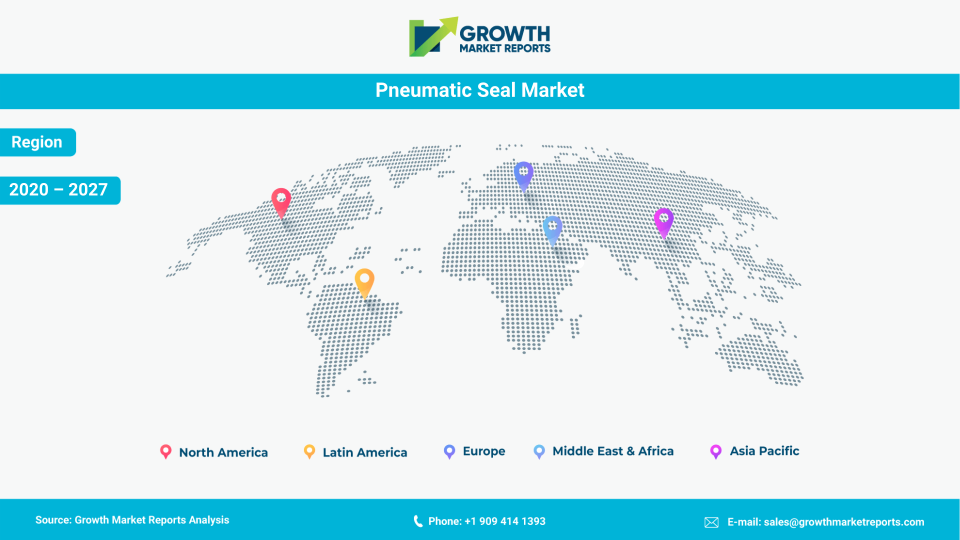
From a regional perspective, the Asia Pacific region is emerging as the dominant market for pneumatic seals, accounting for the largest share in 2024. This growth is attributed to the rapid expansion of manufacturing hubs, particularly in China, India, and Southeast Asian countries. North America and Europe follow closely, driven by technological advancements and the presence of established end-use industries. The Middle East & Africa and Latin America are also witnessing steady growth, fueled by investments in infrastructure and industrial development. The regional dynamics are influenced by factors such as regulatory frameworks, economic conditions, and the pace of industrialization, which collectively shape the demand for pneumatic sealing solutions across different geographies.
The product type segment of the pneumatic seal market encompasses rod seals, piston seals, wiper seals, rotary seals, and other specialized sealing solutions. Among these, rod seals have emerged as a critical component, primarily due to their role in preventing fluid leakage from the cylinder and ensuring smooth operation of pneumatic systems. Rod seals are extensively used in industries such as automotive, manufacturing, and construction, where the reliability and efficiency of pneumatic cylinders are paramount. Their ability to withstand high pressures and dynamic movements makes them indispensable in applications requiring frequent actuation and precise control.
Piston seals, another vital product type, are designed to prevent leakage between the piston and the cylinder bore, thereby maintaining the pressure required for efficient operation. These seals are widely adopted in applications such as hydraulic and pneumatic cylinders, actuators, and compressors. The growing demand for automation and the increasing use of pneumatic systems in industrial machinery are driving the adoption of piston seals. Additionally, advancements in material science have led to the development of piston seals with enhanced wear resistance, low friction, and improved sealing performance, further bolstering their market share.
Wiper seals, also known as scraper seals, play a crucial role in protecting pneumatic systems from contaminants such as dust, dirt, and moisture. By preventing the ingress of foreign particles, wiper seals help extend the lifespan of pneumatic components and reduce maintenance requirements. These seals are particularly important in harsh operating environments, such as construction sites and mining operations, where equipment is exposed to abrasive materials. The increasing focus on equipment reliability and reduced downtime is driving the demand for high-quality wiper seals across various industries.
Rotary seals are specifically designed for applications involving rotational motion, such as rotary actuators and motors. These seals prevent the leakage of fluids and gases while accommodating the rotational movement of shafts and other components. The growing adoption of rotary actuators in industrial automation, robotics, and aerospace applications is fueling the demand for rotary seals. Manufacturers are continually innovating to develop rotary seals with superior performance characteristics, including high-speed capability, low torque, and resistance to extreme temperatures and chemicals. This ongoing innovation is expected to drive the growth of the rotary seals segment in the coming years.
Other product types in the pneumatic seal market include specialized seals tailored for unique applications, such as custom-shaped seals and multi-component sealing systems. These products cater to specific industry requirements and are often developed in collaboration with end-users to address complex sealing challenges. The increasing demand for customized solutions, driven by the need for enhanced performance and reliability, is contributing to the growth of this segment. As industries continue to evolve and adopt new technologies, the demand for innovative and specialized pneumatic sealing solutions is expected to rise, further diversifying the product portfolio available in the market.
| Attributes | Details |
| Report Title | Pneumatic Seal Market Research Report 2033 |
| By Product Type | Rod Seals, Piston Seals, Wiper Seals, Rotary Seals, Others |
| By Material | Nitrile Rubber, Polyurethane, PTFE, Silicone, Others |
| By Application | Cylinders, Valves, Actuators, Compressors, Others |
| By End-Use Industry | Automotive, Aerospace, Industrial Machinery, Oil & Gas, Chemical, Others |
| By Distribution Channel | Direct Sales, Distributors, Online Retail |
| Regions Covered | North America, Europe, APAC, Latin America, MEA |
| Base Year | 2024 |
| Historic Data | 2018-2023 |
| Forecast Period | 2025-2033 |
| Number of Pages | 272 |
| Number of Tables & Figures | 277 |
| Customization Available | Yes, the report can be customized as per your need. |
The material segment of the pneumatic seal market is characterized by a diverse range of options, including nitrile rubber, polyurethane, PTFE, silicone, and other advanced materials. Nitrile rubber, also known as NBR, remains one of the most widely used materials for pneumatic seals due to its excellent resistance to oils, fuels, and other chemicals. Its cost-effectiveness and versatility make it a preferred choice for a broad spectrum of applications, particularly in the automotive and industrial machinery sectors. However, nitrile rubber's performance can be limited under extreme temperatures and aggressive chemical environments, prompting the need for alternative materials in such cases.
Polyurethane is gaining significant traction as a material for pneumatic seals, owing to its superior abrasion resistance, high tensile strength, and excellent elasticity. Polyurethane seals are particularly well-suited for applications involving high-pressure and high-speed operations, such as hydraulic and pneumatic cylinders, actuators, and valves. The material's ability to maintain its mechanical properties over a wide temperature range and its resistance to wear and tear make it ideal for demanding industrial environments. As industries increasingly prioritize durability and long service life, the adoption of polyurethane seals is expected to grow steadily.
PTFE (polytetrafluoroethylene), commonly known by the brand name Teflon, is another prominent material in the pneumatic seal market. PTFE seals are renowned for their exceptional chemical resistance, low friction, and high temperature tolerance. These properties make PTFE seals suitable for applications in the chemical, pharmaceutical, and food processing industries, where exposure to aggressive chemicals and extreme operating conditions is common. The growing emphasis on safety, hygiene, and regulatory compliance in these sectors is driving the demand for PTFE-based sealing solutions. Furthermore, ongoing research and development efforts are focused on enhancing the performance characteristics of PTFE seals, such as improving their wear resistance and dimensional stability.
Silicone seals are valued for their flexibility, resilience, and ability to maintain sealing integrity over a broad temperature range. Silicone is particularly suitable for applications where thermal stability and resistance to ozone, UV radiation, and weathering are essential. Industries such as aerospace, medical devices, and electronics are increasingly adopting silicone seals to ensure reliable performance in challenging environments. The material's biocompatibility and non-reactive nature also make it a preferred choice for applications requiring stringent hygiene and safety standards. As technological advancements continue to drive the development of new silicone formulations, the market for silicone-based pneumatic seals is expected to expand further.
Other materials used in pneumatic seals include fluorocarbon elastomers, ethylene propylene diene monomer (EPDM), and thermoplastic elastomers, each offering unique properties tailored to specific application requirements. The choice of material is influenced by factors such as operating temperature, chemical compatibility, pressure ratings, and environmental conditions. As industries continue to demand higher performance and reliability from their sealing solutions, manufacturers are investing in the development of new materials and composite structures that combine the best attributes of different materials. This ongoing innovation is expected to drive the evolution of the material segment in the pneumatic seal market, offering end-users a wider array of options to meet their specific needs.
The application segment of the pneumatic seal market is broad, encompassing cylinders, valves, actuators, compressors, and other specialized uses. Pneumatic cylinders represent one of the largest application areas, as they are integral to the operation of various industrial machinery and automation systems. Pneumatic seals are essential in these cylinders to maintain pressure, prevent leakage, and ensure smooth and efficient movement. The increasing adoption of automation in manufacturing and the growing demand for precision control in industrial processes are driving the growth of pneumatic seals in cylinder applications. Additionally, advancements in cylinder design and the integration of smart technologies are further enhancing the performance and reliability of pneumatic sealing solutions.
Valves are another critical application area for pneumatic seals, as they play a vital role in controlling the flow of air and other gases in pneumatic systems. The reliability and efficiency of valves are heavily dependent on the quality of the sealing solutions used. Pneumatic seals help prevent leakage, reduce energy losses, and ensure consistent performance in valve operations. The expanding use of pneumatic valves in sectors such as oil & gas, chemical processing, and water treatment is fueling the demand for high-performance sealing solutions. Furthermore, the development of innovative valve designs and the increasing adoption of automated valve systems are creating new opportunities for pneumatic seal manufacturers.
Actuators, both linear and rotary, rely on pneumatic seals to convert compressed air into mechanical motion while maintaining system integrity. The growing use of pneumatic actuators in robotics, automotive assembly lines, and material handling equipment is driving the demand for reliable sealing solutions. Pneumatic seals in actuators must withstand dynamic movements, high pressures, and varying environmental conditions, necessitating the use of advanced materials and precision engineering. As industries continue to automate their operations and seek higher levels of efficiency and safety, the adoption of pneumatic seals in actuator applications is expected to rise steadily.
Compressors are yet another significant application area for pneumatic seals, particularly in industries where compressed air is used as a primary energy source. Pneumatic seals in compressors help maintain pressure, prevent air leakage, and ensure the efficient operation of the equipment. The increasing demand for energy-efficient compressors and the growing emphasis on reducing operational costs are driving the adoption of high-quality sealing solutions. Additionally, the development of oil-free and low-maintenance compressors is creating new opportunities for pneumatic seal manufacturers to offer specialized sealing products tailored to these advanced systems.
Other applications of pneumatic seals include specialized machinery, laboratory equipment, medical devices, and packaging systems, where precise control and reliability are paramount. The versatility of pneumatic seals and their ability to perform under diverse operating conditions make them suitable for a wide range of applications across different industries. As technological advancements continue to drive innovation in equipment design and performance, the demand for customized and high-performance pneumatic sealing solutions is expected to grow, further expanding the application scope of the market.
The end-use industry segment of the pneumatic seal market is diverse, including automotive, aerospace, industrial machinery, oil & gas, chemical, and other sectors. The automotive industry remains one of the largest consumers of pneumatic seals, driven by the increasing adoption of automation in manufacturing processes and the demand for reliable and efficient sealing solutions in various automotive systems. Pneumatic seals are used in a wide range of automotive applications, including braking systems, suspension components, and assembly line equipment. The ongoing shift towards electric vehicles and the integration of advanced manufacturing technologies are further driving the demand for high-performance pneumatic seals in the automotive sector.
The aerospace industry is another significant end-user of pneumatic seals, owing to the critical importance of safety, reliability, and performance in aerospace applications. Pneumatic seals are used in aircraft landing gear, control systems, and hydraulic actuators, where they must withstand extreme pressures, temperatures, and environmental conditions. The increasing demand for lightweight and fuel-efficient aircraft, coupled with stringent safety regulations, is driving the adoption of advanced sealing solutions in the aerospace sector. Manufacturers are investing in the development of specialized materials and designs to meet the unique requirements of aerospace applications, further expanding the market for pneumatic seals in this industry.
Industrial machinery represents a major end-use segment for pneumatic seals, as these components are essential for the efficient and reliable operation of a wide range of equipment, including manufacturing machinery, material handling systems, and packaging equipment. The growing trend towards automation and the increasing focus on operational efficiency are driving the demand for high-quality sealing solutions in the industrial machinery sector. Pneumatic seals help minimize downtime, reduce maintenance costs, and enhance the overall performance of industrial equipment, making them a critical component in modern manufacturing operations.
The oil & gas and chemical industries also represent significant end-use markets for pneumatic seals, driven by the need for reliable sealing solutions in harsh and demanding environments. Pneumatic seals are used in valves, compressors, actuators, and other critical equipment, where they must withstand exposure to aggressive chemicals, high pressures, and extreme temperatures. The increasing investment in oil & gas exploration and production, as well as the expansion of chemical processing facilities, is fueling the demand for specialized sealing solutions in these industries. Manufacturers are focusing on developing seals with enhanced chemical resistance, durability, and performance to meet the stringent requirements of these sectors.
Other end-use industries for pneumatic seals include pharmaceuticals, food and beverage, electronics, and medical devices, where the need for precision, reliability, and compliance with regulatory standards is paramount. The versatility of pneumatic seals and their ability to perform under a wide range of operating conditions make them suitable for a diverse array of applications across different industries. As technological advancements and industry-specific requirements continue to evolve, the demand for customized and high-performance pneumatic sealing solutions is expected to increase, further driving growth in the end-use industry segment.
The distribution channel segment of the pneumatic seal market is comprised of direct sales, distributors, and online retail. Direct sales remain a prominent channel, especially for large-scale industrial buyers and OEMs who require customized sealing solutions and value-added services. Manufacturers often establish direct relationships with key clients to provide tailored products, technical support, and after-sales services. This approach allows for better control over product quality, delivery timelines, and customer engagement. Direct sales channels are particularly prevalent in industries such as automotive, aerospace, and industrial machinery, where the need for precision and reliability is paramount.
Distributors play a crucial role in expanding the reach of pneumatic seal manufacturers, particularly in regions where direct presence may be limited. Distributors act as intermediaries, stocking a wide range of sealing products and providing technical expertise to end-users. They facilitate efficient supply chain management, reduce lead times, and offer localized support to customers. The distributor channel is especially important in emerging markets, where rapid industrialization and infrastructure development are driving the demand for pneumatic seals. By leveraging established distribution networks, manufacturers can effectively penetrate new markets and cater to a broader customer base.
Online retail is an emerging distribution channel in the pneumatic seal market, driven by the increasing digitization of procurement processes and the growing preference for convenience and speed. Online platforms offer a wide selection of sealing products, competitive pricing, and the ability to compare specifications and reviews. Small and medium-sized enterprises, in particular, are increasingly turning to online retail channels for their sealing needs, as it allows for quick and hassle-free procurement. The COVID-19 pandemic has further accelerated the shift towards online sales, with many manufacturers and distributors enhancing their digital presence to cater to changing customer preferences.
The choice of distribution channel is influenced by factors such as the complexity of the product, the level of customization required, and the geographic location of the customer. While direct sales and distributors remain the preferred channels for large-scale and specialized applications, online retail is gaining traction for standard products and smaller order quantities. Manufacturers are increasingly adopting an omnichannel approach, combining the strengths of direct sales, distributors, and online platforms to maximize market reach and customer satisfaction. This multi-channel strategy is expected to play a key role in the future growth of the pneumatic seal market.
As competition intensifies and customer expectations evolve, distribution channels are becoming increasingly important in differentiating products and services. Manufacturers are investing in training and support for distributors, enhancing their online platforms, and developing value-added services to strengthen their market position. The ability to provide timely delivery, technical support, and customized solutions will be critical in capturing and retaining market share in the highly competitive pneumatic seal market.
The pneumatic seal market presents numerous opportunities for growth, driven by the ongoing trend towards industrial automation and the increasing adoption of advanced manufacturing technologies. As industries strive to enhance productivity, reduce operational costs, and improve safety, the demand for reliable and efficient sealing solutions is expected to rise. The development of new materials and innovative sealing designs offers significant opportunities for manufacturers to differentiate their products and cater to evolving customer needs. Additionally, the growing emphasis on sustainability and energy efficiency is creating new avenues for the development of eco-friendly pneumatic seals with reduced environmental impact.
Another key opportunity lies in the expansion of the market into emerging economies, where rapid industrialization and infrastructure development are driving the demand for pneumatic systems and components. Countries in Asia Pacific, Latin America, and the Middle East & Africa offer significant growth potential, as industries in these regions increasingly adopt automation and modern manufacturing practices. Manufacturers who can effectively address the unique requirements of these markets, such as cost sensitivity, regulatory compliance, and local support, are well-positioned to capitalize on the growing demand for pneumatic sealing solutions. Furthermore, the rise of e-commerce and digital platforms is enabling manufacturers to reach a broader customer base and streamline their distribution processes.
Despite the numerous opportunities, the pneumatic seal market faces several challenges and restrainers. One of the primary threats is the increasing competition from alternative sealing technologies, such as hydraulic and electric actuators, which offer certain advantages in specific applications. Additionally, the market is susceptible to fluctuations in raw material prices, particularly for synthetic rubber and specialty polymers, which can impact production costs and profit margins. The need for continuous innovation and compliance with stringent regulatory standards also poses challenges for manufacturers, as they must invest in research and development to stay ahead of the competition. Addressing these restrainers will be critical for sustaining long-term growth and maintaining a competitive edge in the dynamic pneumatic seal market.
The Asia Pacific region dominates the global pneumatic seal market, accounting for the largest market share in 2024 with a value of approximately USD 2.1 billion. This growth is primarily driven by the rapid expansion of manufacturing hubs in countries such as China, India, Japan, and South Korea. The region's strong industrial base, coupled with increasing investments in automation and infrastructure development, is fueling the demand for pneumatic sealing solutions. The Asia Pacific market is expected to maintain a robust CAGR of 6.1% over the forecast period, supported by favorable government policies, rising foreign direct investment, and the ongoing shift towards smart manufacturing practices.
North America is another significant market for pneumatic seals, with a market size of USD 1.2 billion in 2024. The region's growth is driven by the presence of established end-use industries, technological advancements, and a strong focus on energy efficiency and sustainability. The United States accounts for the majority of the regional market share, followed by Canada and Mexico. The adoption of advanced manufacturing technologies, coupled with stringent regulatory standards, is driving the demand for high-performance pneumatic sealing solutions in North America. The region is also witnessing increased investments in research and development, further supporting market growth.
Europe holds a substantial share of the global pneumatic seal market, valued at USD 1.0 billion in 2024. The region's growth is supported by a strong industrial base, particularly in countries such as Germany, France, Italy, and the United Kingdom. The increasing adoption of automation in manufacturing, coupled with the emphasis on sustainability and energy efficiency, is driving the demand for pneumatic seals in Europe. The region is also characterized by a high degree of regulatory compliance and quality standards, which necessitate the use of advanced sealing solutions. The Middle East & Africa and Latin America, with market sizes of USD 0.3 billion and USD 0.1 billion respectively, are witnessing steady growth, driven by investments in industrial development and infrastructure projects.
The pneumatic seal market is highly competitive, with a mix of global giants, regional players, and specialized manufacturers vying for market share. The competitive landscape is characterized by continuous innovation, strategic partnerships, and a strong focus on quality and reliability. Leading companies are investing heavily in research and development to introduce new materials, designs, and manufacturing processes that enhance the performance and durability of pneumatic seals. The ability to offer customized solutions, technical support, and value-added services is becoming increasingly important in differentiating products and capturing customer loyalty. As the market evolves, companies are also expanding their global footprint through mergers, acquisitions, and collaborations to strengthen their market position and access new growth opportunities.
Innovation remains a key driver of competitiveness in the pneumatic seal market, with manufacturers focusing on the development of seals that offer superior performance, longer service life, and compatibility with a wide range of operating conditions. The integration of digital technologies, such as sensors and smart monitoring systems, is enabling the development of intelligent sealing solutions that provide real-time data on seal performance and condition. This trend is expected to drive the adoption of predictive maintenance strategies, reduce downtime, and enhance the overall efficiency of industrial operations. Companies that can effectively leverage these technological advancements are well-positioned to gain a competitive edge in the market.
The market is also witnessing a shift towards sustainability, with manufacturers increasingly prioritizing the development of eco-friendly materials and production processes. The growing emphasis on reducing energy consumption, minimizing waste, and complying with environmental regulations is driving the adoption of green sealing solutions. Companies that can demonstrate a commitment to sustainability and corporate social responsibility are likely to gain favor with environmentally conscious customers and regulatory authorities. Additionally, the expansion of distribution channels, including online retail and e-commerce platforms, is enabling manufacturers to reach a broader customer base and streamline their sales processes.
Some of the major companies operating in the global pneumatic seal market include Parker Hannifin Corporation, Trelleborg AB, Freudenberg Sealing Technologies, SKF Group, and James Walker Group. Parker Hannifin, a global leader in motion and control technologies, offers a comprehensive range of pneumatic seals for various industrial applications. The company is known for its focus on innovation, quality, and customer support. Trelleborg AB, another key player, specializes in the development of advanced sealing solutions for demanding applications, with a strong emphasis on sustainability and performance. Freudenberg Sealing Technologies is renowned for its expertise in material science and its ability to deliver customized sealing solutions tailored to specific industry requirements.
SKF Group, a leading provider of bearings and seals, offers a wide range of pneumatic sealing products designed for high performance and reliability. The company leverages its extensive research and development capabilities to introduce innovative sealing solutions that meet the evolving needs of its customers. James Walker Group, with its global presence and focus on engineering excellence, provides a diverse portfolio of pneumatic seals for critical applications in industries such as oil & gas, aerospace, and chemical processing. These companies, along with other regional and niche players, are continuously striving to enhance their product offerings, expand their market reach, and strengthen their competitive position in the dynamic pneumatic seal market.
The Pneumatic Seal market has been segmented on the basis of
Additional company profiles can be provided on request.
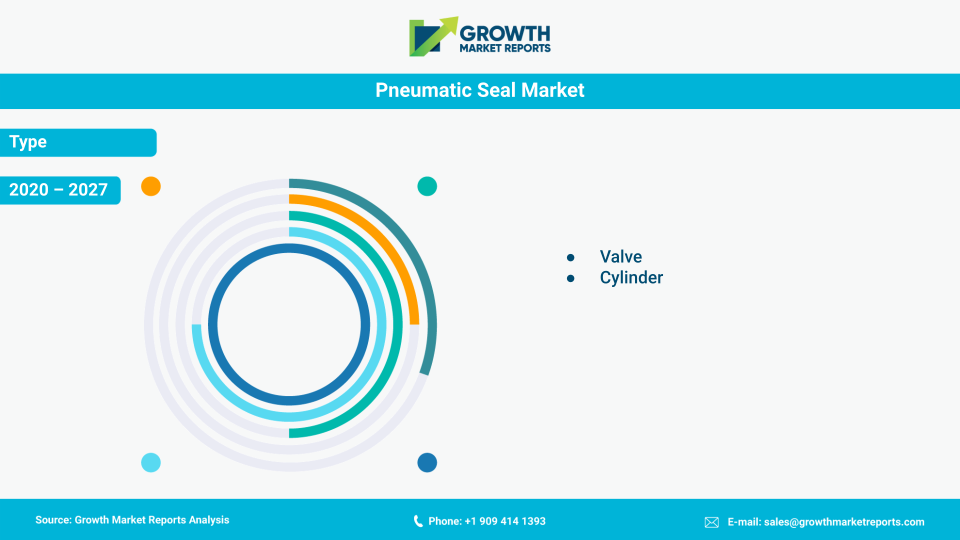
Yes, the report covers product specific information such as valve and cylinder.
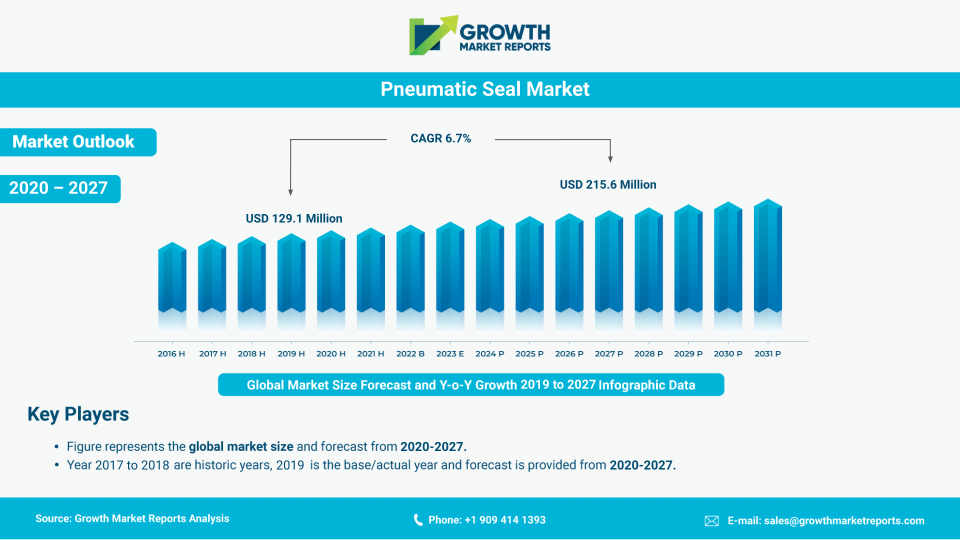
According to the Growth Market Reports report, the pneumatic seal market is likely to register a CAGR of 6.7% during forecast period 2020-2027, with an anticipated valuation of USD 215.6 million by the end of the 2027.
The report provides company market share analysis and volume data.
Factors such as competitive strength and market positioning are key areas considered while selecting top companies to be profiled.
The growing demand for pneumatic seal for the various industries such as food, automotive, & shipping industry and increasing preference for pneumatic seal over its alternatives are the factors driving the market growth.
The market is expected to witness slow growth between 2019 and 2020 owing to the negative impact of COVID-19 pandemic on the Pneumatic Seal market.
The base year considered for the global Pneumatic Seal market report is 2019. The complete analysis period is 2017 to 2027, wherein, 2017 & 2018 are the historic years and the forecast is provided from 2020 to 2027.
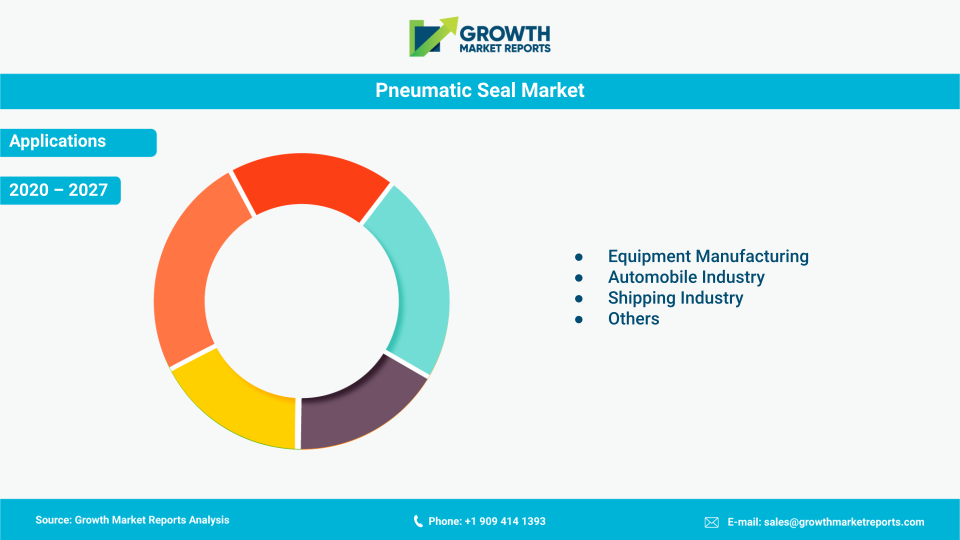
The companies operating in the industries such as Equipment Manufacturing, Automobile Industry, and Shipping Industry are the key end-users driving the market growth.
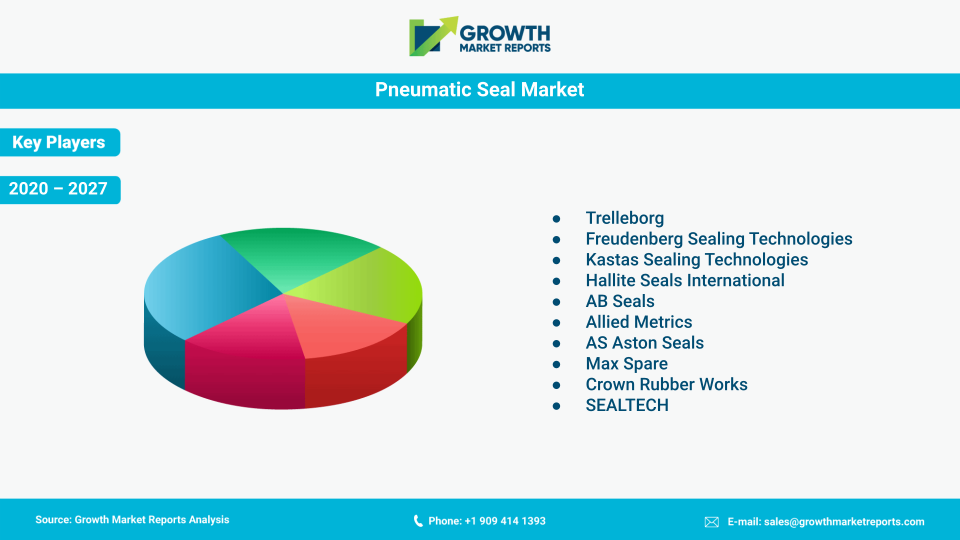
Major Manufactures include Trelleborg, Freudenberg Sealing Technologies, Kastas Sealing Technologies, Hallite Seals International, and AB Seals.