Sports Drinks Market Research Report 2033

Sports Drinks Market Research Report 2033

Segments - by Product Type (Isotonic, Hypertonic, Hypotonic), by Packaging (Bottles, Cans, Pouches, Others), by Flavor (Citrus, Berry, Mixed Fruit, Others), by Distribution Channel (Supermarkets/Hypermarkets, Convenience Stores, Online Stores, Specialty Stores, Others), by End-User (Athletes, Fitness Enthusiasts, General Consumers, Others)

https://growthmarketreports.com/Anuradha
Author : Anuradha B. More
https://growthmarketreports.com/Vaibhav
Fact-checked by : Vaibhav Chandola
https://growthmarketreports.com/Shruti
Editor : Shruti Bhat

Upcoming | Report ID :FB-2227 | 4.5 Rating | 27 Reviews | 264 Pages | Format : Docx PDF

Report Description


Sports Drinks Market Outlook

According to our latest research, the global sports drinks market size reached USD 29.1 billion in 2024, demonstrating a robust foundation for future growth. The market is projected to expand at a CAGR of 5.7% from 2025 to 2033, with the total market size expected to reach USD 48.2 billion by 2033. This growth is primarily driven by increasing health consciousness, rising participation in sports and fitness activities, and the expanding availability of sports drinks across various retail channels. The evolving consumer preferences towards functional beverages and the growing trend of active lifestyles are also significant contributors to the marketÂ’s expansion, as highlighted in our comprehensive analysis.

One of the key growth factors for the sports drinks market is the global surge in health and wellness awareness. Consumers are increasingly prioritizing hydration, energy replenishment, and nutrient intake, especially after intense physical activities. Sports drinks, enriched with electrolytes, vitamins, and minerals, are being perceived as essential products for athletes and fitness enthusiasts seeking to maintain optimal performance and quick recovery. The market benefits from the rising number of marathons, fitness events, and sports tournaments, which not only increase direct consumption but also enhance brand visibility and consumer engagement. Furthermore, the growing urban population and hectic lifestyles have led to a preference for convenient, ready-to-drink beverages, further propelling the demand for sports drinks across diverse demographics.

Another significant driver is the innovation in product formulation and packaging. Manufacturers are investing heavily in research and development to introduce advanced sports drinks that cater to specific hydration and energy needs. The inclusion of natural ingredients, reduced sugar content, and the development of organic and vegan sports drink variants have broadened the appeal of these products to health-conscious consumers. Additionally, advancements in packaging—such as eco-friendly bottles, resealable pouches, and single-serve cans—are enhancing product convenience and sustainability, which resonates well with environmentally aware consumers. These innovations are not only attracting new consumer segments but also fostering brand loyalty among existing users.

The proliferation of distribution channels has also played a pivotal role in the marketÂ’s growth. Sports drinks are now widely accessible through supermarkets/hypermarkets, convenience stores, online platforms, and specialty stores. The rise of e-commerce and direct-to-consumer sales models has significantly expanded the reach of both established and emerging brands, enabling them to tap into previously underserved markets. Strategic partnerships with gyms, sports clubs, and fitness centers have further strengthened the market presence of leading brands. The increased penetration of digital marketing and social media campaigns has also contributed to greater consumer awareness and product adoption, thereby accelerating market growth.

Regionally, North America continues to dominate the sports drinks market, accounting for a major share of global revenues, followed by Europe and the Asia Pacific. The United States, in particular, exhibits a high per capita consumption of sports drinks, driven by a strong sports culture and the presence of leading brands. The Asia Pacific region, on the other hand, is witnessing the fastest growth, fueled by rising disposable incomes, increasing urbanization, and a growing interest in fitness and sports activities. Europe maintains a steady growth trajectory, supported by health-conscious consumers and expanding product portfolios. The Middle East & Africa and Latin America are emerging markets with significant growth potential, as awareness of sports nutrition and hydration continues to rise in these regions.

The increasing demand for Sports Drinks is also being influenced by the growing awareness of the importance of hydration and electrolyte balance in maintaining overall health. As consumers become more educated about the benefits of proper hydration, there is a noticeable shift towards beverages that offer more than just quenching thirst. Sports Drinks, with their carefully balanced formulations, are seen as an effective way to replenish lost fluids and electrolytes, particularly after rigorous physical activities. This trend is further supported by the increasing availability of educational resources and health campaigns that emphasize the role of hydration in supporting active lifestyles.

Global Sports Drinks Industry Outlook

Product Type Analysis

The sports drinks market is segmented by product type into isotonic, hypertonic, and hypotonic beverages, each catering to distinct hydration and energy needs. Isotonic sports drinks are the most popular segment, accounting for a substantial portion of the market share due to their balanced concentration of electrolytes and carbohydrates, which closely match those found in the human body. These drinks are particularly favored by athletes and fitness enthusiasts for quick hydration and energy replenishment during moderate to intense physical activities. The widespread adoption of isotonic drinks is further supported by their presence in major sporting events and endorsements by professional athletes, which boost consumer trust and brand recognition.

Hypertonic sports drinks, characterized by a higher concentration of carbohydrates relative to body fluids, cater to individuals seeking rapid energy replenishment after prolonged or intense exercise. While their market share is comparatively smaller, hypertonic drinks are gaining traction among endurance athletes and those involved in high-intensity training. Manufacturers are focusing on improving the taste and digestibility of these drinks to enhance their appeal. The increasing prevalence of long-distance running, cycling, and triathlon events is expected to drive the demand for hypertonic sports drinks, especially in regions with a strong sports culture.

Hypotonic sports drinks offer lower concentrations of carbohydrates and electrolytes, making them ideal for rapid hydration without excessive calorie intake. This segment is witnessing growing popularity among casual exercisers, non-athletes, and individuals engaged in light physical activities. The trend towards low-calorie and sugar-free beverages is fueling the demand for hypotonic sports drinks, particularly among health-conscious consumers and those with dietary restrictions. Innovations in flavor and packaging are further enhancing the marketability of these products, making them suitable for everyday consumption beyond athletic contexts.

The competitive landscape within the product type segment is characterized by continuous product innovation and differentiation. Leading brands are expanding their portfolios to include all three types of sports drinks, catering to a wider range of consumer needs and preferences. The introduction of functional ingredients such as BCAAs, antioxidants, and plant-based electrolytes is further diversifying the product offerings. As consumer awareness of the specific benefits of isotonic, hypertonic, and hypotonic drinks increases, manufacturers are leveraging targeted marketing strategies to educate and attract their target audiences, thereby driving segment growth.

Report Scope

Attributes Details
Report Title Sports Drinks Market Research Report 2033
By Product Type Isotonic, Hypertonic, Hypotonic
By Packaging Bottles, Cans, Pouches, Others
By Flavor Citrus, Berry, Mixed Fruit, Others
By Distribution Channel Supermarkets/Hypermarkets, Convenience Stores, Online Stores, Specialty Stores, Others
By End-User Athletes, Fitness Enthusiasts, General Consumers, Others
Regions Covered North America, Europe, APAC, Latin America, MEA
Base Year 2024
Historic Data 2018-2023
Forecast Period 2025-2033
Number of Pages 264
Number of Tables & Figures 378
Customization Available Yes, the report can be customized as per your need.

Packaging Analysis

Packaging plays a critical role in the sports drinks market, influencing consumer purchase decisions and brand perception. Bottles remain the dominant packaging format, favored for their convenience, portability, and resealability. The widespread use of PET and recyclable materials in bottle manufacturing aligns with the growing demand for sustainable packaging solutions. Bottled sports drinks are prominently displayed in retail outlets, gyms, and sports venues, contributing to their high visibility and accessibility. The ability to offer various bottle sizes, from single-serve to multipacks, allows brands to cater to different consumption occasions and preferences.

In addition to traditional retail outlets, the rise of digital platforms has significantly impacted the distribution and accessibility of Sports Drink products. Online shopping provides consumers with the convenience of browsing a wide variety of Sports Drink options, comparing nutritional information, and reading reviews from other users. This digital shift not only broadens the reach of established brands but also offers a platform for emerging brands to introduce innovative Sports Drink formulations to a global audience. The integration of e-commerce with personalized marketing strategies allows brands to cater to the specific needs and preferences of their consumers, enhancing customer satisfaction and loyalty.

Cans are gaining popularity as an alternative packaging option, particularly among younger consumers and those seeking a modern, on-the-go beverage experience. The lightweight and stackable nature of cans make them suitable for vending machines, convenience stores, and outdoor events. Manufacturers are leveraging innovative can designs, vibrant graphics, and limited-edition releases to attract attention and differentiate their products on crowded shelves. The recyclability of aluminum cans also appeals to environmentally conscious consumers, further driving their adoption in the sports drinks market.

Pouches represent an emerging packaging trend, offering unique advantages in terms of portability, ease of use, and reduced environmental impact. Flexible pouches are particularly popular among athletes and outdoor enthusiasts who require lightweight and compact hydration solutions. The ability to incorporate resealable spouts and ergonomic designs enhances user convenience, making pouches an attractive option for on-the-go consumption. As brands continue to invest in sustainable packaging innovations, the adoption of pouches is expected to increase, especially in markets with a strong focus on eco-friendly products.

Other packaging formats, such as cartons and tetra packs, are also gaining traction, particularly in institutional and bulk purchase settings. These formats offer extended shelf life and are often used for value packs or multi-liter offerings. The diversification of packaging options allows brands to cater to a broader consumer base, from individual athletes to families and sports teams. The ongoing emphasis on sustainability, convenience, and product differentiation will continue to shape the packaging landscape in the sports drinks market, driving innovation and competitive advantage.

Flavor Analysis

Flavor innovation is a key driver of consumer engagement and market growth in the sports drinks industry. Citrus flavors, such as lemon, lime, and orange, remain the most popular choices due to their refreshing taste and association with hydration. These flavors are widely accepted across different age groups and regions, making them a staple in most product portfolios. The tangy and invigorating profile of citrus sports drinks is particularly appealing to consumers seeking a quick energy boost and palate refreshment during physical activities.

Berry flavors, including strawberry, blueberry, and raspberry, are gaining traction among younger consumers and those looking for a sweeter, fruit-forward taste experience. The antioxidant properties of berries also align with the health and wellness trends driving the sports drinks market. Manufacturers are leveraging natural berry extracts and reducing artificial flavoring to cater to the growing demand for clean-label and functional beverages. The versatility of berry flavors allows brands to experiment with unique blends and limited-edition releases, further enhancing consumer interest and brand loyalty.

The competitive landscape of the Sports Drink industry is further intensified by the continuous introduction of new flavors and formulations designed to meet the evolving tastes of consumers. As the market expands, brands are increasingly focusing on developing Sports Drink variants that cater to specific dietary needs, such as low-calorie, sugar-free, and plant-based options. This diversification not only attracts health-conscious consumers but also encourages experimentation and brand switching among existing users. The ability to innovate and adapt quickly to consumer trends is crucial for brands aiming to maintain a competitive edge in the dynamic Sports Drink market.

Mixed fruit flavors offer a dynamic and customizable taste profile, appealing to adventurous consumers and those seeking variety in their beverage choices. The combination of multiple fruit flavors provides a balanced sweetness and complexity, making mixed fruit sports drinks suitable for both casual and dedicated users. Innovations in flavor pairing, such as tropical blends and exotic fruit infusions, are expanding the marketÂ’s flavor repertoire and attracting new consumer segments. The ability to cater to diverse taste preferences is a significant competitive advantage for brands operating in this segment.

Other flavors, including herbal, mint, and unconventional options like cucumber or coconut, are emerging as niche offerings targeting specific consumer preferences and functional needs. These flavors are often marketed as premium or specialty products, appealing to consumers seeking novel and differentiated experiences. The trend towards natural and plant-based ingredients is also influencing flavor development, with brands incorporating botanicals and superfoods to enhance both taste and nutritional value. As the sports drinks market continues to evolve, flavor innovation will remain a critical factor in driving consumer trial, repeat purchase, and overall market growth.

Distribution Channel Analysis

The distribution channel landscape for sports drinks is highly diversified, reflecting the evolving preferences and purchasing behaviors of consumers. Supermarkets and hypermarkets are the leading distribution channels, accounting for a significant share of sales due to their wide product selection, competitive pricing, and convenient locations. These retail outlets provide ample shelf space for sports drinks, enabling brands to showcase their full product range and capitalize on impulse purchases. The presence of dedicated beverage aisles and promotional displays further enhances product visibility and consumer engagement.

Convenience stores play a crucial role in the distribution of sports drinks, particularly for on-the-go consumers and those seeking quick hydration solutions. The strategic placement of sports drinks near checkout counters and in refrigerated sections drives high turnover and repeat purchases. Convenience stores are especially popular in urban areas, transportation hubs, and around sports facilities, making them an essential channel for reaching time-pressed consumers and athletes. The ability to offer single-serve packaging and promotional bundles further strengthens the appeal of convenience stores in the sports drinks market.

Online stores are experiencing rapid growth as digital transformation reshapes the retail landscape. The convenience of home delivery, access to a wide range of products, and the ability to compare prices and read reviews are key factors driving the adoption of online channels for sports drink purchases. E-commerce platforms enable brands to reach a broader audience, launch exclusive products, and implement targeted marketing campaigns. The rise of health and wellness e-tailers, subscription services, and direct-to-consumer models is further expanding the online presence of sports drinks, making it a critical growth avenue for both established and emerging brands.

Specialty stores, including health food shops, sports nutrition outlets, and gym-based retail points, cater to niche consumer segments seeking premium, functional, or specialized sports drinks. These channels offer personalized recommendations, expert advice, and exclusive product offerings, fostering brand loyalty and higher-value purchases. The ability to educate consumers about the benefits of different sports drinks and provide sampling opportunities enhances the overall shopping experience. Other distribution channels, such as vending machines and institutional sales, also contribute to market growth by increasing accessibility and convenience in various settings.

End-User Analysis

The end-user segment of the sports drinks market is diverse, encompassing athletes, fitness enthusiasts, general consumers, and other user groups. Athletes represent a core consumer base for sports drinks, relying on these products for hydration, electrolyte balance, and energy replenishment during training and competition. The performance-driven nature of this segment drives demand for scientifically formulated sports drinks that deliver measurable benefits. Endorsements by professional athletes and sports teams further reinforce the credibility and appeal of leading brands among this demographic.

Fitness enthusiasts, including gym-goers, runners, cyclists, and recreational sports participants, constitute a rapidly growing segment in the sports drinks market. This group values the functional benefits of sports drinks, such as improved endurance, faster recovery, and enhanced workout performance. The increasing popularity of fitness challenges, group workouts, and wellness communities has created new opportunities for brands to engage with fitness enthusiasts through targeted marketing, sponsorships, and product sampling initiatives. The demand for low-calorie, sugar-free, and natural sports drinks is particularly pronounced in this segment.

General consumers are emerging as a significant growth driver, as sports drinks transition from niche athletic products to mainstream beverages. The convenience, taste, and perceived health benefits of sports drinks are attracting a broader audience, including individuals seeking quick hydration during daily activities, outdoor adventures, or hot weather. The expansion of product offerings to include family-friendly, kid-focused, and lifestyle-oriented variants is further broadening the marketÂ’s appeal. The ability to cater to diverse consumption occasions, from post-workout recovery to casual refreshment, is a key factor in the mainstream adoption of sports drinks.

Other end-user groups, such as manual laborers, military personnel, and individuals with specific hydration needs, also contribute to the sports drinks market. These consumers often require specialized formulations tailored to their unique energy and hydration requirements. The ongoing research into the health benefits of sports drinks for different population segments is driving product innovation and expanding the potential user base. As brands continue to diversify their offerings and target new consumer groups, the end-user segment will remain a dynamic and influential driver of market growth.

Opportunities & Threats

The sports drinks market presents significant opportunities for innovation, expansion, and value creation. One of the most promising opportunities lies in the development of clean-label, organic, and natural sports drinks that cater to the growing demand for healthier and more transparent products. As consumers become increasingly aware of the potential health risks associated with artificial additives, sugars, and preservatives, brands that prioritize natural ingredients, functional benefits, and sustainability are well-positioned to capture market share. The integration of plant-based proteins, adaptogens, and superfoods into sports drink formulations is also creating new avenues for product differentiation and premiumization.

Another major opportunity is the expansion into emerging markets, particularly in Asia Pacific, Latin America, and the Middle East & Africa. Rising disposable incomes, urbanization, and the growing popularity of sports and fitness activities are driving demand for sports drinks in these regions. Brands that invest in localized product development, culturally relevant marketing campaigns, and strategic partnerships with local distributors can unlock significant growth potential. The increasing penetration of e-commerce and digital platforms in these markets further enhances accessibility and consumer engagement, enabling brands to reach new audiences and build long-term customer relationships.

However, the sports drinks market also faces notable restrainers, with health concerns related to sugar content and artificial ingredients posing a significant threat to sustained growth. Regulatory scrutiny and changing consumer preferences are prompting brands to reformulate their products and adopt healthier alternatives. The rise of alternative hydration beverages, such as coconut water, infused waters, and functional teas, is intensifying competition and challenging the dominance of traditional sports drinks. Brands that fail to adapt to these evolving trends risk losing relevance and market share, underscoring the importance of continuous innovation and consumer-centric product development.

Regional Outlook

The North America sports drinks market remains the largest globally, with a market size of USD 11.2 billion in 2024. The regionÂ’s growth is fueled by a strong sports culture, high levels of health awareness, and the presence of leading global brands. The United States alone accounts for the majority of regional sales, driven by a well-established retail infrastructure, frequent product launches, and high consumer spending on functional beverages. The market is expected to maintain a steady growth trajectory, supported by ongoing innovation, marketing investments, and the expansion of premium and low-calorie sports drink offerings.

Europe is the second-largest regional market, with a total value of USD 7.4 billion in 2024. The region is characterized by a health-conscious consumer base, stringent regulatory standards, and a growing preference for natural and organic products. The United Kingdom, Germany, and France are the key markets, accounting for a significant share of regional revenues. The European sports drinks market is projected to grow at a CAGR of 4.6% through 2033, driven by the increasing popularity of fitness activities, the expansion of distribution channels, and the introduction of innovative product variants tailored to local tastes and preferences.

The Asia Pacific sports drinks market is the fastest-growing region, with a market size of USD 5.8 billion in 2024 and a projected CAGR of 7.8% from 2025 to 2033. Rapid urbanization, rising disposable incomes, and a burgeoning middle class are key drivers of growth in countries such as China, India, Japan, and Australia. The increasing participation in organized sports, fitness clubs, and wellness activities is fueling demand for sports drinks across diverse consumer segments. The regionÂ’s dynamic retail landscape, coupled with the proliferation of digital platforms and e-commerce, is further accelerating market expansion. Latin America and the Middle East & Africa, with market sizes of USD 2.3 billion and USD 2.4 billion respectively in 2024, are emerging as promising markets, offering significant growth opportunities for brands willing to invest in market education, distribution, and localized product development.

Sports Drinks Market Statistics

Competitor Outlook

The sports drinks market is highly competitive, characterized by the presence of several global giants and a dynamic landscape of regional and niche players. Leading brands invest heavily in research and development, marketing, and distribution to maintain their market positions and drive growth. The market is marked by frequent product launches, flavor innovations, and strategic partnerships aimed at capturing new consumer segments and enhancing brand loyalty. The ability to adapt to evolving consumer preferences, regulatory requirements, and technological advancements is a key differentiator in this competitive environment.

Mergers, acquisitions, and collaborations are common strategies employed by major players to expand their product portfolios, enter new markets, and leverage synergies across the value chain. The increasing focus on health and wellness has prompted leading brands to reformulate their products, reduce sugar content, and introduce natural and functional ingredients. Sustainability initiatives, such as eco-friendly packaging and responsible sourcing, are also gaining prominence as companies seek to align with consumer values and regulatory expectations. The competitive intensity is further heightened by the entry of new players and the rise of private label brands, which offer affordable alternatives and challenge the dominance of established players.

Digital transformation is reshaping the competitive landscape, with brands leveraging e-commerce, social media, and influencer marketing to engage consumers and build brand equity. The ability to harness data analytics, consumer insights, and personalized marketing is becoming increasingly important in driving sales and fostering customer loyalty. The proliferation of direct-to-consumer models and subscription services is enabling brands to build deeper relationships with their customers and differentiate themselves in a crowded marketplace. The ongoing evolution of retail channels and consumer touchpoints presents both challenges and opportunities for brands seeking to stay ahead of the competition.

Some of the major companies operating in the global sports drinks market include The Coca-Cola Company (Powerade, Vitaminwater), PepsiCo, Inc. (Gatorade), BA Sports Nutrition (BODYARMOR), Monster Beverage Corporation, Oshee, Britvic PLC, and Abbott Laboratories. The Coca-Cola Company and PepsiCo dominate the market through their extensive product portfolios, global distribution networks, and strong brand recognition. BA Sports Nutrition, with its BODYARMOR brand, has rapidly gained market share by focusing on natural ingredients and innovative marketing strategies. Monster Beverage Corporation is expanding its presence in the sports drinks segment through product diversification and international expansion.

Regional players such as Oshee and Britvic PLC are leveraging local market knowledge, agile product development, and targeted marketing to compete effectively against global giants. Abbott Laboratories, known for its science-based approach and focus on functional nutrition, is also making significant inroads in the sports drinks market. The competitive landscape is expected to remain dynamic, with ongoing innovation, strategic alliances, and a relentless focus on meeting the evolving needs of consumers shaping the future of the sports drinks industry.

Key Players

  • PepsiCo, Inc.
  • The Coca-Cola Company
  • Gatorade (PepsiCo)
  • Powerade (The Coca-Cola Company)
  • Red Bull GmbH
  • Monster Beverage Corporation
  • BA Sports Nutrition (BODYARMOR)
  • Lucozade Ribena Suntory Ltd.
  • Britvic PLC
  • AQUARIUS (The Coca-Cola Company)
  • Danone S.A.
  • Nestlé S.A.
  • Otsuka Pharmaceutical Co., Ltd. (Pocari Sweat)
  • AriZona Beverages USA LLC
  • Vitamin Well AB
  • All Sport, Inc.
  • BioSteel Sports Nutrition Inc.
  • Celsius Holdings, Inc.
  • The Kraft Heinz Company
  • Keurig Dr Pepper Inc.
Sports Drinks Market Overview

Segments

The Sports Drinks market has been segmented on the basis of

Product Type

  • Isotonic
  • Hypertonic
  • Hypotonic

Packaging

  • Bottles
  • Cans
  • Pouches
  • Others

Flavor

  • Citrus
  • Berry
  • Mixed Fruit
  • Others

Distribution Channel

  • Supermarkets/Hypermarkets
  • Convenience Stores
  • Online Stores
  • Specialty Stores
  • Others

End-User

  • Athletes
  • Fitness Enthusiasts
  • General Consumers
  • Others

Competitive Landscape

Key players competing in the Japan Sports Drinks market are AJE Group; PepsiCo Inc; The Coca-Cola Company; Lucozade; DANONE; and Otsuka Pharmaceutical Co. Ltd.

Manufacturers of Japan are producing sports drinks according to the requirements of the customers.

In August 2021, Lucozade announced the partnership with Norwich City Football Club, an English professional football club.

In June 2021, Suntory Beverage and Food Great Britain & Ireland (SBF G&I) invested £6 million to support the recycling of its bottles by redesigning the packaging for its Lucozade brand.

In June 2021, POCARI SWEAT announced partnership with SMAS, a non-governmental organization to provide education on sports-related topics.

In August 2020, PepsiCo Inc. announced its multi-year premier partnership with UEFA Women's football. PepsiCo's UEFA Women's football partnership sit alongside its current multi-year sponsorship with Men's UEFA Champions League.
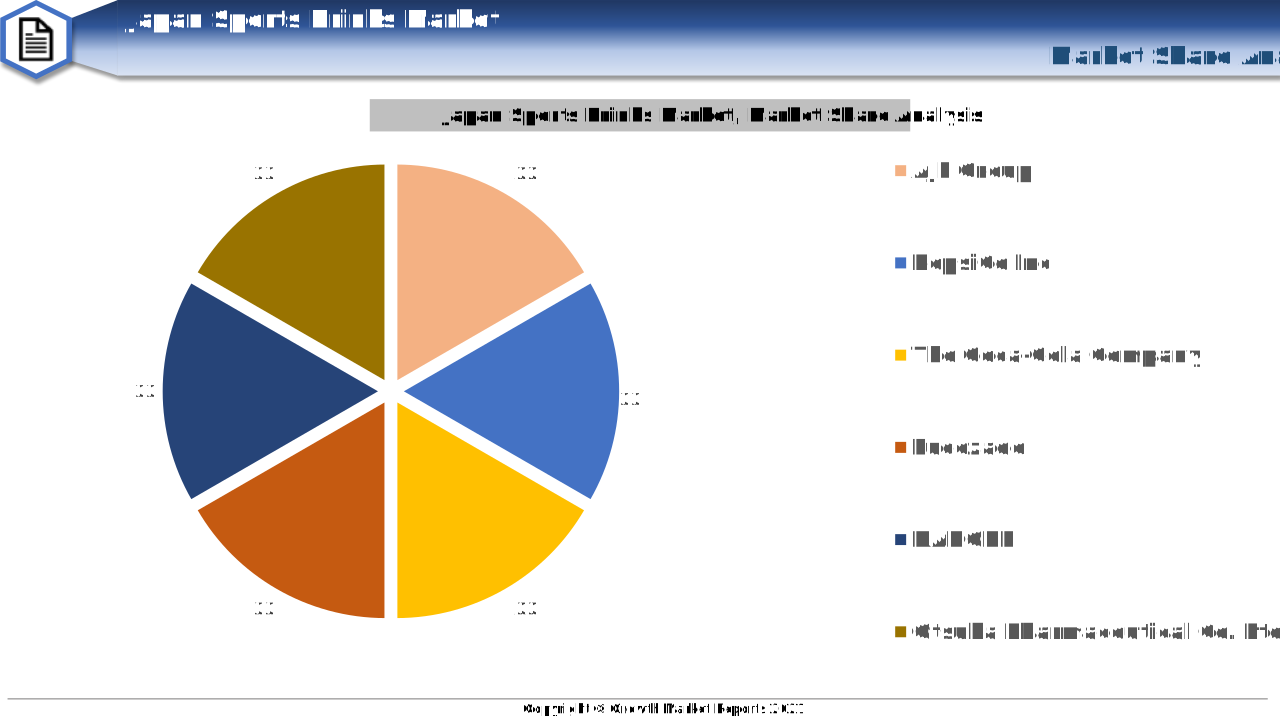

Japan Sports Drinks Market By Key Players

Frequently Asked Questions

Major players include PepsiCo (Gatorade), The Coca-Cola Company (Powerade, Vitaminwater), BA Sports Nutrition (BODYARMOR), Monster Beverage Corporation, Britvic PLC, and Abbott Laboratories.

Major trends include clean-label, organic, and natural formulations, plant-based and functional ingredients, and expansion into emerging markets. E-commerce and digital marketing are also key opportunities.

Primary consumers include athletes, fitness enthusiasts, and general consumers. Other user groups include manual laborers, military personnel, and individuals with specific hydration needs.

Sports drinks are widely available through supermarkets/hypermarkets, convenience stores, online platforms, specialty stores, and vending machines.

Citrus flavors such as lemon, lime, and orange are the most popular, followed by berry, mixed fruit, and emerging flavors like herbal and coconut.

Bottles are the most popular packaging format, followed by cans, pouches, and other formats like cartons and tetra packs. Eco-friendly and recyclable packaging is gaining traction.

The market is segmented into isotonic, hypertonic, and hypotonic sports drinks, each catering to different hydration and energy needs.

North America leads the global sports drinks market, followed by Europe and the Asia Pacific. The US has the highest per capita consumption, while Asia Pacific is the fastest-growing region.

Key growth drivers include increasing health consciousness, rising participation in sports and fitness activities, expanding retail availability, and evolving consumer preferences for functional beverages.

As of 2024, the global sports drinks market size reached USD 29.1 billion, with projections to grow to USD 48.2 billion by 2033.

Table Of Content

Chapter 1 Executive Summary
Chapter 2 Assumptions and Acronyms Used
Chapter 3 Research Methodology
Chapter 4 Sports Drinks Market Overview
   4.1 Introduction
      4.1.1 Market Taxonomy
      4.1.2 Market Definition
      4.1.3 Macro-Economic Factors Impacting the Market Growth
   4.2 Sports Drinks Market Dynamics
      4.2.1 Market Drivers
      4.2.2 Market Restraints
      4.2.3 Market Opportunity
   4.3 Sports Drinks Market - Supply Chain Analysis
      4.3.1 List of Key Suppliers
      4.3.2 List of Key Distributors
      4.3.3 List of Key Consumers
   4.4 Key Forces Shaping the Sports Drinks Market
      4.4.1 Bargaining Power of Suppliers
      4.4.2 Bargaining Power of Buyers
      4.4.3 Threat of Substitution
      4.4.4 Threat of New Entrants
      4.4.5 Competitive Rivalry
   4.5 Global Sports Drinks Market Size & Forecast, 2023-2032
      4.5.1 Sports Drinks Market Size and Y-o-Y Growth
      4.5.2 Sports Drinks Market Absolute $ Opportunity

Chapter 5 Global Sports Drinks Market Analysis and Forecast By Product Type
   5.1 Introduction
      5.1.1 Key Market Trends & Growth Opportunities By Product Type
      5.1.2 Basis Point Share (BPS) Analysis By Product Type
      5.1.3 Absolute $ Opportunity Assessment By Product Type
   5.2 Sports Drinks Market Size Forecast By Product Type
      5.2.1 Isotonic
      5.2.2 Hypertonic
      5.2.3 Hypotonic
   5.3 Market Attractiveness Analysis By Product Type

Chapter 6 Global Sports Drinks Market Analysis and Forecast By Packaging
   6.1 Introduction
      6.1.1 Key Market Trends & Growth Opportunities By Packaging
      6.1.2 Basis Point Share (BPS) Analysis By Packaging
      6.1.3 Absolute $ Opportunity Assessment By Packaging
   6.2 Sports Drinks Market Size Forecast By Packaging
      6.2.1 Bottles
      6.2.2 Cans
      6.2.3 Pouches
      6.2.4 Others
   6.3 Market Attractiveness Analysis By Packaging

Chapter 7 Global Sports Drinks Market Analysis and Forecast By Flavor
   7.1 Introduction
      7.1.1 Key Market Trends & Growth Opportunities By Flavor
      7.1.2 Basis Point Share (BPS) Analysis By Flavor
      7.1.3 Absolute $ Opportunity Assessment By Flavor
   7.2 Sports Drinks Market Size Forecast By Flavor
      7.2.1 Citrus
      7.2.2 Berry
      7.2.3 Mixed Fruit
      7.2.4 Others
   7.3 Market Attractiveness Analysis By Flavor

Chapter 8 Global Sports Drinks Market Analysis and Forecast By Distribution Channel
   8.1 Introduction
      8.1.1 Key Market Trends & Growth Opportunities By Distribution Channel
      8.1.2 Basis Point Share (BPS) Analysis By Distribution Channel
      8.1.3 Absolute $ Opportunity Assessment By Distribution Channel
   8.2 Sports Drinks Market Size Forecast By Distribution Channel
      8.2.1 Supermarkets/Hypermarkets
      8.2.2 Convenience Stores
      8.2.3 Online Stores
      8.2.4 Specialty Stores
      8.2.5 Others
   8.3 Market Attractiveness Analysis By Distribution Channel

Chapter 9 Global Sports Drinks Market Analysis and Forecast By End-User
   9.1 Introduction
      9.1.1 Key Market Trends & Growth Opportunities By End-User
      9.1.2 Basis Point Share (BPS) Analysis By End-User
      9.1.3 Absolute $ Opportunity Assessment By End-User
   9.2 Sports Drinks Market Size Forecast By End-User
      9.2.1 Athletes
      9.2.2 Fitness Enthusiasts
      9.2.3 General Consumers
      9.2.4 Others
   9.3 Market Attractiveness Analysis By End-User

Chapter 10 Global Sports Drinks Market Analysis and Forecast by Region
   10.1 Introduction
      10.1.1 Key Market Trends & Growth Opportunities By Region
      10.1.2 Basis Point Share (BPS) Analysis By Region
      10.1.3 Absolute $ Opportunity Assessment By Region
   10.2 Sports Drinks Market Size Forecast By Region
      10.2.1 North America
      10.2.2 Europe
      10.2.3 Asia Pacific
      10.2.4 Latin America
      10.2.5 Middle East & Africa (MEA)
   10.3 Market Attractiveness Analysis By Region

Chapter 11 Coronavirus Disease (COVID-19) Impact 
   11.1 Introduction 
   11.2 Current & Future Impact Analysis 
   11.3 Economic Impact Analysis 
   11.4 Government Policies 
   11.5 Investment Scenario

Chapter 12 North America Sports Drinks Analysis and Forecast
   12.1 Introduction
   12.2 North America Sports Drinks Market Size Forecast by Country
      12.2.1 U.S.
      12.2.2 Canada
   12.3 Basis Point Share (BPS) Analysis by Country
   12.4 Absolute $ Opportunity Assessment by Country
   12.5 Market Attractiveness Analysis by Country
   12.6 North America Sports Drinks Market Size Forecast By Product Type
      12.6.1 Isotonic
      12.6.2 Hypertonic
      12.6.3 Hypotonic
   12.7 Basis Point Share (BPS) Analysis By Product Type 
   12.8 Absolute $ Opportunity Assessment By Product Type 
   12.9 Market Attractiveness Analysis By Product Type
   12.10 North America Sports Drinks Market Size Forecast By Packaging
      12.10.1 Bottles
      12.10.2 Cans
      12.10.3 Pouches
      12.10.4 Others
   12.11 Basis Point Share (BPS) Analysis By Packaging 
   12.12 Absolute $ Opportunity Assessment By Packaging 
   12.13 Market Attractiveness Analysis By Packaging
   12.14 North America Sports Drinks Market Size Forecast By Flavor
      12.14.1 Citrus
      12.14.2 Berry
      12.14.3 Mixed Fruit
      12.14.4 Others
   12.15 Basis Point Share (BPS) Analysis By Flavor 
   12.16 Absolute $ Opportunity Assessment By Flavor 
   12.17 Market Attractiveness Analysis By Flavor
   12.18 North America Sports Drinks Market Size Forecast By Distribution Channel
      12.18.1 Supermarkets/Hypermarkets
      12.18.2 Convenience Stores
      12.18.3 Online Stores
      12.18.4 Specialty Stores
      12.18.5 Others
   12.19 Basis Point Share (BPS) Analysis By Distribution Channel 
   12.20 Absolute $ Opportunity Assessment By Distribution Channel 
   12.21 Market Attractiveness Analysis By Distribution Channel
   12.22 North America Sports Drinks Market Size Forecast By End-User
      12.22.1 Athletes
      12.22.2 Fitness Enthusiasts
      12.22.3 General Consumers
      12.22.4 Others
   12.23 Basis Point Share (BPS) Analysis By End-User 
   12.24 Absolute $ Opportunity Assessment By End-User 
   12.25 Market Attractiveness Analysis By End-User

Chapter 13 Europe Sports Drinks Analysis and Forecast
   13.1 Introduction
   13.2 Europe Sports Drinks Market Size Forecast by Country
      13.2.1 Germany
      13.2.2 France
      13.2.3 Italy
      13.2.4 U.K.
      13.2.5 Spain
      13.2.6 Russia
      13.2.7 Rest of Europe
   13.3 Basis Point Share (BPS) Analysis by Country
   13.4 Absolute $ Opportunity Assessment by Country
   13.5 Market Attractiveness Analysis by Country
   13.6 Europe Sports Drinks Market Size Forecast By Product Type
      13.6.1 Isotonic
      13.6.2 Hypertonic
      13.6.3 Hypotonic
   13.7 Basis Point Share (BPS) Analysis By Product Type 
   13.8 Absolute $ Opportunity Assessment By Product Type 
   13.9 Market Attractiveness Analysis By Product Type
   13.10 Europe Sports Drinks Market Size Forecast By Packaging
      13.10.1 Bottles
      13.10.2 Cans
      13.10.3 Pouches
      13.10.4 Others
   13.11 Basis Point Share (BPS) Analysis By Packaging 
   13.12 Absolute $ Opportunity Assessment By Packaging 
   13.13 Market Attractiveness Analysis By Packaging
   13.14 Europe Sports Drinks Market Size Forecast By Flavor
      13.14.1 Citrus
      13.14.2 Berry
      13.14.3 Mixed Fruit
      13.14.4 Others
   13.15 Basis Point Share (BPS) Analysis By Flavor 
   13.16 Absolute $ Opportunity Assessment By Flavor 
   13.17 Market Attractiveness Analysis By Flavor
   13.18 Europe Sports Drinks Market Size Forecast By Distribution Channel
      13.18.1 Supermarkets/Hypermarkets
      13.18.2 Convenience Stores
      13.18.3 Online Stores
      13.18.4 Specialty Stores
      13.18.5 Others
   13.19 Basis Point Share (BPS) Analysis By Distribution Channel 
   13.20 Absolute $ Opportunity Assessment By Distribution Channel 
   13.21 Market Attractiveness Analysis By Distribution Channel
   13.22 Europe Sports Drinks Market Size Forecast By End-User
      13.22.1 Athletes
      13.22.2 Fitness Enthusiasts
      13.22.3 General Consumers
      13.22.4 Others
   13.23 Basis Point Share (BPS) Analysis By End-User 
   13.24 Absolute $ Opportunity Assessment By End-User 
   13.25 Market Attractiveness Analysis By End-User

Chapter 14 Asia Pacific Sports Drinks Analysis and Forecast
   14.1 Introduction
   14.2 Asia Pacific Sports Drinks Market Size Forecast by Country
      14.2.1 China
      14.2.2 Japan
      14.2.3 South Korea
      14.2.4 India
      14.2.5 Australia
      14.2.6 South East Asia (SEA)
      14.2.7 Rest of Asia Pacific (APAC)
   14.3 Basis Point Share (BPS) Analysis by Country
   14.4 Absolute $ Opportunity Assessment by Country
   14.5 Market Attractiveness Analysis by Country
   14.6 Asia Pacific Sports Drinks Market Size Forecast By Product Type
      14.6.1 Isotonic
      14.6.2 Hypertonic
      14.6.3 Hypotonic
   14.7 Basis Point Share (BPS) Analysis By Product Type 
   14.8 Absolute $ Opportunity Assessment By Product Type 
   14.9 Market Attractiveness Analysis By Product Type
   14.10 Asia Pacific Sports Drinks Market Size Forecast By Packaging
      14.10.1 Bottles
      14.10.2 Cans
      14.10.3 Pouches
      14.10.4 Others
   14.11 Basis Point Share (BPS) Analysis By Packaging 
   14.12 Absolute $ Opportunity Assessment By Packaging 
   14.13 Market Attractiveness Analysis By Packaging
   14.14 Asia Pacific Sports Drinks Market Size Forecast By Flavor
      14.14.1 Citrus
      14.14.2 Berry
      14.14.3 Mixed Fruit
      14.14.4 Others
   14.15 Basis Point Share (BPS) Analysis By Flavor 
   14.16 Absolute $ Opportunity Assessment By Flavor 
   14.17 Market Attractiveness Analysis By Flavor
   14.18 Asia Pacific Sports Drinks Market Size Forecast By Distribution Channel
      14.18.1 Supermarkets/Hypermarkets
      14.18.2 Convenience Stores
      14.18.3 Online Stores
      14.18.4 Specialty Stores
      14.18.5 Others
   14.19 Basis Point Share (BPS) Analysis By Distribution Channel 
   14.20 Absolute $ Opportunity Assessment By Distribution Channel 
   14.21 Market Attractiveness Analysis By Distribution Channel
   14.22 Asia Pacific Sports Drinks Market Size Forecast By End-User
      14.22.1 Athletes
      14.22.2 Fitness Enthusiasts
      14.22.3 General Consumers
      14.22.4 Others
   14.23 Basis Point Share (BPS) Analysis By End-User 
   14.24 Absolute $ Opportunity Assessment By End-User 
   14.25 Market Attractiveness Analysis By End-User

Chapter 15 Latin America Sports Drinks Analysis and Forecast
   15.1 Introduction
   15.2 Latin America Sports Drinks Market Size Forecast by Country
      15.2.1 Brazil
      15.2.2 Mexico
      15.2.3 Rest of Latin America (LATAM)
   15.3 Basis Point Share (BPS) Analysis by Country
   15.4 Absolute $ Opportunity Assessment by Country
   15.5 Market Attractiveness Analysis by Country
   15.6 Latin America Sports Drinks Market Size Forecast By Product Type
      15.6.1 Isotonic
      15.6.2 Hypertonic
      15.6.3 Hypotonic
   15.7 Basis Point Share (BPS) Analysis By Product Type 
   15.8 Absolute $ Opportunity Assessment By Product Type 
   15.9 Market Attractiveness Analysis By Product Type
   15.10 Latin America Sports Drinks Market Size Forecast By Packaging
      15.10.1 Bottles
      15.10.2 Cans
      15.10.3 Pouches
      15.10.4 Others
   15.11 Basis Point Share (BPS) Analysis By Packaging 
   15.12 Absolute $ Opportunity Assessment By Packaging 
   15.13 Market Attractiveness Analysis By Packaging
   15.14 Latin America Sports Drinks Market Size Forecast By Flavor
      15.14.1 Citrus
      15.14.2 Berry
      15.14.3 Mixed Fruit
      15.14.4 Others
   15.15 Basis Point Share (BPS) Analysis By Flavor 
   15.16 Absolute $ Opportunity Assessment By Flavor 
   15.17 Market Attractiveness Analysis By Flavor
   15.18 Latin America Sports Drinks Market Size Forecast By Distribution Channel
      15.18.1 Supermarkets/Hypermarkets
      15.18.2 Convenience Stores
      15.18.3 Online Stores
      15.18.4 Specialty Stores
      15.18.5 Others
   15.19 Basis Point Share (BPS) Analysis By Distribution Channel 
   15.20 Absolute $ Opportunity Assessment By Distribution Channel 
   15.21 Market Attractiveness Analysis By Distribution Channel
   15.22 Latin America Sports Drinks Market Size Forecast By End-User
      15.22.1 Athletes
      15.22.2 Fitness Enthusiasts
      15.22.3 General Consumers
      15.22.4 Others
   15.23 Basis Point Share (BPS) Analysis By End-User 
   15.24 Absolute $ Opportunity Assessment By End-User 
   15.25 Market Attractiveness Analysis By End-User

Chapter 16 Middle East & Africa (MEA) Sports Drinks Analysis and Forecast
   16.1 Introduction
   16.2 Middle East & Africa (MEA) Sports Drinks Market Size Forecast by Country
      16.2.1 Saudi Arabia
      16.2.2 South Africa
      16.2.3 UAE
      16.2.4 Rest of Middle East & Africa (MEA)
   16.3 Basis Point Share (BPS) Analysis by Country
   16.4 Absolute $ Opportunity Assessment by Country
   16.5 Market Attractiveness Analysis by Country
   16.6 Middle East & Africa (MEA) Sports Drinks Market Size Forecast By Product Type
      16.6.1 Isotonic
      16.6.2 Hypertonic
      16.6.3 Hypotonic
   16.7 Basis Point Share (BPS) Analysis By Product Type 
   16.8 Absolute $ Opportunity Assessment By Product Type 
   16.9 Market Attractiveness Analysis By Product Type
   16.10 Middle East & Africa (MEA) Sports Drinks Market Size Forecast By Packaging
      16.10.1 Bottles
      16.10.2 Cans
      16.10.3 Pouches
      16.10.4 Others
   16.11 Basis Point Share (BPS) Analysis By Packaging 
   16.12 Absolute $ Opportunity Assessment By Packaging 
   16.13 Market Attractiveness Analysis By Packaging
   16.14 Middle East & Africa (MEA) Sports Drinks Market Size Forecast By Flavor
      16.14.1 Citrus
      16.14.2 Berry
      16.14.3 Mixed Fruit
      16.14.4 Others
   16.15 Basis Point Share (BPS) Analysis By Flavor 
   16.16 Absolute $ Opportunity Assessment By Flavor 
   16.17 Market Attractiveness Analysis By Flavor
   16.18 Middle East & Africa (MEA) Sports Drinks Market Size Forecast By Distribution Channel
      16.18.1 Supermarkets/Hypermarkets
      16.18.2 Convenience Stores
      16.18.3 Online Stores
      16.18.4 Specialty Stores
      16.18.5 Others
   16.19 Basis Point Share (BPS) Analysis By Distribution Channel 
   16.20 Absolute $ Opportunity Assessment By Distribution Channel 
   16.21 Market Attractiveness Analysis By Distribution Channel
   16.22 Middle East & Africa (MEA) Sports Drinks Market Size Forecast By End-User
      16.22.1 Athletes
      16.22.2 Fitness Enthusiasts
      16.22.3 General Consumers
      16.22.4 Others
   16.23 Basis Point Share (BPS) Analysis By End-User 
   16.24 Absolute $ Opportunity Assessment By End-User 
   16.25 Market Attractiveness Analysis By End-User

Chapter 17 Competition Landscape 
   17.1 Sports Drinks Market: Competitive Dashboard
   17.2 Global Sports Drinks Market: Market Share Analysis, 2023
   17.3 Company Profiles (Details – Overview, Financials, Developments, Strategy) 
      17.3.1 PepsiCo, Inc.
The Coca-Cola Company
Gatorade (PepsiCo)
Powerade (The Coca-Cola Company)
Red Bull GmbH
Monster Beverage Corporation
BA Sports Nutrition (BODYARMOR)
Lucozade Ribena Suntory Ltd.
Britvic PLC
AQUARIUS (The Coca-Cola Company)
Danone S.A.
Nestlé S.A.
Otsuka Pharmaceutical Co., Ltd. (Pocari Sweat)
AriZona Beverages USA LLC
Vitamin Well AB
All Sport, Inc.
BioSteel Sports Nutrition Inc.
Celsius Holdings, Inc.
The Kraft Heinz Company
Keurig Dr Pepper Inc.

Methodology

Our Clients

Microsoft
Deloitte
Pfizer
sinopec
General Electric
General Mills
Nestle SA
Siemens Healthcare