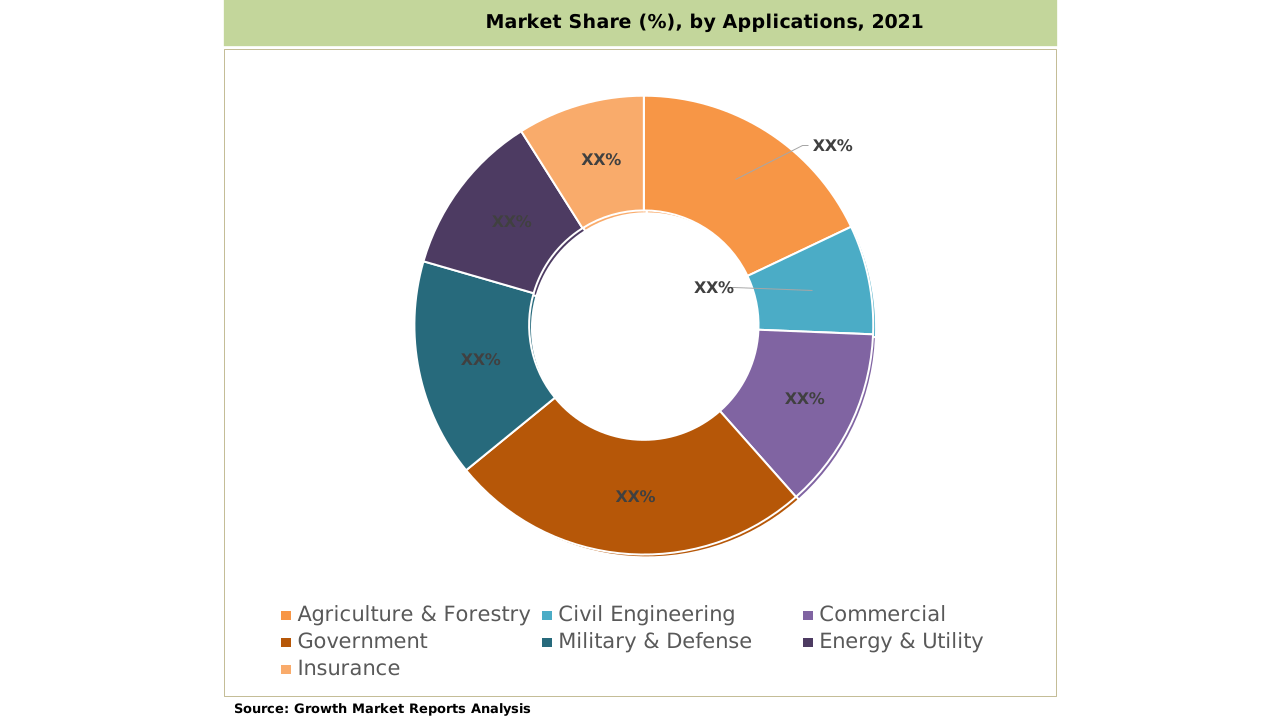
Segments - by Offering (Camera, Sensors, Software, Services), by Platform (Fixed-Wing Aircraft, Helicopters, UAVs/Drones, Others), by Application (Geospatial Mapping, Disaster Management, Urban Planning, Surveillance and Monitoring, Energy and Resource Management, Others), by End-User (Government, Agriculture and Forestry, Energy, Defense, Civil Engineering, Insurance, Others)
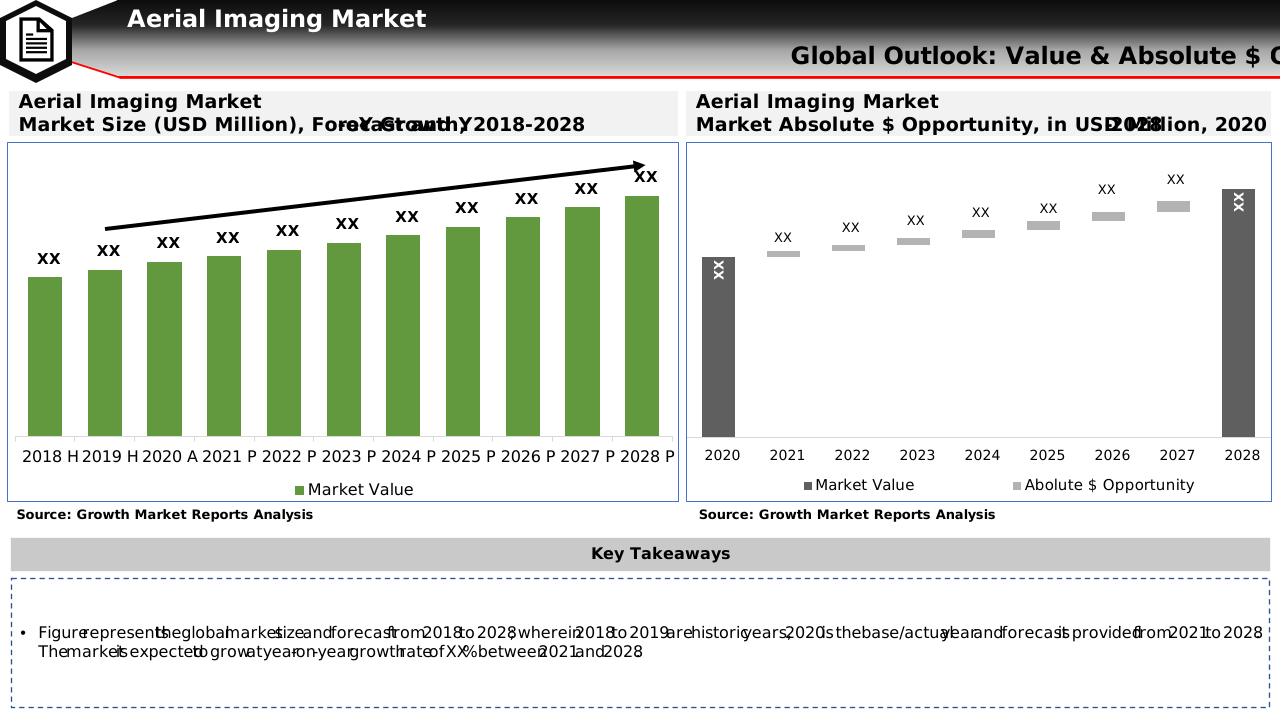
As per our latest research, the global aerial imaging market size reached USD 3.42 billion in 2024 and is projected to grow at a robust CAGR of 13.2% from 2025 to 2033. By the end of 2033, the aerial imaging market is forecasted to attain a value of approximately USD 9.97 billion. This remarkable growth is driven by increasing adoption of advanced imaging technologies across industries, expanding applications in geospatial analytics, and the proliferation of unmanned aerial vehicles (UAVs) for both commercial and governmental purposes.
The aerial imaging market is experiencing unprecedented growth due to the rising demand for high-resolution imagery and geospatial data across a multitude of sectors. The integration of aerial imaging with Geographic Information Systems (GIS) and advanced analytics has significantly enhanced the value proposition for end-users, enabling more informed decision-making in areas such as urban planning, disaster management, and infrastructure development. Furthermore, technological advancements in camera and sensor technologies, including multispectral and hyperspectral imaging, have improved the accuracy, resolution, and cost-effectiveness of aerial data acquisition. These innovations have made aerial imaging more accessible and attractive to a broader range of industries, from agriculture to insurance, further fueling market expansion.
Another key growth driver for the aerial imaging market is the rapid proliferation of UAVs and drones, which have revolutionized the way aerial data is collected and processed. Drones offer unparalleled flexibility, lower operational costs, and the ability to capture real-time data over large and inaccessible areas. This has led to widespread adoption in sectors such as agriculture, where aerial imaging is used for crop health monitoring, and in energy, where it aids in infrastructure inspection and resource management. Additionally, regulatory bodies in several regions are gradually easing restrictions on commercial drone flights, which is expected to further accelerate the adoption of aerial imaging solutions in the coming years.
The increasing frequency and severity of natural disasters globally have also underscored the importance of aerial imaging for disaster management and emergency response. High-resolution aerial imagery enables authorities to assess damage, plan rescue operations, and allocate resources more efficiently. Moreover, governments and municipal bodies are leveraging aerial imaging for urban planning, land use monitoring, and environmental conservation. As urbanization intensifies and climate-related risks escalate, the demand for timely and accurate geospatial information is expected to surge, positioning aerial imaging as a critical tool for resilience and sustainability.
From a regional perspective, North America currently dominates the aerial imaging market, accounting for the largest share in 2024, followed closely by Europe and Asia Pacific. The presence of established market players, significant investments in technology, and a favorable regulatory environment have contributed to North America's leadership position. Meanwhile, Asia Pacific is emerging as the fastest-growing region, driven by rapid urbanization, infrastructure development, and increasing adoption of UAVs in countries such as China, Japan, and India. The Middle East & Africa and Latin America are also witnessing steady growth, supported by government initiatives and expanding applications in agriculture, energy, and resource management.
The aerial imaging market by offering is segmented into cameras, sensors, software, and services, each playing a pivotal role in the overall ecosystem. Cameras remain the foundational component, with continuous advancements in resolution, frame rates, and spectral sensitivity. The demand for high-definition cameras is particularly strong in applications such as urban planning, surveillance, and infrastructure inspection, where image clarity and detail are paramount. Manufacturers are increasingly focusing on developing lightweight, compact, and durable cameras that can be easily integrated into a variety of aerial platforms, from fixed-wing aircraft to drones.
Sensors have witnessed significant innovation, especially with the advent of multispectral and hyperspectral technologies that enable the capture of data beyond the visible spectrum. These sensors are crucial for applications in agriculture, forestry, and environmental monitoring, where insights into crop health, vegetation indices, and soil properties are derived from non-visible wavelengths. The integration of thermal, LiDAR, and infrared sensors has further expanded the capabilities of aerial imaging, making it possible to conduct detailed topographical surveys, detect heat signatures, and assess structural integrity in energy and civil engineering sectors.
Software solutions are increasingly at the forefront of the aerial imaging market, providing the necessary tools for data processing, analysis, and visualization. Modern software platforms leverage artificial intelligence (AI) and machine learning to automate image classification, object detection, and change analysis, significantly reducing the time and expertise required to extract actionable insights from raw imagery. Cloud-based software offerings have gained traction due to their scalability, ease of access, and collaborative features, enabling stakeholders to share and analyze data in real time across different geographies.
Services constitute a vital segment, encompassing aerial survey operations, data processing, consulting, and custom analytics. As organizations increasingly seek turnkey solutions, service providers play a key role in delivering end-to-end aerial imaging projects. These services are particularly valuable for clients lacking in-house expertise or infrastructure, such as government agencies, insurance companies, and small to medium enterprises. The trend towards outsourcing aerial imaging tasks to specialized service providers is expected to persist, driven by the need for cost-effective, high-quality, and timely data acquisition and analysis.
| Attributes | Details |
| Report Title | Aerial Imaging Market Research Report 2033 |
| By Offering | Camera, Sensors, Software, Services |
| By Platform | Fixed-Wing Aircraft, Helicopters, UAVs/Drones, Others |
| By Application | Geospatial Mapping, Disaster Management, Urban Planning, Surveillance and Monitoring, Energy and Resource Management, Others |
| By End-User | Government, Agriculture and Forestry, Energy, Defense, Civil Engineering, Insurance, Others |
| Regions Covered | North America, Europe, APAC, Latin America, MEA |
| Base Year | 2024 |
| Historic Data | 2018-2023 |
| Forecast Period | 2025-2033 |
| Number of Pages | 250 |
| Number of Tables & Figures | 388 |
| Customization Available | Yes, the report can be customized as per your need. |
The platform segment of the aerial imaging market is categorized into fixed-wing aircraft, helicopters, UAVs/drones, and others, each offering distinct advantages and use cases. Fixed-wing aircraft have traditionally been the platform of choice for large-scale mapping and surveying projects, owing to their ability to cover vast areas in a single flight. These platforms are well-suited for applications requiring high-altitude and long-duration flights, such as regional geospatial mapping and environmental monitoring. However, the operational costs and logistical complexities associated with fixed-wing aircraft have led to a gradual shift towards more flexible and cost-effective platforms.
Helicopters provide unique benefits, particularly for projects that demand vertical takeoff and landing, hovering capabilities, and access to challenging terrains. They are widely used in applications such as utility inspection, search and rescue, and disaster management, where maneuverability and rapid deployment are critical. The ability to equip helicopters with advanced imaging equipment, including LiDAR and thermal sensors, has further enhanced their utility in specialized missions. Despite their higher operational costs compared to drones, helicopters remain indispensable for certain high-stakes and complex aerial imaging tasks.
UAVs and drones have emerged as game-changers in the aerial imaging market, democratizing access to high-quality aerial data across industries. Their affordability, ease of deployment, and ability to operate in confined or hazardous environments have made them the preferred platform for a wide range of applications, from precision agriculture to construction site monitoring. The rapid evolution of drone technology, coupled with regulatory advancements, has expanded their operational envelope, enabling longer flight times, higher payload capacities, and improved data transmission capabilities. As a result, drones are expected to account for a growing share of the aerial imaging market in the coming years.
Other platforms, including balloons, blimps, and kites, represent a niche but important segment, particularly in scientific research and environmental monitoring. These platforms offer unique advantages in terms of endurance, stability, and minimal environmental impact, making them suitable for long-duration data collection in remote or sensitive areas. While their market share remains relatively small compared to fixed-wing aircraft and drones, ongoing innovation and specialized use cases are likely to sustain demand for alternative aerial imaging platforms.
The application landscape for aerial imaging is broad and continually evolving, with geospatial mapping representing one of the largest and most mature segments. Geospatial mapping leverages high-resolution imagery to create detailed maps, monitor land use changes, and support infrastructure planning. This application is critical for government agencies, urban planners, and environmental organizations seeking to manage natural resources, track urban expansion, and ensure sustainable development. The integration of aerial imagery with GIS and remote sensing technologies has further enhanced the precision and utility of geospatial mapping solutions.
Disaster management is another key application area, where aerial imaging plays a vital role in assessing damage, coordinating rescue efforts, and planning recovery operations. High-resolution imagery captured before and after disaster events enables authorities to identify affected areas, prioritize response activities, and evaluate the effectiveness of mitigation measures. The ability to deploy drones and helicopters rapidly in the aftermath of natural disasters has proven invaluable in delivering real-time situational awareness and supporting humanitarian missions.
Urban planning and development have increasingly relied on aerial imaging to inform decision-making, monitor construction progress, and ensure compliance with zoning regulations. Planners utilize aerial data to visualize land parcels, assess infrastructure needs, and model future growth scenarios. The use of 3D modeling and point cloud data derived from aerial imagery has revolutionized the way cities are designed and managed, enabling more efficient allocation of resources and improved quality of life for residents.
Surveillance and monitoring applications span a wide range of sectors, including defense, border security, and environmental conservation. Aerial imaging provides a bird’s-eye view that is essential for monitoring large and inaccessible areas, detecting unauthorized activities, and enforcing regulations. In the energy and resource management sector, aerial imaging is used to inspect pipelines, monitor vegetation encroachment, and assess the condition of assets such as wind turbines and solar farms. The ability to capture and analyze imagery at regular intervals supports predictive maintenance, reduces downtime, and enhances operational efficiency.
The government sector is a major end-user of aerial imaging solutions, leveraging the technology for a wide range of applications including land administration, infrastructure management, environmental monitoring, and public safety. Government agencies benefit from the ability to obtain up-to-date and accurate geospatial information, which is critical for policy development, regulatory enforcement, and disaster response. The increasing emphasis on smart city initiatives and digital transformation in the public sector is expected to drive further adoption of aerial imaging technologies.
Agriculture and forestry represent another significant end-user segment, with aerial imaging being used extensively for crop monitoring, yield estimation, and precision farming. Farmers and agronomists rely on multispectral and thermal imagery to assess plant health, detect pest infestations, and optimize irrigation practices. In forestry, aerial imaging supports forest inventory management, fire risk assessment, and biodiversity monitoring. The ability to capture timely and detailed data over large areas has transformed traditional agricultural practices, leading to increased productivity and sustainability.
The energy sector utilizes aerial imaging for infrastructure inspection, resource exploration, and environmental compliance. Utility companies deploy drones and helicopters to inspect power lines, pipelines, and renewable energy installations, reducing the need for manual inspections and minimizing operational risks. In the oil and gas industry, aerial imaging aids in site selection, environmental impact assessment, and leak detection. The adoption of aerial imaging in the energy sector is expected to grow as companies seek to enhance asset management, reduce costs, and meet regulatory requirements.
Defense and civil engineering are also prominent end-user segments, with aerial imaging supporting surveillance, reconnaissance, and construction monitoring activities. In defense, aerial imagery provides critical intelligence for mission planning and border security. Civil engineering firms use aerial data to monitor construction progress, detect design deviations, and manage large-scale infrastructure projects. The insurance industry is increasingly leveraging aerial imaging to assess property damage, streamline claims processing, and improve risk modeling. As the benefits of aerial imaging become more widely recognized, adoption across these and other end-user segments is expected to accelerate.
The aerial imaging market presents significant opportunities for growth, particularly in the development and adoption of advanced imaging technologies. Innovations in sensor technology, including hyperspectral, thermal, and LiDAR sensors, are expanding the range of applications and improving the accuracy of data collection. The integration of artificial intelligence and machine learning into image processing software is enabling automated analysis, pattern recognition, and predictive analytics, reducing the need for manual intervention and accelerating decision-making. Companies that invest in research and development to enhance the capabilities of aerial imaging solutions are well-positioned to capture emerging opportunities in sectors such as precision agriculture, smart cities, and environmental monitoring.
Another major opportunity lies in the expanding use of UAVs and drones for commercial and industrial applications. As regulatory frameworks evolve to accommodate commercial drone operations, the barriers to entry are diminishing, allowing more organizations to leverage aerial imaging for a variety of use cases. The adoption of drones is particularly strong in emerging economies, where infrastructure development, urbanization, and resource management are top priorities. Service providers offering turnkey aerial imaging solutions, including data acquisition, processing, and analytics, are poised to benefit from the growing demand among small and medium enterprises that lack in-house expertise.
Despite the promising outlook, the aerial imaging market faces several restraining factors, chief among them being regulatory challenges and privacy concerns. The use of drones and aerial imaging equipment is subject to strict regulations in many countries, particularly with regard to airspace management, data privacy, and safety. Obtaining the necessary permits and ensuring compliance with local laws can be time-consuming and costly, particularly for cross-border operations. Additionally, concerns about data security and unauthorized surveillance may hinder adoption in sensitive sectors such as defense and critical infrastructure. Addressing these challenges through robust regulatory frameworks and transparent data governance will be essential for sustaining long-term market growth.
North America remains the largest market for aerial imaging, with a market size of USD 1.29 billion in 2024, driven by the presence of leading technology providers, high adoption rates across industries, and supportive regulatory policies. The United States accounts for the majority of the regional share, owing to significant investments in smart infrastructure, defense modernization, and disaster management initiatives. Canada is also witnessing growing adoption, particularly in natural resource management and environmental monitoring. The region's mature ecosystem, coupled with ongoing innovation, positions North America as a key hub for aerial imaging solutions.
Europe holds the second-largest share of the aerial imaging market, with a market size of USD 1.02 billion in 2024. The region is characterized by strong demand from government agencies, urban planners, and environmental organizations, particularly in countries such as Germany, the United Kingdom, and France. The European Union's focus on sustainability, smart cities, and digital transformation has spurred investments in geospatial technologies and aerial imaging. Additionally, the presence of established aerospace and defense industries has contributed to the adoption of advanced imaging platforms and sensors.
Asia Pacific is the fastest-growing region in the aerial imaging market, with a CAGR of 16.8% projected from 2025 to 2033. The market size in the region reached USD 0.82 billion in 2024, with significant growth potential in China, Japan, India, and Southeast Asia. Rapid urbanization, infrastructure development, and increasing use of drones in agriculture and energy sectors are key drivers of growth. Government initiatives to enhance disaster preparedness, environmental monitoring, and smart city development are further fueling demand for aerial imaging solutions. The region's dynamic economic landscape and growing technology adoption make it a critical area of focus for market participants.
The global aerial imaging market is highly competitive, characterized by the presence of established players, emerging startups, and specialized service providers. Market leaders are continuously investing in research and development to introduce innovative products, enhance image quality, and expand their service offerings. Strategic partnerships, mergers, and acquisitions are common as companies seek to strengthen their market position, access new technologies, and enter untapped regions. The competitive landscape is further shaped by the entry of technology giants and drone manufacturers, who are leveraging their expertise in AI, cloud computing, and data analytics to disrupt traditional business models.
Companies operating in the aerial imaging market are increasingly focusing on differentiation through value-added services, such as real-time data analytics, customized reporting, and integration with enterprise systems. The shift towards cloud-based platforms and software-as-a-service (SaaS) models is enabling providers to offer scalable, cost-effective, and easy-to-deploy solutions. As end-users demand faster turnaround times and actionable insights, the ability to deliver comprehensive, end-to-end aerial imaging services has become a key competitive advantage. Collaboration with regulatory bodies, industry associations, and academic institutions is also playing a role in shaping standards, best practices, and technological advancements.
In addition to established players, a vibrant ecosystem of startups and niche providers is contributing to innovation and market dynamism. These companies are often at the forefront of developing specialized sensors, AI-powered analytics, and industry-specific solutions. Their agility and focus on emerging applications, such as precision agriculture, autonomous vehicles, and environmental monitoring, enable them to capture market share and address unmet needs. The competitive intensity is expected to increase as new entrants leverage advances in drone technology, sensor miniaturization, and data science to disrupt traditional aerial imaging paradigms.
Major companies in the aerial imaging market include Hexagon AB, Nearmap Ltd., EagleView Technologies, Inc., Fugro N.V., and Bluesky International Ltd.. Hexagon AB is renowned for its comprehensive geospatial solutions and advanced sensor technologies, serving a wide range of industries globally. Nearmap Ltd. specializes in high-resolution aerial imagery and location intelligence, with a strong presence in North America and Australia. EagleView Technologies focuses on aerial imagery and data analytics for insurance, government, and construction sectors. Fugro N.V. is a leading provider of geotechnical and geospatial services, leveraging aerial imaging for infrastructure, energy, and environmental projects. Bluesky International is known for its innovative mapping and surveying solutions, catering to government, utilities, and environmental organizations.
These companies are distinguished by their extensive portfolios, global reach, and commitment to innovation. They invest heavily in R&D to stay ahead of technological trends, such as AI-driven analytics, cloud-based platforms, and next-generation sensors. Strategic collaborations with drone manufacturers, software developers, and end-users enable them to deliver integrated solutions that address complex challenges. As the aerial imaging market continues to evolve, the ability to anticipate customer needs, adapt to regulatory changes, and harness emerging technologies will be critical for sustained competitive success.
The Aerial Imaging market has been segmented on the basis of
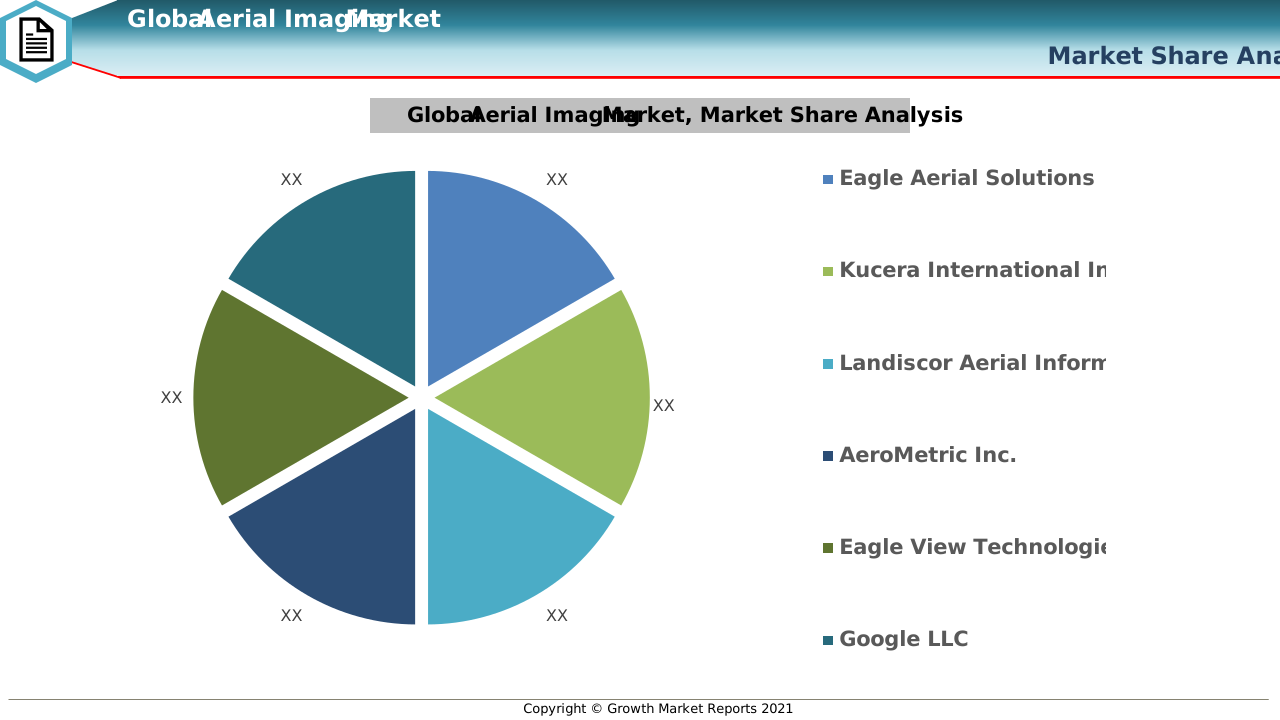
Key players competing in the global aerial imaging market are Eagle Aerial Solutions; Kucera International Inc.; Landiscor Aerial Information; AeroMetric Inc.; Eagle View Technologies; and Google LLC. Aerial photography, orthophotography, plotting, stereo compilation, and volumetric surveys are among the major services provided by Kucera International Inc. Meanwhile, construction, real estate, solar, GIS, energy & utilities, safety, and government applications are some of the key services offered by Eagle View Technologies using the aerial imaging technology.
Advancements include multispectral and hyperspectral sensors, integration with GIS, AI-powered analytics, cloud-based software, and improved drone capabilities.
Major players include Hexagon AB, Nearmap Ltd., EagleView Technologies, Fugro N.V., Bluesky International Ltd., DroneDeploy, and PrecisionHawk Inc.
Key challenges include regulatory restrictions, privacy concerns, airspace management issues, and data security risks.
The primary platforms include fixed-wing aircraft, helicopters, UAVs/drones, and other platforms like balloons and blimps.
North America holds the largest market share, followed by Europe and Asia Pacific. Asia Pacific is the fastest-growing region due to rapid urbanization and infrastructure development.
Aerial imaging is widely used for geospatial mapping, disaster management, urban planning, surveillance and monitoring, and energy and resource management.
Major end-users include government, agriculture and forestry, energy, defense, civil engineering, insurance, and sectors involved in urban planning, disaster management, and environmental monitoring.
Key growth drivers include the adoption of advanced imaging technologies, expanding applications in geospatial analytics, increased use of UAVs/drones, and the integration of AI and machine learning in data processing.
The aerial imaging market is expected to grow at a CAGR of 13.2% from 2025 to 2033, reaching approximately USD 9.97 billion by 2033.
As of 2024, the global aerial imaging market size reached USD 3.42 billion.