Drones Market Research Report 2034

Drones Market Research Report 2034

Segments - by Product Type (Commercial Drones, Consumer Drones, Military Drones, Others), by Application (Aerial Photography, Agriculture, Surveillance & Security, Mapping & Surveying, Delivery & Logistics, Others), by Payload (Camera, Sensors, GPS, Others), by End-User (Agriculture, Construction, Defense, Media & Entertainment, Logistics, Others)

https://growthmarketreports.com/Raksha
Author : Raksha Sharma
https://growthmarketreports.com/Vaibhav
Fact-checked by : V. Chandola
https://growthmarketreports.com/Shruti
Editor : Shruti Bhat

Last Updated : Jun, 2026 | Report ID :AD-4285 | 4.9 Rating | 70 Reviews | 265 Pages | Format : Docx PDF

Report Description

This report is updated with the latest market data and insights as of June 2026. Base year: 2025  |  Forecast period: 2026-2034


Drones Market Outlook

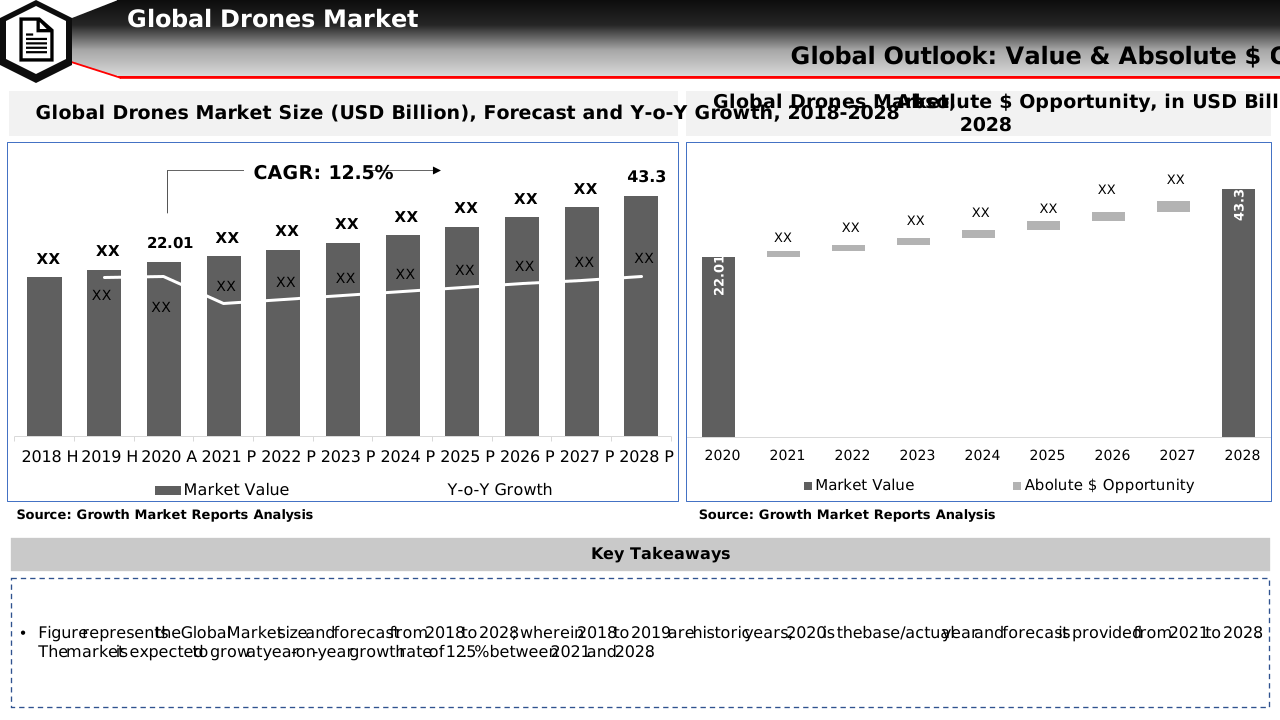
According to our latest research, the global drones market size reached USD 43.2 billion in 2025, driven by robust adoption across commercial, consumer, and military sectors. The market is anticipated to grow at a CAGR of 13.5% from 2026 to 2034, projecting the total market value to reach approximately USD 132.4 billion by 2034. This substantial growth is propelled by technological advancements, regulatory support, and expanding applications across various industries, making drones an integral part of modern business and defense operations worldwide.

Global Drones Market Size Forecast 2025-2034, USD Billion

One of the primary growth factors for the drones market is the rapid technological evolution in drone hardware and software, which has dramatically enhanced their capabilities and cost-effectiveness. Innovations such as improved battery life, advanced sensors, AI-driven navigation systems, and real-time 5G data transmission are enabling drones to operate in more complex environments and perform sophisticated tasks with higher accuracy. These advancements have broadened the potential applications of drones, from precision agriculture and infrastructure inspection to emergency response and environmental monitoring. As a result, organizations are increasingly integrating UAVs into their workflows to optimize efficiency, reduce operational costs, and improve decision-making through high-quality aerial data. The growing ecosystem of drone-based services is further accelerating market penetration across industries.

Another significant driver fueling the growth of the drones market is the favorable regulatory environment in key regions. Governments and aviation authorities across North America, Europe, and Asia Pacific are actively working to streamline drone regulations, making it easier for commercial operators to deploy drones at scale. Initiatives such as the Federal Aviation Administration's (FAA) Beyond Visual Line of Sight (BVLOS) frameworks in the United States and the European Union Aviation Safety Agency's (EASA) harmonized U-space regulations are encouraging the adoption of drones in sectors like logistics, construction, and public safety. These regulatory frameworks are not only fostering innovation but also building trust among end-users, further accelerating the market's expansion into the 2026-2034 forecast period.

The diversification of drone applications across multiple industries is also a crucial growth factor. In agriculture, drones are revolutionizing crop monitoring, spraying, and yield assessment, leading to increased productivity and sustainability. In logistics, the use of drones for last-mile delivery is gaining momentum, particularly in remote or urban areas where traditional delivery methods face challenges. Additionally, the defense sector continues to invest heavily in unmanned aerial vehicles (UAVs) for surveillance, reconnaissance, and combat missions, ensuring a steady demand for advanced drone technologies. The convergence of these diverse applications is creating a robust ecosystem that supports sustained market growth across the entire forecast period.

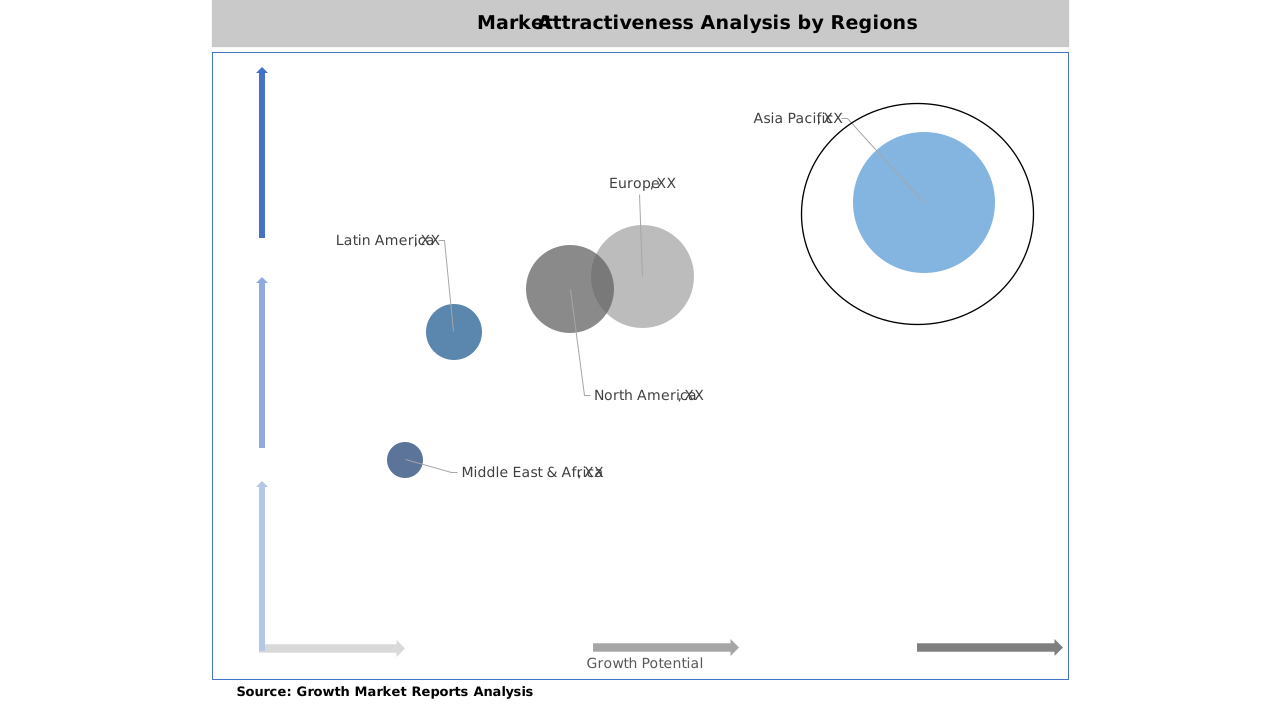
Regionally, the drones market exhibits strong growth potential across North America, Asia Pacific, and Europe, with each region displaying unique drivers and challenges. North America leads in terms of market share, attributed to its advanced technological infrastructure, strong presence of key market players, and supportive regulatory frameworks. Asia Pacific is the fastest-growing region, driven by increasing investments in smart agriculture, urban development, and defense modernization, particularly in China, Japan, and India. Europe, with its focus on innovation and sustainability, is witnessing rapid adoption in sectors such as environmental monitoring and precision farming. The Middle East and Africa and Latin America are also showing promising growth due to rising investments in infrastructure and security applications.

Product Type Analysis

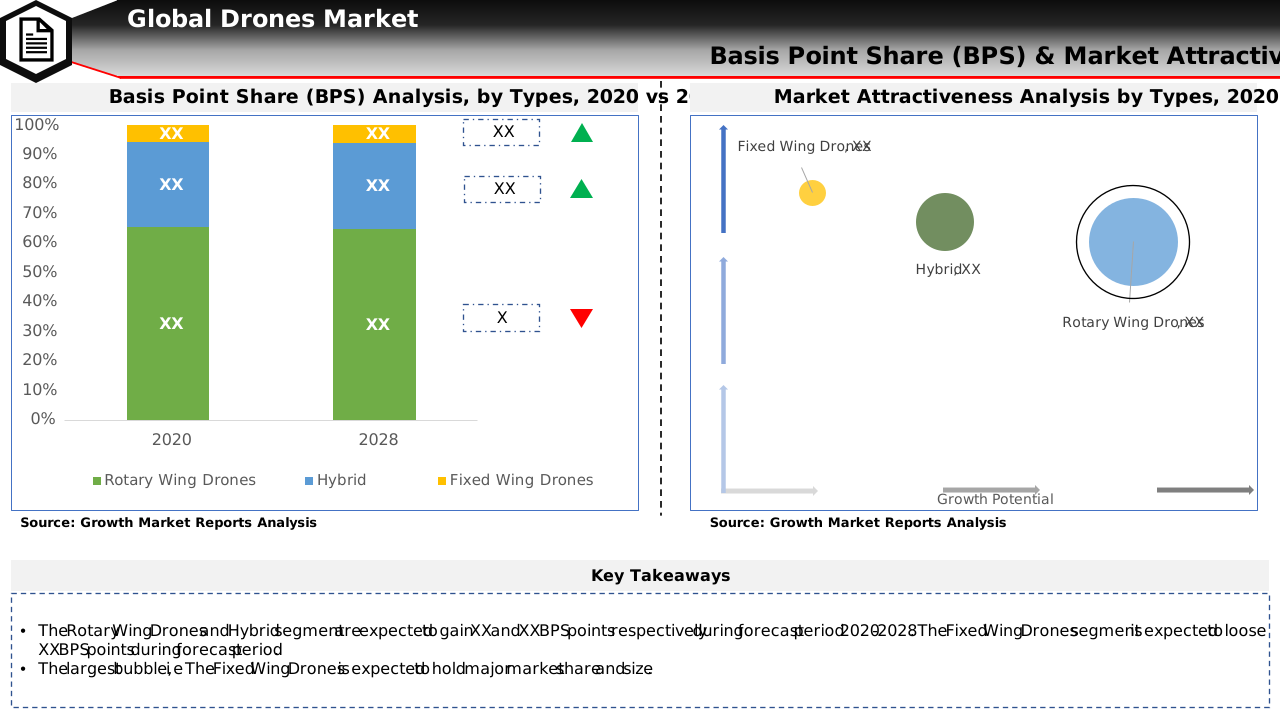
The product type segment of the drones market is broadly categorized into commercial drones, consumer drones, military drones, and others. Commercial drones are experiencing significant demand as businesses across sectors such as agriculture, construction, and logistics increasingly rely on UAVs for aerial surveys, asset monitoring, and delivery services. These drones are typically equipped with advanced payloads like high-resolution cameras and sensors, enabling them to perform specialized tasks with precision. The commercial segment holds approximately 38.5% of the global market share in 2025, characterized by rapid innovation, with manufacturers introducing drones tailored for specific industry needs, such as multispectral imaging for agriculture or thermal sensors for infrastructure inspection. Companies such as Skydio Inc. and AgEagle Aerial Systems are notable contributors to this segment's growth. For a deeper dive into this space, the industrial drone market report provides additional granular analysis.

Drones Market Share by Product Type 2025

Consumer drones represent another vital segment, primarily driven by recreational and hobbyist use, accounting for around 22.0% of the market in 2025. The proliferation of affordable, easy-to-fly drones with user-friendly interfaces has democratized aerial photography and videography, making it accessible to a broader audience. Companies including DJI and Autel Robotics are focusing on enhancing features such as flight stability, camera quality, and real-time video streaming to attract tech-savvy consumers. Additionally, the integration of safety features like obstacle avoidance and automated return-to-home functions is boosting consumer confidence and expanding the market base. As drone technology becomes more mainstream, the consumer drone segment is expected to witness steady growth, supported by rising interest in drone racing, personal photography, and social media content creation.

The military drones segment commands approximately 32.5% of the overall market in 2025, driven by increasing defense budgets and the need for advanced surveillance, reconnaissance, and combat capabilities. Military drone platforms, including those developed by General Atomics Aeronautical Systems, Northrop Grumman, and AeroVironment, are equipped with state-of-the-art technologies such as stealth, long-endurance flight, and precision strike capabilities. Ongoing geopolitical tensions and the emphasis on border security are compelling governments to invest heavily in drone technologies. The development of autonomous drones and swarm technologies is expected to revolutionize military operations across the 2026-2034 forecast period.

Other product types in the drones market include specialized drones designed for industrial inspections, scientific research, and emergency response, collectively accounting for approximately 7.0% of the market. These drones are often customized to meet specific operational requirements, such as high payload capacity, extended flight duration, or resistance to harsh environmental conditions. The versatility and adaptability of drones in addressing unique challenges across different industries are contributing to the expansion of this segment. As technology continues to evolve, new product categories are emerging to cater to niche applications, further diversifying the market landscape through the forecast period.

Report Scope

Attributes Details
Report Title Drones Market Research Report 2034
By Product Type Commercial Drones, Consumer Drones, Military Drones, Others
By Application Aerial Photography, Agriculture, Surveillance & Security, Mapping & Surveying, Delivery & Logistics, Others
By Payload Camera, Sensors, GPS, Others
By End-User Agriculture, Construction, Defense, Media & Entertainment, Logistics, Others
Regions Covered North America, Europe, APAC, Latin America, MEA
Base Year 2025
Historic Data 2019-2024
Forecast Period 2026-2034
Number of Pages 265
Number of Tables & Figures 273
Customization Available Yes, the report can be customized as per your need.

Application Analysis

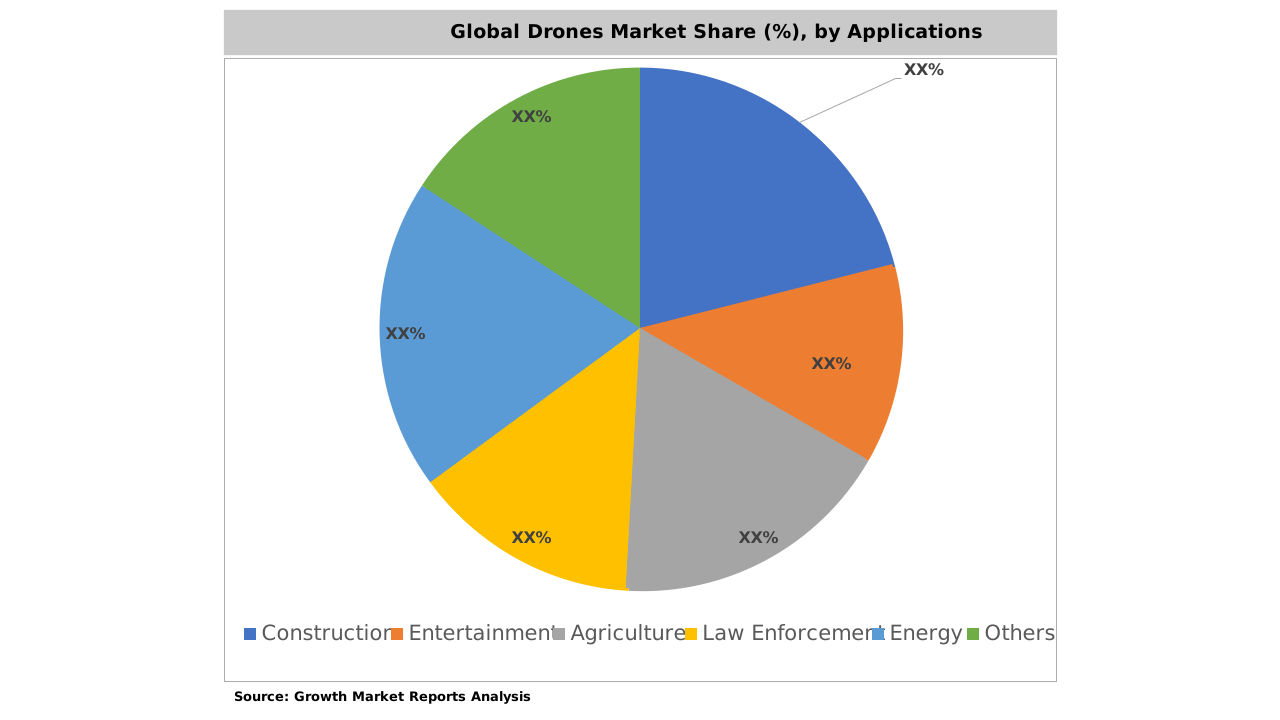
The application segment of the drones market is highly diverse, reflecting the wide-ranging utility of UAVs across industries. Aerial photography remains one of the most prominent applications, with drones revolutionizing the way images and videos are captured for media, entertainment, real estate, and tourism. The ability to obtain high-resolution aerial footage at a fraction of the cost and risk associated with traditional methods has made drones an indispensable tool for photographers and filmmakers. The integration of advanced camera technologies, such as 4K and 8K resolution, optical zoom, and 360-degree imaging, is further enhancing the quality and creative potential of aerial photography, driving continued growth in this segment through 2034.

Agriculture is another key application area, where drones are transforming traditional farming practices through precision agriculture. UAVs equipped with multispectral sensors and advanced imaging technologies enable farmers to monitor crop health, assess soil conditions, and optimize irrigation and fertilization. This data-driven approach not only increases yield and reduces resource wastage but also supports sustainable farming practices. The growing need for food security and efficient resource management is encouraging the adoption of drones in agriculture, particularly in emerging economies with large agrarian sectors. As drone technology becomes more accessible and affordable, its penetration in agriculture is accelerating, making it one of the fastest-growing application segments in the 2026-2034 period.

In the surveillance and security domain, drones are increasingly being deployed by law enforcement agencies, private security firms, and critical infrastructure operators. Their ability to provide real-time aerial surveillance, monitor large areas, and access hard-to-reach locations makes them invaluable for crime prevention, disaster response, and border security. The growing application of drones in law enforcement and public safety is a particularly dynamic area, with thermal imaging, night vision, and automated tracking capabilities enhancing operational effectiveness. Rising concerns over public safety are expected to drive significant growth in this segment over the forecast period.

Mapping and surveying is another rapidly growing application for drones, particularly in construction, mining, and environmental monitoring. UAVs equipped with LiDAR, photogrammetry, and GPS technologies are capable of generating highly accurate topographical maps and 3D models, enabling engineers and planners to make informed decisions. The speed and cost-effectiveness of drone-based mapping compared to traditional survey methods are compelling organizations to adopt UAVs for large-scale projects. As infrastructure development accelerates globally through 2034, the demand for drone-based mapping and surveying solutions is poised to increase substantially.

The delivery and logistics application is gaining traction as companies explore innovative solutions for last-mile delivery, especially in urban and remote areas. Drones offer the potential to reduce delivery times, lower costs, and minimize environmental impact by bypassing road congestion and reaching inaccessible locations. Major logistics players and e-commerce giants are investing in pilot projects and regulatory trials to assess the feasibility of drone-based delivery networks. While widespread adoption faces regulatory and technological challenges, the long-term prospects for this application remain highly promising, particularly as advancements in battery technology and unmanned traffic management systems are realized over the 2026-2034 forecast period.

Payload Analysis

The payload segment is a critical determinant of drone performance and utility, encompassing components such as cameras, sensors, GPS units, and other specialized equipment. Cameras represent the most widely used payload, enabling a broad spectrum of applications from photography and videography to surveillance and inspection. The evolution of camera technology, including higher resolutions, optical zoom, and AI-powered image stabilization, has significantly enhanced the capabilities of drones, making them indispensable tools across industries. Manufacturers including Teledyne FLIR and DJI are also integrating AI-powered image recognition and analytics features, further expanding the value proposition of camera-equipped drones in 2025 and beyond.

Sensors are another essential payload category, providing drones with the ability to collect critical data for a variety of applications. Multispectral, hyperspectral, thermal, and LiDAR sensors are commonly used in agriculture, environmental monitoring, and infrastructure inspection. These sensors enable drones to detect crop stress, monitor environmental changes, and identify structural defects with high precision. The increasing demand for data-driven decision-making is fueling the adoption of sensor-equipped drones, particularly in sectors that require real-time, actionable insights. The sensor payload segment is expected to be one of the fastest-growing payload categories through 2034, driven by advancements in miniaturization and cost reduction.

GPS units are integral to modern drone operations, facilitating precise navigation, geofencing, and automated flight paths. The integration of advanced multi-constellation GPS technologies has enabled drones to perform complex missions autonomously, reducing the need for manual intervention and enhancing operational efficiency. GPS-enabled drones are widely used in mapping, surveying, and delivery applications, where accuracy and reliability are paramount. As satellite navigation systems, including Galileo and BeiDou, become more sophisticated, the capabilities of GPS-equipped drones are expected to expand further, supporting new use cases and operational models across the forecast period.

Other payloads in the drones market include communication modules, delivery mechanisms, and specialized instruments for scientific research and industrial applications. The ability to customize payloads according to specific mission requirements is a key differentiator for drone manufacturers, allowing them to cater to a wide range of customer needs. The trend towards modular payloads, where users can easily swap components, is gaining popularity, providing greater flexibility and cost-effectiveness. As the range of available payloads continues to grow, drones are expected to play an increasingly central role in data collection, analysis, and task execution across industries through 2034.

End-User Analysis

The end-user landscape of the drones market is characterized by a diverse array of industries leveraging UAVs to enhance their operations. Agriculture remains a leading end-user in 2025, with drones enabling farmers to optimize crop management, monitor field conditions, and improve yield predictions. The adoption of drones in agriculture is driven by the need for precision, efficiency, and sustainability, particularly in regions facing labor shortages and resource constraints. Government initiatives promoting smart farming and technological innovation are further accelerating the integration of drones into agricultural practices globally.

The construction industry is another major adopter of drone technology, utilizing UAVs for site surveys, progress monitoring, and safety inspections. Drones provide construction professionals with real-time aerial views of project sites, enabling them to identify potential issues, track progress, and ensure compliance with safety standards. The use of drones in construction not only improves project efficiency but also reduces costs associated with manual inspections and rework. As the demand for infrastructure development continues to rise globally through 2034, the role of drones in construction is expected to become increasingly prominent, supported by the expansion of the broader industrial UAV ecosystem.

In the defense sector, drones are indispensable for surveillance, reconnaissance, and combat missions. The ability to operate in hostile environments, gather intelligence, and deliver payloads with precision makes drones a critical asset for modern military operations. Defense agencies are investing in advanced UAV technologies, including autonomous systems and swarm drones developed by companies like Shield AI and Elbit Systems. The ongoing evolution of military tactics and the emphasis on unmanned solutions are expected to sustain high demand for drones in the defense sector over the 2026-2034 forecast period.

The media and entertainment industry is leveraging drones to capture stunning aerial footage for films, documentaries, and live events. The unique perspectives offered by drones have transformed visual storytelling, enabling content creators to push creative boundaries. The growing popularity of drone racing and aerial photography as recreational activities is also contributing to the expansion of this end-user segment. As drones become more affordable and accessible, their adoption in media and entertainment is set to rise, supported by advancements in camera technology and flight stability through the forecast period.

The logistics sector is actively exploring the use of drones for last-mile delivery, inventory management, and warehouse operations. Drones offer the potential to streamline logistics processes, reduce delivery times, and enhance supply chain visibility. Pilot projects and regulatory trials are underway in various regions to assess the feasibility and scalability of drone-based logistics solutions. While challenges such as airspace management and payload limitations persist, the long-term outlook for drones in logistics remains highly positive, particularly as technology and regulatory frameworks continue to evolve across the 2026-2034 period.

Opportunities & Threats

The drones market presents a multitude of opportunities for growth and innovation, particularly as industries seek to harness the benefits of UAV technology for enhanced efficiency and productivity. The increasing adoption of drones in emerging applications such as precision agriculture, environmental monitoring, and smart cities is creating new avenues for market expansion. The integration of artificial intelligence, machine learning, and IoT technologies is enabling drones to perform complex tasks autonomously, opening up possibilities for fully automated operations in sectors like logistics, infrastructure inspection, and disaster response. Additionally, the development of modular and customizable drones is allowing manufacturers to cater to niche markets and specialized use cases, further broadening the market's scope across the 2026-2034 forecast period. The rapid emergence of miniaturized drone platforms is also expanding deployment options in constrained environments.

Another significant opportunity lies in the evolution of regulatory frameworks and airspace management systems. As governments and aviation authorities work to establish clear guidelines for drone operations, the path is being paved for large-scale commercial deployments. The introduction of unmanned traffic management (UTM) systems and remote identification protocols is expected to enhance safety, streamline operations, and facilitate the integration of drones into national airspace. These regulatory advancements, coupled with ongoing investments in research and development, are likely to accelerate the adoption of drones across industries and regions, driving sustained market growth over the forecast period.

Despite the promising outlook, the drones market faces several restraining factors that could impede its growth. Regulatory challenges, particularly in terms of airspace restrictions, privacy concerns, and safety standards, remain a significant barrier to widespread adoption. The risk of unauthorized or malicious drone activities, such as smuggling, surveillance, or attacks, has prompted authorities to impose stringent regulations and enforcement measures. Additionally, technological limitations such as limited battery life, payload capacity, and susceptibility to weather conditions can restrict the operational capabilities of drones. Cybersecurity threats and data privacy concerns are also gaining prominence as drones collect and transmit increasing volumes of sensitive data. Addressing these challenges will require continued collaboration between industry stakeholders, regulators, and technology providers to ensure the safe, efficient, and responsible use of drones through 2034.

Regional Outlook

The regional analysis of the drones market reveals significant disparities in market size, growth rates, and adoption patterns across different geographies. North America currently leads the global market, accounting for approximately 38.5% of global market share, equivalent to roughly USD 16.6 billion in 2025. The region's dominance is attributed to its advanced technological infrastructure, strong presence of leading drone manufacturers including Skydio, AeroVironment, and General Atomics, and a supportive regulatory environment. The United States, in particular, is at the forefront of drone innovation, with widespread adoption across commercial, consumer, and defense sectors. Robust R&D investments and favorable FAA policies, including expanded BVLOS authorizations, are expected to sustain North America's leadership position through 2034.

Drones Market Regional Share 2025

Asia Pacific is emerging as the fastest-growing region in the drones market, with a projected CAGR of 15.8% from 2026 to 2034. The market size in Asia Pacific reached approximately USD 12.3 billion in 2025, representing 28.5% of global share, driven by increasing investments in smart agriculture, urban development, and defense modernization. China, Japan, and India are the primary contributors to regional growth, supported by government initiatives, rising demand for advanced technologies, and a burgeoning startup ecosystem. The rapid pace of urbanization and infrastructure development in Asia Pacific is creating significant opportunities for drone adoption in construction, logistics, and public safety applications through the forecast period.

Europe holds a substantial share of the drones market, with a market size of approximately USD 9.3 billion in 2025, representing 21.5% of the global total. The region is characterized by a strong focus on innovation, sustainability, and regulatory harmonization through the European Union Aviation Safety Agency's (EASA) U-space framework. European countries are leveraging drones for environmental monitoring, precision farming, and infrastructure inspection, driven by the need for efficient resource management and compliance with environmental regulations. The Middle East and Africa and Latin America, while smaller in terms of market share (6.5% and 5.0% respectively in 2025), are showing promising growth potential due to rising investments in security, infrastructure, and logistics. Overall, the regional outlook for the drones market is highly positive, with each geography offering unique opportunities and challenges for industry stakeholders through 2034.

Competitor Outlook

The drones market is characterized by intense competition, rapid technological innovation, and a dynamic landscape of established players and emerging startups. Major companies are investing heavily in research and development to enhance drone capabilities, improve reliability, and expand their product portfolios. The competitive environment is further intensified by the entry of technology companies and aerospace firms seeking to capitalize on the growing demand for UAVs across commercial, consumer, and defense sectors. Strategic partnerships, mergers, and acquisitions are common as companies seek to strengthen their market positions, access new technologies, and expand their global footprint entering the 2026-2034 forecast period.

Innovation is a key differentiator in the drones market, with companies focusing on developing advanced features such as autonomous flight, AI-powered analytics, and modular payloads. The ability to offer end-to-end solutions, including hardware, software, and services, is becoming increasingly important as customers seek integrated and scalable drone platforms. Companies are also exploring new business models, such as drone-as-a-service (DaaS), to cater to the evolving needs of end-users and lower the barriers to adoption. The emphasis on regulatory compliance, cybersecurity, and data security is shaping product development and go-to-market strategies, particularly in regions with stringent regulatory frameworks.

The competitive landscape is further shaped by the growing influence of startups and niche players specializing in specific applications or technologies. Skydio Inc. has emerged as a strong contender in the autonomous drone space, while Shield AI is pioneering AI-driven military UAV platforms. These companies are driving innovation in areas such as drone swarms, AI-based navigation, and industry-specific solutions, challenging established players and contributing to the market's dynamism. Collaboration between hardware manufacturers, software developers, and service providers is fostering the development of comprehensive solutions that address the complex needs of modern businesses and government agencies.

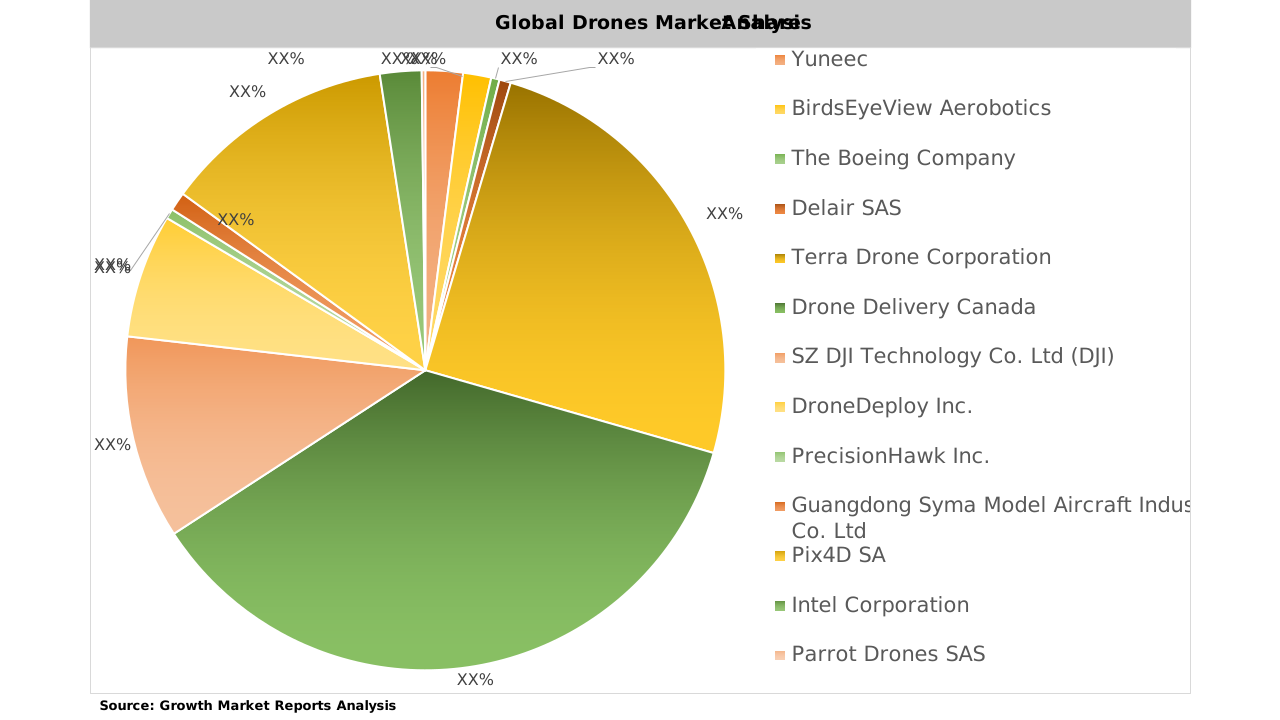
Key players in the drones market include DJI, Parrot SA, AeroVironment Inc., Northrop Grumman Corporation, General Atomics Aeronautical Systems, Boeing (Boeing Insitu), Lockheed Martin Corporation, and Skydio Inc. DJI dominates the consumer and commercial drone segments with its extensive range of high-performance UAVs and a strong global distribution network. Parrot SA is known for its innovative enterprise solutions tailored for agriculture and mapping applications. AeroVironment Inc. and Northrop Grumman Corporation are leading suppliers of military and defense drones, offering advanced UAVs for surveillance, reconnaissance, and combat missions. General Atomics Aeronautical Systems and Lockheed Martin are key players in the defense sector, focusing on large, long-endurance platforms for strategic operations. EHang and Joby Aviation are pioneering urban air mobility solutions, while Autel Robotics and Teledyne FLIR are strengthening their positions in commercial and sensor-equipped drone markets.

These companies are continuously expanding their product offerings, investing in emerging technologies, and exploring new markets to maintain their competitive edge through 2034. The focus on sustainability, regulatory compliance, and customer-centric innovation is expected to shape the future trajectory of the drones market, ensuring sustained growth and value creation for all industry stakeholders.

Key Players

  • DJI
  • Parrot SA
  • AeroVironment Inc.
  • Yuneec International
  • Teledyne FLIR
  • Northrop Grumman Corporation
  • Lockheed Martin Corporation
  • Boeing (Boeing Insitu)
  • General Atomics Aeronautical Systems
  • Elbit Systems Ltd.
  • BAE Systems
  • Thales Group
  • Leonardo S.p.A.
  • EHang
  • Autel Robotics
  • Skydio Inc.
  • AgEagle Aerial Systems
  • Joby Aviation
  • Shield AI
  • Textron Systems

Segments

The Drones market has been segmented on the basis of

Product Type

  • Commercial Drones
  • Consumer Drones
  • Military Drones
  • Others

Application

  • Aerial Photography
  • Agriculture
  • Surveillance & Security
  • Mapping & Surveying
  • Delivery & Logistics
  • Others

Payload

  • Camera
  • Sensors
  • GPS
  • Others

End-User

  • Agriculture
  • Construction
  • Defense
  • Media & Entertainment
  • Logistics
  • Others

Frequently Asked Questions

The drones market faces challenges including complex and inconsistent regulatory environments across regions, airspace management and integration with manned aviation, cybersecurity and data privacy concerns, limited battery endurance and payload capacity, counter-drone threats, and public acceptance issues. Addressing these barriers requires coordinated collaboration among technology developers, regulators, and end-users to establish safe and scalable operational frameworks.

The primary applications of drones include aerial photography and videography, precision agriculture, surveillance and security, mapping and surveying, delivery and logistics, infrastructure inspection, environmental monitoring, disaster response, and scientific research. The diversity of applications is a core driver of sustained market growth, enabling drones to create value across virtually every major industry vertical.

Key players in the global drones market include DJI, AeroVironment Inc., Northrop Grumman Corporation, General Atomics Aeronautical Systems, Lockheed Martin Corporation, Boeing (Boeing Insitu), Skydio Inc., Autel Robotics, Teledyne FLIR, EHang, Shield AI, BAE Systems, Thales Group, Leonardo S.p.A., and Parrot SA. These companies lead across commercial, consumer, and defense segments.

North America leads the global drones market with approximately 38.5% of market share in 2025, supported by advanced infrastructure, strong regulatory frameworks, and major industry players. Asia Pacific is the fastest-growing region, projected at a CAGR of 15.8% through 2034, driven by China, India, and Japan. Europe holds a significant share focused on sustainability and precision applications.

Major technological advancements shaping the 2025 drones market include AI-powered autonomous navigation, extended battery life and hybrid propulsion systems, advanced LiDAR and multispectral sensors, 5G-enabled real-time data transmission, swarm drone coordination, and edge computing integration. These innovations are broadening the operational scope of drones and enabling their deployment in complex, large-scale missions.

In agriculture, drones are used for crop health monitoring via multispectral and hyperspectral sensors, precision spraying of fertilizers and pesticides, soil analysis, irrigation management, and yield prediction. These capabilities reduce resource wastage, lower costs, and support sustainable farming. Adoption is accelerating in Asia Pacific, North America, and Europe, driven by the need for food security and labor efficiency.

The main types of drones in the market are commercial drones, consumer drones, military drones, and specialized/industrial drones. Commercial drones hold the largest share, while military drones represent the highest per-unit value. Consumer drones continue to grow in accessibility, and specialized platforms are increasingly addressing niche industrial and scientific requirements.

Key industries driving drone demand include agriculture (precision farming and crop monitoring), defense and security (surveillance and reconnaissance), construction (site mapping and progress monitoring), logistics (last-mile delivery), and media and entertainment (aerial photography and filming). Public safety, environmental monitoring, and energy infrastructure inspection are also emerging as strong demand sources in 2025.

The drones market is projected to grow at a CAGR of 13.5% from 2026 to 2034, reaching approximately USD 132.4 billion by 2034. This growth is supported by technological advancements, favorable regulatory developments, expanding commercial applications, and sustained defense investments worldwide.

The global drones market reached USD 43.2 billion in 2025, driven by robust adoption across commercial, consumer, and military sectors. Rising demand for UAVs in agriculture, logistics, defense, and infrastructure inspection continues to fuel expansion, with the market on track to more than triple in value by 2034.

Table Of Content

Chapter 1 Executive Summary
Chapter 2 Assumptions and Acronyms Used
Chapter 3 Research Methodology
Chapter 4 Drones Market Overview
   4.1 Introduction
      4.1.1 Market Taxonomy
      4.1.2 Market Definition
      4.1.3 Macro-Economic Factors Impacting the Market Growth
   4.2 Drones Market Dynamics
      4.2.1 Market Drivers
      4.2.2 Market Restraints
      4.2.3 Market Opportunity
   4.3 Drones Market - Supply Chain Analysis
      4.3.1 List of Key Suppliers
      4.3.2 List of Key Distributors
      4.3.3 List of Key Consumers
   4.4 Key Forces Shaping the Drones Market
      4.4.1 Bargaining Power of Suppliers
      4.4.2 Bargaining Power of Buyers
      4.4.3 Threat of Substitution
      4.4.4 Threat of New Entrants
      4.4.5 Competitive Rivalry
   4.5 Global Drones Market Size & Forecast, 2023-2032
      4.5.1 Drones Market Size and Y-o-Y Growth
      4.5.2 Drones Market Absolute $ Opportunity

Chapter 5 Global Drones Market Analysis and Forecast By Product Type
   5.1 Introduction
      5.1.1 Key Market Trends & Growth Opportunities By Product Type
      5.1.2 Basis Point Share (BPS) Analysis By Product Type
      5.1.3 Absolute $ Opportunity Assessment By Product Type
   5.2 Drones Market Size Forecast By Product Type
      5.2.1 Commercial Drones
      5.2.2 Consumer Drones
      5.2.3 Military Drones
      5.2.4 Others
   5.3 Market Attractiveness Analysis By Product Type

Chapter 6 Global Drones Market Analysis and Forecast By Application
   6.1 Introduction
      6.1.1 Key Market Trends & Growth Opportunities By Application
      6.1.2 Basis Point Share (BPS) Analysis By Application
      6.1.3 Absolute $ Opportunity Assessment By Application
   6.2 Drones Market Size Forecast By Application
      6.2.1 Aerial Photography
      6.2.2 Agriculture
      6.2.3 Surveillance & Security
      6.2.4 Mapping & Surveying
      6.2.5 Delivery & Logistics
      6.2.6 Others
   6.3 Market Attractiveness Analysis By Application

Chapter 7 Global Drones Market Analysis and Forecast By Payload
   7.1 Introduction
      7.1.1 Key Market Trends & Growth Opportunities By Payload
      7.1.2 Basis Point Share (BPS) Analysis By Payload
      7.1.3 Absolute $ Opportunity Assessment By Payload
   7.2 Drones Market Size Forecast By Payload
      7.2.1 Camera
      7.2.2 Sensors
      7.2.3 GPS
      7.2.4 Others
   7.3 Market Attractiveness Analysis By Payload

Chapter 8 Global Drones Market Analysis and Forecast By End-User
   8.1 Introduction
      8.1.1 Key Market Trends & Growth Opportunities By End-User
      8.1.2 Basis Point Share (BPS) Analysis By End-User
      8.1.3 Absolute $ Opportunity Assessment By End-User
   8.2 Drones Market Size Forecast By End-User
      8.2.1 Agriculture
      8.2.2 Construction
      8.2.3 Defense
      8.2.4 Media & Entertainment
      8.2.5 Logistics
      8.2.6 Others
   8.3 Market Attractiveness Analysis By End-User

Chapter 9 Global Drones Market Analysis and Forecast by Region
   9.1 Introduction
      9.1.1 Key Market Trends & Growth Opportunities By Region
      9.1.2 Basis Point Share (BPS) Analysis By Region
      9.1.3 Absolute $ Opportunity Assessment By Region
   9.2 Drones Market Size Forecast By Region
      9.2.1 North America
      9.2.2 Europe
      9.2.3 Asia Pacific
      9.2.4 Latin America
      9.2.5 Middle East & Africa (MEA)
   9.3 Market Attractiveness Analysis By Region

Chapter 10 Coronavirus Disease (COVID-19) Impact 
   10.1 Introduction 
   10.2 Current & Future Impact Analysis 
   10.3 Economic Impact Analysis 
   10.4 Government Policies 
   10.5 Investment Scenario

Chapter 11 North America Drones Analysis and Forecast
   11.1 Introduction
   11.2 North America Drones Market Size Forecast by Country
      11.2.1 U.S.
      11.2.2 Canada
   11.3 Basis Point Share (BPS) Analysis by Country
   11.4 Absolute $ Opportunity Assessment by Country
   11.5 Market Attractiveness Analysis by Country
   11.6 North America Drones Market Size Forecast By Product Type
      11.6.1 Commercial Drones
      11.6.2 Consumer Drones
      11.6.3 Military Drones
      11.6.4 Others
   11.7 Basis Point Share (BPS) Analysis By Product Type 
   11.8 Absolute $ Opportunity Assessment By Product Type 
   11.9 Market Attractiveness Analysis By Product Type
   11.10 North America Drones Market Size Forecast By Application
      11.10.1 Aerial Photography
      11.10.2 Agriculture
      11.10.3 Surveillance & Security
      11.10.4 Mapping & Surveying
      11.10.5 Delivery & Logistics
      11.10.6 Others
   11.11 Basis Point Share (BPS) Analysis By Application 
   11.12 Absolute $ Opportunity Assessment By Application 
   11.13 Market Attractiveness Analysis By Application
   11.14 North America Drones Market Size Forecast By Payload
      11.14.1 Camera
      11.14.2 Sensors
      11.14.3 GPS
      11.14.4 Others
   11.15 Basis Point Share (BPS) Analysis By Payload 
   11.16 Absolute $ Opportunity Assessment By Payload 
   11.17 Market Attractiveness Analysis By Payload
   11.18 North America Drones Market Size Forecast By End-User
      11.18.1 Agriculture
      11.18.2 Construction
      11.18.3 Defense
      11.18.4 Media & Entertainment
      11.18.5 Logistics
      11.18.6 Others
   11.19 Basis Point Share (BPS) Analysis By End-User 
   11.20 Absolute $ Opportunity Assessment By End-User 
   11.21 Market Attractiveness Analysis By End-User

Chapter 12 Europe Drones Analysis and Forecast
   12.1 Introduction
   12.2 Europe Drones Market Size Forecast by Country
      12.2.1 Germany
      12.2.2 France
      12.2.3 Italy
      12.2.4 U.K.
      12.2.5 Spain
      12.2.6 Russia
      12.2.7 Rest of Europe
   12.3 Basis Point Share (BPS) Analysis by Country
   12.4 Absolute $ Opportunity Assessment by Country
   12.5 Market Attractiveness Analysis by Country
   12.6 Europe Drones Market Size Forecast By Product Type
      12.6.1 Commercial Drones
      12.6.2 Consumer Drones
      12.6.3 Military Drones
      12.6.4 Others
   12.7 Basis Point Share (BPS) Analysis By Product Type 
   12.8 Absolute $ Opportunity Assessment By Product Type 
   12.9 Market Attractiveness Analysis By Product Type
   12.10 Europe Drones Market Size Forecast By Application
      12.10.1 Aerial Photography
      12.10.2 Agriculture
      12.10.3 Surveillance & Security
      12.10.4 Mapping & Surveying
      12.10.5 Delivery & Logistics
      12.10.6 Others
   12.11 Basis Point Share (BPS) Analysis By Application 
   12.12 Absolute $ Opportunity Assessment By Application 
   12.13 Market Attractiveness Analysis By Application
   12.14 Europe Drones Market Size Forecast By Payload
      12.14.1 Camera
      12.14.2 Sensors
      12.14.3 GPS
      12.14.4 Others
   12.15 Basis Point Share (BPS) Analysis By Payload 
   12.16 Absolute $ Opportunity Assessment By Payload 
   12.17 Market Attractiveness Analysis By Payload
   12.18 Europe Drones Market Size Forecast By End-User
      12.18.1 Agriculture
      12.18.2 Construction
      12.18.3 Defense
      12.18.4 Media & Entertainment
      12.18.5 Logistics
      12.18.6 Others
   12.19 Basis Point Share (BPS) Analysis By End-User 
   12.20 Absolute $ Opportunity Assessment By End-User 
   12.21 Market Attractiveness Analysis By End-User

Chapter 13 Asia Pacific Drones Analysis and Forecast
   13.1 Introduction
   13.2 Asia Pacific Drones Market Size Forecast by Country
      13.2.1 China
      13.2.2 Japan
      13.2.3 South Korea
      13.2.4 India
      13.2.5 Australia
      13.2.6 South East Asia (SEA)
      13.2.7 Rest of Asia Pacific (APAC)
   13.3 Basis Point Share (BPS) Analysis by Country
   13.4 Absolute $ Opportunity Assessment by Country
   13.5 Market Attractiveness Analysis by Country
   13.6 Asia Pacific Drones Market Size Forecast By Product Type
      13.6.1 Commercial Drones
      13.6.2 Consumer Drones
      13.6.3 Military Drones
      13.6.4 Others
   13.7 Basis Point Share (BPS) Analysis By Product Type 
   13.8 Absolute $ Opportunity Assessment By Product Type 
   13.9 Market Attractiveness Analysis By Product Type
   13.10 Asia Pacific Drones Market Size Forecast By Application
      13.10.1 Aerial Photography
      13.10.2 Agriculture
      13.10.3 Surveillance & Security
      13.10.4 Mapping & Surveying
      13.10.5 Delivery & Logistics
      13.10.6 Others
   13.11 Basis Point Share (BPS) Analysis By Application 
   13.12 Absolute $ Opportunity Assessment By Application 
   13.13 Market Attractiveness Analysis By Application
   13.14 Asia Pacific Drones Market Size Forecast By Payload
      13.14.1 Camera
      13.14.2 Sensors
      13.14.3 GPS
      13.14.4 Others
   13.15 Basis Point Share (BPS) Analysis By Payload 
   13.16 Absolute $ Opportunity Assessment By Payload 
   13.17 Market Attractiveness Analysis By Payload
   13.18 Asia Pacific Drones Market Size Forecast By End-User
      13.18.1 Agriculture
      13.18.2 Construction
      13.18.3 Defense
      13.18.4 Media & Entertainment
      13.18.5 Logistics
      13.18.6 Others
   13.19 Basis Point Share (BPS) Analysis By End-User 
   13.20 Absolute $ Opportunity Assessment By End-User 
   13.21 Market Attractiveness Analysis By End-User

Chapter 14 Latin America Drones Analysis and Forecast
   14.1 Introduction
   14.2 Latin America Drones Market Size Forecast by Country
      14.2.1 Brazil
      14.2.2 Mexico
      14.2.3 Rest of Latin America (LATAM)
   14.3 Basis Point Share (BPS) Analysis by Country
   14.4 Absolute $ Opportunity Assessment by Country
   14.5 Market Attractiveness Analysis by Country
   14.6 Latin America Drones Market Size Forecast By Product Type
      14.6.1 Commercial Drones
      14.6.2 Consumer Drones
      14.6.3 Military Drones
      14.6.4 Others
   14.7 Basis Point Share (BPS) Analysis By Product Type 
   14.8 Absolute $ Opportunity Assessment By Product Type 
   14.9 Market Attractiveness Analysis By Product Type
   14.10 Latin America Drones Market Size Forecast By Application
      14.10.1 Aerial Photography
      14.10.2 Agriculture
      14.10.3 Surveillance & Security
      14.10.4 Mapping & Surveying
      14.10.5 Delivery & Logistics
      14.10.6 Others
   14.11 Basis Point Share (BPS) Analysis By Application 
   14.12 Absolute $ Opportunity Assessment By Application 
   14.13 Market Attractiveness Analysis By Application
   14.14 Latin America Drones Market Size Forecast By Payload
      14.14.1 Camera
      14.14.2 Sensors
      14.14.3 GPS
      14.14.4 Others
   14.15 Basis Point Share (BPS) Analysis By Payload 
   14.16 Absolute $ Opportunity Assessment By Payload 
   14.17 Market Attractiveness Analysis By Payload
   14.18 Latin America Drones Market Size Forecast By End-User
      14.18.1 Agriculture
      14.18.2 Construction
      14.18.3 Defense
      14.18.4 Media & Entertainment
      14.18.5 Logistics
      14.18.6 Others
   14.19 Basis Point Share (BPS) Analysis By End-User 
   14.20 Absolute $ Opportunity Assessment By End-User 
   14.21 Market Attractiveness Analysis By End-User

Chapter 15 Middle East & Africa (MEA) Drones Analysis and Forecast
   15.1 Introduction
   15.2 Middle East & Africa (MEA) Drones Market Size Forecast by Country
      15.2.1 Saudi Arabia
      15.2.2 South Africa
      15.2.3 UAE
      15.2.4 Rest of Middle East & Africa (MEA)
   15.3 Basis Point Share (BPS) Analysis by Country
   15.4 Absolute $ Opportunity Assessment by Country
   15.5 Market Attractiveness Analysis by Country
   15.6 Middle East & Africa (MEA) Drones Market Size Forecast By Product Type
      15.6.1 Commercial Drones
      15.6.2 Consumer Drones
      15.6.3 Military Drones
      15.6.4 Others
   15.7 Basis Point Share (BPS) Analysis By Product Type 
   15.8 Absolute $ Opportunity Assessment By Product Type 
   15.9 Market Attractiveness Analysis By Product Type
   15.10 Middle East & Africa (MEA) Drones Market Size Forecast By Application
      15.10.1 Aerial Photography
      15.10.2 Agriculture
      15.10.3 Surveillance & Security
      15.10.4 Mapping & Surveying
      15.10.5 Delivery & Logistics
      15.10.6 Others
   15.11 Basis Point Share (BPS) Analysis By Application 
   15.12 Absolute $ Opportunity Assessment By Application 
   15.13 Market Attractiveness Analysis By Application
   15.14 Middle East & Africa (MEA) Drones Market Size Forecast By Payload
      15.14.1 Camera
      15.14.2 Sensors
      15.14.3 GPS
      15.14.4 Others
   15.15 Basis Point Share (BPS) Analysis By Payload 
   15.16 Absolute $ Opportunity Assessment By Payload 
   15.17 Market Attractiveness Analysis By Payload
   15.18 Middle East & Africa (MEA) Drones Market Size Forecast By End-User
      15.18.1 Agriculture
      15.18.2 Construction
      15.18.3 Defense
      15.18.4 Media & Entertainment
      15.18.5 Logistics
      15.18.6 Others
   15.19 Basis Point Share (BPS) Analysis By End-User 
   15.20 Absolute $ Opportunity Assessment By End-User 
   15.21 Market Attractiveness Analysis By End-User

Chapter 16 Competition Landscape 
   16.1 Drones Market: Competitive Dashboard
   16.2 Global Drones Market: Market Share Analysis, 2023
   16.3 Company Profiles (Details – Overview, Financials, Developments, Strategy) 
      16.3.1 DJI
      16.3.2 Parrot SA
      16.3.3 AeroVironment Inc.
      16.3.4 Yuneec International
      16.3.5 Teledyne FLIR
      16.3.6 Northrop Grumman Corporation
      16.3.7 Lockheed Martin Corporation
      16.3.8 Boeing (Boeing Insitu)
      16.3.9 General Atomics Aeronautical Systems
      16.3.10 Elbit Systems Ltd.
      16.3.11 BAE Systems
      16.3.12 Thales Group
      16.3.13 Leonardo S.p.A.
      16.3.14 EHang
      16.3.15 Autel Robotics
      16.3.16 Skydio Inc.
      16.3.17 AgEagle Aerial Systems
      16.3.18 Joby Aviation
      16.3.19 Shield AI
      16.3.20 Textron Systems

Methodology

Our Clients

sinopec
Deloitte
Nestle SA
Siemens Healthcare
The John Holland Group
Microsoft
General Electric
Dassault Aviation