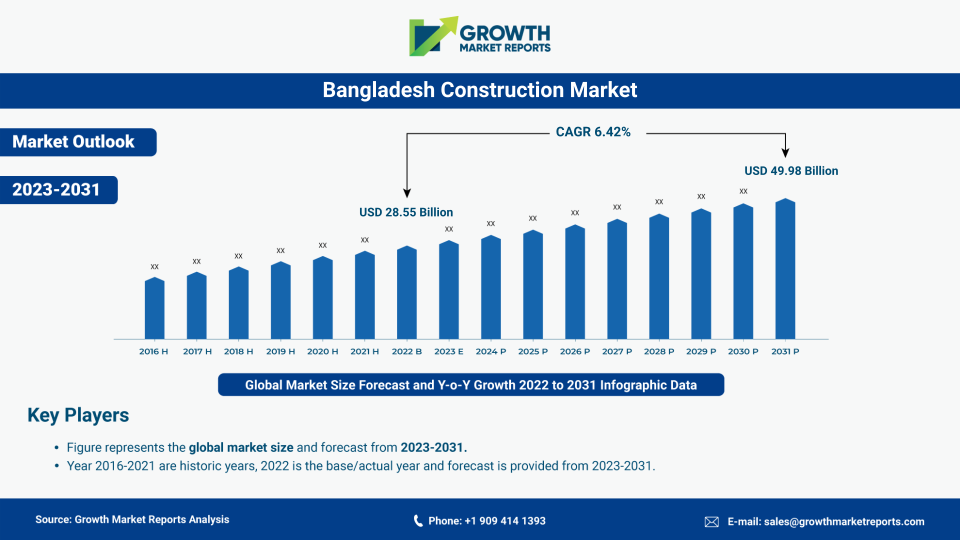
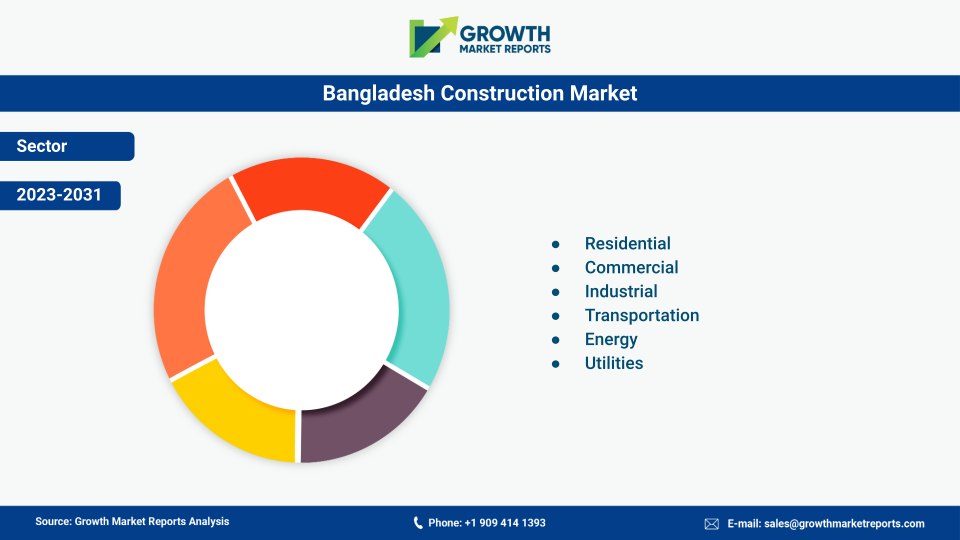
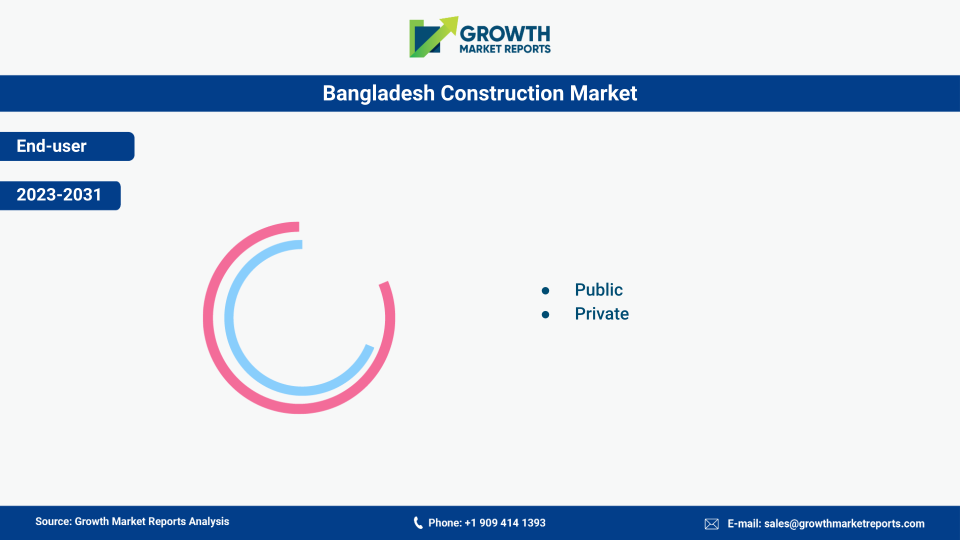
Segments - by Type (Residential, Commercial, Industrial, Infrastructure), by Construction Method (Traditional, Modular, Prefabricated), by End-User (Private, Public), by Material (Concrete, Wood, Metal, Others), by Service (New Construction, Renovation, Maintenance)
According to our latest research, the global construction market size reached USD 13.57 trillion in 2024, reflecting robust activity across both developed and emerging economies. The market is poised for sustained growth, projected to achieve a CAGR of 6.1% from 2025 to 2033, which will see the market expand to an estimated USD 23.12 trillion by the end of the forecast period. This upward trajectory is driven by accelerated urbanization, infrastructure modernization, and rising investments in both residential and commercial sectors worldwide. As per our latest research, the industry is experiencing a notable transformation, with technology integration and sustainability initiatives playing pivotal roles in shaping future growth.
One of the primary growth factors propelling the construction market is the unprecedented pace of urbanization, particularly in the Asia Pacific and African regions. Rapid population growth and urban migration are fueling the demand for new housing, commercial spaces, and public infrastructure, compelling governments and private entities to invest heavily in large-scale construction projects. Additionally, the increasing adoption of smart city concepts and sustainable urban planning is driving investments in technologically advanced and environmentally friendly construction solutions. Governments across the globe are also incentivizing green building practices, creating a favorable environment for market expansion. The push for sustainable development is further reinforced by regulatory frameworks, which mandate energy efficiency and eco-friendly materials in new construction, thus catalyzing innovation and investment in the sector.
Technological advancements are another major catalyst for growth within the global construction market. The integration of digital technologies such as Building Information Modeling (BIM), artificial intelligence, and IoT-enabled equipment is revolutionizing project planning, execution, and maintenance. These innovations are enhancing productivity, reducing project timelines, and improving cost efficiency—key factors that are attracting both public and private sector investments. Modular and prefabricated construction methods are gaining traction as they enable faster project completion, minimize waste, and offer greater flexibility in design. The growing emphasis on automation and robotics in construction activities is also addressing labor shortages and mitigating risks associated with hazardous environments, thereby contributing to overall market growth.
Another significant growth driver is the increasing focus on infrastructure development, particularly in emerging economies. Governments are prioritizing investments in transportation networks, energy infrastructure, healthcare facilities, and educational institutions to support economic growth and improve quality of life. The allocation of funds for large-scale infrastructure projects, such as highways, bridges, airports, and smart grids, is stimulating demand across various construction segments. In developed markets, the need for renovation and maintenance of aging infrastructure is equally critical, providing sustained opportunities for contractors and service providers. The convergence of public and private partnerships is facilitating the mobilization of resources and expertise required to execute complex infrastructure projects, further bolstering the construction market.
From a regional perspective, Asia Pacific continues to dominate the global construction market, accounting for the largest share of total revenues in 2024. The region's growth is underpinned by rapid urbanization, rising disposable incomes, and government-led infrastructure initiatives, particularly in China, India, and Southeast Asia. North America and Europe are also witnessing steady growth, driven by investments in sustainable construction, renovation of existing structures, and the adoption of advanced building technologies. Meanwhile, the Middle East & Africa and Latin America are emerging as high-potential markets due to ongoing economic diversification, urban expansion, and strategic infrastructure projects. Despite regional disparities, the overall outlook for the global construction market remains highly positive, with strong demand anticipated across all major geographies.
The construction market is broadly segmented by type into residential, commercial, industrial, and infrastructure categories, each contributing uniquely to the market’s overall dynamics. The residential construction segment remains the largest, driven by robust demand for housing in rapidly urbanizing regions, particularly in Asia Pacific and Africa. Population growth, rising middle-class incomes, and government initiatives to provide affordable housing are key factors underpinning this segment’s expansion. In addition, the trend towards sustainable and energy-efficient homes is prompting developers to innovate with new materials and technologies, further boosting market growth. Renovation and refurbishment of existing residential properties, especially in developed economies, are also contributing significantly to the segment’s revenue.
The commercial construction segment is experiencing a resurgence, fueled by the recovery of global economies post-pandemic and the expansion of the service sector. The proliferation of retail outlets, office spaces, hotels, and entertainment complexes is driving substantial investments in commercial real estate. The shift towards flexible workspaces and the integration of smart building technologies are shaping the future of commercial construction, with developers increasingly focusing on sustainability, occupant health, and digital connectivity. Furthermore, the rise of e-commerce is spurring demand for logistics hubs, warehouses, and distribution centers, adding a new dimension to the commercial construction landscape.
Within the industrial construction segment, growth is being propelled by the expansion of manufacturing capacities, the rise of Industry 4.0, and increased investments in logistics and warehousing. The global supply chain realignment, driven by geopolitical shifts and the need for resilient production networks, is leading to the development of new industrial parks and facilities. The adoption of automation, robotics, and digital twin technologies is enhancing operational efficiency and safety, making industrial construction projects more attractive to investors. Additionally, the push for sustainable manufacturing practices is influencing the design and construction of energy-efficient industrial buildings.
The infrastructure construction segment is witnessing significant momentum, particularly in emerging markets where governments are prioritizing the development of transportation, energy, and utility networks. Investments in roads, bridges, airports, railways, and smart grids are critical to supporting economic growth and urbanization. Public-private partnerships are playing a vital role in financing and executing large-scale infrastructure projects, leveraging both public sector oversight and private sector expertise. The focus on resilient infrastructure, capable of withstanding climate change impacts, is driving innovation in materials and construction methods, positioning this segment as a key growth driver for the overall market.
| Attributes | Details |
| Report Title | Construction Market Research Report 2033 |
| By Type | Residential, Commercial, Industrial, Infrastructure |
| By Construction Method | Traditional, Modular, Prefabricated |
| By End-User | Private, Public |
| By Material | Concrete, Wood, Metal, Others |
| By Service | New Construction, Renovation, Maintenance |
| Regions Covered | North America, Europe, APAC, Latin America, MEA |
| Base Year | 2024 |
| Historic Data | 2018-2023 |
| Forecast Period | 2025-2033 |
| Number of Pages | 297 |
| Number of Tables & Figures | 287 |
| Customization Available | Yes, the report can be customized as per your need. |
The global construction market is evolving rapidly in terms of construction methods, with traditional, modular, and prefabricated techniques each offering distinct advantages and challenges. Traditional construction methods continue to dominate, especially in regions where labor costs are relatively low and skilled labor is readily available. These methods are valued for their flexibility, adaptability to complex designs, and suitability for both small-scale and large-scale projects. However, traditional construction is often associated with longer project timelines, higher waste generation, and increased exposure to on-site safety risks, prompting industry stakeholders to explore alternative methods that offer greater efficiency and sustainability.
Modular construction is gaining traction as a disruptive force within the industry, driven by its ability to significantly reduce construction time and costs. This method involves the off-site fabrication of building modules, which are then transported and assembled on-site, ensuring higher quality control and minimal weather-related delays. Modular construction is particularly well-suited for residential, commercial, and healthcare projects where speed and scalability are critical. The growing emphasis on sustainability and resource optimization is further propelling the adoption of modular techniques, as they enable precise material usage, reduced waste, and improved energy efficiency.
Prefabricated construction, closely related to modular methods, is experiencing robust growth, especially in markets where rapid urbanization and labor shortages are prominent concerns. Prefabricated components, such as walls, floors, and roofs, are manufactured in controlled factory environments and then transported to the construction site for assembly. This approach not only accelerates project timelines but also enhances structural quality and minimizes on-site disruptions. The adoption of advanced manufacturing technologies, including robotics and automation, is enabling greater customization and scalability in prefabricated construction, making it an attractive option for large-scale infrastructure and industrial projects.
The convergence of digital technologies, such as BIM and IoT, with modular and prefabricated construction methods is revolutionizing project management and execution. Real-time data analytics, remote monitoring, and predictive maintenance are streamlining construction workflows and improving project outcomes. As the industry continues to embrace innovation, the balance between traditional and modern construction methods is expected to shift, with modular and prefabricated techniques capturing a larger share of the market. This transition is being facilitated by supportive regulatory frameworks, increased investment in R&D, and growing awareness of the environmental and economic benefits associated with advanced construction methods.
The construction market is segmented by end-user into private and public sectors, each playing a pivotal role in shaping industry dynamics. The private sector is a major driver of growth, accounting for a significant share of investments in residential, commercial, and industrial construction. Private developers, real estate investors, and multinational corporations are actively participating in the development of new projects, leveraging advanced technologies and innovative business models to enhance efficiency and profitability. The growing demand for premium housing, modern office spaces, and high-tech manufacturing facilities is fueling private sector investments, particularly in rapidly urbanizing regions.
In the public sector, governments at the national, regional, and local levels are prioritizing investments in infrastructure development to support economic growth, improve public services, and enhance quality of life. Public sector projects typically encompass transportation networks, energy infrastructure, educational institutions, healthcare facilities, and affordable housing initiatives. The allocation of public funds for large-scale infrastructure projects is a key driver of market growth, particularly in emerging economies where the need for basic infrastructure is most acute. Public-private partnerships are increasingly being leveraged to mobilize resources, share risks, and ensure the timely delivery of complex projects.
The interplay between private and public sector investments is critical to the overall health of the construction market. While the private sector excels in innovation, efficiency, and responsiveness to market demands, the public sector provides stability, long-term planning, and regulatory oversight. Collaborative approaches, such as joint ventures and concession agreements, are becoming more common, enabling the pooling of expertise and resources to address complex urban and infrastructure challenges. The balance between private and public sector participation varies by region and project type, reflecting local economic conditions, regulatory environments, and societal priorities.
Looking ahead, the construction market is expected to witness increased cross-sector collaboration, with both private and public stakeholders aligning their interests to achieve shared objectives. The emphasis on sustainability, digital transformation, and resilience is driving the adoption of best practices across the industry, ensuring that construction projects deliver long-term value to end-users and society as a whole. The evolving regulatory landscape, coupled with growing investor interest in sustainable and impact-driven projects, is expected to further enhance the role of both private and public sectors in shaping the future of the construction market.
Material selection is a critical factor influencing the performance, sustainability, and cost-effectiveness of construction projects. The market is segmented by material into concrete, wood, metal, and others, each offering unique advantages and applications. Concrete remains the most widely used construction material globally, valued for its strength, durability, and versatility. It is the material of choice for infrastructure, commercial, and high-rise residential projects, where structural integrity and longevity are paramount. Advances in concrete technology, such as high-performance and self-healing concrete, are enhancing its sustainability and reducing environmental impact, further solidifying its dominance in the market.
Wood is experiencing a resurgence in popularity, particularly in regions with abundant forest resources and a strong emphasis on sustainable construction. Engineered wood products, such as cross-laminated timber and glulam, are enabling the construction of taller and more complex wooden structures, challenging traditional perceptions of wood as a material limited to low-rise buildings. Wood’s renewable nature, carbon sequestration capabilities, and aesthetic appeal make it an attractive option for residential and commercial projects focused on sustainability and biophilic design. Regulatory support for green building practices is further driving the adoption of wood in construction.
Metal is widely used in industrial, commercial, and infrastructure projects, where its strength, flexibility, and recyclability are highly valued. Steel, in particular, is the preferred material for high-rise buildings, bridges, and large-span structures, owing to its superior load-bearing capacity and ease of fabrication. The adoption of advanced manufacturing techniques, such as 3D printing and modular steel construction, is enhancing the efficiency and sustainability of metal-based projects. The recyclability of metals aligns with circular economy principles, making them a key component of sustainable construction strategies.
The "others" category encompasses a range of innovative and specialized materials, including glass, composites, plastics, and eco-friendly alternatives such as bamboo and recycled aggregates. The growing emphasis on sustainability and resource efficiency is driving the development and adoption of new materials that offer improved performance, lower environmental impact, and greater design flexibility. Material selection is increasingly being guided by lifecycle assessments, regulatory requirements, and client preferences, ensuring that construction projects meet both functional and sustainability objectives. The ongoing evolution of construction materials is expected to play a critical role in shaping the future of the industry.
The construction market is also segmented by service type, encompassing new construction, renovation, and maintenance activities. New construction remains the primary revenue generator, driven by the need to accommodate growing populations, expand urban infrastructure, and support economic development. Large-scale residential, commercial, and infrastructure projects are the mainstay of this segment, attracting significant investments from both public and private sectors. The adoption of innovative construction methods, digital technologies, and sustainable practices is enhancing the efficiency and quality of new construction projects, ensuring that they meet the evolving needs of end-users and communities.
Renovation is an increasingly important segment, particularly in mature markets with aging building stock and stringent regulatory requirements for energy efficiency and safety. The demand for renovation services is being driven by the need to upgrade existing structures, enhance their functionality, and extend their lifespan. Retrofit projects, energy-efficient upgrades, and seismic strengthening are common renovation activities, supported by government incentives and regulatory mandates. The integration of smart technologies and sustainable materials is transforming the renovation segment, enabling the modernization of buildings while minimizing environmental impact.
Maintenance services are essential for ensuring the long-term performance, safety, and value of constructed assets. Regular maintenance activities, including inspections, repairs, and system upgrades, are critical for preventing costly failures and extending the useful life of buildings and infrastructure. The adoption of predictive maintenance technologies, enabled by IoT sensors and data analytics, is enhancing the efficiency and effectiveness of maintenance operations. The growing focus on asset management and lifecycle optimization is driving demand for comprehensive maintenance services, particularly in the commercial, industrial, and infrastructure sectors.
The interplay between new construction, renovation, and maintenance services is shaping the overall dynamics of the construction market. While new construction dominates in rapidly growing regions, renovation and maintenance are becoming increasingly important in developed markets with established building stock. The integration of digital technologies, sustainability principles, and client-centric approaches is transforming service delivery across all segments, ensuring that construction projects deliver long-term value and meet the evolving needs of stakeholders.
The global construction market is brimming with opportunities, driven by ongoing urbanization, technological innovation, and the growing emphasis on sustainability. The rise of smart cities, green buildings, and digital construction methods presents significant growth prospects for industry stakeholders. Companies that invest in R&D, embrace digital transformation, and adopt sustainable practices are well-positioned to capture emerging opportunities and differentiate themselves in a competitive marketplace. The increasing availability of financing, supportive regulatory frameworks, and public-private partnerships are further enhancing the market’s growth potential, enabling the execution of complex and large-scale projects.
Another key opportunity lies in the integration of advanced technologies, such as BIM, IoT, and artificial intelligence, into construction processes. These technologies are transforming project planning, execution, and maintenance, enabling greater efficiency, cost savings, and risk mitigation. The adoption of modular and prefabricated construction methods is also opening up new avenues for growth, particularly in regions facing labor shortages and tight project timelines. The shift towards circular economy principles, resource efficiency, and sustainable materials is creating new market segments and revenue streams for innovative companies. As the industry continues to evolve, stakeholders that embrace change and invest in talent development, digital capabilities, and sustainability will be best positioned to capitalize on emerging opportunities.
Despite the positive outlook, the construction market faces several restraining factors, including regulatory complexities, skilled labor shortages, and supply chain disruptions. Stringent building codes, environmental regulations, and permitting processes can increase project costs and timelines, particularly in highly regulated markets. The global shortage of skilled labor is a persistent challenge, impacting productivity and project delivery. Supply chain disruptions, exacerbated by geopolitical tensions and the lingering effects of the pandemic, are leading to material shortages and price volatility. Addressing these challenges requires concerted efforts from industry stakeholders, including investment in workforce development, supply chain resilience, and regulatory reform.
The Asia Pacific region remains the largest and fastest-growing market for construction, accounting for approximately 48% of the global market size in 2024, which translates to around USD 6.52 trillion. The region's growth is driven by rapid urbanization, population expansion, and government-led infrastructure initiatives in countries such as China, India, Indonesia, and Vietnam. The adoption of advanced construction technologies, coupled with strong demand for residential and commercial spaces, is fueling market expansion. The Asia Pacific construction market is projected to grow at a CAGR of 7.2% through 2033, outpacing other regions and solidifying its position as the global leader.
In North America, the construction market reached USD 2.98 trillion in 2024, supported by steady investments in residential, commercial, and infrastructure projects. The region is characterized by a strong focus on sustainability, digitalization, and renovation of aging infrastructure. The United States and Canada are leading the way in adopting green building practices, advanced construction methods, and smart technologies. The North American market is expected to maintain a stable growth trajectory, driven by ongoing urban redevelopment, public infrastructure spending, and the increasing adoption of modular and prefabricated construction techniques.
Europe accounted for USD 2.45 trillion of the global construction market in 2024, benefiting from robust demand for renovation, energy-efficient buildings, and infrastructure modernization. The region’s stringent regulatory environment is driving the adoption of sustainable materials and construction practices, positioning Europe as a leader in green building innovation. The Middle East & Africa and Latin America are emerging as high-growth markets, with combined revenues reaching USD 1.62 trillion in 2024. These regions are witnessing increased investments in infrastructure, urban development, and economic diversification, supported by government initiatives and foreign direct investment. Overall, the global construction market is characterized by diverse regional dynamics, with each geography offering unique opportunities and challenges for industry stakeholders.
The global construction market is highly competitive, with a diverse mix of multinational conglomerates, regional players, and specialized contractors vying for market share. The competitive landscape is shaped by factors such as project scale, technological capabilities, service offerings, and geographic presence. Leading companies are investing heavily in digital transformation, sustainability, and innovation to differentiate themselves and capture emerging opportunities. Strategic partnerships, mergers and acquisitions, and joint ventures are common strategies employed to expand market reach, enhance capabilities, and access new customer segments. The growing emphasis on integrated project delivery, value engineering, and client-centric solutions is driving competition and fostering innovation across the industry.
Major players in the construction market are increasingly focusing on sustainability and environmental stewardship as key differentiators. Companies are adopting green building practices, investing in renewable energy, and developing eco-friendly materials to meet evolving regulatory requirements and client expectations. The integration of digital technologies, such as BIM, IoT, and AI, is enabling leading firms to streamline project management, improve efficiency, and deliver superior outcomes. The ability to offer end-to-end solutions, from design and engineering to construction and maintenance, is becoming a critical success factor in the highly competitive market landscape.
Regional players and specialized contractors are leveraging their local expertise, agile operations, and strong client relationships to compete effectively against larger multinational firms. These companies are often able to offer customized solutions, faster response times, and greater flexibility, particularly in niche markets and complex projects. The rise of modular and prefabricated construction methods is also enabling smaller players to scale their operations and compete for larger projects. Collaboration and knowledge sharing across the industry are fostering innovation and driving the adoption of best practices, ensuring that companies of all sizes can thrive in the dynamic construction market.
Some of the major companies operating in the global construction market include China State Construction Engineering Corporation (CSCEC), Vinci SA, Bechtel Corporation, Skanska AB, Bouygues Construction, ACS Group, Fluor Corporation, and Obayashi Corporation. CSCEC, the world’s largest construction company by revenue, is renowned for its extensive portfolio of infrastructure, residential, and commercial projects, particularly in China and international markets. Vinci SA, a French multinational, is a leader in engineering and construction, with a strong presence in Europe, Africa, and the Middle East. Bechtel Corporation, based in the United States, is known for its expertise in large-scale infrastructure, energy, and industrial projects worldwide. Skanska AB and Bouygues Construction are prominent players in Europe, with diversified portfolios and a strong focus on sustainability and innovation.
ACS Group, headquartered in Spain, is a global leader in civil engineering, construction, and infrastructure development, with operations spanning Europe, the Americas, and Asia Pacific. Fluor Corporation, an American multinational, specializes in engineering, procurement, construction, and maintenance services, serving clients in the energy, chemicals, and infrastructure sectors. Obayashi Corporation, one of Japan’s largest construction firms, is recognized for its expertise in high-rise buildings, infrastructure, and environmental projects. These companies, along with numerous regional and specialized players, are shaping the future of the global construction market through their commitment to quality, innovation, and sustainability.
The Construction market has been segmented on the basis of
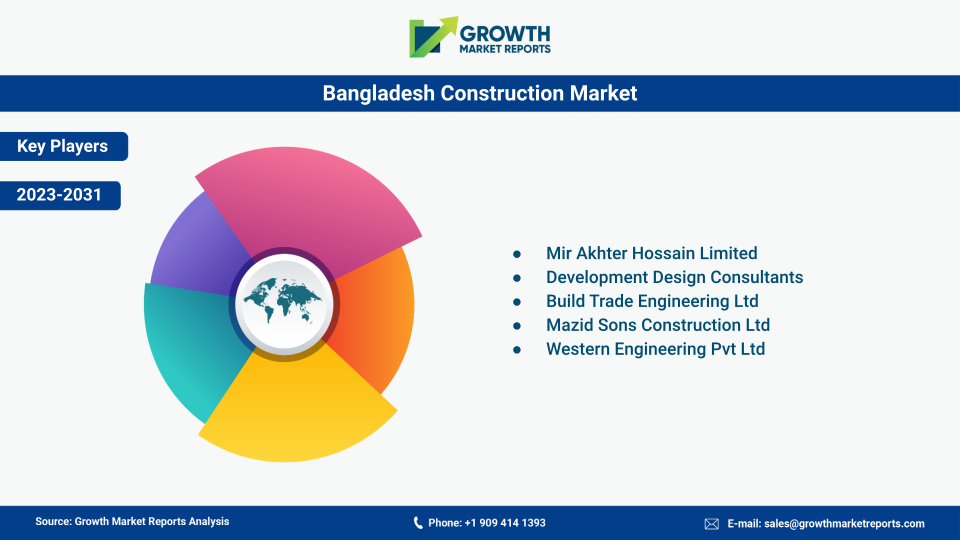
Key players in the Bangladesh Construction Market include Mir Akhter Hossain Limited; Development Design Consultants; Build Trade Engineering Ltd; Mazid Sons Construction Ltd; and Western Engineering Pvt Ltd. These players are engage in mergers & acquisitions, collaborations, agreements, and partnerships to increase their market share.
Sustainability is a key driver, with increasing adoption of green building practices, energy-efficient materials, and regulatory frameworks mandating eco-friendly construction. This is shaping innovation and investment across the industry.
Opportunities include urbanization, smart city development, and digital transformation. Challenges involve regulatory complexities, skilled labor shortages, and supply chain disruptions.
Major players include China State Construction Engineering Corporation (CSCEC), Vinci SA, Bechtel Corporation, Skanska AB, Bouygues Construction, ACS Group, Fluor Corporation, and Obayashi Corporation, among others.
The main materials used in construction include concrete, wood, metal, and innovative alternatives like composites and recycled aggregates. Advances in material technology are enhancing sustainability and performance.
Technological advancements such as Building Information Modeling (BIM), artificial intelligence, and IoT-enabled equipment are revolutionizing project planning, execution, and maintenance, leading to greater productivity and cost efficiency.
Modular and prefabricated construction methods are gaining traction due to their ability to reduce project timelines, minimize waste, and improve quality control. These methods are especially popular in regions facing labor shortages and tight deadlines.
The construction market is segmented by type into residential, commercial, industrial, and infrastructure categories, each contributing uniquely to overall market dynamics.
Asia Pacific is the largest and fastest-growing region, accounting for about 48% of the global market in 2024. Other high-growth regions include the Middle East & Africa and Latin America, driven by urbanization and infrastructure investments.
The global construction market is expected to grow at a CAGR of 6.1% from 2025 to 2033, reaching an estimated USD 23.12 trillion by the end of the forecast period.
As of 2024, the global construction market size reached USD 13.57 trillion, reflecting strong activity across both developed and emerging economies.