School Management System Market Research Report 2033

School Management System Market Research Report 2033

Segments - by Component (Software, Services), by Deployment Mode (Cloud-Based, On-Premises), by Application (Student Information Management, Attendance Management, Academic Management, Finance and Accounting Management, Human Resource Management, Others), by End User (K-12 Schools, Higher Education, Others)

https://growthmarketreports.com/Raksha
Author : Raksha Sharma
https://growthmarketreports.com/Vaibhav
Fact-checked by : V. Chandola
https://growthmarketreports.com/Shruti
Editor : Shruti Bhat

Upcoming | Report ID :ICT-SE-5171 | 4.0 Rating | 37 Reviews | 288 Pages | Format : Docx PDF

Report Description


School Management System Market Outlook

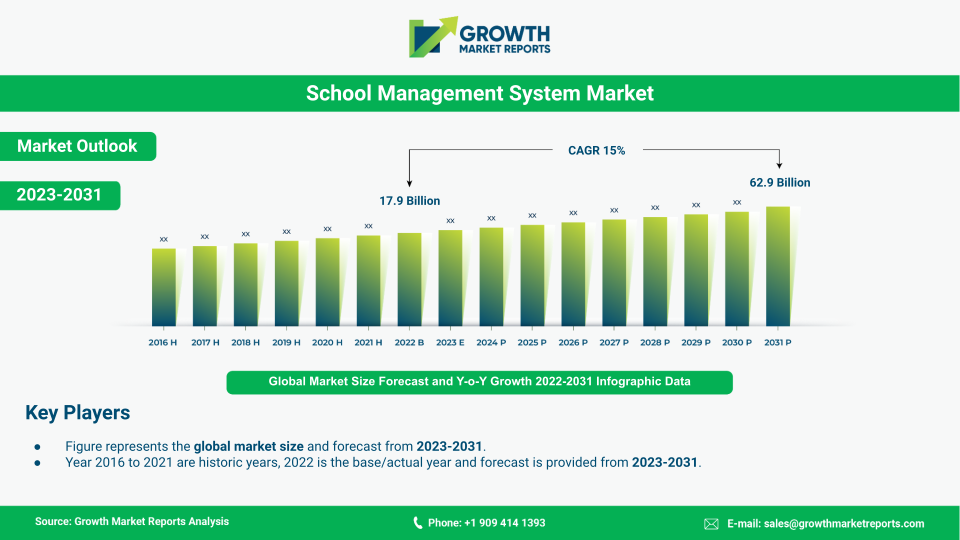
According to our latest research, the global School Management System market size reached USD 12.6 billion in 2024, demonstrating robust adoption across educational institutions worldwide. Driven by the rapid digital transformation in the education sector, the market is expanding at a CAGR of 17.8% and is anticipated to reach USD 44.2 billion by 2033. The primary growth factor is the increasing demand for automation and digitalization in administrative operations, which is streamlining workflows and enhancing overall institutional efficiency.

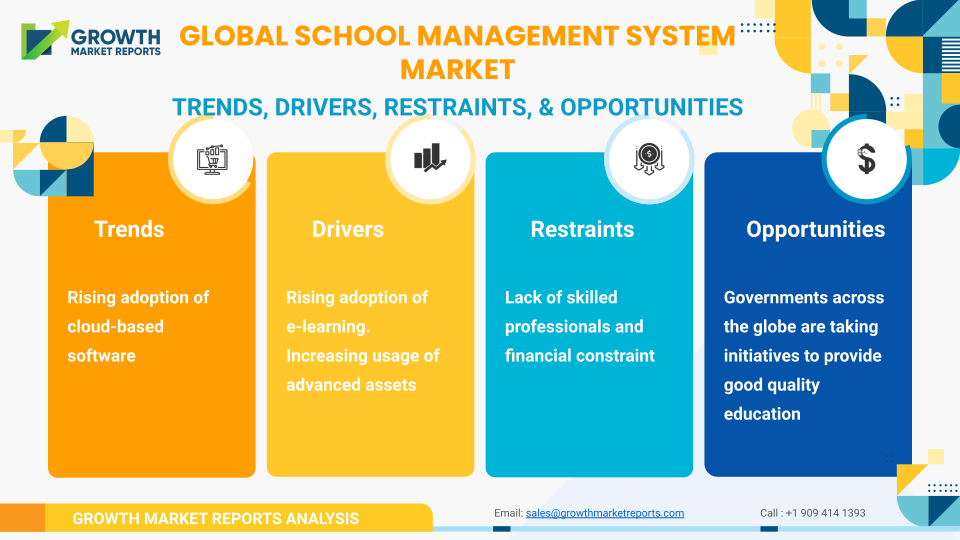
The school management system market is witnessing significant growth due to the widespread integration of advanced technologies such as cloud computing, artificial intelligence, and data analytics into educational administration. Institutions are increasingly recognizing the value of digitizing routine processes such as admissions, attendance, grading, and communication. This transition not only reduces administrative workload but also improves the accuracy and security of data management. The push for remote learning during and after the COVID-19 pandemic has further accelerated the adoption of comprehensive school management solutions, as educational institutions seek to maintain seamless operations regardless of physical constraints. Furthermore, the rise in the number of educational institutions globally, coupled with increasing student enrollments, is compelling schools and universities to invest in robust management systems to effectively handle growing administrative complexity.

Another pivotal growth driver for the school management system market is the increasing emphasis on personalized learning and student-centric approaches. Modern school management systems are equipped with features that facilitate tailored learning experiences, real-time performance tracking, and enhanced communication between teachers, students, and parents. This has led to a surge in demand for solutions that can integrate various academic and non-academic functions, providing a holistic overview of student progress and institutional performance. Additionally, the growing focus on compliance with regulatory standards and data privacy laws is prompting educational institutions to adopt sophisticated management platforms that ensure transparency and accountability in all administrative processes. The proliferation of mobile devices and the increasing penetration of the internet in developing regions are also contributing to market expansion, making digital management solutions accessible to a broader user base.

The school management system market is further bolstered by supportive government initiatives aimed at enhancing the quality of education through technology. Many governments across regions such as North America, Europe, and Asia Pacific are investing in digital infrastructure, promoting the adoption of EdTech solutions in both public and private educational institutions. These initiatives often include funding programs, policy frameworks, and strategic partnerships with technology providers, all of which are driving the implementation of school management systems at scale. Additionally, the competitive landscape is fostering innovation, with vendors continuously enhancing their offerings to address the evolving needs of educational institutions, such as integration with learning management systems, advanced analytics, and mobile accessibility. As a result, the school management system market is poised for sustained growth, with significant opportunities for vendors and educational institutions alike.

In the realm of educational technology, Syllabus Management Software is emerging as a vital component for institutions aiming to streamline curriculum planning and execution. This software aids educators in organizing course content, aligning it with educational standards, and ensuring that learning objectives are met efficiently. By integrating with existing school management systems, syllabus management tools provide a centralized platform for educators to collaborate, update, and share curriculum resources. This not only enhances the consistency and quality of education delivered but also facilitates compliance with regulatory requirements. As educational institutions increasingly focus on personalized learning experiences, Syllabus Management Software plays a crucial role in adapting curricula to meet diverse student needs, thereby supporting the broader goal of student-centric education.

Regionally, North America currently dominates the school management system market, accounting for the largest share due to early technology adoption, high digital literacy, and the presence of leading EdTech companies. However, the Asia Pacific region is expected to exhibit the fastest growth during the forecast period, driven by expanding educational infrastructure, increasing government investments, and a rapidly growing student population. Europe also holds a significant market share, supported by strong regulatory frameworks and widespread digitalization in the education sector. Meanwhile, Latin America and the Middle East & Africa are emerging as promising markets, with increasing awareness and adoption of digital solutions in educational administration. Overall, the global school management system market is characterized by dynamic regional trends, reflecting varying levels of technological maturity and investment in educational innovation.

Global School Management System Industry Outlook

Component Analysis

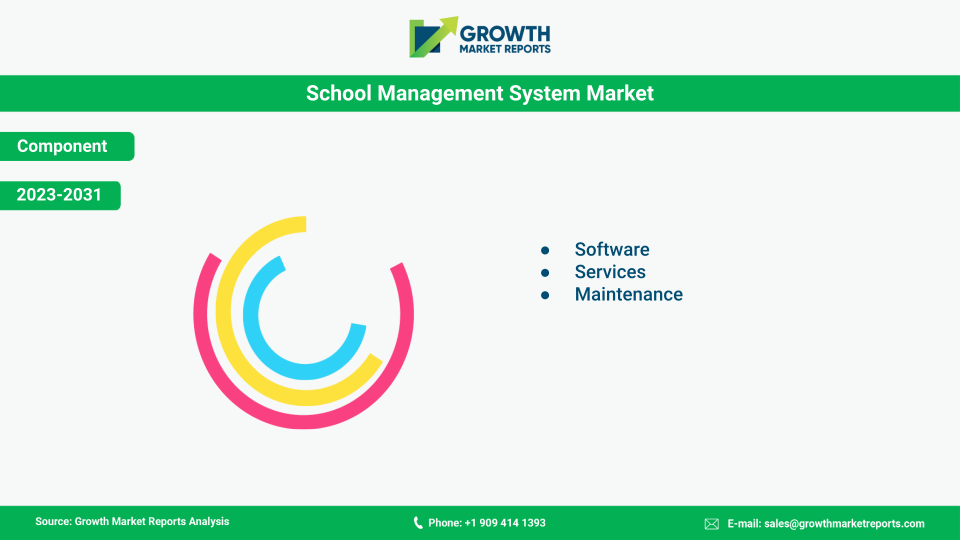
The school management system market is segmented by component into software and services, each playing a crucial role in the ecosystem. The software segment holds the majority share, driven by the growing demand for integrated platforms that streamline administrative functions such as student information management, attendance tracking, and academic scheduling. Modern school management software is designed to be user-friendly, scalable, and customizable, catering to the diverse needs of educational institutions ranging from K-12 schools to universities. These platforms often include modules for communication, reporting, analytics, and compliance management, enabling educational administrators to make informed decisions and improve operational efficiency. The increasing adoption of cloud-based solutions is further propelling the software segment, as institutions seek flexible and cost-effective alternatives to traditional on-premises systems.

The services segment, encompassing implementation, training, support, and consulting, is witnessing robust growth as educational institutions require expert assistance in deploying and optimizing school management systems. Implementation services are critical for ensuring seamless integration with existing infrastructure, while training services help educators and administrators maximize the benefits of advanced features. Ongoing support and maintenance are also essential, as institutions rely on service providers to address technical issues, update software, and ensure compliance with evolving regulations. The growing complexity of school management systems, coupled with the need for continuous improvement, is driving demand for specialized consulting services that help institutions align technology adoption with strategic objectives. As a result, service providers are expanding their offerings to include value-added services such as data migration, customization, and analytics, enhancing the overall value proposition for educational clients.

Enrollment Management Software is becoming indispensable for educational institutions seeking to optimize their admissions processes. This software streamlines the entire enrollment lifecycle, from application submission to student onboarding, by automating routine tasks and providing real-time insights into enrollment trends. By leveraging data analytics, Enrollment Management Software helps institutions make informed decisions about recruitment strategies, financial aid distribution, and class composition. As competition for student enrollment intensifies, particularly in higher education, the ability to efficiently manage and analyze enrollment data is critical for attracting and retaining students. This software not only enhances operational efficiency but also improves the overall student experience, making it a key asset in the digital transformation of educational administration.

The interplay between software and services is becoming increasingly important as educational institutions prioritize end-to-end solutions that address both technological and operational challenges. Vendors are adopting a holistic approach, bundling software licenses with comprehensive service packages to differentiate themselves in a competitive market. This trend is particularly evident among large educational groups and universities, which require scalable solutions that can be deployed across multiple campuses and departments. The integration of artificial intelligence, machine learning, and data analytics into school management software is also creating new opportunities for service providers to offer advanced analytics, performance monitoring, and predictive insights, further enhancing the value of their offerings.

Customization and scalability are key considerations in the component segment, as educational institutions seek solutions that can adapt to changing needs and accommodate growth. Software vendors are increasingly offering modular platforms that allow institutions to select and deploy specific functionalities based on their unique requirements. This modular approach is complemented by flexible service models, including subscription-based pricing, pay-as-you-go options, and managed services, which provide institutions with greater control over costs and resource allocation. The emphasis on interoperability and integration with other educational technologies, such as learning management systems and communication platforms, is also shaping the evolution of the component segment, driving innovation and fostering ecosystem partnerships.

Report Scope

Attributes Details
Report Title School Management System Market Research Report 2033
By Component Software, Services
By Deployment Mode Cloud-Based, On-Premises
By Application Student Information Management, Attendance Management, Academic Management, Finance and Accounting Management, Human Resource Management, Others
By End User K-12 Schools, Higher Education, Others
Regions Covered North America, Europe, APAC, Latin America, MEA
Base Year 2024
Historic Data 2018-2023
Forecast Period 2025-2033
Number of Pages 288
Number of Tables & Figures 287
Customization Available Yes, the report can be customized as per your need.

Deployment Mode Analysis

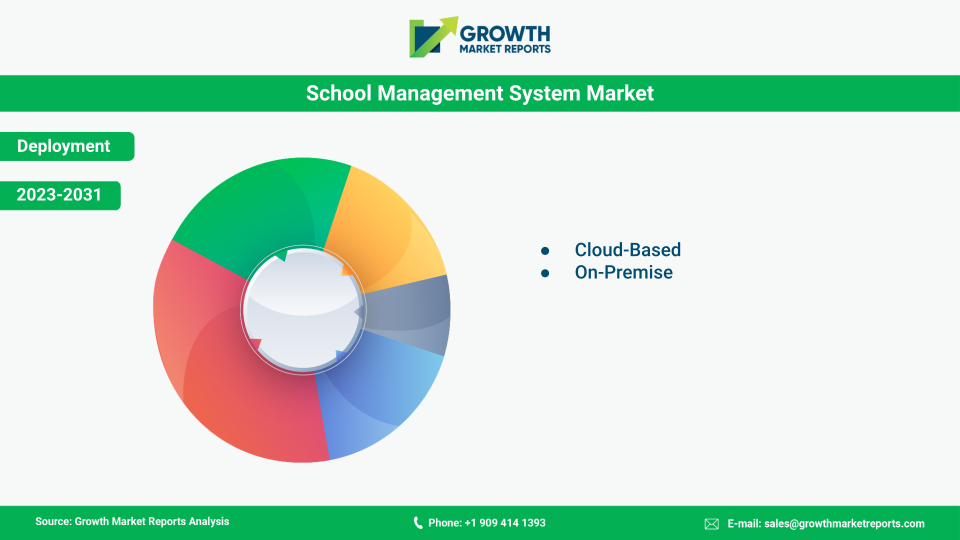
The deployment mode segment of the school management system market is bifurcated into cloud-based and on-premises solutions, each offering distinct advantages and challenges. Cloud-based deployment is gaining significant traction, accounting for a rapidly increasing share of the market due to its flexibility, scalability, and cost-effectiveness. Educational institutions are increasingly opting for cloud-based solutions to avoid the high upfront costs and maintenance burdens associated with on-premises systems. Cloud deployment enables seamless access to data and applications from any location, supporting remote learning and administrative operations. This is particularly beneficial for institutions with multiple campuses or geographically dispersed stakeholders, as it facilitates centralized management and real-time collaboration.

Childcare Management Software is gaining traction as an essential tool for early childhood education providers. This software supports the unique administrative and educational needs of childcare centers, preschools, and daycare facilities by offering features such as attendance tracking, billing, and parent communication. By automating these processes, Childcare Management Software allows educators to focus more on delivering high-quality care and education. Additionally, it provides parents with convenient access to their child’s daily activities, progress reports, and communication with caregivers, fostering a collaborative environment between home and school. As the demand for quality early childhood education continues to rise, Childcare Management Software is playing a pivotal role in enhancing the efficiency and effectiveness of childcare operations, ensuring that young learners receive the best possible start in their educational journey.

On-premises deployment, while declining in relative market share, continues to be preferred by institutions with stringent data security and privacy requirements. Certain regions and educational segments, particularly higher education and government-affiliated institutions, favor on-premises solutions to maintain direct control over sensitive student and administrative data. On-premises deployment is also valued for its ability to support customized configurations and integrations with legacy systems. However, the higher costs associated with hardware, software licensing, and IT maintenance are prompting many institutions to reconsider their deployment strategies, especially as cloud solutions become more secure and reliable.

Hybrid deployment models are emerging as a viable alternative, combining the benefits of both cloud-based and on-premises solutions. These models allow institutions to retain critical data and applications on-premises while leveraging the scalability and accessibility of the cloud for less sensitive functions. Hybrid deployment is particularly attractive for large educational groups and universities with complex IT environments, enabling them to balance security, compliance, and operational efficiency. Vendors are responding to this trend by offering flexible deployment options and migration services, helping institutions transition to the cloud at their own pace while minimizing disruption to ongoing operations.

The growing adoption of cloud-based deployment is being driven by advancements in cloud security, data encryption, and regulatory compliance. Leading cloud providers are investing heavily in infrastructure and certifications to address the unique needs of the education sector, ensuring that cloud-based school management systems meet the highest standards of data protection and reliability. The proliferation of Software-as-a-Service (SaaS) models is further accelerating the shift to the cloud, as institutions benefit from automatic updates, reduced IT overhead, and predictable subscription pricing. As a result, cloud-based deployment is expected to dominate the school management system market in the coming years, supported by ongoing innovation and increasing acceptance among educational stakeholders.

Application Analysis

The school management system market is segmented by application into student information management, attendance management, academic management, finance and accounting management, human resource management, and others. Student information management remains the cornerstone of school management systems, providing a centralized platform for storing and managing student records, enrollment data, grades, and personal information. This application is critical for ensuring data accuracy, compliance with regulatory requirements, and efficient communication between stakeholders. The ability to generate real-time reports and analytics on student performance, attendance, and behavior is driving widespread adoption, as educational institutions seek to enhance student outcomes and institutional accountability.

Attendance management is another key application, enabling automated tracking of student and staff attendance through digital registers, biometric systems, and mobile applications. This functionality not only streamlines administrative processes but also helps institutions identify patterns of absenteeism, improve student engagement, and comply with regulatory mandates. The integration of attendance management with other modules such as academic scheduling and communication platforms is enhancing the overall efficiency of school management systems, providing a seamless user experience for administrators, teachers, and parents.

Academic management encompasses a wide range of functions, including curriculum planning, timetable scheduling, examination management, and grading. School management systems are increasingly incorporating advanced features such as automated scheduling algorithms, online assessment tools, and digital gradebooks, enabling institutions to optimize resource allocation and improve academic outcomes. The ability to track student progress over time, identify learning gaps, and implement targeted interventions is particularly valuable in the context of personalized learning and competency-based education.

Finance and accounting management is a critical application for educational institutions, facilitating the automation of budgeting, fee collection, payroll processing, and financial reporting. School management systems with integrated finance modules help institutions maintain transparency, reduce errors, and ensure compliance with financial regulations. The growing complexity of educational funding models and the need for real-time financial insights are driving demand for robust finance and accounting management solutions, particularly among large schools and higher education institutions.

Human resource management is an emerging application area, supporting the recruitment, onboarding, performance evaluation, and professional development of staff. School management systems with integrated HR modules enable institutions to streamline HR processes, monitor staff performance, and ensure compliance with labor laws and institutional policies. The integration of HR management with other administrative functions is enhancing the overall efficiency and effectiveness of educational institutions, supporting their mission to attract, retain, and develop top talent.

End User Analysis

The school management system market serves a diverse range of end users, including K-12 schools, higher education institutions, and others such as vocational training centers and special education providers. K-12 schools represent the largest end-user segment, driven by the need to manage large student populations, complex administrative processes, and diverse stakeholder groups. The adoption of school management systems in K-12 schools is being fueled by government mandates, increasing parental involvement, and the growing emphasis on student safety and well-being. These institutions require solutions that are easy to use, scalable, and capable of integrating with other educational technologies such as learning management systems and communication platforms.

Higher education institutions, including colleges and universities, are increasingly adopting school management systems to support complex administrative, academic, and financial operations. These institutions often have multiple campuses, departments, and programs, requiring robust solutions that can handle diverse workflows and compliance requirements. The integration of advanced analytics, artificial intelligence, and data visualization tools is enabling higher education institutions to gain deeper insights into student performance, resource utilization, and institutional effectiveness. The growing competition among universities to attract and retain students is also driving demand for innovative school management solutions that enhance the overall student experience.

Other end users, such as vocational training centers, special education providers, and online learning platforms, are emerging as important segments in the school management system market. These institutions have unique requirements, such as flexible scheduling, individualized learning plans, and specialized reporting capabilities. Vendors are responding to these needs by offering customizable solutions that can be tailored to specific educational contexts, supporting the delivery of high-quality education across a wide range of settings. The increasing recognition of lifelong learning and the growing demand for skills-based education are further expanding the addressable market for school management systems.

The end-user segment is characterized by varying levels of technological maturity, budget constraints, and regulatory requirements. Vendors are adopting targeted go-to-market strategies, offering tiered pricing models, modular solutions, and localized support to address the unique needs of different end-user groups. The emphasis on user experience, mobile accessibility, and interoperability is shaping the evolution of school management systems, as institutions seek solutions that are intuitive, accessible, and capable of integrating with existing technology ecosystems.

Opportunities & Threats

The school management system market presents significant opportunities for growth, driven by the ongoing digital transformation of the education sector. The increasing adoption of cloud-based solutions, artificial intelligence, and data analytics is creating new avenues for innovation, enabling vendors to offer advanced features such as predictive analytics, personalized learning, and real-time communication. The growing demand for mobile-first solutions is also opening up opportunities for vendors to develop intuitive, user-friendly applications that cater to the needs of students, parents, and educators. The expansion of educational infrastructure in emerging markets, supported by government initiatives and private investments, is further fueling market growth, providing vendors with access to a large and untapped customer base.

Another major opportunity lies in the integration of school management systems with other educational technologies, such as learning management systems, assessment platforms, and communication tools. This integration is enabling educational institutions to create seamless digital ecosystems that support the entire learning journey, from admissions to graduation. The increasing focus on data-driven decision-making is driving demand for solutions that provide actionable insights into student performance, resource utilization, and institutional effectiveness. Vendors that can offer comprehensive, interoperable solutions are well-positioned to capture market share and drive long-term growth. Additionally, the rising emphasis on data privacy and security is creating opportunities for vendors to differentiate themselves by offering robust compliance and protection features.

Despite the promising outlook, the school management system market faces several restraining factors, with data privacy and security concerns being the most significant. Educational institutions handle large volumes of sensitive data, including student records, financial information, and personal details, making them attractive targets for cyberattacks. The increasing adoption of cloud-based solutions and third-party integrations is raising concerns about data breaches, unauthorized access, and regulatory compliance. Institutions must navigate a complex landscape of data protection laws and standards, which can vary significantly across regions and educational segments. Vendors must invest in robust security measures, regular audits, and compliance certifications to address these concerns and build trust among educational institutions.

Regional Outlook

North America leads the school management system market, with a market size of approximately USD 4.8 billion in 2024, reflecting early adoption of digital technologies and a strong ecosystem of EdTech providers. The region is characterized by high digital literacy, widespread internet penetration, and supportive government initiatives aimed at promoting technology adoption in education. The United States accounts for the largest share of the North American market, driven by significant investments in educational infrastructure and a strong focus on data-driven decision-making. Canada is also witnessing robust growth, supported by government funding and the increasing adoption of cloud-based solutions in schools and universities.

The Asia Pacific region is the fastest-growing market, with a projected CAGR of 21.5% during the forecast period. The market size in Asia Pacific reached USD 3.2 billion in 2024, and is expected to surpass USD 15.4 billion by 2033. The rapid expansion of educational infrastructure, increasing government investments, and a burgeoning student population are driving demand for school management systems in countries such as China, India, Japan, and Australia. The growing adoption of mobile devices and internet connectivity is making digital management solutions accessible to a wider audience, while government initiatives such as Digital India and Smart Education are providing a strong impetus for market growth. The presence of local and international vendors is fostering competition and innovation, further accelerating market expansion in the region.

Europe holds a significant share of the global market, with a market size of USD 2.6 billion in 2024, supported by strong regulatory frameworks, widespread digitalization, and a focus on quality assurance in education. Countries such as the United Kingdom, Germany, France, and the Nordics are leading adopters of school management systems, driven by government mandates, high levels of digital literacy, and the presence of established EdTech providers. The region is characterized by a high degree of standardization and interoperability, with institutions seeking solutions that comply with data privacy regulations such as the General Data Protection Regulation (GDPR). Latin America and the Middle East & Africa are emerging as promising markets, with a combined market size of USD 2.0 billion in 2024, driven by increasing awareness, government support, and the need to improve the quality and efficiency of educational administration.

School Management System Market Statistics

Competitor Outlook

The competitive landscape of the school management system market is characterized by the presence of a diverse mix of global, regional, and local vendors, each offering a wide range of solutions tailored to the needs of educational institutions. Leading players are focusing on innovation, strategic partnerships, and mergers and acquisitions to strengthen their market position and expand their product portfolios. The market is highly dynamic, with vendors continuously enhancing their offerings to address evolving customer requirements, such as integration with learning management systems, advanced analytics, and mobile accessibility. The emphasis on user experience, customization, and scalability is shaping the competitive dynamics, as institutions seek solutions that are intuitive, flexible, and capable of supporting long-term growth.

Global vendors such as Blackboard Inc., PowerSchool, Ellucian, and Oracle Corporation are at the forefront of the market, leveraging their extensive experience, technological expertise, and strong customer relationships to maintain a competitive edge. These companies offer comprehensive school management platforms that integrate administrative, academic, and financial functions, providing a one-stop solution for educational institutions. They are also investing in research and development to incorporate emerging technologies such as artificial intelligence, machine learning, and data analytics into their offerings, enabling institutions to gain deeper insights and improve decision-making.

Regional and local vendors play a crucial role in the market, particularly in emerging regions such as Asia Pacific, Latin America, and the Middle East & Africa. These vendors often offer localized solutions that address specific regulatory, cultural, and linguistic requirements, providing a competitive advantage in their respective markets. Strategic partnerships with government agencies, educational institutions, and technology providers are enabling regional vendors to expand their reach and enhance their value proposition. The emphasis on affordability, ease of use, and customer support is helping local vendors gain traction among small and medium-sized institutions with limited resources.

Some of the major companies operating in the school management system market include Blackboard Inc., PowerSchool, Ellucian, Oracle Corporation, SAP SE, Skyward Inc., Jenzabar Inc., Foradian Technologies, Eduware, and Fedena. Blackboard Inc. is known for its integrated learning and school management solutions, catering to K-12 schools and higher education institutions worldwide. PowerSchool offers a comprehensive suite of cloud-based solutions for student information management, assessment, and analytics, serving millions of students across the globe. Ellucian specializes in higher education management systems, providing solutions for student information, finance, and human resources. Oracle Corporation and SAP SE leverage their enterprise software expertise to offer robust, scalable school management platforms that support complex administrative and academic workflows.

Skyward Inc. focuses on K-12 school management solutions, with a strong presence in the United States and international markets. Jenzabar Inc. is a leading provider of higher education management systems, offering cloud-based solutions for student success, enrollment, and analytics. Foradian Technologies and Fedena are prominent players in the Asia Pacific region, known for their affordable, customizable, and user-friendly school management platforms. Eduware is a key player in the Middle East & Africa, providing localized solutions that address the unique needs of schools in the region. These companies are continuously investing in product development, customer support, and strategic partnerships to drive growth and maintain their competitive position in the global school management system market.

Key Players

  • Blackbaud
  • PowerSchool
  • Ellucian
  • Skyward
  • Infinite Campus
  • FACTS Management
  • Oracle (Oracle Student Cloud)
  • SAP (SAP Student Lifecycle Management)
  • Jenzabar
  • Workday
  • Tyler Technologies
  • Foradian Technologies
  • Serosoft (Academia ERP)
  • Gradelink
  • Rediker Software
  • Eduware
  • TADS
  • Schoology
  • BigSIS
  • Classe365
School Management System Market Overview

Segments

The School Management System market has been segmented on the basis of

Component

  • Software
  • Services

Deployment Mode

  • Cloud-Based
  • On-Premises

Application

  • Student Information Management
  • Attendance Management
  • Academic Management
  • Finance and Accounting Management
  • Human Resource Management
  • Others

End User

  • K-12 Schools
  • Higher Education
  • Others

Competitive Landscape

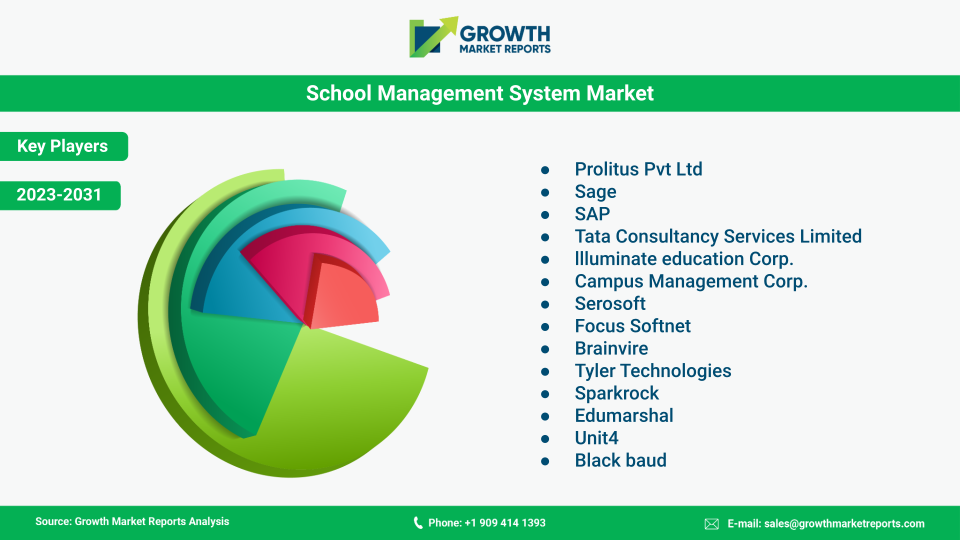
Key players competing in the global school management system market share are Jenzabar, inc.; Blackboard Inc.; Tata Consultancy Services Limited; Oracle; Skolaro; Ellucian Company L.P.; Sage Group plc; llluminate Education.; Campus Management Corp.; Serosoft; Focus Softnet; Tyler Technologies; Sparkrock; Edumarshal; Unit4; and Black baud.

Some of these companies adopted and growth strategies including technology innovations, collaboration, partnerships, acquisitions, and addition of new innovative features to increase market share. Further, these companies are creating the latest in-demand educational systems for better quality education which also positively impacts in the growth of School Management System Market. For instance,

  • In October 2022, Jenzabar, Inc. a leading company for technology innovators in higher education serves the new students announced 11 higher education institutions to help students in success and innovation.
  • In July 2022, The Ministry of Education and Sports (MoES) entered into a partnership with the European Union and UNICEF and launched the Lao PDR Education and Sports Management Information System (LESMIS) to strengthen the education system. This digital platform provides easy access to trace all the essential education data and informs regarding policies that will boost Lao children’s learning outcomes.
  • In May 2022, ESLSCA University in Egypt collaborated with Ellucian, a leading cloud-based software service provider for higher education. The collaboration is for improving the standard of their faculty and administration to provide students with a great experience of gaining knowledge.

School Management System Market Key Players

Frequently Asked Questions

Cloud-based deployment is accelerating adoption by offering flexibility, scalability, lower upfront costs, and support for remote learning and centralized management, making it the preferred choice for many educational institutions.

Top companies include Blackboard Inc., PowerSchool, Ellucian, Oracle Corporation, SAP SE, Skyward Inc., Jenzabar Inc., Foradian Technologies, Eduware, and Fedena.

Opportunities include the adoption of cloud, AI, and analytics, mobile-first solutions, and integration with other EdTech platforms. Major threats are data privacy and security concerns, especially with increased cloud adoption.

Primary end users include K-12 schools, higher education institutions (colleges and universities), vocational training centers, special education providers, and online learning platforms.

Key applications include student information management, attendance management, academic management, finance and accounting management, and human resource management.

School management systems can be deployed as cloud-based, on-premises, or hybrid solutions. Cloud-based deployment is gaining traction due to flexibility and cost-effectiveness, while on-premises is preferred for stringent data security needs.

The market is segmented into software and services. Software includes platforms for student information management, attendance, and academic scheduling. Services cover implementation, training, support, and consulting.

North America currently dominates the market due to early technology adoption and strong EdTech presence. Asia Pacific is the fastest-growing region, while Europe, Latin America, and the Middle East & Africa are also showing significant growth and adoption.

Key growth drivers include rapid digital transformation in education, increased demand for automation and digitalization of administrative operations, integration of advanced technologies like cloud computing and AI, and the push for remote learning post-COVID-19.

The global school management system market is expected to reach USD 44.2 billion by 2033, growing at a CAGR of 17.8% from USD 12.6 billion in 2024.

Table Of Content

Chapter 1 Executive Summary
Chapter 2 Assumptions and Acronyms Used
Chapter 3 Research Methodology
Chapter 4 School Management System Market Overview
   4.1 Introduction
      4.1.1 Market Taxonomy
      4.1.2 Market Definition
      4.1.3 Macro-Economic Factors Impacting the Market Growth
   4.2 School Management System Market Dynamics
      4.2.1 Market Drivers
      4.2.2 Market Restraints
      4.2.3 Market Opportunity
   4.3 School Management System Market - Supply Chain Analysis
      4.3.1 List of Key Suppliers
      4.3.2 List of Key Distributors
      4.3.3 List of Key Consumers
   4.4 Key Forces Shaping the School Management System Market
      4.4.1 Bargaining Power of Suppliers
      4.4.2 Bargaining Power of Buyers
      4.4.3 Threat of Substitution
      4.4.4 Threat of New Entrants
      4.4.5 Competitive Rivalry
   4.5 Global School Management System Market Size & Forecast, 2023-2032
      4.5.1 School Management System Market Size and Y-o-Y Growth
      4.5.2 School Management System Market Absolute $ Opportunity

Chapter 5 Global School Management System Market Analysis and Forecast By Component
   5.1 Introduction
      5.1.1 Key Market Trends & Growth Opportunities By Component
      5.1.2 Basis Point Share (BPS) Analysis By Component
      5.1.3 Absolute $ Opportunity Assessment By Component
   5.2 School Management System Market Size Forecast By Component
      5.2.1 Software
      5.2.2 Services
   5.3 Market Attractiveness Analysis By Component

Chapter 6 Global School Management System Market Analysis and Forecast By Deployment Mode
   6.1 Introduction
      6.1.1 Key Market Trends & Growth Opportunities By Deployment Mode
      6.1.2 Basis Point Share (BPS) Analysis By Deployment Mode
      6.1.3 Absolute $ Opportunity Assessment By Deployment Mode
   6.2 School Management System Market Size Forecast By Deployment Mode
      6.2.1 Cloud-Based
      6.2.2 On-Premises
   6.3 Market Attractiveness Analysis By Deployment Mode

Chapter 7 Global School Management System Market Analysis and Forecast By Application
   7.1 Introduction
      7.1.1 Key Market Trends & Growth Opportunities By Application
      7.1.2 Basis Point Share (BPS) Analysis By Application
      7.1.3 Absolute $ Opportunity Assessment By Application
   7.2 School Management System Market Size Forecast By Application
      7.2.1 Student Information Management
      7.2.2 Attendance Management
      7.2.3 Academic Management
      7.2.4 Finance and Accounting Management
      7.2.5 Human Resource Management
      7.2.6 Others
   7.3 Market Attractiveness Analysis By Application

Chapter 8 Global School Management System Market Analysis and Forecast By End User
   8.1 Introduction
      8.1.1 Key Market Trends & Growth Opportunities By End User
      8.1.2 Basis Point Share (BPS) Analysis By End User
      8.1.3 Absolute $ Opportunity Assessment By End User
   8.2 School Management System Market Size Forecast By End User
      8.2.1 K-12 Schools
      8.2.2 Higher Education
      8.2.3 Others
   8.3 Market Attractiveness Analysis By End User

Chapter 9 Global School Management System Market Analysis and Forecast by Region
   9.1 Introduction
      9.1.1 Key Market Trends & Growth Opportunities By Region
      9.1.2 Basis Point Share (BPS) Analysis By Region
      9.1.3 Absolute $ Opportunity Assessment By Region
   9.2 School Management System Market Size Forecast By Region
      9.2.1 North America
      9.2.2 Europe
      9.2.3 Asia Pacific
      9.2.4 Latin America
      9.2.5 Middle East & Africa (MEA)
   9.3 Market Attractiveness Analysis By Region

Chapter 10 Coronavirus Disease (COVID-19) Impact 
   10.1 Introduction 
   10.2 Current & Future Impact Analysis 
   10.3 Economic Impact Analysis 
   10.4 Government Policies 
   10.5 Investment Scenario

Chapter 11 North America School Management System Analysis and Forecast
   11.1 Introduction
   11.2 North America School Management System Market Size Forecast by Country
      11.2.1 U.S.
      11.2.2 Canada
   11.3 Basis Point Share (BPS) Analysis by Country
   11.4 Absolute $ Opportunity Assessment by Country
   11.5 Market Attractiveness Analysis by Country
   11.6 North America School Management System Market Size Forecast By Component
      11.6.1 Software
      11.6.2 Services
   11.7 Basis Point Share (BPS) Analysis By Component 
   11.8 Absolute $ Opportunity Assessment By Component 
   11.9 Market Attractiveness Analysis By Component
   11.10 North America School Management System Market Size Forecast By Deployment Mode
      11.10.1 Cloud-Based
      11.10.2 On-Premises
   11.11 Basis Point Share (BPS) Analysis By Deployment Mode 
   11.12 Absolute $ Opportunity Assessment By Deployment Mode 
   11.13 Market Attractiveness Analysis By Deployment Mode
   11.14 North America School Management System Market Size Forecast By Application
      11.14.1 Student Information Management
      11.14.2 Attendance Management
      11.14.3 Academic Management
      11.14.4 Finance and Accounting Management
      11.14.5 Human Resource Management
      11.14.6 Others
   11.15 Basis Point Share (BPS) Analysis By Application 
   11.16 Absolute $ Opportunity Assessment By Application 
   11.17 Market Attractiveness Analysis By Application
   11.18 North America School Management System Market Size Forecast By End User
      11.18.1 K-12 Schools
      11.18.2 Higher Education
      11.18.3 Others
   11.19 Basis Point Share (BPS) Analysis By End User 
   11.20 Absolute $ Opportunity Assessment By End User 
   11.21 Market Attractiveness Analysis By End User

Chapter 12 Europe School Management System Analysis and Forecast
   12.1 Introduction
   12.2 Europe School Management System Market Size Forecast by Country
      12.2.1 Germany
      12.2.2 France
      12.2.3 Italy
      12.2.4 U.K.
      12.2.5 Spain
      12.2.6 Russia
      12.2.7 Rest of Europe
   12.3 Basis Point Share (BPS) Analysis by Country
   12.4 Absolute $ Opportunity Assessment by Country
   12.5 Market Attractiveness Analysis by Country
   12.6 Europe School Management System Market Size Forecast By Component
      12.6.1 Software
      12.6.2 Services
   12.7 Basis Point Share (BPS) Analysis By Component 
   12.8 Absolute $ Opportunity Assessment By Component 
   12.9 Market Attractiveness Analysis By Component
   12.10 Europe School Management System Market Size Forecast By Deployment Mode
      12.10.1 Cloud-Based
      12.10.2 On-Premises
   12.11 Basis Point Share (BPS) Analysis By Deployment Mode 
   12.12 Absolute $ Opportunity Assessment By Deployment Mode 
   12.13 Market Attractiveness Analysis By Deployment Mode
   12.14 Europe School Management System Market Size Forecast By Application
      12.14.1 Student Information Management
      12.14.2 Attendance Management
      12.14.3 Academic Management
      12.14.4 Finance and Accounting Management
      12.14.5 Human Resource Management
      12.14.6 Others
   12.15 Basis Point Share (BPS) Analysis By Application 
   12.16 Absolute $ Opportunity Assessment By Application 
   12.17 Market Attractiveness Analysis By Application
   12.18 Europe School Management System Market Size Forecast By End User
      12.18.1 K-12 Schools
      12.18.2 Higher Education
      12.18.3 Others
   12.19 Basis Point Share (BPS) Analysis By End User 
   12.20 Absolute $ Opportunity Assessment By End User 
   12.21 Market Attractiveness Analysis By End User

Chapter 13 Asia Pacific School Management System Analysis and Forecast
   13.1 Introduction
   13.2 Asia Pacific School Management System Market Size Forecast by Country
      13.2.1 China
      13.2.2 Japan
      13.2.3 South Korea
      13.2.4 India
      13.2.5 Australia
      13.2.6 South East Asia (SEA)
      13.2.7 Rest of Asia Pacific (APAC)
   13.3 Basis Point Share (BPS) Analysis by Country
   13.4 Absolute $ Opportunity Assessment by Country
   13.5 Market Attractiveness Analysis by Country
   13.6 Asia Pacific School Management System Market Size Forecast By Component
      13.6.1 Software
      13.6.2 Services
   13.7 Basis Point Share (BPS) Analysis By Component 
   13.8 Absolute $ Opportunity Assessment By Component 
   13.9 Market Attractiveness Analysis By Component
   13.10 Asia Pacific School Management System Market Size Forecast By Deployment Mode
      13.10.1 Cloud-Based
      13.10.2 On-Premises
   13.11 Basis Point Share (BPS) Analysis By Deployment Mode 
   13.12 Absolute $ Opportunity Assessment By Deployment Mode 
   13.13 Market Attractiveness Analysis By Deployment Mode
   13.14 Asia Pacific School Management System Market Size Forecast By Application
      13.14.1 Student Information Management
      13.14.2 Attendance Management
      13.14.3 Academic Management
      13.14.4 Finance and Accounting Management
      13.14.5 Human Resource Management
      13.14.6 Others
   13.15 Basis Point Share (BPS) Analysis By Application 
   13.16 Absolute $ Opportunity Assessment By Application 
   13.17 Market Attractiveness Analysis By Application
   13.18 Asia Pacific School Management System Market Size Forecast By End User
      13.18.1 K-12 Schools
      13.18.2 Higher Education
      13.18.3 Others
   13.19 Basis Point Share (BPS) Analysis By End User 
   13.20 Absolute $ Opportunity Assessment By End User 
   13.21 Market Attractiveness Analysis By End User

Chapter 14 Latin America School Management System Analysis and Forecast
   14.1 Introduction
   14.2 Latin America School Management System Market Size Forecast by Country
      14.2.1 Brazil
      14.2.2 Mexico
      14.2.3 Rest of Latin America (LATAM)
   14.3 Basis Point Share (BPS) Analysis by Country
   14.4 Absolute $ Opportunity Assessment by Country
   14.5 Market Attractiveness Analysis by Country
   14.6 Latin America School Management System Market Size Forecast By Component
      14.6.1 Software
      14.6.2 Services
   14.7 Basis Point Share (BPS) Analysis By Component 
   14.8 Absolute $ Opportunity Assessment By Component 
   14.9 Market Attractiveness Analysis By Component
   14.10 Latin America School Management System Market Size Forecast By Deployment Mode
      14.10.1 Cloud-Based
      14.10.2 On-Premises
   14.11 Basis Point Share (BPS) Analysis By Deployment Mode 
   14.12 Absolute $ Opportunity Assessment By Deployment Mode 
   14.13 Market Attractiveness Analysis By Deployment Mode
   14.14 Latin America School Management System Market Size Forecast By Application
      14.14.1 Student Information Management
      14.14.2 Attendance Management
      14.14.3 Academic Management
      14.14.4 Finance and Accounting Management
      14.14.5 Human Resource Management
      14.14.6 Others
   14.15 Basis Point Share (BPS) Analysis By Application 
   14.16 Absolute $ Opportunity Assessment By Application 
   14.17 Market Attractiveness Analysis By Application
   14.18 Latin America School Management System Market Size Forecast By End User
      14.18.1 K-12 Schools
      14.18.2 Higher Education
      14.18.3 Others
   14.19 Basis Point Share (BPS) Analysis By End User 
   14.20 Absolute $ Opportunity Assessment By End User 
   14.21 Market Attractiveness Analysis By End User

Chapter 15 Middle East & Africa (MEA) School Management System Analysis and Forecast
   15.1 Introduction
   15.2 Middle East & Africa (MEA) School Management System Market Size Forecast by Country
      15.2.1 Saudi Arabia
      15.2.2 South Africa
      15.2.3 UAE
      15.2.4 Rest of Middle East & Africa (MEA)
   15.3 Basis Point Share (BPS) Analysis by Country
   15.4 Absolute $ Opportunity Assessment by Country
   15.5 Market Attractiveness Analysis by Country
   15.6 Middle East & Africa (MEA) School Management System Market Size Forecast By Component
      15.6.1 Software
      15.6.2 Services
   15.7 Basis Point Share (BPS) Analysis By Component 
   15.8 Absolute $ Opportunity Assessment By Component 
   15.9 Market Attractiveness Analysis By Component
   15.10 Middle East & Africa (MEA) School Management System Market Size Forecast By Deployment Mode
      15.10.1 Cloud-Based
      15.10.2 On-Premises
   15.11 Basis Point Share (BPS) Analysis By Deployment Mode 
   15.12 Absolute $ Opportunity Assessment By Deployment Mode 
   15.13 Market Attractiveness Analysis By Deployment Mode
   15.14 Middle East & Africa (MEA) School Management System Market Size Forecast By Application
      15.14.1 Student Information Management
      15.14.2 Attendance Management
      15.14.3 Academic Management
      15.14.4 Finance and Accounting Management
      15.14.5 Human Resource Management
      15.14.6 Others
   15.15 Basis Point Share (BPS) Analysis By Application 
   15.16 Absolute $ Opportunity Assessment By Application 
   15.17 Market Attractiveness Analysis By Application
   15.18 Middle East & Africa (MEA) School Management System Market Size Forecast By End User
      15.18.1 K-12 Schools
      15.18.2 Higher Education
      15.18.3 Others
   15.19 Basis Point Share (BPS) Analysis By End User 
   15.20 Absolute $ Opportunity Assessment By End User 
   15.21 Market Attractiveness Analysis By End User

Chapter 16 Competition Landscape 
   16.1 School Management System Market: Competitive Dashboard
   16.2 Global School Management System Market: Market Share Analysis, 2023
   16.3 Company Profiles (Details – Overview, Financials, Developments, Strategy) 
      16.3.1 Blackbaud
PowerSchool
Ellucian
Skyward
Infinite Campus
FACTS Management
Oracle (Oracle Student Cloud)
SAP (SAP Student Lifecycle Management)
Jenzabar
Workday
Tyler Technologies
Foradian Technologies
Serosoft (Academia ERP)
Gradelink
Rediker Software
Eduware
TADS
Schoology
BigSIS
Classe365

Methodology

Our Clients

Pfizer
Siemens Healthcare
General Mills
Dassault Aviation
The John Holland Group
sinopec
Microsoft
FedEx Logistics