Segments - by Deployment Model (Public Cloud, Private Cloud, Hybrid Cloud), by Application (Customer Relationship Management, Enterprise Resource Planning, Human Capital Management, Supply Chain Management, Business Intelligence, Collaboration, Others), by End-User (BFSI, Healthcare, IT and Telecommunications, Retail and E-commerce, Manufacturing, Education, Government, Others), by Enterprise Size (Small and Medium Enterprises, Large Enterprises)
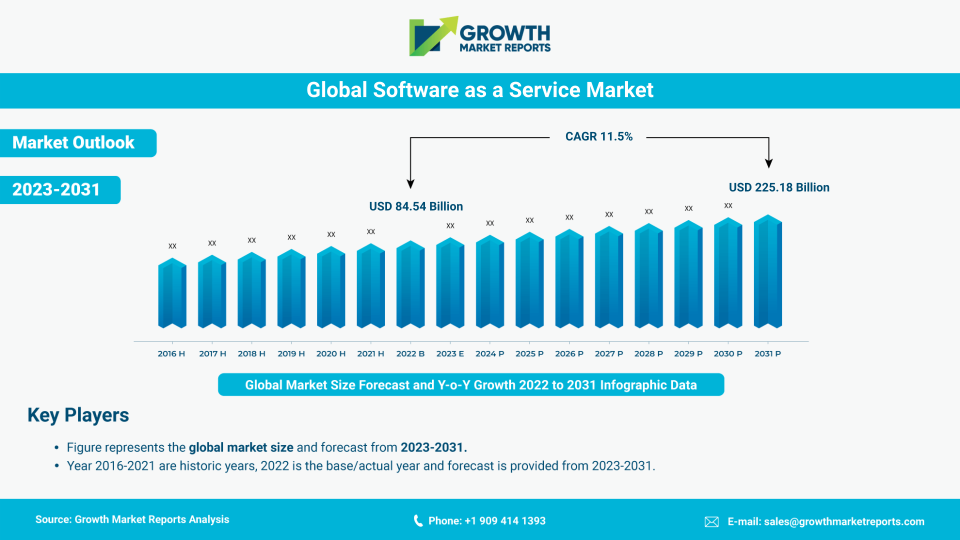
According to our latest research, the global Software as a Service (SaaS) market size reached USD 274.7 billion in 2024, driven by the rapid digital transformation across industries and the increasing adoption of cloud-based solutions. The market is projected to grow at a robust CAGR of 13.4% from 2025 to 2033, reaching a forecasted market size of USD 863.5 billion by 2033. This significant growth is primarily attributed to the scalability, cost-effectiveness, and flexibility offered by SaaS models, which continue to reshape the IT landscape for organizations of all sizes. As per our latest research, the SaaS market is witnessing a profound shift towards integrated cloud services, automation, and advanced analytics, further accelerating its expansion.
One of the key growth factors propelling the Software as a Service (SaaS) market is the increasing demand for remote working solutions and collaboration tools. The global workforce has undergone a fundamental transformation, with organizations prioritizing digital-first strategies to ensure business continuity and productivity. SaaS applications such as video conferencing, project management, and collaboration platforms have become indispensable, offering seamless connectivity and real-time data sharing. This trend is further amplified by the growing reliance on mobile devices and the need for flexible access to enterprise software, enabling employees to work from anywhere. Additionally, the pandemic-induced shift towards hybrid work environments has solidified the role of SaaS as a critical enabler of agile business operations.
Another major driver for the SaaS market is the cost advantages and operational efficiencies it delivers to enterprises. Traditional on-premises software often entails high upfront investments, ongoing maintenance, and resource-intensive upgrades. In contrast, SaaS solutions operate on a subscription-based model, allowing organizations to optimize IT spending and scale resources according to business needs. This pay-as-you-go approach reduces the total cost of ownership and eliminates the complexities associated with software installation and updates. Moreover, SaaS providers continuously enhance their offerings with new features, security patches, and integrations, ensuring customers benefit from the latest advancements without disruption. These factors collectively make SaaS an attractive proposition for both small and large enterprises seeking to modernize their IT infrastructure.
The accelerating pace of digital transformation across key verticals such as BFSI, healthcare, retail, and manufacturing is also contributing to the robust growth of the SaaS market. Organizations are leveraging SaaS solutions to drive innovation, improve customer engagement, and streamline business processes. In the financial sector, SaaS enables real-time analytics and regulatory compliance, while in healthcare, it supports telemedicine, electronic health records, and patient management systems. Retailers are adopting SaaS-based e-commerce and CRM platforms to enhance the customer experience and optimize supply chains. The integration of artificial intelligence, machine learning, and automation within SaaS applications is further boosting their value proposition, empowering businesses to make data-driven decisions and stay competitive in a rapidly evolving digital economy.
In the evolving landscape of Software as a Service (SaaS), the importance of a comprehensive SaaS Change Audit Trail cannot be overstated. As organizations increasingly rely on SaaS solutions to drive their digital transformation, maintaining a detailed audit trail becomes crucial for ensuring data integrity and compliance. A SaaS Change Audit Trail provides a transparent record of all changes made within a SaaS application, including user activities, configuration adjustments, and system modifications. This capability not only helps in tracking unauthorized access or changes but also supports organizations in meeting regulatory requirements and conducting internal audits efficiently. By implementing robust audit trail mechanisms, businesses can enhance their security posture, mitigate risks, and foster trust among stakeholders, thereby reinforcing the reliability and accountability of their SaaS deployments.
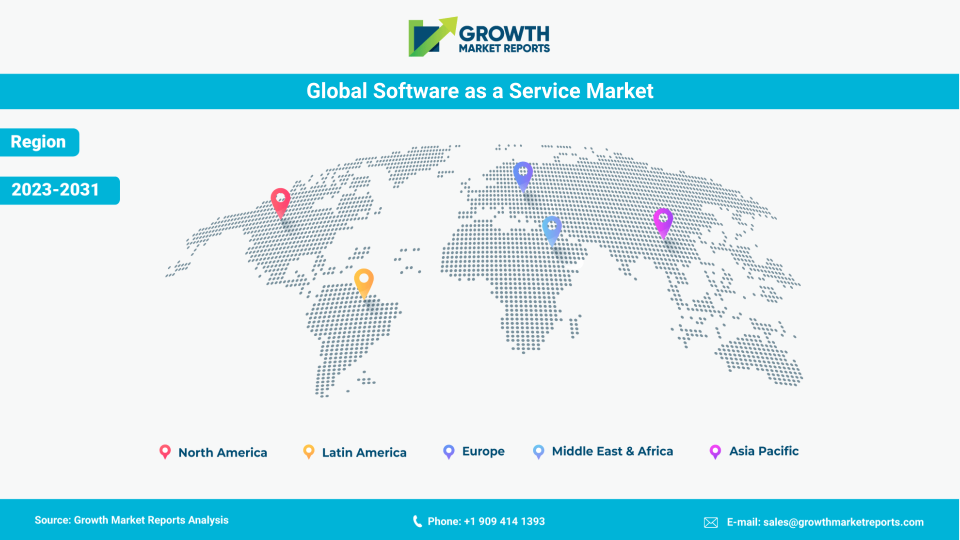
From a regional perspective, North America remains the largest market for SaaS, accounting for a substantial share of global revenues in 2024. The regionÂ’s dominance is underpinned by the strong presence of leading SaaS vendors, high cloud adoption rates, and a mature digital infrastructure. However, Asia Pacific is witnessing the fastest growth, driven by the rapid digitalization of emerging economies, increasing investments in cloud computing, and the proliferation of start-ups. Europe is also experiencing steady growth, supported by regulatory initiatives and the rising adoption of SaaS in sectors such as manufacturing and government. The Middle East & Africa and Latin America are gradually catching up, as organizations in these regions recognize the benefits of SaaS for business agility and innovation.
The deployment model is a critical segment in the Software as a Service (SaaS) market, encompassing public cloud, private cloud, and hybrid cloud options. The public cloud remains the most widely adopted deployment model, accounting for the largest market share in 2024. Organizations are increasingly drawn to public cloud SaaS solutions due to their scalability, cost-effectiveness, and ease of access. Leading providers such as Microsoft Azure, Amazon Web Services, and Google Cloud Platform offer robust SaaS ecosystems that cater to diverse business requirements. The public cloud model enables enterprises to rapidly deploy applications, reduce infrastructure costs, and benefit from continuous updates and security enhancements, making it particularly attractive for small and medium enterprises (SMEs) and start-ups with limited IT resources.
Private cloud deployment is gaining traction among organizations with stringent data security, compliance, and customization needs. This model offers dedicated infrastructure and enhanced control over data, making it ideal for highly regulated sectors such as banking, financial services, and healthcare. In 2024, the private cloud segment represented a significant portion of the SaaS market, as enterprises seek to balance the benefits of cloud computing with the need for data sovereignty and regulatory adherence. Private cloud SaaS solutions are often tailored to specific business processes, offering greater flexibility and integration with existing IT environments. This deployment model is favored by large enterprises and government agencies that require robust data protection and the ability to customize applications to meet complex operational requirements.
The hybrid cloud deployment model is emerging as a strategic choice for organizations looking to combine the advantages of both public and private clouds. Hybrid cloud SaaS enables businesses to optimize workloads, enhance data security, and achieve greater agility by seamlessly integrating on-premises infrastructure with cloud-based services. In 2024, the hybrid cloud segment experienced robust growth, driven by the need for flexible IT architectures that support digital transformation initiatives. Hybrid SaaS deployments allow enterprises to manage sensitive data on private clouds while leveraging the scalability and innovation of public cloud platforms for less critical workloads. This approach is particularly beneficial for organizations operating in multiple regions or industries with varying compliance requirements.
Overall, the deployment model landscape in the SaaS market is characterized by a growing preference for flexible, scalable, and secure solutions that align with evolving business needs. As enterprises continue to modernize their IT infrastructure, the demand for multi-cloud and hybrid cloud strategies is expected to rise. SaaS vendors are responding by offering deployment options that cater to diverse industry requirements, enabling organizations to achieve operational excellence and maintain a competitive edge in the digital economy. The ongoing evolution of cloud technologies, coupled with advancements in automation and security, will further shape the future of SaaS deployment models.
| Attributes | Details |
| Report Title | Software as a Service Market Research Report 2033 |
| By Deployment Model | Public Cloud, Private Cloud, Hybrid Cloud |
| By Application | Customer Relationship Management, Enterprise Resource Planning, Human Capital Management, Supply Chain Management, Business Intelligence, Collaboration, Others |
| By End-User | BFSI, Healthcare, IT and Telecommunications, Retail and E-commerce, Manufacturing, Education, Government, Others |
| By Enterprise Size | Small and Medium Enterprises, Large Enterprises |
| Regions Covered | North America, Europe, APAC, Latin America, MEA |
| Base Year | 2024 |
| Historic Data | 2018-2023 |
| Forecast Period | 2025-2033 |
| Number of Pages | 256 |
| Number of Tables & Figures | 268 |
| Customization Available | Yes, the report can be customized as per your need. |
The application segment of the Software as a Service (SaaS) market is highly diverse, encompassing a wide range of business functions such as Customer Relationship Management (CRM), Enterprise Resource Planning (ERP), Human Capital Management (HCM), Supply Chain Management (SCM), Business Intelligence (BI), Collaboration, and others. CRM remains the largest application area, driven by the increasing focus on customer engagement, retention, and personalized experiences. SaaS-based CRM platforms, such as Salesforce and HubSpot, offer advanced analytics, automation, and integration capabilities, enabling businesses to manage customer interactions across multiple channels. In 2024, CRM applications accounted for a substantial share of the SaaS market, reflecting the growing importance of customer-centric strategies in a competitive business landscape.
Enterprise Resource Planning (ERP) is another critical application segment, enabling organizations to streamline core business processes such as finance, procurement, inventory, and human resources. SaaS-based ERP solutions are gaining popularity due to their ability to deliver real-time insights, improve operational efficiency, and reduce IT complexity. Leading vendors like SAP and Oracle provide cloud-based ERP platforms that cater to the needs of both large enterprises and SMEs. The adoption of SaaS ERP is particularly strong in industries such as manufacturing, retail, and healthcare, where organizations seek to optimize resource utilization and drive digital transformation.
Human Capital Management (HCM) and Supply Chain Management (SCM) are witnessing robust growth within the SaaS market. HCM solutions enable organizations to manage the entire employee lifecycle, from recruitment and onboarding to performance management and payroll. SaaS-based HCM platforms offer scalability, flexibility, and integration with other business applications, supporting workforce agility in a rapidly changing environment. Similarly, SaaS SCM solutions help organizations optimize logistics, inventory management, and supplier collaboration, enhancing supply chain visibility and resilience. The increasing complexity of global supply chains and the need for real-time data are driving the adoption of SaaS SCM applications across various industries.
Business Intelligence (BI) and Collaboration applications are also experiencing significant traction in the SaaS market. BI platforms deliver actionable insights through advanced analytics, data visualization, and reporting tools, empowering organizations to make informed decisions. SaaS BI solutions are widely adopted across sectors such as BFSI, healthcare, and retail, where data-driven strategies are critical for success. Collaboration tools, including video conferencing, document sharing, and project management, have become essential for remote and hybrid work environments. The integration of artificial intelligence and machine learning within these applications is further enhancing their value, enabling organizations to drive innovation and improve productivity.
The end-user segment of the Software as a Service (SaaS) market is characterized by its broad applicability across multiple industries, including BFSI, healthcare, IT and telecommunications, retail and e-commerce, manufacturing, education, government, and others. The BFSI sector remains a major adopter of SaaS solutions, leveraging cloud-based applications for customer engagement, regulatory compliance, and risk management. In 2024, BFSI accounted for a significant share of the SaaS market, reflecting the sectorÂ’s focus on digital transformation and operational efficiency. SaaS platforms enable financial institutions to deliver personalized services, streamline processes, and ensure data security in a highly regulated environment.
Healthcare is another critical end-user segment, with SaaS solutions playing a pivotal role in telemedicine, electronic health records (EHR), patient management, and billing systems. The pandemic accelerated the adoption of SaaS in healthcare, as providers sought to deliver remote care, improve patient outcomes, and enhance operational agility. SaaS applications support interoperability, data sharing, and compliance with healthcare regulations, making them indispensable for modern healthcare organizations. The ongoing shift towards value-based care and the integration of AI-driven analytics are further driving SaaS adoption in this sector.
The IT and telecommunications industry is at the forefront of SaaS adoption, utilizing cloud-based software for network management, cybersecurity, customer support, and business operations. SaaS enables IT and telecom companies to innovate rapidly, scale services, and reduce infrastructure costs. Retail and e-commerce businesses are also significant end-users, leveraging SaaS platforms for inventory management, customer relationship management, and omnichannel experiences. The ability to integrate SaaS applications with existing systems and third-party services is a key advantage, enabling retailers to respond to changing consumer demands and market trends.
Manufacturing, education, and government sectors are increasingly adopting SaaS solutions to drive efficiency, collaboration, and innovation. In manufacturing, SaaS applications support supply chain optimization, production planning, and quality management. Educational institutions are embracing SaaS for learning management systems, virtual classrooms, and administrative automation. Government agencies are leveraging SaaS to enhance citizen services, improve data transparency, and streamline operations. The versatility and scalability of SaaS make it a preferred choice across diverse end-user segments, enabling organizations to achieve digital transformation objectives and deliver superior value to stakeholders.
The enterprise size segment of the Software as a Service (SaaS) market is divided into Small and Medium Enterprises (SMEs) and Large Enterprises, each with distinct adoption patterns and requirements. SMEs represent a rapidly growing segment, driven by the need for affordable, scalable, and easy-to-deploy software solutions. In 2024, SMEs accounted for a significant portion of new SaaS subscriptions, as these organizations seek to enhance competitiveness and agility without incurring high IT costs. SaaS platforms enable SMEs to access advanced business applications, automate processes, and leverage analytics without the burden of managing complex infrastructure. The subscription-based pricing model and the availability of industry-specific solutions make SaaS particularly attractive for SMEs operating in dynamic markets.
Large enterprises, on the other hand, are leveraging SaaS to drive digital transformation, improve operational efficiency, and support global expansion. These organizations often have complex IT environments and require SaaS solutions that can integrate with existing systems, support customization, and ensure data security. In 2024, large enterprises accounted for the largest share of SaaS revenues, reflecting their substantial investments in cloud-based applications across multiple business functions. SaaS enables large enterprises to standardize processes, enhance collaboration, and accelerate innovation, while reducing the time and cost associated with traditional software deployments.
The adoption of SaaS by both SMEs and large enterprises is being fueled by the increasing availability of vertical-specific solutions, robust security features, and seamless integration capabilities. SaaS vendors are focusing on delivering tailored offerings that address the unique needs of different enterprise sizes, from start-ups and mid-sized businesses to multinational corporations. The ability to scale resources up or down based on demand, coupled with ongoing support and updates, ensures that organizations of all sizes can derive maximum value from their SaaS investments.
As the SaaS market continues to evolve, the distinction between SMEs and large enterprises is becoming less pronounced, with both segments prioritizing agility, innovation, and customer-centricity. The democratization of advanced technologies such as AI, machine learning, and automation within SaaS platforms is leveling the playing field, enabling organizations of all sizes to compete effectively in the digital economy. The ongoing shift towards cloud-native applications and platform-as-a-service (PaaS) offerings is further expanding the addressable market for SaaS vendors, creating new opportunities for growth and value creation.
The Software as a Service (SaaS) market presents significant opportunities for growth and innovation, driven by the ongoing digital transformation of businesses worldwide. One of the most promising opportunities lies in the integration of advanced technologies such as artificial intelligence, machine learning, and automation into SaaS platforms. These technologies enable organizations to derive actionable insights from data, automate routine tasks, and enhance decision-making processes. SaaS vendors are increasingly embedding AI-powered features such as predictive analytics, natural language processing, and intelligent automation into their offerings, creating new value propositions for customers. The rise of industry-specific SaaS solutions tailored to the unique needs of sectors such as healthcare, finance, and manufacturing is another key opportunity, enabling vendors to capture new market segments and drive differentiation.
Another major opportunity for SaaS providers is the expansion into emerging markets, particularly in Asia Pacific, Latin America, and the Middle East & Africa. These regions are witnessing rapid digitalization, increasing cloud adoption, and a growing start-up ecosystem, creating a fertile ground for SaaS adoption. As organizations in these markets seek to modernize their IT infrastructure and improve operational efficiency, SaaS vendors can capitalize on the demand for scalable, cost-effective, and easy-to-deploy solutions. Strategic partnerships with local technology providers, investments in data centers, and the development of localized offerings will be critical for capturing market share and achieving sustainable growth in these regions. The increasing focus on data privacy, security, and regulatory compliance also presents opportunities for SaaS vendors to differentiate themselves by offering robust security features and compliance-ready solutions.
Despite the significant growth prospects, the SaaS market faces several restraining factors, with data security and privacy concerns being the most prominent. As organizations migrate critical business processes to the cloud, the risk of data breaches, cyberattacks, and regulatory non-compliance increases. Enterprises, particularly in highly regulated industries such as BFSI and healthcare, are cautious about adopting SaaS solutions due to concerns over data sovereignty, access controls, and third-party risk. SaaS vendors must invest heavily in robust security architectures, encryption, and compliance certifications to address these concerns and build trust with customers. The evolving threat landscape, coupled with the complexity of managing multi-cloud environments, poses ongoing challenges for both SaaS providers and end-users, necessitating continuous innovation and vigilance in security practices.
North America continues to lead the global Software as a Service (SaaS) market, accounting for a substantial share of total revenues in 2024. The regionÂ’s dominance is driven by the strong presence of major SaaS vendors, high levels of digital adoption, and a mature IT infrastructure. In 2024, North AmericaÂ’s SaaS market size reached approximately USD 112.8 billion, with the United States being the primary contributor. The regionÂ’s enterprises are early adopters of cloud technologies, leveraging SaaS solutions to drive innovation, operational efficiency, and customer engagement. The high concentration of technology start-ups and venture capital investments further fuels the growth of the SaaS market in North America, making it a hotbed for product innovation and ecosystem development.
Asia Pacific is emerging as the fastest-growing region in the SaaS market, with a projected CAGR of 16.2% from 2025 to 2033. The regionÂ’s SaaS market size reached USD 63.4 billion in 2024, driven by rapid digitalization, increasing cloud adoption, and the proliferation of SMEs and start-ups. Countries such as China, India, Japan, and Australia are at the forefront of SaaS adoption, supported by government initiatives, investments in digital infrastructure, and a young, tech-savvy workforce. The growing demand for affordable, scalable, and localized SaaS solutions is creating new opportunities for both global and regional vendors. As organizations in Asia Pacific embrace digital transformation, the demand for SaaS applications across sectors such as BFSI, education, healthcare, and retail is expected to soar.
Europe represents a mature and steadily growing SaaS market, with a market size of USD 56.1 billion in 2024. The regionÂ’s growth is supported by regulatory initiatives such as the General Data Protection Regulation (GDPR), which drive the adoption of secure and compliant SaaS solutions. European enterprises are leveraging SaaS to enhance operational efficiency, drive innovation, and improve customer experiences across industries such as manufacturing, government, and financial services. The Middle East & Africa and Latin America are gradually expanding their SaaS adoption, with market sizes of USD 23.7 billion and USD 18.7 billion respectively in 2024. These regions are focusing on digital transformation initiatives, investments in cloud infrastructure, and the development of local SaaS ecosystems, creating new growth avenues for vendors.
The competitive landscape of the Software as a Service (SaaS) market is highly dynamic and characterized by the presence of both established technology giants and innovative start-ups. Leading global vendors such as Microsoft, Salesforce, Oracle, SAP, and Adobe dominate the market, offering comprehensive SaaS portfolios that cater to a wide range of business applications. These companies leverage their extensive R&D capabilities, strong brand recognition, and large customer bases to maintain their leadership positions. In addition to global players, the market is witnessing the rise of regional and niche SaaS providers that offer specialized solutions tailored to specific industries or business functions. The intense competition is driving continuous innovation, with vendors investing in advanced technologies, customer-centric features, and seamless integration capabilities to differentiate their offerings.
Strategic partnerships, mergers and acquisitions, and ecosystem development are key strategies adopted by SaaS vendors to expand their market presence and enhance their value propositions. Major players are collaborating with cloud infrastructure providers, system integrators, and independent software vendors to deliver integrated solutions that address the evolving needs of enterprises. The growing importance of platform-as-a-service (PaaS) and the convergence of SaaS with other cloud service models are reshaping the competitive dynamics, creating new opportunities for value creation and market expansion. SaaS vendors are also focusing on enhancing customer experience through personalized support, robust security features, and flexible pricing models, ensuring long-term customer loyalty and retention.
The entry of new players and the democratization of cloud technologies are intensifying competition in the SaaS market. Start-ups and emerging vendors are leveraging agile development methodologies, open-source technologies, and cloud-native architectures to disrupt traditional business models and capture market share. These companies often focus on specific verticals or use cases, offering highly customized and innovative SaaS solutions that address unmet customer needs. The increasing availability of venture capital funding and the rise of SaaS marketplaces are further lowering barriers to entry, enabling new entrants to scale rapidly and compete effectively with established players.
Some of the major companies operating in the global SaaS market include Microsoft Corporation, Salesforce, Inc., Oracle Corporation, SAP SE, Adobe Inc., Google LLC, IBM Corporation, Workday, Inc., ServiceNow, Inc., and HubSpot, Inc.. Microsoft dominates the market with its comprehensive suite of cloud-based productivity, collaboration, and business applications under the Microsoft 365 and Dynamics 365 brands. Salesforce is a leader in CRM and customer engagement platforms, offering a wide range of SaaS solutions for sales, marketing, and service automation. Oracle and SAP provide robust ERP, HCM, and analytics platforms, catering to the needs of large enterprises and regulated industries. Adobe is a pioneer in SaaS-based creative and marketing solutions, while Google and IBM are expanding their presence in collaboration, analytics, and AI-driven SaaS offerings.
Workday and ServiceNow are recognized for their leadership in HCM and IT service management SaaS solutions, respectively, while HubSpot is a key player in marketing, sales, and customer service automation for SMEs. These companies are continuously investing in product innovation, global expansion, and strategic acquisitions to strengthen their market positions and address emerging customer needs. The competitive landscape is expected to remain dynamic, with ongoing technological advancements, evolving customer preferences, and the emergence of new business models shaping the future of the SaaS market.
The Software as a Service market has been segmented on the basis of
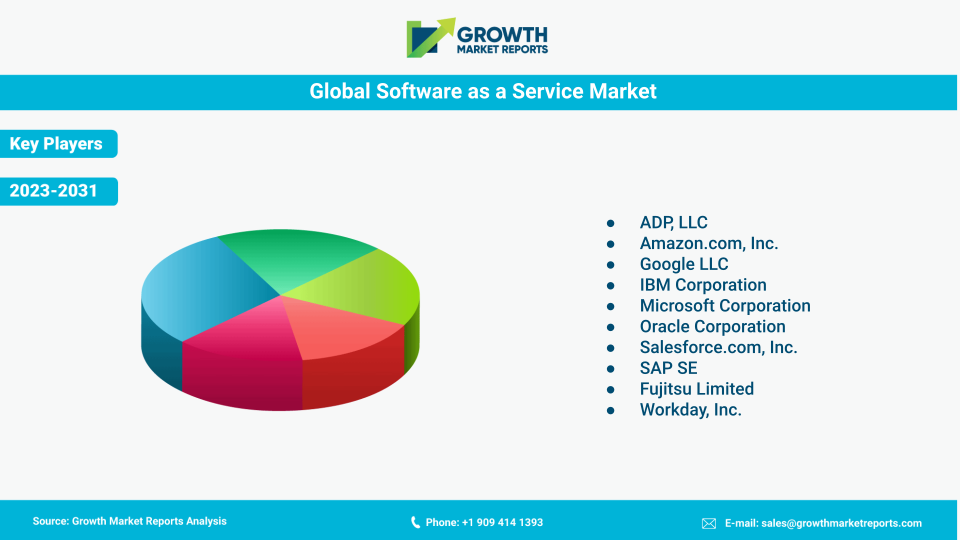
Key players in the global software as a service market are ADP, LLC; Amazon.com, Inc.; Google LLC; IBM Corporation; Microsoft Corporation; Oracle Corporation; Salesforce.com, Inc.; SAP SE; Fujitsu Limited; and Workday, Inc. These players have adopted several business development strategies such as mergers & acquisitions, collaborations, agreements, and partnerships to strengthen their geographical presence.
The SaaS market is highly competitive, with established tech giants and innovative start-ups. Companies are focusing on product innovation, strategic partnerships, acquisitions, and customer-centric features to differentiate themselves and expand market share.
Key players include Microsoft, Salesforce, Oracle, SAP, Adobe, ServiceNow, Workday, Intuit, Shopify, Zoom, Atlassian, HubSpot, Dropbox, Slack, Zendesk, DocuSign, Snowflake, Coupa Software, Twilio, and Autodesk.
Opportunities include the integration of AI, machine learning, and automation, expansion into emerging markets, and development of industry-specific solutions. Major threats are data security, privacy concerns, and regulatory compliance challenges.
North America is the largest SaaS market, while Asia Pacific is the fastest-growing region. Europe shows steady growth, and Latin America and the Middle East & Africa are gradually increasing adoption.
SaaS offers SMEs affordable, scalable, and easy-to-deploy solutions, enabling them to access advanced business applications without high IT costs. Large enterprises use SaaS to drive digital transformation, integrate complex systems, and support global expansion.
The top SaaS application areas are Customer Relationship Management (CRM), Enterprise Resource Planning (ERP), Human Capital Management (HCM), Supply Chain Management (SCM), Business Intelligence (BI), and collaboration tools.
Major SaaS adopters include BFSI (Banking, Financial Services, and Insurance), healthcare, IT and telecommunications, retail and e-commerce, manufacturing, education, and government sectors.
The most popular deployment models are public cloud, private cloud, and hybrid cloud. Public cloud leads in adoption due to its scalability and cost-effectiveness, while private and hybrid clouds are favored for enhanced security and flexibility.
Key growth drivers include rapid digital transformation, increased adoption of cloud-based solutions, demand for remote working and collaboration tools, cost-effectiveness, scalability, and the integration of automation and advanced analytics.
The global Software as a Service (SaaS) market reached USD 274.7 billion in 2024 and is projected to grow at a CAGR of 13.4% from 2025 to 2033, reaching USD 863.5 billion by 2033.