Segments - by Component (Platform, Services), by Streaming Type (On-demand, Live), by Revenue Model (Subscription, Pay-per-view, Advertisement, Hybrid), by Device (Smartphones & Tablets, Smart TVs, Laptops & Desktops, Gaming Consoles, Others), by End-User (Individual, Commercial)
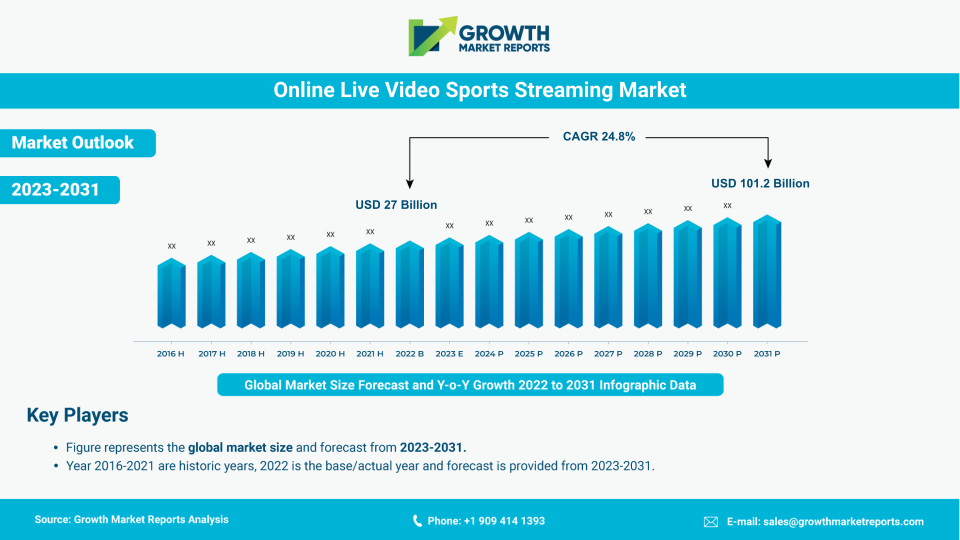
According to our latest research, the global online live video sports streaming market size reached USD 29.8 billion in 2024, driven by the rapid proliferation of high-speed internet and the increasing consumer demand for real-time sports content across digital platforms. The market is expected to grow at a robust CAGR of 15.2% from 2025 to 2033, reaching a projected value of USD 90.4 billion by 2033. Key growth factors include the expanding availability of sporting events online, the integration of advanced streaming technologies, and the rise in connected devices globally. As per our latest research, the industry is experiencing unprecedented momentum, fueled by evolving consumer preferences and technological advancements.
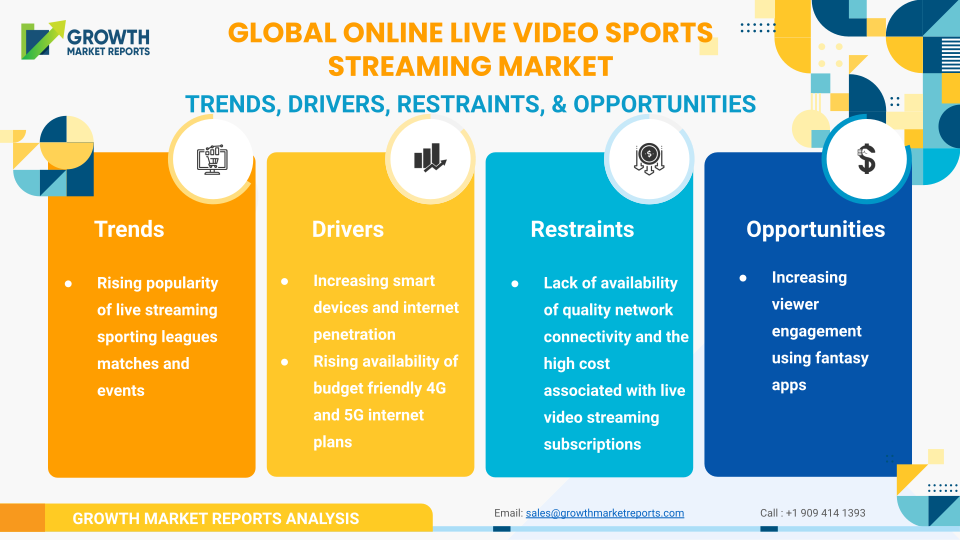
One of the primary growth drivers for the online live video sports streaming market is the dramatic shift in consumer behavior toward digital platforms. Traditional cable and satellite television subscriptions are witnessing a steady decline as viewers, especially millennials and Gen Z, prefer the flexibility, convenience, and interactivity offered by online streaming services. The surge in mobile device usage, coupled with improvements in 4G and 5G network infrastructure, has made it easier for consumers to access live sporting events anytime and anywhere. This shift is further bolstered by the growing popularity of sports leagues and tournaments that are increasingly opting for digital-first broadcasting models, thereby expanding their reach to global audiences and enhancing fan engagement.
Another significant growth factor is the continuous innovation in streaming technology, which has dramatically improved the quality and reliability of live sports broadcasts. Advanced features such as ultra-high-definition (UHD) streaming, multi-camera angle selection, real-time statistics overlays, and interactive chat functionalities have elevated the user experience, making online platforms a preferred choice for sports enthusiasts. Furthermore, the integration of artificial intelligence (AI) and machine learning (ML) for personalized content recommendations and targeted advertising has increased user retention and monetization opportunities for service providers. These technological advancements have not only attracted more viewers but have also enabled streaming platforms to offer tailored experiences that traditional broadcasters cannot match.
The competitive landscape and partnerships within the market are also fueling growth. Major sports leagues and organizations are increasingly forming exclusive partnerships with streaming platforms to deliver premium content directly to consumers. This trend is leading to the creation of niche sports streaming services, catering to specific fan bases and regional preferences. Additionally, the entry of global tech giants and media conglomerates into the market has intensified competition, driving further investments in content acquisition and platform development. These strategic alliances and investments are instrumental in expanding the market reach and enhancing the overall value proposition for end-users, making online live video sports streaming an integral part of the modern sports ecosystem.
From a regional perspective, North America continues to dominate the online live video sports streaming market, accounting for the largest share in 2024 due to high internet penetration, a tech-savvy population, and the presence of major sports leagues. However, Asia Pacific is emerging as the fastest-growing market, driven by rising disposable incomes, increasing smartphone adoption, and a burgeoning middle-class population with a keen interest in international and regional sports. Europe and Latin America are also witnessing significant growth, supported by regulatory changes, local sports events, and expanding broadband infrastructure. The Middle East & Africa region, though smaller in comparison, is expected to register steady growth as digital transformation initiatives gain momentum and sports viewership continues to rise.
The component segment of the online live video sports streaming market is bifurcated into platform and services, each playing a critical role in shaping the industry’s trajectory. Platforms are the backbone of the streaming ecosystem, providing the necessary infrastructure for content delivery, user management, and monetization. Leading platforms invest heavily in scalable cloud-based solutions, content delivery networks (CDNs), and robust security frameworks to ensure seamless and secure streaming experiences. The rapid adoption of advanced video compression technologies and adaptive bitrate streaming has enabled platforms to deliver high-quality content even in bandwidth-constrained environments, thereby expanding their user base across diverse geographies.
On the services front, the market encompasses a range of offerings, including content management, customer support, analytics, and advertising solutions. Service providers are increasingly focusing on value-added features such as real-time analytics, personalized recommendations, and multi-language support to differentiate themselves in a crowded marketplace. These services not only enhance the user experience but also provide streaming companies with actionable insights to optimize content strategies and maximize revenue. The integration of AI-driven analytics tools has further enabled service providers to monitor viewer behavior, predict churn, and tailor marketing campaigns for higher engagement and retention.
The interplay between platform and services is becoming more pronounced as streaming companies seek to deliver holistic solutions that address both technical and business challenges. For instance, end-to-end streaming solutions that combine robust platforms with comprehensive service offerings are gaining traction among sports organizations and broadcasters looking to launch their own direct-to-consumer (D2C) platforms. This trend is particularly evident in emerging markets, where local sports leagues are leveraging turnkey solutions to reach wider audiences and monetize their content more effectively. As competition intensifies, the ability to offer integrated, scalable, and customizable solutions will be a key differentiator for market players.
Furthermore, the growing emphasis on platform interoperability and open APIs is facilitating seamless integration with third-party applications and devices. This has enabled streaming platforms to expand their ecosystem, offering users a unified experience across multiple touchpoints, including smart TVs, mobile apps, and web browsers. As the market continues to evolve, the convergence of platform and service innovation will remain central to delivering superior value to both end-users and content providers, driving sustained growth in the online live video sports streaming market.
| Attributes | Details |
| Report Title | Online Live Video Sports Streaming Market Research Report 2033 |
| By Component | Platform, Services |
| By Streaming Type | On-demand, Live |
| By Revenue Model | Subscription, Pay-per-view, Advertisement, Hybrid |
| By Device | Smartphones & Tablets, Smart TVs, Laptops & Desktops, Gaming Consoles, Others |
| By End-User | Individual, Commercial |
| Regions Covered | North America, Europe, APAC, Latin America, MEA |
| Base Year | 2024 |
| Historic Data | 2018-2023 |
| Forecast Period | 2025-2033 |
| Number of Pages | 292 |
| Number of Tables & Figures | 395 |
| Customization Available | Yes, the report can be customized as per your need. |
The streaming type segment is classified into on-demand and live streaming, each catering to distinct user preferences and consumption patterns. Live streaming dominates the market, accounting for the majority share in 2024, as real-time sports broadcasts remain the primary attraction for viewers seeking immediacy and excitement. The ability to watch events unfold in real time, coupled with interactive features such as live chats and social media integration, has made live streaming the preferred choice for sports enthusiasts. Major sporting events, including international tournaments and league matches, consistently attract millions of concurrent viewers, underscoring the critical importance of robust infrastructure and low-latency delivery in this segment.
On-demand streaming, while smaller in market share, is experiencing rapid growth as viewers increasingly seek flexibility and control over their viewing schedules. The availability of match replays, highlights, and exclusive behind-the-scenes content has expanded the appeal of on-demand services, attracting a broader audience beyond hardcore sports fans. Streaming platforms are leveraging advanced content curation and recommendation algorithms to surface relevant on-demand content, thereby enhancing user engagement and increasing time spent on the platform. The integration of on-demand features with live broadcasts, such as instant replays and multi-angle viewing, is further blurring the lines between the two streaming types.
The coexistence of live and on-demand streaming is driving the adoption of hybrid content strategies among service providers. Many platforms are now offering a mix of live broadcasts and on-demand libraries to cater to diverse user needs and maximize monetization opportunities. This approach not only increases the stickiness of the platform but also enables providers to capture incremental revenue from advertising, subscriptions, and pay-per-view models. As competition intensifies, the ability to offer a comprehensive content portfolio that seamlessly integrates live and on-demand experiences will be a key success factor for market players.
Technological advancements are also playing a pivotal role in enhancing the quality and scalability of both live and on-demand streaming. The adoption of edge computing, cloud-based transcoding, and AI-powered content indexing is enabling platforms to deliver high-quality streams with minimal latency and buffering. These innovations are particularly important for live sports events, where even minor delays can impact viewer satisfaction and engagement. As user expectations continue to rise, streaming companies will need to invest in cutting-edge technologies to maintain a competitive edge and deliver superior experiences across both live and on-demand formats.
The revenue model segment in the online live video sports streaming market is diverse, encompassing subscription, pay-per-view, advertisement, and hybrid models. Subscription-based models remain the most popular, accounting for a significant portion of total market revenue in 2024. The predictable recurring income from monthly or annual subscriptions provides streaming companies with the financial stability needed to invest in premium content and technology upgrades. Subscription services often offer exclusive access to live events, ad-free viewing, and additional features such as multi-device support and offline downloads, enhancing their appeal to loyal sports fans.
Pay-per-view (PPV) models are particularly prevalent for high-profile events, such as championship matches and exclusive tournaments. This model allows viewers to purchase access to specific events without committing to a long-term subscription, making it attractive for casual fans and those interested in marquee matchups. PPV has proven to be a lucrative revenue stream, especially for combat sports and one-off events that generate significant buzz and audience interest. Streaming platforms are increasingly leveraging dynamic pricing strategies and targeted marketing campaigns to maximize PPV sales and drive incremental revenue.
Advertising-based models are gaining traction as platforms seek to monetize large audiences through targeted ads and sponsorships. The ability to deliver personalized ads based on viewer demographics and behavior has made online streaming an attractive channel for advertisers looking to reach engaged sports audiences. Programmatic advertising, real-time bidding, and branded content integrations are enabling streaming companies to optimize ad inventory and increase fill rates. However, the challenge lies in balancing ad load with user experience, as excessive interruptions can lead to viewer churn and negative brand perception.
Hybrid models, which combine elements of subscription, PPV, and advertising, are emerging as a popular choice among streaming providers. By offering flexible pricing options and tiered access levels, hybrid models cater to a wide range of user preferences and maximize revenue potential. For example, a platform may offer a free ad-supported tier, a premium subscription tier, and PPV access for special events. This approach not only broadens the addressable market but also enables providers to upsell premium features and cross-promote content. As the market matures, the ability to innovate and adapt revenue models to changing consumer preferences will be critical for sustained growth and profitability.
The device segment in the online live video sports streaming market is segmented into smartphones & tablets, smart TVs, laptops & desktops, gaming consoles, and others. Smartphones & tablets dominate the market, accounting for the largest share of total viewership in 2024. The widespread adoption of mobile devices, coupled with the proliferation of high-speed mobile networks, has made it easier than ever for consumers to stream live sports on the go. Mobile apps with intuitive interfaces, real-time notifications, and offline viewing capabilities have further enhanced the appeal of streaming on smartphones and tablets, particularly among younger demographics.
Smart TVs are rapidly gaining traction as consumers seek immersive viewing experiences in the comfort of their homes. The integration of streaming apps directly into smart TV operating systems has eliminated the need for external devices, making it seamless for users to access live sports content on large screens. The growing popularity of 4K and HDR-enabled smart TVs has also raised the bar for video quality, prompting streaming platforms to invest in high-definition content delivery and adaptive streaming technologies. As smart home adoption increases, the share of smart TVs in the device mix is expected to rise steadily over the forecast period.
Laptops and desktops continue to play a significant role, particularly among users who prefer multitasking or require access to advanced features such as multiple camera angles, live statistics, and social media integration. Web-based streaming platforms offer flexibility and compatibility across various operating systems and browsers, making them a convenient choice for both individual and commercial users. The ability to cast or mirror content from laptops and desktops to larger screens further enhances the versatility of these devices in the streaming ecosystem.
Gaming consoles and other connected devices, such as streaming sticks and set-top boxes, represent a growing segment of the market. Gaming consoles, in particular, appeal to tech-savvy users who value seamless integration with gaming and entertainment ecosystems. The availability of sports streaming apps on popular consoles has expanded the reach of online sports content to new user segments. As the Internet of Things (IoT) continues to evolve, the proliferation of connected devices will create new opportunities for streaming platforms to deliver personalized and context-aware experiences, further driving market growth.
The end-user segment of the online live video sports streaming market is divided into individual and commercial users, each contributing uniquely to market dynamics. Individual users form the backbone of the market, accounting for the lion’s share of total subscriptions and viewership in 2024. The convenience of accessing live sports content on personal devices, coupled with the ability to customize viewing experiences, has made online streaming the preferred choice for millions of sports fans worldwide. Personalization features such as tailored recommendations, customizable notifications, and interactive chat functionalities have further enhanced user engagement and loyalty.
Commercial users, including sports bars, restaurants, gyms, hotels, and corporate venues, represent a significant and growing segment of the market. These establishments rely on live sports streaming to attract patrons, enhance customer experiences, and drive incremental revenue. Commercial streaming solutions often include features such as multi-screen support, high-definition video quality, and integration with point-of-sale systems. Service providers are increasingly offering tailored packages and licensing agreements to cater to the unique needs of commercial clients, including flexible pricing, dedicated support, and compliance with public performance regulations.
The interplay between individual and commercial users is creating new opportunities for cross-segment collaboration and innovation. For example, sports leagues and streaming platforms are partnering with commercial venues to host live viewing events, fan engagement activities, and exclusive content screenings. These initiatives not only drive additional revenue but also enhance brand visibility and community engagement. As the market evolves, the ability to deliver differentiated value propositions to both individual and commercial users will be critical for sustained growth and competitive advantage.
Furthermore, the rise of remote work and hybrid office models is blurring the lines between individual and commercial usage. Employees increasingly expect access to live sports content in corporate environments, leading to the adoption of enterprise streaming solutions and employee engagement programs. This trend is particularly pronounced in regions with a strong sports culture and high workforce mobility. As user expectations continue to evolve, streaming providers will need to innovate and adapt their offerings to cater to the diverse and dynamic needs of both individual and commercial end-users.
The online live video sports streaming market presents a wealth of opportunities for stakeholders across the value chain. One of the most significant opportunities lies in the expansion into emerging markets, where rising internet penetration and growing middle-class populations are fueling demand for digital sports content. Streaming platforms that can localize content, offer affordable pricing, and deliver reliable user experiences stand to capture significant market share in regions such as Asia Pacific, Latin America, and Africa. Additionally, the integration of advanced technologies such as AI, virtual reality (VR), and augmented reality (AR) offers the potential to create immersive and interactive viewing experiences, further enhancing user engagement and monetization opportunities.
Another major opportunity is the growing trend toward direct-to-consumer (D2C) models, which enable sports leagues, teams, and organizations to bypass traditional broadcasters and engage directly with fans. D2C platforms offer greater control over content distribution, data collection, and monetization, allowing rights holders to build stronger relationships with their audiences and unlock new revenue streams. The rise of niche sports and regional leagues also presents opportunities for specialized streaming services to cater to underserved fan bases and differentiate themselves in a crowded market. Strategic partnerships, content syndication, and cross-platform integrations will be key to capitalizing on these emerging opportunities and driving sustained growth.
Despite the promising outlook, the market faces several restraining factors that could hinder growth. Chief among these is the challenge of content piracy and unauthorized streaming, which poses significant risks to revenue and intellectual property rights. Streaming platforms must invest in robust digital rights management (DRM) solutions, watermarking, and anti-piracy technologies to protect their content and maintain the trust of rights holders. Additionally, the high cost of acquiring premium sports rights and the complexity of negotiating licensing agreements can be prohibitive for smaller players and new entrants. Regulatory uncertainties, particularly around data privacy and cross-border content distribution, also present challenges that require careful navigation and compliance.
North America continues to lead the online live video sports streaming market, with a market size of USD 10.8 billion in 2024, accounting for approximately 36% of the global market. The region’s dominance is underpinned by high internet penetration, widespread adoption of connected devices, and the presence of major sports leagues such as the NFL, NBA, and MLB. The proliferation of subscription-based and hybrid revenue models, coupled with strong partnerships between sports organizations and streaming platforms, has further fueled market growth. North America is expected to maintain its leadership position over the forecast period, driven by ongoing investments in content and technology.
Asia Pacific is emerging as the fastest-growing region, with a market size of USD 7.1 billion in 2024 and a projected CAGR of 19.3% from 2025 to 2033. The region’s growth is driven by rising disposable incomes, increasing smartphone adoption, and a burgeoning middle-class population with a strong appetite for both international and local sports content. Key markets such as China, India, Japan, and South Korea are witnessing rapid digital transformation, supported by government initiatives to expand broadband infrastructure and promote digital inclusion. Localized content, affordable pricing, and innovative business models will be critical to capturing market share in this dynamic and diverse region.
Europe and Latin America are also making significant contributions to the global market, with market sizes of USD 6.4 billion and USD 3.2 billion respectively in 2024. Europe benefits from a strong sports culture, high broadband penetration, and regulatory support for digital media. The region is characterized by a fragmented market landscape, with a mix of pan-European and local streaming providers catering to diverse linguistic and cultural preferences. Latin America, on the other hand, is experiencing rapid growth fueled by increasing internet access, a young population, and the popularity of football and other regional sports. The Middle East & Africa region, with a market size of USD 2.3 billion in 2024, is expected to register steady growth as digital infrastructure improves and sports viewership expands.
The competitive landscape of the online live video sports streaming market is characterized by intense rivalry, rapid innovation, and a constant drive to secure exclusive content rights. Major global players, regional champions, and niche service providers are all vying for market share, leveraging their strengths in technology, content acquisition, and user experience. The entry of tech giants such as Amazon, Apple, and Google into the sports streaming arena has further intensified competition, leading to significant investments in platform development, content partnerships, and marketing campaigns. These companies are leveraging their vast ecosystems, data analytics capabilities, and financial resources to offer differentiated value propositions and capture a larger share of the growing market.
Traditional broadcasters and media conglomerates are also adapting to the digital age by launching their own streaming platforms or forming strategic alliances with technology partners. This convergence of media and technology is blurring the lines between traditional and digital distribution channels, creating new opportunities for innovation and collaboration. Exclusive content deals, multi-platform distribution agreements, and co-branded marketing initiatives are becoming increasingly common as companies seek to enhance their competitive positioning and expand their reach. The ability to secure and retain exclusive sports rights remains a key battleground, with bidding wars driving up the cost of premium content and raising the stakes for market participants.
In addition to global heavyweights, a growing number of regional and niche streaming services are carving out their own space in the market by focusing on specific sports, languages, or geographic areas. These players are leveraging local partnerships, targeted marketing, and customized content offerings to differentiate themselves and build loyal user bases. The rise of direct-to-consumer (D2C) platforms operated by sports leagues, teams, and athletes is also reshaping the competitive landscape, enabling rights holders to engage directly with fans and capture a larger share of the value chain. As competition intensifies, the ability to innovate, scale, and adapt to changing consumer preferences will be critical for long-term success.
Key companies operating in the online live video sports streaming market include DAZN Group, ESPN+, Amazon Prime Video, YouTube TV, Hulu + Live TV, fuboTV, Sony LIV, Hotstar (Disney+ Hotstar), NBC Sports, and beIN Sports. DAZN Group has established itself as a global leader in sports streaming, offering a wide range of live and on-demand content across multiple markets. ESPN+ leverages its strong brand and extensive sports rights portfolio to attract a loyal subscriber base in North America. Amazon Prime Video has made significant inroads into live sports through high-profile partnerships and exclusive broadcasting deals, while YouTube TV and Hulu + Live TV continue to expand their offerings with a mix of live sports, entertainment, and news.
Regional players such as Sony LIV in India and Hotstar (now Disney+ Hotstar) have capitalized on local sports leagues and events to build large and engaged audiences. NBC Sports and beIN Sports are prominent in North America and the Middle East, respectively, leveraging their broadcast expertise and digital capabilities to deliver high-quality streaming experiences. These companies are investing heavily in technology, content acquisition, and user engagement to maintain their competitive edge and capitalize on the growing demand for online live video sports streaming. As the market continues to evolve, strategic partnerships, innovative business models, and a relentless focus on user experience will be the hallmarks of successful competitors in this dynamic and rapidly expanding industry.
The Online Live Video Sports Streaming market has been segmented on the basis of
Key players competing in the global online live video sports streaming market are YuppTV USA Inc.; DIRECTV, LLC; ESPN Enterprises, Inc.; Hulu, LLC; FloSports, Inc.; Amazon.com, Inc.; BoxCast; and Disney Plus.
These sports streaming platforms have adopted development strategies including mergers, acquisitions, partnerships, collaboration, product launches, and production expansion to expand their consumer base worldwide.
Individual users drive the majority of subscriptions, while commercial users like sports bars and gyms use streaming to attract patrons, with tailored solutions and licensing agreements available for both segments.
Live streaming delivers real-time sports broadcasts with interactive features, while on-demand streaming offers flexibility with replays, highlights, and exclusive content accessible anytime.
Key players include DAZN Group, ESPN+, Amazon Prime Video, YouTube TV, Hulu + Live TV, fuboTV, Sony LIV, Disney+ Hotstar, NBC Sports, and beIN Sports.
Major challenges include content piracy, high costs of acquiring sports rights, regulatory uncertainties, and the need for robust digital rights management.
Technologies like UHD streaming, multi-camera angles, AI-powered recommendations, and adaptive bitrate streaming are enhancing user experience and platform scalability.
Smartphones and tablets dominate viewership, followed by smart TVs, laptops & desktops, gaming consoles, and other connected devices.
Key revenue models include subscription, pay-per-view (PPV), advertisement, and hybrid models that combine multiple monetization strategies.
North America leads the market due to high internet penetration and major sports leagues, while Asia Pacific is the fastest-growing region, fueled by rising smartphone adoption and disposable incomes.
The market is expected to grow at a CAGR of 15.2% between 2025 and 2033, reaching a projected value of USD 90.4 billion by 2033.
As of 2024, the global online live video sports streaming market reached USD 29.8 billion, driven by high-speed internet proliferation and increased demand for real-time sports content.