Segments - by Type (Video Streaming, Music Streaming, News & Magazine, e-Learning, Software, Others), by Payment Mode (Monthly, Quarterly, Annual), by End-User (Individual, Enterprise), by Platform (Web, Mobile, Smart TV, Others)
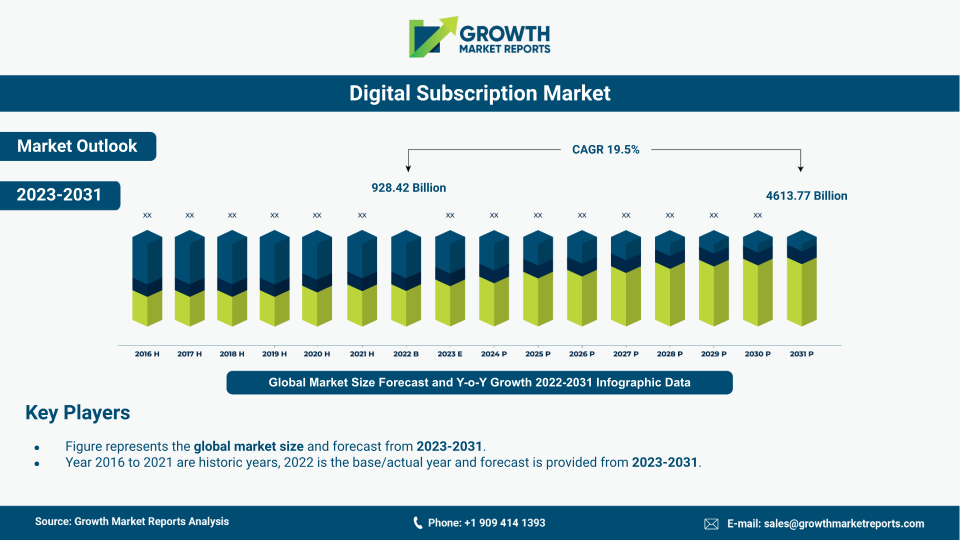
Based on our latest research, the global digital subscription market size reached USD 82.5 billion in 2024, demonstrating robust momentum driven by widespread digitalization and evolving consumer preferences. The market is set to expand at a compelling CAGR of 13.2% from 2025 to 2033, propelling the total market value to an estimated USD 241.7 billion by 2033. This impressive growth is primarily attributed to the increasing adoption of digital content across various segments such as video streaming, music, e-learning, and software, as well as the proliferation of high-speed internet and connected devices worldwide. As per our latest research, the sustained demand for personalized, on-demand content and the convenience afforded by subscription models are key factors accelerating the market trajectory.
A primary growth driver for the digital subscription market is the ongoing shift in consumer behavior towards digital consumption and the preference for seamless, on-demand access to content and services. The widespread availability of affordable smartphones, smart TVs, and high-speed internet has transformed how consumers interact with entertainment, education, and software. Video and music streaming services, in particular, have witnessed exponential growth, as audiences seek flexible viewing and listening experiences without the constraints of traditional schedules. The rise of digital news, magazines, and e-learning platforms further underscores the transition to digital-first consumption patterns, with publishers and educators leveraging subscription models to deliver curated, ad-free experiences and exclusive content.
Another significant factor fueling the expansion of the digital subscription market is the increasing penetration of subscription-based software and productivity tools across enterprises and individuals. Software-as-a-Service (SaaS) platforms have revolutionized the way organizations access and deploy software, offering cost-effective, scalable, and continuously updated solutions. This shift from perpetual licenses to subscription-based access has not only reduced upfront costs for businesses but also ensured ongoing innovation and support. The growing reliance on cloud-based applications, collaboration tools, and cybersecurity solutions has further accelerated the transition, with enterprises embracing digital subscriptions to drive operational efficiency and digital transformation.
The digital subscription market is also being propelled by the growing trend of content personalization and targeted recommendations powered by artificial intelligence and machine learning algorithms. Service providers are leveraging advanced analytics to understand user preferences, consumption patterns, and engagement metrics, enabling them to deliver highly tailored experiences that foster customer loyalty and increase retention rates. Personalization not only enhances the perceived value of digital subscriptions but also supports upselling and cross-selling opportunities, contributing to sustained revenue growth. Moreover, the integration of multi-platform accessibility, offline downloads, and family or enterprise plans has broadened the appeal of digital subscription services to a diverse and global audience.
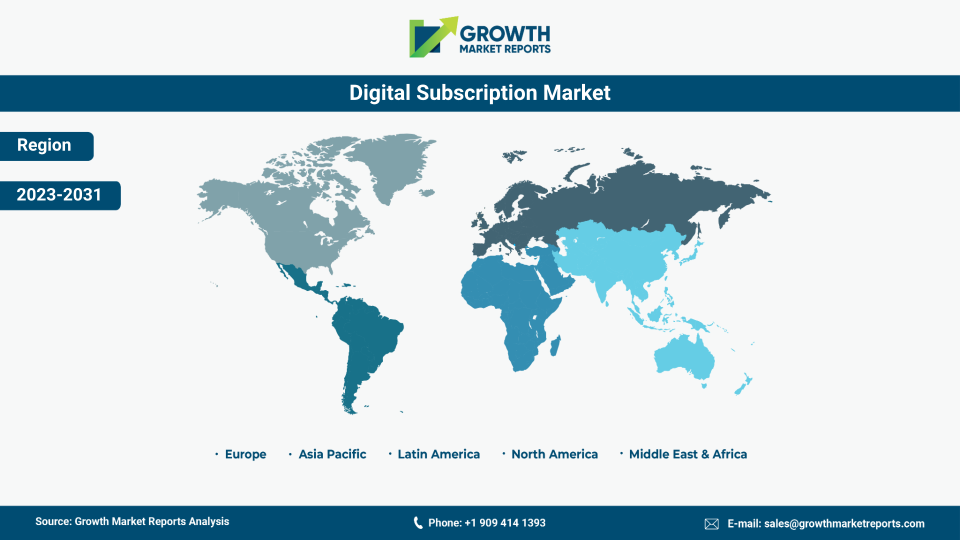
From a regional perspective, North America continues to dominate the global digital subscription market, accounting for the largest share due to early adoption, mature digital infrastructure, and a high concentration of leading service providers. However, the Asia Pacific region is emerging as the fastest-growing market, driven by rapid urbanization, expanding internet penetration, and a burgeoning middle class with increasing disposable income. Europe also maintains a significant market presence, supported by strong demand for digital media, e-learning, and SaaS solutions. Latin America and the Middle East & Africa are witnessing steady growth, albeit from a lower base, as digital inclusion initiatives and mobile connectivity improve access to subscription-based content and services.
The type segment of the digital subscription market encompasses a broad array of offerings, including video streaming, music streaming, news and magazines, e-learning, software, and other niche categories. Video streaming continues to be the dominant force, capturing the largest market share thanks to the global popularity of platforms such as Netflix, Amazon Prime Video, and Disney+. The proliferation of original content, exclusive releases, and multi-language support has made video streaming a staple of modern entertainment. Furthermore, the integration of interactive features, live events, and localized content has expanded the reach and engagement levels of these platforms, making them indispensable for both individual consumers and households.
Music streaming services have also experienced remarkable growth, with platforms like Spotify, Apple Music, and Amazon Music revolutionizing the way users access and discover music. The shift from physical and digital downloads to on-demand streaming has not only increased accessibility but also provided artists with new monetization avenues. Subscription models in music streaming offer ad-free listening, offline playback, and curated playlists, which have become highly attractive to consumers seeking personalized experiences. The competitive landscape is further intensified by the entry of regional players and the integration of podcasts and audiobooks, broadening the scope of digital audio subscriptions.
The news and magazine segment has undergone significant transformation, as traditional publishers adapt to the digital era by offering subscription-based access to premium journalism, in-depth analysis, and exclusive content. The decline of print media and the challenges of ad-based revenue models have prompted media organizations to invest in digital-first strategies, leveraging paywalls, membership programs, and bundled offerings. E-learning subscriptions have also gained traction, particularly in the wake of the global pandemic, as learners and professionals turn to online platforms for upskilling, certification, and lifelong learning. Platforms like Coursera, LinkedIn Learning, and MasterClass exemplify the diverse range of educational content now available on a subscription basis.
Software subscriptions, primarily delivered through SaaS models, have become the backbone of digital transformation initiatives across industries. From productivity suites and design tools to cybersecurity and customer relationship management (CRM) solutions, software subscriptions offer flexibility, scalability, and continuous innovation for both individuals and enterprises. The recurring revenue model inherent in software subscriptions ensures a steady stream of updates, technical support, and feature enhancements, which are critical for maintaining competitiveness in a rapidly evolving digital landscape. As more businesses migrate to the cloud and prioritize operational agility, the demand for subscription-based software solutions is expected to accelerate further.
Other segments, such as gaming, fitness, and niche content platforms, are also contributing to the diversification and expansion of the digital subscription market. Gaming subscriptions, for example, provide access to extensive libraries, exclusive releases, and multiplayer experiences, while fitness apps offer personalized workout plans, live classes, and wellness content. These emerging categories cater to specific interests and demographics, highlighting the adaptability and scalability of the subscription model across a wide spectrum of digital experiences. As consumer expectations continue to evolve, service providers are likely to explore new verticals and hybrid offerings to capture untapped market potential.
| Attributes | Details |
| Report Title | Digital Subscription Market Market Research Report 2033 |
| By Type | Video Streaming, Music Streaming, News & Magazine, e-Learning, Software, Others |
| By Payment Mode | Monthly, Quarterly, Annual |
| By End-User | Individual, Enterprise |
| By Platform | Web, Mobile, Smart TV, Others |
| Regions Covered | North America, Europe, APAC, Latin America, MEA |
| Base Year | 2024 |
| Historic Data | 2018-2023 |
| Forecast Period | 2025-2033 |
| Number of Pages | 286 |
| Number of Tables & Figures | 334 |
| Customization Available | Yes, the report can be customized as per your need. |
The payment mode segment within the digital subscription market is characterized by a variety of billing cycles, including monthly, quarterly, and annual plans. Monthly subscriptions remain the most popular choice among consumers, offering flexibility and minimal commitment. This model allows users to subscribe and unsubscribe with ease, aligning with the dynamic and evolving preferences of digital consumers. Monthly plans are particularly favored in highly competitive segments such as video and music streaming, where users often trial multiple services before settling on their preferred platform. The low entry barrier and frequent promotional offers further incentivize monthly subscriptions, contributing to high user acquisition rates.
Quarterly payment modes, while less prevalent than monthly or annual plans, provide a middle ground for consumers seeking a balance between flexibility and cost savings. Quarterly subscriptions often come with modest discounts compared to monthly billing, making them attractive to users who are confident in their long-term engagement but are not ready to commit to a full year. This payment mode is commonly adopted by e-learning platforms and software providers, where users may require access for a specific project or academic term. Quarterly billing cycles also enable service providers to monitor user engagement and retention more closely, facilitating timely interventions to reduce churn.
Annual subscriptions are gaining traction across all segments of the digital subscription market, driven by the substantial cost savings and value-added benefits they offer. Many providers incentivize annual plans with significant discounts, exclusive content, or bundled services, encouraging users to commit for a longer duration. Annual subscriptions are particularly popular among enterprise clients and power users who require uninterrupted access to software, educational resources, or premium content. The predictability of annual revenue streams also enables service providers to invest in content creation, platform enhancements, and customer support, fostering long-term customer relationships and brand loyalty.
The choice of payment mode is influenced by several factors, including consumer demographics, content type, and regional preferences. For instance, younger users and those in emerging markets may prefer monthly plans due to budget constraints and the desire for flexibility, while mature markets with higher purchasing power often gravitate towards annual subscriptions for the added value. The integration of flexible payment options, such as pay-as-you-go and family plans, further enhances the appeal of digital subscriptions, catering to diverse usage patterns and household structures. As competition intensifies, service providers are expected to experiment with innovative billing models, loyalty programs, and dynamic pricing strategies to maximize user retention and lifetime value.
The evolution of payment technologies, including digital wallets, mobile payments, and cryptocurrencies, is also shaping the payment mode landscape within the digital subscription market. Seamless, secure, and frictionless payment experiences are critical for reducing barriers to entry and minimizing churn. Service providers are increasingly adopting automated billing, one-click renewals, and localized payment solutions to enhance user convenience and support global expansion. As regulatory frameworks and consumer expectations evolve, ensuring transparency, data privacy, and secure transactions will remain paramount for sustaining growth and trust in the digital subscription ecosystem.
The end-user segment of the digital subscription market is broadly categorized into individual and enterprise users, each exhibiting distinct consumption patterns, preferences, and value drivers. Individual consumers represent the largest and most dynamic segment, accounting for the majority of subscriptions across video, music, news, and e-learning platforms. The proliferation of personalized content, multi-device accessibility, and flexible payment options has made digital subscriptions an integral part of everyday life for millions of users worldwide. Individual subscribers are motivated by the desire for convenience, variety, and ad-free experiences, as well as the ability to discover new content and stay informed or entertained on their own terms.
Enterprises, on the other hand, are increasingly embracing digital subscriptions as part of their digital transformation and workforce enablement strategies. Subscription-based software, productivity tools, and professional development platforms have become essential for organizations seeking to enhance collaboration, streamline operations, and foster continuous learning. The scalability and cost-effectiveness of enterprise subscriptions enable businesses to adapt to changing needs, onboard new users, and access the latest features without significant capital expenditure. Moreover, enterprise subscriptions often include value-added services such as dedicated support, integration capabilities, and advanced analytics, catering to the complex requirements of large organizations.
The growing adoption of hybrid work models and remote collaboration has further intensified the demand for digital subscriptions among enterprises. Cloud-based applications, virtual meeting platforms, and cybersecurity solutions have become indispensable for maintaining productivity, security, and business continuity in a distributed workforce environment. Enterprises are also leveraging digital subscriptions to support employee wellness, training, and engagement initiatives, recognizing the role of digital content in fostering a positive organizational culture and driving innovation. As competition for talent intensifies, offering access to premium digital resources can serve as a valuable differentiator in attracting and retaining top performers.
For individual users, the increasing availability of bundled and family plans has expanded the appeal of digital subscriptions, enabling shared access and cost savings. Service providers are tailoring offerings to specific demographics, interests, and usage patterns, leveraging data analytics to deliver personalized recommendations and targeted promotions. The integration of social features, gamification, and community engagement further enhances user satisfaction and loyalty, creating a virtuous cycle of acquisition, retention, and advocacy. As digital literacy and connectivity continue to improve, the addressable market for individual subscriptions is expected to grow exponentially, particularly in emerging markets with large youth populations.
The interplay between individual and enterprise end-users is also giving rise to new hybrid models and business opportunities. For example, educational institutions and corporate training departments are partnering with e-learning platforms to provide employees and students with curated subscription access to industry-relevant content. Similarly, enterprises are exploring white-label solutions and co-branded offerings to extend the benefits of digital subscriptions to their customers, partners, and stakeholders. This convergence of B2C and B2B models underscores the versatility and scalability of the digital subscription market, paving the way for innovative partnerships and revenue streams.
The platform segment of the digital subscription market encompasses a diverse range of access points, including web, mobile, smart TV, and other connected devices. The web platform remains a foundational channel for digital subscriptions, offering broad accessibility, robust functionality, and seamless integration with other digital services. Web-based platforms are particularly favored for content-rich experiences such as e-learning, news, and software applications, where larger screens, advanced navigation, and multi-tasking capabilities enhance user engagement. The flexibility of web platforms also facilitates cross-platform synchronization, enabling users to transition seamlessly between devices without losing continuity or personalization.
Mobile platforms have emerged as the primary driver of digital subscription growth, reflecting the ubiquity of smartphones and the increasing preference for on-the-go access to content and services. Mobile apps offer intuitive interfaces, push notifications, and offline capabilities, making them ideal for video and music streaming, news updates, and fitness tracking. The integration of biometric authentication, in-app purchases, and personalized recommendations further enhances the user experience, driving higher engagement and retention rates. As mobile connectivity and device affordability continue to improve, particularly in emerging markets, the share of mobile-driven digital subscriptions is expected to outpace other platforms.
Smart TVs and connected home devices are reshaping the digital subscription landscape by bringing premium content directly to the living room. The rise of over-the-top (OTT) video streaming services, interactive gaming, and voice-activated assistants has transformed the home entertainment experience, blurring the lines between traditional broadcast and digital platforms. Smart TV subscriptions offer immersive, high-definition viewing, multi-user profiles, and integration with home automation systems, catering to the evolving preferences of modern households. The proliferation of smart devices, coupled with advancements in connectivity and user interface design, is expanding the addressable market for digital subscriptions across age groups and lifestyles.
Other platforms, including wearables, gaming consoles, and automotive infotainment systems, are contributing to the diversification and expansion of digital subscription access points. Wearable devices, for example, enable personalized fitness and wellness subscriptions, while gaming consoles offer access to extensive libraries, cloud gaming, and multiplayer experiences. Automotive subscriptions are emerging as a new frontier, providing drivers and passengers with access to navigation, entertainment, and safety features on a subscription basis. These innovative platforms highlight the adaptability of the digital subscription model and its potential to create new value propositions in the connected ecosystem.
The convergence of platforms and the increasing emphasis on interoperability and seamless user experiences are shaping the future of the digital subscription market. Service providers are investing in cross-platform compatibility, single sign-on, and unified billing to deliver consistent and frictionless experiences across devices. The ability to start a video on a smart TV, continue on a mobile device, and access related content on the web exemplifies the integrated, multi-platform approach that defines leading digital subscription services. As technology continues to evolve, the platform segment will remain a critical battleground for differentiation, innovation, and user loyalty.
The digital subscription market is ripe with opportunities, particularly as technological advancements and shifting consumer preferences continue to reshape the digital landscape. One of the most promising opportunities lies in the expansion of personalized and localized content offerings, which cater to diverse cultural, linguistic, and demographic segments. Service providers that invest in advanced analytics, artificial intelligence, and machine learning can unlock deeper insights into user behavior, enabling them to deliver highly tailored experiences that drive engagement and retention. The integration of emerging technologies such as virtual reality, augmented reality, and interactive content further enhances the value proposition of digital subscriptions, opening new avenues for monetization and differentiation in a crowded marketplace.
Another significant opportunity is the untapped potential of emerging markets, where rising internet penetration, smartphone adoption, and digital literacy are creating vast new audiences for subscription-based services. By tailoring pricing models, payment options, and content offerings to local preferences, service providers can accelerate user acquisition and establish strong brand loyalty in regions with high growth potential. Strategic partnerships with telecom operators, device manufacturers, and local content creators can further enhance market entry and expansion efforts, enabling providers to navigate regulatory complexities and cultural nuances. The ongoing evolution of payment technologies, including digital wallets and mobile money, also presents opportunities to streamline transactions and reduce friction for users in underbanked or cash-dominant economies.
Despite the immense growth potential, the digital subscription market faces several restraining factors and threats that could impede its trajectory. Chief among these is the intensifying competition and market saturation, particularly in mature segments such as video and music streaming. The proliferation of subscription services has led to subscription fatigue among consumers, who may become overwhelmed by the sheer number of offerings and associated costs. Price sensitivity, coupled with the availability of free or ad-supported alternatives, can increase churn rates and erode profit margins. Additionally, concerns around data privacy, security, and content piracy remain persistent challenges, requiring ongoing investment in robust safeguards, transparent policies, and user education to maintain trust and compliance in an increasingly regulated environment.
North America continues to lead the global digital subscription market, accounting for approximately USD 33.2 billion of the total market size in 2024. The region’s dominance is underpinned by a mature digital infrastructure, high disposable income, and a strong culture of early adoption. The presence of major industry players such as Netflix, Amazon, and Apple has further entrenched subscription-based consumption patterns across entertainment, software, and news segments. North American consumers are also more likely to subscribe to multiple services, driving higher average revenue per user (ARPU) and fostering a competitive environment that incentivizes innovation and value-added features. The region is expected to maintain steady growth, with a projected CAGR of 10.5% through 2033, as service providers continue to diversify their offerings and expand into adjacent verticals.
Europe represents the second-largest market, with a value of USD 22.7 billion in 2024, characterized by strong demand for digital media, e-learning, and SaaS solutions. The region’s diverse linguistic and cultural landscape presents both opportunities and challenges for service providers, who must balance localization with scalability. Regulatory frameworks such as the General Data Protection Regulation (GDPR) have heightened the importance of data privacy and security, influencing how providers design and deliver subscription services. European consumers are increasingly embracing bundled and cross-platform subscriptions, as well as hybrid models that combine digital and physical experiences. The market is forecasted to grow at a CAGR of 12.1% through 2033, fueled by ongoing digital transformation initiatives and the expansion of 5G connectivity.
The Asia Pacific region is emerging as the fastest-growing market, with a current value of USD 17.5 billion and a projected CAGR of 17.6% through 2033. Rapid urbanization, expanding internet access, and a burgeoning middle class are driving demand for digital content and services across video, music, education, and software segments. Local and regional players are gaining traction by offering affordable, localized content and innovative payment solutions tailored to the unique needs of diverse markets. The proliferation of smartphones and mobile-first consumption patterns has further accelerated subscription adoption, particularly among younger demographics. As digital infrastructure continues to improve and regulatory environments evolve, Asia Pacific is poised to become a key engine of growth and innovation in the global digital subscription market.
The digital subscription market is characterized by intense competition and rapid innovation, with a diverse array of global and regional players vying for market share across multiple segments. Leading companies are leveraging their scale, brand equity, and technological capabilities to deliver differentiated value propositions, while new entrants and niche providers are targeting underserved segments and emerging markets. The competitive landscape is further shaped by strategic partnerships, mergers and acquisitions, and the continuous evolution of content, technology, and business models. As the market matures, the ability to deliver personalized, seamless, and value-added experiences will be critical for sustaining competitive advantage and driving long-term growth.
Major players in the video streaming segment, such as Netflix, Amazon Prime Video, and Disney+, have set the standard for original content production, multi-platform accessibility, and global expansion. These companies invest heavily in data analytics, artificial intelligence, and user experience design to optimize recommendations, reduce churn, and maximize engagement. The music streaming market is dominated by Spotify, Apple Music, and Amazon Music, each offering extensive libraries, exclusive releases, and integration with smart devices. In the software subscription space, Microsoft, Adobe, and Salesforce lead the way with comprehensive SaaS portfolios that cater to both individual and enterprise users, emphasizing security, scalability, and continuous innovation.
Regional players and niche providers are also making significant inroads, particularly in markets with unique cultural, linguistic, or regulatory requirements. Companies such as Tencent Video, Hotstar, and iQIYI are capitalizing on local content preferences and strategic partnerships to capture market share in Asia Pacific. Similarly, e-learning platforms like Coursera, Udemy, and Byju’s are addressing the growing demand for online education and professional development through subscription-based models. News and magazine providers, including The New York Times, The Guardian, and The Washington Post, are leveraging digital subscriptions to monetize premium journalism and build loyal reader communities.
The competitive landscape is further enriched by the entry of technology giants and ecosystem players, who are integrating subscription services into broader digital offerings. Apple, for example, has expanded its subscription portfolio to include music, video, news, fitness, and gaming, creating a cohesive and interconnected ecosystem that enhances user stickiness and lifetime value. Amazon’s Prime membership bundles video, music, e-books, and shopping benefits, reinforcing its position as a one-stop destination for digital and physical needs. As competition intensifies, companies are expected to invest in content creation, platform enhancements, and innovative pricing strategies to differentiate their offerings and capture a larger share of the growing digital subscription market.
In summary, the digital subscription market is a dynamic and rapidly evolving ecosystem, marked by fierce competition, technological innovation, and shifting consumer expectations. Leading players such as Netflix, Amazon, Apple, Microsoft, and Spotify continue to shape the industry through scale, innovation, and strategic investments, while regional and niche providers carve out distinct value propositions in emerging and underserved markets. The ongoing convergence of content, technology, and platforms will drive further consolidation and collaboration, as companies seek to deliver integrated, personalized, and seamless experiences that meet the evolving needs of consumers and enterprises worldwide.
The Digital Subscription market has been segmented on the basis of
Key players competing in the global digital subscription market are Netflix; Amazon; Flipkart; Microsoft Corporation; Salesforce; Oracle Corporation; TechCrunch; SAP SE; Vigorate Digital Solutions; and Algolia.
Some of these player have adopted various business development strategies such as merger or acquisition, partnership or collaboration, and launching new subscription systems to expand their consumer base globally and gain a competitive edge in the market.
Google Workspace, HubSpot, Adobe, and Slack are some of the key platforms that offer subscription models for users or enterprises who can access to innovative software for their effective management of business operations.
A digital-born subscription-based French news platform, MediaPart is home to 67 million people in France and has more than 170k subscribers who are paying €11m/month, thereby, generating €16.6 million in revenues with 20% operating margin.
Yes, the Digital Subscription Market Research Report 2033 can be customized according to specific requirements, including additional data, segment analysis, or regional focus.
AI and machine learning are used to personalize content, provide targeted recommendations, and analyze user engagement, which increases customer retention and supports upselling and cross-selling opportunities.
Opportunities include personalized and localized content, emerging markets, and new technologies like AI and AR/VR. Challenges involve market saturation, subscription fatigue, price sensitivity, data privacy, and content piracy.
Major players include Netflix, Spotify, Amazon Prime Video, Apple Music, Disney+, Microsoft (Microsoft 365), Adobe, The New York Times, Hulu, HBO Max, YouTube Premium, Salesforce, LinkedIn Premium, Audible, The Economist, Bloomberg, and Dropbox.
North America leads the market with mature infrastructure and high ARPU, Europe is the second-largest with strong demand for digital media, and Asia Pacific is the fastest-growing region due to rapid urbanization and mobile-first consumption.
Digital subscriptions are accessed via web, mobile apps, smart TVs, wearables, gaming consoles, and automotive infotainment systems, with mobile platforms driving the highest growth due to smartphone ubiquity.
Digital subscriptions cater to both individual consumers and enterprises. Individuals dominate segments like video, music, and e-learning, while enterprises increasingly adopt SaaS, productivity tools, and professional development platforms.
Monthly subscriptions are the most popular due to their flexibility, followed by annual plans that offer cost savings and value-added benefits. Quarterly plans serve as a middle ground for users seeking both flexibility and discounts.
Key growth segments include video streaming, music streaming, e-learning, software (SaaS), news and magazines, gaming, and fitness platforms, all fueled by increasing digital content consumption and high-speed internet access.
The global digital subscription market reached USD 82.5 billion in 2024 and is projected to grow at a CAGR of 13.2% from 2025 to 2033, reaching an estimated USD 241.7 billion by 2033.