Medical Tourism for Alternative Therapies Market Research Report 2033

Medical Tourism for Alternative Therapies Market Research Report 2033

Segments - by Therapy Type (Ayurveda, Homeopathy, Naturopathy, Traditional Chinese Medicine, Acupuncture, Chiropractic, Others), by Service Provider (Hospitals, Wellness Centers, Specialty Clinics, Others), by Patient Type (Domestic, International), by Age Group (Pediatric, Adult, Geriatric)

https://growthmarketreports.com/raksha
Author : Raksha Sharma
https://growthmarketreports.com/Vaibhav
Fact-checked by : V. Chandola
https://growthmarketreports.com/Shruti
Editor : Shruti Bhat

Upcoming | Report ID :HC-5532 | 4.2 Rating | 93 Reviews | 252 Pages | Format : Docx PDF

Report Description


Medical Tourism for Alternative Therapies Market Outlook

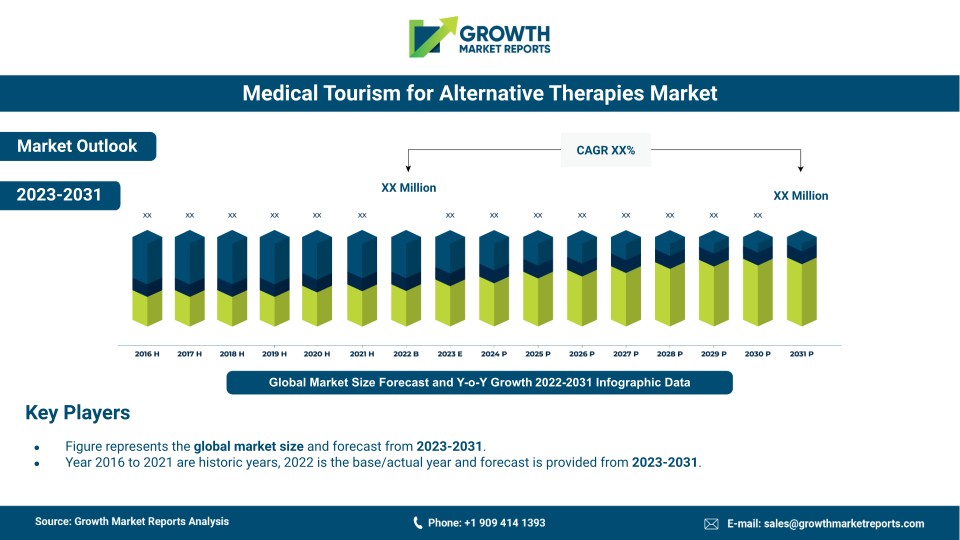
According to our latest research, the global Medical Tourism for Alternative Therapies market size reached USD 17.2 billion in 2024, reflecting a robust momentum driven by increasing consumer interest in holistic and non-conventional healthcare solutions. The market is expected to expand at a CAGR of 13.5% from 2025 to 2033, projecting a substantial escalation to approximately USD 53.5 billion by 2033. This growth is primarily attributed to rising healthcare costs in developed nations, growing awareness about the effectiveness of alternative therapies, and the increasing integration of wellness tourism with traditional medical tourism.

The surge in demand for alternative therapies within the medical tourism sector is underpinned by several pivotal growth factors. Firstly, there is a pronounced shift in patient preference towards non-invasive and holistic treatment modalities, particularly as chronic diseases such as arthritis, diabetes, and stress-related disorders become more prevalent worldwide. Alternative therapies like Ayurveda, Traditional Chinese Medicine, and Naturopathy are being sought for their focus on whole-body wellness and minimal side effects, distinguishing them from conventional pharmaceutical interventions. This trend is further reinforced by the mounting body of scientific literature supporting the efficacy of these therapies, thereby increasing their credibility among international patients and healthcare providers alike.

Another significant driver is the rising cost of conventional healthcare in developed regions, especially in North America and Europe, which has prompted patients to seek more affordable and comprehensive treatment options abroad. Countries in Asia Pacific, such as India, Thailand, and China, have emerged as prominent hubs for medical tourism for alternative therapies, offering high-quality services at a fraction of the cost compared to Western nations. These destinations not only provide access to authentic traditional practices but also integrate modern amenities and internationally accredited facilities, making them attractive to a global clientele. Additionally, the proliferation of wellness centers and specialty clinics catering specifically to international patients has further fueled the marketÂ’s expansion.

Medical Tourism has become a significant aspect of the global healthcare landscape, offering patients the opportunity to access advanced medical treatments and alternative therapies at competitive prices. This trend is particularly evident in regions where healthcare costs are prohibitive or where specific treatments are not readily available. The rise of medical tourism is not only a testament to the globalization of healthcare but also highlights the growing demand for patient-centric care that transcends geographical boundaries. As more individuals seek out medical tourism options, they are often motivated by the potential for significant cost savings, reduced waiting times, and access to cutting-edge medical technologies and expertise.

The integration of wellness tourism and alternative therapies within the broader medical tourism framework is another key growth catalyst. Travelers are increasingly combining leisure with health and wellness goals, seeking comprehensive packages that include therapies such as acupuncture, chiropractic care, and holistic detox programs. This convergence is supported by government initiatives and private sector investments in infrastructure, marketing, and accreditation, which enhance the credibility and accessibility of alternative therapy providers. Moreover, digital health platforms and telemedicine are enabling patients to research, consult, and plan their medical journeys more efficiently, thereby widening the marketÂ’s reach and appeal.

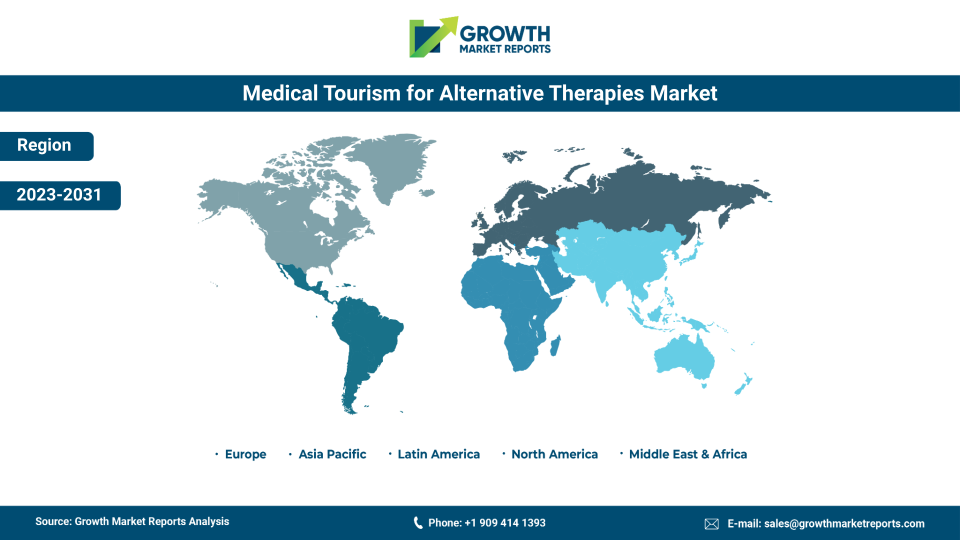
From a regional perspective, Asia Pacific dominates the Medical Tourism for Alternative Therapies market, accounting for over 52% of global revenue in 2024. This leadership is attributed to the regionÂ’s rich heritage of traditional medicine, cost competitiveness, and robust healthcare infrastructure. North America and Europe follow, each holding significant market shares due to rising patient outflow and a growing openness to integrative medicine. The Middle East and Latin America are also emerging as noteworthy players, driven by government-backed wellness tourism initiatives and increasing investments in alternative therapy facilities. This regional dynamism is expected to persist, with Asia Pacific maintaining its lead through 2033, while other regions continue to close the gap through innovation and cross-border collaborations.

Global Medical Tourism for Alternative Therapies Industry Outlook

Therapy Type Analysis

The therapy type segment is a cornerstone of the Medical Tourism for Alternative Therapies market, encompassing a diverse array of modalities such as Ayurveda, Homeopathy, Naturopathy, Traditional Chinese Medicine (TCM), Acupuncture, Chiropractic, and other complementary therapies. Ayurveda, originating from India, has gained global traction due to its holistic approach to health, emphasizing balance between mind, body, and spirit. The market for Ayurvedic therapies is being propelled by increasing scientific validation, celebrity endorsements, and the proliferation of wellness retreats offering authentic experiences. Similarly, Traditional Chinese Medicine, which includes herbal medicine, acupuncture, and tai chi, is witnessing robust growth, particularly among international patients seeking preventive and restorative care.

Homeopathy and Naturopathy are also experiencing a surge in demand, especially in Europe and North America, where regulatory frameworks have become more supportive of integrative medicine. Patients are increasingly opting for these therapies as adjuncts or alternatives to conventional treatments, particularly for chronic conditions and lifestyle-related ailments. The appeal of Naturopathy lies in its emphasis on natural remedies, dietary counseling, and lifestyle modification, which resonates with health-conscious travelers. Meanwhile, HomeopathyÂ’s individualized approach and minimal side effects make it attractive to patients wary of pharmaceutical interventions.

Acupuncture and Chiropractic therapies are gaining significant traction, particularly among patients seeking relief from musculoskeletal disorders, chronic pain, and stress. Acupuncture, a key component of TCM, is widely recognized for its efficacy in pain management and rehabilitation, leading to its adoption in wellness centers and specialty clinics worldwide. Chiropractic care, with its focus on spinal health and non-invasive adjustments, is increasingly sought by international patients, especially from regions with limited access to such services. Both therapies benefit from growing clinical evidence and professional accreditation, which enhance patient confidence and market legitimacy.

Other alternative therapies, including reflexology, aromatherapy, and energy healing, are also making inroads into the medical tourism landscape. These modalities cater to a niche but growing segment of wellness travelers seeking personalized and experiential health interventions. The diversification of therapy offerings not only broadens the marketÂ’s appeal but also enables providers to differentiate themselves in a competitive landscape. As patient awareness and acceptance of alternative therapies continue to rise, the therapy type segment is poised for sustained growth and innovation.

Executive Health Checkup Tourism is emerging as a niche segment within the broader medical tourism industry. This form of tourism caters to busy professionals who prioritize their health and well-being but may lack the time for regular medical checkups. By combining travel with comprehensive health assessments, executive health checkup tourism offers a convenient and efficient way for individuals to monitor their health status. These packages often include advanced diagnostic tests, consultations with specialists, and personalized wellness plans, all set in luxurious and relaxing environments. The rise of executive health checkup tourism reflects a growing awareness of the importance of preventive health measures and the desire for a balanced lifestyle.

Report Scope

Attributes Details
Report Title Medical Tourism for Alternative Therapies Market Research Report 2033
By Therapy Type Ayurveda, Homeopathy, Naturopathy, Traditional Chinese Medicine, Acupuncture, Chiropractic, Others
By Service Provider Hospitals, Wellness Centers, Specialty Clinics, Others
By Patient Type Domestic, International
By Age Group Pediatric, Adult, Geriatric
Regions Covered North America, Europe, APAC, Latin America, MEA
Base Year 2024
Historic Data 2018-2023
Forecast Period 2025-2033
Number of Pages 252
Number of Tables & Figures 345
Customization Available Yes, the report can be customized as per your need.

Service Provider Analysis

The service provider segment of the Medical Tourism for Alternative Therapies market is characterized by a diverse ecosystem comprising hospitals, wellness centers, specialty clinics, and other dedicated facilities. Hospitals, particularly those with international accreditation, have expanded their service portfolios to include alternative therapies, often in collaboration with traditional medicine practitioners. This integration allows hospitals to cater to a broader patient base, offering holistic treatment packages that combine medical, wellness, and rehabilitative care. The credibility and infrastructure of hospitals are key factors attracting international patients, especially those seeking comprehensive diagnostic and therapeutic solutions.

Wellness centers have emerged as pivotal players in the alternative therapies market, particularly in destinations renowned for their natural resources and traditional healing practices. These centers offer immersive experiences, often located in serene environments conducive to healing and relaxation. Wellness centers typically provide a wide range of therapies, from Ayurveda and yoga to detoxification and spa treatments, catering to both preventive and curative health needs. The growth of wellness tourism has led to the proliferation of such centers, many of which are tailored to the preferences of international travelers seeking authenticity and personalization.

Specialty clinics, focusing on specific alternative therapies such as acupuncture, chiropractic care, or homeopathy, are gaining prominence due to their expertise and targeted service offerings. These clinics often employ highly trained practitioners and leverage advanced diagnostic tools to deliver customized treatment plans. Their appeal lies in their specialization, which assures patients of quality and efficacy. Specialty clinics are particularly popular among medical tourists with specific health concerns, such as chronic pain, infertility, or stress-related disorders, who seek expert guidance and focused care.

Other service providers, including retreat centers, holistic resorts, and mobile health units, are also contributing to the marketÂ’s expansion. These providers offer unique value propositions, such as immersive healing retreats, mobile therapy services, and integrative health programs that combine multiple modalities. The diversification of service providers enhances patient choice and accessibility, enabling the market to cater to a wide spectrum of health and wellness needs. As competition intensifies, service providers are investing in quality assurance, staff training, and international accreditation to differentiate themselves and attract discerning medical tourists.

Patient Type Analysis

The patient type segment of the Medical Tourism for Alternative Therapies market is bifurcated into domestic and international patients, each exhibiting distinct trends and preferences. International patients constitute the majority share, driven by the pursuit of cost-effective, high-quality alternative therapies unavailable or unaffordable in their home countries. These patients are often motivated by long waiting times, restrictive regulations, or a lack of specialized practitioners in their domestic healthcare systems. The international segment is particularly robust in regions such as Asia Pacific and Europe, where cross-border healthcare agreements and streamlined visa processes facilitate medical travel.

Domestic medical tourism, while smaller in scale, is gaining traction as patients seek specialized alternative therapies within their own countries. This trend is especially pronounced in large, diverse nations such as India, China, and the United States, where regional disparities in healthcare access and quality drive intra-country travel. Domestic patients often seek alternative therapies for chronic conditions, rehabilitation, or wellness purposes, leveraging local expertise and cultural familiarity. The growth of domestic medical tourism is further supported by government initiatives promoting integrative healthcare and the development of wellness corridors.

International patients typically exhibit higher spending power and longer stays, contributing significantly to the revenue generation of service providers. They tend to opt for comprehensive treatment packages that include accommodation, local transportation, and post-treatment care, thereby boosting ancillary industries such as hospitality and tourism. The international segment is also characterized by greater demand for personalized services, language support, and cultural sensitivity, prompting providers to enhance their offerings and invest in patient experience.

Conversely, domestic patients often prioritize accessibility, affordability, and continuity of care. They are more likely to seek outpatient or short-term treatments, leveraging insurance coverage and local networks. The domestic segment is expected to grow steadily as awareness of alternative therapies increases and regulatory frameworks become more supportive. Both patient types present unique opportunities and challenges for market participants, necessitating tailored strategies to address their specific needs and preferences.

Age Group Analysis

The age group segmentation within the Medical Tourism for Alternative Therapies market encompasses pediatric, adult, and geriatric patients, each with distinct healthcare needs and treatment preferences. Adults represent the largest segment, accounting for over 60% of the market in 2024, driven by the high prevalence of lifestyle-related disorders, stress, and chronic diseases in this demographic. Adults are increasingly seeking alternative therapies for preventive health, stress management, and chronic pain relief, motivated by a desire for holistic and sustainable wellness solutions. This segment is also the most likely to travel internationally for alternative therapies, given their mobility and financial independence.

The geriatric segment is experiencing rapid growth, fueled by aging populations in developed and emerging markets alike. Older adults are particularly susceptible to chronic conditions such as arthritis, cardiovascular diseases, and neurodegenerative disorders, for which alternative therapies offer non-invasive, supportive care options. Therapies such as acupuncture, chiropractic, and Ayurveda are increasingly being integrated into geriatric care plans to enhance quality of life, mobility, and mental well-being. The geriatric segment is also characterized by a preference for long-term, comprehensive care, making them valuable clients for wellness centers and specialty clinics.

Pediatric patients, while representing a smaller share of the market, are an important and growing segment. Parents are increasingly exploring alternative therapies for children with chronic illnesses, developmental disorders, or behavioral challenges, seeking non-pharmaceutical interventions with minimal side effects. Homeopathy, naturopathy, and certain traditional medicine practices are particularly popular among pediatric patients, supported by growing clinical evidence and parental testimonials. Service providers are responding by developing child-friendly facilities, specialized practitioners, and family-oriented treatment packages to cater to this segment.

The age group segmentation underscores the need for tailored approaches in the delivery of alternative therapies, as each demographic presents unique health challenges, expectations, and service requirements. Providers that can effectively address the diverse needs of pediatric, adult, and geriatric patients are well-positioned to capture a larger share of the growing medical tourism for alternative therapies market. As demographic trends continue to evolve, this segment will remain a key focus for innovation and service differentiation.

Opportunities & Threats

The Medical Tourism for Alternative Therapies market presents significant opportunities for stakeholders across the value chain. One major opportunity lies in the integration of digital health technologies, such as telemedicine, electronic health records, and AI-driven diagnostic tools, which can enhance patient engagement, streamline care coordination, and facilitate pre- and post-travel consultations. Digital platforms enable patients to research, compare, and book alternative therapy services globally, thereby expanding market reach and accessibility. Additionally, partnerships between traditional medicine practitioners and modern healthcare providers can foster innovation, improve treatment outcomes, and enhance the credibility of alternative therapies. The growing emphasis on preventive health and wellness, coupled with rising disposable incomes, is expected to drive demand for personalized, high-value treatment packages, creating new revenue streams for service providers.

Another compelling opportunity is the development of specialized wellness destinations and integrative health resorts that cater to the unique needs of medical tourists seeking alternative therapies. By leveraging natural resources, cultural heritage, and local expertise, countries can position themselves as premier hubs for holistic health and wellness. Government support in the form of policy incentives, infrastructure development, and international accreditation can further enhance destination attractiveness and competitiveness. The increasing adoption of sustainable and eco-friendly practices within the wellness tourism sector also presents opportunities for differentiation and long-term growth. As consumer awareness and acceptance of alternative therapies continue to rise, market participants that invest in quality assurance, staff training, and innovative service delivery will be well-positioned to capture emerging opportunities.

Despite these opportunities, the market faces several restraining factors, chief among them being the lack of standardized regulations and quality assurance mechanisms across countries and therapy types. Variability in practitioner qualifications, treatment protocols, and facility standards can undermine patient confidence and pose risks to treatment outcomes. Additionally, language barriers, cultural differences, and limited insurance coverage for alternative therapies can deter international patients and constrain market growth. Addressing these challenges will require concerted efforts from industry stakeholders, regulators, and professional associations to establish global standards, promote transparency, and ensure patient safety.

Regional Outlook

Asia Pacific stands as the global leader in the Medical Tourism for Alternative Therapies market, accounting for approximately USD 8.95 billion in 2024, or about 52% of the global market. This dominance is driven by the regionÂ’s rich tradition of holistic medicine, cost-effective services, and a robust network of wellness centers and specialty clinics. India, Thailand, and China are at the forefront, attracting millions of medical tourists annually with their authentic therapies, internationally accredited facilities, and government-backed promotion of wellness tourism. The region is expected to maintain a high growth trajectory, with a forecasted CAGR of 14.2% through 2033, further consolidating its leadership position.

North America and Europe collectively represent over 36% of the global market, with North America accounting for USD 3.1 billion and Europe at USD 3.1 billion in 2024. These regions are characterized by high patient outflow, driven by escalating healthcare costs, long waiting times, and growing openness to integrative and alternative therapies. The United States, Germany, and the United Kingdom are key source markets, with patients increasingly traveling to Asia Pacific and Latin America for affordable and high-quality alternative treatments. Domestic medical tourism is also on the rise, particularly in the United States, where patients seek specialized therapies unavailable in their local healthcare systems.

The Middle East & Africa and Latin America are emerging as promising markets, with a combined market size of approximately USD 2.05 billion in 2024. These regions are leveraging their natural resources, cultural heritage, and strategic investments in wellness infrastructure to attract a growing share of international and domestic medical tourists. Countries such as the United Arab Emirates, South Africa, Brazil, and Costa Rica are positioning themselves as regional hubs for alternative therapies, supported by government initiatives, public-private partnerships, and targeted marketing campaigns. As these regions continue to develop their healthcare and tourism sectors, they are expected to register above-average growth rates, contributing to the diversification and expansion of the global market.

Medical Tourism for Alternative Therapies Market Statistics

Competitor Outlook

The competitive landscape of the Medical Tourism for Alternative Therapies market is highly dynamic, characterized by a mix of established hospitals, boutique wellness centers, specialty clinics, and emerging integrative health resorts. Leading players are differentiating themselves through the quality and authenticity of their therapy offerings, international accreditation, and superior patient experiences. Strategic partnerships, mergers, and acquisitions are common as providers seek to expand their geographic footprint, diversify service portfolios, and enhance operational efficiencies. The market is also witnessing increased investment in digital health platforms, telemedicine, and patient engagement tools, which enable providers to attract, retain, and manage international patients more effectively.

Innovation is a key competitive driver, with leading companies continuously developing new treatment protocols, wellness packages, and personalized care models to meet the evolving needs of medical tourists. Providers are increasingly integrating traditional therapies with modern diagnostics, nutrition counseling, and lifestyle management, creating comprehensive health and wellness solutions. Quality assurance, staff training, and international accreditation are critical differentiators, as patients prioritize safety, efficacy, and transparency in their medical journeys. The competitive intensity is further heightened by the entry of new players, particularly in emerging markets, who leverage local expertise, cost advantages, and unique value propositions to capture market share.

Marketing and branding play a pivotal role in shaping patient perceptions and influencing destination choices. Leading providers invest heavily in digital marketing, influencer partnerships, and patient testimonials to build trust and credibility among international audiences. Language support, cultural sensitivity, and personalized concierge services are increasingly being offered to enhance the patient experience and foster loyalty. As competition intensifies, providers are also focusing on sustainability, eco-friendly practices, and community engagement to appeal to environmentally conscious and socially responsible travelers.

Major companies operating in the Medical Tourism for Alternative Therapies market include Apollo Hospitals (India), Bumrungrad International Hospital (Thailand), The Ayurvedic Healing Village (India), Chiva-Som International Health Resort (Thailand), The Acupuncture Clinic (China), and The Wellness Institute (Costa Rica). Apollo Hospitals is renowned for its integrative medicine programs, combining Ayurveda, yoga, and naturopathy with modern diagnostics and rehabilitation services. Bumrungrad International Hospital offers a wide range of alternative therapies, supported by state-of-the-art facilities and international accreditation. The Ayurvedic Healing Village and Chiva-Som are recognized for their immersive wellness retreats, personalized care, and global clientele. The Acupuncture Clinic and The Wellness Institute are leaders in their respective regions, specializing in targeted therapies and holistic health solutions.

These companies are distinguished by their commitment to quality, innovation, and patient-centric care, setting benchmarks for the industry. They are continuously expanding their service offerings, investing in infrastructure, and forging strategic alliances to maintain their competitive edge. As the market continues to evolve, collaboration between traditional and modern healthcare providers, investment in digital health, and a relentless focus on patient experience will be critical success factors for sustained growth and leadership.

Key Players

  • Apollo Hospitals
  • Bumrungrad International Hospital
  • Fortis Healthcare
  • KPJ Healthcare Berhad
  • Raffles Medical Group
  • Bangkok Hospital
  • Gleneagles Global Hospitals
  • Prince Court Medical Centre
  • Samitivej Hospitals
  • Cleveland Clinic
  • Mount Elizabeth Hospital
  • Medanta – The Medicity
  • Anadolu Medical Center
  • Acibadem Healthcare Group
  • Wooridul Spine Hospital
  • Seoul National University Hospital
  • Healthbase
  • Tour2India4Health
  • Asian Heart Institute
  • Shouldice Hospital
Medical Tourism for Alternative Therapies Market Overview

Segments

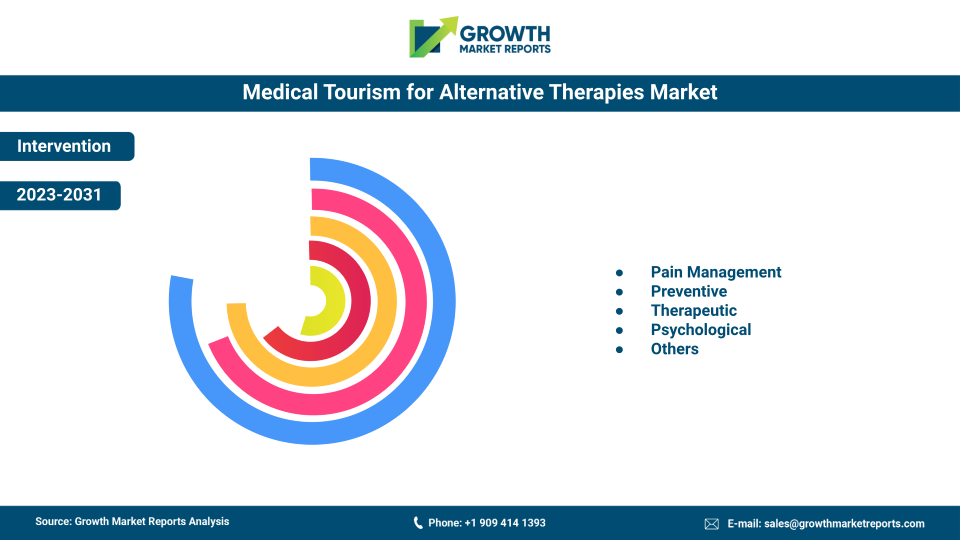
The Medical Tourism for Alternative Therapies market has been segmented on the basis of

Therapy Type

  • Ayurveda
  • Homeopathy
  • Naturopathy
  • Traditional Chinese Medicine
  • Acupuncture
  • Chiropractic
  • Others

Service Provider

  • Hospitals
  • Wellness Centers
  • Specialty Clinics
  • Others

Patient Type

  • Domestic
  • International

Age Group

  • Pediatric
  • Adult
  • Geriatric

Competitive Landscape

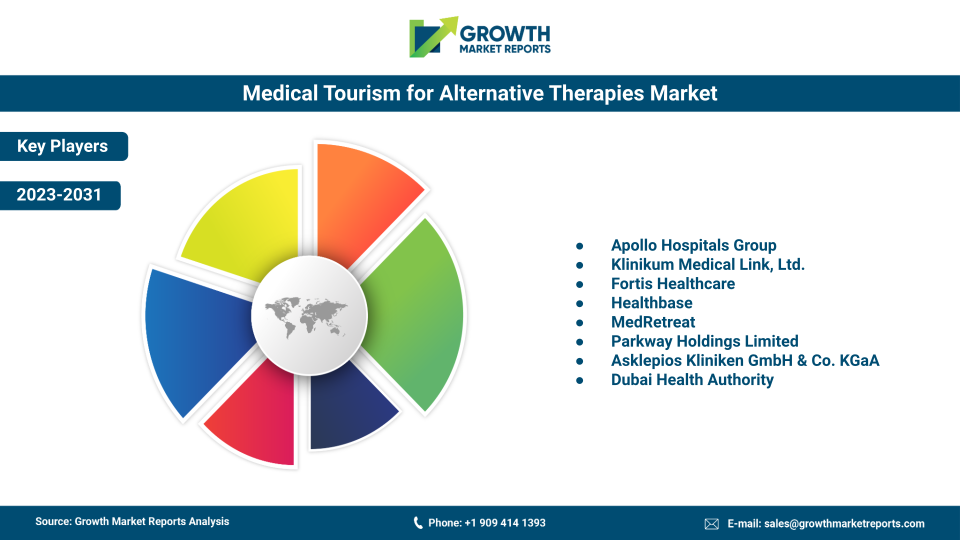
Key players operating in the global medical tourism for alternative therapies market include Apollo Hospitals Group; Klinikum Medical Link, Ltd.; Fortis Healthcare; Healthbase; MedRetreat; Parkway Holdings Limited; Asklepios Kliniken GmbH & Co. KGaA; and Dubai Health Authority

Several companies are implementing market expansion & growth strategies such as increasing investments, partnerships, acquisitions, R&D investments, mergers, collaboration, and product launches to boost their market share. For instance,

  • On 24 January 2023, India Tourism Development Corporation announced an agreement with the Ministry of Ayush, to promote medical tourism for Ayurveda and other traditional medicinal treatments. The agreement aims to promote “Heal in India-Medical Value Travel in Ayurveda, Yoga and other Indian traditional systems of medicine”, and generate vast scope for healthcare tourism in the country.

    Medical Tourism for Alternative Therapies Market Key Players

Frequently Asked Questions

Yes, the report can be customized according to specific needs.

Major companies include Apollo Hospitals, Bumrungrad International Hospital, Fortis Healthcare, KPJ Healthcare Berhad, Raffles Medical Group, Bangkok Hospital, Gleneagles Global Hospitals, Prince Court Medical Centre, Samitivej Hospitals, and others.

Digital health technologies like telemedicine, electronic health records, and online booking platforms are enhancing patient engagement, streamlining care coordination, and making it easier for patients to research and plan their medical journeys.

Challenges include lack of standardized regulations, variability in practitioner qualifications, language barriers, cultural differences, and limited insurance coverage for alternative therapies.

Adults make up the largest segment, especially for lifestyle-related disorders and chronic diseases. The geriatric segment is growing rapidly due to aging populations, while pediatric patients represent a smaller but increasing share, especially for chronic and developmental conditions.

The main service providers are hospitals, wellness centers, specialty clinics, and other facilities such as holistic resorts and retreat centers. Hospitals and wellness centers with international accreditation are particularly attractive to international patients.

Key growth drivers include rising healthcare costs in developed countries, growing awareness of the effectiveness of alternative therapies, integration of wellness tourism, and increasing prevalence of chronic diseases.

Popular alternative therapies include Ayurveda, Homeopathy, Naturopathy, Traditional Chinese Medicine (TCM), Acupuncture, Chiropractic, Reflexology, Aromatherapy, and energy healing.

Asia Pacific dominates the market, accounting for over 52% of global revenue in 2024, with India, Thailand, and China as key destinations. North America and Europe also hold significant shares, while the Middle East, Africa, and Latin America are emerging as promising markets.

The global medical tourism for alternative therapies market reached USD 17.2 billion in 2024 and is expected to grow at a CAGR of 13.5% from 2025 to 2033, reaching approximately USD 53.5 billion by 2033.

Table Of Content

Chapter 1 Executive Summary
Chapter 2 Assumptions and Acronyms Used
Chapter 3 Research Methodology
Chapter 4 Medical Tourism for Alternative Therapies Market Overview
   4.1 Introduction
      4.1.1 Market Taxonomy
      4.1.2 Market Definition
      4.1.3 Macro-Economic Factors Impacting the Market Growth
   4.2 Medical Tourism for Alternative Therapies Market Dynamics
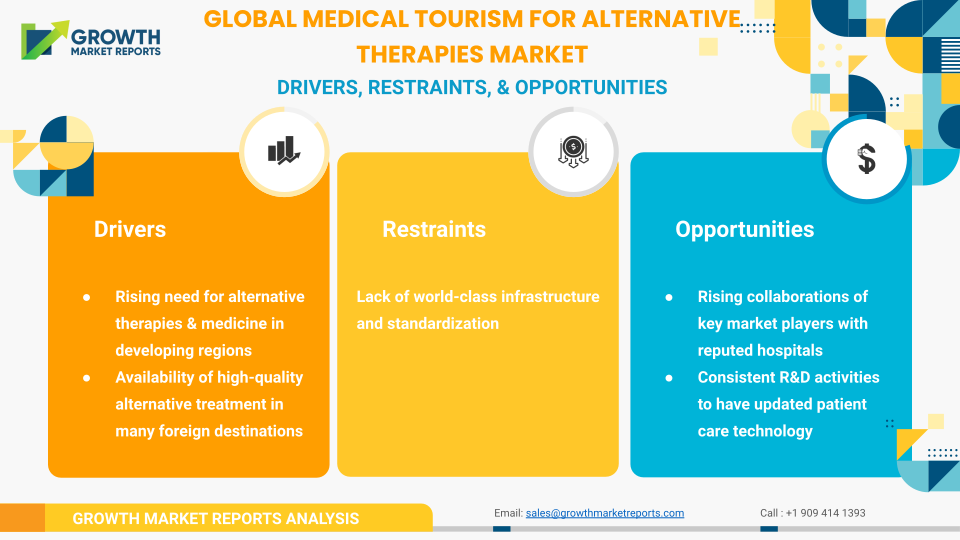
      4.2.1 Market Drivers
      4.2.2 Market Restraints
      4.2.3 Market Opportunity
   4.3 Medical Tourism for Alternative Therapies Market - Supply Chain Analysis
      4.3.1 List of Key Suppliers
      4.3.2 List of Key Distributors
      4.3.3 List of Key Consumers
   4.4 Key Forces Shaping the Medical Tourism for Alternative Therapies Market
      4.4.1 Bargaining Power of Suppliers
      4.4.2 Bargaining Power of Buyers
      4.4.3 Threat of Substitution
      4.4.4 Threat of New Entrants
      4.4.5 Competitive Rivalry
   4.5 Global Medical Tourism for Alternative Therapies Market Size & Forecast, 2023-2032
      4.5.1 Medical Tourism for Alternative Therapies Market Size and Y-o-Y Growth
      4.5.2 Medical Tourism for Alternative Therapies Market Absolute $ Opportunity

Chapter 5 Global Medical Tourism for Alternative Therapies Market Analysis and Forecast By Therapy Type
   5.1 Introduction
      5.1.1 Key Market Trends & Growth Opportunities By Therapy Type
      5.1.2 Basis Point Share (BPS) Analysis By Therapy Type
      5.1.3 Absolute $ Opportunity Assessment By Therapy Type
   5.2 Medical Tourism for Alternative Therapies Market Size Forecast By Therapy Type
      5.2.1 Ayurveda
      5.2.2 Homeopathy
      5.2.3 Naturopathy
      5.2.4 Traditional Chinese Medicine
      5.2.5 Acupuncture
      5.2.6 Chiropractic
      5.2.7 Others
   5.3 Market Attractiveness Analysis By Therapy Type

Chapter 6 Global Medical Tourism for Alternative Therapies Market Analysis and Forecast By Service Provider
   6.1 Introduction
      6.1.1 Key Market Trends & Growth Opportunities By Service Provider
      6.1.2 Basis Point Share (BPS) Analysis By Service Provider
      6.1.3 Absolute $ Opportunity Assessment By Service Provider
   6.2 Medical Tourism for Alternative Therapies Market Size Forecast By Service Provider
      6.2.1 Hospitals
      6.2.2 Wellness Centers
      6.2.3 Specialty Clinics
      6.2.4 Others
   6.3 Market Attractiveness Analysis By Service Provider

Chapter 7 Global Medical Tourism for Alternative Therapies Market Analysis and Forecast By Patient Type
   7.1 Introduction
      7.1.1 Key Market Trends & Growth Opportunities By Patient Type
      7.1.2 Basis Point Share (BPS) Analysis By Patient Type
      7.1.3 Absolute $ Opportunity Assessment By Patient Type
   7.2 Medical Tourism for Alternative Therapies Market Size Forecast By Patient Type
      7.2.1 Domestic
      7.2.2 International
   7.3 Market Attractiveness Analysis By Patient Type

Chapter 8 Global Medical Tourism for Alternative Therapies Market Analysis and Forecast By Age Group
   8.1 Introduction
      8.1.1 Key Market Trends & Growth Opportunities By Age Group
      8.1.2 Basis Point Share (BPS) Analysis By Age Group
      8.1.3 Absolute $ Opportunity Assessment By Age Group
   8.2 Medical Tourism for Alternative Therapies Market Size Forecast By Age Group
      8.2.1 Pediatric
      8.2.2 Adult
      8.2.3 Geriatric
   8.3 Market Attractiveness Analysis By Age Group

Chapter 9 Global Medical Tourism for Alternative Therapies Market Analysis and Forecast by Region
   9.1 Introduction
      9.1.1 Key Market Trends & Growth Opportunities By Region
      9.1.2 Basis Point Share (BPS) Analysis By Region
      9.1.3 Absolute $ Opportunity Assessment By Region
   9.2 Medical Tourism for Alternative Therapies Market Size Forecast By Region
      9.2.1 North America
      9.2.2 Europe
      9.2.3 Asia Pacific
      9.2.4 Latin America
      9.2.5 Middle East & Africa (MEA)
   9.3 Market Attractiveness Analysis By Region

Chapter 10 Coronavirus Disease (COVID-19) Impact 
   10.1 Introduction 
   10.2 Current & Future Impact Analysis 
   10.3 Economic Impact Analysis 
   10.4 Government Policies 
   10.5 Investment Scenario

Chapter 11 North America Medical Tourism for Alternative Therapies Analysis and Forecast
   11.1 Introduction
   11.2 North America Medical Tourism for Alternative Therapies Market Size Forecast by Country
      11.2.1 U.S.
      11.2.2 Canada
   11.3 Basis Point Share (BPS) Analysis by Country
   11.4 Absolute $ Opportunity Assessment by Country
   11.5 Market Attractiveness Analysis by Country
   11.6 North America Medical Tourism for Alternative Therapies Market Size Forecast By Therapy Type
      11.6.1 Ayurveda
      11.6.2 Homeopathy
      11.6.3 Naturopathy
      11.6.4 Traditional Chinese Medicine
      11.6.5 Acupuncture
      11.6.6 Chiropractic
      11.6.7 Others
   11.7 Basis Point Share (BPS) Analysis By Therapy Type 
   11.8 Absolute $ Opportunity Assessment By Therapy Type 
   11.9 Market Attractiveness Analysis By Therapy Type
   11.10 North America Medical Tourism for Alternative Therapies Market Size Forecast By Service Provider
      11.10.1 Hospitals
      11.10.2 Wellness Centers
      11.10.3 Specialty Clinics
      11.10.4 Others
   11.11 Basis Point Share (BPS) Analysis By Service Provider 
   11.12 Absolute $ Opportunity Assessment By Service Provider 
   11.13 Market Attractiveness Analysis By Service Provider
   11.14 North America Medical Tourism for Alternative Therapies Market Size Forecast By Patient Type
      11.14.1 Domestic
      11.14.2 International
   11.15 Basis Point Share (BPS) Analysis By Patient Type 
   11.16 Absolute $ Opportunity Assessment By Patient Type 
   11.17 Market Attractiveness Analysis By Patient Type
   11.18 North America Medical Tourism for Alternative Therapies Market Size Forecast By Age Group
      11.18.1 Pediatric
      11.18.2 Adult
      11.18.3 Geriatric
   11.19 Basis Point Share (BPS) Analysis By Age Group 
   11.20 Absolute $ Opportunity Assessment By Age Group 
   11.21 Market Attractiveness Analysis By Age Group

Chapter 12 Europe Medical Tourism for Alternative Therapies Analysis and Forecast
   12.1 Introduction
   12.2 Europe Medical Tourism for Alternative Therapies Market Size Forecast by Country
      12.2.1 Germany
      12.2.2 France
      12.2.3 Italy
      12.2.4 U.K.
      12.2.5 Spain
      12.2.6 Russia
      12.2.7 Rest of Europe
   12.3 Basis Point Share (BPS) Analysis by Country
   12.4 Absolute $ Opportunity Assessment by Country
   12.5 Market Attractiveness Analysis by Country
   12.6 Europe Medical Tourism for Alternative Therapies Market Size Forecast By Therapy Type
      12.6.1 Ayurveda
      12.6.2 Homeopathy
      12.6.3 Naturopathy
      12.6.4 Traditional Chinese Medicine
      12.6.5 Acupuncture
      12.6.6 Chiropractic
      12.6.7 Others
   12.7 Basis Point Share (BPS) Analysis By Therapy Type 
   12.8 Absolute $ Opportunity Assessment By Therapy Type 
   12.9 Market Attractiveness Analysis By Therapy Type
   12.10 Europe Medical Tourism for Alternative Therapies Market Size Forecast By Service Provider
      12.10.1 Hospitals
      12.10.2 Wellness Centers
      12.10.3 Specialty Clinics
      12.10.4 Others
   12.11 Basis Point Share (BPS) Analysis By Service Provider 
   12.12 Absolute $ Opportunity Assessment By Service Provider 
   12.13 Market Attractiveness Analysis By Service Provider
   12.14 Europe Medical Tourism for Alternative Therapies Market Size Forecast By Patient Type
      12.14.1 Domestic
      12.14.2 International
   12.15 Basis Point Share (BPS) Analysis By Patient Type 
   12.16 Absolute $ Opportunity Assessment By Patient Type 
   12.17 Market Attractiveness Analysis By Patient Type
   12.18 Europe Medical Tourism for Alternative Therapies Market Size Forecast By Age Group
      12.18.1 Pediatric
      12.18.2 Adult
      12.18.3 Geriatric
   12.19 Basis Point Share (BPS) Analysis By Age Group 
   12.20 Absolute $ Opportunity Assessment By Age Group 
   12.21 Market Attractiveness Analysis By Age Group

Chapter 13 Asia Pacific Medical Tourism for Alternative Therapies Analysis and Forecast
   13.1 Introduction
   13.2 Asia Pacific Medical Tourism for Alternative Therapies Market Size Forecast by Country
      13.2.1 China
      13.2.2 Japan
      13.2.3 South Korea
      13.2.4 India
      13.2.5 Australia
      13.2.6 South East Asia (SEA)
      13.2.7 Rest of Asia Pacific (APAC)
   13.3 Basis Point Share (BPS) Analysis by Country
   13.4 Absolute $ Opportunity Assessment by Country
   13.5 Market Attractiveness Analysis by Country
   13.6 Asia Pacific Medical Tourism for Alternative Therapies Market Size Forecast By Therapy Type
      13.6.1 Ayurveda
      13.6.2 Homeopathy
      13.6.3 Naturopathy
      13.6.4 Traditional Chinese Medicine
      13.6.5 Acupuncture
      13.6.6 Chiropractic
      13.6.7 Others
   13.7 Basis Point Share (BPS) Analysis By Therapy Type 
   13.8 Absolute $ Opportunity Assessment By Therapy Type 
   13.9 Market Attractiveness Analysis By Therapy Type
   13.10 Asia Pacific Medical Tourism for Alternative Therapies Market Size Forecast By Service Provider
      13.10.1 Hospitals
      13.10.2 Wellness Centers
      13.10.3 Specialty Clinics
      13.10.4 Others
   13.11 Basis Point Share (BPS) Analysis By Service Provider 
   13.12 Absolute $ Opportunity Assessment By Service Provider 
   13.13 Market Attractiveness Analysis By Service Provider
   13.14 Asia Pacific Medical Tourism for Alternative Therapies Market Size Forecast By Patient Type
      13.14.1 Domestic
      13.14.2 International
   13.15 Basis Point Share (BPS) Analysis By Patient Type 
   13.16 Absolute $ Opportunity Assessment By Patient Type 
   13.17 Market Attractiveness Analysis By Patient Type
   13.18 Asia Pacific Medical Tourism for Alternative Therapies Market Size Forecast By Age Group
      13.18.1 Pediatric
      13.18.2 Adult
      13.18.3 Geriatric
   13.19 Basis Point Share (BPS) Analysis By Age Group 
   13.20 Absolute $ Opportunity Assessment By Age Group 
   13.21 Market Attractiveness Analysis By Age Group

Chapter 14 Latin America Medical Tourism for Alternative Therapies Analysis and Forecast
   14.1 Introduction
   14.2 Latin America Medical Tourism for Alternative Therapies Market Size Forecast by Country
      14.2.1 Brazil
      14.2.2 Mexico
      14.2.3 Rest of Latin America (LATAM)
   14.3 Basis Point Share (BPS) Analysis by Country
   14.4 Absolute $ Opportunity Assessment by Country
   14.5 Market Attractiveness Analysis by Country
   14.6 Latin America Medical Tourism for Alternative Therapies Market Size Forecast By Therapy Type
      14.6.1 Ayurveda
      14.6.2 Homeopathy
      14.6.3 Naturopathy
      14.6.4 Traditional Chinese Medicine
      14.6.5 Acupuncture
      14.6.6 Chiropractic
      14.6.7 Others
   14.7 Basis Point Share (BPS) Analysis By Therapy Type 
   14.8 Absolute $ Opportunity Assessment By Therapy Type 
   14.9 Market Attractiveness Analysis By Therapy Type
   14.10 Latin America Medical Tourism for Alternative Therapies Market Size Forecast By Service Provider
      14.10.1 Hospitals
      14.10.2 Wellness Centers
      14.10.3 Specialty Clinics
      14.10.4 Others
   14.11 Basis Point Share (BPS) Analysis By Service Provider 
   14.12 Absolute $ Opportunity Assessment By Service Provider 
   14.13 Market Attractiveness Analysis By Service Provider
   14.14 Latin America Medical Tourism for Alternative Therapies Market Size Forecast By Patient Type
      14.14.1 Domestic
      14.14.2 International
   14.15 Basis Point Share (BPS) Analysis By Patient Type 
   14.16 Absolute $ Opportunity Assessment By Patient Type 
   14.17 Market Attractiveness Analysis By Patient Type
   14.18 Latin America Medical Tourism for Alternative Therapies Market Size Forecast By Age Group
      14.18.1 Pediatric
      14.18.2 Adult
      14.18.3 Geriatric
   14.19 Basis Point Share (BPS) Analysis By Age Group 
   14.20 Absolute $ Opportunity Assessment By Age Group 
   14.21 Market Attractiveness Analysis By Age Group

Chapter 15 Middle East & Africa (MEA) Medical Tourism for Alternative Therapies Analysis and Forecast
   15.1 Introduction
   15.2 Middle East & Africa (MEA) Medical Tourism for Alternative Therapies Market Size Forecast by Country
      15.2.1 Saudi Arabia
      15.2.2 South Africa
      15.2.3 UAE
      15.2.4 Rest of Middle East & Africa (MEA)
   15.3 Basis Point Share (BPS) Analysis by Country
   15.4 Absolute $ Opportunity Assessment by Country
   15.5 Market Attractiveness Analysis by Country
   15.6 Middle East & Africa (MEA) Medical Tourism for Alternative Therapies Market Size Forecast By Therapy Type
      15.6.1 Ayurveda
      15.6.2 Homeopathy
      15.6.3 Naturopathy
      15.6.4 Traditional Chinese Medicine
      15.6.5 Acupuncture
      15.6.6 Chiropractic
      15.6.7 Others
   15.7 Basis Point Share (BPS) Analysis By Therapy Type 
   15.8 Absolute $ Opportunity Assessment By Therapy Type 
   15.9 Market Attractiveness Analysis By Therapy Type
   15.10 Middle East & Africa (MEA) Medical Tourism for Alternative Therapies Market Size Forecast By Service Provider
      15.10.1 Hospitals
      15.10.2 Wellness Centers
      15.10.3 Specialty Clinics
      15.10.4 Others
   15.11 Basis Point Share (BPS) Analysis By Service Provider 
   15.12 Absolute $ Opportunity Assessment By Service Provider 
   15.13 Market Attractiveness Analysis By Service Provider
   15.14 Middle East & Africa (MEA) Medical Tourism for Alternative Therapies Market Size Forecast By Patient Type
      15.14.1 Domestic
      15.14.2 International
   15.15 Basis Point Share (BPS) Analysis By Patient Type 
   15.16 Absolute $ Opportunity Assessment By Patient Type 
   15.17 Market Attractiveness Analysis By Patient Type
   15.18 Middle East & Africa (MEA) Medical Tourism for Alternative Therapies Market Size Forecast By Age Group
      15.18.1 Pediatric
      15.18.2 Adult
      15.18.3 Geriatric
   15.19 Basis Point Share (BPS) Analysis By Age Group 
   15.20 Absolute $ Opportunity Assessment By Age Group 
   15.21 Market Attractiveness Analysis By Age Group

Chapter 16 Competition Landscape 
   16.1 Medical Tourism for Alternative Therapies Market: Competitive Dashboard
   16.2 Global Medical Tourism for Alternative Therapies Market: Market Share Analysis, 2023
   16.3 Company Profiles (Details – Overview, Financials, Developments, Strategy) 
      16.3.1 Apollo Hospitals
Bumrungrad International Hospital
Fortis Healthcare
KPJ Healthcare Berhad
Raffles Medical Group
Bangkok Hospital
Gleneagles Global Hospitals
Prince Court Medical Centre
Samitivej Hospitals
Cleveland Clinic
Mount Elizabeth Hospital
Medanta – The Medicity
Anadolu Medical Center
Acibadem Healthcare Group
Wooridul Spine Hospital
Seoul National University Hospital
Healthbase
Tour2India4Health
Asian Heart Institute
Shouldice Hospital

Methodology

Our Clients

Pfizer
General Electric
Deloitte
General Mills
Honda Motor Co. Ltd.
The John Holland Group
sinopec
Nestle SA