Medical Tourism Market Research Report 2033

Medical Tourism Market Research Report 2033

Segments - by Service Type (Cosmetic Treatment, Dental Treatment, Cardiovascular Treatment, Orthopedic Treatment, Fertility Treatment, Cancer Treatment, Neurological Treatment, Others), by Provider Type (Public, Private), by Age Group (Children, Adults, Elderly)

https://growthmarketreports.com/raksha
Author : Raksha Sharma
https://growthmarketreports.com/Vaibhav
Fact-checked by : V. Chandola
https://growthmarketreports.com/Shruti
Editor : Shruti Bhat

Upcoming | Report ID :HC-1191 | 5.0 Rating | 34 Reviews | 268 Pages | Format : Docx PDF

Report Description


Medical Tourism Market Outlook

According to our latest research, the global medical tourism market size reached USD 124.2 billion in 2024, driven by a robust demand for affordable and high-quality healthcare services across international borders. The market is exhibiting a strong compound annual growth rate (CAGR) of 13.7% from 2025 to 2033. Based on this growth trajectory, the market is forecasted to reach an impressive USD 382.4 billion by 2033. Major factors fueling this expansion include increasing healthcare costs in developed countries, advancements in medical technology, and a growing awareness of medical tourism options worldwide.

One of the primary growth drivers of the medical tourism market is the escalating cost of healthcare in developed economies, particularly in the United States and Western Europe. Patients from these regions are increasingly seeking medical procedures abroad to take advantage of significant cost savings without compromising on quality. For example, complex surgeries and elective procedures that might be prohibitively expensive in the US can often be performed at a fraction of the cost in countries like India, Thailand, and Mexico. This cost differential, combined with shorter waiting times and access to cutting-edge treatments, is compelling more individuals to consider cross-border healthcare solutions. Furthermore, the proliferation of specialized medical tourism facilitators and agencies has simplified the process, making it easier for patients to identify reputable hospitals and clinics abroad.

Another critical factor contributing to the growth of the medical tourism market is the advancement and globalization of healthcare standards. Many hospitals and clinics in emerging markets now boast international accreditations such as Joint Commission International (JCI) certification, which assures patients of stringent quality and safety protocols. These institutions often employ internationally trained healthcare professionals and offer multilingual support, which helps build trust and confidence among international patients. Additionally, the rise of telemedicine and digital health platforms has enabled better pre- and post-operative care, allowing patients to consult with their chosen providers remotely before traveling and to maintain follow-up care after returning home. This seamless integration of technology and healthcare services has significantly enhanced the overall patient experience and contributed to the market’s rapid expansion.

The medical tourism market is also benefiting from the increasing prevalence of lifestyle-related diseases and the rising demand for elective procedures such as cosmetic surgery, dental treatments, and fertility interventions. As awareness of medical tourism grows, patients are more willing to travel for specialized treatments that may not be readily available or legally permitted in their home countries. Governments in several popular medical tourism destinations have also recognized the economic potential of this sector and are actively investing in healthcare infrastructure, streamlining visa processes, and launching targeted marketing campaigns to attract foreign patients. This proactive approach by both public and private stakeholders is fostering a competitive landscape and encouraging further innovation and investment in the industry.

From a regional perspective, the Asia Pacific region continues to dominate the medical tourism market, accounting for the largest share in 2024. Countries such as India, Thailand, Singapore, and Malaysia have established themselves as premier destinations, offering a diverse range of medical services at competitive prices. North America and Europe also play significant roles, primarily as source markets for outbound medical tourists. However, Latin America and the Middle East & Africa are rapidly emerging as attractive destinations due to their improving healthcare infrastructure, strategic geographic locations, and growing reputation for specialized treatments. This dynamic regional interplay is expected to shape the global medical tourism landscape in the coming years, with new destinations emerging as key players alongside established hubs.

Global Medical Tourism Industry Outlook

Service Type Analysis

The medical tourism market is segmented by service type into cosmetic treatment, dental treatment, cardiovascular treatment, orthopedic treatment, fertility treatment, cancer treatment, neurological treatment, and others. Among these, cosmetic and dental treatments are currently the most sought-after services, accounting for a substantial share of the global market. Cosmetic procedures, including plastic surgery, hair transplantation, and bariatric surgery, attract a significant number of international patients due to the high costs and limited insurance coverage in their home countries. Dental tourism is also witnessing robust growth, driven by the affordability of procedures such as implants, crowns, and orthodontics in popular destinations like Hungary, Mexico, and Costa Rica. The accessibility of state-of-the-art facilities and highly skilled practitioners in these locations further enhances their appeal.

Cardiovascular and orthopedic treatments represent another crucial segment within the medical tourism market. Patients requiring complex surgeries such as heart bypass, valve replacement, or joint replacement often face long waiting periods and exorbitant costs in their home countries. As a result, many are opting to travel abroad where they can access high-quality care promptly and at a fraction of the price. Countries like India and Turkey have invested heavily in advanced cardiac and orthopedic centers, attracting patients from Europe, the Middle East, and Africa. The availability of comprehensive rehabilitation services and personalized care packages is further driving the growth of this segment.

Fertility treatment is emerging as a significant driver of medical tourism, especially for patients from countries where certain reproductive technologies are restricted or not covered by insurance. Destinations such as Thailand, Spain, and Greece have built strong reputations for their expertise in in vitro fertilization (IVF), surrogacy, and other assisted reproductive technologies. The combination of high success rates, advanced laboratory facilities, and supportive legal frameworks makes these countries attractive to international patients. Additionally, the emotional and financial burden associated with infertility treatments in home countries is prompting more couples to seek affordable and effective solutions abroad.

Cancer and neurological treatments are also gaining traction in the medical tourism market, particularly as advancements in precision medicine, immunotherapy, and minimally invasive surgical techniques become more widely available. Patients with complex oncological or neurological conditions often seek access to cutting-edge clinical trials, specialized expertise, and innovative therapies that may not be accessible in their home countries. Leading medical tourism destinations are responding to this demand by partnering with renowned research institutions and investing in advanced diagnostic and treatment technologies. This focus on high-value, specialized care is expected to drive further growth in these segments over the forecast period.

The "others" category includes a wide range of medical services such as ophthalmology, organ transplantation, and wellness treatments, which are also contributing to the overall expansion of the medical tourism market. As patient preferences continue to evolve and new treatment modalities emerge, service providers are diversifying their offerings to cater to a broader spectrum of healthcare needs. This ongoing innovation and diversification are expected to sustain the momentum of the medical tourism market and create new opportunities for growth in the coming years.

Report Scope

Attributes Details
Report Title Medical Tourism Market Research Report 2033
By Service Type Cosmetic Treatment, Dental Treatment, Cardiovascular Treatment, Orthopedic Treatment, Fertility Treatment, Cancer Treatment, Neurological Treatment, Others
By Provider Type Public, Private
By Age Group Children, Adults, Elderly
Regions Covered North America, Europe, APAC, Latin America, MEA
Base Year 2024
Historic Data 2018-2023
Forecast Period 2025-2033
Number of Pages 268
Number of Tables & Figures 281
Customization Available Yes, the report can be customized as per your need.

Provider Type Analysis

The medical tourism market is segmented by provider type into public and private providers, each playing a distinct role in shaping the industry landscape. Private providers currently dominate the market, accounting for the majority share due to their ability to offer personalized services, shorter waiting times, and access to advanced medical technologies. Leading private hospitals and clinics in destinations such as India, Thailand, and Singapore have established dedicated international patient departments, multilingual support staff, and comprehensive concierge services to cater to the unique needs of medical tourists. These providers often collaborate with international insurance companies and medical tourism facilitators to streamline the patient journey from initial inquiry to post-treatment follow-up.

Public providers, while traditionally focused on serving domestic populations, are increasingly recognizing the potential of medical tourism as a revenue-generating opportunity. In countries like Malaysia and Turkey, government-owned hospitals have invested in upgrading their infrastructure and obtaining international accreditations to attract foreign patients. These public institutions often leverage their reputation for quality and affordability to compete with private providers, particularly in specialized areas such as organ transplantation and complex surgeries. The involvement of public providers is also helping to enhance the overall credibility of medical tourism destinations and ensure that high standards of care are maintained across the sector.

The interplay between public and private providers is fostering a competitive environment that drives continuous improvement and innovation in the medical tourism market. Many destinations are adopting public-private partnership models to leverage the strengths of both sectors and create integrated healthcare ecosystems. These collaborations enable the sharing of resources, expertise, and best practices, resulting in improved patient outcomes and enhanced service delivery. Additionally, the presence of both public and private providers increases the range of treatment options available to international patients, allowing them to choose services that best meet their needs and budget.

Private providers are particularly adept at marketing their services to international audiences, utilizing digital platforms, targeted advertising, and strategic partnerships with travel agencies and insurance companies. This proactive approach to patient acquisition is helping to raise the profile of leading medical tourism destinations and attract a diverse clientele from around the world. Moreover, private providers are often at the forefront of adopting new technologies and treatment modalities, ensuring that patients have access to the latest advancements in medical care.

Despite the dominance of private providers, the role of public institutions should not be underestimated. Government support and investment in healthcare infrastructure are critical to the long-term sustainability and growth of the medical tourism market. By working together, public and private providers can create a robust and resilient healthcare ecosystem that meets the needs of both domestic and international patients, ultimately driving the continued expansion of the medical tourism industry.

Age Group Analysis

The medical tourism market is also segmented by age group into children, adults, and the elderly, each with distinct healthcare needs and preferences. Adults represent the largest segment, accounting for the majority of medical tourists globally. This demographic is primarily driven by the demand for elective procedures such as cosmetic surgery, dental treatments, and fertility interventions, as well as the need for specialized care for chronic conditions. Adults are often more willing and able to travel for medical purposes, particularly when faced with high costs, long waiting times, or limited treatment options in their home countries. The increasing prevalence of lifestyle-related diseases and the growing awareness of medical tourism options are further fueling demand among this age group.

The elderly segment is also experiencing significant growth, driven by the rising incidence of age-related conditions such as orthopedic disorders, cardiovascular diseases, and neurological conditions. As life expectancy increases and populations age, more elderly patients are seeking affordable and high-quality healthcare solutions abroad. Destinations with specialized geriatric care facilities, rehabilitation centers, and comprehensive support services are particularly attractive to this demographic. Additionally, the availability of tailored travel and accommodation packages, as well as assistance with medical visas and insurance, is making it easier for elderly patients to access international healthcare services.

Children represent a smaller but important segment of the medical tourism market, primarily driven by the need for specialized pediatric care that may not be available in their home countries. Parents are often willing to travel long distances to access advanced treatments for congenital disorders, rare diseases, or complex surgeries. Leading medical tourism destinations are responding to this demand by investing in pediatric centers of excellence, recruiting internationally trained specialists, and offering family-friendly support services. The provision of comprehensive pre- and post-operative care, as well as psychological support for both children and their families, is critical to ensuring positive outcomes in this segment.

The diverse needs of different age groups are prompting healthcare providers to develop customized service offerings and care pathways. For example, adult patients may prioritize convenience and privacy, while elderly patients may require additional support services such as mobility assistance and chronic disease management. Pediatric patients, on the other hand, benefit from child-friendly environments, specialized medical equipment, and the involvement of multidisciplinary care teams. By understanding and addressing the unique requirements of each age group, medical tourism providers can enhance patient satisfaction and drive repeat business.

As the global population continues to age and healthcare needs evolve, the medical tourism market is expected to see increasing demand across all age groups. Providers that can effectively cater to the specific needs of children, adults, and the elderly will be well-positioned to capture a larger share of this rapidly growing market. Ongoing investment in specialized facilities, staff training, and patient support services will be essential to maintaining a competitive edge and ensuring the long-term success of the medical tourism industry.

Opportunities & Threats

One of the most significant opportunities in the medical tourism market lies in the ongoing digital transformation of healthcare services. The integration of telemedicine, electronic health records, and AI-powered diagnostics is enabling providers to offer seamless end-to-end care for international patients. Pre-travel consultations, remote second opinions, and virtual follow-up appointments are enhancing the patient experience and reducing the logistical challenges associated with cross-border healthcare. Additionally, the use of data analytics and customer relationship management (CRM) systems is helping providers better understand patient preferences and tailor their offerings accordingly. These technological advancements are not only improving operational efficiency but also opening up new revenue streams for providers willing to invest in digital innovation.

Another major opportunity is the expansion of medical tourism services into new and underserved markets. As awareness of medical tourism grows and healthcare infrastructure improves in regions such as Latin America, the Middle East, and Africa, there is significant potential for these areas to become major destinations for international patients. Governments and private investors are increasingly recognizing the economic benefits of medical tourism and are investing in hospital infrastructure, accreditation, and marketing campaigns to attract foreign patients. By focusing on niche specialties, such as fertility treatment, wellness tourism, or advanced oncology care, emerging destinations can differentiate themselves and capture a larger share of the global market. Strategic partnerships with international insurance companies, travel agencies, and facilitators will also be critical to expanding reach and building credibility in new markets.

Despite these opportunities, the medical tourism market faces several restraining factors that could impact its growth. One of the primary challenges is the complex regulatory environment governing cross-border healthcare. Differences in licensing, accreditation, and malpractice laws can create barriers for both providers and patients, increasing the risk of legal and ethical complications. Additionally, concerns about patient safety, quality of care, and continuity of treatment remain significant obstacles, particularly in destinations with less stringent regulatory oversight. The ongoing threat of global health crises, such as pandemics, can also disrupt international travel and dampen demand for medical tourism services. Addressing these challenges will require ongoing collaboration between governments, industry stakeholders, and regulatory bodies to establish clear standards and ensure the safety and well-being of international patients.

Regional Outlook

The Asia Pacific region continues to lead the global medical tourism market, accounting for the largest share with a market size of USD 52.7 billion in 2024. Driven by countries such as India, Thailand, Singapore, and Malaysia, the region has built a strong reputation for offering high-quality medical services at competitive prices. The availability of internationally accredited hospitals, skilled healthcare professionals, and comprehensive patient support services has made Asia Pacific the destination of choice for a wide range of treatments, from cosmetic surgery to complex cardiac procedures. The region is expected to maintain its dominance over the forecast period, supported by ongoing investment in healthcare infrastructure and government initiatives to promote medical tourism.

North America, with a market size of USD 18.5 billion in 2024, primarily serves as a source market for outbound medical tourists, particularly from the United States and Canada. The high cost of healthcare, long waiting times, and limited insurance coverage for elective procedures are prompting more North American patients to seek treatment abroad. However, the region is also home to several world-class hospitals that attract inbound medical tourists, particularly for specialized treatments and clinical trials. The CAGR for North America is projected at 11.2% through 2033, reflecting steady growth in both outbound and inbound medical tourism flows.

Europe and Latin America are also significant players in the medical tourism market, with market sizes of USD 20.3 billion and USD 14.7 billion respectively in 2024. European countries such as Hungary, Spain, and Turkey are popular destinations for dental, cosmetic, and orthopedic treatments, while Latin American countries like Mexico, Costa Rica, and Brazil are gaining traction for their affordability and proximity to major source markets. The Middle East & Africa region, valued at USD 7.9 billion in 2024, is emerging as a key destination for specialized treatments, particularly in the Gulf Cooperation Council (GCC) countries. These regions are expected to see accelerated growth as healthcare infrastructure improves and awareness of medical tourism options increases.

Medical Tourism Market Statistics

Competitor Outlook

The medical tourism market is characterized by intense competition among a diverse array of players, including hospitals, clinics, facilitators, and travel agencies. Leading medical tourism destinations such as India, Thailand, Singapore, Malaysia, Turkey, and Mexico are home to a large number of internationally accredited hospitals that cater specifically to the needs of foreign patients. These institutions differentiate themselves through a combination of advanced medical technology, highly skilled professionals, and comprehensive patient support services. The competitive landscape is further shaped by the presence of specialized agencies and facilitators that assist patients in navigating the complexities of cross-border healthcare, from selecting providers to arranging travel and accommodation.

Hospitals and clinics are increasingly investing in marketing and brand-building activities to attract international patients. Many have established dedicated international patient departments, multilingual support teams, and concierge services to provide a seamless and personalized experience. Strategic partnerships with insurance companies, travel agencies, and medical tourism facilitators are also common, enabling providers to reach a broader audience and streamline the patient journey. The use of digital platforms, including telemedicine and online appointment booking systems, is becoming increasingly important in attracting and retaining international patients.

Innovation is a key differentiator in the competitive medical tourism market. Leading providers are adopting the latest medical technologies, such as robotic surgery, minimally invasive procedures, and precision medicine, to offer cutting-edge treatments that are not always available in patients' home countries. Investment in research and development, staff training, and international accreditation is essential to maintaining a competitive edge. Providers are also focusing on enhancing the overall patient experience, from pre-travel consultations to post-treatment follow-up, to build trust and encourage repeat business.

Major companies operating in the global medical tourism market include Apollo Hospitals (India), Bumrungrad International Hospital (Thailand), Cleveland Clinic (USA), Fortis Healthcare (India), Gleneagles Hospital (Singapore), Anadolu Medical Center (Turkey), and Bangkok Hospital (Thailand). These institutions are recognized for their commitment to quality, safety, and innovation, and have established themselves as leaders in the international healthcare sector. Apollo Hospitals, for example, is known for its extensive network of hospitals and clinics across India, as well as its comprehensive range of medical services. Bumrungrad International Hospital in Thailand is renowned for its advanced medical technology and high standards of patient care, attracting thousands of international patients each year.

Other notable players include Prince Court Medical Centre (Malaysia), Mediclinic International (South Africa), and KPJ Healthcare Berhad (Malaysia), all of which have invested heavily in expanding their international patient services and obtaining international accreditations. These providers are leveraging their expertise, infrastructure, and reputation to attract patients from around the world and capture a larger share of the growing medical tourism market. The competitive landscape is expected to remain dynamic, with ongoing investment in innovation, infrastructure, and patient experience driving further growth and differentiation in the years ahead.

Key Players

  • Apollo Hospitals Enterprise Limited
  • Bumrungrad International Hospital
  • Fortis Healthcare Limited
  • KPJ Healthcare Berhad
  • Raffles Medical Group
  • Bangkok Dusit Medical Services (BDMS)
  • Cleveland Clinic
  • Mount Elizabeth Hospitals
  • Gleneagles Hospital
  • Anadolu Medical Center
  • Medanta – The Medicity
  • Prince Court Medical Centre
  • Samitivej Hospitals
  • Seoul National University Hospital
  • Asklepios Kliniken GmbH
  • Tourism Hospital India
  • IHH Healthcare Berhad
  • San Raffaele Hospital
  • Johns Hopkins Medicine
  • Mayo Clinic
Medical Tourism Market Overview

Segments

The Medical Tourism market has been segmented on the basis of

Service Type

  • Cosmetic Treatment
  • Dental Treatment
  • Cardiovascular Treatment
  • Orthopedic Treatment
  • Fertility Treatment
  • Cancer Treatment
  • Neurological Treatment
  • Others

Provider Type

  • Public
  • Private

Age Group

  • Children
  • Adults
  • Elderly

Competitive Landscape

Key players competing in the global medical tourism market are Cosmedic Travel AU; BB Health Solutions; Euromedical Tours; Klinikum Medical Link, Ltd.; KPJ Healthcare Berhad; Apollo Hospitals Enterprise Ltd.; Healthbase; MedRetreat.; Mount Elizabeth Hospital; Fortis Healthcare Limited; Asklepios Kliniken GmbH; Rashid Hospital; Asian Heart Institute; and Others. Some of these players are adopting several market strategies such as acquisitions, mergers, collaborations, partnerships, capacity expansion, and product launches to increase their market shares.
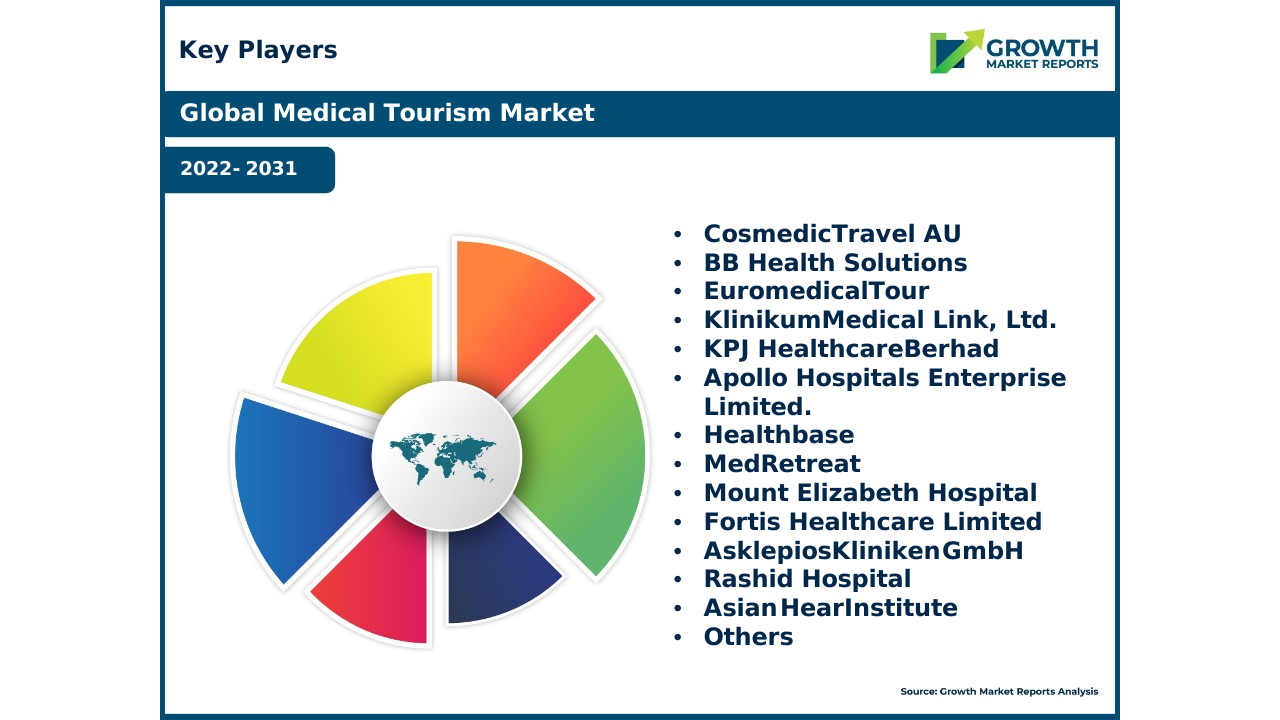

Global Medical Tourism Market Key Players

Frequently Asked Questions

Key players competing in the global market are Cosmedic Travel AU; BB Health Solutions; Euromedical Tours; Klinikum Medical Link, Ltd.; KPJ Healthcare Berhad; Apollo Hospitals Enterprise Ltd.; Healthbase; MedRetreat.; Mount Elizabeth Hospital; Fortis Healthcare Limited; Asklepios Kliniken GmbH; Rashid Hospital; Asian Heart Institute; and Others

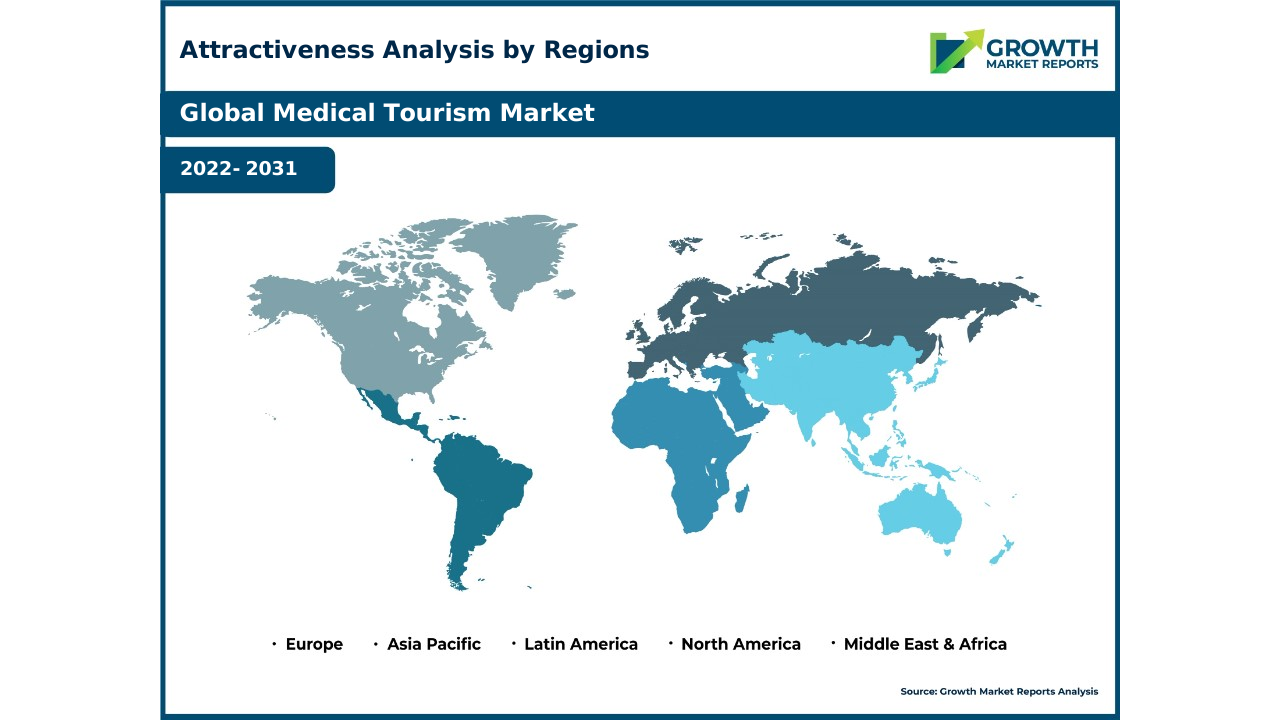
Asia Pacific is likely to dominate the medical tourism market during the forecast period.

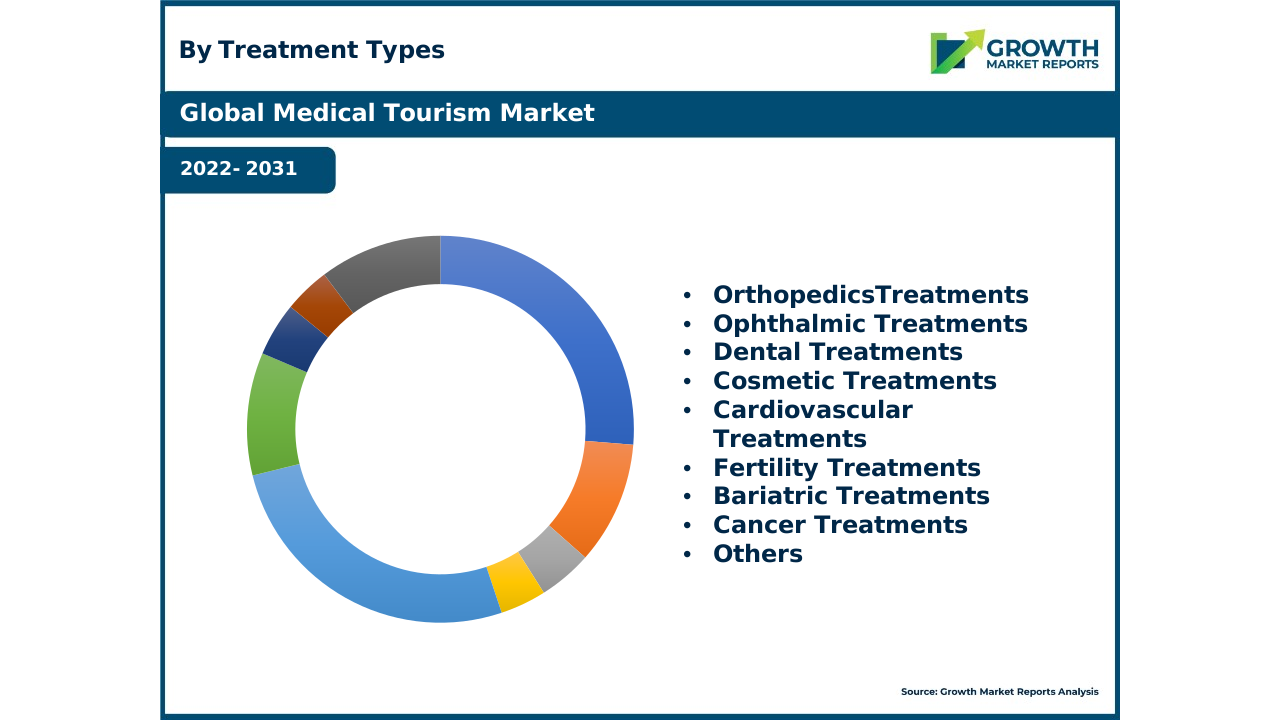
Based on treatment type, Cosmetic treatments segment constituted a key share of the medical tourism market in 2022

 The growth of the market is attributed to the availability and affordability of high-quality healthcare treatments in emerging economies

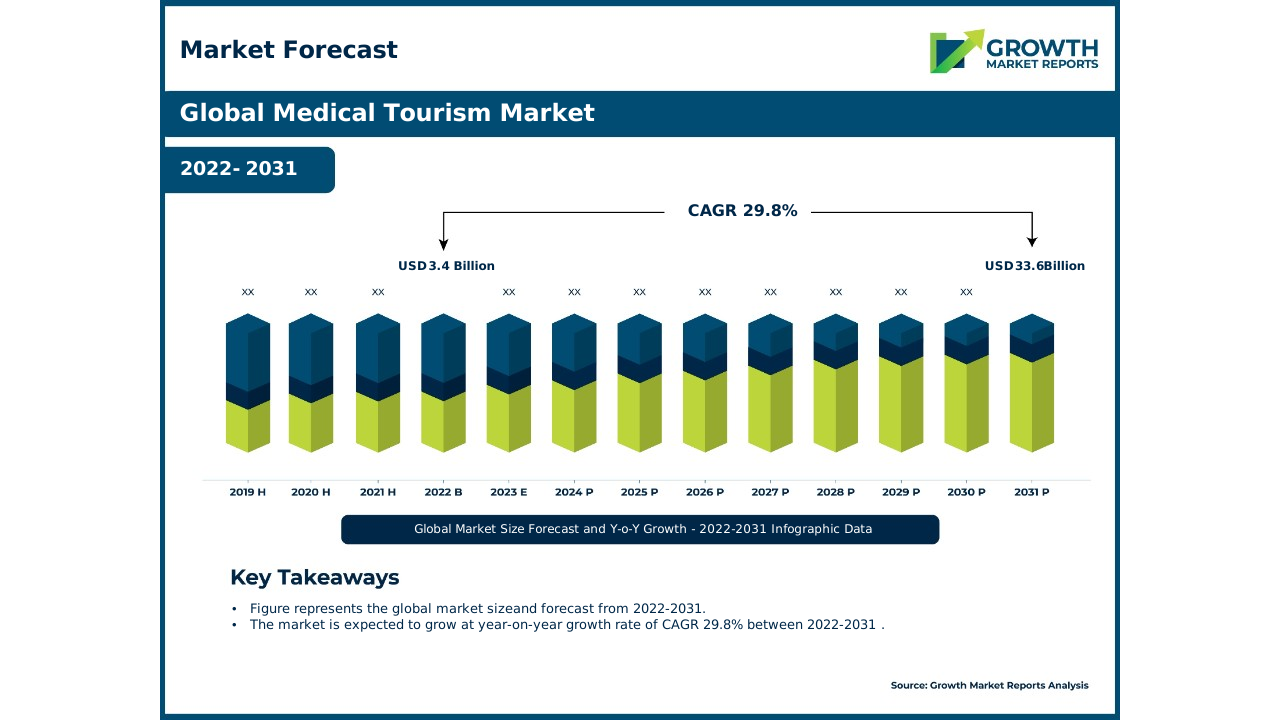
The medical tourism market size was USD 3.4 Bn in 2022 and is expected to reach USD 33.6 Bn expanding at a CAGR of 29.8% by the end of 2031.

Table Of Content

Chapter 1 Executive Summary
Chapter 2 Assumptions and Acronyms Used
Chapter 3 Research Methodology
Chapter 4 Medical Tourism Market Overview
   4.1 Introduction
      4.1.1 Market Taxonomy
      4.1.2 Market Definition
      4.1.3 Macro-Economic Factors Impacting the Market Growth
   4.2 Medical Tourism Market Dynamics
      4.2.1 Market Drivers
      4.2.2 Market Restraints
      4.2.3 Market Opportunity
   4.3 Medical Tourism Market - Supply Chain Analysis
      4.3.1 List of Key Suppliers
      4.3.2 List of Key Distributors
      4.3.3 List of Key Consumers
   4.4 Key Forces Shaping the Medical Tourism Market
      4.4.1 Bargaining Power of Suppliers
      4.4.2 Bargaining Power of Buyers
      4.4.3 Threat of Substitution
      4.4.4 Threat of New Entrants
      4.4.5 Competitive Rivalry
   4.5 Global Medical Tourism Market Size & Forecast, 2023-2032
      4.5.1 Medical Tourism Market Size and Y-o-Y Growth
      4.5.2 Medical Tourism Market Absolute $ Opportunity

Chapter 5 Global Medical Tourism Market Analysis and Forecast By Service Type
   5.1 Introduction
      5.1.1 Key Market Trends & Growth Opportunities By Service Type
      5.1.2 Basis Point Share (BPS) Analysis By Service Type
      5.1.3 Absolute $ Opportunity Assessment By Service Type
   5.2 Medical Tourism Market Size Forecast By Service Type
      5.2.1 Cosmetic Treatment
      5.2.2 Dental Treatment
      5.2.3 Cardiovascular Treatment
      5.2.4 Orthopedic Treatment
      5.2.5 Fertility Treatment
      5.2.6 Cancer Treatment
      5.2.7 Neurological Treatment
      5.2.8 Others
   5.3 Market Attractiveness Analysis By Service Type

Chapter 6 Global Medical Tourism Market Analysis and Forecast By Provider Type
   6.1 Introduction
      6.1.1 Key Market Trends & Growth Opportunities By Provider Type
      6.1.2 Basis Point Share (BPS) Analysis By Provider Type
      6.1.3 Absolute $ Opportunity Assessment By Provider Type
   6.2 Medical Tourism Market Size Forecast By Provider Type
      6.2.1 Public
      6.2.2 Private
   6.3 Market Attractiveness Analysis By Provider Type

Chapter 7 Global Medical Tourism Market Analysis and Forecast By Age Group
   7.1 Introduction
      7.1.1 Key Market Trends & Growth Opportunities By Age Group
      7.1.2 Basis Point Share (BPS) Analysis By Age Group
      7.1.3 Absolute $ Opportunity Assessment By Age Group
   7.2 Medical Tourism Market Size Forecast By Age Group
      7.2.1 Children
      7.2.2 Adults
      7.2.3 Elderly
   7.3 Market Attractiveness Analysis By Age Group

Chapter 8 Global Medical Tourism Market Analysis and Forecast by Region
   8.1 Introduction
      8.1.1 Key Market Trends & Growth Opportunities By Region
      8.1.2 Basis Point Share (BPS) Analysis By Region
      8.1.3 Absolute $ Opportunity Assessment By Region
   8.2 Medical Tourism Market Size Forecast By Region
      8.2.1 North America
      8.2.2 Europe
      8.2.3 Asia Pacific
      8.2.4 Latin America
      8.2.5 Middle East & Africa (MEA)
   8.3 Market Attractiveness Analysis By Region

Chapter 9 Coronavirus Disease (COVID-19) Impact 
   9.1 Introduction 
   9.2 Current & Future Impact Analysis 
   9.3 Economic Impact Analysis 
   9.4 Government Policies 
   9.5 Investment Scenario

Chapter 10 North America Medical Tourism Analysis and Forecast
   10.1 Introduction
   10.2 North America Medical Tourism Market Size Forecast by Country
      10.2.1 U.S.
      10.2.2 Canada
   10.3 Basis Point Share (BPS) Analysis by Country
   10.4 Absolute $ Opportunity Assessment by Country
   10.5 Market Attractiveness Analysis by Country
   10.6 North America Medical Tourism Market Size Forecast By Service Type
      10.6.1 Cosmetic Treatment
      10.6.2 Dental Treatment
      10.6.3 Cardiovascular Treatment
      10.6.4 Orthopedic Treatment
      10.6.5 Fertility Treatment
      10.6.6 Cancer Treatment
      10.6.7 Neurological Treatment
      10.6.8 Others
   10.7 Basis Point Share (BPS) Analysis By Service Type 
   10.8 Absolute $ Opportunity Assessment By Service Type 
   10.9 Market Attractiveness Analysis By Service Type
   10.10 North America Medical Tourism Market Size Forecast By Provider Type
      10.10.1 Public
      10.10.2 Private
   10.11 Basis Point Share (BPS) Analysis By Provider Type 
   10.12 Absolute $ Opportunity Assessment By Provider Type 
   10.13 Market Attractiveness Analysis By Provider Type
   10.14 North America Medical Tourism Market Size Forecast By Age Group
      10.14.1 Children
      10.14.2 Adults
      10.14.3 Elderly
   10.15 Basis Point Share (BPS) Analysis By Age Group 
   10.16 Absolute $ Opportunity Assessment By Age Group 
   10.17 Market Attractiveness Analysis By Age Group

Chapter 11 Europe Medical Tourism Analysis and Forecast
   11.1 Introduction
   11.2 Europe Medical Tourism Market Size Forecast by Country
      11.2.1 Germany
      11.2.2 France
      11.2.3 Italy
      11.2.4 U.K.
      11.2.5 Spain
      11.2.6 Russia
      11.2.7 Rest of Europe
   11.3 Basis Point Share (BPS) Analysis by Country
   11.4 Absolute $ Opportunity Assessment by Country
   11.5 Market Attractiveness Analysis by Country
   11.6 Europe Medical Tourism Market Size Forecast By Service Type
      11.6.1 Cosmetic Treatment
      11.6.2 Dental Treatment
      11.6.3 Cardiovascular Treatment
      11.6.4 Orthopedic Treatment
      11.6.5 Fertility Treatment
      11.6.6 Cancer Treatment
      11.6.7 Neurological Treatment
      11.6.8 Others
   11.7 Basis Point Share (BPS) Analysis By Service Type 
   11.8 Absolute $ Opportunity Assessment By Service Type 
   11.9 Market Attractiveness Analysis By Service Type
   11.10 Europe Medical Tourism Market Size Forecast By Provider Type
      11.10.1 Public
      11.10.2 Private
   11.11 Basis Point Share (BPS) Analysis By Provider Type 
   11.12 Absolute $ Opportunity Assessment By Provider Type 
   11.13 Market Attractiveness Analysis By Provider Type
   11.14 Europe Medical Tourism Market Size Forecast By Age Group
      11.14.1 Children
      11.14.2 Adults
      11.14.3 Elderly
   11.15 Basis Point Share (BPS) Analysis By Age Group 
   11.16 Absolute $ Opportunity Assessment By Age Group 
   11.17 Market Attractiveness Analysis By Age Group

Chapter 12 Asia Pacific Medical Tourism Analysis and Forecast
   12.1 Introduction
   12.2 Asia Pacific Medical Tourism Market Size Forecast by Country
      12.2.1 China
      12.2.2 Japan
      12.2.3 South Korea
      12.2.4 India
      12.2.5 Australia
      12.2.6 South East Asia (SEA)
      12.2.7 Rest of Asia Pacific (APAC)
   12.3 Basis Point Share (BPS) Analysis by Country
   12.4 Absolute $ Opportunity Assessment by Country
   12.5 Market Attractiveness Analysis by Country
   12.6 Asia Pacific Medical Tourism Market Size Forecast By Service Type
      12.6.1 Cosmetic Treatment
      12.6.2 Dental Treatment
      12.6.3 Cardiovascular Treatment
      12.6.4 Orthopedic Treatment
      12.6.5 Fertility Treatment
      12.6.6 Cancer Treatment
      12.6.7 Neurological Treatment
      12.6.8 Others
   12.7 Basis Point Share (BPS) Analysis By Service Type 
   12.8 Absolute $ Opportunity Assessment By Service Type 
   12.9 Market Attractiveness Analysis By Service Type
   12.10 Asia Pacific Medical Tourism Market Size Forecast By Provider Type
      12.10.1 Public
      12.10.2 Private
   12.11 Basis Point Share (BPS) Analysis By Provider Type 
   12.12 Absolute $ Opportunity Assessment By Provider Type 
   12.13 Market Attractiveness Analysis By Provider Type
   12.14 Asia Pacific Medical Tourism Market Size Forecast By Age Group
      12.14.1 Children
      12.14.2 Adults
      12.14.3 Elderly
   12.15 Basis Point Share (BPS) Analysis By Age Group 
   12.16 Absolute $ Opportunity Assessment By Age Group 
   12.17 Market Attractiveness Analysis By Age Group

Chapter 13 Latin America Medical Tourism Analysis and Forecast
   13.1 Introduction
   13.2 Latin America Medical Tourism Market Size Forecast by Country
      13.2.1 Brazil
      13.2.2 Mexico
      13.2.3 Rest of Latin America (LATAM)
   13.3 Basis Point Share (BPS) Analysis by Country
   13.4 Absolute $ Opportunity Assessment by Country
   13.5 Market Attractiveness Analysis by Country
   13.6 Latin America Medical Tourism Market Size Forecast By Service Type
      13.6.1 Cosmetic Treatment
      13.6.2 Dental Treatment
      13.6.3 Cardiovascular Treatment
      13.6.4 Orthopedic Treatment
      13.6.5 Fertility Treatment
      13.6.6 Cancer Treatment
      13.6.7 Neurological Treatment
      13.6.8 Others
   13.7 Basis Point Share (BPS) Analysis By Service Type 
   13.8 Absolute $ Opportunity Assessment By Service Type 
   13.9 Market Attractiveness Analysis By Service Type
   13.10 Latin America Medical Tourism Market Size Forecast By Provider Type
      13.10.1 Public
      13.10.2 Private
   13.11 Basis Point Share (BPS) Analysis By Provider Type 
   13.12 Absolute $ Opportunity Assessment By Provider Type 
   13.13 Market Attractiveness Analysis By Provider Type
   13.14 Latin America Medical Tourism Market Size Forecast By Age Group
      13.14.1 Children
      13.14.2 Adults
      13.14.3 Elderly
   13.15 Basis Point Share (BPS) Analysis By Age Group 
   13.16 Absolute $ Opportunity Assessment By Age Group 
   13.17 Market Attractiveness Analysis By Age Group

Chapter 14 Middle East & Africa (MEA) Medical Tourism Analysis and Forecast
   14.1 Introduction
   14.2 Middle East & Africa (MEA) Medical Tourism Market Size Forecast by Country
      14.2.1 Saudi Arabia
      14.2.2 South Africa
      14.2.3 UAE
      14.2.4 Rest of Middle East & Africa (MEA)
   14.3 Basis Point Share (BPS) Analysis by Country
   14.4 Absolute $ Opportunity Assessment by Country
   14.5 Market Attractiveness Analysis by Country
   14.6 Middle East & Africa (MEA) Medical Tourism Market Size Forecast By Service Type
      14.6.1 Cosmetic Treatment
      14.6.2 Dental Treatment
      14.6.3 Cardiovascular Treatment
      14.6.4 Orthopedic Treatment
      14.6.5 Fertility Treatment
      14.6.6 Cancer Treatment
      14.6.7 Neurological Treatment
      14.6.8 Others
   14.7 Basis Point Share (BPS) Analysis By Service Type 
   14.8 Absolute $ Opportunity Assessment By Service Type 
   14.9 Market Attractiveness Analysis By Service Type
   14.10 Middle East & Africa (MEA) Medical Tourism Market Size Forecast By Provider Type
      14.10.1 Public
      14.10.2 Private
   14.11 Basis Point Share (BPS) Analysis By Provider Type 
   14.12 Absolute $ Opportunity Assessment By Provider Type 
   14.13 Market Attractiveness Analysis By Provider Type
   14.14 Middle East & Africa (MEA) Medical Tourism Market Size Forecast By Age Group
      14.14.1 Children
      14.14.2 Adults
      14.14.3 Elderly
   14.15 Basis Point Share (BPS) Analysis By Age Group 
   14.16 Absolute $ Opportunity Assessment By Age Group 
   14.17 Market Attractiveness Analysis By Age Group

Chapter 15 Competition Landscape 
   15.1 Medical Tourism Market: Competitive Dashboard
   15.2 Global Medical Tourism Market: Market Share Analysis, 2023
   15.3 Company Profiles (Details – Overview, Financials, Developments, Strategy) 
      15.3.1 Apollo Hospitals Enterprise Limited
Bumrungrad International Hospital
Fortis Healthcare Limited
KPJ Healthcare Berhad
Raffles Medical Group
Bangkok Dusit Medical Services (BDMS)
Cleveland Clinic
Mount Elizabeth Hospitals
Gleneagles Hospital
Anadolu Medical Center
Medanta – The Medicity
Prince Court Medical Centre
Samitivej Hospitals
Seoul National University Hospital
Asklepios Kliniken GmbH
Tourism Hospital India
IHH Healthcare Berhad
San Raffaele Hospital
Johns Hopkins Medicine
Mayo Clinic

Methodology

Our Clients

FedEx Logistics
Microsoft
General Mills
Siemens Healthcare
The John Holland Group
sinopec
Dassault Aviation
Deloitte