Segments - by Type (Natural Colorants, Synthetic Colorants), by Application (Beverages, Bakery & Confectionery, Dairy & Frozen Products, Meat Products, Processed Foods, Others), by Form (Liquid, Powder, Gel, Others), by Solubility (Water-Soluble, Oil-Soluble), by And Distribution Channel (Direct, Indirect)
This report is updated with the latest market data and insights as of June 2026. Base year: 2025 | Forecast period: 2026-2034
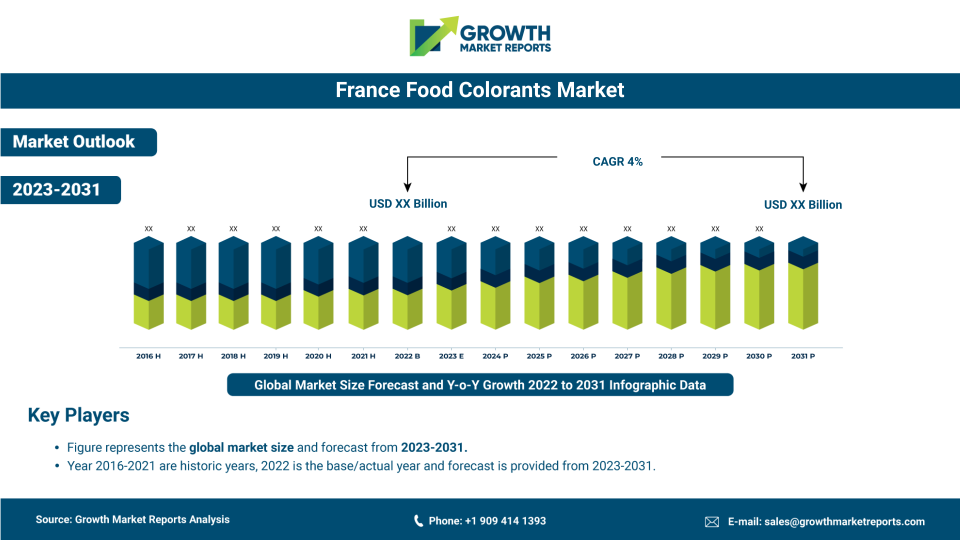
According to our latest research, the global food colorants market size in 2025 stands at USD 5.7 billion, with France accounting for a significant share due to its robust food and beverage industry. The global market is growing at a CAGR of 6.0% and is expected to reach USD 9.6 billion by 2034. This growth is primarily driven by increasing consumer demand for visually appealing and clean-label food color solutions. In France, the food colorants market is witnessing a sustained upward trend in 2025, fueled by evolving consumer preferences, stringent food safety regulations, and the flourishing processed food sector.
One of the primary growth factors for the France food colorants market is the rising consumer inclination towards natural and organic food products. French consumers are increasingly aware of the health implications associated with synthetic additives, prompting food manufacturers to shift towards natural food colorings derived from fruits, vegetables, and other plant-based sources. This shift is further propelled by the growing trend of clean-label products, where transparency in ingredient sourcing and processing is highly valued. As a result, manufacturers are investing in research and development to innovate and expand their portfolio of natural colorants, driving market growth throughout the 2026-2034 forecast horizon.
The burgeoning processed food and beverage industry in France is another significant driver for the food colorants market. The demand for visually attractive products in categories such as bakery, confectionery, dairy, and beverages is pushing manufacturers to incorporate a wide range of colorants to enhance product appeal and differentiation. The French market, renowned for its culinary excellence and premium food products, places a strong emphasis on aesthetics, which further stimulates the adoption of both natural and synthetic food colorants. Additionally, advancements in food processing technologies have enabled better stability and application of colorants, thereby expanding their use across diverse food segments.
Regulatory support and stringent food safety standards in France also play a crucial role in shaping the food colorants market. Regulatory authorities such as the European Food Safety Authority (EFSA) and the French Agency for Food, Environmental and Occupational Health and Safety (ANSES) enforce strict guidelines on the use of food additives, including colorants. These regulations ensure high quality and safety, thereby fostering consumer trust and encouraging the adoption of compliant food colorants. The regulatory landscape is also pushing manufacturers to invest in safer and more sustainable colorant solutions, which is expected to further boost market growth over the 2026-2034 forecast period.
Regionally, the food colorants market in France exhibits varied growth patterns, with Northern and Central France emerging as prominent hubs due to their concentration of food processing units and higher consumer purchasing power. Southern France, known for its rich culinary traditions, also shows robust demand for food colorants, particularly in the bakery and confectionery segments. Meanwhile, Eastern and Western France are witnessing steady growth, supported by the expansion of retail and foodservice sectors. This regional diversity ensures a balanced and dynamic market landscape across the country through 2034.
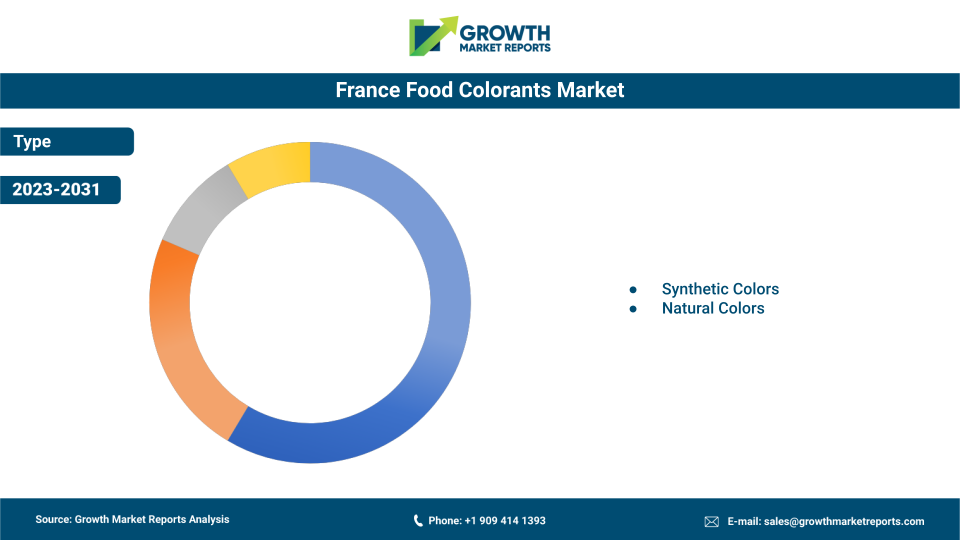
The France food colorants market by type is broadly categorized into natural colorants and synthetic colorants. The demand for natural colorants has seen a remarkable surge, primarily due to heightened consumer awareness regarding the potential health risks associated with synthetic additives. Natural colorants, derived from sources such as beetroot, turmeric, spirulina, and paprika, are increasingly preferred by both manufacturers and consumers seeking clean-label products. The French food industry, renowned for its emphasis on quality and authenticity, is at the forefront of this shift in 2025, with many leading brands reformulating their products to replace synthetic colorants with natural alternatives. The broader trend toward natural colorants for functional foods is also gaining notable traction in France, as fortified and health-positioned products multiply across retail channels.
On the other hand, synthetic colorants continue to hold a significant share in the market, particularly in applications where vibrant and consistent coloring is required. These colorants offer advantages such as cost-effectiveness, stability, and a broader spectrum of shades, making them popular in mass-produced food and beverage products. However, growing regulatory scrutiny and increasing consumer demand for transparency are compelling manufacturers to explore innovative solutions that combine the vibrancy of synthetic color additives with the safety and appeal of natural sources. This has led to the emergence of hybrid colorants and improved formulations that align with evolving market demands across the 2026-2034 period.
The competitive landscape within the type segment is characterized by ongoing research and development activities aimed at enhancing the performance and application range of both natural and synthetic food colorants. Companies are investing in advanced extraction and formulation technologies to improve color stability, solubility, and resistance to processing conditions. These innovations are enabling the use of colorants in a wider array of food products, from beverages to processed meats, thereby broadening market opportunities through the forecast horizon.
Regulatory compliance remains a critical factor influencing the adoption of different types of food colorants in France. Stringent regulations governing the use of synthetic additives have prompted many manufacturers to prioritize natural colorants, especially in products targeted at health-conscious consumers and children. The ongoing dialogue between industry stakeholders and regulatory authorities is shaping the future of the type segment, with a clear trend towards safer, more sustainable, and consumer-friendly solutions projected to strengthen through 2034.
| Attributes | Details |
| Report Title | France Food Colorants Market Research Report 2034 |
| By Type | Natural Colorants, Synthetic Colorants |
| By Application | Beverages, Bakery & Confectionery, Dairy & Frozen Products, Meat Products, Processed Foods, Others |
| By Form | Liquid, Powder, Gel, Others |
| By Solubility | Water-Soluble, Oil-Soluble |
| By Distribution Channel | Direct, Indirect |
| Regions Covered | North America, Europe, APAC, Latin America, MEA |
| Base Year | 2025 |
| Historic Data | 2019-2024 |
| Forecast Period | 2026-2034 |
| Number of Pages | 251 |
| Number of Tables & Figures | 290 |
| Customization Available | Yes, the report can be customized as per your need. |
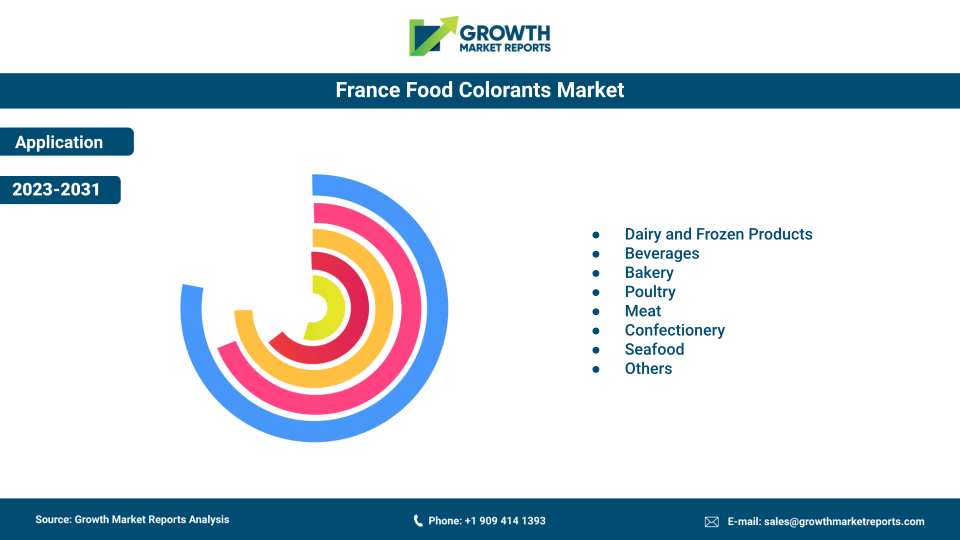
The application segment of the France food colorants market is highly diverse, encompassing beverages, bakery and confectionery, dairy and frozen products, meat products, processed foods, and others. Among these, the beverages segment leads in terms of market share, driven by the high consumption of flavored drinks, juices, and functional beverages in France. Food colorants play a pivotal role in enhancing the visual appeal and perceived freshness of beverages, which is a key factor influencing consumer purchasing decisions. The demand for natural colorants in this segment is particularly strong in 2025, as beverage manufacturers seek to align with clean-label trends and regulatory requirements.
The bakery and confectionery segment is another major application area for food colorants in France. French pastries, chocolates, and baked goods are renowned for their intricate designs and vibrant colors, necessitating the use of high-quality colorants to achieve desired aesthetics. Both natural and synthetic colorants find extensive use in this segment, with a growing preference for plant-based alternatives among premium and artisanal brands. The ongoing innovation in bakery and confectionery products, coupled with seasonal and festive demand, is expected to sustain robust growth in this application area through the 2026-2034 forecast period.
In the dairy and frozen products segment, food colorants are widely used to enhance the appearance of products such as yogurts, ice creams, and cheeses. The French dairy industry, known for its diversity and quality, relies on colorants to differentiate products and cater to evolving consumer tastes. Natural colorants are gaining traction in this segment, driven by the popularity of organic and functional dairy products. The focus on product innovation and health-conscious formulations is further boosting the adoption of safer and more natural colorant solutions heading into 2026 and beyond.
The meat products and processed foods segments also contribute significantly to the demand for food colorants in France. In meat processing, colorants are used to restore or enhance the natural color lost during processing, thereby improving product appeal and shelf life. Processed foods, including ready meals and snacks, utilize colorants to maintain consistency and attractiveness in mass production. The increasing consumption of convenience foods, driven by changing lifestyles and urbanization, is expected to drive further growth in these application segments through 2034.
The France food colorants market by form is segmented into liquid, powder, gel, and others. Liquid food colorants dominate the market, owing to their ease of use, uniform dispersion, and suitability for a wide range of food and beverage applications. Liquid colorants are particularly popular in the beverage, dairy, and confectionery segments, where precise dosing and consistent coloring are critical. Manufacturers are continually innovating to improve the stability and shelf life of liquid colorants in 2025, ensuring their compatibility with modern food processing techniques and evolving formulation requirements.
Powder food colorants are also widely used, especially in bakery, confectionery, and processed foods. Powders offer advantages such as longer shelf life, ease of storage, and versatility in application. They are often preferred for dry mixes, baking ingredients, and products requiring high-temperature processing. The demand for natural powder colorants is on the rise through the 2026-2034 period, as manufacturers seek to replace synthetic alternatives with plant-based solutions that offer both functionality and consumer appeal.
Gel food colorants cater to specialized applications, particularly in the bakery and confectionery sectors. Gels provide intense coloring and are ideal for decorating cakes, pastries, and desserts. Their thick consistency allows for precise application and creative designs, making them popular among professional bakers and pastry chefs. The development of innovative gel formulations, including those based on natural ingredients, is contributing to the growth of this segment and is expected to continue through 2034.
Other forms of food colorants, such as pastes and emulsions, are gaining traction in niche applications where specific texture or solubility characteristics are required. The ongoing diversification of product offerings and the introduction of multifunctional colorant solutions are expanding the market potential across various food categories. The choice of form is often dictated by the intended application, processing requirements, and consumer preferences, underscoring the importance of flexibility and innovation in product development.
Solubility is a critical factor influencing the selection and application of food colorants in the French market. The market is segmented into water-soluble and oil-soluble colorants. Water-soluble colorants are predominantly used in products with high moisture content, such as beverages, dairy products, and certain confectionery items. These colorants disperse easily in aqueous solutions, providing uniform coloring and stability. The growing demand for natural, water-soluble colorants derived from fruits and vegetables is particularly evident in the beverage and dairy segments in 2025, where clean-label and health-oriented products are gaining rapid popularity.
Oil-soluble colorants are essential for applications in fat-based products, including chocolates, processed cheeses, and certain bakery items. These colorants ensure even distribution and vibrant coloring in products where water-based solutions would be ineffective. The development of oil-soluble natural colorants, such as those derived from carotenoids and paprika, is addressing the demand for healthier and more sustainable alternatives in this segment. Manufacturers are investing in advanced formulation technologies to enhance the performance and versatility of oil-soluble colorants, catering to the evolving needs of the food industry through the 2026-2034 forecast period.
The choice between water-soluble and oil-soluble colorants is influenced by various factors, including product composition, processing conditions, and desired visual effects. Manufacturers are increasingly seeking multifunctional colorant solutions that offer compatibility with a wide range of food matrices. This trend is driving research and innovation in solubility-enhancing technologies, enabling the development of hybrid colorants that can be used across multiple applications throughout the forecast horizon.
Regulatory considerations also play a role in the adoption of different solubility types, with authorities setting specific guidelines for the use of food colorants in various product categories. Compliance with these regulations is essential to ensure product safety and maintain consumer trust. The ongoing collaboration between industry stakeholders and regulatory bodies is fostering the development of safer and more effective colorant solutions, supporting the long-term growth of the market through 2034.
The distribution channel segment of the France food colorants market is divided into direct and indirect channels. Direct distribution involves the sale of food colorants from manufacturers to food processing companies, bakeries, and large-scale food producers. This channel is favored by major players seeking to establish long-term partnerships and ensure consistent supply and quality. Direct distribution enables manufacturers to offer customized solutions, technical support, and value-added services, thereby strengthening customer relationships and brand loyalty in the current 2025 market environment.
Indirect distribution encompasses sales through intermediaries such as distributors, wholesalers, and retailers. This channel is particularly important for reaching small and medium-sized enterprises (SMEs), artisanal producers, and niche food manufacturers who may not have the resources to engage in direct procurement. Indirect distribution networks offer greater market reach and flexibility, enabling manufacturers to tap into diverse customer segments and geographic regions. The rise of e-commerce and online platforms is further expanding the scope of indirect distribution, allowing for efficient and cost-effective access to food colorants through the 2026-2034 period.
The choice of distribution channel is influenced by factors such as product type, volume requirements, and customer preferences. Large food processing companies often prefer direct sourcing to ensure traceability and quality control, while smaller players rely on established distribution networks for convenience and accessibility. The growing emphasis on supply chain efficiency and transparency is prompting manufacturers to optimize their distribution strategies and invest in digital solutions that enhance order management and customer engagement.
The competitive dynamics within the distribution channel segment are shaped by the presence of both global and local players, each leveraging their strengths to capture market share. Strategic partnerships, mergers, and acquisitions are common as companies seek to expand their distribution capabilities and reach new customer segments. The ongoing evolution of distribution channels is expected to play a pivotal role in shaping the future of the France food colorants market through the 2026-2034 forecast horizon.
The France food colorants market presents numerous opportunities for growth and innovation through 2034. One of the most significant opportunities lies in the increasing consumer demand for natural and organic food products. As health consciousness continues to rise in 2025 and beyond, manufacturers have the chance to develop and market colorants derived from sustainable and renewable sources. The expansion of the clean-label trend, coupled with advancements in extraction and formulation technologies, is enabling the creation of novel colorant solutions that meet both functional and aesthetic requirements. Companies that invest in research and development to enhance the performance, stability, and versatility of natural colorants are well-positioned to capitalize on this trend and gain a competitive edge in the market through 2034.
Another promising opportunity is the growing adoption of food colorants in emerging applications such as plant-based foods, functional beverages, and specialty products. The rise of vegan and vegetarian diets, along with the increasing popularity of fortified and health-oriented foods, is driving demand for colorants that can enhance product appeal without compromising nutritional value. Manufacturers are exploring innovative approaches, such as microencapsulation and nanotechnology, to improve the delivery and efficacy of colorants in these applications. The expansion of distribution channels, including online platforms and direct-to-consumer models, is also creating new avenues for market growth and customer engagement through the 2026-2034 forecast window.
Despite these opportunities, the France food colorants market faces certain threats and restraints. One of the primary challenges is the stringent regulatory environment governing the use of food colorants. Compliance with evolving safety standards and labeling requirements can be complex and costly, particularly for small and medium-sized enterprises. The ongoing scrutiny of synthetic colorants and potential health concerns associated with certain additives may lead to product reformulations and increased regulatory oversight. Additionally, fluctuations in the availability and cost of raw materials, especially for natural colorants, can impact production and pricing dynamics heading into the forecast period. Companies must navigate these challenges by investing in robust quality control systems, fostering transparency, and maintaining strong relationships with suppliers and regulatory authorities.
The regional analysis of the France food colorants market reveals distinct growth patterns across different parts of the country. Northern France leads the market, accounting for approximately 28% of the national market share in 2025, driven by its concentration of large food processing units, robust industrial infrastructure, and proximity to major export markets. The region's advanced logistics network and access to raw materials further enhance its position as a key hub for food colorant manufacturing and distribution. Companies operating in Northern France benefit from strong government support, skilled labor, and a dynamic business environment, which collectively contribute to sustained market growth through 2034.
Central France is another significant region, contributing around 22% to the national market share in 2025. The region's vibrant agricultural sector, coupled with a growing number of food processing facilities, supports the demand for both natural and synthetic colorants. Central France's strategic location and well-developed transportation infrastructure facilitate efficient distribution to other parts of the country. The region is also witnessing increased investment in research and innovation, with several leading companies and academic institutions collaborating to develop advanced colorant solutions that cater to evolving consumer preferences and regulatory requirements over the 2026-2034 period.
Southern France, with its rich culinary traditions and strong tourism industry, accounts for approximately 20% of the market share in 2025. The region is characterized by a high demand for bakery, confectionery, and specialty food products, driving the adoption of premium and artisanal colorant solutions. Southern France is experiencing a CAGR of 6.4%, outpacing other regions due to its focus on high-value and export-oriented products. Meanwhile, Eastern and Western France collectively contribute the remaining share, supported by the expansion of retail and foodservice sectors. These regions are gradually catching up, with increasing investments in food processing and distribution infrastructure expected to drive future growth through 2034.
The competitive landscape of the France food colorants market is characterized by the presence of both multinational corporations and domestic players, each vying for market share through product innovation, strategic partnerships, and expansion of distribution networks. Leading companies are leveraging their extensive R&D capabilities to develop advanced colorant solutions that cater to the evolving needs of the food industry in 2025 and beyond. The focus on natural and sustainable colorants has intensified competition, with players investing in new extraction technologies, sourcing strategies, and clean-label formulations. The market is also witnessing increased collaboration between manufacturers, research institutions, and regulatory bodies to ensure compliance with safety standards and address emerging consumer trends through the 2026-2034 forecast period.
Innovation remains a key differentiator in the competitive landscape, with companies striving to enhance the functionality, stability, and versatility of their colorant offerings. The adoption of cutting-edge technologies such as microencapsulation, nanotechnology, and hybrid formulations is enabling the development of colorants that deliver superior performance across diverse applications. Market leaders are also expanding their product portfolios to include multifunctional and value-added solutions, such as colorants with antioxidant or nutritional properties, to address the growing demand for health-oriented food products. These efforts are supported by robust marketing and branding initiatives aimed at building consumer trust and loyalty across the 2026-2034 horizon.
The competitive dynamics are further shaped by mergers, acquisitions, and strategic alliances, as companies seek to strengthen their market position and expand their geographic reach. Global players are increasingly targeting the French market through investments in local manufacturing facilities, partnerships with domestic distributors, and tailored product offerings that align with regional preferences. At the same time, local companies are leveraging their deep understanding of the French food industry and consumer behavior to develop niche products and capture market segments underserved by larger competitors.
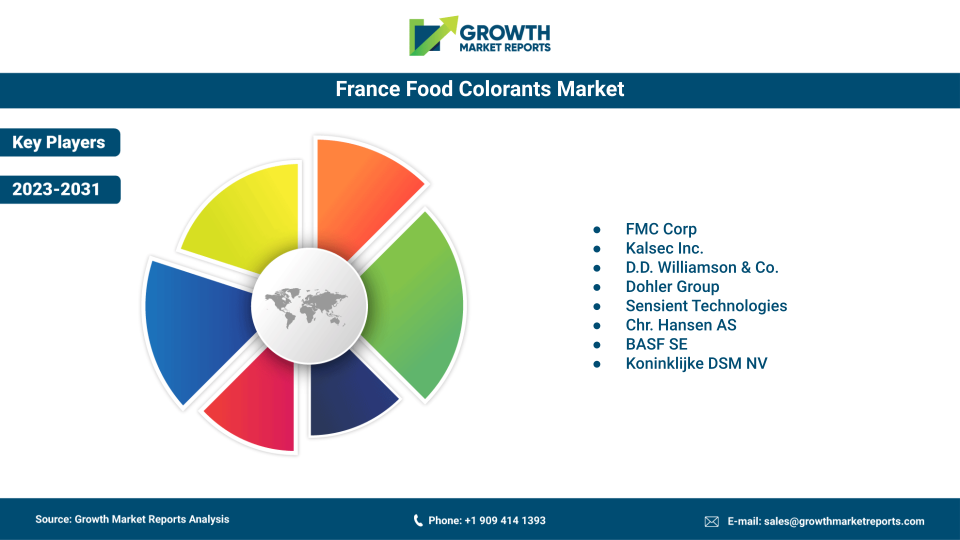
Major companies operating in the France food colorants market include Givaudan SA, Sensient Technologies Corporation, Chr. Hansen Holding A/S, Naturex SA (a Givaudan company), DDW (D.D. Williamson), ADM (Archer Daniels Midland Company), Kalsec Inc., BASF SE, Symrise AG, IFF (International Flavors & Fragrances Inc.), dsm-firmenich AG, Lycored Ltd., Roha Dyechem Pvt. Ltd., Allied Biotech Corporation, and Dohler Group. Givaudan and Naturex are recognized for their extensive portfolios of natural colorants and strong presence in the European market. Sensient Technologies is known for its innovative synthetic and natural colorant solutions, catering to a wide range of food applications. Chr. Hansen focuses on sustainable and bio-based colorants, leveraging its expertise in fermentation and natural extraction. DDW and Kalsec Inc. specialize in plant-based colorants, with a strong emphasis on clean-label and functional products. ADM offers a comprehensive range of both natural and synthetic colorants, supported by a global supply chain and robust technical support, while dsm-firmenich AG continues to expand its natural colorant portfolio following its 2023 merger.
These companies are actively investing in research and development to stay ahead of regulatory changes and evolving consumer preferences. Their strategies include expanding product lines, enhancing supply chain transparency, and forming partnerships with food manufacturers to co-develop innovative solutions. The competitive landscape is expected to remain dynamic through 2034, with ongoing innovation, regulatory compliance, and sustainability initiatives shaping the future of the France food colorants market.
The France Food Colorants market has been segmented on the basis of
Major trends include accelerating demand for plant-based and fermentation-derived natural colorants, growing adoption of microencapsulation technology to improve color stability, and increased interest in colorants with functional benefits such as antioxidant activity. Opportunities are emerging in plant-based meat alternatives, fortified beverages, and premium artisanal food sectors. The expansion of clean-label reformulation programs among leading French food brands, combined with sustainability mandates, is expected to generate significant revenue potential through the 2026-2034 forecast period.
Key players active in the France food colorants market include Givaudan SA, Chr. Hansen Holding A/S, Sensient Technologies Corporation, Naturex SA (a Givaudan company), DDW (D.D. Williamson), Kalsec Inc., ADM, BASF SE, Symrise AG, IFF, dsm-firmenich AG, Lycored Ltd., Roha Dyechem, Allied Biotech Corporation, and Dohler Group. These companies compete through product innovation, sustainable sourcing, regulatory compliance, and strategic partnerships with French food manufacturers.
The market is served through direct and indirect distribution channels. Direct channels connect manufacturers with large food processors, enabling customized supply agreements and technical collaboration. Indirect channels, covering distributors, wholesalers, and increasingly e-commerce platforms, are vital for reaching small and medium-sized food producers and artisanal businesses. The continued growth of digital procurement solutions is reshaping channel dynamics, enhancing efficiency and traceability across the supply chain.
The French market offers food colorants in liquid, powder, gel, and other specialty forms such as pastes and emulsions. Liquid colorants hold the largest share due to their ease of integration in beverages and dairy products. Powder colorants are widely used in bakery and dry-mix applications, while gel colorants serve premium cake decoration and confectionery segments. Ongoing innovation is producing multifunctional and microencapsulated forms suited to modern food manufacturing requirements.
Northern France leads the national market with approximately 28% share in 2025, supported by a dense concentration of food processing industries and strong logistics infrastructure. Central France contributes around 22%, benefiting from a thriving agricultural base and growing investment in food processing. Southern France accounts for roughly 20%, fueled by demand from premium bakery, confectionery, and tourism-related food segments, and is projected to post the fastest regional CAGR through 2034.
Regulations enforced by the European Food Safety Authority (EFSA) and the French Agency for Food, Environmental and Occupational Health and Safety (ANSES) set strict standards for permitted colorants, usage levels, and labeling. These frameworks drive manufacturers to invest in compliant, traceable, and sustainable colorant solutions. Regulatory scrutiny of synthetic additives is accelerating reformulation toward natural alternatives, while periodic updates to approved ingredient lists require ongoing adaptation by market participants.
The beverages segment leads in market share, followed closely by bakery and confectionery, which benefits from France's internationally renowned pastry and chocolate culture. Dairy and frozen products, meat products, and processed foods also represent substantial application areas. The growing popularity of plant-based alternatives and functional foods is opening new demand channels for colorants across multiple categories through the 2026-2034 forecast period.
Natural colorants dominate the France market, accounting for approximately 58.5% of the type segment in 2025. Derived from sources such as beetroot, turmeric, spirulina, and paprika, these colorants are favored by manufacturers responding to clean-label and health-oriented consumer trends. Synthetic colorants retain a 41.5% share, valued for their cost efficiency, color consistency, and broad application range, particularly in mass-produced food products.
Key drivers include rising consumer preference for natural and clean-label food products, the expanding processed food and beverage sector, growing health awareness, and continuous innovation in colorant formulation technologies. Regulatory support from EFSA and ANSES also encourages the adoption of safe, compliant colorant solutions, while the popularity of plant-based foods and functional beverages creates fresh demand streams through 2034.
The France food colorants market, as part of the broader global market valued at USD 5.7 billion in 2025, represents a significant share driven by France's robust food and beverage manufacturing base. The global market is forecast to reach approximately USD 9.6 billion by 2034, expanding at a CAGR of 6.0% over the 2026-2034 period.