Apple Juice Processing Enzymes Market Research Report 2033

Apple Juice Processing Enzymes Market Research Report 2033

Segments - by Product Type (Pectinase, Cellulase, Amylase, Protease, Others), by Application (Clarification, Depectinization, Juice Yield Improvement, Others), by Source (Microbial, Plant, Animal), by Form (Liquid, Powder, Granules), by End-User (Beverage Manufacturers, Food Processing Companies, Others)

https://growthmarketreports.com/Anuradha
Author : Anuradha B. More
https://growthmarketreports.com/Vaibhav
Fact-checked by : Vaibhav Chandola
https://growthmarketreports.com/Shruti
Editor : Shruti Bhat

Upcoming | Report ID :FB-305 | 4.5 Rating | 69 Reviews | 275 Pages | Format : Docx PDF

Report Description


Apple Juice Processing Enzymes Market Outlook

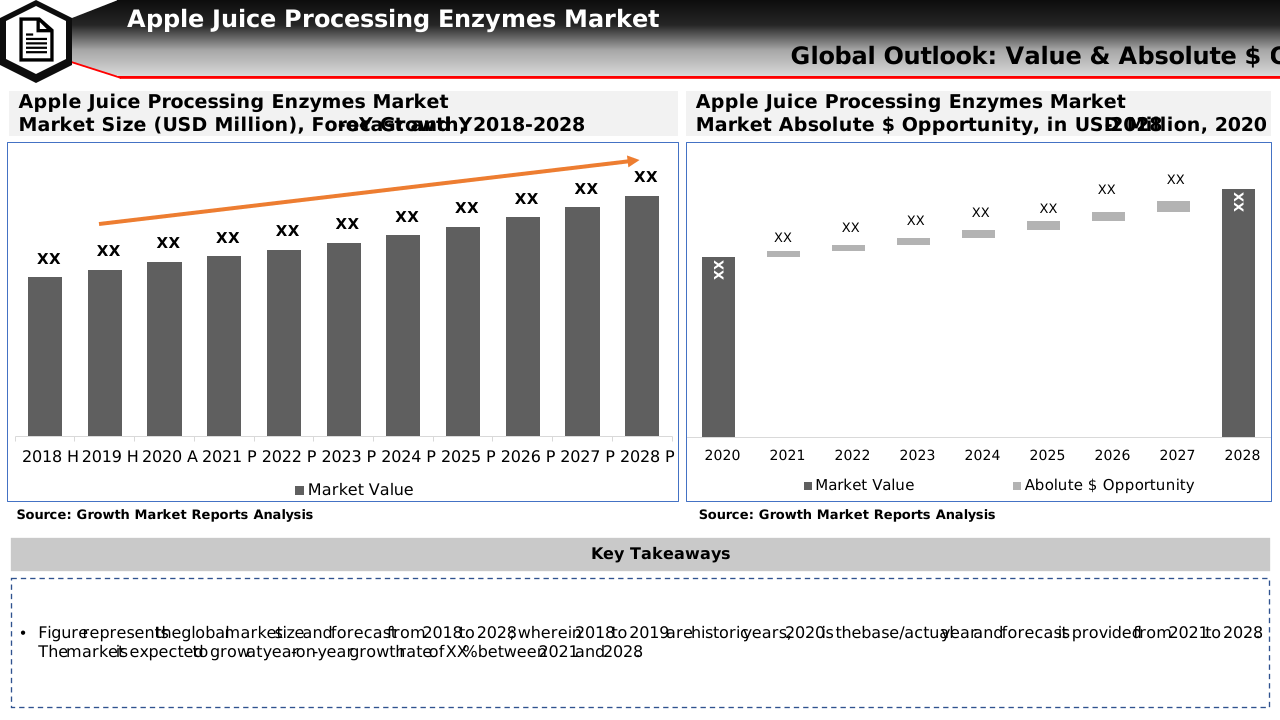
According to our latest research, the global apple juice processing enzymes market size reached USD 298.7 million in 2024, reflecting the robust expansion of the apple juice industry and the increasing adoption of advanced enzymatic solutions. The market is projected to grow at a CAGR of 6.3% during the forecast period, with the value expected to reach USD 515.4 million by 2033. This growth is primarily driven by the rising demand for high-quality, clarified apple juice, coupled with the food and beverage sectorÂ’s ongoing shift towards process optimization and sustainability. As per our latest research, the marketÂ’s expansion is underpinned by innovations in enzyme formulations and the growing preference for natural, clean-label products among consumers worldwide.

One of the primary growth factors fueling the apple juice processing enzymes market is the increasing focus on process efficiency and yield maximization in the beverage industry. Enzymes such as pectinase, cellulase, and amylase are extensively employed to break down complex polysaccharides, thereby improving juice extraction, clarity, and stability. Beverage manufacturers are continuously seeking ways to minimize waste and enhance throughput, and enzymatic solutions offer a cost-effective and eco-friendly alternative to traditional mechanical and chemical methods. The growing awareness of the environmental footprint associated with juice production is prompting manufacturers to adopt enzymatic processing, which not only optimizes resource utilization but also supports sustainability initiatives. Furthermore, the ability of enzymes to reduce processing time and energy consumption is a significant advantage, contributing to the widespread adoption of these solutions across both large-scale and small-scale juice producers.

Another significant driver of market growth is the evolving consumer preferences towards healthier and more natural beverages. With the global trend towards clean-label products gaining momentum, apple juice producers are increasingly opting for enzymatic processing methods that avoid synthetic additives and harsh chemicals. Enzymes derived from microbial, plant, and animal sources enable the production of juice that retains its natural flavor, color, and nutritional value, which aligns with the expectations of health-conscious consumers. Additionally, the growing prevalence of food allergies and sensitivities has led to a surge in demand for hypoallergenic and minimally processed juices, further boosting the adoption of natural enzyme-based processing. As regulatory bodies around the world tighten standards on food additives and processing aids, the market for apple juice processing enzymes is expected to benefit from the shift towards more transparent and consumer-friendly labeling practices.

Technological advancements in enzyme production and formulation are also playing a pivotal role in shaping the apple juice processing enzymes market. The development of highly specific and robust enzyme blends tailored to the unique requirements of apple juice processing has enabled manufacturers to achieve greater control over product quality and consistency. Innovations in biotechnology, such as genetic engineering and fermentation technology, have made it possible to produce enzymes with enhanced activity, stability, and resistance to processing conditions. This, in turn, has expanded the range of applications for enzymes in the juice industry, from clarification and depectinization to flavor enhancement and shelf-life extension. The continuous investment in research and development by leading enzyme manufacturers is expected to drive further improvements in enzyme performance, cost-efficiency, and sustainability, thereby supporting the long-term growth of the market.

The role of Fruit And Vegetable Processing Enzymes extends beyond apple juice, offering versatile solutions across a wide range of produce. These enzymes are integral in breaking down complex carbohydrates and fibers in fruits and vegetables, facilitating improved extraction and clarity in juices. Their application is not limited to beverages; they are also crucial in the production of purees, sauces, and other processed foods. By enhancing the natural flavors and nutritional profiles of fruits and vegetables, these enzymes align with the growing consumer demand for healthy, clean-label products. The use of such enzymes supports the food industry's shift towards more sustainable practices by reducing waste and optimizing resource utilization. As the market for processed fruit and vegetable products continues to grow, the demand for specialized enzymatic solutions is expected to rise, driving further innovation and adoption in the sector.

From a regional perspective, the Asia Pacific region is emerging as a significant growth engine for the apple juice processing enzymes market, driven by rapid urbanization, rising disposable incomes, and a burgeoning middle class with a growing appetite for packaged beverages. China and India, in particular, are witnessing substantial investments in food processing infrastructure and technology, creating lucrative opportunities for enzyme suppliers. North America and Europe continue to hold substantial market shares, owing to their well-established beverage industries and strong emphasis on product innovation and quality. Meanwhile, Latin America and the Middle East & Africa are gradually catching up, supported by increasing consumer awareness and expanding distribution networks. The global landscape is characterized by a dynamic interplay of market forces, with regional variations in consumption patterns, regulatory frameworks, and technological adoption shaping the competitive dynamics of the apple juice processing enzymes market.

Global Apple Juice Processing Enzymes Industry Outlook

Product Type Analysis

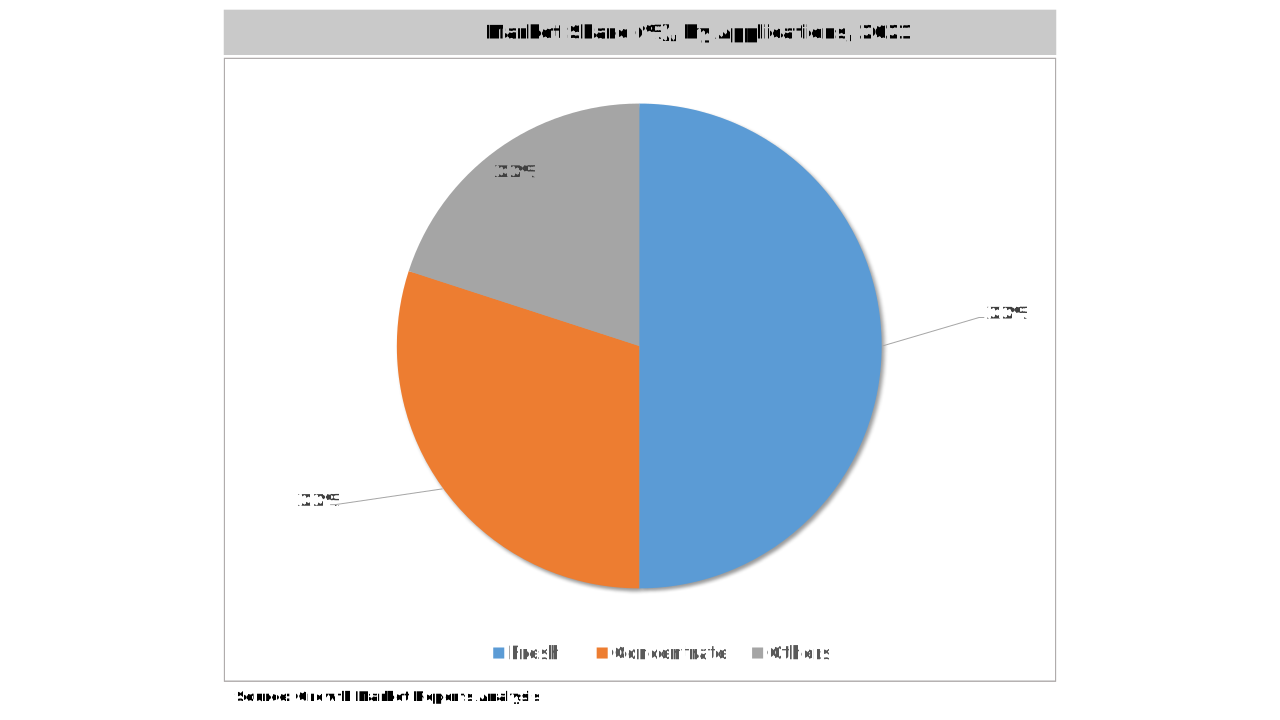
The apple juice processing enzymes market by product type is segmented into pectinase, cellulase, amylase, protease, and others, each playing a distinct role in the juice extraction and clarification process. Pectinase is the most widely used enzyme in apple juice processing, accounting for the largest share of the market due to its effectiveness in breaking down pectin, a complex polysaccharide found in apple cell walls. By degrading pectin, pectinase facilitates the release of juice, improves yield, and enhances clarity, making it indispensable for both commercial and artisanal juice producers. The demand for high-quality, clear apple juice has led to continuous innovation in pectinase formulations, with enzyme manufacturers focusing on improving activity, specificity, and compatibility with various processing conditions. The growing adoption of pectinase in emerging markets is expected to further boost its market share over the forecast period.

Cellulase is another important enzyme in apple juice processing, primarily used to break down cellulose and hemicellulose in the fruitÂ’s cell walls. The addition of cellulase enhances the extraction of juice by loosening the cell wall matrix, resulting in higher yields and improved filtration efficiency. Cellulase is often used in combination with pectinase to achieve synergistic effects, particularly in the production of cloudy apple juice and juice concentrates. The increasing demand for minimally processed, high-fiber juices is driving the adoption of cellulase-based enzyme blends, as they enable the retention of valuable nutrients while ensuring optimal texture and mouthfeel. Advances in cellulase formulation, including the development of thermostable and pH-tolerant variants, are expected to expand the application scope of this enzyme in the apple juice industry.

Amylase plays a crucial role in the breakdown of starches and complex carbohydrates present in apples, especially in certain varieties with higher starch content. The use of amylase in apple juice processing helps prevent haze formation, improves clarity, and enhances the overall sensory attributes of the final product. Amylase is particularly valuable in the production of clear apple juice and juice concentrates, where clarity and stability are critical quality parameters. The increasing popularity of clear, shelf-stable apple juice among consumers is expected to drive the demand for amylase-based enzyme formulations. Manufacturers are investing in the development of amylase enzymes with improved activity and stability under diverse processing conditions, further supporting the growth of this segment.

Protease and other specialized enzymes are used to address specific challenges in apple juice processing, such as protein haze and off-flavor development. Protease breaks down proteins that can cause turbidity and sedimentation in juice, thereby enhancing clarity and shelf-life. The use of protease is particularly important in premium juice products, where visual appeal and product stability are key differentiators. In addition to protease, other enzymes such as glucanase, xylanase, and arabinase are being explored for their potential to improve juice extraction, flavor, and nutritional profile. The ongoing research and development in this area are expected to yield novel enzyme solutions that address emerging needs in the apple juice industry, contributing to the diversification and growth of the product type segment.

Report Scope

Attributes Details
Report Title Apple Juice Processing Enzymes Market Research Report 2033
By Product Type Pectinase, Cellulase, Amylase, Protease, Others
By Application Clarification, Depectinization, Juice Yield Improvement, Others
By Source Microbial, Plant, Animal
By Form Liquid, Powder, Granules
By End-User Beverage Manufacturers, Food Processing Companies, Others
Regions Covered North America, Europe, APAC, Latin America, MEA
Base Year 2024
Historic Data 2018-2023
Forecast Period 2025-2033
Number of Pages 275
Number of Tables & Figures 366
Customization Available Yes, the report can be customized as per your need.

Application Analysis

The application segment of the apple juice processing enzymes market encompasses clarification, depectinization, juice yield improvement, and other specialized uses. Clarification remains the most prominent application, driven by the consumer preference for clear, visually appealing apple juice. Enzymatic clarification involves the use of pectinase, cellulase, and other enzymes to break down colloidal particles, resulting in a transparent product with enhanced shelf stability. The demand for clarified apple juice is particularly strong in developed markets, where consumers associate clarity with quality and purity. Enzyme manufacturers are developing tailored solutions that enable efficient clarification while preserving the natural flavor and nutritional value of the juice. The growing popularity of ready-to-drink and premium juice products is expected to sustain the growth of the clarification segment in the coming years.

Depectinization is another critical application of enzymes in apple juice processing, aimed at removing pectin to facilitate filtration and concentration. Pectin removal is essential for the production of clear juice and juice concentrates, as residual pectin can cause haze formation and reduce filtration efficiency. The use of pectinase and related enzymes enables rapid and complete depectinization, resulting in higher throughput and lower processing costs. The increasing adoption of membrane filtration and ultrafiltration technologies in the juice industry is further driving the demand for effective depectinization solutions. Enzyme suppliers are responding to these trends by offering customized enzyme blends that cater to the specific requirements of different processing technologies and apple varieties.

Juice yield improvement is a key focus area for apple juice producers seeking to maximize profitability and resource efficiency. Enzymatic treatment of apple mash enhances cell wall degradation, leading to increased juice extraction and reduced pomace waste. The use of multi-enzyme blends, including pectinase, cellulase, and hemicellulase, enables comprehensive breakdown of cell wall components, resulting in higher yields and improved juice quality. The economic benefits of yield improvement, coupled with the growing emphasis on sustainability and waste reduction, are driving the adoption of enzyme-based solutions across the apple juice industry. Manufacturers are investing in research and development to optimize enzyme formulations for different apple varieties, ripeness levels, and processing conditions, further expanding the application scope of juice yield improvement.

Other specialized applications of apple juice processing enzymes include flavor enhancement, color stabilization, and shelf-life extension. Enzymes can be used to modify the flavor profile of apple juice by breaking down flavor precursors and reducing bitterness or astringency. Color stabilization is achieved by preventing enzymatic browning and pigment degradation, resulting in a visually appealing product with consistent quality. The use of enzymes to extend shelf-life involves the removal of spoilage-causing compounds and the inhibition of microbial growth. The growing demand for value-added and functional juice products is expected to drive innovation in enzyme applications, creating new opportunities for market growth and differentiation.

Source Analysis

The source segment in the apple juice processing enzymes market is categorized into microbial, plant, and animal sources, each offering unique advantages and challenges. Microbial enzymes dominate the market, accounting for the largest share due to their high activity, specificity, and scalability. Enzymes produced from microbial sources such as bacteria, fungi, and yeast are widely used in industrial apple juice processing because they can be tailored to specific process requirements and are available in large quantities. The use of microbial enzymes also aligns with the growing demand for vegan and allergen-free products, as they are free from animal-derived ingredients. Advances in fermentation technology and genetic engineering have enabled the production of highly efficient and stable microbial enzymes, further supporting their widespread adoption in the juice industry.

Plant-derived enzymes are gaining traction in the apple juice processing market, particularly among producers targeting the natural and organic segment. Enzymes extracted from plant sources such as papaya (papain) and pineapple (bromelain) offer a clean-label alternative to microbial and animal enzymes. Plant enzymes are valued for their mild processing conditions and compatibility with organic certification standards. However, their application in apple juice processing is limited by factors such as lower activity, variability in raw material quality, and higher production costs. Despite these challenges, the increasing consumer preference for natural and minimally processed foods is expected to drive the demand for plant-derived enzymes, especially in premium and niche juice products.

Animal-derived enzymes, such as those obtained from the digestive tracts of animals, have historically been used in food processing, but their use in the apple juice industry is declining due to ethical, religious, and allergenic concerns. The shift towards vegetarian, vegan, and allergen-free products has led to a gradual replacement of animal enzymes with microbial and plant-based alternatives. Regulatory restrictions and consumer awareness regarding animal-derived ingredients further limit the growth of this segment. Nevertheless, animal enzymes may still find limited application in specific regions or traditional processing methods where their unique properties are valued. The overall trend, however, favors the continued expansion of microbial and plant enzyme sources in the apple juice processing market.

The source segment is also influenced by regulatory frameworks and certification requirements, with organic and non-GMO certifications gaining importance among health-conscious consumers. Enzyme manufacturers are investing in the development of certified enzyme products that meet the stringent requirements of organic and clean-label juice producers. The increasing demand for transparency and traceability in the food supply chain is expected to drive further innovation in enzyme sourcing and production, supporting the growth of the microbial and plant enzyme segments.

Form Analysis

The form segment of the apple juice processing enzymes market includes liquid, powder, and granules, each offering distinct advantages in terms of handling, storage, and application. Liquid enzymes are widely used in industrial apple juice processing due to their ease of dosing, rapid dispersion, and compatibility with automated processing systems. Liquid formulations are particularly suitable for continuous processing operations, where precise control over enzyme addition is critical to achieving consistent product quality. The growing adoption of automated and high-throughput processing technologies in the beverage industry is driving the demand for liquid enzyme formulations. However, liquid enzymes typically require refrigerated storage and have a shorter shelf-life compared to other forms, which can pose logistical challenges in certain regions.

Powdered enzymes offer several advantages over liquid formulations, including longer shelf-life, greater stability, and ease of transportation. Powdered enzymes can be reconstituted in water or juice prior to use, allowing for flexible dosing and application across a wide range of processing conditions. The ability to store and transport powdered enzymes at ambient temperatures is particularly valuable in regions with limited cold chain infrastructure. Powdered formulations are also preferred by small- and medium-sized juice producers who require cost-effective and scalable enzyme solutions. The increasing demand for shelf-stable and user-friendly enzyme products is expected to drive the growth of the powdered enzyme segment in the coming years.

Granular enzymes represent a niche segment in the apple juice processing enzymes market, offering unique benefits such as controlled release, reduced dust formation, and improved handling characteristics. Granular formulations are designed for specific processing applications where gradual enzyme release is desired, such as in batch or semi-continuous operations. The use of granular enzymes can enhance process efficiency and reduce the risk of enzyme over-dosing or under-dosing, resulting in more consistent product quality. Although granular enzymes currently account for a smaller share of the market, ongoing innovation in enzyme delivery systems is expected to expand their application scope in the apple juice industry.

The choice of enzyme form is influenced by factors such as processing scale, infrastructure, cost considerations, and end-user preferences. Enzyme manufacturers are investing in the development of novel formulations that combine the advantages of different forms, such as liquid concentrates or encapsulated powders, to meet the evolving needs of apple juice producers. The increasing emphasis on process optimization, product quality, and sustainability is expected to drive further innovation in enzyme formulation and delivery, supporting the long-term growth of the form segment.

End-User Analysis

The end-user segment of the apple juice processing enzymes market is divided into beverage manufacturers, food processing companies, and others, each with distinct requirements and purchasing behaviors. Beverage manufacturers constitute the largest end-user group, accounting for a significant share of the market due to their high-volume production and stringent quality standards. Leading beverage companies are continuously seeking ways to improve process efficiency, reduce costs, and enhance product differentiation, driving the adoption of advanced enzymatic solutions. The increasing demand for premium, clarified, and functional apple juice products is prompting beverage manufacturers to invest in tailored enzyme blends that deliver superior performance and value. The trend towards clean-label and natural beverages is also influencing enzyme selection, with a growing preference for microbial and plant-derived enzymes.

Food processing companies represent another important end-user segment, utilizing apple juice processing enzymes in the production of fruit preparations, jams, jellies, sauces, and other processed foods. Enzymes are used to improve texture, flavor, and shelf-life, as well as to facilitate the incorporation of apple juice into a wide range of food products. The versatility of enzymes in addressing multiple processing challenges makes them an attractive solution for food processors seeking to enhance product quality and efficiency. The increasing use of apple juice as a natural sweetener and flavoring agent in processed foods is expected to drive the demand for specialized enzyme formulations tailored to the requirements of the food processing industry.

The others category includes small-scale juice producers, artisanal beverage makers, research institutions, and specialty food companies. These end-users often require customized enzyme solutions that cater to unique processing conditions, product profiles, and regulatory requirements. The growing popularity of craft and artisanal apple juice products is creating new opportunities for enzyme manufacturers to offer value-added services such as technical support, process optimization, and product development. The increasing focus on innovation and differentiation among small and medium-sized enterprises is expected to drive the adoption of advanced enzyme technologies in this segment.

The end-user landscape is characterized by a dynamic interplay of market forces, with large multinational companies driving volume growth and innovation, while small and medium-sized enterprises contribute to market diversification and niche product development. Enzyme suppliers are responding to these trends by offering a wide range of products, services, and technical expertise tailored to the specific needs of different end-user groups. The increasing emphasis on sustainability, transparency, and consumer health is expected to shape the future direction of the end-user segment, creating new opportunities for growth and differentiation in the apple juice processing enzymes market.

Opportunities & Threats

The apple juice processing enzymes market presents a wealth of opportunities driven by technological innovation, evolving consumer preferences, and the global shift towards sustainability. One of the most promising opportunities lies in the development of customized enzyme blends tailored to specific apple varieties, processing conditions, and end-product requirements. As apple juice producers seek to differentiate their products and cater to diverse consumer segments, the demand for specialized enzyme solutions is expected to rise. Enzyme manufacturers can capitalize on this trend by investing in research and development, collaborating with beverage companies, and leveraging advances in biotechnology to create next-generation enzyme products. The growing adoption of digitalization and process automation in the juice industry also presents opportunities for enzyme suppliers to offer integrated solutions that enhance process efficiency, traceability, and quality control.

Another significant opportunity for growth in the apple juice processing enzymes market is the expansion into emerging markets, particularly in Asia Pacific, Latin America, and the Middle East & Africa. Rapid urbanization, rising disposable incomes, and changing dietary habits are fueling the demand for packaged beverages, including apple juice, in these regions. Enzyme manufacturers can leverage their expertise and global presence to establish partnerships with local juice producers, provide technical support, and adapt their product offerings to meet regional preferences and regulatory requirements. The increasing focus on sustainability and waste reduction in emerging markets also creates opportunities for enzyme suppliers to promote the benefits of enzymatic processing, such as higher yields, lower energy consumption, and reduced environmental impact. By aligning their strategies with the evolving needs of these high-growth markets, enzyme manufacturers can unlock new revenue streams and strengthen their competitive position.

Despite the promising growth prospects, the apple juice processing enzymes market faces several restraining factors that could impact its expansion. One of the primary challenges is the high cost of enzyme production and formulation, which can limit adoption among small and medium-sized juice producers with limited financial resources. The variability in raw material quality, processing conditions, and apple varieties can also affect enzyme performance, leading to inconsistent results and potential quality issues. Additionally, regulatory uncertainties and evolving standards for food additives and processing aids can create compliance challenges for enzyme manufacturers and end-users. The increasing scrutiny of genetically modified organisms (GMOs) and allergenic ingredients in enzyme production further adds to the complexity of the regulatory landscape. Addressing these challenges will require ongoing investment in research, quality assurance, and regulatory compliance to ensure the continued growth and sustainability of the apple juice processing enzymes market.

Regional Outlook

The regional analysis of the apple juice processing enzymes market reveals a diverse landscape shaped by varying levels of industrialization, consumer preferences, and regulatory frameworks. Asia Pacific is emerging as the fastest-growing region, with a market size of USD 84.2 million in 2024 and an expected CAGR of 8.1% through 2033. The rapid expansion of the food and beverage sector, coupled with rising health consciousness and urbanization, is driving the demand for processed apple juice and advanced enzymatic solutions in countries such as China, India, and Japan. Government initiatives to modernize food processing infrastructure and promote sustainable practices are further supporting market growth in the region. The increasing presence of multinational enzyme manufacturers and the rise of local players are contributing to a dynamic and competitive market environment in Asia Pacific.

North America and Europe continue to hold substantial shares of the global apple juice processing enzymes market, with market sizes of USD 71.8 million and USD 93.5 million respectively in 2024. These regions are characterized by well-established beverage industries, high standards of product quality, and strong emphasis on innovation and sustainability. The demand for premium, clarified, and organic apple juice products is driving the adoption of advanced enzyme technologies among leading beverage manufacturers. Regulatory frameworks in North America and Europe are generally supportive of enzyme use, provided that safety and labeling requirements are met. The presence of leading enzyme manufacturers, research institutions, and industry associations in these regions is fostering a culture of continuous innovation and best practices in apple juice processing.

Latin America and the Middle East & Africa are gradually emerging as promising markets for apple juice processing enzymes, with combined market sizes of USD 27.1 million in 2024. Although these regions currently account for a smaller share of the global market, the increasing consumer awareness of health and wellness, expanding distribution networks, and investment in food processing infrastructure are creating new opportunities for growth. The adoption of enzymatic processing in these regions is being driven by the need to improve juice yield, quality, and shelf-life, particularly among small and medium-sized juice producers. Enzyme manufacturers are increasingly targeting these regions with tailored product offerings, technical support, and capacity-building initiatives to capture untapped market potential.

Apple Juice Processing Enzymes Market Statistics

Competitor Outlook

The competitive landscape of the apple juice processing enzymes market is characterized by the presence of several global and regional players, each striving to gain a competitive edge through innovation, product differentiation, and strategic partnerships. Leading enzyme manufacturers are investing heavily in research and development to create advanced enzyme formulations that address the evolving needs of the apple juice industry. The focus is on enhancing enzyme activity, stability, and specificity, as well as developing customized blends tailored to different apple varieties, processing methods, and end-product requirements. Companies are also leveraging advances in biotechnology, such as genetic engineering and fermentation technology, to improve enzyme production efficiency and reduce costs. The ability to offer value-added services, such as technical support, process optimization, and regulatory compliance, is increasingly becoming a key differentiator in the market.

Strategic collaborations and partnerships are playing a crucial role in shaping the competitive dynamics of the apple juice processing enzymes market. Leading players are forming alliances with beverage manufacturers, food processing companies, research institutions, and industry associations to drive innovation, expand their product portfolios, and strengthen their market presence. Mergers and acquisitions are also common, as companies seek to enhance their technological capabilities, access new customer segments, and achieve economies of scale. The increasing emphasis on sustainability and clean-label solutions is prompting enzyme manufacturers to invest in the development of eco-friendly and certified enzyme products, further intensifying competition in the market.

The market is also witnessing the entry of new players, particularly in emerging regions, who are leveraging their understanding of local market dynamics and consumer preferences to offer differentiated products and services. These regional players are focusing on cost-effective enzyme solutions, flexible delivery models, and personalized customer support to capture market share from established global competitors. The growing demand for natural, organic, and non-GMO enzyme products is creating opportunities for niche players to carve out a unique position in the market. The competitive landscape is expected to remain dynamic and fragmented, with ongoing innovation and strategic initiatives shaping the future direction of the apple juice processing enzymes market.

Some of the major companies operating in the apple juice processing enzymes market include Novozymes A/S, DuPont de Nemours, Inc., Associated British Foods plc (AB Enzymes), DSM-Firmenich, Advanced Enzyme Technologies Ltd., Chr. Hansen Holding A/S, and Amano Enzyme Inc. These companies are at the forefront of enzyme innovation, offering a comprehensive portfolio of products and solutions for apple juice processing. Novozymes A/S is recognized for its extensive research capabilities and global reach, providing tailored enzyme solutions for a wide range of beverage applications. DuPont and DSM-Firmenich are known for their focus on sustainability and clean-label solutions, leveraging their expertise in biotechnology and food science to address emerging market needs. AB Enzymes and Chr. Hansen are leading providers of microbial and plant-derived enzymes, catering to the growing demand for natural and organic products.

Advanced Enzyme Technologies Ltd. and Amano Enzyme Inc. are notable for their strong presence in Asia and their focus on customized enzyme solutions for regional markets. These companies are investing in local production facilities, technical support centers, and distribution networks to better serve the needs of apple juice producers in high-growth regions. The ability to offer end-to-end solutions, from enzyme selection and formulation to process optimization and regulatory compliance, is a key strength of leading players in the market. As the competitive landscape continues to evolve, companies that can combine innovation, sustainability, and customer-centricity are expected to maintain a strong position in the global apple juice processing enzymes market.

Key Players

  • Novozymes
  • DuPont (IFF)
  • AB Enzymes
  • DSM Food Specialties
  • Amano Enzyme Inc.
  • Advanced Enzyme Technologies
  • Enzyme Development Corporation
  • Biocatalysts Ltd.
  • SternEnzym GmbH & Co. KG
  • Jiangsu Boli Bioproducts Co., Ltd.
  • Vland Biotech Group
  • Sunson Industry Group Co., Ltd.
  • Shandong Longda Bio-Products Co., Ltd.
  • Zhongda Hengyuan Biotechnology
  • BASF SE
  • Chr. Hansen Holding A/S
  • Kerry Group
  • Enmex S.A. de C.V.
  • Nagase & Co., Ltd.
  • Aumgene Biosciences Pvt Ltd
Apple Juice Processing Enzymes Market Overview

Segments

The Apple Juice Processing Enzymes market has been segmented on the basis of

Product Type

  • Pectinase
  • Cellulase
  • Amylase
  • Protease
  • Others

Application

  • Clarification
  • Depectinization
  • Juice Yield Improvement
  • Others

Source

  • Microbial
  • Plant
  • Animal

Form

  • Liquid
  • Powder
  • Granules

End-User

  • Beverage Manufacturers
  • Food Processing Companies
  • Others

Competitive Landscape

Key players in the global apple juice processing enzymes market include AB Enzymes, DuPont, Novozymes, Amano Enzyme, DSM, Infinita Biotech, BIO-CAT, and Advanced Enzymes.

Some of these companies are engaged in adopting several market strategies such as merger, R&D activities, and capacity expansion to increase their market share and global presence.
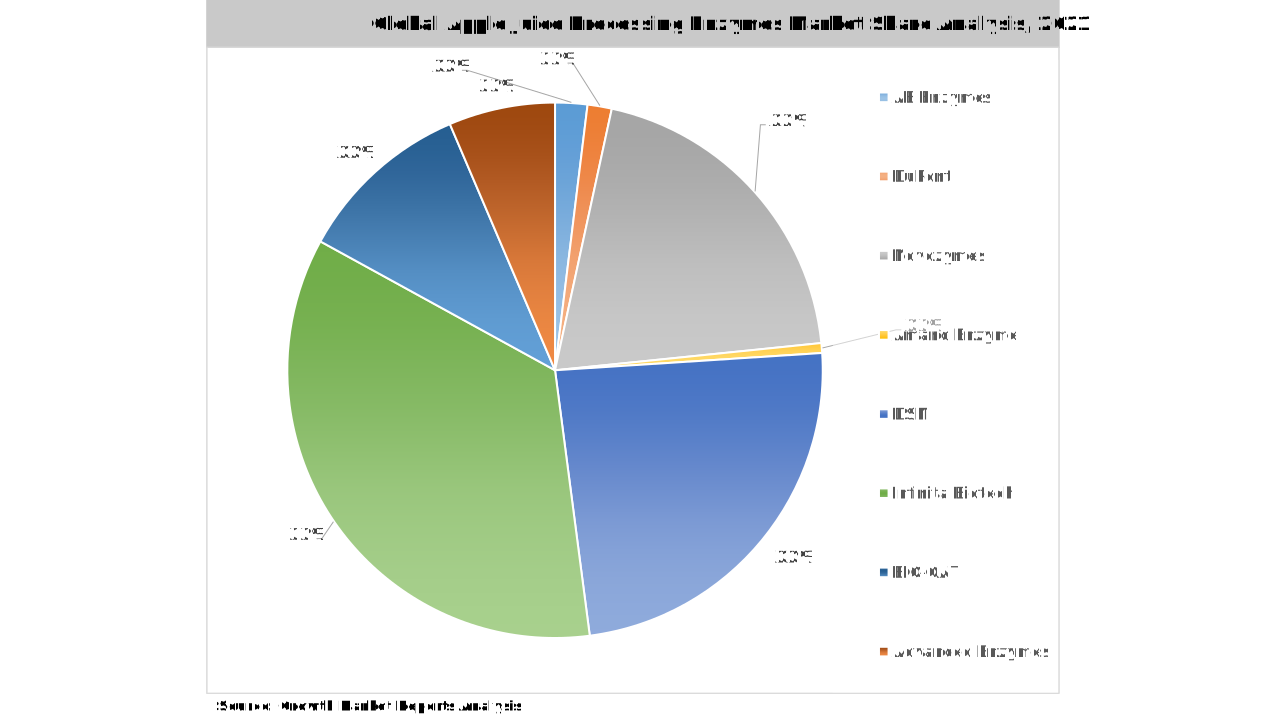

Apple Juice Processing Enzymes Market By Key Players

Frequently Asked Questions

Key players include Novozymes A/S, DuPont (IFF), AB Enzymes, DSM Food Specialties, Amano Enzyme Inc., Advanced Enzyme Technologies, Chr. Hansen Holding A/S, and others.

Major end-users include beverage manufacturers, food processing companies, and small-scale or artisanal juice producers.

Enzymes are available in liquid, powder, and granule forms, each offering different advantages in terms of storage, handling, and application.

Enzymes are sourced from microbial (bacteria, fungi, yeast), plant (e.g., papain, bromelain), and animal origins, with microbial enzymes being the most widely used.

Enzymes are used for clarification, depectinization, juice yield improvement, flavor enhancement, color stabilization, and shelf-life extension.

Asia Pacific is the fastest-growing region, with significant contributions from China and India. North America and Europe also hold substantial market shares due to established beverage industries.

Enzymatic processing optimizes resource utilization, reduces waste, lowers energy consumption, and provides an eco-friendly alternative to mechanical and chemical methods.

Growth is driven by demand for high-quality, clarified juice, process optimization, sustainability, clean-label products, and innovations in enzyme formulations.

Key enzymes include pectinase (breaks down pectin for clarity and yield), cellulase (breaks down cellulose for better extraction), amylase (breaks down starch to prevent haze), and protease (removes proteins causing turbidity).

The global apple juice processing enzymes market reached USD 298.7 million in 2024 and is projected to grow at a CAGR of 6.3%, reaching USD 515.4 million by 2033.

Table Of Content

Chapter 1 Executive Summary
Chapter 2 Assumptions and Acronyms Used
Chapter 3 Research Methodology
Chapter 4 Apple Juice Processing Enzymes Market Overview
   4.1 Introduction
      4.1.1 Market Taxonomy
      4.1.2 Market Definition
      4.1.3 Macro-Economic Factors Impacting the Market Growth
   4.2 Apple Juice Processing Enzymes Market Dynamics
      4.2.1 Market Drivers
      4.2.2 Market Restraints
      4.2.3 Market Opportunity
   4.3 Apple Juice Processing Enzymes Market - Supply Chain Analysis
      4.3.1 List of Key Suppliers
      4.3.2 List of Key Distributors
      4.3.3 List of Key Consumers
   4.4 Key Forces Shaping the Apple Juice Processing Enzymes Market
      4.4.1 Bargaining Power of Suppliers
      4.4.2 Bargaining Power of Buyers
      4.4.3 Threat of Substitution
      4.4.4 Threat of New Entrants
      4.4.5 Competitive Rivalry
   4.5 Global Apple Juice Processing Enzymes Market Size & Forecast, 2023-2032
      4.5.1 Apple Juice Processing Enzymes Market Size and Y-o-Y Growth
      4.5.2 Apple Juice Processing Enzymes Market Absolute $ Opportunity

Chapter 5 Global Apple Juice Processing Enzymes Market Analysis and Forecast By Product Type
   5.1 Introduction
      5.1.1 Key Market Trends & Growth Opportunities By Product Type
      5.1.2 Basis Point Share (BPS) Analysis By Product Type
      5.1.3 Absolute $ Opportunity Assessment By Product Type
   5.2 Apple Juice Processing Enzymes Market Size Forecast By Product Type
      5.2.1 Pectinase
      5.2.2 Cellulase
      5.2.3 Amylase
      5.2.4 Protease
      5.2.5 Others
   5.3 Market Attractiveness Analysis By Product Type

Chapter 6 Global Apple Juice Processing Enzymes Market Analysis and Forecast By Application
   6.1 Introduction
      6.1.1 Key Market Trends & Growth Opportunities By Application
      6.1.2 Basis Point Share (BPS) Analysis By Application
      6.1.3 Absolute $ Opportunity Assessment By Application
   6.2 Apple Juice Processing Enzymes Market Size Forecast By Application
      6.2.1 Clarification
      6.2.2 Depectinization
      6.2.3 Juice Yield Improvement
      6.2.4 Others
   6.3 Market Attractiveness Analysis By Application

Chapter 7 Global Apple Juice Processing Enzymes Market Analysis and Forecast By Source
   7.1 Introduction
      7.1.1 Key Market Trends & Growth Opportunities By Source
      7.1.2 Basis Point Share (BPS) Analysis By Source
      7.1.3 Absolute $ Opportunity Assessment By Source
   7.2 Apple Juice Processing Enzymes Market Size Forecast By Source
      7.2.1 Microbial
      7.2.2 Plant
      7.2.3 Animal
   7.3 Market Attractiveness Analysis By Source

Chapter 8 Global Apple Juice Processing Enzymes Market Analysis and Forecast By Form
   8.1 Introduction
      8.1.1 Key Market Trends & Growth Opportunities By Form
      8.1.2 Basis Point Share (BPS) Analysis By Form
      8.1.3 Absolute $ Opportunity Assessment By Form
   8.2 Apple Juice Processing Enzymes Market Size Forecast By Form
      8.2.1 Liquid
      8.2.2 Powder
      8.2.3 Granules
   8.3 Market Attractiveness Analysis By Form

Chapter 9 Global Apple Juice Processing Enzymes Market Analysis and Forecast By End-User
   9.1 Introduction
      9.1.1 Key Market Trends & Growth Opportunities By End-User
      9.1.2 Basis Point Share (BPS) Analysis By End-User
      9.1.3 Absolute $ Opportunity Assessment By End-User
   9.2 Apple Juice Processing Enzymes Market Size Forecast By End-User
      9.2.1 Beverage Manufacturers
      9.2.2 Food Processing Companies
      9.2.3 Others
   9.3 Market Attractiveness Analysis By End-User

Chapter 10 Global Apple Juice Processing Enzymes Market Analysis and Forecast by Region
   10.1 Introduction
      10.1.1 Key Market Trends & Growth Opportunities By Region
      10.1.2 Basis Point Share (BPS) Analysis By Region
      10.1.3 Absolute $ Opportunity Assessment By Region
   10.2 Apple Juice Processing Enzymes Market Size Forecast By Region
      10.2.1 North America
      10.2.2 Europe
      10.2.3 Asia Pacific
      10.2.4 Latin America
      10.2.5 Middle East & Africa (MEA)
   10.3 Market Attractiveness Analysis By Region

Chapter 11 Coronavirus Disease (COVID-19) Impact 
   11.1 Introduction 
   11.2 Current & Future Impact Analysis 
   11.3 Economic Impact Analysis 
   11.4 Government Policies 
   11.5 Investment Scenario

Chapter 12 North America Apple Juice Processing Enzymes Analysis and Forecast
   12.1 Introduction
   12.2 North America Apple Juice Processing Enzymes Market Size Forecast by Country
      12.2.1 U.S.
      12.2.2 Canada
   12.3 Basis Point Share (BPS) Analysis by Country
   12.4 Absolute $ Opportunity Assessment by Country
   12.5 Market Attractiveness Analysis by Country
   12.6 North America Apple Juice Processing Enzymes Market Size Forecast By Product Type
      12.6.1 Pectinase
      12.6.2 Cellulase
      12.6.3 Amylase
      12.6.4 Protease
      12.6.5 Others
   12.7 Basis Point Share (BPS) Analysis By Product Type 
   12.8 Absolute $ Opportunity Assessment By Product Type 
   12.9 Market Attractiveness Analysis By Product Type
   12.10 North America Apple Juice Processing Enzymes Market Size Forecast By Application
      12.10.1 Clarification
      12.10.2 Depectinization
      12.10.3 Juice Yield Improvement
      12.10.4 Others
   12.11 Basis Point Share (BPS) Analysis By Application 
   12.12 Absolute $ Opportunity Assessment By Application 
   12.13 Market Attractiveness Analysis By Application
   12.14 North America Apple Juice Processing Enzymes Market Size Forecast By Source
      12.14.1 Microbial
      12.14.2 Plant
      12.14.3 Animal
   12.15 Basis Point Share (BPS) Analysis By Source 
   12.16 Absolute $ Opportunity Assessment By Source 
   12.17 Market Attractiveness Analysis By Source
   12.18 North America Apple Juice Processing Enzymes Market Size Forecast By Form
      12.18.1 Liquid
      12.18.2 Powder
      12.18.3 Granules
   12.19 Basis Point Share (BPS) Analysis By Form 
   12.20 Absolute $ Opportunity Assessment By Form 
   12.21 Market Attractiveness Analysis By Form
   12.22 North America Apple Juice Processing Enzymes Market Size Forecast By End-User
      12.22.1 Beverage Manufacturers
      12.22.2 Food Processing Companies
      12.22.3 Others
   12.23 Basis Point Share (BPS) Analysis By End-User 
   12.24 Absolute $ Opportunity Assessment By End-User 
   12.25 Market Attractiveness Analysis By End-User

Chapter 13 Europe Apple Juice Processing Enzymes Analysis and Forecast
   13.1 Introduction
   13.2 Europe Apple Juice Processing Enzymes Market Size Forecast by Country
      13.2.1 Germany
      13.2.2 France
      13.2.3 Italy
      13.2.4 U.K.
      13.2.5 Spain
      13.2.6 Russia
      13.2.7 Rest of Europe
   13.3 Basis Point Share (BPS) Analysis by Country
   13.4 Absolute $ Opportunity Assessment by Country
   13.5 Market Attractiveness Analysis by Country
   13.6 Europe Apple Juice Processing Enzymes Market Size Forecast By Product Type
      13.6.1 Pectinase
      13.6.2 Cellulase
      13.6.3 Amylase
      13.6.4 Protease
      13.6.5 Others
   13.7 Basis Point Share (BPS) Analysis By Product Type 
   13.8 Absolute $ Opportunity Assessment By Product Type 
   13.9 Market Attractiveness Analysis By Product Type
   13.10 Europe Apple Juice Processing Enzymes Market Size Forecast By Application
      13.10.1 Clarification
      13.10.2 Depectinization
      13.10.3 Juice Yield Improvement
      13.10.4 Others
   13.11 Basis Point Share (BPS) Analysis By Application 
   13.12 Absolute $ Opportunity Assessment By Application 
   13.13 Market Attractiveness Analysis By Application
   13.14 Europe Apple Juice Processing Enzymes Market Size Forecast By Source
      13.14.1 Microbial
      13.14.2 Plant
      13.14.3 Animal
   13.15 Basis Point Share (BPS) Analysis By Source 
   13.16 Absolute $ Opportunity Assessment By Source 
   13.17 Market Attractiveness Analysis By Source
   13.18 Europe Apple Juice Processing Enzymes Market Size Forecast By Form
      13.18.1 Liquid
      13.18.2 Powder
      13.18.3 Granules
   13.19 Basis Point Share (BPS) Analysis By Form 
   13.20 Absolute $ Opportunity Assessment By Form 
   13.21 Market Attractiveness Analysis By Form
   13.22 Europe Apple Juice Processing Enzymes Market Size Forecast By End-User
      13.22.1 Beverage Manufacturers
      13.22.2 Food Processing Companies
      13.22.3 Others
   13.23 Basis Point Share (BPS) Analysis By End-User 
   13.24 Absolute $ Opportunity Assessment By End-User 
   13.25 Market Attractiveness Analysis By End-User

Chapter 14 Asia Pacific Apple Juice Processing Enzymes Analysis and Forecast
   14.1 Introduction
   14.2 Asia Pacific Apple Juice Processing Enzymes Market Size Forecast by Country
      14.2.1 China
      14.2.2 Japan
      14.2.3 South Korea
      14.2.4 India
      14.2.5 Australia
      14.2.6 South East Asia (SEA)
      14.2.7 Rest of Asia Pacific (APAC)
   14.3 Basis Point Share (BPS) Analysis by Country
   14.4 Absolute $ Opportunity Assessment by Country
   14.5 Market Attractiveness Analysis by Country
   14.6 Asia Pacific Apple Juice Processing Enzymes Market Size Forecast By Product Type
      14.6.1 Pectinase
      14.6.2 Cellulase
      14.6.3 Amylase
      14.6.4 Protease
      14.6.5 Others
   14.7 Basis Point Share (BPS) Analysis By Product Type 
   14.8 Absolute $ Opportunity Assessment By Product Type 
   14.9 Market Attractiveness Analysis By Product Type
   14.10 Asia Pacific Apple Juice Processing Enzymes Market Size Forecast By Application
      14.10.1 Clarification
      14.10.2 Depectinization
      14.10.3 Juice Yield Improvement
      14.10.4 Others
   14.11 Basis Point Share (BPS) Analysis By Application 
   14.12 Absolute $ Opportunity Assessment By Application 
   14.13 Market Attractiveness Analysis By Application
   14.14 Asia Pacific Apple Juice Processing Enzymes Market Size Forecast By Source
      14.14.1 Microbial
      14.14.2 Plant
      14.14.3 Animal
   14.15 Basis Point Share (BPS) Analysis By Source 
   14.16 Absolute $ Opportunity Assessment By Source 
   14.17 Market Attractiveness Analysis By Source
   14.18 Asia Pacific Apple Juice Processing Enzymes Market Size Forecast By Form
      14.18.1 Liquid
      14.18.2 Powder
      14.18.3 Granules
   14.19 Basis Point Share (BPS) Analysis By Form 
   14.20 Absolute $ Opportunity Assessment By Form 
   14.21 Market Attractiveness Analysis By Form
   14.22 Asia Pacific Apple Juice Processing Enzymes Market Size Forecast By End-User
      14.22.1 Beverage Manufacturers
      14.22.2 Food Processing Companies
      14.22.3 Others
   14.23 Basis Point Share (BPS) Analysis By End-User 
   14.24 Absolute $ Opportunity Assessment By End-User 
   14.25 Market Attractiveness Analysis By End-User

Chapter 15 Latin America Apple Juice Processing Enzymes Analysis and Forecast
   15.1 Introduction
   15.2 Latin America Apple Juice Processing Enzymes Market Size Forecast by Country
      15.2.1 Brazil
      15.2.2 Mexico
      15.2.3 Rest of Latin America (LATAM)
   15.3 Basis Point Share (BPS) Analysis by Country
   15.4 Absolute $ Opportunity Assessment by Country
   15.5 Market Attractiveness Analysis by Country
   15.6 Latin America Apple Juice Processing Enzymes Market Size Forecast By Product Type
      15.6.1 Pectinase
      15.6.2 Cellulase
      15.6.3 Amylase
      15.6.4 Protease
      15.6.5 Others
   15.7 Basis Point Share (BPS) Analysis By Product Type 
   15.8 Absolute $ Opportunity Assessment By Product Type 
   15.9 Market Attractiveness Analysis By Product Type
   15.10 Latin America Apple Juice Processing Enzymes Market Size Forecast By Application
      15.10.1 Clarification
      15.10.2 Depectinization
      15.10.3 Juice Yield Improvement
      15.10.4 Others
   15.11 Basis Point Share (BPS) Analysis By Application 
   15.12 Absolute $ Opportunity Assessment By Application 
   15.13 Market Attractiveness Analysis By Application
   15.14 Latin America Apple Juice Processing Enzymes Market Size Forecast By Source
      15.14.1 Microbial
      15.14.2 Plant
      15.14.3 Animal
   15.15 Basis Point Share (BPS) Analysis By Source 
   15.16 Absolute $ Opportunity Assessment By Source 
   15.17 Market Attractiveness Analysis By Source
   15.18 Latin America Apple Juice Processing Enzymes Market Size Forecast By Form
      15.18.1 Liquid
      15.18.2 Powder
      15.18.3 Granules
   15.19 Basis Point Share (BPS) Analysis By Form 
   15.20 Absolute $ Opportunity Assessment By Form 
   15.21 Market Attractiveness Analysis By Form
   15.22 Latin America Apple Juice Processing Enzymes Market Size Forecast By End-User
      15.22.1 Beverage Manufacturers
      15.22.2 Food Processing Companies
      15.22.3 Others
   15.23 Basis Point Share (BPS) Analysis By End-User 
   15.24 Absolute $ Opportunity Assessment By End-User 
   15.25 Market Attractiveness Analysis By End-User

Chapter 16 Middle East & Africa (MEA) Apple Juice Processing Enzymes Analysis and Forecast
   16.1 Introduction
   16.2 Middle East & Africa (MEA) Apple Juice Processing Enzymes Market Size Forecast by Country
      16.2.1 Saudi Arabia
      16.2.2 South Africa
      16.2.3 UAE
      16.2.4 Rest of Middle East & Africa (MEA)
   16.3 Basis Point Share (BPS) Analysis by Country
   16.4 Absolute $ Opportunity Assessment by Country
   16.5 Market Attractiveness Analysis by Country
   16.6 Middle East & Africa (MEA) Apple Juice Processing Enzymes Market Size Forecast By Product Type
      16.6.1 Pectinase
      16.6.2 Cellulase
      16.6.3 Amylase
      16.6.4 Protease
      16.6.5 Others
   16.7 Basis Point Share (BPS) Analysis By Product Type 
   16.8 Absolute $ Opportunity Assessment By Product Type 
   16.9 Market Attractiveness Analysis By Product Type
   16.10 Middle East & Africa (MEA) Apple Juice Processing Enzymes Market Size Forecast By Application
      16.10.1 Clarification
      16.10.2 Depectinization
      16.10.3 Juice Yield Improvement
      16.10.4 Others
   16.11 Basis Point Share (BPS) Analysis By Application 
   16.12 Absolute $ Opportunity Assessment By Application 
   16.13 Market Attractiveness Analysis By Application
   16.14 Middle East & Africa (MEA) Apple Juice Processing Enzymes Market Size Forecast By Source
      16.14.1 Microbial
      16.14.2 Plant
      16.14.3 Animal
   16.15 Basis Point Share (BPS) Analysis By Source 
   16.16 Absolute $ Opportunity Assessment By Source 
   16.17 Market Attractiveness Analysis By Source
   16.18 Middle East & Africa (MEA) Apple Juice Processing Enzymes Market Size Forecast By Form
      16.18.1 Liquid
      16.18.2 Powder
      16.18.3 Granules
   16.19 Basis Point Share (BPS) Analysis By Form 
   16.20 Absolute $ Opportunity Assessment By Form 
   16.21 Market Attractiveness Analysis By Form
   16.22 Middle East & Africa (MEA) Apple Juice Processing Enzymes Market Size Forecast By End-User
      16.22.1 Beverage Manufacturers
      16.22.2 Food Processing Companies
      16.22.3 Others
   16.23 Basis Point Share (BPS) Analysis By End-User 
   16.24 Absolute $ Opportunity Assessment By End-User 
   16.25 Market Attractiveness Analysis By End-User

Chapter 17 Competition Landscape 
   17.1 Apple Juice Processing Enzymes Market: Competitive Dashboard
   17.2 Global Apple Juice Processing Enzymes Market: Market Share Analysis, 2023
   17.3 Company Profiles (Details – Overview, Financials, Developments, Strategy) 
      17.3.1 Novozymes
DuPont (IFF)
AB Enzymes
DSM Food Specialties
Amano Enzyme Inc.
Advanced Enzyme Technologies
Enzyme Development Corporation
Biocatalysts Ltd.
SternEnzym GmbH & Co. KG
Jiangsu Boli Bioproducts Co., Ltd.
Vland Biotech Group
Sunson Industry Group Co., Ltd.
Shandong Longda Bio-Products Co., Ltd.
Zhongda Hengyuan Biotechnology
BASF SE
Chr. Hansen Holding A/S
Kerry Group
Enmex S.A. de C.V.
Nagase & Co., Ltd.
Aumgene Biosciences Pvt Ltd

Methodology

Our Clients

General Electric
sinopec
Siemens Healthcare
General Mills
Microsoft
Nestle SA
Dassault Aviation
Honda Motor Co. Ltd.