Fresh Compressed Yeast Market Research Report 2033

Fresh Compressed Yeast Market Research Report 2033

Segments - by Product Type (Baker’s Yeast, Brewer’s Yeast, Nutritional Yeast, Others), by Application (Bakery, Brewery, Food Processing, Animal Feed, Others), by Distribution Channel (Direct Sales, Supermarkets/Hypermarkets, Specialty Stores, Online Retail, Others), by End-User (Commercial, Industrial, Household)

https://growthmarketreports.com/Anuradha
Author : Anuradha B. More
https://growthmarketreports.com/Vaibhav
Fact-checked by : Vaibhav Chandola
https://growthmarketreports.com/Shruti
Editor : Shruti Bhat

Upcoming | Report ID :FB-638 | 4.9 Rating | 43 Reviews | 263 Pages | Format : Docx PDF

Report Description


Fresh Compressed Yeast Market Outlook

According to our latest research, the global fresh compressed yeast market size reached USD 4.2 billion in 2024, with a robust year-on-year growth rate. The market is experiencing a notable CAGR of 5.1% from 2025 to 2033, driven by rising demand across bakery, brewery, and food processing industries. By 2033, the market is projected to attain a value of USD 6.6 billion, reflecting strong momentum supported by evolving consumer preferences and the expansion of commercial baking operations worldwide.

The growth of the fresh compressed yeast market is fundamentally shaped by the increasing consumption of bakery products globally. Urbanization, changing dietary habits, and the proliferation of fast-food chains have significantly contributed to the surge in demand for fresh compressed yeast, particularly in emerging economies. The convenience and versatility of yeast as a leavening agent make it indispensable in the production of bread, pastries, and other baked goods, further fueling market expansion. Additionally, the growing trend toward artisanal and specialty bakery products, which rely heavily on high-quality yeast for flavor and texture, has prompted bakeries and food manufacturers to seek reliable sources of fresh compressed yeast, thereby stimulating market growth.

Another critical factor propelling the fresh compressed yeast market is the burgeoning craft beer and brewery sector. Breweries, both large and small, increasingly utilize fresh compressed yeast due to its efficacy in fermentation and ability to impart unique flavor profiles to beverages. The shift toward premium and craft beers, especially in North America and Europe, has created new avenues for yeast manufacturers to innovate and cater to specialized requirements. Moreover, as consumers become more health-conscious, the nutritional benefits of yeast—such as its rich vitamin B content and probiotic properties—are drawing attention, leading to its application in nutritional supplements and functional foods, thus expanding the market’s scope beyond traditional uses.

Technological advancements in yeast production and storage have also played a pivotal role in shaping the market. Innovations in fermentation technology, packaging, and cold-chain logistics have improved the shelf life and quality of fresh compressed yeast, enabling manufacturers to meet the stringent requirements of industrial and commercial end-users. Furthermore, the adoption of sustainable and organic production methods aligns with the growing consumer demand for clean-label and eco-friendly products. These advancements not only enhance product quality but also facilitate market penetration in regions with limited infrastructure, thereby broadening the marketÂ’s reach and potential.

Regionally, Asia Pacific has emerged as the fastest-growing market for fresh compressed yeast, buoyed by rapid industrialization, population growth, and increasing disposable incomes. Countries like China and India are witnessing a surge in bakery and brewery establishments, translating to heightened demand for yeast products. Meanwhile, Europe remains a dominant player due to its well-established bakery and brewing traditions, while North America continues to show steady growth backed by innovation and premium product demand. Latin America and the Middle East & Africa are also contributing to market expansion, albeit at a moderate pace, as urbanization and westernized dietary patterns gain traction in these regions.

In addition to fresh compressed yeast, dry yeast has emerged as a popular alternative in various culinary applications. Known for its extended shelf life and ease of storage, dry yeast is favored by both home bakers and large-scale food producers. Its convenience lies in its ability to be stored at room temperature and activated quickly when needed, making it an ideal choice for those who bake less frequently or have limited refrigeration space. The versatility of dry yeast extends beyond traditional baking, as it is also utilized in the production of pizza dough, pastries, and even some types of fermented beverages. As the demand for convenient and reliable baking ingredients continues to rise, dry yeast is expected to maintain its position as a staple in kitchens around the world.

Global Fresh Compressed Yeast Industry Outlook

Product Type Analysis

The fresh compressed yeast market is segmented by product type into BakerÂ’s Yeast, BrewerÂ’s Yeast, Nutritional Yeast, and Others. BakerÂ’s yeast remains the cornerstone of the market, accounting for a significant share due to its widespread use in bread and bakery product manufacturing. The increasing popularity of fresh, artisanal, and specialty breads, especially in urban centers, has intensified the demand for high-quality bakerÂ’s yeast. This segment benefits from the ongoing shift toward home baking and the proliferation of bakery outlets in emerging economies, which rely on fresh compressed yeast for its superior leavening properties and ability to impart desirable texture and flavor.

BrewerÂ’s yeast is another pivotal segment, driven by the expansion of the global brewery industry and the rise of craft beer culture. Breweries require specific strains of yeast to achieve unique fermentation profiles, and fresh compressed yeast is favored for its purity and consistent performance. As consumers gravitate toward premium and craft beers with distinct taste profiles, breweries are investing in advanced yeast technologies and sourcing fresh compressed yeast to maintain quality standards. This segment is further supported by collaborations between yeast producers and breweries, fostering innovation and the development of customized yeast blends tailored to specific brewing requirements.

Nutritional yeast is gaining traction as a functional food ingredient, particularly among health-conscious consumers and those adhering to vegan or vegetarian diets. Rich in proteins, vitamins, and minerals, nutritional yeast is increasingly used in dietary supplements, snacks, and fortified foods. This segmentÂ’s growth is underpinned by rising awareness about the health benefits of yeast, such as its role in supporting immune function and providing essential nutrients. Manufacturers are leveraging this trend by introducing fortified and flavored yeast products, expanding their reach to new consumer segments and applications beyond traditional food processing.

The “Others” category encompasses specialty yeasts used in animal feed, biofuel production, and various industrial applications. The demand for yeast in animal nutrition is rising, particularly in poultry and aquaculture sectors, where it serves as a protein source and probiotic additive. Additionally, ongoing research into the use of yeast in bioenergy and biotechnological processes is opening new growth avenues, albeit at a nascent stage. As industries continue to explore the multifaceted applications of yeast, the market is poised for further diversification, with product innovation at the forefront of segment expansion.

Report Scope

Attributes Details
Report Title Fresh Compressed Yeast Market Research Report 2033
By Product Type BakerÂ’s Yeast, BrewerÂ’s Yeast, Nutritional Yeast, Others
By Application Bakery, Brewery, Food Processing, Animal Feed, Others
By Distribution Channel Direct Sales, Supermarkets/Hypermarkets, Specialty Stores, Online Retail, Others
By End-User Commercial, Industrial, Household
Regions Covered North America, Europe, APAC, Latin America, MEA
Base Year 2024
Historic Data 2018-2023
Forecast Period 2025-2033
Number of Pages 263
Number of Tables & Figures 283
Customization Available Yes, the report can be customized as per your need.

Application Analysis

The application segment of the fresh compressed yeast market is dominated by the Bakery sector, which accounts for the largest share owing to the essential role of yeast in bread and pastry production. The global bakery industry is experiencing a renaissance, with consumers seeking fresh, high-quality, and innovative baked goods. This trend is particularly pronounced in urban areas, where busy lifestyles and rising incomes drive demand for convenient and nutritious food options. Bakeries, both large-scale and artisanal, rely heavily on fresh compressed yeast for its rapid fermentation and consistent leavening capabilities, making it a staple ingredient in the production process.

Yeast, in its various forms, plays a crucial role in both traditional and modern food production. As a living microorganism, yeast is responsible for the fermentation process that is essential in the creation of bread, beer, and numerous other products. The adaptability of yeast to different environmental conditions and its ability to produce carbon dioxide and alcohol make it indispensable in the culinary world. Beyond its culinary uses, yeast is also being explored for its potential health benefits, including its role in supporting gut health and providing essential nutrients such as B vitamins and proteins. As research continues to uncover new applications and benefits of yeast, its importance in both the food industry and health sectors is likely to grow.

The Brewery segment is witnessing robust growth, fueled by the proliferation of microbreweries, craft beer establishments, and the resurgence of traditional brewing methods. Fresh compressed yeast is prized for its ability to produce distinctive flavors and aromas, critical to the identity of various beer styles. The segmentÂ’s expansion is closely linked to consumer preferences for unique, locally brewed beers and the willingness of breweries to experiment with novel yeast strains. As the global beer market becomes more fragmented and competitive, breweries are increasingly investing in yeast research and development to differentiate their products and cater to evolving tastes.

In the Food Processing sector, fresh compressed yeast is utilized in the production of a wide array of processed foods, including ready-to-eat meals, snacks, and convenience products. The growing demand for processed and packaged foods, particularly in urban and semi-urban areas, has led food manufacturers to incorporate yeast for its functional properties, such as flavor enhancement, texturization, and nutritional fortification. This segment is also benefiting from the trend toward clean-label and natural ingredients, with consumers seeking minimally processed foods that retain their nutritional value and sensory appeal.

The Animal Feed application is emerging as a significant growth area, driven by the need for sustainable and nutritious feed solutions in the livestock and aquaculture industries. Yeast-based feed additives are valued for their protein content, probiotic effects, and ability to enhance animal health and productivity. As global meat and dairy consumption rises, producers are increasingly adopting yeast-enriched feeds to improve animal performance and meet stringent food safety standards. This segment is expected to witness steady growth as the benefits of yeast in animal nutrition become more widely recognized and adopted.

Distribution Channel Analysis

The distribution landscape for fresh compressed yeast is highly dynamic, with Direct Sales channels accounting for a substantial portion of the market, particularly among large-scale commercial and industrial buyers. Direct sales offer manufacturers greater control over pricing, quality, and delivery schedules, ensuring a reliable supply chain for high-volume customers such as bakeries, breweries, and food processors. This channel is also favored for its ability to facilitate customized solutions and technical support, which are critical in industries where product consistency and performance are paramount.

Supermarkets and Hypermarkets represent another significant distribution channel, catering primarily to household and small-scale commercial consumers. The growing penetration of modern retail formats, especially in urban and suburban areas, has made fresh compressed yeast more accessible to a broader consumer base. Supermarkets and hypermarkets offer the advantage of convenience, product variety, and competitive pricing, driving impulse purchases and brand visibility. This channel is particularly important in regions where home baking and small-scale food businesses are on the rise.

Specialty Stores play a crucial role in the distribution of premium and artisanal yeast products. These outlets cater to niche markets, including gourmet bakeries, craft breweries, and health food stores, where consumers seek high-quality, specialty yeast varieties. Specialty stores often provide personalized service, product education, and exclusive offerings, making them a preferred choice for discerning customers. The growth of the specialty retail segment is closely linked to trends in artisanal baking, craft brewing, and health-conscious consumption.

Online Retail is rapidly gaining traction as a distribution channel for fresh compressed yeast, driven by the convenience of e-commerce and the increasing digitalization of the food supply chain. Online platforms enable manufacturers to reach a wider audience, offer direct-to-consumer sales, and provide detailed product information and reviews. The COVID-19 pandemic accelerated the adoption of online grocery shopping, a trend that is expected to persist as consumers prioritize safety, convenience, and home delivery options. Online retail also facilitates the introduction of new and innovative yeast products, enabling brands to test market acceptance and gather consumer feedback in real time.

End-User Analysis

The Commercial end-user segment constitutes a major share of the fresh compressed yeast market, encompassing bakeries, restaurants, hotels, and catering services. These establishments rely on fresh compressed yeast for its rapid fermentation, consistent quality, and ability to produce a wide range of baked and fermented products. The commercial segment is buoyed by the ongoing expansion of the foodservice industry, rising consumer demand for fresh and artisanal foods, and the increasing popularity of out-of-home dining experiences. As competition intensifies, commercial users are seeking high-performance yeast solutions that deliver superior results and support menu innovation.

The Industrial end-user segment includes large-scale food manufacturers, breweries, and animal feed producers who require bulk quantities of fresh compressed yeast for continuous production processes. Industrial users prioritize product consistency, supply chain reliability, and technical support, driving demand for customized yeast solutions and integrated logistics services. The segmentÂ’s growth is underpinned by the globalization of food and beverage supply chains, the rise of contract manufacturing, and the adoption of advanced production technologies. As industrial users seek to optimize efficiency and reduce costs, partnerships with yeast suppliers are becoming increasingly strategic and collaborative.

The Household end-user segment, while smaller in comparison, is experiencing steady growth due to the resurgence of home baking and cooking. The COVID-19 pandemic sparked a renewed interest in home-based culinary activities, leading to increased purchases of fresh compressed yeast for bread, pizza, and other homemade delicacies. This trend is supported by the availability of yeast in supermarkets, specialty stores, and online platforms, making it accessible to a wider audience. As consumers continue to experiment with new recipes and prioritize fresh, homemade foods, the household segment is expected to maintain its upward trajectory.

Overall, the end-user landscape for fresh compressed yeast is characterized by a diverse and evolving customer base, each with distinct requirements and preferences. Manufacturers are responding by offering tailored solutions, flexible packaging, and value-added services to capture opportunities across commercial, industrial, and household segments. This customer-centric approach is essential for sustaining growth and maintaining competitiveness in a dynamic and rapidly changing market environment.

Opportunities & Threats

The fresh compressed yeast market is poised for significant opportunities, particularly in the context of emerging markets and technological innovation. Rapid urbanization, rising incomes, and changing dietary patterns in Asia Pacific, Latin America, and Africa are creating new demand centers for yeast products. The expansion of the bakery and brewery sectors in these regions presents lucrative opportunities for manufacturers to establish local production facilities, develop region-specific yeast strains, and forge strategic partnerships with local players. Additionally, advancements in biotechnology and fermentation science are enabling the development of novel yeast products with enhanced nutritional, functional, and sensory properties, opening new avenues for product differentiation and market expansion.

Another major opportunity lies in the growing consumer preference for clean-label, organic, and sustainably produced food ingredients. As health and environmental awareness increases, consumers are seeking yeast products that are free from artificial additives, genetically modified organisms, and chemical preservatives. This trend is driving the adoption of organic and non-GMO yeast varieties, as well as the implementation of sustainable production practices across the supply chain. Manufacturers that can demonstrate a commitment to quality, transparency, and sustainability are well-positioned to capture premium market segments and build long-term brand loyalty.

Despite the positive outlook, the fresh compressed yeast market faces several restraining factors, chief among them being the challenges associated with storage, transportation, and shelf life. Fresh compressed yeast is highly perishable and requires stringent temperature control throughout the supply chain to maintain its viability and effectiveness. Inadequate cold-chain infrastructure, particularly in developing regions, can lead to product spoilage, increased wastage, and higher operational costs. Additionally, fluctuations in raw material prices, regulatory compliance requirements, and the threat of substitutes such as dry yeast and chemical leavening agents pose ongoing challenges for market participants. Addressing these constraints will require continued investment in logistics, research, and quality assurance to ensure the consistent delivery of high-quality yeast products to end-users worldwide.

Regional Outlook

The regional distribution of the fresh compressed yeast market reveals a dynamic landscape with distinct growth patterns and opportunities. Asia Pacific leads the market with a share of USD 1.5 billion in 2024, driven by rapid industrialization, urbanization, and the expansion of bakery and brewery sectors in countries like China, India, and Southeast Asia. The region is expected to maintain a CAGR of 6.2% through 2033, outpacing global growth rates due to rising disposable incomes, changing dietary habits, and increasing investments in food processing infrastructure. Local and international yeast manufacturers are capitalizing on this momentum by establishing production facilities, developing region-specific products, and forging partnerships with local players to enhance market penetration.

Europe remains a dominant player in the fresh compressed yeast market, with a market size of USD 1.2 billion in 2024. The regionÂ’s well-established bakery and brewing traditions, coupled with a strong focus on quality and innovation, continue to drive demand for fresh compressed yeast. European consumers are increasingly seeking artisanal and specialty bakery products, which rely on high-quality yeast for superior flavor and texture. The presence of leading yeast manufacturers, robust supply chains, and a supportive regulatory environment further bolster the regionÂ’s market position. Europe is projected to achieve steady growth, supported by ongoing trends in premiumization and health-conscious consumption.

North America accounts for a significant share of the global market, valued at USD 0.9 billion in 2024. The region is characterized by a mature bakery industry, a thriving craft beer sector, and a growing interest in home baking and cooking. Innovation, product differentiation, and the adoption of clean-label and organic yeast varieties are key drivers of market growth in North America. The region is also witnessing increased investment in research and development, with manufacturers focusing on the development of novel yeast strains and functional food ingredients. North America is expected to maintain a moderate CAGR of 4.5% through 2033, reflecting stable demand and ongoing market evolution.

Fresh Compressed Yeast Market Statistics

Competitor Outlook

The competitive landscape of the fresh compressed yeast market is characterized by the presence of several global and regional players vying for market share through product innovation, strategic partnerships, and expansion into emerging markets. Leading companies are investing heavily in research and development to create differentiated yeast products that cater to the evolving needs of the bakery, brewery, and food processing industries. The emphasis on quality, consistency, and sustainability is shaping competitive strategies, with manufacturers seeking to enhance their value proposition through improved product performance, technical support, and customer service.

Mergers, acquisitions, and strategic alliances are common in the industry, as companies look to expand their geographic footprint, diversify their product portfolios, and access new technologies. The trend toward vertical integration is also evident, with major players investing in upstream production capabilities and downstream distribution networks to strengthen supply chain control and reduce operational risks. In addition, the rise of private-label and specialty yeast brands is intensifying competition, particularly in niche segments such as organic, non-GMO, and artisanal yeast products.

Innovation remains a key differentiator in the fresh compressed yeast market, with companies leveraging advances in biotechnology, fermentation science, and packaging technology to develop new and improved products. The ability to offer customized yeast solutions, tailored to the specific requirements of commercial, industrial, and household users, is increasingly important in winning and retaining customers. Companies are also focusing on sustainability initiatives, such as reducing carbon emissions, optimizing resource use, and adopting eco-friendly packaging, to align with consumer expectations and regulatory requirements.

Some of the major companies in the fresh compressed yeast market include Lesaffre Group, AB Mauri (Associated British Foods plc), Angel Yeast Co., Ltd., Lallemand Inc., and Chr. Hansen Holding A/S. Lesaffre Group is a global leader in yeast and fermentation products, with a strong focus on innovation and sustainability. AB Mauri, a division of Associated British Foods, offers a wide range of yeast and bakery ingredients, serving customers in over 100 countries. Angel Yeast Co., Ltd., based in China, is one of the largest yeast manufacturers in Asia, with a diverse portfolio spanning bakery, brewing, and nutritional yeast products. Lallemand Inc. specializes in yeast and bacteria solutions for baking, brewing, and animal nutrition, while Chr. Hansen Holding A/S is known for its expertise in natural ingredients and microbial solutions.

These companies are continuously expanding their product offerings, investing in state-of-the-art production facilities, and enhancing their global distribution networks to maintain a competitive edge. Strategic collaborations with food manufacturers, breweries, and research institutions are enabling them to stay ahead of market trends and address emerging customer needs. As the fresh compressed yeast market continues to evolve, the ability to innovate, adapt, and deliver value-added solutions will be critical to sustaining growth and leadership in this dynamic industry.

Key Players

  • Lesaffre
  • Angel Yeast
  • AB Mauri
  • Lallemand Inc.
  • Chr. Hansen Holding A/S
  • Kothari Fermentation and Biochem Ltd.
  • Oriental Yeast Co., Ltd.
  • Alltech
  • DSM Food Specialties
  • Bio Springer
  • Kerry Group
  • Pakmaya
  • Ohly
  • Gist-brocades
  • Associated British Foods plc
  • Royal DSM N.V.
  • Bakels Group
  • GoodMills Group
  • Sunkeen
  • Guangdong Atech Biotechnology Co., Ltd.
Fresh Compressed Yeast Market Overview

Segments

The Fresh Compressed Yeast market has been segmented on the basis of

Product Type

  • Baker’s Yeast
  • Brewer’s Yeast
  • Nutritional Yeast
  • Others

Application

  • Bakery
  • Brewery
  • Food Processing
  • Animal Feed
  • Others

Distribution Channel

  • Direct Sales
  • Supermarkets/Hypermarkets
  • Specialty Stores
  • Online Retail
  • Others

End-User

  • Commercial
  • Industrial
  • Household

Competitive Landscape

Key players competing in the global fresh compressed yeast market include AngelYeast Co.Ltd, Lesaffre Yeast Corporation, Associated British Foods plc, Chr. Hansen Holding A/S, and Koninklijke DSM N.V., Other players in this segment include Lallemand Inc., Alltech, Leiber GmbH, Oriental Yeast Co., Ltd, and Synergy Flavors, Kerry Group plc, Sensient Technologies Corporation and others.

Some of these players are using several market strategies such as mergers, acquisitions, partnerships, collaborations, capacity expansion, and product launches to increase/enhance their market shares.
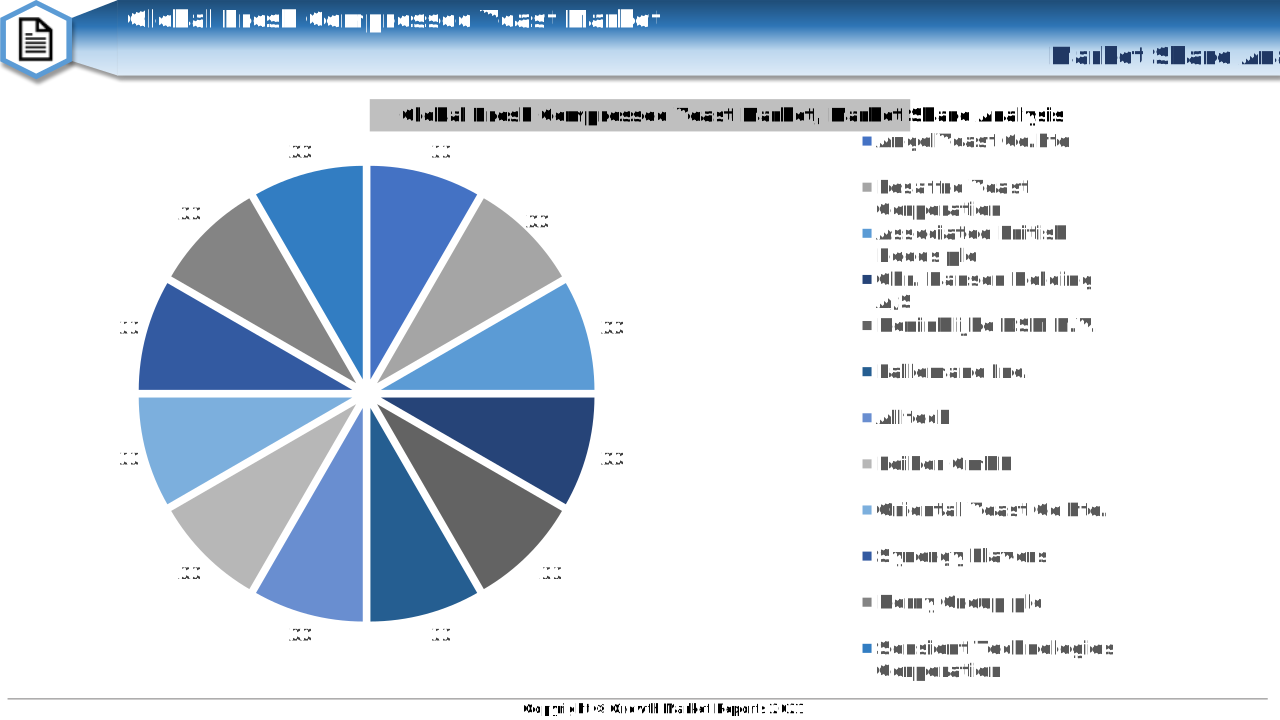
 

Fresh Compressed Yeast Market By Key Players

Frequently Asked Questions

Innovation in fermentation technology, packaging, cold-chain logistics, and biotechnology is improving yeast quality, shelf life, and sustainability. Companies are also developing customized and specialty yeast products to meet diverse industry needs.

Major players include Lesaffre Group, AB Mauri (Associated British Foods plc), Angel Yeast Co., Ltd., Lallemand Inc., Chr. Hansen Holding A/S, Kothari Fermentation and Biochem Ltd., Oriental Yeast Co., Ltd., and others.

Opportunities include growth in emerging markets, technological innovation, and demand for clean-label and organic products. Challenges include perishability, cold-chain logistics, raw material price fluctuations, and competition from substitutes like dry yeast.

End-users include commercial entities (bakeries, restaurants, hotels), industrial users (food manufacturers, breweries, animal feed producers), and households (home bakers and cooks).

Key distribution channels include Direct Sales (for commercial and industrial buyers), Supermarkets/Hypermarkets, Specialty Stores, and Online Retail. Direct sales dominate for large-scale users, while supermarkets and online channels are growing for household and small businesses.

Fresh compressed yeast is mainly used in bakery, brewery, food processing, and animal feed sectors. It is essential for bread and pastry production, craft beer brewing, processed foods, and as a nutritional additive in animal feed.

The market is segmented into Baker’s Yeast, Brewer’s Yeast, Nutritional Yeast, and Others (including specialty yeasts for animal feed and industrial uses). Baker’s yeast holds the largest market share.

Asia Pacific is the fastest-growing region, driven by industrialization and rising disposable incomes, while Europe remains dominant due to its strong bakery and brewing traditions. North America, Latin America, and the Middle East & Africa also contribute to market growth.

Key growth drivers include rising demand in bakery, brewery, and food processing industries, urbanization, changing dietary habits, the popularity of artisanal bakery products, and the expansion of commercial baking operations worldwide.

The global fresh compressed yeast market reached USD 4.2 billion in 2024 and is projected to grow at a CAGR of 5.1% from 2025 to 2033, reaching USD 6.6 billion by 2033.

Table Of Content

Chapter 1 Executive Summary
Chapter 2 Assumptions and Acronyms Used
Chapter 3 Research Methodology
Chapter 4 Fresh Compressed Yeast Market Overview
   4.1 Introduction
      4.1.1 Market Taxonomy
      4.1.2 Market Definition
      4.1.3 Macro-Economic Factors Impacting the Market Growth
   4.2 Fresh Compressed Yeast Market Dynamics
      4.2.1 Market Drivers
      4.2.2 Market Restraints
      4.2.3 Market Opportunity
   4.3 Fresh Compressed Yeast Market - Supply Chain Analysis
      4.3.1 List of Key Suppliers
      4.3.2 List of Key Distributors
      4.3.3 List of Key Consumers
   4.4 Key Forces Shaping the Fresh Compressed Yeast Market
      4.4.1 Bargaining Power of Suppliers
      4.4.2 Bargaining Power of Buyers
      4.4.3 Threat of Substitution
      4.4.4 Threat of New Entrants
      4.4.5 Competitive Rivalry
   4.5 Global Fresh Compressed Yeast Market Size & Forecast, 2023-2032
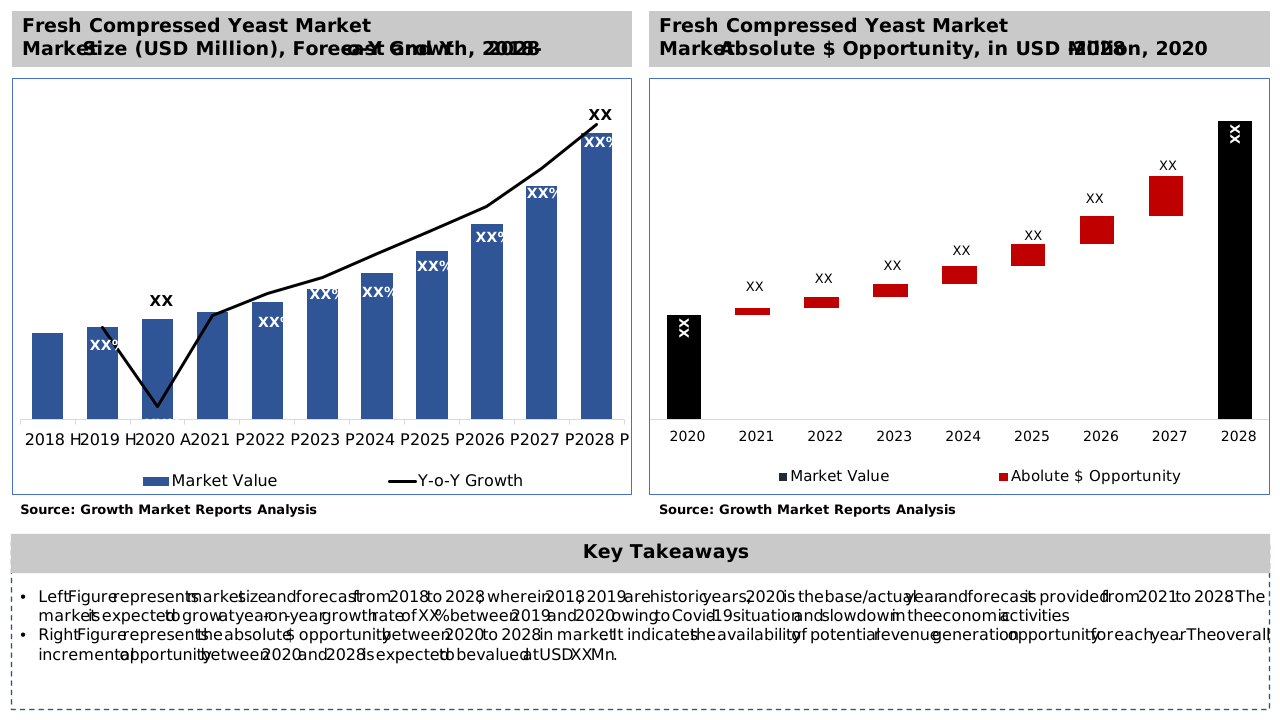
      4.5.1 Fresh Compressed Yeast Market Size and Y-o-Y Growth
      4.5.2 Fresh Compressed Yeast Market Absolute $ Opportunity

Chapter 5 Global Fresh Compressed Yeast Market Analysis and Forecast By Product Type
   5.1 Introduction
      5.1.1 Key Market Trends & Growth Opportunities By Product Type
      5.1.2 Basis Point Share (BPS) Analysis By Product Type
      5.1.3 Absolute $ Opportunity Assessment By Product Type
   5.2 Fresh Compressed Yeast Market Size Forecast By Product Type
      5.2.1 Baker’s Yeast
      5.2.2 Brewer’s Yeast
      5.2.3 Nutritional Yeast
      5.2.4 Others
   5.3 Market Attractiveness Analysis By Product Type

Chapter 6 Global Fresh Compressed Yeast Market Analysis and Forecast By Application
   6.1 Introduction
      6.1.1 Key Market Trends & Growth Opportunities By Application
      6.1.2 Basis Point Share (BPS) Analysis By Application
      6.1.3 Absolute $ Opportunity Assessment By Application
   6.2 Fresh Compressed Yeast Market Size Forecast By Application
      6.2.1 Bakery
      6.2.2 Brewery
      6.2.3 Food Processing
      6.2.4 Animal Feed
      6.2.5 Others
   6.3 Market Attractiveness Analysis By Application

Chapter 7 Global Fresh Compressed Yeast Market Analysis and Forecast By Distribution Channel
   7.1 Introduction
      7.1.1 Key Market Trends & Growth Opportunities By Distribution Channel
      7.1.2 Basis Point Share (BPS) Analysis By Distribution Channel
      7.1.3 Absolute $ Opportunity Assessment By Distribution Channel
   7.2 Fresh Compressed Yeast Market Size Forecast By Distribution Channel
      7.2.1 Direct Sales
      7.2.2 Supermarkets/Hypermarkets
      7.2.3 Specialty Stores
      7.2.4 Online Retail
      7.2.5 Others
   7.3 Market Attractiveness Analysis By Distribution Channel

Chapter 8 Global Fresh Compressed Yeast Market Analysis and Forecast By End-User
   8.1 Introduction
      8.1.1 Key Market Trends & Growth Opportunities By End-User
      8.1.2 Basis Point Share (BPS) Analysis By End-User
      8.1.3 Absolute $ Opportunity Assessment By End-User
   8.2 Fresh Compressed Yeast Market Size Forecast By End-User
      8.2.1 Commercial
      8.2.2 Industrial
      8.2.3 Household
   8.3 Market Attractiveness Analysis By End-User

Chapter 9 Global Fresh Compressed Yeast Market Analysis and Forecast by Region
   9.1 Introduction
      9.1.1 Key Market Trends & Growth Opportunities By Region
      9.1.2 Basis Point Share (BPS) Analysis By Region
      9.1.3 Absolute $ Opportunity Assessment By Region
   9.2 Fresh Compressed Yeast Market Size Forecast By Region
      9.2.1 North America
      9.2.2 Europe
      9.2.3 Asia Pacific
      9.2.4 Latin America
      9.2.5 Middle East & Africa (MEA)
   9.3 Market Attractiveness Analysis By Region

Chapter 10 Coronavirus Disease (COVID-19) Impact 
   10.1 Introduction 
   10.2 Current & Future Impact Analysis 
   10.3 Economic Impact Analysis 
   10.4 Government Policies 
   10.5 Investment Scenario

Chapter 11 North America Fresh Compressed Yeast Analysis and Forecast
   11.1 Introduction
   11.2 North America Fresh Compressed Yeast Market Size Forecast by Country
      11.2.1 U.S.
      11.2.2 Canada
   11.3 Basis Point Share (BPS) Analysis by Country
   11.4 Absolute $ Opportunity Assessment by Country
   11.5 Market Attractiveness Analysis by Country
   11.6 North America Fresh Compressed Yeast Market Size Forecast By Product Type
      11.6.1 Baker’s Yeast
      11.6.2 Brewer’s Yeast
      11.6.3 Nutritional Yeast
      11.6.4 Others
   11.7 Basis Point Share (BPS) Analysis By Product Type 
   11.8 Absolute $ Opportunity Assessment By Product Type 
   11.9 Market Attractiveness Analysis By Product Type
   11.10 North America Fresh Compressed Yeast Market Size Forecast By Application
      11.10.1 Bakery
      11.10.2 Brewery
      11.10.3 Food Processing
      11.10.4 Animal Feed
      11.10.5 Others
   11.11 Basis Point Share (BPS) Analysis By Application 
   11.12 Absolute $ Opportunity Assessment By Application 
   11.13 Market Attractiveness Analysis By Application
   11.14 North America Fresh Compressed Yeast Market Size Forecast By Distribution Channel
      11.14.1 Direct Sales
      11.14.2 Supermarkets/Hypermarkets
      11.14.3 Specialty Stores
      11.14.4 Online Retail
      11.14.5 Others
   11.15 Basis Point Share (BPS) Analysis By Distribution Channel 
   11.16 Absolute $ Opportunity Assessment By Distribution Channel 
   11.17 Market Attractiveness Analysis By Distribution Channel
   11.18 North America Fresh Compressed Yeast Market Size Forecast By End-User
      11.18.1 Commercial
      11.18.2 Industrial
      11.18.3 Household
   11.19 Basis Point Share (BPS) Analysis By End-User 
   11.20 Absolute $ Opportunity Assessment By End-User 
   11.21 Market Attractiveness Analysis By End-User

Chapter 12 Europe Fresh Compressed Yeast Analysis and Forecast
   12.1 Introduction
   12.2 Europe Fresh Compressed Yeast Market Size Forecast by Country
      12.2.1 Germany
      12.2.2 France
      12.2.3 Italy
      12.2.4 U.K.
      12.2.5 Spain
      12.2.6 Russia
      12.2.7 Rest of Europe
   12.3 Basis Point Share (BPS) Analysis by Country
   12.4 Absolute $ Opportunity Assessment by Country
   12.5 Market Attractiveness Analysis by Country
   12.6 Europe Fresh Compressed Yeast Market Size Forecast By Product Type
      12.6.1 Baker’s Yeast
      12.6.2 Brewer’s Yeast
      12.6.3 Nutritional Yeast
      12.6.4 Others
   12.7 Basis Point Share (BPS) Analysis By Product Type 
   12.8 Absolute $ Opportunity Assessment By Product Type 
   12.9 Market Attractiveness Analysis By Product Type
   12.10 Europe Fresh Compressed Yeast Market Size Forecast By Application
      12.10.1 Bakery
      12.10.2 Brewery
      12.10.3 Food Processing
      12.10.4 Animal Feed
      12.10.5 Others
   12.11 Basis Point Share (BPS) Analysis By Application 
   12.12 Absolute $ Opportunity Assessment By Application 
   12.13 Market Attractiveness Analysis By Application
   12.14 Europe Fresh Compressed Yeast Market Size Forecast By Distribution Channel
      12.14.1 Direct Sales
      12.14.2 Supermarkets/Hypermarkets
      12.14.3 Specialty Stores
      12.14.4 Online Retail
      12.14.5 Others
   12.15 Basis Point Share (BPS) Analysis By Distribution Channel 
   12.16 Absolute $ Opportunity Assessment By Distribution Channel 
   12.17 Market Attractiveness Analysis By Distribution Channel
   12.18 Europe Fresh Compressed Yeast Market Size Forecast By End-User
      12.18.1 Commercial
      12.18.2 Industrial
      12.18.3 Household
   12.19 Basis Point Share (BPS) Analysis By End-User 
   12.20 Absolute $ Opportunity Assessment By End-User 
   12.21 Market Attractiveness Analysis By End-User

Chapter 13 Asia Pacific Fresh Compressed Yeast Analysis and Forecast
   13.1 Introduction
   13.2 Asia Pacific Fresh Compressed Yeast Market Size Forecast by Country
      13.2.1 China
      13.2.2 Japan
      13.2.3 South Korea
      13.2.4 India
      13.2.5 Australia
      13.2.6 South East Asia (SEA)
      13.2.7 Rest of Asia Pacific (APAC)
   13.3 Basis Point Share (BPS) Analysis by Country
   13.4 Absolute $ Opportunity Assessment by Country
   13.5 Market Attractiveness Analysis by Country
   13.6 Asia Pacific Fresh Compressed Yeast Market Size Forecast By Product Type
      13.6.1 Baker’s Yeast
      13.6.2 Brewer’s Yeast
      13.6.3 Nutritional Yeast
      13.6.4 Others
   13.7 Basis Point Share (BPS) Analysis By Product Type 
   13.8 Absolute $ Opportunity Assessment By Product Type 
   13.9 Market Attractiveness Analysis By Product Type
   13.10 Asia Pacific Fresh Compressed Yeast Market Size Forecast By Application
      13.10.1 Bakery
      13.10.2 Brewery
      13.10.3 Food Processing
      13.10.4 Animal Feed
      13.10.5 Others
   13.11 Basis Point Share (BPS) Analysis By Application 
   13.12 Absolute $ Opportunity Assessment By Application 
   13.13 Market Attractiveness Analysis By Application
   13.14 Asia Pacific Fresh Compressed Yeast Market Size Forecast By Distribution Channel
      13.14.1 Direct Sales
      13.14.2 Supermarkets/Hypermarkets
      13.14.3 Specialty Stores
      13.14.4 Online Retail
      13.14.5 Others
   13.15 Basis Point Share (BPS) Analysis By Distribution Channel 
   13.16 Absolute $ Opportunity Assessment By Distribution Channel 
   13.17 Market Attractiveness Analysis By Distribution Channel
   13.18 Asia Pacific Fresh Compressed Yeast Market Size Forecast By End-User
      13.18.1 Commercial
      13.18.2 Industrial
      13.18.3 Household
   13.19 Basis Point Share (BPS) Analysis By End-User 
   13.20 Absolute $ Opportunity Assessment By End-User 
   13.21 Market Attractiveness Analysis By End-User

Chapter 14 Latin America Fresh Compressed Yeast Analysis and Forecast
   14.1 Introduction
   14.2 Latin America Fresh Compressed Yeast Market Size Forecast by Country
      14.2.1 Brazil
      14.2.2 Mexico
      14.2.3 Rest of Latin America (LATAM)
   14.3 Basis Point Share (BPS) Analysis by Country
   14.4 Absolute $ Opportunity Assessment by Country
   14.5 Market Attractiveness Analysis by Country
   14.6 Latin America Fresh Compressed Yeast Market Size Forecast By Product Type
      14.6.1 Baker’s Yeast
      14.6.2 Brewer’s Yeast
      14.6.3 Nutritional Yeast
      14.6.4 Others
   14.7 Basis Point Share (BPS) Analysis By Product Type 
   14.8 Absolute $ Opportunity Assessment By Product Type 
   14.9 Market Attractiveness Analysis By Product Type
   14.10 Latin America Fresh Compressed Yeast Market Size Forecast By Application
      14.10.1 Bakery
      14.10.2 Brewery
      14.10.3 Food Processing
      14.10.4 Animal Feed
      14.10.5 Others
   14.11 Basis Point Share (BPS) Analysis By Application 
   14.12 Absolute $ Opportunity Assessment By Application 
   14.13 Market Attractiveness Analysis By Application
   14.14 Latin America Fresh Compressed Yeast Market Size Forecast By Distribution Channel
      14.14.1 Direct Sales
      14.14.2 Supermarkets/Hypermarkets
      14.14.3 Specialty Stores
      14.14.4 Online Retail
      14.14.5 Others
   14.15 Basis Point Share (BPS) Analysis By Distribution Channel 
   14.16 Absolute $ Opportunity Assessment By Distribution Channel 
   14.17 Market Attractiveness Analysis By Distribution Channel
   14.18 Latin America Fresh Compressed Yeast Market Size Forecast By End-User
      14.18.1 Commercial
      14.18.2 Industrial
      14.18.3 Household
   14.19 Basis Point Share (BPS) Analysis By End-User 
   14.20 Absolute $ Opportunity Assessment By End-User 
   14.21 Market Attractiveness Analysis By End-User

Chapter 15 Middle East & Africa (MEA) Fresh Compressed Yeast Analysis and Forecast
   15.1 Introduction
   15.2 Middle East & Africa (MEA) Fresh Compressed Yeast Market Size Forecast by Country
      15.2.1 Saudi Arabia
      15.2.2 South Africa
      15.2.3 UAE
      15.2.4 Rest of Middle East & Africa (MEA)
   15.3 Basis Point Share (BPS) Analysis by Country
   15.4 Absolute $ Opportunity Assessment by Country
   15.5 Market Attractiveness Analysis by Country
   15.6 Middle East & Africa (MEA) Fresh Compressed Yeast Market Size Forecast By Product Type
      15.6.1 Baker’s Yeast
      15.6.2 Brewer’s Yeast
      15.6.3 Nutritional Yeast
      15.6.4 Others
   15.7 Basis Point Share (BPS) Analysis By Product Type 
   15.8 Absolute $ Opportunity Assessment By Product Type 
   15.9 Market Attractiveness Analysis By Product Type
   15.10 Middle East & Africa (MEA) Fresh Compressed Yeast Market Size Forecast By Application
      15.10.1 Bakery
      15.10.2 Brewery
      15.10.3 Food Processing
      15.10.4 Animal Feed
      15.10.5 Others
   15.11 Basis Point Share (BPS) Analysis By Application 
   15.12 Absolute $ Opportunity Assessment By Application 
   15.13 Market Attractiveness Analysis By Application
   15.14 Middle East & Africa (MEA) Fresh Compressed Yeast Market Size Forecast By Distribution Channel
      15.14.1 Direct Sales
      15.14.2 Supermarkets/Hypermarkets
      15.14.3 Specialty Stores
      15.14.4 Online Retail
      15.14.5 Others
   15.15 Basis Point Share (BPS) Analysis By Distribution Channel 
   15.16 Absolute $ Opportunity Assessment By Distribution Channel 
   15.17 Market Attractiveness Analysis By Distribution Channel
   15.18 Middle East & Africa (MEA) Fresh Compressed Yeast Market Size Forecast By End-User
      15.18.1 Commercial
      15.18.2 Industrial
      15.18.3 Household
   15.19 Basis Point Share (BPS) Analysis By End-User 
   15.20 Absolute $ Opportunity Assessment By End-User 
   15.21 Market Attractiveness Analysis By End-User

Chapter 16 Competition Landscape 
   16.1 Fresh Compressed Yeast Market: Competitive Dashboard
   16.2 Global Fresh Compressed Yeast Market: Market Share Analysis, 2023
   16.3 Company Profiles (Details – Overview, Financials, Developments, Strategy) 
      16.3.1 Lesaffre
Angel Yeast
AB Mauri
Lallemand Inc.
Chr. Hansen Holding A/S
Kothari Fermentation and Biochem Ltd.
Oriental Yeast Co., Ltd.
Alltech
DSM Food Specialties
Bio Springer
Kerry Group
Pakmaya
Ohly
Gist-brocades
Associated British Foods plc
Royal DSM N.V.
Bakels Group
GoodMills Group
Sunkeen
Guangdong Atech Biotechnology Co., Ltd.

Methodology

Our Clients

Deloitte
Dassault Aviation
Microsoft
General Mills
The John Holland Group
Honda Motor Co. Ltd.
Pfizer
FedEx Logistics