DHA Oil Market Research Report 2034

DHA Oil Market Research Report 2034

Segments - by Source (Algal Oil, Fish Oil, Crypthecodinium Oil, Others), by Application (Dietary Supplements, Infant Formula, Food & Beverages, Pharmaceuticals, Animal Feed, Others), by Distribution Channel (Online Stores, Supermarkets/Hypermarkets, Specialty Stores, Others), by End-User (Children, Adults, Pregnant Women, Others)

https://growthmarketreports.com/Anuradha
Author : Anuradha B. More
https://growthmarketreports.com/Vaibhav
Fact-checked by : Vaibhav Chandola
https://growthmarketreports.com/Shruti
Editor : Shruti Bhat

Last Updated : Jun, 2026 | Report ID :FB-130 | 4.2 Rating | 43 Reviews | 261 Pages | Format : Docx PDF

Report Description

This report is updated with the latest market data and insights as of June 2026. Base year: 2025  |  Forecast period: 2026-2034


DHA Oil Market Outlook

According to our latest research, the global DHA oil market size reached USD 1.78 billion in 2025, demonstrating robust expansion driven by increasing health awareness and demand for omega-3 enriched products. The market is projected to exhibit a CAGR of 8.3% from 2026 to 2034, with the total value expected to reach USD 3.65 billion by 2034. This growth is primarily attributed to rising applications of DHA oil in dietary supplements, infant formulas, and functional foods, as well as growing innovation in extraction and formulation techniques across the historical period of 2019 to 2024 and continuing into the forecast horizon.

Global DHA oil Market Size Forecast 2025-2034, USD Billion

One of the primary growth factors propelling the DHA oil market is the escalating global awareness regarding the health benefits of omega-3 fatty acids, particularly docosahexaenoic acid (DHA). DHA is recognized for its critical role in brain development, cardiovascular health, and vision, making it a sought-after ingredient in dietary supplements and infant nutrition. The increasing prevalence of lifestyle-related diseases and cognitive disorders has led to a surge in consumer preference for preventive healthcare solutions, further fueling the adoption of DHA oil-based products. Additionally, the expanding geriatric population worldwide is driving demand for supplements aimed at maintaining cognitive health and reducing the risk of age-related mental decline, thereby stimulating market growth throughout the 2026-2034 forecast period.

Another significant driver for the DHA oil market is the rapid advancement in extraction and purification technologies, particularly for algal and fish oil sources. These technological innovations have enabled manufacturers to enhance the purity, stability, and bioavailability of DHA oil, which in turn has expanded its application scope across various industries. The growing trend of veganism and plant-based diets has accelerated the adoption of algal oil as a sustainable and animal-free source of DHA, catering to a broader consumer base. Consumers seeking plant-derived omega-3 options are increasingly turning to algal-sourced DHA capsules and emulsions. Furthermore, regulatory approvals and endorsements for DHA-enriched products in regions such as North America and Europe have played a pivotal role in boosting consumer confidence and market penetration.

The expansion of the DHA oil market is further supported by strategic collaborations and partnerships among key industry players, ingredient suppliers, and research institutions. These collaborations facilitate the development of innovative formulations and tailored products for specific end-user segments, such as pregnant women, children, and aging adults. The integration of DHA oil into functional foods, beverages, and pharmaceuticals is creating new growth avenues, while aggressive marketing campaigns and educational initiatives are raising consumer awareness about the importance of DHA supplementation. As a result, the market is witnessing increased investments in research and development, leading to the introduction of novel products and enhanced delivery formats across the 2025 to 2034 period.

The importance of prenatal DHA supplementation is increasingly recognized in the context of maternal and fetal health. During pregnancy, DHA plays a crucial role in the development of the fetal brain and retina, making it an essential component of prenatal nutrition. Healthcare professionals commonly recommend DHA supplementation to ensure adequate intake, as dietary sources alone may not suffice. The growing awareness of the benefits of prenatal DHA is driving demand for specialized products that cater to the nutritional needs of expectant mothers. Manufacturers are focusing on creating formulations that are safe, effective, and palatable, addressing the unique requirements of this demographic. This trend is contributing to the expansion of the DHA oil market, as more consumers seek products that support healthy pregnancies and optimal fetal development, and it is also spurring growth in adjacent categories such as DHA-fortified dairy and milk products targeted at mothers and young children.

From a regional perspective, the Asia Pacific region is emerging as a dominant force in the global DHA oil market, driven by rapid urbanization, rising disposable incomes, and heightened health consciousness among consumers. Countries such as China, India, and Japan are witnessing significant growth in the consumption of DHA-enriched products, particularly in infant nutrition and dietary supplements. North America and Europe continue to be mature markets, characterized by a well-established regulatory framework, high consumer awareness, and a strong presence of leading market players. Meanwhile, Latin America and the Middle East and Africa are gradually gaining traction, supported by expanding distribution networks and increasing investments in healthcare infrastructure. The interplay of these regional dynamics is expected to shape the future trajectory of the DHA oil market over the 2026-2034 forecast period.

Source Analysis

The DHA oil market is segmented by source into algal oil, fish oil, crypthecodinium oil, and others, each offering unique advantages and catering to diverse consumer preferences. Algal oil has gained significant prominence in recent years due to its plant-based origin, sustainability, and suitability for vegetarian and vegan consumers. The demand for algal oil is further bolstered by its high purity and absence of marine contaminants, making it an attractive option for infant nutrition and pharmaceutical applications. Major manufacturers are investing in advanced cultivation and extraction technologies to enhance yield and cost-effectiveness, thereby expanding the accessibility of algal-derived DHA oil across global markets. The rise of specialized algal DHA triglyceride formats is further reflecting this shift toward sustainable, high-bioavailability sources.

DHA oil Market Share by Source 2025

Fish oil remains a traditional and widely utilized source of DHA, accounting for approximately 44% of total market revenue in 2025. Its popularity stems from the well-established omega-3 content in marine species such as anchovies, sardines, and mackerel. However, concerns regarding overfishing, sustainability, and potential contamination with heavy metals have prompted both regulatory scrutiny and a gradual shift toward alternative sources. Despite these challenges, fish oil continues to be favored in dietary supplements and animal feed due to its cost-effectiveness and proven efficacy. Manufacturers are increasingly adopting advanced purification techniques to address safety concerns and maintain competitive positioning. The broader fish oil industry landscape is itself undergoing transformation, with sustainability certifications becoming a baseline requirement for institutional buyers.

Crypthecodinium oil, derived from the marine microalga Crypthecodinium cohnii, is emerging as a niche yet promising source of DHA oil. This source is particularly valued for its high DHA concentration and minimal presence of other fatty acids, enabling targeted applications in pharmaceuticals and specialized infant formulas. The scalability of crypthecodinium oil production is being enhanced through biotechnological advancements, although cost factors and limited awareness currently restrict its widespread adoption. Nevertheless, ongoing research and product development initiatives are expected to unlock new opportunities for crypthecodinium oil over the 2026-2034 forecast horizon. A closely related emerging category is Thraustochytrium-derived DHA oil, which is gaining attention for its high DHA yield and scalable fermentation-based production.

Other sources of DHA oil, including genetically modified organisms and innovative fermentation processes, are gradually entering the market landscape. These novel sources aim to address the limitations associated with traditional extraction methods and offer potential for customized DHA profiles tailored to specific industry requirements. The diversification of DHA oil sources is fostering competitive dynamics and encouraging continuous innovation, ultimately benefiting end-users with a broader array of high-quality, sustainable, and functional DHA products. The growing consumer interest in next-generation DHA supplements is also pushing manufacturers to explore fermentation-based and precision biology-derived options that can deliver consistent potency and traceability.

Report Scope

Attributes Details
Report Title DHA Oil Market Research Report 2034
By Source Algal Oil, Fish Oil, Crypthecodinium Oil, Others
By Application Dietary Supplements, Infant Formula, Food & Beverages, Pharmaceuticals, Animal Feed, Others
By Distribution Channel Online Stores, Supermarkets/Hypermarkets, Specialty Stores, Others
By End-User Children, Adults, Pregnant Women, Others
Regions Covered North America, Europe, APAC, Latin America, MEA
Base Year 2025
Historic Data 2019-2024
Forecast Period 2026-2034
Number of Pages 261
Number of Tables & Figures 258
Customization Available Yes, the report can be customized as per your need.

Application Analysis

DHA oil finds extensive application across a wide spectrum of industries, with dietary supplements constituting the largest segment, accounting for over 33% of total market revenue in 2025. The surging demand for omega-3 supplements is driven by growing consumer awareness of their health benefits, including improved cognitive function, cardiovascular support, and anti-inflammatory properties. Manufacturers are responding to this demand by introducing innovative supplement formats such as soft gels, capsules, gummies, and liquid emulsions, tailored to diverse consumer preferences. The proliferation of e-commerce platforms and health-focused retail chains is further facilitating the accessibility and adoption of DHA oil-based dietary supplements worldwide. The expanding category of microencapsulated DHA for gummies is particularly notable, enabling stable delivery of omega-3s in formats that appeal to children and adults alike.

Infant formula represents another critical application area, with DHA oil being an essential ingredient for supporting brain and visual development in infants. Regulatory mandates in many countries require the fortification of infant formulas with DHA, spurring significant investments in product formulation and quality assurance. The rising birth rates in emerging economies, coupled with increasing parental awareness of early childhood nutrition, are driving the growth of this segment. Leading manufacturers are leveraging advanced microencapsulation and stabilization technologies to ensure optimal DHA delivery and shelf-life in infant nutrition products. As of 2025, infant formula accounts for approximately 27% of global DHA oil application revenue, making it the second-largest application segment.

The integration of DHA oil into food and beverage products is gaining momentum, as consumers seek functional foods that offer both nutritional and health benefits. DHA-enriched dairy products, bakery items, beverages, and snacks are being introduced to cater to health-conscious consumers and those with specific dietary needs. This trend is particularly pronounced in North America and Europe, where regulatory support and consumer education campaigns are fostering the development of novel functional food products. The versatility of DHA oil in various food matrices is enabling manufacturers to differentiate their offerings and capture new market segments, with the food and beverage application category expected to grow at above-average rates through 2034.

Pharmaceutical applications of DHA oil are expanding, driven by ongoing research into its therapeutic potential for neurological disorders, cardiovascular diseases, and inflammatory conditions. Pharmaceutical-grade DHA oil is subject to stringent quality standards and regulatory approvals, ensuring safety, efficacy, and traceability. The use of DHA oil in prescription medications, medical foods, and clinical nutrition products is expected to increase significantly as scientific evidence supporting its health benefits continues to accumulate through the forecast period. Animal feed is another growing application, with the inclusion of DHA oil in aquaculture and pet food formulations aimed at enhancing animal health, growth, and reproductive performance. The diversification of application areas underscores the multifaceted value proposition of DHA oil in the global marketplace.

Distribution Channel Analysis

The distribution landscape for DHA oil products is evolving rapidly, with online stores emerging as a key channel for both manufacturers and consumers. The convenience, extensive product selection, and competitive pricing offered by online platforms have contributed to the surge in e-commerce sales of DHA oil supplements, infant formulas, and functional foods. Digital marketing strategies, influencer endorsements, and subscription-based models are further enhancing consumer engagement and loyalty. Major e-commerce players are partnering with leading DHA oil brands to expand their product portfolios and capture a larger share of the health and wellness market. Online channels are estimated to account for approximately 28% of total DHA oil product sales in 2025, with this share projected to grow steadily through 2034.

Supermarkets and hypermarkets continue to play a vital role in the distribution of DHA oil products, particularly in developed regions with established retail infrastructure. These outlets offer consumers the opportunity to physically inspect products, compare brands, and benefit from promotional offers. The growing trend of dedicated health and wellness sections within supermarkets is facilitating the visibility and accessibility of DHA oil-based products, driving impulse purchases and repeat buying behavior. Retailers are increasingly collaborating with manufacturers to introduce private label DHA oil products, catering to price-sensitive consumers and expanding market reach.

Specialty stores, including health food stores, pharmacies, and nutrition outlets, are gaining traction as preferred destinations for DHA oil products among discerning consumers seeking expert advice and premium formulations. These stores typically offer a curated selection of high-quality, scientifically validated DHA oil products, supported by knowledgeable staff and personalized recommendations. The emphasis on product authenticity, traceability, and third-party certifications is resonating with health-conscious consumers and contributing to the growth of this channel. As of 2025, specialty stores account for roughly 22% of DHA oil product distribution globally.

Other distribution channels, such as direct sales, institutional supply, and specialty clinics, are also contributing to market expansion. Manufacturers are exploring innovative distribution strategies, including partnerships with healthcare professionals, corporate wellness programs, and educational institutions, to reach specific target groups such as pregnant women, children, and the elderly. The diversification of distribution channels is enabling broader market penetration and ensuring that DHA oil products are accessible to a wide range of end-users across different geographies. The continued investment in last-mile logistics and cold-chain management is expected to further strengthen distribution efficiency over the 2026-2034 forecast period.

End-User Analysis

The end-user landscape for DHA oil products is characterized by a diverse array of consumer segments, each with unique nutritional needs and preferences. Children represent a significant end-user group, with DHA oil playing a crucial role in supporting cognitive development, visual acuity, and immune function during early childhood. The increasing emphasis on early-life nutrition, coupled with regulatory mandates for DHA fortification in infant formulas and children's supplements, is driving robust demand in this segment. Manufacturers are focusing on developing palatable, age-appropriate DHA oil products to ensure compliance and maximize health benefits for children. As of 2025, the children's end-user segment accounts for approximately 31% of total DHA oil market revenue.

Adults constitute another major end-user segment, with growing awareness of the importance of omega-3 intake for maintaining cardiovascular health, cognitive function, and overall well-being. The rising incidence of lifestyle-related diseases, such as hypertension, diabetes, and neurodegenerative disorders, is prompting adults to incorporate DHA oil supplements and functional foods into their daily routines. Manufacturers are responding by offering a wide range of DHA oil products tailored to the specific health concerns and preferences of adult consumers, including high-potency formulations, combination products, and convenient delivery formats. Adults represent the largest single end-user segment, accounting for approximately 38% of global DHA oil market revenue in 2025.

Pregnant women represent a critical target group for DHA oil supplementation, given the essential role of DHA in fetal brain and eye development. Healthcare professionals and regulatory authorities worldwide recommend adequate DHA intake during pregnancy to ensure optimal maternal and fetal health outcomes. The increasing prevalence of prenatal nutrition programs, coupled with educational campaigns highlighting the benefits of DHA supplementation, is driving demand for specialized products designed for pregnant and lactating women. Manufacturers are investing in clinical research and product innovation to address the unique needs of this demographic, and this segment is expected to grow at one of the highest segment-level CAGRs of approximately 9.1% through 2034.

Other end-user segments, such as the elderly, athletes, and individuals with specific health conditions, are also contributing to the expanding market for DHA oil products. The growing body of scientific evidence supporting the role of DHA in healthy aging, cognitive preservation, and physical performance is encouraging broader adoption among these groups. Customized DHA oil formulations, targeted marketing strategies, and collaborative initiatives with healthcare providers are facilitating market penetration and enhancing the relevance of DHA oil products across diverse end-user populations through the forecast period to 2034.

Opportunities & Threats

The DHA oil market presents numerous opportunities for growth and innovation, driven by evolving consumer preferences, technological advancements, and expanding application areas. The rising demand for plant-based and sustainable DHA oil sources, such as algal oil, is creating new avenues for product development and market differentiation. Manufacturers can capitalize on the growing trend of clean-label, non-GMO, and organic products by investing in transparent sourcing, eco-friendly production methods, and third-party certifications. Additionally, the integration of DHA oil into emerging functional food categories, such as plant-based dairy alternatives, protein bars, and ready-to-drink beverages, offers significant potential for revenue expansion and brand building through the 2026-2034 forecast period.

Another key opportunity lies in the development of personalized nutrition solutions and targeted DHA oil formulations for specific health conditions and demographic groups. Advances in nutrigenomics, digital health platforms, and wearable technologies are enabling manufacturers to offer customized recommendations and products tailored to individual nutritional needs, lifestyle factors, and genetic profiles. Strategic partnerships with healthcare professionals, research institutions, and digital health companies can further enhance the credibility and reach of DHA oil products. The expansion of distribution networks, particularly in emerging markets with rising health awareness and disposable incomes across Asia Pacific, Latin America, and the Middle East and Africa, is also expected to drive market growth substantially over the forecast horizon.

Despite the favorable growth outlook, the DHA oil market faces certain restraining factors, including fluctuating raw material prices, supply chain disruptions, and regulatory complexities. The reliance on marine sources for fish oil-based DHA exposes manufacturers to risks associated with overfishing, environmental degradation, and geopolitical tensions affecting supply stability. Stringent regulatory requirements for product safety, labeling, and health claims can pose challenges for market entry and compliance, particularly in regions with evolving standards. Addressing these threats will require ongoing investments in sustainable sourcing, quality assurance, and regulatory alignment to ensure long-term market viability and consumer trust through 2034 and beyond.

Regional Outlook

The regional distribution of the DHA oil market reflects varying levels of market maturity, consumer awareness, and regulatory support across different geographies. Asia Pacific leads the global market, accounting for approximately 37.2% of the total market value in 2025, or around USD 663 million. The region's growth is underpinned by rapid urbanization, increasing health consciousness, and a burgeoning middle-class population with rising disposable incomes. China, India, and Japan are key contributors to market expansion, driven by robust demand for infant nutrition products, dietary supplements, and functional foods. The proliferation of e-commerce platforms and government initiatives promoting maternal and child health are further accelerating market penetration in the region. Asia Pacific is projected to maintain a CAGR of approximately 9.0% through 2034.

DHA oil Market Regional Share 2025

North America represents a mature and well-established market for DHA oil, with a market size of approximately USD 510 million in 2025, corresponding to a 28.6% regional share. The region is characterized by high consumer awareness, a strong presence of leading market players, and a supportive regulatory environment for omega-3 enriched products. The United States and Canada are major markets, driven by the widespread adoption of dietary supplements, functional foods, and pharmaceutical applications. The CAGR for North America is projected at 7.9% over the 2026-2034 forecast period, supported by ongoing research, product innovation, and expanding distribution networks.

Europe holds a significant share of the global DHA oil market, with a market value of around USD 394 million in 2025, representing a 22.1% regional share. The region benefits from stringent regulatory standards, high per capita healthcare expenditure, and a strong focus on preventive health and wellness. Major markets such as Germany, the United Kingdom, and France are witnessing increased demand for DHA oil in dietary supplements, infant formulas, and functional foods. The presence of established retail infrastructure, coupled with growing consumer preference for clean-label and sustainable products, is driving market growth in Europe at a projected CAGR of approximately 7.6% through 2034. Meanwhile, Latin America and the Middle East and Africa collectively account for approximately USD 213 million of the global market in 2025, with combined growth prospects supported by improving healthcare infrastructure, rising health awareness, and expanding distribution channels.

Competitor Outlook

The competitive landscape of the DHA oil market is characterized by the presence of both multinational conglomerates and specialized ingredient manufacturers, each vying for market share through product innovation, strategic partnerships, and aggressive marketing campaigns. Leading players are investing heavily in research and development to enhance the purity, stability, and bioavailability of DHA oil, as well as to develop novel formulations tailored to specific applications and end-user segments. The emphasis on sustainable sourcing, transparency, and traceability is driving the adoption of advanced extraction technologies and eco-friendly production methods, enabling companies to differentiate their offerings and build consumer trust as of 2025.

Mergers, acquisitions, and strategic alliances are prevalent in the DHA oil market, as companies seek to expand their product portfolios, enter new geographic markets, and leverage synergies in research, production, and distribution. Collaborations with research institutions, universities, and healthcare organizations are facilitating the development of evidence-based products and clinical validation of health claims, thereby enhancing the credibility and marketability of DHA oil products. The integration of digital marketing, e-commerce, and direct-to-consumer sales strategies is enabling companies to reach a broader audience and respond rapidly to evolving consumer preferences throughout the 2026-2034 period.

The market is witnessing increased competition from new entrants and emerging players, particularly in the algal oil segment, where technological advancements and lower entry barriers are fostering innovation and price competitiveness. Established players are responding by expanding their product lines, investing in brand building, and focusing on premiumization to capture higher-value segments. The growing importance of sustainability and ethical sourcing is prompting companies to obtain certifications such as non-GMO, organic, and MSC (Marine Stewardship Council) to appeal to environmentally conscious consumers and institutional buyers. These dynamics are reshaping competitive positioning as the market moves toward 2034.

Some of the major companies operating in the global DHA oil market include dsm-firmenich (DSM Nutritional Products), BASF SE, Corbion N.V., Lonza Group Ltd., Archer Daniels Midland Company (ADM), KD Pharma Group, and Polaris Nutritional Lipids. dsm-firmenich is a global leader in the production of high-purity algal and fish-derived DHA oils, leveraging advanced fermentation and purification technologies. BASF SE offers a comprehensive portfolio of omega-3 ingredients for dietary supplements, infant nutrition, and pharmaceuticals, with a strong focus on sustainability and quality assurance. Corbion N.V. specializes in algal-based DHA oil solutions, catering to the growing demand for plant-based and vegan products. Lonza Group and ADM are prominent players with diversified offerings in the nutritional ingredients sector, while KD Pharma Group and Polaris Nutritional Lipids are recognized for their expertise in high-concentration and specialty DHA oil formulations. Aker BioMarine, GC Rieber Oils, and Golden Omega S.A. further strengthen the competitive field with their focused marine omega-3 portfolios and sustainability-led strategies. These companies are continuously investing in innovation, sustainability, and strategic partnerships to maintain their competitive edge and capitalize on emerging market opportunities through 2034.

Key Players

  • DSM Nutritional Products (dsm-firmenich)
  • Corbion N.V.
  • BASF SE
  • Lonza Group Ltd.
  • Croda International Plc
  • Cargill, Incorporated
  • Archer Daniels Midland Company (ADM)
  • Omega Protein Corporation
  • Aker BioMarine
  • GC Rieber Oils
  • Neptune Wellness Solutions Inc.
  • Qingdao Sinomega Biotech Engineering Co., Ltd.
  • Polaris Nutritional Lipids
  • Nordic Naturals, Inc.
  • Pharma Marine AS
  • Wilmar International Limited
  • Golden Omega S.A.
  • KD Pharma Group
  • Novasep Group
  • Denomega Nutritional Oils AS

Segments

The DHA oil market has been segmented on the basis of

Source

  • Algal Oil
  • Fish Oil
  • Crypthecodinium Oil
  • Others

Application

  • Dietary Supplements
  • Infant Formula
  • Food & Beverages
  • Pharmaceuticals
  • Animal Feed
  • Others

Distribution Channel

  • Online Stores
  • Supermarkets/Hypermarkets
  • Specialty Stores
  • Others

End-User

  • Children
  • Adults
  • Pregnant Women
  • Others

Frequently Asked Questions

The global DHA oil market as of 2025 is led by dsm-firmenich (DSM Nutritional Products), BASF SE, Corbion N.V., Lonza Group Ltd., Croda International Plc, Aker BioMarine, Cargill, Archer Daniels Midland Company (ADM), KD Pharma Group, Polaris Nutritional Lipids, Nordic Naturals, GC Rieber Oils, Qingdao Sinomega Biotech Engineering Co., Golden Omega S.A., and Pharma Marine AS. These companies collectively account for a substantial majority of global DHA oil supply and compete on the basis of purity, sustainability credentials, application expertise, and geographic reach.

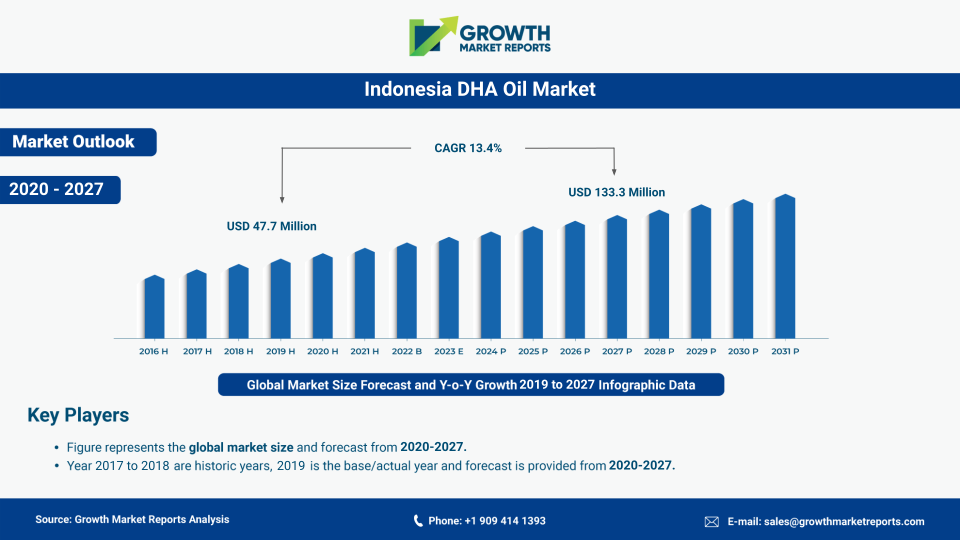
The base year for the Indonesia DHA oil market analysis, as for the broader global report, is 2025. Historical data is provided for the period 2019 to 2024, enabling a six-year retrospective view of market dynamics. The forecast period spans 2026 to 2034, offering a nine-year forward-looking analysis that captures both near-term opportunities and long-term structural growth trends in the Indonesian market.

COVID-19 had a mixed impact on the DHA oil market during 2019 to 2020. While supply chain disruptions and fishing activity restrictions in 2020 temporarily constrained fish oil availability and increased input costs, demand for DHA oil-based dietary supplements and immune-support products surged significantly. The pandemic heightened consumer awareness of preventive healthcare, driving a notable uptick in supplement purchases. E-commerce channels saw particularly strong growth as physical retail was restricted, partially offsetting logistical challenges and supporting overall market resilience during this period.

Company profiles are selected based on several criteria including annual revenue contribution to the DHA oil market, geographic presence, product portfolio breadth, innovation pipeline, strategic partnerships, and market influence. Both publicly listed and private companies are considered. The final selection ensures a balanced representation of large multinational players, mid-size specialists, and emerging regional competitors that collectively reflect the competitive dynamics of the market as of 2025.

Dietary supplements and infant formula are the two largest application segments in the global DHA oil market as of 2025, collectively accounting for over 60% of total revenue. The pharmaceutical segment is the fastest-growing application area, driven by clinical evidence supporting DHA in neurological and cardiovascular therapies. Food and beverage fortification is also gaining momentum, particularly in functional dairy, bakery, and ready-to-drink categories across North America and Europe.

Key drivers for the Indonesia DHA oil market include a rapidly growing young population, increasing government focus on maternal and child nutrition, rising household incomes, and greater consumer awareness of omega-3 health benefits. The expansion of modern retail and online distribution channels, combined with the proliferation of domestically produced and imported DHA-enriched infant formula and supplements, is accelerating adoption. Regulatory alignment with international nutritional standards is also supporting product development and market entry.

The report offers extensive additional analysis including import/export data, pricing trend analysis from 2019 to 2034, raw material cost breakdowns, value chain analysis, and patent landscape assessments. Competitive benchmarking matrices, market attractiveness indices by segment and region, and scenario-based forecasts (optimistic, base, and conservative) are also included to support strategic decision-making.

Based on our 2025 base year estimates and the projected regional CAGR for Southeast Asia of approximately 9.1%, the Indonesia DHA oil market is expected to reach approximately USD 48 million by 2027. Growth is driven by rising middle-class health awareness, expanding infant nutrition demand, and improving e-commerce distribution infrastructure across the country.

Yes, the report provides detailed product-level analysis across all major DHA oil categories, including algal oil, fish oil, and crypthecodinium oil. It covers purity grades, concentration levels, delivery formats such as soft gels, emulsions, and powders, as well as application-specific formulations for infant formula, dietary supplements, and pharmaceuticals. Product innovation trends and pipeline developments from 2019 through 2034 are also discussed.

Yes, the report can be customized to include company profiles beyond the default list. We cover all major and emerging players in the global DHA oil market as of 2025, including regional specialists and niche algal oil producers. Please contact our research team with your specific requirements and we will tailor the report accordingly.

Table Of Content

Chapter 1 Executive Summary
Chapter 2 Assumptions and Acronyms Used
Chapter 3 Research Methodology
Chapter 4 DHA oil Market Overview
   4.1 Introduction
      4.1.1 Market Taxonomy
      4.1.2 Market Definition
      4.1.3 Macro-Economic Factors Impacting the Market Growth
   4.2 DHA oil Market Dynamics
      4.2.1 Market Drivers
      4.2.2 Market Restraints
      4.2.3 Market Opportunity
   4.3 DHA oil Market - Supply Chain Analysis
      4.3.1 List of Key Suppliers
      4.3.2 List of Key Distributors
      4.3.3 List of Key Consumers
   4.4 Key Forces Shaping the DHA oil Market
      4.4.1 Bargaining Power of Suppliers
      4.4.2 Bargaining Power of Buyers
      4.4.3 Threat of Substitution
      4.4.4 Threat of New Entrants
      4.4.5 Competitive Rivalry
   4.5 Global DHA oil Market Size & Forecast, 2023-2032
      4.5.1 DHA oil Market Size and Y-o-Y Growth
      4.5.2 DHA oil Market Absolute $ Opportunity

Chapter 5 Global DHA oil Market Analysis and Forecast By Source
   5.1 Introduction
      5.1.1 Key Market Trends & Growth Opportunities By Source
      5.1.2 Basis Point Share (BPS) Analysis By Source
      5.1.3 Absolute $ Opportunity Assessment By Source
   5.2 DHA oil Market Size Forecast By Source
      5.2.1 Algal Oil
      5.2.2 Fish Oil
      5.2.3 Crypthecodinium Oil
      5.2.4 Others
   5.3 Market Attractiveness Analysis By Source

Chapter 6 Global DHA oil Market Analysis and Forecast By Application
   6.1 Introduction
      6.1.1 Key Market Trends & Growth Opportunities By Application
      6.1.2 Basis Point Share (BPS) Analysis By Application
      6.1.3 Absolute $ Opportunity Assessment By Application
   6.2 DHA oil Market Size Forecast By Application
      6.2.1 Dietary Supplements
      6.2.2 Infant Formula
      6.2.3 Food & Beverages
      6.2.4 Pharmaceuticals
      6.2.5 Animal Feed
      6.2.6 Others
   6.3 Market Attractiveness Analysis By Application

Chapter 7 Global DHA oil Market Analysis and Forecast By Distribution Channel
   7.1 Introduction
      7.1.1 Key Market Trends & Growth Opportunities By Distribution Channel
      7.1.2 Basis Point Share (BPS) Analysis By Distribution Channel
      7.1.3 Absolute $ Opportunity Assessment By Distribution Channel
   7.2 DHA oil Market Size Forecast By Distribution Channel
      7.2.1 Online Stores
      7.2.2 Supermarkets/Hypermarkets
      7.2.3 Specialty Stores
      7.2.4 Others
   7.3 Market Attractiveness Analysis By Distribution Channel

Chapter 8 Global DHA oil Market Analysis and Forecast By End-User
   8.1 Introduction
      8.1.1 Key Market Trends & Growth Opportunities By End-User
      8.1.2 Basis Point Share (BPS) Analysis By End-User
      8.1.3 Absolute $ Opportunity Assessment By End-User
   8.2 DHA oil Market Size Forecast By End-User
      8.2.1 Children
      8.2.2 Adults
      8.2.3 Pregnant Women
      8.2.4 Others
   8.3 Market Attractiveness Analysis By End-User

Chapter 9 Global DHA oil Market Analysis and Forecast by Region
   9.1 Introduction
      9.1.1 Key Market Trends & Growth Opportunities By Region
      9.1.2 Basis Point Share (BPS) Analysis By Region
      9.1.3 Absolute $ Opportunity Assessment By Region
   9.2 DHA oil Market Size Forecast By Region
      9.2.1 North America
      9.2.2 Europe
      9.2.3 Asia Pacific
      9.2.4 Latin America
      9.2.5 Middle East & Africa (MEA)
   9.3 Market Attractiveness Analysis By Region

Chapter 10 Coronavirus Disease (COVID-19) Impact 
   10.1 Introduction 
   10.2 Current & Future Impact Analysis 
   10.3 Economic Impact Analysis 
   10.4 Government Policies 
   10.5 Investment Scenario

Chapter 11 North America DHA oil Analysis and Forecast
   11.1 Introduction
   11.2 North America DHA oil Market Size Forecast by Country
      11.2.1 U.S.
      11.2.2 Canada
   11.3 Basis Point Share (BPS) Analysis by Country
   11.4 Absolute $ Opportunity Assessment by Country
   11.5 Market Attractiveness Analysis by Country
   11.6 North America DHA oil Market Size Forecast By Source
      11.6.1 Algal Oil
      11.6.2 Fish Oil
      11.6.3 Crypthecodinium Oil
      11.6.4 Others
   11.7 Basis Point Share (BPS) Analysis By Source 
   11.8 Absolute $ Opportunity Assessment By Source 
   11.9 Market Attractiveness Analysis By Source
   11.10 North America DHA oil Market Size Forecast By Application
      11.10.1 Dietary Supplements
      11.10.2 Infant Formula
      11.10.3 Food & Beverages
      11.10.4 Pharmaceuticals
      11.10.5 Animal Feed
      11.10.6 Others
   11.11 Basis Point Share (BPS) Analysis By Application 
   11.12 Absolute $ Opportunity Assessment By Application 
   11.13 Market Attractiveness Analysis By Application
   11.14 North America DHA oil Market Size Forecast By Distribution Channel
      11.14.1 Online Stores
      11.14.2 Supermarkets/Hypermarkets
      11.14.3 Specialty Stores
      11.14.4 Others
   11.15 Basis Point Share (BPS) Analysis By Distribution Channel 
   11.16 Absolute $ Opportunity Assessment By Distribution Channel 
   11.17 Market Attractiveness Analysis By Distribution Channel
   11.18 North America DHA oil Market Size Forecast By End-User
      11.18.1 Children
      11.18.2 Adults
      11.18.3 Pregnant Women
      11.18.4 Others
   11.19 Basis Point Share (BPS) Analysis By End-User 
   11.20 Absolute $ Opportunity Assessment By End-User 
   11.21 Market Attractiveness Analysis By End-User

Chapter 12 Europe DHA oil Analysis and Forecast
   12.1 Introduction
   12.2 Europe DHA oil Market Size Forecast by Country
      12.2.1 Germany
      12.2.2 France
      12.2.3 Italy
      12.2.4 U.K.
      12.2.5 Spain
      12.2.6 Russia
      12.2.7 Rest of Europe
   12.3 Basis Point Share (BPS) Analysis by Country
   12.4 Absolute $ Opportunity Assessment by Country
   12.5 Market Attractiveness Analysis by Country
   12.6 Europe DHA oil Market Size Forecast By Source
      12.6.1 Algal Oil
      12.6.2 Fish Oil
      12.6.3 Crypthecodinium Oil
      12.6.4 Others
   12.7 Basis Point Share (BPS) Analysis By Source 
   12.8 Absolute $ Opportunity Assessment By Source 
   12.9 Market Attractiveness Analysis By Source
   12.10 Europe DHA oil Market Size Forecast By Application
      12.10.1 Dietary Supplements
      12.10.2 Infant Formula
      12.10.3 Food & Beverages
      12.10.4 Pharmaceuticals
      12.10.5 Animal Feed
      12.10.6 Others
   12.11 Basis Point Share (BPS) Analysis By Application 
   12.12 Absolute $ Opportunity Assessment By Application 
   12.13 Market Attractiveness Analysis By Application
   12.14 Europe DHA oil Market Size Forecast By Distribution Channel
      12.14.1 Online Stores
      12.14.2 Supermarkets/Hypermarkets
      12.14.3 Specialty Stores
      12.14.4 Others
   12.15 Basis Point Share (BPS) Analysis By Distribution Channel 
   12.16 Absolute $ Opportunity Assessment By Distribution Channel 
   12.17 Market Attractiveness Analysis By Distribution Channel
   12.18 Europe DHA oil Market Size Forecast By End-User
      12.18.1 Children
      12.18.2 Adults
      12.18.3 Pregnant Women
      12.18.4 Others
   12.19 Basis Point Share (BPS) Analysis By End-User 
   12.20 Absolute $ Opportunity Assessment By End-User 
   12.21 Market Attractiveness Analysis By End-User

Chapter 13 Asia Pacific DHA oil Analysis and Forecast
   13.1 Introduction
   13.2 Asia Pacific DHA oil Market Size Forecast by Country
      13.2.1 China
      13.2.2 Japan
      13.2.3 South Korea
      13.2.4 India
      13.2.5 Australia
      13.2.6 South East Asia (SEA)
      13.2.7 Rest of Asia Pacific (APAC)
   13.3 Basis Point Share (BPS) Analysis by Country
   13.4 Absolute $ Opportunity Assessment by Country
   13.5 Market Attractiveness Analysis by Country
   13.6 Asia Pacific DHA oil Market Size Forecast By Source
      13.6.1 Algal Oil
      13.6.2 Fish Oil
      13.6.3 Crypthecodinium Oil
      13.6.4 Others
   13.7 Basis Point Share (BPS) Analysis By Source 
   13.8 Absolute $ Opportunity Assessment By Source 
   13.9 Market Attractiveness Analysis By Source
   13.10 Asia Pacific DHA oil Market Size Forecast By Application
      13.10.1 Dietary Supplements
      13.10.2 Infant Formula
      13.10.3 Food & Beverages
      13.10.4 Pharmaceuticals
      13.10.5 Animal Feed
      13.10.6 Others
   13.11 Basis Point Share (BPS) Analysis By Application 
   13.12 Absolute $ Opportunity Assessment By Application 
   13.13 Market Attractiveness Analysis By Application
   13.14 Asia Pacific DHA oil Market Size Forecast By Distribution Channel
      13.14.1 Online Stores
      13.14.2 Supermarkets/Hypermarkets
      13.14.3 Specialty Stores
      13.14.4 Others
   13.15 Basis Point Share (BPS) Analysis By Distribution Channel 
   13.16 Absolute $ Opportunity Assessment By Distribution Channel 
   13.17 Market Attractiveness Analysis By Distribution Channel
   13.18 Asia Pacific DHA oil Market Size Forecast By End-User
      13.18.1 Children
      13.18.2 Adults
      13.18.3 Pregnant Women
      13.18.4 Others
   13.19 Basis Point Share (BPS) Analysis By End-User 
   13.20 Absolute $ Opportunity Assessment By End-User 
   13.21 Market Attractiveness Analysis By End-User

Chapter 14 Latin America DHA oil Analysis and Forecast
   14.1 Introduction
   14.2 Latin America DHA oil Market Size Forecast by Country
      14.2.1 Brazil
      14.2.2 Mexico
      14.2.3 Rest of Latin America (LATAM)
   14.3 Basis Point Share (BPS) Analysis by Country
   14.4 Absolute $ Opportunity Assessment by Country
   14.5 Market Attractiveness Analysis by Country
   14.6 Latin America DHA oil Market Size Forecast By Source
      14.6.1 Algal Oil
      14.6.2 Fish Oil
      14.6.3 Crypthecodinium Oil
      14.6.4 Others
   14.7 Basis Point Share (BPS) Analysis By Source 
   14.8 Absolute $ Opportunity Assessment By Source 
   14.9 Market Attractiveness Analysis By Source
   14.10 Latin America DHA oil Market Size Forecast By Application
      14.10.1 Dietary Supplements
      14.10.2 Infant Formula
      14.10.3 Food & Beverages
      14.10.4 Pharmaceuticals
      14.10.5 Animal Feed
      14.10.6 Others
   14.11 Basis Point Share (BPS) Analysis By Application 
   14.12 Absolute $ Opportunity Assessment By Application 
   14.13 Market Attractiveness Analysis By Application
   14.14 Latin America DHA oil Market Size Forecast By Distribution Channel
      14.14.1 Online Stores
      14.14.2 Supermarkets/Hypermarkets
      14.14.3 Specialty Stores
      14.14.4 Others
   14.15 Basis Point Share (BPS) Analysis By Distribution Channel 
   14.16 Absolute $ Opportunity Assessment By Distribution Channel 
   14.17 Market Attractiveness Analysis By Distribution Channel
   14.18 Latin America DHA oil Market Size Forecast By End-User
      14.18.1 Children
      14.18.2 Adults
      14.18.3 Pregnant Women
      14.18.4 Others
   14.19 Basis Point Share (BPS) Analysis By End-User 
   14.20 Absolute $ Opportunity Assessment By End-User 
   14.21 Market Attractiveness Analysis By End-User

Chapter 15 Middle East & Africa (MEA) DHA oil Analysis and Forecast
   15.1 Introduction
   15.2 Middle East & Africa (MEA) DHA oil Market Size Forecast by Country
      15.2.1 Saudi Arabia
      15.2.2 South Africa
      15.2.3 UAE
      15.2.4 Rest of Middle East & Africa (MEA)
   15.3 Basis Point Share (BPS) Analysis by Country
   15.4 Absolute $ Opportunity Assessment by Country
   15.5 Market Attractiveness Analysis by Country
   15.6 Middle East & Africa (MEA) DHA oil Market Size Forecast By Source
      15.6.1 Algal Oil
      15.6.2 Fish Oil
      15.6.3 Crypthecodinium Oil
      15.6.4 Others
   15.7 Basis Point Share (BPS) Analysis By Source 
   15.8 Absolute $ Opportunity Assessment By Source 
   15.9 Market Attractiveness Analysis By Source
   15.10 Middle East & Africa (MEA) DHA oil Market Size Forecast By Application
      15.10.1 Dietary Supplements
      15.10.2 Infant Formula
      15.10.3 Food & Beverages
      15.10.4 Pharmaceuticals
      15.10.5 Animal Feed
      15.10.6 Others
   15.11 Basis Point Share (BPS) Analysis By Application 
   15.12 Absolute $ Opportunity Assessment By Application 
   15.13 Market Attractiveness Analysis By Application
   15.14 Middle East & Africa (MEA) DHA oil Market Size Forecast By Distribution Channel
      15.14.1 Online Stores
      15.14.2 Supermarkets/Hypermarkets
      15.14.3 Specialty Stores
      15.14.4 Others
   15.15 Basis Point Share (BPS) Analysis By Distribution Channel 
   15.16 Absolute $ Opportunity Assessment By Distribution Channel 
   15.17 Market Attractiveness Analysis By Distribution Channel
   15.18 Middle East & Africa (MEA) DHA oil Market Size Forecast By End-User
      15.18.1 Children
      15.18.2 Adults
      15.18.3 Pregnant Women
      15.18.4 Others
   15.19 Basis Point Share (BPS) Analysis By End-User 
   15.20 Absolute $ Opportunity Assessment By End-User 
   15.21 Market Attractiveness Analysis By End-User

Chapter 16 Competition Landscape 
   16.1 DHA oil Market: Competitive Dashboard
   16.2 Global DHA oil Market: Market Share Analysis, 2023
   16.3 Company Profiles (Details – Overview, Financials, Developments, Strategy) 
      16.3.1 DSM Nutritional Products (dsm-firmenich)
      16.3.2 Corbion N.V.
      16.3.3 BASF SE
      16.3.4 Lonza Group Ltd.
      16.3.5 Croda International Plc
      16.3.6 Cargill, Incorporated
      16.3.7 Archer Daniels Midland Company (ADM)
      16.3.8 Omega Protein Corporation
      16.3.9 Aker BioMarine
      16.3.10 GC Rieber Oils
      16.3.11 Neptune Wellness Solutions Inc.
      16.3.12 Qingdao Sinomega Biotech Engineering Co., Ltd.
      16.3.13 Polaris Nutritional Lipids
      16.3.14 Nordic Naturals, Inc.
      16.3.15 Pharma Marine AS
      16.3.16 Wilmar International Limited
      16.3.17 Golden Omega S.A.
      16.3.18 KD Pharma Group
      16.3.19 Novasep Group
      16.3.20 Denomega Nutritional Oils AS

Methodology

Our Clients

Honda Motor Co. Ltd.
The John Holland Group
Deloitte
Pfizer
sinopec
Microsoft
Dassault Aviation
General Electric