Chili Sauce Market Research Report 2033

Chili Sauce Market Research Report 2033

Segments - by Product Type (Hot Chili Sauce, Sweet Chili Sauce, Sriracha, Peri-Peri Sauce, Others), by Packaging (Bottles, Sachets, Jars, Cans, Others), by Distribution Channel (Supermarkets/Hypermarkets, Convenience Stores, Online Retail, Foodservice, Others), by End-Use (Household, Food Processing Industry, HoReCa, Others)

https://growthmarketreports.com/Anuradha
Author : Anuradha B. More
https://growthmarketreports.com/Vaibhav
Fact-checked by : Vaibhav Chandola
https://growthmarketreports.com/Shruti
Editor : Shruti Bhat

Upcoming | Report ID :FB-81 | 4.8 Rating | 82 Reviews | 263 Pages | Format : Docx PDF

Report Description


Chili Sauce Market Outlook

As per our latest research, the chili sauce market size reached USD 6.8 billion globally in 2024, reflecting robust demand across both mature and emerging economies. The market is projected to grow at a steady CAGR of 5.2% over the forecast period, with the total value expected to reach USD 10.7 billion by 2033. This growth is driven by rising consumer inclination toward spicy and ethnic flavors, increased global travel leading to culinary crossovers, and the expanding application of chili sauces in both household and commercial food preparations.

One of the primary growth drivers for the chili sauce market is the increasing globalization of food preferences. As consumers become more adventurous in their culinary choices, there is a heightened demand for bold and spicy flavors, particularly those inspired by Asian, Latin American, and African cuisines. The proliferation of international restaurants and the rising popularity of fusion cuisine have further fueled this trend. Additionally, social media platforms and food influencers have played a significant role in introducing new chili sauce varieties to a broader audience, thereby accelerating market penetration and encouraging experimentation with different products.

Another significant factor contributing to the marketÂ’s expansion is the growing health consciousness among consumers. Chili sauces are increasingly perceived as healthier condiments due to their natural ingredients, low-calorie content, and potential health benefits associated with capsaicin, such as metabolism boost and antioxidant properties. This perception has led to a surge in demand for organic and clean-label chili sauces, with manufacturers responding by launching products free from artificial colors, preservatives, and additives. The trend towards plant-based diets has also provided an impetus, as chili sauces are often used to enhance the flavor of vegetarian and vegan dishes.

The foodservice sector, encompassing restaurants, hotels, and catering (HoReCa), is a major contributor to the chili sauce marketÂ’s growth. The sectorÂ’s recovery post-pandemic, coupled with menu innovation and increasing use of chili sauces in fast-casual and quick-service restaurants, has significantly boosted demand. Furthermore, the rise of home cooking during lockdowns introduced many consumers to new chili sauce varieties, a trend that continues as people seek to recreate restaurant-style meals at home. The continuous launch of new flavors and packaging innovations, such as easy-squeeze bottles and single-serve sachets, has also enhanced convenience and accessibility, further propelling market growth.

In recent years, the introduction of unique and exotic chili sauces has captivated the taste buds of consumers worldwide. Among these, Chiltepin Pepper Sauce stands out for its distinctive flavor profile and cultural heritage. Known as the 'mother of all peppers,' the chiltepin is a wild chili native to the southwestern United States and Mexico. Its fiery heat and fruity undertones make it a versatile ingredient in various culinary applications. As consumers continue to explore new taste experiences, Chiltepin Pepper Sauce is gaining popularity, particularly among those seeking authentic and bold flavors. This trend reflects the broader movement towards artisanal and small-batch products that offer a genuine taste of regional cuisines.

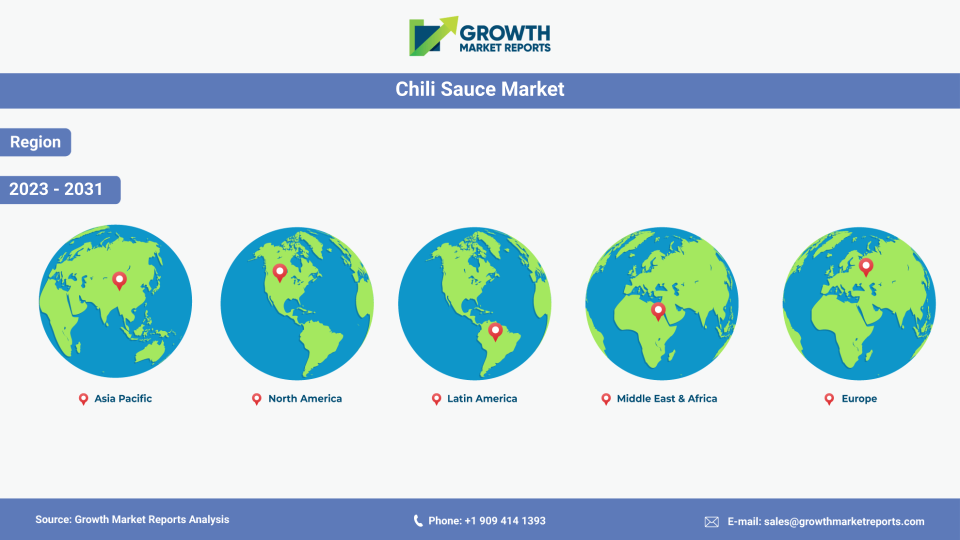
Regionally, the Asia Pacific dominates the chili sauce market, both in terms of consumption and production, owing to the deep-rooted cultural affinity for spicy foods and the presence of major manufacturing hubs. North America and Europe are witnessing rapid growth, driven by increasing multicultural populations and the mainstreaming of ethnic cuisines. Latin America and the Middle East & Africa are also emerging as lucrative markets, supported by rising disposable incomes and evolving consumer tastes. The dynamic interplay of these regional trends underscores the global nature of the chili sauce market and its strong growth trajectory.

Global Chili Sauce Industry Outlook

Product Type Analysis

The chili sauce market is segmented by product type into Hot Chili Sauce, Sweet Chili Sauce, Sriracha, Peri-Peri Sauce, and Others. Among these, hot chili sauce commands the largest share, driven by its widespread use in everyday cooking and as a table condiment across multiple geographies. The robust popularity of hot chili sauces is particularly evident in Asia Pacific, where it forms an integral part of traditional cuisine, as well as in North America, where hot sauce culture has seen a significant upsurge. The versatility of hot chili sauce, which can be used for marinating, dipping, or as an ingredient in a variety of dishes, ensures sustained demand across both retail and foodservice channels.

Sweet chili sauce is another prominent segment, enjoying strong demand in both household and commercial applications. Its unique blend of sweetness and mild heat appeals to a wide demographic, including children and those with a lower tolerance for spice. The increasing use of sweet chili sauce as a dipping sauce for snacks, appetizers, and finger foods, especially in Western markets, has contributed to its rising popularity. Manufacturers are also innovating with new flavor combinations and organic variants to cater to evolving consumer preferences, further expanding the market for sweet chili sauces.

Sriracha, originally a specialty Asian product, has achieved global cult status, particularly in North America and Europe. Its distinctive flavor profile, characterized by a balance of heat, garlic, and tang, has made it a staple in both home kitchens and restaurants. The continued expansion of the Sriracha segment is attributed to aggressive marketing, brand collaborations, and the inclusion of Sriracha-flavored snacks and processed foods. The growing trend of personalization in food has also led to the introduction of Sriracha in various heat levels and packaging formats, catering to diverse consumer needs.

Peri-Peri sauce, with its roots in African and Portuguese cuisine, is rapidly gaining traction, especially in regions with a strong culture of grilled and barbecued foods. The unique flavor of Peri-Peri, characterized by its citrusy and spicy notes, appeals to consumers seeking new taste experiences. The growing popularity of peri-peri chicken and similar dishes in quick-service restaurant chains has significantly boosted demand in the foodservice sector. The “Others” category, which includes regional and specialty chili sauces, continues to grow as consumers show increasing interest in artisanal and small-batch products that offer authentic, localized flavors.

Report Scope

Attributes Details
Report Title Chili Sauce Market Research Report 2033
By Product Type Hot Chili Sauce, Sweet Chili Sauce, Sriracha, Peri-Peri Sauce, Others
By Packaging Bottles, Sachets, Jars, Cans, Others
By Distribution Channel Supermarkets/Hypermarkets, Convenience Stores, Online Retail, Foodservice, Others
By End-Use Household, Food Processing Industry, HoReCa, Others
Regions Covered North America, Europe, APAC, Latin America, MEA
Base Year 2024
Historic Data 2018-2023
Forecast Period 2025-2033
Number of Pages 263
Number of Tables & Figures 345
Customization Available Yes, the report can be customized as per your need.

Packaging Analysis

Packaging plays a crucial role in the chili sauce market, influencing both consumer convenience and product shelf life. Bottles represent the most common packaging format, favored for their durability, ease of dispensing, and ability to preserve product quality. Glass bottles, in particular, are associated with premium positioning, while plastic bottles offer cost-effectiveness and portability. The ongoing trend towards sustainability is prompting manufacturers to explore recyclable and biodegradable materials for bottle packaging, aligning with consumer demand for eco-friendly solutions.

Sachets have emerged as a popular packaging option, especially for single-serve and on-the-go consumption. The growing demand from the foodservice sector, including quick-service restaurants, takeaways, and airlines, has driven the proliferation of sachet packaging. Sachets are also gaining traction in emerging markets, where cost-sensitive consumers appreciate the affordability and portion control they offer. Innovations in sachet design, such as easy-tear and resealable features, are further enhancing their appeal.

Jars are commonly used for premium and specialty chili sauces, as they allow for easy scooping and are perceived as more suitable for thicker, chunkier products. Jars are particularly popular in the household segment, where consumers value the ability to use the product over an extended period. The trend towards artisanal and homemade-style chili sauces has also contributed to the resurgence of jars, with manufacturers leveraging attractive labeling and packaging designs to differentiate their products on retail shelves.

Cans, though less prevalent than bottles and jars, are primarily used for industrial and foodservice applications, where larger quantities are required. The robust nature of cans makes them ideal for bulk storage and transportation, particularly in the food processing industry. The “Others” category includes innovative packaging solutions such as squeeze tubes and pouches, which are gaining popularity due to their convenience and ease of use. Overall, the packaging segment is witnessing rapid innovation, with a focus on convenience, sustainability, and product differentiation to attract a broad spectrum of consumers.

Distribution Channel Analysis

The distribution landscape for chili sauce is diverse, encompassing Supermarkets/Hypermarkets, Convenience Stores, Online Retail, Foodservice, and Others. Supermarkets and hypermarkets account for the largest share, owing to their extensive product assortments, attractive promotions, and the convenience of one-stop shopping. These retail formats are particularly dominant in developed markets, where consumers prefer to compare products and benefit from in-store sampling and discounts. The growing trend of private label chili sauces in supermarkets is also contributing to increased market share for this channel.

Convenience stores are witnessing significant growth, especially in urban areas with high population density and fast-paced lifestyles. The proximity and extended operating hours of convenience stores make them a preferred choice for impulse purchases and smaller pack sizes. The increasing presence of convenience store chains in emerging markets is further boosting chili sauce sales through this channel. Manufacturers are focusing on tailored marketing strategies, such as localized product assortments and promotional campaigns, to maximize visibility and sales in convenience stores.

Online retail is the fastest-growing distribution channel, driven by the proliferation of e-commerce platforms and changing consumer shopping habits. The convenience of home delivery, wider product selection, and the ability to access niche and specialty chili sauces have made online channels increasingly popular. Online retail also offers opportunities for direct-to-consumer sales, enabling manufacturers to build brand loyalty and gather valuable consumer insights. The COVID-19 pandemic accelerated the shift to online shopping, a trend that is expected to persist, with e-commerce platforms investing in enhanced user experiences and efficient logistics.

The foodservice segment, which includes restaurants, hotels, and catering services, represents a significant distribution channel for chili sauce. The sector’s recovery and expansion, coupled with the growing popularity of spicy dishes in menus, have driven increased procurement of chili sauces in bulk and customized formats. The “Others” category includes specialty stores, gourmet outlets, and ethnic food retailers, which cater to consumers seeking unique and artisanal chili sauces. The dynamic distribution landscape underscores the importance of channel diversification and targeted strategies to capture diverse consumer segments.

End-Use Analysis

The chili sauce marketÂ’s end-use segmentation includes Household, Food Processing Industry, HoReCa (Hotels, Restaurants, and Catering), and Others. The household segment constitutes the largest share, driven by the growing trend of home cooking and the desire to experiment with new flavors. Consumers are increasingly incorporating chili sauces into daily meals, snacks, and as dipping sauces, reflecting a shift towards more adventurous and globally inspired home dining. The availability of a wide range of products, from mild to extremely hot, ensures that household consumption continues to rise across all age groups.

The food processing industry is a significant end-user, utilizing chili sauces as key ingredients in the production of ready-to-eat meals, snacks, marinades, and condiments. The demand from this segment is driven by the need for consistent flavor profiles, extended shelf life, and bulk packaging options. Manufacturers in the food processing sector are increasingly seeking customized chili sauce formulations to differentiate their products and cater to specific regional tastes. The growing popularity of packaged and convenience foods has further amplified demand from this segment.

HoReCa, encompassing hotels, restaurants, and catering services, is a vital contributor to the chili sauce market. The sectorÂ’s focus on menu innovation, premiumization, and the incorporation of ethnic and spicy dishes has led to increased usage of a wide variety of chili sauces. Quick-service and casual dining restaurants, in particular, are leveraging chili sauces to create signature dishes and enhance customer experiences. The recovery of the hospitality industry post-pandemic and the resurgence of events and outdoor dining are expected to further boost demand from the HoReCa segment.

The “Others” category includes institutional buyers such as schools, hospitals, and corporate cafeterias, as well as specialty food manufacturers. These end-users often require specific packaging and formulation requirements, such as low-sodium or allergen-free options. The increasing awareness of healthy eating and the demand for clean-label products are shaping procurement decisions in this segment. Overall, the end-use analysis highlights the broad applicability of chili sauces across multiple sectors, underscoring the market’s resilience and growth potential.

Opportunities & Threats

The chili sauce market offers numerous growth opportunities, particularly through product innovation and diversification. Manufacturers are capitalizing on evolving consumer preferences by introducing new flavors, heat levels, and ingredient combinations, such as fruit-infused chili sauces and sauces featuring exotic peppers. The trend towards health and wellness presents opportunities for the development of organic, gluten-free, and low-sodium variants, catering to health-conscious consumers. Additionally, the expansion of e-commerce and direct-to-consumer sales channels enables brands to reach a wider audience, gather real-time feedback, and foster customer loyalty through personalized offerings and subscription models.

Emerging markets represent a significant opportunity for market expansion, driven by rising disposable incomes, urbanization, and increasing exposure to global cuisines. Strategic partnerships with local distributors and foodservice operators can facilitate market entry and accelerate growth in these regions. The growing popularity of street food and quick-service restaurants in countries such as India, Brazil, and South Africa is expected to drive demand for chili sauces. Furthermore, sustainability initiatives, such as the adoption of eco-friendly packaging and responsible sourcing of raw materials, can enhance brand reputation and appeal to environmentally conscious consumers.

Despite the favorable outlook, the chili sauce market faces certain restraints, including fluctuating raw material prices and supply chain disruptions. The volatility in the prices of key ingredients, such as chili peppers, garlic, and vinegar, can impact production costs and profit margins. Additionally, stringent food safety regulations and labeling requirements in different countries pose compliance challenges for manufacturers, particularly those seeking to expand internationally. Intense competition from local and unbranded products, as well as the risk of product recalls due to contamination or quality issues, can also hinder market growth. Addressing these challenges requires robust quality control measures, strategic sourcing, and continuous innovation.

Regional Outlook

The Asia Pacific region leads the global chili sauce market, accounting for nearly 45% of the total market value in 2024, which translates to approximately USD 3.1 billion. The regionÂ’s dominance is underpinned by the cultural significance of spicy foods, a large and growing population, and the presence of leading chili sauce manufacturers in countries such as China, Thailand, and Indonesia. Rapid urbanization and rising disposable incomes are further fueling demand, with consumers increasingly seeking convenient and flavorful condiments. The proliferation of international restaurant chains and the popularity of street food have also contributed to the robust growth of the chili sauce market in Asia Pacific.

North America is the second-largest market, with a value of around USD 1.6 billion in 2024. The regionÂ’s growth is driven by the mainstreaming of ethnic cuisines, the influence of multicultural populations, and the increasing use of chili sauces in both household and foodservice settings. The United States, in particular, has witnessed a surge in hot sauce consumption, with millennials and Gen Z consumers leading the trend toward bold and adventurous flavors. The North American market is expected to grow at a CAGR of 4.8% through 2033, supported by ongoing product innovation and the expansion of online retail channels.

Europe and Latin America are also key regions, with market values of USD 1.2 billion and USD 0.7 billion respectively in 2024. EuropeÂ’s growth is fueled by increasing interest in international cuisines, the rising popularity of street food, and the expansion of specialty food retail. Latin AmericaÂ’s market is characterized by a strong tradition of spicy foods, with countries such as Mexico and Brazil leading consumption. The Middle East & Africa region, although smaller in size, is witnessing rapid growth due to urbanization, rising incomes, and increasing exposure to global food trends. Collectively, these regions underscore the global reach and diverse growth drivers of the chili sauce market.

Chili Sauce Market Statistics

Competitor Outlook

The global chili sauce market is highly competitive, characterized by the presence of both multinational corporations and a large number of regional and local players. The competitive landscape is shaped by factors such as product innovation, brand reputation, distribution reach, and pricing strategies. Leading companies are investing heavily in research and development to introduce new flavors, packaging formats, and value-added variants that cater to evolving consumer preferences. Strategic collaborations, mergers and acquisitions, and expansion into emerging markets are common strategies employed by major players to strengthen their market positions and achieve economies of scale.

Brand loyalty and product differentiation are critical success factors in the chili sauce market. Companies are leveraging digital marketing, influencer partnerships, and experiential campaigns to engage consumers and build strong brand identities. The rise of e-commerce and direct-to-consumer channels has enabled both established and emerging brands to reach a wider audience and gather valuable consumer insights. Private label products offered by large retailers are also gaining traction, intensifying competition and prompting branded players to focus on quality, authenticity, and unique value propositions.

Sustainability and corporate social responsibility are increasingly influencing competitive strategies, with companies adopting eco-friendly packaging, responsible sourcing practices, and community engagement initiatives. The ability to adapt to changing regulatory environments and ensure compliance with food safety standards is another key differentiator. Companies that can effectively balance innovation, quality, and sustainability are likely to gain a competitive edge in the dynamic chili sauce market.

Some of the major companies operating in the global chili sauce market include Huy Fong Foods, McCormick & Company, The Kraft Heinz Company, Unilever, Lee Kum Kee, Thai Theparos Public Company Limited, Del Monte Foods, and La Costeña. Huy Fong Foods, renowned for its iconic Sriracha sauce, has achieved cult status in North America and beyond, leveraging strong brand recognition and consistent quality. McCormick & Company and The Kraft Heinz Company offer a broad portfolio of chili sauces under various brands, with extensive distribution networks spanning multiple regions.

Unilever, through its Knorr and Hellmann’s brands, has a significant presence in both developed and emerging markets, focusing on product innovation and sustainability. Lee Kum Kee is a dominant player in the Asia Pacific region, known for its authentic Asian sauces and global export capabilities. Thai Theparos Public Company Limited and Del Monte Foods are prominent in Southeast Asia and North America, respectively, with a focus on both retail and foodservice channels. La Costeña, a leading Mexican brand, is expanding its international footprint through strategic partnerships and a strong focus on quality and authenticity.

These companies are continuously investing in marketing, product development, and supply chain optimization to maintain their competitive positions. The dynamic interplay of global and regional brands ensures a vibrant and innovative market environment, offering consumers an ever-expanding array of chili sauce options to suit diverse tastes and preferences. As the market continues to evolve, successful players will be those that can anticipate and respond to changing consumer demands, regulatory requirements, and sustainability imperatives.

Key Players

  • McCormick & Company, Inc.
  • Huy Fong Foods, Inc.
  • The Kraft Heinz Company
  • Unilever PLC
  • Conagra Brands, Inc.
  • Hormel Foods Corporation
  • Kikkoman Corporation
  • Lee Kum Kee Company Limited
  • Cholula Food Company
  • Tabasco (McIlhenny Company)
  • Southeastern Mills, Inc.
  • La Costeña
  • Del Monte Foods, Inc.
  • Thai Theparos Food Products Public Company Limited
  • NandoÂ’s Group Holdings Limited
  • Bush Brothers & Company
  • Sky Valley Foods, Inc.
  • Baumer Foods, Inc. (Crystal Hot Sauce)
  • Sambal Oelek (Uyah Asem Group)
  • Texas Pete (TW Garner Food Company)
Chili Sauce Market Overview

Segments

The Chili Sauce market has been segmented on the basis of

Product Type

  • Hot Chili Sauce
  • Sweet Chili Sauce
  • Sriracha
  • Peri-Peri Sauce
  • Others

Packaging

  • Bottles
  • Sachets
  • Jars
  • Cans
  • Others

Distribution Channel

  • Supermarkets/Hypermarkets
  • Convenience Stores
  • Online Retail
  • Foodservice
  • Others

End-Use

  • Household
  • Food Processing Industry
  • HoReCa
  • Others

Competitive Landscape

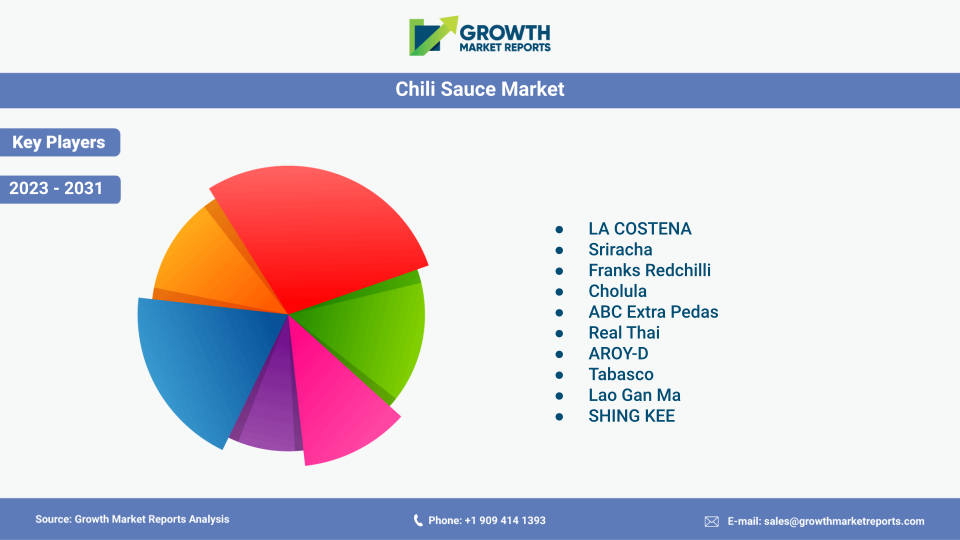
  • Key players in the market include LA COSTENA, Sriracha, Franks Redchilli, Cholula, ABC Extra Pedas, Real Thai, AROY-D, Tabasco, Lao Gan Ma, SHING KEE, and others. These companies are considered as key manufacturers of Chili Sauce based on their revenue, research development (R&D) activities, regional presence, and supply chain management system.
  • These players are adopting key strategies such as acquisition, mergers, and geographical expansion for the sale of Chili Sauce.

Chili Sauce Market Keyplayers

Video Summary for Chili Sauce Market

Frequently Asked Questions

Additional company profiles can be provided on request.

Yes, the report covers the volume details of products.

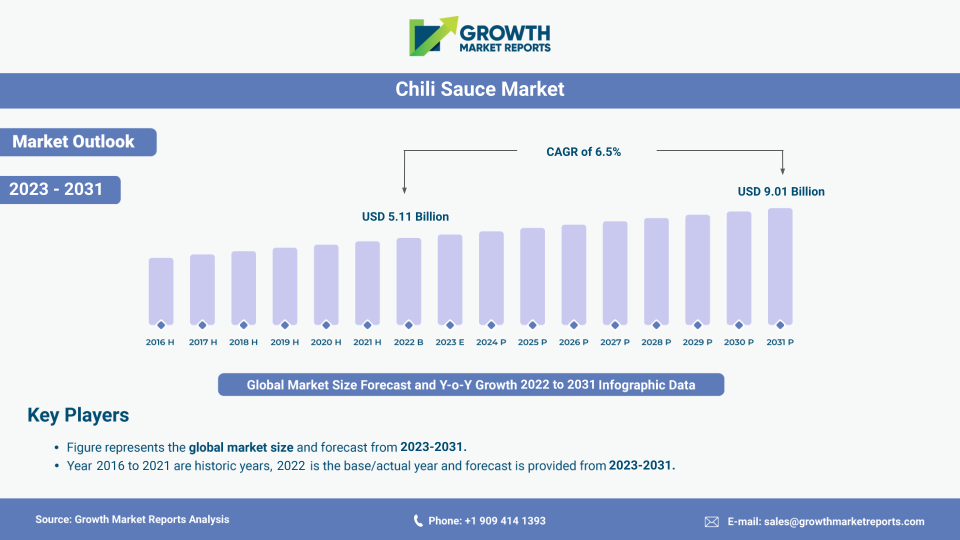
According to this Growth Market Reports report, the market from Chili Sauce is likely to register a CAGR of approximately 6.5% during the forecast period 2023-2031, with an anticipated valuation of USD 9.01 Billion by the end of 2031.

In addition to market size (in US$ Million), Volume (Tons), and Company Market Share (in % for the base year 2019), other data such as company market share by region, macro-economic factors, COVID 19 impact is available in the final report.

Increasing preference for spicy food, availability of chili sauces based on spicy levels, and increasing sales through e-commerce sales channels are key factors driving the Chili Sauce market growth.

Factors such as competitive strength and market positioning are key areas considered while selecting top companies to be profiled.

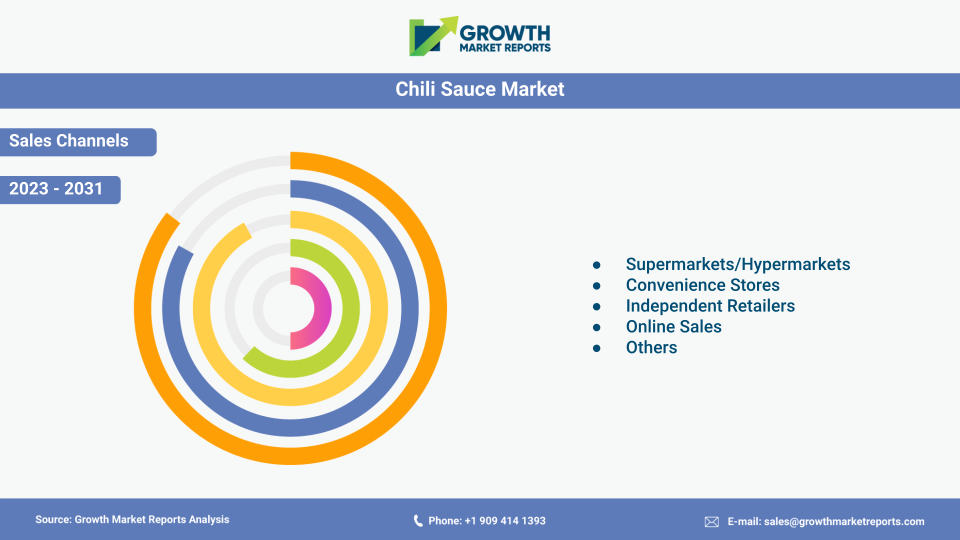
Supermarkets/hypermarkets, convenience stores, independent retailers, online sales, and others are distribution channels involved in Chili Sauce Market.

The market is expected to witness slight growth between 2019 and 2020 owing to the positive impact of the COVID-19 pandemic on the Chili Sauce market. The lockdown effect has created a rising demand for packaged foods and hence is expected to fuel demand for chili sauces.

The base year considered for the global Chili Sauce market report is 2022. The complete analysis period is 2022 to 2031, wherein, 2016 to 2021 are the historic years and the forecast is provided from 2023 to 2031

Major Manufacturers include LA COSTENA, Sriracha, Franks Redchilli, Cholula, ABC Extra Pedas, Real Thai, AROY-D, Tabasco, Lao Gan Ma, and SHING KEE.

Table Of Content

Chapter 1 Executive Summary
Chapter 2 Assumptions and Acronyms Used
Chapter 3 Research Methodology
Chapter 4 Chili Sauce Market Overview
   4.1 Introduction
      4.1.1 Market Taxonomy
      4.1.2 Market Definition
      4.1.3 Macro-Economic Factors Impacting the Market Growth
   4.2 Chili Sauce Market Dynamics
      4.2.1 Market Drivers
      4.2.2 Market Restraints
      4.2.3 Market Opportunity
   4.3 Chili Sauce Market - Supply Chain Analysis
      4.3.1 List of Key Suppliers
      4.3.2 List of Key Distributors
      4.3.3 List of Key Consumers
   4.4 Key Forces Shaping the Chili Sauce Market
      4.4.1 Bargaining Power of Suppliers
      4.4.2 Bargaining Power of Buyers
      4.4.3 Threat of Substitution
      4.4.4 Threat of New Entrants
      4.4.5 Competitive Rivalry
   4.5 Global Chili Sauce Market Size & Forecast, 2023-2032
      4.5.1 Chili Sauce Market Size and Y-o-Y Growth
      4.5.2 Chili Sauce Market Absolute $ Opportunity

Chapter 5 Global Chili Sauce Market Analysis and Forecast By Product Type
   5.1 Introduction
      5.1.1 Key Market Trends & Growth Opportunities By Product Type
      5.1.2 Basis Point Share (BPS) Analysis By Product Type
      5.1.3 Absolute $ Opportunity Assessment By Product Type
   5.2 Chili Sauce Market Size Forecast By Product Type
      5.2.1 Hot Chili Sauce
      5.2.2 Sweet Chili Sauce
      5.2.3 Sriracha
      5.2.4 Peri-Peri Sauce
      5.2.5 Others
   5.3 Market Attractiveness Analysis By Product Type

Chapter 6 Global Chili Sauce Market Analysis and Forecast By Packaging
   6.1 Introduction
      6.1.1 Key Market Trends & Growth Opportunities By Packaging
      6.1.2 Basis Point Share (BPS) Analysis By Packaging
      6.1.3 Absolute $ Opportunity Assessment By Packaging
   6.2 Chili Sauce Market Size Forecast By Packaging
      6.2.1 Bottles
      6.2.2 Sachets
      6.2.3 Jars
      6.2.4 Cans
      6.2.5 Others
   6.3 Market Attractiveness Analysis By Packaging

Chapter 7 Global Chili Sauce Market Analysis and Forecast By Distribution Channel
   7.1 Introduction
      7.1.1 Key Market Trends & Growth Opportunities By Distribution Channel
      7.1.2 Basis Point Share (BPS) Analysis By Distribution Channel
      7.1.3 Absolute $ Opportunity Assessment By Distribution Channel
   7.2 Chili Sauce Market Size Forecast By Distribution Channel
      7.2.1 Supermarkets/Hypermarkets
      7.2.2 Convenience Stores
      7.2.3 Online Retail
      7.2.4 Foodservice
      7.2.5 Others
   7.3 Market Attractiveness Analysis By Distribution Channel

Chapter 8 Global Chili Sauce Market Analysis and Forecast By End-Use
   8.1 Introduction
      8.1.1 Key Market Trends & Growth Opportunities By End-Use
      8.1.2 Basis Point Share (BPS) Analysis By End-Use
      8.1.3 Absolute $ Opportunity Assessment By End-Use
   8.2 Chili Sauce Market Size Forecast By End-Use
      8.2.1 Household
      8.2.2 Food Processing Industry
      8.2.3 HoReCa
      8.2.4 Others
   8.3 Market Attractiveness Analysis By End-Use

Chapter 9 Global Chili Sauce Market Analysis and Forecast by Region
   9.1 Introduction
      9.1.1 Key Market Trends & Growth Opportunities By Region
      9.1.2 Basis Point Share (BPS) Analysis By Region
      9.1.3 Absolute $ Opportunity Assessment By Region
   9.2 Chili Sauce Market Size Forecast By Region
      9.2.1 North America
      9.2.2 Europe
      9.2.3 Asia Pacific
      9.2.4 Latin America
      9.2.5 Middle East & Africa (MEA)
   9.3 Market Attractiveness Analysis By Region

Chapter 10 Coronavirus Disease (COVID-19) Impact 
   10.1 Introduction 
   10.2 Current & Future Impact Analysis 
   10.3 Economic Impact Analysis 
   10.4 Government Policies 
   10.5 Investment Scenario

Chapter 11 North America Chili Sauce Analysis and Forecast
   11.1 Introduction
   11.2 North America Chili Sauce Market Size Forecast by Country
      11.2.1 U.S.
      11.2.2 Canada
   11.3 Basis Point Share (BPS) Analysis by Country
   11.4 Absolute $ Opportunity Assessment by Country
   11.5 Market Attractiveness Analysis by Country
   11.6 North America Chili Sauce Market Size Forecast By Product Type
      11.6.1 Hot Chili Sauce
      11.6.2 Sweet Chili Sauce
      11.6.3 Sriracha
      11.6.4 Peri-Peri Sauce
      11.6.5 Others
   11.7 Basis Point Share (BPS) Analysis By Product Type 
   11.8 Absolute $ Opportunity Assessment By Product Type 
   11.9 Market Attractiveness Analysis By Product Type
   11.10 North America Chili Sauce Market Size Forecast By Packaging
      11.10.1 Bottles
      11.10.2 Sachets
      11.10.3 Jars
      11.10.4 Cans
      11.10.5 Others
   11.11 Basis Point Share (BPS) Analysis By Packaging 
   11.12 Absolute $ Opportunity Assessment By Packaging 
   11.13 Market Attractiveness Analysis By Packaging
   11.14 North America Chili Sauce Market Size Forecast By Distribution Channel
      11.14.1 Supermarkets/Hypermarkets
      11.14.2 Convenience Stores
      11.14.3 Online Retail
      11.14.4 Foodservice
      11.14.5 Others
   11.15 Basis Point Share (BPS) Analysis By Distribution Channel 
   11.16 Absolute $ Opportunity Assessment By Distribution Channel 
   11.17 Market Attractiveness Analysis By Distribution Channel
   11.18 North America Chili Sauce Market Size Forecast By End-Use
      11.18.1 Household
      11.18.2 Food Processing Industry
      11.18.3 HoReCa
      11.18.4 Others
   11.19 Basis Point Share (BPS) Analysis By End-Use 
   11.20 Absolute $ Opportunity Assessment By End-Use 
   11.21 Market Attractiveness Analysis By End-Use

Chapter 12 Europe Chili Sauce Analysis and Forecast
   12.1 Introduction
   12.2 Europe Chili Sauce Market Size Forecast by Country
      12.2.1 Germany
      12.2.2 France
      12.2.3 Italy
      12.2.4 U.K.
      12.2.5 Spain
      12.2.6 Russia
      12.2.7 Rest of Europe
   12.3 Basis Point Share (BPS) Analysis by Country
   12.4 Absolute $ Opportunity Assessment by Country
   12.5 Market Attractiveness Analysis by Country
   12.6 Europe Chili Sauce Market Size Forecast By Product Type
      12.6.1 Hot Chili Sauce
      12.6.2 Sweet Chili Sauce
      12.6.3 Sriracha
      12.6.4 Peri-Peri Sauce
      12.6.5 Others
   12.7 Basis Point Share (BPS) Analysis By Product Type 
   12.8 Absolute $ Opportunity Assessment By Product Type 
   12.9 Market Attractiveness Analysis By Product Type
   12.10 Europe Chili Sauce Market Size Forecast By Packaging
      12.10.1 Bottles
      12.10.2 Sachets
      12.10.3 Jars
      12.10.4 Cans
      12.10.5 Others
   12.11 Basis Point Share (BPS) Analysis By Packaging 
   12.12 Absolute $ Opportunity Assessment By Packaging 
   12.13 Market Attractiveness Analysis By Packaging
   12.14 Europe Chili Sauce Market Size Forecast By Distribution Channel
      12.14.1 Supermarkets/Hypermarkets
      12.14.2 Convenience Stores
      12.14.3 Online Retail
      12.14.4 Foodservice
      12.14.5 Others
   12.15 Basis Point Share (BPS) Analysis By Distribution Channel 
   12.16 Absolute $ Opportunity Assessment By Distribution Channel 
   12.17 Market Attractiveness Analysis By Distribution Channel
   12.18 Europe Chili Sauce Market Size Forecast By End-Use
      12.18.1 Household
      12.18.2 Food Processing Industry
      12.18.3 HoReCa
      12.18.4 Others
   12.19 Basis Point Share (BPS) Analysis By End-Use 
   12.20 Absolute $ Opportunity Assessment By End-Use 
   12.21 Market Attractiveness Analysis By End-Use

Chapter 13 Asia Pacific Chili Sauce Analysis and Forecast
   13.1 Introduction
   13.2 Asia Pacific Chili Sauce Market Size Forecast by Country
      13.2.1 China
      13.2.2 Japan
      13.2.3 South Korea
      13.2.4 India
      13.2.5 Australia
      13.2.6 South East Asia (SEA)
      13.2.7 Rest of Asia Pacific (APAC)
   13.3 Basis Point Share (BPS) Analysis by Country
   13.4 Absolute $ Opportunity Assessment by Country
   13.5 Market Attractiveness Analysis by Country
   13.6 Asia Pacific Chili Sauce Market Size Forecast By Product Type
      13.6.1 Hot Chili Sauce
      13.6.2 Sweet Chili Sauce
      13.6.3 Sriracha
      13.6.4 Peri-Peri Sauce
      13.6.5 Others
   13.7 Basis Point Share (BPS) Analysis By Product Type 
   13.8 Absolute $ Opportunity Assessment By Product Type 
   13.9 Market Attractiveness Analysis By Product Type
   13.10 Asia Pacific Chili Sauce Market Size Forecast By Packaging
      13.10.1 Bottles
      13.10.2 Sachets
      13.10.3 Jars
      13.10.4 Cans
      13.10.5 Others
   13.11 Basis Point Share (BPS) Analysis By Packaging 
   13.12 Absolute $ Opportunity Assessment By Packaging 
   13.13 Market Attractiveness Analysis By Packaging
   13.14 Asia Pacific Chili Sauce Market Size Forecast By Distribution Channel
      13.14.1 Supermarkets/Hypermarkets
      13.14.2 Convenience Stores
      13.14.3 Online Retail
      13.14.4 Foodservice
      13.14.5 Others
   13.15 Basis Point Share (BPS) Analysis By Distribution Channel 
   13.16 Absolute $ Opportunity Assessment By Distribution Channel 
   13.17 Market Attractiveness Analysis By Distribution Channel
   13.18 Asia Pacific Chili Sauce Market Size Forecast By End-Use
      13.18.1 Household
      13.18.2 Food Processing Industry
      13.18.3 HoReCa
      13.18.4 Others
   13.19 Basis Point Share (BPS) Analysis By End-Use 
   13.20 Absolute $ Opportunity Assessment By End-Use 
   13.21 Market Attractiveness Analysis By End-Use

Chapter 14 Latin America Chili Sauce Analysis and Forecast
   14.1 Introduction
   14.2 Latin America Chili Sauce Market Size Forecast by Country
      14.2.1 Brazil
      14.2.2 Mexico
      14.2.3 Rest of Latin America (LATAM)
   14.3 Basis Point Share (BPS) Analysis by Country
   14.4 Absolute $ Opportunity Assessment by Country
   14.5 Market Attractiveness Analysis by Country
   14.6 Latin America Chili Sauce Market Size Forecast By Product Type
      14.6.1 Hot Chili Sauce
      14.6.2 Sweet Chili Sauce
      14.6.3 Sriracha
      14.6.4 Peri-Peri Sauce
      14.6.5 Others
   14.7 Basis Point Share (BPS) Analysis By Product Type 
   14.8 Absolute $ Opportunity Assessment By Product Type 
   14.9 Market Attractiveness Analysis By Product Type
   14.10 Latin America Chili Sauce Market Size Forecast By Packaging
      14.10.1 Bottles
      14.10.2 Sachets
      14.10.3 Jars
      14.10.4 Cans
      14.10.5 Others
   14.11 Basis Point Share (BPS) Analysis By Packaging 
   14.12 Absolute $ Opportunity Assessment By Packaging 
   14.13 Market Attractiveness Analysis By Packaging
   14.14 Latin America Chili Sauce Market Size Forecast By Distribution Channel
      14.14.1 Supermarkets/Hypermarkets
      14.14.2 Convenience Stores
      14.14.3 Online Retail
      14.14.4 Foodservice
      14.14.5 Others
   14.15 Basis Point Share (BPS) Analysis By Distribution Channel 
   14.16 Absolute $ Opportunity Assessment By Distribution Channel 
   14.17 Market Attractiveness Analysis By Distribution Channel
   14.18 Latin America Chili Sauce Market Size Forecast By End-Use
      14.18.1 Household
      14.18.2 Food Processing Industry
      14.18.3 HoReCa
      14.18.4 Others
   14.19 Basis Point Share (BPS) Analysis By End-Use 
   14.20 Absolute $ Opportunity Assessment By End-Use 
   14.21 Market Attractiveness Analysis By End-Use

Chapter 15 Middle East & Africa (MEA) Chili Sauce Analysis and Forecast
   15.1 Introduction
   15.2 Middle East & Africa (MEA) Chili Sauce Market Size Forecast by Country
      15.2.1 Saudi Arabia
      15.2.2 South Africa
      15.2.3 UAE
      15.2.4 Rest of Middle East & Africa (MEA)
   15.3 Basis Point Share (BPS) Analysis by Country
   15.4 Absolute $ Opportunity Assessment by Country
   15.5 Market Attractiveness Analysis by Country
   15.6 Middle East & Africa (MEA) Chili Sauce Market Size Forecast By Product Type
      15.6.1 Hot Chili Sauce
      15.6.2 Sweet Chili Sauce
      15.6.3 Sriracha
      15.6.4 Peri-Peri Sauce
      15.6.5 Others
   15.7 Basis Point Share (BPS) Analysis By Product Type 
   15.8 Absolute $ Opportunity Assessment By Product Type 
   15.9 Market Attractiveness Analysis By Product Type
   15.10 Middle East & Africa (MEA) Chili Sauce Market Size Forecast By Packaging
      15.10.1 Bottles
      15.10.2 Sachets
      15.10.3 Jars
      15.10.4 Cans
      15.10.5 Others
   15.11 Basis Point Share (BPS) Analysis By Packaging 
   15.12 Absolute $ Opportunity Assessment By Packaging 
   15.13 Market Attractiveness Analysis By Packaging
   15.14 Middle East & Africa (MEA) Chili Sauce Market Size Forecast By Distribution Channel
      15.14.1 Supermarkets/Hypermarkets
      15.14.2 Convenience Stores
      15.14.3 Online Retail
      15.14.4 Foodservice
      15.14.5 Others
   15.15 Basis Point Share (BPS) Analysis By Distribution Channel 
   15.16 Absolute $ Opportunity Assessment By Distribution Channel 
   15.17 Market Attractiveness Analysis By Distribution Channel
   15.18 Middle East & Africa (MEA) Chili Sauce Market Size Forecast By End-Use
      15.18.1 Household
      15.18.2 Food Processing Industry
      15.18.3 HoReCa
      15.18.4 Others
   15.19 Basis Point Share (BPS) Analysis By End-Use 
   15.20 Absolute $ Opportunity Assessment By End-Use 
   15.21 Market Attractiveness Analysis By End-Use

Chapter 16 Competition Landscape 
   16.1 Chili Sauce Market: Competitive Dashboard
   16.2 Global Chili Sauce Market: Market Share Analysis, 2023
   16.3 Company Profiles (Details – Overview, Financials, Developments, Strategy) 
      16.3.1 McCormick & Company, Inc.
Huy Fong Foods, Inc.
The Kraft Heinz Company
Unilever PLC
Conagra Brands, Inc.
Hormel Foods Corporation
Kikkoman Corporation
Lee Kum Kee Company Limited
Cholula Food Company
Tabasco (McIlhenny Company)
Southeastern Mills, Inc.
La Costeña
Del Monte Foods, Inc.
Thai Theparos Food Products Public Company Limited
Nando’s Group Holdings Limited
Bush Brothers & Company
Sky Valley Foods, Inc.
Baumer Foods, Inc. (Crystal Hot Sauce)
Sambal Oelek (Uyah Asem Group)
Texas Pete (TW Garner Food Company)

Methodology

Our Clients

Dassault Aviation
sinopec
General Electric
Microsoft
FedEx Logistics
General Mills
Siemens Healthcare
The John Holland Group