Dairy Blends Market Research Report 2033

Dairy Blends Market Research Report 2033

Segments - by Product Type (Powder, Liquid, Spreadable), by Application (Bakery, Confectionery, Beverages, Infant Formula, Dairy Products, Others), by Source (Milk, Non-Milk, Mixed), by Distribution Channel (Supermarkets/Hypermarkets, Convenience Stores, Online Retail, Others), by End-User (Household, Food Service, Industrial)

https://growthmarketreports.com/Anuradha
Author : Anuradha B. More
https://growthmarketreports.com/Vaibhav
Fact-checked by : Vaibhav Chandola
https://growthmarketreports.com/Shruti
Editor : Shruti Bhat

Upcoming | Report ID :FB-648 | 4.7 Rating | 76 Reviews | 289 Pages | Format : Docx PDF

Report Description


Dairy Blends Market Outlook

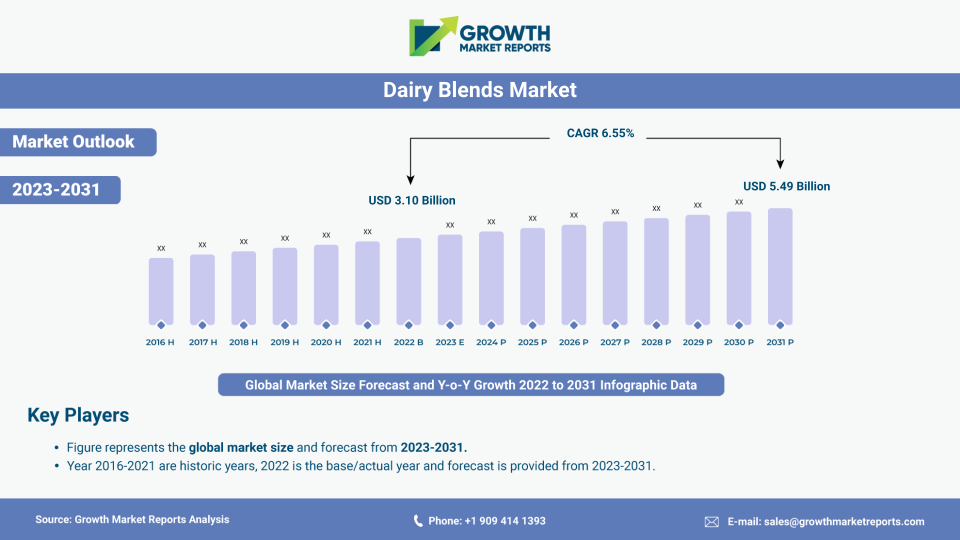
According to our latest research, the global dairy blends market size reached USD 4.21 billion in 2024, exhibiting a robust growth trajectory. The market is projected to expand at a CAGR of 7.2% during the forecast period, with the total market size anticipated to reach USD 7.76 billion by 2033. Key growth factors driving this expansion include rising consumer demand for healthier and more affordable dairy alternatives, expansion of the food processing industry, and increasing innovation in product formulations. As per our analysis, the dairy blends market is poised for significant transformation and diversification, underpinned by evolving dietary habits and technological advancements.

The growth of the dairy blends market is primarily fueled by the increasing consumer preference for products that offer both nutritional value and cost efficiency. Dairy blends, which combine dairy ingredients with non-dairy components, are gaining popularity due to their improved shelf life, enhanced taste, and lower fat content compared to traditional dairy products. The food industry’s ongoing efforts to develop healthier formulations, reduce cholesterol, and cater to lactose-intolerant populations have further propelled the adoption of dairy blends. Additionally, the demand for convenience foods and ready-to-eat products is surging, especially in urban areas, thereby boosting the usage of dairy blends in processed and packaged foods.

Another major growth driver for the global dairy blends market is the rapid expansion of the food processing sector, particularly in emerging economies. Food manufacturers are increasingly incorporating dairy blends into a wide range of applications, including bakery, confectionery, beverages, and infant formula, to enhance product quality and consistency while managing input costs. Dairy blends offer manufacturers flexibility in formulation, enabling the creation of products tailored to specific consumer preferences and regulatory requirements. Furthermore, the rising awareness regarding the environmental impact of traditional dairy production has led to a shift towards more sustainable alternatives, such as dairy blends, which often have a lower carbon footprint.

Technological advancements and innovation in product development have also played a pivotal role in the market’s growth. Companies are investing in research and development to create dairy blends with improved functional properties, such as enhanced solubility, emulsification, and stability. The introduction of new flavors, fortified blends, and clean-label products is attracting health-conscious consumers and expanding the market’s reach. The integration of advanced processing technologies and automation in manufacturing processes is further enabling the production of high-quality dairy blends at scale, thereby supporting market growth across diverse end-user segments.

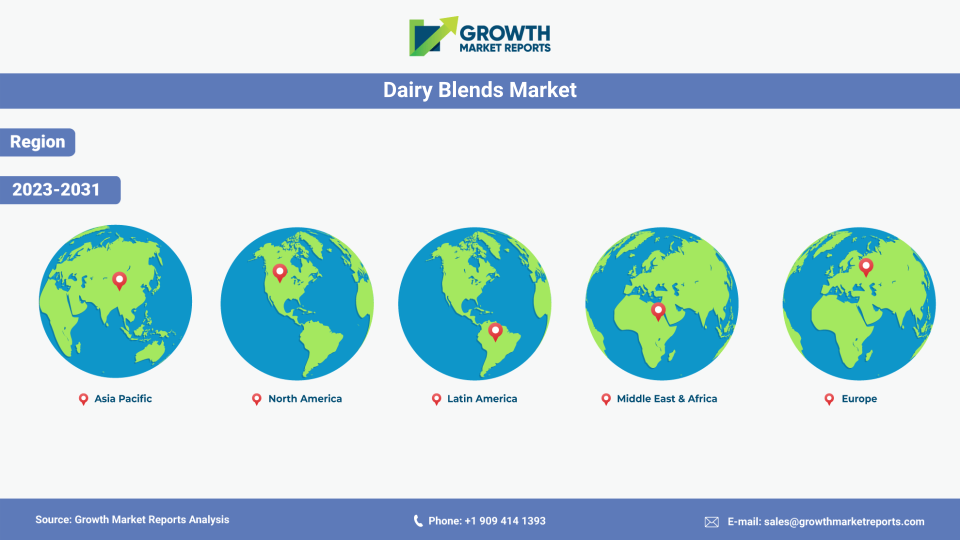
From a regional perspective, Asia Pacific is emerging as the fastest-growing market for dairy blends, driven by rising disposable incomes, urbanization, and changing dietary patterns. North America and Europe continue to dominate the market in terms of value, owing to established food processing industries, high consumer awareness, and a strong focus on product innovation. Latin America and the Middle East & Africa are also witnessing increased adoption of dairy blends, supported by expanding retail infrastructure and growing demand for affordable dairy alternatives. Each region presents unique opportunities and challenges, shaping the overall dynamics of the global dairy blends market.

Global Dairy Blends Industry Outlook

Product Type Analysis

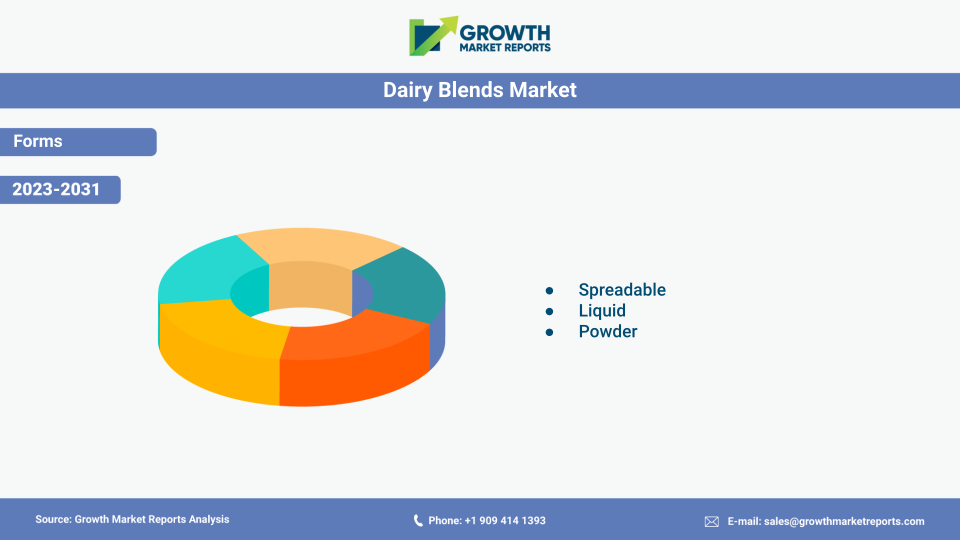
The product type segment of the dairy blends market is categorized into powder, liquid, and spreadable forms. Powdered dairy blends represent the largest share of the market, owing to their extended shelf life, ease of transportation, and versatility in application. These blends are widely used in the food processing industry, particularly in bakery, confectionery, and infant formula products, where consistent quality and functional properties are crucial. The powdered format allows for precise dosing and easy integration into various recipes, making it a preferred choice for manufacturers seeking to optimize production efficiency and reduce wastage.

Liquid dairy blends are gaining traction, especially in the beverage and food service sectors. These blends are favored for their convenience, ease of handling, and ability to deliver a creamy texture and rich flavor profile. Liquid blends are commonly used in coffee creamers, smoothies, and ready-to-drink beverages, where they enhance mouthfeel and stability. The growing demand for on-the-go and functional beverages is expected to drive further growth in this segment. Manufacturers are also exploring the addition of functional ingredients, such as probiotics and vitamins, to differentiate their liquid dairy blend offerings and cater to health-conscious consumers.

The spreadable dairy blends segment, although relatively smaller, is witnessing steady growth due to increasing consumer interest in healthier alternatives to traditional butter and margarine. Spreadable blends typically combine butter or cream with vegetable oils, resulting in products with lower saturated fat content and improved spreadability at refrigeration temperatures. This segment appeals to consumers seeking better-for-you spreads for use on bread, crackers, and other bakery products. The trend towards clean-label and plant-based formulations is also influencing the development of innovative spreadable dairy blends, further expanding their market potential.

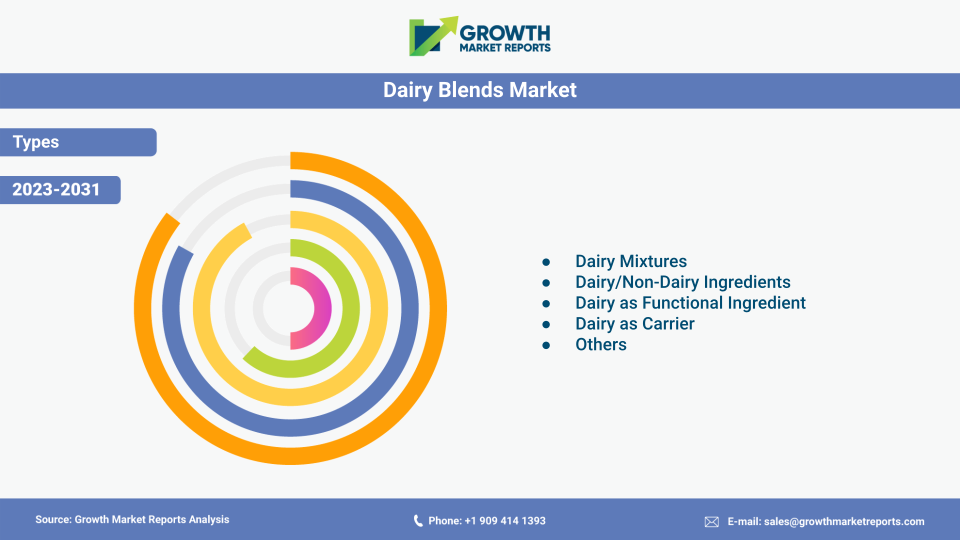
Innovation in product type is a key differentiator in the competitive landscape of the dairy blends market. Leading companies are investing in research and development to introduce blends with enhanced nutritional profiles, tailored functionalities, and unique flavors. The ability to customize blends to meet specific application requirements is driving collaboration between ingredient suppliers and food manufacturers. As the demand for convenient, nutrient-rich, and sustainable food solutions continues to rise, the product type segment is expected to witness ongoing diversification and growth.

Report Scope

Attributes Details
Report Title Dairy Blends Market Research Report 2033
By Product Type Powder, Liquid, Spreadable
By Application Bakery, Confectionery, Beverages, Infant Formula, Dairy Products, Others
By Source Milk, Non-Milk, Mixed
By Distribution Channel Supermarkets/Hypermarkets, Convenience Stores, Online Retail, Others
By End-User Household, Food Service, Industrial
Regions Covered North America, Europe, APAC, Latin America, MEA
Base Year 2024
Historic Data 2018-2023
Forecast Period 2025-2033
Number of Pages 289
Number of Tables & Figures 301
Customization Available Yes, the report can be customized as per your need.

Application Analysis

The application segment of the dairy blends market is highly diverse, encompassing bakery, confectionery, beverages, infant formula, dairy products, and other food categories. The bakery sector is one of the largest consumers of dairy blends, utilizing them to improve texture, flavor, and shelf life in products such as bread, cakes, and pastries. Dairy blends provide functional benefits such as enhanced moisture retention, emulsification, and browning, which are critical for producing high-quality baked goods. The growing demand for clean-label and gluten-free bakery products is further driving the adoption of dairy blends formulated with natural and allergen-free ingredients.

In the confectionery industry, dairy blends are used to create creamy fillings, coatings, and caramels, offering improved stability and cost-effectiveness compared to pure dairy ingredients. The ability to tailor fat content and flavor profiles allows manufacturers to develop a wide range of confectionery products that cater to different consumer preferences. The trend towards premiumization and indulgence in confectionery is also fueling innovation in dairy blend formulations, with companies introducing blends enriched with cocoa, nuts, and other flavorings to create novel taste experiences.

The beverages segment is experiencing significant growth, driven by the rising popularity of dairy-based drinks, coffee creamers, and nutritional beverages. Dairy blends are used to enhance the creaminess, mouthfeel, and stability of these products, while also providing nutritional benefits such as protein and calcium enrichment. The increasing demand for functional beverages, including those fortified with probiotics, vitamins, and minerals, is prompting manufacturers to develop dairy blends that cater to specific health and wellness trends. The convenience and versatility of dairy blends make them an attractive ingredient for beverage producers seeking to innovate and differentiate their product offerings.

Dairy blends are also widely used in infant formula and other specialized dairy products, where they offer precise control over nutrient composition and functional properties. The ability to incorporate both dairy and non-dairy ingredients enables manufacturers to develop formulas that meet stringent regulatory requirements and address specific nutritional needs. In addition, dairy blends are being utilized in a variety of other applications, including sauces, soups, and processed foods, where they contribute to improved texture, flavor, and cost management. As the food industry continues to evolve, the application segment of the dairy blends market is expected to expand, driven by innovation and changing consumer preferences.

Source Analysis

The source segment of the dairy blends market is classified into milk-based, non-milk-based, and mixed sources. Milk-based dairy blends dominate the market, leveraging the nutritional benefits and consumer familiarity associated with traditional dairy ingredients. These blends are widely used in applications where authentic dairy flavor and functionality are desired, such as infant formula, bakery, and confectionery products. The reliability and traceability of milk-based raw materials are key advantages, particularly in regions with established dairy industries and stringent quality standards.

Non-milk-based dairy blends are gaining popularity, particularly among consumers seeking plant-based or allergen-free alternatives. These blends typically incorporate ingredients such as soy, coconut, almond, or other plant-based sources, offering similar functional benefits to traditional dairy blends while catering to lactose-intolerant and vegan populations. The growing awareness of environmental sustainability and animal welfare is also driving the adoption of non-milk-based blends, which generally have a lower environmental impact compared to conventional dairy products. Manufacturers are investing in the development of high-quality plant-based blends to capture this emerging market segment.

Mixed-source dairy blends, which combine both dairy and non-dairy ingredients, offer a unique value proposition by delivering the sensory and nutritional attributes of dairy alongside the functional and cost advantages of plant-based components. This hybrid approach enables manufacturers to create products that meet specific dietary requirements, such as reduced fat, lower cholesterol, or enhanced protein content. Mixed-source blends are particularly attractive in markets where consumer preferences are shifting towards healthier and more sustainable food options. The ability to customize blends based on regional tastes and regulatory requirements is further driving the growth of this segment.

Innovation in sourcing and ingredient selection is a key factor shaping the competitive landscape of the dairy blends market. Companies are exploring novel sources, such as pea protein, oat, and rice, to develop blends with improved functional and nutritional properties. The integration of advanced processing technologies, such as enzymatic modification and microencapsulation, is enabling the creation of next-generation dairy blends that deliver superior performance across a wide range of applications. As consumer demand for transparency and clean-label products continues to rise, the source segment is expected to witness ongoing innovation and diversification.

Distribution Channel Analysis

The distribution channel segment of the dairy blends market is segmented into supermarkets/hypermarkets, convenience stores, online retail, and other channels. Supermarkets and hypermarkets remain the dominant distribution channel, accounting for the largest share of retail sales. These outlets offer consumers a wide variety of dairy blend products, competitive pricing, and the convenience of one-stop shopping. The presence of well-established retail chains in developed regions, coupled with expanding retail infrastructure in emerging markets, is supporting the growth of this channel. In-store promotions, product sampling, and attractive packaging are key strategies employed by manufacturers to drive consumer engagement and boost sales through supermarkets and hypermarkets.

Convenience stores are also an important distribution channel, particularly in urban areas where consumers seek quick and easy access to food products. The growth of convenience stores is being driven by changing lifestyles, increased urbanization, and the demand for on-the-go food options. Dairy blends, especially those in single-serve or ready-to-use formats, are well-suited to this channel. Manufacturers are focusing on developing products with extended shelf life and convenient packaging to meet the needs of convenience store shoppers.

The online retail segment is experiencing rapid growth, fueled by the increasing penetration of e-commerce platforms and changing consumer shopping habits. Online channels offer consumers the convenience of home delivery, a wider selection of products, and the ability to compare prices and read reviews. The COVID-19 pandemic has accelerated the shift towards online grocery shopping, prompting manufacturers to invest in digital marketing and direct-to-consumer sales strategies. The integration of subscription models, personalized recommendations, and loyalty programs is further enhancing the online shopping experience for dairy blend products.

Other distribution channels, such as specialty stores, food service distributors, and wholesale clubs, also play a significant role in the dairy blends market. These channels cater to specific consumer segments, such as health-conscious shoppers, food service operators, and institutional buyers. The ability to reach diverse customer bases through multiple distribution channels is a key competitive advantage for manufacturers. As the retail landscape continues to evolve, the distribution channel segment is expected to become increasingly dynamic and competitive.

End-User Analysis

The end-user segment of the dairy blends market is segmented into household, food service, and industrial users. The household segment represents a significant share of the market, driven by rising consumer awareness of the nutritional and functional benefits of dairy blends. Households are increasingly incorporating dairy blends into their daily diets, using them in cooking, baking, and as spreads or creamers. The demand for convenient, affordable, and healthier food options is prompting manufacturers to develop dairy blend products tailored to the needs of home consumers, such as single-serve packs, resealable containers, and fortified blends.

The food service segment is another major end-user of dairy blends, encompassing restaurants, cafes, hotels, and catering services. Dairy blends are widely used in food service applications to enhance the taste, texture, and appearance of dishes, while also providing cost savings and operational efficiency. The ability to customize blends for specific culinary applications, such as sauces, soups, and desserts, is a key advantage for food service operators. The growing trend towards menu innovation and the demand for healthier, plant-based, and allergen-free options are driving the adoption of dairy blends in the food service industry.

The industrial segment includes food and beverage manufacturers, bakeries, confectioneries, and other processing companies that use dairy blends as ingredients in their products. Industrial users value dairy blends for their consistent quality, functional properties, and cost-effectiveness. The ability to tailor blends to meet specific product requirements, such as fat content, protein enrichment, or flavor profile, is critical for industrial applications. The expansion of the food processing industry, particularly in emerging markets, is fueling demand for dairy blends as manufacturers seek to optimize formulations and enhance product quality.

The end-user segment is characterized by diverse and evolving needs, with each user group seeking unique benefits from dairy blend products. Manufacturers are responding by developing a broad portfolio of blends that cater to different usage occasions, dietary preferences, and regulatory requirements. The ability to offer customized solutions, technical support, and value-added services is increasingly important in building long-term partnerships with end-users. As the dairy blends market continues to grow and diversify, the end-user segment is expected to play a central role in shaping product development and innovation.

Opportunities & Threats

The dairy blends market is ripe with opportunities, particularly in the areas of product innovation and market expansion. The growing demand for healthier, more sustainable, and affordable food options is driving manufacturers to develop new dairy blend formulations that cater to a wide range of consumer preferences. The integration of functional ingredients, such as probiotics, vitamins, and minerals, presents significant opportunities for differentiation and value creation. Additionally, the rise of plant-based and allergen-free blends is opening up new market segments, particularly among health-conscious and vegan consumers. The expansion of e-commerce and digital marketing channels is further enabling companies to reach a broader audience and build direct relationships with consumers.

Emerging markets, particularly in Asia Pacific, Latin America, and the Middle East & Africa, offer substantial growth potential for the dairy blends market. Rising disposable incomes, urbanization, and changing dietary habits are driving increased consumption of processed and convenience foods, creating opportunities for dairy blend manufacturers to expand their presence. Strategic partnerships with local distributors, investment in production facilities, and adaptation of products to regional tastes and regulatory requirements are key strategies for capturing market share in these regions. The ongoing shift towards clean-label and sustainable products is also creating opportunities for companies to differentiate themselves and build brand loyalty.

Despite the numerous opportunities, the dairy blends market faces several threats and restraining factors. One of the primary challenges is the volatility of raw material prices, particularly for dairy ingredients and plant-based alternatives. Fluctuations in milk supply, changes in agricultural policies, and global trade dynamics can impact production costs and profit margins. Additionally, stringent regulatory requirements and food safety standards in different regions can pose barriers to market entry and expansion. Consumer skepticism regarding the use of additives, preservatives, or artificial ingredients in dairy blends may also limit market growth, particularly in regions with high demand for natural and clean-label products. Companies must navigate these challenges by investing in supply chain resilience, regulatory compliance, and transparent communication with consumers.

Regional Outlook

The Asia Pacific region stands out as the fastest-growing market for dairy blends, with a market size of USD 1.34 billion in 2024 and projected to reach USD 2.77 billion by 2033, reflecting a strong CAGR of 8.1%. This growth is driven by rapid urbanization, rising disposable incomes, and a growing preference for convenient and affordable food products. Countries such as China, India, and Southeast Asian nations are witnessing increased adoption of dairy blends in both household and industrial applications. The expansion of modern retail infrastructure and the rising influence of Western dietary patterns are further supporting market growth in the region.

In North America, the dairy blends market reached USD 1.12 billion in 2024 and is expected to grow steadily, supported by a mature food processing industry, high consumer awareness, and a strong focus on product innovation. The United States and Canada are leading markets, with manufacturers investing in the development of value-added and functional dairy blend products. The trend towards clean-label, organic, and plant-based blends is particularly pronounced in North America, reflecting changing consumer preferences and regulatory trends. The region’s well-established retail and food service sectors provide a solid foundation for continued market expansion.

Europe remains a key market for dairy blends, with a market size of USD 1.03 billion in 2024. The region is characterized by a strong tradition of dairy consumption, high product quality standards, and a focus on sustainability. European consumers are increasingly seeking healthier and more sustainable food options, driving demand for dairy blends with reduced fat, lower cholesterol, and clean-label ingredients. The presence of leading dairy companies and a robust regulatory framework support the development and commercialization of innovative dairy blend products. Meanwhile, Latin America and the Middle East & Africa collectively accounted for USD 0.72 billion in 2024, with both regions showing promising growth potential due to expanding food processing industries and rising demand for affordable dairy alternatives.

Dairy Blends Market Statistics

Competitor Outlook

The dairy blends market is highly competitive, with a mix of global multinational corporations and regional players vying for market share. The competitive landscape is characterized by intense product innovation, strategic partnerships, and a focus on expanding distribution networks. Leading companies are investing heavily in research and development to create differentiated products that cater to evolving consumer preferences, such as clean-label, plant-based, and functional dairy blends. The ability to offer customized solutions and value-added services is increasingly important in building long-term relationships with customers across different end-user segments.

Mergers, acquisitions, and strategic alliances are common strategies employed by major players to strengthen their market position and expand their global footprint. Companies are also focusing on sustainability initiatives, such as reducing carbon emissions, sourcing responsibly, and developing eco-friendly packaging, to align with consumer expectations and regulatory requirements. The integration of advanced processing technologies and automation is enabling manufacturers to improve product quality, enhance operational efficiency, and reduce production costs. The rise of direct-to-consumer sales channels and digital marketing is further intensifying competition, as companies seek to engage with consumers and build brand loyalty in an increasingly digital marketplace.

The competitive landscape is also shaped by the entry of new players, particularly in the plant-based and functional dairy blends segments. Start-ups and niche companies are leveraging innovation and agility to introduce novel products and capture emerging market opportunities. The ability to respond quickly to changing consumer trends, regulatory developments, and supply chain disruptions is a key differentiator in the highly dynamic dairy blends market. Collaboration between ingredient suppliers, food manufacturers, and retailers is fostering the development of innovative products and driving market growth.

Major companies operating in the dairy blends market include Fonterra Co-operative Group, Cargill, Inc., Kerry Group plc, Agropur Cooperative, Royal FrieslandCampina N.V., Glanbia plc, Arla Foods amba, and Dean Foods Company. Fonterra is renowned for its extensive portfolio of dairy ingredients and strong global presence, while Cargill leverages its expertise in food ingredients and supply chain management to offer innovative dairy blend solutions. Kerry Group is a leader in taste and nutrition, focusing on the development of functional and clean-label dairy blends. Agropur and FrieslandCampina are recognized for their commitment to quality, sustainability, and product innovation, while Glanbia and Arla Foods are expanding their presence in the plant-based and functional dairy blends segments.

These companies are continuously investing in product development, sustainability initiatives, and market expansion to maintain their competitive edge. Strategic partnerships with food manufacturers, retailers, and food service operators are enabling them to reach new customer segments and drive growth. The focus on consumer-centric innovation, supply chain resilience, and regulatory compliance will continue to shape the competitive dynamics of the dairy blends market in the coming years. As the market evolves, companies that can effectively balance quality, affordability, and sustainability will be best positioned to capitalize on emerging opportunities and achieve long-term success.

Key Players

  • Cargill, Incorporated
  • Fonterra Co-operative Group Limited
  • Royal FrieslandCampina N.V.
  • Kerry Group plc
  • Glanbia plc
  • Agropur Dairy Cooperative
  • Arla Foods amba
  • Dean Foods Company
  • Land O'Lakes, Inc.
  • Dairy Farmers of America, Inc.
  • Saputo Inc.
  • Valio Ltd.
  • FrieslandCampina Kievit
  • Amul (Gujarat Cooperative Milk Marketing Federation)
  • Lactalis Group
  • Batory Foods
  • Abbott Laboratories
  • Bunge Limited
  • Ingredion Incorporated
  • BASF SE
Dairy Blends Market Overview

Segments

The Dairy Blends market has been segmented on the basis of

Product Type

  • Powder
  • Liquid
  • Spreadable

Application

  • Bakery
  • Confectionery
  • Beverages
  • Infant Formula
  • Dairy Products
  • Others

Source

  • Milk
  • Non-Milk
  • Mixed

Distribution Channel

  • Supermarkets/Hypermarkets
  • Convenience Stores
  • Online Retail
  • Others

End-User

  • Household
  • Food Service
  • Industrial

Competitive Landscape

Key players competing in the global diary blends market include All American Foods, Cargill, Inc., Royal Frieslandcampina N.V., Kerry Group, Chobani Inc., Us Foods. The market is deemed to be highly competitive in nature, many key players are adopting various business strategies such as, as mergers, acquisitions, partnerships, collaborations, capacity expansion, and product launches to increase/enhance their market shares.

For instance, in February 2017 US Foods completed the acquisition of All American Foods.
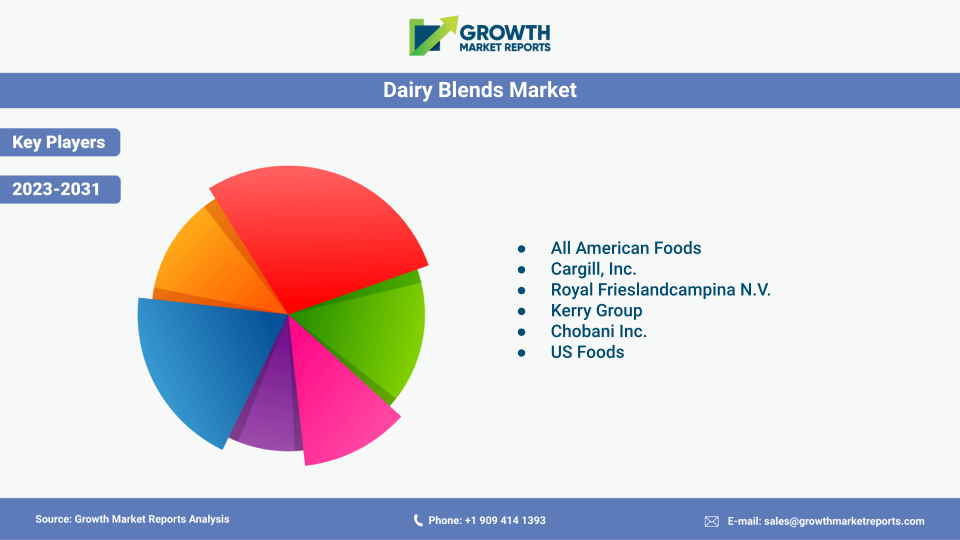
Dairy Blends Market Key Players

Frequently Asked Questions

Major companies include Fonterra Co-operative Group, Cargill, Kerry Group, Agropur Cooperative, Royal FrieslandCampina, Glanbia, Arla Foods, Dean Foods, Land O'Lakes, Saputo, Valio, Amul, Lactalis, Batory Foods, Abbott Laboratories, Bunge, Ingredion, and BASF.

Opportunities include product innovation, expansion in emerging markets, and demand for plant-based and functional blends. Challenges include raw material price volatility, regulatory compliance, and consumer skepticism about additives.

Asia Pacific is the fastest-growing region, while North America and Europe dominate in market value. Latin America and the Middle East & Africa are also experiencing significant growth.

The main end-users are households, food service providers (restaurants, cafes, hotels), and industrial users (food and beverage manufacturers, bakeries, confectioneries).

Dairy blends are distributed through supermarkets/hypermarkets, convenience stores, online retail, and specialty stores. Supermarkets/hypermarkets lead, but online retail is rapidly growing.

Dairy blends can be milk-based, non-milk-based (plant-based), or mixed. Milk-based blends are most common, but plant-based and mixed blends are growing due to demand for vegan and allergen-free products.

Dairy blends are widely used in bakery, confectionery, beverages, infant formula, dairy products, and other processed foods to enhance texture, flavor, shelf life, and nutritional value.

Dairy blends are available in powder, liquid, and spreadable forms. Powdered blends dominate due to their shelf life and versatility, while liquid and spreadable blends are gaining popularity for convenience and health benefits.

Key growth drivers include increasing demand for healthier and affordable dairy alternatives, expansion of the food processing industry, innovation in product formulations, and rising awareness of environmental sustainability.

The global dairy blends market reached USD 4.21 billion in 2024 and is projected to grow at a CAGR of 7.2%, reaching USD 7.76 billion by 2033.

Table Of Content

Chapter 1 Executive Summary
Chapter 2 Assumptions and Acronyms Used
Chapter 3 Research Methodology
Chapter 4 Dairy Blends Market Overview
   4.1 Introduction
      4.1.1 Market Taxonomy
      4.1.2 Market Definition
      4.1.3 Macro-Economic Factors Impacting the Market Growth
   4.2 Dairy Blends Market Dynamics
      4.2.1 Market Drivers
      4.2.2 Market Restraints
      4.2.3 Market Opportunity
   4.3 Dairy Blends Market - Supply Chain Analysis
      4.3.1 List of Key Suppliers
      4.3.2 List of Key Distributors
      4.3.3 List of Key Consumers
   4.4 Key Forces Shaping the Dairy Blends Market
      4.4.1 Bargaining Power of Suppliers
      4.4.2 Bargaining Power of Buyers
      4.4.3 Threat of Substitution
      4.4.4 Threat of New Entrants
      4.4.5 Competitive Rivalry
   4.5 Global Dairy Blends Market Size & Forecast, 2023-2032
      4.5.1 Dairy Blends Market Size and Y-o-Y Growth
      4.5.2 Dairy Blends Market Absolute $ Opportunity

Chapter 5 Global Dairy Blends Market Analysis and Forecast By Product Type
   5.1 Introduction
      5.1.1 Key Market Trends & Growth Opportunities By Product Type
      5.1.2 Basis Point Share (BPS) Analysis By Product Type
      5.1.3 Absolute $ Opportunity Assessment By Product Type
   5.2 Dairy Blends Market Size Forecast By Product Type
      5.2.1 Powder
      5.2.2 Liquid
      5.2.3 Spreadable
   5.3 Market Attractiveness Analysis By Product Type

Chapter 6 Global Dairy Blends Market Analysis and Forecast By Application
   6.1 Introduction
      6.1.1 Key Market Trends & Growth Opportunities By Application
      6.1.2 Basis Point Share (BPS) Analysis By Application
      6.1.3 Absolute $ Opportunity Assessment By Application
   6.2 Dairy Blends Market Size Forecast By Application
      6.2.1 Bakery
      6.2.2 Confectionery
      6.2.3 Beverages
      6.2.4 Infant Formula
      6.2.5 Dairy Products
      6.2.6 Others
   6.3 Market Attractiveness Analysis By Application

Chapter 7 Global Dairy Blends Market Analysis and Forecast By Source
   7.1 Introduction
      7.1.1 Key Market Trends & Growth Opportunities By Source
      7.1.2 Basis Point Share (BPS) Analysis By Source
      7.1.3 Absolute $ Opportunity Assessment By Source
   7.2 Dairy Blends Market Size Forecast By Source
      7.2.1 Milk
      7.2.2 Non-Milk
      7.2.3 Mixed
   7.3 Market Attractiveness Analysis By Source

Chapter 8 Global Dairy Blends Market Analysis and Forecast By Distribution Channel
   8.1 Introduction
      8.1.1 Key Market Trends & Growth Opportunities By Distribution Channel
      8.1.2 Basis Point Share (BPS) Analysis By Distribution Channel
      8.1.3 Absolute $ Opportunity Assessment By Distribution Channel
   8.2 Dairy Blends Market Size Forecast By Distribution Channel
      8.2.1 Supermarkets/Hypermarkets
      8.2.2 Convenience Stores
      8.2.3 Online Retail
      8.2.4 Others
   8.3 Market Attractiveness Analysis By Distribution Channel

Chapter 9 Global Dairy Blends Market Analysis and Forecast By End-User
   9.1 Introduction
      9.1.1 Key Market Trends & Growth Opportunities By End-User
      9.1.2 Basis Point Share (BPS) Analysis By End-User
      9.1.3 Absolute $ Opportunity Assessment By End-User
   9.2 Dairy Blends Market Size Forecast By End-User
      9.2.1 Household
      9.2.2 Food Service
      9.2.3 Industrial
   9.3 Market Attractiveness Analysis By End-User

Chapter 10 Global Dairy Blends Market Analysis and Forecast by Region
   10.1 Introduction
      10.1.1 Key Market Trends & Growth Opportunities By Region
      10.1.2 Basis Point Share (BPS) Analysis By Region
      10.1.3 Absolute $ Opportunity Assessment By Region
   10.2 Dairy Blends Market Size Forecast By Region
      10.2.1 North America
      10.2.2 Europe
      10.2.3 Asia Pacific
      10.2.4 Latin America
      10.2.5 Middle East & Africa (MEA)
   10.3 Market Attractiveness Analysis By Region

Chapter 11 Coronavirus Disease (COVID-19) Impact 
   11.1 Introduction 
   11.2 Current & Future Impact Analysis 
   11.3 Economic Impact Analysis 
   11.4 Government Policies 
   11.5 Investment Scenario

Chapter 12 North America Dairy Blends Analysis and Forecast
   12.1 Introduction
   12.2 North America Dairy Blends Market Size Forecast by Country
      12.2.1 U.S.
      12.2.2 Canada
   12.3 Basis Point Share (BPS) Analysis by Country
   12.4 Absolute $ Opportunity Assessment by Country
   12.5 Market Attractiveness Analysis by Country
   12.6 North America Dairy Blends Market Size Forecast By Product Type
      12.6.1 Powder
      12.6.2 Liquid
      12.6.3 Spreadable
   12.7 Basis Point Share (BPS) Analysis By Product Type 
   12.8 Absolute $ Opportunity Assessment By Product Type 
   12.9 Market Attractiveness Analysis By Product Type
   12.10 North America Dairy Blends Market Size Forecast By Application
      12.10.1 Bakery
      12.10.2 Confectionery
      12.10.3 Beverages
      12.10.4 Infant Formula
      12.10.5 Dairy Products
      12.10.6 Others
   12.11 Basis Point Share (BPS) Analysis By Application 
   12.12 Absolute $ Opportunity Assessment By Application 
   12.13 Market Attractiveness Analysis By Application
   12.14 North America Dairy Blends Market Size Forecast By Source
      12.14.1 Milk
      12.14.2 Non-Milk
      12.14.3 Mixed
   12.15 Basis Point Share (BPS) Analysis By Source 
   12.16 Absolute $ Opportunity Assessment By Source 
   12.17 Market Attractiveness Analysis By Source
   12.18 North America Dairy Blends Market Size Forecast By Distribution Channel
      12.18.1 Supermarkets/Hypermarkets
      12.18.2 Convenience Stores
      12.18.3 Online Retail
      12.18.4 Others
   12.19 Basis Point Share (BPS) Analysis By Distribution Channel 
   12.20 Absolute $ Opportunity Assessment By Distribution Channel 
   12.21 Market Attractiveness Analysis By Distribution Channel
   12.22 North America Dairy Blends Market Size Forecast By End-User
      12.22.1 Household
      12.22.2 Food Service
      12.22.3 Industrial
   12.23 Basis Point Share (BPS) Analysis By End-User 
   12.24 Absolute $ Opportunity Assessment By End-User 
   12.25 Market Attractiveness Analysis By End-User

Chapter 13 Europe Dairy Blends Analysis and Forecast
   13.1 Introduction
   13.2 Europe Dairy Blends Market Size Forecast by Country
      13.2.1 Germany
      13.2.2 France
      13.2.3 Italy
      13.2.4 U.K.
      13.2.5 Spain
      13.2.6 Russia
      13.2.7 Rest of Europe
   13.3 Basis Point Share (BPS) Analysis by Country
   13.4 Absolute $ Opportunity Assessment by Country
   13.5 Market Attractiveness Analysis by Country
   13.6 Europe Dairy Blends Market Size Forecast By Product Type
      13.6.1 Powder
      13.6.2 Liquid
      13.6.3 Spreadable
   13.7 Basis Point Share (BPS) Analysis By Product Type 
   13.8 Absolute $ Opportunity Assessment By Product Type 
   13.9 Market Attractiveness Analysis By Product Type
   13.10 Europe Dairy Blends Market Size Forecast By Application
      13.10.1 Bakery
      13.10.2 Confectionery
      13.10.3 Beverages
      13.10.4 Infant Formula
      13.10.5 Dairy Products
      13.10.6 Others
   13.11 Basis Point Share (BPS) Analysis By Application 
   13.12 Absolute $ Opportunity Assessment By Application 
   13.13 Market Attractiveness Analysis By Application
   13.14 Europe Dairy Blends Market Size Forecast By Source
      13.14.1 Milk
      13.14.2 Non-Milk
      13.14.3 Mixed
   13.15 Basis Point Share (BPS) Analysis By Source 
   13.16 Absolute $ Opportunity Assessment By Source 
   13.17 Market Attractiveness Analysis By Source
   13.18 Europe Dairy Blends Market Size Forecast By Distribution Channel
      13.18.1 Supermarkets/Hypermarkets
      13.18.2 Convenience Stores
      13.18.3 Online Retail
      13.18.4 Others
   13.19 Basis Point Share (BPS) Analysis By Distribution Channel 
   13.20 Absolute $ Opportunity Assessment By Distribution Channel 
   13.21 Market Attractiveness Analysis By Distribution Channel
   13.22 Europe Dairy Blends Market Size Forecast By End-User
      13.22.1 Household
      13.22.2 Food Service
      13.22.3 Industrial
   13.23 Basis Point Share (BPS) Analysis By End-User 
   13.24 Absolute $ Opportunity Assessment By End-User 
   13.25 Market Attractiveness Analysis By End-User

Chapter 14 Asia Pacific Dairy Blends Analysis and Forecast
   14.1 Introduction
   14.2 Asia Pacific Dairy Blends Market Size Forecast by Country
      14.2.1 China
      14.2.2 Japan
      14.2.3 South Korea
      14.2.4 India
      14.2.5 Australia
      14.2.6 South East Asia (SEA)
      14.2.7 Rest of Asia Pacific (APAC)
   14.3 Basis Point Share (BPS) Analysis by Country
   14.4 Absolute $ Opportunity Assessment by Country
   14.5 Market Attractiveness Analysis by Country
   14.6 Asia Pacific Dairy Blends Market Size Forecast By Product Type
      14.6.1 Powder
      14.6.2 Liquid
      14.6.3 Spreadable
   14.7 Basis Point Share (BPS) Analysis By Product Type 
   14.8 Absolute $ Opportunity Assessment By Product Type 
   14.9 Market Attractiveness Analysis By Product Type
   14.10 Asia Pacific Dairy Blends Market Size Forecast By Application
      14.10.1 Bakery
      14.10.2 Confectionery
      14.10.3 Beverages
      14.10.4 Infant Formula
      14.10.5 Dairy Products
      14.10.6 Others
   14.11 Basis Point Share (BPS) Analysis By Application 
   14.12 Absolute $ Opportunity Assessment By Application 
   14.13 Market Attractiveness Analysis By Application
   14.14 Asia Pacific Dairy Blends Market Size Forecast By Source
      14.14.1 Milk
      14.14.2 Non-Milk
      14.14.3 Mixed
   14.15 Basis Point Share (BPS) Analysis By Source 
   14.16 Absolute $ Opportunity Assessment By Source 
   14.17 Market Attractiveness Analysis By Source
   14.18 Asia Pacific Dairy Blends Market Size Forecast By Distribution Channel
      14.18.1 Supermarkets/Hypermarkets
      14.18.2 Convenience Stores
      14.18.3 Online Retail
      14.18.4 Others
   14.19 Basis Point Share (BPS) Analysis By Distribution Channel 
   14.20 Absolute $ Opportunity Assessment By Distribution Channel 
   14.21 Market Attractiveness Analysis By Distribution Channel
   14.22 Asia Pacific Dairy Blends Market Size Forecast By End-User
      14.22.1 Household
      14.22.2 Food Service
      14.22.3 Industrial
   14.23 Basis Point Share (BPS) Analysis By End-User 
   14.24 Absolute $ Opportunity Assessment By End-User 
   14.25 Market Attractiveness Analysis By End-User

Chapter 15 Latin America Dairy Blends Analysis and Forecast
   15.1 Introduction
   15.2 Latin America Dairy Blends Market Size Forecast by Country
      15.2.1 Brazil
      15.2.2 Mexico
      15.2.3 Rest of Latin America (LATAM)
   15.3 Basis Point Share (BPS) Analysis by Country
   15.4 Absolute $ Opportunity Assessment by Country
   15.5 Market Attractiveness Analysis by Country
   15.6 Latin America Dairy Blends Market Size Forecast By Product Type
      15.6.1 Powder
      15.6.2 Liquid
      15.6.3 Spreadable
   15.7 Basis Point Share (BPS) Analysis By Product Type 
   15.8 Absolute $ Opportunity Assessment By Product Type 
   15.9 Market Attractiveness Analysis By Product Type
   15.10 Latin America Dairy Blends Market Size Forecast By Application
      15.10.1 Bakery
      15.10.2 Confectionery
      15.10.3 Beverages
      15.10.4 Infant Formula
      15.10.5 Dairy Products
      15.10.6 Others
   15.11 Basis Point Share (BPS) Analysis By Application 
   15.12 Absolute $ Opportunity Assessment By Application 
   15.13 Market Attractiveness Analysis By Application
   15.14 Latin America Dairy Blends Market Size Forecast By Source
      15.14.1 Milk
      15.14.2 Non-Milk
      15.14.3 Mixed
   15.15 Basis Point Share (BPS) Analysis By Source 
   15.16 Absolute $ Opportunity Assessment By Source 
   15.17 Market Attractiveness Analysis By Source
   15.18 Latin America Dairy Blends Market Size Forecast By Distribution Channel
      15.18.1 Supermarkets/Hypermarkets
      15.18.2 Convenience Stores
      15.18.3 Online Retail
      15.18.4 Others
   15.19 Basis Point Share (BPS) Analysis By Distribution Channel 
   15.20 Absolute $ Opportunity Assessment By Distribution Channel 
   15.21 Market Attractiveness Analysis By Distribution Channel
   15.22 Latin America Dairy Blends Market Size Forecast By End-User
      15.22.1 Household
      15.22.2 Food Service
      15.22.3 Industrial
   15.23 Basis Point Share (BPS) Analysis By End-User 
   15.24 Absolute $ Opportunity Assessment By End-User 
   15.25 Market Attractiveness Analysis By End-User

Chapter 16 Middle East & Africa (MEA) Dairy Blends Analysis and Forecast
   16.1 Introduction
   16.2 Middle East & Africa (MEA) Dairy Blends Market Size Forecast by Country
      16.2.1 Saudi Arabia
      16.2.2 South Africa
      16.2.3 UAE
      16.2.4 Rest of Middle East & Africa (MEA)
   16.3 Basis Point Share (BPS) Analysis by Country
   16.4 Absolute $ Opportunity Assessment by Country
   16.5 Market Attractiveness Analysis by Country
   16.6 Middle East & Africa (MEA) Dairy Blends Market Size Forecast By Product Type
      16.6.1 Powder
      16.6.2 Liquid
      16.6.3 Spreadable
   16.7 Basis Point Share (BPS) Analysis By Product Type 
   16.8 Absolute $ Opportunity Assessment By Product Type 
   16.9 Market Attractiveness Analysis By Product Type
   16.10 Middle East & Africa (MEA) Dairy Blends Market Size Forecast By Application
      16.10.1 Bakery
      16.10.2 Confectionery
      16.10.3 Beverages
      16.10.4 Infant Formula
      16.10.5 Dairy Products
      16.10.6 Others
   16.11 Basis Point Share (BPS) Analysis By Application 
   16.12 Absolute $ Opportunity Assessment By Application 
   16.13 Market Attractiveness Analysis By Application
   16.14 Middle East & Africa (MEA) Dairy Blends Market Size Forecast By Source
      16.14.1 Milk
      16.14.2 Non-Milk
      16.14.3 Mixed
   16.15 Basis Point Share (BPS) Analysis By Source 
   16.16 Absolute $ Opportunity Assessment By Source 
   16.17 Market Attractiveness Analysis By Source
   16.18 Middle East & Africa (MEA) Dairy Blends Market Size Forecast By Distribution Channel
      16.18.1 Supermarkets/Hypermarkets
      16.18.2 Convenience Stores
      16.18.3 Online Retail
      16.18.4 Others
   16.19 Basis Point Share (BPS) Analysis By Distribution Channel 
   16.20 Absolute $ Opportunity Assessment By Distribution Channel 
   16.21 Market Attractiveness Analysis By Distribution Channel
   16.22 Middle East & Africa (MEA) Dairy Blends Market Size Forecast By End-User
      16.22.1 Household
      16.22.2 Food Service
      16.22.3 Industrial
   16.23 Basis Point Share (BPS) Analysis By End-User 
   16.24 Absolute $ Opportunity Assessment By End-User 
   16.25 Market Attractiveness Analysis By End-User

Chapter 17 Competition Landscape 
   17.1 Dairy Blends Market: Competitive Dashboard
   17.2 Global Dairy Blends Market: Market Share Analysis, 2023
   17.3 Company Profiles (Details – Overview, Financials, Developments, Strategy) 
      17.3.1 Cargill, Incorporated
Fonterra Co-operative Group Limited
Royal FrieslandCampina N.V.
Kerry Group plc
Glanbia plc
Agropur Dairy Cooperative
Arla Foods amba
Dean Foods Company
Land O'Lakes, Inc.
Dairy Farmers of America, Inc.
Saputo Inc.
Valio Ltd.
FrieslandCampina Kievit
Amul (Gujarat Cooperative Milk Marketing Federation)
Lactalis Group
Batory Foods
Abbott Laboratories
Bunge Limited
Ingredion Incorporated
BASF SE

Methodology

Our Clients

Deloitte
sinopec
Siemens Healthcare
Nestle SA
General Mills
Honda Motor Co. Ltd.
General Electric
Microsoft