Pectinase for Juices Processing Market Research Report 2033

Pectinase for Juices Processing Market Research Report 2033

Segments - by Product Type (Liquid Pectinase, Powder Pectinase), by Application (Fruit Juices, Vegetable Juices, Blended Juices, Others), by Source (Fungal, Bacterial, Yeast), by Distribution Channel (Direct Sales, Distributors/Wholesalers, Online Retail), by End-User (Food & Beverage Manufacturers, Juice Processing Companies, Others)

https://growthmarketreports.com/Anuradha
Author : Anuradha B. More
https://growthmarketreports.com/Vaibhav
Fact-checked by : Vaibhav Chandola
https://growthmarketreports.com/Shruti
Editor : Shruti Bhat

Upcoming | Report ID :FB-442 | 4.2 Rating | 29 Reviews | 258 Pages | Format : Docx PDF

Report Description


Pectinase for Juices Processing Market Outlook

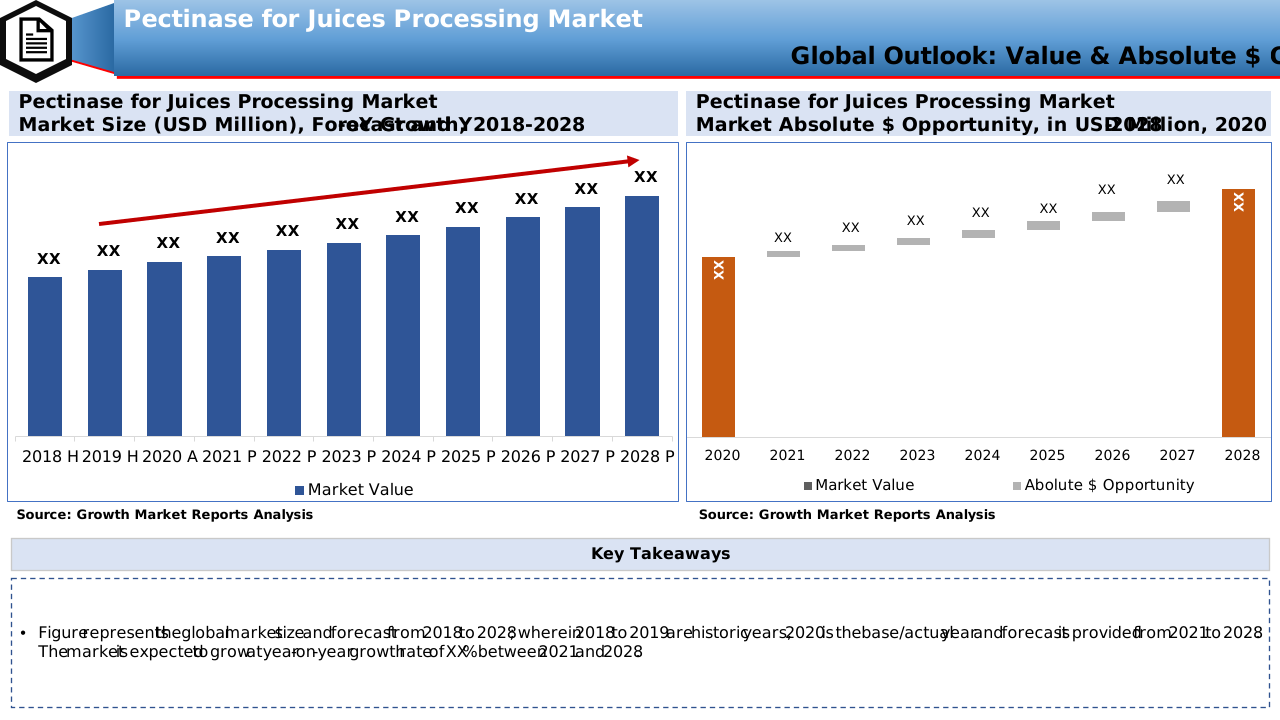
According to our latest research, the pectinase for juices processing market size reached USD 412.7 million globally in 2024, demonstrating robust expansion driven by the surging demand for natural fruit and vegetable juices. The market is projected to record a steady CAGR of 7.2% from 2025 to 2033, reaching a forecasted size of USD 777.6 million by 2033. This significant growth is attributed to the increasing preference for clean-label beverages, advancements in enzyme technology, and the growing adoption of pectinase enzymes to enhance juice yield, clarity, and processing efficiency across the food and beverage sector.

The primary growth driver for the pectinase for juices processing market is the rising global consumption of fruit and vegetable juices, fueled by heightened consumer awareness around health and wellness. With consumers seeking natural, additive-free beverages, juice manufacturers are under pressure to innovate and improve product quality. Pectinase enzymes play a crucial role in breaking down pectin, a structural polysaccharide in fruit cell walls, thereby facilitating higher juice extraction, improved clarity, and better texture. The adoption of pectinase thus helps manufacturers meet consumer expectations for premium, visually appealing, and nutritious juices, directly contributing to market growth. Furthermore, the increasing demand for minimally processed, shelf-stable juices without compromising nutritional value has further accelerated the integration of advanced enzyme solutions like pectinase in juice processing lines worldwide.

Another significant factor propelling the market is the technological advancements in enzyme production and formulation. Innovations in biotechnology have enabled the development of highly specific, stable, and efficient pectinase variants tailored for different fruit and vegetable matrices. These advancements allow for customized enzyme blends that optimize yield and quality for diverse juice types, including those with challenging pectin structures. The improved cost-effectiveness and scalability of modern enzyme manufacturing processes have also made pectinase solutions more accessible to both large-scale and small-to-medium juice processors. Additionally, regulatory approvals for food-grade enzymes and the trend towards sustainable, eco-friendly production practices are further incentivizing the adoption of pectinase, as manufacturers seek to reduce waste and enhance operational efficiency.

The marketÂ’s expansion is further supported by the growing penetration of pectinase in emerging economies, particularly in Asia Pacific and Latin America, where increasing disposable incomes and urbanization are driving demand for processed fruit and vegetable juices. Government initiatives promoting the consumption of healthier beverages and investments in food processing infrastructure are creating favorable conditions for market growth. Moreover, the proliferation of e-commerce and online retail channels has enhanced the accessibility of pectinase products, enabling smaller juice processors to procure specialized enzymes and compete with established players. This democratization of enzyme access is fostering innovation and diversification within the juice processing industry, further boosting market momentum.

Fruit and Vegetable Enzymes play a pivotal role in the juice processing industry, especially in enhancing the efficiency and quality of juice production. These enzymes, including pectinase, are crucial for breaking down complex carbohydrates in fruits and vegetables, facilitating higher juice yield and improved clarity. As consumer demand for natural and nutritious beverages grows, the use of fruit and vegetable enzymes has become increasingly important. They not only help in maintaining the nutritional integrity of the juices but also ensure that the processing is done in an eco-friendly manner, aligning with the industry's shift towards sustainable practices. The integration of these enzymes is particularly beneficial in processing a variety of fruits and vegetables, each with unique pectin structures, thus optimizing the extraction process and enhancing the overall sensory attributes of the juices.

From a regional perspective, Asia Pacific currently leads the global pectinase for juices processing market, accounting for approximately 34% of the total market share in 2024. This dominance is driven by the regionÂ’s robust fruit and vegetable production base, rapid urbanization, and increasing investments in food processing technologies. North America and Europe follow closely, benefiting from mature juice markets, stringent quality standards, and the early adoption of advanced enzyme solutions. Latin America and the Middle East & Africa are also witnessing notable growth, albeit from a smaller base, as local juice industries modernize and consumer preferences shift towards healthier beverage options. The interplay of these regional dynamics is expected to shape the competitive landscape and innovation trajectory of the global pectinase for juices processing market over the forecast period.

Global Pectinase for Juices Processing Industry Outlook

Product Type Analysis

The product type segment of the pectinase for juices processing market is broadly categorized into liquid pectinase and powder pectinase. Each product type offers unique advantages and is selected based on the specific requirements of juice processors. Liquid pectinase dominates the market, owing to its ease of integration into automated processing lines and its rapid solubility in juice matrices. Liquid formulations are particularly favored by large-scale juice manufacturers who require consistent, high-volume production with minimal downtime. The high demand for liquid pectinase is also attributed to its superior performance in continuous processing systems, where uniform enzyme distribution and fast reaction kinetics are critical for maximizing juice yield and clarity.

Powder pectinase, on the other hand, is gaining traction among small and medium-sized juice processors due to its longer shelf life, ease of storage, and cost-effectiveness in transportation. Powdered formulations are particularly suitable for regions with challenging logistics or limited cold chain infrastructure, as they are less susceptible to degradation during transit and storage. Additionally, powder pectinase allows for flexible dosing and can be easily reconstituted as needed, offering versatility for processors handling a variety of fruit and vegetable substrates. The rising popularity of on-demand juice production and the growth of artisanal juice brands are further fueling the adoption of powder pectinase in niche market segments.

Technological innovation is playing a pivotal role in product differentiation within the pectinase segment. Manufacturers are investing in the development of highly concentrated liquid and powder formulations that offer improved stability, enhanced enzymatic activity, and tailored specificity for different juice applications. For instance, next-generation liquid pectinase products are now available with extended shelf stability and resistance to temperature fluctuations, addressing a key concern for processors operating in diverse climatic conditions. Similarly, advancements in microencapsulation and granulation technologies are enabling the production of powder pectinase with enhanced dispersibility and controlled-release properties, further expanding its utility in specialized juice processing scenarios.

End-user preferences and processing infrastructure also influence the choice between liquid and powder pectinase. Large beverage conglomerates with advanced, automated facilities tend to favor liquid enzymes for their seamless integration and process efficiency. In contrast, small-scale processors, particularly in developing regions, often opt for powder formulations due to their lower upfront investment and adaptability to manual or semi-automated processing setups. This segmentation underscores the importance of product customization and targeted marketing strategies for enzyme manufacturers seeking to capture a diverse and evolving customer base in the global pectinase for juices processing market.

Report Scope

Attributes Details
Report Title Pectinase for Juices Processing Market Research Report 2033
By Product Type Liquid Pectinase, Powder Pectinase
By Application Fruit Juices, Vegetable Juices, Blended Juices, Others
By Source Fungal, Bacterial, Yeast
By Distribution Channel Direct Sales, Distributors/Wholesalers, Online Retail
By End-User Food & Beverage Manufacturers, Juice Processing Companies, Others
Regions Covered North America, Europe, APAC, Latin America, MEA
Base Year 2024
Historic Data 2018-2023
Forecast Period 2025-2033
Number of Pages 258
Number of Tables & Figures 268
Customization Available Yes, the report can be customized as per your need.

Application Analysis

The application segment of the pectinase for juices processing market is divided into fruit juices, vegetable juices, blended juices, and others. Fruit juices represent the largest application segment, accounting for over 52% of total market revenue in 2024. The predominance of fruit juices is driven by their widespread popularity among consumers, the diversity of fruit varieties processed, and the high pectin content of many fruits such as apples, oranges, and grapes. Pectinase enzymes are essential in fruit juice production for breaking down complex pectin molecules, thereby increasing juice yield, improving clarity, and enhancing the sensory attributes of the final product. The growing demand for premium, cold-pressed, and not-from-concentrate fruit juices is further boosting the utilization of advanced pectinase solutions in this segment.

Vegetable juices are emerging as a high-growth application area, fueled by the rising trend of functional and detox beverages. Vegetables such as carrots, beets, and tomatoes contain significant amounts of pectin, making pectinase enzymes indispensable for efficient juice extraction and stabilization. The increasing popularity of plant-based diets and the integration of vegetable juices into health and wellness regimes are expanding the market for specialized pectinase blends tailored to the unique composition of various vegetables. Manufacturers are developing enzyme formulations that address the specific challenges of vegetable juice processing, such as viscosity reduction, color retention, and nutrient preservation, thereby unlocking new opportunities for innovation and product differentiation.

Blended juices, which combine fruit and vegetable components, represent a dynamic and rapidly expanding application segment. The complexity of blended juice matrices requires versatile pectinase solutions capable of acting on a diverse range of pectin structures. The trend towards functional beverages with added vitamins, minerals, and plant extracts is driving demand for multi-functional enzyme blends that can optimize juice yield, clarity, and stability across a wide spectrum of ingredients. The ability of pectinase to enhance the mouthfeel and visual appeal of blended juices is a key factor influencing its adoption in this segment, particularly among premium and health-oriented beverage brands.

Other applications of pectinase in juice processing include the production of juice concentrates, nectars, and specialty beverages such as probiotic juices and fermented drinks. In these niche segments, pectinase enzymes play a critical role in ensuring product consistency, extending shelf life, and maintaining desirable sensory characteristics. The increasing diversification of juice portfolios and the introduction of innovative beverage formats are expected to drive further growth in the application of pectinase across both mainstream and emerging juice categories. As consumer preferences continue to evolve, the demand for tailored enzyme solutions that address specific processing challenges will remain a key growth driver for the pectinase for juices processing market.

Source Analysis

The source segment of the pectinase for juices processing market is categorized into fungal, bacterial, and yeast-derived pectinase. Fungal pectinase holds the largest market share, accounting for approximately 61% of total revenue in 2024, owing to its high activity, broad substrate specificity, and established safety profile in food applications. Fungal strains such as Aspergillus niger are widely used for industrial pectinase production due to their ability to secrete large quantities of extracellular enzymes with optimal activity at the acidic pH levels typical of fruit and vegetable juices. The proven efficacy, scalability, and regulatory acceptance of fungal pectinase make it the preferred choice for most commercial juice processing operations.

Bacterial pectinase is gaining attention for its unique properties, including higher thermal stability and the ability to function at a broader pH range. These characteristics make bacterial pectinase particularly suitable for processing juices from heat-sensitive fruits and vegetables or for applications requiring high-temperature pasteurization. Advances in microbial fermentation and genetic engineering have enabled the development of bacterial strains capable of producing pectinase with tailored activity profiles, further expanding their utility in specialized juice processing scenarios. While currently representing a smaller share of the market, bacterial pectinase is expected to witness accelerated adoption as manufacturers seek to optimize processing efficiency and product quality.

Yeast-derived pectinase, though less common than fungal and bacterial sources, is finding niche applications in the juice industry, particularly in the production of organic and clean-label beverages. Yeast-based enzymes are often perceived as more natural and may be preferred by processors targeting health-conscious consumers or those seeking to minimize the use of genetically modified organisms. The relatively mild enzymatic activity of yeast-derived pectinase makes it suitable for delicate juice matrices where over-processing could compromise sensory attributes. Ongoing research into novel yeast strains and fermentation techniques is expected to enhance the performance and commercial viability of yeast-derived pectinase in the coming years.

The choice of pectinase source is influenced by a range of factors, including the type of juice being processed, desired processing conditions, regulatory requirements, and end-user preferences. Manufacturers are increasingly offering customized enzyme solutions that combine the strengths of different microbial sources to deliver optimal performance across a variety of juice substrates. The growing emphasis on sustainability and clean-label formulations is also driving interest in non-GMO and naturally sourced pectinase, further diversifying the competitive landscape of the market. As the juice processing industry continues to evolve, the ability to offer source-specific enzyme solutions will be a key differentiator for pectinase suppliers.

Distribution Channel Analysis

The distribution channel segment for pectinase in juices processing includes direct sales, distributors/wholesalers, and online retail. Direct sales remain the dominant channel, accounting for over 47% of the market in 2024, as major food and beverage manufacturers prefer to establish long-term partnerships with enzyme suppliers for consistent quality, technical support, and customized solutions. Direct sales channels enable manufacturers to negotiate favorable pricing, ensure timely delivery, and access value-added services such as on-site technical assistance and process optimization. This approach is particularly prevalent among large-scale juice processors with significant purchasing power and complex operational requirements.

Distributors and wholesalers play a crucial role in expanding the reach of pectinase products, particularly in emerging markets and among small-to-medium-sized juice processors. By leveraging established distribution networks and local market expertise, distributors help enzyme manufacturers penetrate new geographies and customer segments. Distributors also offer logistical support, inventory management, and after-sales service, making them a valuable partner for processors with limited in-house resources. The growth of the juice processing industry in developing regions is expected to drive increased reliance on distributor and wholesaler channels over the forecast period.

Online retail is an emerging distribution channel, propelled by the digitalization of procurement processes and the growing preference for convenience and transparency among buyers. E-commerce platforms enable juice processors to compare products, access detailed technical information, and place orders with minimal lead time. Online retail is particularly attractive to small and artisanal juice producers who require flexible order quantities and may not have direct access to major suppliers. The proliferation of online marketplaces and specialized B2B platforms is democratizing access to pectinase products, fostering greater competition and innovation in the market.

The choice of distribution channel is influenced by factors such as company size, geographic location, purchasing volume, and the complexity of technical support required. Enzyme manufacturers are increasingly adopting omnichannel strategies, combining direct sales, distributor partnerships, and digital platforms to maximize market reach and customer engagement. The integration of digital tools such as online configurators, technical support chatbots, and remote diagnostics is further enhancing the efficiency and responsiveness of distribution networks. As the pectinase for juices processing market continues to expand, the ability to offer seamless, multi-channel distribution will be critical for capturing and retaining a diverse customer base.

End-User Analysis

The end-user segment for pectinase in juices processing is divided into food and beverage manufacturers, juice processing companies, and others. Food and beverage manufacturers constitute the largest end-user group, representing approximately 58% of total market demand in 2024. These companies encompass multinational beverage conglomerates, private-label brands, and contract manufacturers who produce a wide array of juice products for global and regional markets. The scale and complexity of operations in this segment necessitate the use of advanced pectinase solutions to maximize yield, enhance product quality, and ensure compliance with stringent regulatory standards. Food and beverage manufacturers are also at the forefront of innovation, driving the adoption of next-generation enzyme formulations and sustainable processing practices.

Juice processing companies, including both independent processors and integrated fruit and vegetable cooperatives, represent a significant and growing end-user segment. These companies are primarily focused on the extraction, clarification, and concentration of juices for sale to beverage brands, foodservice operators, and industrial customers. The need for efficient, cost-effective processing solutions is particularly acute in this segment, as margins are often under pressure from volatile raw material prices and intense market competition. Pectinase enzymes are valued for their ability to increase juice yield, reduce processing time, and minimize waste, making them an indispensable tool for juice processors seeking to optimize profitability and sustainability.

Other end-users of pectinase in juice processing include specialty beverage producers, research and development laboratories, and academic institutions. These organizations often require tailored enzyme solutions for pilot-scale production, product development, and scientific research. The growing interest in functional beverages, probiotic juices, and plant-based formulations is creating new opportunities for pectinase suppliers to collaborate with innovative end-users on customized enzyme blends and novel processing techniques. As the boundaries between traditional juice categories and emerging beverage formats continue to blur, the ability to offer flexible, application-specific enzyme solutions will be a key success factor for market participants.

The end-user landscape for pectinase in juices processing is characterized by increasing fragmentation and diversification, reflecting the evolving needs of a dynamic and competitive industry. Large multinational companies are driving demand for high-performance, scalable enzyme solutions, while smaller and niche players are seeking cost-effective, easy-to-use products that enable differentiation and market entry. Enzyme manufacturers are responding by expanding their product portfolios, enhancing technical support capabilities, and investing in customer education and training. The ongoing shift towards health-conscious, clean-label, and sustainable beverages is expected to further shape end-user demand and influence the future trajectory of the pectinase for juices processing market.

Opportunities & Threats

The pectinase for juices processing market is poised for significant opportunities over the forecast period. One of the most promising avenues is the increasing demand for clean-label and organic juices, which necessitates the use of natural, non-chemical processing aids. Pectinase enzymes, derived from microbial sources, align perfectly with this trend, enabling manufacturers to produce high-quality juices without synthetic additives or harsh processing methods. The growing consumer preference for transparency, traceability, and minimally processed foods is expected to drive further adoption of enzyme-based solutions across the juice industry. Additionally, the rise of functional beverages and fortified juices presents new opportunities for pectinase suppliers to develop customized enzyme blends that enhance the nutritional profile, stability, and sensory appeal of next-generation juice products.

Another key opportunity lies in the expansion of pectinase applications beyond traditional fruit juices into emerging segments such as vegetable juices, blended beverages, and specialty drinks. The increasing popularity of plant-based diets, detox beverages, and wellness-oriented products is creating demand for versatile enzyme solutions capable of processing a diverse range of raw materials. Technological advancements in enzyme engineering, fermentation, and formulation are enabling the development of pectinase variants with enhanced specificity, stability, and performance under challenging processing conditions. The integration of digital technologies, such as process monitoring and optimization software, is further enhancing the value proposition of enzyme-based solutions, enabling juice processors to achieve greater efficiency, consistency, and sustainability.

Despite the favorable outlook, the pectinase for juices processing market faces several restraining factors. One of the primary challenges is the high sensitivity of enzyme activity to processing conditions such as temperature, pH, and substrate composition. Variability in raw material quality, particularly in regions with inconsistent fruit and vegetable supply chains, can impact enzyme performance and necessitate frequent process adjustments. Additionally, the relatively high cost of advanced enzyme formulations may limit adoption among price-sensitive processors, particularly in developing markets. Regulatory hurdles related to enzyme approval, labeling, and food safety can also pose barriers to market entry and expansion. Addressing these challenges will require ongoing investment in research, technical support, and customer education by enzyme manufacturers and industry stakeholders.

Regional Outlook

The regional analysis of the pectinase for juices processing market reveals distinct growth patterns and market dynamics across major geographies. Asia Pacific leads the global market, accounting for approximately USD 140.3 million in revenue in 2024, driven by the regionÂ’s vast fruit and vegetable production base, rapid urbanization, and rising disposable incomes. China, India, and Southeast Asian countries are at the forefront of market expansion, supported by government initiatives to modernize food processing infrastructure and promote healthy beverage consumption. The Asia Pacific market is expected to maintain a robust CAGR of 8.1% through 2033, outpacing global averages and attracting significant investments from both local and international enzyme manufacturers.

North America represents the second-largest regional market, with revenues reaching USD 112.6 million in 2024. The region benefits from a mature juice industry, high consumer awareness, and early adoption of advanced enzyme technologies. The United States and Canada are key contributors, with a strong presence of multinational beverage companies and a growing trend toward premium, organic, and functional juices. The North American market is characterized by stringent quality standards, regulatory compliance, and a focus on sustainability, driving demand for high-performance, food-grade pectinase solutions. Ongoing innovation in juice formulations and processing methods is expected to sustain steady growth in this region over the forecast period.

Europe holds a significant share of the global pectinase for juices processing market, with revenues estimated at USD 98.1 million in 2024. The region is known for its diverse fruit production, sophisticated food processing sector, and strong regulatory framework supporting enzyme use in food applications. Germany, France, Italy, and Spain are major markets, with a focus on high-quality, artisanal, and value-added juice products. The European market is also witnessing increased demand for clean-label and organic beverages, driving the adoption of natural, non-GMO enzyme solutions. Latin America and the Middle East & Africa, while smaller in absolute terms, are experiencing rapid growth as local juice industries modernize and consumer preferences evolve. Collectively, these regional trends underscore the global nature of the pectinase for juices processing market and highlight the need for tailored strategies to capture emerging opportunities across diverse geographies.

Pectinase for Juices Processing Market Statistics

Competitor Outlook

The competitive landscape of the pectinase for juices processing market is characterized by the presence of both global enzyme giants and specialized regional players. The market is moderately consolidated, with a handful of multinational companies accounting for a significant share of global revenues. These industry leaders leverage their extensive R&D capabilities, broad product portfolios, and established distribution networks to maintain a competitive edge. At the same time, the market is witnessing the entry of innovative startups and niche suppliers focused on developing tailored enzyme solutions for specific juice applications or regional markets. This dynamic environment is fostering intense competition, driving continuous innovation, and encouraging strategic partnerships and acquisitions.

Product innovation is a key focus area for leading competitors, with companies investing heavily in the development of next-generation pectinase formulations that offer enhanced performance, stability, and sustainability. Advances in enzyme engineering, fermentation technology, and formulation science are enabling manufacturers to create highly specific, multi-functional, and cost-effective pectinase products. These innovations are designed to address the evolving needs of juice processors, including the demand for clean-label, organic, and non-GMO solutions. In addition to product development, leading players are also enhancing their technical support capabilities, offering comprehensive process optimization services, training programs, and digital tools to help customers maximize the value of enzyme-based solutions.

Strategic collaborations and partnerships are increasingly common in the pectinase for juices processing market, as companies seek to expand their geographic reach, access new customer segments, and accelerate innovation. Multinational enzyme manufacturers are forming alliances with local distributors, research institutions, and juice processors to co-develop customized solutions and address region-specific challenges. Mergers and acquisitions are also shaping the competitive landscape, enabling companies to broaden their product offerings, enhance their technological capabilities, and strengthen their market position. The ongoing consolidation of the enzyme industry is expected to drive further efficiencies, facilitate knowledge sharing, and foster the development of integrated, end-to-end solutions for the juice processing sector.

Some of the major companies operating in the global pectinase for juices processing market include Novozymes A/S, DuPont (IFF), DSM, AB Enzymes, Amano Enzyme Inc., and Advanced Enzyme Technologies. Novozymes A/S is a market leader known for its extensive portfolio of food-grade enzymes and strong focus on sustainability and innovation. DuPont (IFF) leverages its expertise in biotechnology and food ingredients to offer high-performance pectinase solutions for diverse juice applications. DSM is recognized for its commitment to research and development, delivering enzyme products that combine efficiency, safety, and environmental responsibility. AB Enzymes and Amano Enzyme Inc. are prominent players with a strong presence in both developed and emerging markets, offering tailored solutions and technical support to juice processors worldwide. Advanced Enzyme Technologies is a leading supplier in Asia, known for its innovative enzyme formulations and customer-centric approach. Collectively, these companies are shaping the future of the pectinase for juices processing market through continuous innovation, strategic investments, and a relentless focus on customer needs.

Key Players

  • Novozymes A/S
  • DuPont Nutrition & Health
  • DSM Food Specialties
  • AB Enzymes GmbH
  • Amano Enzyme Inc.
  • Advanced Enzyme Technologies Ltd.
  • Enzyme Development Corporation
  • SternEnzym GmbH & Co. KG
  • Jiangsu Boli Bioproducts Co., Ltd.
  • Sunson Industry Group Co., Ltd.
  • VTR Bio-Tech Co., Ltd.
  • Shandong Longda Bio-Products Co., Ltd.
  • Zhongda Hengyuan Biotechnology Stock Co., Ltd.
  • Biocatalysts Ltd.
  • BASF SE
  • Chr. Hansen Holding A/S
  • Kerry Group plc
  • Enzyme Solutions Inc.
  • Sukahan (Weifang) Bio-Technology Co., Ltd.
  • Creative Enzymes
Pectinase for Juices Processing Market Overview

Segments

The Pectinase for Juices Processing market has been segmented on the basis of

Product Type

  • Liquid Pectinase
  • Powder Pectinase

Application

  • Fruit Juices
  • Vegetable Juices
  • Blended Juices
  • Others

Source

  • Fungal
  • Bacterial
  • Yeast

Distribution Channel

  • Direct Sales
  • Distributors/Wholesalers
  • Online Retail

End-User

  • Food & Beverage Manufacturers
  • Juice Processing Companies
  • Others

Competitive Landscape

Major players competing in the global pectinase for juices processing market include Herbstreith & Fox, Devson Impex Private Limited, uPont Nutrition & Health, Yantai Andre Pectin Co. Ltd., FMC Corporation, CP Kelco, Cargill Incorporated, and B&V srl.

Some of these companies are engaged in adopting several market strategies such as merger, acquisition, collaboration, partnership, product launch, R&D activities, and capacity expansion to increase their market share and global presence.
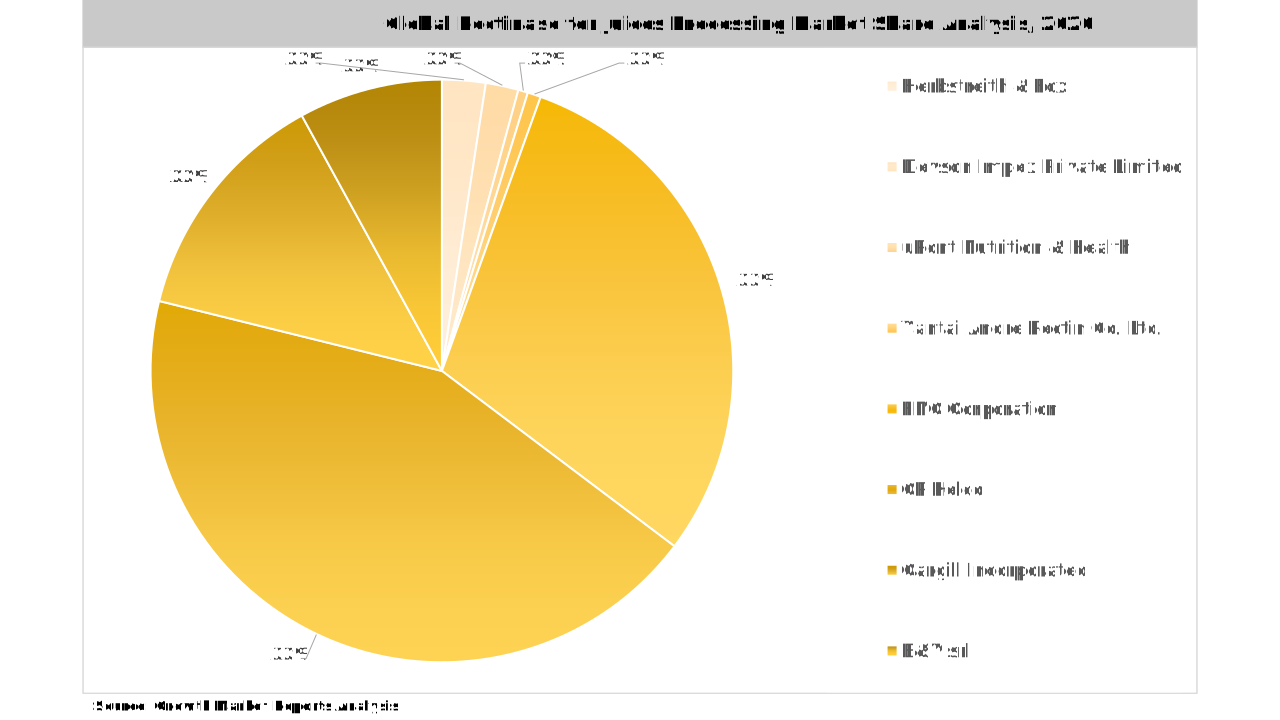

Global Pectinase for Juices Processing Market By Key Players

Frequently Asked Questions

Major players include Novozymes A/S, DuPont (IFF), DSM, AB Enzymes, Amano Enzyme Inc., Advanced Enzyme Technologies, and several others specializing in enzyme solutions for juice processing.

Opportunities include rising demand for clean-label and organic juices, expansion into vegetable and blended juices, and technological advancements. Challenges involve enzyme sensitivity to processing conditions, raw material variability, high costs, and regulatory hurdles.

End-users include food and beverage manufacturers, juice processing companies, and specialty beverage producers, with food and beverage manufacturers representing about 58% of total demand in 2024.

Distribution channels include direct sales, distributors/wholesalers, and online retail. Direct sales dominate, especially among large manufacturers, while online retail is growing among small and artisanal juice producers.

Pectinase enzymes are derived from fungal, bacterial, and yeast sources. Fungal pectinase holds the largest market share due to its high activity and safety profile, while bacterial and yeast-derived pectinases are gaining traction for specific applications.

Pectinase is mainly used in fruit juices, vegetable juices, blended juices, and specialty beverages like juice concentrates and probiotic drinks, with fruit juices accounting for over 52% of market revenue in 2024.

The market is segmented into liquid pectinase and powder pectinase. Liquid pectinase is preferred for large-scale, automated processing, while powder pectinase is favored by small and medium processors for its shelf life and ease of storage.

Asia Pacific leads the market with about 34% share in 2024, followed by North America and Europe. Latin America and the Middle East & Africa are also experiencing notable growth.

Key growth drivers include rising demand for natural and clean-label juices, advancements in enzyme technology, increased juice yield and clarity, and the growing adoption of pectinase in food and beverage processing.

The global pectinase for juices processing market reached USD 412.7 million in 2024 and is projected to grow at a CAGR of 7.2% from 2025 to 2033, reaching USD 777.6 million by 2033.

Table Of Content

Chapter 1 Executive Summary
Chapter 2 Assumptions and Acronyms Used
Chapter 3 Research Methodology
Chapter 4 Pectinase for Juices Processing Market Overview
   4.1 Introduction
      4.1.1 Market Taxonomy
      4.1.2 Market Definition
      4.1.3 Macro-Economic Factors Impacting the Market Growth
   4.2 Pectinase for Juices Processing Market Dynamics
      4.2.1 Market Drivers
      4.2.2 Market Restraints
      4.2.3 Market Opportunity
   4.3 Pectinase for Juices Processing Market - Supply Chain Analysis
      4.3.1 List of Key Suppliers
      4.3.2 List of Key Distributors
      4.3.3 List of Key Consumers
   4.4 Key Forces Shaping the Pectinase for Juices Processing Market
      4.4.1 Bargaining Power of Suppliers
      4.4.2 Bargaining Power of Buyers
      4.4.3 Threat of Substitution
      4.4.4 Threat of New Entrants
      4.4.5 Competitive Rivalry
   4.5 Global Pectinase for Juices Processing Market Size & Forecast, 2023-2032
      4.5.1 Pectinase for Juices Processing Market Size and Y-o-Y Growth
      4.5.2 Pectinase for Juices Processing Market Absolute $ Opportunity

Chapter 5 Global Pectinase for Juices Processing Market Analysis and Forecast By Product Type
   5.1 Introduction
      5.1.1 Key Market Trends & Growth Opportunities By Product Type
      5.1.2 Basis Point Share (BPS) Analysis By Product Type
      5.1.3 Absolute $ Opportunity Assessment By Product Type
   5.2 Pectinase for Juices Processing Market Size Forecast By Product Type
      5.2.1 Liquid Pectinase
      5.2.2 Powder Pectinase
   5.3 Market Attractiveness Analysis By Product Type

Chapter 6 Global Pectinase for Juices Processing Market Analysis and Forecast By Application
   6.1 Introduction
      6.1.1 Key Market Trends & Growth Opportunities By Application
      6.1.2 Basis Point Share (BPS) Analysis By Application
      6.1.3 Absolute $ Opportunity Assessment By Application
   6.2 Pectinase for Juices Processing Market Size Forecast By Application
      6.2.1 Fruit Juices
      6.2.2 Vegetable Juices
      6.2.3 Blended Juices
      6.2.4 Others
   6.3 Market Attractiveness Analysis By Application

Chapter 7 Global Pectinase for Juices Processing Market Analysis and Forecast By Source
   7.1 Introduction
      7.1.1 Key Market Trends & Growth Opportunities By Source
      7.1.2 Basis Point Share (BPS) Analysis By Source
      7.1.3 Absolute $ Opportunity Assessment By Source
   7.2 Pectinase for Juices Processing Market Size Forecast By Source
      7.2.1 Fungal
      7.2.2 Bacterial
      7.2.3 Yeast
   7.3 Market Attractiveness Analysis By Source

Chapter 8 Global Pectinase for Juices Processing Market Analysis and Forecast By Distribution Channel
   8.1 Introduction
      8.1.1 Key Market Trends & Growth Opportunities By Distribution Channel
      8.1.2 Basis Point Share (BPS) Analysis By Distribution Channel
      8.1.3 Absolute $ Opportunity Assessment By Distribution Channel
   8.2 Pectinase for Juices Processing Market Size Forecast By Distribution Channel
      8.2.1 Direct Sales
      8.2.2 Distributors/Wholesalers
      8.2.3 Online Retail
   8.3 Market Attractiveness Analysis By Distribution Channel

Chapter 9 Global Pectinase for Juices Processing Market Analysis and Forecast By End-User
   9.1 Introduction
      9.1.1 Key Market Trends & Growth Opportunities By End-User
      9.1.2 Basis Point Share (BPS) Analysis By End-User
      9.1.3 Absolute $ Opportunity Assessment By End-User
   9.2 Pectinase for Juices Processing Market Size Forecast By End-User
      9.2.1 Food & Beverage Manufacturers
      9.2.2 Juice Processing Companies
      9.2.3 Others
   9.3 Market Attractiveness Analysis By End-User

Chapter 10 Global Pectinase for Juices Processing Market Analysis and Forecast by Region
   10.1 Introduction
      10.1.1 Key Market Trends & Growth Opportunities By Region
      10.1.2 Basis Point Share (BPS) Analysis By Region
      10.1.3 Absolute $ Opportunity Assessment By Region
   10.2 Pectinase for Juices Processing Market Size Forecast By Region
      10.2.1 North America
      10.2.2 Europe
      10.2.3 Asia Pacific
      10.2.4 Latin America
      10.2.5 Middle East & Africa (MEA)
   10.3 Market Attractiveness Analysis By Region

Chapter 11 Coronavirus Disease (COVID-19) Impact 
   11.1 Introduction 
   11.2 Current & Future Impact Analysis 
   11.3 Economic Impact Analysis 
   11.4 Government Policies 
   11.5 Investment Scenario

Chapter 12 North America Pectinase for Juices Processing Analysis and Forecast
   12.1 Introduction
   12.2 North America Pectinase for Juices Processing Market Size Forecast by Country
      12.2.1 U.S.
      12.2.2 Canada
   12.3 Basis Point Share (BPS) Analysis by Country
   12.4 Absolute $ Opportunity Assessment by Country
   12.5 Market Attractiveness Analysis by Country
   12.6 North America Pectinase for Juices Processing Market Size Forecast By Product Type
      12.6.1 Liquid Pectinase
      12.6.2 Powder Pectinase
   12.7 Basis Point Share (BPS) Analysis By Product Type 
   12.8 Absolute $ Opportunity Assessment By Product Type 
   12.9 Market Attractiveness Analysis By Product Type
   12.10 North America Pectinase for Juices Processing Market Size Forecast By Application
      12.10.1 Fruit Juices
      12.10.2 Vegetable Juices
      12.10.3 Blended Juices
      12.10.4 Others
   12.11 Basis Point Share (BPS) Analysis By Application 
   12.12 Absolute $ Opportunity Assessment By Application 
   12.13 Market Attractiveness Analysis By Application
   12.14 North America Pectinase for Juices Processing Market Size Forecast By Source
      12.14.1 Fungal
      12.14.2 Bacterial
      12.14.3 Yeast
   12.15 Basis Point Share (BPS) Analysis By Source 
   12.16 Absolute $ Opportunity Assessment By Source 
   12.17 Market Attractiveness Analysis By Source
   12.18 North America Pectinase for Juices Processing Market Size Forecast By Distribution Channel
      12.18.1 Direct Sales
      12.18.2 Distributors/Wholesalers
      12.18.3 Online Retail
   12.19 Basis Point Share (BPS) Analysis By Distribution Channel 
   12.20 Absolute $ Opportunity Assessment By Distribution Channel 
   12.21 Market Attractiveness Analysis By Distribution Channel
   12.22 North America Pectinase for Juices Processing Market Size Forecast By End-User
      12.22.1 Food & Beverage Manufacturers
      12.22.2 Juice Processing Companies
      12.22.3 Others
   12.23 Basis Point Share (BPS) Analysis By End-User 
   12.24 Absolute $ Opportunity Assessment By End-User 
   12.25 Market Attractiveness Analysis By End-User

Chapter 13 Europe Pectinase for Juices Processing Analysis and Forecast
   13.1 Introduction
   13.2 Europe Pectinase for Juices Processing Market Size Forecast by Country
      13.2.1 Germany
      13.2.2 France
      13.2.3 Italy
      13.2.4 U.K.
      13.2.5 Spain
      13.2.6 Russia
      13.2.7 Rest of Europe
   13.3 Basis Point Share (BPS) Analysis by Country
   13.4 Absolute $ Opportunity Assessment by Country
   13.5 Market Attractiveness Analysis by Country
   13.6 Europe Pectinase for Juices Processing Market Size Forecast By Product Type
      13.6.1 Liquid Pectinase
      13.6.2 Powder Pectinase
   13.7 Basis Point Share (BPS) Analysis By Product Type 
   13.8 Absolute $ Opportunity Assessment By Product Type 
   13.9 Market Attractiveness Analysis By Product Type
   13.10 Europe Pectinase for Juices Processing Market Size Forecast By Application
      13.10.1 Fruit Juices
      13.10.2 Vegetable Juices
      13.10.3 Blended Juices
      13.10.4 Others
   13.11 Basis Point Share (BPS) Analysis By Application 
   13.12 Absolute $ Opportunity Assessment By Application 
   13.13 Market Attractiveness Analysis By Application
   13.14 Europe Pectinase for Juices Processing Market Size Forecast By Source
      13.14.1 Fungal
      13.14.2 Bacterial
      13.14.3 Yeast
   13.15 Basis Point Share (BPS) Analysis By Source 
   13.16 Absolute $ Opportunity Assessment By Source 
   13.17 Market Attractiveness Analysis By Source
   13.18 Europe Pectinase for Juices Processing Market Size Forecast By Distribution Channel
      13.18.1 Direct Sales
      13.18.2 Distributors/Wholesalers
      13.18.3 Online Retail
   13.19 Basis Point Share (BPS) Analysis By Distribution Channel 
   13.20 Absolute $ Opportunity Assessment By Distribution Channel 
   13.21 Market Attractiveness Analysis By Distribution Channel
   13.22 Europe Pectinase for Juices Processing Market Size Forecast By End-User
      13.22.1 Food & Beverage Manufacturers
      13.22.2 Juice Processing Companies
      13.22.3 Others
   13.23 Basis Point Share (BPS) Analysis By End-User 
   13.24 Absolute $ Opportunity Assessment By End-User 
   13.25 Market Attractiveness Analysis By End-User

Chapter 14 Asia Pacific Pectinase for Juices Processing Analysis and Forecast
   14.1 Introduction
   14.2 Asia Pacific Pectinase for Juices Processing Market Size Forecast by Country
      14.2.1 China
      14.2.2 Japan
      14.2.3 South Korea
      14.2.4 India
      14.2.5 Australia
      14.2.6 South East Asia (SEA)
      14.2.7 Rest of Asia Pacific (APAC)
   14.3 Basis Point Share (BPS) Analysis by Country
   14.4 Absolute $ Opportunity Assessment by Country
   14.5 Market Attractiveness Analysis by Country
   14.6 Asia Pacific Pectinase for Juices Processing Market Size Forecast By Product Type
      14.6.1 Liquid Pectinase
      14.6.2 Powder Pectinase
   14.7 Basis Point Share (BPS) Analysis By Product Type 
   14.8 Absolute $ Opportunity Assessment By Product Type 
   14.9 Market Attractiveness Analysis By Product Type
   14.10 Asia Pacific Pectinase for Juices Processing Market Size Forecast By Application
      14.10.1 Fruit Juices
      14.10.2 Vegetable Juices
      14.10.3 Blended Juices
      14.10.4 Others
   14.11 Basis Point Share (BPS) Analysis By Application 
   14.12 Absolute $ Opportunity Assessment By Application 
   14.13 Market Attractiveness Analysis By Application
   14.14 Asia Pacific Pectinase for Juices Processing Market Size Forecast By Source
      14.14.1 Fungal
      14.14.2 Bacterial
      14.14.3 Yeast
   14.15 Basis Point Share (BPS) Analysis By Source 
   14.16 Absolute $ Opportunity Assessment By Source 
   14.17 Market Attractiveness Analysis By Source
   14.18 Asia Pacific Pectinase for Juices Processing Market Size Forecast By Distribution Channel
      14.18.1 Direct Sales
      14.18.2 Distributors/Wholesalers
      14.18.3 Online Retail
   14.19 Basis Point Share (BPS) Analysis By Distribution Channel 
   14.20 Absolute $ Opportunity Assessment By Distribution Channel 
   14.21 Market Attractiveness Analysis By Distribution Channel
   14.22 Asia Pacific Pectinase for Juices Processing Market Size Forecast By End-User
      14.22.1 Food & Beverage Manufacturers
      14.22.2 Juice Processing Companies
      14.22.3 Others
   14.23 Basis Point Share (BPS) Analysis By End-User 
   14.24 Absolute $ Opportunity Assessment By End-User 
   14.25 Market Attractiveness Analysis By End-User

Chapter 15 Latin America Pectinase for Juices Processing Analysis and Forecast
   15.1 Introduction
   15.2 Latin America Pectinase for Juices Processing Market Size Forecast by Country
      15.2.1 Brazil
      15.2.2 Mexico
      15.2.3 Rest of Latin America (LATAM)
   15.3 Basis Point Share (BPS) Analysis by Country
   15.4 Absolute $ Opportunity Assessment by Country
   15.5 Market Attractiveness Analysis by Country
   15.6 Latin America Pectinase for Juices Processing Market Size Forecast By Product Type
      15.6.1 Liquid Pectinase
      15.6.2 Powder Pectinase
   15.7 Basis Point Share (BPS) Analysis By Product Type 
   15.8 Absolute $ Opportunity Assessment By Product Type 
   15.9 Market Attractiveness Analysis By Product Type
   15.10 Latin America Pectinase for Juices Processing Market Size Forecast By Application
      15.10.1 Fruit Juices
      15.10.2 Vegetable Juices
      15.10.3 Blended Juices
      15.10.4 Others
   15.11 Basis Point Share (BPS) Analysis By Application 
   15.12 Absolute $ Opportunity Assessment By Application 
   15.13 Market Attractiveness Analysis By Application
   15.14 Latin America Pectinase for Juices Processing Market Size Forecast By Source
      15.14.1 Fungal
      15.14.2 Bacterial
      15.14.3 Yeast
   15.15 Basis Point Share (BPS) Analysis By Source 
   15.16 Absolute $ Opportunity Assessment By Source 
   15.17 Market Attractiveness Analysis By Source
   15.18 Latin America Pectinase for Juices Processing Market Size Forecast By Distribution Channel
      15.18.1 Direct Sales
      15.18.2 Distributors/Wholesalers
      15.18.3 Online Retail
   15.19 Basis Point Share (BPS) Analysis By Distribution Channel 
   15.20 Absolute $ Opportunity Assessment By Distribution Channel 
   15.21 Market Attractiveness Analysis By Distribution Channel
   15.22 Latin America Pectinase for Juices Processing Market Size Forecast By End-User
      15.22.1 Food & Beverage Manufacturers
      15.22.2 Juice Processing Companies
      15.22.3 Others
   15.23 Basis Point Share (BPS) Analysis By End-User 
   15.24 Absolute $ Opportunity Assessment By End-User 
   15.25 Market Attractiveness Analysis By End-User

Chapter 16 Middle East & Africa (MEA) Pectinase for Juices Processing Analysis and Forecast
   16.1 Introduction
   16.2 Middle East & Africa (MEA) Pectinase for Juices Processing Market Size Forecast by Country
      16.2.1 Saudi Arabia
      16.2.2 South Africa
      16.2.3 UAE
      16.2.4 Rest of Middle East & Africa (MEA)
   16.3 Basis Point Share (BPS) Analysis by Country
   16.4 Absolute $ Opportunity Assessment by Country
   16.5 Market Attractiveness Analysis by Country
   16.6 Middle East & Africa (MEA) Pectinase for Juices Processing Market Size Forecast By Product Type
      16.6.1 Liquid Pectinase
      16.6.2 Powder Pectinase
   16.7 Basis Point Share (BPS) Analysis By Product Type 
   16.8 Absolute $ Opportunity Assessment By Product Type 
   16.9 Market Attractiveness Analysis By Product Type
   16.10 Middle East & Africa (MEA) Pectinase for Juices Processing Market Size Forecast By Application
      16.10.1 Fruit Juices
      16.10.2 Vegetable Juices
      16.10.3 Blended Juices
      16.10.4 Others
   16.11 Basis Point Share (BPS) Analysis By Application 
   16.12 Absolute $ Opportunity Assessment By Application 
   16.13 Market Attractiveness Analysis By Application
   16.14 Middle East & Africa (MEA) Pectinase for Juices Processing Market Size Forecast By Source
      16.14.1 Fungal
      16.14.2 Bacterial
      16.14.3 Yeast
   16.15 Basis Point Share (BPS) Analysis By Source 
   16.16 Absolute $ Opportunity Assessment By Source 
   16.17 Market Attractiveness Analysis By Source
   16.18 Middle East & Africa (MEA) Pectinase for Juices Processing Market Size Forecast By Distribution Channel
      16.18.1 Direct Sales
      16.18.2 Distributors/Wholesalers
      16.18.3 Online Retail
   16.19 Basis Point Share (BPS) Analysis By Distribution Channel 
   16.20 Absolute $ Opportunity Assessment By Distribution Channel 
   16.21 Market Attractiveness Analysis By Distribution Channel
   16.22 Middle East & Africa (MEA) Pectinase for Juices Processing Market Size Forecast By End-User
      16.22.1 Food & Beverage Manufacturers
      16.22.2 Juice Processing Companies
      16.22.3 Others
   16.23 Basis Point Share (BPS) Analysis By End-User 
   16.24 Absolute $ Opportunity Assessment By End-User 
   16.25 Market Attractiveness Analysis By End-User

Chapter 17 Competition Landscape 
   17.1 Pectinase for Juices Processing Market: Competitive Dashboard
   17.2 Global Pectinase for Juices Processing Market: Market Share Analysis, 2023
   17.3 Company Profiles (Details – Overview, Financials, Developments, Strategy) 
      17.3.1 Novozymes A/S
DuPont Nutrition & Health
DSM Food Specialties
AB Enzymes GmbH
Amano Enzyme Inc.
Advanced Enzyme Technologies Ltd.
Enzyme Development Corporation
SternEnzym GmbH & Co. KG
Jiangsu Boli Bioproducts Co., Ltd.
Sunson Industry Group Co., Ltd.
VTR Bio-Tech Co., Ltd.
Shandong Longda Bio-Products Co., Ltd.
Zhongda Hengyuan Biotechnology Stock Co., Ltd.
Biocatalysts Ltd.
BASF SE
Chr. Hansen Holding A/S
Kerry Group plc
Enzyme Solutions Inc.
Sukahan (Weifang) Bio-Technology Co., Ltd.
Creative Enzymes

Methodology

Our Clients

General Mills
Nestle SA
Microsoft
FedEx Logistics
General Electric
Pfizer
Dassault Aviation
Siemens Healthcare