Refined Beet Market Research Report 2033

Refined Beet Market Research Report 2033

Segments - by Product Type (Granulated Sugar, Liquid Sugar, Powdered Sugar, Others), by Application (Food & Beverages, Pharmaceuticals, Personal Care, Industrial, Others), by Distribution Channel (Supermarkets/Hypermarkets, Convenience Stores, Online Retail, Others), by End-User (Household, Commercial, Industrial)

https://growthmarketreports.com/Anuradha
Author : Anuradha B. More
https://growthmarketreports.com/Vaibhav
Fact-checked by : Vaibhav Chandola
https://growthmarketreports.com/Shruti
Editor : Shruti Bhat

Upcoming | Report ID :FB-269 | 4.0 Rating | 57 Reviews | 291 Pages | Format : Docx PDF

Report Description


Refined Beet Market Outlook

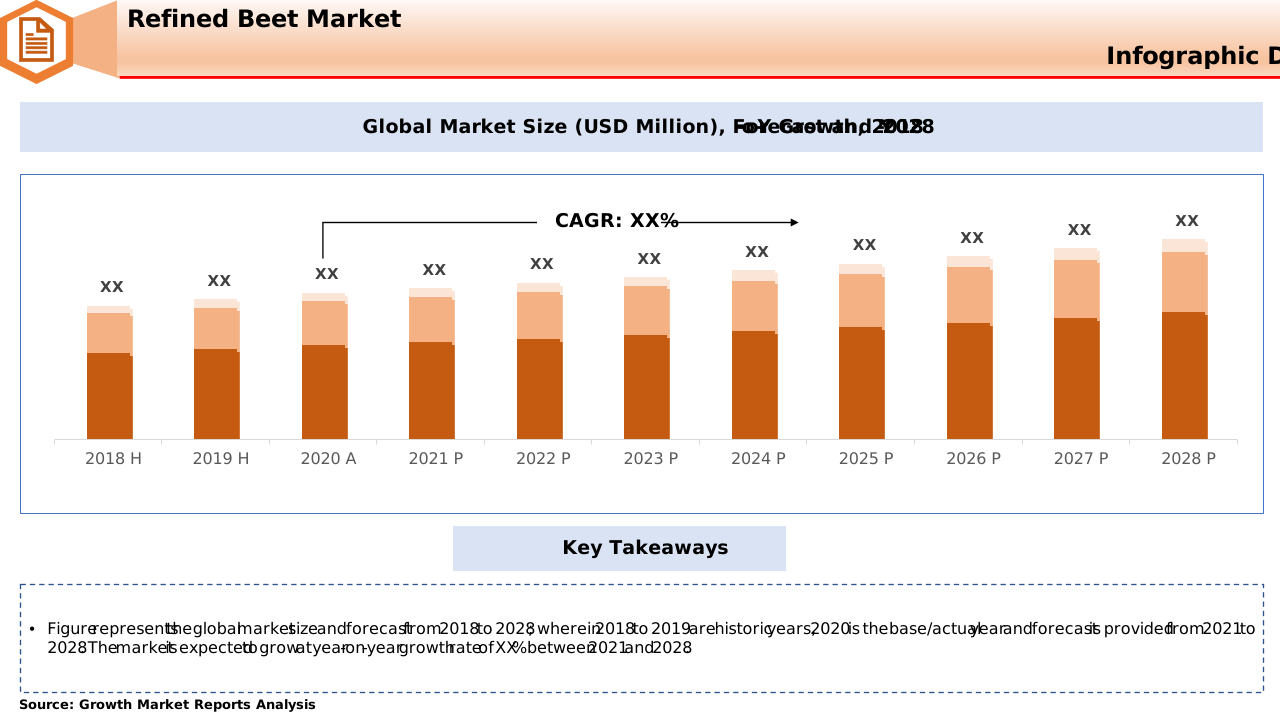
According to our latest research, the global refined beet market size reached USD 32.4 billion in 2024, reflecting a robust industry presence worldwide. The market is projected to expand at a CAGR of 4.8% during the forecast period, reaching an estimated USD 49.1 billion by 2033. This growth is driven by rising demand across diverse end-use sectors, increasing health consciousness among consumers, and the growing prominence of refined beet sugar as a versatile sweetener. Factors such as evolving dietary preferences, advancements in refining technologies, and expanding applications in both food and non-food industries are further catalyzing market expansion.

A primary growth driver for the refined beet market is the escalating demand for natural and minimally processed sweeteners in the food and beverage industry. As consumers become increasingly health-conscious, there is a notable shift away from high-fructose corn syrup and synthetic sweeteners towards more natural alternatives, such as refined beet sugar. The granulated, liquid, and powdered forms of refined beet sugar are extensively used in bakery products, confectionery, beverages, and dairy products, owing to their purity, neutral flavor, and ease of incorporation. Furthermore, the food processing industry's rapid expansion, especially in emerging economies, is generating significant demand for refined beet products as essential ingredients in a wide range of processed foods.

Another significant factor contributing to the market's growth is the technological advancements in beet processing and refining. Modern extraction and purification techniques have enabled manufacturers to produce high-quality refined beet sugar with improved efficiency and minimal environmental impact. These innovations have not only enhanced product quality but also reduced operational costs, making refined beet sugar more accessible and affordable for both industrial and household consumers. Additionally, the adoption of sustainable agricultural practices and the development of value-added beet by-products have diversified revenue streams for producers, further supporting market growth.

The expanding application of refined beet sugar in non-food sectors, such as pharmaceuticals, personal care, and industrial applications, is also fueling market expansion. In the pharmaceutical industry, refined beet sugar is widely used as an excipient in syrups, tablets, and other formulations due to its high purity and safety profile. Similarly, in the personal care sector, it serves as a functional ingredient in scrubs, moisturizers, and other cosmetic products. The industrial segment leverages refined beet sugar for fermentation processes and as a feedstock in bio-based chemicals. This diversification of applications not only enhances market resilience but also opens new growth avenues for manufacturers.

Beet Sugar Syrup is gaining attention as a natural and versatile sweetener, complementing the refined beet market's expansion. This syrup, derived from the same sugar beet processing, offers a liquid alternative that retains the natural flavors and nutrients of the beet. Its application spans across various culinary uses, from baking to beverage production, where it provides a unique taste profile and consistency. The growing consumer preference for natural and minimally processed ingredients is driving the demand for beet sugar syrup, positioning it as a favorable substitute for traditional sweeteners. As manufacturers continue to innovate, the potential for beet sugar syrup in both food and non-food sectors is expected to grow, contributing to the overall market dynamics.

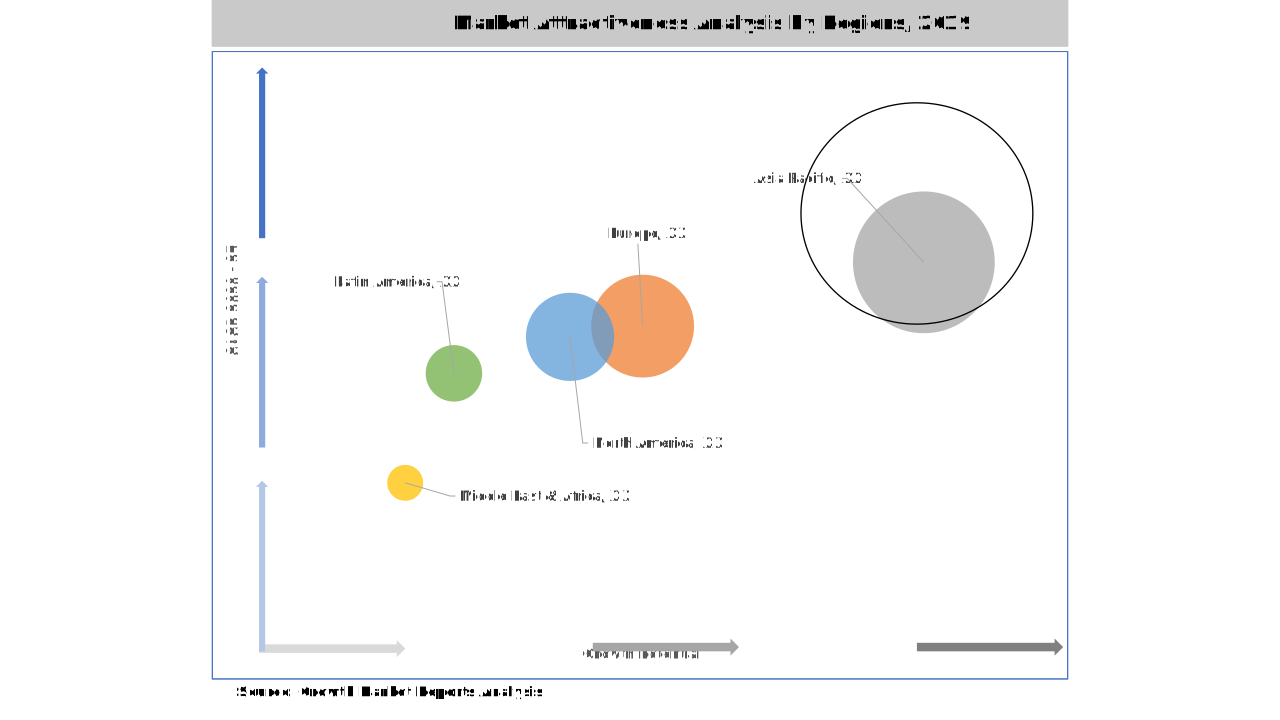
Regionally, Europe continues to dominate the refined beet market due to its longstanding tradition of beet cultivation and advanced refining infrastructure. However, the Asia Pacific region is emerging as a high-growth market, driven by increasing urbanization, rising disposable incomes, and changing dietary habits. North America and Latin America also exhibit strong market potential, supported by robust food processing industries and growing consumer awareness of healthier sweetener options. Meanwhile, the Middle East & Africa region is witnessing gradual market development, primarily fueled by rising investments in food processing and distribution networks.

Global Refined Beet Industry Outlook

Product Type Analysis

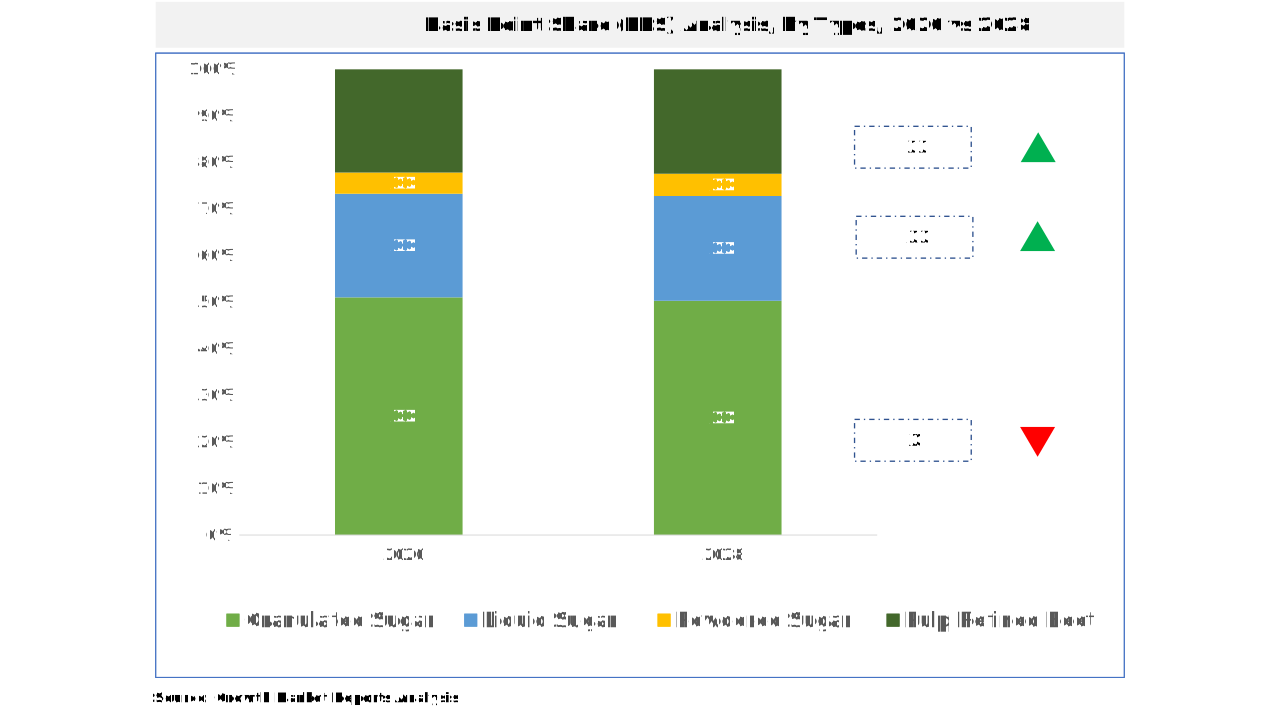
The product type segment of the refined beet market encompasses granulated sugar, liquid sugar, powdered sugar, and other specialty forms. Granulated sugar remains the most widely consumed product type, accounting for a significant share of the market due to its versatility and broad application across food, beverage, and industrial sectors. Its crystalline structure, ease of storage, and long shelf life make it the preferred choice for both household and commercial users. Granulated sugar derived from beets is often indistinguishable from its cane-derived counterpart in terms of taste and functionality, which has further cemented its position in global markets.

Liquid sugar, another prominent segment, is gaining traction particularly in the beverage and food processing industries. Its ready-to-use format, rapid solubility, and consistency are highly valued by manufacturers seeking to streamline production processes and ensure product uniformity. Liquid sugar is commonly used in soft drinks, syrups, dairy products, and bakery items, where precise dosing and quick mixing are required. The demand for liquid sugar is expected to rise steadily, especially as convenience foods and ready-to-drink beverages continue to gain popularity worldwide.

Powdered sugar, characterized by its fine texture and ease of dispersion, is extensively utilized in bakery, confectionery, and dessert applications. It is particularly favored for icing, dusting, and decorative purposes, as well as in the preparation of smooth-textured products such as fondants and frostings. The growing trend of home baking and premium dessert consumption has contributed to the rising demand for powdered sugar. Manufacturers are also innovating with specialty powdered sugars, such as those infused with flavors or functional ingredients, to cater to niche market segments.

Other product types in the refined beet market include specialty sugars such as brown beet sugar, organic beet sugar, and sugar blends tailored for specific industrial or culinary applications. The demand for these niche products is being propelled by the rising preference for organic and clean-label ingredients, as well as the increasing focus on product differentiation among food and beverage manufacturers. As consumer preferences evolve and regulatory standards for food safety and quality become more stringent, the product type segment is expected to witness further diversification and innovation.

Report Scope

Attributes Details
Report Title Refined Beet Market Research Report 2033
By Product Type Granulated Sugar, Liquid Sugar, Powdered Sugar, Others
By Application Food & Beverages, Pharmaceuticals, Personal Care, Industrial, Others
By Distribution Channel Supermarkets/Hypermarkets, Convenience Stores, Online Retail, Others
By End-User Household, Commercial, Industrial
Regions Covered North America, Europe, APAC, Latin America, MEA
Base Year 2024
Historic Data 2018-2023
Forecast Period 2025-2033
Number of Pages 291
Number of Tables & Figures 295
Customization Available Yes, the report can be customized as per your need.

Application Analysis

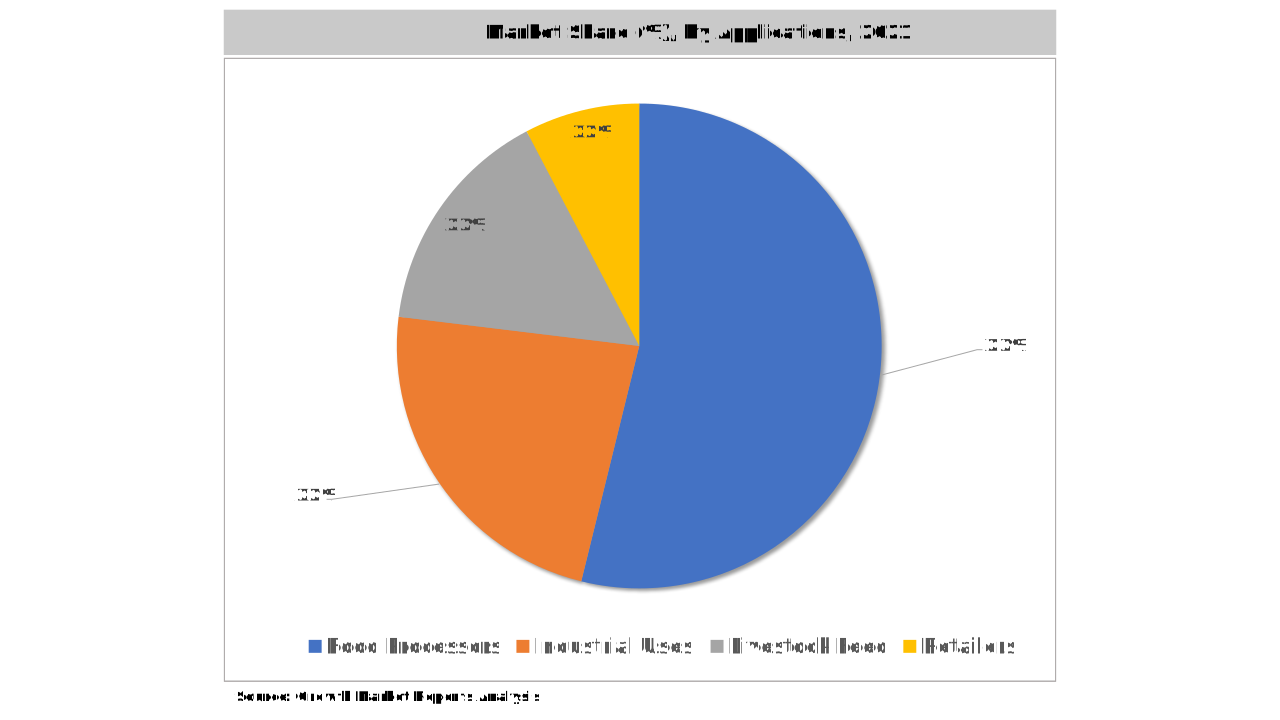
The application segment of the refined beet market is broad, encompassing food and beverages, pharmaceuticals, personal care, industrial uses, and other emerging sectors. The food and beverage industry remains the largest application segment, accounting for a substantial portion of global demand. Refined beet sugar is a staple ingredient in a wide array of products, including bakery goods, confectionery, dairy products, soft drinks, and processed foods. Its neutral flavor profile, high purity, and consistent quality make it ideal for mass production and standardized recipes. As the global population grows and urbanization accelerates, the demand for processed and convenience foods is set to drive further growth in this segment.

In the pharmaceutical sector, refined beet sugar plays a crucial role as an excipient in the formulation of syrups, tablets, and oral suspensions. Its high solubility, non-reactive nature, and safety profile make it an essential component in the delivery of active pharmaceutical ingredients. The increasing prevalence of chronic diseases, coupled with expanding access to healthcare in emerging markets, is expected to sustain demand for pharmaceutical-grade refined beet sugar. Furthermore, ongoing research and development in drug delivery systems are likely to create new opportunities for refined beet sugar in this sector.

The personal care industry represents another promising application area for refined beet sugar. It is used as a natural exfoliant in scrubs, a humectant in moisturizers, and a stabilizer in various cosmetic formulations. The shift towards natural and organic ingredients in personal care products has boosted the adoption of beet-derived sugars, which are perceived as safer and more environmentally friendly compared to synthetic alternatives. The rising consumer awareness of ingredient transparency and sustainability is anticipated to further drive demand in this segment.

Industrial applications of refined beet sugar are diverse, ranging from fermentation processes in bioethanol production to its use as a feedstock in the manufacture of bio-based chemicals and biodegradable plastics. The growing emphasis on sustainability and the circular economy has led to increased interest in renewable raw materials, including beet sugar, for industrial processes. As industries seek to reduce their carbon footprint and transition towards greener alternatives, the industrial application segment of the refined beet market is poised for significant growth.

Distribution Channel Analysis

The distribution channel segment of the refined beet market includes supermarkets/hypermarkets, convenience stores, online retail, and other channels. Supermarkets and hypermarkets dominate the distribution landscape, offering consumers a wide variety of refined beet sugar products in different forms and packaging sizes. These retail outlets provide the advantage of physical inspection, immediate purchase, and attractive promotional offers, making them the preferred choice for bulk and household buyers alike. The extensive reach and strong supply chain networks of major supermarket chains have played a pivotal role in the widespread availability of refined beet sugar.

Convenience stores represent another significant distribution channel, particularly in urban and densely populated areas where quick access to everyday essentials is highly valued. These stores cater to on-the-go consumers seeking smaller pack sizes and immediate consumption options. The growing trend of urbanization and the proliferation of convenience stores in emerging markets are contributing to the steady growth of this channel. Additionally, the strategic placement of refined beet sugar products near checkout counters and in high-traffic areas enhances impulse purchases, further boosting sales.

Online retail is rapidly emerging as a transformative force in the distribution of refined beet sugar, driven by the increasing penetration of e-commerce platforms and changing consumer shopping behaviors. The convenience of doorstep delivery, access to a broader product range, and the ability to compare prices and read reviews have made online channels increasingly popular among both individual and commercial buyers. E-commerce platforms are also enabling manufacturers to reach new customer segments, particularly in remote and underserved regions. The COVID-19 pandemic has accelerated the shift towards online retail, a trend that is expected to persist in the coming years.

Other distribution channels include direct sales to industrial users, wholesalers, and specialty retailers focusing on organic or gourmet food products. These channels cater to niche markets and bulk buyers, offering customized solutions and value-added services. As the market continues to evolve, manufacturers are adopting omnichannel strategies to maximize reach and enhance customer engagement. The integration of digital technologies, data analytics, and supply chain optimization is expected to further streamline distribution and improve market efficiency.

End-User Analysis

The end-user segment of the refined beet market is categorized into household, commercial, and industrial users. Household consumers represent a significant market segment, driven by the widespread use of refined beet sugar in daily cooking, baking, and beverage preparation. The increasing trend of home baking, spurred by social media influence and the rise of cooking shows, has contributed to the steady demand from this segment. Additionally, the growing preference for natural and minimally processed sweeteners among health-conscious households is boosting the consumption of beet-derived sugars.

Commercial end-users, including restaurants, cafes, bakeries, and catering services, account for a substantial share of the refined beet market. These establishments rely on high-quality, consistent, and cost-effective sweeteners to ensure product quality and customer satisfaction. The expansion of the foodservice industry, particularly in urban centers and tourist destinations, is generating robust demand for refined beet sugar. Furthermore, the increasing popularity of specialty and artisanal food offerings is driving demand for premium and specialty beet sugar products in the commercial segment.

Industrial end-users form a critical component of the refined beet market, utilizing beet sugar as a key ingredient in large-scale food processing, pharmaceuticals, personal care products, and industrial applications. The demand from industrial users is characterized by high-volume purchases, stringent quality requirements, and a focus on supply chain reliability. As industries continue to innovate and diversify their product portfolios, the need for high-purity, customizable, and sustainable beet sugar solutions is expected to rise. Industrial users also benefit from long-term contracts and strategic partnerships with manufacturers, ensuring a stable supply of raw materials.

The interplay between these end-user segments is shaping the competitive dynamics of the refined beet market. Manufacturers are increasingly adopting customer-centric approaches, offering tailored product solutions, flexible packaging options, and value-added services to meet the unique needs of each segment. The growing emphasis on sustainability, traceability, and transparency is prompting end-users to prioritize suppliers with strong environmental and social credentials. As the market matures, the ability to anticipate and respond to evolving end-user preferences will be a key determinant of success for industry stakeholders.

Opportunities & Threats

The refined beet market is ripe with opportunities, particularly as consumer preferences shift towards healthier and more sustainable food options. The increasing demand for natural sweeteners in both developed and emerging economies presents significant growth prospects for manufacturers. Innovations in beet processing and refining technologies are enabling the development of new product variants, such as low-glycemic and organic beet sugars, which cater to health-conscious consumers and those with specific dietary requirements. The expansion of application areas beyond traditional food and beverage uses, including pharmaceuticals, personal care, and industrial sectors, is further broadening the market's potential. Strategic collaborations with food manufacturers, investments in research and development, and the adoption of sustainable agricultural practices are key strategies for capitalizing on these opportunities.

Another major opportunity lies in the digital transformation of distribution channels. The rapid growth of e-commerce and online retail platforms is enabling manufacturers to reach a wider customer base and penetrate new markets with minimal investment in physical infrastructure. The integration of digital marketing, data analytics, and customer relationship management tools is enhancing market visibility, improving customer engagement, and driving sales growth. Additionally, the increasing focus on product differentiation and value-added offerings, such as flavored, fortified, or functional beet sugars, is creating new revenue streams and strengthening brand loyalty among consumers.

Despite these opportunities, the refined beet market faces several threats and restraining factors. The volatility of raw material prices, driven by fluctuations in beet crop yields and global supply-demand dynamics, poses a significant risk to industry profitability. Additionally, the intense competition from alternative sweeteners, such as cane sugar, high-fructose corn syrup, and artificial sweeteners, is exerting downward pressure on prices and market share. Regulatory challenges related to food safety, quality standards, and labeling requirements can also increase compliance costs and hinder market entry for new players. To mitigate these threats, industry stakeholders must invest in supply chain resilience, diversify their product portfolios, and stay abreast of evolving regulatory landscapes.

Regional Outlook

Europe remains the leading region in the refined beet market, with a market size of USD 13.2 billion in 2024, accounting for over 40% of the global share. The region's dominance is attributed to its favorable agro-climatic conditions for beet cultivation, advanced refining infrastructure, and a strong tradition of beet sugar consumption. Major producers such as Germany, France, and the United Kingdom have established efficient supply chains and export networks, enabling them to serve both domestic and international markets. The European market is expected to grow at a steady CAGR of 3.9% through 2033, supported by ongoing investments in sustainable agriculture and product innovation.

The Asia Pacific region is experiencing the fastest growth in the refined beet market, with a market size of USD 7.5 billion in 2024 and a projected CAGR of 6.2% during the forecast period. Rapid urbanization, rising disposable incomes, and changing dietary habits are driving demand for processed foods and beverages, thereby boosting the consumption of refined beet sugar. Countries such as China, India, and Japan are witnessing increased investments in beet cultivation and refining capacity, supported by government initiatives to promote self-sufficiency in sugar production. The expanding middle class and growing health awareness are further fueling market growth in this region.

North America holds a significant share of the global refined beet market, with a market size of USD 6.8 billion in 2024. The region benefits from a well-developed food processing industry, high consumer awareness of healthier sweetener alternatives, and a robust distribution network. The United States is the largest market in the region, followed by Canada and Mexico. The market is characterized by strong demand from both industrial and household segments, with a particular emphasis on organic and non-GMO beet sugar products. Latin America and the Middle East & Africa regions, with market sizes of USD 2.9 billion and USD 2.0 billion respectively in 2024, are gradually emerging as growth frontiers, driven by rising investments in food processing, infrastructure development, and consumer education initiatives.

Refined Beet Market Statistics

Competitor Outlook

The refined beet market is characterized by intense competition, with a mix of large multinational corporations and regional players vying for market share. Leading companies are focusing on product innovation, sustainability, and strategic partnerships to strengthen their competitive positions. The market is witnessing increased consolidation, with major players acquiring smaller firms to expand their product portfolios, enhance distribution capabilities, and access new markets. The ability to offer high-quality, customizable, and value-added refined beet sugar products is emerging as a key differentiator in the marketplace.

Sustainability has become a central theme in the competitive landscape, with companies investing in eco-friendly farming practices, energy-efficient refining processes, and biodegradable packaging solutions. Consumer demand for transparency and ethical sourcing is prompting manufacturers to adopt traceability systems and obtain certifications such as Fairtrade, organic, and non-GMO. These initiatives not only enhance brand reputation but also enable companies to command premium prices and build long-term customer loyalty. The integration of digital technologies, such as blockchain for supply chain transparency and artificial intelligence for demand forecasting, is further reshaping the competitive dynamics of the market.

Innovation in product development is another critical focus area for market leaders. Companies are launching new product variants, such as flavored, fortified, and low-calorie beet sugars, to cater to evolving consumer preferences and dietary trends. The expansion into non-traditional application areas, such as pharmaceuticals, personal care, and industrial uses, is enabling manufacturers to diversify their revenue streams and reduce dependence on the food and beverage sector. Strategic collaborations with research institutions, industry associations, and technology providers are facilitating the development of next-generation refining processes and value-added products.

Some of the major companies operating in the global refined beet market include Südzucker AG, Tereos Group, Nordzucker AG, British Sugar plc, American Crystal Sugar Company, and Michigan Sugar Company. Südzucker AG, headquartered in Germany, is one of the largest beet sugar producers globally, with a strong focus on sustainability and innovation. Tereos Group, based in France, is known for its diversified product portfolio and extensive global presence. Nordzucker AG, another leading European player, emphasizes environmentally friendly production methods and high-quality standards. British Sugar plc, a key player in the UK market, is recognized for its integrated supply chain and commitment to sustainable agriculture. In North America, American Crystal Sugar Company and Michigan Sugar Company are prominent producers, leveraging advanced refining technologies and strong distribution networks to serve a diverse customer base.

These companies are continuously investing in research and development, capacity expansion, and digital transformation to maintain their competitive edge. Strategic initiatives such as mergers and acquisitions, joint ventures, and partnerships with local players are enabling them to expand their geographical footprint and tap into emerging markets. The competitive landscape is expected to remain dynamic, with ongoing innovation, sustainability initiatives, and customer-centric strategies shaping the future of the refined beet market.

Key Players

  • Nordzucker AG
  • Südzucker AG
  • Tereos S.A.
  • American Crystal Sugar Company
  • Michigan Sugar Company
  • Amalgamated Sugar Company
  • British Sugar plc
  • Cosan S.A.
  • Louis Dreyfus Company
  • Cargill, Incorporated
  • Wilmar International Limited
  • ED&F Man Holdings Limited
  • Pfeifer & Langen GmbH & Co. KG
  • Cristal Union
  • Rogers Sugar Inc.
  • Nordic Sugar A/S
  • Mitr Phol Group
  • Guangxi Guitang Group Co., Ltd.
  • Shree Renuka Sugars Ltd.
  • Spreckels Sugar Company
Refined Beet Market Overview

Segments

The Refined Beet market has been segmented on the basis of

Product Type

  • Granulated Sugar
  • Liquid Sugar
  • Powdered Sugar
  • Others

Application

  • Food & Beverages
  • Pharmaceuticals
  • Personal Care
  • Industrial
  • Others

Distribution Channel

  • Supermarkets/Hypermarkets
  • Convenience Stores
  • Online Retail
  • Others

End-User

  • Household
  • Commercial
  • Industrial

Competitive Landscape

Major players competing in the global refined beet market include American Crystal Sugar, Associated British Foods, Louis Dreyfus Co., Nippon Beet Sugar Manufacturing, Nordzucker AG, Shree Renuka Sugars, Südzucker, Tereos SA, and Wilmar International.

Some of these organizations are involved in adopting numerous market strategies such as mergers, acquisitions, collaborations, partnerships, product launches, R&D activities, and capacity expansion to increase market share and global presence.

Recently, Louis Dreyfus Co. announced that it has entered into an agreement to sell 45% equity stake of its one subsidiary to ADQ, a major property company based in Abu Dhabi. As a part of this contract, the former company has also signed a long-term marketable supply agreement with ADQ for the sale of agri-commodities to the United Arab Emirates.

Lately, a Germany-based Südzucker, one of the major sugar production companies globally, has established three sugar-reduced fondant solutions which can offer several product development opportunities for filled chocolates or layered products such as sweet pastry, donuts, and others.
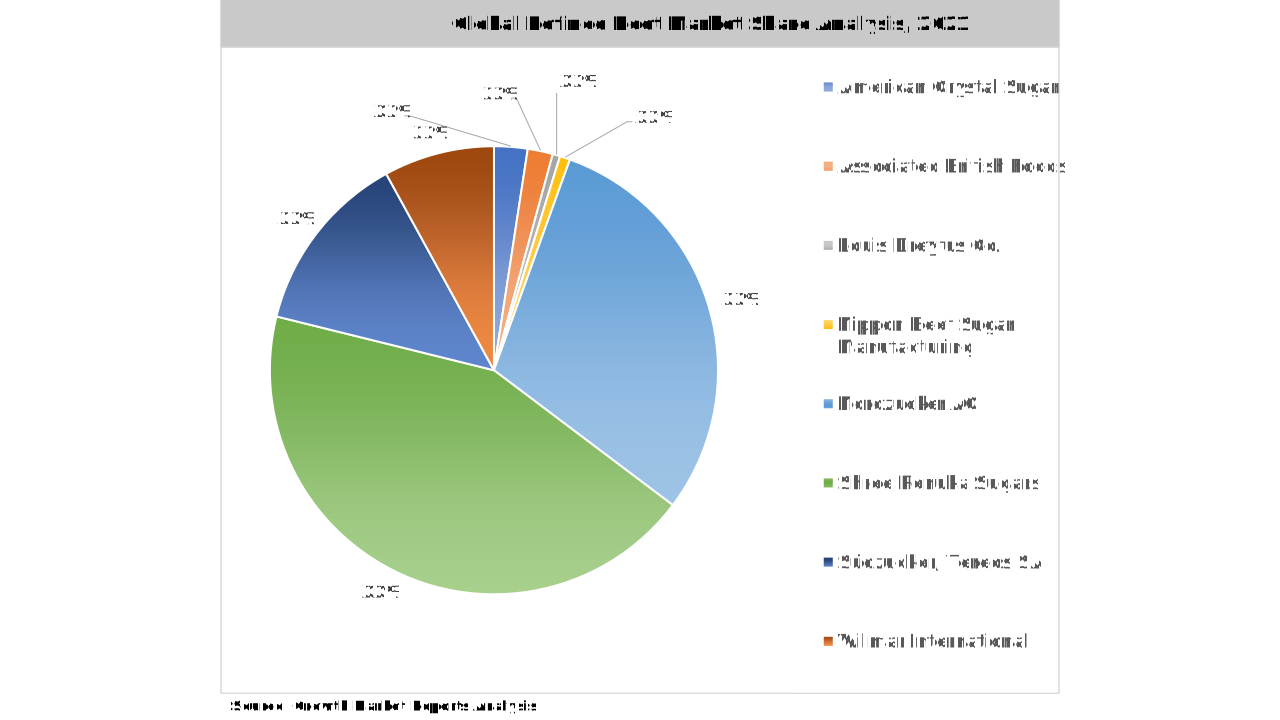
 

Refined Beet Market By key Players

Frequently Asked Questions

Yes, the Refined Beet Market Research Report 2033 offers customization options to suit specific business or research needs.

Sustainability is a key focus, with companies investing in eco-friendly farming, energy-efficient refining, biodegradable packaging, and traceability systems to meet consumer demand for ethical and transparent sourcing.

Opportunities include rising demand for natural and organic sweeteners, digital transformation of distribution, and product innovation. Threats include raw material price volatility, competition from alternative sweeteners, and regulatory challenges.

Major companies include Südzucker AG, Tereos Group, Nordzucker AG, British Sugar plc, American Crystal Sugar Company, Michigan Sugar Company, and others.

Distribution channels include supermarkets/hypermarkets, convenience stores, online retail, direct sales to industrial users, wholesalers, and specialty retailers.

Europe leads the market due to advanced refining infrastructure and tradition of beet cultivation. Asia Pacific is the fastest-growing region, while North America, Latin America, and the Middle East & Africa are also significant markets.

Refined beet sugar is used in food and beverages, pharmaceuticals (as an excipient), personal care products, and various industrial processes such as fermentation and bio-based chemicals.

Granulated sugar is the most widely consumed, followed by liquid sugar, powdered sugar, and specialty forms like brown and organic beet sugar.

Growth is driven by rising demand for natural sweeteners, increasing health consciousness, advancements in refining technologies, and expanding applications in food, pharmaceuticals, personal care, and industrial sectors.

As of 2024, the global refined beet market size reached USD 32.4 billion, with projections to grow to USD 49.1 billion by 2033.

Table Of Content

Chapter 1 Executive Summary
Chapter 2 Assumptions and Acronyms Used
Chapter 3 Research Methodology
Chapter 4 Refined Beet Market Overview
   4.1 Introduction
      4.1.1 Market Taxonomy
      4.1.2 Market Definition
      4.1.3 Macro-Economic Factors Impacting the Market Growth
   4.2 Refined Beet Market Dynamics
      4.2.1 Market Drivers
      4.2.2 Market Restraints
      4.2.3 Market Opportunity
   4.3 Refined Beet Market - Supply Chain Analysis
      4.3.1 List of Key Suppliers
      4.3.2 List of Key Distributors
      4.3.3 List of Key Consumers
   4.4 Key Forces Shaping the Refined Beet Market
      4.4.1 Bargaining Power of Suppliers
      4.4.2 Bargaining Power of Buyers
      4.4.3 Threat of Substitution
      4.4.4 Threat of New Entrants
      4.4.5 Competitive Rivalry
   4.5 Global Refined Beet Market Size & Forecast, 2023-2032
      4.5.1 Refined Beet Market Size and Y-o-Y Growth
      4.5.2 Refined Beet Market Absolute $ Opportunity

Chapter 5 Global Refined Beet Market Analysis and Forecast By Product Type
   5.1 Introduction
      5.1.1 Key Market Trends & Growth Opportunities By Product Type
      5.1.2 Basis Point Share (BPS) Analysis By Product Type
      5.1.3 Absolute $ Opportunity Assessment By Product Type
   5.2 Refined Beet Market Size Forecast By Product Type
      5.2.1 Granulated Sugar
      5.2.2 Liquid Sugar
      5.2.3 Powdered Sugar
      5.2.4 Others
   5.3 Market Attractiveness Analysis By Product Type

Chapter 6 Global Refined Beet Market Analysis and Forecast By Application
   6.1 Introduction
      6.1.1 Key Market Trends & Growth Opportunities By Application
      6.1.2 Basis Point Share (BPS) Analysis By Application
      6.1.3 Absolute $ Opportunity Assessment By Application
   6.2 Refined Beet Market Size Forecast By Application
      6.2.1 Food & Beverages
      6.2.2 Pharmaceuticals
      6.2.3 Personal Care
      6.2.4 Industrial
      6.2.5 Others
   6.3 Market Attractiveness Analysis By Application

Chapter 7 Global Refined Beet Market Analysis and Forecast By Distribution Channel
   7.1 Introduction
      7.1.1 Key Market Trends & Growth Opportunities By Distribution Channel
      7.1.2 Basis Point Share (BPS) Analysis By Distribution Channel
      7.1.3 Absolute $ Opportunity Assessment By Distribution Channel
   7.2 Refined Beet Market Size Forecast By Distribution Channel
      7.2.1 Supermarkets/Hypermarkets
      7.2.2 Convenience Stores
      7.2.3 Online Retail
      7.2.4 Others
   7.3 Market Attractiveness Analysis By Distribution Channel

Chapter 8 Global Refined Beet Market Analysis and Forecast By End-User
   8.1 Introduction
      8.1.1 Key Market Trends & Growth Opportunities By End-User
      8.1.2 Basis Point Share (BPS) Analysis By End-User
      8.1.3 Absolute $ Opportunity Assessment By End-User
   8.2 Refined Beet Market Size Forecast By End-User
      8.2.1 Household
      8.2.2 Commercial
      8.2.3 Industrial
   8.3 Market Attractiveness Analysis By End-User

Chapter 9 Global Refined Beet Market Analysis and Forecast by Region
   9.1 Introduction
      9.1.1 Key Market Trends & Growth Opportunities By Region
      9.1.2 Basis Point Share (BPS) Analysis By Region
      9.1.3 Absolute $ Opportunity Assessment By Region
   9.2 Refined Beet Market Size Forecast By Region
      9.2.1 North America
      9.2.2 Europe
      9.2.3 Asia Pacific
      9.2.4 Latin America
      9.2.5 Middle East & Africa (MEA)
   9.3 Market Attractiveness Analysis By Region

Chapter 10 Coronavirus Disease (COVID-19) Impact 
   10.1 Introduction 
   10.2 Current & Future Impact Analysis 
   10.3 Economic Impact Analysis 
   10.4 Government Policies 
   10.5 Investment Scenario

Chapter 11 North America Refined Beet Analysis and Forecast
   11.1 Introduction
   11.2 North America Refined Beet Market Size Forecast by Country
      11.2.1 U.S.
      11.2.2 Canada
   11.3 Basis Point Share (BPS) Analysis by Country
   11.4 Absolute $ Opportunity Assessment by Country
   11.5 Market Attractiveness Analysis by Country
   11.6 North America Refined Beet Market Size Forecast By Product Type
      11.6.1 Granulated Sugar
      11.6.2 Liquid Sugar
      11.6.3 Powdered Sugar
      11.6.4 Others
   11.7 Basis Point Share (BPS) Analysis By Product Type 
   11.8 Absolute $ Opportunity Assessment By Product Type 
   11.9 Market Attractiveness Analysis By Product Type
   11.10 North America Refined Beet Market Size Forecast By Application
      11.10.1 Food & Beverages
      11.10.2 Pharmaceuticals
      11.10.3 Personal Care
      11.10.4 Industrial
      11.10.5 Others
   11.11 Basis Point Share (BPS) Analysis By Application 
   11.12 Absolute $ Opportunity Assessment By Application 
   11.13 Market Attractiveness Analysis By Application
   11.14 North America Refined Beet Market Size Forecast By Distribution Channel
      11.14.1 Supermarkets/Hypermarkets
      11.14.2 Convenience Stores
      11.14.3 Online Retail
      11.14.4 Others
   11.15 Basis Point Share (BPS) Analysis By Distribution Channel 
   11.16 Absolute $ Opportunity Assessment By Distribution Channel 
   11.17 Market Attractiveness Analysis By Distribution Channel
   11.18 North America Refined Beet Market Size Forecast By End-User
      11.18.1 Household
      11.18.2 Commercial
      11.18.3 Industrial
   11.19 Basis Point Share (BPS) Analysis By End-User 
   11.20 Absolute $ Opportunity Assessment By End-User 
   11.21 Market Attractiveness Analysis By End-User

Chapter 12 Europe Refined Beet Analysis and Forecast
   12.1 Introduction
   12.2 Europe Refined Beet Market Size Forecast by Country
      12.2.1 Germany
      12.2.2 France
      12.2.3 Italy
      12.2.4 U.K.
      12.2.5 Spain
      12.2.6 Russia
      12.2.7 Rest of Europe
   12.3 Basis Point Share (BPS) Analysis by Country
   12.4 Absolute $ Opportunity Assessment by Country
   12.5 Market Attractiveness Analysis by Country
   12.6 Europe Refined Beet Market Size Forecast By Product Type
      12.6.1 Granulated Sugar
      12.6.2 Liquid Sugar
      12.6.3 Powdered Sugar
      12.6.4 Others
   12.7 Basis Point Share (BPS) Analysis By Product Type 
   12.8 Absolute $ Opportunity Assessment By Product Type 
   12.9 Market Attractiveness Analysis By Product Type
   12.10 Europe Refined Beet Market Size Forecast By Application
      12.10.1 Food & Beverages
      12.10.2 Pharmaceuticals
      12.10.3 Personal Care
      12.10.4 Industrial
      12.10.5 Others
   12.11 Basis Point Share (BPS) Analysis By Application 
   12.12 Absolute $ Opportunity Assessment By Application 
   12.13 Market Attractiveness Analysis By Application
   12.14 Europe Refined Beet Market Size Forecast By Distribution Channel
      12.14.1 Supermarkets/Hypermarkets
      12.14.2 Convenience Stores
      12.14.3 Online Retail
      12.14.4 Others
   12.15 Basis Point Share (BPS) Analysis By Distribution Channel 
   12.16 Absolute $ Opportunity Assessment By Distribution Channel 
   12.17 Market Attractiveness Analysis By Distribution Channel
   12.18 Europe Refined Beet Market Size Forecast By End-User
      12.18.1 Household
      12.18.2 Commercial
      12.18.3 Industrial
   12.19 Basis Point Share (BPS) Analysis By End-User 
   12.20 Absolute $ Opportunity Assessment By End-User 
   12.21 Market Attractiveness Analysis By End-User

Chapter 13 Asia Pacific Refined Beet Analysis and Forecast
   13.1 Introduction
   13.2 Asia Pacific Refined Beet Market Size Forecast by Country
      13.2.1 China
      13.2.2 Japan
      13.2.3 South Korea
      13.2.4 India
      13.2.5 Australia
      13.2.6 South East Asia (SEA)
      13.2.7 Rest of Asia Pacific (APAC)
   13.3 Basis Point Share (BPS) Analysis by Country
   13.4 Absolute $ Opportunity Assessment by Country
   13.5 Market Attractiveness Analysis by Country
   13.6 Asia Pacific Refined Beet Market Size Forecast By Product Type
      13.6.1 Granulated Sugar
      13.6.2 Liquid Sugar
      13.6.3 Powdered Sugar
      13.6.4 Others
   13.7 Basis Point Share (BPS) Analysis By Product Type 
   13.8 Absolute $ Opportunity Assessment By Product Type 
   13.9 Market Attractiveness Analysis By Product Type
   13.10 Asia Pacific Refined Beet Market Size Forecast By Application
      13.10.1 Food & Beverages
      13.10.2 Pharmaceuticals
      13.10.3 Personal Care
      13.10.4 Industrial
      13.10.5 Others
   13.11 Basis Point Share (BPS) Analysis By Application 
   13.12 Absolute $ Opportunity Assessment By Application 
   13.13 Market Attractiveness Analysis By Application
   13.14 Asia Pacific Refined Beet Market Size Forecast By Distribution Channel
      13.14.1 Supermarkets/Hypermarkets
      13.14.2 Convenience Stores
      13.14.3 Online Retail
      13.14.4 Others
   13.15 Basis Point Share (BPS) Analysis By Distribution Channel 
   13.16 Absolute $ Opportunity Assessment By Distribution Channel 
   13.17 Market Attractiveness Analysis By Distribution Channel
   13.18 Asia Pacific Refined Beet Market Size Forecast By End-User
      13.18.1 Household
      13.18.2 Commercial
      13.18.3 Industrial
   13.19 Basis Point Share (BPS) Analysis By End-User 
   13.20 Absolute $ Opportunity Assessment By End-User 
   13.21 Market Attractiveness Analysis By End-User

Chapter 14 Latin America Refined Beet Analysis and Forecast
   14.1 Introduction
   14.2 Latin America Refined Beet Market Size Forecast by Country
      14.2.1 Brazil
      14.2.2 Mexico
      14.2.3 Rest of Latin America (LATAM)
   14.3 Basis Point Share (BPS) Analysis by Country
   14.4 Absolute $ Opportunity Assessment by Country
   14.5 Market Attractiveness Analysis by Country
   14.6 Latin America Refined Beet Market Size Forecast By Product Type
      14.6.1 Granulated Sugar
      14.6.2 Liquid Sugar
      14.6.3 Powdered Sugar
      14.6.4 Others
   14.7 Basis Point Share (BPS) Analysis By Product Type 
   14.8 Absolute $ Opportunity Assessment By Product Type 
   14.9 Market Attractiveness Analysis By Product Type
   14.10 Latin America Refined Beet Market Size Forecast By Application
      14.10.1 Food & Beverages
      14.10.2 Pharmaceuticals
      14.10.3 Personal Care
      14.10.4 Industrial
      14.10.5 Others
   14.11 Basis Point Share (BPS) Analysis By Application 
   14.12 Absolute $ Opportunity Assessment By Application 
   14.13 Market Attractiveness Analysis By Application
   14.14 Latin America Refined Beet Market Size Forecast By Distribution Channel
      14.14.1 Supermarkets/Hypermarkets
      14.14.2 Convenience Stores
      14.14.3 Online Retail
      14.14.4 Others
   14.15 Basis Point Share (BPS) Analysis By Distribution Channel 
   14.16 Absolute $ Opportunity Assessment By Distribution Channel 
   14.17 Market Attractiveness Analysis By Distribution Channel
   14.18 Latin America Refined Beet Market Size Forecast By End-User
      14.18.1 Household
      14.18.2 Commercial
      14.18.3 Industrial
   14.19 Basis Point Share (BPS) Analysis By End-User 
   14.20 Absolute $ Opportunity Assessment By End-User 
   14.21 Market Attractiveness Analysis By End-User

Chapter 15 Middle East & Africa (MEA) Refined Beet Analysis and Forecast
   15.1 Introduction
   15.2 Middle East & Africa (MEA) Refined Beet Market Size Forecast by Country
      15.2.1 Saudi Arabia
      15.2.2 South Africa
      15.2.3 UAE
      15.2.4 Rest of Middle East & Africa (MEA)
   15.3 Basis Point Share (BPS) Analysis by Country
   15.4 Absolute $ Opportunity Assessment by Country
   15.5 Market Attractiveness Analysis by Country
   15.6 Middle East & Africa (MEA) Refined Beet Market Size Forecast By Product Type
      15.6.1 Granulated Sugar
      15.6.2 Liquid Sugar
      15.6.3 Powdered Sugar
      15.6.4 Others
   15.7 Basis Point Share (BPS) Analysis By Product Type 
   15.8 Absolute $ Opportunity Assessment By Product Type 
   15.9 Market Attractiveness Analysis By Product Type
   15.10 Middle East & Africa (MEA) Refined Beet Market Size Forecast By Application
      15.10.1 Food & Beverages
      15.10.2 Pharmaceuticals
      15.10.3 Personal Care
      15.10.4 Industrial
      15.10.5 Others
   15.11 Basis Point Share (BPS) Analysis By Application 
   15.12 Absolute $ Opportunity Assessment By Application 
   15.13 Market Attractiveness Analysis By Application
   15.14 Middle East & Africa (MEA) Refined Beet Market Size Forecast By Distribution Channel
      15.14.1 Supermarkets/Hypermarkets
      15.14.2 Convenience Stores
      15.14.3 Online Retail
      15.14.4 Others
   15.15 Basis Point Share (BPS) Analysis By Distribution Channel 
   15.16 Absolute $ Opportunity Assessment By Distribution Channel 
   15.17 Market Attractiveness Analysis By Distribution Channel
   15.18 Middle East & Africa (MEA) Refined Beet Market Size Forecast By End-User
      15.18.1 Household
      15.18.2 Commercial
      15.18.3 Industrial
   15.19 Basis Point Share (BPS) Analysis By End-User 
   15.20 Absolute $ Opportunity Assessment By End-User 
   15.21 Market Attractiveness Analysis By End-User

Chapter 16 Competition Landscape 
   16.1 Refined Beet Market: Competitive Dashboard
   16.2 Global Refined Beet Market: Market Share Analysis, 2023
   16.3 Company Profiles (Details – Overview, Financials, Developments, Strategy) 
      16.3.1 Nordzucker AG
Südzucker AG
Tereos S.A.
American Crystal Sugar Company
Michigan Sugar Company
Amalgamated Sugar Company
British Sugar plc
Cosan S.A.
Louis Dreyfus Company
Cargill, Incorporated
Wilmar International Limited
ED&F Man Holdings Limited
Pfeifer & Langen GmbH & Co. KG
Cristal Union
Rogers Sugar Inc.
Nordic Sugar A/S
Mitr Phol Group
Guangxi Guitang Group Co., Ltd.
Shree Renuka Sugars Ltd.
Spreckels Sugar Company

Methodology

Our Clients

Nestle SA
Siemens Healthcare
General Mills
Dassault Aviation
The John Holland Group
Microsoft
General Electric
Pfizer