Confectionery Market Research Report 2033

Confectionery Market Research Report 2033

Segments - by Product Type (Chocolate Confectionery, Sugar Confectionery, Gum & Chewing Products, Others), by Ingredient (Cocoa, Sugar, Dairy, Gelatin, Others), by Distribution Channel (Supermarkets/Hypermarkets, Convenience Stores, Online Retail, Specialty Stores, Others), by End-User (Children, Adults, Others)

https://growthmarketreports.com/Anuradha
Author : Anuradha B. More
https://growthmarketreports.com/Vaibhav
Fact-checked by : Vaibhav Chandola
https://growthmarketreports.com/Shruti
Editor : Shruti Bhat

Upcoming | Report ID :FB-2945 | 4.4 Rating | 43 Reviews | 287 Pages | Format : Docx PDF

Report Description


Confectionery Market Outlook

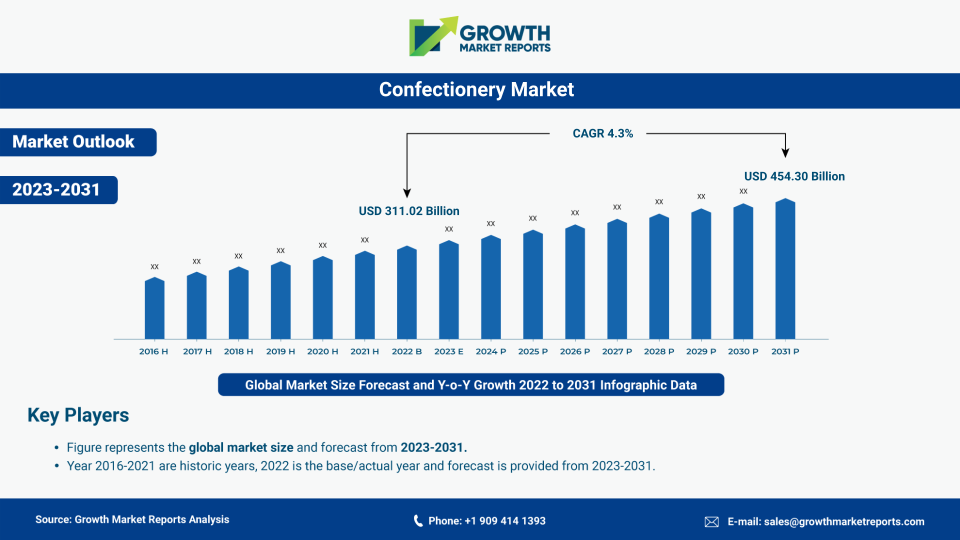
According to our latest research, the global confectionery market size reached USD 245.6 billion in 2024, supported by robust demand across developed and emerging economies. The industry is experiencing a steady growth trajectory, registering a CAGR of 4.1% from 2025 to 2033. By 2033, the market is forecasted to attain a value of USD 348.8 billion, driven by evolving consumer preferences, product innovation, and expansion in retail channels. This growth is underpinned by increasing urbanization, rising disposable incomes, and the proliferation of premium and functional confectionery products worldwide.

The primary growth factor propelling the confectionery market is the ongoing shift in consumer lifestyles and dietary habits. As urban populations expand and the pace of life accelerates, consumers are increasingly seeking convenient, indulgent snacks that offer both taste and quick energy. The rise of on-the-go consumption, particularly among millennials and Gen Z, has led to a surge in demand for packaged confectionery products such as chocolate bars, candies, and chewing gum. Additionally, the growing trend of gifting confectionery items during festivals, holidays, and special occasions further contributes to sustained market growth, especially in regions with strong cultural traditions around sweets.

Another significant driver is the continuous innovation in product offerings and packaging. Leading manufacturers are investing heavily in research and development to introduce new flavors, textures, and health-oriented options such as sugar-free, organic, and fortified confectionery. The adoption of premium ingredients like single-origin cocoa, exotic fruits, and plant-based alternatives caters to the evolving tastes and health concerns of consumers. Furthermore, attractive and sustainable packaging solutions are gaining traction, enhancing shelf appeal and meeting the rising demand for environmentally friendly products. These innovations not only differentiate brands but also help tap into niche segments, expanding the overall market base.

The expansion of modern retail infrastructure and the rise of e-commerce platforms have revolutionized the distribution landscape for confectionery products. Supermarkets, hypermarkets, and convenience stores remain dominant sales channels, offering a wide variety of products and frequent promotional activities. However, the rapid growth of online retail, fueled by digitalization and changing shopping behaviors, has opened new avenues for market penetration. Online platforms provide consumers with the convenience of home delivery, personalized recommendations, and access to a broader assortment of products, accelerating sales growth, particularly in urban and semi-urban areas.

Regionally, the Asia Pacific confectionery market stands out as a major growth engine, supported by large populations, rising incomes, and increasing westernization of diets. North America and Europe continue to represent mature markets with high per capita consumption and a strong focus on premiumization and health-conscious products. Meanwhile, Latin America and the Middle East & Africa are emerging as promising markets due to urbanization, expanding retail networks, and a growing youth demographic. The interplay of these regional dynamics underscores the global appeal and resilience of the confectionery industry.

Global Confectionery Industry Outlook

Product Type Analysis

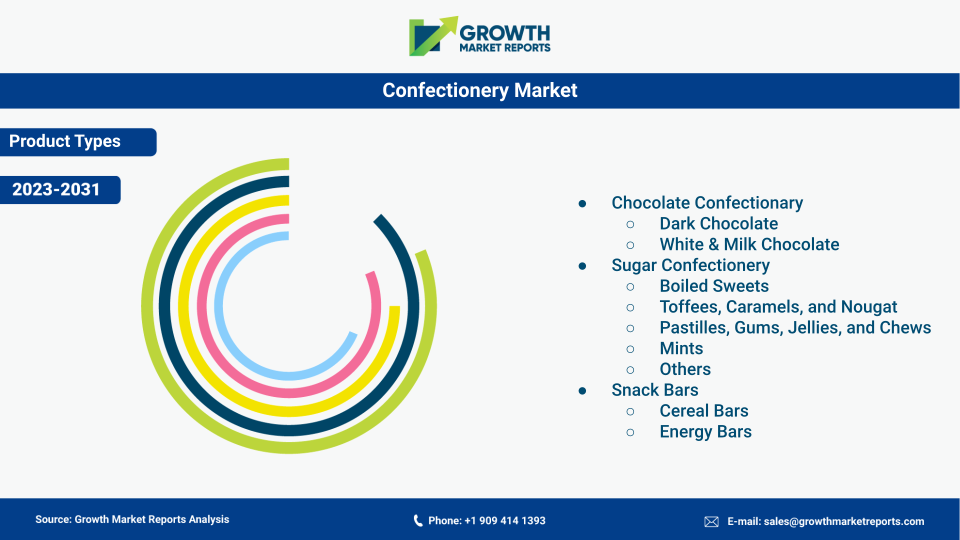
The confectionery market is broadly segmented by product type into chocolate confectionery, sugar confectionery, gum & chewing products, and others. Chocolate confectionery remains the dominant segment, accounting for a significant share of the global market. This is attributed to the universal appeal of chocolate across age groups and geographies, as well as continuous innovation in flavors, fillings, and packaging. Premium chocolate products, such as dark and artisanal chocolates, are gaining traction among health-conscious and affluent consumers, further boosting segment growth. Seasonal and festive demand, particularly in Western markets, also plays a crucial role in driving chocolate sales.

The sugar confectionery segment, encompassing candies, toffees, lollipops, and other sugar-based treats, continues to witness robust demand, especially among children and young adults. The segment benefits from a wide array of flavors, shapes, and packaging options, making it a popular choice for both everyday snacking and gifting. Innovations such as sugar-free and fortified candies are helping manufacturers address health concerns and tap into the growing segment of consumers seeking guilt-free indulgence. The increasing popularity of traditional and region-specific sugar confectionery products also adds to the segment’s diversity and resilience.

Gum & chewing products represent another important segment, driven by their perceived oral health benefits and convenience. Functional chewing gums, offering benefits such as teeth whitening, breath freshening, and even vitamin supplementation, are gaining popularity among health-conscious consumers. The segment also benefits from impulse purchases at checkout counters and convenience stores. While overall growth in this segment has been moderate, manufacturers are leveraging innovative flavors, sugar-free formulations, and novel packaging to attract new customers and retain existing ones.

The others category includes niche and emerging confectionery products such as licorice, mints, and novelty items. These products often cater to specific consumer preferences or cultural traditions and can command premium prices due to their unique positioning. The ongoing trend towards natural and organic ingredients is also reflected in this segment, with manufacturers introducing clean-label and allergen-free options. While the segment’s share is relatively smaller compared to mainstream categories, its growth potential remains significant, particularly in developed markets where consumers are willing to experiment with new and exotic flavors.

Across all product types, the emphasis on innovation, quality, and differentiation remains paramount. Manufacturers are increasingly focusing on consumer-centric product development, leveraging market insights and feedback to launch products that resonate with target demographics. This approach not only enhances brand loyalty but also ensures sustained growth in an increasingly competitive market landscape.

Report Scope

Attributes Details
Report Title Confectionery Market Research Report 2033
By Product Type Chocolate Confectionery, Sugar Confectionery, Gum & Chewing Products, Others
By Ingredient Cocoa, Sugar, Dairy, Gelatin, Others
By Distribution Channel Supermarkets/Hypermarkets, Convenience Stores, Online Retail, Specialty Stores, Others
By End-User Children, Adults, Others
Regions Covered North America, Europe, APAC, Latin America, MEA
Base Year 2024
Historic Data 2018-2023
Forecast Period 2025-2033
Number of Pages 287
Number of Tables & Figures 384
Customization Available Yes, the report can be customized as per your need.

Ingredient Analysis

The confectionery market’s ingredient landscape is diverse, with cocoa, sugar, dairy, gelatin, and others forming the backbone of product formulations. Cocoa is a critical ingredient in chocolate confectionery, and its quality, origin, and processing methods significantly influence the taste, texture, and price of finished products. The rising demand for premium and ethically sourced cocoa, such as Fair Trade and Rainforest Alliance certified products, reflects growing consumer awareness regarding sustainability and ethical sourcing practices. This trend is prompting manufacturers to invest in transparent supply chains and sustainable sourcing initiatives to meet consumer expectations and regulatory requirements.

Sugar remains a fundamental ingredient across all confectionery segments, imparting sweetness, texture, and shelf stability. However, the increasing prevalence of lifestyle diseases such as diabetes and obesity has led to heightened scrutiny of sugar content in food products. In response, manufacturers are exploring alternative sweeteners, including stevia, erythritol, and other plant-based options, to develop reduced-sugar and sugar-free confectionery. These innovations cater to health-conscious consumers without compromising taste, thereby expanding the market for functional and better-for-you confectionery products.

Dairy ingredients, including milk solids, butter, and cream, play a vital role in enhancing the flavor, mouthfeel, and nutritional profile of many confectionery products, particularly chocolates and toffees. The growing demand for premium and indulgent products has spurred the use of high-quality dairy inputs, such as grass-fed or organic milk. Simultaneously, the rise of veganism and lactose intolerance has driven innovation in dairy alternatives, with plant-based milks and fats gaining popularity in both traditional and specialty confectionery segments. This dual trend reflects the market’s adaptability to diverse consumer needs and preferences.

Gelatin is widely used as a gelling agent in gummy candies, marshmallows, and other chewy confections. The increasing demand for clean-label and vegetarian/vegan products has prompted manufacturers to seek plant-based alternatives to traditional animal-derived gelatin, such as agar-agar, pectin, and carrageenan. This shift is particularly pronounced in markets with high vegetarian populations or stringent dietary regulations. The development of novel texturizing agents and hydrocolloids is enabling manufacturers to maintain product quality while meeting the evolving requirements of a diverse consumer base.

Other ingredients, including nuts, fruits, flavorings, and colorants, contribute to the sensory appeal and nutritional value of confectionery products. The use of natural and minimally processed ingredients is on the rise, driven by consumer demand for transparency and authenticity. Functional ingredients, such as vitamins, minerals, and probiotics, are also being incorporated to create value-added products that support health and wellness. This focus on ingredient innovation is not only enhancing product differentiation but also aligning the confectionery market with broader food industry trends.

Distribution Channel Analysis

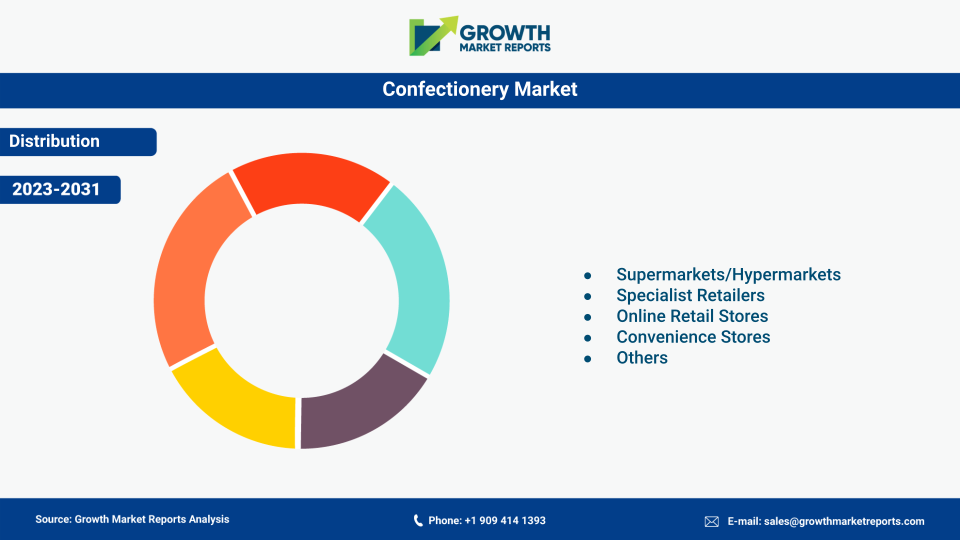
The distribution landscape for confectionery products is multifaceted, with supermarkets/hypermarkets holding a dominant position due to their extensive product assortments, convenient locations, and frequent promotional activities. These retail formats offer consumers a one-stop shopping experience, enabling them to compare brands, access new product launches, and benefit from discounts and loyalty programs. The visibility and accessibility afforded by supermarkets and hypermarkets make them a preferred channel for both established and emerging confectionery brands seeking to maximize market reach and penetration.

Convenience stores play a crucial role in driving impulse purchases and catering to on-the-go consumers. Their strategic locations in urban and transit areas, coupled with extended operating hours, make them ideal for quick and spontaneous purchases of confectionery items. Manufacturers often leverage point-of-sale promotions, attractive packaging, and limited-edition products to stimulate demand in this channel. The convenience store segment is particularly significant in regions with high urbanization rates and busy lifestyles, where consumers prioritize speed and accessibility.

The rise of online retail has transformed the confectionery market by providing consumers with unparalleled convenience, product variety, and access to international brands. E-commerce platforms offer personalized recommendations, subscription services, and direct-to-consumer models, enabling brands to build stronger relationships with their customers. The growth of online retail is further accelerated by digital marketing, social media engagement, and the increasing adoption of mobile payment solutions. While online sales currently represent a smaller share compared to traditional retail, their rapid growth trajectory is reshaping the competitive landscape and creating new opportunities for market expansion.

Specialty stores, including gourmet shops, duty-free outlets, and health food stores, cater to niche segments and discerning consumers seeking premium, artisanal, or health-oriented confectionery products. These channels offer curated selections, personalized service, and exclusive products, often commanding higher price points and margins. The specialty store segment is particularly important for brands focusing on differentiation, craftsmanship, and storytelling, as it enables them to connect with consumers seeking unique and memorable experiences.

Other distribution channels, such as vending machines, kiosks, and direct sales, contribute to market diversity and accessibility. These channels are gaining popularity in settings such as schools, offices, airports, and entertainment venues, where convenience and immediacy are key purchase drivers. The integration of digital technologies, such as contactless payments and smart vending solutions, is further enhancing the efficiency and appeal of these alternative channels, ensuring that confectionery products remain within easy reach of consumers at all times.

End-User Analysis

The children segment remains a cornerstone of the confectionery market, driven by the universal appeal of sweets and the role of confectionery in celebrations, rewards, and social interactions. Manufacturers target this segment with colorful packaging, playful shapes, and engaging marketing campaigns that resonate with young consumers. The growing influence of children on household purchasing decisions, coupled with the increasing prevalence of pocket money, further amplifies demand in this segment. However, rising concerns about childhood obesity and sugar consumption are prompting brands to innovate with reduced-sugar, portion-controlled, and fortified products that balance indulgence with health considerations.

Adults represent a rapidly growing end-user segment, reflecting changing attitudes towards snacking and indulgence. The rise of premium, artisanal, and functional confectionery products is particularly resonant among adult consumers seeking unique flavors, sophisticated experiences, and health benefits. Dark chocolate, sugar-free candies, and functional gums are examples of products tailored to adult preferences. Additionally, the trend of gifting confectionery for corporate events, holidays, and special occasions is expanding the adult consumer base. Manufacturers are leveraging targeted marketing, product innovation, and experiential retail to engage this segment and drive repeat purchases.

The others category encompasses a diverse range of end-users, including seniors, health-conscious consumers, and individuals with specific dietary needs or preferences. This segment is characterized by demand for products that offer functional benefits, such as energy, relaxation, or digestive support, as well as options that cater to dietary restrictions, such as gluten-free, vegan, or allergen-free confectionery. The increasing focus on health and wellness, coupled with demographic shifts such as aging populations, is driving manufacturers to expand their product portfolios and invest in research and development to meet the unique needs of these consumers.

Across all end-user segments, personalization and customization are emerging as key trends. Brands are leveraging digital technologies, data analytics, and direct-to-consumer models to offer personalized recommendations, bespoke packaging, and limited-edition flavors that cater to individual preferences. This focus on consumer-centric innovation not only enhances brand loyalty but also enables manufacturers to capture value in an increasingly fragmented and competitive market.

In summary, the end-user landscape of the confectionery market is evolving in response to changing demographics, lifestyle trends, and health considerations. Manufacturers that can effectively segment their target audiences and deliver tailored products and experiences are well-positioned to capitalize on the diverse and dynamic opportunities within the global confectionery industry.

Opportunities & Threats

The confectionery market is ripe with opportunities, particularly in the areas of product innovation and premiumization. As consumers become more adventurous and health-conscious, there is significant potential for manufacturers to introduce new flavors, formats, and functional ingredients that cater to evolving tastes and preferences. The rise of plant-based, organic, and fortified confectionery products presents lucrative opportunities for brands to differentiate themselves and capture share in high-growth segments. Additionally, the expansion of e-commerce and direct-to-consumer channels enables manufacturers to reach new audiences, gather valuable consumer insights, and build stronger brand loyalty through personalized offerings and experiences.

Emerging markets represent another major opportunity for growth, driven by rising disposable incomes, urbanization, and increasing exposure to Western lifestyles and products. Countries in Asia Pacific, Latin America, and the Middle East & Africa are witnessing rapid expansion in modern retail infrastructure, providing manufacturers with access to large and untapped consumer bases. Strategic partnerships, local sourcing, and culturally relevant product development are key strategies for success in these regions. Furthermore, the growing trend of gifting and premiumization in these markets is creating new demand for high-quality and innovative confectionery products, further fueling market expansion.

Despite these opportunities, the confectionery market faces several restraining factors, chief among them being increasing health concerns related to sugar consumption and obesity. Regulatory pressures, such as sugar taxes, labeling requirements, and restrictions on advertising to children, are compelling manufacturers to reformulate products and invest in healthier alternatives. The rising cost and volatility of key ingredients, such as cocoa and dairy, also pose challenges to profitability and supply chain stability. Additionally, intense competition and the proliferation of private label and local brands are putting pressure on margins and necessitating continuous investment in innovation and marketing to maintain market share.

Regional Outlook

Asia Pacific stands out as the fastest-growing region in the global confectionery market, with a market size of USD 68.9 billion in 2024 and an impressive CAGR of 5.6% projected through 2033. The region’s growth is fueled by large and youthful populations, rising disposable incomes, and increasing urbanization. Countries such as China, India, and Indonesia are witnessing rapid expansion in modern retail channels and growing demand for both traditional and Western-style confectionery products. The proliferation of e-commerce platforms and social media marketing is further accelerating market penetration and brand visibility in this dynamic region.

North America and Europe continue to represent mature and highly competitive markets, with market sizes of USD 62.1 billion and USD 78.4 billion respectively in 2024. These regions are characterized by high per capita consumption, a strong focus on premiumization, and increasing demand for health-oriented and functional confectionery products. The presence of leading global brands, advanced manufacturing capabilities, and established retail networks ensures sustained market leadership. However, growth rates are relatively modest, with CAGRs of 2.8% and 2.6% respectively, reflecting market maturity and evolving consumer preferences towards healthier alternatives.

Latin America and the Middle East & Africa are emerging as promising markets, with combined market sizes of USD 22.7 billion in 2024. These regions are benefiting from rapid urbanization, expanding middle classes, and increasing exposure to international brands and products. The growth of modern retail infrastructure and the popularity of gifting and festive consumption are driving demand for confectionery products. While challenges such as economic volatility and regulatory hurdles persist, the long-term outlook remains positive, with CAGRs of 4.4% and 4.9% respectively, indicating significant untapped potential for manufacturers willing to invest in localized strategies and product innovation.

Confectionery Market Statistics

Competitor Outlook

The global confectionery market is highly competitive, characterized by the presence of several multinational corporations, regional players, and niche brands vying for market share. Leading companies are leveraging their extensive distribution networks, robust research and development capabilities, and strong brand equity to maintain their competitive edge. Strategic initiatives such as mergers and acquisitions, product innovation, and expansion into emerging markets are common as companies seek to diversify their portfolios and capitalize on new growth opportunities. The focus on sustainability, ethical sourcing, and digital engagement is also intensifying, as consumers increasingly prioritize transparency and social responsibility in their purchasing decisions.

Innovation remains a key differentiator in the confectionery market, with companies investing heavily in the development of new flavors, formats, and functional products. The adoption of advanced manufacturing technologies, such as 3D printing and automation, is enabling manufacturers to enhance efficiency, reduce costs, and accelerate time-to-market for new products. Marketing and branding strategies are also evolving, with a greater emphasis on experiential retail, influencer partnerships, and digital campaigns that engage consumers across multiple touchpoints. The ability to anticipate and respond to changing consumer trends is critical for success in this fast-paced and dynamic industry.

Private label and local brands are gaining traction, particularly in emerging markets where price sensitivity and cultural preferences play a significant role in purchasing decisions. These brands are leveraging their agility, local insights, and cost advantages to compete effectively with established players. At the same time, global brands are responding by localizing their product offerings, investing in community engagement, and building partnerships with local suppliers and distributors. The interplay between global and local competition is creating a vibrant and dynamic market environment, characterized by constant innovation and evolving consumer expectations.

Major players in the global confectionery market include Mars, Incorporated; Mondelez International, Inc.; Nestlé S.A.; Ferrero Group; The Hershey Company; Lindt & Sprüngli AG; and Perfetti Van Melle Group. These companies are recognized for their extensive product portfolios, strong global presence, and commitment to quality and innovation. Mars, Incorporated, for example, is renowned for its iconic brands such as M&M’s, Snickers, and Mars bars, while Mondelez International leads in both chocolate and biscuit segments with brands like Cadbury and Milka. Nestlé S.A. continues to expand its confectionery offerings with a focus on health and wellness, while Ferrero Group is known for its premium and indulgent products such as Ferrero Rocher and Kinder.

The Hershey Company has a strong foothold in North America, with a diverse portfolio that includes both chocolate and non-chocolate confectionery. Lindt & Sprüngli AG is synonymous with premium chocolate, leveraging its Swiss heritage and craftsmanship to command a loyal global following. Perfetti Van Melle Group is a leader in sugar confectionery and gum, with well-known brands such as Mentos and Chupa Chups. These companies are continuously investing in product development, marketing, and sustainability initiatives to strengthen their market positions and drive long-term growth in the highly competitive global confectionery market.

Key Players

  • Mars, Incorporated
  • Mondelez International
  • Nestlé S.A.
  • Ferrero Group
  • The Hershey Company
  • Lindt & Sprüngli AG
  • Perfetti Van Melle
  • Haribo GmbH & Co. KG
  • Meiji Holdings Co., Ltd.
  • Pladis Global
  • Orion Confectionery
  • Ezaki Glico Co., Ltd.
  • Cloetta AB
  • Lotte Confectionery
  • Morinaga & Co., Ltd.
  • Arcor S.A.I.C.
  • August Storck KG
  • United Confectioners
  • Yildiz Holding
  • Roshen Confectionery Corporation
Confectionery Market Overview

Segments

The Confectionery market has been segmented on the basis of

Product Type

  • Chocolate Confectionery
  • Sugar Confectionery
  • Gum & Chewing Products
  • Others

Ingredient

  • Cocoa
  • Sugar
  • Dairy
  • Gelatin
  • Others

Distribution Channel

  • Supermarkets/Hypermarkets
  • Convenience Stores
  • Online Retail
  • Specialty Stores
  • Others

End-User

  • Children
  • Adults
  • Others

Competitive Landscape

Key players in the confectionery market are Nestle S.A., Mondelez International, Inc., The Hershey Company, Mars Incorporated, HariboGmbh& Co. K.G., Barry Callebaut, Meiji Holdings, Pladis Global, Ferrero Group, Chocoladefabriken Lindt &Sprungli AG, and Ezaki Glico Co. Ltd. These players engage in mergers & acquisitions, collaborations, agreements, and partnerships to strengthen their geographical presence.


Confectionery Market Key Players

Frequently Asked Questions

Opportunities include product innovation, premiumization, and expansion in emerging markets. Challenges involve health concerns over sugar, regulatory pressures, ingredient cost volatility, and intense competition.

Rising health concerns are leading to increased demand for sugar-free, reduced-sugar, and fortified confectionery products. Manufacturers are innovating with alternative sweeteners and functional ingredients to cater to health-conscious consumers.

Major companies include Mars, Incorporated; Mondelez International; Nestlé S.A.; Ferrero Group; The Hershey Company; Lindt & Sprüngli AG; and Perfetti Van Melle, among others.

Key ingredients include cocoa, sugar, dairy, gelatin, and a variety of nuts, fruits, flavorings, and colorants. There is also a growing trend toward natural, organic, and plant-based alternatives.

Asia Pacific is the fastest-growing region, driven by large populations, rising incomes, and urbanization. Latin America and the Middle East & Africa are also emerging as promising markets.

Supermarkets/hypermarkets remain the leading sales channels, but online retail and specialty stores are rapidly growing, offering greater convenience and product variety.

Key trends include product innovation with new flavors and health-oriented options, premiumization, sustainable packaging, and the introduction of plant-based and functional ingredients.

Chocolate confectionery is the dominant segment, followed by sugar confectionery, gum & chewing products, and other niche items like licorice and mints.

The confectionery market is forecasted to grow at a CAGR of 4.1% from 2025 to 2033, reaching a value of USD 348.8 billion by 2033.

As of 2024, the global confectionery market size reached USD 245.6 billion, with continued growth expected in the coming years.

Table Of Content

Chapter 1 Executive Summary
Chapter 2 Assumptions and Acronyms Used
Chapter 3 Research Methodology
Chapter 4 Confectionery Market Overview
   4.1 Introduction
      4.1.1 Market Taxonomy
      4.1.2 Market Definition
      4.1.3 Macro-Economic Factors Impacting the Market Growth
   4.2 Confectionery Market Dynamics
      4.2.1 Market Drivers
      4.2.2 Market Restraints
      4.2.3 Market Opportunity
   4.3 Confectionery Market - Supply Chain Analysis
      4.3.1 List of Key Suppliers
      4.3.2 List of Key Distributors
      4.3.3 List of Key Consumers
   4.4 Key Forces Shaping the Confectionery Market
      4.4.1 Bargaining Power of Suppliers
      4.4.2 Bargaining Power of Buyers
      4.4.3 Threat of Substitution
      4.4.4 Threat of New Entrants
      4.4.5 Competitive Rivalry
   4.5 Global Confectionery Market Size & Forecast, 2023-2032
      4.5.1 Confectionery Market Size and Y-o-Y Growth
      4.5.2 Confectionery Market Absolute $ Opportunity

Chapter 5 Global Confectionery Market Analysis and Forecast By Product Type
   5.1 Introduction
      5.1.1 Key Market Trends & Growth Opportunities By Product Type
      5.1.2 Basis Point Share (BPS) Analysis By Product Type
      5.1.3 Absolute $ Opportunity Assessment By Product Type
   5.2 Confectionery Market Size Forecast By Product Type
      5.2.1 Chocolate Confectionery
      5.2.2 Sugar Confectionery
      5.2.3 Gum & Chewing Products
      5.2.4 Others
   5.3 Market Attractiveness Analysis By Product Type

Chapter 6 Global Confectionery Market Analysis and Forecast By Ingredient
   6.1 Introduction
      6.1.1 Key Market Trends & Growth Opportunities By Ingredient
      6.1.2 Basis Point Share (BPS) Analysis By Ingredient
      6.1.3 Absolute $ Opportunity Assessment By Ingredient
   6.2 Confectionery Market Size Forecast By Ingredient
      6.2.1 Cocoa
      6.2.2 Sugar
      6.2.3 Dairy
      6.2.4 Gelatin
      6.2.5 Others
   6.3 Market Attractiveness Analysis By Ingredient

Chapter 7 Global Confectionery Market Analysis and Forecast By Distribution Channel
   7.1 Introduction
      7.1.1 Key Market Trends & Growth Opportunities By Distribution Channel
      7.1.2 Basis Point Share (BPS) Analysis By Distribution Channel
      7.1.3 Absolute $ Opportunity Assessment By Distribution Channel
   7.2 Confectionery Market Size Forecast By Distribution Channel
      7.2.1 Supermarkets/Hypermarkets
      7.2.2 Convenience Stores
      7.2.3 Online Retail
      7.2.4 Specialty Stores
      7.2.5 Others
   7.3 Market Attractiveness Analysis By Distribution Channel

Chapter 8 Global Confectionery Market Analysis and Forecast By End-User
   8.1 Introduction
      8.1.1 Key Market Trends & Growth Opportunities By End-User
      8.1.2 Basis Point Share (BPS) Analysis By End-User
      8.1.3 Absolute $ Opportunity Assessment By End-User
   8.2 Confectionery Market Size Forecast By End-User
      8.2.1 Children
      8.2.2 Adults
      8.2.3 Others
   8.3 Market Attractiveness Analysis By End-User

Chapter 9 Global Confectionery Market Analysis and Forecast by Region
   9.1 Introduction
      9.1.1 Key Market Trends & Growth Opportunities By Region
      9.1.2 Basis Point Share (BPS) Analysis By Region
      9.1.3 Absolute $ Opportunity Assessment By Region
   9.2 Confectionery Market Size Forecast By Region
      9.2.1 North America
      9.2.2 Europe
      9.2.3 Asia Pacific
      9.2.4 Latin America
      9.2.5 Middle East & Africa (MEA)
   9.3 Market Attractiveness Analysis By Region

Chapter 10 Coronavirus Disease (COVID-19) Impact 
   10.1 Introduction 
   10.2 Current & Future Impact Analysis 
   10.3 Economic Impact Analysis 
   10.4 Government Policies 
   10.5 Investment Scenario

Chapter 11 North America Confectionery Analysis and Forecast
   11.1 Introduction
   11.2 North America Confectionery Market Size Forecast by Country
      11.2.1 U.S.
      11.2.2 Canada
   11.3 Basis Point Share (BPS) Analysis by Country
   11.4 Absolute $ Opportunity Assessment by Country
   11.5 Market Attractiveness Analysis by Country
   11.6 North America Confectionery Market Size Forecast By Product Type
      11.6.1 Chocolate Confectionery
      11.6.2 Sugar Confectionery
      11.6.3 Gum & Chewing Products
      11.6.4 Others
   11.7 Basis Point Share (BPS) Analysis By Product Type 
   11.8 Absolute $ Opportunity Assessment By Product Type 
   11.9 Market Attractiveness Analysis By Product Type
   11.10 North America Confectionery Market Size Forecast By Ingredient
      11.10.1 Cocoa
      11.10.2 Sugar
      11.10.3 Dairy
      11.10.4 Gelatin
      11.10.5 Others
   11.11 Basis Point Share (BPS) Analysis By Ingredient 
   11.12 Absolute $ Opportunity Assessment By Ingredient 
   11.13 Market Attractiveness Analysis By Ingredient
   11.14 North America Confectionery Market Size Forecast By Distribution Channel
      11.14.1 Supermarkets/Hypermarkets
      11.14.2 Convenience Stores
      11.14.3 Online Retail
      11.14.4 Specialty Stores
      11.14.5 Others
   11.15 Basis Point Share (BPS) Analysis By Distribution Channel 
   11.16 Absolute $ Opportunity Assessment By Distribution Channel 
   11.17 Market Attractiveness Analysis By Distribution Channel
   11.18 North America Confectionery Market Size Forecast By End-User
      11.18.1 Children
      11.18.2 Adults
      11.18.3 Others
   11.19 Basis Point Share (BPS) Analysis By End-User 
   11.20 Absolute $ Opportunity Assessment By End-User 
   11.21 Market Attractiveness Analysis By End-User

Chapter 12 Europe Confectionery Analysis and Forecast
   12.1 Introduction
   12.2 Europe Confectionery Market Size Forecast by Country
      12.2.1 Germany
      12.2.2 France
      12.2.3 Italy
      12.2.4 U.K.
      12.2.5 Spain
      12.2.6 Russia
      12.2.7 Rest of Europe
   12.3 Basis Point Share (BPS) Analysis by Country
   12.4 Absolute $ Opportunity Assessment by Country
   12.5 Market Attractiveness Analysis by Country
   12.6 Europe Confectionery Market Size Forecast By Product Type
      12.6.1 Chocolate Confectionery
      12.6.2 Sugar Confectionery
      12.6.3 Gum & Chewing Products
      12.6.4 Others
   12.7 Basis Point Share (BPS) Analysis By Product Type 
   12.8 Absolute $ Opportunity Assessment By Product Type 
   12.9 Market Attractiveness Analysis By Product Type
   12.10 Europe Confectionery Market Size Forecast By Ingredient
      12.10.1 Cocoa
      12.10.2 Sugar
      12.10.3 Dairy
      12.10.4 Gelatin
      12.10.5 Others
   12.11 Basis Point Share (BPS) Analysis By Ingredient 
   12.12 Absolute $ Opportunity Assessment By Ingredient 
   12.13 Market Attractiveness Analysis By Ingredient
   12.14 Europe Confectionery Market Size Forecast By Distribution Channel
      12.14.1 Supermarkets/Hypermarkets
      12.14.2 Convenience Stores
      12.14.3 Online Retail
      12.14.4 Specialty Stores
      12.14.5 Others
   12.15 Basis Point Share (BPS) Analysis By Distribution Channel 
   12.16 Absolute $ Opportunity Assessment By Distribution Channel 
   12.17 Market Attractiveness Analysis By Distribution Channel
   12.18 Europe Confectionery Market Size Forecast By End-User
      12.18.1 Children
      12.18.2 Adults
      12.18.3 Others
   12.19 Basis Point Share (BPS) Analysis By End-User 
   12.20 Absolute $ Opportunity Assessment By End-User 
   12.21 Market Attractiveness Analysis By End-User

Chapter 13 Asia Pacific Confectionery Analysis and Forecast
   13.1 Introduction
   13.2 Asia Pacific Confectionery Market Size Forecast by Country
      13.2.1 China
      13.2.2 Japan
      13.2.3 South Korea
      13.2.4 India
      13.2.5 Australia
      13.2.6 South East Asia (SEA)
      13.2.7 Rest of Asia Pacific (APAC)
   13.3 Basis Point Share (BPS) Analysis by Country
   13.4 Absolute $ Opportunity Assessment by Country
   13.5 Market Attractiveness Analysis by Country
   13.6 Asia Pacific Confectionery Market Size Forecast By Product Type
      13.6.1 Chocolate Confectionery
      13.6.2 Sugar Confectionery
      13.6.3 Gum & Chewing Products
      13.6.4 Others
   13.7 Basis Point Share (BPS) Analysis By Product Type 
   13.8 Absolute $ Opportunity Assessment By Product Type 
   13.9 Market Attractiveness Analysis By Product Type
   13.10 Asia Pacific Confectionery Market Size Forecast By Ingredient
      13.10.1 Cocoa
      13.10.2 Sugar
      13.10.3 Dairy
      13.10.4 Gelatin
      13.10.5 Others
   13.11 Basis Point Share (BPS) Analysis By Ingredient 
   13.12 Absolute $ Opportunity Assessment By Ingredient 
   13.13 Market Attractiveness Analysis By Ingredient
   13.14 Asia Pacific Confectionery Market Size Forecast By Distribution Channel
      13.14.1 Supermarkets/Hypermarkets
      13.14.2 Convenience Stores
      13.14.3 Online Retail
      13.14.4 Specialty Stores
      13.14.5 Others
   13.15 Basis Point Share (BPS) Analysis By Distribution Channel 
   13.16 Absolute $ Opportunity Assessment By Distribution Channel 
   13.17 Market Attractiveness Analysis By Distribution Channel
   13.18 Asia Pacific Confectionery Market Size Forecast By End-User
      13.18.1 Children
      13.18.2 Adults
      13.18.3 Others
   13.19 Basis Point Share (BPS) Analysis By End-User 
   13.20 Absolute $ Opportunity Assessment By End-User 
   13.21 Market Attractiveness Analysis By End-User

Chapter 14 Latin America Confectionery Analysis and Forecast
   14.1 Introduction
   14.2 Latin America Confectionery Market Size Forecast by Country
      14.2.1 Brazil
      14.2.2 Mexico
      14.2.3 Rest of Latin America (LATAM)
   14.3 Basis Point Share (BPS) Analysis by Country
   14.4 Absolute $ Opportunity Assessment by Country
   14.5 Market Attractiveness Analysis by Country
   14.6 Latin America Confectionery Market Size Forecast By Product Type
      14.6.1 Chocolate Confectionery
      14.6.2 Sugar Confectionery
      14.6.3 Gum & Chewing Products
      14.6.4 Others
   14.7 Basis Point Share (BPS) Analysis By Product Type 
   14.8 Absolute $ Opportunity Assessment By Product Type 
   14.9 Market Attractiveness Analysis By Product Type
   14.10 Latin America Confectionery Market Size Forecast By Ingredient
      14.10.1 Cocoa
      14.10.2 Sugar
      14.10.3 Dairy
      14.10.4 Gelatin
      14.10.5 Others
   14.11 Basis Point Share (BPS) Analysis By Ingredient 
   14.12 Absolute $ Opportunity Assessment By Ingredient 
   14.13 Market Attractiveness Analysis By Ingredient
   14.14 Latin America Confectionery Market Size Forecast By Distribution Channel
      14.14.1 Supermarkets/Hypermarkets
      14.14.2 Convenience Stores
      14.14.3 Online Retail
      14.14.4 Specialty Stores
      14.14.5 Others
   14.15 Basis Point Share (BPS) Analysis By Distribution Channel 
   14.16 Absolute $ Opportunity Assessment By Distribution Channel 
   14.17 Market Attractiveness Analysis By Distribution Channel
   14.18 Latin America Confectionery Market Size Forecast By End-User
      14.18.1 Children
      14.18.2 Adults
      14.18.3 Others
   14.19 Basis Point Share (BPS) Analysis By End-User 
   14.20 Absolute $ Opportunity Assessment By End-User 
   14.21 Market Attractiveness Analysis By End-User

Chapter 15 Middle East & Africa (MEA) Confectionery Analysis and Forecast
   15.1 Introduction
   15.2 Middle East & Africa (MEA) Confectionery Market Size Forecast by Country
      15.2.1 Saudi Arabia
      15.2.2 South Africa
      15.2.3 UAE
      15.2.4 Rest of Middle East & Africa (MEA)
   15.3 Basis Point Share (BPS) Analysis by Country
   15.4 Absolute $ Opportunity Assessment by Country
   15.5 Market Attractiveness Analysis by Country
   15.6 Middle East & Africa (MEA) Confectionery Market Size Forecast By Product Type
      15.6.1 Chocolate Confectionery
      15.6.2 Sugar Confectionery
      15.6.3 Gum & Chewing Products
      15.6.4 Others
   15.7 Basis Point Share (BPS) Analysis By Product Type 
   15.8 Absolute $ Opportunity Assessment By Product Type 
   15.9 Market Attractiveness Analysis By Product Type
   15.10 Middle East & Africa (MEA) Confectionery Market Size Forecast By Ingredient
      15.10.1 Cocoa
      15.10.2 Sugar
      15.10.3 Dairy
      15.10.4 Gelatin
      15.10.5 Others
   15.11 Basis Point Share (BPS) Analysis By Ingredient 
   15.12 Absolute $ Opportunity Assessment By Ingredient 
   15.13 Market Attractiveness Analysis By Ingredient
   15.14 Middle East & Africa (MEA) Confectionery Market Size Forecast By Distribution Channel
      15.14.1 Supermarkets/Hypermarkets
      15.14.2 Convenience Stores
      15.14.3 Online Retail
      15.14.4 Specialty Stores
      15.14.5 Others
   15.15 Basis Point Share (BPS) Analysis By Distribution Channel 
   15.16 Absolute $ Opportunity Assessment By Distribution Channel 
   15.17 Market Attractiveness Analysis By Distribution Channel
   15.18 Middle East & Africa (MEA) Confectionery Market Size Forecast By End-User
      15.18.1 Children
      15.18.2 Adults
      15.18.3 Others
   15.19 Basis Point Share (BPS) Analysis By End-User 
   15.20 Absolute $ Opportunity Assessment By End-User 
   15.21 Market Attractiveness Analysis By End-User

Chapter 16 Competition Landscape 
   16.1 Confectionery Market: Competitive Dashboard
   16.2 Global Confectionery Market: Market Share Analysis, 2023
   16.3 Company Profiles (Details – Overview, Financials, Developments, Strategy) 
      16.3.1 Mars, Incorporated
Mondelez International
Nestlé S.A.
Ferrero Group
The Hershey Company
Lindt & Sprüngli AG
Perfetti Van Melle
Haribo GmbH & Co. KG
Meiji Holdings Co., Ltd.
Pladis Global
Orion Confectionery
Ezaki Glico Co., Ltd.
Cloetta AB
Lotte Confectionery
Morinaga & Co., Ltd.
Arcor S.A.I.C.
August Storck KG
United Confectioners
Yildiz Holding
Roshen Confectionery Corporation

Methodology

Our Clients

General Mills
Siemens Healthcare
Pfizer
Honda Motor Co. Ltd.
Dassault Aviation
sinopec
FedEx Logistics
Microsoft