Eye Health Supplements Market Research Report 2033

Eye Health Supplements Market Research Report 2033

Segments - by Product Type (Lutein and Zeaxanthin, Omega-3 Fatty Acids, Antioxidants, Vitamins, Minerals, Others), by Form (Tablets, Capsules, Softgels, Powders, Others), by Application (Age-related Macular Degeneration, Cataract, Dry Eye Syndrome, Glaucoma, Others), by Distribution Channel (Online Stores, Pharmacies/Drug Stores, Supermarkets/Hypermarkets, Others)

https://growthmarketreports.com/Anuradha
Author : Anuradha B. More
https://growthmarketreports.com/Vaibhav
Fact-checked by : Vaibhav Chandola
https://growthmarketreports.com/Shruti
Editor : Shruti Bhat

Upcoming | Report ID :FB-668 | 4.9 Rating | 14 Reviews | 285 Pages | Format : Docx PDF

Report Description


Eye Health Supplements Market Outlook

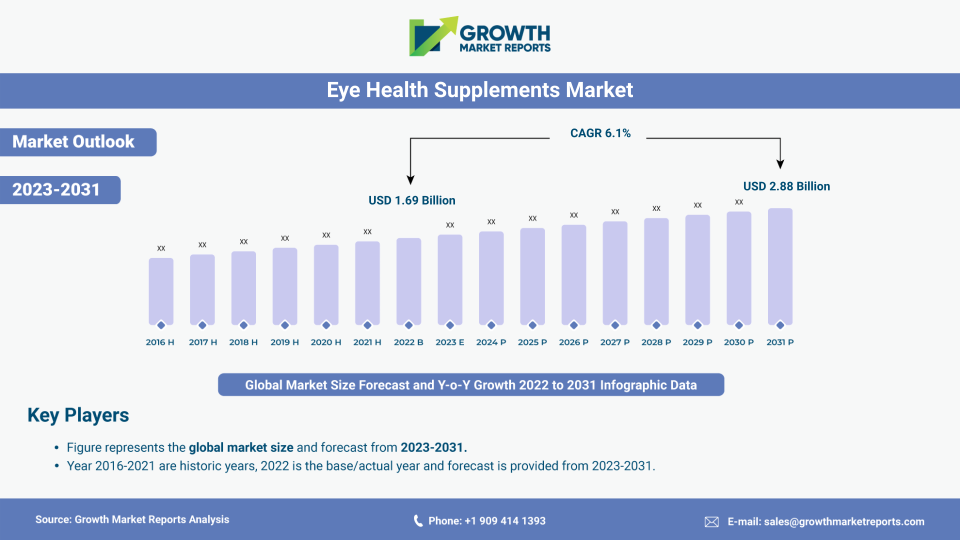
According to our latest research, the global eye health supplements market size reached USD 2.45 billion in 2024, driven by increasing awareness of eye health, an aging population, and a rising prevalence of vision-related disorders. The market is expected to grow at a robust CAGR of 7.2% from 2025 to 2033, reaching a forecasted value of USD 4.61 billion by 2033. This significant growth trajectory is fueled by the growing demand for preventive healthcare, the expansion of product offerings, and the increasing adoption of digital devices, which has amplified concerns over eye strain and related conditions.

One of the primary growth factors propelling the eye health supplements market is the rising incidence of age-related eye disorders such as macular degeneration, cataracts, and glaucoma. As global life expectancy continues to increase, the elderly population is expanding, leading to a higher prevalence of these conditions. The World Health Organization estimates that by 2030, nearly one in six people globally will be aged 60 years or older, intensifying the demand for supplements that can help maintain vision and delay the onset of degenerative eye diseases. This demographic shift, combined with greater health consciousness, has spurred individuals to seek preventive solutions, further boosting the consumption of eye health supplements.

Another critical driver is the widespread use of digital devices across all age groups, resulting in increased exposure to blue light and digital eye strain. The proliferation of smartphones, tablets, computers, and televisions has led to a surge in complaints related to dry eyes, blurred vision, and general eye discomfort. Eye health supplements containing ingredients such as lutein, zeaxanthin, and omega-3 fatty acids are increasingly being recommended by healthcare professionals to mitigate the harmful effects of prolonged screen time. Additionally, aggressive marketing campaigns and the proliferation of information through digital platforms have raised consumer awareness about the benefits of eye health supplements, thereby accelerating market growth.

The evolving regulatory landscape and advancements in research and development have also played a pivotal role in shaping the eye health supplements market. Stringent regulations regarding product efficacy and safety have led to the introduction of high-quality, clinically validated formulations. Manufacturers are continuously investing in innovation to develop supplements that offer enhanced bioavailability and targeted benefits. Furthermore, the entry of new market players and the expansion of distribution channels, including e-commerce, have improved product accessibility, enabling consumers to make informed choices and contributing to the overall expansion of the market.

In recent years, the introduction of Lutein Zeaxanthin Eye Gummies has revolutionized the way consumers approach eye health supplementation. These gummies offer a convenient and palatable alternative to traditional pills, making them particularly appealing to younger demographics and those who struggle with swallowing capsules. Packed with essential carotenoids like lutein and zeaxanthin, these gummies provide the same protective benefits against blue light and oxidative stress as their pill counterparts. The growing popularity of gummy supplements reflects a broader trend in the nutraceutical industry, where taste and convenience are becoming key factors in consumer decision-making. As awareness of the importance of eye health continues to rise, Lutein Zeaxanthin Eye Gummies are poised to capture a significant share of the market, appealing to health-conscious individuals seeking both efficacy and ease of use.

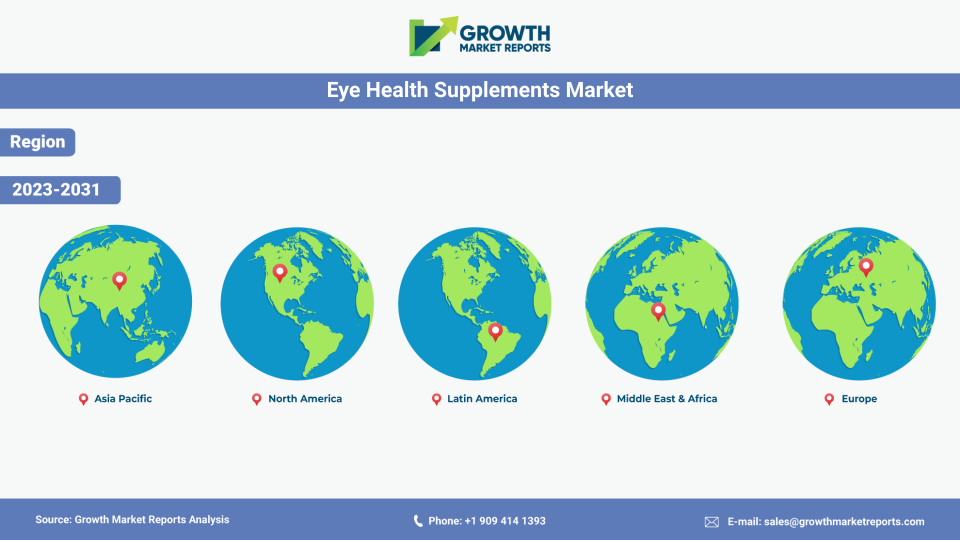
Regionally, North America continues to dominate the eye health supplements market, accounting for the largest revenue share in 2024, primarily due to high healthcare expenditure, strong consumer awareness, and a well-established distribution network. Europe follows closely, driven by similar factors and a growing elderly population. Meanwhile, the Asia Pacific region is emerging as a lucrative market, supported by rapid urbanization, increasing disposable incomes, and a rising prevalence of lifestyle-related eye conditions. Latin America and the Middle East & Africa are also witnessing gradual growth, though at a slower pace, as awareness and access to supplements improve.

Global Eye Health Supplements Industry Outlook

Product Type Analysis

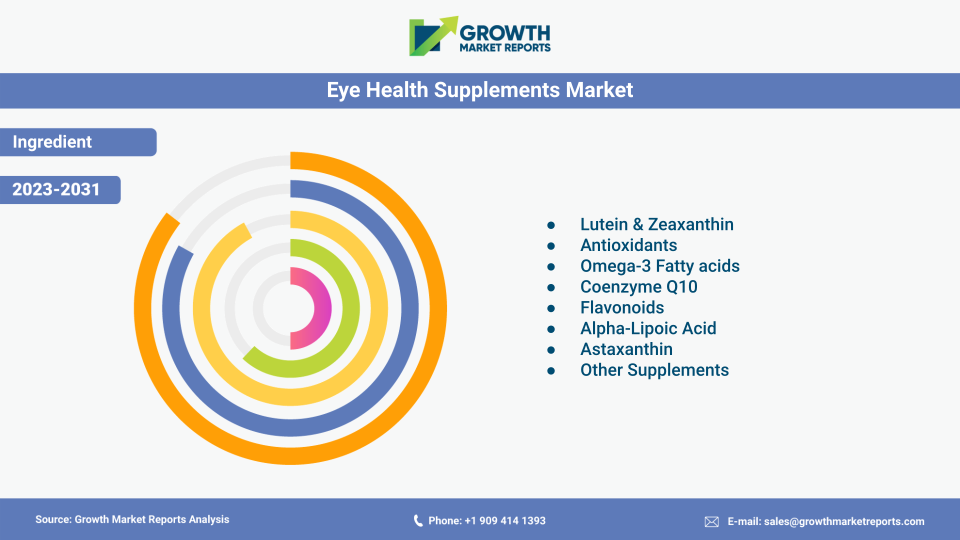
The product type segment of the eye health supplements market encompasses a diverse range of ingredients, each targeting specific aspects of ocular health. Lutein and zeaxanthin, two carotenoids found in high concentrations in the retina, have gained significant traction due to their proven efficacy in filtering harmful blue light and reducing the risk of age-related macular degeneration (AMD). Scientific studies have consistently demonstrated the protective benefits of these antioxidants, resulting in their widespread inclusion in both standalone and combination supplements. As consumer awareness regarding the importance of these ingredients grows, their demand is expected to remain robust throughout the forecast period.

Omega-3 fatty acids, particularly eicosapentaenoic acid (EPA) and docosahexaenoic acid (DHA), represent another critical product category. These essential fatty acids are known for their anti-inflammatory properties and their role in maintaining the structural integrity of retinal cells. Numerous clinical trials have established a strong link between omega-3 supplementation and the alleviation of dry eye syndrome, further driving their adoption among individuals experiencing discomfort from prolonged digital device use. The increasing prevalence of dry eye conditions, particularly among younger demographics, is expected to sustain the growth of the omega-3 supplements segment.

Antioxidants such as vitamins C and E, along with minerals like zinc and copper, are commonly included in eye health supplements due to their ability to neutralize free radicals and protect ocular tissues from oxidative stress. The Age-Related Eye Disease Study (AREDS) and its follow-up (AREDS2) have reinforced the significance of these nutrients in slowing the progression of AMD and cataracts. As a result, combination supplements that incorporate a spectrum of antioxidants, vitamins, and minerals have become increasingly popular, catering to consumers seeking comprehensive eye protection in a single formulation.

Other product types, including herbal extracts and novel bioactive compounds, are gradually gaining market share as research uncovers their potential benefits for eye health. Ingredients such as bilberry, astaxanthin, and ginkgo biloba are being incorporated into formulations aimed at enhancing blood flow to the eyes, reducing inflammation, and supporting overall vision health. The continuous introduction of innovative ingredients and the growing trend toward personalized nutrition are expected to diversify the product landscape, offering consumers a broader array of choices to address their unique eye health needs.

Report Scope

Attributes Details
Report Title Eye Health Supplements Market Research Report 2033
By Product Type Lutein and Zeaxanthin, Omega-3 Fatty Acids, Antioxidants, Vitamins, Minerals, Others
By Form Tablets, Capsules, Softgels, Powders, Others
By Application Age-related Macular Degeneration, Cataract, Dry Eye Syndrome, Glaucoma, Others
By Distribution Channel Online Stores, Pharmacies/Drug Stores, Supermarkets/Hypermarkets, Others
Regions Covered North America, Europe, APAC, Latin America, MEA
Base Year 2024
Historic Data 2018-2023
Forecast Period 2025-2033
Number of Pages 285
Number of Tables & Figures 278
Customization Available Yes, the report can be customized as per your need.

Form Analysis

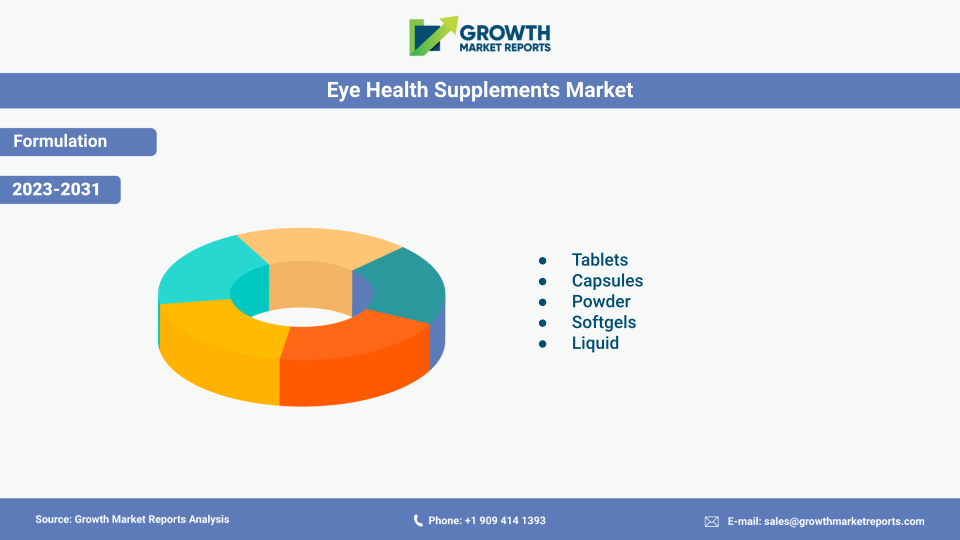
The form segment of the eye health supplements market is characterized by a wide variety of delivery formats designed to cater to diverse consumer preferences and lifestyles. Tablets and capsules have traditionally dominated the market, owing to their convenience, ease of dosing, and widespread availability. These forms are particularly favored by older adults and individuals seeking a straightforward supplementation regimen. The stability of active ingredients in tablet and capsule formulations also ensures consistent efficacy, making them a reliable choice for both manufacturers and consumers.

The emergence of Eye Health Beverages represents a novel approach to supporting ocular wellness through daily nutrition. These beverages are formulated with a blend of vitamins, antioxidants, and other nutrients known to benefit eye health, offering a refreshing and hydrating way to supplement one's diet. As consumers increasingly seek multifunctional products that align with their busy lifestyles, eye health beverages provide a convenient solution that can be easily integrated into daily routines. This innovative product category not only caters to the growing demand for functional beverages but also taps into the trend of holistic health, where nutrition plays a crucial role in maintaining overall well-being. With the potential to reach a wide audience, from busy professionals to active seniors, eye health beverages are set to become a staple in the wellness market, offering a delicious and effective means of supporting vision health.

Softgels have gained significant popularity in recent years, especially for delivering oil-based ingredients such as omega-3 fatty acids. The softgel format offers enhanced bioavailability and is easier to swallow, addressing the needs of individuals who may have difficulty ingesting traditional tablets or capsules. Furthermore, softgels provide superior protection against oxidation, preserving the potency of sensitive ingredients and extending product shelf life. This form is particularly well-suited for eye health supplements containing multiple fat-soluble nutrients, contributing to its growing market share.

Powdered supplements are emerging as a preferred option among health-conscious consumers who prioritize customization and versatility. Powders can be easily mixed with water, juices, or smoothies, allowing users to tailor their intake to specific dietary requirements or taste preferences. This form is especially popular among younger demographics and athletes who incorporate supplements into their daily routines. The ability to blend multiple nutrients into a single serving has also driven the development of comprehensive powdered eye health formulations, appealing to consumers seeking holistic eye care solutions.

Other forms, such as gummies, liquids, and effervescent tablets, are gradually entering the market, targeting consumers who value convenience and palatability. Gummies, in particular, have gained traction among children and adults who may be averse to swallowing pills. Liquid formulations offer rapid absorption and are often recommended for individuals with digestive issues or difficulty metabolizing solid forms. The ongoing innovation in supplement delivery technologies is expected to further diversify the market, enabling manufacturers to address the evolving preferences of a broadening consumer base.

Application Analysis

The application segment of the eye health supplements market is primarily driven by the rising prevalence of age-related macular degeneration (AMD), which remains the leading cause of vision loss among older adults. Supplements specifically formulated for AMD typically contain a blend of antioxidants, carotenoids, and minerals, as recommended by the AREDS and AREDS2 studies. The growing body of clinical evidence supporting the efficacy of these formulations has led to their widespread adoption among at-risk populations, bolstering the market for AMD-targeted supplements.

Cataract prevention and management represent another significant application area, with supplements aimed at reducing oxidative stress and delaying lens opacification. The inclusion of vitamins C and E, lutein, and zeaxanthin in cataract-focused supplements has been shown to slow the progression of the condition, particularly in individuals with dietary deficiencies. As the global burden of cataracts continues to rise, especially in developing regions with limited access to surgical interventions, the demand for preventive supplements is expected to grow steadily.

Dry eye syndrome is increasingly being recognized as a major public health concern, particularly in light of the digital revolution and the consequent surge in screen time. Supplements containing omega-3 fatty acids, vitamin A, and other anti-inflammatory ingredients have demonstrated efficacy in alleviating the symptoms of dry eye, such as irritation, redness, and discomfort. The growing awareness of digital eye strain among younger populations, coupled with the increasing endorsement of supplements by ophthalmologists, is driving the expansion of this application segment.

Glaucoma, a progressive optic neuropathy, is another area where eye health supplements are gaining traction. While pharmacological treatments remain the mainstay of glaucoma management, supplements containing antioxidants, flavonoids, and neuroprotective compounds are being explored as adjunctive therapies to support optic nerve health. The ongoing research into the potential benefits of nutritional interventions for glaucoma patients is expected to open new avenues for market growth, particularly as consumers seek natural alternatives to conventional therapies.

Distribution Channel Analysis

The distribution channel landscape for the eye health supplements market is undergoing significant transformation, driven by changing consumer shopping behaviors and the rapid expansion of digital commerce. Online stores have emerged as a dominant channel, offering unparalleled convenience, a wide product selection, and access to detailed product information. The proliferation of e-commerce platforms, coupled with the increasing use of smartphones and digital payment solutions, has made it easier than ever for consumers to research, compare, and purchase eye health supplements from the comfort of their homes. The COVID-19 pandemic further accelerated the shift toward online purchasing, with many consumers opting for contactless shopping experiences.

Pharmacies and drug stores continue to play a crucial role in the distribution of eye health supplements, particularly in developed markets where consumers value professional guidance and assurance of product authenticity. Pharmacists often serve as trusted advisors, recommending specific supplements based on individual needs and medical histories. The presence of well-established pharmacy chains and the availability of both over-the-counter and prescription supplements contribute to the sustained importance of this channel, especially among older adults and individuals with chronic eye conditions.

Supermarkets and hypermarkets are also significant distribution channels, offering consumers the convenience of purchasing eye health supplements alongside their regular grocery shopping. These retail outlets typically stock a wide range of brands and formulations, catering to diverse consumer preferences and price points. The growing trend toward health and wellness sections in supermarkets has further boosted the visibility and accessibility of eye health supplements, encouraging impulse purchases and trial among first-time users.

Other distribution channels, such as specialty health stores, clinics, and direct sales, are gradually gaining prominence as manufacturers seek to diversify their reach and target niche consumer segments. Specialty stores, in particular, appeal to health-conscious consumers seeking premium or organic formulations, while direct sales models leverage personalized marketing and customer engagement strategies. The continuous evolution of distribution channels, driven by technological advancements and shifting consumer expectations, is expected to shape the future trajectory of the eye health supplements market.

Opportunities & Threats

The eye health supplements market presents a wealth of opportunities for stakeholders across the value chain. One of the most promising areas lies in the development of personalized nutrition solutions tailored to individual genetic profiles, lifestyle factors, and specific eye health needs. Advances in nutrigenomics and digital health technologies are enabling manufacturers to offer customized supplement regimens, enhancing efficacy and consumer satisfaction. Additionally, the growing popularity of clean-label, plant-based, and organic formulations is creating new avenues for product differentiation and market expansion, particularly among environmentally conscious and health-focused consumers.

Another significant opportunity stems from the untapped potential in emerging markets, where rising disposable incomes, urbanization, and increased awareness of preventive healthcare are driving demand for eye health supplements. Strategic collaborations with local distributors, targeted marketing campaigns, and the introduction of affordable product lines can help manufacturers penetrate these high-growth regions. Furthermore, ongoing research into novel bioactive compounds and delivery technologies is expected to yield innovative products with enhanced efficacy, safety, and consumer appeal, further fueling market growth.

Despite the promising outlook, the eye health supplements market faces several restraining factors that could hinder its growth. Regulatory challenges, particularly concerning product claims, labeling, and ingredient safety, pose significant hurdles for manufacturers seeking to launch new products or expand into new markets. The lack of standardized guidelines and the variability in regulatory frameworks across regions can lead to delays, increased compliance costs, and potential product recalls. Additionally, the proliferation of counterfeit or substandard supplements in the market undermines consumer trust and poses risks to public health, necessitating greater vigilance and enforcement by regulatory authorities.

Regional Outlook

North America remains the undisputed leader in the eye health supplements market, accounting for approximately 38% of the global market share in 2024, with a market value of nearly USD 931 million. The region's dominance is attributed to high consumer awareness, robust healthcare infrastructure, and a strong presence of leading market players. The United States, in particular, is a major contributor, driven by a large aging population and widespread adoption of digital devices. The region is expected to maintain its leadership position throughout the forecast period, supported by ongoing innovation and favorable reimbursement policies for preventive healthcare.

Europe follows closely, representing around 29% of the global market, with a market size of approximately USD 710 million in 2024. The region's growth is fueled by a rapidly aging population, increasing prevalence of age-related eye disorders, and a well-established regulatory framework that ensures product quality and safety. Countries such as Germany, the United Kingdom, and France are at the forefront of market expansion, driven by strong consumer demand for high-quality supplements and a growing emphasis on preventive healthcare. The European market is projected to grow at a steady CAGR of 6.8% over the forecast period, outpacing several other regions.

The Asia Pacific region is emerging as the fastest-growing market, with a current market size of USD 491 million in 2024, accounting for approximately 20% of the global share. Rapid urbanization, rising disposable incomes, and increasing awareness of eye health issues are driving demand for supplements in countries such as China, India, and Japan. The region's youthful demographic profile and high prevalence of digital device usage are also contributing to the growing incidence of eye strain and related conditions. Asia Pacific is expected to register the highest CAGR of 8.5% from 2025 to 2033, making it a key focus area for market participants seeking long-term growth opportunities.

Eye Health Supplements Market Statistics

Competitor Outlook

The eye health supplements market is highly competitive and fragmented, with a mix of established multinational corporations, regional players, and emerging startups vying for market share. The competitive landscape is characterized by continuous innovation, aggressive marketing strategies, and a strong emphasis on research and development. Leading companies are investing heavily in clinical trials and product development to differentiate their offerings and establish credibility among consumers and healthcare professionals. Strategic partnerships, mergers, and acquisitions are also common as companies seek to expand their product portfolios, enhance distribution capabilities, and enter new geographic markets.

Brand reputation, product quality, and clinical validation are critical success factors in this market, with consumers increasingly seeking evidence-based supplements backed by scientific research. Companies that can demonstrate the efficacy and safety of their products through robust clinical data are better positioned to gain consumer trust and achieve long-term growth. Additionally, the ability to offer a diverse range of formulations, including vegan, allergen-free, and organic options, is becoming increasingly important as consumer preferences evolve toward clean-label and personalized nutrition solutions.

Digital transformation is reshaping the competitive dynamics of the eye health supplements market, with companies leveraging e-commerce platforms, social media, and influencer marketing to reach a wider audience and drive brand engagement. The rise of direct-to-consumer models and subscription-based services is enabling manufacturers to build closer relationships with customers and gather valuable data on purchasing behaviors and preferences. Companies that can effectively harness digital technologies and data analytics are likely to gain a competitive edge in this rapidly evolving market.

Some of the major players in the eye health supplements market include Bausch + Lomb, Amway, Alcon, Pfizer Inc., Vitabiotics, ZeaVision, EyePromise, NutraScience Labs, and Herbalife Nutrition. Bausch + Lomb is renowned for its extensive portfolio of eye health products and strong focus on clinical research, while Amway leverages its global distribution network and expertise in nutritional supplements to capture market share. Alcon and Pfizer Inc. are recognized for their commitment to innovation and product quality, offering a wide range of scientifically validated formulations. Vitabiotics and EyePromise are notable for their emphasis on natural and evidence-based supplements, catering to health-conscious consumers seeking preventive solutions. These companies, along with several emerging players, are expected to shape the future of the eye health supplements market through ongoing innovation, strategic partnerships, and a relentless focus on consumer needs.

Key Players

  • Bausch + Lomb
  • Amway
  • Bayer AG
  • Pfizer Inc.
  • Novartis AG
  • Allergan (AbbVie Inc.)
  • NatureÂ’s Bounty Co.
  • Vitabiotics Ltd.
  • Zeaxanthin Zena
  • Herbalife Nutrition Ltd.
  • EyePromise (Zeavision LLC)
  • Carlson Laboratories
  • NOW Foods
  • Solgar Inc.
  • Blackmores Limited
  • Swanson Health Products
  • Vitafusion (Church & Dwight Co., Inc.)
  • NutraScience Labs
  • Jarrow Formulas, Inc.
  • Quantum Health
Eye Health Supplements Market Overview

Segments

The Eye Health Supplements market has been segmented on the basis of

Product Type

  • Lutein and Zeaxanthin
  • Omega-3 Fatty Acids
  • Antioxidants
  • Vitamins
  • Minerals
  • Others

Form

  • Tablets
  • Capsules
  • Softgels
  • Powders
  • Others

Application

  • Age-related Macular Degeneration
  • Cataract
  • Dry Eye Syndrome
  • Glaucoma
  • Others

Distribution Channel

  • Online Stores
  • Pharmacies/Drug Stores
  • Supermarkets/Hypermarkets
  • Others

Competitive Landscape

Key players competing in the eye health supplements market include/are The Nature's Bounty Co.; Vitabiotics Ltd.; Pfizer Inc.; Amway International; Bausch & Lomb; Nutrivein; ZeaVision LLC; Kemin Industries, Inc.; EyeScience; Nutrachamps.

Some of major business strategies adopted by companies are mergers, acquisitions, partnerships, collaborations, capacity expansion, and product launches to increase their market shares. For example, in August 2019, the Japanese company Nippon Flour Mills entered the healthcare market with the launch of lutein, Ginkgo Biloba, terpene lactone, and zeaxanthin-based eye and brain flavonoid supplements.

Another example is from 2019, Bausch + Lomb, which developed Ocuvite Eye Performance vitamin supplements in the United States to satisfy the growing demands of American consumers.
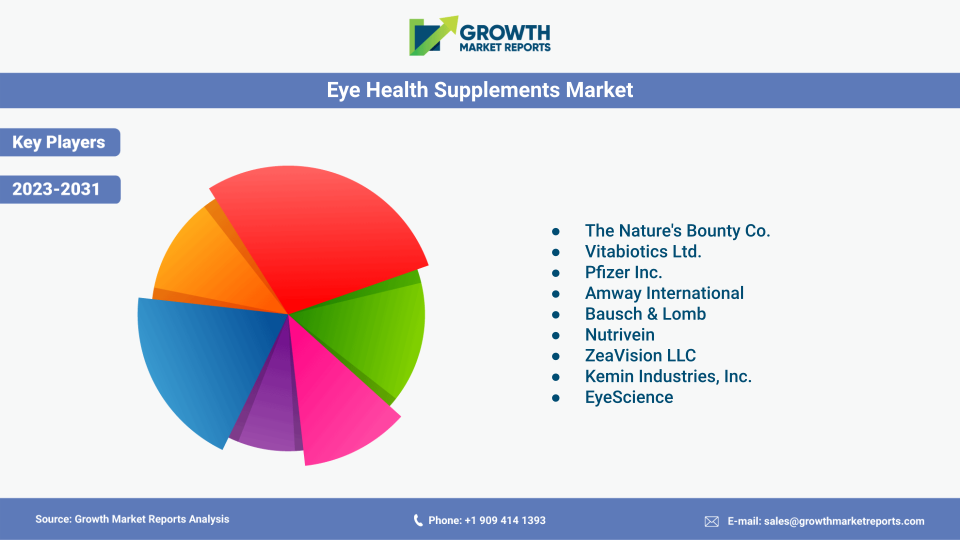

 Eye Health Supplements Market Key Players

Frequently Asked Questions

Challenges include regulatory hurdles, lack of standardized guidelines, the presence of counterfeit products, and varying regulations across regions.

Trends include personalized nutrition, clean-label and plant-based formulations, digital transformation in sales and marketing, and ongoing product innovation.

Major companies include Bausch + Lomb, Amway, Alcon, Pfizer Inc., Vitabiotics, EyePromise, NutraScience Labs, Herbalife Nutrition, and others.

Eye health supplements are available through online stores, pharmacies/drug stores, supermarkets/hypermarkets, specialty health stores, and direct sales channels.

Supplements are commonly used for age-related macular degeneration (AMD), cataracts, dry eye syndrome, and glaucoma.

North America leads the market, followed by Europe and the Asia Pacific region, with APAC being the fastest-growing region.

Tablets and capsules are the most popular forms, followed by softgels, powders, gummies, and liquids.

Common ingredients include lutein, zeaxanthin, omega-3 fatty acids (EPA and DHA), antioxidants (vitamins C and E), zinc, copper, and herbal extracts like bilberry and astaxanthin.

Key growth drivers include increasing awareness of eye health, an aging population, rising prevalence of vision-related disorders, and greater use of digital devices leading to eye strain.

As of 2024, the global eye health supplements market is valued at USD 2.45 billion.

Table Of Content

Chapter 1 Executive Summary
Chapter 2 Assumptions and Acronyms Used
Chapter 3 Research Methodology
Chapter 4 Eye Health Supplements Market Overview
   4.1 Introduction
      4.1.1 Market Taxonomy
      4.1.2 Market Definition
      4.1.3 Macro-Economic Factors Impacting the Market Growth
   4.2 Eye Health Supplements Market Dynamics
      4.2.1 Market Drivers
      4.2.2 Market Restraints
      4.2.3 Market Opportunity
   4.3 Eye Health Supplements Market - Supply Chain Analysis
      4.3.1 List of Key Suppliers
      4.3.2 List of Key Distributors
      4.3.3 List of Key Consumers
   4.4 Key Forces Shaping the Eye Health Supplements Market
      4.4.1 Bargaining Power of Suppliers
      4.4.2 Bargaining Power of Buyers
      4.4.3 Threat of Substitution
      4.4.4 Threat of New Entrants
      4.4.5 Competitive Rivalry
   4.5 Global Eye Health Supplements Market Size & Forecast, 2023-2032
      4.5.1 Eye Health Supplements Market Size and Y-o-Y Growth
      4.5.2 Eye Health Supplements Market Absolute $ Opportunity

Chapter 5 Global Eye Health Supplements Market Analysis and Forecast By Product Type
   5.1 Introduction
      5.1.1 Key Market Trends & Growth Opportunities By Product Type
      5.1.2 Basis Point Share (BPS) Analysis By Product Type
      5.1.3 Absolute $ Opportunity Assessment By Product Type
   5.2 Eye Health Supplements Market Size Forecast By Product Type
      5.2.1 Lutein and Zeaxanthin
      5.2.2 Omega-3 Fatty Acids
      5.2.3 Antioxidants
      5.2.4 Vitamins
      5.2.5 Minerals
      5.2.6 Others
   5.3 Market Attractiveness Analysis By Product Type

Chapter 6 Global Eye Health Supplements Market Analysis and Forecast By Form
   6.1 Introduction
      6.1.1 Key Market Trends & Growth Opportunities By Form
      6.1.2 Basis Point Share (BPS) Analysis By Form
      6.1.3 Absolute $ Opportunity Assessment By Form
   6.2 Eye Health Supplements Market Size Forecast By Form
      6.2.1 Tablets
      6.2.2 Capsules
      6.2.3 Softgels
      6.2.4 Powders
      6.2.5 Others
   6.3 Market Attractiveness Analysis By Form

Chapter 7 Global Eye Health Supplements Market Analysis and Forecast By Application
   7.1 Introduction
      7.1.1 Key Market Trends & Growth Opportunities By Application
      7.1.2 Basis Point Share (BPS) Analysis By Application
      7.1.3 Absolute $ Opportunity Assessment By Application
   7.2 Eye Health Supplements Market Size Forecast By Application
      7.2.1 Age-related Macular Degeneration
      7.2.2 Cataract
      7.2.3 Dry Eye Syndrome
      7.2.4 Glaucoma
      7.2.5 Others
   7.3 Market Attractiveness Analysis By Application

Chapter 8 Global Eye Health Supplements Market Analysis and Forecast By Distribution Channel
   8.1 Introduction
      8.1.1 Key Market Trends & Growth Opportunities By Distribution Channel
      8.1.2 Basis Point Share (BPS) Analysis By Distribution Channel
      8.1.3 Absolute $ Opportunity Assessment By Distribution Channel
   8.2 Eye Health Supplements Market Size Forecast By Distribution Channel
      8.2.1 Online Stores
      8.2.2 Pharmacies/Drug Stores
      8.2.3 Supermarkets/Hypermarkets
      8.2.4 Others
   8.3 Market Attractiveness Analysis By Distribution Channel

Chapter 9 Global Eye Health Supplements Market Analysis and Forecast by Region
   9.1 Introduction
      9.1.1 Key Market Trends & Growth Opportunities By Region
      9.1.2 Basis Point Share (BPS) Analysis By Region
      9.1.3 Absolute $ Opportunity Assessment By Region
   9.2 Eye Health Supplements Market Size Forecast By Region
      9.2.1 North America
      9.2.2 Europe
      9.2.3 Asia Pacific
      9.2.4 Latin America
      9.2.5 Middle East & Africa (MEA)
   9.3 Market Attractiveness Analysis By Region

Chapter 10 Coronavirus Disease (COVID-19) Impact 
   10.1 Introduction 
   10.2 Current & Future Impact Analysis 
   10.3 Economic Impact Analysis 
   10.4 Government Policies 
   10.5 Investment Scenario

Chapter 11 North America Eye Health Supplements Analysis and Forecast
   11.1 Introduction
   11.2 North America Eye Health Supplements Market Size Forecast by Country
      11.2.1 U.S.
      11.2.2 Canada
   11.3 Basis Point Share (BPS) Analysis by Country
   11.4 Absolute $ Opportunity Assessment by Country
   11.5 Market Attractiveness Analysis by Country
   11.6 North America Eye Health Supplements Market Size Forecast By Product Type
      11.6.1 Lutein and Zeaxanthin
      11.6.2 Omega-3 Fatty Acids
      11.6.3 Antioxidants
      11.6.4 Vitamins
      11.6.5 Minerals
      11.6.6 Others
   11.7 Basis Point Share (BPS) Analysis By Product Type 
   11.8 Absolute $ Opportunity Assessment By Product Type 
   11.9 Market Attractiveness Analysis By Product Type
   11.10 North America Eye Health Supplements Market Size Forecast By Form
      11.10.1 Tablets
      11.10.2 Capsules
      11.10.3 Softgels
      11.10.4 Powders
      11.10.5 Others
   11.11 Basis Point Share (BPS) Analysis By Form 
   11.12 Absolute $ Opportunity Assessment By Form 
   11.13 Market Attractiveness Analysis By Form
   11.14 North America Eye Health Supplements Market Size Forecast By Application
      11.14.1 Age-related Macular Degeneration
      11.14.2 Cataract
      11.14.3 Dry Eye Syndrome
      11.14.4 Glaucoma
      11.14.5 Others
   11.15 Basis Point Share (BPS) Analysis By Application 
   11.16 Absolute $ Opportunity Assessment By Application 
   11.17 Market Attractiveness Analysis By Application
   11.18 North America Eye Health Supplements Market Size Forecast By Distribution Channel
      11.18.1 Online Stores
      11.18.2 Pharmacies/Drug Stores
      11.18.3 Supermarkets/Hypermarkets
      11.18.4 Others
   11.19 Basis Point Share (BPS) Analysis By Distribution Channel 
   11.20 Absolute $ Opportunity Assessment By Distribution Channel 
   11.21 Market Attractiveness Analysis By Distribution Channel

Chapter 12 Europe Eye Health Supplements Analysis and Forecast
   12.1 Introduction
   12.2 Europe Eye Health Supplements Market Size Forecast by Country
      12.2.1 Germany
      12.2.2 France
      12.2.3 Italy
      12.2.4 U.K.
      12.2.5 Spain
      12.2.6 Russia
      12.2.7 Rest of Europe
   12.3 Basis Point Share (BPS) Analysis by Country
   12.4 Absolute $ Opportunity Assessment by Country
   12.5 Market Attractiveness Analysis by Country
   12.6 Europe Eye Health Supplements Market Size Forecast By Product Type
      12.6.1 Lutein and Zeaxanthin
      12.6.2 Omega-3 Fatty Acids
      12.6.3 Antioxidants
      12.6.4 Vitamins
      12.6.5 Minerals
      12.6.6 Others
   12.7 Basis Point Share (BPS) Analysis By Product Type 
   12.8 Absolute $ Opportunity Assessment By Product Type 
   12.9 Market Attractiveness Analysis By Product Type
   12.10 Europe Eye Health Supplements Market Size Forecast By Form
      12.10.1 Tablets
      12.10.2 Capsules
      12.10.3 Softgels
      12.10.4 Powders
      12.10.5 Others
   12.11 Basis Point Share (BPS) Analysis By Form 
   12.12 Absolute $ Opportunity Assessment By Form 
   12.13 Market Attractiveness Analysis By Form
   12.14 Europe Eye Health Supplements Market Size Forecast By Application
      12.14.1 Age-related Macular Degeneration
      12.14.2 Cataract
      12.14.3 Dry Eye Syndrome
      12.14.4 Glaucoma
      12.14.5 Others
   12.15 Basis Point Share (BPS) Analysis By Application 
   12.16 Absolute $ Opportunity Assessment By Application 
   12.17 Market Attractiveness Analysis By Application
   12.18 Europe Eye Health Supplements Market Size Forecast By Distribution Channel
      12.18.1 Online Stores
      12.18.2 Pharmacies/Drug Stores
      12.18.3 Supermarkets/Hypermarkets
      12.18.4 Others
   12.19 Basis Point Share (BPS) Analysis By Distribution Channel 
   12.20 Absolute $ Opportunity Assessment By Distribution Channel 
   12.21 Market Attractiveness Analysis By Distribution Channel

Chapter 13 Asia Pacific Eye Health Supplements Analysis and Forecast
   13.1 Introduction
   13.2 Asia Pacific Eye Health Supplements Market Size Forecast by Country
      13.2.1 China
      13.2.2 Japan
      13.2.3 South Korea
      13.2.4 India
      13.2.5 Australia
      13.2.6 South East Asia (SEA)
      13.2.7 Rest of Asia Pacific (APAC)
   13.3 Basis Point Share (BPS) Analysis by Country
   13.4 Absolute $ Opportunity Assessment by Country
   13.5 Market Attractiveness Analysis by Country
   13.6 Asia Pacific Eye Health Supplements Market Size Forecast By Product Type
      13.6.1 Lutein and Zeaxanthin
      13.6.2 Omega-3 Fatty Acids
      13.6.3 Antioxidants
      13.6.4 Vitamins
      13.6.5 Minerals
      13.6.6 Others
   13.7 Basis Point Share (BPS) Analysis By Product Type 
   13.8 Absolute $ Opportunity Assessment By Product Type 
   13.9 Market Attractiveness Analysis By Product Type
   13.10 Asia Pacific Eye Health Supplements Market Size Forecast By Form
      13.10.1 Tablets
      13.10.2 Capsules
      13.10.3 Softgels
      13.10.4 Powders
      13.10.5 Others
   13.11 Basis Point Share (BPS) Analysis By Form 
   13.12 Absolute $ Opportunity Assessment By Form 
   13.13 Market Attractiveness Analysis By Form
   13.14 Asia Pacific Eye Health Supplements Market Size Forecast By Application
      13.14.1 Age-related Macular Degeneration
      13.14.2 Cataract
      13.14.3 Dry Eye Syndrome
      13.14.4 Glaucoma
      13.14.5 Others
   13.15 Basis Point Share (BPS) Analysis By Application 
   13.16 Absolute $ Opportunity Assessment By Application 
   13.17 Market Attractiveness Analysis By Application
   13.18 Asia Pacific Eye Health Supplements Market Size Forecast By Distribution Channel
      13.18.1 Online Stores
      13.18.2 Pharmacies/Drug Stores
      13.18.3 Supermarkets/Hypermarkets
      13.18.4 Others
   13.19 Basis Point Share (BPS) Analysis By Distribution Channel 
   13.20 Absolute $ Opportunity Assessment By Distribution Channel 
   13.21 Market Attractiveness Analysis By Distribution Channel

Chapter 14 Latin America Eye Health Supplements Analysis and Forecast
   14.1 Introduction
   14.2 Latin America Eye Health Supplements Market Size Forecast by Country
      14.2.1 Brazil
      14.2.2 Mexico
      14.2.3 Rest of Latin America (LATAM)
   14.3 Basis Point Share (BPS) Analysis by Country
   14.4 Absolute $ Opportunity Assessment by Country
   14.5 Market Attractiveness Analysis by Country
   14.6 Latin America Eye Health Supplements Market Size Forecast By Product Type
      14.6.1 Lutein and Zeaxanthin
      14.6.2 Omega-3 Fatty Acids
      14.6.3 Antioxidants
      14.6.4 Vitamins
      14.6.5 Minerals
      14.6.6 Others
   14.7 Basis Point Share (BPS) Analysis By Product Type 
   14.8 Absolute $ Opportunity Assessment By Product Type 
   14.9 Market Attractiveness Analysis By Product Type
   14.10 Latin America Eye Health Supplements Market Size Forecast By Form
      14.10.1 Tablets
      14.10.2 Capsules
      14.10.3 Softgels
      14.10.4 Powders
      14.10.5 Others
   14.11 Basis Point Share (BPS) Analysis By Form 
   14.12 Absolute $ Opportunity Assessment By Form 
   14.13 Market Attractiveness Analysis By Form
   14.14 Latin America Eye Health Supplements Market Size Forecast By Application
      14.14.1 Age-related Macular Degeneration
      14.14.2 Cataract
      14.14.3 Dry Eye Syndrome
      14.14.4 Glaucoma
      14.14.5 Others
   14.15 Basis Point Share (BPS) Analysis By Application 
   14.16 Absolute $ Opportunity Assessment By Application 
   14.17 Market Attractiveness Analysis By Application
   14.18 Latin America Eye Health Supplements Market Size Forecast By Distribution Channel
      14.18.1 Online Stores
      14.18.2 Pharmacies/Drug Stores
      14.18.3 Supermarkets/Hypermarkets
      14.18.4 Others
   14.19 Basis Point Share (BPS) Analysis By Distribution Channel 
   14.20 Absolute $ Opportunity Assessment By Distribution Channel 
   14.21 Market Attractiveness Analysis By Distribution Channel

Chapter 15 Middle East & Africa (MEA) Eye Health Supplements Analysis and Forecast
   15.1 Introduction
   15.2 Middle East & Africa (MEA) Eye Health Supplements Market Size Forecast by Country
      15.2.1 Saudi Arabia
      15.2.2 South Africa
      15.2.3 UAE
      15.2.4 Rest of Middle East & Africa (MEA)
   15.3 Basis Point Share (BPS) Analysis by Country
   15.4 Absolute $ Opportunity Assessment by Country
   15.5 Market Attractiveness Analysis by Country
   15.6 Middle East & Africa (MEA) Eye Health Supplements Market Size Forecast By Product Type
      15.6.1 Lutein and Zeaxanthin
      15.6.2 Omega-3 Fatty Acids
      15.6.3 Antioxidants
      15.6.4 Vitamins
      15.6.5 Minerals
      15.6.6 Others
   15.7 Basis Point Share (BPS) Analysis By Product Type 
   15.8 Absolute $ Opportunity Assessment By Product Type 
   15.9 Market Attractiveness Analysis By Product Type
   15.10 Middle East & Africa (MEA) Eye Health Supplements Market Size Forecast By Form
      15.10.1 Tablets
      15.10.2 Capsules
      15.10.3 Softgels
      15.10.4 Powders
      15.10.5 Others
   15.11 Basis Point Share (BPS) Analysis By Form 
   15.12 Absolute $ Opportunity Assessment By Form 
   15.13 Market Attractiveness Analysis By Form
   15.14 Middle East & Africa (MEA) Eye Health Supplements Market Size Forecast By Application
      15.14.1 Age-related Macular Degeneration
      15.14.2 Cataract
      15.14.3 Dry Eye Syndrome
      15.14.4 Glaucoma
      15.14.5 Others
   15.15 Basis Point Share (BPS) Analysis By Application 
   15.16 Absolute $ Opportunity Assessment By Application 
   15.17 Market Attractiveness Analysis By Application
   15.18 Middle East & Africa (MEA) Eye Health Supplements Market Size Forecast By Distribution Channel
      15.18.1 Online Stores
      15.18.2 Pharmacies/Drug Stores
      15.18.3 Supermarkets/Hypermarkets
      15.18.4 Others
   15.19 Basis Point Share (BPS) Analysis By Distribution Channel 
   15.20 Absolute $ Opportunity Assessment By Distribution Channel 
   15.21 Market Attractiveness Analysis By Distribution Channel

Chapter 16 Competition Landscape 
   16.1 Eye Health Supplements Market: Competitive Dashboard
   16.2 Global Eye Health Supplements Market: Market Share Analysis, 2023
   16.3 Company Profiles (Details – Overview, Financials, Developments, Strategy) 
      16.3.1 Bausch + Lomb
Amway
Bayer AG
Pfizer Inc.
Novartis AG
Allergan (AbbVie Inc.)
Nature’s Bounty Co.
Vitabiotics Ltd.
Zeaxanthin Zena
Herbalife Nutrition Ltd.
EyePromise (Zeavision LLC)
Carlson Laboratories
NOW Foods
Solgar Inc.
Blackmores Limited
Swanson Health Products
Vitafusion (Church & Dwight Co., Inc.)
NutraScience Labs
Jarrow Formulas, Inc.
Quantum Health

Methodology

Our Clients

General Electric
Deloitte
Microsoft
FedEx Logistics
Siemens Healthcare
Honda Motor Co. Ltd.
Pfizer
General Mills