Lutein Market Research Report 2033

Lutein Market Research Report 2033

Segments - by Source (Natural, Synthetic), by Form (Powder, Beadlet, Oil Suspension, Emulsion), by Application (Dietary Supplements, Food & Beverages, Animal Feed, Pharmaceuticals, Cosmetics), by Distribution Channel (Online, Offline)

https://growthmarketreports.com/Anuradha
Author : Anuradha B. More
https://growthmarketreports.com/Vaibhav
Fact-checked by : Vaibhav Chandola
https://growthmarketreports.com/Shruti
Editor : Shruti Bhat

Upcoming | Report ID :FB-4383 | 4.7 Rating | 89 Reviews | 269 Pages | Format : Docx PDF

Report Description


Lutein Market Outlook

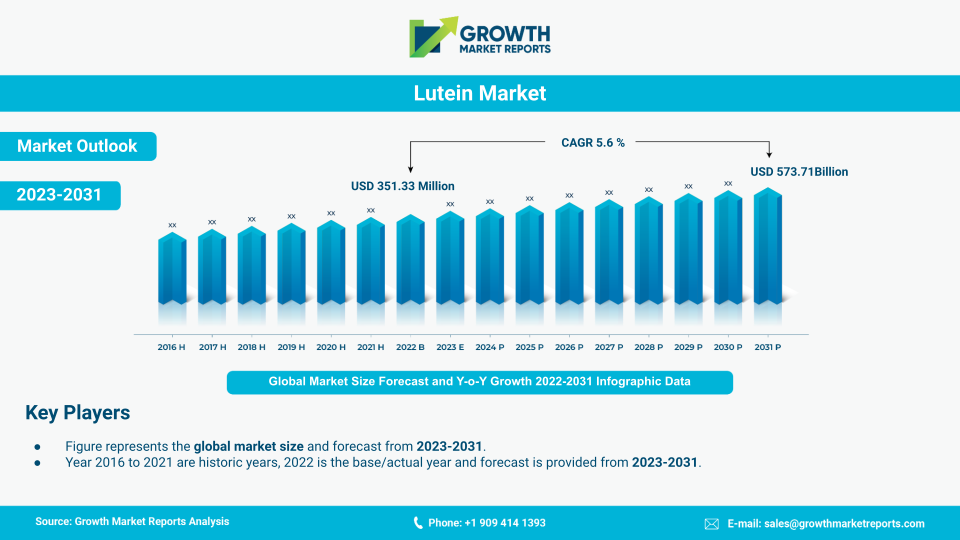
As per our latest research, the global lutein market size reached USD 410 million in 2024, exhibiting robust growth driven by rising health consciousness and increasing demand for natural food additives. The market is expanding at a healthy CAGR of 6.2% from 2025 to 2033, with the forecasted market size expected to reach USD 705 million by 2033. The key growth factor propelling the lutein market is the surging awareness regarding the health benefits of lutein, especially its role in eye health and prevention of age-related macular degeneration.

One of the primary growth drivers for the lutein market is the increasing prevalence of lifestyle-related diseases and vision disorders globally. As the global population ages, the incidence of eye-related conditions such as cataracts and macular degeneration is rising, fueling demand for lutein-enriched supplements and fortified foods. Additionally, consumers are becoming more proactive about preventive healthcare, leading to higher adoption of nutraceuticals and dietary supplements containing lutein. The growing body of clinical evidence supporting luteinÂ’s efficacy in protecting against blue light and oxidative stress further strengthens its position in the health and wellness sector.

Another significant factor influencing market growth is the widespread application of lutein across various industries, including food & beverages, pharmaceuticals, cosmetics, and animal feed. In the food industry, lutein is increasingly used as a natural colorant and nutrient fortifier in products such as dairy, bakery, and baby food. The pharmaceutical sector leverages lutein for its antioxidant properties, incorporating it into formulations aimed at improving ocular and skin health. The cosmetics industry is also harnessing luteinÂ’s benefits for skin protection and anti-aging, reflecting a broader shift toward natural and functional ingredients in personal care products. This cross-industry utilization is amplifying the overall demand for lutein.

Technological advancements in extraction and formulation techniques have also played a pivotal role in shaping the lutein market. Innovations in microencapsulation and beadlet technology have improved the stability, bioavailability, and shelf life of lutein, making it more suitable for incorporation into diverse product formats. Furthermore, the transition towards natural and clean-label ingredients has accelerated the development of lutein derived from marigold flowers and other botanical sources, aligning with consumer preferences for plant-based and sustainable solutions. These advancements are enabling manufacturers to cater to evolving market trends and regulatory requirements, thereby fostering market expansion.

The market for lutein is not only thriving due to its established applications but is also witnessing innovations in related carotenoids, such as Natural Lycopene Beadlets. These beadlets are gaining attention for their potent antioxidant properties and their role in supporting cardiovascular health and skin protection. Derived from natural sources like tomatoes, Natural Lycopene Beadlets are being incorporated into a variety of dietary supplements and functional foods, offering consumers an additional layer of health benefits. As the demand for natural and clean-label ingredients continues to rise, the integration of lycopene alongside lutein in product formulations is becoming increasingly popular, reflecting a broader trend towards comprehensive wellness solutions.

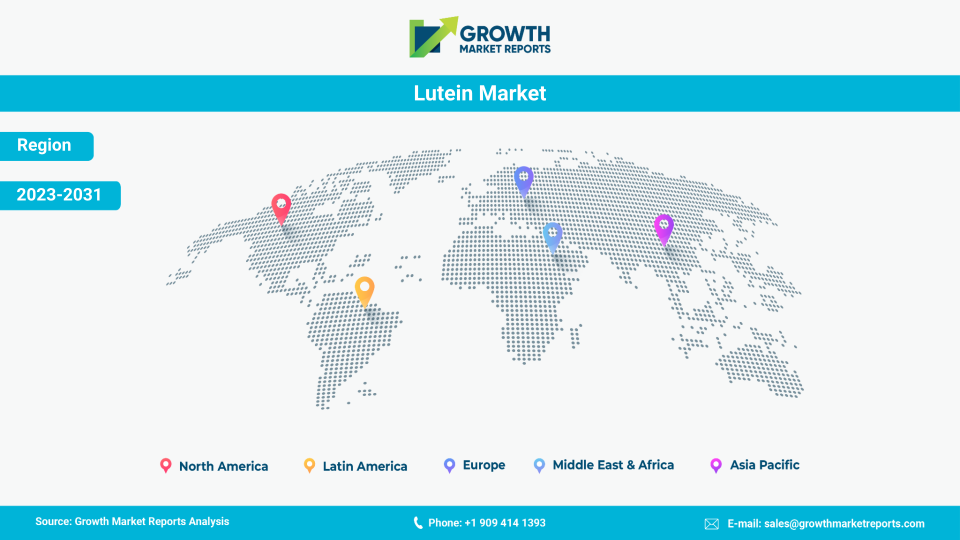
Regionally, Asia Pacific stands out as the fastest-growing market for lutein, driven by rising disposable incomes, urbanization, and increasing awareness of preventive healthcare in countries such as China, India, and Japan. North America and Europe continue to be mature markets, characterized by high consumer awareness and established dietary supplement industries. Latin America and the Middle East & Africa are emerging as promising regions, supported by improving healthcare infrastructure and growing demand for functional foods. The regional outlook for the lutein market remains positive, with Asia Pacific expected to capture a significant share of future growth.

Global Lutein Industry Outlook

Source Analysis

The lutein market is segmented by source into natural and synthetic categories, each exhibiting distinct growth dynamics and consumer perceptions. Natural lutein, primarily extracted from marigold flowers, dominates the market due to its superior bioavailability and alignment with the global trend towards clean-label and plant-based ingredients. Consumers increasingly prefer natural lutein, associating it with safety, efficacy, and sustainability. Regulatory agencies in key markets such as the US, EU, and Asia Pacific also favor natural sources, further accelerating market penetration. The synthetic segment, while offering cost advantages and consistent supply, faces challenges related to consumer skepticism and regulatory scrutiny over synthetic additives in food and supplements.

The extraction process for natural lutein has seen significant innovation, with companies investing in advanced techniques such as supercritical CO2 extraction and enzymatic hydrolysis to enhance yield and purity. These technological advancements are making natural lutein more accessible and affordable, thereby driving its adoption across various applications. In contrast, the synthetic lutein segment is primarily utilized in applications where cost efficiency and large-scale production are critical, such as animal feed and certain industrial uses. However, the shift in consumer preferences towards natural products is gradually limiting the growth potential of synthetic lutein in the human nutrition segment.

Sustainability is another crucial factor shaping the source dynamics in the lutein market. Manufacturers are increasingly focusing on sustainable sourcing of marigold flowers and implementing eco-friendly extraction processes to minimize environmental impact. This has led to the emergence of vertically integrated supply chains, where companies control the entire process from cultivation to extraction, ensuring traceability and quality. Such initiatives are resonating well with environmentally conscious consumers and are expected to further bolster the natural lutein segmentÂ’s dominance in the coming years.

The competitive landscape within the source segment is characterized by strategic partnerships and collaborations between raw material suppliers, extractors, and end-product manufacturers. Leading players are investing in research and development to enhance the functional properties of lutein and expand its application scope. As regulatory frameworks continue to evolve in favor of natural ingredients, the market share of natural lutein is anticipated to increase, potentially outpacing synthetic alternatives across most end-use industries. Overall, the source segment is poised for sustained growth, driven by innovation, sustainability, and consumer demand for natural health solutions.

Report Scope

Attributes Details
Report Title Lutein Market Research Report 2033
By Source Natural, Synthetic
By Form Powder, Beadlet, Oil Suspension, Emulsion
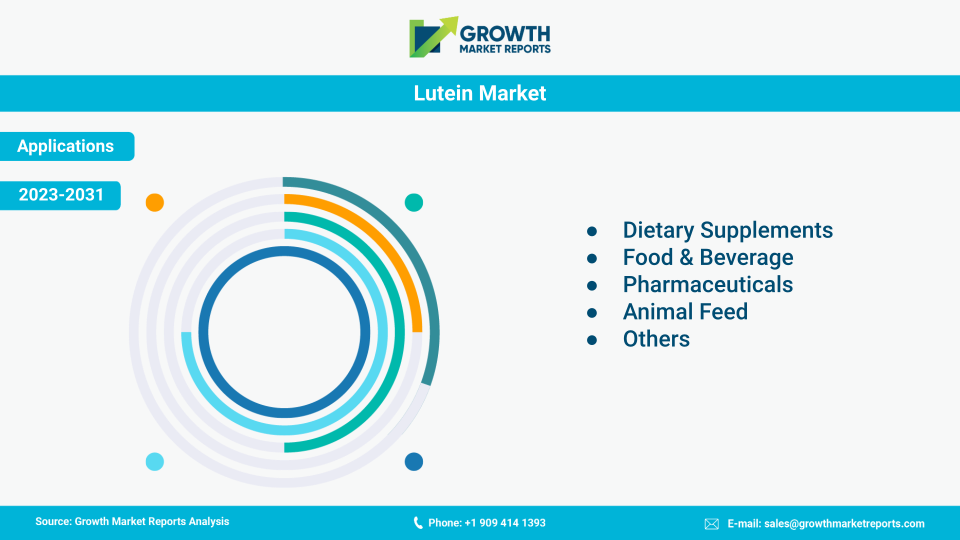
By Application Dietary Supplements, Food & Beverages, Animal Feed, Pharmaceuticals, Cosmetics
By Distribution Channel Online, Offline
Regions Covered North America, Europe, APAC, Latin America, MEA
Base Year 2024
Historic Data 2018-2023
Forecast Period 2025-2033
Number of Pages 269
Number of Tables & Figures 357
Customization Available Yes, the report can be customized as per your need.

Form Analysis

The form segment of the lutein market encompasses powder, beadlet, oil suspension, and emulsion, each catering to specific application requirements and end-user preferences. Powdered lutein remains the most widely used form, favored for its versatility, ease of incorporation, and stable shelf life. It is extensively utilized in dietary supplements, functional foods, and animal feed, where precise dosing and uniform distribution are critical. The beadlet form, produced using advanced microencapsulation techniques, offers enhanced stability, improved bioavailability, and protection against oxidation, making it ideal for applications in fortified foods, beverages, and pharmaceuticals.

Oil suspensions and emulsions are gaining traction, particularly in liquid supplement and beverage applications, owing to their superior dispersibility and absorption characteristics. These forms are specifically designed to address the challenges associated with the poor solubility of lutein in water-based systems. The growing demand for ready-to-drink nutritional beverages and liquid dietary supplements is driving the adoption of lutein oil suspensions and emulsions, especially in markets where convenience and on-the-go consumption are prioritized.

Technological advancements in formulation science have enabled manufacturers to develop lutein products with improved sensory attributes, stability, and bioefficacy. Encapsulation technologies, such as spray drying and coacervation, are being leveraged to create beadlets and microcapsules that protect lutein from degradation caused by light, heat, and oxygen. This not only extends product shelf life but also ensures consistent delivery of health benefits to consumers. As the market for functional foods and nutraceuticals continues to expand, the demand for innovative lutein formulations is expected to rise correspondingly.

The choice of lutein form is often dictated by the specific application and regulatory requirements in different regions. For instance, beadlets and emulsions are preferred in pharmaceutical and infant nutrition segments due to their enhanced safety and efficacy profiles. In contrast, powdered lutein is favored in animal feed and mass-market supplements due to its cost-effectiveness and ease of handling. The form segment is thus characterized by a high degree of customization, with manufacturers offering tailored solutions to meet the diverse needs of their clients across various industries.

Application Analysis

The application landscape of the lutein market is broad, encompassing dietary supplements, food & beverages, animal feed, pharmaceuticals, and cosmetics. Dietary supplements represent the largest application segment, accounting for a significant share of global lutein consumption. The rising popularity of preventive healthcare, coupled with increased consumer awareness of the benefits of lutein for eye health, is driving robust growth in this segment. Supplement manufacturers are launching a diverse range of lutein-enriched capsules, tablets, and gummies, targeting different age groups and health concerns.

The food & beverages segment is witnessing rapid expansion, fueled by the growing demand for functional foods and natural colorants. Lutein is widely used as a yellow-orange pigment and nutrient fortifier in products such as dairy, bakery, confectionery, and baby food. The clean-label movement and preference for plant-based ingredients are further boosting the adoption of lutein in the food industry. Manufacturers are increasingly incorporating lutein into innovative product formats, including fortified snacks, beverages, and meal replacements, to cater to health-conscious consumers.

In the animal feed sector, lutein is primarily used to enhance the coloration of egg yolks, poultry skin, and aquaculture products. Its antioxidant properties also contribute to improved animal health and productivity. The demand for lutein-enriched animal feed is particularly strong in regions with large poultry and aquaculture industries, such as Asia Pacific and Latin America. Regulatory support for the use of natural additives in animal nutrition is further propelling market growth in this segment.

Pharmaceutical and cosmetic applications of lutein are gaining momentum, driven by ongoing research into its antioxidant, anti-inflammatory, and skin-protective properties. In pharmaceuticals, lutein is incorporated into formulations aimed at preventing or managing eye disorders, cardiovascular diseases, and skin aging. The cosmetics industry is leveraging luteinÂ’s ability to protect against UV-induced damage and oxidative stress, incorporating it into skincare and anti-aging products. This diversification of applications is expanding the addressable market for lutein and creating new growth opportunities for manufacturers.

Distribution Channel Analysis

The distribution channel segment of the lutein market is divided into online and offline channels, each playing a crucial role in reaching end consumers. Offline channels, including supermarkets, health stores, pharmacies, and specialty retailers, have traditionally dominated the market, offering consumers the opportunity to physically inspect products and seek expert advice. The trust and credibility associated with established brick-and-mortar stores continue to drive significant sales, particularly in regions with mature retail infrastructure.

However, the rise of e-commerce and digital platforms is rapidly transforming the distribution landscape. Online channels are gaining prominence, especially among younger, tech-savvy consumers who value convenience, variety, and price transparency. The COVID-19 pandemic accelerated the shift towards online shopping, with a growing number of consumers purchasing dietary supplements, functional foods, and cosmetics from digital marketplaces. Manufacturers and retailers are responding by enhancing their online presence, offering direct-to-consumer sales, and leveraging digital marketing strategies to engage and educate potential buyers.

The integration of omnichannel retail strategies is becoming increasingly important in the lutein market, as companies seek to provide a seamless shopping experience across online and offline touchpoints. This includes initiatives such as click-and-collect, personalized recommendations, and subscription services for regular supplement users. The ability to track consumer preferences and purchasing behavior through digital channels is enabling manufacturers to tailor their product offerings and marketing campaigns more effectively.

Regulatory compliance and product authenticity remain key concerns in the online distribution segment, prompting companies to invest in secure supply chains and transparent labeling. Partnerships with reputable e-commerce platforms and third-party verification services are helping to build consumer trust and mitigate the risks associated with counterfeit or substandard products. As digitalization continues to reshape the retail landscape, the online channel is expected to capture an increasing share of the lutein market, particularly in developed regions and urban centers.

Opportunities & Threats

The lutein market presents a wealth of opportunities for industry stakeholders, driven by rising consumer awareness of the health benefits of lutein and its expanding application scope. The growing prevalence of vision-related disorders, coupled with an aging global population, is creating sustained demand for lutein-enriched supplements and functional foods. Manufacturers have the opportunity to capitalize on this trend by developing innovative product formats, such as gummies, beverages, and personalized nutrition solutions, tailored to specific demographic segments. Strategic partnerships with healthcare professionals, retailers, and digital platforms can further enhance market reach and consumer engagement.

Another major opportunity lies in the development of sustainable and traceable supply chains for natural lutein. As consumers become more environmentally conscious, there is increasing demand for products sourced from sustainable agriculture and manufactured using eco-friendly processes. Companies that invest in vertical integration, sustainable marigold cultivation, and green extraction technologies are likely to gain a competitive edge. Additionally, ongoing research into the health benefits of lutein beyond eye health, such as cognitive function and cardiovascular protection, could open up new application areas and drive long-term market growth.

Despite the favorable outlook, the lutein market faces certain restraints that could impede growth. Regulatory challenges, particularly regarding health claims and labeling requirements, can create barriers to market entry and limit product differentiation. Variability in raw material supply, driven by factors such as climate change and agricultural practices, can lead to price volatility and supply chain disruptions. Furthermore, competition from alternative carotenoids and synthetic additives may pose a threat to market expansion, especially in price-sensitive segments. Addressing these challenges will require ongoing investment in research, quality assurance, and regulatory compliance.

Regional Outlook

North America remains a key market for lutein, accounting for approximately 32% of global revenue in 2024. The regionÂ’s growth is underpinned by high consumer awareness, widespread adoption of dietary supplements, and a mature healthcare infrastructure. The United States is the largest contributor, driven by strong demand for eye health supplements and functional foods. Regulatory support for natural ingredients and the presence of leading nutraceutical companies further bolster market growth in North America. The region is expected to maintain a steady CAGR of 5.5% through 2033, reaching a market size of around USD 225 million.

Asia Pacific is emerging as the fastest-growing region in the lutein market, with a projected CAGR of 8.1% from 2025 to 2033. The market size in Asia Pacific reached USD 110 million in 2024 and is forecasted to surpass USD 230 million by 2033. Rapid urbanization, rising disposable incomes, and increasing health consciousness are driving demand for dietary supplements and fortified foods in countries such as China, India, and Japan. The region also benefits from a robust agricultural base for marigold cultivation, supporting the supply of natural lutein. Local manufacturers are expanding their product portfolios to cater to diverse consumer preferences, further fueling regional market expansion.

Europe holds a significant share of the global lutein market, valued at approximately USD 80 million in 2024. The region is characterized by stringent regulatory standards, high demand for clean-label products, and a well-established nutraceutical industry. Germany, France, and the United Kingdom are leading markets, supported by strong consumer preference for natural and organic ingredients. The Middle East & Africa and Latin America are smaller but rapidly growing regions, collectively accounting for around 15% of global market value. These regions are witnessing increased investment in healthcare infrastructure and rising demand for functional foods, presenting new opportunities for market participants.

Lutein Market Statistics

Competitor Outlook

The lutein market is highly competitive, with a mix of multinational corporations, regional players, and specialized ingredient manufacturers vying for market share. The competitive landscape is characterized by intense innovation, strategic partnerships, and a strong focus on quality and sustainability. Leading companies are investing heavily in research and development to expand their product portfolios, enhance lutein bioavailability, and develop novel delivery formats. Mergers, acquisitions, and collaborations are common strategies employed to strengthen market presence and access new distribution channels.

Product differentiation remains a key competitive strategy, with companies emphasizing the purity, potency, and natural origin of their lutein offerings. Vertical integration, from marigold cultivation to extraction and formulation, is gaining traction as a means to ensure consistent quality, traceability, and supply chain resilience. Sustainability initiatives, such as eco-friendly extraction processes and responsible sourcing, are increasingly important for attracting environmentally conscious consumers and meeting regulatory requirements. Digital transformation is also reshaping the competitive landscape, with companies leveraging e-commerce, digital marketing, and data analytics to engage consumers and drive sales.

The market is witnessing the entry of new players, particularly in the natural lutein segment, spurred by growing demand for plant-based and clean-label ingredients. However, established players continue to dominate through their extensive distribution networks, strong brand recognition, and advanced technological capabilities. Regulatory compliance and adherence to international quality standards are critical success factors, given the increasing scrutiny of health claims and ingredient safety in major markets.

Some of the major companies operating in the global lutein market include Kemin Industries, OmniActive Health Technologies, Chr. Hansen Holding A/S, BASF SE, Allied Biotech Corporation, Zhejiang Medicine Co., Ltd., and DiviÂ’s Laboratories Ltd.. Kemin Industries is recognized for its vertically integrated supply chain and sustainable marigold sourcing practices. OmniActive Health Technologies is known for its innovative beadlet and microencapsulation technologies, offering high-potency lutein formulations. Chr. Hansen Holding A/S leverages its expertise in natural colors and food ingredients to deliver high-quality lutein products to the food and beverage industry. BASF SE and Allied Biotech Corporation are prominent players in the synthetic lutein segment, focusing on large-scale production and industrial applications. Zhejiang Medicine Co., Ltd. and DiviÂ’s Laboratories Ltd. are leading suppliers of natural lutein in the Asia Pacific region, capitalizing on the regionÂ’s strong agricultural base and growing demand for nutraceuticals.

In conclusion, the lutein market is poised for sustained growth, driven by rising health awareness, technological innovation, and expanding application scope. Companies that prioritize quality, sustainability, and consumer engagement are well-positioned to capture emerging opportunities and navigate the evolving competitive landscape. As the market continues to evolve, collaboration, innovation, and a focus on natural solutions will remain key drivers of success.

Key Players

  • BASF SE
  • Koninklijke DSM N.V.
  • Kemin Industries, Inc.
  • Omniactive Health Technologies Ltd.
  • Chr. Hansen Holding A/S
  • Cyanotech Corporation
  • DiviÂ’s Laboratories Ltd.
  • Allied Biotech Corporation
  • Zhejiang Medicine Co., Ltd.
  • E.I.D. Parry (India) Limited
  • Synthite Industries Ltd.
  • PIVEG, Inc.
  • Fenchem Biotek Ltd.
  • DDW The Color House
  • LycoRed Ltd.
  • Bio-gen Extracts Pvt. Ltd.
  • Naturxan
  • Vitae Naturals
  • Alga Technologies Ltd.
  • Sabinsa Corporation
Lutein Market Overview

Segments

The Lutein market has been segmented on the basis of

Source

  • Natural
  • Synthetic

Form

  • Powder
  • Beadlet
  • Oil Suspension
  • Emulsion

Application

  • Dietary Supplements
  • Food & Beverages
  • Animal Feed
  • Pharmaceuticals
  • Cosmetics

Distribution Channel

  • Online
  • Offline

Competitive Landscape

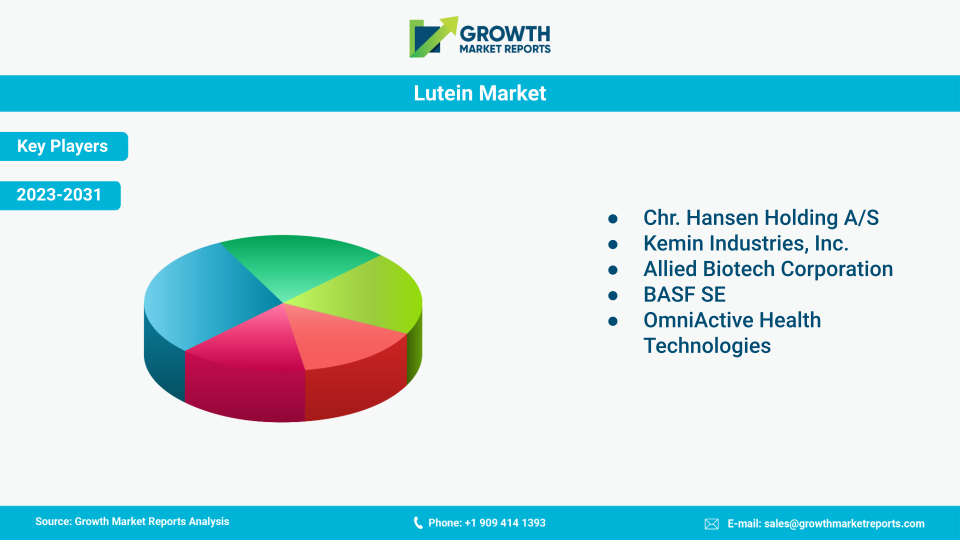
Key players competing in the global lutein market are Chr. Hansen Holding A/S; Allied Biotech Corporation; Kemin Industries, Inc.; BASF SE; and OmniActive Health Technologies. The lutein market is fragmented due to the existence of big regional and domestic companies in several countries.

Major corporations are actively stressing on acquisitions, mergers, and partnerships, as well as new product creation, as strategic measures for increasing brand exposure among customers.

Lutein Market Key Players

Frequently Asked Questions

Opportunities include innovation in product formats, sustainable sourcing, and expanding health benefits. Challenges involve regulatory hurdles, raw material supply variability, and competition from alternative carotenoids and synthetic additives.

Major companies include Kemin Industries, OmniActive Health Technologies, Chr. Hansen Holding A/S, BASF SE, Allied Biotech Corporation, Zhejiang Medicine Co., Ltd., Divi’s Laboratories Ltd., and others.

Key trends include rising health consciousness, demand for natural and clean-label ingredients, technological advancements in extraction and formulation, and a shift towards sustainable and traceable supply chains.

Lutein products are sold through both offline channels (supermarkets, pharmacies, specialty stores) and online platforms. E-commerce is rapidly growing, especially among younger consumers, and omnichannel strategies are increasingly important.

Lutein is available in powder, beadlet, oil suspension, and emulsion forms. Powder is common in supplements and animal feed, beadlets are used for enhanced stability in foods and pharmaceuticals, and oil suspensions/emulsions are popular in beverages and liquid supplements.

Asia Pacific is the fastest-growing region due to rising health awareness and disposable incomes, while North America and Europe remain mature markets with high consumer awareness. Latin America and the Middle East & Africa are emerging regions with growing demand.

Natural lutein, mainly extracted from marigold flowers, is preferred for its superior bioavailability, safety, and alignment with clean-label trends. Synthetic lutein is used for cost efficiency and large-scale applications, but faces consumer skepticism and regulatory scrutiny.

Lutein is used across food & beverages (as a natural colorant and nutrient fortifier), dietary supplements, pharmaceuticals (for eye and skin health), cosmetics (for anti-aging and skin protection), and animal feed (to enhance coloration and health).

Lutein is known for supporting eye health, particularly in preventing age-related macular degeneration and cataracts. It also offers antioxidant protection against blue light and oxidative stress, and is being researched for benefits in skin health and cognitive function.

The global lutein market reached USD 410 million in 2024 and is projected to grow at a CAGR of 6.2% from 2025 to 2033, reaching an estimated USD 705 million by 2033.

Table Of Content

Chapter 1 Executive Summary
Chapter 2 Assumptions and Acronyms Used
Chapter 3 Research Methodology
Chapter 4 Lutein Market Overview
   4.1 Introduction
      4.1.1 Market Taxonomy
      4.1.2 Market Definition
      4.1.3 Macro-Economic Factors Impacting the Market Growth
   4.2 Lutein Market Dynamics
      4.2.1 Market Drivers
      4.2.2 Market Restraints
      4.2.3 Market Opportunity
   4.3 Lutein Market - Supply Chain Analysis
      4.3.1 List of Key Suppliers
      4.3.2 List of Key Distributors
      4.3.3 List of Key Consumers
   4.4 Key Forces Shaping the Lutein Market
      4.4.1 Bargaining Power of Suppliers
      4.4.2 Bargaining Power of Buyers
      4.4.3 Threat of Substitution
      4.4.4 Threat of New Entrants
      4.4.5 Competitive Rivalry
   4.5 Global Lutein Market Size & Forecast, 2023-2032
      4.5.1 Lutein Market Size and Y-o-Y Growth
      4.5.2 Lutein Market Absolute $ Opportunity

Chapter 5 Global Lutein Market Analysis and Forecast By Source
   5.1 Introduction
      5.1.1 Key Market Trends & Growth Opportunities By Source
      5.1.2 Basis Point Share (BPS) Analysis By Source
      5.1.3 Absolute $ Opportunity Assessment By Source
   5.2 Lutein Market Size Forecast By Source
      5.2.1 Natural
      5.2.2 Synthetic
   5.3 Market Attractiveness Analysis By Source

Chapter 6 Global Lutein Market Analysis and Forecast By Form
   6.1 Introduction
      6.1.1 Key Market Trends & Growth Opportunities By Form
      6.1.2 Basis Point Share (BPS) Analysis By Form
      6.1.3 Absolute $ Opportunity Assessment By Form
   6.2 Lutein Market Size Forecast By Form
      6.2.1 Powder
      6.2.2 Beadlet
      6.2.3 Oil Suspension
      6.2.4 Emulsion
   6.3 Market Attractiveness Analysis By Form

Chapter 7 Global Lutein Market Analysis and Forecast By Application
   7.1 Introduction
      7.1.1 Key Market Trends & Growth Opportunities By Application
      7.1.2 Basis Point Share (BPS) Analysis By Application
      7.1.3 Absolute $ Opportunity Assessment By Application
   7.2 Lutein Market Size Forecast By Application
      7.2.1 Dietary Supplements
      7.2.2 Food & Beverages
      7.2.3 Animal Feed
      7.2.4 Pharmaceuticals
      7.2.5 Cosmetics
   7.3 Market Attractiveness Analysis By Application

Chapter 8 Global Lutein Market Analysis and Forecast By Distribution Channel
   8.1 Introduction
      8.1.1 Key Market Trends & Growth Opportunities By Distribution Channel
      8.1.2 Basis Point Share (BPS) Analysis By Distribution Channel
      8.1.3 Absolute $ Opportunity Assessment By Distribution Channel
   8.2 Lutein Market Size Forecast By Distribution Channel
      8.2.1 Online
      8.2.2 Offline
   8.3 Market Attractiveness Analysis By Distribution Channel

Chapter 9 Global Lutein Market Analysis and Forecast by Region
   9.1 Introduction
      9.1.1 Key Market Trends & Growth Opportunities By Region
      9.1.2 Basis Point Share (BPS) Analysis By Region
      9.1.3 Absolute $ Opportunity Assessment By Region
   9.2 Lutein Market Size Forecast By Region
      9.2.1 North America
      9.2.2 Europe
      9.2.3 Asia Pacific
      9.2.4 Latin America
      9.2.5 Middle East & Africa (MEA)
   9.3 Market Attractiveness Analysis By Region

Chapter 10 Coronavirus Disease (COVID-19) Impact 
   10.1 Introduction 
   10.2 Current & Future Impact Analysis 
   10.3 Economic Impact Analysis 
   10.4 Government Policies 
   10.5 Investment Scenario

Chapter 11 North America Lutein Analysis and Forecast
   11.1 Introduction
   11.2 North America Lutein Market Size Forecast by Country
      11.2.1 U.S.
      11.2.2 Canada
   11.3 Basis Point Share (BPS) Analysis by Country
   11.4 Absolute $ Opportunity Assessment by Country
   11.5 Market Attractiveness Analysis by Country
   11.6 North America Lutein Market Size Forecast By Source
      11.6.1 Natural
      11.6.2 Synthetic
   11.7 Basis Point Share (BPS) Analysis By Source 
   11.8 Absolute $ Opportunity Assessment By Source 
   11.9 Market Attractiveness Analysis By Source
   11.10 North America Lutein Market Size Forecast By Form
      11.10.1 Powder
      11.10.2 Beadlet
      11.10.3 Oil Suspension
      11.10.4 Emulsion
   11.11 Basis Point Share (BPS) Analysis By Form 
   11.12 Absolute $ Opportunity Assessment By Form 
   11.13 Market Attractiveness Analysis By Form
   11.14 North America Lutein Market Size Forecast By Application
      11.14.1 Dietary Supplements
      11.14.2 Food & Beverages
      11.14.3 Animal Feed
      11.14.4 Pharmaceuticals
      11.14.5 Cosmetics
   11.15 Basis Point Share (BPS) Analysis By Application 
   11.16 Absolute $ Opportunity Assessment By Application 
   11.17 Market Attractiveness Analysis By Application
   11.18 North America Lutein Market Size Forecast By Distribution Channel
      11.18.1 Online
      11.18.2 Offline
   11.19 Basis Point Share (BPS) Analysis By Distribution Channel 
   11.20 Absolute $ Opportunity Assessment By Distribution Channel 
   11.21 Market Attractiveness Analysis By Distribution Channel

Chapter 12 Europe Lutein Analysis and Forecast
   12.1 Introduction
   12.2 Europe Lutein Market Size Forecast by Country
      12.2.1 Germany
      12.2.2 France
      12.2.3 Italy
      12.2.4 U.K.
      12.2.5 Spain
      12.2.6 Russia
      12.2.7 Rest of Europe
   12.3 Basis Point Share (BPS) Analysis by Country
   12.4 Absolute $ Opportunity Assessment by Country
   12.5 Market Attractiveness Analysis by Country
   12.6 Europe Lutein Market Size Forecast By Source
      12.6.1 Natural
      12.6.2 Synthetic
   12.7 Basis Point Share (BPS) Analysis By Source 
   12.8 Absolute $ Opportunity Assessment By Source 
   12.9 Market Attractiveness Analysis By Source
   12.10 Europe Lutein Market Size Forecast By Form
      12.10.1 Powder
      12.10.2 Beadlet
      12.10.3 Oil Suspension
      12.10.4 Emulsion
   12.11 Basis Point Share (BPS) Analysis By Form 
   12.12 Absolute $ Opportunity Assessment By Form 
   12.13 Market Attractiveness Analysis By Form
   12.14 Europe Lutein Market Size Forecast By Application
      12.14.1 Dietary Supplements
      12.14.2 Food & Beverages
      12.14.3 Animal Feed
      12.14.4 Pharmaceuticals
      12.14.5 Cosmetics
   12.15 Basis Point Share (BPS) Analysis By Application 
   12.16 Absolute $ Opportunity Assessment By Application 
   12.17 Market Attractiveness Analysis By Application
   12.18 Europe Lutein Market Size Forecast By Distribution Channel
      12.18.1 Online
      12.18.2 Offline
   12.19 Basis Point Share (BPS) Analysis By Distribution Channel 
   12.20 Absolute $ Opportunity Assessment By Distribution Channel 
   12.21 Market Attractiveness Analysis By Distribution Channel

Chapter 13 Asia Pacific Lutein Analysis and Forecast
   13.1 Introduction
   13.2 Asia Pacific Lutein Market Size Forecast by Country
      13.2.1 China
      13.2.2 Japan
      13.2.3 South Korea
      13.2.4 India
      13.2.5 Australia
      13.2.6 South East Asia (SEA)
      13.2.7 Rest of Asia Pacific (APAC)
   13.3 Basis Point Share (BPS) Analysis by Country
   13.4 Absolute $ Opportunity Assessment by Country
   13.5 Market Attractiveness Analysis by Country
   13.6 Asia Pacific Lutein Market Size Forecast By Source
      13.6.1 Natural
      13.6.2 Synthetic
   13.7 Basis Point Share (BPS) Analysis By Source 
   13.8 Absolute $ Opportunity Assessment By Source 
   13.9 Market Attractiveness Analysis By Source
   13.10 Asia Pacific Lutein Market Size Forecast By Form
      13.10.1 Powder
      13.10.2 Beadlet
      13.10.3 Oil Suspension
      13.10.4 Emulsion
   13.11 Basis Point Share (BPS) Analysis By Form 
   13.12 Absolute $ Opportunity Assessment By Form 
   13.13 Market Attractiveness Analysis By Form
   13.14 Asia Pacific Lutein Market Size Forecast By Application
      13.14.1 Dietary Supplements
      13.14.2 Food & Beverages
      13.14.3 Animal Feed
      13.14.4 Pharmaceuticals
      13.14.5 Cosmetics
   13.15 Basis Point Share (BPS) Analysis By Application 
   13.16 Absolute $ Opportunity Assessment By Application 
   13.17 Market Attractiveness Analysis By Application
   13.18 Asia Pacific Lutein Market Size Forecast By Distribution Channel
      13.18.1 Online
      13.18.2 Offline
   13.19 Basis Point Share (BPS) Analysis By Distribution Channel 
   13.20 Absolute $ Opportunity Assessment By Distribution Channel 
   13.21 Market Attractiveness Analysis By Distribution Channel

Chapter 14 Latin America Lutein Analysis and Forecast
   14.1 Introduction
   14.2 Latin America Lutein Market Size Forecast by Country
      14.2.1 Brazil
      14.2.2 Mexico
      14.2.3 Rest of Latin America (LATAM)
   14.3 Basis Point Share (BPS) Analysis by Country
   14.4 Absolute $ Opportunity Assessment by Country
   14.5 Market Attractiveness Analysis by Country
   14.6 Latin America Lutein Market Size Forecast By Source
      14.6.1 Natural
      14.6.2 Synthetic
   14.7 Basis Point Share (BPS) Analysis By Source 
   14.8 Absolute $ Opportunity Assessment By Source 
   14.9 Market Attractiveness Analysis By Source
   14.10 Latin America Lutein Market Size Forecast By Form
      14.10.1 Powder
      14.10.2 Beadlet
      14.10.3 Oil Suspension
      14.10.4 Emulsion
   14.11 Basis Point Share (BPS) Analysis By Form 
   14.12 Absolute $ Opportunity Assessment By Form 
   14.13 Market Attractiveness Analysis By Form
   14.14 Latin America Lutein Market Size Forecast By Application
      14.14.1 Dietary Supplements
      14.14.2 Food & Beverages
      14.14.3 Animal Feed
      14.14.4 Pharmaceuticals
      14.14.5 Cosmetics
   14.15 Basis Point Share (BPS) Analysis By Application 
   14.16 Absolute $ Opportunity Assessment By Application 
   14.17 Market Attractiveness Analysis By Application
   14.18 Latin America Lutein Market Size Forecast By Distribution Channel
      14.18.1 Online
      14.18.2 Offline
   14.19 Basis Point Share (BPS) Analysis By Distribution Channel 
   14.20 Absolute $ Opportunity Assessment By Distribution Channel 
   14.21 Market Attractiveness Analysis By Distribution Channel

Chapter 15 Middle East & Africa (MEA) Lutein Analysis and Forecast
   15.1 Introduction
   15.2 Middle East & Africa (MEA) Lutein Market Size Forecast by Country
      15.2.1 Saudi Arabia
      15.2.2 South Africa
      15.2.3 UAE
      15.2.4 Rest of Middle East & Africa (MEA)
   15.3 Basis Point Share (BPS) Analysis by Country
   15.4 Absolute $ Opportunity Assessment by Country
   15.5 Market Attractiveness Analysis by Country
   15.6 Middle East & Africa (MEA) Lutein Market Size Forecast By Source
      15.6.1 Natural
      15.6.2 Synthetic
   15.7 Basis Point Share (BPS) Analysis By Source 
   15.8 Absolute $ Opportunity Assessment By Source 
   15.9 Market Attractiveness Analysis By Source
   15.10 Middle East & Africa (MEA) Lutein Market Size Forecast By Form
      15.10.1 Powder
      15.10.2 Beadlet
      15.10.3 Oil Suspension
      15.10.4 Emulsion
   15.11 Basis Point Share (BPS) Analysis By Form 
   15.12 Absolute $ Opportunity Assessment By Form 
   15.13 Market Attractiveness Analysis By Form
   15.14 Middle East & Africa (MEA) Lutein Market Size Forecast By Application
      15.14.1 Dietary Supplements
      15.14.2 Food & Beverages
      15.14.3 Animal Feed
      15.14.4 Pharmaceuticals
      15.14.5 Cosmetics
   15.15 Basis Point Share (BPS) Analysis By Application 
   15.16 Absolute $ Opportunity Assessment By Application 
   15.17 Market Attractiveness Analysis By Application
   15.18 Middle East & Africa (MEA) Lutein Market Size Forecast By Distribution Channel
      15.18.1 Online
      15.18.2 Offline
   15.19 Basis Point Share (BPS) Analysis By Distribution Channel 
   15.20 Absolute $ Opportunity Assessment By Distribution Channel 
   15.21 Market Attractiveness Analysis By Distribution Channel

Chapter 16 Competition Landscape 
   16.1 Lutein Market: Competitive Dashboard
   16.2 Global Lutein Market: Market Share Analysis, 2023
   16.3 Company Profiles (Details – Overview, Financials, Developments, Strategy) 
      16.3.1 BASF SE
Koninklijke DSM N.V.
Kemin Industries, Inc.
Omniactive Health Technologies Ltd.
Chr. Hansen Holding A/S
Cyanotech Corporation
Divi’s Laboratories Ltd.
Allied Biotech Corporation
Zhejiang Medicine Co., Ltd.
E.I.D. Parry (India) Limited
Synthite Industries Ltd.
PIVEG, Inc.
Fenchem Biotek Ltd.
DDW The Color House
LycoRed Ltd.
Bio-gen Extracts Pvt. Ltd.
Naturxan
Vitae Naturals
Alga Technologies Ltd.
Sabinsa Corporation

Methodology

Our Clients

sinopec
The John Holland Group
Pfizer
Siemens Healthcare
General Mills
Nestle SA
Dassault Aviation
Honda Motor Co. Ltd.