Konjac Market Research Report 2033

Konjac Market Research Report 2033

Segments - by Product Type (Konjac Flour, Konjac Gum, Konjac Dietary Fiber, Konjac Sponge, Others), by Application (Food & Beverages, Pharmaceuticals, Cosmetics & Personal Care, Others), by Distribution Channel (Online Stores, Supermarkets/Hypermarkets, Specialty Stores, Others), by End-User (Household, Commercial, Industrial)

https://growthmarketreports.com/Anuradha
Author : Anuradha B. More
https://growthmarketreports.com/Vaibhav
Fact-checked by : Vaibhav Chandola
https://growthmarketreports.com/Shruti
Editor : Shruti Bhat

Upcoming | Report ID :FB-60 | 4.8 Rating | 60 Reviews | 270 Pages | Format : Docx PDF

Report Description


Konjac Market Outlook

According to our latest research, the global Konjac market size is valued at USD 1.54 billion in 2024, reflecting robust demand across multiple industries. The market is projected to grow at a CAGR of 8.1% from 2025 to 2033, reaching an estimated USD 3.06 billion by 2033. This impressive growth trajectory is primarily driven by increasing consumer preference for natural, plant-based ingredients in food, pharmaceuticals, and personal care products, alongside expanding applications in the health and wellness sector.

A significant growth factor for the Konjac market is the rising global demand for dietary fiber and low-calorie food alternatives. As health consciousness continues to surge, consumers are actively seeking products that aid in weight management and digestive health. Konjac, known for its high glucomannan content, has emerged as a popular ingredient in dietary supplements, functional foods, and meal replacements. The growing prevalence of lifestyle-related disorders such as obesity, diabetes, and cardiovascular diseases has further propelled the adoption of konjac-based products, as these offer a natural way to support healthy living without compromising on taste or texture.

Another key driver is the expanding application of konjac in the cosmetics and personal care industry. The unique properties of konjac, such as its ability to retain moisture and provide gentle exfoliation, have made it a sought-after ingredient in skincare products, including facial sponges and cleansers. The clean beauty movement, which emphasizes the use of safe, non-toxic, and environmentally friendly ingredients, has accelerated the integration of konjac into various formulations. Additionally, the pharmaceutical sector has recognized the therapeutic benefits of konjac, particularly its potential in drug delivery systems and as a natural excipient, further broadening the market’s scope.

Technological advancements in konjac processing and product innovation have also contributed to market growth. Improved extraction techniques and the development of new product formats such as konjac noodles, rice, and ready-to-eat meals have enhanced the appeal of konjac to a wider consumer base. Manufacturers are investing in research and development to optimize the texture, taste, and nutritional profile of konjac-based products, thereby catering to evolving consumer preferences. Strategic collaborations, mergers, and acquisitions within the industry are fostering innovation and expanding the global reach of konjac products, ensuring sustained market expansion throughout the forecast period.

Regionally, Asia Pacific dominates the Konjac market, accounting for over 65% of global revenue in 2024, driven by the crop’s traditional roots and widespread consumption in countries like China and Japan. North America and Europe are rapidly emerging as high-growth markets, fueled by increasing awareness of konjac’s health benefits and the rising popularity of plant-based diets. Latin America and the Middle East & Africa, though currently holding smaller market shares, are expected to witness accelerated adoption rates as global supply chains strengthen and consumer education initiatives intensify.

Global Konjac Industry Outlook

Product Type Analysis

The Konjac market is segmented by product type into Konjac Flour, Konjac Gum, Konjac Dietary Fiber, Konjac Sponge, and Others. Among these, Konjac Flour holds the largest share, primarily due to its extensive use in food processing and as a gluten-free alternative in bakery products. The flour’s high glucomannan content makes it ideal for thickening, gelling, and stabilizing applications, which has led to its widespread adoption across various food and beverage categories. The rising demand for low-calorie and high-fiber foods has further cemented Konjac Flour’s dominance in the market, as consumers increasingly seek functional ingredients that support digestive health and weight management.

Konjac Gum is another significant product type, valued for its exceptional viscosity and water-absorbing properties. It is frequently used as a thickener, emulsifier, and stabilizer in processed foods, beverages, and even pharmaceuticals. The growing trend of clean label ingredients, where consumers prefer products with minimal additives and natural origins, has boosted the demand for Konjac Gum. Additionally, food manufacturers are leveraging its unique properties to develop innovative plant-based and vegan alternatives, such as meat analogues and dairy substitutes, thereby expanding its application scope and driving segment growth.

Konjac Dietary Fiber is gaining traction as a standalone product, particularly in the nutraceutical and supplement industries. With increasing awareness of the health benefits associated with dietary fiber, such as improved gut health and reduced cholesterol levels, consumers are incorporating konjac dietary fiber into their daily routines. The segment is also benefitting from the surge in functional foods and beverages, where fiber enrichment is a key selling point. Manufacturers are responding by developing convenient formats like powders, capsules, and ready-to-drink beverages, making it easier for consumers to meet their daily fiber requirements.

Konjac Sponge represents a rapidly expanding segment within the personal care industry. These sponges, made from natural konjac root, are prized for their gentle exfoliating and hydrating properties, making them suitable for all skin types, including sensitive skin. The shift towards sustainable and eco-friendly beauty products has significantly boosted demand for konjac sponges, as they are biodegradable and free from synthetic materials. Companies are innovating with various shapes, infusions (such as charcoal or green tea), and packaging options to attract a broader consumer base and enhance the user experience.

The “Others” category encompasses a range of specialized konjac products, including ready-to-eat meals, noodles, rice, and pet food ingredients. The versatility of konjac, combined with its health-promoting properties, has inspired manufacturers to explore new product formats and applications. This continuous innovation is expected to drive further diversification within the product type segment, catering to niche consumer needs and supporting overall market growth.

Report Scope

Attributes Details
Report Title Konjac Market Research Report 2033
By Product Type Konjac Flour, Konjac Gum, Konjac Dietary Fiber, Konjac Sponge, Others
By Application Food & Beverages, Pharmaceuticals, Cosmetics & Personal Care, Others
By Distribution Channel Online Stores, Supermarkets/Hypermarkets, Specialty Stores, Others
By End-User Household, Commercial, Industrial
Regions Covered North America, Europe, APAC, Latin America, MEA
Base Year 2024
Historic Data 2018-2023
Forecast Period 2025-2033
Number of Pages 270
Number of Tables & Figures 378
Customization Available Yes, the report can be customized as per your need.

Application Analysis

The Konjac market by application is segmented into Food & Beverages, Pharmaceuticals, Cosmetics & Personal Care, and Others. The Food & Beverages segment dominates, accounting for more than 55% of total market revenue in 2024. The surge in demand for functional foods, low-calorie alternatives, and gluten-free products has positioned konjac as a preferred ingredient among manufacturers and health-conscious consumers alike. Konjac’s ability to enhance texture, provide satiety, and improve nutritional profiles has led to its widespread use in noodles, pasta, bakery goods, and meal replacements. As dietary trends continue to evolve towards plant-based and clean label solutions, the food and beverage industry is expected to remain the primary driver of konjac demand.

In the Pharmaceuticals segment, konjac is increasingly recognized for its medicinal properties, including its role in managing cholesterol, blood sugar, and weight. Pharmaceutical companies are leveraging konjac’s high soluble fiber content to develop supplements and formulations that address lifestyle-related health issues. The demand for natural excipients and drug delivery agents has further accelerated the integration of konjac into pharmaceutical products. Ongoing research into konjac’s therapeutic potential is likely to unlock new application areas, supporting sustained growth in this segment.

The Cosmetics & Personal Care segment is witnessing robust growth, fueled by the clean beauty movement and increasing consumer preference for natural, sustainable ingredients. Konjac-based products, such as facial sponges and gentle cleansers, are gaining popularity for their efficacy and environmental benefits. The segment is also benefiting from the rising trend of multifunctional skincare products, where konjac is used for its moisturizing, exfoliating, and soothing properties. Manufacturers are investing in product innovation and marketing strategies to capitalize on the growing demand for eco-friendly personal care solutions.

The “Others” application segment includes diverse uses of konjac, such as in animal feed, industrial applications, and specialty products. While currently representing a smaller portion of the overall market, this segment is expected to grow as manufacturers explore new ways to leverage konjac’s unique properties. The versatility of konjac, combined with increasing investments in research and development, is likely to drive further expansion of its application base, contributing to the market’s long-term growth prospects.

Distribution Channel Analysis

The Konjac market is distributed through various channels, including Online Stores, Supermarkets/Hypermarkets, Specialty Stores, and Others. Supermarkets/Hypermarkets currently lead the market, accounting for over 40% of global sales in 2024. These retail outlets provide consumers with convenient access to a wide range of konjac products, from food items to personal care goods. The ability to physically inspect and compare products, coupled with attractive in-store promotions, has made supermarkets and hypermarkets the preferred shopping destination for many consumers. The growing presence of konjac products on supermarket shelves reflects increasing mainstream acceptance and consumer demand.

Online Stores are rapidly gaining ground as a key distribution channel, driven by the global shift towards e-commerce and digital shopping. The convenience of home delivery, wider product selection, and the ability to access detailed product information have made online platforms increasingly popular among consumers. The COVID-19 pandemic further accelerated the adoption of online shopping, prompting manufacturers to invest in digital marketing and direct-to-consumer sales strategies. Online channels also enable brands to reach niche markets and international customers, supporting the global expansion of konjac products.

Specialty Stores, including health food stores, organic shops, and beauty boutiques, play a crucial role in educating consumers about the benefits of konjac and offering curated product selections. These stores often cater to health-conscious and environmentally aware consumers who are willing to pay a premium for high-quality, natural products. The personalized shopping experience and expert guidance provided by specialty retailers enhance consumer trust and drive brand loyalty, contributing to the growth of this distribution channel.

The “Others” category includes alternative distribution channels such as direct sales, pharmacies, and institutional suppliers. While these channels currently represent a smaller share of the market, they are important for reaching specific customer segments, such as healthcare providers and industrial buyers. Manufacturers are increasingly adopting omnichannel strategies to maximize market penetration and ensure that konjac products are accessible to a diverse and growing customer base.

End-User Analysis

The Konjac market serves a diverse range of end-users, including Household, Commercial, and Industrial segments. The Household segment is the largest, accounting for approximately 50% of total consumption in 2024. The rising popularity of konjac-based foods, dietary supplements, and personal care products among health-conscious consumers is driving demand in this segment. Households are increasingly adopting konjac as a staple ingredient for its health benefits, versatility, and ease of use in daily cooking and self-care routines. The growing availability of convenient, ready-to-use konjac products is further boosting household adoption rates.

The Commercial segment encompasses restaurants, cafes, hotels, and catering services that utilize konjac in their menus and offerings. The surge in demand for plant-based and gluten-free options in the foodservice industry has led to the widespread incorporation of konjac noodles, rice, and desserts into commercial kitchens. Chefs and foodservice operators appreciate konjac’s ability to deliver appealing textures and flavors while meeting the dietary preferences of a diverse clientele. The commercial segment is also benefiting from the rising trend of health-focused dining and wellness-oriented hospitality experiences.

The Industrial segment includes manufacturers of food, pharmaceuticals, cosmetics, and other products that use konjac as a raw material or functional ingredient. This segment is characterized by large-scale procurement and processing of konjac to produce a wide array of finished goods. Industrial users value konjac for its unique functional properties, such as thickening, gelling, and moisture retention, which enhance product quality and performance. The ongoing expansion of the global health and wellness industry is expected to drive sustained demand for konjac in industrial applications.

Each end-user segment presents unique opportunities and challenges, requiring tailored marketing and distribution strategies. Manufacturers are increasingly focusing on product innovation, customization, and value-added services to address the specific needs of different customer groups. As consumer awareness of konjac’s benefits continues to grow, all end-user segments are expected to contribute to the market’s long-term expansion.

Opportunities & Threats

The Konjac market presents significant growth opportunities, particularly in the areas of product innovation and market expansion. The increasing popularity of plant-based diets and functional foods has created a fertile environment for the development of new konjac-based products, such as snacks, beverages, and meal replacements. Manufacturers can capitalize on this trend by investing in research and development to enhance product taste, texture, and nutritional value. Collaborations with foodservice operators, retailers, and e-commerce platforms can further accelerate market penetration and brand visibility. Additionally, the growing demand for natural and sustainable ingredients in the cosmetics and personal care industry presents lucrative opportunities for konjac-derived products, including sponges, cleansers, and moisturizers.

Another key opportunity lies in the expansion of konjac applications beyond traditional markets. The pharmaceutical industry, for example, is increasingly exploring the use of konjac in drug delivery systems, excipients, and therapeutic formulations. Emerging markets in Latin America, the Middle East, and Africa offer untapped potential for konjac products, as rising disposable incomes and shifting consumer preferences drive demand for healthy and innovative food solutions. Strategic partnerships, mergers, and acquisitions can help companies access new markets, diversify their product portfolios, and achieve economies of scale. Furthermore, advancements in processing technologies and supply chain optimization can enhance product quality, reduce costs, and improve market competitiveness.

Despite these opportunities, the Konjac market faces several restraining factors, including supply chain challenges and regulatory hurdles. The cultivation and processing of konjac are highly dependent on specific climatic conditions and agricultural practices, which can lead to supply fluctuations and price volatility. Additionally, varying regulatory requirements across regions regarding the use of konjac as a food additive or ingredient can pose compliance challenges for manufacturers. The potential presence of impurities or contaminants in raw materials also necessitates stringent quality control measures, increasing operational costs. Addressing these challenges will require concerted efforts from industry stakeholders, including investments in sustainable sourcing, transparent supply chains, and regulatory alignment.

Regional Outlook

The regional distribution of the Konjac market highlights Asia Pacific as the clear leader, with a market value of USD 1.0 billion in 2024, representing nearly 65% of global revenue. This dominance is attributed to the historical and cultural significance of konjac in countries such as China and Japan, where it is widely consumed in traditional dishes and recognized for its health benefits. The region’s robust agricultural base, coupled with government support for konjac cultivation and processing, has fostered a thriving industry ecosystem. As consumer awareness of konjac’s nutritional and functional properties continues to grow, Asia Pacific is expected to maintain its leadership position throughout the forecast period.

North America is emerging as a high-growth market, with a value of USD 220 million in 2024 and a projected CAGR of 9.2% from 2025 to 2033. The increasing prevalence of lifestyle-related health issues, such as obesity and diabetes, has driven demand for low-calorie, high-fiber foods, positioning konjac as an attractive solution for health-conscious consumers. The region’s well-developed retail infrastructure and the rapid adoption of e-commerce platforms have further facilitated the availability and accessibility of konjac products. Strategic partnerships between local manufacturers and international suppliers are expected to accelerate market growth and innovation in North America.

Europe holds a market value of USD 180 million in 2024, driven by the rising popularity of plant-based diets and the growing demand for clean label ingredients. The region’s stringent regulatory standards and focus on product quality have encouraged manufacturers to invest in sustainable sourcing and transparent supply chains. While Latin America and the Middle East & Africa currently represent smaller shares of the global market, valued at USD 70 million and USD 60 million respectively in 2024, both regions are poised for growth as consumer education initiatives and supply chain investments gain momentum. Collectively, these regional dynamics underscore the global appeal and growth potential of the konjac market.

Konjac Market Statistics

Competitor Outlook

The Konjac market is characterized by a dynamic and competitive landscape, with both established players and emerging entrants vying for market share. Leading companies are leveraging their expertise in agricultural sourcing, processing technologies, and product innovation to maintain a competitive edge. The market is marked by a high degree of product differentiation, as manufacturers strive to develop unique formulations and value-added offerings that cater to diverse consumer needs. Strategic collaborations, mergers, and acquisitions are common, enabling companies to expand their product portfolios, enter new markets, and achieve economies of scale.

Innovation is a key driver of competition in the konjac market, with companies investing heavily in research and development to enhance product quality, functionality, and sustainability. The trend towards clean label and natural ingredients has prompted manufacturers to prioritize transparency, traceability, and environmentally friendly practices throughout the supply chain. Branding and marketing strategies play a crucial role in shaping consumer perceptions and driving brand loyalty, particularly in the highly competitive food, personal care, and dietary supplement segments. Companies are also focusing on digital transformation and e-commerce capabilities to reach a broader audience and capitalize on the growing trend of online shopping.

Regulatory compliance and quality assurance are critical considerations for market participants, given the varying standards and guidelines governing the use of konjac in different regions. Leading players are investing in certifications, testing, and quality control systems to ensure product safety and meet regulatory requirements. The ability to navigate complex regulatory landscapes and maintain consistent product quality is a key differentiator in the market, particularly for companies seeking to expand internationally. Additionally, sustainability initiatives, such as responsible sourcing and eco-friendly packaging, are increasingly important for companies looking to align with consumer values and regulatory expectations.

Some of the major companies operating in the Konjac market include Shimizu Chemical Corporation, The Konjac Sponge Company, Hubei Yizhi Konjac Biotechnology Co., Ltd., Henan Xin Industry Co., Ltd., NOW Foods, Miracle Noodle, and Slendier. Shimizu Chemical Corporation is renowned for its advanced processing technologies and wide range of konjac-based products, catering to both food and industrial applications. The Konjac Sponge Company has established itself as a leader in the personal care segment, offering biodegradable and eco-friendly konjac sponges that have gained popularity among environmentally conscious consumers. Hubei Yizhi Konjac Biotechnology Co., Ltd. and Henan Xin Industry Co., Ltd. are prominent players in the Asia Pacific region, with strong capabilities in konjac cultivation, processing, and export.

NOW Foods and Miracle Noodle are notable for their extensive product portfolios and strong presence in North America, focusing on health and wellness-oriented konjac products such as dietary supplements and low-calorie noodles. Slendier has gained recognition in Europe for its innovative konjac-based food offerings, targeting the growing demand for plant-based and gluten-free alternatives. These companies are continuously expanding their product lines, investing in marketing and distribution, and forging strategic partnerships to strengthen their market positions. The competitive landscape is expected to remain dynamic, with ongoing innovation and strategic initiatives shaping the future of the konjac market.

Key Players

  • The Konjac Sponge Company
  • Shanghai Brilliant Gum Co., Ltd.
  • Henan Xin Industry Co., Ltd.
  • Konson Konjac
  • FMC Corporation
  • NOW Foods
  • Shimizu Chemical Corporation
  • Hubei Yizhi Konjac Biotechnology Co., Ltd.
  • Baoji Konjac Chemical Co., Ltd.
  • Hubei Jianshi Nongtai Industry Co., Ltd.
  • Zeroodle
  • Miracle Noodle
  • Slendier
  • NAH Foods
  • Newstar Konjac
  • Konjac Foods
  • The Konjac Shop
  • Glucozen
  • Yamato-Ya
  • Hubei Yizhi Konjac Biotechnology Co., Ltd.
Konjac Market Overview

Segments

The Konjac market has been segmented on the basis of

Product Type

  • Konjac Flour
  • Konjac Gum
  • Konjac Dietary Fiber
  • Konjac Sponge
  • Others

Application

  • Food & Beverages
  • Pharmaceuticals
  • Cosmetics & Personal Care
  • Others

Distribution Channel

  • Online Stores
  • Supermarkets/Hypermarkets
  • Specialty Stores
  • Others

End-User

  • Household
  • Commercial
  • Industrial

Competitive Landscape

  • Key players in the market include Aunutra Industries Inc., Baoji Konjac Chemical Co., Ltd and others. These companies are considered manufacturers of nitinol-based medical devices based on their revenue, research development (R&D) activities, regional presence, and supply chain management system.

  • The players are adopting key strategies such as acquisition, and geographical expansion where potential opportunity for the nitinol-based medical devices is added in the company’s capacity.

  • Aunutra Industries Inc. is focusing to maintaining good relations with customers by providing them free pre sales samples and aggressive discounts on products, at competitive prices.

  • Baoji Konjac Chemical Co., Ltd is focusing on adapting strategies to develop efficient supply chain by building good rapport with delivery express companies such as FedEx, UPS, DHL, and EMS.


Konjac Market Key Players

Frequently Asked Questions

Major Manufactures include, Hubei Yizhi Konjac Biotechnology Co., Ltd, Zeroodle, Miracle Noodle, NAH Foods, Shanghai Brilliant Gum Co. Ltd and Henan Xin Industry Co. Ltd. And Baoji Konjac Chemcial Co., Ltd., NOW Foods among others are the key players operating in the market.

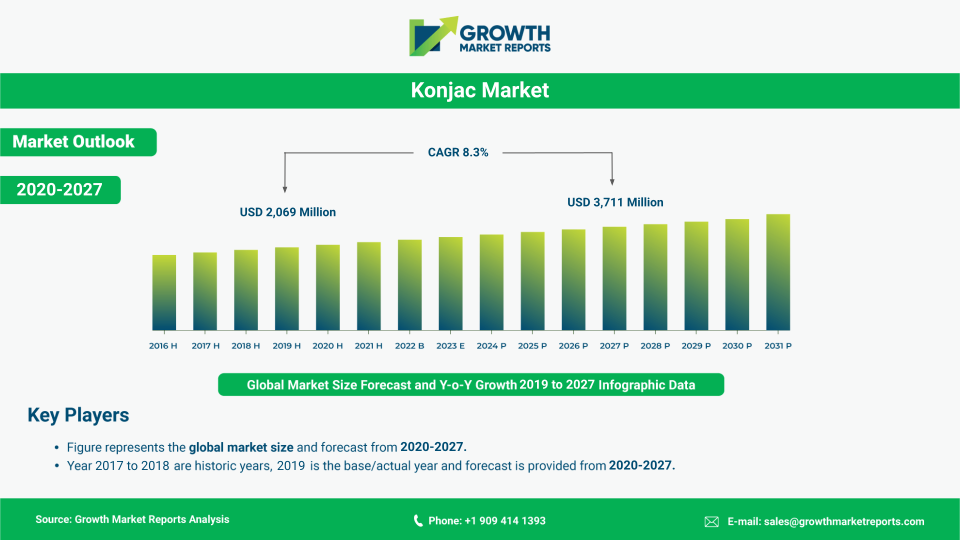
The base year considered for the global konjac market report is 2019. The complete analysis period is 2017 to 2027, wherein, 2017 & 2018 are the historic years and the forecast is provided from 2020 to 2027.

The market is expected to witness decline of over 4.0% between 2019 and 2020 owing to the negative impact of COVID-19 pandemic on the konjac market. The rising demand for the food konjac based supplements are expected to boost the growth of the market.

Factors such as competitive strength and market positioning are key areas considered while selecting top companies to be profiled.

The rising prevalence of obesity and rising awareness among consumers for dietary supplements, are expected to drive the market growth during forecast period.

In addition to market size (in US$ Million) and Company Market Share (in % for base year 2019), other data such as recent advancements is available in final report.

According to this Growth Market Reports report, the market from Konjac market shall probably to register a CAGR of 8.3% during forecast period 2020-2027, with an anticipated valuation of USD 3,771.1 million by the end of the 2027.

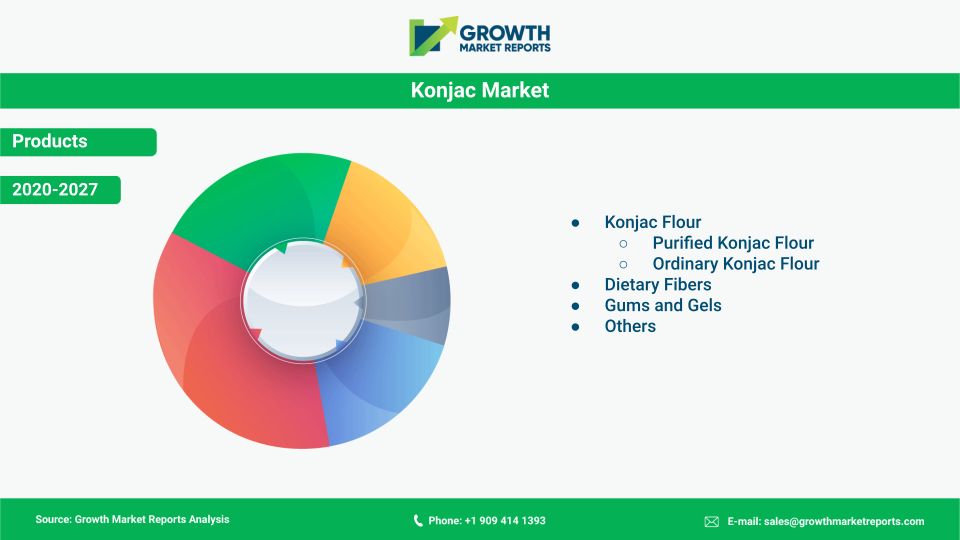
Yes, the report covers product specific information such as konjac flour, konjac thickeners, etc.

Yes, the report gives the brief about the konjac market.

Additional company profiles can be provided on request.

Table Of Content

Chapter 1 Executive Summary
Chapter 2 Assumptions and Acronyms Used
Chapter 3 Research Methodology
Chapter 4 Konjac Market Overview
   4.1 Introduction
      4.1.1 Market Taxonomy
      4.1.2 Market Definition
      4.1.3 Macro-Economic Factors Impacting the Market Growth
   4.2 Konjac Market Dynamics
      4.2.1 Market Drivers
      4.2.2 Market Restraints
      4.2.3 Market Opportunity
   4.3 Konjac Market - Supply Chain Analysis
      4.3.1 List of Key Suppliers
      4.3.2 List of Key Distributors
      4.3.3 List of Key Consumers
   4.4 Key Forces Shaping the Konjac Market
      4.4.1 Bargaining Power of Suppliers
      4.4.2 Bargaining Power of Buyers
      4.4.3 Threat of Substitution
      4.4.4 Threat of New Entrants
      4.4.5 Competitive Rivalry
   4.5 Global Konjac Market Size & Forecast, 2023-2032
      4.5.1 Konjac Market Size and Y-o-Y Growth
      4.5.2 Konjac Market Absolute $ Opportunity

Chapter 5 Global Konjac Market Analysis and Forecast By Product Type
   5.1 Introduction
      5.1.1 Key Market Trends & Growth Opportunities By Product Type
      5.1.2 Basis Point Share (BPS) Analysis By Product Type
      5.1.3 Absolute $ Opportunity Assessment By Product Type
   5.2 Konjac Market Size Forecast By Product Type
      5.2.1 Konjac Flour
      5.2.2 Konjac Gum
      5.2.3 Konjac Dietary Fiber
      5.2.4 Konjac Sponge
      5.2.5 Others
   5.3 Market Attractiveness Analysis By Product Type

Chapter 6 Global Konjac Market Analysis and Forecast By Application
   6.1 Introduction
      6.1.1 Key Market Trends & Growth Opportunities By Application
      6.1.2 Basis Point Share (BPS) Analysis By Application
      6.1.3 Absolute $ Opportunity Assessment By Application
   6.2 Konjac Market Size Forecast By Application
      6.2.1 Food & Beverages
      6.2.2 Pharmaceuticals
      6.2.3 Cosmetics & Personal Care
      6.2.4 Others
   6.3 Market Attractiveness Analysis By Application

Chapter 7 Global Konjac Market Analysis and Forecast By Distribution Channel
   7.1 Introduction
      7.1.1 Key Market Trends & Growth Opportunities By Distribution Channel
      7.1.2 Basis Point Share (BPS) Analysis By Distribution Channel
      7.1.3 Absolute $ Opportunity Assessment By Distribution Channel
   7.2 Konjac Market Size Forecast By Distribution Channel
      7.2.1 Online Stores
      7.2.2 Supermarkets/Hypermarkets
      7.2.3 Specialty Stores
      7.2.4 Others
   7.3 Market Attractiveness Analysis By Distribution Channel

Chapter 8 Global Konjac Market Analysis and Forecast By End-User
   8.1 Introduction
      8.1.1 Key Market Trends & Growth Opportunities By End-User
      8.1.2 Basis Point Share (BPS) Analysis By End-User
      8.1.3 Absolute $ Opportunity Assessment By End-User
   8.2 Konjac Market Size Forecast By End-User
      8.2.1 Household
      8.2.2 Commercial
      8.2.3 Industrial
   8.3 Market Attractiveness Analysis By End-User

Chapter 9 Global Konjac Market Analysis and Forecast by Region
   9.1 Introduction
      9.1.1 Key Market Trends & Growth Opportunities By Region
      9.1.2 Basis Point Share (BPS) Analysis By Region
      9.1.3 Absolute $ Opportunity Assessment By Region
   9.2 Konjac Market Size Forecast By Region
      9.2.1 North America
      9.2.2 Europe
      9.2.3 Asia Pacific
      9.2.4 Latin America
      9.2.5 Middle East & Africa (MEA)
   9.3 Market Attractiveness Analysis By Region

Chapter 10 Coronavirus Disease (COVID-19) Impact 
   10.1 Introduction 
   10.2 Current & Future Impact Analysis 
   10.3 Economic Impact Analysis 
   10.4 Government Policies 
   10.5 Investment Scenario

Chapter 11 North America Konjac Analysis and Forecast
   11.1 Introduction
   11.2 North America Konjac Market Size Forecast by Country
      11.2.1 U.S.
      11.2.2 Canada
   11.3 Basis Point Share (BPS) Analysis by Country
   11.4 Absolute $ Opportunity Assessment by Country
   11.5 Market Attractiveness Analysis by Country
   11.6 North America Konjac Market Size Forecast By Product Type
      11.6.1 Konjac Flour
      11.6.2 Konjac Gum
      11.6.3 Konjac Dietary Fiber
      11.6.4 Konjac Sponge
      11.6.5 Others
   11.7 Basis Point Share (BPS) Analysis By Product Type 
   11.8 Absolute $ Opportunity Assessment By Product Type 
   11.9 Market Attractiveness Analysis By Product Type
   11.10 North America Konjac Market Size Forecast By Application
      11.10.1 Food & Beverages
      11.10.2 Pharmaceuticals
      11.10.3 Cosmetics & Personal Care
      11.10.4 Others
   11.11 Basis Point Share (BPS) Analysis By Application 
   11.12 Absolute $ Opportunity Assessment By Application 
   11.13 Market Attractiveness Analysis By Application
   11.14 North America Konjac Market Size Forecast By Distribution Channel
      11.14.1 Online Stores
      11.14.2 Supermarkets/Hypermarkets
      11.14.3 Specialty Stores
      11.14.4 Others
   11.15 Basis Point Share (BPS) Analysis By Distribution Channel 
   11.16 Absolute $ Opportunity Assessment By Distribution Channel 
   11.17 Market Attractiveness Analysis By Distribution Channel
   11.18 North America Konjac Market Size Forecast By End-User
      11.18.1 Household
      11.18.2 Commercial
      11.18.3 Industrial
   11.19 Basis Point Share (BPS) Analysis By End-User 
   11.20 Absolute $ Opportunity Assessment By End-User 
   11.21 Market Attractiveness Analysis By End-User

Chapter 12 Europe Konjac Analysis and Forecast
   12.1 Introduction
   12.2 Europe Konjac Market Size Forecast by Country
      12.2.1 Germany
      12.2.2 France
      12.2.3 Italy
      12.2.4 U.K.
      12.2.5 Spain
      12.2.6 Russia
      12.2.7 Rest of Europe
   12.3 Basis Point Share (BPS) Analysis by Country
   12.4 Absolute $ Opportunity Assessment by Country
   12.5 Market Attractiveness Analysis by Country
   12.6 Europe Konjac Market Size Forecast By Product Type
      12.6.1 Konjac Flour
      12.6.2 Konjac Gum
      12.6.3 Konjac Dietary Fiber
      12.6.4 Konjac Sponge
      12.6.5 Others
   12.7 Basis Point Share (BPS) Analysis By Product Type 
   12.8 Absolute $ Opportunity Assessment By Product Type 
   12.9 Market Attractiveness Analysis By Product Type
   12.10 Europe Konjac Market Size Forecast By Application
      12.10.1 Food & Beverages
      12.10.2 Pharmaceuticals
      12.10.3 Cosmetics & Personal Care
      12.10.4 Others
   12.11 Basis Point Share (BPS) Analysis By Application 
   12.12 Absolute $ Opportunity Assessment By Application 
   12.13 Market Attractiveness Analysis By Application
   12.14 Europe Konjac Market Size Forecast By Distribution Channel
      12.14.1 Online Stores
      12.14.2 Supermarkets/Hypermarkets
      12.14.3 Specialty Stores
      12.14.4 Others
   12.15 Basis Point Share (BPS) Analysis By Distribution Channel 
   12.16 Absolute $ Opportunity Assessment By Distribution Channel 
   12.17 Market Attractiveness Analysis By Distribution Channel
   12.18 Europe Konjac Market Size Forecast By End-User
      12.18.1 Household
      12.18.2 Commercial
      12.18.3 Industrial
   12.19 Basis Point Share (BPS) Analysis By End-User 
   12.20 Absolute $ Opportunity Assessment By End-User 
   12.21 Market Attractiveness Analysis By End-User

Chapter 13 Asia Pacific Konjac Analysis and Forecast
   13.1 Introduction
   13.2 Asia Pacific Konjac Market Size Forecast by Country
      13.2.1 China
      13.2.2 Japan
      13.2.3 South Korea
      13.2.4 India
      13.2.5 Australia
      13.2.6 South East Asia (SEA)
      13.2.7 Rest of Asia Pacific (APAC)
   13.3 Basis Point Share (BPS) Analysis by Country
   13.4 Absolute $ Opportunity Assessment by Country
   13.5 Market Attractiveness Analysis by Country
   13.6 Asia Pacific Konjac Market Size Forecast By Product Type
      13.6.1 Konjac Flour
      13.6.2 Konjac Gum
      13.6.3 Konjac Dietary Fiber
      13.6.4 Konjac Sponge
      13.6.5 Others
   13.7 Basis Point Share (BPS) Analysis By Product Type 
   13.8 Absolute $ Opportunity Assessment By Product Type 
   13.9 Market Attractiveness Analysis By Product Type
   13.10 Asia Pacific Konjac Market Size Forecast By Application
      13.10.1 Food & Beverages
      13.10.2 Pharmaceuticals
      13.10.3 Cosmetics & Personal Care
      13.10.4 Others
   13.11 Basis Point Share (BPS) Analysis By Application 
   13.12 Absolute $ Opportunity Assessment By Application 
   13.13 Market Attractiveness Analysis By Application
   13.14 Asia Pacific Konjac Market Size Forecast By Distribution Channel
      13.14.1 Online Stores
      13.14.2 Supermarkets/Hypermarkets
      13.14.3 Specialty Stores
      13.14.4 Others
   13.15 Basis Point Share (BPS) Analysis By Distribution Channel 
   13.16 Absolute $ Opportunity Assessment By Distribution Channel 
   13.17 Market Attractiveness Analysis By Distribution Channel
   13.18 Asia Pacific Konjac Market Size Forecast By End-User
      13.18.1 Household
      13.18.2 Commercial
      13.18.3 Industrial
   13.19 Basis Point Share (BPS) Analysis By End-User 
   13.20 Absolute $ Opportunity Assessment By End-User 
   13.21 Market Attractiveness Analysis By End-User

Chapter 14 Latin America Konjac Analysis and Forecast
   14.1 Introduction
   14.2 Latin America Konjac Market Size Forecast by Country
      14.2.1 Brazil
      14.2.2 Mexico
      14.2.3 Rest of Latin America (LATAM)
   14.3 Basis Point Share (BPS) Analysis by Country
   14.4 Absolute $ Opportunity Assessment by Country
   14.5 Market Attractiveness Analysis by Country
   14.6 Latin America Konjac Market Size Forecast By Product Type
      14.6.1 Konjac Flour
      14.6.2 Konjac Gum
      14.6.3 Konjac Dietary Fiber
      14.6.4 Konjac Sponge
      14.6.5 Others
   14.7 Basis Point Share (BPS) Analysis By Product Type 
   14.8 Absolute $ Opportunity Assessment By Product Type 
   14.9 Market Attractiveness Analysis By Product Type
   14.10 Latin America Konjac Market Size Forecast By Application
      14.10.1 Food & Beverages
      14.10.2 Pharmaceuticals
      14.10.3 Cosmetics & Personal Care
      14.10.4 Others
   14.11 Basis Point Share (BPS) Analysis By Application 
   14.12 Absolute $ Opportunity Assessment By Application 
   14.13 Market Attractiveness Analysis By Application
   14.14 Latin America Konjac Market Size Forecast By Distribution Channel
      14.14.1 Online Stores
      14.14.2 Supermarkets/Hypermarkets
      14.14.3 Specialty Stores
      14.14.4 Others
   14.15 Basis Point Share (BPS) Analysis By Distribution Channel 
   14.16 Absolute $ Opportunity Assessment By Distribution Channel 
   14.17 Market Attractiveness Analysis By Distribution Channel
   14.18 Latin America Konjac Market Size Forecast By End-User
      14.18.1 Household
      14.18.2 Commercial
      14.18.3 Industrial
   14.19 Basis Point Share (BPS) Analysis By End-User 
   14.20 Absolute $ Opportunity Assessment By End-User 
   14.21 Market Attractiveness Analysis By End-User

Chapter 15 Middle East & Africa (MEA) Konjac Analysis and Forecast
   15.1 Introduction
   15.2 Middle East & Africa (MEA) Konjac Market Size Forecast by Country
      15.2.1 Saudi Arabia
      15.2.2 South Africa
      15.2.3 UAE
      15.2.4 Rest of Middle East & Africa (MEA)
   15.3 Basis Point Share (BPS) Analysis by Country
   15.4 Absolute $ Opportunity Assessment by Country
   15.5 Market Attractiveness Analysis by Country
   15.6 Middle East & Africa (MEA) Konjac Market Size Forecast By Product Type
      15.6.1 Konjac Flour
      15.6.2 Konjac Gum
      15.6.3 Konjac Dietary Fiber
      15.6.4 Konjac Sponge
      15.6.5 Others
   15.7 Basis Point Share (BPS) Analysis By Product Type 
   15.8 Absolute $ Opportunity Assessment By Product Type 
   15.9 Market Attractiveness Analysis By Product Type
   15.10 Middle East & Africa (MEA) Konjac Market Size Forecast By Application
      15.10.1 Food & Beverages
      15.10.2 Pharmaceuticals
      15.10.3 Cosmetics & Personal Care
      15.10.4 Others
   15.11 Basis Point Share (BPS) Analysis By Application 
   15.12 Absolute $ Opportunity Assessment By Application 
   15.13 Market Attractiveness Analysis By Application
   15.14 Middle East & Africa (MEA) Konjac Market Size Forecast By Distribution Channel
      15.14.1 Online Stores
      15.14.2 Supermarkets/Hypermarkets
      15.14.3 Specialty Stores
      15.14.4 Others
   15.15 Basis Point Share (BPS) Analysis By Distribution Channel 
   15.16 Absolute $ Opportunity Assessment By Distribution Channel 
   15.17 Market Attractiveness Analysis By Distribution Channel
   15.18 Middle East & Africa (MEA) Konjac Market Size Forecast By End-User
      15.18.1 Household
      15.18.2 Commercial
      15.18.3 Industrial
   15.19 Basis Point Share (BPS) Analysis By End-User 
   15.20 Absolute $ Opportunity Assessment By End-User 
   15.21 Market Attractiveness Analysis By End-User

Chapter 16 Competition Landscape 
   16.1 Konjac Market: Competitive Dashboard
   16.2 Global Konjac Market: Market Share Analysis, 2023
   16.3 Company Profiles (Details – Overview, Financials, Developments, Strategy) 
      16.3.1 The Konjac Sponge Company
Shanghai Brilliant Gum Co., Ltd.
Henan Xin Industry Co., Ltd.
Konson Konjac
FMC Corporation
NOW Foods
Shimizu Chemical Corporation
Hubei Yizhi Konjac Biotechnology Co., Ltd.
Baoji Konjac Chemical Co., Ltd.
Hubei Jianshi Nongtai Industry Co., Ltd.
Zeroodle
Miracle Noodle
Slendier
NAH Foods
Newstar Konjac
Konjac Foods
The Konjac Shop
Glucozen
Yamato-Ya
Hubei Yizhi Konjac Biotechnology Co., Ltd.

Methodology

Our Clients

Deloitte
The John Holland Group
Siemens Healthcare
Microsoft
sinopec
FedEx Logistics
Dassault Aviation
General Electric