Smoothies Market Research Report 2033

Smoothies Market Research Report 2033

Segments - by Product Type (Fruit-based Smoothies, Dairy-based Smoothies, Vegetable-based Smoothies, Protein Smoothies, Others), by Packaging (Bottled, Canned, Pouched, Others), by Distribution Channel (Supermarkets/Hypermarkets, Convenience Stores, Online Retail, Specialty Stores, Others), by End-User (Household, Food Service, Others)

https://growthmarketreports.com/Anuradha
Author : Anuradha B. More
https://growthmarketreports.com/Vaibhav
Fact-checked by : Vaibhav Chandola
https://growthmarketreports.com/Shruti
Editor : Shruti Bhat

Upcoming | Report ID :FB-977 | 4.7 Rating | 21 Reviews | 274 Pages | Format : Docx PDF

Report Description


Smoothies Market Outlook

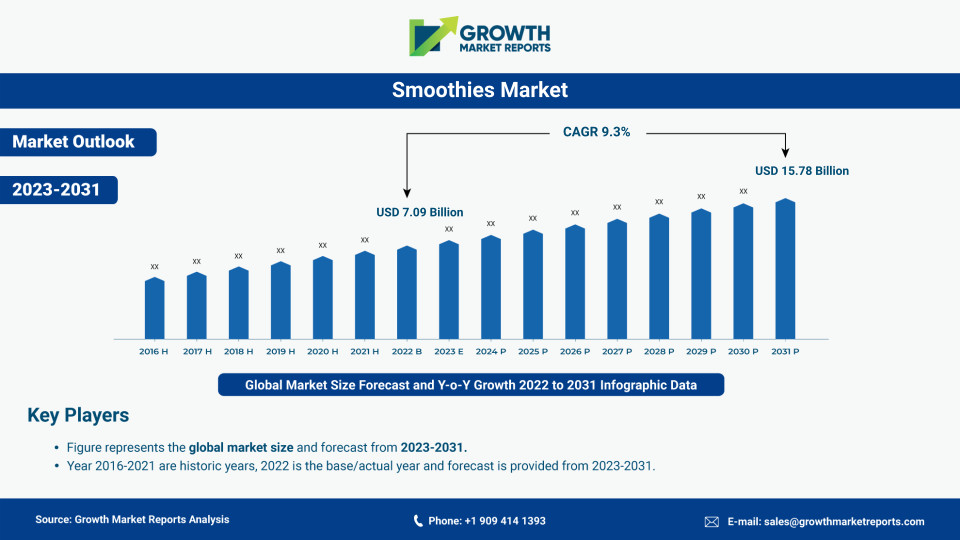
According to our latest research, the global smoothies market size reached USD 19.4 billion in 2024, and the industry is expected to expand at a robust CAGR of 8.1% from 2025 to 2033. By the end of the forecast period, the global smoothies market is projected to attain a value of USD 38.8 billion. This growth is primarily fueled by the rising consumer inclination towards healthier food and beverage choices, increasing demand for convenient nutrition, and the growing popularity of plant-based and functional ingredients in beverages. As per the latest research, these factors are shaping the competitive landscape and driving innovation across the smoothies industry worldwide.

A key growth factor for the smoothies market is the rising health consciousness among consumers globally. The increasing prevalence of lifestyle diseases such as obesity, diabetes, and cardiovascular disorders has led to a significant shift in dietary preferences, with more individuals seeking out nutrient-dense and low-calorie alternatives. Smoothies, particularly those made from fruits, vegetables, and protein-rich ingredients, are perceived as an ideal solution for busy consumers aiming to maintain a balanced diet. The trend of meal replacement with smoothies is gaining momentum, especially among urban populations, as these beverages offer a convenient way to consume essential vitamins, minerals, and fibers. Furthermore, the popularity of fitness and wellness lifestyles, coupled with the influence of social media and celebrity endorsements, continues to propel the adoption of smoothies as a daily dietary staple.

Another significant driver of growth in the smoothies market is the wave of innovation in product development and packaging. Manufacturers are constantly introducing new flavors, functional ingredients, and value-added offerings such as probiotics, superfoods, and plant-based proteins to cater to evolving consumer preferences. The emergence of dairy-free, vegan, and allergen-free smoothie options has expanded the consumer base, attracting individuals with specific dietary restrictions. Moreover, advancements in packaging technology, such as resealable pouches and eco-friendly bottles, are enhancing the convenience and shelf-life of smoothies. These innovations not only improve the overall consumer experience but also align with the rising demand for sustainable and environmentally friendly packaging solutions, further driving market growth.

The growth trajectory of the smoothies market is also influenced by the rapid expansion of distribution channels, particularly online retail. The proliferation of e-commerce platforms and direct-to-consumer delivery models has made it easier for consumers to access a wide variety of smoothie products. Online channels offer the advantage of product customization, subscription-based services, and doorstep delivery, which are highly appealing to tech-savvy and time-constrained consumers. Additionally, supermarkets, hypermarkets, and specialty stores continue to play a crucial role in driving impulse purchases and promoting new product launches through in-store promotions and sampling. The synergistic effect of these diverse distribution channels is expected to sustain the upward momentum of the smoothies market in the coming years.

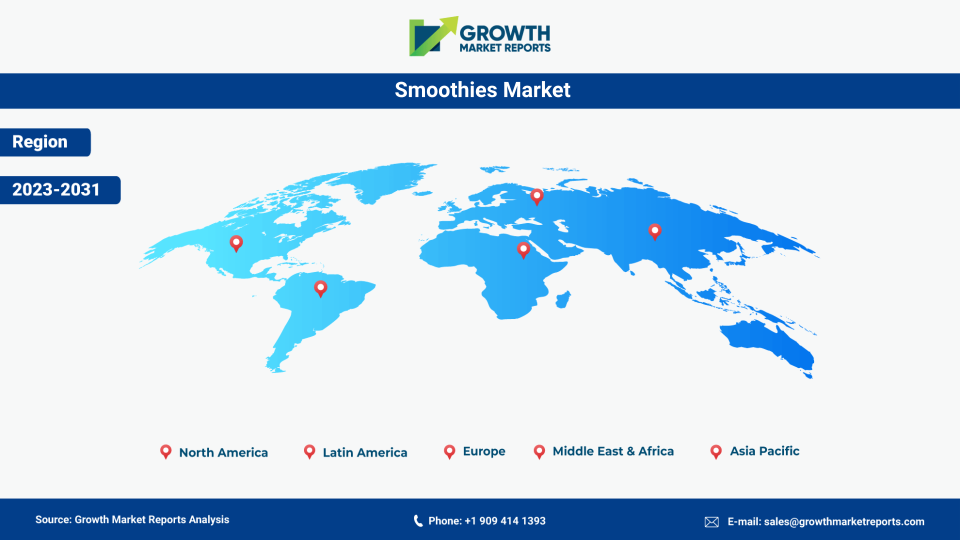
From a regional perspective, North America currently dominates the global smoothies market, accounting for the largest share in 2024, followed closely by Europe and the Asia Pacific region. The high level of health awareness, well-established retail infrastructure, and presence of leading market players in North America are key contributors to its market leadership. Meanwhile, the Asia Pacific region is witnessing the fastest growth, driven by rising disposable incomes, urbanization, and increasing adoption of Western dietary habits. Latin America and the Middle East & Africa also present significant growth opportunities, albeit from a smaller base, as consumers in these regions become more attuned to global health and wellness trends.

Green Smoothies have emerged as a popular choice among health-conscious consumers, particularly those seeking nutrient-rich and low-calorie beverage options. These smoothies typically incorporate a variety of leafy greens such as spinach, kale, and arugula, which are packed with essential vitamins, minerals, and antioxidants. The growing trend of detoxification and weight management has further fueled the demand for green smoothies, as they are perceived as a natural way to cleanse the body and boost energy levels. Manufacturers are increasingly experimenting with flavor combinations, blending greens with fruits like bananas, apples, and berries to enhance palatability and appeal to a broader audience. The rise of green smoothies aligns with the overall shift towards plant-based diets, as consumers become more aware of the health and environmental benefits associated with reducing meat and dairy consumption.

Global Smoothies Industry Outlook

Product Type Analysis

The product type segment of the smoothies market is highly diversified, encompassing fruit-based smoothies, dairy-based smoothies, vegetable-based smoothies, protein smoothies, and other niche variants. Fruit-based smoothies remain the dominant category, largely due to their widespread appeal, natural sweetness, and perceived health benefits. These smoothies are rich in essential vitamins, antioxidants, and fibers, making them a preferred choice among health-conscious consumers. The availability of a wide range of fruit flavors, from classic combinations like strawberry-banana to exotic blends featuring acai, dragon fruit, or passion fruit, fuels continual consumer interest. Additionally, fruit-based smoothies often serve as a gateway for individuals new to the smoothie market, as they are generally more palatable and familiar compared to other types.

Dairy-based smoothies hold a significant share in the global smoothies market, especially in regions where dairy consumption is culturally ingrained. These smoothies are valued for their creamy texture, protein content, and satiety, making them a popular option for meal replacement or post-workout recovery. The integration of yogurt, milk, and kefir in smoothies not only enhances taste and mouthfeel but also introduces probiotic benefits, appealing to consumers seeking gut health solutions. However, the rising prevalence of lactose intolerance and the growing popularity of plant-based diets have prompted manufacturers to innovate with dairy alternatives, such as almond, oat, and coconut milk, ensuring continued relevance of this segment.

Vegetable-based smoothies are gaining traction among consumers who prioritize nutrient density and lower sugar content. These smoothies often feature leafy greens like spinach, kale, and arugula, as well as other vegetables such as carrots, beets, and cucumbers. The trend towards detoxification, weight management, and functional nutrition has significantly boosted the demand for vegetable-based smoothies. Manufacturers are responding by creating blends that balance the earthy flavors of vegetables with the natural sweetness of fruits, making these offerings more appealing to a broader audience. Additionally, the inclusion of superfoods and adaptogens further enhances the health profile of vegetable-based smoothies, attracting wellness enthusiasts and fitness aficionados.

Protein smoothies represent a rapidly expanding sub-segment, driven by the increasing popularity of high-protein diets and the growing number of consumers engaged in fitness and bodybuilding activities. These smoothies typically incorporate protein powders derived from whey, soy, pea, or other plant-based sources, providing a convenient and tasty way to meet daily protein requirements. The demand for protein smoothies is particularly pronounced among millennials and Gen Z consumers, who view them as an essential part of their active lifestyles. Manufacturers are capitalizing on this trend by offering customized protein blends, fortified with additional nutrients such as BCAAs, vitamins, and minerals, to cater to specific health and performance goals.

The "others" category in the product type segment includes niche offerings such as nut-based, seed-based, and functional smoothies enriched with probiotics, prebiotics, and herbal extracts. While these products currently occupy a smaller share of the market, they are witnessing increased adoption among consumers seeking specialized health benefits or unique flavor experiences. The ongoing trend of personalization and the quest for novel sensory experiences are expected to drive further innovation and growth within this segment, contributing to the overall dynamism of the smoothies market.

Report Scope

Attributes Details
Report Title Smoothies Market Research Report 2033
By Product Type Fruit-based Smoothies, Dairy-based Smoothies, Vegetable-based Smoothies, Protein Smoothies, Others
By Packaging Bottled, Canned, Pouched, Others
By Distribution Channel Supermarkets/Hypermarkets, Convenience Stores, Online Retail, Specialty Stores, Others
By End-User Household, Food Service, Others
Regions Covered North America, Europe, APAC, Latin America, MEA
Base Year 2024
Historic Data 2018-2023
Forecast Period 2025-2033
Number of Pages 274
Number of Tables & Figures 379
Customization Available Yes, the report can be customized as per your need.

Packaging Analysis

The packaging segment of the smoothies market plays a crucial role in influencing consumer purchasing decisions and ensuring product integrity. Bottled packaging is the most prevalent format, favored for its convenience, portability, and ability to preserve freshness. Bottled smoothies are widely available across supermarkets, convenience stores, and online platforms, making them easily accessible to a broad consumer base. The use of transparent bottles allows consumers to visually assess the product, which is particularly important for health-focused buyers who value natural color and consistency. Additionally, advancements in bottle design, such as lightweight materials and ergonomic shapes, enhance user experience and support on-the-go consumption.

Canned packaging is another popular option, especially for shelf-stable smoothies that require longer storage life. Canned smoothies are typically favored in regions with limited cold chain infrastructure or where consumers prioritize convenience and affordability. The ability to withstand transportation and storage challenges makes canned packaging an attractive choice for manufacturers targeting emerging markets. However, there is a growing consumer preference for packaging solutions that minimize environmental impact, prompting companies to explore recyclable and biodegradable can materials to align with sustainability goals.

Pouched packaging has emerged as a fast-growing segment, particularly among younger consumers and families with children. Pouches offer several advantages, including lightweight construction, ease of use, and portion control. The resealable nature of many pouches extends product freshness and supports multiple servings, making them ideal for school lunches, travel, and outdoor activities. The flexibility of pouch design also allows for innovative branding and marketing opportunities, enabling manufacturers to differentiate their products on crowded retail shelves. As consumer demand for convenience and sustainability continues to rise, the popularity of pouched smoothies is expected to increase further.

The "others" packaging segment encompasses innovative formats such as cartons, glass jars, and compostable containers. These alternatives are gaining traction among eco-conscious consumers who prioritize sustainable packaging solutions. Glass jars, for example, are perceived as premium and environmentally friendly, appealing to niche markets and specialty retailers. Cartons made from renewable materials are also being adopted by brands seeking to reduce their carbon footprint. The ongoing evolution of packaging technology and the increasing regulatory focus on plastic waste management are likely to drive further innovation in this segment, shaping the future of smoothies packaging.

Overall, packaging trends in the smoothies market are shifting towards solutions that balance convenience, functionality, and sustainability. Manufacturers are investing in research and development to create packaging that not only preserves product quality but also aligns with consumer values and regulatory requirements. The integration of smart packaging features, such as QR codes for product information and interactive experiences, is also gaining momentum, enhancing brand engagement and consumer loyalty in the competitive smoothies market.

Distribution Channel Analysis

The distribution channel landscape for the smoothies market is highly dynamic, with supermarkets and hypermarkets accounting for the largest share of sales globally. These retail outlets offer a wide variety of smoothie brands and flavors, enabling consumers to compare options and make informed purchasing decisions. The presence of dedicated refrigerated sections and in-store promotions further drives impulse purchases, especially among health-conscious shoppers. Supermarkets also serve as a key platform for product launches and sampling campaigns, allowing manufacturers to reach a broad audience and build brand awareness effectively.

Convenience stores represent another important distribution channel, particularly in urban and suburban areas where consumers seek quick and easy access to ready-to-drink beverages. Convenience stores are strategically located near workplaces, schools, and transportation hubs, making them ideal for on-the-go consumption. The growing trend of snacking and meal replacement has further boosted the demand for smoothies in this channel. Manufacturers are responding by offering single-serve and grab-and-go packaging formats that cater to the fast-paced lifestyles of modern consumers.

Online retail is rapidly transforming the distribution landscape for smoothies, driven by the increasing penetration of e-commerce platforms and changing consumer shopping habits. Online channels provide several advantages, including product customization, subscription-based services, and direct-to-consumer delivery. Consumers can access a wider range of smoothie options, read reviews, and benefit from personalized recommendations, enhancing the overall shopping experience. The COVID-19 pandemic accelerated the adoption of online grocery shopping, and this trend is expected to persist as consumers continue to prioritize convenience and safety.

Juice Bars have become a significant player in the smoothies market, offering consumers fresh, made-to-order beverages that cater to their specific health and taste preferences. These establishments provide a unique platform for consumers to customize their smoothies with a wide range of ingredients, from fruits and vegetables to superfoods and protein powders. The experiential aspect of visiting a juice bar, where customers can watch their smoothies being prepared, adds to the appeal and often leads to repeat visits. Juice bars also serve as a testing ground for new flavors and formulations, allowing manufacturers to gather real-time feedback and refine their offerings. As the demand for health-focused and functional beverages continues to rise, juice bars are well-positioned to capitalize on this trend, attracting a diverse clientele that values quality, freshness, and personalization.

Specialty stores, such as health food shops, gyms, and juice bars, play a vital role in promoting premium and niche smoothie products. These outlets cater to a discerning clientele seeking high-quality, organic, or functional beverages tailored to specific health goals. The expertise of staff and the availability of product sampling and customization options create a unique shopping environment that fosters customer loyalty. Specialty stores also serve as trendsetters, introducing innovative ingredients and formulations that often influence mainstream product development.

The "others" distribution channel includes vending machines, direct sales, and food service establishments such as cafes and restaurants. These channels offer additional touchpoints for consumers to access smoothies in various settings, from workplaces to recreational venues. The integration of smoothies into food service menus is particularly noteworthy, as it expands the reach of the category and introduces new consumption occasions. As the competitive landscape evolves, manufacturers are adopting omnichannel strategies to maximize market penetration and cater to diverse consumer preferences.

End-User Analysis

The end-user segment of the smoothies market is broadly categorized into households, food service, and others, each with distinct consumption patterns and growth drivers. Households constitute the largest end-user group, driven by the increasing adoption of smoothies as a convenient and nutritious option for breakfast, snacks, or meal replacement. The growing awareness of health and wellness, coupled with busy lifestyles, has made ready-to-drink smoothies a staple in many households. Manufacturers are targeting this segment with family-sized packaging, multipacks, and a variety of flavor options to cater to diverse tastes and preferences.

The food service segment, which includes cafes, restaurants, juice bars, and quick-service outlets, is experiencing robust growth as consumers seek out fresh and customized smoothie options when dining out. Food service establishments often offer made-to-order smoothies, allowing customers to choose their preferred ingredients and nutritional profiles. The trend of health-focused menus and the rising popularity of plant-based and functional beverages are driving the inclusion of smoothies in food service offerings. Additionally, partnerships between smoothie brands and food service operators are creating new opportunities for co-branding and menu innovation.

The "others" end-user category encompasses institutional buyers such as schools, hospitals, fitness centers, and corporate cafeterias. These settings are increasingly incorporating smoothies into their food and beverage programs to meet the nutritional needs of students, patients, employees, and gym members. The emphasis on wellness and preventive healthcare is prompting institutions to offer healthier beverage alternatives, with smoothies being a popular choice due to their versatility and nutritional benefits. Manufacturers are developing specialized formulations and packaging solutions to cater to the unique requirements of institutional buyers.

The end-user landscape is further shaped by demographic factors such as age, income, and lifestyle. Millennials and Gen Z consumers, in particular, are driving demand for innovative, functional, and environmentally friendly smoothie products. The increasing participation of women in the workforce and the rise of dual-income households are also contributing to the growth of the household segment, as convenience becomes a top priority in meal planning. As the market matures, manufacturers are leveraging consumer insights to develop targeted marketing campaigns and product offerings that resonate with specific end-user groups.

Overall, the diverse end-user base of the smoothies market presents significant growth opportunities for manufacturers and retailers. By understanding the unique needs and preferences of each segment, companies can tailor their product portfolios, packaging, and marketing strategies to maximize market penetration and drive sustained growth in the competitive smoothies industry.

Opportunities & Threats

One of the most promising opportunities in the smoothies market lies in the development of functional and personalized beverages. As consumers become more knowledgeable about nutrition and wellness, there is a growing demand for smoothies that offer targeted health benefits, such as immune support, digestive health, energy enhancement, and weight management. Manufacturers can capitalize on this trend by incorporating superfoods, adaptogens, probiotics, and other functional ingredients into their formulations. The use of data analytics and artificial intelligence to personalize smoothie recommendations based on individual health profiles and preferences is also gaining traction, opening up new avenues for product innovation and customer engagement.

Sustainability and ethical sourcing represent another major opportunity for growth in the smoothies market. Consumers are increasingly scrutinizing the environmental and social impact of their food and beverage choices, prompting manufacturers to adopt sustainable sourcing practices, reduce packaging waste, and invest in eco-friendly materials. Brands that demonstrate a commitment to sustainability, transparency, and corporate social responsibility are likely to gain a competitive edge and foster long-term loyalty among environmentally conscious consumers. The integration of circular economy principles, such as upcycling food waste and promoting reusable packaging, can further enhance brand reputation and drive market differentiation.

Despite the numerous growth opportunities, the smoothies market faces several restraining factors that could impede its expansion. One of the primary challenges is the high cost of premium ingredients and sustainable packaging, which can result in elevated product prices and limit affordability for price-sensitive consumers. Additionally, the highly competitive nature of the market, characterized by frequent new product launches and aggressive promotional strategies, can lead to margin pressures and market saturation. Regulatory complexities related to labeling, health claims, and food safety standards also pose significant hurdles, particularly for manufacturers operating in multiple geographies. Addressing these challenges will require strategic investments in supply chain optimization, cost management, and regulatory compliance to ensure sustained growth and profitability.

Regional Outlook

The regional analysis of the smoothies market reveals a diverse landscape, with North America leading the global market with a value of USD 7.2 billion in 2024. The region's dominance can be attributed to the high level of health awareness, well-established retail infrastructure, and the presence of leading market players. The United States, in particular, is a major contributor, driven by the widespread adoption of smoothies as a convenient and nutritious meal replacement option. The Canadian market is also experiencing steady growth, supported by increasing demand for plant-based and organic beverages. North America's mature market environment provides ample opportunities for product innovation and premiumization, with consumers willing to pay a premium for high-quality, functional, and sustainable smoothie products.

Europe represents the second-largest market for smoothies, with a market size of USD 5.6 billion in 2024 and a projected CAGR of 7.8% during the forecast period. The region's growth is fueled by rising health consciousness, increasing disposable incomes, and the growing popularity of plant-based diets. Countries such as the United Kingdom, Germany, and France are at the forefront of the smoothies trend, with consumers seeking out innovative flavors, organic ingredients, and eco-friendly packaging. The presence of a robust food service sector, including cafes, juice bars, and health food stores, further supports market expansion in Europe. Regulatory support for clean labeling and sustainable sourcing is also driving the adoption of healthier and more transparent smoothie products.

The Asia Pacific region is emerging as the fastest-growing market for smoothies, with a value of USD 3.4 billion in 2024 and significant growth potential in countries such as China, Japan, India, and Australia. The rapid pace of urbanization, rising disposable incomes, and increasing exposure to Western dietary habits are key factors driving market growth in the region. The expanding middle class and growing health awareness are prompting consumers to seek out convenient and nutritious beverage options, creating a favorable environment for smoothies. Local manufacturers are introducing region-specific flavors and ingredients to cater to diverse consumer preferences, while international brands are expanding their footprint through strategic partnerships and investments. The Asia Pacific region is expected to maintain its strong growth trajectory, supported by ongoing innovation and evolving consumer lifestyles.

Smoothies Market Statistics

Competitor Outlook

The competitive landscape of the smoothies market is characterized by intense rivalry among multinational corporations, regional players, and emerging startups. Leading companies are focusing on product innovation, brand differentiation, and strategic partnerships to maintain their market position and capture new growth opportunities. The market is witnessing a wave of mergers and acquisitions, as established players seek to expand their product portfolios, enter new geographies, and leverage synergies in distribution and marketing. The entry of new players, particularly in the functional and plant-based smoothie segments, is intensifying competition and driving continuous innovation across the industry.

Branding and marketing play a crucial role in the smoothies market, with companies investing heavily in digital campaigns, influencer collaborations, and experiential marketing to engage consumers and build brand loyalty. The use of social media platforms and e-commerce channels has become increasingly important for reaching younger demographics and promoting new product launches. Sustainability and transparency are emerging as key differentiators, with brands highlighting their commitment to ethical sourcing, clean labeling, and eco-friendly packaging to appeal to environmentally conscious consumers. Companies are also leveraging technology to enhance the consumer experience, offering personalized recommendations, interactive packaging, and loyalty programs to drive repeat purchases.

Innovation remains at the forefront of competitive strategy, with manufacturers continuously experimenting with new flavors, ingredients, and functional benefits to stay ahead of market trends. The integration of superfoods, adaptogens, probiotics, and plant-based proteins into smoothie formulations is creating new value propositions and expanding the addressable market. Companies are also investing in research and development to improve product quality, shelf-life, and nutritional profiles, ensuring that their offerings meet the evolving needs of health-conscious consumers. Collaboration with food service operators, retailers, and technology providers is further enhancing the reach and impact of leading smoothie brands.

Some of the major companies operating in the global smoothies market include Jamba Juice Company, Bolthouse Farms, Innocent Drinks, Naked Juice Company, Suja Life, LLC, PepsiCo, Inc., Danone S.A., Smoothie King, and Tropicana Products, Inc.. Jamba Juice Company is renowned for its extensive menu of fruit and vegetable-based smoothies, as well as its focus on customization and health-oriented offerings. Bolthouse Farms is a key player in the bottled smoothie segment, leveraging its expertise in cold-pressed juices and functional beverages. Innocent Drinks, a subsidiary of The Coca-Cola Company, is a leading brand in Europe, known for its commitment to natural ingredients and sustainability.

Naked Juice Company, a subsidiary of PepsiCo, Inc., is a prominent player in the North American market, offering a wide range of fruit and vegetable smoothies with a focus on clean labeling and nutritional transparency. Suja Life, LLC has carved out a niche in the organic and cold-pressed smoothie segment, appealing to health-conscious consumers seeking premium and functional beverages. Danone S.A. is leveraging its global presence and expertise in dairy products to expand its smoothie portfolio, particularly in the dairy-based and plant-based segments. Smoothie King, with its extensive franchise network, is a major player in the food service segment, offering customized smoothies tailored to specific health and fitness goals.

Tropicana Products, Inc., another subsidiary of PepsiCo, is known for its fruit-based beverages and has a strong presence in both retail and food service channels. These major companies are continuously investing in product innovation, marketing, and sustainability initiatives to strengthen their market position and respond to evolving consumer preferences. The competitive landscape is further enriched by the presence of regional and local players, who bring unique flavors, ingredients, and cultural insights to the market, contributing to the overall vibrancy and diversity of the global smoothies industry.

Key Players

  • Smoothie King
  • Jamba Juice (Focus Brands)
  • Tropical Smoothie Cafe
  • Bolthouse Farms
  • Innocent Drinks (Coca-Cola Company)
  • Naked Juice (PepsiCo)
  • Suja Life
  • Daily Harvest
  • Robeks Fresh Juices & Smoothies
  • Planet Smoothie
  • Smoothie Factory
  • Booster Juice
  • Crussh
  • Happy Planet Foods
  • Dr. Smoothie Brands
  • SunOpta
  • The Smoothie Company
  • Pure Green
  • Juice It Up!
  • SmoothieBox
Smoothies Market Overview

Segments

The Smoothies market has been segmented on the basis of

Product Type

  • Fruit-based Smoothies
  • Dairy-based Smoothies
  • Vegetable-based Smoothies
  • Protein Smoothies
  • Others

Packaging

  • Bottled
  • Canned
  • Pouched
  • Others

Distribution Channel

  • Supermarkets/Hypermarkets
  • Convenience Stores
  • Online Retail
  • Specialty Stores
  • Others

End-User

  • Household
  • Food Service
  • Others

Competitive Landscape

Key players competing in the smoothies market include PepsiCo, Inc. (US), The Coca-Cola Company (US), Danone S.A. (France), Nestlé SA (Switzerland), Bolthouse Farms, Inc. (US), Barfresh Food Group (US), Innocent Drinks (UK), Suja Life, LLC (US), Smoothie King Franchises, Inc. (US), Savsé (UK), MTY Food Group (Canada), Crussh Juice Bars (UK), Ella's Kitchen (Brands) Limited (UK), and Tropical Smoothie Café (US).
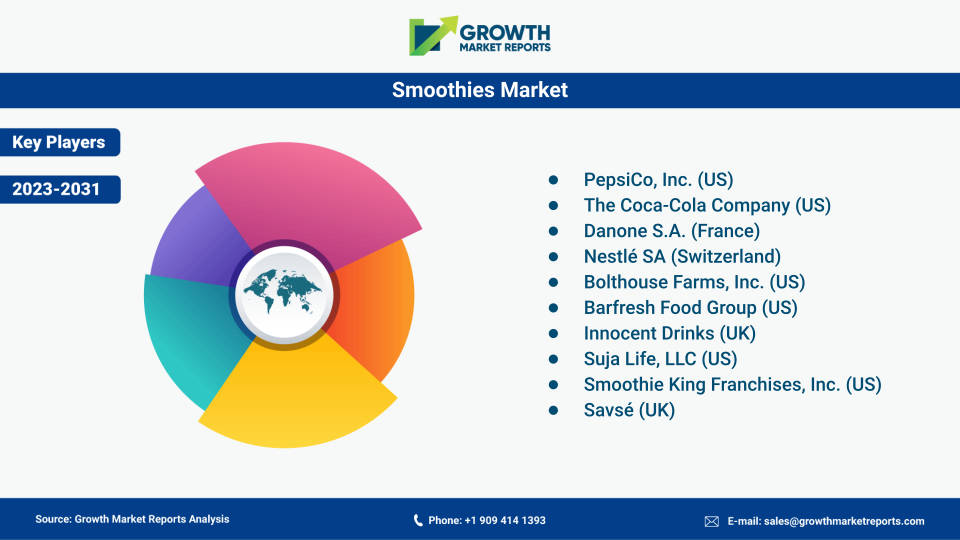

Smoothies Market Key Players

Frequently Asked Questions

Challenges include the high cost of premium ingredients and sustainable packaging, market saturation, regulatory complexities, and the need for supply chain optimization and cost management.

Trends include the rise of plant-based and functional smoothies, personalized and meal replacement options, sustainable packaging, and the integration of superfoods, adaptogens, and probiotics.

Key companies include Jamba Juice Company, Bolthouse Farms, Innocent Drinks, Naked Juice Company, Suja Life, LLC, PepsiCo, Danone S.A., Smoothie King, and Tropicana Products, Inc.

North America leads the global smoothies market, followed by Europe and the Asia Pacific region. The Asia Pacific is the fastest-growing market due to urbanization and rising disposable incomes.

Supermarkets and hypermarkets account for the largest share, but online retail, convenience stores, specialty stores, and food service establishments are also key channels driving market growth.

Packaging plays a crucial role, with bottled smoothies being the most prevalent. Innovations such as resealable pouches, eco-friendly bottles, and sustainable materials are increasingly important to consumers.

Fruit-based smoothies are the dominant category due to their natural sweetness and health benefits, followed by dairy-based, vegetable-based, protein smoothies, and other niche variants.

Key growth drivers include rising health consciousness, increasing demand for convenient nutrition, the popularity of plant-based and functional ingredients, and innovation in product development and packaging.

The smoothies market is expected to expand at a robust CAGR of 8.1% from 2025 to 2033, reaching an estimated value of USD 38.8 billion by the end of the forecast period.

As of 2024, the global smoothies market size reached USD 19.4 billion and is expected to grow significantly in the coming years.

Table Of Content

Chapter 1 Executive Summary
Chapter 2 Assumptions and Acronyms Used
Chapter 3 Research Methodology
Chapter 4 Smoothies Market Overview
   4.1 Introduction
      4.1.1 Market Taxonomy
      4.1.2 Market Definition
      4.1.3 Macro-Economic Factors Impacting the Market Growth
   4.2 Smoothies Market Dynamics
      4.2.1 Market Drivers
      4.2.2 Market Restraints
      4.2.3 Market Opportunity
   4.3 Smoothies Market - Supply Chain Analysis
      4.3.1 List of Key Suppliers
      4.3.2 List of Key Distributors
      4.3.3 List of Key Consumers
   4.4 Key Forces Shaping the Smoothies Market
      4.4.1 Bargaining Power of Suppliers
      4.4.2 Bargaining Power of Buyers
      4.4.3 Threat of Substitution
      4.4.4 Threat of New Entrants
      4.4.5 Competitive Rivalry
   4.5 Global Smoothies Market Size & Forecast, 2023-2032
      4.5.1 Smoothies Market Size and Y-o-Y Growth
      4.5.2 Smoothies Market Absolute $ Opportunity

Chapter 5 Global Smoothies Market Analysis and Forecast By Product Type
   5.1 Introduction
      5.1.1 Key Market Trends & Growth Opportunities By Product Type
      5.1.2 Basis Point Share (BPS) Analysis By Product Type
      5.1.3 Absolute $ Opportunity Assessment By Product Type
   5.2 Smoothies Market Size Forecast By Product Type
      5.2.1 Fruit-based Smoothies
      5.2.2 Dairy-based Smoothies
      5.2.3 Vegetable-based Smoothies
      5.2.4 Protein Smoothies
      5.2.5 Others
   5.3 Market Attractiveness Analysis By Product Type

Chapter 6 Global Smoothies Market Analysis and Forecast By Packaging
   6.1 Introduction
      6.1.1 Key Market Trends & Growth Opportunities By Packaging
      6.1.2 Basis Point Share (BPS) Analysis By Packaging
      6.1.3 Absolute $ Opportunity Assessment By Packaging
   6.2 Smoothies Market Size Forecast By Packaging
      6.2.1 Bottled
      6.2.2 Canned
      6.2.3 Pouched
      6.2.4 Others
   6.3 Market Attractiveness Analysis By Packaging

Chapter 7 Global Smoothies Market Analysis and Forecast By Distribution Channel
   7.1 Introduction
      7.1.1 Key Market Trends & Growth Opportunities By Distribution Channel
      7.1.2 Basis Point Share (BPS) Analysis By Distribution Channel
      7.1.3 Absolute $ Opportunity Assessment By Distribution Channel
   7.2 Smoothies Market Size Forecast By Distribution Channel
      7.2.1 Supermarkets/Hypermarkets
      7.2.2 Convenience Stores
      7.2.3 Online Retail
      7.2.4 Specialty Stores
      7.2.5 Others
   7.3 Market Attractiveness Analysis By Distribution Channel

Chapter 8 Global Smoothies Market Analysis and Forecast By End-User
   8.1 Introduction
      8.1.1 Key Market Trends & Growth Opportunities By End-User
      8.1.2 Basis Point Share (BPS) Analysis By End-User
      8.1.3 Absolute $ Opportunity Assessment By End-User
   8.2 Smoothies Market Size Forecast By End-User
      8.2.1 Household
      8.2.2 Food Service
      8.2.3 Others
   8.3 Market Attractiveness Analysis By End-User

Chapter 9 Global Smoothies Market Analysis and Forecast by Region
   9.1 Introduction
      9.1.1 Key Market Trends & Growth Opportunities By Region
      9.1.2 Basis Point Share (BPS) Analysis By Region
      9.1.3 Absolute $ Opportunity Assessment By Region
   9.2 Smoothies Market Size Forecast By Region
      9.2.1 North America
      9.2.2 Europe
      9.2.3 Asia Pacific
      9.2.4 Latin America
      9.2.5 Middle East & Africa (MEA)
   9.3 Market Attractiveness Analysis By Region

Chapter 10 Coronavirus Disease (COVID-19) Impact 
   10.1 Introduction 
   10.2 Current & Future Impact Analysis 
   10.3 Economic Impact Analysis 
   10.4 Government Policies 
   10.5 Investment Scenario

Chapter 11 North America Smoothies Analysis and Forecast
   11.1 Introduction
   11.2 North America Smoothies Market Size Forecast by Country
      11.2.1 U.S.
      11.2.2 Canada
   11.3 Basis Point Share (BPS) Analysis by Country
   11.4 Absolute $ Opportunity Assessment by Country
   11.5 Market Attractiveness Analysis by Country
   11.6 North America Smoothies Market Size Forecast By Product Type
      11.6.1 Fruit-based Smoothies
      11.6.2 Dairy-based Smoothies
      11.6.3 Vegetable-based Smoothies
      11.6.4 Protein Smoothies
      11.6.5 Others
   11.7 Basis Point Share (BPS) Analysis By Product Type 
   11.8 Absolute $ Opportunity Assessment By Product Type 
   11.9 Market Attractiveness Analysis By Product Type
   11.10 North America Smoothies Market Size Forecast By Packaging
      11.10.1 Bottled
      11.10.2 Canned
      11.10.3 Pouched
      11.10.4 Others
   11.11 Basis Point Share (BPS) Analysis By Packaging 
   11.12 Absolute $ Opportunity Assessment By Packaging 
   11.13 Market Attractiveness Analysis By Packaging
   11.14 North America Smoothies Market Size Forecast By Distribution Channel
      11.14.1 Supermarkets/Hypermarkets
      11.14.2 Convenience Stores
      11.14.3 Online Retail
      11.14.4 Specialty Stores
      11.14.5 Others
   11.15 Basis Point Share (BPS) Analysis By Distribution Channel 
   11.16 Absolute $ Opportunity Assessment By Distribution Channel 
   11.17 Market Attractiveness Analysis By Distribution Channel
   11.18 North America Smoothies Market Size Forecast By End-User
      11.18.1 Household
      11.18.2 Food Service
      11.18.3 Others
   11.19 Basis Point Share (BPS) Analysis By End-User 
   11.20 Absolute $ Opportunity Assessment By End-User 
   11.21 Market Attractiveness Analysis By End-User

Chapter 12 Europe Smoothies Analysis and Forecast
   12.1 Introduction
   12.2 Europe Smoothies Market Size Forecast by Country
      12.2.1 Germany
      12.2.2 France
      12.2.3 Italy
      12.2.4 U.K.
      12.2.5 Spain
      12.2.6 Russia
      12.2.7 Rest of Europe
   12.3 Basis Point Share (BPS) Analysis by Country
   12.4 Absolute $ Opportunity Assessment by Country
   12.5 Market Attractiveness Analysis by Country
   12.6 Europe Smoothies Market Size Forecast By Product Type
      12.6.1 Fruit-based Smoothies
      12.6.2 Dairy-based Smoothies
      12.6.3 Vegetable-based Smoothies
      12.6.4 Protein Smoothies
      12.6.5 Others
   12.7 Basis Point Share (BPS) Analysis By Product Type 
   12.8 Absolute $ Opportunity Assessment By Product Type 
   12.9 Market Attractiveness Analysis By Product Type
   12.10 Europe Smoothies Market Size Forecast By Packaging
      12.10.1 Bottled
      12.10.2 Canned
      12.10.3 Pouched
      12.10.4 Others
   12.11 Basis Point Share (BPS) Analysis By Packaging 
   12.12 Absolute $ Opportunity Assessment By Packaging 
   12.13 Market Attractiveness Analysis By Packaging
   12.14 Europe Smoothies Market Size Forecast By Distribution Channel
      12.14.1 Supermarkets/Hypermarkets
      12.14.2 Convenience Stores
      12.14.3 Online Retail
      12.14.4 Specialty Stores
      12.14.5 Others
   12.15 Basis Point Share (BPS) Analysis By Distribution Channel 
   12.16 Absolute $ Opportunity Assessment By Distribution Channel 
   12.17 Market Attractiveness Analysis By Distribution Channel
   12.18 Europe Smoothies Market Size Forecast By End-User
      12.18.1 Household
      12.18.2 Food Service
      12.18.3 Others
   12.19 Basis Point Share (BPS) Analysis By End-User 
   12.20 Absolute $ Opportunity Assessment By End-User 
   12.21 Market Attractiveness Analysis By End-User

Chapter 13 Asia Pacific Smoothies Analysis and Forecast
   13.1 Introduction
   13.2 Asia Pacific Smoothies Market Size Forecast by Country
      13.2.1 China
      13.2.2 Japan
      13.2.3 South Korea
      13.2.4 India
      13.2.5 Australia
      13.2.6 South East Asia (SEA)
      13.2.7 Rest of Asia Pacific (APAC)
   13.3 Basis Point Share (BPS) Analysis by Country
   13.4 Absolute $ Opportunity Assessment by Country
   13.5 Market Attractiveness Analysis by Country
   13.6 Asia Pacific Smoothies Market Size Forecast By Product Type
      13.6.1 Fruit-based Smoothies
      13.6.2 Dairy-based Smoothies
      13.6.3 Vegetable-based Smoothies
      13.6.4 Protein Smoothies
      13.6.5 Others
   13.7 Basis Point Share (BPS) Analysis By Product Type 
   13.8 Absolute $ Opportunity Assessment By Product Type 
   13.9 Market Attractiveness Analysis By Product Type
   13.10 Asia Pacific Smoothies Market Size Forecast By Packaging
      13.10.1 Bottled
      13.10.2 Canned
      13.10.3 Pouched
      13.10.4 Others
   13.11 Basis Point Share (BPS) Analysis By Packaging 
   13.12 Absolute $ Opportunity Assessment By Packaging 
   13.13 Market Attractiveness Analysis By Packaging
   13.14 Asia Pacific Smoothies Market Size Forecast By Distribution Channel
      13.14.1 Supermarkets/Hypermarkets
      13.14.2 Convenience Stores
      13.14.3 Online Retail
      13.14.4 Specialty Stores
      13.14.5 Others
   13.15 Basis Point Share (BPS) Analysis By Distribution Channel 
   13.16 Absolute $ Opportunity Assessment By Distribution Channel 
   13.17 Market Attractiveness Analysis By Distribution Channel
   13.18 Asia Pacific Smoothies Market Size Forecast By End-User
      13.18.1 Household
      13.18.2 Food Service
      13.18.3 Others
   13.19 Basis Point Share (BPS) Analysis By End-User 
   13.20 Absolute $ Opportunity Assessment By End-User 
   13.21 Market Attractiveness Analysis By End-User

Chapter 14 Latin America Smoothies Analysis and Forecast
   14.1 Introduction
   14.2 Latin America Smoothies Market Size Forecast by Country
      14.2.1 Brazil
      14.2.2 Mexico
      14.2.3 Rest of Latin America (LATAM)
   14.3 Basis Point Share (BPS) Analysis by Country
   14.4 Absolute $ Opportunity Assessment by Country
   14.5 Market Attractiveness Analysis by Country
   14.6 Latin America Smoothies Market Size Forecast By Product Type
      14.6.1 Fruit-based Smoothies
      14.6.2 Dairy-based Smoothies
      14.6.3 Vegetable-based Smoothies
      14.6.4 Protein Smoothies
      14.6.5 Others
   14.7 Basis Point Share (BPS) Analysis By Product Type 
   14.8 Absolute $ Opportunity Assessment By Product Type 
   14.9 Market Attractiveness Analysis By Product Type
   14.10 Latin America Smoothies Market Size Forecast By Packaging
      14.10.1 Bottled
      14.10.2 Canned
      14.10.3 Pouched
      14.10.4 Others
   14.11 Basis Point Share (BPS) Analysis By Packaging 
   14.12 Absolute $ Opportunity Assessment By Packaging 
   14.13 Market Attractiveness Analysis By Packaging
   14.14 Latin America Smoothies Market Size Forecast By Distribution Channel
      14.14.1 Supermarkets/Hypermarkets
      14.14.2 Convenience Stores
      14.14.3 Online Retail
      14.14.4 Specialty Stores
      14.14.5 Others
   14.15 Basis Point Share (BPS) Analysis By Distribution Channel 
   14.16 Absolute $ Opportunity Assessment By Distribution Channel 
   14.17 Market Attractiveness Analysis By Distribution Channel
   14.18 Latin America Smoothies Market Size Forecast By End-User
      14.18.1 Household
      14.18.2 Food Service
      14.18.3 Others
   14.19 Basis Point Share (BPS) Analysis By End-User 
   14.20 Absolute $ Opportunity Assessment By End-User 
   14.21 Market Attractiveness Analysis By End-User

Chapter 15 Middle East & Africa (MEA) Smoothies Analysis and Forecast
   15.1 Introduction
   15.2 Middle East & Africa (MEA) Smoothies Market Size Forecast by Country
      15.2.1 Saudi Arabia
      15.2.2 South Africa
      15.2.3 UAE
      15.2.4 Rest of Middle East & Africa (MEA)
   15.3 Basis Point Share (BPS) Analysis by Country
   15.4 Absolute $ Opportunity Assessment by Country
   15.5 Market Attractiveness Analysis by Country
   15.6 Middle East & Africa (MEA) Smoothies Market Size Forecast By Product Type
      15.6.1 Fruit-based Smoothies
      15.6.2 Dairy-based Smoothies
      15.6.3 Vegetable-based Smoothies
      15.6.4 Protein Smoothies
      15.6.5 Others
   15.7 Basis Point Share (BPS) Analysis By Product Type 
   15.8 Absolute $ Opportunity Assessment By Product Type 
   15.9 Market Attractiveness Analysis By Product Type
   15.10 Middle East & Africa (MEA) Smoothies Market Size Forecast By Packaging
      15.10.1 Bottled
      15.10.2 Canned
      15.10.3 Pouched
      15.10.4 Others
   15.11 Basis Point Share (BPS) Analysis By Packaging 
   15.12 Absolute $ Opportunity Assessment By Packaging 
   15.13 Market Attractiveness Analysis By Packaging
   15.14 Middle East & Africa (MEA) Smoothies Market Size Forecast By Distribution Channel
      15.14.1 Supermarkets/Hypermarkets
      15.14.2 Convenience Stores
      15.14.3 Online Retail
      15.14.4 Specialty Stores
      15.14.5 Others
   15.15 Basis Point Share (BPS) Analysis By Distribution Channel 
   15.16 Absolute $ Opportunity Assessment By Distribution Channel 
   15.17 Market Attractiveness Analysis By Distribution Channel
   15.18 Middle East & Africa (MEA) Smoothies Market Size Forecast By End-User
      15.18.1 Household
      15.18.2 Food Service
      15.18.3 Others
   15.19 Basis Point Share (BPS) Analysis By End-User 
   15.20 Absolute $ Opportunity Assessment By End-User 
   15.21 Market Attractiveness Analysis By End-User

Chapter 16 Competition Landscape 
   16.1 Smoothies Market: Competitive Dashboard
   16.2 Global Smoothies Market: Market Share Analysis, 2023
   16.3 Company Profiles (Details – Overview, Financials, Developments, Strategy) 
      16.3.1 Smoothie King
Jamba Juice (Focus Brands)
Tropical Smoothie Cafe
Bolthouse Farms
Innocent Drinks (Coca-Cola Company)
Naked Juice (PepsiCo)
Suja Life
Daily Harvest
Robeks Fresh Juices & Smoothies
Planet Smoothie
Smoothie Factory
Booster Juice
Crussh
Happy Planet Foods
Dr. Smoothie Brands
SunOpta
The Smoothie Company
Pure Green
Juice It Up!
SmoothieBox

Methodology

Our Clients

Nestle SA
Siemens Healthcare
Dassault Aviation
Microsoft
Deloitte
General Mills
General Electric
FedEx Logistics