Big Data As A Service (BDaas) Market Research Report 2033

Big Data As A Service (BDaas) Market Research Report 2033

Segments - by Solution Type (Hadoop-as-a-Service, Data-as-a-Service, Data Analytics-as-a-Service), by Deployment Model (Public Cloud, Private Cloud, Hybrid Cloud), by Organization Size (Small and Medium Enterprises, Large Enterprises), by End-User (BFSI, Healthcare, Retail, IT and Telecommunications, Manufacturing, Government, Others)

https://growthmarketreports.com/Raksha
Author : Raksha Sharma
https://growthmarketreports.com/Vaibhav
Fact-checked by : V. Chandola
https://growthmarketreports.com/Shruti
Editor : Shruti Bhat

Upcoming | Report ID :ICT-SE-793 | 4.6 Rating | 32 Reviews | 279 Pages | Format : Docx PDF

Report Description


Big Data As A Service (BDaaS) Market Outlook

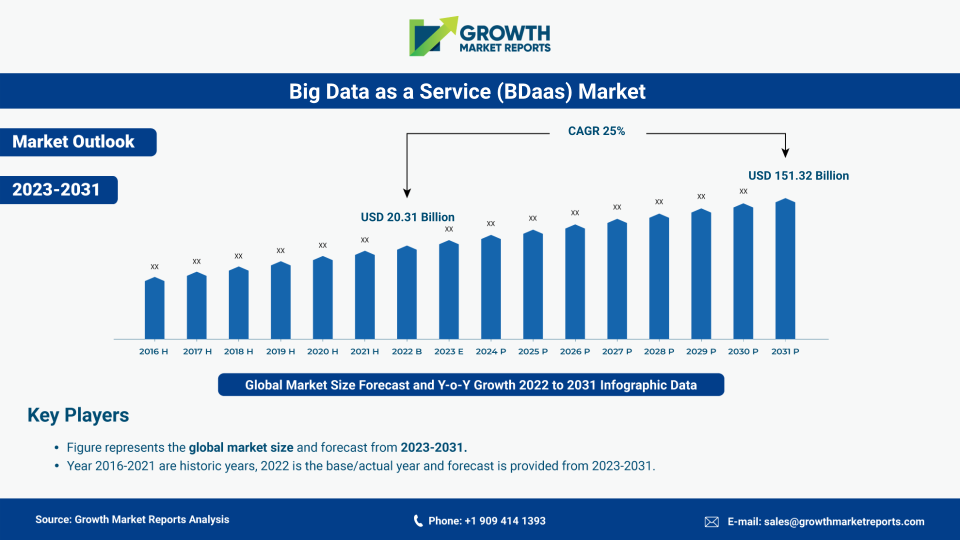
According to our latest research, the Big Data as a Service (BDaaS) market size reached USD 28.4 billion in 2024 globally, with a robust CAGR of 24.1% expected from 2025 to 2033. This dynamic growth trajectory is projected to drive the market to a staggering USD 189.1 billion by 2033. The primary growth factor fueling this expansion is the accelerating adoption of cloud-based analytics solutions across diverse industries, as organizations increasingly seek scalable, cost-effective, and agile data management platforms to unlock actionable insights from massive data volumes.

The exponential growth in data generation, driven by digital transformation initiatives, IoT proliferation, and the surge in connected devices, is a critical catalyst for the Big Data as a Service market. Enterprises are inundated with structured and unstructured data from a multitude of sources, necessitating advanced analytics platforms that can process, store, and analyze these vast datasets efficiently. BDaaS offers organizations the ability to leverage sophisticated big data technologies without the need for significant upfront investments in infrastructure or specialized talent. This democratization of big data analytics empowers businesses of all sizes to derive meaningful insights, optimize operations, and enhance customer engagement, further propelling market expansion.

Another significant growth factor is the increasing reliance on real-time data analytics for informed decision-making. In sectors such as BFSI, healthcare, retail, and manufacturing, the ability to analyze data in real-time is transforming business models, enabling predictive analytics, fraud detection, personalized marketing, and supply chain optimization. The BDaaS ecosystem, encompassing Hadoop-as-a-Service, Data-as-a-Service, and Data Analytics-as-a-Service, provides flexible deployment models and seamless integration with existing IT environments. This flexibility accelerates time-to-insight, reduces the burden on internal IT teams, and fosters innovation, making BDaaS a vital component of digital strategies across industries.

Furthermore, the rise of hybrid and multi-cloud strategies is amplifying the demand for BDaaS solutions. Organizations are increasingly adopting hybrid cloud architectures to balance performance, security, and compliance requirements. BDaaS providers offer robust solutions that support seamless data movement across public, private, and hybrid clouds, ensuring data sovereignty and regulatory compliance. This trend is particularly pronounced in highly regulated industries such as healthcare and banking, where data privacy and security are paramount. As organizations continue to navigate complex data landscapes, the adoption of BDaaS is expected to accelerate, supported by advancements in artificial intelligence, machine learning, and automation technologies.

Regionally, North America dominates the BDaaS market, accounting for the largest revenue share in 2024, followed by Europe and Asia Pacific. The strong presence of leading technology vendors, high digital maturity, and early adoption of cloud-based analytics solutions underpin North America's leadership. Meanwhile, Asia Pacific is witnessing the fastest growth, driven by rapid digitalization, burgeoning startup ecosystems, and government initiatives promoting data-driven innovation. Europe remains a key market, propelled by stringent data protection regulations and increasing investments in advanced analytics. Latin America and the Middle East & Africa are also emerging as promising markets, albeit at a relatively nascent stage, supported by growing digital infrastructure and rising awareness of the benefits of big data analytics.

Global Big Data As A Service (BDaas) Industry Outlook

Solution Type Analysis

The solution type segment of the Big Data as a Service market is categorized into Hadoop-as-a-Service, Data-as-a-Service, and Data Analytics-as-a-Service. Among these, Hadoop-as-a-Service (HaaS) has gained significant traction, especially among enterprises seeking scalable and cost-effective data processing capabilities. HaaS solutions eliminate the complexities associated with deploying and managing Hadoop clusters on-premises, enabling organizations to harness the power of distributed computing for large-scale data analytics. The growing need for real-time analytics, coupled with the surging adoption of cloud-native architectures, is driving the demand for HaaS, particularly in sectors such as finance, retail, and telecommunications.

Data-as-a-Service (DaaS) is emerging as a pivotal solution type, offering organizations seamless access to external and internal datasets on demand. DaaS platforms provide curated, high-quality data feeds that can be integrated with analytics tools to enhance decision-making, improve customer profiling, and support regulatory compliance. The increasing emphasis on data monetization, data sharing, and collaboration is fueling the adoption of DaaS solutions, particularly among enterprises looking to augment their data assets without investing in extensive data management infrastructure. This trend is further supported by the proliferation of APIs and the growing ecosystem of data marketplaces.

Data Analytics-as-a-Service (DAaaS) represents the fastest-growing segment within the BDaaS solution landscape. DAaaS platforms deliver advanced analytics capabilities, including machine learning, predictive modeling, and visualization, through cloud-based services. Organizations are leveraging DAaaS to accelerate time-to-insight, reduce operational complexity, and enable business users to perform sophisticated analyses without deep technical expertise. The integration of AI and automation within DAaaS solutions is enhancing their value proposition, enabling real-time anomaly detection, customer segmentation, and operational optimization. As businesses increasingly prioritize data-driven strategies, the demand for DAaaS is expected to outpace other solution types in the coming years.

The competitive landscape within the solution type segment is characterized by continuous innovation, with vendors focusing on enhancing scalability, security, and interoperability. Strategic partnerships, mergers, and acquisitions are commonplace, as providers seek to expand their solution portfolios and address evolving customer needs. As organizations continue to grapple with data complexity and the need for actionable insights, the solution type segment will remain a critical driver of growth and differentiation in the BDaaS market.

Report Scope

Attributes Details
Report Title Big Data As A Service (BDaas) Market Research Report 2033
By Solution Type Hadoop-as-a-Service, Data-as-a-Service, Data Analytics-as-a-Service
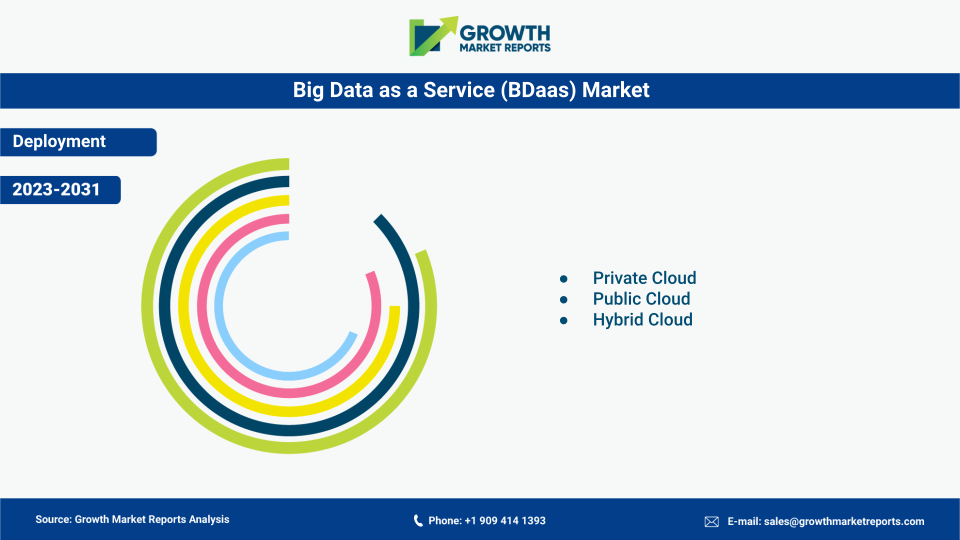
By Deployment Model Public Cloud, Private Cloud, Hybrid Cloud
By Organization Size Small and Medium Enterprises, Large Enterprises
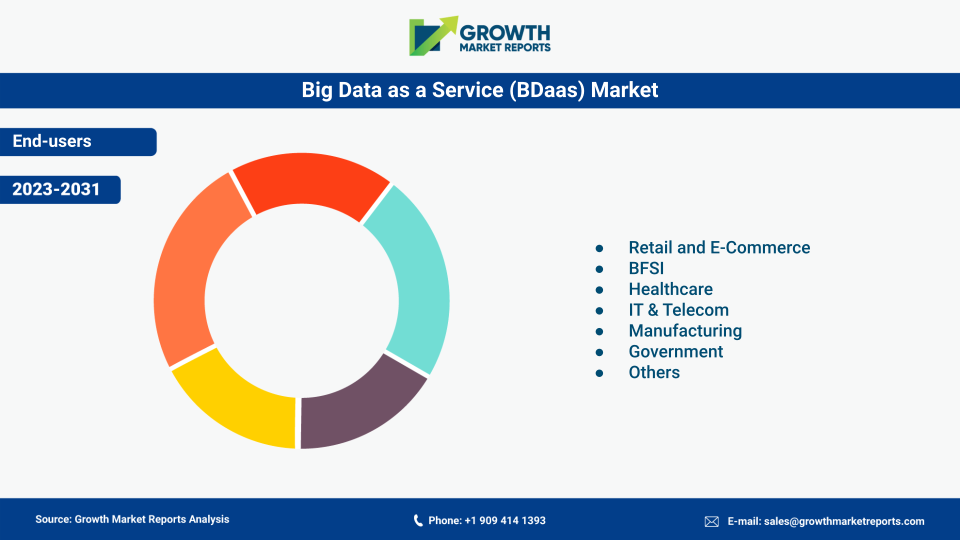
By End-User BFSI, Healthcare, Retail, IT and Telecommunications, Manufacturing, Government, Others
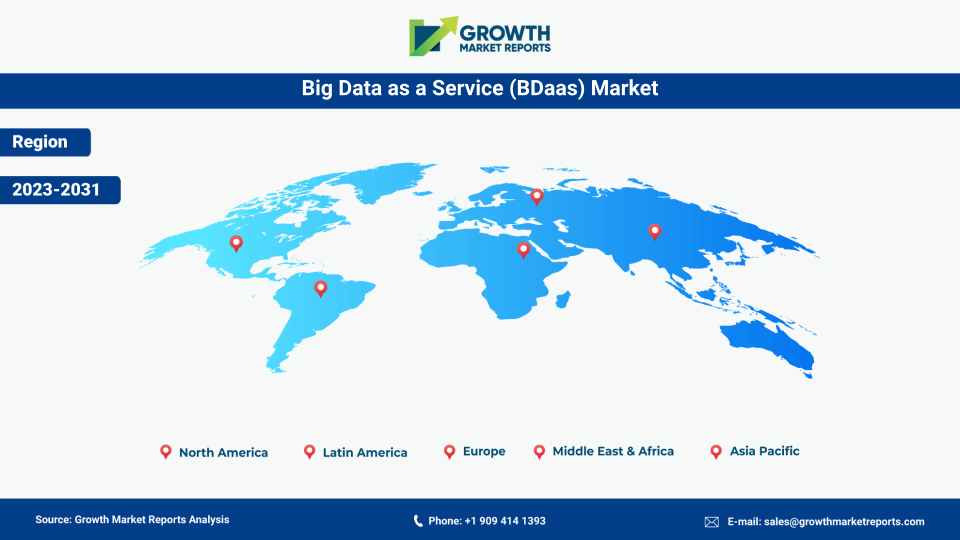
Regions Covered North America, Europe, APAC, Latin America, MEA
Base Year 2024
Historic Data 2018-2023
Forecast Period 2025-2033
Number of Pages 279
Number of Tables & Figures 306
Customization Available Yes, the report can be customized as per your need.

Deployment Model Analysis

The deployment model segment of the Big Data as a Service market is segmented into Public Cloud, Private Cloud, and Hybrid Cloud. Public cloud deployment continues to dominate the market, accounting for the largest share in 2024. The scalability, cost-efficiency, and ease of access offered by public cloud platforms make them the preferred choice for organizations seeking to deploy big data analytics solutions with minimal upfront investment. Leading public cloud providers offer robust security, compliance, and integration capabilities, further enhancing their appeal to enterprises across industries.

Private cloud deployment is gaining momentum, particularly among large enterprises and organizations operating in highly regulated sectors such as healthcare, banking, and government. The need for enhanced data security, privacy, and control is driving the adoption of private cloud BDaaS solutions, which offer dedicated infrastructure and tailored security protocols. Private cloud deployments enable organizations to comply with stringent regulatory requirements while maintaining the agility and scalability benefits of cloud-based analytics. This trend is expected to accelerate as data privacy regulations become more stringent and organizations seek to mitigate the risks associated with data breaches and cyber threats.

Hybrid cloud deployment is emerging as a strategic choice for organizations looking to balance the benefits of public and private clouds. Hybrid cloud BDaaS solutions enable seamless data movement, workload orchestration, and integration across multiple cloud environments, providing organizations with the flexibility to optimize performance, cost, and compliance. The growing complexity of enterprise IT landscapes, coupled with the need for data sovereignty and multi-cloud strategies, is fueling the adoption of hybrid cloud BDaaS. Vendors are investing in advanced orchestration, security, and interoperability features to address the unique challenges associated with hybrid deployments.

The deployment model segment is characterized by rapid innovation, with providers offering a range of deployment options to meet diverse customer requirements. The increasing adoption of containerization, serverless computing, and edge analytics is further expanding the deployment possibilities for BDaaS solutions. As organizations continue to embrace digital transformation and cloud-native architectures, the deployment model segment will play a pivotal role in shaping the future of the BDaaS market.

Organization Size Analysis

The organization size segment of the Big Data as a Service market comprises Small and Medium Enterprises (SMEs) and Large Enterprises. Large enterprises have traditionally been the primary adopters of BDaaS, leveraging these solutions to manage and analyze massive volumes of data generated across global operations. The scale, complexity, and diversity of data in large organizations necessitate advanced analytics platforms that can deliver real-time insights, enhance operational efficiency, and drive innovation. Large enterprises also have the resources to invest in customized BDaaS solutions that address specific industry and regulatory requirements.

Small and Medium Enterprises (SMEs) are increasingly recognizing the value of BDaaS in leveling the playing field with larger competitors. BDaaS platforms offer SMEs access to cutting-edge big data analytics capabilities without the need for significant capital investments or specialized IT expertise. The pay-as-you-go pricing models, scalability, and ease of deployment associated with BDaaS make it an attractive option for SMEs seeking to enhance customer engagement, optimize operations, and drive growth. As digital transformation initiatives gain momentum among SMEs, the adoption of BDaaS is expected to accelerate, contributing to market expansion.

The organization size segment is witnessing a shift towards democratization of big data analytics, with vendors offering tailored solutions and support services to address the unique needs of SMEs. Training, onboarding, and customer support are becoming key differentiators, as providers seek to lower the barriers to adoption and enable organizations of all sizes to unlock the value of their data. The rise of industry-specific BDaaS solutions is also supporting this trend, enabling organizations to address sector-specific challenges and opportunities.

Overall, the organization size segment is poised for robust growth, driven by increasing awareness of the benefits of data-driven decision-making, the proliferation of cloud-based analytics platforms, and the growing demand for agile, scalable, and cost-effective big data solutions. As BDaaS becomes more accessible and user-friendly, organizations of all sizes will be able to harness the power of big data to drive business success.

End-User Analysis

The end-user segment of the Big Data as a Service market encompasses a diverse range of industries, including BFSI, Healthcare, Retail, IT and Telecommunications, Manufacturing, Government, and Others. The BFSI sector leads the adoption of BDaaS, leveraging advanced analytics for fraud detection, risk management, customer segmentation, and regulatory compliance. The ability to process and analyze vast volumes of transactional and customer data in real-time is transforming banking and financial services, enabling personalized offerings and enhanced customer experiences.

Healthcare is another major end-user of BDaaS, driven by the need to manage and analyze large volumes of patient, clinical, and operational data. BDaaS platforms are supporting healthcare organizations in improving patient outcomes, optimizing resource allocation, and advancing research and development. The integration of AI and machine learning within BDaaS solutions is enabling predictive analytics, early disease detection, and personalized medicine, driving significant improvements in healthcare delivery and efficiency.

Retail and e-commerce companies are leveraging BDaaS to enhance customer engagement, optimize inventory management, and drive targeted marketing campaigns. The ability to analyze customer behavior, preferences, and purchasing patterns in real-time is enabling retailers to deliver personalized experiences, improve supply chain efficiency, and increase sales. The integration of BDaaS with IoT and mobile technologies is further enhancing the value proposition for retail organizations, enabling seamless omnichannel experiences.

IT and telecommunications companies are adopting BDaaS to manage and analyze massive volumes of network, customer, and operational data. BDaaS platforms are supporting network optimization, predictive maintenance, and customer churn analysis, enabling telecom operators to enhance service quality, reduce costs, and improve customer retention. Manufacturing and government sectors are also increasingly adopting BDaaS for process optimization, quality control, and public service delivery, further expanding the market's reach and impact.

Opportunities & Threats

The Big Data as a Service market presents a multitude of opportunities for growth and innovation. One of the most significant opportunities lies in the integration of artificial intelligence and machine learning capabilities within BDaaS platforms. As organizations seek to derive deeper insights from their data, the demand for advanced analytics, predictive modeling, and automation is expected to surge. Vendors that can offer seamless integration of AI and ML within their BDaaS solutions will be well-positioned to capture new market segments and drive customer value. Additionally, the rise of industry-specific BDaaS solutions presents a significant opportunity for providers to address unique challenges and requirements across sectors such as healthcare, retail, and manufacturing.

Another key opportunity is the expansion of BDaaS adoption among small and medium enterprises. As SMEs increasingly embrace digital transformation, the need for scalable, cost-effective, and user-friendly big data analytics platforms is growing. BDaaS providers that can offer tailored solutions, flexible pricing models, and robust support services will be able to tap into this underserved market segment. The proliferation of IoT devices, edge computing, and real-time analytics is also creating new opportunities for BDaaS providers to deliver innovative solutions that address emerging data management and analysis needs.

Despite the significant opportunities, the BDaaS market faces several threats and restrainers. Data privacy and security concerns remain a major challenge, particularly as organizations increasingly store and process sensitive data in cloud environments. Compliance with evolving data protection regulations, such as GDPR and CCPA, adds complexity and cost to BDaaS deployments. Additionally, the lack of skilled professionals and the complexity of integrating BDaaS solutions with legacy IT systems can hinder adoption. Providers must invest in robust security, compliance, and integration capabilities to address these challenges and ensure the continued growth of the BDaaS market.

Regional Outlook

North America remains the largest regional market for Big Data as a Service, with a market size of USD 11.4 billion in 2024, accounting for approximately 40% of the global market. The region's leadership is underpinned by the presence of major technology vendors, high digital maturity, and early adoption of cloud-based analytics solutions. The United States, in particular, is at the forefront of BDaaS innovation, driven by significant investments in digital infrastructure, research and development, and a robust startup ecosystem. The region is expected to maintain its dominance through 2033, supported by ongoing advancements in AI, machine learning, and data governance.

Europe is the second-largest market, with a market size of USD 7.1 billion in 2024. The region's growth is driven by stringent data protection regulations, such as GDPR, which are compelling organizations to adopt advanced data management and analytics solutions. Key markets include the United Kingdom, Germany, and France, where investments in digital transformation and big data initiatives are accelerating. The region is expected to exhibit a CAGR of 21.8% through 2033, driven by increasing demand for real-time analytics, data privacy, and regulatory compliance.

Asia Pacific is the fastest-growing region in the BDaaS market, with a market size of USD 6.2 billion in 2024. The region is witnessing rapid digitalization, a burgeoning startup ecosystem, and strong government support for data-driven innovation. China, India, Japan, and South Korea are leading the adoption of BDaaS, driven by the proliferation of IoT devices, mobile technologies, and cloud computing. The region is expected to outpace other markets in terms of growth, with a projected CAGR of 27.4% through 2033. Latin America and the Middle East & Africa are also emerging as promising markets, with increasing investments in digital infrastructure and rising awareness of the benefits of big data analytics.

Big Data As A Service (BDaas) Market Statistics

Competitor Outlook

The competitive landscape of the Big Data as a Service market is highly dynamic, characterized by intense competition, rapid technological advancements, and continuous innovation. Leading vendors are investing heavily in research and development to enhance the scalability, security, and interoperability of their BDaaS solutions. Strategic partnerships, mergers, and acquisitions are commonplace, as providers seek to expand their solution portfolios, enter new markets, and address evolving customer needs. The market is also witnessing the emergence of niche players offering specialized solutions tailored to specific industries, use cases, and deployment models.

Major players in the BDaaS market are focusing on integrating advanced analytics, artificial intelligence, and machine learning capabilities into their platforms to deliver greater value to customers. The ability to offer end-to-end solutions that encompass data ingestion, storage, processing, analysis, and visualization is becoming a key differentiator. Vendors are also prioritizing security, compliance, and data governance features to address the growing concerns around data privacy and regulatory compliance. The rise of multi-cloud and hybrid cloud deployments is prompting providers to invest in interoperability, orchestration, and integration capabilities, enabling seamless data movement and workload management across diverse cloud environments.

Customer support, training, and onboarding are emerging as critical success factors, particularly as BDaaS adoption expands among small and medium enterprises. Vendors that can offer robust support services, user-friendly interfaces, and industry-specific solutions are well-positioned to capture new market segments and drive customer loyalty. The market is also witnessing increased collaboration between technology providers, system integrators, and consulting firms, as organizations seek holistic solutions that address their unique business challenges and opportunities.

Some of the major companies operating in the Big Data as a Service market include IBM Corporation, Microsoft Corporation, Amazon Web Services (AWS), Google LLC, Oracle Corporation, SAP SE, Hewlett Packard Enterprise (HPE), Teradata Corporation, Cloudera Inc., and Salesforce.com Inc. IBM is known for its comprehensive BDaaS offerings, including advanced analytics, AI-driven insights, and industry-specific solutions. Microsoft Azure and AWS are leading in cloud-based BDaaS platforms, offering scalable, secure, and flexible analytics services. Google Cloud is gaining traction with its AI-powered data analytics and machine learning capabilities, while Oracle and SAP are focusing on integrating BDaaS with their enterprise software suites. HPE, Teradata, and Cloudera are also key players, offering robust big data platforms and services tailored to diverse industry needs.

In summary, the BDaaS market is characterized by intense competition, rapid innovation, and a strong focus on customer-centricity. As organizations continue to embrace data-driven strategies, the ability to deliver scalable, secure, and intelligent BDaaS solutions will be critical to success. The market is expected to witness continued consolidation, innovation, and expansion, driven by the relentless growth of data and the increasing demand for actionable insights across industries.

Key Players

  • IBM Corporation
  • Microsoft Corporation
  • Amazon Web Services (AWS)
  • Google LLC
  • Oracle Corporation
  • SAP SE
  • Hewlett Packard Enterprise (HPE)
  • Teradata Corporation
  • Cloudera, Inc.
  • Snowflake Inc.
  • SAS Institute Inc.
  • Salesforce, Inc.
  • Alibaba Cloud
  • Dell Technologies
  • Hitachi Vantara
  • Qubole, Inc.
  • Splunk Inc.
  • Informatica LLC
  • CenturyLink (Lumen Technologies)
  • Rackspace Technology
Big Data As A Service (BDaas) Market Overview

Segments

The Big Data As A Service (BDaas) market has been segmented on the basis of

Solution Type

  • Hadoop-as-a-Service
  • Data-as-a-Service
  • Data Analytics-as-a-Service

Deployment Model

  • Public Cloud
  • Private Cloud
  • Hybrid Cloud

Organization Size

  • Small and Medium Enterprises
  • Large Enterprises

End-User

  • BFSI
  • Healthcare
  • Retail
  • IT and Telecommunications
  • Manufacturing
  • Government
  • Others

Competitive Landscape

Key players competing in the global big data as a service market are Accenture PLC; Alteryx Ltd; Amazon Web Services Inc.; Google LLC; Guavus Inc.; Hewlett-Packard Company; IBM Corporation; Information Builders Inc.; Microsoft Corporation; Opera Solutions LLC; Oracle Corporation; SAP SE; SAS Institute Inc.; and Wipro Ltd.

Some of these players are adopting several market strategies including acquisitions, mergers, collaborations, partnerships, capacity expansion, and product launches to increase their market shares.
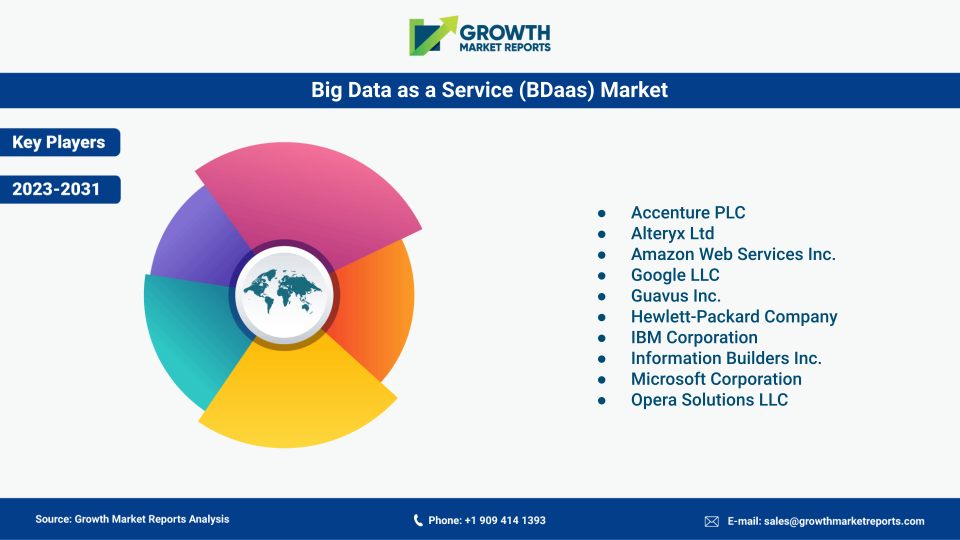

 

Big Data as a Service (BDaas) Market Key Players

Frequently Asked Questions

Key trends include the adoption of hybrid and multi-cloud strategies, integration of AI and automation, industry-specific BDaaS solutions, and increased focus on security, compliance, and interoperability. The market is also seeing more partnerships, mergers, and acquisitions as vendors expand their offerings.

SMEs are leveraging BDaaS to access advanced big data analytics without significant capital investment or specialized IT expertise. The pay-as-you-go pricing, scalability, and ease of deployment help SMEs enhance customer engagement, optimize operations, and compete with larger enterprises.

Major BDaaS providers include IBM Corporation, Microsoft Corporation, Amazon Web Services (AWS), Google LLC, Oracle Corporation, SAP SE, Hewlett Packard Enterprise (HPE), Teradata Corporation, Cloudera Inc., and Salesforce.com Inc., among others.

Opportunities include the integration of AI and machine learning, expansion among SMEs, and the rise of industry-specific solutions. Challenges include data privacy and security concerns, regulatory compliance, and the shortage of skilled professionals for BDaaS implementation.

North America leads the BDaaS market, accounting for about 40% of global revenue, followed by Europe and Asia Pacific. Asia Pacific is the fastest-growing region, driven by rapid digitalization and government support for data-driven innovation.

BDaaS can be deployed via public cloud, private cloud, or hybrid cloud models. Public cloud dominates due to scalability and cost efficiency, while private cloud is favored for enhanced security and compliance. Hybrid cloud is gaining popularity for its flexibility and ability to balance performance, cost, and regulatory needs.

The main solution types in the BDaaS market are Hadoop-as-a-Service (HaaS), Data-as-a-Service (DaaS), and Data Analytics-as-a-Service (DAaaS). Each offers unique capabilities for data processing, access, and advanced analytics.

Key industries adopting BDaaS include BFSI (banking, financial services, and insurance), healthcare, retail, IT and telecommunications, manufacturing, and government. These sectors use BDaaS for real-time analytics, fraud detection, predictive modeling, customer segmentation, and operational optimization.

The global BDaaS market reached USD 28.4 billion in 2024 and is expected to grow at a CAGR of 24.1% from 2025 to 2033, reaching USD 189.1 billion by 2033.

Big Data as a Service (BDaaS) refers to cloud-based platforms that provide scalable, cost-effective, and agile solutions for storing, processing, and analyzing large volumes of structured and unstructured data. BDaaS enables organizations to leverage advanced analytics, machine learning, and data management tools without investing heavily in infrastructure or specialized talent.

Table Of Content

Chapter 1 Executive Summary
Chapter 2 Assumptions and Acronyms Used
Chapter 3 Research Methodology
Chapter 4 Big Data As A Service (BDaas) Market Overview
   4.1 Introduction
      4.1.1 Market Taxonomy
      4.1.2 Market Definition
      4.1.3 Macro-Economic Factors Impacting the Market Growth
   4.2 Big Data As A Service (BDaas) Market Dynamics
      4.2.1 Market Drivers
      4.2.2 Market Restraints
      4.2.3 Market Opportunity
   4.3 Big Data As A Service (BDaas) Market - Supply Chain Analysis
      4.3.1 List of Key Suppliers
      4.3.2 List of Key Distributors
      4.3.3 List of Key Consumers
   4.4 Key Forces Shaping the Big Data As A Service (BDaas) Market
      4.4.1 Bargaining Power of Suppliers
      4.4.2 Bargaining Power of Buyers
      4.4.3 Threat of Substitution
      4.4.4 Threat of New Entrants
      4.4.5 Competitive Rivalry
   4.5 Global Big Data As A Service (BDaas) Market Size & Forecast, 2023-2032
      4.5.1 Big Data As A Service (BDaas) Market Size and Y-o-Y Growth
      4.5.2 Big Data As A Service (BDaas) Market Absolute $ Opportunity

Chapter 5 Global Big Data As A Service (BDaas) Market Analysis and Forecast By Solution Type
   5.1 Introduction
      5.1.1 Key Market Trends & Growth Opportunities By Solution Type
      5.1.2 Basis Point Share (BPS) Analysis By Solution Type
      5.1.3 Absolute $ Opportunity Assessment By Solution Type
   5.2 Big Data As A Service (BDaas) Market Size Forecast By Solution Type
      5.2.1 Hadoop-as-a-Service
      5.2.2 Data-as-a-Service
      5.2.3 Data Analytics-as-a-Service
   5.3 Market Attractiveness Analysis By Solution Type

Chapter 6 Global Big Data As A Service (BDaas) Market Analysis and Forecast By Deployment Model
   6.1 Introduction
      6.1.1 Key Market Trends & Growth Opportunities By Deployment Model
      6.1.2 Basis Point Share (BPS) Analysis By Deployment Model
      6.1.3 Absolute $ Opportunity Assessment By Deployment Model
   6.2 Big Data As A Service (BDaas) Market Size Forecast By Deployment Model
      6.2.1 Public Cloud
      6.2.2 Private Cloud
      6.2.3 Hybrid Cloud
   6.3 Market Attractiveness Analysis By Deployment Model

Chapter 7 Global Big Data As A Service (BDaas) Market Analysis and Forecast By Organization Size
   7.1 Introduction
      7.1.1 Key Market Trends & Growth Opportunities By Organization Size
      7.1.2 Basis Point Share (BPS) Analysis By Organization Size
      7.1.3 Absolute $ Opportunity Assessment By Organization Size
   7.2 Big Data As A Service (BDaas) Market Size Forecast By Organization Size
      7.2.1 Small and Medium Enterprises
      7.2.2 Large Enterprises
   7.3 Market Attractiveness Analysis By Organization Size

Chapter 8 Global Big Data As A Service (BDaas) Market Analysis and Forecast By End-User
   8.1 Introduction
      8.1.1 Key Market Trends & Growth Opportunities By End-User
      8.1.2 Basis Point Share (BPS) Analysis By End-User
      8.1.3 Absolute $ Opportunity Assessment By End-User
   8.2 Big Data As A Service (BDaas) Market Size Forecast By End-User
      8.2.1 BFSI
      8.2.2 Healthcare
      8.2.3 Retail
      8.2.4 IT and Telecommunications
      8.2.5 Manufacturing
      8.2.6 Government
      8.2.7 Others
   8.3 Market Attractiveness Analysis By End-User

Chapter 9 Global Big Data As A Service (BDaas) Market Analysis and Forecast by Region
   9.1 Introduction
      9.1.1 Key Market Trends & Growth Opportunities By Region
      9.1.2 Basis Point Share (BPS) Analysis By Region
      9.1.3 Absolute $ Opportunity Assessment By Region
   9.2 Big Data As A Service (BDaas) Market Size Forecast By Region
      9.2.1 North America
      9.2.2 Europe
      9.2.3 Asia Pacific
      9.2.4 Latin America
      9.2.5 Middle East & Africa (MEA)
   9.3 Market Attractiveness Analysis By Region

Chapter 10 Coronavirus Disease (COVID-19) Impact 
   10.1 Introduction 
   10.2 Current & Future Impact Analysis 
   10.3 Economic Impact Analysis 
   10.4 Government Policies 
   10.5 Investment Scenario

Chapter 11 North America Big Data As A Service (BDaas) Analysis and Forecast
   11.1 Introduction
   11.2 North America Big Data As A Service (BDaas) Market Size Forecast by Country
      11.2.1 U.S.
      11.2.2 Canada
   11.3 Basis Point Share (BPS) Analysis by Country
   11.4 Absolute $ Opportunity Assessment by Country
   11.5 Market Attractiveness Analysis by Country
   11.6 North America Big Data As A Service (BDaas) Market Size Forecast By Solution Type
      11.6.1 Hadoop-as-a-Service
      11.6.2 Data-as-a-Service
      11.6.3 Data Analytics-as-a-Service
   11.7 Basis Point Share (BPS) Analysis By Solution Type 
   11.8 Absolute $ Opportunity Assessment By Solution Type 
   11.9 Market Attractiveness Analysis By Solution Type
   11.10 North America Big Data As A Service (BDaas) Market Size Forecast By Deployment Model
      11.10.1 Public Cloud
      11.10.2 Private Cloud
      11.10.3 Hybrid Cloud
   11.11 Basis Point Share (BPS) Analysis By Deployment Model 
   11.12 Absolute $ Opportunity Assessment By Deployment Model 
   11.13 Market Attractiveness Analysis By Deployment Model
   11.14 North America Big Data As A Service (BDaas) Market Size Forecast By Organization Size
      11.14.1 Small and Medium Enterprises
      11.14.2 Large Enterprises
   11.15 Basis Point Share (BPS) Analysis By Organization Size 
   11.16 Absolute $ Opportunity Assessment By Organization Size 
   11.17 Market Attractiveness Analysis By Organization Size
   11.18 North America Big Data As A Service (BDaas) Market Size Forecast By End-User
      11.18.1 BFSI
      11.18.2 Healthcare
      11.18.3 Retail
      11.18.4 IT and Telecommunications
      11.18.5 Manufacturing
      11.18.6 Government
      11.18.7 Others
   11.19 Basis Point Share (BPS) Analysis By End-User 
   11.20 Absolute $ Opportunity Assessment By End-User 
   11.21 Market Attractiveness Analysis By End-User

Chapter 12 Europe Big Data As A Service (BDaas) Analysis and Forecast
   12.1 Introduction
   12.2 Europe Big Data As A Service (BDaas) Market Size Forecast by Country
      12.2.1 Germany
      12.2.2 France
      12.2.3 Italy
      12.2.4 U.K.
      12.2.5 Spain
      12.2.6 Russia
      12.2.7 Rest of Europe
   12.3 Basis Point Share (BPS) Analysis by Country
   12.4 Absolute $ Opportunity Assessment by Country
   12.5 Market Attractiveness Analysis by Country
   12.6 Europe Big Data As A Service (BDaas) Market Size Forecast By Solution Type
      12.6.1 Hadoop-as-a-Service
      12.6.2 Data-as-a-Service
      12.6.3 Data Analytics-as-a-Service
   12.7 Basis Point Share (BPS) Analysis By Solution Type 
   12.8 Absolute $ Opportunity Assessment By Solution Type 
   12.9 Market Attractiveness Analysis By Solution Type
   12.10 Europe Big Data As A Service (BDaas) Market Size Forecast By Deployment Model
      12.10.1 Public Cloud
      12.10.2 Private Cloud
      12.10.3 Hybrid Cloud
   12.11 Basis Point Share (BPS) Analysis By Deployment Model 
   12.12 Absolute $ Opportunity Assessment By Deployment Model 
   12.13 Market Attractiveness Analysis By Deployment Model
   12.14 Europe Big Data As A Service (BDaas) Market Size Forecast By Organization Size
      12.14.1 Small and Medium Enterprises
      12.14.2 Large Enterprises
   12.15 Basis Point Share (BPS) Analysis By Organization Size 
   12.16 Absolute $ Opportunity Assessment By Organization Size 
   12.17 Market Attractiveness Analysis By Organization Size
   12.18 Europe Big Data As A Service (BDaas) Market Size Forecast By End-User
      12.18.1 BFSI
      12.18.2 Healthcare
      12.18.3 Retail
      12.18.4 IT and Telecommunications
      12.18.5 Manufacturing
      12.18.6 Government
      12.18.7 Others
   12.19 Basis Point Share (BPS) Analysis By End-User 
   12.20 Absolute $ Opportunity Assessment By End-User 
   12.21 Market Attractiveness Analysis By End-User

Chapter 13 Asia Pacific Big Data As A Service (BDaas) Analysis and Forecast
   13.1 Introduction
   13.2 Asia Pacific Big Data As A Service (BDaas) Market Size Forecast by Country
      13.2.1 China
      13.2.2 Japan
      13.2.3 South Korea
      13.2.4 India
      13.2.5 Australia
      13.2.6 South East Asia (SEA)
      13.2.7 Rest of Asia Pacific (APAC)
   13.3 Basis Point Share (BPS) Analysis by Country
   13.4 Absolute $ Opportunity Assessment by Country
   13.5 Market Attractiveness Analysis by Country
   13.6 Asia Pacific Big Data As A Service (BDaas) Market Size Forecast By Solution Type
      13.6.1 Hadoop-as-a-Service
      13.6.2 Data-as-a-Service
      13.6.3 Data Analytics-as-a-Service
   13.7 Basis Point Share (BPS) Analysis By Solution Type 
   13.8 Absolute $ Opportunity Assessment By Solution Type 
   13.9 Market Attractiveness Analysis By Solution Type
   13.10 Asia Pacific Big Data As A Service (BDaas) Market Size Forecast By Deployment Model
      13.10.1 Public Cloud
      13.10.2 Private Cloud
      13.10.3 Hybrid Cloud
   13.11 Basis Point Share (BPS) Analysis By Deployment Model 
   13.12 Absolute $ Opportunity Assessment By Deployment Model 
   13.13 Market Attractiveness Analysis By Deployment Model
   13.14 Asia Pacific Big Data As A Service (BDaas) Market Size Forecast By Organization Size
      13.14.1 Small and Medium Enterprises
      13.14.2 Large Enterprises
   13.15 Basis Point Share (BPS) Analysis By Organization Size 
   13.16 Absolute $ Opportunity Assessment By Organization Size 
   13.17 Market Attractiveness Analysis By Organization Size
   13.18 Asia Pacific Big Data As A Service (BDaas) Market Size Forecast By End-User
      13.18.1 BFSI
      13.18.2 Healthcare
      13.18.3 Retail
      13.18.4 IT and Telecommunications
      13.18.5 Manufacturing
      13.18.6 Government
      13.18.7 Others
   13.19 Basis Point Share (BPS) Analysis By End-User 
   13.20 Absolute $ Opportunity Assessment By End-User 
   13.21 Market Attractiveness Analysis By End-User

Chapter 14 Latin America Big Data As A Service (BDaas) Analysis and Forecast
   14.1 Introduction
   14.2 Latin America Big Data As A Service (BDaas) Market Size Forecast by Country
      14.2.1 Brazil
      14.2.2 Mexico
      14.2.3 Rest of Latin America (LATAM)
   14.3 Basis Point Share (BPS) Analysis by Country
   14.4 Absolute $ Opportunity Assessment by Country
   14.5 Market Attractiveness Analysis by Country
   14.6 Latin America Big Data As A Service (BDaas) Market Size Forecast By Solution Type
      14.6.1 Hadoop-as-a-Service
      14.6.2 Data-as-a-Service
      14.6.3 Data Analytics-as-a-Service
   14.7 Basis Point Share (BPS) Analysis By Solution Type 
   14.8 Absolute $ Opportunity Assessment By Solution Type 
   14.9 Market Attractiveness Analysis By Solution Type
   14.10 Latin America Big Data As A Service (BDaas) Market Size Forecast By Deployment Model
      14.10.1 Public Cloud
      14.10.2 Private Cloud
      14.10.3 Hybrid Cloud
   14.11 Basis Point Share (BPS) Analysis By Deployment Model 
   14.12 Absolute $ Opportunity Assessment By Deployment Model 
   14.13 Market Attractiveness Analysis By Deployment Model
   14.14 Latin America Big Data As A Service (BDaas) Market Size Forecast By Organization Size
      14.14.1 Small and Medium Enterprises
      14.14.2 Large Enterprises
   14.15 Basis Point Share (BPS) Analysis By Organization Size 
   14.16 Absolute $ Opportunity Assessment By Organization Size 
   14.17 Market Attractiveness Analysis By Organization Size
   14.18 Latin America Big Data As A Service (BDaas) Market Size Forecast By End-User
      14.18.1 BFSI
      14.18.2 Healthcare
      14.18.3 Retail
      14.18.4 IT and Telecommunications
      14.18.5 Manufacturing
      14.18.6 Government
      14.18.7 Others
   14.19 Basis Point Share (BPS) Analysis By End-User 
   14.20 Absolute $ Opportunity Assessment By End-User 
   14.21 Market Attractiveness Analysis By End-User

Chapter 15 Middle East & Africa (MEA) Big Data As A Service (BDaas) Analysis and Forecast
   15.1 Introduction
   15.2 Middle East & Africa (MEA) Big Data As A Service (BDaas) Market Size Forecast by Country
      15.2.1 Saudi Arabia
      15.2.2 South Africa
      15.2.3 UAE
      15.2.4 Rest of Middle East & Africa (MEA)
   15.3 Basis Point Share (BPS) Analysis by Country
   15.4 Absolute $ Opportunity Assessment by Country
   15.5 Market Attractiveness Analysis by Country
   15.6 Middle East & Africa (MEA) Big Data As A Service (BDaas) Market Size Forecast By Solution Type
      15.6.1 Hadoop-as-a-Service
      15.6.2 Data-as-a-Service
      15.6.3 Data Analytics-as-a-Service
   15.7 Basis Point Share (BPS) Analysis By Solution Type 
   15.8 Absolute $ Opportunity Assessment By Solution Type 
   15.9 Market Attractiveness Analysis By Solution Type
   15.10 Middle East & Africa (MEA) Big Data As A Service (BDaas) Market Size Forecast By Deployment Model
      15.10.1 Public Cloud
      15.10.2 Private Cloud
      15.10.3 Hybrid Cloud
   15.11 Basis Point Share (BPS) Analysis By Deployment Model 
   15.12 Absolute $ Opportunity Assessment By Deployment Model 
   15.13 Market Attractiveness Analysis By Deployment Model
   15.14 Middle East & Africa (MEA) Big Data As A Service (BDaas) Market Size Forecast By Organization Size
      15.14.1 Small and Medium Enterprises
      15.14.2 Large Enterprises
   15.15 Basis Point Share (BPS) Analysis By Organization Size 
   15.16 Absolute $ Opportunity Assessment By Organization Size 
   15.17 Market Attractiveness Analysis By Organization Size
   15.18 Middle East & Africa (MEA) Big Data As A Service (BDaas) Market Size Forecast By End-User
      15.18.1 BFSI
      15.18.2 Healthcare
      15.18.3 Retail
      15.18.4 IT and Telecommunications
      15.18.5 Manufacturing
      15.18.6 Government
      15.18.7 Others
   15.19 Basis Point Share (BPS) Analysis By End-User 
   15.20 Absolute $ Opportunity Assessment By End-User 
   15.21 Market Attractiveness Analysis By End-User

Chapter 16 Competition Landscape 
   16.1 Big Data As A Service (BDaas) Market: Competitive Dashboard
   16.2 Global Big Data As A Service (BDaas) Market: Market Share Analysis, 2023
   16.3 Company Profiles (Details – Overview, Financials, Developments, Strategy) 
      16.3.1 IBM Corporation
Microsoft Corporation
Amazon Web Services (AWS)
Google LLC
Oracle Corporation
SAP SE
Hewlett Packard Enterprise (HPE)
Teradata Corporation
Cloudera, Inc.
Snowflake Inc.
SAS Institute Inc.
Salesforce, Inc.
Alibaba Cloud
Dell Technologies
Hitachi Vantara
Qubole, Inc.
Splunk Inc.
Informatica LLC
CenturyLink (Lumen Technologies)
Rackspace Technology

Methodology

Our Clients

General Electric
Honda Motor Co. Ltd.
Nestle SA
Siemens Healthcare
Microsoft
Dassault Aviation
Pfizer
Deloitte