Segments - by Component (Solutions, Services), by Deployment Mode (On-Premises, Cloud), by Organization Size (Small and Medium Enterprises, Large Enterprises), by Business Function (Marketing, Sales, Operations, Finance, Human Resources, Others), by Industry Vertical (BFSI, Healthcare, Retail and E-commerce, Manufacturing, IT and Telecommunications, Government, Media and Entertainment, Others)
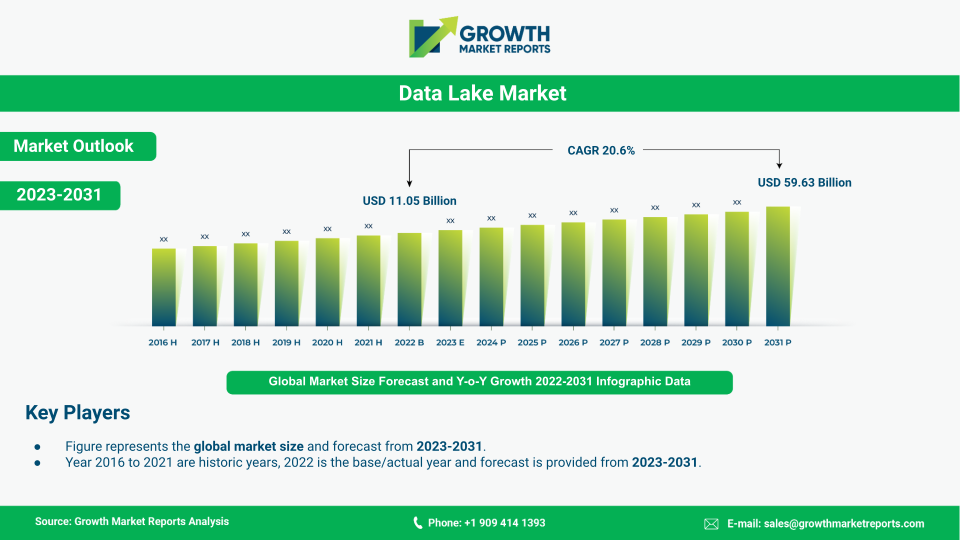
According to our latest research, the global data lake market size reached USD 15.7 billion in 2024, driven by the exponential growth in data generation across industries and the increasing need for scalable storage solutions. The market is expected to grow at a robust CAGR of 21.6% from 2025 to 2033, projecting a value of USD 110.9 billion by 2033. This remarkable expansion is primarily attributed to the rising adoption of advanced analytics, artificial intelligence, and machine learning, which require efficient management of structured and unstructured data at scale.
One of the key growth factors propelling the data lake market is the surge in digital transformation initiatives across various sectors. Organizations are increasingly seeking to leverage big data analytics to gain actionable insights and enhance decision-making processes. Data lakes provide a flexible and cost-effective platform to store, process, and analyze vast amounts of data from disparate sources, enabling businesses to extract meaningful patterns and trends. The integration of data lakes with cloud computing platforms further accelerates their adoption, as it allows for scalability, agility, and reduced infrastructure costs. Additionally, the proliferation of Internet of Things (IoT) devices and the need for real-time analytics are fueling the demand for robust data management solutions, positioning data lakes as a strategic asset for enterprises aiming to stay competitive in the digital era.
Another significant driver for the data lake market is the increasing emphasis on regulatory compliance and data governance. With the introduction of stringent data privacy regulations such as GDPR, CCPA, and HIPAA, organizations are compelled to implement robust data management frameworks to ensure compliance and mitigate potential risks. Data lakes facilitate centralized data storage and improved data lineage, making it easier for enterprises to monitor, audit, and control access to sensitive information. Moreover, the ability to integrate data lakes with advanced security and governance tools enhances transparency and accountability, thereby fostering trust among stakeholders and customers. This growing focus on data governance is expected to further accelerate the adoption of data lake solutions across highly regulated industries such as banking, healthcare, and government.
The rapid evolution of artificial intelligence and machine learning technologies is also playing a pivotal role in shaping the data lake market. As organizations strive to harness the power of predictive analytics and automation, data lakes offer a robust foundation for training and deploying AI/ML models on large-scale datasets. The seamless integration of data lakes with advanced analytics platforms enables data scientists and analysts to experiment with diverse data types, uncover hidden insights, and drive innovation. Furthermore, the emergence of cloud-native data lake architectures and serverless computing models is reducing the complexity and operational overhead associated with traditional data warehousing, making data lakes more accessible to a wider range of businesses, including small and medium enterprises.
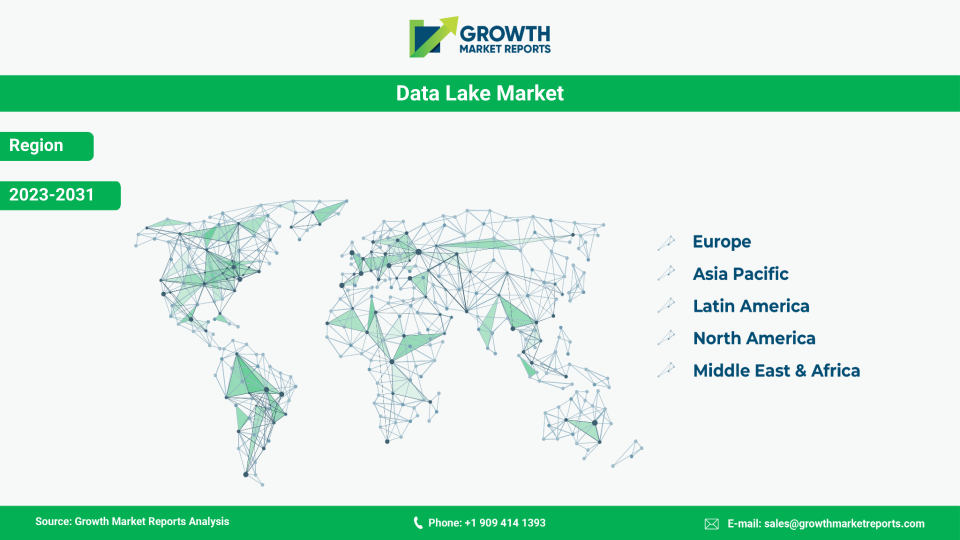
Regionally, North America continues to dominate the data lake market, accounting for the largest share in 2024, followed by Europe and Asia Pacific. The presence of leading technology vendors, early adoption of cloud-based solutions, and a mature digital ecosystem have positioned North America at the forefront of data lake adoption. However, Asia Pacific is witnessing the fastest growth, driven by rapid digitalization, increasing investments in cloud infrastructure, and the expansion of e-commerce and fintech sectors. Europe, with its strong regulatory framework and focus on data privacy, is also emerging as a significant market for data lake solutions. Meanwhile, Latin America and the Middle East & Africa are gradually embracing data lake technologies, supported by government initiatives and growing awareness of data-driven business strategies.
Data Lake as a Service (DLaaS) is emerging as a transformative approach in the data management landscape, offering organizations the ability to leverage data lakes without the complexities of managing the underlying infrastructure. By adopting DLaaS, enterprises can focus on deriving insights from their data while the service provider handles the scalability, security, and maintenance aspects. This model is particularly appealing to businesses looking to accelerate their digital transformation efforts, as it provides a cost-effective and agile solution for storing and analyzing large volumes of data. The flexibility of DLaaS allows companies to scale their data operations seamlessly, adapting to changing business needs and data growth without significant upfront investments. As a result, DLaaS is gaining traction across various industries, enabling organizations to harness the power of big data and advanced analytics with minimal operational overhead.
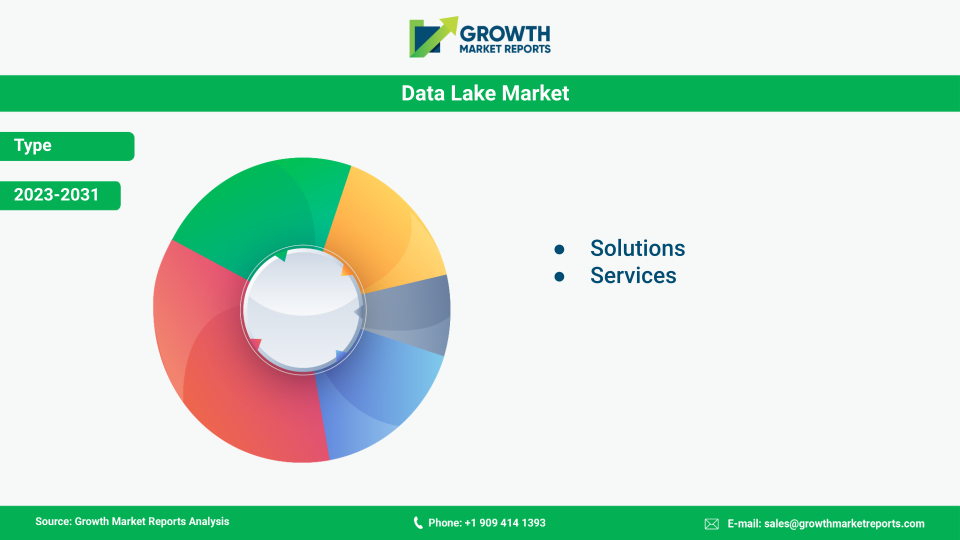
The data lake market by component is segmented into solutions and services, each playing a critical role in the overall ecosystem. Data lake solutions encompass a range of software platforms and tools designed to facilitate the storage, management, and analysis of large volumes of structured and unstructured data. These solutions are increasingly incorporating advanced features such as data cataloging, metadata management, and AI-driven analytics, enabling organizations to derive actionable insights more efficiently. The demand for comprehensive data lake solutions is being driven by the need for scalable and flexible data architectures that can support diverse business requirements, from real-time analytics to long-term data archiving.
On the services front, the data lake market includes consulting, implementation, support, and maintenance services, which are essential for the successful deployment and operation of data lake platforms. As organizations navigate the complexities of integrating data lakes with existing IT infrastructure, the demand for specialized services is on the rise. Service providers offer expertise in data migration, system integration, security configuration, and performance optimization, ensuring that data lake deployments align with organizational goals and regulatory requirements. The growing trend of managed services is also gaining traction, as enterprises seek to offload the operational burden and focus on core business activities.
The integration of artificial intelligence and machine learning capabilities within data lake solutions is transforming the way organizations manage and analyze data. Modern data lake platforms are equipped with built-in analytics engines, machine learning libraries, and visualization tools, empowering users to perform advanced analytics without the need for complex data movements. This convergence of data management and analytics is streamlining workflows, reducing time-to-insight, and driving greater business value. As a result, vendors are continuously innovating to enhance the functionality and scalability of their data lake offerings, catering to the evolving needs of enterprises across various industry verticals.
Furthermore, the adoption of cloud-based data lake solutions is reshaping the competitive landscape, offering unparalleled scalability, flexibility, and cost efficiency. Cloud providers are investing heavily in developing robust data lake platforms that support seamless integration with a wide range of data sources, analytics tools, and third-party applications. This shift towards cloud-native architectures is enabling organizations to accelerate their digital transformation journeys, reduce infrastructure costs, and improve operational agility. The growing preference for cloud-based solutions is expected to drive significant growth in the data lake market, particularly among small and medium enterprises seeking to leverage advanced analytics without the need for substantial upfront investments.
| Attributes | Details |
| Report Title | Data Lake Market Research Report 2033 |
| By Component | Solutions, Services |
| By Deployment Mode | On-Premises, Cloud |
| By Organization Size | Small and Medium Enterprises, Large Enterprises |
| By Business Function | Marketing, Sales, Operations, Finance, Human Resources, Others |
| By Industry Vertical | BFSI, Healthcare, Retail and E-commerce, Manufacturing, IT and Telecommunications, Government, Media and Entertainment, Others |
| Regions Covered | North America, Europe, APAC, Latin America, MEA |
| Base Year | 2024 |
| Historic Data | 2018-2023 |
| Forecast Period | 2025-2033 |
| Number of Pages | 260 |
| Number of Tables & Figures | 359 |
| Customization Available | Yes, the report can be customized as per your need. |
The data lake market is segmented by deployment mode into on-premises and cloud, each offering distinct advantages and catering to different organizational needs. On-premises deployment remains a preferred choice for organizations with stringent data security and compliance requirements, particularly in highly regulated industries such as banking, healthcare, and government. By maintaining complete control over data storage and processing infrastructure, enterprises can ensure compliance with internal policies and external regulations, while also minimizing the risk of data breaches. However, on-premises deployments often involve significant upfront capital investments and ongoing maintenance costs, which can be a barrier for smaller organizations.
Cloud deployment, on the other hand, is experiencing rapid adoption due to its inherent scalability, flexibility, and cost-effectiveness. Cloud-based data lakes enable organizations to store and process massive volumes of data without the need for substantial infrastructure investments. Leading cloud providers offer a range of data lake services that support seamless integration with analytics, machine learning, and business intelligence tools, empowering organizations to derive insights from their data in real time. The pay-as-you-go pricing model further enhances cost efficiency, making cloud-based data lakes an attractive option for businesses of all sizes.
Hybrid deployment models are also gaining traction in the data lake market, allowing organizations to leverage the benefits of both on-premises and cloud environments. By adopting a hybrid approach, enterprises can retain sensitive data on-premises while leveraging the scalability and advanced analytics capabilities of the cloud for less sensitive workloads. This flexibility is particularly valuable for organizations operating in regions with strict data residency requirements or those undergoing gradual digital transformation. Hybrid deployments also facilitate seamless data integration and interoperability, enabling organizations to optimize their data management strategies based on specific business needs.
The choice of deployment mode is influenced by several factors, including data security, regulatory compliance, scalability requirements, and total cost of ownership. As organizations continue to prioritize agility and innovation, the shift towards cloud-based and hybrid data lake deployments is expected to accelerate, driving significant growth in the market. Vendors are responding to this trend by enhancing their cloud offerings, investing in security and compliance features, and providing seamless migration tools to support organizations in their digital transformation journeys.
The data lake market is segmented by organization size into small and medium enterprises (SMEs) and large enterprises, each exhibiting unique adoption patterns and requirements. Large enterprises have traditionally been the primary adopters of data lake solutions, driven by their need to manage and analyze vast amounts of data generated from multiple business units, customer interactions, and operational processes. These organizations possess the resources and technical expertise required to implement and maintain complex data lake architectures, enabling them to derive strategic insights and drive competitive advantage. The ability to integrate data lakes with existing enterprise systems, such as ERP and CRM platforms, further enhances their value proposition for large organizations.
Small and medium enterprises are increasingly recognizing the benefits of data lake solutions, particularly as cloud-based offerings become more accessible and affordable. SMEs are leveraging data lakes to gain a deeper understanding of customer behavior, optimize business operations, and enhance decision-making processes. The scalability and flexibility of cloud-based data lakes enable SMEs to start small and expand their data management capabilities as their business grows, without the need for significant upfront investments. This democratization of data analytics is empowering SMEs to compete more effectively with larger organizations, driving innovation and growth across various industry verticals.
The adoption of data lake solutions by SMEs is further supported by the availability of managed services and user-friendly analytics tools that simplify deployment and operation. Service providers are offering tailored solutions that address the specific needs and constraints of smaller organizations, including limited IT resources and budget constraints. By partnering with managed service providers, SMEs can focus on core business activities while leveraging the expertise and technology required to harness the full potential of their data assets. This trend is expected to drive significant growth in the SME segment of the data lake market over the forecast period.
Despite the growing adoption among SMEs, large enterprises continue to account for a significant share of the data lake market, owing to their greater data volumes, complex business requirements, and higher IT budgets. However, the gap between large enterprises and SMEs is narrowing as cloud-based and managed data lake solutions become more prevalent. Vendors are increasingly focusing on developing scalable, cost-effective, and easy-to-use solutions that cater to the diverse needs of organizations of all sizes, further fueling market growth and innovation.
The data lake market by business function is segmented into marketing, sales, operations, finance, human resources, and others, reflecting the diverse applications of data lakes across organizational departments. In marketing, data lakes are being leveraged to aggregate and analyze customer data from multiple sources, enabling organizations to gain a 360-degree view of customer behavior, preferences, and engagement. This holistic approach to data management empowers marketers to develop targeted campaigns, personalize customer experiences, and optimize marketing spend, driving higher ROI and customer satisfaction.
In sales, data lakes facilitate the integration and analysis of sales data from various channels, providing valuable insights into sales performance, customer acquisition, and revenue generation. By consolidating data from CRM systems, e-commerce platforms, and customer interactions, organizations can identify sales trends, forecast demand, and develop effective sales strategies. The ability to perform advanced analytics on large-scale sales data enables organizations to uncover hidden opportunities, improve sales productivity, and enhance customer relationship management.
Operations is another critical business function where data lakes are making a significant impact. By centralizing operational data from supply chain, logistics, production, and inventory systems, organizations can optimize processes, reduce costs, and improve efficiency. Data lakes enable real-time monitoring and analysis of operational metrics, facilitating proactive decision-making and rapid response to changing business conditions. This operational agility is particularly valuable in industries such as manufacturing, retail, and logistics, where timely insights can drive significant competitive advantage.
In finance, data lakes support the aggregation and analysis of financial data from multiple sources, enabling organizations to enhance financial planning, risk management, and regulatory compliance. By integrating data from ERP systems, accounting platforms, and external market sources, financial analysts can develop more accurate forecasts, identify cost-saving opportunities, and ensure compliance with financial regulations. The ability to perform advanced analytics on financial data also supports fraud detection, credit risk assessment, and investment decision-making, driving greater financial resilience and performance.
Human resources departments are leveraging data lakes to centralize and analyze employee data, supporting talent management, workforce planning, and employee engagement initiatives. By integrating data from HR systems, payroll platforms, and employee surveys, organizations can gain insights into workforce trends, identify skill gaps, and develop effective HR strategies. The ability to perform predictive analytics on HR data enables organizations to anticipate workforce needs, improve employee retention, and foster a culture of continuous improvement.
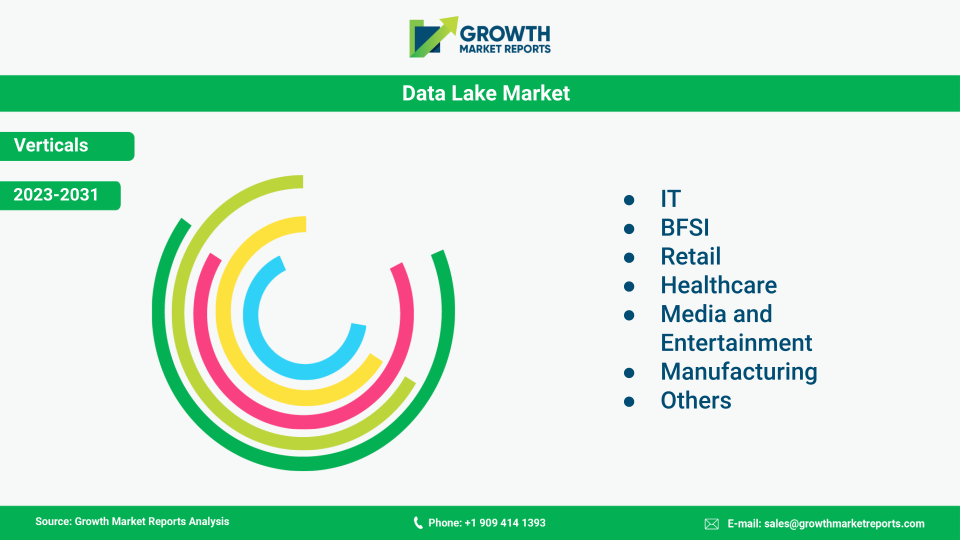
The data lake market serves a wide range of industry verticals, including BFSI, healthcare, retail and e-commerce, manufacturing, IT and telecommunications, government, media and entertainment, and others. In the BFSI sector, data lakes are being adopted to manage and analyze vast amounts of financial data, support regulatory compliance, enhance risk management, and improve customer experiences. By integrating data from multiple banking systems, transaction records, and customer interactions, financial institutions can develop more accurate risk models, detect fraudulent activities, and offer personalized financial products.
In healthcare, data lakes are revolutionizing the way organizations manage and analyze patient data, medical records, and clinical research. By centralizing data from electronic health records (EHR), medical imaging systems, and wearable devices, healthcare providers can gain a comprehensive view of patient health, improve diagnosis accuracy, and develop personalized treatment plans. The ability to perform advanced analytics on healthcare data also supports medical research, population health management, and regulatory reporting, driving better patient outcomes and operational efficiency.
Retail and e-commerce companies are leveraging data lakes to gain deeper insights into customer behavior, optimize inventory management, and enhance supply chain operations. By integrating data from point-of-sale systems, online transactions, and customer feedback, retailers can develop targeted marketing strategies, improve demand forecasting, and enhance the overall customer experience. The ability to perform real-time analytics on retail data enables organizations to respond quickly to market trends, optimize pricing strategies, and drive higher sales conversion rates.
Manufacturing organizations are adopting data lake solutions to optimize production processes, improve quality control, and enhance supply chain visibility. By centralizing data from sensors, machines, and production systems, manufacturers can monitor equipment performance, predict maintenance needs, and reduce downtime. The integration of data lakes with IoT and industrial automation technologies is enabling manufacturers to implement predictive maintenance, optimize resource utilization, and drive operational excellence.
Other industry verticals, such as IT and telecommunications, government, and media and entertainment, are also embracing data lake technologies to support digital transformation, enhance service delivery, and improve decision-making. In IT and telecommunications, data lakes enable organizations to manage network data, optimize service delivery, and develop innovative digital services. Government agencies are leveraging data lakes to improve public service delivery, enhance transparency, and support data-driven policymaking. In media and entertainment, data lakes facilitate the analysis of audience data, content performance, and advertising effectiveness, driving greater engagement and revenue growth.
The data lake market presents significant opportunities for growth and innovation, particularly as organizations continue to prioritize digital transformation and data-driven decision-making. The proliferation of IoT devices, social media platforms, and digital channels is generating unprecedented volumes of data, creating a pressing need for scalable and flexible data management solutions. Data lakes offer a cost-effective platform for storing and analyzing diverse data types, enabling organizations to uncover valuable insights, drive operational efficiency, and develop innovative products and services. The integration of data lakes with advanced analytics, machine learning, and artificial intelligence is further expanding their potential, empowering organizations to automate processes, enhance customer experiences, and gain a competitive edge in the market.
Another major opportunity lies in the growing adoption of cloud-based data lake solutions, which are democratizing access to advanced analytics and data management capabilities. Cloud providers are continuously enhancing their offerings, providing seamless integration with a wide range of data sources, analytics tools, and third-party applications. This shift towards cloud-native architectures is enabling organizations of all sizes to accelerate their digital transformation journeys, reduce infrastructure costs, and improve operational agility. The increasing focus on data governance, security, and compliance is also driving demand for data lake solutions that offer robust data management and audit capabilities, particularly in highly regulated industries such as BFSI, healthcare, and government.
Despite the numerous opportunities, the data lake market faces several challenges and restrainers that could impact its growth trajectory. One of the primary concerns is the complexity associated with data integration, management, and governance, particularly as organizations continue to accumulate vast amounts of structured and unstructured data from disparate sources. Ensuring data quality, consistency, and security across large-scale data lake environments can be a daunting task, requiring significant investments in technology, expertise, and process optimization. Additionally, the risk of data silos, unauthorized access, and compliance violations remains a critical challenge, particularly for organizations operating in highly regulated sectors. Addressing these challenges will require ongoing innovation, collaboration, and investment in advanced data management and security solutions.
North America remains the largest regional market for data lake solutions, accounting for approximately USD 6.5 billion of the global market in 2024. The regionÂ’s leadership is underpinned by the early adoption of cloud technologies, a mature digital infrastructure, and the presence of leading technology vendors such as Amazon Web Services, Microsoft, and Google. Organizations across industries, including BFSI, healthcare, and retail, are leveraging data lakes to drive innovation, enhance operational efficiency, and meet regulatory requirements. The strong focus on data-driven decision-making, coupled with significant investments in artificial intelligence and machine learning, is expected to sustain North AmericaÂ’s dominance in the data lake market over the forecast period.
Europe represents the second-largest market, with a value of USD 3.7 billion in 2024, driven by stringent data privacy regulations, a strong emphasis on data governance, and the growing adoption of cloud-based solutions. Countries such as the United Kingdom, Germany, and France are at the forefront of data lake adoption, particularly in sectors such as finance, healthcare, and government. The introduction of the General Data Protection Regulation (GDPR) has prompted organizations to invest in robust data management frameworks, further accelerating the adoption of data lake technologies. The European data lake market is expected to grow at a steady CAGR of 20.3% through 2033, supported by ongoing digital transformation initiatives and increasing demand for advanced analytics.
Asia Pacific is emerging as the fastest-growing region in the data lake market, with a market size of USD 2.9 billion in 2024 and a projected CAGR of 25.1% through 2033. The regionÂ’s rapid growth is fueled by widespread digitalization, increasing investments in cloud infrastructure, and the expansion of e-commerce, fintech, and manufacturing sectors. Countries such as China, India, and Japan are witnessing a surge in data generation, prompting organizations to adopt scalable and flexible data management solutions. Government initiatives aimed at promoting digital transformation, coupled with the growing availability of cloud-based data lake platforms, are expected to drive significant growth in the Asia Pacific market over the forecast period. Latin America and the Middle East & Africa are also experiencing gradual adoption of data lake technologies, supported by increasing awareness of data-driven business strategies and investments in digital infrastructure.
The data lake market is characterized by intense competition, with a mix of established technology giants, innovative startups, and specialized service providers vying for market share. Leading vendors are continuously investing in research and development to enhance the functionality, scalability, and security of their data lake offerings. The competitive landscape is shaped by the rapid evolution of cloud technologies, the integration of advanced analytics and machine learning capabilities, and the growing demand for managed services. Vendors are differentiating themselves through the development of user-friendly platforms, seamless integration with third-party tools, and robust data governance features, catering to the diverse needs of organizations across various industry verticals.
Strategic partnerships, mergers and acquisitions, and product innovations are common strategies employed by key players in the data lake market to expand their market presence and strengthen their competitive position. Cloud service providers such as Amazon Web Services, Microsoft Azure, and Google Cloud Platform are leading the market with comprehensive data lake solutions that offer seamless integration with a wide range of analytics, machine learning, and business intelligence tools. These vendors are leveraging their extensive cloud infrastructure, global reach, and strong partner ecosystems to capture a significant share of the market, particularly among large enterprises and organizations undergoing digital transformation.
In addition to global technology giants, a growing number of specialized vendors and startups are entering the data lake market, offering innovative solutions tailored to specific industry verticals and business requirements. These companies are focusing on developing advanced data management, analytics, and security features that address the unique challenges faced by organizations in sectors such as healthcare, finance, and government. The increasing demand for industry-specific solutions is driving vendor specialization and fostering a dynamic and competitive market environment.
Major companies operating in the data lake market include Amazon Web Services (AWS), Microsoft Corporation, Google LLC, IBM Corporation, Oracle Corporation, Snowflake Inc., Cloudera Inc., Teradata Corporation, Informatica, and SAP SE. AWS leads the market with its Amazon S3-based data lake platform, offering robust scalability, security, and integration with a wide range of analytics services. Microsoft Azure Data Lake provides advanced analytics capabilities, seamless integration with Azure services, and strong compliance features, making it a preferred choice for enterprises with complex data management requirements. Google Cloud Platform offers a fully managed data lake solution with powerful analytics and machine learning integration, catering to organizations seeking agility and innovation.
IBM and Oracle are also prominent players, leveraging their extensive experience in enterprise data management to offer comprehensive data lake solutions that support hybrid and multi-cloud deployments. Snowflake and Cloudera are gaining traction with their cloud-native data lake platforms, focusing on scalability, performance, and ease of use. Teradata, Informatica, and SAP SE are expanding their data lake offerings through strategic partnerships and product innovations, addressing the evolving needs of organizations in various industry verticals. The competitive landscape is expected to remain dynamic, with ongoing innovation, strategic collaborations, and market consolidation shaping the future of the data lake market.
The Data Lake market has been segmented on the basis of
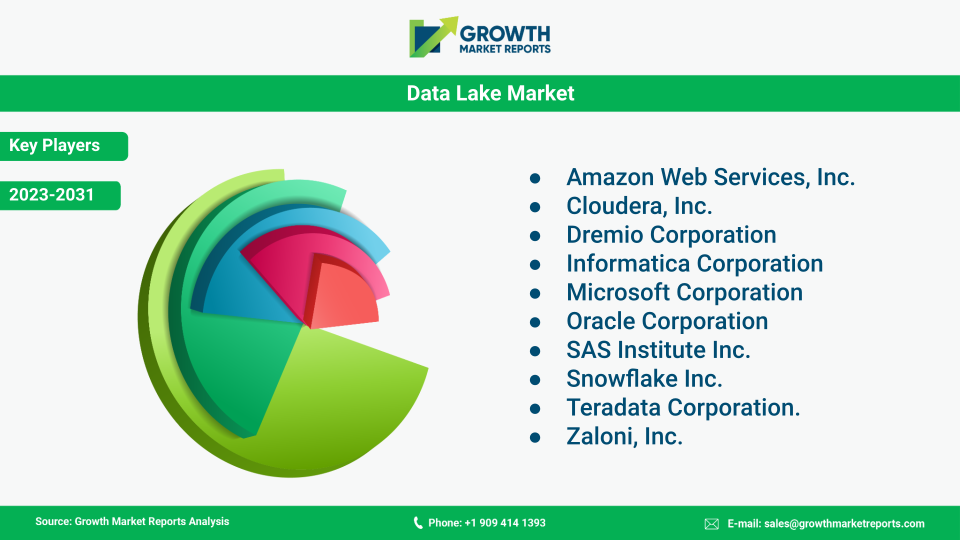
Key players competing in the Global data lake market share are Amazon Web Services, Inc., Cloudera, Inc.; Dremio Corporation; Informatica Corporation; Microsoft Corporation; Oracle Corporation; SAS Institute Inc.; Snowflake Inc.; Teradata Corporation; and Zaloni, Inc. Companies are engaging in partnerships, collaborations, and mergers to expand their market share.
The data lake market is segmented into solutions (software platforms and tools for storage, management, and analytics) and services (consulting, implementation, support, and managed services).
Key players include Amazon Web Services (AWS), Microsoft Corporation, Google LLC, IBM Corporation, Oracle Corporation, Snowflake Inc., Cloudera Inc., Teradata Corporation, Informatica, SAP SE, and others.
Challenges include the complexity of data integration and governance, ensuring data quality and security, managing large-scale environments, and avoiding data silos and compliance violations.
SMEs are increasingly adopting cloud-based data lake solutions for their scalability, affordability, and ease of use, enabling them to gain insights, optimize operations, and compete with larger organizations without significant upfront investments.
Major adopters include BFSI (banking, financial services, and insurance), healthcare, retail and e-commerce, manufacturing, IT and telecommunications, government, and media and entertainment.
North America is the largest market for data lake solutions, followed by Europe and Asia Pacific. Asia Pacific is the fastest-growing region, driven by rapid digitalization and investments in cloud infrastructure.
Data lake solutions can be deployed on-premises, in the cloud, or through hybrid models. On-premises deployments offer greater control and security, while cloud-based solutions provide scalability, flexibility, and cost-effectiveness. Hybrid deployments combine the benefits of both.
Data lakes enable centralized data storage, improved data lineage, and integration with advanced security and governance tools, making it easier for organizations to monitor, audit, and control access to sensitive information, thus supporting compliance with regulations like GDPR, CCPA, and HIPAA.
Key drivers include the exponential growth in data generation, increased adoption of advanced analytics, artificial intelligence, and machine learning, as well as digital transformation initiatives and the proliferation of IoT devices.
The global data lake market reached USD 15.7 billion in 2024 and is projected to grow at a CAGR of 21.6% from 2025 to 2033, reaching an estimated value of USD 110.9 billion by 2033.