Segments - by Product Type (In-Dash Navigation Systems, Portable Navigation Devices, Smartphone-Based Navigation Systems, Others), by Component (Hardware, Software, Services), by Vehicle Type (Passenger Cars, Commercial Vehicles, Electric Vehicles), by Sales Channel (OEM, Aftermarket), by Technology (GPS, GNSS, Others)
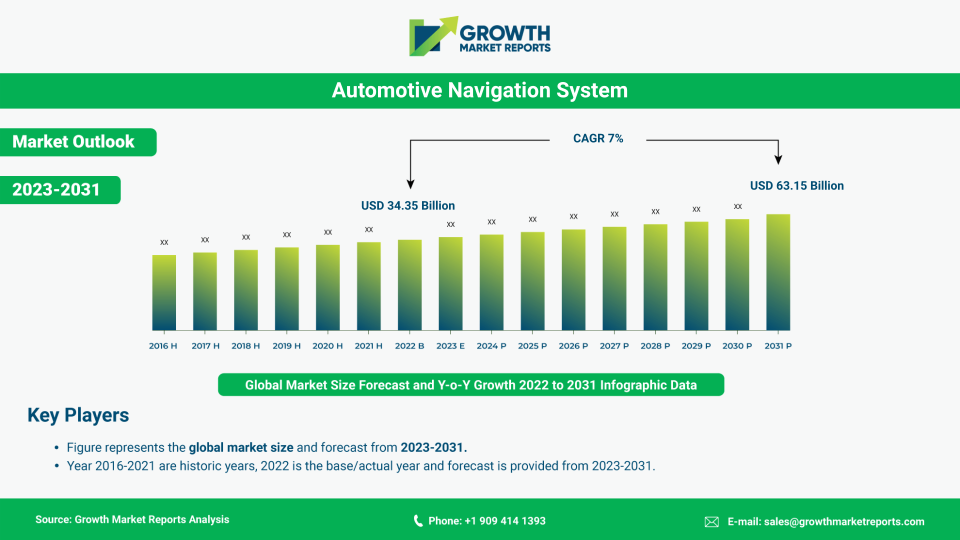
According to our latest research, the global automotive navigation system market size in 2024 stands at USD 38.2 billion, supported by a robust demand for advanced navigation solutions across the automotive industry. The market is anticipated to expand at a CAGR of 8.1% from 2025 to 2033, reaching a projected value of USD 74.9 billion by the end of the forecast period. This remarkable growth trajectory is primarily fueled by the increasing integration of navigation systems in modern vehicles, coupled with technological advancements and a rising emphasis on driver safety and convenience worldwide.
One of the key growth factors propelling the automotive navigation system market is the rapid adoption of connected vehicle technologies. As vehicles become more interconnected through IoT, telematics, and cloud-based solutions, automotive navigation systems are evolving from standalone devices to integral components of the broader intelligent transportation ecosystem. This integration enables real-time traffic updates, predictive route planning, and seamless connectivity with other in-vehicle infotainment systems, significantly enhancing the overall driving experience. Furthermore, the proliferation of smartphones and mobile applications has raised consumer expectations for intuitive, responsive, and feature-rich navigation solutions, prompting automakers and technology providers to invest in continuous innovation.
Another significant driver for the market is the growing regulatory focus on road safety and emission control. Governments and regulatory bodies across the globe are mandating the incorporation of advanced driver assistance systems (ADAS), including navigation features, to reduce accidents and improve traffic management. These regulations are particularly stringent in developed regions such as North America and Europe, where automotive OEMs are compelled to embed sophisticated navigation functionalities as standard or optional features. Additionally, the rise of electric vehicles (EVs) is generating new opportunities for navigation system vendors, as EV-specific navigation requirements such as charging station locations, battery optimization routes, and energy-efficient path planning become increasingly important for consumers and fleet operators alike.
The expansion of the automotive navigation system market is also being bolstered by the increasing consumer preference for luxury and high-end vehicles equipped with state-of-the-art infotainment and navigation systems. As disposable incomes rise, particularly in emerging economies, there is a discernible shift toward vehicles that offer enhanced comfort, safety, and technology. Automakers are responding to this trend by offering advanced navigation solutions as standard or premium options across various vehicle segments. The aftermarket segment is also witnessing significant growth, driven by the demand for retrofitting older vehicles with modern navigation capabilities. These factors collectively contribute to a dynamic and competitive market landscape, characterized by rapid technological evolution and shifting consumer expectations.
Regionally, the Asia Pacific market is emerging as a powerhouse for automotive navigation systems, driven by the burgeoning automotive industry in countries such as China, Japan, South Korea, and India. The region benefits from a large and rapidly growing consumer base, increasing vehicle production, and substantial investments in smart transportation infrastructure. North America and Europe continue to lead in terms of technological innovation and regulatory compliance, while Latin America and the Middle East & Africa are gradually catching up, fueled by rising vehicle ownership and urbanization. The interplay of these regional dynamics is shaping the global market, creating diverse opportunities and challenges for stakeholders across the value chain.
The product type segment of the automotive navigation system market is broadly categorized into in-dash navigation systems, portable navigation devices, smartphone-based navigation systems, and others. In-dash navigation systems have witnessed substantial growth, particularly in new vehicle models, as automakers prioritize integrated infotainment solutions that blend navigation, entertainment, and connectivity features. These systems are favored for their seamless integration with vehicle controls and displays, offering intuitive interfaces and advanced functionalities such as voice recognition, real-time traffic updates, and 3D mapping. The increasing consumer demand for factory-fitted navigation solutions is expected to further drive the adoption of in-dash systems, especially in mid-range and premium vehicle segments.
Portable navigation devices (PNDs), once the dominant product type, have seen a decline in market share due to the proliferation of smartphone-based navigation solutions. However, PNDs continue to hold relevance in specific markets and applications, particularly in commercial vehicles and regions with limited smartphone penetration. These devices are valued for their standalone functionality, ease of use, and dedicated navigation capabilities, making them a preferred choice for fleet operators and drivers who require reliable navigation without dependence on mobile networks. Manufacturers are innovating by offering ruggedized, feature-rich PNDs tailored to specialized use cases such as trucking, off-road navigation, and logistics.
Smartphone-based navigation systems have emerged as a disruptive force in the automotive navigation system market, leveraging the widespread adoption of smartphones and the availability of sophisticated navigation apps. These solutions offer unparalleled flexibility, frequent updates, and integration with various digital services, making them highly attractive to cost-conscious consumers and younger demographics. Automakers are increasingly integrating smartphone connectivity features such as Apple CarPlay and Android Auto into their vehicles, enabling seamless access to navigation apps directly from the vehicle’s infotainment system. This convergence is blurring the lines between traditional and mobile navigation platforms, creating new opportunities for app developers and OEMs alike.
The “others” category encompasses emerging product types such as head-up display (HUD) navigation systems, augmented reality (AR) navigation, and wearable navigation devices. These innovative solutions are gradually gaining traction, particularly in luxury vehicles and technologically advanced markets. HUD and AR navigation systems enhance driver safety and situational awareness by projecting navigation information directly onto the windshield or through AR overlays, minimizing distractions and enabling intuitive guidance. As these technologies mature and become more affordable, their adoption is expected to rise, further diversifying the product landscape and driving market growth.
| Attributes | Details |
| Report Title | Automotive Navigation System Market Research Report 2033 |
| By Product Type | In-Dash Navigation Systems, Portable Navigation Devices, Smartphone-Based Navigation Systems, Others |
| By Component | Hardware, Software, Services |
| By Vehicle Type | Passenger Cars, Commercial Vehicles, Electric Vehicles |
| By Sales Channel | OEM, Aftermarket |
| By Technology | GPS, GNSS, Others |
| Regions Covered | North America, Europe, APAC, Latin America, MEA |
| Countries Covered | North America (United States, Canada), Europe (Germany, France, Italy, United Kingdom, Spain, Russia, Rest of Europe), Asia Pacific (China, Japan, South Korea, India, Australia, South East Asia (SEA), Rest of Asia Pacific), Latin America (Mexico, Brazil, Rest of Latin America), Middle East & Africa (Saudi Arabia, South Africa, United Arab Emirates, Rest of Middle East & Africa) |
| Base Year | 2024 |
| Historic Data | 2018-2023 |
| Forecast Period | 2025-2033 |
| Number of Pages | 294 |
| Number of Tables & Figures | 398 |
| Customization Available | Yes, the report can be customized as per your need. |
The component segment of the automotive navigation system market is divided into hardware, software, and services. Hardware components form the backbone of navigation systems, encompassing GPS/GNSS receivers, display units, processors, sensors, and connectivity modules. The ongoing miniaturization and cost reduction of hardware components have enabled the integration of advanced navigation functionalities even in entry-level vehicle models. Moreover, the advent of high-resolution touchscreens, advanced processors, and robust connectivity solutions is enhancing the performance, reliability, and user experience of in-vehicle navigation systems. Hardware vendors are focusing on innovation and partnerships with OEMs to deliver customized, scalable solutions that cater to diverse vehicle segments.
Software is the driving force behind the intelligence and functionality of automotive navigation systems. Navigation software platforms are evolving rapidly, incorporating advanced algorithms for route optimization, real-time traffic analysis, and predictive analytics. The integration of artificial intelligence (AI) and machine learning (ML) is enabling navigation systems to offer personalized recommendations, adaptive routing, and context-aware guidance based on user preferences and driving patterns. Cloud-based navigation solutions are gaining prominence, allowing for continuous updates, remote diagnostics, and over-the-air (OTA) enhancements. Software providers are also focusing on cybersecurity, ensuring that navigation systems are resilient to hacking and data breaches in an increasingly connected automotive ecosystem.
Services represent a critical component of the automotive navigation system market, encompassing map updates, real-time traffic information, location-based services, and customer support. As navigation systems become more sophisticated and data-driven, the demand for high-quality, reliable, and up-to-date mapping and content services is on the rise. Service providers are leveraging partnerships with telecom operators, data aggregators, and cloud platforms to deliver comprehensive navigation experiences that extend beyond basic route guidance. Subscription-based models and value-added services such as predictive maintenance, eco-routing, and integration with smart city infrastructure are creating new revenue streams and enhancing customer loyalty.
The interplay between hardware, software, and services is shaping the competitive landscape of the automotive navigation system market. Companies that can offer end-to-end solutions, seamlessly integrating all three components, are well-positioned to capture market share. Collaboration between automakers, technology providers, and service vendors is becoming increasingly important, enabling the development of holistic navigation ecosystems that deliver superior value to consumers and commercial users alike. As the market continues to evolve, the ability to innovate across hardware, software, and services will be a key differentiator for industry leaders.
The vehicle type segment in the automotive navigation system market is classified into passenger cars, commercial vehicles, and electric vehicles (EVs). Passenger cars represent the largest segment, accounting for a significant share of the global market. The rising consumer demand for comfort, convenience, and safety features in personal vehicles is driving the widespread adoption of advanced navigation systems in this segment. Automakers are equipping their latest models with state-of-the-art in-dash navigation and infotainment systems, often as standard or optional features, to cater to the evolving preferences of tech-savvy consumers. The increasing penetration of connected and autonomous vehicles is further accelerating the integration of sophisticated navigation solutions in passenger cars.
Commercial vehicles, including trucks, buses, and vans, constitute a vital segment for the automotive navigation system market. Navigation systems in commercial vehicles are essential for route optimization, fuel efficiency, regulatory compliance, and fleet management. Fleet operators are increasingly investing in advanced navigation solutions that offer real-time tracking, geofencing, and telematics integration to enhance operational efficiency and reduce costs. The growing adoption of logistics and delivery services, particularly in the e-commerce sector, is fueling the demand for navigation systems tailored to the unique requirements of commercial vehicles. Manufacturers are responding by offering rugged, durable, and feature-rich navigation solutions designed to withstand the demanding conditions of commercial transportation.
The electric vehicle (EV) segment is emerging as a significant growth driver for the automotive navigation system market. EVs have unique navigation requirements, such as locating charging stations, optimizing routes based on battery range, and providing real-time information on charging availability and compatibility. Navigation system vendors are developing specialized solutions for EVs, integrating energy consumption data, predictive range estimation, and eco-routing features to address the concerns of range anxiety and charging infrastructure. As the adoption of EVs accelerates globally, particularly in regions with strong government support and environmental regulations, the demand for EV-specific navigation systems is expected to rise sharply.
The interplay between different vehicle types is creating opportunities for cross-segment innovation and collaboration. For instance, features initially developed for commercial vehicles, such as advanced fleet management and telematics integration, are being adapted for passenger cars and EVs. Conversely, consumer-focused innovations in user interface design and connectivity are finding their way into commercial and electric vehicle navigation systems. This cross-pollination of ideas and technologies is driving continuous improvement and differentiation in the automotive navigation system market, benefiting stakeholders across the value chain.
The sales channel segment of the automotive navigation system market is bifurcated into OEM (Original Equipment Manufacturer) and aftermarket channels. OEM sales dominate the market, as automakers increasingly equip new vehicles with integrated navigation systems to meet consumer demand and regulatory requirements. OEM-installed navigation systems are favored for their seamless integration with vehicle electronics, enhanced reliability, and compatibility with other in-vehicle systems. Automakers are partnering with leading technology providers to develop customized navigation solutions that align with their brand identity and customer expectations. The trend toward factory-fitted navigation systems is particularly pronounced in premium and mid-range vehicle segments, where consumers prioritize advanced features and connectivity.
The aftermarket segment, while smaller than the OEM channel, remains a critical growth avenue for the automotive navigation system market. Aftermarket navigation systems cater to vehicle owners looking to upgrade or retrofit older vehicles with modern navigation capabilities. This segment is characterized by a wide variety of products, ranging from portable navigation devices and smartphone mounts to advanced in-dash units with comprehensive infotainment features. The aftermarket channel is particularly strong in regions with a large population of older vehicles and in markets where OEM navigation penetration is relatively low. Vendors in the aftermarket space are focusing on affordability, ease of installation, and compatibility with a broad range of vehicle models to capture market share.
The rise of connected and smart vehicles is blurring the lines between OEM and aftermarket channels. Many automakers now offer software updates and feature enhancements through over-the-air (OTA) updates, enabling vehicle owners to access new navigation functionalities without the need for physical upgrades. This convergence is creating opportunities for both OEMs and aftermarket vendors to collaborate and offer integrated solutions that deliver enhanced value to consumers. Additionally, the increasing availability of subscription-based navigation services is changing the traditional sales model, enabling ongoing revenue streams and fostering customer loyalty.
Competition between OEM and aftermarket channels is intensifying as both segments strive to differentiate themselves through innovation, customer service, and value-added features. OEMs have the advantage of deep integration and brand recognition, while aftermarket vendors excel in flexibility, customization, and responsiveness to emerging trends. The ability to deliver seamless, up-to-date, and user-friendly navigation experiences will be a key success factor for players in both channels as the market continues to evolve.
The technology segment of the automotive navigation system market encompasses GPS (Global Positioning System), GNSS (Global Navigation Satellite System), and other emerging navigation technologies. GPS remains the cornerstone of automotive navigation, providing reliable and accurate positioning data for route guidance and location-based services. The widespread availability, cost-effectiveness, and proven performance of GPS have made it the default technology for most navigation systems. However, as the demand for higher accuracy and enhanced capabilities grows, navigation system vendors are increasingly integrating GPS with other satellite constellations and sensor technologies to deliver superior performance.
GNSS, which includes systems such as GLONASS (Russia), Galileo (Europe), and BeiDou (China), is gaining traction as a complementary or alternative technology to GPS. The integration of multiple GNSS constellations enhances positioning accuracy, reliability, and coverage, particularly in challenging environments such as urban canyons, tunnels, and remote areas. Automotive navigation systems equipped with multi-GNSS receivers can leverage the strengths of different satellite systems to provide uninterrupted service and improved resilience against signal interference or spoofing. The adoption of GNSS is particularly strong in regions with indigenous satellite navigation systems and in applications that require high-precision positioning, such as autonomous driving and advanced driver assistance systems (ADAS).
Emerging navigation technologies, including inertial navigation systems (INS), dead reckoning, and sensor fusion, are being integrated with GPS and GNSS to further enhance navigation performance. These technologies utilize data from accelerometers, gyroscopes, odometers, and other sensors to provide continuous positioning information, even in the absence of satellite signals. Sensor fusion algorithms combine data from multiple sources to deliver accurate, real-time navigation guidance under a wide range of conditions. These advancements are critical for enabling next-generation applications such as autonomous vehicles, where reliable and precise navigation is essential for safe and efficient operation.
The technology landscape of the automotive navigation system market is characterized by rapid innovation and convergence. As vehicles become more connected and autonomous, the demand for advanced navigation technologies that offer high accuracy, robustness, and integration with other vehicle systems will continue to grow. Companies that invest in research and development, strategic partnerships, and the adoption of cutting-edge technologies will be well-positioned to capture emerging opportunities and maintain a competitive edge in the evolving market.
The automotive navigation system market presents a multitude of opportunities for growth and innovation. One of the most promising opportunities lies in the integration of navigation systems with autonomous driving technologies. As the automotive industry moves toward higher levels of vehicle autonomy, navigation systems are evolving to provide not only route guidance but also critical data for perception, localization, and decision-making. Advanced navigation solutions that leverage high-definition maps, real-time sensor data, and AI-powered analytics are essential for enabling safe and efficient autonomous driving. Companies that can develop and commercialize these next-generation navigation systems stand to benefit significantly from the ongoing transformation of the automotive landscape.
Another major opportunity is the expansion of navigation-related services and value-added features. The rise of connected vehicles and smart mobility solutions is creating demand for a wide range of services, including real-time traffic information, predictive maintenance, location-based advertising, and integration with smart city infrastructure. Navigation system vendors can capitalize on these trends by offering subscription-based services, personalized recommendations, and seamless integration with third-party platforms. The ability to deliver differentiated, user-centric experiences will be a key driver of customer loyalty and revenue growth in the increasingly competitive automotive navigation system market.
Despite the abundant opportunities, the market also faces several restraining factors. One of the primary challenges is the risk of cybersecurity threats and data privacy concerns. As navigation systems become more connected and reliant on cloud-based services, they are increasingly vulnerable to hacking, data breaches, and unauthorized access. Ensuring the security and privacy of user data is a critical priority for industry stakeholders, requiring ongoing investment in robust cybersecurity measures, encryption technologies, and regulatory compliance. Failure to address these concerns could undermine consumer trust and hinder the adoption of advanced navigation solutions, posing a significant threat to market growth.
The Asia Pacific region is currently the largest and fastest-growing market for automotive navigation systems, accounting for approximately USD 15.6 billion of the global market in 2024. The region’s dominance is underpinned by the rapid expansion of the automotive industry in China, Japan, South Korea, and India, coupled with rising consumer expectations for advanced in-vehicle technologies. The proliferation of connected cars, government initiatives to promote smart transportation infrastructure, and the increasing adoption of electric vehicles are driving robust demand for navigation systems across the region. Asia Pacific is expected to maintain a strong growth trajectory, with a projected CAGR exceeding 9.2% over the forecast period.
In North America, the automotive navigation system market is valued at USD 9.4 billion in 2024, supported by high vehicle ownership rates, technological innovation, and stringent safety regulations. The region is characterized by early adoption of advanced driver assistance systems (ADAS), autonomous vehicles, and connected car technologies, all of which rely heavily on sophisticated navigation solutions. OEMs and technology providers in North America are at the forefront of developing next-generation navigation systems that integrate real-time data, AI, and cloud-based services. The aftermarket segment is also significant, with a large population of older vehicles providing opportunities for retrofitting and upgrades.
Europe holds a substantial share of the global automotive navigation system market, with a market size of USD 8.7 billion in 2024. The region benefits from a strong automotive manufacturing base, high consumer awareness, and supportive regulatory frameworks promoting road safety and emission reduction. European automakers are leading the way in integrating navigation systems with advanced infotainment and telematics platforms, offering a seamless and connected driving experience. The adoption of electric vehicles and the development of cross-border navigation solutions are further driving market growth in Europe. Meanwhile, Latin America and the Middle East & Africa are emerging markets, with combined revenues of approximately USD 4.5 billion in 2024, driven by rising vehicle ownership, urbanization, and gradual improvements in transportation infrastructure.
The automotive navigation system market is intensely competitive, characterized by a dynamic mix of global technology giants, established automotive suppliers, and innovative startups. Leading companies are focusing on research and development, strategic partnerships, and acquisitions to strengthen their market position and expand their product portfolios. The competitive landscape is shaped by continuous technological innovation, with players vying to offer the most advanced, reliable, and user-friendly navigation solutions. Companies are also differentiating themselves through value-added services, customer support, and integration with broader mobility ecosystems, aiming to capture a larger share of the rapidly growing market.
Collaboration between automakers and technology providers is a key trend in the competitive landscape, as OEMs seek to deliver seamless and integrated navigation experiences to their customers. Strategic alliances enable the development of customized solutions that align with specific brand identities and regional requirements. At the same time, technology providers are investing in cloud-based platforms, AI-powered analytics, and real-time data integration to enhance the functionality and performance of their navigation systems. The ability to offer end-to-end solutions that combine hardware, software, and services is becoming increasingly important for maintaining a competitive edge.
The market is also witnessing the entry of new players, particularly in the areas of smartphone-based navigation, augmented reality, and autonomous driving. These entrants are challenging established players by offering innovative, cost-effective, and flexible solutions that cater to the evolving needs of consumers and commercial users. The rise of open-source platforms and standardized interfaces is lowering barriers to entry, fostering greater competition and accelerating the pace of innovation. As the market continues to evolve, companies that can adapt quickly to changing technologies, consumer preferences, and regulatory requirements will be best positioned for long-term success.
Major companies in the automotive navigation system market include Continental AG, Robert Bosch GmbH, Garmin Ltd., TomTom NV, Alpine Electronics, Inc., Pioneer Corporation, Denso Corporation, HERE Technologies, Panasonic Corporation, and Mitsubishi Electric Corporation. Continental AG and Bosch are renowned for their integrated hardware and software solutions, catering to both OEM and aftermarket channels. Garmin and TomTom have a strong presence in portable and aftermarket navigation devices, while HERE Technologies is a leader in mapping and location-based services. Alpine, Pioneer, and Denso focus on high-quality in-dash and infotainment systems, often collaborating with leading automakers to deliver customized solutions. Panasonic and Mitsubishi Electric are known for their advanced display technologies and robust hardware platforms.
These companies are investing heavily in R&D to stay ahead of the competition, with a particular focus on next-generation navigation technologies such as high-definition mapping, sensor fusion, and AI-driven route optimization. Partnerships with automakers, telecom operators, and technology startups are common, enabling the rapid development and deployment of innovative navigation solutions. As the automotive navigation system market continues to grow and evolve, the ability to deliver integrated, secure, and user-centric solutions will be the key to sustained competitive advantage.
The Automotive Navigation System market has been segmented on the basis of
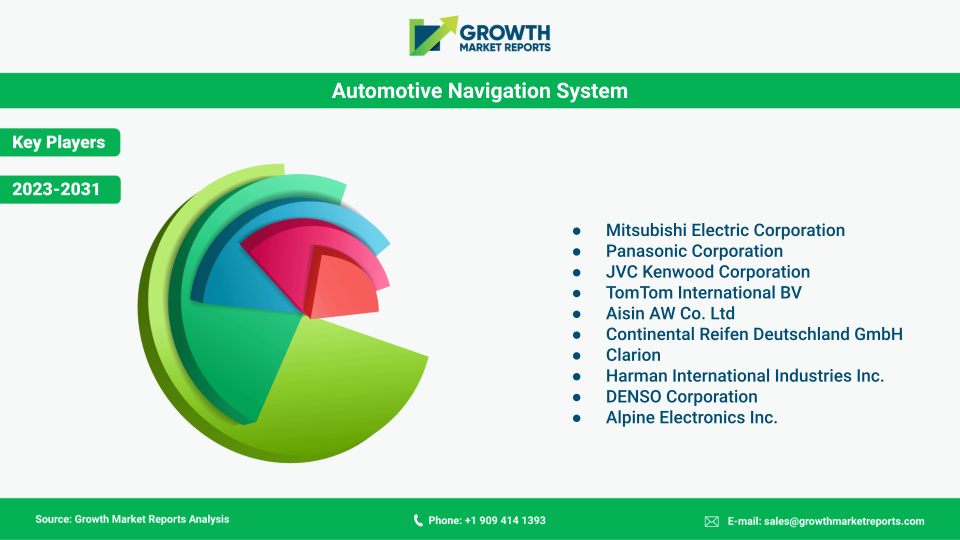
Key players competing in the global automotive navigation system market include Mitsubishi Electric Corporation; Panasonic Corporation; JVC Kenwood Corporation; TomTom International BV; Aisin AW Co. Ltd; Continental Reifen Deutschland GmbH; Clarion; Harman International Industries Inc.; DENSO Corporation; and Alpine Electronics Inc. Some of these players are adopting several market strategies including acquisitions, mergers, collaborations, partnerships, capacity expansion, and product launches to increase their market shares.
The market is segmented into OEM (Original Equipment Manufacturer) and aftermarket channels. OEMs dominate with factory-fitted systems, while the aftermarket caters to upgrades and retrofits for older vehicles.
Major challenges include cybersecurity threats, data privacy concerns, and the need for continuous innovation to keep up with rapidly evolving technologies and consumer expectations.
Leading companies include Continental AG, Robert Bosch GmbH, Garmin Ltd., TomTom NV, Alpine Electronics, Pioneer Corporation, Denso Corporation, HERE Technologies, Panasonic Corporation, and Mitsubishi Electric Corporation.
Automotive navigation systems primarily use GPS and GNSS (including GLONASS, Galileo, and BeiDou), with emerging technologies like inertial navigation, dead reckoning, and sensor fusion enhancing accuracy and reliability.
Navigation systems are used in passenger cars, commercial vehicles (trucks, buses, vans), and electric vehicles (EVs), each with unique requirements such as fleet management or EV charging station routing.
The main types include in-dash navigation systems, portable navigation devices (PNDs), smartphone-based navigation systems, and emerging technologies like head-up display (HUD) and augmented reality (AR) navigation.
Asia Pacific is the largest and fastest-growing region, followed by North America and Europe. Latin America and the Middle East & Africa are also experiencing growth due to rising vehicle ownership and urbanization.
Key growth drivers include the integration of connected vehicle technologies, advancements in navigation software and hardware, regulatory mandates for road safety and emissions, and rising consumer demand for luxury and high-tech vehicles.
The automotive navigation system market is expected to grow at a CAGR of 8.1% from 2025 to 2033, reaching a projected value of USD 74.9 billion by the end of the forecast period.
The global automotive navigation system market size in 2024 is estimated at USD 38.2 billion, driven by strong demand for advanced navigation solutions in the automotive industry.