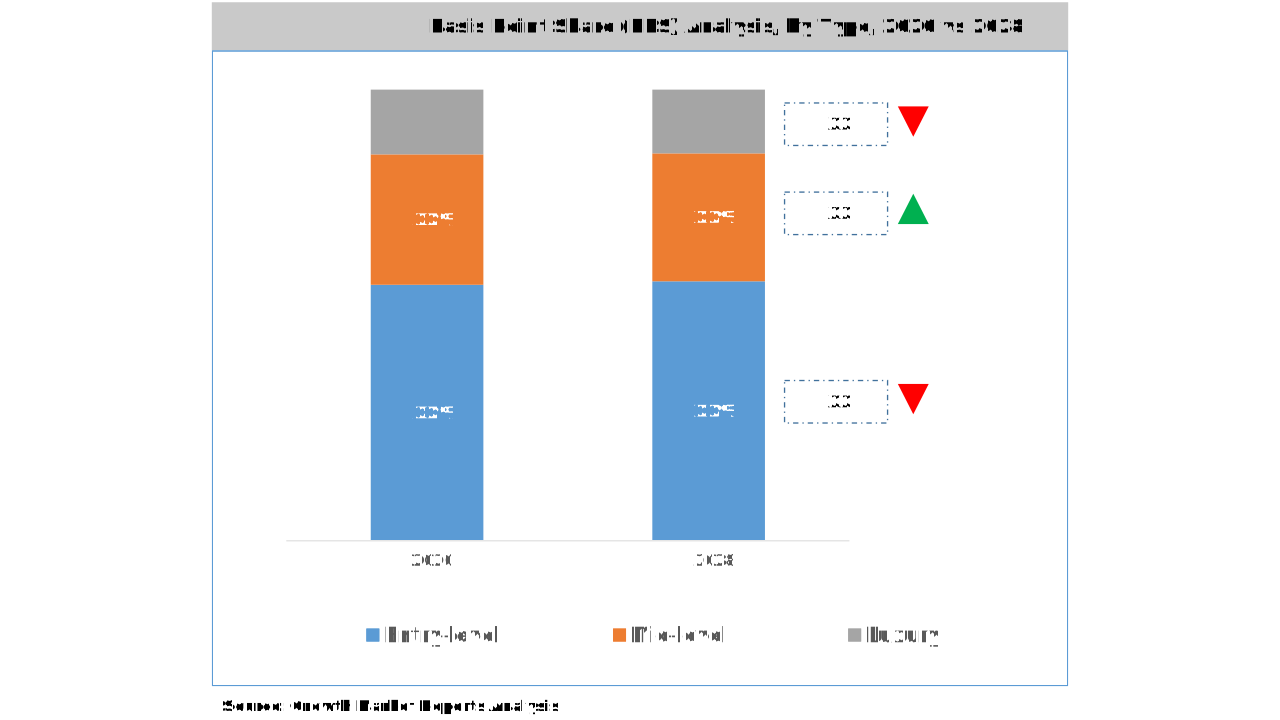
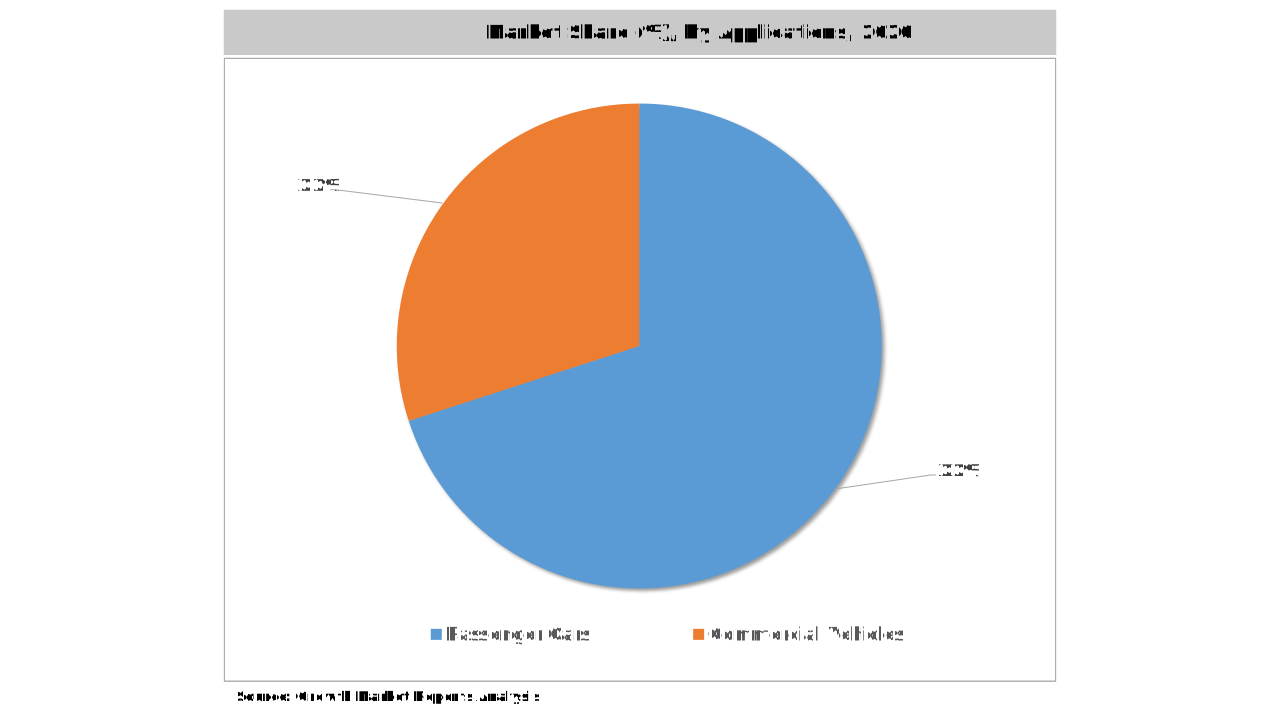
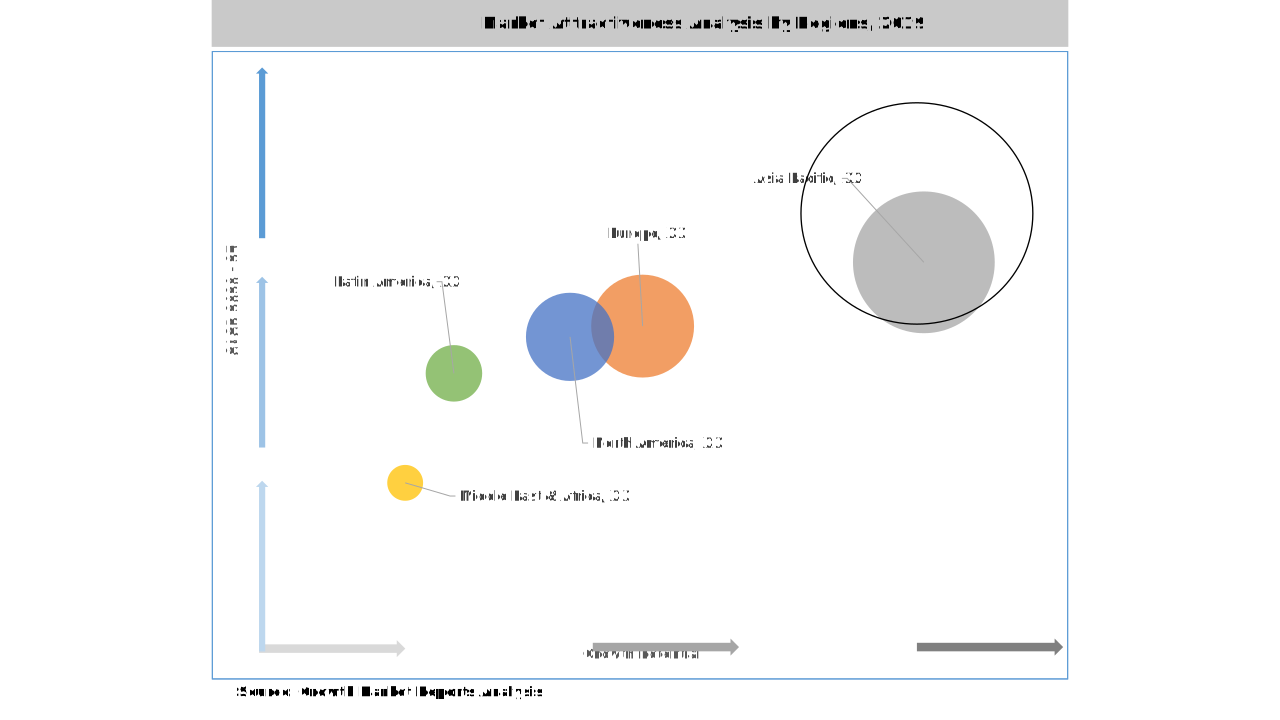
Segments - by Type (Belt-Driven CVT, Chain-Driven CVT, Toroidal CVT, Hydrostatic CVT, Others), by Vehicle Type (Passenger Cars, Light Commercial Vehicles, Heavy Commercial Vehicles, Others), by Fuel Type (Gasoline, Diesel, Hybrid, Electric), by Application (OEM, Aftermarket)
According to our latest research, the global Automotive Continuously Variable Transmission (CVT) System market size stood at USD 23.8 billion in 2024. The market is experiencing robust expansion, registering a CAGR of 7.2% over the forecast period. By 2033, the global market is expected to reach USD 44.6 billion, driven by increasing demand for fuel-efficient vehicles and the rising adoption of advanced transmission systems in both developed and emerging economies. The growth of the CVT market is primarily attributed to the automotive industry’s ongoing transition toward enhanced driving comfort and improved fuel economy.
One of the key growth factors for the Automotive Continuously Variable Transmission (CVT) System market is the rising consumer preference for vehicles that offer superior fuel efficiency and seamless driving experiences. CVT systems, by design, provide a smooth, gearless acceleration and optimize engine performance, resulting in better fuel economy compared to traditional automatic transmissions. This advantage is particularly appealing in markets where fuel prices are high and environmental regulations are stringent. Automakers are increasingly incorporating CVT technology into their vehicle lineups to meet both regulatory requirements and evolving consumer expectations. As manufacturers continue to innovate and refine CVT technology, the adoption rate is expected to surge, further propelling market growth.
Another significant driver is the proliferation of hybrid and electric vehicles, which frequently utilize CVT systems to maximize the efficiency of their powertrains. As governments worldwide implement stricter emission norms and incentivize the adoption of green vehicles, the demand for hybrid and electric vehicles has soared. CVT systems are ideally suited for these vehicles due to their ability to maintain optimal engine speeds, thereby reducing emissions and enhancing energy efficiency. This trend has prompted OEMs to expand their CVT-equipped offerings, especially in regions such as Asia Pacific and Europe, where environmental sustainability is a top priority. The integration of advanced electronic controls and lightweight materials in CVT systems is also contributing to their increased adoption in next-generation vehicles.
Technological advancements and increased investments in research and development are further fueling the growth of the Automotive CVT System market. Innovations such as improved belt and chain materials, enhanced lubrication systems, and the development of toroidal and hydrostatic CVTs have expanded the application scope of these transmissions. As a result, CVTs are now being adopted not only in compact passenger cars but also in light and heavy commercial vehicles. The aftermarket sector is also witnessing growth, with rising demand for CVT replacements and upgrades. These factors collectively create a fertile environment for the expansion of the CVT market, as manufacturers and suppliers strive to deliver more efficient, durable, and cost-effective transmission solutions.
From a regional perspective, Asia Pacific dominates the global Automotive CVT System market, accounting for the largest share in 2024. The region’s leadership is underpinned by the presence of major automotive manufacturing hubs, rapid urbanization, and a growing middle-class population with increasing purchasing power. North America and Europe also represent significant markets, driven by technological advancements and strong demand for hybrid and electric vehicles. Latin America and the Middle East & Africa are emerging as promising markets, supported by improving infrastructure and rising vehicle ownership rates. The regional outlook remains positive, with Asia Pacific expected to maintain its dominance throughout the forecast period, while other regions are projected to witness steady growth.
The Automotive Continuously Variable Transmission (CVT) System market is segmented by type into Belt-Driven CVT, Chain-Driven CVT, Toroidal CVT, Hydrostatic CVT, and Others. Belt-driven CVTs currently hold the largest market share, owing to their widespread adoption in passenger cars and compact vehicles. These systems are favored for their simplicity, cost-effectiveness, and ability to deliver smooth acceleration and improved fuel efficiency. The ongoing evolution of belt materials and design has enhanced the durability and performance of belt-driven CVTs, making them the preferred choice for manufacturers targeting the mass market. As automakers continue to prioritize fuel economy and driving comfort, the demand for belt-driven CVTs is expected to remain robust.
Chain-driven CVTs are gaining traction, particularly in vehicles that require higher torque transmission, such as SUVs and light commercial vehicles. The use of high-strength chains allows these systems to handle greater loads while maintaining the efficiency and smoothness characteristic of CVT technology. Recent advancements in chain design and manufacturing have addressed previous concerns related to noise and wear, further boosting their adoption. Manufacturers are increasingly integrating chain-driven CVTs into their product portfolios to cater to the growing segment of larger and more powerful vehicles, thereby expanding the market’s scope.
Toroidal CVTs, though representing a smaller segment, are recognized for their ability to deliver high efficiency and torque capacity. These systems utilize rotating discs and rollers to transmit power, offering advantages such as compact design, reduced friction, and minimal maintenance requirements. Toroidal CVTs are particularly suited for performance-oriented vehicles and applications where space constraints and efficiency are critical considerations. Ongoing research and development efforts are focused on enhancing the reliability and cost-effectiveness of toroidal CVTs, which could lead to broader adoption in the coming years.
Hydrostatic CVTs, which use hydraulic systems to transmit power, are primarily utilized in heavy-duty vehicles and specialized applications such as agricultural and construction machinery. These systems offer precise control and the ability to handle high loads, making them indispensable in environments where performance and durability are paramount. The market for hydrostatic CVTs is expected to grow steadily, driven by increasing mechanization in agriculture and infrastructure development worldwide. The “Others” category includes emerging CVT technologies and hybrid configurations, which are being explored to address specific performance and efficiency requirements across diverse vehicle segments.
| Attributes | Details |
| Report Title | Automotive Continuously Variable Transmission System Market Research Report 2033 |
| By Type | Belt-Driven CVT, Chain-Driven CVT, Toroidal CVT, Hydrostatic CVT, Others |
| By Vehicle Type | Passenger Cars, Light Commercial Vehicles, Heavy Commercial Vehicles, Others |
| By Fuel Type | Gasoline, Diesel, Hybrid, Electric |
| By Application | OEM, Aftermarket |
| Regions Covered | North America, Europe, APAC, Latin America, MEA |
| Base Year | 2024 |
| Historic Data | 2018-2023 |
| Forecast Period | 2025-2033 |
| Number of Pages | 255 |
| Number of Tables & Figures | 279 |
| Customization Available | Yes, the report can be customized as per your need. |
The Automotive CVT System market is segmented by vehicle type into Passenger Cars, Light Commercial Vehicles, Heavy Commercial Vehicles, and Others. Passenger cars constitute the largest segment, accounting for the majority of CVT installations globally. The popularity of CVTs in this segment is attributed to the growing consumer demand for vehicles that offer superior fuel efficiency, reduced emissions, and enhanced driving comfort. Automakers are increasingly equipping their passenger car models with CVT systems to differentiate their offerings and comply with stringent fuel economy standards. The trend is particularly pronounced in compact and mid-size car segments, where cost sensitivity and efficiency are key purchasing criteria.
Light commercial vehicles (LCVs) are emerging as a significant growth area for CVT adoption. The versatility and efficiency of CVT systems make them well-suited for LCVs, which are often used in urban delivery and transportation applications. As e-commerce and last-mile delivery services expand, the demand for LCVs equipped with advanced transmission systems is on the rise. Manufacturers are responding by introducing CVT options in their LCV product lines, aiming to offer fleet operators lower operating costs and improved vehicle longevity. This trend is expected to drive substantial growth in the LCV segment over the forecast period.
Heavy commercial vehicles (HCVs) represent a smaller but steadily growing segment for the CVT market. Traditionally, manual and automated manual transmissions have dominated this segment due to their robustness and cost-effectiveness. However, advancements in CVT technology, including enhanced torque handling and improved durability, are making CVTs increasingly viable for heavy-duty applications. The adoption of CVTs in HCVs is being driven by the need for greater efficiency, reduced maintenance, and compliance with stricter emission regulations. As infrastructure development and industrial activity intensify globally, the demand for CVT-equipped HCVs is expected to rise.
The “Others” category encompasses specialized vehicles such as off-road vehicles, agricultural machinery, and construction equipment. The unique requirements of these vehicles, including the need for precise speed control and the ability to handle variable loads, make CVT systems an attractive option. Manufacturers are developing customized CVT solutions to cater to the specific needs of these niche applications, further expanding the market’s reach. The increasing mechanization of agriculture and the growth of the construction sector are anticipated to fuel demand for CVT systems in these specialized vehicle categories.
The Automotive CVT System market is segmented by fuel type into Gasoline, Diesel, Hybrid, and Electric. Gasoline-powered vehicles currently dominate the market, as CVT systems have traditionally been associated with small and mid-sized gasoline cars. The ability of CVTs to enhance fuel efficiency and provide a smoother driving experience aligns well with the performance characteristics of gasoline engines. As regulatory agencies continue to tighten fuel economy standards, automakers are increasingly adopting CVT systems in their gasoline vehicle offerings to achieve compliance and maintain competitiveness in the market.
Diesel vehicles represent a smaller segment for CVT adoption, primarily due to the higher torque output of diesel engines, which has historically posed challenges for CVT systems. However, recent advancements in CVT design and materials have improved their ability to handle higher torque loads, making them more suitable for modern diesel vehicles. While the overall share of diesel vehicles is declining in certain regions due to emission concerns, there remains a steady demand for diesel-powered commercial and utility vehicles equipped with advanced transmission systems, including CVTs.
Hybrid vehicles are a key growth driver for the CVT market, as these powertrains often rely on CVT systems to optimize the interaction between internal combustion engines and electric motors. The seamless power delivery and ability to maintain optimal engine speeds make CVTs the transmission of choice for many hybrid models. As governments and consumers increasingly prioritize environmental sustainability, the adoption of hybrid vehicles is expected to accelerate, thereby boosting demand for CVT systems. Automakers are investing in the development of next-generation CVTs tailored specifically for hybrid applications, further enhancing their performance and efficiency.
Electric vehicles (EVs) are an emerging segment for CVT adoption, although their current market share remains limited. While many EVs utilize single-speed transmissions, there is growing interest in multi-speed and variable transmission systems to improve performance and extend range. CVT technology offers the potential to optimize power delivery and enhance driving dynamics in electric vehicles. As the EV market matures and manufacturers seek innovative solutions to differentiate their products, the integration of CVT systems in electric vehicles is expected to gain momentum, creating new growth opportunities for the market.
The Automotive CVT System market is segmented by application into OEM and Aftermarket. Original Equipment Manufacturers (OEMs) constitute the largest application segment, as the majority of CVT systems are installed during the vehicle manufacturing process. OEMs are increasingly incorporating CVT technology into their vehicle platforms to meet regulatory requirements, improve fuel efficiency, and enhance driving comfort. Strategic partnerships between OEMs and transmission suppliers are facilitating the development and deployment of advanced CVT solutions across a wide range of vehicle models. The OEM segment is expected to maintain its dominance throughout the forecast period, supported by ongoing innovation and rising vehicle production volumes.
The aftermarket segment is witnessing steady growth, driven by increasing demand for CVT replacements, upgrades, and maintenance services. As the global vehicle parc equipped with CVT systems expands, the need for reliable aftermarket solutions is becoming more pronounced. Consumers are seeking high-quality replacement parts and services to extend the lifespan and performance of their CVT-equipped vehicles. Aftermarket suppliers are responding by offering a diverse range of CVT products and services, including remanufactured units, repair kits, and diagnostic tools. The growth of the aftermarket segment is further supported by the rising trend of vehicle customization and the increasing availability of advanced transmission technologies.
Technological advancements are also influencing the dynamics of both OEM and aftermarket segments. The integration of electronic controls, advanced materials, and predictive maintenance capabilities is enhancing the performance and reliability of CVT systems. OEMs are leveraging these innovations to differentiate their offerings and deliver superior value to customers. In the aftermarket, the adoption of digital platforms and e-commerce channels is making it easier for consumers to access CVT products and services, thereby expanding market reach and driving sales growth.
The interplay between OEM and aftermarket segments is creating new opportunities for collaboration and value creation. OEMs are increasingly partnering with aftermarket suppliers to ensure the availability of genuine parts and high-quality service solutions for their customers. This trend is fostering a more integrated and customer-centric approach to the CVT market, benefiting both manufacturers and end-users. As the market continues to evolve, the distinction between OEM and aftermarket offerings is expected to blur, with a greater emphasis on lifecycle management and customer support.
The Automotive CVT System market presents numerous opportunities for growth and innovation. One of the most significant opportunities lies in the ongoing electrification of the automotive industry. As hybrid and electric vehicles become more prevalent, the demand for advanced transmission systems that can optimize power delivery and maximize energy efficiency is expected to rise. CVT technology is well-positioned to capitalize on this trend, offering seamless integration with electric powertrains and the ability to enhance vehicle performance. Manufacturers that invest in the development of next-generation CVT systems tailored for electrified vehicles are likely to gain a competitive edge in the evolving automotive landscape.
Another key opportunity is the expansion of the CVT market into emerging economies, where rising incomes, urbanization, and improving infrastructure are driving vehicle ownership rates. As consumers in these markets become more discerning and demand higher levels of comfort and efficiency, the adoption of CVT-equipped vehicles is expected to accelerate. Additionally, the aftermarket segment offers significant growth potential, particularly in regions with a large and aging vehicle fleet. Suppliers that offer innovative, cost-effective, and high-quality CVT products and services are well-positioned to capture a share of this expanding market.
Despite the positive outlook, the Automotive CVT System market faces several restraining factors. One of the primary challenges is the relatively higher cost of CVT systems compared to traditional transmissions, which can limit their adoption in price-sensitive markets. Additionally, concerns related to the long-term durability and maintenance requirements of CVT systems persist among some consumers and fleet operators. Addressing these concerns through ongoing innovation, improved materials, and enhanced service offerings will be critical to sustaining market growth. Furthermore, competition from alternative transmission technologies, such as dual-clutch and automated manual transmissions, poses a threat to the widespread adoption of CVTs, necessitating continuous investment in research and development to maintain technological leadership.
Asia Pacific leads the global Automotive CVT System market, accounting for the largest share with a market size of USD 10.5 billion in 2024. The region’s dominance is underpinned by the presence of major automotive manufacturing hubs in countries such as China, Japan, and South Korea. These nations are at the forefront of technological innovation and vehicle production, driving the adoption of advanced transmission systems. The rapid urbanization and rising disposable incomes in emerging economies within the region are further fueling demand for fuel-efficient and comfortable vehicles equipped with CVT systems. As a result, Asia Pacific is expected to maintain its leadership position throughout the forecast period.
North America represents the second-largest market, with a market size of USD 6.2 billion in 2024. The region is characterized by strong demand for hybrid and electric vehicles, which frequently utilize CVT systems to optimize powertrain efficiency. The presence of leading automakers and a well-established automotive supply chain support the growth of the CVT market in North America. The region is projected to register a robust CAGR of 6.8% over the forecast period, driven by ongoing investments in research and development and a growing focus on sustainability. The United States remains the largest contributor within the region, supported by favorable regulatory policies and consumer preferences for advanced vehicle technologies.
Europe holds a significant share of the global CVT market, with a market size of USD 4.8 billion in 2024. The region’s growth is driven by stringent emission regulations, a strong emphasis on fuel efficiency, and the widespread adoption of hybrid and electric vehicles. Countries such as Germany, France, and the United Kingdom are leading the transition toward greener mobility solutions, creating a favorable environment for the adoption of CVT systems. Latin America and the Middle East & Africa are emerging as promising markets, with a combined market size of USD 2.3 billion in 2024. These regions are benefiting from improving economic conditions, increasing vehicle ownership rates, and expanding automotive manufacturing capabilities. While their market shares are currently smaller, both regions are expected to witness steady growth as infrastructure and consumer preferences evolve.
The Automotive CVT System market is characterized by intense competition, with a mix of global giants and regional players vying for market share. The competitive landscape is shaped by continuous innovation, strategic collaborations, and a strong focus on research and development. Leading companies are investing heavily in the development of next-generation CVT technologies, leveraging advanced materials, electronic controls, and predictive maintenance capabilities to differentiate their offerings. The market is also witnessing a trend toward vertical integration, as major players seek to control the entire value chain from design and manufacturing to distribution and aftersales support.
Strategic partnerships and joint ventures are becoming increasingly common as companies seek to expand their technological capabilities and geographic reach. Collaborations between automakers and transmission suppliers are facilitating the development of customized CVT solutions tailored to specific vehicle platforms and market requirements. These alliances are also enabling companies to share risks and accelerate the commercialization of innovative technologies. The competitive landscape is further influenced by the entry of new players, particularly in the aftermarket segment, where the demand for high-quality replacement parts and services is growing rapidly.
Product differentiation and brand reputation play a critical role in shaping the competitive dynamics of the CVT market. Companies that offer reliable, efficient, and durable CVT systems are able to command premium pricing and secure long-term customer loyalty. Aftermarket support and the availability of genuine parts are also key factors influencing purchasing decisions. As the market continues to evolve, companies are increasingly focusing on sustainability, digitalization, and customer-centric solutions to maintain their competitive edge. The ability to anticipate and respond to changing market trends will be a decisive factor in determining long-term success.
Major companies operating in the global Automotive CVT System market include JATCO Ltd. (a Nissan subsidiary), Aisin Seiki Co. Ltd., Honda Motor Co. Ltd., ZF Friedrichshafen AG, and Toyota Motor Corporation. JATCO is recognized as a global leader in CVT technology, supplying advanced transmission systems to a wide range of automakers. Aisin Seiki, another prominent player, is known for its innovative CVT solutions and strong focus on research and development. Honda Motor Co. Ltd. has made significant investments in CVT technology, integrating it across its vehicle lineup to enhance fuel efficiency and driving performance. ZF Friedrichshafen AG is renowned for its expertise in transmission systems, offering a diverse portfolio of CVT products for various vehicle segments. Toyota Motor Corporation, a pioneer in hybrid technology, has played a pivotal role in popularizing CVT systems through its extensive range of hybrid vehicles.
In addition to these industry leaders, several other companies are making notable contributions to the CVT market. Bosch Automotive, Punch Powertrain, and Subaru Corporation are actively engaged in the development of advanced CVT technologies, focusing on improving efficiency, durability, and integration with electrified powertrains. Regional players, particularly in Asia Pacific, are also gaining prominence by offering cost-effective and customized CVT solutions tailored to local market needs. The competitive landscape is expected to remain dynamic, with ongoing innovation, strategic alliances, and a relentless focus on customer value shaping the future of the Automotive CVT System market.
The Automotive Continuously Variable Transmission System market has been segmented on the basis of
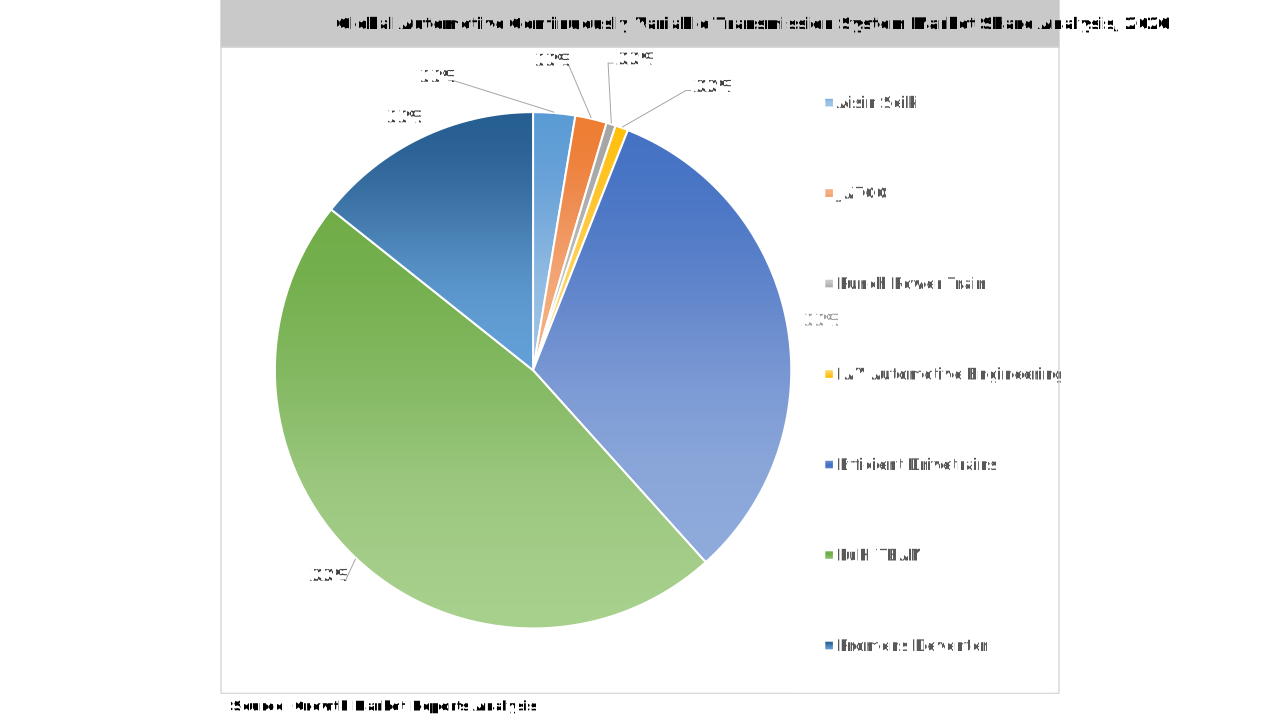
Key players competing in the global automotive continuously variable transmission system market are Aisin Seiki, JATCO, Punch Power Train, IAV Automotive Engineering, Efficient Drivetrains, LuK, TEAM, and Promens Deventer.
Aisin AW Co., Ltd. developed a Direct Shift-CVT (Continuously Variable Transmission) in a joint venture with Toyota. This type of CVT provides outstanding fuel efficiency and powerful driving performance. It is the world's first starting gear that enables direct and powerful starting and acceleration along with top-class gear ratio range. The CVT belt is narrowed and the diameter of the pulley is reduced, increasing the shift speed by 20% for a smooth shift and powerful and rhythmic driving performance.
Yes, the Automotive CVT System market research report can be customized according to specific client needs.
Opportunities include the electrification of vehicles, expansion into emerging economies, and growth in the aftermarket segment. Challenges include higher costs compared to traditional transmissions, concerns about durability, and competition from alternative transmission technologies.
Key companies include JATCO Ltd., Aisin Seiki Co. Ltd., Honda Motor Co. Ltd., ZF Friedrichshafen AG, Toyota Motor Corporation, BorgWarner Inc., Punch Powertrain, Schaeffler AG, Subaru Corporation, and others.
CVT systems are primarily installed by Original Equipment Manufacturers (OEMs) during vehicle production, but the aftermarket segment is growing due to demand for replacements, upgrades, and maintenance services.
Gasoline vehicles are the largest adopters of CVT systems, followed by hybrids and electric vehicles. Diesel vehicles also use CVTs, especially with recent advancements that improve torque handling.
CVT systems are widely used in passenger cars, light commercial vehicles, and increasingly in heavy commercial vehicles and specialized vehicles such as agricultural and construction machinery.
The market is segmented into Belt-Driven CVT, Chain-Driven CVT, Toroidal CVT, Hydrostatic CVT, and others. Belt-driven CVTs hold the largest share, while chain-driven and toroidal CVTs are gaining traction in specific vehicle segments.
Asia Pacific leads the global market, followed by North America and Europe. Latin America and the Middle East & Africa are emerging as promising markets due to improving infrastructure and rising vehicle ownership.
Key growth drivers include increasing demand for fuel-efficient vehicles, rising adoption of advanced transmission systems, proliferation of hybrid and electric vehicles, and ongoing technological advancements in CVT design and materials.
As of 2024, the global Automotive Continuously Variable Transmission (CVT) System market is valued at USD 23.8 billion and is projected to grow at a CAGR of 7.2%, reaching USD 44.6 billion by 2033.