Active Grille Shutter Market Share, Growth & Forecast [2030]
Global Active Grille Shutter Market
Segments - By Type (Polyster, Polypropylene (PP), Polycarbonate (PC)), By Application (Passenger Vehicles, Commercial Vehicles) and Region (North America, Latin America, Europe, Asia Pacific and Middle East & Africa) - Global Industry Analysis, Growth, Share, Size, Trends, and Forecast 2020 – 2027
Segments - By Type (Polyster, Polypropylene (PP), Polycarbonate (PC)), By Application (Passenger Vehicles, Commercial Vehicles) and Region (North America, Latin America, Europe, Asia Pacific and Middle East & Africa) - Global Industry Analysis, Growth, Share, Size, Trends, and Forecast 2020 – 2027
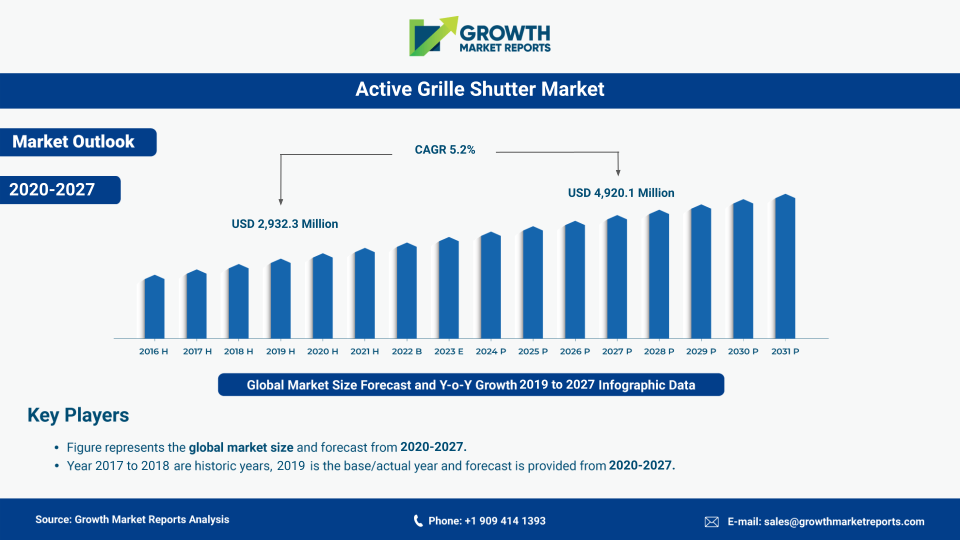
The Global Active Grille Shutter market was valued at USD 2,932.3 Million in 2019 and is projected to reach USD 4,920.1 Million by 2027, expanding at a CAGR over 5.2% during the forecast period. The active grille shutter (AGS) is placed at the front bumper lower opening of a vehicle.
This system adjusts the quantity of airflow into the engine compartment through a flap activated by an actuator that receives signals from the engine control unit (ECM).
The active grille shutter is situated at the front bumper lower opening. On driving mode, active shutters are made to limit the air flow from the front grille to reduce aerodynamic drag and as in turn enhances the vehicle’s fuel efficiency.
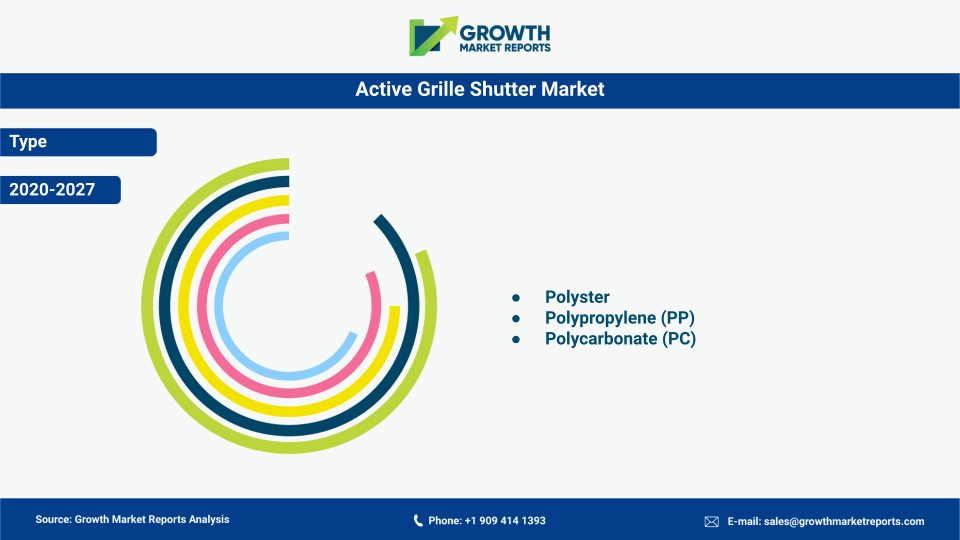
Active grille shutters are commonly manufactured from lightweight reinforced thermoplastics which results in weight reduction and maintains the aerodynamics of the vehicle on drive mode. Active Grille Shutter are classified based on type of equipment and it includes Polyester, Polypropylene (PP), and others.
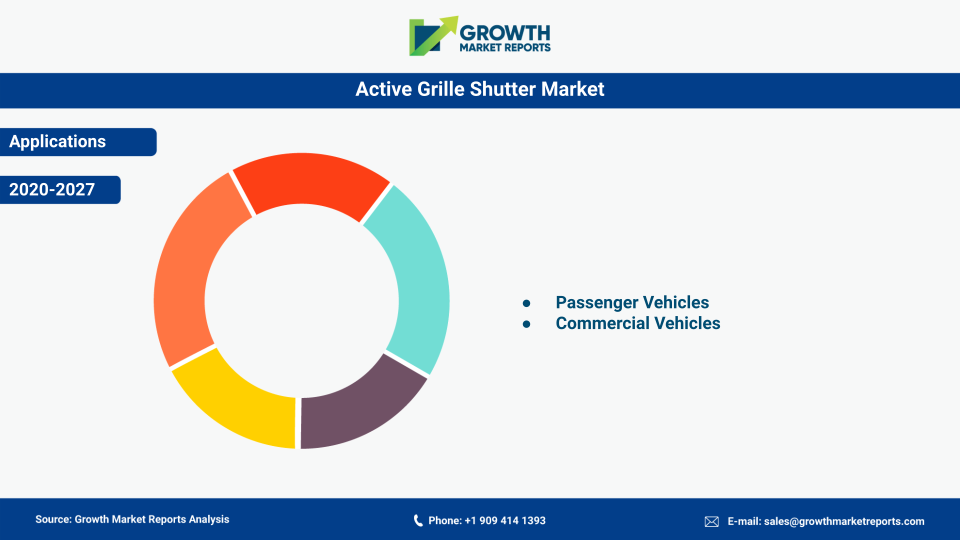
Also, the market is further segmented based on applications areas of these Active Grille Shutter and it includes Passenger Vehicles, and Commercial Vehicles.
The active grille shutter system is relatively recent technology and comes under that product category that mend vehicle aerodynamics while creating major energy savings. Active Grille Shutters are specially invented for extreme airflow conditions (around 10 % of driving conditions).
Active Grille ShutterMarket Dynamics
Rise in consumer demand for fuel efficient Vehicles
The constant increase in fuel prices is making buyers move towards fuel-efficient cars. Also, with the increasing gas prices, most of the consumers have included hybrid and electric vehicles to their list. The automotive industry is now aiming high to adopt new technologies, which will improve the fuel economy and reduction in harmful emissions.
Active grille shutter is one of such components used to improve fuel efficiency by reducing vehicle drag resistance. Electric cars and hybrid cars are expected to have a maximum usage of active grille shutters to make them fuel-efficient cars.
Sports and luxury car manufacturers are also focusing on delivering high performance and speed in their vehicles and active grille shutters are coming out to be one of the solutions for this as these shutters are efficient aerodynamics is help reduce the drag.
On the other hand manufacturers like General Motors, BMW, Honda, Lincoln, Mazda, Mercedes, and Rolls-Royce have already started using active grille shutters which are contributing to the growth of the active grille shutter market.
Growing demand in Super/sports Cars or Premium Car
The manufacturers of Active Grille Shutters are focusing on improving the quality of these shutters to deliver more effectual products to automobile manufacturers. The high performance and long-lasting products will help the payers as a revenue pocketing process.
The demand for fuel-efficient cars is growing rapidly, numerous manufacturers of the super or premium car are focusing on reducing fuel consumption in complex engine car.
For instance, Valeo, one of the leading manufacturers of active grille shutter has located Valeo’s Active Grille Shutter in the front-end of the vehicle to control and adjust the airflow to improve the vehicle’s aerodynamics and thermal performance using controlled shutters. Valeo uses its automatic actuators for opening and closing with the real thermal needs of the vehicle.
Similarly, according to Ford, the Ford Mustang with a 2.3L four cylinder engine has been fitted with active grille shutters as hard-working turbos requisite a lot of cooling air via grille shutters. Ford has been using active grille shutters on many vehicles.
The all-new 2015 F-150 pickups with EcoBoost engines, take advantage of this fuel-saving technology. Looking forward to improving performance, Ford’s engineers are working tirelessly to create vehicles that both look great and help peak functionality of advance active grille shutters in the future.
Active Grille Shutter MarketSegmental Outlook
Based on type, the market has been divided into polyester, polypropylene (PP), and polycarbonate (PC). The Polypropylene (PP) segment is expected to hold a substantial market share during the forecast period as the light weight of these high performance plastics is coming out to be crucial part in making a more fuel efficient vehicles. The Polyster segment is anticipated to expand at a CAGR of around 4.6% during the forecast period.
Based on the application, the market has been bifurcated into passenger vehicles and commercial vehicles. The Passenger Vehicles segment is the dominant segment in terms of market share. This segment is expected to register the highest CAGR growth rate of 5.3% over the forecast period.
Increasing demand for fuel-efficient cars due to rising pollution issues is fueling the demand growth of this segment. Also, the leading car manufacturers are early pioneers of these active grille shutters.
In passenger cars, an active grille shutter is brought to the front-most area of a vehicle to improve fuel economy, reduce weight, and lower overall system cost, while providing styling flexibility. For example, Nissan Altima upgrades with additional active grille shutter available in 4-cylinder variant that accelerates quickly on the highway by closing automatically.
Active Grille Shutter MarketRegional Outlook
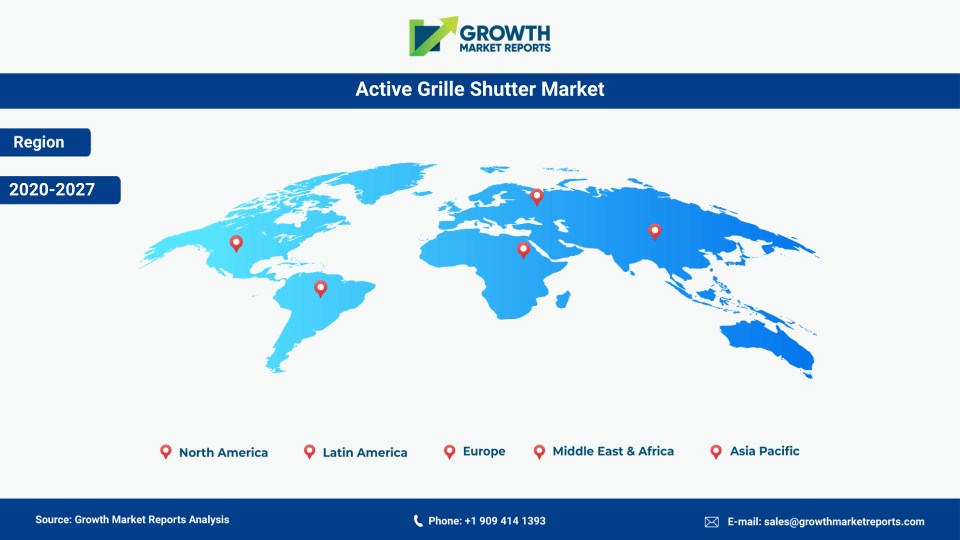
Based on regions, the global active grille shutter market is fragmented into North America, Europe, Asia Pacific, Latin America, and Middle East & Africa (MEA). Among these regions, Europe is likely to be the prominent market during the forecast period. Norms like stricter emission regulation by European Commission have pushed to early adoption of active grille shutter into European vehicles.
BMW Series, Citroen C4 Picasso, Renault Twingo & Talisman, and Audi Q7 are some of major European models to adopt active grille shutters. The market of Asia-Pacific is likely to register a high growth pace during the forecast period with China as a leading country in the regional market.
Key Benefits for Industry Participants & Stakeholders
In-depth Analysis of the Global Active Grille Shutter Market
Historical, Current and Projected Market Size in terms of Value
Potential & Niche Segments and Regions Exhibiting Promising Growth Covered
Industry Drivers, Restraints and Opportunities Covered in the Study
Recent Industry Trends and Developments
Competitive Landscape & Strategies of Key Players
Neutral Perspective on Global Active Grille Shutter Market Performance
The leading players like Valeo, Magna, and Rochling, among others, are a few of the early pioneers for this system in the global market. These companies started to offer active grille shutters to automobile manufacturers from 2011 and 2012. These manufacturers are providing shutters with actuators also as assembly options. Besides, different types of polymers as high-performance plastic is one of the most preferred options for the shutter manufacturers. Features like Light weight, durability, and corrosion resistance of these plastics are making them highly preferred components to manufacture the active grille shutter
The players are adopting key strategies such as product launch, acquisition, and geographical expansion where potential opportunity for the Active Grille Shutter extraction is added in the company’s capacity.
Automakers such as Daimler (C-Class), Hyundai (Optima), Tesla (Model S), General Motors (Cruze), and Toyota (Camry) are offering active grille shutters in their models. Aerodynamics is becoming a major feature of electric vehicles in order to improve battery efficiency.
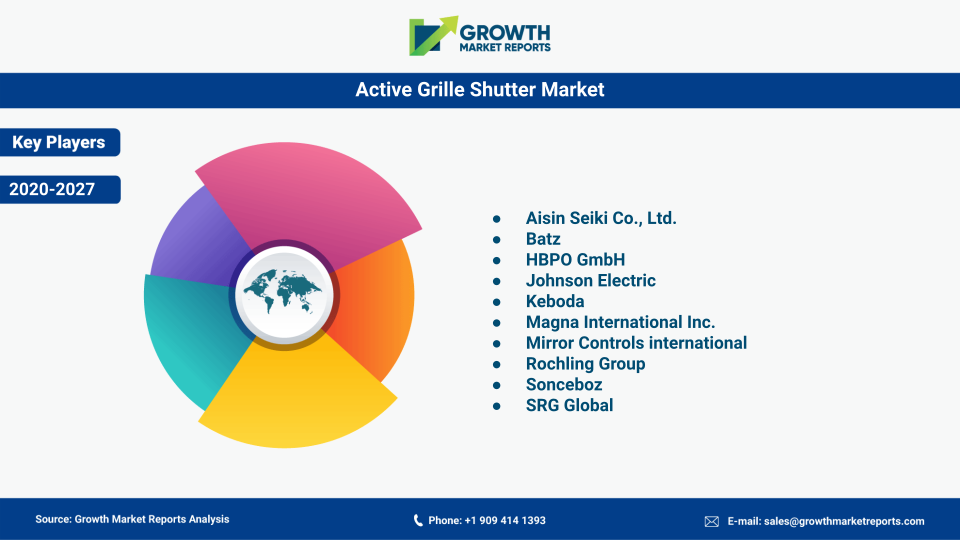
Chapter 1 Executive Summary Chapter 2 Assumptions and Acronyms Used Chapter 3 Research Methodology Chapter 4 Active Grille Shutter Market Overview 4.1 Introduction 4.1.1 Market Taxonomy 4.1.2 Market Definition 4.1.3 Macro-Economic Factors Impacting the Market Growth 4.2 Active Grille Shutter Market Dynamics 4.2.1 Market Drivers 4.2.2 Market Restraints 4.2.3 Market Opportunity 4.3 Active Grille Shutter Market - Supply Chain Analysis 4.3.1 List of Key Suppliers 4.3.2 List of Key Distributors 4.3.3 List of Key Consumers 4.4 Key Forces Shaping the Active Grille Shutter Market 4.4.1 Bargaining Power of Suppliers 4.4.2 Bargaining Power of Buyers 4.4.3 Threat of Substitution 4.4.4 Threat of New Entrants 4.4.5 Competitive Rivalry 4.5 Global Active Grille Shutter Market Size & Forecast, 2017-2027 4.5.1 Active Grille Shutter Market Size and Y-o-Y Growth 4.5.2 Active Grille Shutter Market Absolute $ Opportunity 4.6 Global Active Grille Shutter Market: Impact Of Key Regulations 4.7 Technology Landscape Chapter 5 Global Active Grille Shutter Market Analysis and Forecast By Type 5.1 Introduction 5.1.1 Key Market Trends & Growth Opportunities By Type 5.1.2 Basis Point Share (BPS) Analysis By Type 5.1.3 Absolute $ Opportunity Assessment By Type 5.2 Active Grille Shutter Market Size Forecast By Type 5.2.1 Polyster 5.2.2 Polypropylene (PP) 5.2.3 Polycarbonate (PC) 5.3 Market Attractiveness Analysis By Type Chapter 6 Global Active Grille Shutter Market Analysis and Forecast By Application 6.1 Introduction 6.1.1 Key Market Trends & Growth Opportunities By Application 6.1.2 Basis Point Share (BPS) Analysis By Application 6.1.3 Absolute $ Opportunity Assessment By Application 6.2 Active Grille Shutter Market Size Forecast By Application 6.2.1 Passenger Vehicles 6.2.2 Commercial Vehicles 6.3 Market Attractiveness Analysis By Application Chapter 7 Global Active Grille Shutter Market Analysis and Forecast by Region 7.1 Introduction 7.1.1 Key Market Trends & Growth Opportunities by Region 7.1.2 Basis Point Share (BPS) Analysis by Region 7.1.3 Absolute $ Opportunity Assessment by Region 7.2 Active Grille Shutter Market Size Forecast by Region 7.2.1 North America 7.2.2 Europe 7.2.3 Asia Pacific 7.2.4 Latin America 7.2.5 Middle East & Africa (MEA) 7.3 Market Attractiveness Analysis by Region Chapter 8 Coronavirus Disease (COVID-19) Impact 8.1 Introduction 8.2 Current & Future Impact Analysis 8.3 Economic Impact Analysis 8.4 Government Policies 8.5 Investment Scenario Chapter 9 North America Active Grille Shutter Analysis and Forecast 9.1 Introduction 9.2 North America Active Grille Shutter Market Size Forecast by Country 9.2.1 U.S. 9.2.2 Canada 9.3 Basis Point Share (BPS) Analysis by Country 9.4 Absolute $ Opportunity Assessment by Country 9.5 Market Attractiveness Analysis by Country 9.6 North America Active Grille Shutter Market Size Forecast By Type 9.6.1 Polyster 9.6.2 Polypropylene (PP) 9.6.3 Polycarbonate (PC) 9.7 Basis Point Share (BPS) Analysis By Type 9.8 Absolute $ Opportunity Assessment By Type 9.9 Market Attractiveness Analysis By Type 9.10 North America Active Grille Shutter Market Size Forecast By Application 9.10.1 Passenger Vehicles 9.10.2 Commercial Vehicles 9.11 Basis Point Share (BPS) Analysis By Application 9.12 Absolute $ Opportunity Assessment By Application 9.13 Market Attractiveness Analysis By Application Chapter 10 Europe Active Grille Shutter Analysis and Forecast 10.1 Introduction 10.2 Europe Active Grille Shutter Market Size Forecast by Country 10.2.1 Germany 10.2.2 France 10.2.3 Italy 10.2.4 U.K. 10.2.5 Spain 10.2.6 Russia 10.2.7 Rest of Europe 10.3 Basis Point Share (BPS) Analysis by Country 10.4 Absolute $ Opportunity Assessment by Country 10.5 Market Attractiveness Analysis by Country 10.6 Europe Active Grille Shutter Market Size Forecast By Type 10.6.1 Polyster 10.6.2 Polypropylene (PP) 10.6.3 Polycarbonate (PC) 10.7 Basis Point Share (BPS) Analysis By Type 10.8 Absolute $ Opportunity Assessment By Type 10.9 Market Attractiveness Analysis By Type 10.10 Europe Active Grille Shutter Market Size Forecast By Application 10.10.1 Passenger Vehicles 10.10.2 Commercial Vehicles 10.11 Basis Point Share (BPS) Analysis By Application 10.12 Absolute $ Opportunity Assessment By Application 10.13 Market Attractiveness Analysis By Application Chapter 11 Asia Pacific Active Grille Shutter Analysis and Forecast 11.1 Introduction 11.2 Asia Pacific Active Grille Shutter Market Size Forecast by Country 11.2.1 China 11.2.2 Japan 11.2.3 South Korea 11.2.4 India 11.2.5 Australia 11.2.6 South East Asia (SEA) 11.2.7 Rest of Asia Pacific (APAC) 11.3 Basis Point Share (BPS) Analysis by Country 11.4 Absolute $ Opportunity Assessment by Country 11.5 Market Attractiveness Analysis by Country 11.6 Asia Pacific Active Grille Shutter Market Size Forecast By Type 11.6.1 Polyster 11.6.2 Polypropylene (PP) 11.6.3 Polycarbonate (PC) 11.7 Basis Point Share (BPS) Analysis By Type 11.8 Absolute $ Opportunity Assessment By Type 11.9 Market Attractiveness Analysis By Type 11.10 Asia Pacific Active Grille Shutter Market Size Forecast By Application 11.10.1 Passenger Vehicles 11.10.2 Commercial Vehicles 11.11 Basis Point Share (BPS) Analysis By Application 11.12 Absolute $ Opportunity Assessment By Application 11.13 Market Attractiveness Analysis By Application Chapter 12 Latin America Active Grille Shutter Analysis and Forecast 12.1 Introduction 12.2 Latin America Active Grille Shutter Market Size Forecast by Country 12.2.1 Brazil 12.2.2 Mexico 12.2.3 Rest of Latin America (LATAM) 12.3 Basis Point Share (BPS) Analysis by Country 12.4 Absolute $ Opportunity Assessment by Country 12.5 Market Attractiveness Analysis by Country 12.6 Latin America Active Grille Shutter Market Size Forecast By Type 12.6.1 Polyster 12.6.2 Polypropylene (PP) 12.6.3 Polycarbonate (PC) 12.7 Basis Point Share (BPS) Analysis By Type 12.8 Absolute $ Opportunity Assessment By Type 12.9 Market Attractiveness Analysis By Type 12.10 Latin America Active Grille Shutter Market Size Forecast By Application 12.10.1 Passenger Vehicles 12.10.2 Commercial Vehicles 12.11 Basis Point Share (BPS) Analysis By Application 12.12 Absolute $ Opportunity Assessment By Application 12.13 Market Attractiveness Analysis By Application Chapter 13 Middle East & Africa (MEA) Active Grille Shutter Analysis and Forecast 13.1 Introduction 13.2 Middle East & Africa (MEA) Active Grille Shutter Market Size Forecast by Country 13.2.1 Saudi Arabia 13.2.2 South Africa 13.2.3 UAE 13.2.4 Rest of Middle East & Africa (MEA) 13.3 Basis Point Share (BPS) Analysis by Country 13.4 Absolute $ Opportunity Assessment by Country 13.5 Market Attractiveness Analysis by Country 13.6 Middle East & Africa (MEA) Active Grille Shutter Market Size Forecast By Type 13.6.1 Polyster 13.6.2 Polypropylene (PP) 13.6.3 Polycarbonate (PC) 13.7 Basis Point Share (BPS) Analysis By Type 13.8 Absolute $ Opportunity Assessment By Type 13.9 Market Attractiveness Analysis By Type 13.10 Middle East & Africa (MEA) Active Grille Shutter Market Size Forecast By Application 13.10.1 Passenger Vehicles 13.10.2 Commercial Vehicles 13.11 Basis Point Share (BPS) Analysis By Application 13.12 Absolute $ Opportunity Assessment By Application 13.13 Market Attractiveness Analysis By Application Chapter 14 Competition Landscape 14.1 Active Grille Shutter Market: Competitive Dashboard 14.2 Global Active Grille Shutter Market: Market Share Analysis, 2019 14.3 Company Profiles (Details – Overview, Financials, Developments, Strategy) 14.3.1 Aisin Seiki Co., Ltd. 14.3.2 Batz 14.3.3 HBPO GmbH 14.3.4 Johnson Electric 14.3.5 Keboda 14.3.6 Magna International Inc. 14.3.7 Mirror Controls international 14.3.8 Rochling Group 14.3.9 Sonceboz 14.3.10 SRG Global 14.3.11 STARLITE Co., Ltd. 14.3.12 Techniplas, LLC. 14.3.13 Valeo
Ask for Research To Be Focused On Specific Regions or Segments
Receive Data As Per Your Format and Definition
Companies Profiled based on Your Requirements
Breaking Down Competitive Landscape as per Your Requirements
Any Level of Customization
Our Clients
Client Testinomials
We needed a highly accurate and precise report, which Growth Market Reports delivered promptly. The company compiled information from a wide array of reliable agencies and sourcess.It is extremely satisfactory to be working with you. Strategy Head of Major Tech Company
We were very pleased to contact Growth Market Reports as they tailored reports precisely as per our requirements. As we are dealing with the aerospace and defense industry, we need reports of high accuracy and substantial quality. Major Player in Defense Industry
Extremely delighted to have a well-crafted report on “Global Packaging Solutions Market Research Report” from your team. Thank you for providing me with all our requirements and for incorporating our suggestions. CMO of Leading Packaging Company from USA
I had a good experience working with Growth Market Reports as they were very open to all constructive changes in the report. I found that the report had its charm embedded with ample of data. Founder and Managing Partner of Major Korean Company
Our company has been working with Growth Market Reports for some years now and we are very happy with the quality of the reports provided by the company.I, on behalf of my organization, would like to thank you for offering professional reports. Global Consulting Firm
According to this Growth Market Reports report, the market from Active Grille Shutter is likely to register a CAGR over 5.2% during forecast period 2020-2027, with an anticipated valuation of USD 4,920.1 million by the end of the 2027.
In addition to market size (in USD Million) and Company Market Share (in % for base year 2019), other data such as technology landscape, regulatory landscape, and entry level strategy.
Rise in consumer demand for fuel efficient vehicles and growing demand in super cars or premium car are expected to drive the market growth during forecast period.
The base year considered for the global Active Grille Shutter market report is 2019. The complete analysis period is 2017 to 2027, wherein, 2017 & 2018 are the historic years and the forecast is provided from 2020 to 2027.











 Request For Customization
 Enquiry Before Buying
 Speak With Analyst