Automotive HuD Market Research Report 2033

Automotive HuD Market Research Report 2033

Segments - by Product Type (Combiner-projected HUD, Windshield-projected HUD, Augmented Reality HUD), by Technology (Conventional HUD, AR-based HUD), by Vehicle Type (Passenger Cars, Commercial Vehicles), by Sales Channel (OEM, Aftermarket), by Application (Navigation, Driver Assistance, Safety and Security, Others)

https://growthmarketreports.com/Raksha
Author : Raksha Sharma
https://growthmarketreports.com/Vaibhav
Fact-checked by : V. Chandola
https://growthmarketreports.com/Shruti
Editor : Shruti Bhat

Upcoming | Report ID :AL-202 | 4.4 Rating | 77 Reviews | 258 Pages | Format : Docx PDF

Report Description


Automotive HuD Market Outlook

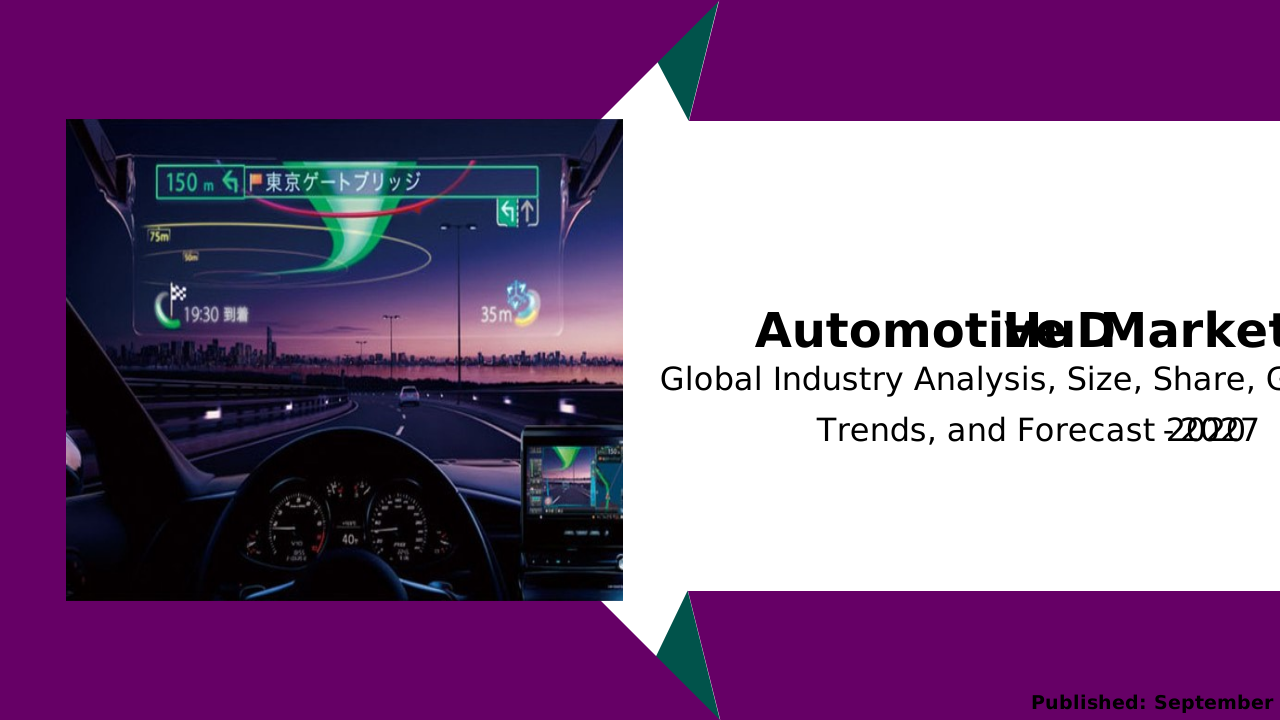
According to our latest research, the global Automotive Head-up Display (HuD) market size reached USD 1.85 billion in 2024, reflecting robust demand across both OEM and aftermarket segments. The market is projected to expand at a CAGR of 20.7% through the forecast period, with the total market value anticipated to reach USD 11.76 billion by 2033. This extraordinary growth is fueled by increasing consumer demand for advanced safety features, the proliferation of connected vehicles, and rapid technological advancements in augmented reality and display technologies within the automotive sector.

The primary growth driver for the Automotive HuD market is the escalating focus on vehicle and driver safety. Governments and regulatory authorities worldwide are implementing stringent safety norms, which are compelling automakers to integrate advanced driver assistance systems (ADAS) and information displays like HuDs. These systems project critical information such as speed, navigation, and warning signals directly onto the windshield or a combiner, minimizing driver distraction and enhancing situational awareness. Additionally, the growing awareness among consumers regarding the benefits of such features, including reduced accident rates and improved driving comfort, is further propelling the adoption of head-up displays in both passenger cars and commercial vehicles.

Another significant factor contributing to the market’s expansion is the rapid evolution of display technologies, particularly the integration of augmented reality (AR) into automotive HuDs. AR-based HuDs provide real-time, context-aware information, such as navigation cues and hazard warnings, overlaid seamlessly on the driver’s field of view. This advancement not only enhances the user experience but also aligns with the broader trend of digitalization and connectivity in vehicles. The automotive industry’s ongoing transformation toward autonomous and semi-autonomous vehicles is also catalyzing the demand for sophisticated display systems that can convey complex data intuitively and safely to drivers and passengers alike.

The market’s growth is further bolstered by the increased penetration of luxury and premium vehicles, where head-up displays are often offered as standard or high-value optional features. However, as HuD technology becomes more cost-effective, its adoption is rapidly trickling down to mid-range and even entry-level vehicles, broadening the addressable market. The aftermarket segment is also witnessing healthy growth, driven by consumers seeking to retrofit their vehicles with advanced safety and infotainment features. Additionally, the proliferation of electric vehicles, which often serve as platforms for cutting-edge in-car technologies, is expected to provide new avenues for HuD market expansion over the coming years.

From a regional perspective, Asia Pacific dominates the global Automotive HuD market, underpinned by the high volume of vehicle production and sales in countries such as China, Japan, and South Korea. North America and Europe are also significant contributors, driven by early technology adoption, stringent safety regulations, and strong consumer demand for advanced automotive features. Meanwhile, emerging markets in Latin America and the Middle East & Africa are showing increasing interest in automotive safety and convenience technologies, presenting lucrative growth opportunities for HuD manufacturers and suppliers.

Global Automotive HuD Industry Outlook

Product Type Analysis

The Automotive Head-up Display market is segmented by product type into Combiner-projected HUD, Windshield-projected HUD, and Augmented Reality HUD. The windshield-projected HUD segment currently holds the largest share, accounting for more than 45% of the market in 2024. This dominance is attributed to the superior display quality and larger field of view offered by windshield-projected systems, which enhance driver safety and comfort by seamlessly integrating information with the driver’s line of sight. The growing preference for these systems among automakers, especially in premium and luxury vehicles, is expected to sustain their market leadership throughout the forecast period.

Combiner-projected HUDs, which use a separate transparent screen to display information, are gaining traction in mid-range and compact vehicles due to their cost-effectiveness and ease of integration. These systems provide essential safety and navigation data without requiring extensive modifications to the vehicle’s windshield, making them an attractive option for both OEMs and aftermarket suppliers. As the demand for affordable safety technologies continues to rise, the combiner-projected HUD segment is anticipated to exhibit steady growth, particularly in price-sensitive markets.

The most dynamic segment, however, is the Augmented Reality HUD. AR-based HUDs are revolutionizing the user experience by overlaying real-time, context-aware information directly onto the road ahead. This technology not only improves navigation and hazard awareness but also supports advanced driver assistance systems by providing visual cues for lane-keeping, adaptive cruise control, and collision avoidance. The AR HUD segment is projected to register the highest CAGR of over 28% from 2025 to 2033, driven by rapid advancements in display technologies and increasing investment from both established automotive players and tech startups.

The evolution of product types within the Automotive HuD market is closely linked to ongoing R&D efforts and collaborations between automotive OEMs and technology providers. As display resolution, brightness, and color accuracy continue to improve, head-up displays are becoming more versatile and capable of supporting a wider range of applications. Furthermore, the integration of voice recognition, gesture control, and connectivity features is enhancing the functionality and appeal of modern HUD systems, opening new possibilities for personalized and intuitive in-car experiences.

In summary, the product type segment of the Automotive HuD market is characterized by rapid innovation and diversification, with each sub-segment catering to distinct customer needs and vehicle categories. While windshield-projected and combiner-projected HUDs address the mainstream market, the rise of AR-based solutions is poised to redefine the competitive landscape, offering unparalleled safety, convenience, and user engagement for the next generation of vehicles.

Report Scope

Attributes Details
Report Title Automotive HuD Market Research Report 2033
By Product Type Combiner-projected HUD, Windshield-projected HUD, Augmented Reality HUD
By Technology Conventional HUD, AR-based HUD
By Vehicle Type Passenger Cars, Commercial Vehicles
By Sales Channel OEM, Aftermarket
By Application Navigation, Driver Assistance, Safety and Security, Others
Regions Covered North America, Europe, APAC, Latin America, MEA
Base Year 2024
Historic Data 2018-2023
Forecast Period 2025-2033
Number of Pages 258
Number of Tables & Figures 309
Customization Available Yes, the report can be customized as per your need.

Technology Analysis

The Automotive HuD market is bifurcated by technology into Conventional HUD and AR-based HUD. Conventional HUDs, which primarily display basic information such as speed, navigation directions, and warning signals, have been the mainstay of the market for over a decade. These systems are widely adopted in both premium and mid-range vehicles, owing to their proven safety benefits and relatively mature technology. As of 2024, conventional HUDs account for approximately 60% of the total market share, reflecting their widespread acceptance and integration across diverse vehicle platforms.

However, the landscape is rapidly shifting with the advent of AR-based HUDs, which represent the cutting edge of in-car display technology. AR HUDs leverage advanced sensors, cameras, and real-time data processing to project interactive, context-sensitive information directly onto the driver’s field of view. This technology enables the seamless integration of navigation prompts, hazard alerts, and ADAS features, enhancing both situational awareness and user engagement. The AR-based HUD segment is experiencing explosive growth, with a projected CAGR exceeding 28% through 2033, driven by increasing investment from automakers and technology firms seeking to differentiate their offerings in an increasingly competitive market.

The transition from conventional to AR-based HUDs is being facilitated by significant advancements in display hardware, including higher resolution, greater brightness, and improved color accuracy. Additionally, the integration of artificial intelligence and machine learning algorithms is enabling more sophisticated data visualization and interaction, such as predictive navigation, driver monitoring, and personalized content delivery. These innovations are not only enhancing the safety and convenience of driving but also aligning with broader trends in connected and autonomous vehicles.

Despite the rapid growth of AR-based HUDs, conventional HUDs are expected to maintain a significant presence in the market, particularly in cost-sensitive segments and regions where affordability remains a key consideration. Many automakers are adopting a tiered approach, offering basic HUD functionality as standard or optional features in entry-level models, while reserving advanced AR capabilities for premium vehicles. This strategy allows manufacturers to address a broad spectrum of customer needs and price points, thereby maximizing market penetration.

In conclusion, the technology segment of the Automotive HuD market is characterized by a dynamic interplay between established conventional systems and emerging AR-based solutions. As display and sensor technologies continue to evolve, the boundaries between these segments are likely to blur, giving rise to hybrid systems that combine the best of both worlds. The ongoing shift toward AR-based HUDs is expected to be a key driver of market growth and innovation over the next decade.

Vehicle Type Analysis

The Automotive HuD market is segmented by vehicle type into Passenger Cars and Commercial Vehicles. Passenger cars represent the dominant segment, accounting for over 75% of the global market in 2024. This dominance is primarily due to the higher production volumes and greater consumer demand for advanced safety and infotainment features in personal vehicles. Automakers are increasingly incorporating head-up displays as standard or optional equipment in mid-range, premium, and luxury passenger cars, driven by consumer preferences for enhanced safety, comfort, and connectivity.

The adoption of HuD technology in passenger cars is further supported by the growing emphasis on in-car digital experiences and the proliferation of ADAS features. As consumers become more aware of the benefits of head-up displays, including reduced driver distraction and improved situational awareness, the demand for these systems is expected to rise across all vehicle segments. The trend toward electrification and autonomous driving is also contributing to the growth of the passenger car segment, as electric and self-driving vehicles often serve as platforms for the latest in-car technologies, including advanced HUDs.

In contrast, the commercial vehicle segment, which includes trucks, buses, and vans, is still in the early stages of HuD adoption but is poised for significant growth over the forecast period. The increasing focus on fleet safety, driver productivity, and regulatory compliance is prompting commercial vehicle operators to invest in advanced driver assistance and information display systems. Head-up displays offer tangible benefits in terms of reducing driver fatigue, improving navigation accuracy, and enhancing overall safety, making them an attractive proposition for commercial fleets.

Several leading commercial vehicle manufacturers are actively exploring the integration of HuD technology into their product offerings, often in collaboration with specialized technology providers. The aftermarket segment is also witnessing increased demand from fleet operators seeking to retrofit their vehicles with advanced safety and navigation features. As the cost of HuD systems continues to decline and their capabilities expand, the commercial vehicle segment is expected to register a healthy CAGR, contributing significantly to the overall growth of the market.

Overall, the vehicle type segment of the Automotive HuD market is characterized by a strong bias toward passenger cars, but the commercial vehicle segment represents a substantial untapped opportunity. As regulatory pressures, safety concerns, and technological advancements converge, both segments are expected to witness robust growth, underpinned by the rising importance of driver information and assistance systems in modern vehicles.

Sales Channel Analysis

The Automotive HuD market is divided by sales channel into OEM and Aftermarket segments. The OEM segment dominates the market, accounting for nearly 80% of total sales in 2024. This dominance is driven by the increasing integration of head-up displays as factory-installed features in new vehicles, particularly in the premium and luxury segments. Automakers are leveraging HuD technology as a key differentiator, offering it as standard or high-value optional equipment to enhance safety, comfort, and user experience.

OEMs are also at the forefront of innovation, collaborating with technology providers and display manufacturers to develop next-generation HUD systems that incorporate augmented reality, voice recognition, and connectivity features. These partnerships are enabling the rapid commercialization of advanced HuD solutions, which are being rolled out across a growing number of vehicle models and trim levels. The trend toward modular vehicle architectures and digital cockpits is further facilitating the integration of HUDs, making them more accessible to a broader range of consumers.

The aftermarket segment, while smaller in absolute terms, is experiencing steady growth as consumers seek to upgrade their existing vehicles with advanced safety and infotainment features. Aftermarket HuD systems are typically more affordable and easier to install, making them an attractive option for price-sensitive customers and fleet operators. The proliferation of online sales channels and specialized installers is also contributing to the expansion of the aftermarket segment, particularly in regions with a large population of older vehicles.

Aftermarket suppliers are increasingly focusing on product innovation and differentiation, offering a wide range of HuD solutions with varying levels of functionality, display quality, and compatibility. Many aftermarket systems now feature wireless connectivity, smartphone integration, and customizable display options, catering to the diverse needs and preferences of modern drivers. As consumer awareness of the benefits of head-up displays continues to grow, the aftermarket segment is expected to play an increasingly important role in the overall market landscape.

In summary, the sales channel segment of the Automotive HuD market is characterized by a strong OEM presence, underpinned by ongoing innovation and integration efforts. However, the aftermarket segment presents significant growth opportunities, particularly in emerging markets and among cost-conscious consumers seeking to enhance the safety and functionality of their vehicles.

Application Analysis

The Automotive HuD market is segmented by application into Navigation, Driver Assistance, Safety and Security, and Others. Navigation is the leading application, accounting for over 40% of the market in 2024. The ability to project real-time navigation cues directly onto the windshield or combiner significantly reduces driver distraction and enhances route guidance, making it one of the most sought-after features among consumers. As vehicles become more connected and navigation systems more sophisticated, the demand for HuDs that can display dynamic, context-aware navigation information is expected to rise.

Driver assistance is another key application area, encompassing features such as lane departure warnings, adaptive cruise control, and collision avoidance alerts. Head-up displays play a critical role in delivering these warnings and alerts in an intuitive and non-intrusive manner, thereby enhancing driver awareness and reducing reaction times. The growing adoption of ADAS technologies in both passenger and commercial vehicles is expected to drive significant growth in this application segment over the forecast period.

Safety and security applications are also gaining prominence, as automakers and regulators place increasing emphasis on accident prevention and driver protection. HuDs can display critical safety information, such as speed limits, blind spot warnings, and emergency notifications, directly in the driver’s line of sight. This capability not only improves safety outcomes but also supports compliance with evolving regulatory standards and consumer expectations for advanced safety features.

The “Others” category includes a range of emerging applications, such as infotainment, vehicle diagnostics, and personalized content delivery. As head-up displays become more versatile and capable, their potential applications are expanding beyond traditional safety and navigation functions. The integration of voice assistants, gesture controls, and connectivity features is enabling new use cases, such as real-time weather updates, traffic alerts, and entertainment options, further enhancing the value proposition of HuD systems.

Overall, the application segment of the Automotive HuD market is characterized by a broadening scope and increasing sophistication, driven by technological advancements and evolving consumer preferences. As vehicles become more connected, autonomous, and intelligent, the range of applications for head-up displays is expected to expand, creating new opportunities for innovation and market growth.

Opportunities & Threats

One of the most promising opportunities in the Automotive HuD market lies in the integration of advanced technologies such as augmented reality, artificial intelligence, and connectivity. As vehicles become more connected and autonomous, the demand for sophisticated display systems that can convey complex, real-time information in an intuitive and user-friendly manner is expected to rise. AR-based HUDs, in particular, offer significant potential for differentiation and value creation, enabling automakers to deliver immersive, context-aware experiences that enhance safety, convenience, and user engagement. The ongoing shift toward electric vehicles and digital cockpits is also creating new avenues for innovation and market expansion, as these platforms are ideally suited for the integration of next-generation display technologies.

Emerging markets represent another significant growth opportunity for the Automotive HuD market. As vehicle ownership levels rise and consumer awareness of safety and convenience features increases, demand for head-up displays is expected to surge in regions such as Asia Pacific, Latin America, and the Middle East & Africa. OEMs and aftermarket suppliers that can offer cost-effective, scalable solutions tailored to the unique needs of these markets are well-positioned to capture a substantial share of future growth. Strategic partnerships, localization of manufacturing, and targeted marketing efforts will be critical success factors for companies seeking to capitalize on these opportunities.

Despite the strong growth outlook, the Automotive HuD market faces several restraining factors and threats. High costs associated with advanced HUD systems, particularly AR-based solutions, remain a significant barrier to widespread adoption, especially in price-sensitive segments and regions. Technical challenges related to display quality, integration, and compatibility with different vehicle architectures can also hinder market penetration. Additionally, concerns regarding driver distraction and information overload must be carefully managed through thoughtful design and user interface optimization. Regulatory uncertainty and the pace of standardization in emerging markets may also pose challenges for market participants.

Regional Outlook

Asia Pacific leads the global Automotive HuD market, accounting for approximately 42% of total market revenue in 2024, or about USD 777 million. The region’s dominance is driven by the high volume of vehicle production and sales in China, Japan, and South Korea, as well as the rapid adoption of advanced automotive technologies. The presence of major automotive OEMs and a robust supply chain ecosystem further support the growth of the HuD market in Asia Pacific. The region is expected to maintain its leadership position through 2033, with a projected CAGR of over 22% as consumer demand for safety and convenience features continues to rise.

North America is the second-largest market, with total revenue of approximately USD 518 million in 2024, or 28% of the global market. The region’s strong performance is underpinned by early technology adoption, stringent safety regulations, and a high concentration of premium and luxury vehicle sales. Leading automakers and technology firms in the United States and Canada are at the forefront of HuD innovation, driving the development and commercialization of next-generation display systems. The North American market is expected to grow steadily over the forecast period, supported by ongoing investment in connected and autonomous vehicle technologies.

Europe holds a significant share of the Automotive HuD market, accounting for around 22% of global revenue, or USD 407 million in 2024. The region’s mature automotive industry, strong regulatory framework, and high consumer awareness of safety and convenience features are key growth drivers. Major European automakers are actively integrating HuD systems into their vehicle lineups, particularly in the premium and luxury segments. The market is expected to witness healthy growth, with a focus on sustainability, digitalization, and advanced driver assistance systems. Latin America and the Middle East & Africa, while currently representing smaller shares of the global market, are poised for accelerated growth as vehicle ownership and demand for advanced automotive technologies increase in these regions.

Automotive HuD Market Statistics

Competitor Outlook

The competitive landscape of the Automotive HuD market is characterized by intense innovation, strategic partnerships, and a continuous race to deliver cutting-edge display technologies. Leading automotive OEMs are collaborating with technology providers, display manufacturers, and software developers to create differentiated HuD solutions that enhance safety, convenience, and user experience. The market is witnessing a steady influx of new entrants, particularly in the AR-based HUD segment, as startups and established tech companies seek to capitalize on the growing demand for advanced in-car display systems. Intellectual property, product differentiation, and the ability to scale production efficiently are key factors shaping the competitive dynamics of the market.

Major players are investing heavily in research and development to improve display quality, reduce system costs, and expand the range of supported applications. The integration of artificial intelligence, connectivity, and voice recognition capabilities is enabling the development of more sophisticated and user-friendly HUD systems. Companies are also focusing on modular and scalable product architectures that can be easily integrated into different vehicle platforms, catering to the diverse needs of OEMs and consumers. The rise of digital cockpits and the transition toward autonomous vehicles are further intensifying competition, as market participants vie to establish themselves as leaders in the next generation of automotive display technologies.

The aftermarket segment is also witnessing increased competition, with a growing number of suppliers offering affordable, easy-to-install HuD solutions for older vehicles and commercial fleets. Product innovation, distribution networks, and customer support are critical success factors in this segment, as consumers seek reliable and high-performance upgrades for their vehicles. Strategic alliances, mergers and acquisitions, and geographic expansion are common strategies employed by leading players to strengthen their market position and capture new growth opportunities.

Some of the major companies operating in the global Automotive HuD market include Continental AG, Denso Corporation, Panasonic Corporation, Nippon Seiki Co. Ltd., Visteon Corporation, Bosch GmbH, Yazaki Corporation, Pioneer Corporation, Garmin Ltd., and WayRay AG. Continental AG and Denso Corporation are recognized for their strong OEM partnerships and extensive product portfolios, while Panasonic and Nippon Seiki are known for their leadership in display technology and innovation. Visteon Corporation and Bosch GmbH are at the forefront of digital cockpit and AR-based HUD development, leveraging their expertise in automotive electronics and software integration.

WayRay AG, a pioneer in holographic AR HUD technology, is rapidly gaining traction with its cutting-edge solutions for both OEM and aftermarket applications. Garmin Ltd. and Pioneer Corporation are notable players in the navigation and infotainment segments, offering a wide range of HuD products for diverse vehicle categories. Yazaki Corporation is recognized for its focus on cost-effective and scalable solutions, catering to the needs of both emerging and mature markets. Collectively, these companies are driving the evolution of the Automotive HuD market, shaping the future of in-car information display and user experience.

Key Players

  • Continental AG
  • Denso Corporation
  • Nippon Seiki Co., Ltd.
  • Visteon Corporation
  • Panasonic Corporation
  • Bosch (Robert Bosch GmbH)
  • Yazaki Corporation
  • Pioneer Corporation
  • Garmin Ltd.
  • Harman International (Samsung Electronics)
  • Valeo S.A.
  • Texas Instruments Incorporated
  • MicroVision, Inc.
  • HUDWAY LLC
  • WayRay AG
  • E-Lead Electronic Co., Ltd.
  • FIC Group
  • Luxoft (A DXC Technology Company)
  • 3M Company
  • JVCKENWOOD Corporation
Automotive HuD Market Overview

Segments

The Automotive HuD market has been segmented on the basis of

Product Type

  • Combiner-projected HUD
  • Windshield-projected HUD
  • Augmented Reality HUD

Technology

  • Conventional HUD
  • AR-based HUD

Vehicle Type

  • Passenger Cars
  • Commercial Vehicles

Sales Channel

  • OEM
  • Aftermarket

Application

  • Navigation
  • Driver Assistance
  • Safety and Security
  • Others

Competitive Landscape

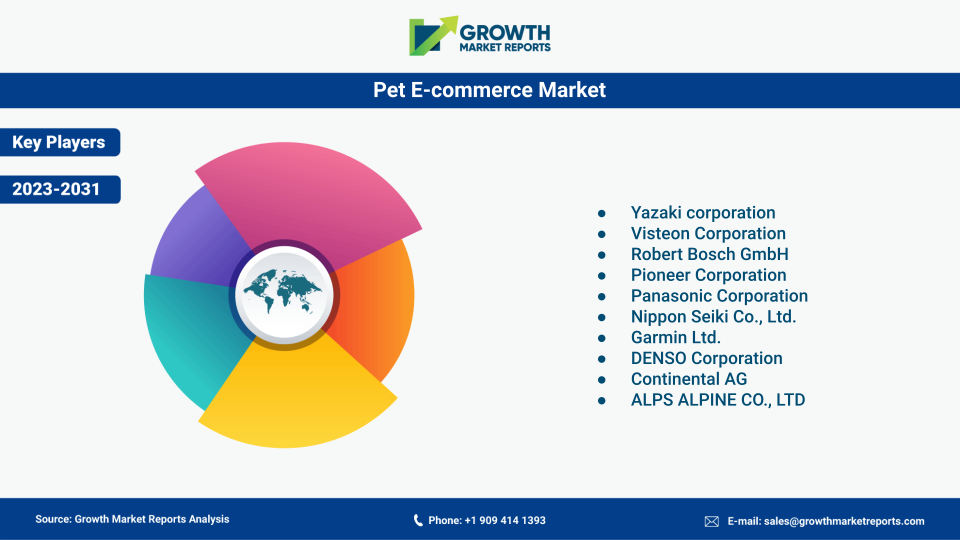
Key players in the global automotive HuD market include Yazaki corporation, Visteon Corporation, Robert Bosch GmbH, Pioneer Corporation, Panasonic Corporation, Nippon Seiki Co., Ltd., Garmin Ltd., DENSO Corporation, Continental AG, and ALPS ALPINE CO., LTD.

These players are engaged in strategies such as
expansions, product developments, mergers & acquisitions, partnerships, supply contracts, and collaborations.

Automotive HuD Market Key Players

Frequently Asked Questions

The market is divided into OEM (original equipment manufacturer) and aftermarket segments. OEMs dominate with nearly 80% of sales, but the aftermarket is growing as consumers retrofit older vehicles with advanced HuD systems.

Opportunities include the integration of AR, AI, and connectivity, as well as growth in emerging markets. Challenges include high costs of advanced systems, technical integration issues, and regulatory uncertainties.

Leading companies include Continental AG, Denso Corporation, Panasonic Corporation, Nippon Seiki Co. Ltd., Visteon Corporation, Bosch GmbH, Yazaki Corporation, Pioneer Corporation, Garmin Ltd., and WayRay AG.

Key applications include navigation (the largest segment), driver assistance, safety and security, and emerging uses such as infotainment and vehicle diagnostics.

Passenger cars account for over 75% of the market, driven by higher production volumes and consumer demand for safety and infotainment features. Commercial vehicles are also adopting HuDs, especially for fleet safety and driver assistance.

The market is segmented into Conventional HUDs, which display basic information, and AR-based HUDs, which offer interactive, context-sensitive data overlays. AR-based HUDs are experiencing the highest growth rate.

The main product types are Combiner-projected HUD, Windshield-projected HUD, and Augmented Reality (AR) HUD. Windshield-projected HUDs currently hold the largest market share, while AR HUDs are expected to grow the fastest.

Asia Pacific dominates the market, accounting for about 42% of global revenue in 2024, followed by North America and Europe. Emerging markets in Latin America and the Middle East & Africa are also showing strong growth potential.

Key growth drivers include increasing demand for advanced safety features, the proliferation of connected vehicles, rapid advancements in augmented reality and display technologies, and stringent government safety regulations.

The global Automotive HuD market reached USD 1.85 billion in 2024 and is projected to grow at a CAGR of 20.7%, reaching USD 11.76 billion by 2033.

Table Of Content

Chapter 1 Executive Summary
Chapter 2 Assumptions and Acronyms Used
Chapter 3 Research Methodology
Chapter 4 Automotive HuD Market Overview
   4.1 Introduction
      4.1.1 Market Taxonomy
      4.1.2 Market Definition
      4.1.3 Macro-Economic Factors Impacting the Market Growth
   4.2 Automotive HuD Market Dynamics
      4.2.1 Market Drivers
      4.2.2 Market Restraints
      4.2.3 Market Opportunity
   4.3 Automotive HuD Market - Supply Chain Analysis
      4.3.1 List of Key Suppliers
      4.3.2 List of Key Distributors
      4.3.3 List of Key Consumers
   4.4 Key Forces Shaping the Automotive HuD Market
      4.4.1 Bargaining Power of Suppliers
      4.4.2 Bargaining Power of Buyers
      4.4.3 Threat of Substitution
      4.4.4 Threat of New Entrants
      4.4.5 Competitive Rivalry
   4.5 Global Automotive HuD Market Size & Forecast, 2023-2032
      4.5.1 Automotive HuD Market Size and Y-o-Y Growth
      4.5.2 Automotive HuD Market Absolute $ Opportunity

Chapter 5 Global Automotive HuD Market Analysis and Forecast By Product Type
   5.1 Introduction
      5.1.1 Key Market Trends & Growth Opportunities By Product Type
      5.1.2 Basis Point Share (BPS) Analysis By Product Type
      5.1.3 Absolute $ Opportunity Assessment By Product Type
   5.2 Automotive HuD Market Size Forecast By Product Type
      5.2.1 Combiner-projected HUD
      5.2.2 Windshield-projected HUD
      5.2.3 Augmented Reality HUD
   5.3 Market Attractiveness Analysis By Product Type

Chapter 6 Global Automotive HuD Market Analysis and Forecast By Technology
   6.1 Introduction
      6.1.1 Key Market Trends & Growth Opportunities By Technology
      6.1.2 Basis Point Share (BPS) Analysis By Technology
      6.1.3 Absolute $ Opportunity Assessment By Technology
   6.2 Automotive HuD Market Size Forecast By Technology
      6.2.1 Conventional HUD
      6.2.2 AR-based HUD
   6.3 Market Attractiveness Analysis By Technology

Chapter 7 Global Automotive HuD Market Analysis and Forecast By Vehicle Type
   7.1 Introduction
      7.1.1 Key Market Trends & Growth Opportunities By Vehicle Type
      7.1.2 Basis Point Share (BPS) Analysis By Vehicle Type
      7.1.3 Absolute $ Opportunity Assessment By Vehicle Type
   7.2 Automotive HuD Market Size Forecast By Vehicle Type
      7.2.1 Passenger Cars
      7.2.2 Commercial Vehicles
   7.3 Market Attractiveness Analysis By Vehicle Type

Chapter 8 Global Automotive HuD Market Analysis and Forecast By Sales Channel
   8.1 Introduction
      8.1.1 Key Market Trends & Growth Opportunities By Sales Channel
      8.1.2 Basis Point Share (BPS) Analysis By Sales Channel
      8.1.3 Absolute $ Opportunity Assessment By Sales Channel
   8.2 Automotive HuD Market Size Forecast By Sales Channel
      8.2.1 OEM
      8.2.2 Aftermarket
   8.3 Market Attractiveness Analysis By Sales Channel

Chapter 9 Global Automotive HuD Market Analysis and Forecast By Application
   9.1 Introduction
      9.1.1 Key Market Trends & Growth Opportunities By Application
      9.1.2 Basis Point Share (BPS) Analysis By Application
      9.1.3 Absolute $ Opportunity Assessment By Application
   9.2 Automotive HuD Market Size Forecast By Application
      9.2.1 Navigation
      9.2.2 Driver Assistance
      9.2.3 Safety and Security
      9.2.4 Others
   9.3 Market Attractiveness Analysis By Application

Chapter 10 Global Automotive HuD Market Analysis and Forecast by Region
   10.1 Introduction
      10.1.1 Key Market Trends & Growth Opportunities By Region
      10.1.2 Basis Point Share (BPS) Analysis By Region
      10.1.3 Absolute $ Opportunity Assessment By Region
   10.2 Automotive HuD Market Size Forecast By Region
      10.2.1 North America
      10.2.2 Europe
      10.2.3 Asia Pacific
      10.2.4 Latin America
      10.2.5 Middle East & Africa (MEA)
   10.3 Market Attractiveness Analysis By Region

Chapter 11 Coronavirus Disease (COVID-19) Impact 
   11.1 Introduction 
   11.2 Current & Future Impact Analysis 
   11.3 Economic Impact Analysis 
   11.4 Government Policies 
   11.5 Investment Scenario

Chapter 12 North America Automotive HuD Analysis and Forecast
   12.1 Introduction
   12.2 North America Automotive HuD Market Size Forecast by Country
      12.2.1 U.S.
      12.2.2 Canada
   12.3 Basis Point Share (BPS) Analysis by Country
   12.4 Absolute $ Opportunity Assessment by Country
   12.5 Market Attractiveness Analysis by Country
   12.6 North America Automotive HuD Market Size Forecast By Product Type
      12.6.1 Combiner-projected HUD
      12.6.2 Windshield-projected HUD
      12.6.3 Augmented Reality HUD
   12.7 Basis Point Share (BPS) Analysis By Product Type 
   12.8 Absolute $ Opportunity Assessment By Product Type 
   12.9 Market Attractiveness Analysis By Product Type
   12.10 North America Automotive HuD Market Size Forecast By Technology
      12.10.1 Conventional HUD
      12.10.2 AR-based HUD
   12.11 Basis Point Share (BPS) Analysis By Technology 
   12.12 Absolute $ Opportunity Assessment By Technology 
   12.13 Market Attractiveness Analysis By Technology
   12.14 North America Automotive HuD Market Size Forecast By Vehicle Type
      12.14.1 Passenger Cars
      12.14.2 Commercial Vehicles
   12.15 Basis Point Share (BPS) Analysis By Vehicle Type 
   12.16 Absolute $ Opportunity Assessment By Vehicle Type 
   12.17 Market Attractiveness Analysis By Vehicle Type
   12.18 North America Automotive HuD Market Size Forecast By Sales Channel
      12.18.1 OEM
      12.18.2 Aftermarket
   12.19 Basis Point Share (BPS) Analysis By Sales Channel 
   12.20 Absolute $ Opportunity Assessment By Sales Channel 
   12.21 Market Attractiveness Analysis By Sales Channel
   12.22 North America Automotive HuD Market Size Forecast By Application
      12.22.1 Navigation
      12.22.2 Driver Assistance
      12.22.3 Safety and Security
      12.22.4 Others
   12.23 Basis Point Share (BPS) Analysis By Application 
   12.24 Absolute $ Opportunity Assessment By Application 
   12.25 Market Attractiveness Analysis By Application

Chapter 13 Europe Automotive HuD Analysis and Forecast
   13.1 Introduction
   13.2 Europe Automotive HuD Market Size Forecast by Country
      13.2.1 Germany
      13.2.2 France
      13.2.3 Italy
      13.2.4 U.K.
      13.2.5 Spain
      13.2.6 Russia
      13.2.7 Rest of Europe
   13.3 Basis Point Share (BPS) Analysis by Country
   13.4 Absolute $ Opportunity Assessment by Country
   13.5 Market Attractiveness Analysis by Country
   13.6 Europe Automotive HuD Market Size Forecast By Product Type
      13.6.1 Combiner-projected HUD
      13.6.2 Windshield-projected HUD
      13.6.3 Augmented Reality HUD
   13.7 Basis Point Share (BPS) Analysis By Product Type 
   13.8 Absolute $ Opportunity Assessment By Product Type 
   13.9 Market Attractiveness Analysis By Product Type
   13.10 Europe Automotive HuD Market Size Forecast By Technology
      13.10.1 Conventional HUD
      13.10.2 AR-based HUD
   13.11 Basis Point Share (BPS) Analysis By Technology 
   13.12 Absolute $ Opportunity Assessment By Technology 
   13.13 Market Attractiveness Analysis By Technology
   13.14 Europe Automotive HuD Market Size Forecast By Vehicle Type
      13.14.1 Passenger Cars
      13.14.2 Commercial Vehicles
   13.15 Basis Point Share (BPS) Analysis By Vehicle Type 
   13.16 Absolute $ Opportunity Assessment By Vehicle Type 
   13.17 Market Attractiveness Analysis By Vehicle Type
   13.18 Europe Automotive HuD Market Size Forecast By Sales Channel
      13.18.1 OEM
      13.18.2 Aftermarket
   13.19 Basis Point Share (BPS) Analysis By Sales Channel 
   13.20 Absolute $ Opportunity Assessment By Sales Channel 
   13.21 Market Attractiveness Analysis By Sales Channel
   13.22 Europe Automotive HuD Market Size Forecast By Application
      13.22.1 Navigation
      13.22.2 Driver Assistance
      13.22.3 Safety and Security
      13.22.4 Others
   13.23 Basis Point Share (BPS) Analysis By Application 
   13.24 Absolute $ Opportunity Assessment By Application 
   13.25 Market Attractiveness Analysis By Application

Chapter 14 Asia Pacific Automotive HuD Analysis and Forecast
   14.1 Introduction
   14.2 Asia Pacific Automotive HuD Market Size Forecast by Country
      14.2.1 China
      14.2.2 Japan
      14.2.3 South Korea
      14.2.4 India
      14.2.5 Australia
      14.2.6 South East Asia (SEA)
      14.2.7 Rest of Asia Pacific (APAC)
   14.3 Basis Point Share (BPS) Analysis by Country
   14.4 Absolute $ Opportunity Assessment by Country
   14.5 Market Attractiveness Analysis by Country
   14.6 Asia Pacific Automotive HuD Market Size Forecast By Product Type
      14.6.1 Combiner-projected HUD
      14.6.2 Windshield-projected HUD
      14.6.3 Augmented Reality HUD
   14.7 Basis Point Share (BPS) Analysis By Product Type 
   14.8 Absolute $ Opportunity Assessment By Product Type 
   14.9 Market Attractiveness Analysis By Product Type
   14.10 Asia Pacific Automotive HuD Market Size Forecast By Technology
      14.10.1 Conventional HUD
      14.10.2 AR-based HUD
   14.11 Basis Point Share (BPS) Analysis By Technology 
   14.12 Absolute $ Opportunity Assessment By Technology 
   14.13 Market Attractiveness Analysis By Technology
   14.14 Asia Pacific Automotive HuD Market Size Forecast By Vehicle Type
      14.14.1 Passenger Cars
      14.14.2 Commercial Vehicles
   14.15 Basis Point Share (BPS) Analysis By Vehicle Type 
   14.16 Absolute $ Opportunity Assessment By Vehicle Type 
   14.17 Market Attractiveness Analysis By Vehicle Type
   14.18 Asia Pacific Automotive HuD Market Size Forecast By Sales Channel
      14.18.1 OEM
      14.18.2 Aftermarket
   14.19 Basis Point Share (BPS) Analysis By Sales Channel 
   14.20 Absolute $ Opportunity Assessment By Sales Channel 
   14.21 Market Attractiveness Analysis By Sales Channel
   14.22 Asia Pacific Automotive HuD Market Size Forecast By Application
      14.22.1 Navigation
      14.22.2 Driver Assistance
      14.22.3 Safety and Security
      14.22.4 Others
   14.23 Basis Point Share (BPS) Analysis By Application 
   14.24 Absolute $ Opportunity Assessment By Application 
   14.25 Market Attractiveness Analysis By Application

Chapter 15 Latin America Automotive HuD Analysis and Forecast
   15.1 Introduction
   15.2 Latin America Automotive HuD Market Size Forecast by Country
      15.2.1 Brazil
      15.2.2 Mexico
      15.2.3 Rest of Latin America (LATAM)
   15.3 Basis Point Share (BPS) Analysis by Country
   15.4 Absolute $ Opportunity Assessment by Country
   15.5 Market Attractiveness Analysis by Country
   15.6 Latin America Automotive HuD Market Size Forecast By Product Type
      15.6.1 Combiner-projected HUD
      15.6.2 Windshield-projected HUD
      15.6.3 Augmented Reality HUD
   15.7 Basis Point Share (BPS) Analysis By Product Type 
   15.8 Absolute $ Opportunity Assessment By Product Type 
   15.9 Market Attractiveness Analysis By Product Type
   15.10 Latin America Automotive HuD Market Size Forecast By Technology
      15.10.1 Conventional HUD
      15.10.2 AR-based HUD
   15.11 Basis Point Share (BPS) Analysis By Technology 
   15.12 Absolute $ Opportunity Assessment By Technology 
   15.13 Market Attractiveness Analysis By Technology
   15.14 Latin America Automotive HuD Market Size Forecast By Vehicle Type
      15.14.1 Passenger Cars
      15.14.2 Commercial Vehicles
   15.15 Basis Point Share (BPS) Analysis By Vehicle Type 
   15.16 Absolute $ Opportunity Assessment By Vehicle Type 
   15.17 Market Attractiveness Analysis By Vehicle Type
   15.18 Latin America Automotive HuD Market Size Forecast By Sales Channel
      15.18.1 OEM
      15.18.2 Aftermarket
   15.19 Basis Point Share (BPS) Analysis By Sales Channel 
   15.20 Absolute $ Opportunity Assessment By Sales Channel 
   15.21 Market Attractiveness Analysis By Sales Channel
   15.22 Latin America Automotive HuD Market Size Forecast By Application
      15.22.1 Navigation
      15.22.2 Driver Assistance
      15.22.3 Safety and Security
      15.22.4 Others
   15.23 Basis Point Share (BPS) Analysis By Application 
   15.24 Absolute $ Opportunity Assessment By Application 
   15.25 Market Attractiveness Analysis By Application

Chapter 16 Middle East & Africa (MEA) Automotive HuD Analysis and Forecast
   16.1 Introduction
   16.2 Middle East & Africa (MEA) Automotive HuD Market Size Forecast by Country
      16.2.1 Saudi Arabia
      16.2.2 South Africa
      16.2.3 UAE
      16.2.4 Rest of Middle East & Africa (MEA)
   16.3 Basis Point Share (BPS) Analysis by Country
   16.4 Absolute $ Opportunity Assessment by Country
   16.5 Market Attractiveness Analysis by Country
   16.6 Middle East & Africa (MEA) Automotive HuD Market Size Forecast By Product Type
      16.6.1 Combiner-projected HUD
      16.6.2 Windshield-projected HUD
      16.6.3 Augmented Reality HUD
   16.7 Basis Point Share (BPS) Analysis By Product Type 
   16.8 Absolute $ Opportunity Assessment By Product Type 
   16.9 Market Attractiveness Analysis By Product Type
   16.10 Middle East & Africa (MEA) Automotive HuD Market Size Forecast By Technology
      16.10.1 Conventional HUD
      16.10.2 AR-based HUD
   16.11 Basis Point Share (BPS) Analysis By Technology 
   16.12 Absolute $ Opportunity Assessment By Technology 
   16.13 Market Attractiveness Analysis By Technology
   16.14 Middle East & Africa (MEA) Automotive HuD Market Size Forecast By Vehicle Type
      16.14.1 Passenger Cars
      16.14.2 Commercial Vehicles
   16.15 Basis Point Share (BPS) Analysis By Vehicle Type 
   16.16 Absolute $ Opportunity Assessment By Vehicle Type 
   16.17 Market Attractiveness Analysis By Vehicle Type
   16.18 Middle East & Africa (MEA) Automotive HuD Market Size Forecast By Sales Channel
      16.18.1 OEM
      16.18.2 Aftermarket
   16.19 Basis Point Share (BPS) Analysis By Sales Channel 
   16.20 Absolute $ Opportunity Assessment By Sales Channel 
   16.21 Market Attractiveness Analysis By Sales Channel
   16.22 Middle East & Africa (MEA) Automotive HuD Market Size Forecast By Application
      16.22.1 Navigation
      16.22.2 Driver Assistance
      16.22.3 Safety and Security
      16.22.4 Others
   16.23 Basis Point Share (BPS) Analysis By Application 
   16.24 Absolute $ Opportunity Assessment By Application 
   16.25 Market Attractiveness Analysis By Application

Chapter 17 Competition Landscape 
   17.1 Automotive HuD Market: Competitive Dashboard
   17.2 Global Automotive HuD Market: Market Share Analysis, 2023
   17.3 Company Profiles (Details – Overview, Financials, Developments, Strategy) 
      17.3.1 Continental AG
Denso Corporation
Nippon Seiki Co., Ltd.
Visteon Corporation
Panasonic Corporation
Bosch (Robert Bosch GmbH)
Yazaki Corporation
Pioneer Corporation
Garmin Ltd.
Harman International (Samsung Electronics)
Valeo S.A.
Texas Instruments Incorporated
MicroVision, Inc.
HUDWAY LLC
WayRay AG
E-Lead Electronic Co., Ltd.
FIC Group
Luxoft (A DXC Technology Company)
3M Company
JVCKENWOOD Corporation

Methodology

Our Clients

General Electric
General Mills
FedEx Logistics
Nestle SA
The John Holland Group
sinopec
Dassault Aviation
Siemens Healthcare