Segments - by Material Type (Aluminum, Steel, Cast Iron, Others), by Vehicle Type (Passenger Cars, Light Commercial Vehicles, Heavy Commercial Vehicles, Others), by Coating Type (Thermal Barrier Coating, Dry Film Lubricant Coating, Oil Shedding Coating, Others), by Piston Type (Trunk Piston, Crosshead Piston, Slipper Piston, Others), by Sales Channel (OEM, Aftermarket)
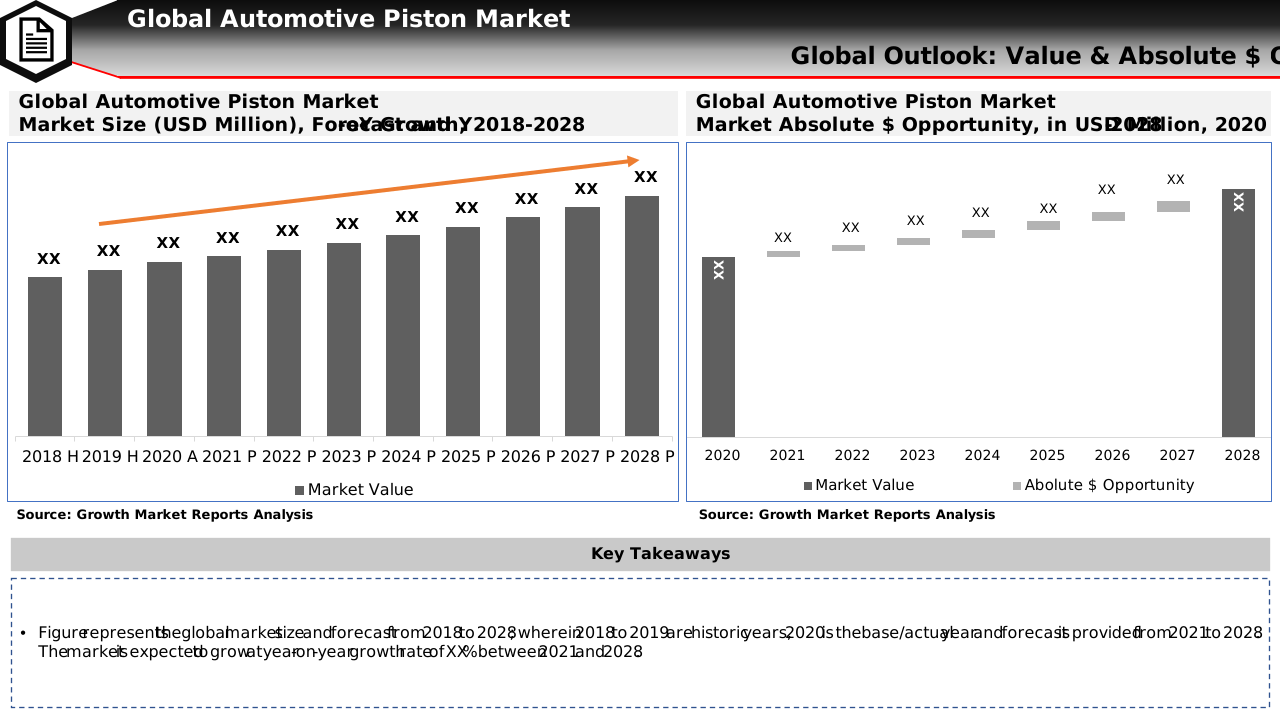
According to our latest research, the global automotive piston market size reached USD 4.86 billion in 2024, reflecting steady expansion driven by increasing vehicle production and technological advancements. The market is poised to grow at a CAGR of 5.2% from 2025 to 2033, with a projected market value of USD 7.73 billion by the end of the forecast period. This growth is primarily attributed to the rising demand for fuel-efficient vehicles, the proliferation of passenger and commercial vehicles across emerging markets, and the ongoing evolution of piston materials and designs to meet stringent emission standards.
A significant growth factor for the automotive piston market is the sustained recovery and expansion of the global automotive industry. As economies worldwide witness rising disposable incomes, urbanization, and improved infrastructure, the demand for both passenger cars and commercial vehicles continues to surge. This, in turn, directly influences the need for efficient and durable pistons, as they are vital components in internal combustion engines (ICEs). Furthermore, the resurgence in vehicle sales post-pandemic, especially in Asia Pacific and North America, has bolstered OEM production lines, driving up the consumption of advanced piston assemblies. The ongoing shift towards high-performance engines, which require robust piston technology to withstand elevated pressures and temperatures, is another critical factor propelling market growth.
Technological innovation is another cornerstone fueling the expansion of the automotive piston market. The industry has witnessed a transition from traditional cast iron pistons to lightweight aluminum and advanced steel variants, enhancing engine efficiency and reducing overall vehicle weight. The integration of sophisticated coating technologies, such as thermal barrier coatings and dry film lubricants, has significantly improved piston durability and performance under extreme operating conditions. These advancements not only extend the lifespan of pistons but also contribute to reduced friction losses, lower emissions, and improved fuel economy. The push for compliance with stringent emission norms in major automotive markets has further accelerated the adoption of such technologies, compelling manufacturers to invest in research and development for next-generation piston solutions.
Another pivotal factor shaping the automotive piston market is the growing focus on aftermarket sales and the replacement sector. With the global vehicle parc aging and the average lifespan of vehicles increasing, the demand for high-quality replacement pistons has surged. The aftermarket segment is characterized by a robust network of distributors and service centers, ensuring the availability of both OEM and high-performance aftermarket pistons. Additionally, the rise of e-commerce platforms and digital sales channels has made it easier for consumers and workshops to access a wide range of piston products, further stimulating market growth. The emphasis on timely maintenance and the rising popularity of performance tuning among automotive enthusiasts are also contributing to the sustained demand for aftermarket pistons.
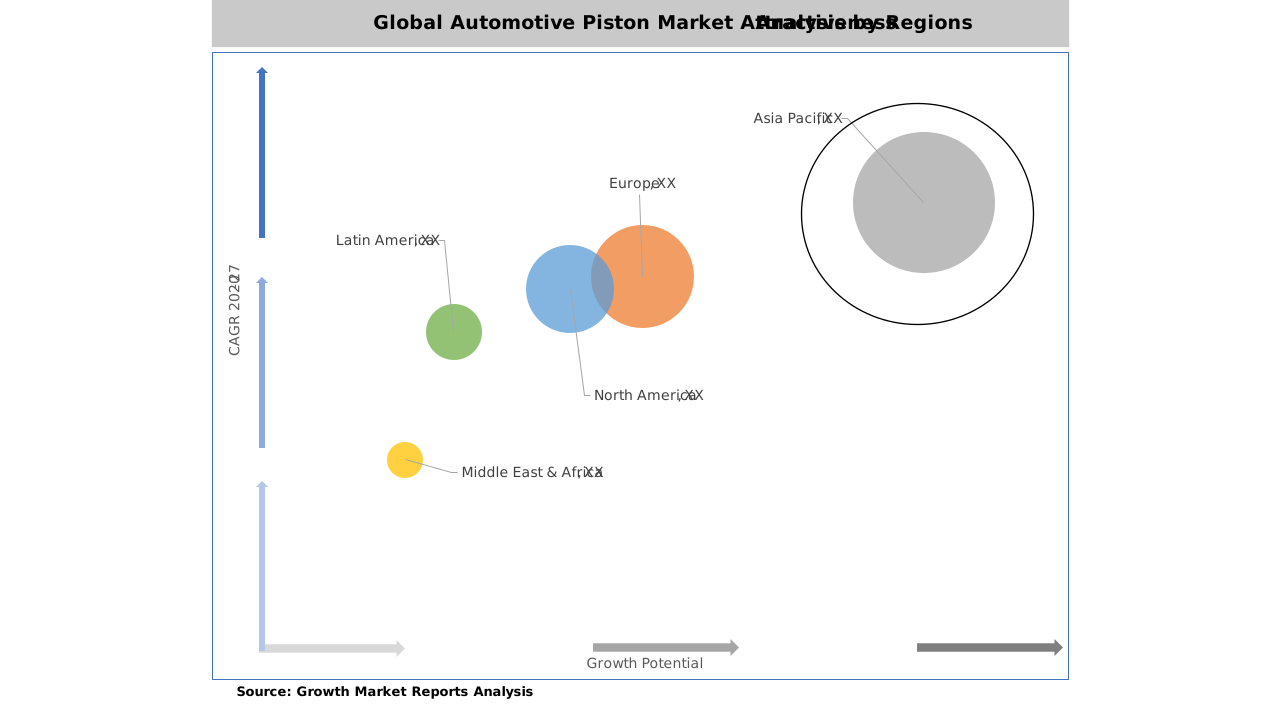
From a regional perspective, Asia Pacific continues to dominate the global automotive piston market, accounting for the largest share in 2024. This dominance is attributed to the region's vast automotive manufacturing base, particularly in countries like China, Japan, and India, coupled with a rapidly expanding vehicle fleet. North America and Europe also represent significant markets, driven by technological innovation and a strong presence of leading OEMs. Meanwhile, Latin America and the Middle East & Africa are witnessing gradual growth, supported by improving economic conditions and increased automotive investments. The regional landscape is expected to evolve further as emerging economies ramp up vehicle production and adopt advanced piston technologies to stay competitive in the global market.
The material composition of automotive pistons plays a critical role in determining engine performance, durability, and efficiency. In 2024, aluminum pistons dominate the market, accounting for over 65% of total sales due to their lightweight nature and excellent thermal conductivity. Aluminum pistons are widely favored in passenger cars and light commercial vehicles, as they contribute to improved fuel efficiency and reduced engine weight. Their ability to dissipate heat efficiently makes them suitable for high-speed and high-performance applications, which is increasingly important as automakers strive to meet stringent emission and fuel economy standards. The ongoing shift towards downsized turbocharged engines has further amplified the demand for advanced aluminum piston solutions.
Steel pistons represent a rapidly growing segment, particularly in heavy commercial vehicles and high-performance passenger cars. Steel offers superior strength and fatigue resistance compared to aluminum, making it ideal for applications subjected to high pressures and temperatures. The use of steel pistons in modern diesel engines has gained traction due to their ability to withstand thermal and mechanical stresses, ultimately enhancing engine longevity and reliability. Manufacturers are increasingly investing in the development of hybrid pistons that combine the lightweight benefits of aluminum with the robustness of steel, aiming to strike a balance between performance and durability.
Cast iron pistons, while gradually being phased out in favor of lighter alternatives, still hold relevance in certain niche applications. They are primarily used in older vehicle models and specific industrial or off-highway engines where cost-effectiveness and durability are prioritized over weight reduction. The inherent strength and wear resistance of cast iron make it suitable for engines operating under less stringent emission and performance requirements. However, as global automotive trends continue to favor lightweighting and efficiency, the market share of cast iron pistons is expected to decline over the forecast period.
Other material types, including composite and ceramic pistons, are emerging as potential game-changers in the automotive piston market. These advanced materials offer exceptional thermal stability, reduced friction, and enhanced wear resistance, making them attractive for next-generation engines and high-performance vehicles. While their adoption is currently limited by high production costs and technical challenges, ongoing research and development efforts are expected to unlock new opportunities for these materials in the coming years. As automakers seek to differentiate their offerings and comply with evolving regulatory standards, the demand for innovative piston materials will continue to shape the competitive landscape of the market.
| Attributes | Details |
| Report Title | Automotive Piston Market Research Report 2033 |
| By Material Type | Aluminum, Steel, Cast Iron, Others |
| By Vehicle Type | Passenger Cars, Light Commercial Vehicles, Heavy Commercial Vehicles, Others |
| By Coating Type | Thermal Barrier Coating, Dry Film Lubricant Coating, Oil Shedding Coating, Others |
| By Piston Type | Trunk Piston, Crosshead Piston, Slipper Piston, Others |
| By Sales Channel | OEM, Aftermarket |
| Regions Covered | North America, Europe, APAC, Latin America, MEA |
| Countries Covered | North America (United States, Canada), Europe (Germany, France, Italy, United Kingdom, Spain, Russia, Rest of Europe), Asia Pacific (China, Japan, South Korea, India, Australia, South East Asia (SEA), Rest of Asia Pacific), Latin America (Mexico, Brazil, Rest of Latin America), Middle East & Africa (Saudi Arabia, South Africa, United Arab Emirates, Rest of Middle East & Africa) |
| Base Year | 2024 |
| Historic Data | 2018-2023 |
| Forecast Period | 2025-2033 |
| Number of Pages | 274 |
| Number of Tables & Figures | 380 |
| Customization Available | Yes, the report can be customized as per your need. |
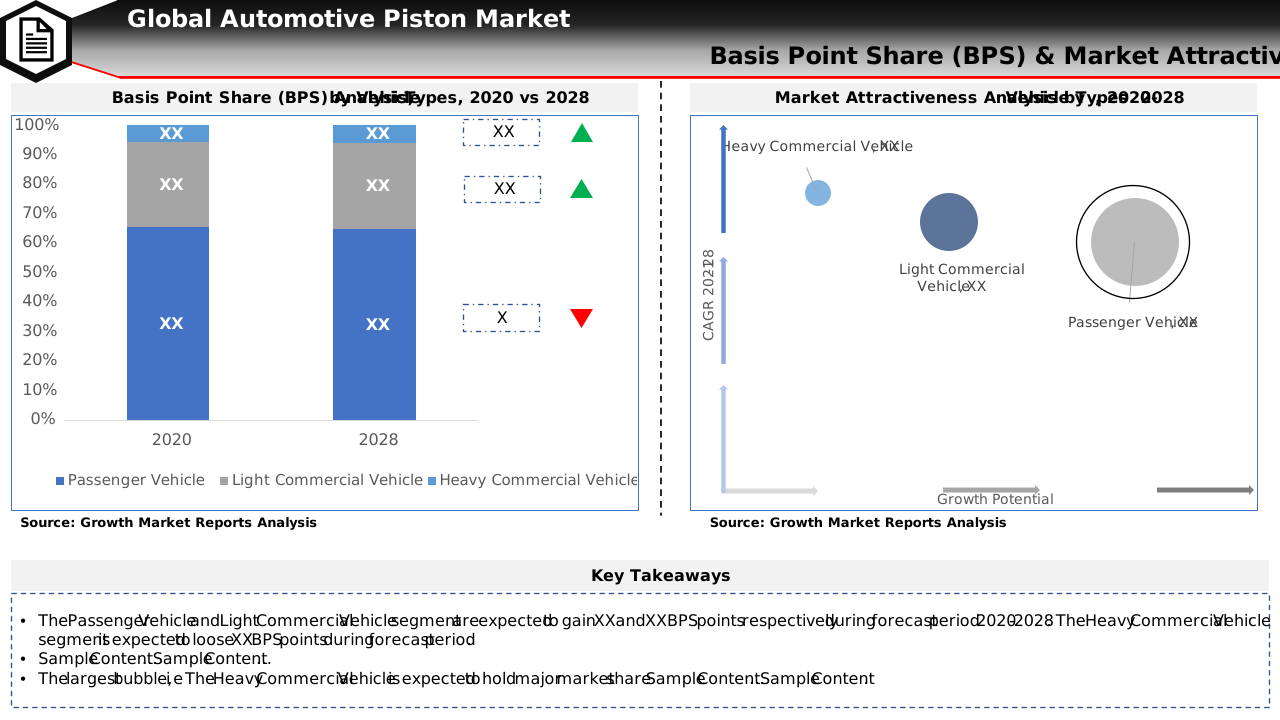
The automotive piston market is segmented by vehicle type into passenger cars, light commercial vehicles (LCVs), heavy commercial vehicles (HCVs), and others such as off-highway and two-wheelers. Passenger cars constitute the largest share of the market, driven by the sheer volume of vehicles produced globally and the increasing preference for personal mobility. The proliferation of compact and mid-sized cars, particularly in emerging economies, has spurred demand for lightweight and efficient piston solutions. Automakers are increasingly focusing on optimizing engine performance and reducing emissions in this segment, leading to the widespread adoption of advanced piston materials and coatings.
Light commercial vehicles represent a significant growth segment, fueled by the expansion of e-commerce, urban logistics, and last-mile delivery services. The need for reliable, fuel-efficient, and low-maintenance engines in LCVs has accelerated the adoption of high-performance piston technologies. Manufacturers are developing custom piston solutions tailored to the unique requirements of commercial fleets, emphasizing durability, cost-effectiveness, and ease of maintenance. The ongoing electrification trend in the LCV segment is also influencing piston design, with a focus on hybrid powertrains and range-extending internal combustion engines.
Heavy commercial vehicles demand robust and high-strength pistons capable of withstanding extreme operating conditions and prolonged usage. This segment includes trucks, buses, and construction vehicles, where engine reliability and longevity are paramount. The adoption of steel and hybrid pistons is particularly prominent in HCVs, as these materials offer superior resistance to thermal and mechanical stresses. The push for stricter emission standards in regions such as Europe and North America has prompted manufacturers to invest in advanced piston coatings and designs that minimize friction and enhance combustion efficiency.
The others category encompasses off-highway vehicles, agricultural machinery, and two-wheelers, each with distinct piston requirements. Off-highway and agricultural vehicles prioritize durability and cost-effectiveness, while two-wheelers demand lightweight and compact piston solutions for optimal performance. The growing popularity of recreational and specialty vehicles is also contributing to the diversification of piston applications, prompting manufacturers to develop customized solutions for niche markets. As vehicle types continue to evolve, the demand for versatile and adaptable piston technologies will remain a key driver of market growth.
The choice of coating on automotive pistons significantly influences their performance, longevity, and ability to withstand harsh engine environments. Thermal barrier coatings are among the most widely adopted, accounting for a substantial share of the market. These coatings are designed to protect pistons from extreme temperatures, reduce heat transfer to the piston crown, and enhance overall engine efficiency. The growing emphasis on high-performance engines and compliance with emission regulations has driven the adoption of advanced thermal barrier technologies, enabling manufacturers to deliver pistons that maintain their integrity under intense operating conditions.
Dry film lubricant coatings have gained popularity due to their ability to minimize friction and wear between the piston and cylinder wall. These coatings are particularly beneficial in engines operating at high speeds and loads, as they reduce the risk of scuffing and seizure. The use of dry film lubricants not only extends the lifespan of pistons but also contributes to improved fuel economy and reduced maintenance costs. As automakers continue to prioritize efficiency and reliability, the demand for advanced lubricant coatings is expected to rise steadily throughout the forecast period.
Oil shedding coatings represent another important category, designed to facilitate the rapid removal of oil from the piston surface. This helps prevent oil buildup and carbon deposits, which can negatively impact engine performance and emissions. Oil shedding coatings are particularly valuable in modern engines with tight tolerances and high operating pressures, where maintaining clean and efficient piston surfaces is critical. The ongoing push for cleaner engines and reduced particulate emissions has spurred innovation in oil shedding technologies, leading to the development of coatings that offer superior hydrophobic properties and durability.
Other coatings, including ceramic and composite variants, are emerging as promising solutions for specialized applications. These coatings offer enhanced thermal stability, corrosion resistance, and reduced friction, making them ideal for high-performance and racing engines. While their adoption in mainstream automotive applications is currently limited by cost and manufacturing complexities, ongoing advancements in coating technologies are expected to broaden their appeal. As the industry continues to seek ways to improve engine efficiency and durability, the role of advanced piston coatings will become increasingly prominent in shaping the competitive landscape.
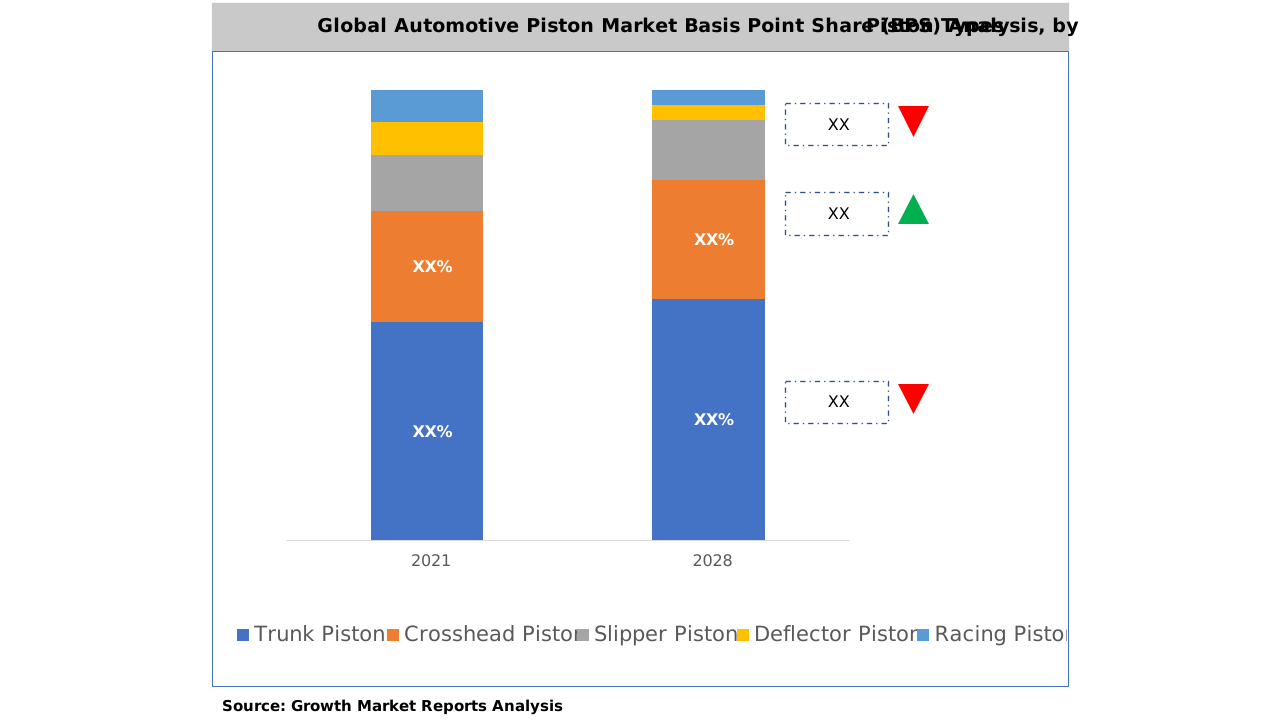
The automotive piston market encompasses a variety of piston types, each tailored to specific engine architectures and performance requirements. Trunk pistons are the most common type, widely used in passenger cars and light commercial vehicles. These pistons are characterized by their robust design and ability to operate efficiently across a range of engine speeds and loads. The versatility and cost-effectiveness of trunk pistons have made them the preferred choice for mass-market vehicles, driving their widespread adoption globally. Manufacturers are continuously refining trunk piston designs to enhance strength, reduce weight, and improve combustion efficiency.
Crosshead pistons are predominantly used in large, slow-speed diesel engines found in heavy commercial vehicles and marine applications. These pistons are designed to withstand extremely high pressures and temperatures, providing exceptional durability and longevity. The unique construction of crosshead pistons, which separates the piston crown from the connecting rod, allows for better heat dissipation and reduced wear. As the demand for heavy-duty vehicles and equipment continues to grow, the market for crosshead pistons is expected to expand, particularly in regions with a strong industrial and logistics base.
Slipper pistons are favored in high-performance and sports car engines due to their lightweight and compact design. These pistons offer reduced friction and inertia, enabling engines to achieve higher RPMs and improved responsiveness. The use of slipper pistons is closely linked to the trend towards downsized, turbocharged engines, where minimizing weight and maximizing efficiency are critical. Automakers are increasingly incorporating slipper piston technology in performance-oriented models, driving innovation in materials and manufacturing processes to meet the demands of enthusiasts and motorsport applications.
Other piston types, including articulated and composite pistons, are gaining traction in specialized applications where unique performance characteristics are required. Articulated pistons, for example, are used in engines that demand exceptional flexibility and load distribution, while composite pistons offer a combination of lightweight construction and high thermal resistance. The ongoing diversification of engine designs and the push for improved efficiency are expected to drive further innovation in piston types, creating new opportunities for manufacturers to differentiate their offerings and capture market share.
The automotive piston market is segmented by sales channel into OEM (Original Equipment Manufacturer) and Aftermarket. The OEM segment holds the largest share, driven by the direct supply of pistons to automotive manufacturers for installation in new vehicles. OEMs demand high-quality, precision-engineered pistons that meet stringent performance and reliability standards. The close collaboration between piston manufacturers and automotive OEMs has led to the development of custom piston solutions tailored to specific engine platforms, fostering long-term partnerships and stable revenue streams for suppliers. The ongoing trend towards platform sharing and modular engine architectures has further strengthened the OEM segment's dominance.
The aftermarket segment is characterized by the replacement and upgrade of pistons in existing vehicles. As the global vehicle parc ages and the average lifespan of vehicles increases, the demand for high-quality replacement pistons has surged. The aftermarket is highly fragmented, with a diverse network of distributors, retailers, and service centers catering to different customer segments. The rise of e-commerce platforms and digital sales channels has made it easier for consumers and workshops to access a wide range of piston products, driving growth in the aftermarket segment. Performance enthusiasts and motorsport participants also contribute to the demand for specialized aftermarket pistons, seeking enhanced durability and engine performance.
OEMs and aftermarket suppliers are increasingly focusing on product differentiation and customer support to maintain their competitive edge. OEMs emphasize quality assurance, warranty coverage, and integration with advanced engine technologies, while aftermarket suppliers prioritize affordability, availability, and compatibility with a broad range of vehicle models. The ongoing evolution of sales channels, including the integration of digital tools and data-driven customer engagement strategies, is reshaping the way pistons are marketed and sold. As the automotive industry continues to evolve, the interplay between OEM and aftermarket channels will remain a key determinant of market dynamics.
The growing trend of vehicle customization and performance tuning has also influenced the sales channel landscape. Aftermarket suppliers are expanding their product portfolios to include high-performance and specialty pistons designed for specific applications, such as racing, off-roading, and classic car restoration. This has created new opportunities for niche players to carve out a presence in the market, leveraging their expertise in specialized piston technologies. As consumer preferences continue to shift towards personalized and high-performance vehicles, the role of the aftermarket in the automotive piston market is expected to become increasingly prominent.
The automotive piston market presents numerous opportunities for growth and innovation, particularly in the areas of lightweighting and advanced material development. The ongoing push for fuel efficiency and emission reduction has created a strong demand for pistons made from lightweight materials such as aluminum alloys and composites. Manufacturers that invest in research and development to create next-generation piston materials and designs stand to gain a competitive advantage, as automakers seek solutions that enhance engine performance while complying with regulatory standards. The integration of smart sensors and digital monitoring technologies into piston assemblies offers another avenue for growth, enabling real-time performance tracking and predictive maintenance capabilities.
Emerging markets represent a significant opportunity for automotive piston manufacturers, as rising incomes, urbanization, and infrastructure development drive increased vehicle production and ownership. Countries in Asia Pacific, Latin America, and Africa are witnessing rapid growth in both passenger and commercial vehicle segments, creating a robust demand for high-quality pistons. The expansion of local manufacturing capabilities and the establishment of strategic partnerships with regional OEMs and distributors can help companies tap into these high-growth markets. Additionally, the rise of electric and hybrid vehicles presents new opportunities for piston manufacturers to diversify their product offerings, such as developing pistons for range-extending internal combustion engines and hybrid powertrains.
Despite these opportunities, the automotive piston market faces several restraining factors that could impact future growth. The increasing adoption of electric vehicles (EVs), which do not require traditional pistons, poses a long-term threat to market demand. As governments and consumers shift towards zero-emission mobility solutions, the reliance on internal combustion engines is expected to decline gradually, affecting the demand for pistons in the automotive sector. Manufacturers must adapt by exploring new applications for piston technology, such as in hybrid vehicles and non-automotive industries, to mitigate the impact of this transition. Additionally, fluctuations in raw material prices and supply chain disruptions can pose challenges to cost management and profitability, necessitating proactive risk mitigation strategies.
Asia Pacific remains the largest and most dynamic region in the global automotive piston market, contributing approximately USD 2.3 billion in 2024. This dominance is driven by the region's robust automotive manufacturing ecosystem, particularly in China, India, and Japan, which collectively account for a significant share of global vehicle production. The rapid expansion of the middle class, urbanization, and government initiatives to promote domestic manufacturing have fueled the demand for passenger cars and commercial vehicles, in turn boosting the consumption of advanced piston technologies. The region is expected to maintain a strong growth trajectory, with a projected CAGR of 6.1% through 2033, as local manufacturers continue to invest in capacity expansion and technological upgrades.
North America is the second-largest market, valued at approximately USD 1.1 billion in 2024. The region's growth is underpinned by a strong presence of leading automotive OEMs, a well-established aftermarket network, and a high rate of vehicle ownership. Technological innovation and a focus on high-performance and fuel-efficient engines have driven the adoption of advanced piston materials and coatings. The United States, in particular, is a key market for performance and specialty pistons, catering to motorsport and enthusiast segments. Despite the growing adoption of electric vehicles, the region's large existing vehicle fleet ensures sustained demand for replacement and aftermarket pistons.
Europe accounts for approximately USD 0.9 billion of the global market in 2024, characterized by a strong emphasis on emission reduction, engine efficiency, and technological advancement. The region is home to several leading piston manufacturers and automotive OEMs, driving innovation in piston design and manufacturing processes. Stringent regulatory standards and the push for lightweighting have accelerated the adoption of advanced materials and coatings in European vehicles. While the transition to electric mobility presents challenges, the region's focus on hybrid and high-performance vehicles is expected to sustain demand for advanced piston technologies. Latin America and the Middle East & Africa, although smaller in market size, are witnessing gradual growth driven by improving economic conditions and increased automotive investments, with combined market values under USD 0.6 billion.
The global automotive piston market is highly competitive, characterized by the presence of several established players and a growing number of regional and niche manufacturers. The competitive landscape is shaped by factors such as technological innovation, product quality, pricing strategies, and the ability to forge strong partnerships with automotive OEMs. Leading companies are investing heavily in research and development to enhance piston performance, durability, and efficiency, leveraging advanced materials and manufacturing processes to differentiate their offerings. The focus on sustainability and compliance with emission regulations has further intensified competition, as manufacturers strive to deliver solutions that meet evolving industry standards.
Strategic collaborations, mergers, and acquisitions are common in the automotive piston market, enabling companies to expand their product portfolios, access new markets, and strengthen their technological capabilities. Global players are increasingly establishing local manufacturing facilities and distribution networks in high-growth regions such as Asia Pacific and Latin America to capitalize on emerging opportunities. The rise of digitalization and smart manufacturing has also prompted companies to invest in automation, data analytics, and quality control systems, enhancing production efficiency and product consistency. The ability to offer customized piston solutions tailored to specific customer requirements is emerging as a key differentiator in the market.
The aftermarket segment presents unique challenges and opportunities for competitors, as it is characterized by a highly fragmented landscape and intense price competition. Companies that can offer high-quality, reliable, and affordable piston solutions, supported by robust customer service and technical support, are well-positioned to capture market share. The growing trend of vehicle customization and performance tuning has also created opportunities for niche players specializing in high-performance and specialty pistons. As consumer preferences continue to evolve, the ability to anticipate and respond to market trends will be critical for sustained success in the competitive landscape.
Major companies in the automotive piston market include Mahle GmbH, Federal-Mogul LLC (Tenneco Inc.), Aisin Seiki Co., Ltd., Hitachi Automotive Systems, Rheinmetall Automotive AG, KSPG AG, Shandong Binzhou Bohai Piston Co., Ltd., Art Metal Mfg. Co., Ltd., and Ross Racing Pistons. Mahle GmbH is renowned for its extensive product portfolio and focus on innovation, offering a wide range of piston solutions for passenger cars, commercial vehicles, and high-performance applications. Federal-Mogul, now part of Tenneco, is a global leader in engine components, with a strong presence in both OEM and aftermarket segments. Aisin Seiki and Hitachi Automotive Systems are key players in the Asia Pacific region, leveraging their expertise in advanced materials and manufacturing technologies to deliver high-quality piston products.
Rheinmetall Automotive AG and KSPG AG are prominent European manufacturers, known for their commitment to sustainability and technological excellence. Shandong Binzhou Bohai Piston Co., Ltd. is a major player in the Chinese market, catering to the rapidly growing demand for automotive pistons in Asia. Art Metal Mfg. Co., Ltd. and Ross Racing Pistons specialize in high-performance and specialty piston solutions, serving the needs of motorsport and enthusiast segments. These companies are continuously investing in research and development, strategic partnerships, and capacity expansion to maintain their competitive edge and capture new growth opportunities in the evolving automotive piston market.
The Automotive Piston market has been segmented on the basis of
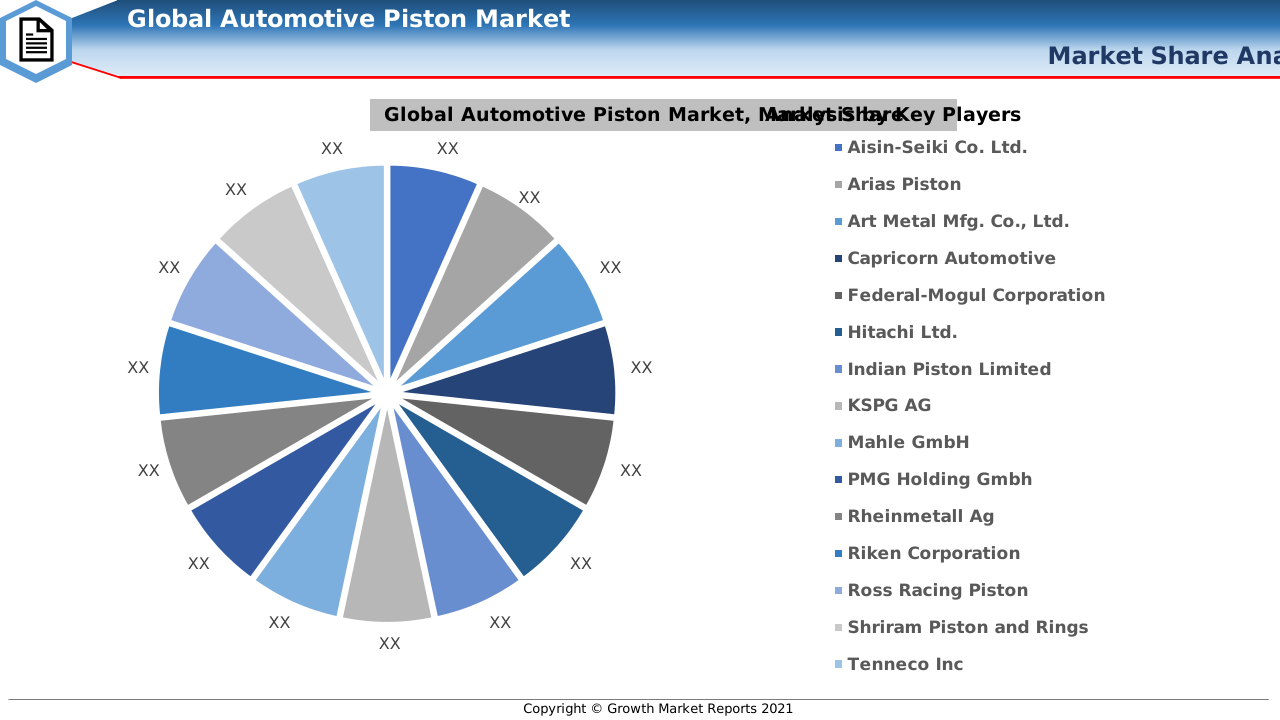
Key participants in the global automotive piston market include Aisin-Seiki Co. Ltd., Arias Piston, Art Metal Mfg. Co., Ltd., Capricorn Automotive, Federal-Mogul Corporation, Hitachi Ltd., Indian Piston Limited, KSPG AG, Mahle GmbH, PMG Holding Gmbh, Rheinmetall Ag, Riken Corporation, Ross Racing Piston, Shriram Piston and Rings, and Tenneco Inc.They engage in strategies such as mergers & acquisitions, collaborations agreements, and partnerships. Some of the key participants are adopting innovative methods for product launches to strengthen their geographical presence.
Emerging trends include the development of lightweight and advanced material pistons, integration of smart sensors for performance monitoring, growth in emerging markets, and expanding aftermarket and performance tuning segments.
Key companies include Mahle GmbH, Federal-Mogul LLC (Tenneco Inc.), Aisin Seiki Co., Ltd., Hitachi Automotive Systems, Rheinmetall Automotive AG, KSPG AG, Shandong Binzhou Bohai Piston Co., Ltd., Art Metal Mfg. Co., Ltd., and Ross Racing Pistons.
The increasing adoption of electric vehicles, which do not use traditional pistons, poses a long-term threat to market demand. However, opportunities remain in hybrid vehicles and range-extending internal combustion engines.
Automotive pistons are sold through OEM (Original Equipment Manufacturer) channels for new vehicles and the aftermarket for replacements and upgrades. The OEM segment holds the largest share, but the aftermarket is growing due to aging vehicle fleets and increased customization.
Asia Pacific leads the market, driven by large-scale automotive manufacturing in China, India, and Japan. North America and Europe are also significant markets, with strong OEM presence and technological innovation.
Recent advancements include thermal barrier coatings for heat resistance, dry film lubricants to reduce friction and wear, and oil shedding coatings to prevent oil buildup and carbon deposits. Ceramic and composite coatings are emerging for high-performance applications.
The market is segmented into passenger cars, light commercial vehicles (LCVs), heavy commercial vehicles (HCVs), and others such as off-highway vehicles and two-wheelers. Passenger cars hold the largest share, followed by LCVs and HCVs.
Aluminum pistons dominate the market due to their lightweight and excellent thermal conductivity, making them ideal for fuel efficiency and high-performance applications. Steel pistons are gaining traction in heavy-duty and high-performance vehicles for their strength and durability, while cast iron is mainly used in older or niche applications.
Key growth drivers include rising vehicle production, increasing demand for fuel-efficient vehicles, technological advancements in piston materials and coatings, and the expansion of passenger and commercial vehicle fleets in emerging markets.
The global automotive piston market reached USD 4.86 billion in 2024 and is projected to grow at a CAGR of 5.2% from 2025 to 2033, reaching an estimated USD 7.73 billion by the end of the forecast period.