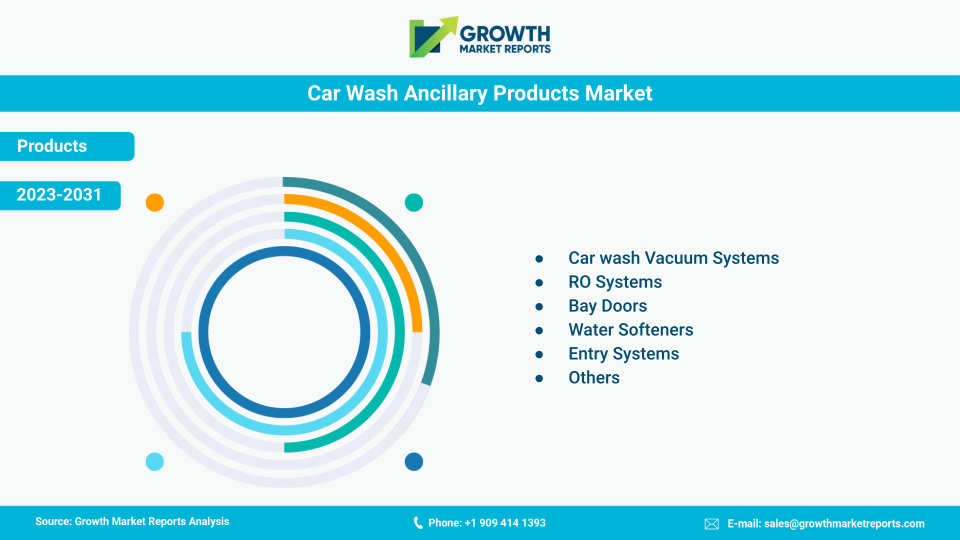
Segments - by Product Type (Tire Cleaners, Glass Cleaners, Wheel Cleaners, Interior Cleaners, Air Fresheners, Detailing Brushes, Others), by Application (Commercial Car Wash, DIY/Home Car Wash, Others), by Distribution Channel (Online Stores, Supermarkets/Hypermarkets, Specialty Stores, Others), by End-User (Individual, Automotive Service Centers, Car Dealerships, Others)
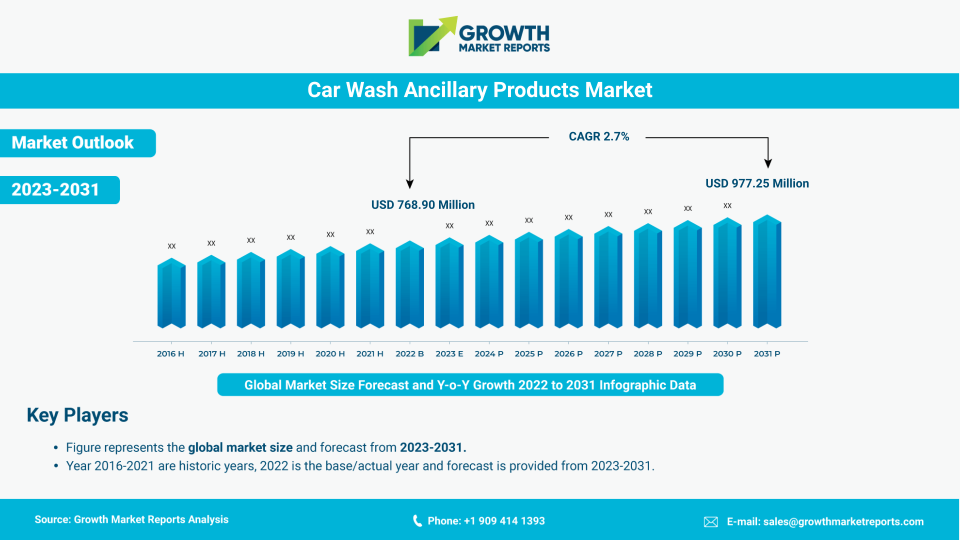
According to our latest research, the global Car Wash Ancillary Products market size in 2024 is valued at USD 4.2 billion, reflecting robust growth momentum driven by rising vehicle ownership and increasing consumer awareness about vehicle maintenance. The market is projected to expand at a CAGR of 5.7% from 2025 to 2033, reaching a forecasted value of USD 7.0 billion by 2033. This growth is primarily underpinned by the surge in demand for high-quality car care products, the proliferation of commercial car wash facilities, and the increasing inclination toward DIY car care, as per our latest research.
The growth of the Car Wash Ancillary Products market is significantly influenced by the rising number of vehicles on the road globally. As urbanization accelerates and disposable incomes increase, especially in emerging economies, more consumers are investing in personal vehicles, leading to heightened demand for maintenance and cleaning solutions. The expansion of ride-sharing services and taxi fleets is also contributing to the need for regular vehicle upkeep, further propelling the market. Moreover, heightened consumer awareness regarding the importance of regular car cleaning for both aesthetic and functional purposes has led to an uptick in the adoption of specialized products such as tire cleaners, glass cleaners, and detailing brushes. This trend is expected to continue, driven by a combination of lifestyle changes and the desire to maintain vehicle value.
Another major growth factor is the increasing prevalence of commercial car wash outlets, which are rapidly expanding in urban and suburban areas across the globe. These facilities rely heavily on a wide range of ancillary products to deliver comprehensive cleaning and detailing services, thereby fueling market demand. Technological advancements in product formulations, such as eco-friendly and biodegradable cleaners, are also shaping market dynamics. Manufacturers are focusing on developing innovative products that offer superior cleaning performance while minimizing environmental impact, aligning with the growing consumer preference for sustainable solutions. This shift toward green chemistry is not only attracting environmentally conscious consumers but also enabling commercial operators to comply with stringent environmental regulations.
The proliferation of e-commerce platforms and digital retail channels is further catalyzing the growth of the Car Wash Ancillary Products market. Online stores provide consumers with convenient access to a broad array of products, detailed usage instructions, and customer reviews, thereby enhancing purchasing confidence and driving sales. The rise of DIY culture, especially among younger consumers, has led to increased demand for easy-to-use, multi-functional car care products that can be used at home. This has prompted manufacturers to innovate in product packaging and delivery, offering bundled kits and subscription services that cater to the evolving needs of modern car owners. As digital penetration deepens, the online segment is expected to capture a larger share of the market, supported by aggressive marketing and promotional strategies.
The demand for Automotive Screenwash Products is also on the rise, driven by the need for effective cleaning solutions that ensure clear visibility and safety on the road. These products are essential for removing dirt, grime, and insects from windshields, especially in regions with high pollution levels or frequent adverse weather conditions. As consumers become more conscious of vehicle safety and maintenance, the market for screenwash products is expanding, with manufacturers focusing on developing advanced formulations that offer superior cleaning performance and protection against freezing. The integration of eco-friendly ingredients and packaging is further appealing to environmentally conscious consumers, aligning with the broader trend towards sustainable car care solutions.
From a regional perspective, Asia Pacific is emerging as the fastest-growing market for car wash ancillary products, driven by rapid urbanization, a burgeoning middle class, and the exponential growth of the automotive sector in countries like China and India. North America and Europe remain mature markets, characterized by high product penetration and a strong culture of vehicle maintenance. However, these regions continue to witness steady growth due to ongoing product innovation and the expansion of commercial car wash networks. The Middle East & Africa and Latin America, while smaller in market share, are showing promising potential owing to increasing vehicle ownership and improving economic conditions. Regional dynamics are further shaped by regulatory frameworks, consumer preferences, and the presence of organized retail infrastructure, all of which are expected to influence market trajectories in the coming years.
The Product Type segment of the Car Wash Ancillary Products market encompasses a diverse range of offerings including tire cleaners, glass cleaners, wheel cleaners, interior cleaners, air fresheners, detailing brushes, and other specialized products. Tire cleaners have gained significant traction due to their ability to remove dirt, grime, and brake dust, thereby enhancing the overall appearance and longevity of tires. The increasing popularity of premium tire care solutions, which offer protective coatings and advanced cleaning agents, is driving this segment. Glass cleaners, on the other hand, are favored for their streak-free formulations and quick-drying properties, making them a staple in both commercial and DIY car cleaning routines. The demand for glass cleaners is further supported by the growing emphasis on safety and visibility, especially in regions with high pollution levels.
Wheel cleaners are experiencing robust growth as consumers and commercial operators seek specialized solutions for removing stubborn contaminants from alloy and steel wheels. Innovative wheel cleaning products that are safe for various finishes and materials are gaining prominence. Interior cleaners, which include upholstery shampoos, dashboard wipes, and leather conditioners, are witnessing rising adoption as car owners become more concerned about interior hygiene and aesthetics. The surge in demand for antibacterial and allergen-reducing formulations reflects broader health and wellness trends influencing consumer choices. Air fresheners, while traditionally popular for their ability to enhance in-car ambiance, are now evolving to include odor-neutralizing and long-lasting fragrance technologies.
Detailing brushes and other niche products are also gaining momentum, particularly among car enthusiasts and professional detailers who require precision tools for comprehensive cleaning. The trend toward customization and personalized car care is fueling the development of specialized brushes designed for specific surfaces and hard-to-reach areas. Additionally, the market is witnessing the introduction of multi-purpose products that combine cleaning, conditioning, and protection in a single application, appealing to time-conscious consumers. The continuous innovation in product formulations, packaging, and delivery mechanisms is expected to sustain the growth of this segment, as manufacturers strive to differentiate their offerings in a competitive landscape.
The "Others" category, which includes specialty coatings, degreasers, and engine cleaners, is also expanding as consumers seek holistic solutions for vehicle maintenance. The integration of advanced technologies such as nanotechnology and hydrophobic coatings is creating new opportunities for product differentiation and premiumization. As consumer preferences evolve, manufacturers are increasingly focusing on developing products that deliver superior performance, convenience, and environmental sustainability. This is particularly evident in the growing adoption of biodegradable and non-toxic ancillary products, which are gaining favor among environmentally conscious consumers and regulatory bodies alike.
| Attributes | Details |
| Report Title | Car Wash Ancillary Products Market Research Report 2033 |
| By Product Type | Tire Cleaners, Glass Cleaners, Wheel Cleaners, Interior Cleaners, Air Fresheners, Detailing Brushes, Others |
| By Application | Commercial Car Wash, DIY/Home Car Wash, Others |
| By Distribution Channel | Online Stores, Supermarkets/Hypermarkets, Specialty Stores, Others |
| By End-User | Individual, Automotive Service Centers, Car Dealerships, Others |
| Regions Covered | North America, Europe, APAC, Latin America, MEA |
| Base Year | 2024 |
| Historic Data | 2018-2023 |
| Forecast Period | 2025-2033 |
| Number of Pages | 260 |
| Number of Tables & Figures | 398 |
| Customization Available | Yes, the report can be customized as per your need. |
The Application segment of the Car Wash Ancillary Products market is bifurcated into commercial car wash, DIY/home car wash, and other specialized applications. Commercial car wash facilities represent the largest application segment, driven by the increasing number of automated and semi-automated car wash centers worldwide. These facilities rely on a wide array of ancillary products to enhance service quality, improve operational efficiency, and meet diverse customer preferences. The demand for high-performance, fast-acting cleaning agents and detailing products is particularly pronounced in this segment, as operators seek to maximize throughput and customer satisfaction. The adoption of waterless and eco-friendly cleaning solutions is also gaining traction in commercial settings, driven by regulatory requirements and environmental considerations.
DIY/home car wash applications are witnessing significant growth, fueled by the rising popularity of at-home car care routines and the proliferation of user-friendly products. Consumers are increasingly investing in comprehensive car care kits that include cleaners, brushes, and air fresheners, enabling them to achieve professional-grade results without visiting commercial outlets. The convenience of online shopping and the availability of instructional content on digital platforms are further supporting the DIY trend. Manufacturers are responding by offering bundled products, value packs, and subscription services tailored to the needs of home users. The DIY segment is also characterized by a strong preference for multi-functional products that simplify the cleaning process and deliver consistent results.
Other applications, such as fleet maintenance, car rental services, and specialized detailing businesses, also contribute to market growth. These segments require customized solutions that address specific cleaning challenges, such as heavy-duty degreasers for commercial vehicles or allergen-reducing products for shared mobility services. The increasing focus on vehicle hygiene and presentation in the context of shared mobility and ride-hailing platforms is driving demand for ancillary products that offer quick and effective cleaning. As the automotive landscape evolves, the application spectrum of car wash ancillary products is expected to broaden, encompassing new use cases and customer segments.
The interplay between commercial and DIY applications is shaping product innovation and marketing strategies. While commercial operators prioritize efficiency and cost-effectiveness, home users value convenience, ease of use, and product safety. This dichotomy is prompting manufacturers to develop differentiated product lines and targeted marketing campaigns that cater to the unique needs of each application segment. The ongoing evolution of car wash formats, including mobile and on-demand services, is also creating new opportunities for the integration of ancillary products into service offerings.
The Distribution Channel segment of the Car Wash Ancillary Products market includes online stores, supermarkets/hypermarkets, specialty stores, and other retail formats. Online stores have emerged as a key growth driver, offering consumers unparalleled convenience, a wide product selection, and access to detailed product information and reviews. The rise of e-commerce has enabled manufacturers and distributors to reach a broader customer base, transcend geographical limitations, and implement targeted digital marketing strategies. The availability of bundled kits, subscription models, and promotional discounts on online platforms is further stimulating demand, particularly among tech-savvy and younger consumers.
Supermarkets and hypermarkets continue to play a significant role in the distribution of car wash ancillary products, especially in developed markets where organized retail infrastructure is well established. These outlets offer the advantage of immediate product availability and the opportunity for consumers to physically inspect products before purchase. The prominence of private-label brands and exclusive product lines in supermarkets/hypermarkets is also shaping consumer preferences and competitive dynamics. In-store promotions, product demonstrations, and cross-merchandising with automotive accessories are common strategies employed to drive sales in this channel.
Specialty stores, which focus exclusively on automotive products and services, cater to a niche segment of enthusiasts and professional detailers who seek high-performance and specialized solutions. These stores offer expert advice, personalized recommendations, and access to premium brands that may not be readily available in mainstream retail channels. The emphasis on product quality, technical expertise, and customer service distinguishes specialty stores from other distribution formats. As consumer expectations evolve, specialty retailers are increasingly leveraging digital tools and loyalty programs to enhance the customer experience and build brand loyalty.
Other distribution channels, including automotive service centers, car dealerships, and independent retailers, also contribute to market growth by providing ancillary products as part of broader service offerings. The integration of car wash and detailing products into maintenance packages and value-added services is becoming increasingly common, particularly in the context of vehicle servicing and after-sales support. The diversity of distribution channels ensures that car wash ancillary products are accessible to a wide range of customers, from individual car owners to commercial operators and fleet managers. Manufacturers are adopting omni-channel strategies to optimize reach and engagement, balancing the strengths of online and offline channels to drive market penetration and growth.
The End-User segment of the Car Wash Ancillary Products market is segmented into individuals, automotive service centers, car dealerships, and other institutional buyers. Individual consumers represent the largest end-user group, driven by the increasing emphasis on personal vehicle maintenance and the desire to preserve vehicle aesthetics and resale value. The proliferation of DIY car care products and the growing accessibility of online retail channels have empowered individuals to take charge of their car cleaning routines. The trend toward self-service and at-home car care is particularly pronounced among younger consumers, who value convenience, cost savings, and the satisfaction of achieving professional results independently.
Automotive service centers constitute a significant end-user segment, relying on a wide range of ancillary products to deliver comprehensive cleaning, detailing, and maintenance services. These centers cater to a diverse clientele, including individual car owners, fleet operators, and corporate customers. The demand for high-performance, durable, and easy-to-use ancillary products is particularly high in this segment, as service centers strive to enhance operational efficiency and customer satisfaction. The integration of value-added services, such as interior deodorizing and paint protection, is further driving the adoption of specialized ancillary products in automotive service centers.
Car dealerships are another important end-user group, utilizing ancillary products to maintain the appearance and condition of vehicles in their inventory. Regular cleaning and detailing are essential for creating a positive first impression and supporting sales efforts. Dealerships often partner with leading ancillary product manufacturers to ensure consistent quality and access to the latest innovations. The emphasis on vehicle presentation and customer experience is prompting dealerships to invest in premium car care solutions, including advanced cleaners, protectants, and odor-neutralizers. As competition intensifies in the automotive retail sector, the role of ancillary products in differentiating dealership offerings is becoming increasingly important.
Other end-users, such as fleet operators, car rental agencies, and shared mobility providers, also contribute to market demand. These institutional buyers require scalable, cost-effective, and reliable solutions to maintain large vehicle fleets and ensure a consistent level of cleanliness and hygiene for customers. The growing focus on health and safety, particularly in the wake of the COVID-19 pandemic, has heightened the importance of regular and thorough vehicle cleaning in the fleet and mobility sectors. As the automotive ecosystem evolves, the end-user landscape for car wash ancillary products is expected to diversify further, creating new opportunities for product innovation and market expansion.
The Car Wash Ancillary Products market presents a wealth of opportunities for manufacturers, distributors, and service providers. One of the most promising avenues is the development of eco-friendly and sustainable products that cater to the growing demand for green solutions. As consumers and regulators become increasingly concerned about the environmental impact of car care chemicals, there is a significant opportunity for companies to innovate in the areas of biodegradable formulations, waterless cleaning technologies, and recyclable packaging. The integration of digital technologies, such as IoT-enabled dispensers and smart inventory management systems, also holds potential for enhancing operational efficiency and customer engagement in commercial car wash settings. Furthermore, the expansion of e-commerce and direct-to-consumer channels offers companies the ability to reach new customer segments and build stronger brand loyalty through personalized marketing and subscription services.
Another key opportunity lies in the customization and premiumization of ancillary products. As consumers become more discerning and seek personalized solutions that cater to their specific needs and preferences, manufacturers can differentiate their offerings through innovative product features, packaging, and value-added services. The rise of the DIY car care trend, particularly among millennials and Gen Z consumers, presents an opportunity for brands to engage with a tech-savvy audience through educational content, interactive platforms, and community-driven initiatives. The growing adoption of electric and autonomous vehicles is also expected to create new demand for specialized cleaning and maintenance products, as these vehicles present unique challenges and requirements in terms of care and upkeep.
Despite the positive outlook, the market faces certain restraining factors that could impede growth. One of the primary challenges is the increasing stringency of environmental regulations governing the use of chemicals in car care products. Compliance with these regulations can increase production costs and limit the availability of certain ingredients, potentially impacting product performance and consumer choice. Additionally, the market is characterized by intense competition and price sensitivity, particularly in the mass-market segment. The proliferation of low-cost alternatives and counterfeit products poses a threat to established brands, necessitating ongoing investment in quality assurance, brand protection, and consumer education. Economic volatility and fluctuations in raw material prices can also affect market dynamics, underscoring the need for companies to adopt agile and resilient business strategies.
Regionally, the Car Wash Ancillary Products market exhibits distinct trends and growth patterns. Asia Pacific stands out as the fastest-growing region, with a market value of approximately USD 1.3 billion in 2024 and an anticipated CAGR of 7.1% through 2033. This remarkable growth is driven by rapid urbanization, rising disposable incomes, and the explosive expansion of the automotive sector in countries such as China, India, and Southeast Asian nations. The increasing adoption of personal vehicles, coupled with a growing culture of vehicle maintenance, is fueling demand for ancillary products across both commercial and DIY segments. Regional players are leveraging localized marketing strategies and product customization to cater to diverse consumer preferences and regulatory requirements.
North America remains a dominant market, accounting for a significant share of global revenues with a market size of USD 1.5 billion in 2024. The region benefits from high vehicle ownership rates, a mature car wash industry, and a strong culture of regular vehicle maintenance. The proliferation of automated and express car wash facilities, combined with the widespread availability of premium and specialty products, is supporting steady market growth. Environmental consciousness is also shaping product development and purchasing behavior, with consumers increasingly opting for eco-friendly and biodegradable solutions. The presence of leading global brands and a well-established retail infrastructure further reinforce North America's position as a key market for ancillary products.
Europe follows closely, with a market size of USD 1.1 billion in 2024, characterized by stringent environmental regulations, high product quality standards, and a strong emphasis on sustainability. The region's mature automotive sector and the growing popularity of professional detailing services are driving demand for advanced and innovative ancillary products. Latin America and the Middle East & Africa, though smaller in terms of market size, are witnessing steady growth as vehicle ownership rises and economic conditions improve. These regions offer untapped potential for market expansion, particularly as consumer awareness and access to organized retail channels increase. Overall, the regional outlook for the Car Wash Ancillary Products market remains positive, with diverse growth drivers and opportunities across all major geographies.
The competitive landscape of the Car Wash Ancillary Products market is characterized by a mix of global giants, regional players, and innovative startups. Intense competition prevails, with companies striving to differentiate their offerings through product innovation, quality assurance, and brand reputation. Leading players are investing heavily in research and development to introduce advanced formulations that deliver superior cleaning performance, environmental sustainability, and user convenience. Strategic collaborations, mergers and acquisitions, and partnerships with car wash operators and automotive service providers are common strategies employed to expand market reach and enhance product portfolios. The growing influence of digital marketing and e-commerce is also reshaping competitive dynamics, enabling brands to engage directly with consumers and build lasting relationships.
Product quality, brand recognition, and distribution capabilities are key factors influencing competitive positioning in the market. Established brands leverage their extensive distribution networks and strong customer loyalty to maintain market leadership, while emerging players focus on niche segments and innovative solutions to carve out a competitive edge. The rise of private-label brands and the entry of non-traditional players, such as e-commerce giants and specialty retailers, are intensifying competition and driving price sensitivity. Companies are increasingly adopting omni-channel strategies to optimize market coverage and respond to evolving consumer preferences. The emphasis on sustainability and regulatory compliance is prompting manufacturers to invest in green chemistry, eco-friendly packaging, and transparent labeling, further shaping the competitive landscape.
The market is witnessing a trend toward consolidation, with larger players acquiring smaller competitors to gain access to new technologies, product lines, and customer segments. This consolidation is expected to enhance operational efficiency, drive innovation, and create synergies across the value chain. However, the presence of a large number of small and medium-sized enterprises ensures a dynamic and competitive environment, fostering continuous product development and market responsiveness. The ability to anticipate and respond to changing consumer needs, regulatory developments, and technological advancements will be critical for sustained success in the Car Wash Ancillary Products market.
Major companies operating in the Car Wash Ancillary Products market include 3M Company, Turtle Wax Inc., MeguiarÂ’s Inc., Armor All (Spectrum Brands Holdings, Inc.), SONAX GmbH, Simoniz USA, Inc., Mothers Polishes Waxes Cleaners, and Autoglym. These industry leaders are renowned for their comprehensive product portfolios, strong R&D capabilities, and commitment to quality and innovation. 3M Company, for instance, is known for its cutting-edge cleaning and protection solutions, while Turtle Wax and MeguiarÂ’s are celebrated for their consumer-friendly and high-performance car care products. Armor All has established a strong presence in both retail and professional segments, offering a wide range of cleaners, protectants, and air fresheners.
SONAX GmbH and Autoglym are prominent players in the European market, recognized for their premium-quality formulations and focus on sustainability. Simoniz USA and Mothers Polishes Waxes Cleaners have built strong brand equity in North America, leveraging extensive distribution networks and customer-centric marketing strategies. These companies are continuously expanding their product lines to address emerging trends, such as eco-friendly cleaning agents, waterless solutions, and digitally enabled car care kits. Strategic partnerships with car wash operators, automotive service centers, and retail chains are enabling these players to enhance market penetration and drive growth.
In summary, the Car Wash Ancillary Products market is marked by intense competition, rapid innovation, and evolving consumer preferences. The leading companies are well-positioned to capitalize on emerging opportunities by leveraging their strengths in product development, branding, and distribution. As the market continues to evolve, the ability to deliver value-added solutions, embrace sustainability, and engage effectively with customers will be paramount for long-term success.
The Car Wash Ancillary Products market has been segmented on the basis of
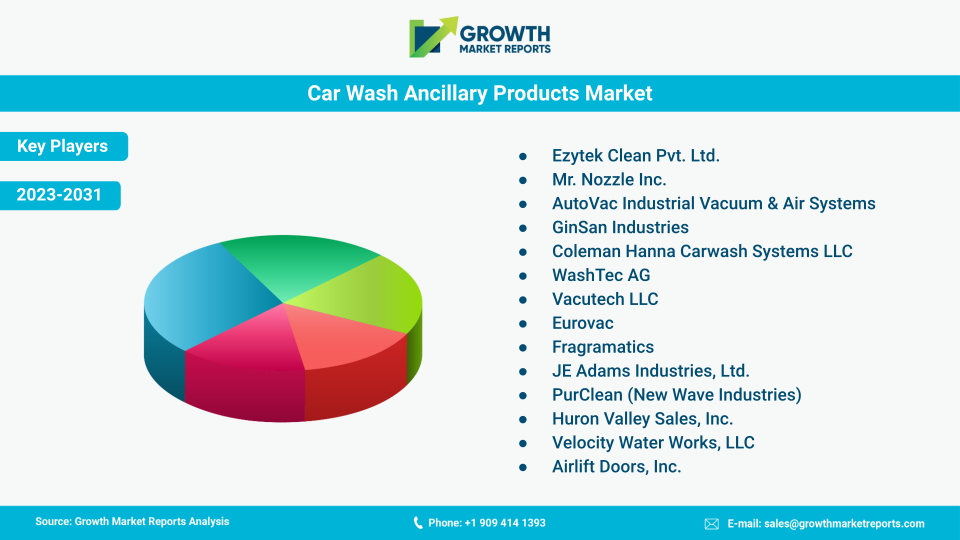
The major players covered in the car wash ancillary products market are Ezytek Clean Pvt. Ltd., Mr. Nozzle Inc., AutoVac Industrial Vacuum & Air Systems, GinSan Industries, Coleman Hanna Carwash Systems LLC, WashTec AG, Vacutech LLC, Eurovac, Fragramatics, JE Adams Industries, Ltd., PurClean (New Wave Industries), Huron Valley Sales, Inc., Velocity Water Works, LLC, Airlift Doors, Inc., Goff’s Enterprises Inc., Hamilton Manufacturing Corp., AVW Equipment Company, Inc., Extractomat, Carolina Pride Carwash Systems & Solutions, CustomKraft Industries Inc. Companies are engaging in partnerships, collaborations, and expanding their product offerings to expand their market share.
Challenges include stringent environmental regulations, intense competition, price sensitivity, the threat of counterfeit products, and economic volatility affecting raw material prices.
Key players include 3M Company, Turtle Wax Inc., Meguiar’s Inc., Armor All, SONAX GmbH, Simoniz USA, Mothers Polishes Waxes Cleaners, Autoglym, and others.
Major trends include the development of eco-friendly and biodegradable products, multi-functional and bundled kits, digital retailing, and the use of advanced technologies like nanotechnology and hydrophobic coatings.
Asia Pacific is the fastest-growing region, driven by rapid urbanization, rising disposable incomes, and automotive sector expansion in countries like China and India.
The market is projected to grow at a CAGR of 5.7% from 2025 to 2033, reaching USD 7.0 billion by 2033.
Key distribution channels include online stores, supermarkets/hypermarkets, specialty stores, and automotive service centers.
The market is segmented by application into commercial car wash, DIY/home car wash, and other specialized uses such as fleet maintenance and car rental services.
Popular product types include tire cleaners, glass cleaners, wheel cleaners, interior cleaners, air fresheners, detailing brushes, and specialty products such as coatings and degreasers.
Key growth drivers include rising vehicle ownership, increasing consumer awareness about vehicle maintenance, expansion of commercial car wash facilities, and the growing popularity of DIY car care.
As of 2024, the global Car Wash Ancillary Products market is valued at USD 4.2 billion.