Artificial Organs & Bionic Implants Market Research Report 2033

Artificial Organs & Bionic Implants Market Research Report 2033

Segments - by Product Type (Artificial Heart, Artificial Kidney, Artificial Liver, Artificial Pancreas, Cochlear Implants, Vision Bionics, Orthopedic Bionics, Others), by Material (Metals, Polymers, Ceramics, Biological Materials), by Technology (Mechanical, Electronic, Hybrid), by Application (Hospitals, Ambulatory Surgical Centers, Others)

https://growthmarketreports.com/raksha
Author : Raksha Sharma
https://growthmarketreports.com/Vaibhav
Fact-checked by : V. Chandola
https://growthmarketreports.com/Shruti
Editor : Shruti Bhat

Upcoming | Report ID :HC-1549 | 4.7 Rating | 63 Reviews | 288 Pages | Format : Docx PDF

Report Description


Artificial Organs & Bionic Implants Market Outlook

According to our latest research, the global artificial organs & bionic implants market size reached USD 32.9 billion in 2024, reflecting a robust expansion driven by technological innovation and rising chronic disease prevalence. The market is expected to grow at a CAGR of 9.8% from 2025 to 2033, reaching a projected value of USD 75.2 billion by 2033. This strong growth trajectory is underpinned by increasing demand for organ transplantation alternatives, advancements in biomaterials, and the ongoing integration of electronics and biotechnology in medical devices. As per the latest research, the market's momentum is further propelled by the growing geriatric population and the rising incidence of organ failure globally.

One of the primary growth factors for the artificial organs & bionic implants market is the significant surge in chronic diseases such as diabetes, cardiovascular disorders, and renal failure. These conditions often lead to organ dysfunction or failure, necessitating the development of artificial organs as life-saving interventions. Furthermore, the persistent shortage of donor organs worldwide has catalyzed the adoption of artificial alternatives, providing patients with viable options that bypass the lengthy and often uncertain organ transplant waiting lists. The increasing acceptance of these innovative solutions among healthcare professionals and patients alike is further accelerating market expansion, as they offer improved survival rates and enhanced quality of life.

Technological advancements in materials science and biomedical engineering have played a pivotal role in shaping the artificial organs & bionic implants market. The integration of cutting-edge materials such as biocompatible polymers, advanced ceramics, and hybrid composites has improved the durability, functionality, and biocompatibility of artificial organs. Additionally, the advent of miniaturized electronics and sophisticated sensor technologies has enabled the development of highly responsive and adaptive bionic implants, such as cochlear and vision bionics. These innovations have not only broadened the scope of applications but have also paved the way for personalized medicine, where devices can be tailored to meet individual patient needs, further driving market growth.

Another key driver is the increasing focus on healthcare accessibility and affordability, particularly in emerging economies. Governments and private sector stakeholders are investing heavily in healthcare infrastructure, fostering the adoption of advanced medical technologies. Initiatives aimed at subsidizing artificial organ implants and expanding insurance coverage are making these life-enhancing devices more accessible to a broader patient population. Additionally, the growing emphasis on minimally invasive surgical procedures has boosted the demand for bionic implants, which often enable quicker recovery times and lower complication rates compared to traditional surgical interventions. These trends collectively contribute to the sustained growth and evolution of the artificial organs & bionic implants market.

From a regional perspective, North America continues to dominate the artificial organs & bionic implants market, owing to its well-established healthcare infrastructure, high healthcare expenditure, and strong presence of leading market players. Europe follows closely, benefiting from robust research and development activities and supportive regulatory frameworks. The Asia Pacific region, however, is emerging as the fastest-growing market, driven by rapidly improving healthcare systems, a large patient base, and increasing investments in medical technology. Latin America and the Middle East & Africa are also witnessing steady growth, supported by rising awareness and expanding healthcare access. These regional trends are expected to shape the market landscape in the years ahead, with Asia Pacific projected to register the highest CAGR during the forecast period.

Global Artificial Organs & Bionic Implants Industry Outlook

Product Type Analysis

The artificial organs & bionic implants market is segmented by product type, encompassing artificial heart, artificial kidney, artificial liver, artificial pancreas, cochlear implants, vision bionics, orthopedic bionics, and others. Among these, artificial heart and artificial kidney solutions have garnered significant attention due to the high prevalence of cardiovascular and renal diseases globally. The artificial heart segment, in particular, has witnessed remarkable advancements in device miniaturization, energy efficiency, and biocompatibility, making it a critical solution for end-stage heart failure patients. These devices are increasingly being adopted as either bridge-to-transplant or destination therapy, offering a lifeline to patients who are ineligible for conventional heart transplants or face lengthy donor wait times.

The artificial kidney segment is another major contributor to market growth, propelled by the rising incidence of end-stage renal disease (ESRD) and the limitations associated with traditional dialysis. Innovations such as wearable and implantable artificial kidneys are transforming renal care by providing continuous and more physiologically relevant filtration, reducing the burden on patients and healthcare systems alike. Artificial liver and artificial pancreas devices are also gaining traction, particularly as research progresses in the development of bioartificial systems that combine synthetic and biological components to mimic natural organ functions. These advancements are particularly promising for patients with acute liver failure or diabetes, where timely intervention is critical for survival.

Cochlear implants and vision bionics represent significant strides in sensory restoration, enabling individuals with severe hearing or visual impairments to regain sensory perception and improve their quality of life. The cochlear implant market is expanding rapidly, driven by technological improvements in sound processing and device miniaturization, as well as increasing awareness and screening programs for hearing loss. Similarly, vision bionics, including retinal implants and bionic eyes, are opening new frontiers in the management of blindness and visual impairment, with ongoing clinical trials and product launches fueling market optimism.

Orthopedic bionics, encompassing artificial limbs and joint replacements, constitute a substantial share of the artificial organs & bionic implants market. These devices are witnessing growing demand due to the rising incidence of trauma, sports injuries, and age-related degenerative conditions such as osteoarthritis. Technological advances in materials, robotics, and 3D printing have enhanced the functionality, aesthetics, and user comfort of orthopedic bionics, making them increasingly accessible and acceptable to patients. The "others" category, which includes devices such as artificial lungs and tissue-engineered constructs, is also expected to expand as research in regenerative medicine and tissue engineering matures.

Report Scope

Attributes Details
Report Title Artificial Organs & Bionic Implants Market Research Report 2033
By Product Type Artificial Heart, Artificial Kidney, Artificial Liver, Artificial Pancreas, Cochlear Implants, Vision Bionics, Orthopedic Bionics, Others
By Material Metals, Polymers, Ceramics, Biological Materials
By Technology Mechanical, Electronic, Hybrid
By Application Hospitals, Ambulatory Surgical Centers, Others
Regions Covered North America, Europe, APAC, Latin America, MEA
Base Year 2024
Historic Data 2018-2023
Forecast Period 2025-2033
Number of Pages 288
Number of Tables & Figures 313
Customization Available Yes, the report can be customized as per your need.

Material Analysis

Materials play a crucial role in the performance, safety, and longevity of artificial organs and bionic implants. The market is segmented into metals, polymers, ceramics, and biological materials, each offering unique advantages and challenges. Metals such as titanium and its alloys are widely used in orthopedic and dental implants due to their exceptional strength, corrosion resistance, and biocompatibility. These materials provide the structural integrity required for load-bearing applications, ensuring long-term functionality and patient safety. The use of advanced surface coatings and nano-engineered materials is further enhancing the integration of metal implants with surrounding tissues, reducing the risk of rejection and infection.

Polymers represent a versatile and rapidly evolving material segment within the artificial organs & bionic implants market. Their flexibility, processability, and tunable properties make them ideal for a wide range of applications, from artificial blood vessels to soft tissue implants. Biocompatible polymers such as polyethylene, polyurethane, and silicone rubber are extensively used in devices like artificial heart valves, vascular grafts, and cochlear implants. Recent developments in bioresorbable and smart polymers are enabling the creation of next-generation implants that can adapt to physiological changes, deliver drugs, or degrade safely after fulfilling their therapeutic role, thereby minimizing the need for secondary surgeries.

Ceramics are primarily utilized in orthopedic and dental applications, where their hardness, wear resistance, and inertness are highly valued. Materials such as alumina and zirconia are commonly used in joint replacements and dental implants, offering superior durability and reduced risk of inflammatory reactions. The development of bioactive ceramics that can bond with bone tissue is opening new avenues for bone regeneration and integration, making them increasingly attractive for reconstructive and regenerative procedures. However, the inherent brittleness of ceramics remains a challenge, necessitating ongoing research to improve their toughness and reliability.

Biological materials, including decellularized tissues, collagen, and other extracellular matrix components, are gaining prominence in the artificial organs & bionic implants market, particularly in the context of tissue engineering and regenerative medicine. These materials offer the advantage of inherent biocompatibility and the ability to support cell attachment, proliferation, and differentiation. Innovations in scaffold fabrication, stem cell technology, and biomimetic design are enabling the development of hybrid constructs that combine synthetic and biological elements, closely replicating natural tissue structure and function. As research in this area advances, biological materials are expected to play an increasingly important role in the creation of functional, long-lasting artificial organs and implants.

Technology Analysis

The artificial organs & bionic implants market is segmented by technology into mechanical, electronic, and hybrid systems. Mechanical technologies have a long-standing history in the field, providing reliable and robust solutions for organ replacement and support. Examples include mechanical heart valves, ventricular assist devices, and prosthetic limbs that rely on purely mechanical principles for operation. These devices are valued for their simplicity, durability, and ease of maintenance, making them suitable for a wide range of clinical scenarios. However, their functionality is often limited compared to more advanced electronic or hybrid systems.

Electronic technologies have revolutionized the artificial organs & bionic implants market by enabling the development of highly sophisticated devices capable of interfacing with biological systems. Cochlear implants, pacemakers, and bionic eyes are prime examples of electronic implants that leverage advanced sensors, microprocessors, and wireless communication to restore or enhance physiological functions. The integration of artificial intelligence and machine learning algorithms is further enhancing the adaptability and performance of these devices, allowing for real-time monitoring, personalized adjustments, and remote management. This trend is expected to accelerate as the Internet of Medical Things (IoMT) and wearable health technologies continue to evolve.

Hybrid technologies represent the convergence of mechanical and electronic systems, offering the benefits of both approaches in a single device. Hybrid artificial organs, such as bioartificial livers and kidneys, combine synthetic scaffolds or mechanical pumps with living cells or tissues to replicate complex organ functions. These devices are at the forefront of regenerative medicine, aiming to provide more physiological and durable solutions for patients with organ failure. The development of hybrid bionic implants is also being driven by advances in microfabrication, nanotechnology, and biomaterials, enabling the creation of devices that closely mimic natural organ structure and function.

The ongoing evolution of technology in the artificial organs & bionic implants market is characterized by a focus on miniaturization, wireless connectivity, and energy efficiency. Researchers are exploring innovative power sources, such as biofuel cells and wireless energy transfer, to overcome the limitations of traditional batteries and enable longer-lasting, more autonomous implants. The integration of smart sensors and real-time data analytics is facilitating proactive healthcare management, allowing for early detection of complications and timely intervention. As technology continues to advance, the boundaries between mechanical, electronic, and hybrid systems are expected to blur, giving rise to increasingly sophisticated and multifunctional artificial organs and implants.

Application Analysis

The artificial organs & bionic implants market is segmented by application into hospitals, ambulatory surgical centers, and others. Hospitals remain the primary end-users, accounting for the largest share of the market due to their comprehensive infrastructure, skilled personnel, and ability to manage complex surgical procedures. The adoption of artificial organs and bionic implants in hospitals is driven by the increasing prevalence of chronic diseases, the availability of advanced diagnostic and therapeutic equipment, and the presence of multidisciplinary care teams. Hospitals are also at the forefront of clinical research and innovation, often serving as key sites for clinical trials and the introduction of new technologies.

Ambulatory surgical centers (ASCs) are emerging as important venues for the deployment of artificial organs and bionic implants, particularly for procedures that do not require prolonged hospitalization. The shift towards minimally invasive surgeries and outpatient care is driving the adoption of bionic implants in ASCs, offering patients the benefits of reduced costs, shorter recovery times, and greater convenience. The growing focus on patient-centered care and the expansion of insurance coverage for outpatient procedures are further supporting this trend. ASCs are also becoming increasingly equipped with advanced surgical tools and imaging technologies, enabling them to perform a wider range of complex interventions.

The "others" category includes specialty clinics, rehabilitation centers, and home care settings, which are playing an increasingly important role in the continuum of care for patients with artificial organs and bionic implants. Specialty clinics, such as those focused on audiology or orthopedics, are often the first point of contact for patients seeking sensory or mobility restoration. Rehabilitation centers provide essential post-surgical support, helping patients adapt to their new devices and optimize functional outcomes. Home care settings are gaining traction as remote monitoring and telemedicine technologies become more prevalent, allowing patients to receive ongoing care and support in the comfort of their own homes.

The growing emphasis on integrated care pathways and multidisciplinary collaboration is enhancing the effectiveness and efficiency of artificial organ and bionic implant deployment across all application settings. Healthcare providers are increasingly adopting holistic approaches that encompass preoperative assessment, surgical intervention, postoperative rehabilitation, and long-term follow-up. This integrated model not only improves patient outcomes but also reduces the overall burden on healthcare systems, making artificial organs and bionic implants more accessible and sustainable in the long term.

Opportunities & Threats

The artificial organs & bionic implants market presents significant opportunities for innovation and growth, particularly in the areas of personalized medicine and regenerative technologies. The increasing availability of advanced biomaterials, stem cell therapies, and 3D printing is enabling the development of customized implants that closely match individual patient anatomy and physiology. This trend is expected to drive demand for bespoke solutions that offer superior performance, safety, and patient satisfaction. Additionally, the integration of digital health technologies, such as remote monitoring and artificial intelligence, is opening new avenues for proactive and personalized care, allowing for early detection of complications and timely intervention. These opportunities are attracting substantial investment from both public and private sector stakeholders, fueling a vibrant ecosystem of research, development, and commercialization.

Another major opportunity lies in the expansion of market access and affordability, particularly in emerging economies. Governments and non-governmental organizations are increasingly recognizing the importance of artificial organs and bionic implants in addressing the growing burden of chronic diseases and organ failure. Initiatives aimed at subsidizing device costs, expanding insurance coverage, and improving healthcare infrastructure are making these life-saving technologies more accessible to underserved populations. The growing focus on value-based healthcare and outcome-driven reimbursement models is also encouraging the adoption of innovative solutions that deliver tangible benefits to patients and healthcare systems alike. As awareness and acceptance of artificial organs and bionic implants continue to grow, the market is poised for sustained expansion across diverse geographies and patient segments.

Despite these opportunities, the artificial organs & bionic implants market faces several restraining factors that could impede growth. One of the primary challenges is the high cost of development, manufacturing, and deployment of advanced devices, which can limit access for patients in low- and middle-income countries. Regulatory hurdles and lengthy approval processes also pose significant barriers, particularly for novel technologies that require extensive clinical validation. Concerns regarding device safety, biocompatibility, and long-term performance remain a key focus for regulators and healthcare providers, necessitating ongoing investment in research, quality assurance, and post-market surveillance. Addressing these challenges will require concerted efforts from industry stakeholders, policymakers, and the broader healthcare community to ensure the safe, effective, and equitable deployment of artificial organs and bionic implants worldwide.

Regional Outlook

In terms of regional distribution, North America leads the artificial organs & bionic implants market with a market size of USD 13.1 billion in 2024. This dominance is attributed to the region's advanced healthcare infrastructure, high healthcare expenditure, and strong presence of leading industry players. The United States, in particular, accounts for the majority of the regional market, driven by a high prevalence of chronic diseases, robust reimbursement frameworks, and a culture of early adoption of innovative medical technologies. Canada also contributes significantly, benefiting from government initiatives aimed at improving access to advanced healthcare solutions.

Europe holds the second-largest market share, with a market size of USD 9.8 billion in 2024. The region benefits from a well-established regulatory framework, strong research and development capabilities, and a high level of collaboration between academia, industry, and healthcare providers. Countries such as Germany, France, and the United Kingdom are at the forefront of innovation, driving the adoption of artificial organs and bionic implants across a wide range of clinical applications. The European market is expected to grow at a steady CAGR of 8.7% over the forecast period, supported by ongoing investments in healthcare infrastructure and increasing awareness of advanced medical technologies.

The Asia Pacific region is emerging as the fastest-growing market, with a market size of USD 6.2 billion in 2024 and a projected CAGR of 12.4% from 2025 to 2033. This rapid growth is driven by rising healthcare expenditure, a large and aging population, and increasing investments in medical technology and infrastructure. Countries such as China, India, and Japan are leading the way, supported by government initiatives aimed at expanding access to advanced healthcare solutions and fostering innovation in the medical device sector. The growing prevalence of chronic diseases and the increasing adoption of minimally invasive surgical procedures are further fueling demand for artificial organs and bionic implants in the region. Latin America and the Middle East & Africa are also witnessing steady growth, with market sizes of USD 2.1 billion and USD 1.7 billion respectively in 2024, supported by rising awareness, expanding healthcare access, and growing investments in healthcare infrastructure.

Artificial Organs & Bionic Implants Market Statistics

Competitor Outlook

The artificial organs & bionic implants market is characterized by intense competition and a dynamic landscape, with a mix of established multinational corporations and innovative startups vying for market share. Leading companies are focusing on strategic collaborations, mergers and acquisitions, and continuous investment in research and development to maintain their competitive edge. The market is witnessing a steady influx of new entrants, particularly in the areas of regenerative medicine, 3D printing, and digital health, further intensifying competition and driving innovation. Intellectual property protection, regulatory compliance, and product differentiation are key factors influencing the competitive dynamics of the market.

Major players in the market are leveraging their extensive distribution networks, strong brand recognition, and robust product portfolios to expand their presence across diverse geographies and customer segments. These companies are also investing heavily in clinical research and post-market surveillance to ensure the safety, efficacy, and reliability of their products. Partnerships with academic institutions, research organizations, and healthcare providers are enabling companies to accelerate the development and commercialization of next-generation artificial organs and bionic implants. The growing emphasis on patient-centric solutions and personalized medicine is prompting companies to adopt agile and flexible business models, enabling them to respond quickly to evolving market needs and regulatory requirements.

Innovation remains a key differentiator in the artificial organs & bionic implants market, with companies racing to develop breakthrough technologies that offer superior performance, safety, and patient outcomes. The integration of digital health technologies, such as remote monitoring, artificial intelligence, and data analytics, is enabling companies to offer comprehensive solutions that go beyond traditional device functionality. These innovations are not only enhancing the value proposition for patients and healthcare providers but are also creating new revenue streams and business opportunities for market participants. As the market continues to evolve, companies that can successfully navigate the complex regulatory landscape, manage costs, and deliver differentiated solutions are expected to emerge as leaders in the field.

Some of the major companies operating in the artificial organs & bionic implants market include Medtronic plc, Abbott Laboratories, Boston Scientific Corporation, Zimmer Biomet Holdings Inc., Cochlear Limited, Edwards Lifesciences Corporation, SynCardia Systems LLC, Berlin Heart GmbH, Ekso Bionics Holdings Inc., and Ossur hf. These companies are at the forefront of innovation, offering a wide range of products spanning artificial hearts, cochlear implants, orthopedic bionics, and more. Medtronic plc and Abbott Laboratories are recognized for their leadership in cardiac and renal devices, while Cochlear Limited is a global leader in hearing implants. Zimmer Biomet Holdings Inc. and Ossur hf are prominent players in the orthopedic bionics segment, offering advanced prosthetic and joint replacement solutions. SynCardia Systems LLC and Berlin Heart GmbH are pioneers in the development of artificial heart technologies, while Ekso Bionics Holdings Inc. is a leader in wearable exoskeletons and rehabilitation devices. These companies are continuously investing in research, product development, and global expansion to maintain their competitive edge and drive the future growth of the artificial organs & bionic implants market.

Key Players

  • Abiomed, Inc.
  • Zimmer Biomet Holdings, Inc.
  • Medtronic plc
  • Boston Scientific Corporation
  • Edwards Lifesciences Corporation
  • SynCardia Systems, LLC
  • Cochlear Limited
  • Biomet, Inc.
  • LivaNova PLC
  • Ottobock SE & Co. KGaA
  • Ekso Bionics Holdings, Inc.
  • ReWalk Robotics Ltd.
  • Touch Bionics Inc. (Össur)
  • Second Sight Medical Products, Inc.
  • HeartWare International, Inc.
  • Smith & Nephew plc
  • Stryker Corporation
  • Cyberonics, Inc.
  • Nipro Corporation
  • Retina Implant AG
Artificial Organs & Bionic Implants Market Overview

Segments

The Artificial Organs & Bionic Implants market has been segmented on the basis of

Product Type

  • Artificial Heart
  • Artificial Kidney
  • Artificial Liver
  • Artificial Pancreas
  • Cochlear Implants
  • Vision Bionics
  • Orthopedic Bionics
  • Others

Material

  • Metals
  • Polymers
  • Ceramics
  • Biological Materials

Technology

  • Mechanical
  • Electronic
  • Hybrid

Application

  • Hospitals
  • Ambulatory Surgical Centers
  • Others

Competitive Landscape

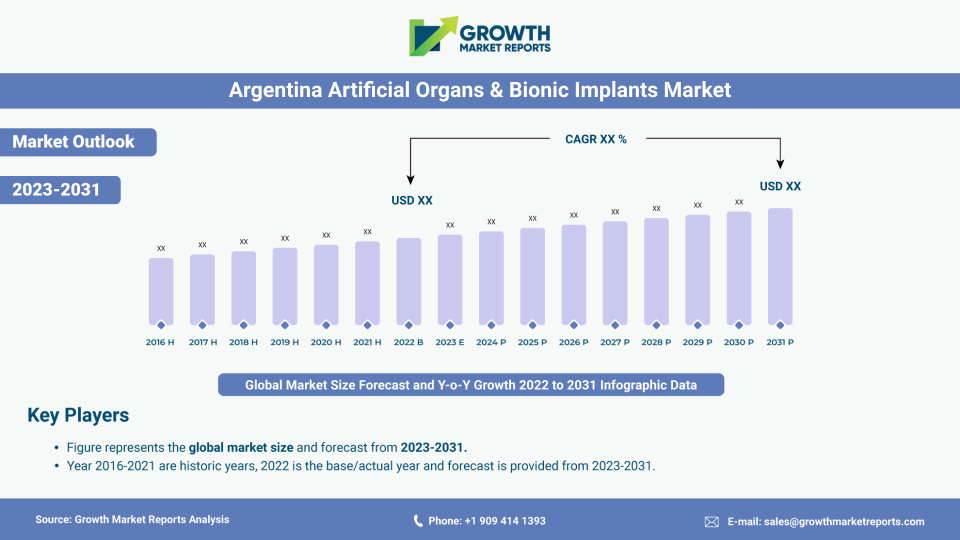
Key players competing in the Argentina artificial organs & bionic implants market include Zimmer Biomet, Boston Scientific Corporation, Medtronic plc, Ossur, and Otto Bock Holding GmbH & Co. KG.Companies are engaging in partnerships, mergers, and acquisitions to expand their market share.
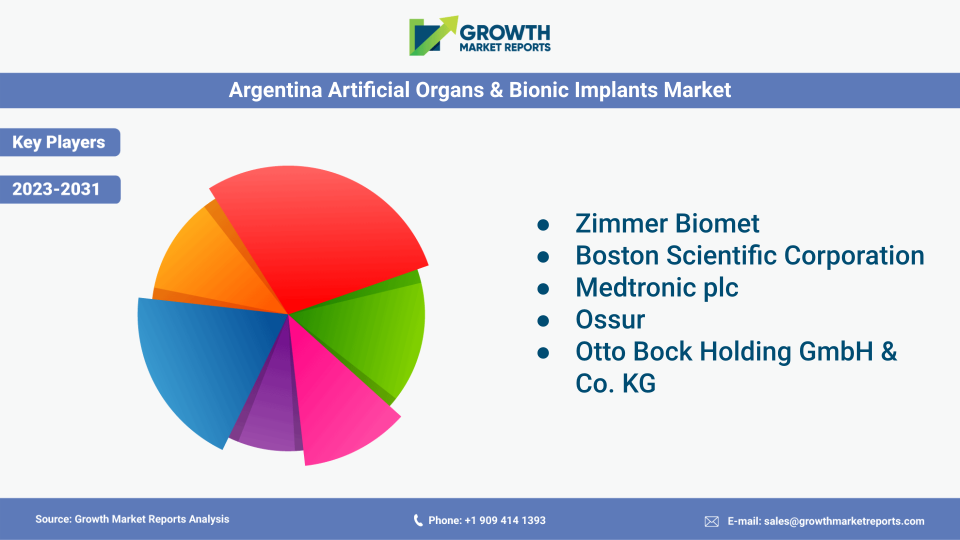

Argentina Artificial Organs & Bionic Implants Market Key Players

Frequently Asked Questions

Opportunities include personalized medicine, regenerative technologies, 3D printing of custom implants, expansion in emerging economies, and the integration of digital health and AI for proactive patient care.

They are primarily used in hospitals, ambulatory surgical centers, specialty clinics, rehabilitation centers, and increasingly in home care settings, supporting a wide range of medical and surgical applications.

Major challenges include high development and manufacturing costs, regulatory hurdles, lengthy approval processes, concerns about device safety and biocompatibility, and limited access in low- and middle-income countries.

Key companies include Medtronic plc, Abbott Laboratories, Boston Scientific Corporation, Zimmer Biomet Holdings Inc., Cochlear Limited, Edwards Lifesciences Corporation, SynCardia Systems LLC, Berlin Heart GmbH, Ekso Bionics Holdings Inc., and Ossur hf.

Recent advancements include miniaturized electronics, smart sensors, hybrid systems combining synthetic and biological components, and the integration of artificial intelligence and remote monitoring capabilities.

North America leads the market, followed by Europe. Asia Pacific is the fastest-growing region, while Latin America and the Middle East & Africa are also experiencing steady growth.

Common materials include metals (like titanium), polymers (such as polyethylene and silicone), ceramics (like alumina and zirconia), and biological materials (including collagen and decellularized tissues).

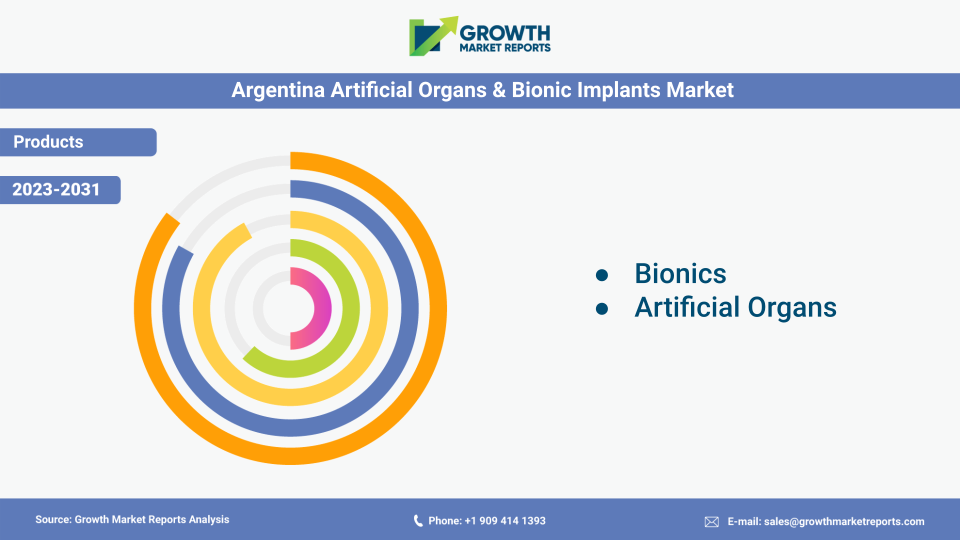
The market covers artificial heart, artificial kidney, artificial liver, artificial pancreas, cochlear implants, vision bionics, orthopedic bionics, and other devices such as artificial lungs and tissue-engineered constructs.

Key growth drivers include rising prevalence of chronic diseases, technological advancements in biomaterials and electronics, increasing demand for organ transplantation alternatives, and a growing geriatric population.

The global artificial organs & bionic implants market reached USD 32.9 billion in 2024 and is expected to grow at a CAGR of 9.8% from 2025 to 2033, reaching USD 75.2 billion by 2033.

Table Of Content

Chapter 1 Executive Summary
Chapter 2 Assumptions and Acronyms Used
Chapter 3 Research Methodology
Chapter 4 Artificial Organs & Bionic Implants Market Overview
   4.1 Introduction
      4.1.1 Market Taxonomy
      4.1.2 Market Definition
      4.1.3 Macro-Economic Factors Impacting the Market Growth
   4.2 Artificial Organs & Bionic Implants Market Dynamics
      4.2.1 Market Drivers
      4.2.2 Market Restraints
      4.2.3 Market Opportunity
   4.3 Artificial Organs & Bionic Implants Market - Supply Chain Analysis
      4.3.1 List of Key Suppliers
      4.3.2 List of Key Distributors
      4.3.3 List of Key Consumers
   4.4 Key Forces Shaping the Artificial Organs & Bionic Implants Market
      4.4.1 Bargaining Power of Suppliers
      4.4.2 Bargaining Power of Buyers
      4.4.3 Threat of Substitution
      4.4.4 Threat of New Entrants
      4.4.5 Competitive Rivalry
   4.5 Global Artificial Organs & Bionic Implants Market Size & Forecast, 2023-2032
      4.5.1 Artificial Organs & Bionic Implants Market Size and Y-o-Y Growth
      4.5.2 Artificial Organs & Bionic Implants Market Absolute $ Opportunity

Chapter 5 Global Artificial Organs & Bionic Implants Market Analysis and Forecast By Product Type
   5.1 Introduction
      5.1.1 Key Market Trends & Growth Opportunities By Product Type
      5.1.2 Basis Point Share (BPS) Analysis By Product Type
      5.1.3 Absolute $ Opportunity Assessment By Product Type
   5.2 Artificial Organs & Bionic Implants Market Size Forecast By Product Type
      5.2.1 Artificial Heart
      5.2.2 Artificial Kidney
      5.2.3 Artificial Liver
      5.2.4 Artificial Pancreas
      5.2.5 Cochlear Implants
      5.2.6 Vision Bionics
      5.2.7 Orthopedic Bionics
      5.2.8 Others
   5.3 Market Attractiveness Analysis By Product Type

Chapter 6 Global Artificial Organs & Bionic Implants Market Analysis and Forecast By Material
   6.1 Introduction
      6.1.1 Key Market Trends & Growth Opportunities By Material
      6.1.2 Basis Point Share (BPS) Analysis By Material
      6.1.3 Absolute $ Opportunity Assessment By Material
   6.2 Artificial Organs & Bionic Implants Market Size Forecast By Material
      6.2.1 Metals
      6.2.2 Polymers
      6.2.3 Ceramics
      6.2.4 Biological Materials
   6.3 Market Attractiveness Analysis By Material

Chapter 7 Global Artificial Organs & Bionic Implants Market Analysis and Forecast By Technology
   7.1 Introduction
      7.1.1 Key Market Trends & Growth Opportunities By Technology
      7.1.2 Basis Point Share (BPS) Analysis By Technology
      7.1.3 Absolute $ Opportunity Assessment By Technology
   7.2 Artificial Organs & Bionic Implants Market Size Forecast By Technology
      7.2.1 Mechanical
      7.2.2 Electronic
      7.2.3 Hybrid
   7.3 Market Attractiveness Analysis By Technology

Chapter 8 Global Artificial Organs & Bionic Implants Market Analysis and Forecast By Application
   8.1 Introduction
      8.1.1 Key Market Trends & Growth Opportunities By Application
      8.1.2 Basis Point Share (BPS) Analysis By Application
      8.1.3 Absolute $ Opportunity Assessment By Application
   8.2 Artificial Organs & Bionic Implants Market Size Forecast By Application
      8.2.1 Hospitals
      8.2.2 Ambulatory Surgical Centers
      8.2.3 Others
   8.3 Market Attractiveness Analysis By Application

Chapter 9 Global Artificial Organs & Bionic Implants Market Analysis and Forecast by Region
   9.1 Introduction
      9.1.1 Key Market Trends & Growth Opportunities By Region
      9.1.2 Basis Point Share (BPS) Analysis By Region
      9.1.3 Absolute $ Opportunity Assessment By Region
   9.2 Artificial Organs & Bionic Implants Market Size Forecast By Region
      9.2.1 North America
      9.2.2 Europe
      9.2.3 Asia Pacific
      9.2.4 Latin America
      9.2.5 Middle East & Africa (MEA)
   9.3 Market Attractiveness Analysis By Region

Chapter 10 Coronavirus Disease (COVID-19) Impact 
   10.1 Introduction 
   10.2 Current & Future Impact Analysis 
   10.3 Economic Impact Analysis 
   10.4 Government Policies 
   10.5 Investment Scenario

Chapter 11 North America Artificial Organs & Bionic Implants Analysis and Forecast
   11.1 Introduction
   11.2 North America Artificial Organs & Bionic Implants Market Size Forecast by Country
      11.2.1 U.S.
      11.2.2 Canada
   11.3 Basis Point Share (BPS) Analysis by Country
   11.4 Absolute $ Opportunity Assessment by Country
   11.5 Market Attractiveness Analysis by Country
   11.6 North America Artificial Organs & Bionic Implants Market Size Forecast By Product Type
      11.6.1 Artificial Heart
      11.6.2 Artificial Kidney
      11.6.3 Artificial Liver
      11.6.4 Artificial Pancreas
      11.6.5 Cochlear Implants
      11.6.6 Vision Bionics
      11.6.7 Orthopedic Bionics
      11.6.8 Others
   11.7 Basis Point Share (BPS) Analysis By Product Type 
   11.8 Absolute $ Opportunity Assessment By Product Type 
   11.9 Market Attractiveness Analysis By Product Type
   11.10 North America Artificial Organs & Bionic Implants Market Size Forecast By Material
      11.10.1 Metals
      11.10.2 Polymers
      11.10.3 Ceramics
      11.10.4 Biological Materials
   11.11 Basis Point Share (BPS) Analysis By Material 
   11.12 Absolute $ Opportunity Assessment By Material 
   11.13 Market Attractiveness Analysis By Material
   11.14 North America Artificial Organs & Bionic Implants Market Size Forecast By Technology
      11.14.1 Mechanical
      11.14.2 Electronic
      11.14.3 Hybrid
   11.15 Basis Point Share (BPS) Analysis By Technology 
   11.16 Absolute $ Opportunity Assessment By Technology 
   11.17 Market Attractiveness Analysis By Technology
   11.18 North America Artificial Organs & Bionic Implants Market Size Forecast By Application
      11.18.1 Hospitals
      11.18.2 Ambulatory Surgical Centers
      11.18.3 Others
   11.19 Basis Point Share (BPS) Analysis By Application 
   11.20 Absolute $ Opportunity Assessment By Application 
   11.21 Market Attractiveness Analysis By Application

Chapter 12 Europe Artificial Organs & Bionic Implants Analysis and Forecast
   12.1 Introduction
   12.2 Europe Artificial Organs & Bionic Implants Market Size Forecast by Country
      12.2.1 Germany
      12.2.2 France
      12.2.3 Italy
      12.2.4 U.K.
      12.2.5 Spain
      12.2.6 Russia
      12.2.7 Rest of Europe
   12.3 Basis Point Share (BPS) Analysis by Country
   12.4 Absolute $ Opportunity Assessment by Country
   12.5 Market Attractiveness Analysis by Country
   12.6 Europe Artificial Organs & Bionic Implants Market Size Forecast By Product Type
      12.6.1 Artificial Heart
      12.6.2 Artificial Kidney
      12.6.3 Artificial Liver
      12.6.4 Artificial Pancreas
      12.6.5 Cochlear Implants
      12.6.6 Vision Bionics
      12.6.7 Orthopedic Bionics
      12.6.8 Others
   12.7 Basis Point Share (BPS) Analysis By Product Type 
   12.8 Absolute $ Opportunity Assessment By Product Type 
   12.9 Market Attractiveness Analysis By Product Type
   12.10 Europe Artificial Organs & Bionic Implants Market Size Forecast By Material
      12.10.1 Metals
      12.10.2 Polymers
      12.10.3 Ceramics
      12.10.4 Biological Materials
   12.11 Basis Point Share (BPS) Analysis By Material 
   12.12 Absolute $ Opportunity Assessment By Material 
   12.13 Market Attractiveness Analysis By Material
   12.14 Europe Artificial Organs & Bionic Implants Market Size Forecast By Technology
      12.14.1 Mechanical
      12.14.2 Electronic
      12.14.3 Hybrid
   12.15 Basis Point Share (BPS) Analysis By Technology 
   12.16 Absolute $ Opportunity Assessment By Technology 
   12.17 Market Attractiveness Analysis By Technology
   12.18 Europe Artificial Organs & Bionic Implants Market Size Forecast By Application
      12.18.1 Hospitals
      12.18.2 Ambulatory Surgical Centers
      12.18.3 Others
   12.19 Basis Point Share (BPS) Analysis By Application 
   12.20 Absolute $ Opportunity Assessment By Application 
   12.21 Market Attractiveness Analysis By Application

Chapter 13 Asia Pacific Artificial Organs & Bionic Implants Analysis and Forecast
   13.1 Introduction
   13.2 Asia Pacific Artificial Organs & Bionic Implants Market Size Forecast by Country
      13.2.1 China
      13.2.2 Japan
      13.2.3 South Korea
      13.2.4 India
      13.2.5 Australia
      13.2.6 South East Asia (SEA)
      13.2.7 Rest of Asia Pacific (APAC)
   13.3 Basis Point Share (BPS) Analysis by Country
   13.4 Absolute $ Opportunity Assessment by Country
   13.5 Market Attractiveness Analysis by Country
   13.6 Asia Pacific Artificial Organs & Bionic Implants Market Size Forecast By Product Type
      13.6.1 Artificial Heart
      13.6.2 Artificial Kidney
      13.6.3 Artificial Liver
      13.6.4 Artificial Pancreas
      13.6.5 Cochlear Implants
      13.6.6 Vision Bionics
      13.6.7 Orthopedic Bionics
      13.6.8 Others
   13.7 Basis Point Share (BPS) Analysis By Product Type 
   13.8 Absolute $ Opportunity Assessment By Product Type 
   13.9 Market Attractiveness Analysis By Product Type
   13.10 Asia Pacific Artificial Organs & Bionic Implants Market Size Forecast By Material
      13.10.1 Metals
      13.10.2 Polymers
      13.10.3 Ceramics
      13.10.4 Biological Materials
   13.11 Basis Point Share (BPS) Analysis By Material 
   13.12 Absolute $ Opportunity Assessment By Material 
   13.13 Market Attractiveness Analysis By Material
   13.14 Asia Pacific Artificial Organs & Bionic Implants Market Size Forecast By Technology
      13.14.1 Mechanical
      13.14.2 Electronic
      13.14.3 Hybrid
   13.15 Basis Point Share (BPS) Analysis By Technology 
   13.16 Absolute $ Opportunity Assessment By Technology 
   13.17 Market Attractiveness Analysis By Technology
   13.18 Asia Pacific Artificial Organs & Bionic Implants Market Size Forecast By Application
      13.18.1 Hospitals
      13.18.2 Ambulatory Surgical Centers
      13.18.3 Others
   13.19 Basis Point Share (BPS) Analysis By Application 
   13.20 Absolute $ Opportunity Assessment By Application 
   13.21 Market Attractiveness Analysis By Application

Chapter 14 Latin America Artificial Organs & Bionic Implants Analysis and Forecast
   14.1 Introduction
   14.2 Latin America Artificial Organs & Bionic Implants Market Size Forecast by Country
      14.2.1 Brazil
      14.2.2 Mexico
      14.2.3 Rest of Latin America (LATAM)
   14.3 Basis Point Share (BPS) Analysis by Country
   14.4 Absolute $ Opportunity Assessment by Country
   14.5 Market Attractiveness Analysis by Country
   14.6 Latin America Artificial Organs & Bionic Implants Market Size Forecast By Product Type
      14.6.1 Artificial Heart
      14.6.2 Artificial Kidney
      14.6.3 Artificial Liver
      14.6.4 Artificial Pancreas
      14.6.5 Cochlear Implants
      14.6.6 Vision Bionics
      14.6.7 Orthopedic Bionics
      14.6.8 Others
   14.7 Basis Point Share (BPS) Analysis By Product Type 
   14.8 Absolute $ Opportunity Assessment By Product Type 
   14.9 Market Attractiveness Analysis By Product Type
   14.10 Latin America Artificial Organs & Bionic Implants Market Size Forecast By Material
      14.10.1 Metals
      14.10.2 Polymers
      14.10.3 Ceramics
      14.10.4 Biological Materials
   14.11 Basis Point Share (BPS) Analysis By Material 
   14.12 Absolute $ Opportunity Assessment By Material 
   14.13 Market Attractiveness Analysis By Material
   14.14 Latin America Artificial Organs & Bionic Implants Market Size Forecast By Technology
      14.14.1 Mechanical
      14.14.2 Electronic
      14.14.3 Hybrid
   14.15 Basis Point Share (BPS) Analysis By Technology 
   14.16 Absolute $ Opportunity Assessment By Technology 
   14.17 Market Attractiveness Analysis By Technology
   14.18 Latin America Artificial Organs & Bionic Implants Market Size Forecast By Application
      14.18.1 Hospitals
      14.18.2 Ambulatory Surgical Centers
      14.18.3 Others
   14.19 Basis Point Share (BPS) Analysis By Application 
   14.20 Absolute $ Opportunity Assessment By Application 
   14.21 Market Attractiveness Analysis By Application

Chapter 15 Middle East & Africa (MEA) Artificial Organs & Bionic Implants Analysis and Forecast
   15.1 Introduction
   15.2 Middle East & Africa (MEA) Artificial Organs & Bionic Implants Market Size Forecast by Country
      15.2.1 Saudi Arabia
      15.2.2 South Africa
      15.2.3 UAE
      15.2.4 Rest of Middle East & Africa (MEA)
   15.3 Basis Point Share (BPS) Analysis by Country
   15.4 Absolute $ Opportunity Assessment by Country
   15.5 Market Attractiveness Analysis by Country
   15.6 Middle East & Africa (MEA) Artificial Organs & Bionic Implants Market Size Forecast By Product Type
      15.6.1 Artificial Heart
      15.6.2 Artificial Kidney
      15.6.3 Artificial Liver
      15.6.4 Artificial Pancreas
      15.6.5 Cochlear Implants
      15.6.6 Vision Bionics
      15.6.7 Orthopedic Bionics
      15.6.8 Others
   15.7 Basis Point Share (BPS) Analysis By Product Type 
   15.8 Absolute $ Opportunity Assessment By Product Type 
   15.9 Market Attractiveness Analysis By Product Type
   15.10 Middle East & Africa (MEA) Artificial Organs & Bionic Implants Market Size Forecast By Material
      15.10.1 Metals
      15.10.2 Polymers
      15.10.3 Ceramics
      15.10.4 Biological Materials
   15.11 Basis Point Share (BPS) Analysis By Material 
   15.12 Absolute $ Opportunity Assessment By Material 
   15.13 Market Attractiveness Analysis By Material
   15.14 Middle East & Africa (MEA) Artificial Organs & Bionic Implants Market Size Forecast By Technology
      15.14.1 Mechanical
      15.14.2 Electronic
      15.14.3 Hybrid
   15.15 Basis Point Share (BPS) Analysis By Technology 
   15.16 Absolute $ Opportunity Assessment By Technology 
   15.17 Market Attractiveness Analysis By Technology
   15.18 Middle East & Africa (MEA) Artificial Organs & Bionic Implants Market Size Forecast By Application
      15.18.1 Hospitals
      15.18.2 Ambulatory Surgical Centers
      15.18.3 Others
   15.19 Basis Point Share (BPS) Analysis By Application 
   15.20 Absolute $ Opportunity Assessment By Application 
   15.21 Market Attractiveness Analysis By Application

Chapter 16 Competition Landscape 
   16.1 Artificial Organs & Bionic Implants Market: Competitive Dashboard
   16.2 Global Artificial Organs & Bionic Implants Market: Market Share Analysis, 2023
   16.3 Company Profiles (Details – Overview, Financials, Developments, Strategy) 
      16.3.1 Abiomed, Inc.
Zimmer Biomet Holdings, Inc.
Medtronic plc
Boston Scientific Corporation
Edwards Lifesciences Corporation
SynCardia Systems, LLC
Cochlear Limited
Biomet, Inc.
LivaNova PLC
Ottobock SE & Co. KGaA
Ekso Bionics Holdings, Inc.
ReWalk Robotics Ltd.
Touch Bionics Inc. (Össur)
Second Sight Medical Products, Inc.
HeartWare International, Inc.
Smith & Nephew plc
Stryker Corporation
Cyberonics, Inc.
Nipro Corporation
Retina Implant AG

Methodology

Our Clients

General Mills
Deloitte
FedEx Logistics
Dassault Aviation
Nestle SA
Pfizer
The John Holland Group
Honda Motor Co. Ltd.