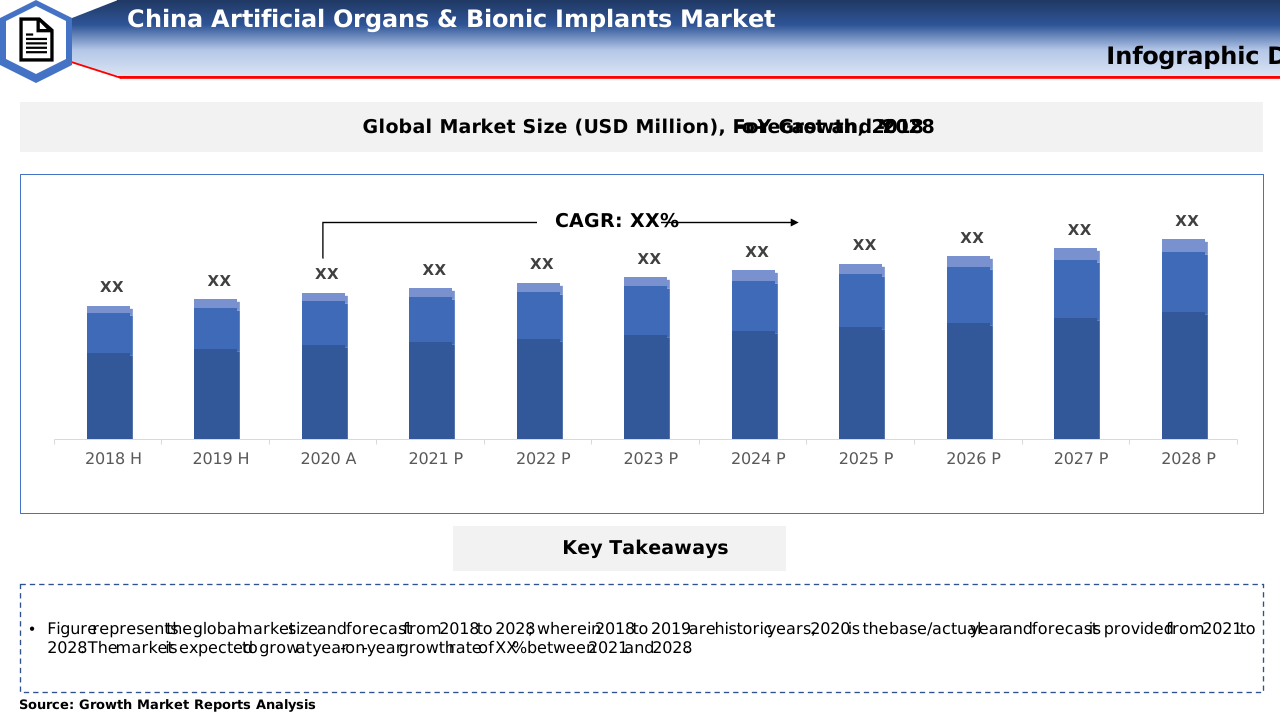
The China artificial organs & bionic implants market size is projected to expand at a significant CAGR during the forecast period, 2021–2028. The growth of the market is attributed to risk of cardiovascular disease (CVD) has grown as a result of lifestyle changes, urbanization, and faster population ageing.
The China Tribunal, an impartial authority investigating organ harvesting from political prisoners in the authoritarian regime, determined that more than 1.5 million inmates in China detention centers are being slaughtered for their parts to support a burgeoning transplant trade worth $1 billion each year.
In June 2021, a group of United Nations independent experts highlighted their worry over reports of organ harvesting on minority groups detained in China.
In the years 2017 and 2018, 11 patients had their livers and kidneys removed at a hospital in Northeast China. China is experiencing a severe organ scarcity and has failed to satisfy demand through public donations.
According to data, China's dead organ donation rate is now under 0.6/1,000,000 Chinese residents, making it one of the lowest in the world. The sad reality is that around 1 to 1.5 million individuals in China require organ transplants each year, with just 10,000 people successfully receiving a new organ.
Cardiovascular diseases are growing increasingly common in China, accounting for more than 4 million deaths in 2016. Each of the top modifiable risk factors for cardiovascular disease— tobacco, high low-density lipoprotein cholesterol, smoking, high systolic blood pressure, high body-mass index (BMI), and high fasting plasma glucose—is responsible for 0–24 million cardiovascular disease deaths in China each year, according to the Global Burden of Disease Study.
In China, there are 24 million physically disabled individuals, and developing robotic and smart technology are assisting many of them in leading regular lives.
Fourier Intelligence, a Shanghai-based manufacturer of exoskeleton robots that enable patients with paralyzing spinal injuries to stand.
OYMotion Technologies is a rehabilitative medical technology company in China. The business has created a robotic arm that was equipped with biosensors and artificial intelligence technologies.
A Beijing-based medical team has created an artificial intelligence hand that can assist handicapped persons with simple tasks like as unbuttoning garments and raising a cup.
Unlike other artificial limbs, the wearable bionic hand can capture indications of finger movement intention communicated by muscles using signal sensors that detect morphological skin changes.
Covid 19 has affected the market negatively as governments announced national emergency in the country leads to delay or halt all the surgeries as it increases the risk of exposure for the virus into the patient.
Market Trends, Drivers, Restraints, and Opportunities
- Introduction of portable implant devices is projected to drive the market in the coming years.
- Growing cases of illegal organ trafficking in the country is expected to surge the market.
- Absence of organ donors and increasing instances of organ failure are anticipated to fuel the market.
- Rising elderly population is expected to boost the market during the forecast period.
- Growing burden of diseases, unhealthy life styles and poor dietary among population are expected to spur the market in the coming years.
- Rising accidents causing organ damage or physical disabilities is estimated to fuel the market.
- Increasing cases of genetic disorders is anticipated to push the market.
- Organ implant is a very high-cost procedure which act as key challenges that can hamper the market growth.
- Organ rejection patients’ body after organ implantation is the major factor to restrict the market.
- Technological advancements in genetic engineering and biomedicals are creating a significant opportunity for the market players.
Scope of the Report
The report on the China artificial organs & bionic implants market includes an assessment of the market, trends, segments, and regional markets. Overview and dynamics have also been included in the report.
|
Attributes
|
Details
|
|
Report Title
|
China Artificial Organs & Bionic Implants - Global Industry Analysis, Growth, Share, Size, Trends, and Forecast
|
|
Base Year
|
2020
|
|
Historic Data
|
2018–2019
|
|
Forecast Period
|
2021–2028
|
|
Segmentation
|
Products (Artificial Organs [Artificial Kidney, Artificial Heart, and Others], Bionics [Orthopedic Bionic, Vision Bionics, Cardiac Bionics, and Others])
|
|
Country Scope
|
China
|
|
Report Coverage
|
Company Share, Market Analysis and Size, Competitive Landscape, Growth Factors, and Trends, and Revenue Forecast
|
|
Key Players Covered in the Report
|
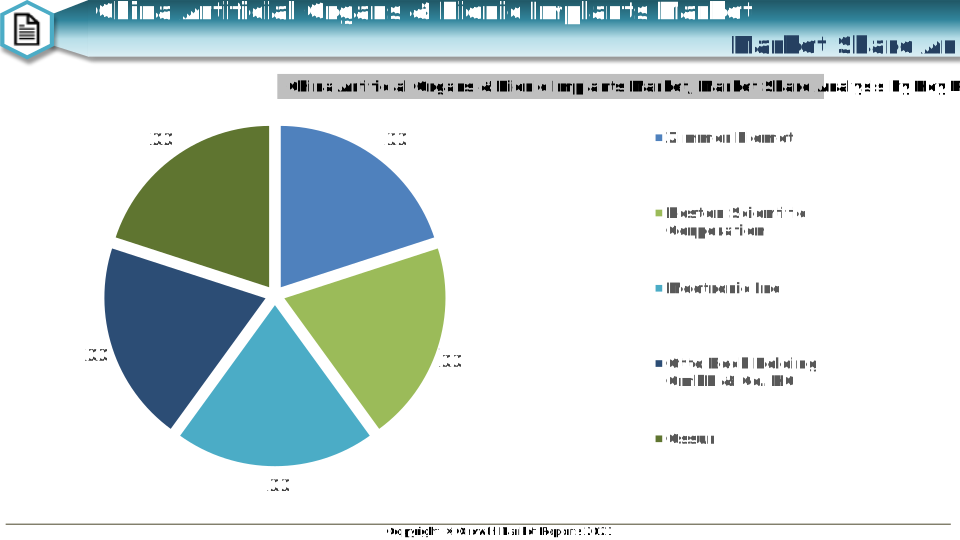
Zimmer Biomet; Boston Scientific Corporation; Medtronic Inc; Otto Bock Holding GmbH & Co. KG; Ossur
|
China Artificial Organs & Bionic Implants Market Segment Insights
The orthopedic bionic segment is projected to hold a large market share
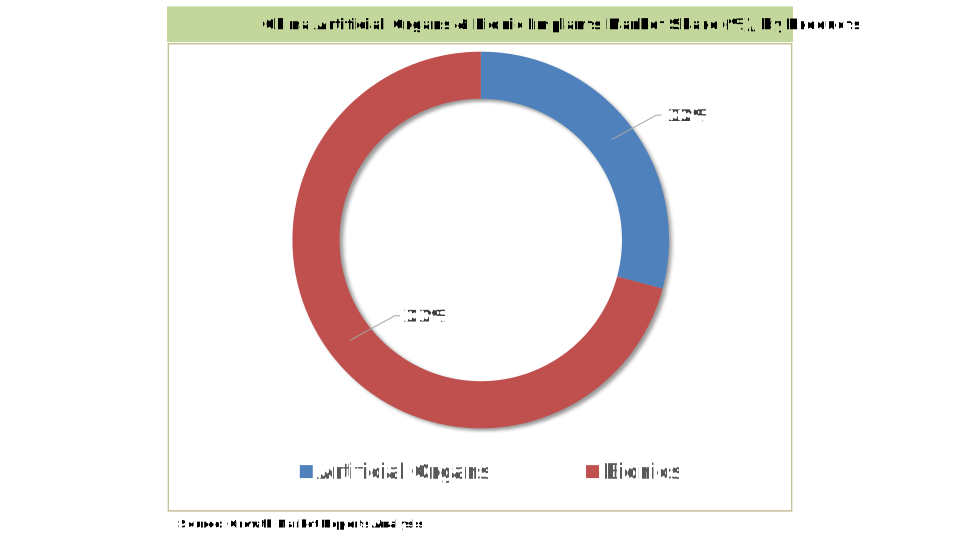
Based on products, the China artificial organs & bionic implants market is divided into artificial organs, and bionics. The bionics segment is further segmented into orthopedic bionic, vision bionics, cardiac bionics, and others. The orthopedic bionic expected to account for a key share of the market during the forecast period owing to high disability population in 2018, China's overall population of individuals with disabilities surpassed 85 million, accounting for 6.5 percent of the country's total population. The China Disabled Persons' Federation claims. Moreover, minimally invasive and tailored treatment techniques enabled by computer aided development and manufacturing technology with 3D printing technology are the evolving path of future orthopedics and traumatology, according to ongoing fundamental research and clinical evaluation.
Segments
The China artificial organs & bionic implants market has been segmented on the basis of
Products
- Artificial Organs
- Artificial Kidney
- Artificial Heart
- Others
- Bionics
- Orthopedic Bionic
- Vision Bionics
- Cardiac Bionics
- Others
Country
Key Players
- Zimmer Biomet
- Boston Scientific Corporation
- Medtronic Inc
- Otto Bock Holding GmbH & Co. KG
- Ossur
Competitive Landscape
Key players competing in the China artificial organs & bionic implants market include Zimmer Biomet; Boston Scientific Corporation; Medtronic Inc; Otto Bock Holding GmbH & Co. KG; Ossur
Some of these players are focusing on business strategies including partnerships, collaborations, capacity expansion, and product launches to increase their market shares.











 Request For Customization
 Enquiry Before Buying
 Speak With Analyst