Segments - by Product Type (Orthopedic Bionics, Cardiac Bionics, Neural Bionics, Vision Bionics, Ear Bionics, Others), by Technology (Mechanical, Electronic, Hydraulic, Others), by Application (Healthcare, Defense, Industrial, Others), by End-User (Hospitals, Clinics, Research Institutes, Others)
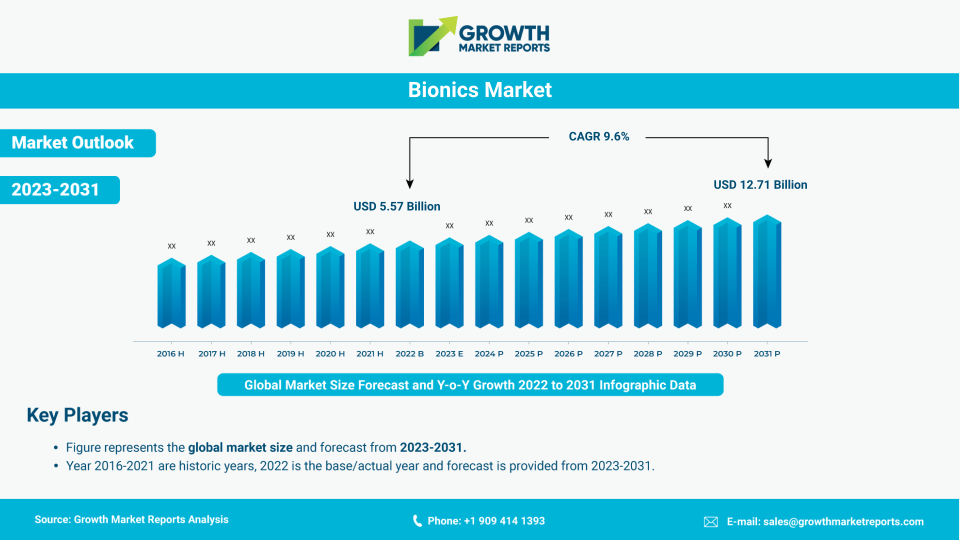
According to our latest research, the global bionics market size reached USD 23.7 billion in 2024, reflecting a robust growth trajectory powered by technological advancements and rising healthcare demands. The market is projected to expand at a CAGR of 9.8% from 2025 to 2033, culminating in a forecasted market value of USD 54.4 billion by 2033. This dynamic expansion is primarily driven by the increasing prevalence of chronic diseases, a surge in the aging population, and the integration of cutting-edge technologies across medical and industrial sectors, as per our most recent analysis.
One of the principal growth factors for the bionics market is the escalating incidence of chronic disorders and age-related disabilities worldwide. As populations age, particularly in developed economies, there is a marked rise in conditions such as osteoarthritis, cardiovascular diseases, and neurodegenerative disorders. These medical challenges have fueled the demand for advanced bionic devices, including orthopedic, cardiac, and neural bionics, which offer improved mobility, functionality, and quality of life. Furthermore, the increasing awareness and acceptance of bionic technologies among patients and healthcare professionals have accelerated their adoption, contributing significantly to market expansion.
Another critical driver is the rapid evolution and convergence of enabling technologies such as artificial intelligence, robotics, and material science. The integration of AI and machine learning algorithms has enhanced the precision, adaptability, and user experience of bionic devices, while breakthroughs in biomaterials have led to the development of lightweight, durable, and biocompatible implants. These technological advancements have not only improved clinical outcomes but also reduced device rejection rates, thus boosting patient confidence and market penetration. Additionally, ongoing investments in research and development by both public and private sectors are catalyzing innovation, resulting in the commercialization of next-generation bionic solutions.
The bionics market is also benefiting from favorable reimbursement policies and supportive regulatory frameworks in key regions. Governments and insurance providers are increasingly recognizing the long-term cost benefits of bionic implants and prosthetics, leading to improved coverage and access for patients. This trend is particularly evident in North America and Europe, where structured reimbursement systems and streamlined approval processes have facilitated the rapid introduction of novel bionic products. As a result, manufacturers are encouraged to invest in product development and market expansion, further propelling industry growth.
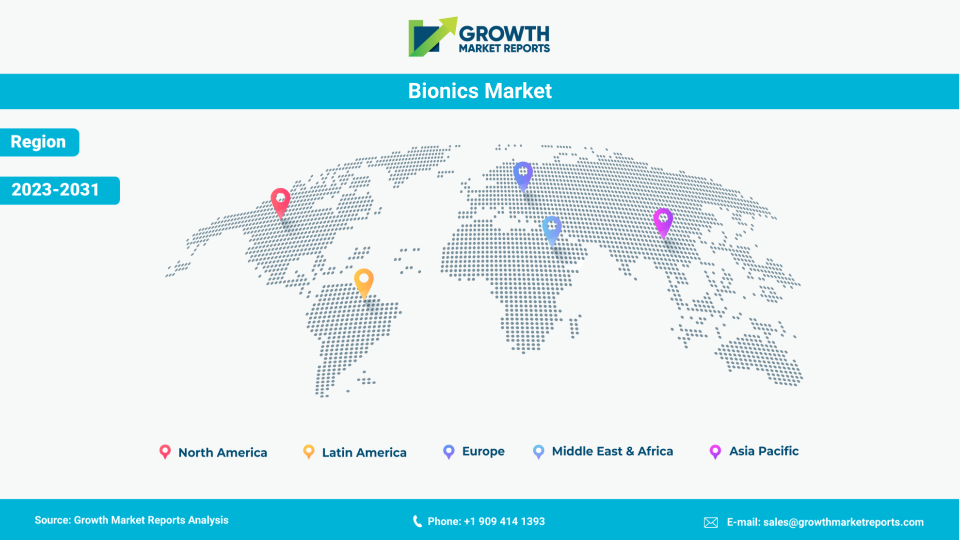
Regionally, North America continues to dominate the bionics market, accounting for the largest revenue share in 2024, followed by Europe and Asia Pacific. The United States, in particular, benefits from a strong healthcare infrastructure, high healthcare expenditure, and a large base of leading bionics manufacturers. Meanwhile, Asia Pacific is witnessing the fastest growth, driven by rising healthcare investments, expanding medical tourism, and increasing awareness about advanced prosthetic and implant technologies. Latin America and the Middle East & Africa are also emerging as promising markets, supported by improving healthcare access and growing government initiatives to address disability and chronic disease burdens.
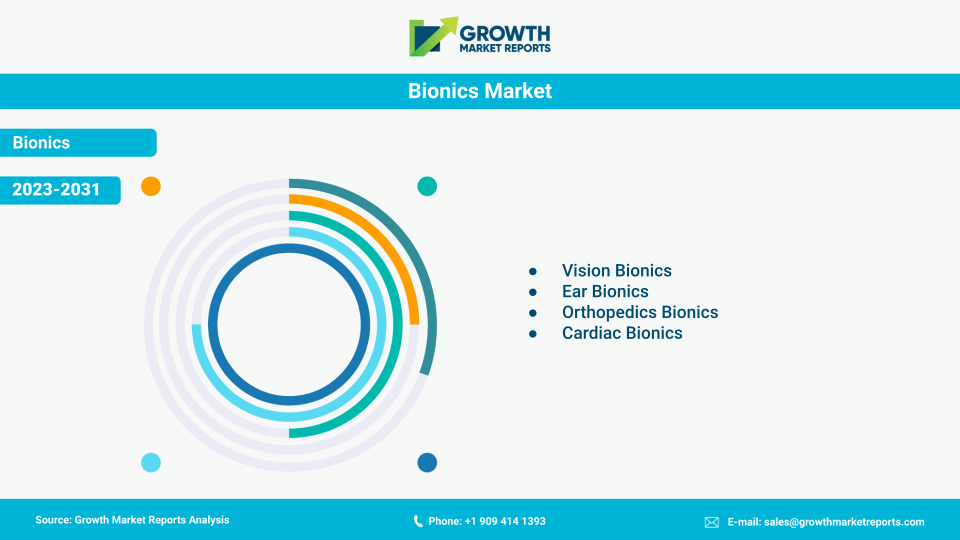
The product type segment of the bionics market encompasses orthopedic bionics, cardiac bionics, neural bionics, vision bionics, ear bionics, and others, each catering to distinct medical needs and patient populations. Orthopedic bionics, including artificial limbs and joint replacements, represent the largest sub-segment due to the high prevalence of musculoskeletal disorders and traumatic injuries. These devices have witnessed significant advancements in recent years, with the incorporation of smart sensors, adaptive control systems, and advanced materials that mimic the natural biomechanics of human limbs. The growing demand for minimally invasive surgical procedures and the increasing participation of disabled individuals in sports and daily activities are further stimulating the adoption of orthopedic bionics.
Cardiac bionics, comprising pacemakers, artificial hearts, and ventricular assist devices, are gaining traction in response to the global rise in cardiovascular diseases. Technological innovations such as wireless monitoring, remote programming, and enhanced battery life have improved the safety and efficacy of these devices, making them indispensable in managing heart failure and arrhythmias. The growing geriatric population, coupled with the increasing incidence of lifestyle-related cardiac disorders, is expected to sustain the demand for cardiac bionics over the forecast period.
Neural bionics, which include cochlear implants and brain-machine interfaces, are revolutionizing the treatment of sensory and neurological impairments. The development of sophisticated neural prostheses capable of restoring hearing, vision, and motor functions holds immense promise for individuals with severe disabilities. Recent breakthroughs in neurostimulation and brain-computer interface technologies have opened new avenues for the treatment of paralysis and neurodegenerative diseases, positioning neural bionics as a high-growth segment within the market.
Vision and ear bionics, such as retinal implants and advanced hearing aids, are addressing the growing burden of sensory deficits worldwide. The increasing prevalence of age-related macular degeneration, diabetic retinopathy, and hearing loss is driving the demand for these devices. Innovations in microelectronics, wireless connectivity, and biocompatible materials are enhancing the functionality and user comfort of vision and ear bionics, thereby improving patient outcomes and quality of life. Other emerging product types, including exoskeletons and organ-on-chip devices, are also gaining attention for their potential to transform rehabilitation and organ transplantation practices.
| Attributes | Details |
| Report Title | Bionics Market Research Report 2033 |
| By Product Type | Orthopedic Bionics, Cardiac Bionics, Neural Bionics, Vision Bionics, Ear Bionics, Others |
| By Technology | Mechanical, Electronic, Hydraulic, Others |
| By Application | Healthcare, Defense, Industrial, Others |
| By End-User | Hospitals, Clinics, Research Institutes, Others |
| Regions Covered | North America, Europe, APAC, Latin America, MEA |
| Base Year | 2024 |
| Historic Data | 2018-2023 |
| Forecast Period | 2025-2033 |
| Number of Pages | 274 |
| Number of Tables & Figures | 355 |
| Customization Available | Yes, the report can be customized as per your need. |
The technology segment of the bionics market is categorized into mechanical, electronic, hydraulic, and other emerging technologies. Mechanical bionics, which rely on principles of biomechanics and mechanical engineering, have traditionally dominated the market, particularly in orthopedic and prosthetic applications. These devices are valued for their durability, ease of maintenance, and cost-effectiveness, making them accessible to a broad patient base. However, the limitations in terms of adaptability and sensory feedback have prompted manufacturers to explore more advanced technological solutions.
Electronic bionics have emerged as the fastest-growing technology segment, driven by rapid advancements in microelectronics, sensors, and actuators. These devices offer superior functionality, precision, and user-customization, enabling real-time monitoring and adaptive control. The integration of wireless communication and data analytics has further enhanced the performance and reliability of electronic bionics, particularly in cardiac and neural applications. The ongoing miniaturization of electronic components and the development of energy-efficient power sources are expected to drive the adoption of electronic bionics in both medical and non-medical settings.
Hydraulic bionics, although less prevalent, play a crucial role in applications requiring high force output and robust mechanical performance. These systems are commonly used in exoskeletons and advanced prosthetic limbs designed for heavy-duty tasks and industrial applications. The ability of hydraulic bionics to deliver smooth and powerful movements has made them indispensable in rehabilitation and assistive technologies, particularly for individuals with severe mobility impairments. Ongoing research is focused on improving the energy efficiency, compactness, and user-friendliness of hydraulic bionic systems.
Other emerging technologies, such as pneumatic, biohybrid, and nanotechnology-based bionics, are gradually making their way into the market. These innovative approaches aim to bridge the gap between artificial and biological systems, enabling seamless integration and naturalistic functionality. For instance, biohybrid bionics combine living tissues with synthetic materials to create implants that can grow, adapt, and self-repair. Nanotechnology-enabled bionics are being explored for applications in targeted drug delivery, tissue regeneration, and biosensing. As research in these areas progresses, the technology landscape of the bionics market is expected to become increasingly diverse and sophisticated.
The application segment of the bionics market is broadly classified into healthcare, defense, industrial, and other specialized domains. Healthcare remains the dominant application area, accounting for the majority of market revenue in 2024. The widespread use of bionic devices for the treatment of chronic diseases, physical disabilities, and sensory impairments has transformed patient care, enabling faster recovery, improved mobility, and enhanced quality of life. Hospitals and clinics are at the forefront of adopting advanced bionic solutions, supported by robust reimbursement policies and a growing emphasis on personalized medicine.
In the defense sector, bionics are being leveraged to enhance the physical capabilities and resilience of military personnel. Exoskeletons, powered prosthetics, and neuro-enhancement devices are being developed to improve soldier mobility, reduce fatigue, and facilitate rapid rehabilitation following injuries. The integration of bionics into defense applications is also driven by the need for improved protection, situational awareness, and operational efficiency in challenging environments. Governments and defense agencies are investing heavily in research and development to create next-generation bionic systems tailored to the unique requirements of military operations.
The industrial application of bionics is gaining momentum, particularly in sectors such as manufacturing, construction, and logistics. Industrial exoskeletons and assistive devices are being deployed to reduce workplace injuries, enhance worker productivity, and support aging workforces. These technologies enable workers to perform physically demanding tasks with greater ease and safety, thereby reducing the risk of musculoskeletal disorders and improving overall operational efficiency. The adoption of bionics in industrial settings is expected to accelerate as companies increasingly recognize the long-term cost benefits and productivity gains associated with these solutions.
Other emerging applications of bionics include sports, education, and consumer electronics. In sports, bionic devices are being used to enhance athletic performance, facilitate injury recovery, and enable participation for individuals with disabilities. Educational institutions and research organizations are exploring the use of bionics for training, simulation, and experimental studies, contributing to the development of new technologies and applications. The integration of bionic features into consumer electronics, such as wearable devices and smart home systems, is also creating new opportunities for market growth and diversification.
The end-user segment of the bionics market is segmented into hospitals, clinics, research institutes, and others, each playing a critical role in the adoption and utilization of bionic technologies. Hospitals represent the largest end-user category, driven by their central role in the diagnosis, treatment, and rehabilitation of patients requiring bionic implants and prosthetics. The presence of specialized departments, skilled healthcare professionals, and advanced infrastructure enables hospitals to offer comprehensive bionic solutions, from preoperative assessment to postoperative care and long-term follow-up.
Clinics, particularly those specializing in orthopedics, cardiology, and neurology, are increasingly adopting bionic devices to enhance patient outcomes and expand their service offerings. The growing trend towards outpatient care and minimally invasive procedures has made clinics an important channel for the distribution and deployment of bionic technologies. The convenience, accessibility, and personalized care provided by clinics are attracting a diverse patient population, further driving market growth in this segment.
Research institutes play a pivotal role in advancing the science and technology of bionics. These organizations are at the forefront of developing novel materials, devices, and therapeutic approaches, often in collaboration with industry partners and academic institutions. The contributions of research institutes are critical to the commercialization of next-generation bionic products, as they provide the scientific foundation, technical expertise, and validation required for regulatory approval and market entry. Government funding and public-private partnerships are supporting the growth of research activities in the bionics field.
Other end-users, including rehabilitation centers, sports organizations, and home care providers, are also contributing to the expansion of the bionics market. Rehabilitation centers are utilizing bionic devices to facilitate patient recovery and reintegration into society, while sports organizations are adopting bionics to enhance athlete performance and safety. The rise of home-based care and telemedicine is creating new opportunities for the deployment of user-friendly, connected bionic devices that enable remote monitoring and support. As the end-user landscape becomes more diverse, manufacturers are focusing on developing customizable, scalable, and cost-effective solutions to meet the evolving needs of different customer segments.
The bionics market presents substantial opportunities for innovation and growth, particularly in the areas of personalized medicine, digital health integration, and global market expansion. The increasing emphasis on patient-centric care is driving the development of customizable bionic devices tailored to individual anatomical, physiological, and lifestyle needs. Advances in 3D printing, wearable sensors, and data analytics are enabling manufacturers to create bespoke solutions that deliver superior comfort, functionality, and clinical outcomes. The integration of bionics with digital health platforms, such as remote monitoring and tele-rehabilitation, is opening new avenues for patient engagement, adherence, and long-term management. These trends are expected to create significant value for stakeholders across the healthcare ecosystem.
Emerging markets, particularly in Asia Pacific and Latin America, offer untapped potential for market expansion, driven by rising healthcare investments, improving access to advanced medical technologies, and growing awareness about the benefits of bionic devices. Manufacturers are increasingly focusing on developing affordable, scalable, and easy-to-use solutions to address the unique challenges of these regions, such as limited infrastructure and resource constraints. Strategic partnerships, localization of manufacturing, and targeted marketing campaigns are key strategies for capturing market share in these high-growth regions. Additionally, the growing adoption of bionics in non-medical applications, such as defense, industry, and consumer electronics, is diversifying revenue streams and mitigating risks associated with market saturation in traditional segments.
Despite the promising outlook, the bionics market faces several restraining factors, including high costs, regulatory complexities, and limited reimbursement coverage in certain regions. The development, manufacturing, and maintenance of advanced bionic devices require significant investments in research, engineering, and quality assurance, resulting in high product prices that may limit accessibility for some patient populations. Regulatory approval processes are often lengthy and stringent, particularly for novel technologies that require extensive clinical validation and safety testing. Inconsistent reimbursement policies and limited insurance coverage in emerging markets can also hinder market growth by creating financial barriers for patients and providers. Addressing these challenges will require coordinated efforts from industry stakeholders, policymakers, and healthcare systems to ensure equitable access and sustainable growth.
North America maintains its leadership position in the bionics market, accounting for a market size of approximately USD 9.8 billion in 2024. The region's dominance is underpinned by a robust healthcare infrastructure, high adoption of advanced medical technologies, and a well-established reimbursement framework. The United States, in particular, is home to several leading bionics manufacturers, research institutions, and healthcare providers, fostering a dynamic environment for innovation and commercialization. The presence of a large patient base with chronic diseases and disabilities, coupled with supportive government policies, is expected to sustain North America's market leadership over the forecast period.
Europe follows closely, with a market size of USD 6.4 billion in 2024, benefiting from strong public healthcare systems, high healthcare expenditure, and a growing focus on disability management and rehabilitation. Countries such as Germany, the United Kingdom, and France are at the forefront of adopting bionic technologies, supported by favorable regulatory frameworks and increasing investments in research and development. The region is also witnessing a surge in cross-border collaborations and public-private partnerships aimed at advancing bionics research and expanding access to innovative solutions. The European bionics market is projected to grow at a CAGR of 9.5% through 2033, driven by ongoing technological advancements and demographic trends.
Asia Pacific is emerging as the fastest-growing region, with a market size of USD 4.2 billion in 2024 and a projected CAGR of 12.1% over the forecast period. The region's rapid growth is fueled by rising healthcare investments, expanding medical tourism, and increasing awareness about advanced prosthetic and implant technologies. Countries such as China, Japan, and India are leading the adoption of bionics, supported by government initiatives, growing middle-class populations, and improving healthcare access. Latin America and the Middle East & Africa, with market sizes of USD 1.8 billion and USD 1.5 billion respectively in 2024, are also witnessing steady growth, driven by efforts to address disability and chronic disease burdens through improved healthcare infrastructure and policy support.
The bionics market is characterized by intense competition, rapid technological innovation, and a dynamic landscape of established players and emerging startups. Leading companies are investing heavily in research and development to create differentiated products, enhance clinical outcomes, and expand their portfolios across multiple product categories and applications. Strategic collaborations, mergers and acquisitions, and partnerships with research institutions are common strategies employed to accelerate innovation, gain access to new technologies, and expand geographic reach. Intellectual property protection and regulatory compliance are critical factors shaping the competitive dynamics, as companies seek to establish and defend their market positions.
Product differentiation and customer-centric innovation are key drivers of competitive advantage in the bionics market. Companies are focusing on developing next-generation bionic devices that offer superior functionality, user comfort, and integration with digital health platforms. Customization, modular design, and interoperability with other medical devices are increasingly important features that cater to the diverse needs of patients and healthcare providers. The ability to provide comprehensive support services, including training, maintenance, and remote monitoring, is also emerging as a critical success factor, particularly in the context of value-based healthcare.
The competitive landscape is further shaped by the entry of technology giants and non-traditional players, who are leveraging their expertise in artificial intelligence, robotics, and data analytics to disrupt traditional business models. These entrants are bringing new perspectives, resources, and capabilities to the market, fostering a culture of open innovation and cross-industry collaboration. The rise of digital health and connected care solutions is blurring the boundaries between medical devices, consumer electronics, and healthcare services, creating new opportunities and challenges for established players and newcomers alike.
Major companies operating in the global bionics market include Medtronic plc, Boston Scientific Corporation, Cochlear Limited, Abbott Laboratories, Zimmer Biomet Holdings Inc., Ottobock SE & Co. KGaA, Biomet Inc., Second Sight Medical Products Inc., and Ekso Bionics Holdings Inc.. Medtronic is a global leader in cardiac and neural bionics, with a broad portfolio of pacemakers, neurostimulators, and implantable devices. Boston Scientific is renowned for its innovations in cardiac rhythm management and neuromodulation, while Cochlear Limited is a pioneer in cochlear implants and hearing solutions. Abbott Laboratories offers a diverse range of bionic devices, including heart valves and neuromodulation systems, and Zimmer Biomet is a key player in orthopedic bionics and joint replacement technologies.
Ottobock is recognized for its cutting-edge prosthetics and exoskeletons, serving both medical and industrial markets. Second Sight Medical Products specializes in vision bionics, with a focus on retinal implants and visual prostheses, while Ekso Bionics is a leader in wearable exoskeletons for rehabilitation and industrial applications. These companies are distinguished by their commitment to innovation, quality, and patient-centric solutions, supported by extensive research, clinical validation, and global distribution networks. The competitive landscape is expected to remain dynamic and evolving, as new entrants, disruptive technologies, and shifting customer preferences continue to reshape the future of the bionics market.
The Bionics market has been segmented on the basis of
Key players competing in the bionics market are Advanced Bionics AG ; Medtronic PLC; Edward Lifesciences Corporation; Ossur (Touch Bionics) and Ekso Bionics.
The market will likely see increased innovation, greater integration with digital health platforms, expansion into new regions and applications, and heightened competition from both established medical device companies and technology firms.
Key players include Medtronic plc, Boston Scientific Corporation, Cochlear Limited, Abbott Laboratories, Zimmer Biomet Holdings Inc., Ottobock SE & Co. KGaA, Second Sight Medical Products Inc., Ekso Bionics Holdings Inc., and others.
Opportunities include personalized medicine, digital health integration, and expansion in emerging markets. Challenges include high costs, regulatory hurdles, and limited reimbursement in some regions.
Major end-users include hospitals, clinics, research institutes, rehabilitation centers, sports organizations, and home care providers, each playing a critical role in the adoption and utilization of bionic technologies.
Bionics are primarily used in healthcare for treating chronic diseases, disabilities, and sensory impairments. Other applications include defense (exoskeletons for soldiers), industrial (assistive devices for workers), sports, education, and consumer electronics.
Technological drivers include artificial intelligence, robotics, microelectronics, biomaterials, and emerging fields like nanotechnology and biohybrid systems, all contributing to improved precision, adaptability, and user experience.
Key product types in the bionics market include orthopedic bionics (artificial limbs, joint replacements), cardiac bionics (pacemakers, artificial hearts), neural bionics (cochlear implants, brain-machine interfaces), vision bionics (retinal implants), ear bionics (advanced hearing aids), and others such as exoskeletons.
North America holds the largest share of the bionics market, followed by Europe and Asia Pacific. The United States is particularly dominant due to its strong healthcare infrastructure and leading manufacturers.
The bionics market is expected to grow at a CAGR of 9.8% from 2025 to 2033, reaching an estimated value of USD 54.4 billion by 2033.
As of 2024, the global bionics market size reached USD 23.7 billion, driven by technological advancements and rising healthcare demands.