Animation and VFX Market Research Report 2033

Animation and VFX Market Research Report 2033

Segments - by Component (Software, Hardware, Services), by Application (Movies, Television, Gaming, Advertising, Online Media, Others), by Technology (2D Animation, 3D Animation, Motion Graphics, Visual Effects), by End-User (Media & Entertainment, Education, Healthcare, Architecture, Others)

https://growthmarketreports.com/Debadatta
Author : Debadatta Patel
https://growthmarketreports.com/Vaibhav
Fact-checked by : V. Chandola
https://growthmarketreports.com/Shruti
Editor : Shruti Bhat

Upcoming | Report ID :CG-3609 | 5.0 Rating | 78 Reviews | 254 Pages | Format : Docx PDF

Report Description


Animation and VFX Market Outlook

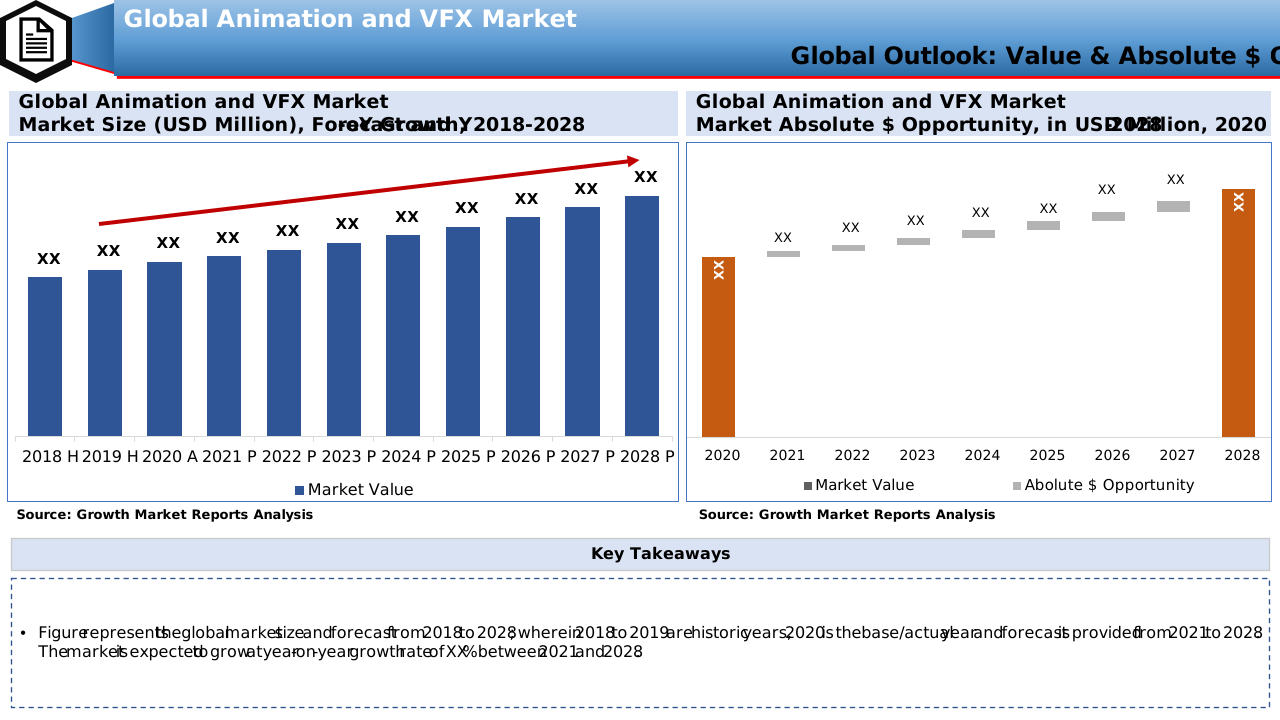
According to our latest research, the global Animation and VFX market size reached USD 184.3 billion in 2024, with a robust CAGR of 11.2% anticipated over the forecast period. This growth trajectory is expected to propel the market to an impressive USD 482.1 billion by 2033. The marketÂ’s expansion is being driven by the surging demand for immersive content across media and entertainment, gaming, and advertising industries, as well as the rapid adoption of advanced digital technologies in content creation and distribution.

A primary growth factor for the Animation and VFX market is the exponential rise in global content consumption. With the proliferation of streaming platforms, consumers now demand high-quality, visually rich content that enhances their viewing experience. This has led to increased investments in animation and VFX by film studios, television networks, and digital content creators. The rise of over-the-top (OTT) media services has further accelerated the adoption of Animation and VFX, as these platforms compete to deliver original, engaging, and visually compelling narratives. Furthermore, the integration of VFX in various genres, from action-packed blockbusters to animated features, has become a key differentiator in attracting audiences and driving box office revenues.

Another significant growth driver is the technological advancement in animation and VFX tools. The industry is witnessing rapid innovation in 3D modeling, motion capture, augmented reality (AR), and virtual reality (VR), which has revolutionized the way stories are told and experiences are delivered. These technologies enable content creators to push the boundaries of realism, creativity, and interactivity, resulting in more sophisticated and immersive visual experiences. The adoption of cloud-based rendering and real-time animation software has also made high-quality production more accessible and cost-effective for both large studios and independent creators, further expanding the market's reach.

The increasing application of Animation and VFX beyond traditional entertainment is a key trend fueling market growth. Sectors such as education, healthcare, and architecture are leveraging these technologies for training simulations, medical visualizations, and architectural walkthroughs, respectively. In education, animated content is being used to simplify complex concepts and enhance student engagement, while in healthcare, VFX is aiding in the visualization of anatomical structures and surgical procedures. This diversification of end-use applications is opening new revenue streams and contributing to the sustained expansion of the Animation and VFX market.

Animation Software plays a pivotal role in the creation of high-quality content, enabling creators to bring their visions to life with precision and creativity. The development of sophisticated animation software has revolutionized the industry, providing tools that support everything from basic 2D animations to complex 3D models. These software solutions are designed to enhance productivity and creativity, offering features such as real-time rendering, advanced modeling capabilities, and seamless integration with other digital tools. As the demand for visually appealing content grows, animation software continues to evolve, offering new possibilities for storytelling and artistic expression in the Animation and VFX market.

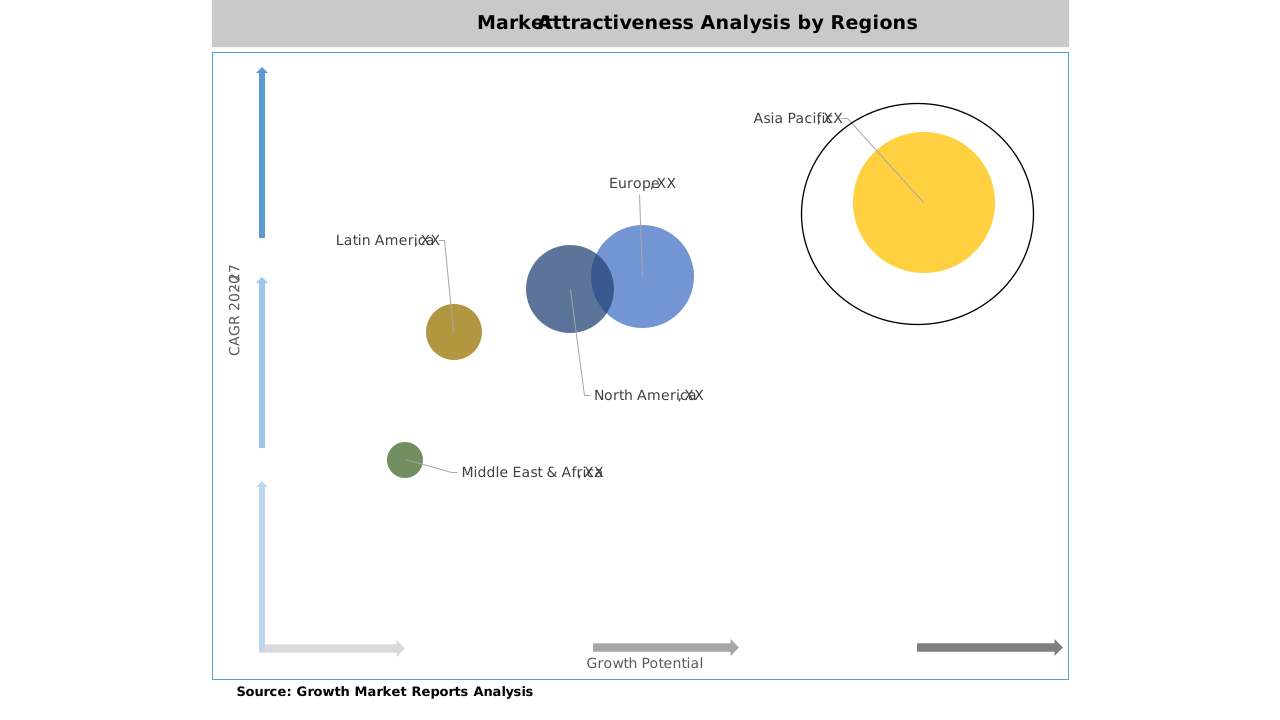
Regionally, North America continues to dominate the Animation and VFX market, accounting for the largest share due to the presence of major film studios, advanced technology infrastructure, and a highly skilled workforce. However, the Asia Pacific region is emerging as the fastest-growing market, driven by the rapid expansion of the media and entertainment industry, increasing investments in local content production, and the availability of cost-effective animation services. Europe also maintains a significant market presence, with a strong tradition in creative arts and a growing demand for high-quality digital content. These regional dynamics underscore the global nature of the Animation and VFX market and highlight the diverse opportunities for growth and innovation across geographies.

Global Animation and VFX Industry Outlook

Component Analysis

The Animation and VFX market by component is broadly segmented into software, hardware, and services, each playing a critical role in the ecosystem. Software forms the backbone of animation and VFX production, encompassing a wide array of tools for modeling, rendering, compositing, and simulation. Leading software solutions such as Autodesk Maya, Adobe After Effects, and Blender are continuously evolving to offer enhanced features, real-time collaboration, and integration with emerging technologies like AI and machine learning. The demand for software is being bolstered by the need for faster, more efficient workflows and the growing complexity of visual effects in modern content. Cloud-based software platforms are gaining traction, enabling studios to scale resources dynamically and collaborate seamlessly across geographies.

Hardware is another vital component, encompassing high-performance workstations, graphics processing units (GPUs), servers, and storage solutions that support intensive rendering and processing tasks. The increasing sophistication of animation and VFX projects requires robust hardware infrastructure capable of handling large datasets, complex simulations, and real-time rendering. The adoption of advanced GPUs, such as those from NVIDIA and AMD, has significantly accelerated rendering speeds and improved output quality. Additionally, the shift towards remote and distributed production workflows, especially post-pandemic, has heightened the demand for cloud-based and virtualized hardware solutions, allowing teams to access powerful computing resources from anywhere in the world.

Services constitute a rapidly growing segment in the Animation and VFX market, encompassing a range of offerings from pre-production planning and storyboarding to post-production editing, compositing, and visual effects integration. Outsourcing of animation and VFX services to specialized studios in regions like Asia Pacific and Eastern Europe has become a common practice, enabling content creators to optimize costs without compromising on quality. Service providers are increasingly offering end-to-end solutions, leveraging advanced project management tools and collaborative platforms to deliver projects on time and within budget. The rise of co-production models and partnerships between studios in different regions is further driving the growth of the services segment.

VFX Services have become an integral part of the production pipeline, offering a range of solutions that enhance the visual storytelling of films, television shows, and digital content. These services encompass everything from pre-visualization and on-set supervision to post-production effects and compositing. The expertise provided by VFX service providers allows filmmakers to create stunning visual effects that captivate audiences and elevate the overall quality of the production. As the demand for high-quality visual content continues to rise, VFX services are increasingly sought after to deliver innovative and immersive experiences that push the boundaries of what is possible in visual storytelling.

The interplay between software, hardware, and services is critical to the success of animation and VFX projects. Studios and content creators are increasingly adopting integrated solutions that combine best-in-class software with powerful hardware and expert services to achieve superior results. The trend towards automation, AI-driven workflows, and real-time collaboration is reshaping the component landscape, enabling faster turnaround times, higher quality outputs, and greater creative flexibility. As the demand for high-quality animation and VFX continues to grow across industries, the component segment is poised for sustained innovation and expansion.

Report Scope

Attributes Details
Report Title Animation and VFX Market Research Report 2033
By Component Software, Hardware, Services
By Application Movies, Television, Gaming, Advertising, Online Media, Others
By Technology 2D Animation, 3D Animation, Motion Graphics, Visual Effects
By End-User Media & Entertainment, Education, Healthcare, Architecture, Others
Regions Covered North America, Europe, APAC, Latin America, MEA
Base Year 2024
Historic Data 2018-2023
Forecast Period 2025-2033
Number of Pages 254
Number of Tables & Figures 349
Customization Available Yes, the report can be customized as per your need.

Application Analysis

The Animation and VFX market finds diverse applications across movies, television, gaming, advertising, online media, and other sectors. Movies represent a major application area, with blockbuster films increasingly relying on advanced VFX to create visually stunning worlds, lifelike characters, and immersive action sequences. The integration of animation and VFX has become a hallmark of modern filmmaking, enabling directors to realize ambitious creative visions that would be impossible with practical effects alone. The global success of animated and VFX-heavy films has driven studios to invest heavily in cutting-edge technologies and talent, fueling the growth of this application segment.

Television is another significant application area, with the rise of high-quality episodic content on streaming platforms driving demand for sophisticated animation and VFX. From fantasy series with elaborate visual effects to animated shows targeting diverse age groups, television content creators are leveraging these technologies to enhance storytelling and differentiate their offerings in a crowded market. The shift towards binge-watching and on-demand viewing has increased the pressure on studios to produce visually compelling content at a rapid pace, further boosting the adoption of animation and VFX in television production.

Gaming represents one of the fastest-growing application segments, as the industry continues to push the boundaries of realism, interactivity, and immersion. Animation and VFX are integral to the creation of lifelike characters, dynamic environments, and cinematic cutscenes that enhance the gaming experience. The advent of next-generation gaming consoles, virtual reality (VR), and augmented reality (AR) has opened new possibilities for real-time animation and interactive visual effects, driving innovation and investment in this segment. Game developers are increasingly collaborating with animation and VFX studios to deliver blockbuster titles that captivate global audiences.

Advertising and online media are also leveraging animation and VFX to create engaging, memorable campaigns that resonate with consumers. Animated commercials, branded content, and interactive ads are becoming increasingly popular as brands seek to capture attention in a crowded digital landscape. The ability to create visually striking and emotionally resonant content using animation and VFX is proving to be a powerful tool for marketers, driving higher engagement and conversion rates. As digital advertising continues to evolve, the demand for innovative animation and VFX solutions is expected to rise steadily.

Technology Analysis

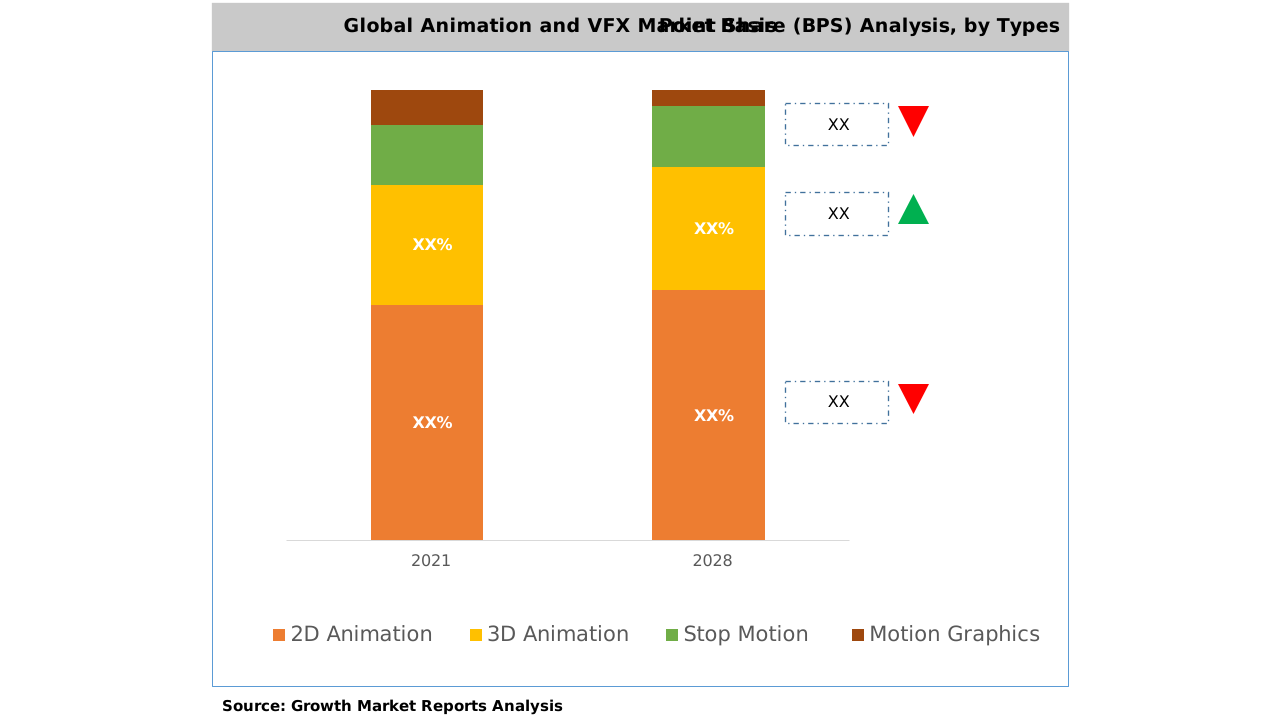
The Animation and VFX market is characterized by rapid technological evolution, with key segments including 2D animation, 3D animation, motion graphics, and visual effects (VFX). 2D animation remains a foundational technology, widely used in traditional animated films, television series, and educational content. Despite the rise of 3D animation, 2D techniques continue to be valued for their unique aesthetic, cost-effectiveness, and versatility. Advances in digital drawing tools, vector-based animation software, and real-time rendering have revitalized 2D animation, enabling creators to produce high-quality content more efficiently.

Visual Effects have transformed the landscape of modern media, enabling the creation of breathtaking visuals that were once unimaginable. From epic battle scenes in blockbuster films to the subtle enhancement of everyday settings, visual effects play a crucial role in bringing stories to life. The integration of visual effects into live-action footage allows filmmakers to explore new creative possibilities, crafting worlds and characters that captivate and inspire audiences. As technology continues to advance, the scope and impact of visual effects are expanding, offering new opportunities for innovation and creativity in the Animation and VFX market.

3D animation has emerged as the dominant technology in the Animation and VFX market, powering everything from feature films and video games to architectural visualizations and virtual reality experiences. The realism, depth, and flexibility offered by 3D animation have made it the technology of choice for high-budget productions and immersive applications. Innovations in 3D modeling, rigging, motion capture, and rendering are enabling artists to create lifelike characters, dynamic environments, and complex simulations with unprecedented detail and realism. The adoption of AI-driven tools and procedural generation techniques is further enhancing the efficiency and creative possibilities of 3D animation.

Motion graphics represent a specialized segment focused on the creation of animated graphic elements, text, and visual effects for use in advertising, broadcast design, and digital media. Motion graphics are widely used to convey information, enhance storytelling, and create visually engaging presentations. The increasing demand for dynamic content in social media, digital marketing, and corporate communications is driving the growth of this segment. Advances in software such as Adobe After Effects and Cinema 4D have made motion graphics more accessible to a broader range of creators, fueling innovation and experimentation in this space.

Visual effects (VFX) encompass a broad range of techniques used to create, enhance, or manipulate imagery in live-action footage. VFX is integral to modern filmmaking, television production, and gaming, enabling the creation of spectacular visuals that would be impossible or impractical to achieve through traditional means. Techniques such as compositing, matte painting, particle effects, and digital doubles are being used to create everything from epic battle scenes to subtle environmental enhancements. The integration of AI, machine learning, and real-time rendering is transforming the VFX workflow, enabling faster turnaround times, higher quality outputs, and greater creative flexibility.

End-User Analysis

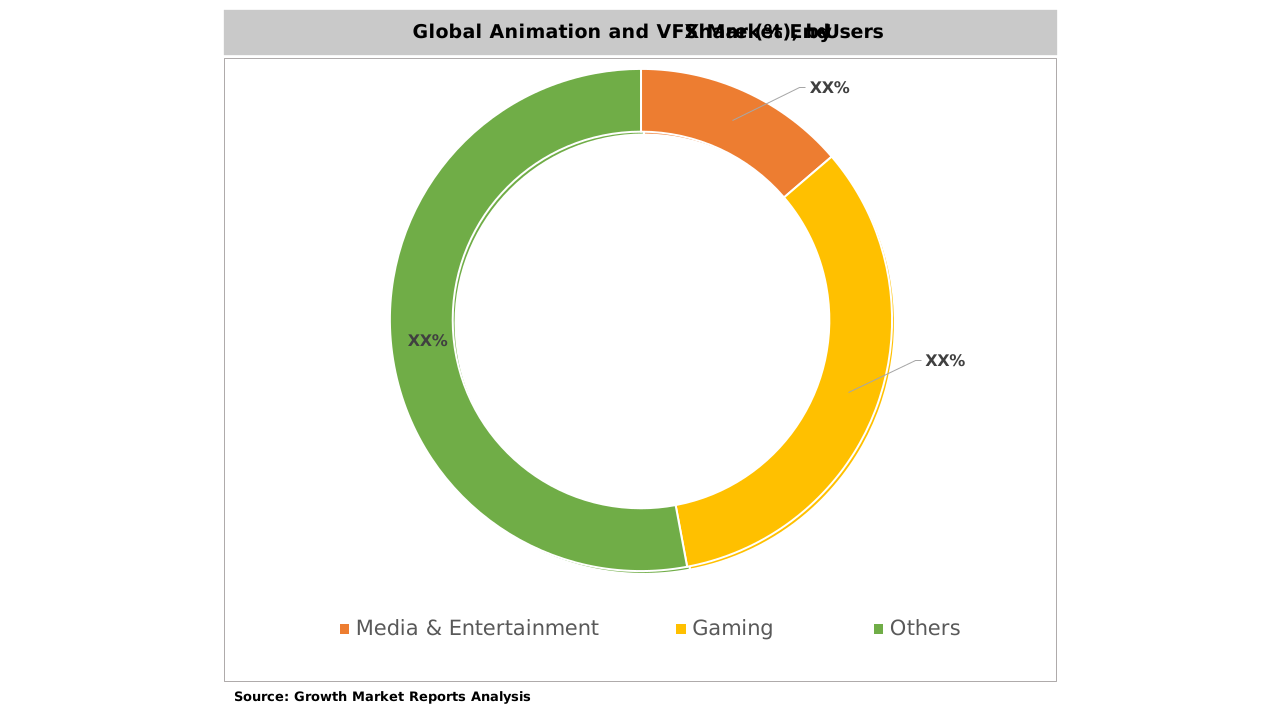
The Animation and VFX market serves a diverse range of end-users, including media and entertainment, education, healthcare, architecture, and others. Media and entertainment remain the largest end-user segment, accounting for the majority of market revenues. Film studios, television networks, streaming platforms, and gaming companies are the primary drivers of demand, leveraging animation and VFX to create compelling content that attracts and retains audiences. The increasing competition among content creators is fueling investments in high-quality animation and VFX, driving growth in this segment.

The education sector is increasingly adopting animation and VFX to enhance teaching and learning outcomes. Animated content is being used to simplify complex concepts, visualize abstract ideas, and engage learners across age groups. Educational publishers, e-learning platforms, and training providers are integrating animation and VFX into their offerings to create interactive and immersive learning experiences. The shift towards digital and remote learning, accelerated by the COVID-19 pandemic, has further boosted demand for high-quality educational animation and VFX content.

In healthcare, animation and VFX are being used for medical visualizations, surgical simulations, patient education, and marketing. Animated videos and 3D models are helping doctors and patients understand complex medical procedures, anatomy, and treatment options. Medical device manufacturers, pharmaceutical companies, and healthcare providers are leveraging these technologies to enhance communication, training, and marketing efforts. The growing focus on patient-centric care and digital health is expected to drive further adoption of animation and VFX in healthcare applications.

The architecture segment is leveraging animation and VFX for architectural visualizations, walkthroughs, and virtual tours. Architects, real estate developers, and construction companies are using these technologies to present designs, showcase projects, and engage clients. 3D animation and VFX enable stakeholders to visualize spaces, materials, and lighting conditions before construction begins, improving decision-making and reducing errors. The adoption of virtual reality (VR) and augmented reality (AR) in architectural visualization is further enhancing the value proposition of animation and VFX in this sector.

Opportunities & Threats

The Animation and VFX market is brimming with opportunities, particularly in the realm of technological innovation. The integration of artificial intelligence (AI) and machine learning into animation and VFX workflows is streamlining production processes, reducing costs, and enabling the creation of more complex and realistic visuals. AI-powered tools can automate repetitive tasks such as rotoscoping, compositing, and rendering, allowing artists to focus on creative aspects and accelerate project timelines. The growing adoption of cloud-based production pipelines is another significant opportunity, enabling studios to scale resources dynamically, collaborate globally, and access cutting-edge software and hardware without substantial upfront investments. These technological advancements are democratizing access to high-quality animation and VFX, empowering independent creators and small studios to compete with industry giants.

Another major opportunity lies in the expanding application of animation and VFX across non-traditional sectors such as education, healthcare, architecture, and marketing. As these industries recognize the value of visual storytelling and immersive experiences, demand for specialized animation and VFX solutions is rising. Educational institutions are leveraging animated content to enhance learning outcomes, while healthcare providers are using 3D visualizations for patient education and surgical planning. The rise of virtual and augmented reality is opening new avenues for interactive and experiential content, creating opportunities for innovation and differentiation. Companies that can develop tailored solutions for these emerging applications stand to capture significant market share and drive industry growth.

Despite these opportunities, the Animation and VFX market faces several challenges that could restrain growth. One of the primary threats is the high cost and complexity of production, particularly for high-quality, large-scale projects. The need for skilled talent, advanced software and hardware, and extensive rendering resources can create significant barriers to entry, especially for small and medium-sized studios. Additionally, the industry is grappling with issues related to intellectual property protection, piracy, and unauthorized distribution of digital content. These challenges underscore the importance of ongoing investment in talent development, technology innovation, and robust security measures to ensure sustainable growth and competitiveness in the Animation and VFX market.

Regional Outlook

North America continues to lead the global Animation and VFX market, accounting for the largest share with a market size of approximately USD 71.3 billion in 2024. The regionÂ’s dominance is underpinned by the presence of major film studios, a mature media and entertainment industry, and a highly skilled workforce. The United States, in particular, is home to Hollywood, the epicenter of global film production, and numerous leading animation and VFX studios. The region is also at the forefront of technological innovation, with significant investments in research and development, cloud computing, and AI-driven workflows. The demand for high-quality content from streaming platforms and the gaming industry is further driving growth in North America.

The Asia Pacific region is emerging as the fastest-growing market, with a projected CAGR of 13.9% over the forecast period. The market size in Asia Pacific reached USD 52.6 billion in 2024, driven by rapid growth in the media and entertainment industry, increasing investments in local content production, and the availability of cost-effective animation and VFX services. Countries such as India, China, Japan, and South Korea are becoming major hubs for animation and VFX outsourcing, attracting projects from global studios seeking to optimize costs and access a large pool of creative talent. The rise of digital platforms, mobile gaming, and online streaming is fueling demand for high-quality animated and VFX content across the region.

Europe also maintains a significant presence in the Animation and VFX market, with a market size of USD 38.9 billion in 2024. The region boasts a rich tradition in creative arts, a strong focus on quality and innovation, and a growing demand for digital content. The United Kingdom, France, and Germany are key markets, home to leading animation studios, film schools, and technology providers. The European market is characterized by a diverse range of content, from feature films and television series to advertising and educational media. The increasing adoption of advanced technologies, coupled with supportive government policies and funding for creative industries, is expected to drive steady growth in Europe.

Animation and VFX Market Statistics

Competitor Outlook

The competitive landscape of the Animation and VFX market is highly dynamic, with a mix of global giants, specialized studios, and emerging players vying for market share. The industry is characterized by intense competition, rapid technological innovation, and a constant drive for creative excellence. Leading companies are investing heavily in research and development, talent acquisition, and strategic partnerships to maintain their competitive edge. The trend towards consolidation is evident, with larger firms acquiring smaller studios to expand their capabilities, geographic reach, and client base. The rise of cloud-based production pipelines and remote collaboration tools is enabling new entrants to compete on a global scale, further intensifying competition.

Major players in the Animation and VFX market are focusing on expanding their service offerings, adopting advanced technologies, and entering new application areas to capture emerging opportunities. Companies are increasingly leveraging artificial intelligence, machine learning, and real-time rendering to enhance production efficiency, reduce costs, and deliver higher-quality outputs. Strategic collaborations with technology providers, content creators, and streaming platforms are enabling firms to access new markets and develop innovative solutions tailored to client needs. The ability to deliver end-to-end solutions, from concept development to final delivery, is becoming a key differentiator in the competitive landscape.

The market is also witnessing the emergence of specialized studios that focus on niche applications such as architectural visualization, medical animation, and educational content. These firms are leveraging deep domain expertise, agile workflows, and close client collaboration to deliver customized solutions that address specific industry requirements. The growing demand for high-quality animation and VFX in non-traditional sectors is creating opportunities for new entrants and fostering innovation across the value chain. The competitive landscape is further shaped by the increasing importance of intellectual property protection, data security, and compliance with industry standards and regulations.

Some of the major companies operating in the global Animation and VFX market include Walt Disney Animation Studios, Pixar Animation Studios, DreamWorks Animation, Industrial Light & Magic (ILM), Weta Digital, Framestore, Moving Picture Company (MPC), Double Negative (DNEG), Toon Boom Animation, and Adobe Systems. These companies are recognized for their creative excellence, technological innovation, and extensive portfolios of award-winning projects. Walt Disney Animation Studios and Pixar are renowned for their groundbreaking animated films and proprietary technologies, while ILM and Weta Digital are leaders in visual effects for blockbuster movies. Framestore, MPC, and DNEG are known for their expertise in VFX for film, television, and advertising, serving clients worldwide.

In addition to the global giants, a vibrant ecosystem of regional and independent studios is contributing to the growth and diversity of the Animation and VFX market. Companies such as Technicolor, Blue Sky Studios, Animal Logic, Prime Focus, and Tata Elxsi are making significant contributions to the industry, delivering high-quality animation and VFX services to clients across media, entertainment, education, and healthcare. These firms are leveraging local talent, cost advantages, and strategic partnerships to compete effectively in the global market. The increasing adoption of cloud-based production workflows and digital collaboration tools is enabling these companies to scale operations, access new markets, and deliver projects to international clients.

The Animation and VFX market is set for continued growth and innovation, driven by technological advancements, expanding applications, and a dynamic competitive landscape. Companies that can harness the power of emerging technologies, attract top creative talent, and deliver exceptional value to clients will be well-positioned to capitalize on the opportunities in this vibrant and evolving industry.

Key Players

  • The Walt Disney Company
  • Pixar Animation Studios
  • DreamWorks Animation
  • Industrial Light & Magic (ILM)
  • Weta Digital
  • Sony Pictures Imageworks
  • Blue Sky Studios
  • Framestore
  • Double Negative (DNEG)
  • Moving Picture Company (MPC)
  • Animal Logic
  • Nickelodeon Animation Studio
  • Illumination Entertainment
  • Laika Studios
  • Rodeo FX
  • Scanline VFX
  • Digital Domain
  • Method Studios
  • Toei Animation
  • Cartoon Network Studios
Animation and VFX Market Overview

Segments

The Animation and VFX market has been segmented on the basis of

Component

  • Software
  • Hardware
  • Services

Application

  • Movies
  • Television
  • Gaming
  • Advertising
  • Online Media
  • Others

Technology

  • 2D Animation
  • 3D Animation
  • Motion Graphics
  • Visual Effects

End-User

  • Media & Entertainment
  • Education
  • Healthcare
  • Architecture
  • Others

Competitive Landscape

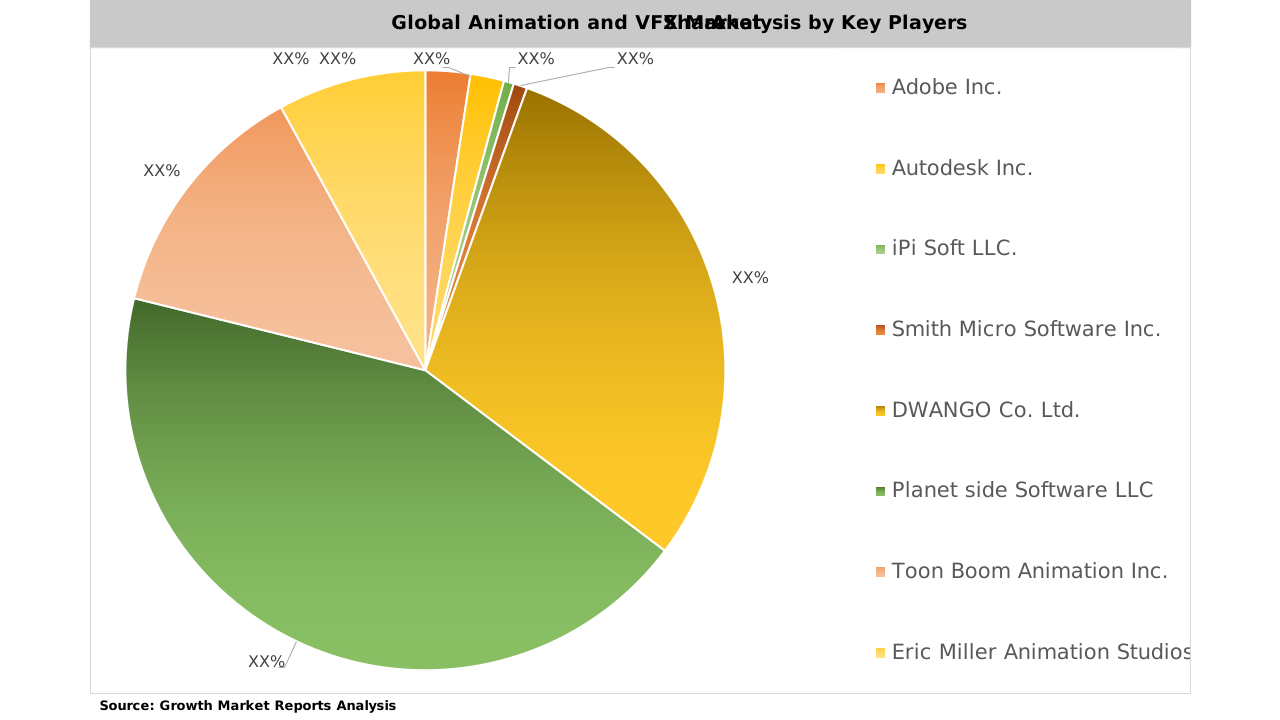
Key players in the animation and VFX market include Adobe Inc., Autodesk Inc., iPi Soft LLC., Smith Micro Software Inc., DWANGO Co. Ltd., Planet side Software LLC, Toon Boom Animation Inc., and Eric Miller Animation Studios. These players are engaged in mergers & acquisitions, collaborations, agreements, and partnerships to strengthen their geographical presence.

Animation And VFX Market Share

Frequently Asked Questions

Yes, the Animation and VFX market research report offers customization options to meet specific client requirements.

Opportunities include AI-driven workflows, cloud-based production, and expanding applications in non-traditional sectors. Challenges involve high production costs, talent shortages, and intellectual property protection issues.

Key companies include Walt Disney Animation Studios, Pixar, DreamWorks Animation, Industrial Light & Magic (ILM), Weta Digital, Framestore, Moving Picture Company (MPC), Double Negative (DNEG), Toon Boom Animation, and Adobe Systems.

Education, healthcare, and architecture are increasingly using Animation and VFX for training simulations, medical visualizations, patient education, and architectural walkthroughs.

Technologies like 3D modeling, motion capture, AR/VR, AI, and cloud-based rendering are revolutionizing content creation, enabling more realistic, interactive, and cost-effective visual experiences.

Animation and VFX are widely used in movies, television, gaming, advertising, online media, education, healthcare, and architecture for creating immersive and engaging content.

The market is segmented into software (e.g., Autodesk Maya, Adobe After Effects, Blender), hardware (GPUs, workstations, servers), and services (pre-production, post-production, outsourcing, and project management).

North America leads the market due to its major studios and advanced infrastructure, while Asia Pacific is the fastest-growing region, driven by expanding media industries and cost-effective services. Europe also holds a significant share with a strong tradition in creative arts.

Key growth drivers include rising demand for immersive content across media, entertainment, gaming, and advertising, rapid adoption of advanced digital technologies, and increased global content consumption through streaming platforms.

The global Animation and VFX market reached USD 184.3 billion in 2024 and is projected to grow at a CAGR of 11.2%, reaching USD 482.1 billion by 2033.

Table Of Content

Chapter 1 Executive Summary
Chapter 2 Assumptions and Acronyms Used
Chapter 3 Research Methodology
Chapter 4 Animation and VFX Market Overview
   4.1 Introduction
      4.1.1 Market Taxonomy
      4.1.2 Market Definition
      4.1.3 Macro-Economic Factors Impacting the Market Growth
   4.2 Animation and VFX Market Dynamics
      4.2.1 Market Drivers
      4.2.2 Market Restraints
      4.2.3 Market Opportunity
   4.3 Animation and VFX Market - Supply Chain Analysis
      4.3.1 List of Key Suppliers
      4.3.2 List of Key Distributors
      4.3.3 List of Key Consumers
   4.4 Key Forces Shaping the Animation and VFX Market
      4.4.1 Bargaining Power of Suppliers
      4.4.2 Bargaining Power of Buyers
      4.4.3 Threat of Substitution
      4.4.4 Threat of New Entrants
      4.4.5 Competitive Rivalry
   4.5 Global Animation and VFX Market Size & Forecast, 2023-2032
      4.5.1 Animation and VFX Market Size and Y-o-Y Growth
      4.5.2 Animation and VFX Market Absolute $ Opportunity

Chapter 5 Global Animation and VFX Market Analysis and Forecast By Component
   5.1 Introduction
      5.1.1 Key Market Trends & Growth Opportunities By Component
      5.1.2 Basis Point Share (BPS) Analysis By Component
      5.1.3 Absolute $ Opportunity Assessment By Component
   5.2 Animation and VFX Market Size Forecast By Component
      5.2.1 Software
      5.2.2 Hardware
      5.2.3 Services
   5.3 Market Attractiveness Analysis By Component

Chapter 6 Global Animation and VFX Market Analysis and Forecast By Application
   6.1 Introduction
      6.1.1 Key Market Trends & Growth Opportunities By Application
      6.1.2 Basis Point Share (BPS) Analysis By Application
      6.1.3 Absolute $ Opportunity Assessment By Application
   6.2 Animation and VFX Market Size Forecast By Application
      6.2.1 Movies
      6.2.2 Television
      6.2.3 Gaming
      6.2.4 Advertising
      6.2.5 Online Media
      6.2.6 Others
   6.3 Market Attractiveness Analysis By Application

Chapter 7 Global Animation and VFX Market Analysis and Forecast By Technology
   7.1 Introduction
      7.1.1 Key Market Trends & Growth Opportunities By Technology
      7.1.2 Basis Point Share (BPS) Analysis By Technology
      7.1.3 Absolute $ Opportunity Assessment By Technology
   7.2 Animation and VFX Market Size Forecast By Technology
      7.2.1 2D Animation
      7.2.2 3D Animation
      7.2.3 Motion Graphics
      7.2.4 Visual Effects
   7.3 Market Attractiveness Analysis By Technology

Chapter 8 Global Animation and VFX Market Analysis and Forecast By End-User
   8.1 Introduction
      8.1.1 Key Market Trends & Growth Opportunities By End-User
      8.1.2 Basis Point Share (BPS) Analysis By End-User
      8.1.3 Absolute $ Opportunity Assessment By End-User
   8.2 Animation and VFX Market Size Forecast By End-User
      8.2.1 Media & Entertainment
      8.2.2 Education
      8.2.3 Healthcare
      8.2.4 Architecture
      8.2.5 Others
   8.3 Market Attractiveness Analysis By End-User

Chapter 9 Global Animation and VFX Market Analysis and Forecast by Region
   9.1 Introduction
      9.1.1 Key Market Trends & Growth Opportunities By Region
      9.1.2 Basis Point Share (BPS) Analysis By Region
      9.1.3 Absolute $ Opportunity Assessment By Region
   9.2 Animation and VFX Market Size Forecast By Region
      9.2.1 North America
      9.2.2 Europe
      9.2.3 Asia Pacific
      9.2.4 Latin America
      9.2.5 Middle East & Africa (MEA)
   9.3 Market Attractiveness Analysis By Region

Chapter 10 Coronavirus Disease (COVID-19) Impact 
   10.1 Introduction 
   10.2 Current & Future Impact Analysis 
   10.3 Economic Impact Analysis 
   10.4 Government Policies 
   10.5 Investment Scenario

Chapter 11 North America Animation and VFX Analysis and Forecast
   11.1 Introduction
   11.2 North America Animation and VFX Market Size Forecast by Country
      11.2.1 U.S.
      11.2.2 Canada
   11.3 Basis Point Share (BPS) Analysis by Country
   11.4 Absolute $ Opportunity Assessment by Country
   11.5 Market Attractiveness Analysis by Country
   11.6 North America Animation and VFX Market Size Forecast By Component
      11.6.1 Software
      11.6.2 Hardware
      11.6.3 Services
   11.7 Basis Point Share (BPS) Analysis By Component 
   11.8 Absolute $ Opportunity Assessment By Component 
   11.9 Market Attractiveness Analysis By Component
   11.10 North America Animation and VFX Market Size Forecast By Application
      11.10.1 Movies
      11.10.2 Television
      11.10.3 Gaming
      11.10.4 Advertising
      11.10.5 Online Media
      11.10.6 Others
   11.11 Basis Point Share (BPS) Analysis By Application 
   11.12 Absolute $ Opportunity Assessment By Application 
   11.13 Market Attractiveness Analysis By Application
   11.14 North America Animation and VFX Market Size Forecast By Technology
      11.14.1 2D Animation
      11.14.2 3D Animation
      11.14.3 Motion Graphics
      11.14.4 Visual Effects
   11.15 Basis Point Share (BPS) Analysis By Technology 
   11.16 Absolute $ Opportunity Assessment By Technology 
   11.17 Market Attractiveness Analysis By Technology
   11.18 North America Animation and VFX Market Size Forecast By End-User
      11.18.1 Media & Entertainment
      11.18.2 Education
      11.18.3 Healthcare
      11.18.4 Architecture
      11.18.5 Others
   11.19 Basis Point Share (BPS) Analysis By End-User 
   11.20 Absolute $ Opportunity Assessment By End-User 
   11.21 Market Attractiveness Analysis By End-User

Chapter 12 Europe Animation and VFX Analysis and Forecast
   12.1 Introduction
   12.2 Europe Animation and VFX Market Size Forecast by Country
      12.2.1 Germany
      12.2.2 France
      12.2.3 Italy
      12.2.4 U.K.
      12.2.5 Spain
      12.2.6 Russia
      12.2.7 Rest of Europe
   12.3 Basis Point Share (BPS) Analysis by Country
   12.4 Absolute $ Opportunity Assessment by Country
   12.5 Market Attractiveness Analysis by Country
   12.6 Europe Animation and VFX Market Size Forecast By Component
      12.6.1 Software
      12.6.2 Hardware
      12.6.3 Services
   12.7 Basis Point Share (BPS) Analysis By Component 
   12.8 Absolute $ Opportunity Assessment By Component 
   12.9 Market Attractiveness Analysis By Component
   12.10 Europe Animation and VFX Market Size Forecast By Application
      12.10.1 Movies
      12.10.2 Television
      12.10.3 Gaming
      12.10.4 Advertising
      12.10.5 Online Media
      12.10.6 Others
   12.11 Basis Point Share (BPS) Analysis By Application 
   12.12 Absolute $ Opportunity Assessment By Application 
   12.13 Market Attractiveness Analysis By Application
   12.14 Europe Animation and VFX Market Size Forecast By Technology
      12.14.1 2D Animation
      12.14.2 3D Animation
      12.14.3 Motion Graphics
      12.14.4 Visual Effects
   12.15 Basis Point Share (BPS) Analysis By Technology 
   12.16 Absolute $ Opportunity Assessment By Technology 
   12.17 Market Attractiveness Analysis By Technology
   12.18 Europe Animation and VFX Market Size Forecast By End-User
      12.18.1 Media & Entertainment
      12.18.2 Education
      12.18.3 Healthcare
      12.18.4 Architecture
      12.18.5 Others
   12.19 Basis Point Share (BPS) Analysis By End-User 
   12.20 Absolute $ Opportunity Assessment By End-User 
   12.21 Market Attractiveness Analysis By End-User

Chapter 13 Asia Pacific Animation and VFX Analysis and Forecast
   13.1 Introduction
   13.2 Asia Pacific Animation and VFX Market Size Forecast by Country
      13.2.1 China
      13.2.2 Japan
      13.2.3 South Korea
      13.2.4 India
      13.2.5 Australia
      13.2.6 South East Asia (SEA)
      13.2.7 Rest of Asia Pacific (APAC)
   13.3 Basis Point Share (BPS) Analysis by Country
   13.4 Absolute $ Opportunity Assessment by Country
   13.5 Market Attractiveness Analysis by Country
   13.6 Asia Pacific Animation and VFX Market Size Forecast By Component
      13.6.1 Software
      13.6.2 Hardware
      13.6.3 Services
   13.7 Basis Point Share (BPS) Analysis By Component 
   13.8 Absolute $ Opportunity Assessment By Component 
   13.9 Market Attractiveness Analysis By Component
   13.10 Asia Pacific Animation and VFX Market Size Forecast By Application
      13.10.1 Movies
      13.10.2 Television
      13.10.3 Gaming
      13.10.4 Advertising
      13.10.5 Online Media
      13.10.6 Others
   13.11 Basis Point Share (BPS) Analysis By Application 
   13.12 Absolute $ Opportunity Assessment By Application 
   13.13 Market Attractiveness Analysis By Application
   13.14 Asia Pacific Animation and VFX Market Size Forecast By Technology
      13.14.1 2D Animation
      13.14.2 3D Animation
      13.14.3 Motion Graphics
      13.14.4 Visual Effects
   13.15 Basis Point Share (BPS) Analysis By Technology 
   13.16 Absolute $ Opportunity Assessment By Technology 
   13.17 Market Attractiveness Analysis By Technology
   13.18 Asia Pacific Animation and VFX Market Size Forecast By End-User
      13.18.1 Media & Entertainment
      13.18.2 Education
      13.18.3 Healthcare
      13.18.4 Architecture
      13.18.5 Others
   13.19 Basis Point Share (BPS) Analysis By End-User 
   13.20 Absolute $ Opportunity Assessment By End-User 
   13.21 Market Attractiveness Analysis By End-User

Chapter 14 Latin America Animation and VFX Analysis and Forecast
   14.1 Introduction
   14.2 Latin America Animation and VFX Market Size Forecast by Country
      14.2.1 Brazil
      14.2.2 Mexico
      14.2.3 Rest of Latin America (LATAM)
   14.3 Basis Point Share (BPS) Analysis by Country
   14.4 Absolute $ Opportunity Assessment by Country
   14.5 Market Attractiveness Analysis by Country
   14.6 Latin America Animation and VFX Market Size Forecast By Component
      14.6.1 Software
      14.6.2 Hardware
      14.6.3 Services
   14.7 Basis Point Share (BPS) Analysis By Component 
   14.8 Absolute $ Opportunity Assessment By Component 
   14.9 Market Attractiveness Analysis By Component
   14.10 Latin America Animation and VFX Market Size Forecast By Application
      14.10.1 Movies
      14.10.2 Television
      14.10.3 Gaming
      14.10.4 Advertising
      14.10.5 Online Media
      14.10.6 Others
   14.11 Basis Point Share (BPS) Analysis By Application 
   14.12 Absolute $ Opportunity Assessment By Application 
   14.13 Market Attractiveness Analysis By Application
   14.14 Latin America Animation and VFX Market Size Forecast By Technology
      14.14.1 2D Animation
      14.14.2 3D Animation
      14.14.3 Motion Graphics
      14.14.4 Visual Effects
   14.15 Basis Point Share (BPS) Analysis By Technology 
   14.16 Absolute $ Opportunity Assessment By Technology 
   14.17 Market Attractiveness Analysis By Technology
   14.18 Latin America Animation and VFX Market Size Forecast By End-User
      14.18.1 Media & Entertainment
      14.18.2 Education
      14.18.3 Healthcare
      14.18.4 Architecture
      14.18.5 Others
   14.19 Basis Point Share (BPS) Analysis By End-User 
   14.20 Absolute $ Opportunity Assessment By End-User 
   14.21 Market Attractiveness Analysis By End-User

Chapter 15 Middle East & Africa (MEA) Animation and VFX Analysis and Forecast
   15.1 Introduction
   15.2 Middle East & Africa (MEA) Animation and VFX Market Size Forecast by Country
      15.2.1 Saudi Arabia
      15.2.2 South Africa
      15.2.3 UAE
      15.2.4 Rest of Middle East & Africa (MEA)
   15.3 Basis Point Share (BPS) Analysis by Country
   15.4 Absolute $ Opportunity Assessment by Country
   15.5 Market Attractiveness Analysis by Country
   15.6 Middle East & Africa (MEA) Animation and VFX Market Size Forecast By Component
      15.6.1 Software
      15.6.2 Hardware
      15.6.3 Services
   15.7 Basis Point Share (BPS) Analysis By Component 
   15.8 Absolute $ Opportunity Assessment By Component 
   15.9 Market Attractiveness Analysis By Component
   15.10 Middle East & Africa (MEA) Animation and VFX Market Size Forecast By Application
      15.10.1 Movies
      15.10.2 Television
      15.10.3 Gaming
      15.10.4 Advertising
      15.10.5 Online Media
      15.10.6 Others
   15.11 Basis Point Share (BPS) Analysis By Application 
   15.12 Absolute $ Opportunity Assessment By Application 
   15.13 Market Attractiveness Analysis By Application
   15.14 Middle East & Africa (MEA) Animation and VFX Market Size Forecast By Technology
      15.14.1 2D Animation
      15.14.2 3D Animation
      15.14.3 Motion Graphics
      15.14.4 Visual Effects
   15.15 Basis Point Share (BPS) Analysis By Technology 
   15.16 Absolute $ Opportunity Assessment By Technology 
   15.17 Market Attractiveness Analysis By Technology
   15.18 Middle East & Africa (MEA) Animation and VFX Market Size Forecast By End-User
      15.18.1 Media & Entertainment
      15.18.2 Education
      15.18.3 Healthcare
      15.18.4 Architecture
      15.18.5 Others
   15.19 Basis Point Share (BPS) Analysis By End-User 
   15.20 Absolute $ Opportunity Assessment By End-User 
   15.21 Market Attractiveness Analysis By End-User

Chapter 16 Competition Landscape 
   16.1 Animation and VFX Market: Competitive Dashboard
   16.2 Global Animation and VFX Market: Market Share Analysis, 2023
   16.3 Company Profiles (Details – Overview, Financials, Developments, Strategy) 
      16.3.1 The Walt Disney Company
Pixar Animation Studios
DreamWorks Animation
Industrial Light & Magic (ILM)
Weta Digital
Sony Pictures Imageworks
Blue Sky Studios
Framestore
Double Negative (DNEG)
Moving Picture Company (MPC)
Animal Logic
Nickelodeon Animation Studio
Illumination Entertainment
Laika Studios
Rodeo FX
Scanline VFX
Digital Domain
Method Studios
Toei Animation
Cartoon Network Studios

Methodology

Our Clients

The John Holland Group
Siemens Healthcare
General Electric
Nestle SA
sinopec
Honda Motor Co. Ltd.
Deloitte
Microsoft