Transportation Management Systems Market Outlook 2031
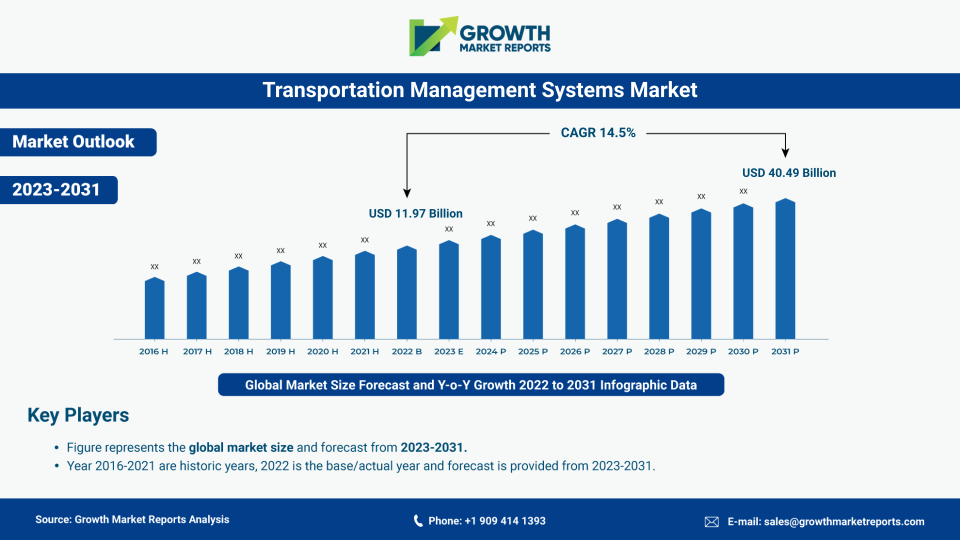
The global transportation management systems market size was around USD 11.97 billion in 2022 and is estimated to reach USD 40.49 billion by 2031, expanding at a compound annual growth rate (CAGR) of around 14.5% during the forecast period, 2023 to 2031. The market growth is attributed to the increasing demand for agility in transportation to enhance delivery experiences.
A transportation management system refers to a logistics platform or specialized software that helps businesses plan, execute, and optimize the shipment of goods. Transportation management systems offer visibility of day-to-day transportation operations, provide information and documentation regarding trade compliance, and ensure the timely delivery of shipments.
The systems help in streamlining the shipping process and transportation by air, sea, or land. Transportation management systems are usually used by businesses that transport, receive, or ship goods on a regular basis. Manufacturers, distributors, retail businesses, e-commerce companies, and other companies that provide logistics services use transportation management systems to optimize the physical transportation of goods.
Transportation management systems facilitate businesses in selecting a cost-effective and efficient mode of shipment. These systems provide information regarding trade and tariffs, offer visibility of every stage of the supply chain, and provide information about other regulations related the global trading. Transportation management solutions aid in the execution of the transportation process, as these solutions offer features such as communication with carriers, matching loads, tracking shipments, documenting shipments, and assistance with billing and settling of freights.
These systems provide real-time information, which is exchanged among distributors, carriers, warehouses, and customers. Businesses use dashboards, reports, analytics, and insights offered through transportation management systems to measure and track the overall performance of the transportation.
Transportation management systems offer several benefits to businesses such as cost efficiency and time management. These systems simplify the supply chain process by automating business operations. These systems help businesses comply with various import and export regulations across the globe. Businesses improve their customer services and offer improved customer experience with the help of transportation management systems.
COVID-19 Impact
The global transportation management systems market was moderately affected during the COVID-19 period. The lockdown, social distancing policies, travel restrictions, and other pandemic-related restrictions put a huge strain on the global supply chains. Companies, manufacturers, and enterprises tried to meet the increasing essential order demands across the globe.
Tight budgets constrained the growth of the transportation management systems market during the pandemic. However, the relaxation of pandemic-related restrictions and regulations is estimated to boost the global transportation management systems in the coming years.
Transportation Management Systems Market Dynamics
The global transportation management systems market research report presents a complete overview by providing detailed information about the current market trends, existing drivers, growth opportunities and potentials, and emerging challenges. The global transportation management systems market report has up-to-date insights about market dynamics and market scenarios that can shape the overall market performance and output during the forecast period, 2022 to 2030.
Major Trends:
Software-as-a-service (SaaS)-based transportation management system solutions are current market trends
An increasing number of companies are adopting SaaS-based transportation management system solutions, as there is no need to replace or update the existing transportation management systems to integrate SaaS-based transport management solutions. SaaS-based solutions are flexible and inexpensive in comparison with other types of solutions, which makes these solutions a popular choice among companies and enterprises.
Key Drivers:
Rapidly growing e-commerce industry boosts the global transportation management systems market
Rising penetration of the internet, increasing preferences for online shopping among consumers, and the growing availability of several online retail platforms boost the growth of the e-commerce industry in recent years. Several e-commerce companies and product manufacturers are adopting innovative and advanced solutions to meet the growing need for transportation management.
Rising demand for cost-effective and efficient transportation management system solutions across the e-commerce industry fuels the global market growth.
Technological advancements in the transportation and logistics industry drive the global transportation management systems market
The transportation and logistics industry is increasingly adopting digital solutions to integrate agility in transportation and logistics operations. Transportation management systems help businesses offering transportation and logistics services to deliver enhanced customer experiences.
Existing Challenges:
Cybersecurity threats hamper the global transportation management systems market growth
Growing digitization and the rising adoption of IoT-based transportation management solutions have increased the risks of data theft and data abuse. An increasing number of companies and enterprises are using cloud-based services, which puts the data across the internet and is accessible to unauthorized users. Loss, theft, or misuse of data and sensitive information harm businesses.
Growing concerns regarding data security are anticipated to restrain the global transportation management systems market growth in the coming years.
Emerging Opportunities:
Increasing adoption of IoT and big data offer growth opportunities to the market players
High demand and integration of advanced technology such as IoT and big data offer lucrative opportunities to the market players. Devices and sensors based on such advanced technologies provide real-time fleet monitoring. Real-time monitoring offers visibility of the entire transportation process as well as routes, driving conditions, and other factors. This helps in streamlining and integrating highly efficient transportation management systems.
Scope of The Transportation Management Systems Market Report
The global transportation management systems market research report includes an assessment of the market trends, market segments, and regional markets. Market overview and dynamics have also been included in the report.
|
Attributes
|
Details
|
|
Report Title
|
Transportation Management Systems Market - Global Industry Analysis, Growth, Share, Size, Trends, and Forecast
|
|
Base Year
|
2022
|
|
Historic Data
|
2016–2021
|
|
Forecast Period
|
2023–2031
|
|
Segmentation
|
Component (Hardware, Software, and Solutions & Services [Planning & Execution, Report & Analytics, Routing & Tracking, Order management, and Others]), Mode of Transportation (Roadways, Airways, Waterways, and Railways), Mode of Deployment (On-cloud and On-premise), Enterprise Size (Small & Medium Enterprises and Large Enterprises), and End-User (Healthcare, Retail & e-commerce, Energy & Utilities, Transportation & Logistics, Government, Electronics, Manufacturing, Food & Beverage, and Others)
|
|
Regional Scope
|
Asia Pacific, North America, Latin America, Europe, and Middle East & Africa
|
|
Report Coverage
|
Company Share, Market Analysis and Size, Competitive Landscape, Growth Factors, Market Trends, and Revenue Forecast
|
|
Key Players Covered in the Report
|
CargoSmart Limited; One Network Enterprises; Oracle; Manhattan Associates; 3Gtms; MercuryGate; SAP SE; Trimble Inc.; BluJay Solutions Ltd.; C.H. Robinson Worldwide, Inc.; Blue Yonder Group, Inc. (JDA Software, Inc.); e2open, LLC.; THE DESCARTES SYSTEMS GROUP INC; CTSI-GLOBAL; Alpega Group; Körber AG; EFKON GmbH; Next Generation Logistics, Inc.; ORTEC; Omnitracs; EverLog Systems; INMOTION GLOBAL, INC.; Generix Group; SupplyStack nv; vTradEx; REVENOVA LLC; and Others
|
Transportation Management Systems Market Segment Insights
Solutions & services segment drives the market
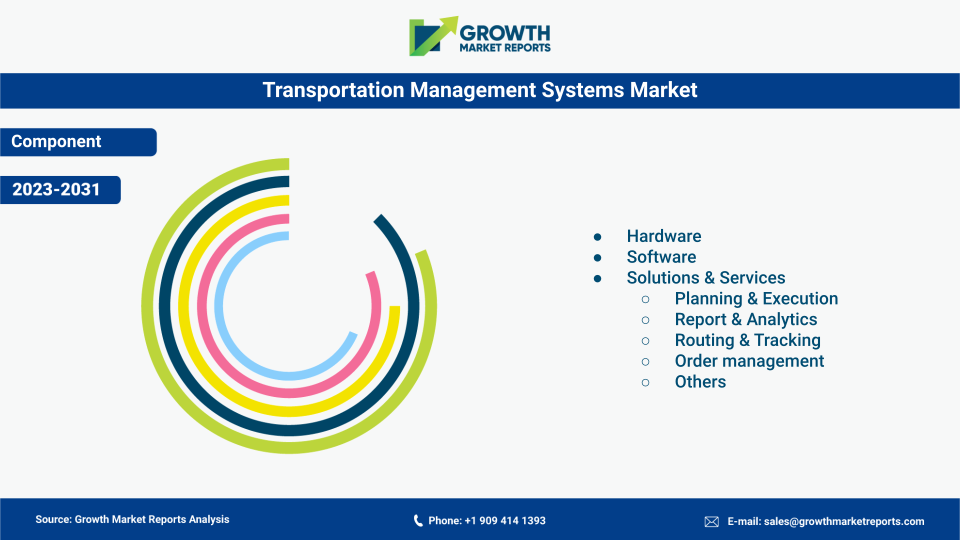
In terms of component, the global transportation management systems market is divided into hardware, software, and solutions & services. The solutions & services segment are further segregated into planning & execution, report & analytics, routing & tracking, order management, and others. The solutions & services segment is expected to hold a key market share during the forecast period, as the segment facilitates the optimization of the overall supply chain.
The growing integration of advanced technologies gives vendors, manufacturers, and companies the ability to customize transportation management systems according to their needs. For instance, artificial intelligence (AI), the internet of things (IoT), and software-as-a-service (SaaS)-based systems are becoming increasingly popular across the globe, as these systems are flexible and affordable. These are the major factors boosting the growth of the solutions & services segment.
Roadways segment holds a significant market share
On the basis of mode of transportation, the global transportation management systems market is segmented into roadways, airways, waterways, and railways. The roadways segment is estimated to register rapid growth during the forecast period, as road transportation is a more cost-effective and flexible mode of transportation than other modes. Several developed and developing counties across the globe focus on improving road infrastructures, which fuels the demand for logistics through roadways.
The waterways segment is anticipated to witness rapid growth in the coming years, as several governments are investing in transportation management systems to manage waterways transportation efficiently. Waterways are mainly used to transport freight between different countries and regions. This factor helps in the waterways segment growth.
On-premise segment accounts for a high market revenue share
According to mode of deployment, the global transportation management systems market is bifurcated into on-cloud and on-premise. The on-premise segment held a large market share of around 56% in 2021, and the segment is projected to hold its dominance over the global market during the forecast period. Several businesses prefer to use on-premise transportation management systems solutions, as these solutions facilitate improved customization, easy access to the server, and enhanced data security.
These factors help the growth of the on-premise segment. The on-cloud segment is anticipated to expand in the coming years, as various industries are increasingly adopting cloud-based transportation management systems for advanced and effective transportation management solutions. The surging number of vendors, manufacturers, and logistic providers are adopting cloud-based transportation management systems, which boosts the data volume exponentially.
Cloud-based management systems are cost-effective and offer several other benefits such as improved configuration capabilities, enhanced planning abilities, and others. These cloud-based systems are accessed remotely from any geographical location in real-time, which spurs the on-cloud segment growth.
Large enterprises segment registers rapid growth
Based on enterprise size, the global transportation management systems market is divided into small & medium enterprises and large enterprises. The large enterprises segment holds a large market share during the forecast period, due to the increasing demand and adoption of transportation management systems by various large enterprises across the globe.
Transportation management systems and solutions aid large enterprises to secure enterprise data and provide real-time information to customers. Transportation management solutions help large enterprises construct reliable, secure, and integrated transportation management systems to enhance the consumer experience.
Manufacturing segment holds a key market share
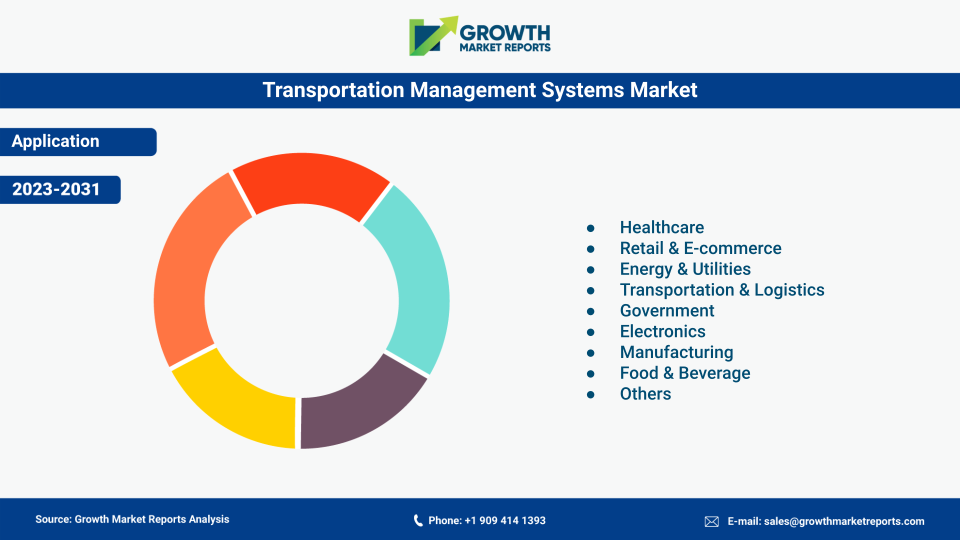
In terms of application, the global transportation management systems market is segregated into healthcare, retail & e-commerce, energy & utilities, transportation & logistics, government, electronics, manufacturing, food & beverage, and others. The manufacturing segment is projected to expand rapidly during the forecast period, due to the increasing number of manufacturing units established in developing countries such as India and Mexico.
The high number of manufacturing units boosts the demand and supply of raw materials in these counties. For instance, the government of India launched the Make in India initiative to develop the manufacturing industry in the country. This initiative encourages indigenous manufacturers, which increases the demand for the transportation of raw materials in India. These are the major factors that boost the manufacturing segment growth.
The retail & e-commerce segment is anticipated to hold a large share of the market in the coming years, owing to surging retail and e-commerce industries in developing countries such as India and China. Several large e-commerce companies such as Amazon.com, Inc.; Alibaba Group Holding Limited; Walmart Inc.; and others are deploying transportation management systems to reinforce their shipping operations in these counties. These are the major factors fueling the retail & e-commerce segment growth.
Asia Pacific to dominate the market
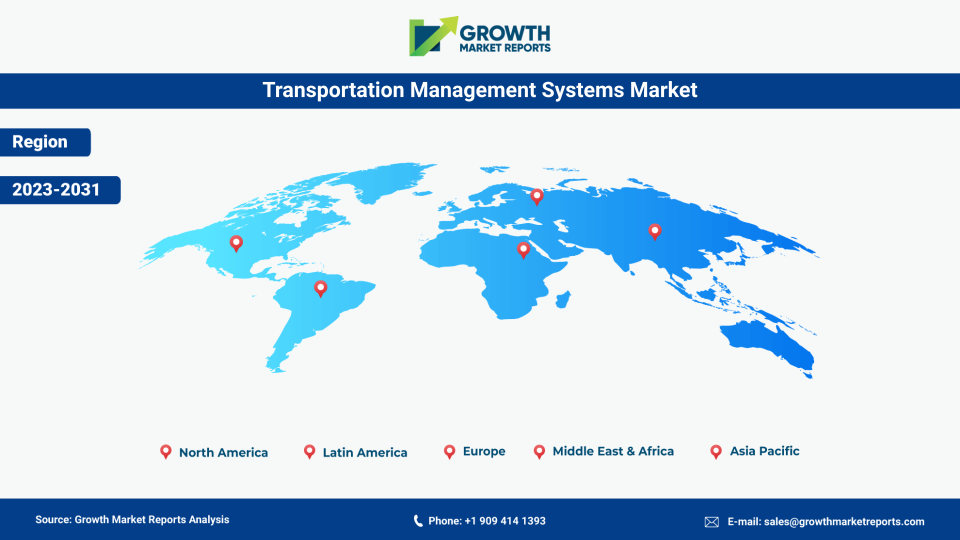
On the basis of region, the global transportation management systems market is segmented into Asia Pacific, North America, Latin America, Europe, and Middle East & Africa. The transportation management systems market in Asia Pacific is expected to register a high CAGR during the forecast period, due to increasing international trade in countries such as India and China.
Rising penetration of smart devices and increasing disposable income drives the growth of the retail and e-commerce industries in the region, which boosts the demand for transportation management systems in Asia Pacific. Several companies, enterprises, and manufacturers are adopting transportation management systems to cater to the increasing number of customers in the region.
The transportation management systems market in North America is estimated to witness constant growth in the coming years, owing to a high number of market players in the region. Various companies, enterprises, and manufacturers in countries such as the US and Canada are increasingly adopting advanced technologies and innovative solutions to offer enhanced customer experience.
Connected infrastructures in the US and Canada aid with smooth transportation. These factors boost the demand for transportation management systems in the region.
The transportation management systems market in Europe is anticipated to expand during the forecast period, owing to the growing adoption of e-commerce in the region. The growing e-commerce industry in the region propels the demand for the integration of proper transportation management systems in Europe. The growing adoption of IoT-based solutions in various industries in Europe boosts the transportation management systems market in the region.
Segments
The global transportation management systems market has been segmented on the basis of
Component
- Hardware
- Software
- Solutions & Services
- Planning & Execution
- Report & Analytics
- Routing & Tracking
- Order management
- Others
Mode of Transportation
- Roadways
- Airways
- Waterways
- Railways
Mode of Deployment
Enterprise Size
- Small & Medium Enterprises
- Large Enterprises
End-User
- Healthcare
- Retail & E-commerce
- Energy & Utilities
- Transportation & Logistics
- Government
- Electronics
- Manufacturing
- Food & Beverage
- Others
Regions
- Asia Pacific
- North America
- Latin America
- Europe
- Middle East & Africa
Key Players
- CargoSmart Limited
- One Network Enterprises
- Oracle
- Manhattan Associates
- 3Gtms
- MercuryGate
- SAP SE
- Trimble Inc.
- BluJay Solutions Ltd.
- C.H. Robinson Worldwide, Inc.
- Blue Yonder Group, Inc. (JDA Software, Inc.)
- e2open, LLC.
- THE DESCARTES SYSTEMS GROUP INC
- CTSI-GLOBAL
- Alpega Group
- Körber AG
- EFKON GmbH
- Next Generation Logistics, Inc.
- ORTEC
- Omnitracs
- EverLog Systems
- INMOTION GLOBAL, INC.
- Generix Group
- SupplyStack nv
- vTradEx
- REVENOVA LLC
- Others
Competitive Landscape
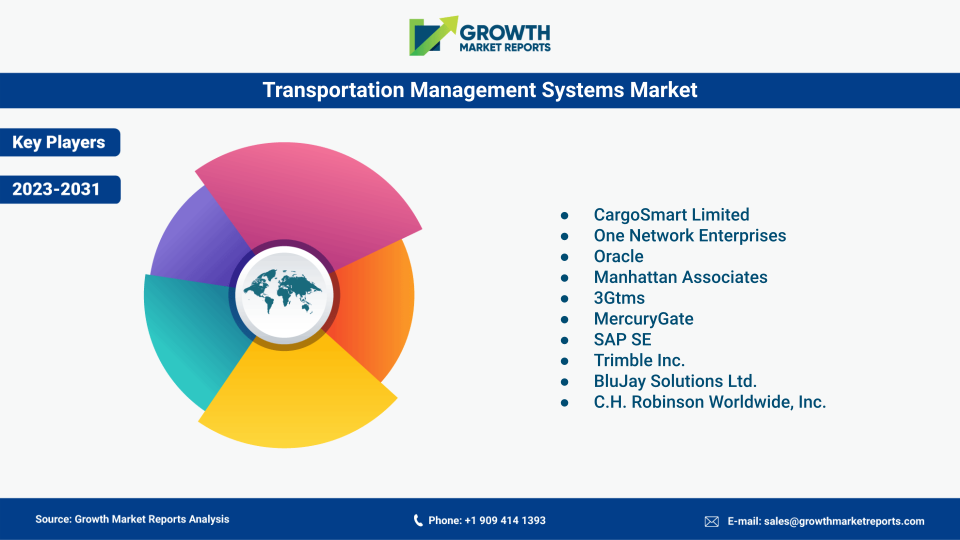
Key players competing in the transportation management systems market are CargoSmart Limited; One Network Enterprises; Oracle; Manhattan Associates; 3Gtms; MercuryGate; SAP SE; Trimble Inc.; BluJay Solutions Ltd.; C.H. Robinson Worldwide, Inc.; Blue Yonder Group, Inc. (JDA Software, Inc.); e2open, LLC.; THE DESCARTES SYSTEMS GROUP INC; CTSI-GLOBAL; Alpega Group; Körber AG; EFKON GmbH; Next Generation Logistics, Inc.; ORTEC; Omnitracs; EverLog Systems; INMOTION GLOBAL, INC.; Generix Group; SupplyStack nv; vTradEx; REVENOVA LLC; and others.
Some of these major companies have adopted various business development strategies including acquisitions, mergers, collaborations, partnerships, product launches, and production capacity expansion to expand their consumer base and enhance their market share.
- In February 2022, MercuryGate, a US-based transportation management solutions provider, launched Smart Transportation, which is an exclusive capability to help customers tackle supply chain challenges. The newly launched feature facilitates gathering real-time data, insights, and visibility efficiently.
- In February 2022, Oracle, a US-based multinational computer technology corporation, launched new logistics management capacities called Oracle Fusion Cloud Supply Chain & Manufacturing (SCM), Oracle Fusion Cloud Transportation Management, and Oracle Fusion Cloud Global Trade Management. The new launches aid organizations in improving customer experiences, reducing costs, managing risks, and adapting to business disruptions.
- In May 2021, BluJay Solutions Ltd., a leader in supply chain management and network solutions, acquired Raven Logistics, a railroad transportation management system provider. The acquisition helps the company in providing end-to-end multimodal transportation solutions to its customers.
- In July 2019, 3Gtms, a global provider of transportation management software, announced that the company was selected by Gerber Plumbing Fixtures LLC to meet the increasing needs of end-consumers and wholesale distribution customers. It helps the company in gaining shipping insights and making the process efficient.











 Request For Customization
 Enquiry Before Buying
 Speak With Analyst