Sugar Substitute Market Research Report 2033

Sugar Substitute Market Research Report 2033

Segments - by Product Type (Artificial Sweeteners, Natural Sweeteners, Sugar Alcohols, Others), by Application (Food & Beverages, Pharmaceuticals, Personal Care, Others), by Form (Powder, Liquid, Tablets, Others), by Distribution Channel (Supermarkets/Hypermarkets, Online Stores, Convenience Stores, Others)

https://growthmarketreports.com/Anuradha
Author : Anuradha B. More
https://growthmarketreports.com/Vaibhav
Fact-checked by : Vaibhav Chandola
https://growthmarketreports.com/Shruti
Editor : Shruti Bhat

Upcoming | Report ID :FB-1029 | 4.7 Rating | 40 Reviews | 293 Pages | Format : Docx PDF

Report Description


Sugar Substitute Market Outlook

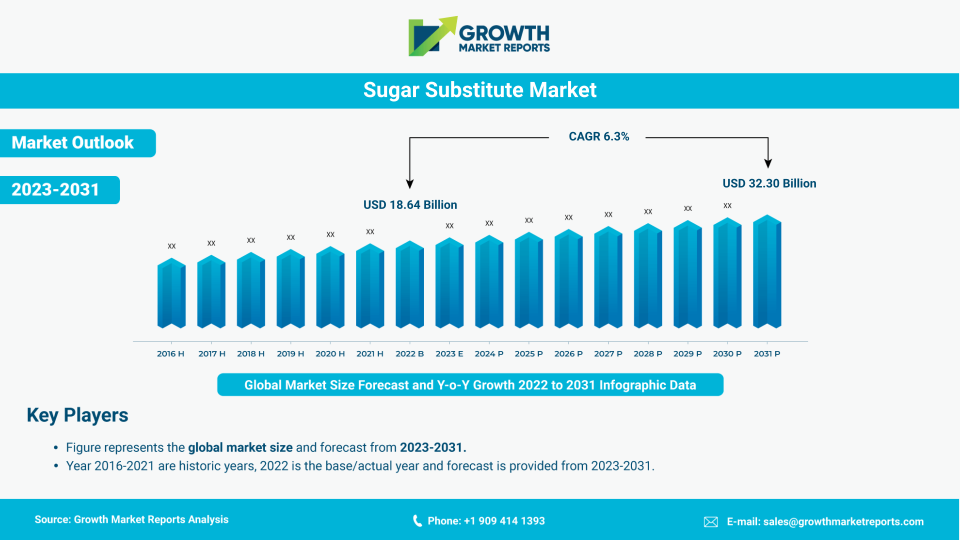
According to our latest research, the global sugar substitute market size reached USD 20.9 billion in 2024, reflecting robust growth driven by increasing health consciousness and the rising prevalence of lifestyle-related diseases. The market is projected to expand at a CAGR of 6.8% from 2025 to 2033, with the market size forecasted to reach USD 38.3 billion by 2033. This sustained growth is primarily fueled by the shift in consumer preferences towards low-calorie and sugar-free products, as well as regulatory initiatives promoting healthier alternatives in food and beverage formulations.

One of the most significant growth factors for the sugar substitute market is the escalating global incidence of obesity and diabetes. As consumers become more aware of the health risks associated with excessive sugar consumption, there is a marked shift towards adopting sugar substitutes in daily diets. Governments and health organizations worldwide are also playing pivotal roles by implementing sugar taxes and launching public health campaigns to reduce sugar intake, further propelling the adoption of sugar substitutes. In addition, advancements in food technology have enabled manufacturers to develop substitutes that closely mimic the taste and texture of traditional sugar, which has been crucial in driving consumer acceptance and market expansion.

Another key driver is the innovation and diversification within the food and beverage industry. Major players are increasingly incorporating sugar substitutes in a wide array of products, ranging from soft drinks and bakery items to dairy products and confectioneries. The demand for clean label and natural ingredients has also spurred the growth of natural sweeteners such as stevia and monk fruit, catering to the preferences of health-conscious consumers. Furthermore, the growing vegan and plant-based food movement is contributing to the popularity of plant-derived sugar substitutes, which are perceived as safer and more sustainable compared to synthetic alternatives. This trend is further amplified by the expanding application of sugar substitutes in pharmaceuticals and personal care products, broadening the marketÂ’s scope.

The proliferation of e-commerce and digital marketing platforms has also played a pivotal role in the growth of the sugar substitute market. Online retail channels offer consumers greater access to a diverse range of sugar substitute products, including niche and specialty brands that may not be readily available in physical stores. This has significantly enhanced product visibility and consumer awareness, leading to increased trial and adoption rates. In addition, strategic collaborations between food manufacturers and sugar substitute suppliers have led to innovative product launches and improved distribution networks, further accelerating market growth.

The growing demand for Food Sweetener is also a significant factor contributing to the expansion of the sugar substitute market. As consumers increasingly seek healthier alternatives to traditional sugar, food sweeteners are becoming a popular choice due to their ability to provide sweetness without the added calories. This shift is particularly evident in the food and beverage industry, where manufacturers are keen to meet consumer preferences for low-calorie and sugar-free products. The versatility of food sweeteners allows them to be used in a wide range of applications, from beverages and baked goods to dairy products and confectioneries, further driving their adoption across the market.

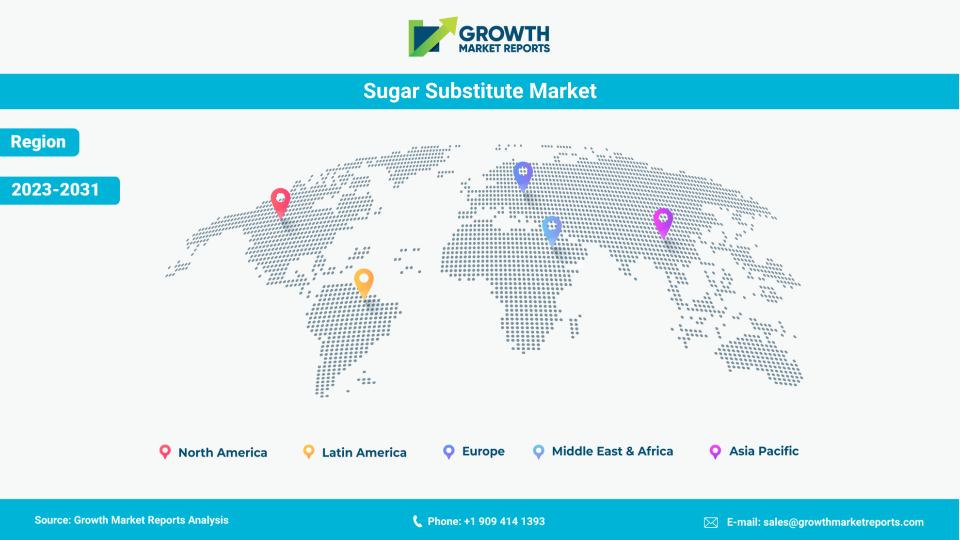
Regionally, North America continues to dominate the sugar substitute market, accounting for a significant share due to high consumer awareness, strong regulatory frameworks, and the presence of leading market players. However, the Asia Pacific region is emerging as a lucrative market, driven by rapid urbanization, rising disposable incomes, and a growing focus on preventive healthcare. Europe also presents substantial opportunities, particularly with the rising demand for natural and organic sweeteners. The Middle East & Africa and Latin America are witnessing steady growth, supported by increasing health consciousness and the gradual adoption of Western dietary patterns. As the market continues to evolve, regional dynamics will play a crucial role in shaping the competitive landscape and growth trajectory.

Global Sugar Substitute Industry Outlook

Product Type Analysis

The sugar substitute market by product type is segmented into artificial sweeteners, natural sweeteners, sugar alcohols, and others. Artificial sweeteners, such as aspartame, sucralose, and saccharin, have traditionally held a dominant position due to their widespread use in processed foods and beverages. These sweeteners are favored for their high sweetness intensity and low caloric content, making them ideal for diabetic and weight-conscious consumers. However, concerns regarding the long-term health effects of certain artificial sweeteners have prompted regulatory scrutiny and influenced consumer perceptions, leading to a gradual shift towards alternative options.

Natural sweeteners, including stevia, monk fruit, and thaumatin, are experiencing robust growth as consumers increasingly seek clean label and plant-based ingredients. These sweeteners are perceived as safer and more sustainable, aligning with the growing demand for natural and organic food products. Stevia, in particular, has gained significant traction due to its zero-calorie profile and ability to provide a taste profile similar to sugar. The adoption of natural sweeteners is further supported by ongoing research and development efforts aimed at improving taste, stability, and application versatility, enabling their integration into a broader range of food and beverage products.

Sugar alcohols, such as xylitol, erythritol, and sorbitol, represent another important segment within the sugar substitute market. These polyols offer moderate sweetness with fewer calories than sugar and are commonly used in sugar-free confectioneries, chewing gums, and oral care products. Sugar alcohols are favored for their tooth-friendly properties and minimal impact on blood glucose levels, making them suitable for diabetic and health-conscious consumers. However, excessive consumption of certain sugar alcohols can cause digestive discomfort, which may limit their usage in some applications. Despite this, ongoing formulation advancements are helping to address these challenges and expand their market potential.

The "others" category encompasses emerging sweeteners and novel ingredients that are being developed to address specific consumer needs and industry requirements. These include rare sugars, allulose, and tagatose, which offer unique functional and sensory attributes. While these sweeteners currently hold a smaller market share, their adoption is expected to increase as regulatory approvals are granted and consumer awareness grows. The ongoing evolution of the product landscape underscores the importance of continuous innovation and adaptation to changing consumer preferences and regulatory standards in the sugar substitute market.

Report Scope

Attributes Details
Report Title Sugar Substitute Market Research Report 2033
By Product Type Artificial Sweeteners, Natural Sweeteners, Sugar Alcohols, Others
By Application Food & Beverages, Pharmaceuticals, Personal Care, Others
By Form Powder, Liquid, Tablets, Others
By Distribution Channel Supermarkets/Hypermarkets, Online Stores, Convenience Stores, Others
Regions Covered North America, Europe, APAC, Latin America, MEA
Base Year 2024
Historic Data 2018-2023
Forecast Period 2025-2033
Number of Pages 293
Number of Tables & Figures 397
Customization Available Yes, the report can be customized as per your need.

Application Analysis

The application segment of the sugar substitute market is broadly categorized into food & beverages, pharmaceuticals, personal care, and others. The food & beverages sector remains the largest application area, accounting for the majority of sugar substitute consumption. This is largely attributed to the rising demand for low-calorie, sugar-free, and functional foods, as well as the increasing prevalence of health-conscious lifestyles. Sugar substitutes are extensively used in soft drinks, dairy products, baked goods, confectioneries, and snacks, where they provide sweetness while reducing overall caloric content. The growing popularity of diet and wellness-oriented products continues to drive innovation and adoption within this segment.

In the pharmaceutical industry, sugar substitutes play a crucial role in the formulation of medicines, syrups, and chewable tablets, particularly for pediatric and diabetic patients. These substitutes help improve the palatability of medications without contributing to excessive sugar intake, thus supporting better patient compliance and health outcomes. The expanding geriatric population and the increasing incidence of chronic diseases are further fueling the demand for sugar substitutes in pharmaceutical applications. Additionally, regulatory guidelines promoting the use of non-cariogenic and low-glycemic ingredients in pharmaceuticals are bolstering market growth.

The personal care segment is witnessing a steady increase in the use of sugar substitutes, particularly in oral care products such as toothpaste, mouthwashes, and chewing gums. Sugar alcohols like xylitol and sorbitol are preferred for their ability to prevent tooth decay and promote oral hygiene. The inclusion of sugar substitutes in skincare and cosmetic products is also gaining traction, driven by consumer demand for natural and hypoallergenic ingredients. This trend is expected to continue as manufacturers seek to differentiate their offerings and address evolving consumer preferences for safer and more effective personal care solutions.

Other applications of sugar substitutes include their use in nutraceuticals, dietary supplements, and animal feed. The growing interest in preventive healthcare and wellness is driving the integration of sugar substitutes into functional foods and supplements, where they offer both health and sensory benefits. In animal nutrition, sugar substitutes are used to enhance feed palatability and support animal health. As the market continues to diversify, the development of tailored solutions for specific applications will be critical in capturing new growth opportunities and meeting the evolving needs of end-users.

Form Analysis

The sugar substitute market is segmented by form into powder, liquid, tablets, and others, each catering to distinct consumer preferences and application requirements. Powdered sugar substitutes are the most widely used form, owing to their versatility, ease of storage, and compatibility with a broad range of food and beverage products. Powdered forms are especially popular among consumers who use sugar substitutes in home cooking and baking, as they can be easily measured and blended with other ingredients. Food manufacturers also favor powdered sugar substitutes for their stability and cost-effectiveness in large-scale production processes.

Liquid sugar substitutes are gaining traction, particularly in the beverage industry and among consumers seeking convenient, easy-to-dissolve options. Liquid forms are ideal for sweetening hot and cold drinks, sauces, and dressings, offering rapid solubility and uniform sweetness distribution. The growing popularity of ready-to-drink beverages and on-the-go consumption is further driving demand for liquid sugar substitutes. Manufacturers are responding by developing innovative liquid formulations that cater to specific taste profiles and functional requirements, enhancing the appeal and usability of these products.

Tablet sugar substitutes are primarily targeted at consumers seeking portion-controlled, portable solutions for sweetening beverages such as coffee and tea. Tablets offer the advantage of precise dosing and convenience, making them a popular choice for individuals managing calorie intake or following specific dietary regimens. The rise of single-serve and travel-friendly packaging formats has further contributed to the growth of this segment. While tablets currently hold a smaller market share compared to powders and liquids, ongoing product development and marketing efforts are expected to boost their adoption in the coming years.

The "others" category includes innovative forms such as granules, sachets, and sprays, which are designed to meet specific consumer needs and application scenarios. These formats offer unique benefits in terms of convenience, portability, and user experience, catering to niche markets and specialized applications. As consumer lifestyles become increasingly fast-paced and diverse, the demand for novel and flexible sugar substitute formats is expected to rise. Manufacturers are investing in research and development to create differentiated products that address emerging trends and enhance the overall value proposition of sugar substitutes.

Distribution Channel Analysis

Distribution channels play a critical role in the accessibility and reach of sugar substitute products. Supermarkets and hypermarkets remain the dominant distribution channel, accounting for a significant share of market sales. These retail outlets offer consumers the convenience of one-stop shopping and access to a wide variety of brands and product formats. The prominent shelf space and promotional activities in supermarkets and hypermarkets further drive consumer awareness and trial of sugar substitute products. As urbanization and organized retail infrastructure continue to expand, this channel is expected to maintain its leading position in the market.

Online stores are rapidly gaining prominence as a preferred distribution channel, particularly among tech-savvy and health-conscious consumers. The growth of e-commerce platforms has revolutionized the way sugar substitute products are marketed and sold, offering greater product variety, competitive pricing, and doorstep delivery. Online channels also enable manufacturers to engage directly with consumers, gather feedback, and tailor offerings to specific market segments. The COVID-19 pandemic has accelerated the shift towards online shopping, and this trend is expected to persist as consumers increasingly prioritize convenience and safety in their purchasing decisions.

Convenience stores represent another important distribution channel, catering to consumers seeking quick and easy access to sugar substitute products. These outlets are especially popular in urban and suburban areas, where busy lifestyles drive demand for on-the-go and impulse purchases. The strategic placement of sugar substitute products near checkout counters and in high-traffic areas enhances visibility and encourages trial among new users. While convenience stores may offer a more limited product range compared to supermarkets and online platforms, their widespread presence and accessibility make them a valuable channel for market penetration.

The "others" category includes specialty stores, health food outlets, pharmacies, and direct sales, each serving specific consumer segments and product categories. Health food stores and pharmacies, in particular, are favored by consumers seeking specialized or premium sugar substitute products, such as organic, non-GMO, or diabetic-friendly options. Direct sales channels, including subscription services and home delivery, are also gaining traction as manufacturers seek to build closer relationships with consumers and offer personalized solutions. As the distribution landscape continues to evolve, a multi-channel approach will be essential for maximizing market reach and meeting the diverse needs of consumers.

Opportunities & Threats

The sugar substitute market is poised for significant opportunities, driven by the rising demand for healthier food and beverage options. Increasing consumer awareness of the health risks associated with excessive sugar consumption, such as obesity, diabetes, and cardiovascular diseases, is prompting a shift towards low-calorie and sugar-free alternatives. This trend is further supported by government initiatives, such as sugar taxes and labeling regulations, which are encouraging manufacturers to reformulate products and incorporate sugar substitutes. The growing popularity of plant-based diets and clean label products presents additional opportunities for natural sweeteners, such as stevia and monk fruit, to capture a larger share of the market. Advances in food technology and ingredient innovation are enabling the development of sugar substitutes that closely mimic the taste and functionality of sugar, thereby enhancing consumer acceptance and expanding application possibilities.

Another major opportunity lies in the expansion of the sugar substitute market into emerging economies, particularly in Asia Pacific and Latin America. Rapid urbanization, rising disposable incomes, and increasing health consciousness are driving demand for healthier food and beverage options in these regions. The growing prevalence of lifestyle-related diseases and the influence of Western dietary patterns are also contributing to the adoption of sugar substitutes. Manufacturers can capitalize on these trends by developing region-specific products and leveraging local distribution networks to enhance market penetration. Strategic collaborations with local partners, investment in marketing and consumer education, and the introduction of affordable product formats will be key to unlocking growth potential in these high-opportunity markets.

Despite the favorable growth outlook, the sugar substitute market faces certain restraining factors that could hinder its expansion. One of the primary challenges is the ongoing debate surrounding the safety and health effects of certain artificial sweeteners, such as aspartame and saccharin. Negative media coverage and conflicting scientific studies have led to consumer skepticism and regulatory scrutiny, which can impact product adoption and market growth. Additionally, the higher cost of some natural and specialty sugar substitutes compared to traditional sugar may limit their accessibility for price-sensitive consumers, particularly in developing markets. Addressing these challenges will require continued investment in research and development, transparent communication of safety and efficacy, and the development of cost-effective solutions that meet the needs of diverse consumer segments.

Regional Outlook

North America remains the largest regional market for sugar substitutes, accounting for approximately 35% of the global market value in 2024, or about USD 7.3 billion. The regionÂ’s leadership is attributed to high levels of health awareness, a well-established regulatory framework, and the presence of major industry players. The United States, in particular, is a key market, driven by the widespread adoption of low-calorie and sugar-free products, as well as proactive government initiatives aimed at reducing sugar consumption. The growing demand for natural and clean label sweeteners is further fueling market growth in North America, with stevia and monk fruit gaining significant traction among health-conscious consumers.

The Asia Pacific region is emerging as the fastest-growing market for sugar substitutes, with a projected CAGR of 8.2% from 2025 to 2033. The market in this region reached approximately USD 5.2 billion in 2024, driven by rapid urbanization, rising disposable incomes, and increasing health consciousness among consumers. Countries such as China, India, and Japan are at the forefront of this growth, supported by changing dietary habits, the rising prevalence of diabetes and obesity, and the influence of Western food trends. The expansion of modern retail infrastructure and the growing penetration of e-commerce platforms are also enhancing product accessibility and driving market adoption across diverse consumer segments.

Europe represents another significant market for sugar substitutes, with a market size of USD 4.8 billion in 2024 and steady growth expected over the forecast period. The region is characterized by stringent food safety regulations, a strong focus on health and wellness, and increasing demand for natural and organic ingredients. The adoption of sugar substitutes in Europe is being driven by the rising incidence of lifestyle-related diseases, government initiatives to reduce sugar intake, and the growing popularity of plant-based diets. The Middle East & Africa and Latin America, while currently accounting for smaller shares of the global market, are witnessing steady growth supported by increasing health awareness, urbanization, and gradual shifts in dietary patterns. As regional dynamics continue to evolve, tailored strategies and localized product offerings will be essential for capturing growth opportunities and addressing the unique needs of consumers in each market.

Sugar Substitute Market Statistics

Competitor Outlook

The competitive landscape of the sugar substitute market is characterized by the presence of a diverse mix of multinational corporations, regional players, and emerging startups. Leading companies are focused on expanding their product portfolios, investing in research and development, and strengthening their distribution networks to maintain a competitive edge. Strategic partnerships, mergers and acquisitions, and collaborations with food and beverage manufacturers are common strategies employed to enhance market presence and accelerate innovation. The ability to offer a comprehensive range of sugar substitute products, including both artificial and natural options, is a key differentiator for market leaders.

Innovation and product differentiation are central to the competitive dynamics of the sugar substitute market. Companies are investing heavily in the development of new and improved sweeteners that offer superior taste, functionality, and health benefits. The growing demand for clean label and plant-based ingredients has spurred the introduction of novel natural sweeteners, such as stevia, monk fruit, and allulose, which are positioned as healthier alternatives to traditional artificial sweeteners. In addition, manufacturers are leveraging advanced food processing technologies to enhance the sensory and functional properties of sugar substitutes, enabling their integration into a wider range of applications.

Brand reputation, regulatory compliance, and consumer trust are critical factors influencing competitive positioning in the sugar substitute market. Companies with a strong track record of safety, quality, and transparency are better positioned to capture market share and build long-term customer loyalty. Marketing and educational initiatives aimed at dispelling misconceptions and highlighting the benefits of sugar substitutes are also important for driving consumer acceptance and market growth. As the regulatory landscape continues to evolve, companies must remain agile and proactive in addressing compliance requirements and adapting to changing consumer preferences.

Some of the major companies operating in the global sugar substitute market include Cargill, Incorporated; Archer Daniels Midland Company; Ingredion Incorporated; Tate & Lyle PLC; PureCircle Limited; Roquette Frères; Ajinomoto Co., Inc.; and DuPont Nutrition & Health. Cargill and Archer Daniels Midland are recognized for their extensive product portfolios and global distribution capabilities, allowing them to serve a wide range of customers across multiple regions. Ingredion and Tate & Lyle are known for their focus on innovation and sustainability, with a strong emphasis on natural and plant-based sweeteners. PureCircle, a leading producer of stevia-based sweeteners, has built a reputation for quality and sustainability, while Roquette Frères and Ajinomoto are noted for their expertise in sugar alcohols and amino acid-based sweeteners. DuPont Nutrition & Health is a key player in the development of specialty sweeteners and functional ingredients, leveraging its global research and development network to drive product innovation. As competition intensifies, companies are expected to continue investing in new product development, strategic partnerships, and market expansion initiatives to capture emerging opportunities and maintain their leadership positions in the dynamic sugar substitute market.

Key Players

  • Cargill, Incorporated
  • Archer Daniels Midland Company
  • Tate & Lyle PLC
  • Ingredion Incorporated
  • DuPont de Nemours, Inc.
  • PureCircle Limited
  • Ajinomoto Co., Inc.
  • Roquette Frères
  • JK Sucralose Inc.
  • Evolva Holding SA
  • Hermes Sweeteners Ltd.
  • Stevia Corp.
  • NutraSweet Company
  • Südzucker AG
  • GLG Life Tech Corporation
  • NOW Foods
  • Whole Earth Brands, Inc.
  • Zydus Wellness Ltd.
  • Mitsubishi Corporation Life Sciences Limited
  • Sunwin Stevia International, Inc.
Sugar Substitute Market Overview

Segments

The Sugar Substitute market has been segmented on the basis of

Product Type

  • Artificial Sweeteners
  • Natural Sweeteners
  • Sugar Alcohols
  • Others

Application

  • Food & Beverages
  • Pharmaceuticals
  • Personal Care
  • Others

Form

  • Powder
  • Liquid
  • Tablets
  • Others

Distribution Channel

  • Supermarkets/Hypermarkets
  • Online Stores
  • Convenience Stores
  • Others

Competitive Landscape

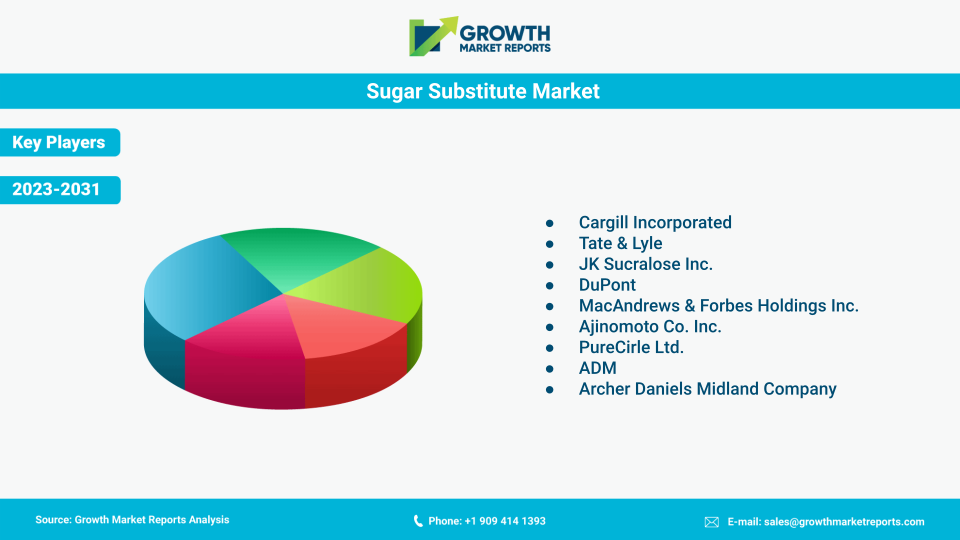
Key players competing in the global sugar substitute market include Cargill Incorporated, Tate & Lyle, JK Sucralose Inc., DuPont, MacAndrews & Forbes Holdings Inc., Ajinomoto Co. Inc., PureCirle Ltd., ADM, and Archer Daniels Midland Company.

Some of these players are engaged in several market strategies such as mergers, acquisitions, partnerships, collaborations, capacity expansion, and product launches to increase their market shares.

  • In 2018, GLG Life Tech Corp. launched its Reb M sweetener product line, which has high quantities of Reb M steviol glycosides which taste like sugar in collaboration with Archer Daniels Midland Company.

Sugar Substitute Market Key Players

Frequently Asked Questions

Opportunities include expanding into emerging markets like Asia Pacific and Latin America, developing region-specific products, leveraging local distribution, and capitalizing on the demand for healthier, plant-based, and clean label sweeteners.

Challenges include consumer skepticism about the safety of some artificial sweeteners, higher costs of natural sweeteners, regulatory scrutiny, and the need for continued innovation to match sugar’s taste and functionality.

Major players include Cargill, Archer Daniels Midland Company, Tate & Lyle PLC, Ingredion Incorporated, DuPont de Nemours, PureCircle, Ajinomoto, Roquette Frères, JK Sucralose, Evolva Holding, Hermes Sweeteners, Stevia Corp, NutraSweet, Südzucker AG, GLG Life Tech, NOW Foods, Whole Earth Brands, Zydus Wellness, Mitsubishi Corporation Life Sciences, and Sunwin Stevia.

Major trends include the shift towards natural and plant-based sweeteners, clean label products, innovation in product forms (powder, liquid, tablets), and the expansion of e-commerce and digital marketing.

Sugar substitutes are distributed through supermarkets/hypermarkets, online stores, convenience stores, specialty stores, health food outlets, pharmacies, and direct sales channels.

Sugar substitutes are widely used in food & beverages (soft drinks, bakery, dairy, confectionery), pharmaceuticals (medicines, syrups, chewables), personal care (oral care, skincare), nutraceuticals, dietary supplements, and animal feed.

The market includes artificial sweeteners (aspartame, sucralose, saccharin), natural sweeteners (stevia, monk fruit, thaumatin), sugar alcohols (xylitol, erythritol, sorbitol), and emerging options like allulose and tagatose.

North America dominates the market due to high consumer awareness and strong regulatory frameworks, while Asia Pacific is the fastest-growing region, driven by urbanization, rising incomes, and health awareness. Europe also shows steady growth, especially for natural sweeteners.

Key growth drivers include increasing health consciousness, rising prevalence of obesity and diabetes, government initiatives like sugar taxes, advancements in food technology, and the demand for low-calorie and sugar-free products.

The global sugar substitute market reached USD 20.9 billion in 2024 and is projected to grow at a CAGR of 6.8% from 2025 to 2033, reaching USD 38.3 billion by 2033.

Table Of Content

Chapter 1 Executive Summary
Chapter 2 Assumptions and Acronyms Used
Chapter 3 Research Methodology
Chapter 4 Sugar Substitute Market Overview
   4.1 Introduction
      4.1.1 Market Taxonomy
      4.1.2 Market Definition
      4.1.3 Macro-Economic Factors Impacting the Market Growth
   4.2 Sugar Substitute Market Dynamics
      4.2.1 Market Drivers
      4.2.2 Market Restraints
      4.2.3 Market Opportunity
   4.3 Sugar Substitute Market - Supply Chain Analysis
      4.3.1 List of Key Suppliers
      4.3.2 List of Key Distributors
      4.3.3 List of Key Consumers
   4.4 Key Forces Shaping the Sugar Substitute Market
      4.4.1 Bargaining Power of Suppliers
      4.4.2 Bargaining Power of Buyers
      4.4.3 Threat of Substitution
      4.4.4 Threat of New Entrants
      4.4.5 Competitive Rivalry
   4.5 Global Sugar Substitute Market Size & Forecast, 2023-2032
      4.5.1 Sugar Substitute Market Size and Y-o-Y Growth
      4.5.2 Sugar Substitute Market Absolute $ Opportunity

Chapter 5 Global Sugar Substitute Market Analysis and Forecast By Product Type
   5.1 Introduction
      5.1.1 Key Market Trends & Growth Opportunities By Product Type
      5.1.2 Basis Point Share (BPS) Analysis By Product Type
      5.1.3 Absolute $ Opportunity Assessment By Product Type
   5.2 Sugar Substitute Market Size Forecast By Product Type
      5.2.1 Artificial Sweeteners
      5.2.2 Natural Sweeteners
      5.2.3 Sugar Alcohols
      5.2.4 Others
   5.3 Market Attractiveness Analysis By Product Type

Chapter 6 Global Sugar Substitute Market Analysis and Forecast By Application
   6.1 Introduction
      6.1.1 Key Market Trends & Growth Opportunities By Application
      6.1.2 Basis Point Share (BPS) Analysis By Application
      6.1.3 Absolute $ Opportunity Assessment By Application
   6.2 Sugar Substitute Market Size Forecast By Application
      6.2.1 Food & Beverages
      6.2.2 Pharmaceuticals
      6.2.3 Personal Care
      6.2.4 Others
   6.3 Market Attractiveness Analysis By Application

Chapter 7 Global Sugar Substitute Market Analysis and Forecast By Form
   7.1 Introduction
      7.1.1 Key Market Trends & Growth Opportunities By Form
      7.1.2 Basis Point Share (BPS) Analysis By Form
      7.1.3 Absolute $ Opportunity Assessment By Form
   7.2 Sugar Substitute Market Size Forecast By Form
      7.2.1 Powder
      7.2.2 Liquid
      7.2.3 Tablets
      7.2.4 Others
   7.3 Market Attractiveness Analysis By Form

Chapter 8 Global Sugar Substitute Market Analysis and Forecast By Distribution Channel
   8.1 Introduction
      8.1.1 Key Market Trends & Growth Opportunities By Distribution Channel
      8.1.2 Basis Point Share (BPS) Analysis By Distribution Channel
      8.1.3 Absolute $ Opportunity Assessment By Distribution Channel
   8.2 Sugar Substitute Market Size Forecast By Distribution Channel
      8.2.1 Supermarkets/Hypermarkets
      8.2.2 Online Stores
      8.2.3 Convenience Stores
      8.2.4 Others
   8.3 Market Attractiveness Analysis By Distribution Channel

Chapter 9 Global Sugar Substitute Market Analysis and Forecast by Region
   9.1 Introduction
      9.1.1 Key Market Trends & Growth Opportunities By Region
      9.1.2 Basis Point Share (BPS) Analysis By Region
      9.1.3 Absolute $ Opportunity Assessment By Region
   9.2 Sugar Substitute Market Size Forecast By Region
      9.2.1 North America
      9.2.2 Europe
      9.2.3 Asia Pacific
      9.2.4 Latin America
      9.2.5 Middle East & Africa (MEA)
   9.3 Market Attractiveness Analysis By Region

Chapter 10 Coronavirus Disease (COVID-19) Impact 
   10.1 Introduction 
   10.2 Current & Future Impact Analysis 
   10.3 Economic Impact Analysis 
   10.4 Government Policies 
   10.5 Investment Scenario

Chapter 11 North America Sugar Substitute Analysis and Forecast
   11.1 Introduction
   11.2 North America Sugar Substitute Market Size Forecast by Country
      11.2.1 U.S.
      11.2.2 Canada
   11.3 Basis Point Share (BPS) Analysis by Country
   11.4 Absolute $ Opportunity Assessment by Country
   11.5 Market Attractiveness Analysis by Country
   11.6 North America Sugar Substitute Market Size Forecast By Product Type
      11.6.1 Artificial Sweeteners
      11.6.2 Natural Sweeteners
      11.6.3 Sugar Alcohols
      11.6.4 Others
   11.7 Basis Point Share (BPS) Analysis By Product Type 
   11.8 Absolute $ Opportunity Assessment By Product Type 
   11.9 Market Attractiveness Analysis By Product Type
   11.10 North America Sugar Substitute Market Size Forecast By Application
      11.10.1 Food & Beverages
      11.10.2 Pharmaceuticals
      11.10.3 Personal Care
      11.10.4 Others
   11.11 Basis Point Share (BPS) Analysis By Application 
   11.12 Absolute $ Opportunity Assessment By Application 
   11.13 Market Attractiveness Analysis By Application
   11.14 North America Sugar Substitute Market Size Forecast By Form
      11.14.1 Powder
      11.14.2 Liquid
      11.14.3 Tablets
      11.14.4 Others
   11.15 Basis Point Share (BPS) Analysis By Form 
   11.16 Absolute $ Opportunity Assessment By Form 
   11.17 Market Attractiveness Analysis By Form
   11.18 North America Sugar Substitute Market Size Forecast By Distribution Channel
      11.18.1 Supermarkets/Hypermarkets
      11.18.2 Online Stores
      11.18.3 Convenience Stores
      11.18.4 Others
   11.19 Basis Point Share (BPS) Analysis By Distribution Channel 
   11.20 Absolute $ Opportunity Assessment By Distribution Channel 
   11.21 Market Attractiveness Analysis By Distribution Channel

Chapter 12 Europe Sugar Substitute Analysis and Forecast
   12.1 Introduction
   12.2 Europe Sugar Substitute Market Size Forecast by Country
      12.2.1 Germany
      12.2.2 France
      12.2.3 Italy
      12.2.4 U.K.
      12.2.5 Spain
      12.2.6 Russia
      12.2.7 Rest of Europe
   12.3 Basis Point Share (BPS) Analysis by Country
   12.4 Absolute $ Opportunity Assessment by Country
   12.5 Market Attractiveness Analysis by Country
   12.6 Europe Sugar Substitute Market Size Forecast By Product Type
      12.6.1 Artificial Sweeteners
      12.6.2 Natural Sweeteners
      12.6.3 Sugar Alcohols
      12.6.4 Others
   12.7 Basis Point Share (BPS) Analysis By Product Type 
   12.8 Absolute $ Opportunity Assessment By Product Type 
   12.9 Market Attractiveness Analysis By Product Type
   12.10 Europe Sugar Substitute Market Size Forecast By Application
      12.10.1 Food & Beverages
      12.10.2 Pharmaceuticals
      12.10.3 Personal Care
      12.10.4 Others
   12.11 Basis Point Share (BPS) Analysis By Application 
   12.12 Absolute $ Opportunity Assessment By Application 
   12.13 Market Attractiveness Analysis By Application
   12.14 Europe Sugar Substitute Market Size Forecast By Form
      12.14.1 Powder
      12.14.2 Liquid
      12.14.3 Tablets
      12.14.4 Others
   12.15 Basis Point Share (BPS) Analysis By Form 
   12.16 Absolute $ Opportunity Assessment By Form 
   12.17 Market Attractiveness Analysis By Form
   12.18 Europe Sugar Substitute Market Size Forecast By Distribution Channel
      12.18.1 Supermarkets/Hypermarkets
      12.18.2 Online Stores
      12.18.3 Convenience Stores
      12.18.4 Others
   12.19 Basis Point Share (BPS) Analysis By Distribution Channel 
   12.20 Absolute $ Opportunity Assessment By Distribution Channel 
   12.21 Market Attractiveness Analysis By Distribution Channel

Chapter 13 Asia Pacific Sugar Substitute Analysis and Forecast
   13.1 Introduction
   13.2 Asia Pacific Sugar Substitute Market Size Forecast by Country
      13.2.1 China
      13.2.2 Japan
      13.2.3 South Korea
      13.2.4 India
      13.2.5 Australia
      13.2.6 South East Asia (SEA)
      13.2.7 Rest of Asia Pacific (APAC)
   13.3 Basis Point Share (BPS) Analysis by Country
   13.4 Absolute $ Opportunity Assessment by Country
   13.5 Market Attractiveness Analysis by Country
   13.6 Asia Pacific Sugar Substitute Market Size Forecast By Product Type
      13.6.1 Artificial Sweeteners
      13.6.2 Natural Sweeteners
      13.6.3 Sugar Alcohols
      13.6.4 Others
   13.7 Basis Point Share (BPS) Analysis By Product Type 
   13.8 Absolute $ Opportunity Assessment By Product Type 
   13.9 Market Attractiveness Analysis By Product Type
   13.10 Asia Pacific Sugar Substitute Market Size Forecast By Application
      13.10.1 Food & Beverages
      13.10.2 Pharmaceuticals
      13.10.3 Personal Care
      13.10.4 Others
   13.11 Basis Point Share (BPS) Analysis By Application 
   13.12 Absolute $ Opportunity Assessment By Application 
   13.13 Market Attractiveness Analysis By Application
   13.14 Asia Pacific Sugar Substitute Market Size Forecast By Form
      13.14.1 Powder
      13.14.2 Liquid
      13.14.3 Tablets
      13.14.4 Others
   13.15 Basis Point Share (BPS) Analysis By Form 
   13.16 Absolute $ Opportunity Assessment By Form 
   13.17 Market Attractiveness Analysis By Form
   13.18 Asia Pacific Sugar Substitute Market Size Forecast By Distribution Channel
      13.18.1 Supermarkets/Hypermarkets
      13.18.2 Online Stores
      13.18.3 Convenience Stores
      13.18.4 Others
   13.19 Basis Point Share (BPS) Analysis By Distribution Channel 
   13.20 Absolute $ Opportunity Assessment By Distribution Channel 
   13.21 Market Attractiveness Analysis By Distribution Channel

Chapter 14 Latin America Sugar Substitute Analysis and Forecast
   14.1 Introduction
   14.2 Latin America Sugar Substitute Market Size Forecast by Country
      14.2.1 Brazil
      14.2.2 Mexico
      14.2.3 Rest of Latin America (LATAM)
   14.3 Basis Point Share (BPS) Analysis by Country
   14.4 Absolute $ Opportunity Assessment by Country
   14.5 Market Attractiveness Analysis by Country
   14.6 Latin America Sugar Substitute Market Size Forecast By Product Type
      14.6.1 Artificial Sweeteners
      14.6.2 Natural Sweeteners
      14.6.3 Sugar Alcohols
      14.6.4 Others
   14.7 Basis Point Share (BPS) Analysis By Product Type 
   14.8 Absolute $ Opportunity Assessment By Product Type 
   14.9 Market Attractiveness Analysis By Product Type
   14.10 Latin America Sugar Substitute Market Size Forecast By Application
      14.10.1 Food & Beverages
      14.10.2 Pharmaceuticals
      14.10.3 Personal Care
      14.10.4 Others
   14.11 Basis Point Share (BPS) Analysis By Application 
   14.12 Absolute $ Opportunity Assessment By Application 
   14.13 Market Attractiveness Analysis By Application
   14.14 Latin America Sugar Substitute Market Size Forecast By Form
      14.14.1 Powder
      14.14.2 Liquid
      14.14.3 Tablets
      14.14.4 Others
   14.15 Basis Point Share (BPS) Analysis By Form 
   14.16 Absolute $ Opportunity Assessment By Form 
   14.17 Market Attractiveness Analysis By Form
   14.18 Latin America Sugar Substitute Market Size Forecast By Distribution Channel
      14.18.1 Supermarkets/Hypermarkets
      14.18.2 Online Stores
      14.18.3 Convenience Stores
      14.18.4 Others
   14.19 Basis Point Share (BPS) Analysis By Distribution Channel 
   14.20 Absolute $ Opportunity Assessment By Distribution Channel 
   14.21 Market Attractiveness Analysis By Distribution Channel

Chapter 15 Middle East & Africa (MEA) Sugar Substitute Analysis and Forecast
   15.1 Introduction
   15.2 Middle East & Africa (MEA) Sugar Substitute Market Size Forecast by Country
      15.2.1 Saudi Arabia
      15.2.2 South Africa
      15.2.3 UAE
      15.2.4 Rest of Middle East & Africa (MEA)
   15.3 Basis Point Share (BPS) Analysis by Country
   15.4 Absolute $ Opportunity Assessment by Country
   15.5 Market Attractiveness Analysis by Country
   15.6 Middle East & Africa (MEA) Sugar Substitute Market Size Forecast By Product Type
      15.6.1 Artificial Sweeteners
      15.6.2 Natural Sweeteners
      15.6.3 Sugar Alcohols
      15.6.4 Others
   15.7 Basis Point Share (BPS) Analysis By Product Type 
   15.8 Absolute $ Opportunity Assessment By Product Type 
   15.9 Market Attractiveness Analysis By Product Type
   15.10 Middle East & Africa (MEA) Sugar Substitute Market Size Forecast By Application
      15.10.1 Food & Beverages
      15.10.2 Pharmaceuticals
      15.10.3 Personal Care
      15.10.4 Others
   15.11 Basis Point Share (BPS) Analysis By Application 
   15.12 Absolute $ Opportunity Assessment By Application 
   15.13 Market Attractiveness Analysis By Application
   15.14 Middle East & Africa (MEA) Sugar Substitute Market Size Forecast By Form
      15.14.1 Powder
      15.14.2 Liquid
      15.14.3 Tablets
      15.14.4 Others
   15.15 Basis Point Share (BPS) Analysis By Form 
   15.16 Absolute $ Opportunity Assessment By Form 
   15.17 Market Attractiveness Analysis By Form
   15.18 Middle East & Africa (MEA) Sugar Substitute Market Size Forecast By Distribution Channel
      15.18.1 Supermarkets/Hypermarkets
      15.18.2 Online Stores
      15.18.3 Convenience Stores
      15.18.4 Others
   15.19 Basis Point Share (BPS) Analysis By Distribution Channel 
   15.20 Absolute $ Opportunity Assessment By Distribution Channel 
   15.21 Market Attractiveness Analysis By Distribution Channel

Chapter 16 Competition Landscape 
   16.1 Sugar Substitute Market: Competitive Dashboard
   16.2 Global Sugar Substitute Market: Market Share Analysis, 2023
   16.3 Company Profiles (Details – Overview, Financials, Developments, Strategy) 
      16.3.1 Cargill, Incorporated
Archer Daniels Midland Company
Tate & Lyle PLC
Ingredion Incorporated
DuPont de Nemours, Inc.
PureCircle Limited
Ajinomoto Co., Inc.
Roquette Frères
JK Sucralose Inc.
Evolva Holding SA
Hermes Sweeteners Ltd.
Stevia Corp.
NutraSweet Company
Südzucker AG
GLG Life Tech Corporation
NOW Foods
Whole Earth Brands, Inc.
Zydus Wellness Ltd.
Mitsubishi Corporation Life Sciences Limited
Sunwin Stevia International, Inc.

Methodology

Our Clients

Honda Motor Co. Ltd.
Deloitte
Pfizer
Microsoft
The John Holland Group
Dassault Aviation
sinopec
FedEx Logistics